
TJS S3E8 Seventy years of constitutional crisis - part II 1992
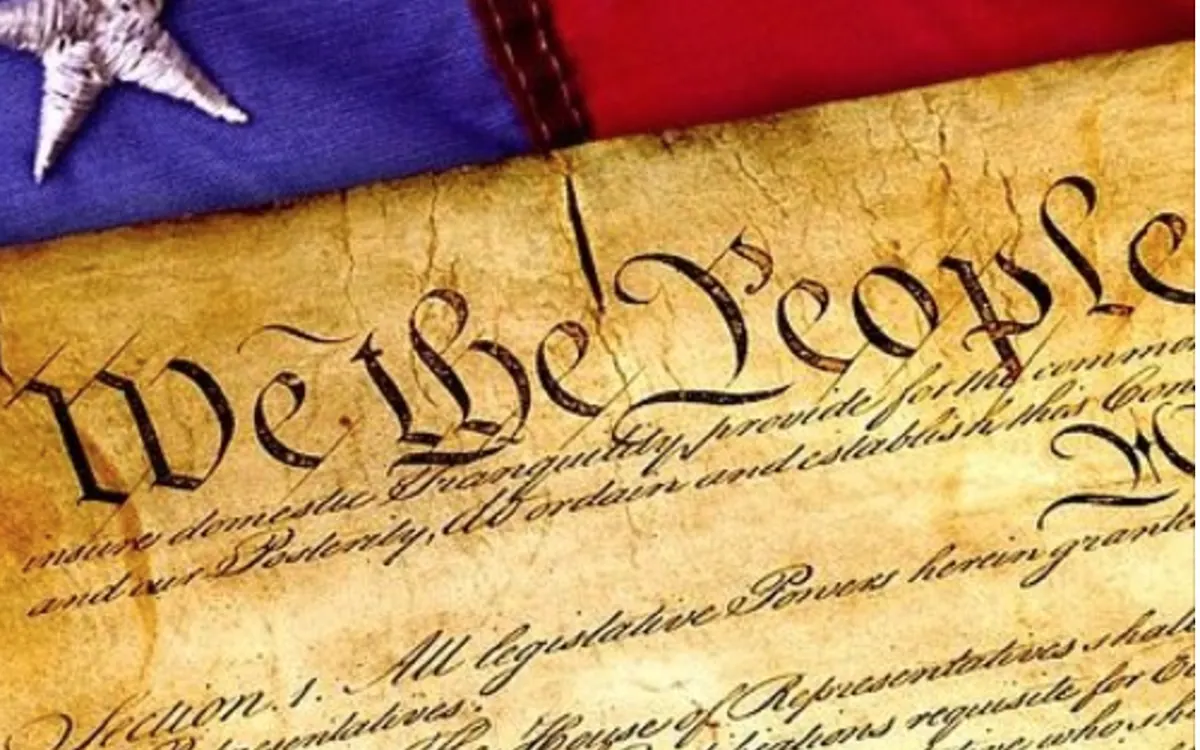
In part two of this exploration of Israel's seventy year constitutional crisis we take a look at the revolution of 1992 and how it contributed to today's battles. As a special bonus I included a little bird walk along the lines of the Torah's commandment for a king.
About this episode
Men make history, says Truman, and in periods of no leadership society stands still. Rav Mike is fascinated by the historical moment, the nexus where lines come together to allow rare change, and senses that while we missed one in 1949 we may be in the midst of one now. This episode is a platypus, part history, part philosophy, part cry from the heart, since in a democracy leadership will never risk crafting a constitution unless an overwhelming voice rises from the people. He revisits the four challenges of 1949: the Arab-Jewish divide, whether the Arabs are part of the demos, at the heart of the nation-state law, complicated by the tension between the duty to uphold rights and the obligation to public security, as even Rabin showed when he empowered the Palestinian Authority to crush Hamas without being restrained by the Supreme Court or B'Tselem; power politics, Mapai's dominance and Ben-Gurion's belief that democracy lives in the legislature alone and a court's power to overturn legislation is anti-democratic; and the inseparable identity crisis and religious-secular divide, since the Rambam taught that the Egypt generation had to die in the wilderness, so no wonder the generation of 1948 balked at fixing the national character.
They dealt with the first half of because of our sins we were exiled from our land, the ingathering, building roads and fighting wars, but the deeper task is the second half, that we were alienated from the ground, and we remain estranged from what it means to be Israel, few having begun to dream what it would mean to be the organic product of the land, through which alone the people will know what God asks. The religious-secular divide is more than asking rabbis versus politicians, an Ashkenazi binary the richer Mizrahi world complicates, and the national religious camp drives values though it is a tenth of the populace and polls for a secular leader. Zionism, as Yehuda HaKohen says, failed to produce a revolutionary new way of being, running up the Star of David on the same pole, declaring a nation-state like every other. So Rav Mike takes a catwalk into what government the Torah might command: the Jews are closet monarchists who pray for a king three times a day, and Deuteronomy 17's som tasim alecha melech is a great machloket over whether a king is commanded, permitted, or just how government was then conceived. The surrounding verses in Shoftim give all the models, judges, priests, prophets and kings, each ruling its own realm, a separation of powers with checks and balances, and the kingship failed, giving rise in exile to a kingdom of law focused on the individual.
The question is whether the halacha that carried exile can now help us transform back into a modern nation-state, raised when Bezalel Smotrich called for a halachic state and Netanyahu tweeted that Israel will not be one. Leibovitz, in his youth a religious Zionist, soured in the fifties over the religious world's failure to embrace the state, naming a fourth unexpected possibility, statehood in an unredeemed world, forcing the Torah-observant public to choose: the messianic punt that pushes fulfillment to the end of days, or taking responsibility for a Torah regime now. The Shabbat status quo was for him the revealing fact, clerical politics that avoids violation by using others as the Shabbos goy, a parasitic stance that would distance youth from Torah, sectoral rather than visionary, so the religious world never offered a vision of how society could be, and halacha would only survive by developing organically within modern state law. The students of Rav Kook held instead a pragmatic messianism: Rav Kook died in 1935 without seeing the state he saw coming as the foundation of the throne of God, and in Mishpat Kohen ruled that when there is no king the rights of government revert to the people and the appointed judges stand in the place of the king, the origin of the mamlachti dati stance, religiously law-abiding, but it pushes the dynamic engagement with modernity off to the utopian future and works only if the state is headed for redemption, which a growing number of religious Zionists doubt.
From the Harari decision to 1992 the Knesset passed nine basic laws whose status stayed unclear, treated as ordinary law, so for 45 years the Knesset's power was all but unlimited, bounded only by laws it passed, and the Supreme Court gave human rights constitutional status through the Declaration but refused to repeal primary legislation, as Justice Ben-Porat said in 1987 that the Knesset has the power to pass a discriminatory statute and there is no option but to act on it. In 1992 two basic laws directly addressed rights, freedom of occupation and human dignity and liberty, which at first went unnoticed, their author Amnon Rubinstein a Meretz member, passed on third reading 32 to 21 with barely a quarter of the Knesset voting in favor, a revolution the public learned of only after the fact. Chief Justice Aharon Barak read the two laws, said this is our constitution, and announced a constitutional revolution, the court in the United Mizrahi Bank ruling evoking essential entrenchment, so that whether or not the laws were written to give them primacy the court declared they had it, giving Israel a written constitution and the court the obligation to review legislation against it, so Israel both wrote and did not write a constitution, what Chaim Ramon called an incidental constitutional revolution the legislature did not intend.
To understand 2019, two more pieces: the Judicial Selection Committee, where by practice the three sitting justices must approve any appointment, so the court reproduces itself along ideological lines; and the social shift, since the Rabin government of 1992 also passed Oslo, the last attempt of a left losing the legislature to a populace shifting right, while the court remained a bastion of the left, so its constitution became a tool in that battle. This brought 2019, when Justice Minister Ohana said the ultimate consideration must be preserving citizens' lives even over a court ruling, the chief justice accusing him of leading to anarchy, a dangerous situation because whatever constitution Israel has is not the fruit of broad consensus but of a takeover late at night, as Aryeh Deri said, deceiving the religious public, backed by a court they see as the self-propagating voice of the liberal elite, so now a counter-revolution looms. Rav Mike's question to the listener is whether you are ready for commitment, for a dialogue in which we may not be the same people when we emerge, recalling Hamilton that no perfect plan comes from imperfect man. He closes on Nehemiah 9 and 10, where the recap of history is followed by a new covenant, bechol zot, nevertheless and in light of all this we make a faithful covenant, not with God but with one another, since a constitution is a social contract, a vessel to let society survive and heal and build the future.
Key ideas
- The four challenges of 1949 endure, and the deepest is that we remain estranged from what it means to be the organic product of the land of Israel.
- The Torah's Shoftim gives judges, priests, prophets and kings as a separation of powers, and the kingship's failure gave rise in exile to a kingdom of law.
- Leibowitz demanded a Torah that develops organically within modern state law, against a clerical politics that uses others as the Shabbos goy.
- The students of Rav Kook held a pragmatic messianism where judges stand in the place of the king, which works only if the state heads for redemption.
- The 1992 basic laws and Barak's doctrine of essential entrenchment gave Israel a written constitution the legislature did not intend.
- A constitution is a covenant with one another, a social contract, and Israel still needs the broad consensus a real constitutional process would build.
Chapters
- 0:00 The historical moment
- 2:11 The four challenges revisited; the Arab-Jewish divide
- 4:20 Power politics; the legislature alone
- 5:25 Identity and the religious-secular divide
- 7:34 Alienated from the ground
- 10:57 The Torah and government; closet monarchists
- 13:01 Som tasim alecha melech
- 14:04 Models of leadership; separation of powers
- 16:09 The kingship failed; a kingdom of law
- 17:12 Can halacha govern a state? Smotrich
- 18:18 Leibovitz; the fourth possibility
- 19:23 The Shabbat status quo; clerical politics
- 23:41 The students of Rav Kook; pragmatic messianism
- 25:48 The mamlachti dati stance; its two challenges
- 29:00 The nine basic laws; an unlimited Knesset
- 31:12 1992: two basic laws
- 33:26 Barak announces the revolution; essential entrenchment
- 36:54 The Judicial Selection Committee; the social shift
- 39:05 2019: Ohana and the counter-revolution
- 43:43 The covenant of Nehemiah
Who, where and when
People
Harry Truman, The Rambam, Yehuda HaKohen, Bezalel Smotrich, Benjamin Netanyahu, Yeshayahu Leibovitz, Rav Moshe Tzvi Neria, Rav Kook, Aharon Barak, Amnon Rubinstein, Chaim Ramon, Aryeh Deri, Amir Ohana
Places
The land of Israel, The United States
Texts
Deuteronomy 17, The Guide for the Perplexed, Mishpat Kohen 144, The basic laws of 1992, The United Mizrahi Bank ruling, Nehemiah 9 and 10
When
1987 CE: Ben-Porat's ruling, March 17, 1992 CE: the basic laws passed, 1992 CE: Oslo and the constitutional revolution, 2019 CE: the counter-revolution
Read the transcript
Men make history and not the other way around, says Harry Truman. In periods where there is no leadership, society stands still. Progress occurs when courageous, skillful leaders seize the opportunity to change things for the better. Well, I'm going to seize this opportunity to tell a story that I hope can change things a little bit for the better. Because I'm Rav Mike Feuer, and this is The Jewish Story. Episode 8, 70 Years of Constitutional Crisis, Part 2 You know, I'm fascinated by the idea of a historical moment. That there could be a nexus in time, in society, in culture, what have you, where the lines come together in a way which allows for change that doesn't happen every day. And I have a sense that while we may have missed one in 1949, we actually might be in the midst of it right now.
And when I think about the gravity of the situation in which we find ourselves, what comes to mind are the words of John Jay from the Federalist Papers once again. He said, when the people of America reflect that they're now called upon to decide a question, which in its consequences must prove one of the most important that ever engaged their attention, the propriety of their taking a very comprehensive as well as very serious view of it will be evident. And in my imagination, this is how the generation of 1948 spoke. And in my hopes, this is how we'll learn to speak today. Now it's true, I hope you got the sense from last episode that the Constituent Assembly definitely realized the gravity and historic potential the moment that they've been granted.
Or at least they should have because you can recall Chaim Weissman's words at the invocation. Remember that the eyes of the whole Jewish world are upon you, and that the yearning and prayers of past generations accompany you. May we all be worthy of this great moment and its immense responsibility. No matter whether you think they were listening or not, we saw in the first half of this discussion a constitution was not to be. Because rather than bringing down a new Torah to the nation, the Constitucional Assembly reconstituted itself as the First Knesset. Now, I could say that they chose to seize power rather than seize the potential of the moment, but as we saw last episode, it's not so simple to lay the blame for our rudderless state at their doorstep.
Because there were four essential challenges which the new state faced in 1949, all of which made the writing of a constitution a weighty and difficult matter. And my goal is not to lambast the leadership of 1949 for their failures, because it's kind of useless at this point. What I'm aiming to do is to prompt the leadership of 2019 to do their job. And in a democracy, the leadership will never take the type of risks entailed in crafting a constitution unless an overwhelming voice rises from the populace demanding that they do so. And so this story is my contribution to making it happen. And that's why this episode is a bit of a platypus. One part historical episode, one part philosophical interlude, and one part cry from the heart for help in building a better future.
Let it be soon. Let it be now. So I want to start off by just touching those four factors again in order to set us on the path to understand what exactly our constitutional crisis is about today. Now remember, the first one was the Arab-Jewish divide, which really had two faces. First was the question, are the Arabs really part of the demos in the Jewish state? And that question goes to the heart of the tension of whether Israel is a civil state of all its citizens or it's the ethnic nation state of the Jews, which gives civil rights to non-Jews. By the way, if you've been following the story, this is what lies at the heart of the nation-state law. And though it's not our focus right now, I may have to touch on it as we roll along, because it's a critical element of the constitutional struggle in 2019.
We'll see what happens. This divide also complicates the quest for a constitution because of what we know to be the general tension between the duty of the state to uphold individual rights and its obligation to public security. Oddly enough, as you'll see later in our story, no one said it better than former Prime Minister Yitzhak Rabin. When he justified setting up the Palestinian Authority as a despotic regime and empowering it to crush all opposition, especially the Islamists whose terror Rabin found to be so threatening, when he did it, he said that they wouldn't be restrained by Bagatz or B'Tselem in crushing Hamas. And if you don't know the acronyms, Bagatz is the Israeli Supreme Court, And B'Tselem is a major human rights organization which works in the field.
So as I said, the Arab-Jewish conflict is not our focus today, but it needs always to stay on the board, because it's frankly going to color the entire Jewish story, at least within Israel, from here on out. And it could make a cameo appearance maybe further down the line when we discuss the constitutional revolution of 1992. We'll see. So next was power politics. the bare fact that Ben-Gurion's Mapai Party dominated the Knesset in 1949 and therefore saw no reason to constrain what amounted to unlimited power with a constitution of checks and balances. And I'll add to that, Ben-Gurion's belief that true democracy is found in the legislature alone. Remember as we move forward that Ben-Gurion saw a constitutional court's power to overturn legislation as an anti-democratic phenomenon.
And I want to look at this aspect through the lens of 1992 and 2019. Before this episode is over, I hope to give you a better sense of why the legislature is currently at war with the judiciary and how much power politics have to do with that and how much it's made up of other elements. And maybe, just maybe, they'll give you some insight on who to root for, though I'm not taking sides right now. All right, so the next two of those four I want to tackle together because in my eyes, they're really inseparable. the identity crisis and the religious secular divide you know the Rambam says in Mor Nebuchim in the Guide for the Perplexed that the generation which left Egypt had to die in the wilderness why?
because he understood that a people formed by hundreds of years of slavery simply could not be ready for the responsibility and potential of freedom in the land certainly not overnight and so it took 40 years and really the passing of a generation before people who could be born that could see freedom as their birthright. In that light, it's no wonder that the generation of 48 balked at writing a document that would fix the national character for the foreseeable future. I mean, just recall last episode and picture philosopher Hugo Bergman crying out, what is Judaism? What does it consist of? What's the meaning of a Jewish state? Now, we've had 70 years since then. It's almost twice 40. But let's face it, we're looking to overcome 2,000 years of exile.
The generation of 48 and their political inheritors actually did a tremendous job on healing that phrase we've spoken of so many times, because of our sins, we were actually exiled from our lands. They dealt with the exile. I'm not talking about the sins so much, but the ingathering of the exiles. They built the roads, they fought the wars, they planted the fields. that gave a physical basis for people to find shelter, and that's not a small thing. It's just that at this stage, 70 years later, we face a much more profound and elusive task. And it's the one actually posed by the second half of that phrase. It's not just, because of our sins we were exiled from our land, it's also, and we were distanced or alienated from the ground.
Now, we're going to speak out the difference between these two phrases in many ways for the whole season ahead. In my humble opinion, it was 1967, which is the end point goal for this season, that was the turning point between them. But for now, suffice it to say that we Jews are estranged from what it actually means to be Israel. We're adjusting to what it means to be a people in our land, but few of us have even begun to dream about what it would mean to be its organic product. But as far as I can tell when I read the Bible, and all of the rabbinic wisdom built on it, it's only as the product of the land of Israel that the people of Israel will actually know what the God of Israel is really asking of us.
And that's a big task. And it brings us to the last point. So often offered as the boogeyman that prevented the writing of a constitution. And though the research really doesn't bear out blaming the religious-secular divide for the failure of 1949, it's unquestionably a major challenge in 2019. If your only access to Israel is in the media, then you need to know that the division between a religious and secular view of the state is much more than a simplistic opposition between the people that ask the rabbis and those that look to the politicians. First of all, this sort of religious, secular, binary is an Ashkenazi idea. The Mizrahi world is much more complex and rich in its attitudes toward the relationship between religion and secular society.
Furthermore, if you look at the national religious camp, you'll see that there's a bit of a strange role that we play. Despite being no more than, I don't know, 10-15% of the populace, the Dati Lumi world is a driver of values and vision in the country at this point, albeit loved and hated. But despite an increasing religiosity, in the upcoming elections, the polls say that most national religious voters want Ayelet Shaked, a secular woman to lead their parties. And that kind of throws a brick into that easy divide. Now add to this that there's of course more to Torah than religion. Remember last episode when Mapai, member of Knesset, Hasidurit, compared the work of the Constituent Assembly to the Revelation at Sinai?
There's a deeply spiritual element, even among nominally secular political movements, particularly in the early days of the state. And the sense of sacred history, of divine momentum in their story, was easy to access after the transition into nationhood, the incomprehensible horror of the Holocaust, the incredible miracle of the ingathering of the exiles. And that sense of spiritual momentum, though it was present, will be mostly dormant in the first couple decades of the state. Maybe it had been stronger, Hacienda Dorit would have got a revelation in the form of a constitution, but she didn't. It will, however, merge with explosive energy in the wake of 1967. So stay tuned. In the meantime, before we launch into the particulars of the story which will bind together in 1949, 1992, and 2019, I want to take a quick catwalk into this tangential but related question about identity and the religious-secular mix.
because whether we judge a success or failure the decision of the constituent assembly to kick the can down the road and avoid all the battles that writing a constitution would have surely entailed one thing is clear as my friend Yehuda Cohen loves to point out Zionism failed to produce a revolutionary new way of being for the Jewish people instead of evolving into the new Israelite kingdom in 1948 we basically pulled down Union Jack and ran up the Star of David on the same pole we declared the state of Israel but it was a nation-state like every other. So before we finish this story of the Constitution in two parts, I want to consider exactly what type of government the Torah might command us to create here in the land of Israel.
You know, when I was in grad school, surrounded by grassroots activists from developing nations around the world, I had a lot of really memorable conversations. But none stands out in my mind more perhaps than a very brief exchange I had with a woman named Ori. Now, Ori was from Mali and was truly both classic West African, much taller than me, a smile that could light up a room, and short bouncy dreadlocks She was also a unique human being I mean she was literally born in a hut with dirt floors no electricity or running water And here she was when I met her attending a grad program at Brandeis University So she also happened to have a warm spot in her heart for the Jews She gained it mostly at Brandeis, of course, where they treated her quite well.
So I wasn't surprised when one day as we were chatting before class, she said to me, you know, Mike, I really love the Jews. You know, they're generous, they're cultured, blah, blah, blah. And she says, they're all so deeply democratic. Well, at the time, I was not so long from my transition into a religious life. So I looked at her with a kind of funny look on her face and I said, you know, you're wrong. She said, what? So we're actually all closet monarchists. Huh? I said, yeah, when was the last time you prayed for a king? I do it three times a day. you know, this idea has a dominant place in Jewish thought, that we're waiting for the king and it's got its roots, of course, as anything would in the Torah, if you look at Davarim chapter 17, lines 14 and 15 you'll see a very interesting set of verses when you have entered the land that the Lord your God has assigned to you, and taken possession of it, and settled it, and you decide right?
I want to put a king over me, as do all the nations around me. So it says, Som Tassim Alecha Melech. You shall, well, it actually depends. You may set a king over you. You shall set a king over you. You must set a king over you. It's actually what we call a huge Machaluket B'Rishonim. It's a big argument of both the early medieval authorities and really, frankly, the later authorities down to our day. What exactly this phrase, Som Tassim Alecha Melech, means? Don't get nervous. This is not a classic Torah course. I'm not going to drag you through it all. Although, by the way, if you're interested, let me know, because frankly, it's something I've taught before. Maybe I should do it again. Suffice it to say, though, that there's no agreement as to whether an actual king is commanded by the Torah or whether the king which the people call for in the verses is simply how government was conceived of in that day.
Notice that that phrase, right, that I will set a king over me, kekol ha-goyim asher tzvotai, like all the nations that are around me is a strange one. In general, when the Torah tells Am Yisrael that they're acting like all the nations around them, it's not a good sign. So here, there's a question, which is what exactly is the form of government that the Torah conceives? Now, aside from that question, there are a couple more points for our present discussion that I want to pull out of these verses and their biblical context. First of all, just know it's worthwhile to look at the entire section around those verses. Basically, check out Davarim 16.18, which is the beginning of Parshat Shoftim, if you're familiar with that structure, all the way through the end of chapter 18.
And what you'll find are all the models of leadership that the Torah has to offer. It's very interesting. Judges, priests, prophets, and kings are all there. And they're not only present, but if you look closely, there's a sense that each of them, each of these separate leadership models, is meant to rule within its own particular realm. It's what we might call today a separation of powers. We could say that the priests are the keepers of law. The courts are the guardians of justice. The king maintains the social order within and without. And the prophets, of course, are always there to speak truth to power and keep our eyes on the true king. The Mishnahh, the later rabbinic thought, even goes on to explore what we call checks and balances through the question of whether the courts have the authority to try the king.
In general, it's actually worthwhile looking into the depth of how our sages understand these models of leadership and their relationship to one another. you'll find a sophistication of political thought which is worthy of contemplation. But these are just the first two pieces. Again, the multiple models of leadership and that question of whether a king per se is mandated by the Torah or whether this is a permission or command, what have you, just to create a government. The last point is, of course, that the kingship failed. Not only did it fail in the most practical sense when it was conquered first by Assyria and then Babylon, But all the nuancing and positive presentation and idealization that the midgers can provide doesn't hide the fact that both the text and our sages had deep doubts about whether authoritarian leadership could ever succeed.
Which leads me almost to our present discussion. Now, if you want to explore the second attempt to create a kingdom of Israel, go back and listen to all of season one. For now, the 2,000 years of exile that followed that failed attempt gave rise to a different sort of kingdom for the Jewish people, a kingdom of law, one that was embodied in courts and communities, but really ultimately gave its focus to the actions of individuals. And that's the question that we face here, still early on, please God, in the third kingdom. From where do we draw the wisdom to create a sustainable future as a people? is the repository of that wisdom the halakha, Jewish law as it's been constructed over the last 2,000 years you know, just a few weeks ago a member of Knesset, Betal Smotrish caused a little tempest in a teacup here in Israel when he said that he was pursuing the position of minister of justice in order, quote, to restore our judges as of old, and furthermore declared that he wanted a halakhic state in which Israel is governed by Torah law now this is like a big red light in the religious-secular divide.
And in fact, Prime Minister Netanyahu was quick to tweet back his reply, the state of Israel will not be a halakhic state. Of course, neither of them really addressed what it meant. And because aside from the politics that lay behind this kind of public sounding off, Smatrish's desire and Bibi's response raised a very real question. Can the halakhic system that carried Am Yisrael through exile, which has helped us in so many ways transform ourselves from Israel into the Jews, now help us transform back from the Jews into the modern nation-state of Israel. And I want to just touch two fundamental attitudes toward that question, both as general food of thought, and because there's a tendency on the part of some religious people out there to claim that the Torah is our constitution, and therefore we need no other.
And they generally do it without ever contemplating what exactly that might mean in the modern state. Despite his well-deserved reputation as a critic of religion and state, in his youth, Professor Yishai Ahulibowitz was a great advocate of religious Zionism. You know, it was in the early 50s, when his attitude soured on many things, that he became deeply troubled by what he saw to be the failure of religious Zionist Jewry to embrace fully the new reality of the state. He's got an article on the crisis of religion in the state of Israel, And there the professor, as we call him, identified three possibilities which are really enshrined in Jewish historiography. Statehood and independence in an ideal past.
Exile and foreign rule in a realistic present. And statehood and independence in an ideal messianic future. But, he notes in that article, in 1948, a fourth unexpected possibility emerged. what he calls Israeli statehood and independence in an unredeemed world and among people, Jew and non-Jew, who have not yet attained their tikkun, their personal redemption. This is an unprecedented situation and therefore he asserts that the Torah observant public has to make a choice. Either we can essentially retreat, we can renounce the possibility of actually fulfilling the Torah in its most complete way within the state, basically in expectation of the utopian end of days, in which everyone will keep Torah as we know it.
It's what I call the messianic punt, right? You can just push that one off and deal with the reality as it is. Or he says, we can take responsibility for creating a Torah regime within the present day reality. Now, if you watch the news obsessively like me, you may have caught that momentary outrage within the religious community over the Shabbat violation that was bound up with the recent Eurovision celebrations in Tel Aviv. It happened to be that Prime Minister Netanyahu was in the midst of negotiating a government with the ultra-Orthodox parties, and therefore it was poorly timed from his opinion, but his response to them was quite revealing. He said, The Israeli government respects Shabbat as a national day of rest, and shall continue to maintain the status quo that is held in Israel for years.
And then he added, Most of the participants in the event are from abroad and aren't Jewish anyway. Now, for the young Vibovits, the political status quo around Shabbat observance was the gilui milta, it was the revealing fact of the depth of challenge and failure that the religious world faced in the modern state. Because the status quo was a product of what he called sort of clerical politics. We'll get to it in a second. Basically, the status quo in Israel involves avoiding Shabbat violation to the extent possible, and when impossible, depending on non-Jews or even non-religious Jews, to be the Shabbos Goy, to take the hit for the team and to violate the Shabbat while the religious people get excused from the problem.
And Professor Liebouf saw this attitude as a gross failure. It was a failure that sidestepped what he saw to be an opportunity presented by the state and in fact created its own problem. He felt that rabbinic leadership needed to respond with a new program, with religious rulings that gave form to the Torah in a socioeconomic reality of modern independent Jewish state and with a vision that could inspire people to a deeper commitment because that state was indeed an embodiment of what the Torah could be. In fact, in his eyes, halakha, Jewish law, would only survive the transition to the state if it continued to develop within that modern society. It needed to be an organic part of the evolution of state law in its democratic liberal format and not a problem-solving approach that guided religious Jews into how to navigate and get out of the system.
And in specific, Leibowitz feared that if rabbis and political leaders of the religious world struggled to exempt religious Jews from working on Shabbat by letting others do their jobs, and by the way, he didn't say it, but we can add, struggled to avoid serving the army and a host of other religiously complicated things, then we would fall quickly into a parasitic stance that would ultimately distance religious and non-religious youth from the Torah. This may sound familiar if you read the papers. Basically, he was afraid that the stance of the religious Jews would become sectoral rather than visionary, and that the Torah therefore would never actually shape society, and that the best that religious Jews could hope for was to get a bigger piece of pie through clerical politics.
Once again, sound familiar? The one thing which, sadly, the religious world has never been able to offer here in Israel is a vision of how society could be. Now, as was true with so many other things that he wrote, this article raised quite a storm within religious Zionist circles. Because his type of liberal idealism was just downright threatening to all the social structures, to the nature of religious authority, to Torah and law as we know it. It was Rav Moshe Tzvi Nerya, a chief student of Rav Avam Yitzchakon Cook, who took up the battle with Leibovitz in a series of articles and letters. It's actually known as the Leibovitz-Neria dispute, if you want to look it up. But I don't want to go into its details right now.
I'd rather just give you the other side of the coin. Because while Leibovitz thought the choices between liberal idealism or clerical politics, the students of Rav Kook actually held out the hope of what I'll call pragmatic messianism. You know, Rav Kook, amongst many other things, was a great messianic dreamer. The desire to move forward in history by restoring our glory as of old pervades his writing. He strove for the return of prophecy. He was a Kohen who longed for service in the temple He agreed to be Ashkenazi chief rabbi basically as a practical step toward restoring the Sanhedrin the high court of Jewish law Now Rav Kook died in 1935 and thus he never saw the state. But in one of his few usages of the word Medina, modern Hebrew for state, he characterized what he saw coming as, quote, the foundation of the throne of God in the world, whose entire desire is that God be one and his name one.
That's about as messianic as it gets. But lest you think this was purely utopian, like I said, this sort of punt down the field and retreat into what Leibowitz calls clerical politics, there is actually, interestingly enough, a pragmatism that can flow directly from utopian dreams. Because let's say I share those dreams. And by the way, I momish dream of the temple at night. Let it be soon. Let it be now. I still have the question of what Rav Kuk's legal mind would say about the status of the government that exists before that era. say, the last 70 years, perhaps. And fortunately, as a great legal authority, he left us his thoughts on the matter. It's in Mishpaté Cohen in 144, if you want to look it up, where he says, it seems reasonable that when there is no king, meaning that he envisions the Torah's commandment to set up a government as the kingship, he says, it seems reasonable that when there is no king, that these rights of government revert to the people in general.
It is a certainty that appointed judges and general leaders stand in the place of king. And this is the origin of what we call a Mamlahti Dati stance. A truly, not just national religious, but a societally oriented religiosity. It's not just about being law-abiding and religious. It's about being religiously law-abiding. Now, it's a powerful stance, one that has contributed much to our country, but there are two fundamental challenges with messianic pragmatism. First of all, it pushes off the question of this dynamic engagement between Jewish law and modernity that Leibowitz envisioned. He didn't just envision, he felt that religious Judaism was doomed without it. It pushes it off to the utopian future.
You may have to obey the courts because they have the status of the king, but none of the students of Rav Kook think that they're adjudicating law on the level of the Sanhedrin. They're not creating binding precedent for the thoughts of God in the world, they're just helping to build society with the authority of the Torah behind them. And that's why today, in the religious Zionist world, you can see a clear tension between respect for the government in its role as guardian of the state, particularly law, order, army, and struggle with it on questions of value, like issues of gender and sexuality, questions of Shabbat observance, all of the liberal democratic ideals which are sometimes difficult to reconcile with tradition.
And that's a major element of the anger. You might have heard underlying member of Knesset Smatres' call for a Torah state. By the way, what he actually said was, the state of Israel and the state of the Jewish people will return to be governed as it was governed in the days of King David and King Solomon, by Torah law, obviously in accordance with our days, our challenges and economy, and how society lives in 2019. Now, Leibowitz would agree with that if we were willing to get the Torah out there in the public marketplace and empower human beings to really adjudicate it in the light of modernity. I'm not so sure that's what the member of Knesset was speaking about. Rav Kook was waiting for the Sanhedrin to take that role.
So the second challenge of the pragmatic messianic approach is that imbuing the state with a sacred status and labeling its representatives as agents of the divinely appointed king really only works if you see the state more or less headed for redemption. And I got to tell you, if you don't know, there's a growing sense amongst religious Zionists that the state might have just gone off the rails. These are not the secular, pragmatic pioneers that Rav Kook found so inspiring. And someday, we'll speak about the 2005 disengagement from Gaza and its impact on the messianism of the national religious world. But the question at hand is the Constitution, or lack thereof. And if you want to understand the challenge that we face in 2019, particularly the challenge in marshalling the support amongst this critical and dynamic element of society that in its roots wants to integrate Torah and modernity and enlisting them in creating a new and binding national government, then you have to hear the rest of member Knesset's Matris' words.
He says the laws of Torah are far more preferable than the state of law instituted by Aaron Barak. Why is a state of law in which the person who determines the laws as Alan Barak and a small group of people who were not elected okay. And so the question, which will bring us off this catwalk back to our main topic, is who was Alan Barak and what was the constitutional revolution of 1992? From the Harare decision of 1949 until 1992, the Knesset actually passed nine basic laws. But despite their name, the status of these laws remained unclear. Were they, like a true constitution, as the Harari compromise seemed to make them, a limit on government actions as superior constitutional legislation? Or were they just another law codifying existing practice with a fancy name?
And basically, they were treated as the latter. And because of that, in essence, for the first 45 years of its existence, The Knesset's power was all but unlimited. Really, they were bounded only by the laws which they themselves passed. And the Supreme Court, therefore, could only attempt to hold the Knesset to these laws. It's true that in the formative decades of the state, when one-party rule and centralized government were just a reality, and when collective good and the good of the country were always placed amongst individual good in the public consciousness, the court did everything it could to balance what it perceived as a general threat to civil rights. They managed to give human rights a constitutional status, mostly through the values enshrined in the Declaration of Independence, and they showed themselves willing to hear challenges to both laws and executive actions, which they felt to be in violation of civil rights.
But there was a critical step the court refused to take. They refused the power of a true constitutional court, which is to repeal primary legislation passed by the Knesset, which was injurious to human rights, even when they found that injury was unjustified. As Justice Miriam Ben-Purat said already in 1987, so that's pretty late, however negative the opinion of the judiciary may be about an arrangement, in the absence of a constitution, the Knesset possesses the power and authority to pass a discriminatory statute, and if it has done so, there is no option but to act upon it. Well, that was in 87, and only five years later, there was going to be a radical shift in the court. In 1992, two additional basic laws were passed, and for the first time, they directly addressed the question of civil and human rights.
First was the freedom of occupation law, and the second was the law of human dignity and freedom. First, as its name indicates, deals with one singular freedom. That's the freedom of occupation, not from, of. The second includes several rights, property, movement from and to Israel, liberty, dignity, privacy. It's interesting what's not in there, but this isn't a law course. Now, these were major shifts in legislation because, as I said, they were the first additional laws that were more than simply procedural or structural, but actually what we would call in a right sense, substantive. And oddly enough, at first, they went largely unnoticed. Their prime author and legislator was Professor Amnon Rubenstein, who's now one of Israel's foremost scholars of constitutional law, not coincidentally.
And in 1992, Rubenstein was actually a member of Knesset on behalf of the left-wing Merits Party and a minister in the government of Prime Minister Yitzhak Rabin. About eight years later, in the year 2000, in an interview, Amnon Rimsdine told his interviewer, quote, most of the media never even reported on the legislative process, and the television entirely ignored it. When the law passed the second and third readings, journalists reported it, but some editors didn't consider it newsworthy. Most of the media never told their readers that the Knesset had passed a law as revolutionary as the basic law of human dignity and liberty. And the fact is, it wasn't just a problem of media. When you look at the Knesset record, you will find that the Basic Law, Human Dignity and Liberty, was ratified on its third reading in the Knesset on 17th March 1992.
54 Knesset members participated in the vote, 32-4, 21 against, and 1 abstaining, meaning less than half were there, and barely a quarter of the Knesset voted in favor. And that's not a very impressive showing for a constitutional revolution. As Likud member of Knesset Michael Aiton described it, one day, more precisely, one night, in perfectly ordinary circumstances, two laws were bought to vote with less than half of the House members present. Nobody mentioned that this was a constituent assembly, nobody spoke about a revolution, and nobody said that a constitutional change was underway. They voted. After a few months, the people were told, a revolution has taken place. No, this was the first revolution that took place without the public knowing about it.
Only after the fact was it informed of the revolution. Now, the depth of how such a thing happened may have to wait until we get to the 90s in Season 4. But for our purposes now, I want you to know that the process of 1992 is going to have a direct effect on our situation in 2019. Aron Barak was the Chief Justice in 1992, and he was the one who announced the revolution. He's an interesting personality, by all accounts, everyone agrees, brilliant, deeply committed to a socially liberal democratic vision. In his own words, Barack said, in March 1992, two basic laws are enacted in absolute silence. March passes, April, May, and nothing, nothing at all. And I read the two basic laws and I say to myself, this is our constitution.
And then, in a brief lecture I gave, I spoke of a constitutional revolution. Now, what happened in legal terms was that under Chief Justice Barak, actually in a later ruling that's known as the United Mizrahi Bank ruling, if you want to look it up, the court evoked the idea of essential entrenchment. Meaning entrenching a law is giving it a status which places it above all other laws, as constitutional law rightly is. That's why you have a constitution, to determine whether the laws which follow it are constitutional. But essential entrenchment meant that whether the basic laws were written in a manner that gave them primacy of their other legislation or not, the court said that by definition they had it.
Which meant that with the basic laws of freedom, occupation, and human dignity and liberty, Israel suddenly had a written constitution. Of course, if it has written a constitution, that in turn means, by definition, the Supreme Court now has an obligation to review legislation and executive action in light of the constitution which it itself had declared. And that's how it came to be, that Israel both wrote and did not write a constitution. we have a document most of which was passed in the salami style as we spoke about last episode with a critical portion in 1992 pushed through by a minority of the legislature and then elevated the constitutional status by the judiciary Now in case you think I just telling you a conspiracy theory hear these words from Minister of Knesset, Chaim Ramon, which he actually said in a Knesset debate as late as 1998.
He said, I wish to remind the members of Knesset how at the end of the 12th Knesset term, we enacted these basic laws. I was then chairman of the labor faction, which was part of the government. Even member of Knesset Amnon Rubenstein, and certainly not I, did not imagine it would be interpreted in the way the court interpreted it. I call this constitutional revolution an incidental constitutional revolution because the legislature did not intend it. And that's the key to our challenge now. How could you possibly have a constitution which the legislature did not intend? Now, how it came to be deserves deep analysis. And by the way, if you take a look at the bibliography that I put up for each show, slowly but surely, on Patreon, you'll get to see some sources, and there are a couple articles there that will detail for you all the arguments of how it's possible to have a constitutional revolution in such a way.
And this is another encouragement, by the way, to just become a member on Patreon, because that's the kind of stuff you get to see for as little as $1 a show. But in order to understand the situation in 2019, we don't need to go into the full depth of how such a thing came to be. Besides, nobody really agrees. If we want to know about the war between the legislature and the judiciary that's going on right now, we need just two more pieces. First of all, you need to know something about the unique mechanism that exists for selecting judges for the Supreme Court in Israel. Supreme Court justices are technically appointed by the president, but they're appointed from names which are submitted by the Judicial Selection Committee.
And the committee has nine members. There are three sitting court judges, two Supreme Court judges, two cabinet ministers, which include the Justice Minister, two other Knesset members, and two representatives of the Israel Bar Association. But, and here's the kicker, by established practice, appointments to the Supreme Court require a yes vote of all three justices sitting on the committee, which means that in essence, the court reproduces itself. And by and large, it reproduces itself along ideological lines. You can just look at the recorded history. The other piece you need to know to get the death of 2019 is that there's a social shift which underlay the passage of the 1992 basic laws which triggered this constitutional revolution to begin with.
The Rabin government of 1992 was also the government that passed the Oslo Accords. And no matter what stance you may take on that decision, you can see it as the last attempt of the left to return to the heyday in which they held leadership in politics for the first 30 years of the state. Because frankly, since then, with a few bumps, the populace has been shifting to the right, both politically and religiously. But the court, which historically more than any other branch of government has been identified since its establishment with liberal values, has remained a bastion of the left. And so as the struggle between left and right has been playing itself out since that 1992 period, the court and its constitution have become an increasingly important tool in the battle where the left has lost a lot of its traction in the legislature.
And that simplistic presentation brings us up to 2019. In a recent interview, Justice Minister Amir Ohana spoke about a 2004 Supreme Court ruling in which the court refused to allow the military to destroy several Palestinian buildings along Tir Kisufim, the Kisufim route that led into the Gaza Strip. And then terrorists subsequently used that very building as cover to murder a pregnant Israeli woman, Talia Hatuel, and her four daughters. Now the court had made a decision. They placed the immediate human rights of some people over the abstract safety of others. And this was the result. And when Minister Ohana was asked whether in certain situations the high court decisions should therefore not be followed, He replied, The ultimate consideration has to be preserving citizens' lives.
Yes. Now the responses were predictable. The Chief Justice of the Supreme Court accused him of leading Israel down the path to anarchy. The Prime Minister refused to back him. And I'm not looking to take a stance on this point. What I want you to understand is that a situation in which a Justice Minister, the element of the executive tasked with upholding law, can undermine the authority of the Supreme Court, the arbiter of the law. and knowing that despite the Prime Minister's reaction that it will play well with the legislature, the people who make the law, that is a dangerous situation. And it's a situation that came into being because whatever constitution Israel claims to have is not the result of a broad-based consensus that emerged out of a national conversation.
Because we spoke last episode at length about the opportunity presented in 1948. We talked about that idea amongst constitutional scholars that states tend to adopt constitutions in crisis circumstances because they both forced discussion of basic values and questions and increased the readiness of competing groups within society to be flexible and show compromise in order to reach agreement and safety on the other side. Well, it didn't happen in 48 or 49. And then, for circumstances which I didn't really flesh out, came the Constitutional Revolution of 1992, as it's known. Except in reality, it wasn't a revolution. It was a little bit more like a takeover. Hear this quote from Aryeh Derry. In the previous Knesset, very, very late at night, basic laws that should have been passed in a plenum of 120 Knesset members, after all, enacting a constitution is reason for celebration in democracy, late at night, deliberately deceiving the religious and ultra-Orthodox public.
And that communicates the sentiment which many of the religious and right-wing members of the legislature have around a constitution which they feel they weren't consulted upon, they didn't participate in passing, and they weren't necessarily even aware was in the works. And that's why now, oh, and finally, is backed by a court which they identify as a self-propagating voice of the liberal elitist left. And that's why, now in 2019, we look like we're facing the counter-revolution. And my question for you, oh dear listener, is whether you, no matter what, whether you feel the court must be protected or destroyed, whether you think that the balance of security and civil rights should tip one way or the other, and no matter whether you envision Israel as a civic or ethnic nation state, the question is, are you ready for commitment?
Are you ready to engage in a real dialogue? That's just a conversation where I get to say what I think to somebody else, but a dialogue in which we all commit to the possibility that we may not be the same people when we emerge? Well, if you are, it would also be well to recall Alexander Hamilton's advice, once again from the Federalist Papers, where he spoke out against the chimerical pursuit of a perfect plan. I never expect to see a perfect plan work from imperfect man. The result of the deliberation of all collective bodies must be necessarily compound, as well of the errors and prejudices as of the good sense and wisdom of the individuals of whom they are composed. Which tells me that we shouldn't be afraid, imperfect, as limited as our sight is, as much as each of us brings to the table his own self-interest, we've got to have this conversation.
A constitutional process is long overdue, despite the fact that we already have a constitution, or maybe because of it. But there needs to be more at the base of a productive process than simply the commitment to transformative dialogue. You know, if you open up the book of Nehemia, there in chapter 9 you'll find one of my favorite chapters of the entire Tanakh. It's a recap of Jewish history. Take a look at it. You'll be familiar because some of what we say in our daily liturgy. And immediately after that 9th chapter, first line of the 10th, you'll find a line that has a critical lesson for our situation. because that historical perspective is followed by a new covenant. It gives the whole breadth of history.
And then it says, Bechol Zot Anak Tukotim Amanah V'kotin V'a'achatum Sarenu Liv'Einu Kohanenu Bechol Zot could mean one of two things. It could mean nevertheless. That's what it is in modern Hebrew. Nevertheless, despite all that history, we're going to sign Brit Amanah, a faithful covenant. Or it could mean, by the way, Becholzot, in light of all this, we make a faithful covenant to one another. Now, I think that both readings can teach us something about why it is a constitutional process and, of course, product, have so much potential for us today. In view of this, in view of all of our history, we need a constitution. Our commitment to one another is critical to our survival and our ultimate healing.
Look what history has been when we broke down. Also, in spite of all of this, we make a Brit Aminah, a faithful covenant. Because despite all the burden of the past and the structural realities that we've inherited in the present which divide us, we must have a constitution in order to be able to move forward together into the future and ultimately fulfill our mission. But what's really critical is the very simple question, I don't get it. The returnees in the time of Nehemiah had the Torah. They didn't just have the Torah from one perspective. They were the ones most devoted to the Torah. That's why they came back when their brothers and sisters stayed in Babylon. So what were they doing creating a new covenant?
It's really worth it to look closely at that whole book. It culled so much wisdom for our day. I'll tell you very simply. They didn't make a new covenant with God. A covenant, a constitution isn't about our divine mission. They made a covenant to one another. Because what a covenant, what a constitution is, is a social contract. It's a vessel that can allow our society to survive and heal and one which can marshal our forces to work together to build the future of which we dream. Let it be soon. Let it be now. I just want to thank a few people before I sign off. I want to thank all the folks that give their hard-earned money to make this show possible. Keep it free. Help me distribute it as widely as I can.
I want to invite you to join them. You can go right now to my website, jewishstory.co, and in the upper right-hand corner, you'll see a button that says Be a Patron. You can click on through there for a little bit of per-podcast support. And I want to remind you of two opportunities in addition. One is dedications. I'm always happy to devote a show to the honor of the living or the memory of the dead. Just send me an email at rovmikefoyer at gmail.com, or you can catch me on my Facebook page, rovmikefoyer. Just send me a personal message, and I'll shoot you back the details. The other way in which you can participate is the upcoming webinar. It's looking like we've changed the dates to July 14th and 21st.
I'm going to be engaging the question of religion in the postmodern era. If you want to be part of that discussion, you can also send me an email or a Facebook message and I'll slide you the details. So I also want to thank the Land of Israel Network, that's thelandofisrael.com, for creating a platform that allows me to reach so many amazing people. I want to thank the Pardes Institute, pardes.org.il for building an educational institution that gives me the privilege of touching the hearts and minds of so many wonderful Jews. And I want to thank you for listening. I'm Rav Mike Foyer, and this is The Jewish Story.
More from Season 3
TJS S3 Interlude Jerusalem Day 5779
Every once in a while you have to get out of the house, and even out of the box. Where better to do that than Jerusalem, and who...
Play Episode
TJS S3E7 70 years of constitutional crisis part I - 1949
If I asked you whether Israel has a constitution are you sure that you would know the answer? This episode is the first half of answering the question...
Play Episode
TJS S3E9 1945-55 part I Did the Jews turn white?
1945 to 1955 is known as the 'Golden Decade' of American Jewry. Here is the first of three episodes that aim to fill in the Jewish Story on...
Play Episode