
TJS S4E21 Epilogue

Every chapter comes to an end sometime, and with this epilogue season four draws to a close. Listen in for some reflections and where we have been and where we are headed in the season to come, as well as some insights on what it might mean.
About this episode
I may not have gone where I intended to go, said Douglas Adams, but I think I have ended up where I intended to be. Rav Mike ends the season sooner than the 1978 he first targeted, letting life take its own course, and promises a summer series on survival Zionism along with a live class going online. He throws a little skepticism on the neat chapters of 1948 to 1967 to 1973, reminding us that periodization is always driven by a value and never a random marker. The Yom Kippur War is a weighty closing event, the war that reshaped the Middle East and the world again, and before understanding its aftermath we must honor one obvious element, its trauma. Over 2,500 dead and the shock of surprise never quite leave us.
Rav Mike offers a working definition: a traumatic experience is one so disturbing to our safety and selfhood that it blurs past and present and robs us of agency toward the future. He then weighs three ways of living in the aftermath, each bound up with the story we tell. The first is the clenched life. It is natural to hunch and cover the vulnerable core after a blow, and Israeli society regrouped around the army, the one institution it found faithful in the moment of truth. The danger is failing to stand upright again, carrying an ever-fearful place that warns us the Arabs will always try to throw us into the sea, or rebuilding a whole life around the wound until we forget how it felt to stand whole.
The second way is letting go, which splits people into camps, some praising release of the past and others calling it suppression of an honest look. Both can be healthy and dangerous at once, and the real question is how. Rav Mike worries that our material culture mistakes distraction and suppressant for real letting go, passing the buck down the generations, since intergenerational trauma is real and the bill comes due. True release demands grounding ourselves deeply enough to tell what genuinely threatens us from what is merely painful. One powerful path is cathartic confrontation, and he points to Yehuda Avner's The Prime Ministers and its account of wounded Israeli and Egyptian veterans meeting to see one another, recognize their shared pain, and let go of blame, because peoples, more than treaties, are the ones who need healing.
The third way, dearest to him, is learning to tell a new story, transforming pain into a source of positive identity, the difference between a victim and a survivor, which is the work of the season ahead. From there he turns to a vision of the endgame, surveying the world's attempts at a global forum. The League of Nations at Geneva was a diplomatic union with no teeth, invested in the inequalities of colonialism and unable to coerce anyone, and Haile Selassie rang its death knell in 1936 when he pleaded over Italy's ravaging of Ethiopia. He warned that beyond the kingdom of the Lord no nation is superior to another, and that God and history would remember the League's judgment. They did, and found it wanting, for a vision without power lets strong governments destroy weak peoples.
New York hosted the second forum, given teeth by the compact that beat the Nazis and by American blood and treasure, its deeper vision economic through Bretton Woods, the World Bank and the IMF. Israel long dismissed it with Ben-Gurion's um shmum, yet learned that New York held more power than Geneva. Rav Mike marks the 1975 Zionism is racism resolution as the inflection point where the UN became a stage for weaponized narratives and global hypocrisy, a dead man walking fueled by the petrodollars of the oil embargo. His dream is a third forum in Jerusalem, a redeemed Geneva with real power for a just peace and the best of New York's economy, crowned by a profound light. There the nations will gather around Zephaniah's promise of pure speech, to invoke the name of God and serve together in one accord.
Key ideas
- The season ends early because periodization is driven by values, and the Yom Kippur War reshaped the Middle East and the world again.
- A traumatic experience blurs past and present and robs us of agency, and the Yom Kippur War left over 2,500 dead and a lasting shock.
- The clenched life regroups around survival and rebuilds itself around the wound, forgetting how it felt to stand whole.
- Letting go can mean honest release or mere distraction, and cathartic confrontation brought wounded Israeli and Egyptian veterans face to face.
- Telling a new story turns pain into positive identity, the difference between a victim and a survivor.
- From the toothless League at Geneva to the UN at New York, Rav Mike dreams of a third world forum gathering in Jerusalem.
Chapters
- 0:00 Why the season ends now
- 2:18 Jewish Story Live; the summer ahead
- 3:24 Periodization and its hidden values
- 5:34 The trauma of the Yom Kippur War
- 6:38 A working definition of trauma
- 7:43 Living a clenched life
- 11:07 Letting go; its promise and danger
- 15:37 Cathartic confrontation; Avner's veterans
- 17:46 Telling a new story; victim or survivor
- 18:53 A vision of the world forum
- 19:58 The League of Nations at Geneva
- 22:33 Haile Selassie's warning
- 24:49 New York; the United Nations
- 27:01 Bretton Woods and the teeth of the UN
- 31:22 Zionism is racism; the UN's fall
- 33:49 The Third World Forum in Jerusalem
Who, where and when
People
Douglas Adams, Yehuda Avner, Haile Selassie, Benito Mussolini, David Ben-Gurion
Places
Jerusalem, Geneva, New York, Ethiopia, The Golan, The Suez Canal
Texts
The Prime Ministers, Zechariah on the nations in Jerusalem, Zephaniah on pure speech, The Bretton Woods accords
When
1936 CE: Haile Selassie at the League, 1944 CE: the Bretton Woods Conference, 1973 CE: the Yom Kippur War, 1975 CE: Zionism labeled racism
Read the transcript
I may not have gone where I intended to go, said Douglas Adams, but I think I've ended up where I intended to be. Well, as for me, I'm not really sure where I'm at, but I'm certain I've arrived. I'm Rav Mike Foyer, and this is The Jewish Story. Season 4, Episode 21, Epilogue. So this epilogue may seem a little bit sudden to you. might even have come as a surprise, especially if you were listening way back when, when we started the season and I set my target at 1978. I stand by that periodization that there is indeed a chunk of time from post-67 to 1978 that deserves to be considered. Nonetheless, sometimes you just have to let life take its own course. You ever experience your life as the world coming at you and waves.
You know, when I do, the only options you really have, either ride it or get pummeled. And right now, in my life, the time is right. So there you go. The season's over. On some level, I feel like it's yet another demonstration of that ever true notion that we've spoken up many times, that you know a storyteller by where he begins and where he ends. Though in this case, ending right now is probably going to teach you less about the story I'm trying to tell, and more about the storyteller, that is, who I am. Now, I do want to tell you I won't leave you bereft of content for the summer. In fact, I have a very exciting proposition for you. Stay tuned for a six-week series on survival Zionism, the years from 1938 to 1946, and most importantly, it's a live series.
It was recorded at Pardes in my Jewish Story Live class. And frankly, if you're interested, this is the beginning of great things because Jewish Story Live is going online. Beginning in Elul, Rosh Chodesh, or for those of you who are more familiar with the Gregorian calendar, on the 8th of August, I'm going to be teaching a once a week, hour-long live class for a monthly subscription. It's also, by the way, a half-hour VIP discussion if you really want to get into the guts of the matter afterwards. We're going to cover 1945 to 1967 because I feel when I look out at the world that our story is not being told. Not only is our story not being told, but it's in fact being distorted and told in ways in which are doing real harm.
I know that the podcast is out there already, but this class will be an in-depth engagement of all that critical period has to offer. And if you're listening right now, then you are available for an early bird special discount on the monthly subscription. You can see the link coming up on Facebook. You can find it on jewishstory.co. You can send me an email at robmikefoyer at gmail.com. I'm happy to share with you the details of how you can register. Now, that being said, stay tuned for that live series, six parts. It'll keep you occupied for the summer. and personal circumstances aside, I do think there is a good reason to end the season now. We're accustomed to think about the chapters in the Saga of the Jewish State in certain ways, and one of them was, of course, 1948 to 67.
Call it From Birth to Adulthood. And there are many good reasons for that. I did it myself, more or less, in season three. And the next obvious step in that chapterization is very neat, 67 to 73, because if the first was birth to adulthood, then we'll call 67 to 73 the facts of life. It's when you realize growing up is not going to be so easy. And there's much to learn from that breakdown. But I'm not going to recapitulate two whole seasons right now. I do want to throw just a little bit of skepticism on the neat and tidy 48 to 67 to 73. Remember, periodization, this urge to break the flow of time up into neat chunks for the sake of understanding or at least communication. It's not a bad thing, but it's always driven by a value.
We don't randomly place markers on places in which we feel that time has shifted. So you have to ask yourself, and it's one of the things that we'll actually consider at the beginning of next season, where else might 67 to fill in the blank rather than 73 have gone? But for now, my goal is an epilogue. and that's going to be a little bit tricky when the Yom Kippur War has been such a weighty closing event. We did touch on some of the international and domestic aftermath of the war in the last two episodes, and I thought we found that enlightening, but it was clear, if you were listening closely, that there's much more to each of those stories to be told, and we will do it. You know, people are fond of calling the 1967 war the war that reshaped the Middle East, But they often miss the fact that they should call the 1973 war the war that reshaped it again.
It and the world. Because in fact, the global context for the struggles of the Middle East is going to be of rising relevance to the story of the war's aftermath that will be told in the chapters ahead. But in order to understand any of it, before we can really get into the guts of how the Yom Kippur War and its impact unfold, not only in Israel and the Middle East, but in the world, there is an immediate element of the context that should be obvious, but nonetheless deserves to be emphasized, particularly at this moment, right at the end of the war. And that is its trauma. I am not a trauma expert. I've experienced some difficult things in my own life, as is true, frankly, of anyone who's reached a certain age, I believe.
And in my counseling work, I often find myself listening to people's experiences of trauma, speaking with them about the stories they tell, and wondering together if those stories best serve their needs. I've also delved quite deeply into the literature, religious and psycho-emotional structures of the trauma bound up with Am Yisrael's collective memory, so I have invested quite a bit of time, but nonetheless, I claim no expertise. So please take what follows as it's intended. some thoughts on the topic, which I hope will be of assistance. And by the way, I should say, if you ever need someone to speak to, if only to help you clarify the resources and support that you actually need for help, don't hesitate to reach out to me.
Again, RobMikeFoyer, gmail.com. Now, I do have a working definition of traumatic experience, which has emerged not only from my own reflections, but the interactions I've had with many people. And this is it. that a traumatic experience is one so disturbing to our sense of safety and selfhood that it causes a blurring of past and present, which rob us of agency in seeking the future. Meaning, something happened to me which is so profound that I can't just leave it behind. And I'm finding it hard to integrate it into my life. And therefore, I find myself inevitably dragged back into the whirlpool of my trauma. And you know what? the Yom Kippur War unquestionably qualifies as such. It was the war of shock.
Over 2,500 dead, thousands more wounded. The surprise, on a certain level, never really leaves us. And at the heart of this epilogue, I want to consider together three potential ways of living in the aftermath of traumatic experience. Keeping in mind, the big part of the way we live in the aftermath of an experience is the story that we come to tell about it. And one of the ways in which I've experienced, and I've seen others reacting to traumatic experiences, is what I call living a clenched life. Now remember, it's very natural to hunch up in the face of a painful blow. Not just natural, in fact, one could argue it's a good tactic. You have to cover the vulnerable core when things go bad. That's what happened to Israeli society.
We fell back, almost lost the Golan, fell back across the Suez Canal, but even more deeply, the society regrouped around the institution, which it found was the only faithful one in the moment of truth, and that was the men in the field of the army. But unfortunately, oh, and by the way, this happens in life as well. I'm sure that you can all come up with your own examples. But unfortunately, though it is natural to clench ourselves in face of a painful blow and take that sort of hunched over posture, it's far less obvious to many people that we need afterward to return to our original upright posture. It's very hard to take a blow, nurse my wounds, and then stand back up. Now, I'm not just speaking about that critical ability to get up after being knocked down.
because if life hits us so hard that we lose our feet, then we have to get up no matter what posture we take. But what I'm speaking about is the fact that even when we get up and frankly choose to live a largely healthy and productive life, we often have some place within us which is still clenched tight in the wake of that stunning blow It might express itself as an ever fearful place one we know because it demands our attention by constantly warning us, don't forget what was, don't ignore what might be. And in fact, the sense of paranoia, this idea that the Arabs will perpetually want to throw us into the seas is a very important after effect of the Yom Kippur War, which frankly placed itself out daily in Israeli society, even now.
So it might be the ever fearful place. But another aspect of that clenched posture is when we've received a wound so fundamental that we actually rebuild our lives around it, which is different than healing. and when we do that, sometimes we fail to notice how essential to our life that wound has become and the posture we've taken in relationship to it we forget what it ever felt like to stand up whole as we were before the blow now the Yom Kippur War dealt such a stunning blow to society to Israeli society and frankly as we pointed out through the small but potent example of the oil embargo and the fact that OPEC really gained its central place in the global economy through that to world society.
And in the coming season, we'll trace the places where it still warps the fabric of Israeli society, of Jewish culture, and frankly, in the international scene in the season to come. Because Israeli society, in many ways, will be a classic example of people who get up after traumatic experience, but don't necessarily do the deep work which allows us to let go of the posture of defense that was necessary in the face of the original blow. It's a society that grows and thrives, but particularly when it comes to leadership in certain aspects of culture. And don't forget that the war veterans of 73 are today's foundational generation. Part of that society remains built around the blow of the 1973 war, even now.
So that's a discussion to be continued. So we have that ever-clenched posture, be it conscious or not. And then there's this idea of letting it go. Now, there are competing camps, and they tend to rear their heads quite quickly with more than a little bit of vehement when you talk about letting traumatic experience go. Some see this as a positive act, the ability to leave the past behind and free ourselves for the future. While on the other side of the line, there are those who label this as a suppression of our experiences, a sacrifice of an honest look at the past for the sake of, usually, functionality in the present. And of course, the issue is not binary. Both attitudes might be desirable and dangerous at the same time.
You want to be very careful leaving pieces of yourself behind. And even traumatic experience can be essential to who you are, as we'll see when we get to the third option. At the same time, you don't want to let the past overtake the present because you'll never get to the future. and sometimes a little bit of self-control and even mild suppression is a necessary response in order to keep one's life moving forward. The real question is how. How do we let go even a little bit of an event which, though it is past chronologically, has left such a deep imprint on the psyche that in some sense, I experience it anew every day, or in the case of the Yom Kippur War, we experience it anew every day. You know, I myself think that the word trauma is in danger of being beaten into irrelevance in our current cultural discourse.
You may have noticed it, and I don't want to launch off to some rant about privilege, but when some people in the world are traumatized by literature, and others by pillaging militias, we need to clarify the term before it loses all meaning. There are definitely things which we may experience as painful, but we need to just let roll off our back. They may even be real things. And the only way to do this is to do the work now. To, in a healthy fashion, ground myself in a sense of self so profound that I can make an honest distinction between that which threatens me and that which does not, but was simply a painful experience. Now, I recognize this is far from simple. In fact, it's a lifetime of work.
Nonetheless, it can't be avoided. Because if we don't do that work of grounding ourselves deep enough in knowing that which actually threatens us, and that which may be painful but in no way actually is going to derail us, then what we'll be left with is either accumulating hurts and magnifying them into traumas, or suppressing the things that really need to be engaged. And I want to say that the thing I'm most wary of is especially when I look at our material culture and the sort of type of values that have risen to the fore in the public field, what I'm worried about in the wake of 1973 and, frankly, this very morning, is our tendency to mistake, distraction, and suppressant for a real letting go.
The present moment may not be the right time to deal with my pain. It may have been necessary after 1973, not to delve deeply into how much we were wounded, but to get back to our feet and move on. It's often worthwhile to focus elsewhere. But when a person or society attempts to lose their pain by immersing it in other concerns, be it hectic cultural events, be it consumerism, be it drugs and alcohol and other types of distraction, then they're just passing the buck down through their life and potentially down through the generations because intergenerational trauma is indeed real and that bill will come due at one point or another. You know, the means of actually letting go are many and I don't want to delve into them too much right now because this was meant to be a quick epilogue and I feel like it's already ballooning.
But I do want to note one which is very important. cathartic confrontation. The ability to actually look the consequences of what's happened to me, or perhaps what I've done to others, in the face. If you haven't read it, you need to go right now and pick up Yehuda Adner's book, The Prime Ministers. It's a fantastic exploration of his experience at the inside of the highest levels of Israeli politics over the course of decades. And in his book, there are many moving things. One that I found really most powerful was where he describes a meeting between Israeli and Egyptian wounded war veterans. It was part of the Sinai Accord's peace process, and wisely so, because there was a recognition that while politicians might sign treaties and nations might make peace, peoples are the ones who need healing.
So just picture it, war veterans, wounded war veterans from 1948, 1956, 1967, the War of Attrition, and of course, the Yom Kippur War, all coming together to do what? to see one another, to recognize their shared pain, to perhaps inside themselves by taking responsibility, letting go of blame. There's so much to be explored there. So we have taking a clench posture, that tendency, whether aware of it or not, to build ourselves around the survival instincts which allowed us to overcome the pain of the original trauma to begin with, and yet can often lock ourself into a posture that we don't really want to have, which isn't indicative of who we actually are. Then there's the challenge of letting go, be it through the negative path of distraction or through the recognition that not everything is a traumatic experience which needs to be clung to and process, or through the many options of a deep release, not the least of which is this cathartic confrontation.
And finally, last but certainly not least, is the method which is most dear to me, which is learning to tell a new story. Now, I'm a believer, both from my own experiences and from my reading of the Jewish story, that there is a possibility of transforming our pain into a positive source of identity, or, more critically, into a source of positive identity. This is the difference between being a victim and a survivor. And I'm not going to delve right now into how one does that, because of course, that's really what lies ahead in the season to come. But I do want to say that before we can understand anything, here in this epilogue, we need to give honor to the trauma of the Yom Kippur War, which ripples down through Israeli society to this very day.
Now, I've got to admit, I woke up this morning in a little bit of an apocalyptic mood. when I tried to think how I was going to bring this to an end, it was the word end that echoed through my mind. And it occurred to me that perhaps it was worth it to try to offer a little bit of the vision of what I think the endgame might just look like Now don be nervous I not going to start to rant and rave and foam in the mouth and frankly if I did you couldn see me but I do want to offer you a little bit of a vision of how I see the relationship between Jerusalem and the world coming together. And that can be done, in my eyes, through a simple historical survey at the attempts the world has made at a world forum.
Because the prophet Zechariah has an image of the world coming together in Jerusalem and knowing that there is one God and that God is one and therefore that we're all one human people and I'm really interested in getting there. So there have been two attempts at a world forum. I'm sure you're aware of that before I said it to you. There was the League of Nations and the United Nations. The League, as its name implies, was primarily a diplomatic union. It was a joining together to end war for the sake of achieving balance of power. now the lack of a real political stance with power to back it made it clear that this was a space of negotiation not law the league didn't dictate anything to anyone and not only was it a league a space of negotiation it was one that was invested in the economic and political structures the inequalities built into colonialism and therefore almost by definition it was impotent to coerce members to do anything against their perceived interests.
It was actually the Ethiopian emperor Haile Selassie who declared the death knell of the League of Nations in 1936. He did so by pointing out its failure, failures of both power and vision, in their specific inability or unwillingness to stop Italy from ravaging his country. At the League of Nations, a grave disturbance. Today, Haile Selassie comes to plead for his lost empire. He wants them to make Mussolini give up Ethiopia. The Geneva crowds are for him, but the exiled emperor will need his imperturbable dignity before the day is over. British Foreign Minister Eden, Soviet Delegate Litvinov on the left, and French Premier Blum and all the statesmen, instead of helping Haile Selassie, have decided to lift the sanctions against Italy.
The introduction of the emperor in English. In the shadows of the press gallery, Italian newspaper men are ready for an outbreak against the emperor whose country their country has taken, waiting for his first word. Trying to quell the disturbance, lights turned out. Again, lights out. The disturber is ejected, arrested, and he is able to make his appeal. I want to give his quotes because it's quite illuminating. First, standing before the representatives of the League, the Emperor stated his commitment to the vision on which the League was founded. He said, I declare in the face of the whole world that the Emperor, the government, and the people of Ethiopia will not bow before force. That they maintain their claims, that they will use all means in their power to ensure the triumph of right and the respect of the covenant.
This idea that nations need to learn to get along together. But recognizing where the world was going, he posed a simple but existential question to the League itself. He said, placed by the aggressor face to face with the accomplished fact, Are states going to set up the terrible precedent of bowing before force? And finally, most importantly, in my eyes, he gave his warning. He said, apart from the kingdom of the Lord, there is not on this earth any nation that is superior to another. Should it happen that a strong government finds it may with impunity destroy a weak people, then the hour strikes for that weak people to appeal to the League of Nations, to give its judgment in all freedom. God and history will remember your judgment.
And he was right. God and history judged the League and found it wanting. Because without some sort of power to fulfill its vision, then indeed strong governments were with impunity going to destroy weak peoples. And, you know, the League itself didn't survive the rising tide of fascist power, which swept away its world. I mean, the city of Geneva might have, but the forum it hosted did not. And in that sense, Geneva can teach us something about that first failed attempt at world forum. A balance of power as an amoral pursuit, as a simple hope that stability can be achieved between existing forces is an illusion at best. Because the very idea that you can create a balance requires a neutral space where those powers can meet as equals.
Remember, home court advantage is a real thing, especially in diplomacy. Therefore, Geneva as a neutral space was essential to the League. But it also means that that space must be one of powerlessness. If Geneva itself began to subvert or threaten the interests of those who met there, they would either stop coming or conquer it. So they had a diplomatic clean space in which to speak, but its existence was contingent on the meaninglessness and powerlessness of what was actually said there. So Ad Khan, Geneva, that's as far as Geneva and the League could go. What about New York, home of the Second World Forum? You know, in our story ahead, we will look where the shifting U.S.-U.N. relationship intersects the Jewish story, and that will help us put our figure on where I believe the beginning of the end lies for the United Nations.
Because, you know, you can have an institution which is essentially a dead man walking, and that's how I see the situation today. Well, first things first. As with the League, so with the United Nations. This Jewish story owns a real hakarat, a tov. because whatever you think about where the legitimacy underlying our current national embodiment may lie, meaning the state of Israel, and I certainly don't place it in the United Nations. Nonetheless, in light of the last two millennia, we cannot ignore the importance of a public vote by the nations of the world recognizing Israel as a member, if only for the recognition of the victory of Zionism, which had achieved the highest bar that most national liberation movements dreamed of at that point, an independent nation-state recognized by the powers that be.
No small feat, and I, for one, appreciate the recognition. I don't hinge my legitimacy upon it, but it's nice to be seen. That being said, the love went out of the relationship between the UN and Israel long ago. The first two decades of that relationship were marked by basically Israel ignoring and outright defying the UN. It was an attitude embodied in that immortal dismissal of the UN by Ben-Gurion, Um Shmum. Um is the acronym that represents the name of the United Nations in Hebrew, meaning, huh, who cares about the UN? But as you've begun to see in the last two seasons, the changing world of the late 60s and 70s taught Israel that New York was not quite as powerless as Geneva and would only be ignored at their peril.
The UN was as much a diplomatic forum as the League and remains as such today, but the circumstances of its founding on the base of the compact that defeated the Nazis gave it far more power than the League ever held, and its structure lent itself better to wielding that power. A security council with five permanent veto-holding members, ten elected seats on top of a global popular assembly of member states may not be a recipe for easy governance, but it can be an instrument for action. The United Nations came to New York after a brief power struggle between Europe and the rest of the world over whether the post-World War II forum would be on the west or east side of the Atlantic. It's actually an interesting story.
You can go look it up. In the end, the continent of Europe was literally a war zone. What wasn't rubble was actually terrible social aftermath. Geneva, interestingly enough, as a city, was largely untouched, having maintained that neutral and impotent face to the end, but nobody saw the future in going back there. And so New York it was. The choice of New York over Washington is critical to understand here New York is the commercial capital of the rising world power not the political one Part of Geneva failure was that it had no teeth and in fact, in many ways, that was its failure. It had no teeth because no one was willing to put blood or treasure behind its words. The United States had put much blood into winning World War II, along with a whole lot of treasure.
In the wake of that war, they were determined that their sacrifices and those of the other member states would not be in vain. The UN would have teeth. But ultimately, the hope that the United Nations represented was making peace around the world, and toward that end, the real American vision was economic. And their most profound contribution to the world that was guided, or at least given voice by the United Nations, was made before the war ever ended in the 1944 Bretton Woods Conference. That we didn't delve into. It deserves some attention. It was here that the Allies came together with the goal of creating a new international monetary and trade regime, one they hoped would stabilize and make somewhat predictable the global economy.
Agreements were made on institutions like the World Bank, the International Monetary Fund, and over the coming decades, these would work as partners together with the UN, seeking to, if you look at their literature, open up new markets and promote liberal economic development in countries around the world. Now, I could go off on another rant here. It's kind of that type of day, seeing as my graduate degree is in sustainable international economics, sustainable international development specifically, and I could tell you a story about how the United Nations, the World Bank, and the International Monetary Forum, perhaps with good intention, serve directly to the world, but I'm not going to go there right now.
My point is it makes sense to me that it would be New York City and not Washington, which would be the seat of the next World Forum, because the political and military power of the United States as a nation-state would remain as much at the disposal of the United Nations as those of any other Permanent Security Council member. And that power will serve a major role in stabilizing the world the UN is striving to build just by virtue of its very existence. But the two powers, the US and the UN, are not the same or even necessarily by definition in alliance. So in New York, the United States would be under the aegis of the U.S., with all the amenities and links to that new world order it offered, but it wasn't under America's thumb.
And the alliance between the U.S. and the U.N. was never perfect, but Americans footed a huge portion of the bill for United Nations activities from the outset, often approaching a third of its budget, and they largely viewed it as a global extension of liberal, democratic, American values. we'll speak quite a bit next season about when this began to change but you'll have to take my word for it that the inflection point in the breakdown between the US and the UN was the 1975 resolution which labeled Zionism as racism it's a huge story that we will tell but for now, think of it as the next victory in the battle of Israel's enemies after the Yom Kippur War It was the opening of a new narrative diplomatic front in that ongoing struggle to destroy the Jewish state, a battle that itself was fueled by the petrodollars, which were the product of the oil embargo from the Yom Kippur War.
And thank God, a round that disgusted almost every American, especially in New York City. Now, the fall of the UN is yet to come physically. It hasn't gone the way of Geneva quite yet. But with its rise as a stage for global hypocrisy, as a platform for weaponizing narratives and undermining truth, that fall can't be long in coming. And even considering the foundational Cold War split that the UN struggled with, I will be able to demonstrate to you in the coming season that the hatred of Israel, which drives the member states around that corner. Trust me, we'll talk. and in my eyes today the UN is part of the problem in the world not the solution because of the legitimacy of voice it bestows in such a falsely egalitarian way on all the nations of the world you know I also wonder frankly if New York City will fare as well in the aftermath of the breakup of the second world forum as Geneva fared in the aftermath of the breakup of the first but that brings us to Jerusalem so finally if Geneva was at least a hope for some balance and boundary, call it striving for physical safety for all, then I might call New York a desire for universal rights, the drive to create social and economic structures which can empower every individual to pursue life, liberty, and pursuit of happiness, however that may look.
Each of these had their shortcomings and, frankly, their successes. Each was also bound up in noteworthy ways with the return of Am Yisrael to Eretz Yisrael, The British Mandate led to the initial bridgehead of the Anglo-Zionist Alliance, and ultimately the state, the United Nations, brought that state into international recognition. But they functioned really as facilitators of process. Now we're home, and we need to actually adapt to what it means to be here. And I have a dream that the Third World Forum will gather in Jerusalem. and it's not just going to be a simple third iteration it will reflect all of the achievements which came before it hopefully in a real way the global balance of power one that is deeply committed to a peace founded on justice and tremendously effective in implying power to maintain it a redeemed Geneva if you will it's also going to have to rest on a socioeconomic system which is healthy, wise in its mean, and committed to both growth and sustainability, which may sound contradictory, but if you look at life, apparently it's possible.
That would be the best of New York. And it will add to these that which will actually make them work. A profound light. One which will illuminate, which will drive the moral evolution of humanity right down to the least of us. And once you have an individual who feels not only empowered, but responsible, obligated to make their actions match their vision, and to recognize the collective responsibility we all have to build a better world, then Jerusalem can inspire us with the social will to come together and open new horizons within our own human spirit that offer energy undreamed of. When the nations of the world come together in Jerusalem, let it be soon, let it be now, they may perforce have to discuss matters of society, economy, maybe even conflict.
But they will come to Jerusalem to do that because something else is always offered here. This is a live connection to creation. It's that house of prayer for all people. it's a place where any open-hearted human being can come and be lifted, if even ever so slightly, up into a broader horizon. And the forum that gathers here, and that day will come in Jerusalem, won't be just wise or powerful. They'll be able to bring humanity together in a profound and real way. And what will result will be that ever-inspiring vision of Tzvanya, which I personally cling to as my real messianic hope ki az efok al amim safaburah then says the prophet I will make the peoples pure in speech, we will be able really to share a language not the technical ability to communicate but the depth of relationship and mutual understanding that allows us to really connect r'az efok al amim safaburah liko kulam b'shem ha'shem so that we will all invoke the name of God and we will serve and labor together in one accord.
Let it be soon, let it be now. Ad Khan, Season 4. I want to thank a few folks before I go. First of all, I want to remind you, you can go to my Facebook page and go to jewishstory.co. Sign up for the Jewish Story Live. It's going to be a fantastic exploration engagement. I'm looking for some fireworks. If you really want to get into the guts of this story, do so now. I want to thank all the folks who give their hard-earned money to make this show happen, to keep it free and widely available. I want to invite you to join them. You can do so by going to my website, jewishstory.co, and in the upper right-hand corner, you'll see a button that says Be a Patron. Click on that to get a little bit per-podcast support.
Or be in touch with me if you'd like to dedicate a show in honor of someone with you today or in the memory of those who passed on. I want to thank the Land of Israel Network, that's thelandofisrael.com, for creating a platform that allows me to reach so many fantastic people. I want to thank the Pardes Institute, P-A-R-D-E-S dot org dot I-L, for building an educational institution that gives me the privilege of teaching so many amazing Jews. And I want to thank you for listening. I'm Rav Mike Foyer, and this is The Jewish Story.
More from Season 4
TJS S4E19 The international aftermath of the Yom Kippur War
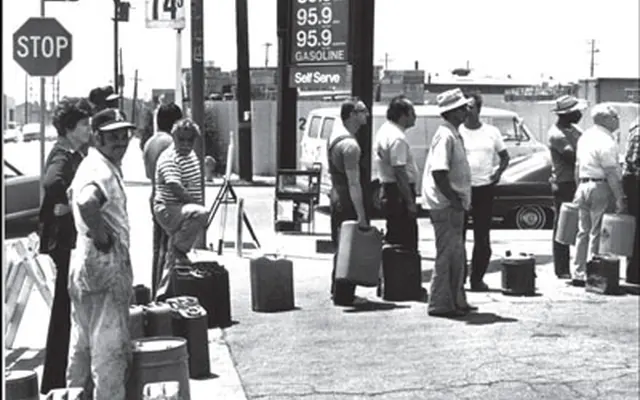
Every war has a winner, but sometimes identifying who that may be is not a simple task - nor a neutral one. This episode explores the international aftermath...
Play Episode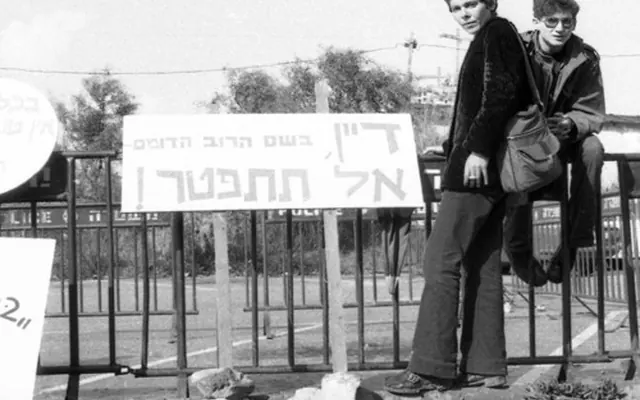
TJS S4E20 The domestic aftermath
The shock waves of the Yom Kippur War ripple through Israeli society down to our day, but the days immediately after tell a story all their own. This...
Play Episode