
TJS S4E19 The international aftermath of the Yom Kippur War
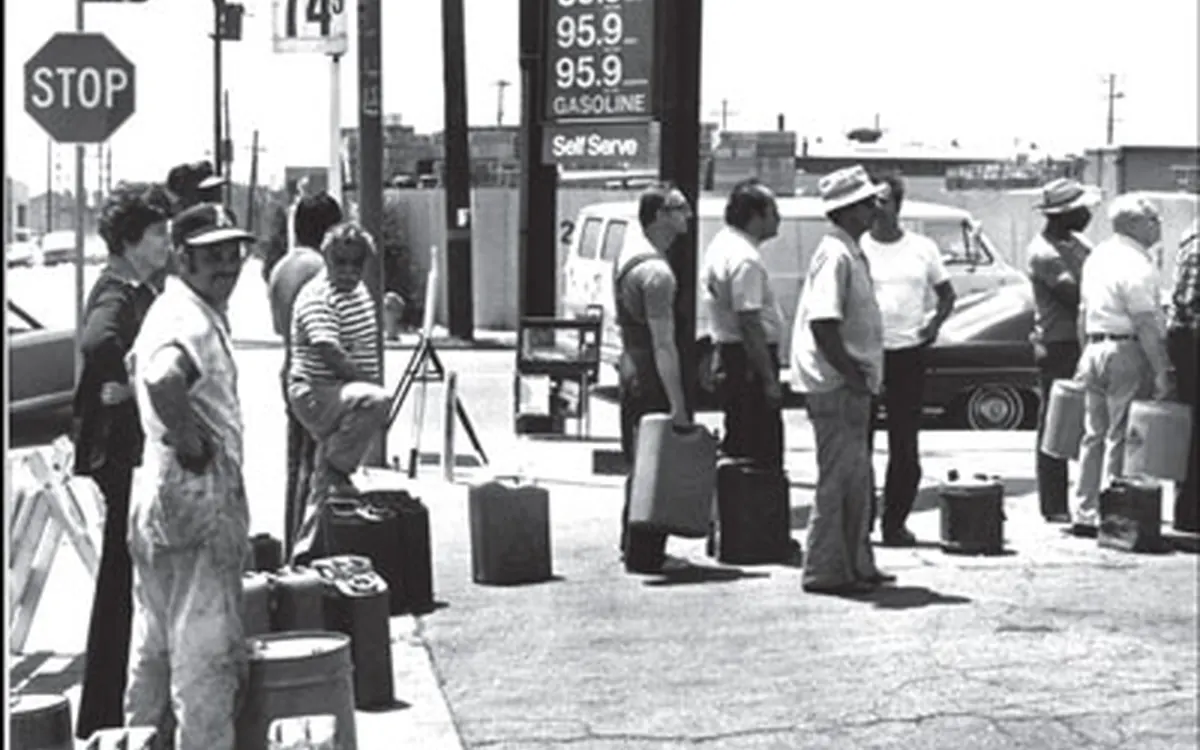
Every war has a winner, but sometimes identifying who that may be is not a simple task - nor a neutral one. This episode explores the international aftermath of the Yom Kippur War, explaining how the super power confrontation, the Arab oil embargo and the international peace process all created different winners of the conflict. Learn about Organization of Arab Petroleum Exporting Countries and how it affected the United States under President Jimmy Carter.
About this episode
The secret of all victory, said Oswald Spengler, lies in the organization of the non-obvious. Telling the story of a war means saying who won, and in the hundred-year Arab-Israeli conflict that has become impossible, since who you think won depends on who you thought was right. By the fact that Israel still stood when the ceasefire was signed in October 1973 we might call it a win, yet survival at such a price hardly feels like victory, especially once Washington prevented the IDF from smashing its enemies and the Sinai lay ahead for return. Sadat declared victory before the war was over, and Cairo built a vast panorama museum to the glorious October triumph. Rav Mike long laughed at a museum to a victory that never happened, until he began to wonder whether the Egyptians had not in some real sense won.
Israel exists, battered but unbroken; Egypt can claim victory and a healing of Arab pride; OPEC and the Americans emerge as winners while the Soviets suffer a clear defeat. Within the Jewish story the figure Rav Mike most wants to understand is Henry Kissinger, who may have been the biggest winner of all, fighting his own front. Kissinger built the American airlift, stalled the Russians for two days, and would reshape the balance of power in the Middle East. His moment of ultimate power came when the ceasefire of Resolution 338 began to unravel on October 23rd. General Bren Adan, ordered to halt, well knew how officers in 1967 had pushed to the canal and made new facts, and the near-encircled Egyptian Third Army offered a victory that might end the Egyptian threat for good.
Messages flooded in, from Egypt, from Ambassador Keating relaying Golda Meir, and most ominously from Brezhnev, who accused Israel of treachery and demanded joint action. When Israel severed the last roads and cut off the Third Army, Brezhnev warned that the Soviets might take appropriate steps unilaterally, the ticking bomb of Cold War talk. With Nixon consumed by Watergate and kept from the room, Kissinger and Alexander Haig raised American forces worldwide to DEFCON 3 and answered Sadat in the president's name, warning of catastrophe if the two nuclear powers met on Egyptian soil. Kissinger kept the alert secret and was surprised to hear of it on the morning news. At a televised conference he escalated a regional war into a nuclear showdown and called for a just and durable peace, classic brinkmanship, and it worked.
Having faced down the Soviets with Sadat's cooperation, Kissinger held the fate of thirty thousand cut-off Egyptian soldiers in his hand. The Israeli generals strained to force a mass surrender or slaughter, yet Kissinger saw Sadat's sense of honor as essential to any future peace and knew the Egyptian president could not survive the crushing of his army. So Israel received a blunt message: allow resupply of the Third Army or America backs a UN withdrawal to the October 22nd lines. The agreement signed at Kilometer 101 on November 11th brought a formal ceasefire, guaranteed resupply through UN checkpoints, and a prisoner exchange, the first direct negotiation between Israel and any Arab country since 1948. In two weeks Kissinger had pushed the Soviets aside, pocketed Egypt, and shaped the next decade, a decisive tie that made him a clear winner.
Then there is the oil front, which explains even the American 55 mile speed limit, mandated by the 1974 Emergency Highway Energy Conservation Act through federal highway funds. When Nixon took the dollar off gold in 1971, ending the Bretton Woods order, the value of OPEC's petrodollars plunged while a world shifting from coal to oil grew more dependent, and Europe drew eighty percent of its oil from the region. After Nixon dismissed the embargo threat as a bluff and won emergency aid for Israel, the Arab producers halted exports, and oil leapt from under three dollars a barrel to near twelve. The embargo proved a blunt weapon of war but a superb instrument of price fixing, leaving OPEC a permanent power. The peace process too was born here, and Kissinger told Geneva that the great tragedies occur when two rights face each other.
Key ideas
- In the hundred-year conflict, who won depends on who you thought was right, and Israel's survival at a terrible price hardly felt like victory.
- Sadat declared victory before the war ended, and Cairo built a panorama museum to an October triumph Rav Mike long thought never happened.
- Kissinger fought his own front, building the airlift, stalling the Soviets, and reshaping the balance of power in the Middle East.
- When the Third Army was cut off, Brezhnev's threat of unilateral steps brought American forces to DEFCON 3 and the world to the nuclear brink.
- Kissinger spared the Third Army to save Sadat's honor, and the Kilometer 101 agreement became the first direct Israel-Arab negotiation since 1948.
- The oil embargo made OPEC a permanent power and even shaped the American speed limit, and the peace process was born at Geneva.
Chapters
- 0:00 Who won the Yom Kippur War?
- 2:09 Israel battered but unbroken
- 4:19 Sadat declares victory; the Cairo panorama
- 6:33 The Soviets lose, America wins
- 7:41 Kissinger fighting his own front
- 9:51 The ceasefire unravels; the Third Army
- 13:00 Brezhnev's threat of unilateral steps
- 16:19 DEFCON 3 without the president
- 17:21 Brinkmanship on live television
- 21:41 Kilometer 101; a decisive tie
- 22:48 The backstory of the 55 mile limit
- 26:04 Off the gold standard; the petrodollar
- 28:17 The embargo; oil quadruples
- 33:51 The peace process as winner
- 36:04 Geneva; the theater of diplomacy
- 41:42 Two rights face each other
Who, where and when
People
Henry Kissinger, Anwar Sadat, Golda Meir, Leonid Brezhnev, Richard Nixon, Moshe Dayan, Bren Adan, Kurt Waldheim, Hillel
Places
The Suez Canal, Cairo, Moscow, Kilometer 101, Geneva, New York
Texts
UN Resolution 338, The Kilometer 101 agreement, The Emergency Highway Energy Conservation Act, The Bretton Woods Agreement
When
October 1973 CE: the ceasefire, October 1973 CE: the oil embargo begins, November 1973 CE: Kilometer 101, December 1973 CE: the Geneva Conference, 1971 CE: the dollar leaves gold
Read the transcript
The secret of all victory, said Oswald Spengler, lies in the organization of the non-obvious. Well, I gotta say, nothing is really obvious to me anymore, but I'm trying to get organized. I'm Rav Mike Foyer, and this is The Jewish Story. Season 4, Episode 19, The International Aftermath. So anytime you tell the story of a war, you have to say who won. It's kind of in the rules. And though I might call that a general requirement, how one goes about doing so can really get quite complicated depending on which war is being discussed. But when it comes to the Arab-Israeli conflict, this hundred-year war that we are still fighting, it's become downright impossible. I mean, you may have noticed that in the last round of fighting between Hamas and Israel, both sides claimed victory.
And who you think actually won largely depends on who you thought was right to begin with, not on what happened on the battlefield. And much of that narrative front in the conflict reaches its crystallized state with the Yom Kippur War. Let's start here. By virtue of the fact that Israel still existed when the ceasefire was signed on October 25, 1973, we could say that she won. But Israeli society is going to show cracks quite quickly around the question of whether it's worth continuing to pay such an awful price simply to survive. And furthermore, around the vision that might offer something beyond survival. But that's a story to come in the episodes that lie after this. For now, just recall that in most people's eyes, Israel emerged in 1948 as the clear victor.
She was an independent state, wounded but standing, while the local Arabs were refugees or a conquered populace, and the invading states had been beaten to a standstill. Now, I know there are those, like my friend Yehudah Cohen, who label 1948 as a loss from many perspectives. I mean, after all, it was really Egypt and Jordan that expanded their territory at the demise of the British mandate, and Israel did lose Jerusalem. Nonetheless, 600,000 Jews alive in an independent state is an unquestionable win when you think of the alternative that was intended by her enemies. 1967 is even less in doubt. I mean, who questions Israel's victory in the Six-Day War, tripling territory, smashing her enemies in dramatic battles?
Of course, today, there are many in Israel and abroad who see the fruits of that victory as the bone in the throat of the state threatened to choke our society. and bring down the whole project. But even if one agrees with them, fumbling the fruits of victory and losing aren't the same thing. No one in Israel felt that they had lost in 1967, nor in the lead up to 1973. But what about the Yom Kippur War? I mean, we had survived, yes, but is that really victory? As we're going to explore a little bit further on, Israel was prevented by their American patron from smashing their enemies. And whatever territory had been seized on the Cairo side of the canal was easily offset by the Egyptian gains to the east.
And then there's a diplomatic process ahead, one that will place the Sinai back in Egypt's hands. So I'll leave it to your wisdom, whether we're going to call this a win or simply not a loss. So how about Egypt? Well, Sadat was declaring victory before the war was even over. In this speech before an extraordinary session of the People's Assembly, given on October 16th, that's fully a week, before the first ceasefire, Sadat proclaimed, I do not think you expect me to stand in front of you in order that we may boast together about what we have realized in 11 days, the most dangerous, magnificent, and glorious days in history. Perhaps the day will come when we shall together, not to glorify ourselves and boast, but to remember, to study and teach our children, grandchildren, and successive generations the story of our struggle, the bitterness and sufferings of defeat, and the sweet taste of victory and its hope.
The feeling that the Israeli front line will soon break forward, the confidence that the war on this front will soon be over, is spreading. This afternoon, as Syrian shells fell behind them, soldiers sat and sang in their bunkers as if they were already celebrating victory. But their optimism does not affect everybody here. Now, there's a lot that we could mine out of that short paragraph, not the least of which is the linkage Sadat made between the sweetness of victory and hope. After all, you want to be quite careful in reducing your enemies to a state of hopelessness. But that speech, for our present purposes, is the beginning of a narrative which has become a given truth, one accepted in the Arab world and well beyond, that Egypt won the October War, as it's named in the Arab world.
Now, I have to tell you, if you don't know, that there's a museum in Cairo dedicated to the glorious Egyptian victory of October 1973. It's called the 6th of October Panorama in English. And it's not just a museum. It's the largest tribute to Egypt's military prowess in the country. and there are a number of them. And at 31,000 square meters, renovated in 2019 with the latest display and interactive technologies, I'd call it a narrative cornerstone. Now, when I was in Cairo, we didn't actually go into the museum. We just looked at it from afar. But I've been laughing ever since about the notion of a museum dedicated to a victory which never happened. And that was back in 1994. That's a lot of laughs. But, you know, lately, it doesn't seem so funny to me.
Not just because of the narrative conflicts that surround us today and how much they swirl around who really won any particular round, but also because I'm not so sure the Egyptians didn't win. So here we have it. Israel exists, battered but unbroken. Egypt can at least claim victory, and with it, a healing of Arab pride not to be undervalued. As Sadat said in that same speech of all soldiers, Egyptian and Syrians, You have waged war like real men and shown the perseverance of heroes. And like I said, within five years of giving that speech, he'll have the entire Sinai Peninsula back in his hands. Now, there's another combatant in this conflict that we haven't named yet. The Core Arab Countries of OPEC.
That's the Organization of Petroleum Exporting Countries. And we'll speak at the end of this episode about their front in the battle and how when the smoke cleared, they emerged as big winners. So Israel, Egypt, OPEC, oh, and, of course, the Cold War, the Soviets, suffered a clear defeat. I mean, not only had their client refused to heed the warning against going to war in the first place, but their arms had been soundly defeated in the field. Furthermore, Israel wouldn't be a Soviet satellite for long. Even before the war, Sadat had been inching out of their orbit and seeking the patronage of the U.S. So that's a big loss. What about the U.S. themselves? on some level, even a time of detente, the Cold War rules still stand.
And they dictate that if Russia lost, America won. So there you have it. We could call it a victory. And certainly in November of 1973, the United States was on the fast track to becoming the power broker in the Middle East. The arc of Soviet power that began with the Czech arms deal between Nasser and the USSR back in 1955 had made them a real force in the region, essentially ends with the Yom Kippur War. Of course, they remain an important presence to this day, and getting more so every hour sometimes it seems. But in 1973, the United States emerged as a winner. And in a time when President Nixon was, let's call it, domestically focused, meaning fighting for his political life over the Watergate scandal, one he would lose, by the way, that was largely due to the agency of Secretary of State Henry Kissinger.
So beyond the American Cold War calculus, when I come to the Jewish story, I'm really interested in understanding Kissinger and in asking if, in some sense, at least within the Jewish story, he wasn't one of the biggest winners in this war at all. He might have, in fact, been fighting his own front. Now remember, Kissinger was the architect of the massive American airlift that helped the IDF win the war. He was also the one who stalled the Russians for more than 48 hours and gave Israel the time to consolidate its gains before the first ceasefire kicked in. And in the epic diplomacy which lies ahead, Kissinger will be the most active agent in reshaping the balance of power in the Middle East, which adds to his status as one of the most powerful people in the entire world.
But before we can come to that diplomatic dance, I want to begin with a moment in which Henry Kissinger came as close as possible to touching what might be called the ultimate power, when he put his finger on the nuclear button. When the Soviet and American-sponsored UN Resolution 338 went into effect on October 23rd, declaring a halt to all military activities in the locations currently held, Israeli General Brent Aydin was not a happy man. Now, we spoke last episode about how this dissatisfaction led to a creative interpretation of what it means to halt in place. But Aydin wasn't Sharon. own. In the end, an order was an order. At the same time, he well knew that in 1967, Moshe Dayan had ordered the IDF to halt their advance six miles short of the Suez Canal, but the officers in the field had brought their men right up to the water's edge and created a new political reality for Israel.
Now, Dado Eleazar, who as chief of staff right now in this war had given Aden his orders to halt, had in his role as commander of the Northern Front in that war, also stretched the ceasefire almost to the breaking point in order to complete the conquest of the Golan. So a ceasefire is important. And an order is an order. But the destruction of the Egyptian Third Army, which he had almost surrounded, offered a victory which might mean the Egyptian enemy would never rise to strike again. And the general was not alone in this feeling, not in the field, and not in Tel Aviv. And so it was that when Henry Kissinger arrived in his office in the late morning hours of October 23rd, after having taken a few hours of well-earned rest upon returning from Moscow, he found that his ceasefire was already unraveling.
The first message came from the Egyptian National Security Advisor Hafez Ismail, complaining that Israel was occupying new positions in total disregard of the ceasefire itself. A report from U Ambassador Ken Keating came next detailing a troubling conversation that he just had with Prime Minister Golda Meir The Prime Minister had originally rejected her general staff request for two or three more days of fighting They claimed they needed to finish off the Third Army But now she was claiming that the Egyptians themselves had violated the ceasefire and that the IDF would therefore resume fighting until they ceased. The third and most ominous message that Kissinger got was from Soviet Chairman Brezhnev.
Soviet intelligence had confirmed that the Israeli forces were on the move towards Suez City, and they knew that if it was taken, it would leave the Third Army stranded and at complete mercy. Brezhnev wanted an immediate security council condemnation for what he called a flagrant deceit. And so when Kissinger raised Prime Minister Muir on the line a few minutes later, he had a less than gentle suggestion that the IDF just pull back a few hundred yards and announce their compliance with the ceasefire. How can anyone ever know where a line is or was in the desert, he said. Oh, they'll know, all right, was her reply. And soon enough, he knew as well. The Israeli moves had severed the last road links between Cairo and the canal, and the Egyptian Third Army was completely cut off.
Soon after this, another message arrived from Moscow, this time addressed to President Nixon. But remember, at this point, the president was entirely out of the loop. Kissinger was on his own recognizance with foreign policy, and the situation was spiraling fast. Brezhnev accused Israel of treachery. He demanded that the U.S. and the Soviet Union take joint action to stop the fighting. Almost together with this message, President Sadat sent a plea to Nixon as well, begging for American intervention, even if necessary, the use of force, anything to implement the ceasefire. He was worried that Israel was going to march on Cairo. Kissinger immediately rang up Israeli Ambassador Simcha Dinetz and extracted from him a pledge that Israel would observe the ceasefire if Egypt did.
And then he wrote notes informing Brezhnev and Sadat, signing them in the President's name. The UN Security Council met that afternoon, Tuesday the 23rd, to reconfirm the ceasefire and dispatch observers to the front. Now you might think that that meant everything was fine. That evening, Defense Minister Moshe Dayan and the head of the UN Emergency Force in Cairo agreed that a second ceasefire would take hold at 7 a.m. local time. That's Thursday, the 25th of October. But the day and a half in between actually brought the world to the brink of nuclear war. On the 24th, Soviet Chairman Brezhnev received an intelligence report from his ambassador in Cairo. The Israelis were still ignoring the ceasefire.
The Third Army was completely cut off, and the Egyptians feared that the IDF was already rolling its tanks toward Cairo. An urgent message from Sadat arrived to him soon after, asking for Soviet troops or at least observers to be sent that very night. Sadat informed the chairman that he'd also asked the same of the Americans. Now, there was little enthusiasm for military invention amongst the members of the Politburo, especially when the United States stood potentially in the opposite camp. Nonetheless, the Soviets couldn't be completely supplanted by the Americans, and they did feel that something must be done to help Sadat. And so it was decided to hint to the Americans that the Soviets might actually intervene unilaterally in hopes that that would worry them enough to pressure their silly clients and stop the violations of the ceasefire without any need for boots on the ground.
So they composed a message to President Nixon, calling for the dispatch of American and Soviet contingents in order to ensure the implementation of the ceasefire. It was mostly standard Diplo speak, but it ended with the equivalent of a Cold War slap to the face. I will say it straight, that if you find it impossible to act jointly with us in this manner, we shall be faced with the necessity urgently to consider taking appropriate steps unilaterally. We cannot allow arbitrariness on the part of Israel. now that phrase appropriate steps unilatery is the ticking bomb of all Cold War negotiations and it was at that point that Kissinger reportedly called Ambassador Dennett and said to him, you want the third army?
we won't go to a third world war for you, meanwhile at the White House, Kissinger had gathered three groups of Soviet, Arab and UN experts to try and evaluate the text of Drezenev's dispatch and figure out what to do, after this came an Emergency National Security Council meeting called for 11 p.m. that night. Now, international crises involving nuclear powers are normally the province of the president, officially the chairman of the NSC. But Kissinger and White House Chief of Staff Alexander Haig decided that Nixon was basically in no condition to be making weighty decisions. They didn't even wake him for the meeting. And by 11.30, with conflicting reports of Soviets mobilizing airborne troops and perhaps even shipping nuclear missiles to the region, the NSC decided to raise the readiness of American troops around the world to DEFCON 3.
They also approved the message Sadat in Nixon's name, aiming to persuade him to drop his request for Soviet intervention by warning that the U.S. would challenge any Soviet force that appeared in the area. I ask you, the message read, to consider the consequences for your country if the two great nuclear countries were thus to confront each other on your soil. Now, Kissinger decided to keep the DEFCON 3 alert secret, only informing his NATO allies at 2 in the morning and letting the Soviets figure things out from their own intelligence. And that's why he was, in his own words, surprised as hell to hear about the elevated defense status when he turned on the 7 o'clock news the next morning. Shortly after noon that day, things had begun further to spiral.
It's October 25th now, and Kissinger held a televised news conference. His message was clear. We possess, each of us, he said, nuclear arsenals capable of annihilating humanity. We, both of us, have a special duty to see to it that confrontations are kept within bounds that do not threaten civilized life. Both of us, sooner or later, will have to come to realize that the issues that divide the world today do not justify the unparalleled catastrophe that a nuclear war would represent. Nobody can gain from introducing great power rivalry or by compounding great power rivalry. The overriding goal in the Middle East must be a just and durable peace between the Arab nations and Israel. That the United States is prepared and indeed determined to promote.
and that is the issue to which we should address ourselves. This is classic brinkmanship, escalating a regional, conventional conflict into a Cold War nuclear showdown. And it worked. The following weeks were neither simple nor smooth. Israel continued to maneuver toward the destruction of the Egyptian forces in Sinai. Sadat waffled, the Soviets blustered, but in the end, Kissinger got exactly what he wanted. First, he called the Soviet bluff on sending anything more than observers into Egypt. Frankly, if Moscow had wanted to send troops to Egypt, there was nothing to stop them. By the end of the war, there were 95 Soviet ships in the Mediterranean, mostly off Turkey, well away from the hostilities, but close enough.
And there were 6,000 Soviet Marines on board ship. And they had tens of thousands of airborne troops available to be added to their ongoing airlift. they could have been there in a matter of hours. But, in response to the American note, Sadat had withdrawn his request for Soviet troops, and Brezhnev was probably as relieved as anyone else over that. Except for the fact that the Soviets knew, just as well as Kissinger, that Egypt was now officially on the fast track to becoming an American client state. So after facing down the Soviets, with Sadat's cooperation, Kissinger had to prove his worth and to demonstrate to the world the new extent of the U.S.'s role as the sole power broker of the Middle East.
Toward that end, he held the fate of 30,000 Egyptian soldiers in his hand. Now, by the time the heat went out of the nuclear confrontation, the Third Army was facing disaster, and they were cut off even from a water supply by the Israeli encirclement, surrounded by artillery and without air support. The generals, Sharon, and even David Eleazar, and frankly, from some of the documentation, Moshe Dayan and Goldmayr too often on, were chomping at the bit to force either a mass surrender or engage in wholesale slaughter. The pressure on Prime Minister Mayr and Defense Minister Moshe Dayan from the field and the general staff was enormous. That psychological rebirth that had been achieved by the encirclement was to be followed up in the eyes of the military men with a victory which would embody the words we heard from Sharon last episode, to beat them so decisively that they would develop the conviction they could never win.
But that was exactly what Kissinger didn't want, and so it was not to be. Kissinger saw the sense of honor and victory that Sadat had expressed in the speech I quoted earlier as essential to the future of peace in the Middle East. And he knew that the Egyptian president would have no political future, or perhaps any future at all, if Israel crushed his army. And so Israel also received a clear message from the Secretary of State. Allow a resupply of the Egyptian army immediately, or the U.S. will back the United Nations' demand for withdrawal to the October 22nd lines. Now this would have been a strategic disaster for Israel. They couldn't risk a break with their only international patron, especially not as American weapons were rapidly replenishing the supplies consumed in the all-out push that had turned the war around.
And a withdrawal to previous lines would mean breaking the encirclement, a move that would not only weaken the tactical position in the field, but would simply erase the diplomatic leverage that the end of the war had brought. And so, really, it was a foregone conclusion. In the end, an agreement was signed between Israel and Egypt on November 11th at kilometer 101. It included a formal ceasefire, a guarantee of resupply for the Third Army via UN checkpoints along the Cairo-Suez Highway, checkpoints that would replace the IDF positions, and an exchange of prisoners of war. And so in the space of two weeks, Kissinger had pushed the Soviets aside, pocketed the Egyptians, and achieved what he saw as a critical precursor to regional peace, a decisive tie.
I'd say that makes him a pretty clear winner on almost all fronts. With a few swift moves, he pushed the Soviets out of Egypt, left the Israeli and Egyptian forces intertwined but under ceasefire, and basically shaped the next decade of Middle Eastern politics. Not a bad day at the office. I love the history of things You ever think about the fact that everything around you really everything you see as you move through the world has a backstory Nothing comes into being ex nihilo Everything comes from somewhere, and that means it tells a story. And sometimes, the story that explains how a particular thing came to be proves to be a chapter in a much larger tale. For instance, and of course for our purposes, I couldn't take a better example than the 55 mile an hour speed limit.
If you're American, or if you've spent any time driving in the U.S., you've seen countless signs warning you not to exceed 55 miles per hour, which I'm sure you ignore, just like me. But have you ever wondered where that number came from? It is not a matter of safety, nor the result of some deep insight offered from urban planning. It's because of an undisputed winner of the Yom Kippur War, one who fought its battle on a front that we have not yet named. On January 2, 1974, the U.S. Congress passed the Emergency Highway Energy Conservation Act, which mandated a maximum speed limit of 55 miles per hour on America's highways. Now, if you happen to be a student of the history of constitutional law, you may know that the federal government actually has no legal power to force states to comply with such a law.
So instead, the Act made the adherence to the 55 mile per hour speed limit a precondition for states to receive federal funding for highway repair. This is, if you know American history, yet another use and perhaps abuse of the Commerce Clause in the Constitution to undermine states' rights. But I digress. Anyway, for our purposes, this serves to introduce to us the oil embargo that crippled the world economy as a direct result of the Yom Kippur War. Now, you may have noticed the date of the bill, January 2nd, 1974, and be wondering, well, didn't the ceasefire kick in at the end of October 73? Yes. And while Nixon had actually proposed the energy saving measure already back in November, that's still after the war had technically come to an end.
But not really. Because the battle on the oil front lasted much longer. and in a certain sense, it has yet to end. Now the threat of an embargo was nothing new in this war. In fact, the Arab producing states had attempted to wield the oil tool back in 67. They declared on June 6 an embargo on any country which dared to support Israel militarily. But due to the speed of that war, as well as a lack of solidarity between the producers and any uniform approach to who was being cut off, it basically had no impact. 1973, however, was radically different. And in some ways, the scope and efficacy of this boycott reflected the changing global economic realities that had happened in the space of less than a decade.
In 1971, President Richard Nixon took the United States off the gold standard. It's a move that, in all honesty, deserves its own deep historical analysis. I mean, it represents, in many ways, the end of the 1944 Bretton Woods Agreement that shaped the post-World War II global economy. But for present purposes, the main impact was that as a result of coming off of the gold sander, countries could no longer redeem their U.S. dollars, which they held in their foreign exchange reserves, for gold, which meant that the price of gold skyrocketed and the value of the dollar plunged. And that meant that the members of the Organization of Petroleum Exporting Countries, OPEC, found themselves facing potential economic ruin.
These governments, dominated by the Arab bloc, all collected their revenues from the international consortiums operating on their territories in U.S. dollars. In fact, oil revenue and the dollar were so linked that they called them petrodollars. That meant that in 1971, the value of their exports, oil, plummeted, while the cost of their imports, basically everything else, and most of it came from Europe and Asia, stayed the same or even rose in response to the American move. That's a lot of money down the drain, but still not enough to spur concerted action. OPEC was actually formed in 1960, so it's no new player, but it was not yet the price-controlled cartel which we know today. In that first decade or so, the organization kept basically a low profile.
They functioned as a collective negotiation tool between countries and international oil companies aiming to get better terms. And as I mentioned, even Israel's lightning victory of 1967 found them without a coordinated policy. But not so 1973. Because we have to add one more piece, and that's a crucial shift in energy technology around the world. The early 70s were marked by a general shift from coal-based to oil-based industries. Now, there were good economic and even environmental reasons for that shift. But until 1973, the political implications went largely unconsidered. We heard the story of Operation Nickelgrass, the American arms lift to Israel, back in Episode 17. And I want to be clear. We know now that the real impact of the airlift wasn't so much on the battlefield as it was on the psyche.
The vast majority of the arms reached Israel after the tide had turned. Nonetheless, knowing they were coming allowed the IDF to expend its resources without concern, and it also demonstrated in American resolve that Israel not lose the war. The Arab governments have been warning Washington since 1967 that their support for Israel would provoke an oil embargo should another round of fighting come. And sure enough, on October 17th, 10 days after the initial surprise act, 10-11, a group of Arab ministers visited Kissinger to protest the airlift that had begun on the 14th. But President Nixon basically decided that they were bluffing. And on October 19th, he requested Congress approve $2.2 billion in emergency military aid for Israel in order to make the airlift happen.
And the results were immediate. the Arab members of OPEC declared a halt on oil exports to the United States and any other Israeli allies. Now, the U.S. was far from dependent on Arab oil at the time. In fact, it has never drawn more than 15% of its oil supply from the Middle East. But in 1973, Europe depended on the region for 80% of its consumption. We saw the immediate results of that back in Episode 17 when we discussed the airlift, when America's NATO allies refused across the board to allow overflights or illegitical supports at all for the American effort. Only Portugal risked OPEC's wrath by allowing the use of its bases in the Azores. But oil is a global market, no matter what its origin of supply.
The formal embargo lasted from October 19, 1973 until March 1974. And by the time it ended, oil prices had jumped from $2.90 a barrel to $11.65. That's by a factor of four. I wonder how many people listening can recall lying to the gas stations that snaked around the block, maybe waking up before dawn either themselves or their parents to fill the tank if they could. They remembered states enforcing odd-even rationing, meaning drivers with license plates that ended in odd numbers could get gas on odd-numbered days and the opposite. The Middle East war produced developments all over the world today. The oil-producing countries of the Arab world decided to use their oil as a political weapon. They will reduce oil production by 5% a month until the Israelis withdraw from occupied territories.
If the Arab countries keep that pledge, it would reduce their production by almost 50% in one year. There were diplomatic maneuvers at the United Nations, in Washington, and in Cairo. and there is a savage and possibly decisive tank battle raging in the Sinai Desert. The decision to cut back on oil production as a weapon against Israel was taken at a meeting in Kuwait, which was attended by the Syrians and the Egyptians as well. Less Arab oil won't hurt the United States much, but it will pose quite severe problems for the Japanese and especially for the West European countries. Here's a report on the meeting in Kuwait. Even before today's meeting began, there was an announcement in Kuwait that prices for Arab oil were going up.
A huge increase voted in an overnight meeting without even consulting Western buyers. You know, it's in my eyes a mark of how much the world has changed that a similar, if smaller scale event just happened and was caused by hackers rather than an international consortium. But if we wanted to look with a full global eye, we'd see that the impact of the embargo went well beyond gas prices. In fact, many economists see it as the trigger for the 1973-75 recession of the U.S. economy. That's an event which will have vast domestic and international implications, some of which we'll explore for the Jewish story. And the effects of the embargo continue well beyond the 70s. I mean, it may have ended in 1974 in March, but that itself being of course a questionable move seeing the war itself had ended in a ceasefire more than four months previous but oil prices never really returned to what they were and in truth as a tool of war the embargo proved a blunt and somewhat ineffective weapon but it was an excellent economic device because OPEC had discovered a new power to achieve its goal of price stabilization We might call it also price fixing.
And trust me that after 1973, the real value of oil became a permanent secondary factor in its price, secondary to OPEC's power to dictate terms through a collective agreement on production and export. The full scope of the changes forced on the world by the embargo lay beyond our current discussion. But it's not an exaggeration to say that it helped shape the political, economic, and technological environment in which we operate today. And since it was the embargo that created that power, and since today OPEC controls more than 40% of the world's oil supply, along with 60% of the exports and 72% of proven reserves, I think we have ourselves another undisputed winner of the 1973 war. There's one more contestant and perhaps big winner of the Yom Kippur War that we have yet to name.
the peace process. Not peace itself, that poorly understood, much misconstrued, and oh so precious name of God. Let it be soon, let it be now. I'm not talking about peace itself, I'm talking about the process. The political mechanisms, domestic and international, which began to build themselves into a freestanding reality in the wake of the 1973 Yom Kippur War. A reality that today is so robust, it has its own lobbyists, and even in some countries political parties. Now, don't get me wrong, I'm not opposed to a process approach, and as a student of Torah, and particularly of the story of Gan Aden, I well understand the dangers of those who over and reach out just to grab the product but I do wonder what exactly this process has ever produced I not quite cynical enough to say that no good has ever come of the peace process that began after the Yom Kippur War, but it does worry me that so many people, parties, politicians, and even nations seem committed to keeping it alive regardless of what it produces.
I mean, how many nails have to be put in the coffin of the peace process before you run out of wood? How many times can it be revived before we get the sense that this is not a hope for real life? It's some kind of zombie in a B-rate film that clearly represents something else, which we may or may not want to keep alive. In a formal sense, the beginning of the process lie with the signing of that Kilometer 101 six-point agreement that I mentioned that was signed on November 11th, 1973. It was the real formalization of the ceasefire between Israel and Egypt. Beyond the important practical results for stopping the fighting, the Kilometer 101 agreement represents the first direct negotiation between the two countries since Israel's establishment in 1948.
That means ever. And not just between Israel and Egypt, but between Israel and any Arab country. So that's a clear win for peace and not just process. but beyond Kilometer 101 things get murky really quick as we spoke of earlier the United States Secretary of State Henry Kissinger saw that ceasefire as the beginning of a diplomatic process one that he aimed to use to pull Egypt into the American orbit push the Soviets out of the Middle East and frankly put Israel in its place and toward that end he hoped that the Kilometer 101 agreement would lead to continued direct negotiations between Egypt and Israel under his aegis, of course. Prime Minister Golda Meir and her cabinet were wary of this new American embrace of Egypt.
Nonetheless, they recognized its potential benefits. I mean, better that Egypt be answerable to America than the Soviets, and they shared Kissinger's desire to get the Russians out of the region. Furthermore, the Israeli Egypt had long insisted that direct negotiations were a necessary precondition for real peace. I mean, much of the Arab leadership had been insisting for decades that even agreeing to talk to Israel was already a concession, something that struck Prime Minister Meir and her cabinet as a losing formula, and now, for the first time, they were actually speaking face-to-face. Nonetheless, international diplomacy has a momentum all of its own, one that sometimes can't be denied. The UN Security Council Resolution 338, which ended the fighting for the Yom Kippur War had called for negotiations to start between the parties concerned under the appropriate auspices aimed at establishing a just and durable peace in the Middle East and the Security Council was not to be denied.
After a first round of what eventually became known as shuttle diplomacy, meaning bouncing back and forth to regional and world capitals Kissinger managed to put together a multinational forum headed by the United States, and I'm sure somewhat to a chagrin, the Soviet Union as well, and sponsored by the United Nations. The first meeting was to be on December 1st, 1973. Now, from the outset, the conference did two things. On one hand, it established the enduring illusion that only international community can make peace in the Middle East. I don't know about you, but when I listen to how the leaders of the world describe us in the news, I often feel like they're talking down to disobedient children.
I mean, it's a bit of a holdover from the colonial era. And I call this one of the enduring illusions, because in my humble opinion, since the time that the British Empire took over from the Ottoman Empire here, the intersection of international interests with regional diplomacy has been a cause of most of our problems, and thus offers very little hope for a real solution. I think we need to work things out on our own. But that's a story for another time. The other enduring result of the conference, which was also a bit of an illusion, is that it amply demonstrated the truth. The international diplomatic feeder plays into the hands of radical stances and quickly becomes an end unto itself. Now, from the outset, Egypt and Jordan said as a precondition to their participation that there would be mediators, so that, God forbid, they would never have to converse directly with Israel.
Now that despite the Kilometer 101 agreement, because the media profile here was much higher. Furthermore, they declared that the sole purpose of the conference wasn't peace to be made in wake of the recent war, which Egypt had begun, but rather Israel's retreat from the territories conquered in 1967. There's that other piece of theater. We didn't actually come to talk. We came to dictate terms. Now Israel on its side refused to negotiate with the Syrians before they made public the list of Israeli soldiers taken as prisoner of war and allowed Red Cross visits. Syria refused to participate in the conference altogether, though they did leave an empty table there with the Syrian flag so they could feel represented.
The Arab countries wanted France and Britain there, but Israel and the superpowers refused. The Palestinians weren't even let through the door of the opening session, but there was a floating promise that they could come at a later date, if Israel could be made to agree. And I won't even go into the fact that the entire conference was chaired by UN Secretary General Kurt Waldheim, a man whose Nazi past would emerge clearly after his election to President Austria in 1986. You see where I'm going with the theater? The reality is, the conference went nowhere. Follow-up on the opening session was actually postponed to allow for Israel elections at the end of December, a story that we'll tell. And then, as perhaps Israel, Egypt, and America hope, they simply never reconvened.
I mean, the idea of reconvening the Geneva Convention, as we'll see, hovers as a threat in international diplomacy. But it never happened. Nonetheless, the speeches made at the opening session are worth considering, if only briefly, to glean the grains of truth which even political theater can't obscure, and to hear that no matter how much things change, somehow they manage to say the same. Syria is not to be trusted in the honorable treatment of prisoners of war, Helpless prisoners of war are shackled and then murdered in cold blood. We have reported 42 such cases to the International Commission of the Red Cross. The Syrian government creates wide circles of anguish and uncertainty amongst hundreds of families and thousands of citizens.
I'm ready to keep you here for three hours and tell you how the Israelis act and react, what kind of atrocities they do, what their armies are doing, Even Mr. Even cannot deny that his planes bombed booby traps on villages in my country. To kill what? Farmers. Children. The conference has a unique opportunity to come to grips with the most difficult, dangerous, and complex international problem, said Secretary of all time. Unless progress can be made, the ceasefire and the United Nations peacekeeping arrangements already in operation in the area will remain fragile, and there will be ever-present danger that fighting will break out again. I mean, it's true, but I want you to remember his words as in coming episodes we watch the UN transform from hopefully part of the solution to a core expression of the problem in the world.
Or, as the Soviet representative, Foreign Minister Gromyako said, the intolerable situation in the Middle East created because of the policy of Israel cannot continue. We should like to hope that the participants in the conference will recognize this, that they came here with the firm intention of laying the foundation for a just settlement. Meaning, of course, that Israel is the sole problem in the Middle East, and frankly, when you put that together with where the UN is headed, the sole problem in the world it sometimes looked like. Now, Gromekio was echoed by the raw hypocrisy of Egyptian foreign minister Ismail Hami, whose country, remember, had just unleashed a surprise attack on Israel. And he said, only when warlike acts and aggression cease to be the maximum of Israel, which is trying to convince the world that its very existence can be built on military rashness and supremacy, only then can a just peace at last be envisaged for the region.
But I want to temper my cynicism, if I can, and end on a more hopeful and really, to me, intriguing note from Secretary of State Kissinger, who really is his own front in this war at the very least from the perspective of the Jewish story. He gave a beautiful speech and in it he said the following. There is an Arab saying he said, which means that the past is dead. Let us overcome old myths with new hope. Let us make the Middle East worthy of the messages of hope and reconciliation that have been carried forward from its stark soil by three great religions. The great tragedies of history, he said, occur not when right confronts wrong, but when two rights face each other. Those are words to really contemplate.
When two rights face each other, the great tragedies of history occur. We do not pretend that there are easy answers. A problem that has to fight for solution for a generation does not yield to simple remedies. in all efforts for peace the overriding problem is to relate the sense of individual justice to the common good the great tragedies of history occur not when right confronts wrong but when two rights face each other the problems of the Middle East today have such a character there is justice on all sides but there is a greater justice still in finding a truth which merges all aspirations in the realization of a common humanity. And then, for those who think that Kissinger was devoted to denying his Jewish heritage, he closed with the following note.
The problems of the Middle East today have such a character. There is justice on all sides, but there is greater justice still in finding a truth which merges all aspirations in the realization of a common humanity. It was a Jewish sage who, speaking for all mankind, expressed this problem well. If I am not for myself, who is for me? But if I am for myself alone, who am I? I just want to thank some folks before I sign off. I want to thank all the folks who give their hard-earned money to make the show happen, keep it free and widely available. I want to invite you to join them right now. Go to my website, jewishstory.co, In the upper right-hand corner, you'll see a button there that says Be a Patron.
You can click on that to give a little bit of per-podcast support. I also want to thank the Land of Israel Network for creating a platform that allows me to reach so many wonderful people. I want to thank the Pardes Institute, P-A-R-D-E-S dot org dot I-L, for building an educational institution that gives me the privilege of teaching so many amazing Jews. And I want to thank you for listening. I'm Rav Mike Foyer, and this is The Jewish Story.
More from Season 4
TJS S4E18 Yom Kippur War VI The end game
Some people play a perfect role in the Jewish Story, and in this episode that will be US Secretary of State Henry Kissinger and General Ariel Sharon. As...
Play Episode
TJS S4 Interlude: Despite it all
Here is a rant on the current struggle in Israel and Gaza. There is something in it for everyone, both to provoke and inspire. Make sure you don't...
Play Episode
TJS S4E20 The domestic aftermath
The shock waves of the Yom Kippur War ripple through Israeli society down to our day, but the days immediately after tell a story all their own. This...
Play Episode