
TJS S4 Interlude: Despite it all
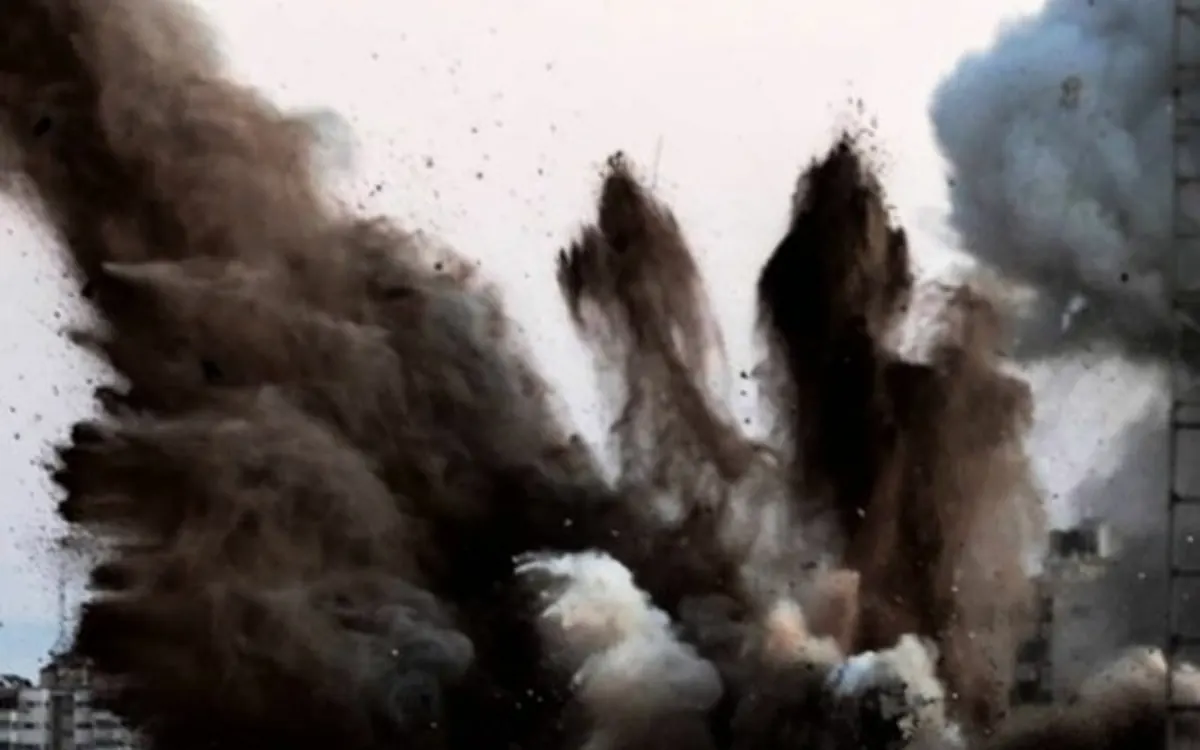
Here is a rant on the current struggle in Israel and Gaza. There is something in it for everyone, both to provoke and inspire. Make sure you don't miss the message at the end!
About this episode
We must ourselves do all the work, said A.D. Gordon, and then and only then will we have a life of our own. Rav Mike comes down off the mountain after Shavuot feeling more than a little confused, caught in the gap between the experience of revelation and its content, between light and the vessels that hold it. Three thousand years after Sinai we are still building the vessels Moshe gave us, and something was revealed again in 1967 that Am Yisrael has yet to receive. He reads our deep split over whether that moment began a redemption or ended the dream of a state as proof the light is too big for us, and the task ahead is to build new vessels that make that power constructive rather than letting it swirl chaotically around our national project.
He feels we are living the end of the book of Judges, when there was no king and everyone did what was right in their own eyes, and the thing we lack is malchut, a structure that lets all the pieces of all the peoples in the land come into right relationship. When you are lost in the woods the answer is to stop, yet the danger is racing forward without knowing you are lost. Zionism carried revolutionary energy and broke what bounds it could, a re-entry vehicle into the land whose released energy we have never learned to hold, which is why a century of chaos has swirled around us. Watching bloody riots erupt in mixed cities like Lod, he recalls the 1921 Jaffa riots a century before and feels history pushing us from behind.
At the foot of the mountain waited the news, and he names the media lens on his life a narrative front, an assault on his very existence. The Gemara in Shabbat teaches that Sinai is the mountain on which hatred descended to the nations, because to be Am Yisrael is to embody Torah, and a people that chooses to be different will be resented. He traces the arc from the indigestible element of empire to the obstinate refuser of Christian salvation to the alien other of modernity, and now the postmodern charge that our insistence on a homeland is the cause of the world's ills. Against the reply that is just your narrative, he answers that stories used to justify oppression do not make standing up for our own story an act of oppression, and he vows to keep telling the story that refuses to die.
One face in the news he liked more than before was Mansour Abbas of the Ra'am party, meeting the right-wing mayor of Lod and pledging to help rebuild synagogues the mobs had burned, a willingness to risk bad optics and his own constituency that models the confidence and courage our leadership badly needs. Rav Mike sees the Islamic narrative as far more on the side of the solution than the problem, and can imagine a thriving Islamic tribe inside a true Malchut Yisrael. Against the jihad that would sacrifice its own children, he turns to the Meiri, who defined the idolater by corrupt and dangerous action rather than belief, as anyone lacking dat venimus, religion and civilization. That offers a shared divine reality to almost all humanity while naming what truly must be subdued.
He admits he agrees with half of what drives the radical progressives, that the world is nowhere near where it needs to be on the environment, economic justice and political change, while the other half strikes him as narrative madness from a culture that worships the self. Looking at his students in that crowd, he hears an echo of Rav Kook's Ma'amar HaDor, where the pioneers who cast off the yoke were seeking greatness rather than an easier life, a gadlut the Torah of exile could not offer. Their hunger is for a moral greatness, the spirit of the prophets, worthy of praise. Exhausted by selling a homeland to those who turn up their noses, he closes with Yosef Chaim Brenner, killed in the 1921 Jaffa riots, and his cry of af al pi chen, despite it all, come home to Jerusalem and have the conversation.
Key ideas
- The light that came into the world in 1967 is too big for our vessels, and the task ahead is to build new ones that make its power constructive.
- We are living the end of the book of Judges, lacking the malchut that would bring all the peoples of the land into right relationship.
- The riots in mixed cities echo the 1921 Jaffa riots, a sign that history is pushing us from behind.
- The Gemara teaches Sinai is the mountain of hatred, since to embody Torah is to be resented, and ours is the story that refuses to die.
- Mansour Abbas meeting the mayor of Lod models the courage our leadership needs, and the Meiri defines the idolater through corrupt action rather than belief.
- Rav Kook saw the pioneers seeking greatness, and Brenner's af al pi chen calls us, despite it all, home to Jerusalem.
Chapters
- 0:00 The light of revelation and its vessels
- 2:13 A light from 1967 we cannot yet hold
- 3:16 The end of Judges; malchut
- 4:18 Lost in the woods; stop and ask
- 5:25 Zionism as the re-entry vehicle
- 7:39 Pushed from behind; the 1921 Jaffa riots
- 8:46 The narrative front; the war of the lens
- 10:55 Sinai, the mountain of hatred
- 11:58 To be Am Yisrael is to embody Torah
- 14:08 The story that refuses to die
- 15:14 Mansour Abbas meets the mayor of Lod
- 18:35 An Islamic tribe within Malchut Yisrael
- 20:54 The Meiri; idolatry as lacking civilization
- 23:07 Agreeing with half the progressives
- 24:22 Rav Kook; the pioneers sought greatness
- 27:50 Come home to Jerusalem; Brenner
Who, where and when
People
A.D. Gordon, Rambam, Mansour Abbas, Rav Kook, The Meiri, Yosef Chaim Brenner, Yosef Trumpeldor
Places
The land of Israel, Jerusalem, Lod, Jaffa, Mount Sinai, Gaza
Texts
Shabbat 89a on Mount Sinai, The book of Judges, Rav Kook's Ma'amar HaDor, Brenner's eulogy for Trumpeldor
When
1921 CE: the Jaffa riots, 1967 CE: the light that came into the world, 2021 CE: the riots in Lod
Read the transcript
We must ourselves do all the work, said A.D. Gordon, from the least strenuous, cleanest and most sophisticated, to the dirtiest and most difficult. Then, and only then, shall we have a culture of our own, for then we shall have a life of our own. Oh, a life of our own, and maybe even a little bit of culture. That's what I'm longing for. I'm Rav Moik Foyer, and this is The Jewish Story. Interlude, Season 4, Despite It All. I don't know about you, but I'm feeling more than a little bit confused. Some of it is definitely the post-Shavuot confusion. I'm not just speaking about that jet-lagged feeling that comes with staying up all night and learning Torah and eating cheesecake. I'm talking about the nature of our relationship to Revelation.
You know, Moshe Rabbeinu had to bring down a whole Torah just to hold the moment of Revelation. it's often missed that there are two things happening at all times in history. There's the experience of revelation, and there's its content. And what lies between them is our ability to hold and translate into action. There's light, and there's vessels, as our mystic tradition teaches us, and the two are intimately related, but not exactly the same. When it comes to Sinai, we're still working on developing the vessels that Moshe gave us to hold that revelation, much less on receiving the light that came into the world than then. That's a very long process 3,000 years later. And when I look around me at what's happening in the world in general, and right here in my home of the land of Israel, I'm finding the situation a little bit hard to hold.
You know, one of those verses that gets thrown around a lot this time of year is, when God brought us back to Jerusalem, to Zion, we were like dreamers. And there's many wonderful things that have been said on that. But what is really speaking to me right now is the fact that the return to Jerusalem was an event so big we needed to be knocked out just in order to witness it. It was so transformative that we couldn't have undergone the process in our waking minds. And part of me wonders whether we've really waken up at all. The Rambam says that all the angelic visions in the Bible are actually dreams because revelation can't be received by the waking mind. And I feel to a certain degree that's what's underlying the situation in which we find ourselves today.
Something was revealed in 1967. If you've been listening to the Jewish story for a little while, then you know a little bit about what I think about that. It's time for you to think about what you think as well. Some light came into the world. the problem isn't with the light the problem is in our power to receive it and when Am Yisrael is so deeply split over whether this was the beginning of a redemptive moment or whether it's the end of our dream of having a state of our own when we can be split around the occupation versus greater Israel we can be split about such fundamental elements of the nature of our people that tells me that there's a light so big we have yet to receive it on some level we need another revelation one to two teach us how to hold something this big.
The task ahead is to build new chalene to hold that light. New vessels that allow us to take the power that came into the world and make it constructive. Because I don't know if you've noticed, it's kind of chaotically swirling. You know, my gut feeling is that we are living through the end of the book of Shofre, the book of Judges, which is a fantastic and problematic book of the Bible, which basically is about periodic, you could call it failed leadership, you could call it charismatic leadership, but what you can't call it is malchut. You can't call it kingship. You can't call it the creation of a context that allows all the pieces of our people, all the pieces of all peoples living in this land, to come into right relationship.
That's what malchut is. It's the building of a structure that allows us to relate. On the other hand, at the end of the book of Shofim, we're told, There was no king in Israel in those days. Everybody was doing what's right in their own eyes. Now, I'm all for doing what's right. Don't get me wrong. The challenge is when the only standard of reference we have for what we're doing is our own eyes. You ever get lost in the woods? Or were you taught what to do? If not, then I'll be the first to tell you. The answer is stop. Once you realize that you're lost, stop because you don't know where you're headed. And perhaps, just maybe, someone out there is looking for you. The problem lies when you don't know that you're lost.
When you're traipsing down the trail, putting every ounce of energy you have into pushing forward toward that destination which you so desire, completely unaware that you're getting further with every step. See, when people race off in every direction, doing what's right in their own eyes, and they don't ask the question of whether it's actually what's right, then that's where a lot of problems can come into the world. Now, Zionism historically was certainly rooted in the everyone do what's right in their eyes. Revolutionary energy is an important one. It broke as many bounds as it could on the way to a new reality because one of the things that brings this energy into the world is the sense that I don't know what's right, but I can tell you that what's around me is wrong.
And I know a lot of us are feeling that. And I want you to think about the fact that Zionism is only a phase in our return to land. It's the re-entry vehicle, if you will. And the impact on the surface has been quite deep, but we have not yet built the vessels that can hold the energy which it has released. Hence, like I said, the chaotic energy which has swirled literally around our national project for a hundred years. I know it's cliche to say that history repeats, and it doesn't even sound so clever anymore to say that when it doesn't, at least it rhymes. But I will point out that the cyclical nature of our experiences can often offer us a wildly variant set of experiences. What do I mean? Sometimes it feels like we're chasing history's tail, and sometimes it feels like we're being pushed from behind.
As someone who's lived here in the land of Israel for more than, oh man, more, that's an exaggeration, for 20 years, this is not my first time around the wheel. I've gone through every phase you can imagine. Fear, anger, shame, pride, they're all in the mix. And whatever it is you're feeling, I advise you, as your counselor, to let yourself feel it first before you judge whether it's right or wrong. And when I look out at the news or I look out the window and I see what's happening, I feel like we've been here before. Now, part of me feels like I'm chasing history still, that maybe this time there's a vision out there beyond five years of quiet. There's someone who's willing to make a malchut, to build a society which can actually hold all the pieces here in our land and never forget, if you're going to be a king with a kingdom, you're responsible for every human life within your borders, no matter how it defines itself.
I'm hoping that perhaps there's something more than mowing the lawn in that awful metaphor of killing in order to gain quiet. But I have to say that as I watch things shift in the news, I have this feeling that that's not what this round of the story is about. We may be chasing the tale of history, but the future lies just out of reach right now. We have not yet drank to the bottom of this barrel. because more than anything else, when I watch the eruption of rage on the streets, it has me feeling that rather than chasing the tale of history, we're actually being pushed from behind. If you've been a listener since season two, first of all, good on you. Second of all, you probably know that bloody and destructive riots like we've seen in the streets in the last week and a half, sparked by, let's just say, Jewish presence and growing Jewish power have been an episodic event around here for literally a hundred years.
That's not an exaggeration. Just at the beginning of May, we mark the 100th anniversary of the 1921 Jaffa riots in which dozens of Jews and Arabs were killed and hundreds more injured Destruction like you can believe So this is the feeling that I have coming down off the mountain on Shavuot, that the task we hold is to build the vessels which can contain, channel, and make productive the light which was granted to us in 1967. And you know, if we don't manage to do that, then God forbid it might continue to blind us. So, came down off the mountain, just like the rest of Am Yisrael. And despite these airy thoughts, what was waiting there at the foot? The news. I'm not sure we can even say the news anymore.
That definite article died long ago. And if it were ever true that they were giving us just the facts, ma'am, then I doubt it is so any longer. Because right now I'm looking out at the world, at the media lens on the reality I'm living, and I have to call it the narrative front in the salt on my very existence. Let's just call it what it is. You know, I saw a tweet which encapsulated my experience of the hate, the bias, the lenses, the craziness, which I see unfolding in the virtual space around the very real events that are rocking my world. And what that tweet said was 90% of anti-Israel Twitter is downright evil, and 25% of pro-Israel Twitter is downright embarrassing. It's true. And I say that knowing full well that there are people, good people likely, out there who are saying the exact same thing simply with the numbers reversed.
Nonetheless, I refuse to give in to relativism in my narrative. because what I see from the relatively safe spot I have here on the edge of madness gives me no sense of surprise. I'm not shocked whatsoever looking out and seeing the old hatreds and the new world order looking to arise which has, lo and behold, identified the Jews as the manifestation of the overarching evil which much be opposed, the ultimate oppressor from whom the world must be liberated in order that we can finally be free. And why am I not surprised? First of all, I know this story too well. Second of all, this is actually, in many ways, the oldest part. It was another piece of the revelation I had on Shavuot. You know, the Gemara in Shabbat, 89a, you should look it up.
It's worthwhile to see the details. Ask a seemingly simple question, why is Mount Sinai called Mount Sinai? After all, it's a rather significant piece of real estate in human history. so it goes back and forth as the Gemara always does offering options and rejecting them in turn until finally we get the final answer my Har Sinai, what exactly is this name Mount Sinai? Har Sheyar the Sina Lumoto Lamalav it's the mountain upon which hatred descended to the nations of the world. Sina is hatred in Hebrew, Sinai of course is the name of the mountain. When I told this to my children, they were say disturbed but not shocked because they, having grown up here with as much of a liberal education as I can slip in through the door, still understand a very basic fact of human history and Jewish history which is that what it is to be Am Yisrael is to embody Torah in the world.
And I'll leave it to you to decide what exactly that means, but you must do the work in order to figure it out because if you fail to embody Torah in the world in some way then you have cut yourself off from your people. And if we're embodying Torah in the world, then we have chosen to be different. And let's face it, the world doesn't like it. In one sense, the Jewish story can be traced from that moment at Sinai through an arc that you probably know if you've been listening for any amount of time, the indigestible element of empire during Rome, the obstinate refuser of Christian salvation, the alien other of modern civilization. And as I look around, especially at the media, and I see the tidal wave of hatred, which is not new, but still strikes the gut nonetheless, it comes as no surprise whatsoever that now, in the postmodern era, our inexplicable insistence on a national existence in our ancient homeland is suddenly seen to be the cause of all the world's problem.
And I have waded in here and there to the media battle. Well, granted, a few of you reached out to me and said, Mike, what do you think? Frankly, I almost have nothing to say because I know that I'm preaching to the choir. So many people aren't interested in listening. When I've tried to point out that even if I'm willing to leave aside the entire history of the modern world, our story still militates for the necessity of our land as the solid ground upon which we can stand and defend ourselves, to say nothing of its actual meaning for our mission. And if I struggle to clarify the scale of our story, how it's many-faceted but not relative, how it has implications and high stakes for all humanity, how its messiness is not an accident or even a product of our failures, but actually the source of its redemptive potential, that that is the theme of the Jewish story, which at its core is the human story, that humanity fails forward.
When I try to point these things out in a way saying, yeah, it's complicated, but on one hand, I refuse to die. On the other hand, I refuse to hate. Well, then our post-truth era raises up its head. In this time when all the noble stories have died a cynical death, shechted by the cynicism of people who simply don't want a heroic cult action. when I try to tell our story, run the risk of receiving the reply, that's just your narrative, man. And no story can justify oppression, right? Well, that's an important question. Because the fact that stories have been used to justify oppression doesn't mean that standing up for our story makes us oppressors. And so I'll add to this fact of indigestible element of empire, obstinate refuser of Christian salvation, alien other of society, the final phase, please God, let it be the final phase of opposition to Am Yisrael, which is that we are the story that refuses to die.
And so no matter how the news may spin it, no matter how the jihadis may fight it, no matter how the world may hate it, we refuse to die. And I'll continue telling that story until my final breath. Now, there is one thing I can say that I did like about the news that I looked at, Motei Chag. After 20 minutes of scanning, there was only one politician on my horizon that I liked any more than before. And that was Mansour Abbas. He is the head of the Ra'am party. And saying that, to me, speaks volumes. I was looking at a picture of his meeting with the mayor of Lod. Lod is the mixed Jewish-Arab city in which the worst riots have happened over the last week. And the mayor is a right-winger, not so beloved of his Arab residents.
And if you know who Mansour Abbas and the Ra'am party are, then you might be surprised at their meeting, because it's likely that the Ra'am United Arab List, which describes itself as a religious Arab Muslim party associated with the southern branch of the Islamic movement in Israel, contains some voters who are out there on the streets looting and burning. I'm going to say that name again. a religious Arab Muslim party associated with the southern branch of the Islamic movement in Israel. It's a mouthful of a name, and if we wanted to, we could take it apart and have a history lesson on probably the last several decades, if not 50 years, of Israeli history. Don't worry, I'm not going to do it now.
But what you do need to know is that the southern branch of the Islamic movement, split with the northern branch, over a very specific question, whether participation in Knesset at the time around the Oslo Accords is worthwhile or not. In other words, whether there can be a simply Islamic narrative without a nationalist narrative, which is the modern equivalent of replacement theology, claiming to be the people of this land Now if you were paying attention then you know that Mansur Abbas visit to Lod was more than just goodwill Ra his party is looking to turn their four Knesset seats into the key which can unlock Israel's political logjam. And, of course, there's no question that this photo op is part of Abbas's goal of exploiting that power to the hilt.
More power to him, by the way, because that's what parliamentary politics encourages. Frankly, I'd like to do away with the system altogether, but so long as we have it, you've got to give him credit. Because considering Israel's crass political culture, his approach looks downright modest. Now, I don't know what it is he's actually after, but what he says he's after is the good of his constituency. And considering, like I said, that some of his constituency was likely involved in the protests, if not in the violence, then seeing him meeting with the mayor and pledging to help rebuild some of the synagogues that had been burned by the mobs is something important to me. I saw someone willing to risk bad optics and even the opposition of his own constituency.
And you can tell me that this was simply a cynical bid to cast the attention of others, people like me who want to believe that something is possible. But nevertheless, despite that, it speaks to a sense of confidence and a willingness to take risks, and both. And those are qualities. confidence, a willingness to take risk, those are qualities that we need in our leadership right now, Arab and Jew alike. You know, in my eyes, the Islamic narrative is overwhelmingly on the side of the solution in our national situation, and far less on the side of the problem. Because when I think about Malchut Yisrael, the real kingdom of Israel, which provides a context in which all the peoples of the region, much less those actually living in our land, can come into right relationship, I can easily imagine a thriving Islamic Shevet, a true tribe of Islam within that.
Now, I know that needs to be fleshed out, and maybe at some point we'll define the terms, but for now, even in terms of our kingdom's present tortured manifestation as a nation-state, a Muslim community that feels a sense of integrity and security within the state of Israel is to be welcome and even desired, certainly over the competing national narrative, which looks only to destroy and seems to be incapable of building. Now, this is true despite the madness of the jihad that we face. The one willing to sacrifice his own children in pursuit of our own? I'm not going to weigh in on that question of whether Hamas represents true Islam or not. I know enough about my own tradition to be well aware how many powerful stories can be told and how many real societies built out of the same sacred text.
But I will tell you that as a Jew, if there's anything I stand opposed to in the world, it's idolatry. Why am I talking about that? Because we were commanded to destroy the altars and drive the idolaters from the land. And you may be thinking that there are none left. You may be thinking that Islam is actually more radical in its monotheistic stance than even we. But nonetheless, I want to say something which is true, and because it's probably a little bit inflammatory. But hear me out. The idolater is the ultimate other within the Jewish law. Even today there are ramifications that run from making wine, sharing public prayer, lending someone your goat. And the question of who qualifies as an idolater is the source of much insight in controversy.
I encourage you to do some learning. Of course, it varies in light of the question at hand. But right now, the question at hand is survival. Not just for us, either. Because I see the people of Gaza not under siege by Israel. It's true, we've closed their border. Of course, so is Egypt. But they're under siege by an evil element of their own society. So the most moving definition I've ever encountered of idolatry is that given to us by the Me'iri, Rav Menachem ben Salam Me'iri. He's a late 13th, early 14th century Catalonian sage. And the Me'iri, when he's trying to define what exactly constitutes an idolatry, looks at the sugyot of the Gemara. He looks at the sections of the Gemara that discuss the legal ramifications of that status.
And he points out that when the Gemara is asking the question, And it's rarely, if ever, dealing in the beliefs of the person at hand. It's primarily concerned with the corrupt and dangerous nature of their actions. It says, you don't let an idolater cut your hair, lest they slit your throat. You don't ride on a raft with them across the river, lest they rob you. You don't lodge in their homes, lest they rape you. And you don't lend your goat, lest they do the same. And so he draws a very important foundational conclusion of what exactly is an Ovid of Avodah Zaraha, someone who serves a strange god. He says it's anyone who lacks dat venimus, religion and civilization. This is fantastic for two reasons.
First of all, it offers a vision of shared divine reality for almost the entirety of humanity. It doesn't matter what your worship looks like. What matters is how you act. That's a very important positive, but it also constitutes a call to action for the people who founded their existence on God's promise that so long as we drive idolatry out of our midst, we will thrive in the land. Because if you're a committed monotheist who's willing to sacrifice your children in pursuit of my own, then you lack dat binimus. You have no religion or civilization and you must be subdued no matter what the cost. So in the end of the day, that's much of what I see when I look in the news and it's a messy situation.
Doubt me if you will, but I bet that I agree with at least 50% of what's driving the radical progressives out there in the world, even the ones who are arranged against us on the streets, in politics, and in the news. I am deeply committed to the fact that the world right now is in no way where it needs to be, certainly on issues in the environment, economic justice, political change, and probably even a swath of social issues. I agree. The world now needs to be changed. And I also agree that many of its problems are structural. On the other hand, I experience the other 50% of what they're saying as sheer narrative madness. As the symptoms of a society whose lack of common good, combined with its radical commitment to individual rights, has caused it to spiral off into the insane rule of wacky theoreticians and the emerging cult of one, a world in which everyone is their own god whom they worship.
Like I said before, it thus surprises me not at all that the society has found the perfect embodiment of Jew hatred in our national collective existence. So, like I said, I look outward, even in the midst of the battle that we're fighting, and I agree that justice is indeed the call of the day. I don't kid myself about the situation in which we've landed here in our homeland. I know that there's much work to be done. But what breaks my heart is how little conversation amongst Jews is actually happening about what that work might look like. You know, I look at my brother and sister Jews amongst that progressive crowd and amongst my students as well, and sometimes I see a deep resonance between them and the pioneering Zionists, believe it or not.
You know, Rav Abraham Yitzchak Cohen, Cook, says in his very important writing, Ma'amar Hador, a statement on the generation, where he engages the reality he found around him in the land of Israel. Pioneers, breaking the mold, doing what was right in their own eyes, as I said before, and casting off the yoke of Torah, which the Rav found so precious. But nonetheless unlike his rabbinic contemporaries Rav Kook refused to dismiss these pioneers as simply another iteration of Jewish history we seen so many times before Jews who throw off the yoke in order to have an easier life It was easier to be Christian. It was easier to be secular. It was easier to be a Muslim. Rav Kook says, you can't say that.
Whatever you want to say about these early Zionist pioneers, as he watched them sinking eucalyptus trees and mud up to their neck and dying of malaria and breaking a new life out of the rocky hillside so that you and I could sit here and ask questions about its worthiness, when he watched them, he realized what they wanted was not an easier life. What they wanted was gadut. They wanted greatness. And Rav Kook in that essay points out that they looked for it outside the Torah because the Torah which they had been offered in Europe was a Torah of katnut, one of smallness. And so that's where Rav Kook first proposes his idea that there's a Torah Eret Yisrael. There's a Torah of the land of Israel which can offer them that ideological, inspirational greatness which they were seeking.
So when I look around at my brother and sister Jews in this progressive crowd, many of whom sadly have thrown off the yoke of Torah and ceased to seek inspiration for redemption and salvation within it, I feel a resonance. Now, they may not be seeking the exact same greatness, but I think that the God-leuth, the greatness that they're seeking, is a moral greatness. It's a moral greatness which requires a different response than the ideological, intellectual greatness that Rav Kooke saw in his contemporaries. And leaving aside the obviously critical question of how we find real standards and measures for moral behavior, this is a quality to be praised and encouraged. It's the spirit of the prophets.
It's what caused Isaiah and Jeremiah to refuse to accept even the slightest injustice, knowing that on some level, it's absolute evil. And that spirit of the prophets is something that Am Yisrael can definitely do more of. On the other hand, I've got to tell you that not only am I exhausted as a Jewish educator trying to sell a homeland to people who seem not to want it, not just to not want it, who turn up their noses in disdain, who are so profoundly lacking in a knowledge of their own story that they really believe throwing us to the dogs will save them or make them more beloved. I'm exhausted by that, and I'm worried that we have drifted so far apart that we no longer share a common language in which we can discuss.
If we don't share a common language, then what needs to bind us together is a common experience. So I want to make appeal. I want to make appeal that right now in the midst of this chaos with the injustice perhaps that you perceive or the justice that you feel so strongly in the life of Am Yisrael in its land there's only one thing to do come home to Jerusalem and have the conversation you know I've got to end this mishmash of thoughts because I can feel myself shooting in every direction possible and I'm not even really sure if it makes any sense but I'd love to have your feedback send me an email robmikefoyer at gmail.com tell me what you're thinking tell me how you feel tell me I'm right tell me I'm wrong tell me what you will but let me know that you're actually listening I'm going to end this appeal to come home to Jerusalem with the words of one of the casualties of that 1921 round of our violence the Jaffa riots and that casualty was the pioneer of the Hebrew literary revival Yosef Chaim Brenner he was killed by the mob defending a dairy farm on the outskirts of Jaffa in 21 Now Brenner is known for many things.
Perhaps his greatest contribution to the spirit of his times was crystallizing that spirit into a very important phrase, af al pi chen, despite it all. Nevertheless, it was a phrase that expressed what was driving he and so many of his other peers to the desperate action of actually coming home to the land of Israel. And speaking about that land, he said the following, they, meaning Jews who hadn't yet come, they should know that the place is not a bed of roses. that the land is poor, hardly magical, wages are low, food is scarce and expensive, the needs are greater than our capacity. All this should be known in the Jewish diaspora, he says, and should give birth to a sentiment of af al pi chen, despite it all.
Now, of course, our material life has improved remarkably since then. Nonetheless, the land is not a bed of roses. I'm not sure it was meant to be until then, it may be that wages are a little higher, and food is certainly plentiful, but the needs appear to be greater than our capacity and it is not a bed of roses, which is why we need you, whoever you are listening, to bring your capacity here to help enter the conversation and perhaps to heal the situation. Now, nonetheless, is a spirit for Brenner of nothing to lose. And one of the problems that we face is that you may feel that out there you have a lot to lose, but it's also something else. He calls it the yearning to start everything from scratch.
And whatever happens, happens. And if you're looking to tear down the world, well, there's no better place to begin building it up again than Jerusalem. We all want a better future. And I promise you, from the bottom of my heart, that no matter how messy things look right now, the road to that future lies through Yerushalayim. So no matter how grim and despairing you may feel when you read the news, or if you're here in the land of Israel, when you look out your window and you see what appears to be an impossible, intractable, maybe even immoral situation. Nonetheless, despite it all, come to Jerusalem to work it out. I promise you, you will not be sorry. And I'll give you Brenner's words as both a warning and an inspiration.
And with this, we'll close. The warning is from his eulogy for another Jewish hero, Joseph Trompeltor. And it essentially amounts in our time to a reminder that you may be able to run from history, but you can never hide. He says, if we left every place in which there was danger, there would be no place we would not have to leave. No position we would not have to retreat from, but to where? And what now? Danger is everywhere. And when tomorrow or the day after it overtakes us in this or that form, will we know, every one of us, that we have no choice? Will we realize the necessity of rising to the occasion? Will each of us stand his ground with the name of Trumpledore and Trumpledore's comrades on his lips in the place chosen for him by destiny?
And that's my warning. You can run from history, but you can't hide. And fortunately, running from history isn't the only option. If you want to seize a redeemed future out of an impossible present and catch the tale of history as it flicks before you, then I'll give you Brenner's despairing optimism as a bit of inspiration. He says only that pioneer, the one who's despite it all, who's af al p'kein, becomes part of their very being, only that halutz, who is ready for everything, not only in words, only they should be allowed to come. They and no one else. And so despite it all, despite the mess and the confusion, the pain and the potential, despite it all, come home to Jerusalem. I want to thank a few folks before I sign off.
I want to thank all the folks who give their hard-earned money to make this show happen. Keep it free and widely available. I want to invite you to join them. You can go right now to my website. That's jewishstory.co. And in the upper right-hand corner, you'll see a button there that says Be a Patron. You can click on that to give a little bit of per-podcast support. You can also send me an email at robmikefoyer.com, robmikefoyer at gmail.com. Or you can send me a personal message at Facebook, Rav Mike Foyer. and I'm happy to share with you the details of how you can dedicate a show in honor of someone who's with you today or many of those who've gone on. I want to thank also the Land of Israel Network, that's thelandofisrael.com, for creating a platform that allows me to reach so many wonderful people.
I want to thank the Pardes Institute, pardes.org.il, for building an educational institution that gives me the privilege of teaching so many amazing Jews. And I want to thank you for listening. I'm Rav Mike Foyer, and this is The Jewish Story. .
More from Season 4
TJS S4 Interlude Yom Yerushalayim (live)
Here is a LIVE Yom Yerushalayim class given in honor of the 10th yartzheit of Fruma Raizel bat Genendel and Nehemia haKohen. It explores the relationship between Yom...
Play Episode
TJS S4E18 Yom Kippur War VI The end game
Some people play a perfect role in the Jewish Story, and in this episode that will be US Secretary of State Henry Kissinger and General Ariel Sharon. As...
Play Episode
TJS S4E19 The international aftermath of the Yom Kippur War
Every war has a winner, but sometimes identifying who that may be is not a simple task - nor a neutral one. This episode explores the international aftermath...
Play Episode