
The Jewish Story: Interlude - Hanukkah: Who Knows Eight?
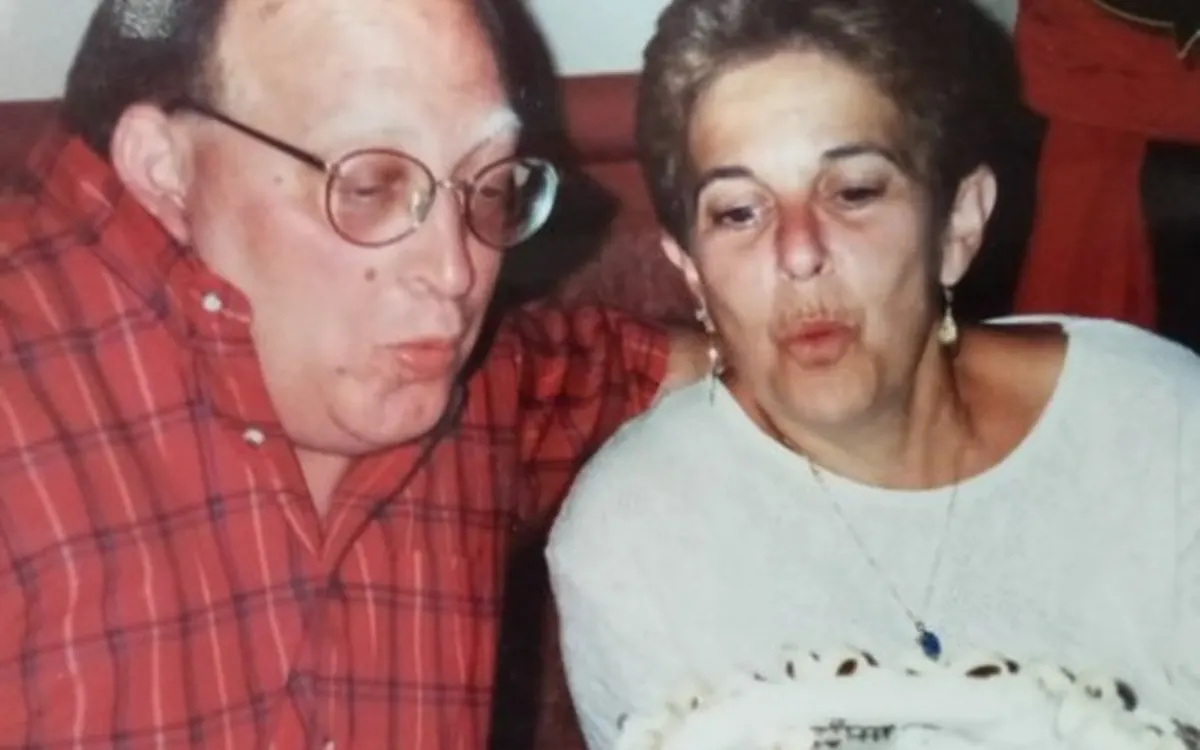
Have you ever wondered why exactly Hanukkah lasts eight days? You may be familiar with the 'jar of oil' answer, but this interlude will give you a lot more to think about. Tune in to Rav Mike's annual class on Hanukkah in honor of the yarzheit of his father, Charles Feuer, obm.
About this episode
Rav Mike opens this Hanukkah learning by summoning the presence of his late father through his very absence, a man who taught by listening rather than by pithy wisdom, and who believed his son capable of anything. Then he turns to the number eight. Numbers in Torah are a language of meaning rather than arithmetic, typological symbols that open dimensions a word would lock shut. Forty is the completion of a cycle, and eight is the number the Maharal of Prague called al hateva, that which rests upon nature. Six are the directions of experience, the seventh is Shabbat at the center, identified last though first in intent, and eight arrives from beyond, the bridge to a realm the Greek mind would keep forever sealed away from our world.
The historical link of eight to Hanukkah is simple. Sukkot was the last festival the Maccabees had missed, so the rededication became a kind of makeup. Shemini Atzeret teaches the heart of it. Across Sukkot seventy bulls are offered for the seventy nations of the whole world, and on the eighth day a single bull for the one unique nation. Greece wanted cultural hegemony, one people who check their culture at the door, a homogenizing vision. Israel offers a harmonizing one, the ecosystem where the bat needs the bird to stay a bird. The Gemara says the Levite lyre had seven strings, and in the days of Mashiach an eighth, the octave, the harmonic step that lets creation take its next rung without erasing its diversity.
Love lives in the specific, since no one is moved by a story about someone who went somewhere and did something. A detail familiar enough to attach to and distinct enough to catch us is where attachment begins, and that is the work of eight. Circumcision on the eighth day carries the same truth. Against the Greek worship of the perfect body, Israel marks the flesh by human choice, declaring that creation is a partnership and that the real power of a Jew is to act through choice rather than autopilot. The Hasmoneans in the cave learned it when they chose to fight on Shabbat, breaking the rule to save the story, and from that bold act of chosen consciousness the whole redemption flowed.
Hanukkah is also the festival of the oral Torah, and here sits a core argument with Greece and with Western culture to this day. Does wisdom come from shrinking the world until my mind can grasp it, or from opening my mind to a world too large to hold? The first is seven, the second is eight. The eight days of oil, absent from Josephus and the books of the Maccabees, tell us precisely where the battle lay, whether we can live in a world that holds a flame burning past all reason. Eight is also dedication, chanukat habayit, bound to the moment in Leviticus when, on the eighth day, fire rained down from heaven and the people finally saw the presence of God they had labored for.
The deepest wonder is that the Maccabees waited for that heavenly fire, cleared the temple, rebuilt the altar, and nothing came. So they made it happen. Twenty-five hundred years later, Jews across the globe, some lighting in secret lest their neighbors see, still kindle the fire the Maccabees drew out of the earth. The Maharal, writing on the splitting of the sea, taught that eight is consciousness shaping creation, Joshua halting the sun only within the horizon of those on God's program. The Hanukkah candles are that light on the horizon, a pirsumei nisa and a call to gratitude, to the claim that there is Teva and there is al hateva, a seven and an eight, and that human action in witness to the infinite is the greatest miracle of all.
Key ideas
- Numbers in Torah speak a language of meaning, and eight is the Maharal's number above nature, the step beyond the sealed Greek world.
- Shemini Atzeret holds seventy bulls for the nations and one for the unique nation, a harmonizing vision against Greek homogenizing.
- The eighth string of the Levite lyre is the octave, the step that lets creation advance while keeping its diversity whole.
- Circumcision on the eighth day marks creation as a partnership realized through human choice rather than autopilot.
- The eight days of oil mark the real battle, whether we can live in a world too large for the mind to shrink and grasp.
- The Maccabees waited for heavenly fire and then made it happen, and Jews have placed that light on the horizon ever since.
Chapters
- 0:00 Summoning a father's absent presence
- 3:08 The number eight; numbers as meaning
- 5:18 The Maharal; eight above nature
- 7:25 Sukkot and Shemini Atzeret
- 8:42 Seventy bulls and the one
- 11:04 Greece's homogenizing empire
- 13:12 The eighth string; harmony not sameness
- 15:25 Love in the specific
- 17:43 Circumcision on the eighth day
- 22:19 The power of choice
- 23:35 Breaking Shabbat to save the story
- 25:42 Oral Torah; wisdom from seven or eight
- 27:54 Eight days of oil; embracing the vast
- 28:59 Dedication; seeing God's presence
- 33:40 Bringing fire down; human action
- 35:45 The Maharal on Joshua and the horizon
Who, where and when
People
Rav Mike's father, The Maharal of Prague, Avraham, Moshe, Matityahu and his sons, Ternus Rufus, Rabbi Akiva
Places
Prague, The Beit HaMikdash, Jerusalem, The split sea
Texts
The First Book of Maccabees, Sukkah 55b, The Gemara in Erchin on the lyre, Leviticus on the eighth day
When
165 BCE: the Maccabean rededication, 1609 CE: the Maharal of Prague dies, 2021 CE: the Hanukkah learning
Read the transcript
Hi everybody, welcome once again to the Artsite Show with my father, Charles Foyer, Tal Ben Havim, Shalom, it's 22 years actually since he passed away. And I wanted to actually just start with a couple words about my father, he's my cousin. We've been together, a lot of us, for quite a number of years in this, and I really appreciate everybody coming. I want to say just from the outset that about a half hour of your time, really. I have a bunch of pieces of Torah that I kind of want to learn together. They fit together in my mind. We'll see if they fit together in your head. But before I do, I was speaking to Zev last week and he asked me how I think of my dad now. Is he somewhere like sitting watching?
Does he really see what's happening? At the time I kind of shrugged you off. I was like, I don't really think about that thing. But it's stuck in my mind because I realized that over the years, I've built up nobody here knew my father. Anybody there? Let's look at the list. No, it doesn't look like anybody there knew my father either. Could have been somebody there on Facebook Live. I don't know. But it's a strange thing to have such a significant person in my life so absent. I've built up, as some of you know, a little bit of what's called a hagiography. I've told you guys stories about the good things and they're all true. I never want to deny him. But I have to say that lately, what's really been on my mind is that sense of absence.
The questions that we like to ask him, many of you guys know that I've started off on a new venture in my professional and personal life. And I would just like to hear it. What do you think? Once somebody asked me, tell me something you remember that your father said. And I'll tell you, I don't remember any sort of like pithy statements my father said because he was always listening. I was listening. I really don't remember anything he said. I would like some of the funny lines, but not guiding wisdom for life, because his whole posture was a listening posture. It's something that I think that it took me a while to acquire, but really came to me from him. Thinking also that frankly, I'm much closer to the age when he left the world than I ever was.
It has a very different meaning to me to see what is the life of like now what we've thought of the world that I live in never met the kids Karen so rather than telling stories I just want to kind of summon his presence at least through the absence and say that the things that I do in so many ways are really a reflection of who I believe that he believed I was I grew up in a world in which somebody tremendously believed that I was capable of anything and said that and made it clear through action and through all the difficulty that the loss still presents for me, that has carried me through. So I guess that's just what I would want to say about him. Maybe we'll come back to the end. I don't know.
But the topic of the Torah that I wanted to speak about is the number eight, right? I mean, by the way, it's getting harder and harder. Those of you guys who've been with me are like, every year I want to think of something new to talk about. Hanukkah, you'd think it'd run out, but frankly, there's always something to say. And the number eight was Mubukacha. It's just like a low-hanging fruit that I haven't really wanted to pick at yet. And here it is. And before we start into the details of really what I wanted to say, it's important to note that numbers in Torah, and frankly, in many philosophical systems, are not really about math. They're not really about math. It's one of the things that I think that puzzles people, whether it's in actually the Torah as in the five books of Moses, or whether it's in the words of the sages, right?
They run into numbers and people scoff. Oh, there were this many people. It's not about math. Numbers are a language which are meant to be meaning. It's what the general philosophical world calls typological symbols. They're numbers that hold meaning. I'll give you an example, right? So how many days did it rain on Noah? Don't be difficult. I shouldn't have pointed at you, right? 40, right? How many days was Moshe on the mountain? 40. How many years were Israel in the desert? 40. How many days until the fetus achieves a differentiation between male and female? 40. Oh, I mean, the word 40 is some sort of completion of a cycle. So you have transition in phase, et cetera. It doesn't mean necessarily that these weren't literal events.
It means that the number is meant to convey meaning. And in many ways, a symbol has much more power than a word. Because words tend to lock in meanings depending on the language as it's used in the generation. And that shifts. But we tend to hear a very narrow definition. Okay, there are connotations and denotations. But words lock in meaning. If I say a number two at first glance, it seems like an abstract. Eight. One more than seven. One less than nine. Thank you very much when we go home. And yet, what it does is it opens out many dimensions of meaning. And what I want to few is explore a few of the dimensions of meeting in the number itself, which is obviously connected to Hanukkah. And then speak about how those can help us access some of the light that Hanukkah has to offer in general.
And I think at this time in particular, let's not forget, I don't know if anybody's out there eating turkey, those of you guys who are in America who instead of watching football right now are choosing to learn a little Torah, I really appreciate it. So some of the aspects of eight. I'd say that's sort of the big number, if you're familiar with the Torah of the Maharal, Maharal in Prague, he dies in 1609, so we're going to put him sort of late 16th, very early 17th century sage in Prague, hence the name, right? He's of golem fame if you're not familiar with him. So the Maharal says quite sort of in a well-known fashion that eight is the number of Me'al Ha'teva. Something beyond, actually he doesn't say Me'al, he says Al Ha'teva, and I think it's quite It's Al-Ateba, something which rests above or upon nature.
Marl is very big into numbers. He talks about the sort of six experiential dimensions, right? In front, behind, right, left, up, down. The seventh, which, of course, in our tradition is associated with Shabbat. The seventh is that which is in the middle. It was always there, but you can't really define it until you have all seven. Think about it. The middle point could be anywhere. You only really know where it is once you flesh out the other six. and six days of the week and then Shabbat. Sof Ma'asadu Mah, Shabbat Tz'ilah. It was the last identified, but it was really the original end. So if that's the case, there's this very neat package, which you end up with is this number eight, which is just like, where?
Where does it come from? It's out. It comes to rest upon, is what I'm going to offer to you. And in very different ways than the Greek, the Greco-Roman tradition would want to say. And that's, of course, a lot of the battle that we're waging here in Hanukkah. and in many ways a lot of the philosophical battle that we're still waging today. So I want to hit a few things. Before we do, obviously, the connection of Eit to Hanukkah, in terms of the number of the days, if we want to go historically speaking, and we've spent plenty of time talking about history, that connection is what, historically speaking? Anybody know? What? No, that's the narrative connection. That's the story. What? Maybe, I would say simpler.
Simpler. Think simple. What was the last holiday that they failed to celebrate? Yes, it was Sukkot. And when the Maccabees came into the Hekal and cleaned the place out, the last holiday, think about what was the last holiday we all celebrated. It was Sukkot. So it was very natural. And the Sukkot, by the way, is bound up, as we'll see, with the humane milouim and the rededication, et cetera. But it makes most sense that they were basically doing a makeup. And so we're going to come to the very important nature of that historical event in a moment. Right. Yes, it's in the second one, I think. And then from the story, which, as I hope you know, those of you who know me, is no less important than the history, right, is Neis Pachacham, sort of eight days of oil, and what exactly that is, and hopefully we'll get a bit of grip on that.
It's a slippery concept. Thank you very much. Thank you. So, okay, let's start with Sukkot. And in particular, let's start with Shemini Atser. Sukkot, of course, is actually a seven-day holiday, technically, because the eighth day of Sukkot, as I'm sure you know, is what we call Chag Bifnei Atzmo. It's its own celebration, and it's a very particular celebration, and I choose that word for good reasons. Why? Because if you look, I'll give you a source here. The Gemara Sukkot 55b, if you want to look it up, says, Rabbi El-Azhar. Rabbi El-Azhar says, the 70 bulls, yeah, well, yeah, they're bulls. 70 bulls that we would offer in the Migdash over the course of the seven days of Sukkot. Can I get me? Like, who do they represent or on whose behalf are they being offered?
Can I get Shivim U-Mud? But this idea that there are 70 nations, and again, in this sort of top, typological language of numbers, seven and 70 are essentially the same. This is specific in general, but 7 in 70 worked out. Why? Because it's the whole world. We're offering on behalf of the whole world. We don't need to go counting where are these nations and what are their numbers. It means we're offering on behalf of the whole world. Par yichidi, but the one bull that's offered on the eighth day, I'm going to say, what's it being offered for? It's connected to uma yichida. It's offered against, or on behalf of, or the sake of, or representing a unique nation. Okay Mashal HaMelech that unique nation of course is Israel And actually before we even get to the Mashal just notice what does it mean that there all the nations of the world and then there a unique nation It not a comfortable notion in today world Not so popular to claim that we're different.
And yet, it goes to the heart, of course, of what Hanukkah was about. So the mashal that the Gemara offers is, right? It's like a flesh and blood king. He said to his servants, right? Hey, folks, all your servants make this big festival. On the very last day, it says, not to his servants, but to his beloved, make me one last little meal, so that I can really sort of take pleasure or benefit or really enjoy what it is that you have to offer. Now, this tension between the particular and the universal, I think, is actually the core Right. Here you have the seven and the one. And that one offers its particular bull on the eighth day. And there's so much that can be sort of learned after this. First of all, it's important to me to note that Greece was a classic empire in the modern sense because they were looking for cultural hegemony.
Hegemony. There's a fun term that you can use with your friends. But one thing, there was a universalist culture. Everybody is welcome to join. Everybody wanted to join. There's only one thing. You got to check your culture at the door. You have to join the team, right? That sort of somewhat famous line from the first book of Maccabees says, And then the king wrote to his whole kingdom that all should be one people. Sounds great, right? And that each should give up his customs. If all are going to be one people, that sounds great. But each should give us customs, you lose with the Jews right there. He obviously didn't know this, even though, of course, it was a section of the Jews that were driving that process.
Nonetheless, the battle between Greece and Israel was a battle between seven and eight. The Greeks said, listen, the way that we actually become one world, one empire, is to be the same. It's one creation, right? and there are these Jews that are always the fly in the ointment, that indigestible element that refuses to play to give up its custom. But Israel offers a very different image of a relationship between the particular and the universal. It's an important one for our day because we're not just particularists and the world can go its way. We offer the 70 bulls. Remember, all that was happening in the Middash, the nations weren't showing up and offering their own bulls. We were doing it on their behalf.
We value the fact that there are 70 nations, But there's a very important last point. It's the number eight as well, which is that if you give up the particular, then that attempt to create the universal becomes homogenizing. You lose the beauty of humanity. It's instead of homogenizing vision, it's a harmonizing vision. It's what I think of as the ecosystem model. In a healthy ecosystem, the bats don't want everybody to be bats. The bats want the birds to be birds, the bees to be bees, and the trees to be trees. Otherwise, they can't be bats. Right? And it's in the insistence that in order for me to be me, I need you to be you and not me, that Israel's insistence on being different comes to the fore.
There's a beautiful Gemara in Erchem that says that in the Mikdash, the lyre, which the Levim played, had seven strings. The seventh string wire was apparently a common instrument at the time. Thank you for that. But it says, it says, it says, Ela, b'yamot ha-Mashiach. In the days of Mashiach, Shmonah. It's going to be an eighth string. What's this eighth string? It's the harmonic. It's an octave. For those who are familiar with the musical, it's the step up. It's the beginning of al. But the world is very whole. And you need all seven notes to make a chord. But if you're going to take the next step, you need the eighth. It's the bridge to the next. And in that, I think there's another very important piece about this particularism that has to be understood, which is that we don't love in the general.
We don't love in the general. The proof, by the way, is in the story, right? Anybody who ever told a story about somebody where I went somewhere and did something, lost your attention right away. The power of a story is in detail because that's what allows us to attach to it. But if the story is too specific, it's about someone you can't relate to, whose experiences are alien to you, it won't excite you to attach. There's a specificity that allows you to attach in love or excitement, which is familiar enough to give you an attachment and yet distinct enough to catch your attention. And that's the relationship between seven and eight. In that sense, eight represents this ability of the specific in creation.
You move from the set of preparatory seven, and then you give me the eighth. And that's what allows for love, as opposed to simply service and responsibility. Notice in the Mashal, it was the big suitor from his abu-dav, his servant. So doing the structure, seven days of creation, it's got to be that way. The eighth day is Me'ohavu. And one of the most beautiful aspects of specificity is it's not that God loves us and doesn't love the rest of creation. It's that Israel exists in order to teach creation that God can love. It's not obvious by any means that God can love. And in fact, one of our arguments with the Greeks, I would argue, is specifically in that realm. What do I mean? The Greek culture and Western culture today is a philosophical culture.
And philosophical cultures reach their perfection in abstraction. If any philosophy majors out there? No? Good. I can say whatever I want. No, the idea is that a philosophical system exists in its perfection, in the abstraction, exists above the world. Never to touch it. In the classic, of course, in the Greek sense, it's known as the Platonic ideal. There's this perfect notion called horse, which you'll never see. And then you have this thing, that horse, this horse, that horse, which are an imperfect expression of an abstract ideal. People familiar with it. The Torah is the exact opposite. The Torah is an organic system. The Torah finds its perfection not in abstraction, but in embodiment. What's the perfect expression of the Torah in the world?
Am Yisrael. Right? Right? Am Yisrael. Right? Min Hagei. Torah. Right? What we do is Torah. But what? You look at the books and it's not really perfect. It's not perfect. Call us. It's okay. Because that's what Torah is. Torah is not some abstract system that resides above the world. It's not transcendent, metaphysical, otherworldly. It's the specific expression of something beyond creation within creation. It's al, not me'al. That's why I like me'al. It's like the metaphysics. right and so that number eight invites us to take the wholeness of creation and embody it in the specific in a way in which the infinite and the finite which brings me to this next element of eight perhaps the best known element of eight in Torah which is Shmona Yimei Mila right circumcision You'll notice, actually, well, I guess it's a bridge between the two.
I do want to say that the holiday of Hanukkah is a holiday of particularism, like I said. And I think it's important to remember at a time where Jews are so divided, left and right, religious and secular American, Israeli, I will say to my last breath that the real thing that divides Jews are those who think Jews are just like everybody else and those who think that we're not. It's not a comfortable thought in our day. Everybody's supposed to be the same, etc. But when we think about what makes Jews different in terms of duties and obligations, in terms of the heaviness of our history and the breadth of our vision for the future, I see these as hopeful things. But this is a lot of what this Chag is about.
If you read the Book of Maccabees, it's very clear that the primary struggle was over that very issue within Am Yisrael. right it was the jews that invited the greeks in and almost begged them to take our culture away and yet it was the jews that fought against and and the ultimate symbol of that which is what my bridge was was milah right it was was circumcision into the point where the first book of maccabees speaks in somewhat embarrassing detail about the fact that jews attempted to reverse the mark of milah yes that is possible even before plastic surgery anybody wants to have to explain. We'll do it when we're not recording. But my point is that this is another number eight. And what does it represent?
Well, I mean, any number of things. First of all, the story of Avraham is a story of God being a partner in creation Right God says to Avraham when he commands him the covenant which has the sign of circumcision Go before me And be, as opposed to Noah. Right? Noah, he walked with God. Abraham went out in front. I remember Daniel used to tell us the Midrash, which he was never able to give me the source. I haven't been able to find it, but I trust him. He's our Rebbe. Right? That Avraham was like an adventurer who came to God in the darkness and said basically, where are we going? And God essentially, I'm paraphrasing, God says, I don't know. Where are we going? Go out before me. Right? That that power of being a partner in creation answers the question that famously Ternus Rufus, who is the sort of amalgamation of all the evil Greco-Roman thinkers, asked Rabbi Akiva, which is if circumcision was so important to your God, then why aren't you born circumcised?
It's actually a decent question. And the answer is exactly what the Maral says, is that no, circumcision represents al-hatab. It's beyond the natural. Wait a minute. If it's beyond the natural, then how can you do it to yourself? What's more natural than that? We're talking about surgery. You're actually taking it down a step. Here's the seven days of creation, the physical manifestation of what it is to be human. And you're marring it, which is, of course, how the Greeks looked at this. In the Greco-Roman culture, the human body in its perfection was an expression of sanctity, of truth, of true beauty. And we said, no, you have to change it. Change a creature. And if you're going to change this, let God change it.
Let it be a miracle. Why does it have to be a rather messy surgery? Yeah, but the answer, I think, comes straight through what we're building here is that the real power in life, the uniqueness of the eighth number above tele comes through choice. It's important to remember that most of our lives function through autonomic nervous systems, right? You're not thinking about the fact that you're breathing. You're not thinking about the fact that you're digesting your dinner. You're not thinking about all of the sort of the biochemical systems that keep you functioning right now. Okay, we'll leave that alone. And as somebody who does an awful lot of counseling, plus has five children and three jobs, I know that most of our behavior is semi-conscious.
So, maybe your physical systems aren't in your control unless you've done some deep meditative yogic practice, but what about your behavior? We might wish that our behavior was a little bit more conscious, but it's not. The vast majority of our behavior is subconscious. The true power of the human being, and I would argue, by the way, the defining characteristic of what it is to be a Jew is to act through choice. and the choice, you could say, but it's a covenant, we're bound, there's always a choice, that's what this story was about. There were plenty of Jews who said, we don't want this anymore, we want to sink into the Greek culture, we want to be part of the seven, not the eight. And those who chose, showed what it is to have a chosen consciousness, because the real Number eight in creation is when the chosen people become a specific expression which can integrate, elevate, and bear witness to the totality of creation through choice.
right? Even though there's historical momentum, there's cultural forces at play at the end of the day, that's why the turning point of the story, if you recall, is when the, you know, the sons, the Hasmoneans are hiding in the cave and they see that their neighbors in the other cave get killed on Shabbat. The Greeks figure out the Jews won't fight on Shabbat. And Torah says, right, if you violate Shabbat, you shall surely die. So they say, well, God told us, we don't have a choice. We have to die. Right? And Matityahu and his sons said, well, wait a minute. If we just wait around and let them kill us every Shabbat, they're just going to hunt us down cave by cave every week and we'll be through. We have to make a choice.
Once upon a time, we had a whole sheer on this idea of it la soot la Shem, right? that it's a time to act for God. Sometimes you have to break the rules to save the story. That's a very risky perspective. But you break the rules to save the story, and that is the ultimate choice. And if you are familiar with the narrative, it's right from there that these Hasidim come out of the woodwork, join with the, yeah, totally, with the strimals and the whole thing, right? They come out of the woodwork, they join with Matthew and his sons, and that's when they march on Jerusalem. it's from that act of choice against the Torah even that the power of this story really flows so so and this idea that the particular and the universal are best harmonized, think of that eighth note on the lyre of Mashiach and that only by insisting that we are different, are we able to actually elevate the difference and the beauty and the diversity within creation?
It's a harmonizing force instead of a homogenizing one. And then B'rit Mila, which really represents the power of choice to elevate creation again on the eighth day. One or two more things. First of all, the next thing I think is fairly obvious. We call Hanukkah Chag T'Rashbel Peh. The celebration of the oral Torah. Obviously our argument with the Greeks had a lot to do with Torah. And what's the connection with Torah in the number eight? It's actually Shavuot. It doesn't necessarily work out so well for our holiday, but seven times seven times seven times seven times seven. Seven times seven gets you to 49, but it's the eighth, so to speak, right? That's why in our cycle, Sukkot has seven days and Shem'i HaTzeret is the eighth.
And the sages say that really functionally, Pesach should have had an eighth day, but we were at such a low level when we came out of Egypt that we needed seven times seven cycles to get us to that eight, which was Shavuot. We just weren't there yet, so to speak. And once again, that number eight, and here it touches on one of the core arguments, which we have the Greek culture, Western culture to this day, which is, does wisdom come from the seven or the eight? Is wisdom a product of the world that we can grasp? right science today is making a follow the science even though of course scientism and that need to believe that science can tell you the truth even when it doesn't even have tools to do so but i would say this way does wisdom come from insisting that the world is small enough to grasp by my mind or does wisdom come from the willingness to open my mind to a world which is too large to grasp.
The first is seven, the second is eight. And there is wisdom, right? There is wisdom amongst the nations. We're not denying it, but is that the only source? Or in another language, it's a battle between reason and revelation. Not to say that the two are intrinsically opposed. The question is does one negate the other? Right? And this was a major battle amongst Israel and the Greeks, which brings us to that narrative piece, the eight days of oil. It's a very interesting question that we've explored at other times. Why the eight days of oil is not mentioned in Josephus, it's not mentioned in the books of the Maccabees. It's only found even in the Tanit scroll, which is the early second temple. We just get eight days.
It's the Aramaic edition that tells us the story of Nefz HaShem. Right? Not to say, God forbid, that it didn't happen. My point is, I don't care. What it does is it tells you what this battle was really about. Which is that it doesn't make sense, according to reason, that oil will burn for eight days, but only lasted for one. But it tells you precisely where our battle lay. Are you able to live in a world in which you can embrace such a notion? Or do you have to shrink the world to fit your mind in order to understand it. Again, you have to shrink the world to be the size that you can grasp in order to find wisdom, or you have to figure out how to embrace a world which is too large for your mind to grasp, and that's where wisdom lies.
Seven or eight. Last but not least, and then I'll round it out. There is this element that De'Ron mentioned of Hanukkah Tabay. How it's called Hanukkah, sort of a dedication, in this case maybe the dedication, and the number 8 is bound up with this from the time in Vayikra where in Leviticus, for those of you who roll that way, it says on the eighth day, after they've been putting up the tabernacle of the Mishkan for seven days, put it up take it down, put it up, take it down, it's like a make work project if you've ever heard one, right? And finally, on the eighth day It says, do this, and you will see the presence of God. What else are we looking for, by the way? What else are we looking for? Other than to see the presence of God It very important to remember that in my humble opinion that the whole purpose of the Torah is to bring the infinite to the finite This is the place where the Greeks don they don go together in the Greek mind The infinite and the finite don't mix.
If both exist, it's physics and metaphysics, and never the two shall meet. Right? We insist. You know what the primary expression of the infinite and the finite in our world is? You're looking at it. I'm Israel. and that's why we don't really fit, right? And that may be uncomfortable. It may be uncomfortable to insist on ourselves. It may be uncomfortable to live historically, but you know what history tells me? You can be as uncomfortable as you want. You can't change that reality. What you can do is live in service of it, because by standing witness to the infinite potential, you give hope to all who see. Remember, the definition of hope is the belief that what is does not define what will be. That's how the infinite gets into the finite.
The finite always defines that if there's a touch of the infinite, that means that there's hope. And so on the eighth day, what do they see? Fire rains down from heaven. Fire rains down from heaven there in the Yikra. Fire rains down from heaven, by the way, in Divirah Yamin, in the book in Chronicles, when Shlomo Melech actually does his dedication to the Minkdash. By the way, on the eighth day as well, And beautifully, if you look, there's a great story about Nehemia in the second book of Maccabees that he, in a very sketchy sleight-of-hand manner, seemed to make fire rain down from heaven in the second temple, too. And here, the Maccabees are waiting for fire to rain down from heaven. And just picture it, right?
They get there. They clear out the temple. They're a passionate battle to only get to the temple. And this is the beginning of the world. It's going to be 20, 25 years. All they're concerned about is the Kodesh Pradeshim and nothing. They clear it out. They rebuild the altar. And nothing. It doesn't come. Do you know what they do? They make it happen. They make it happen. Whether it's a miracle, whether it's a story, you want to call it a myth. The fact of the matter is that everybody in this room, probably most of the people listening, and Jews all over the world, even those almost completely detached from their tradition, will be lighting the fire that the Maccabees waited for 2,500 years later. Now you tell me, which one's more impressive?
Moshe Aaron and the Mishkan? or 2,500 years of people scattered across the globe, some of them in so much danger that they had to light the fire on their inside table lest their neighbors see it and come and pillage. Which one's the expression of the infinite and finite? You tell me. That's one of the powers in the number eight is through that choice and through that dedication and through the insistence that, look, God bless the world. There's the shivim parim. We're going to offer those 70 bulls, but there's that one. And that's who we are. And we know that. And we're dedicated to it. And that dedication gives us power for a rededication. Always for a rebuild. Like I said, there's a lot of pieces here.
Last, but not least this time I mean, I think I said that a minute ago. So we've got the 70 cows and the one, 70 bulls, sorry. That's the particular and the universal, the harmonizing versus the homogenizing. We've got milah, which there's so much more to say about that. But the power of Mila is in its expression of choice. That creation is not a given. And we don't need a miracle to change creation. On the contrary, what we need is human action. And that is the greatest miracle of all. Right? And that expresses itself in many ways through our story. And then, of course, this power of bringing heaven down to earth through number eight. And last but not least, I would be remiss on this holy day of Thanksgiving.
Not to talk about Hoda. Right? I mean, Hanukkah is the holiday of Hoda'ah, of giving thanks. It's where you find the home base and the Rambam of all the laws of Hallel. And of course, it says explicitly in our prayers that they fixed these eight days of Shabbat Hoda'ah, of praise and thanksgiving. Past the church. So there's a beautiful midrash that says that it happened in the merit of circumcision. I want you to keep that in mind, everything we said, but here I actually have a quote. I'm looking at too many sources at once here. A quote from the Maral. We'll end with this idea from the Maral. It says, let's get it. It just doesn't make sense. It's not natural. It's the ultimate eight in his mind. Because if I had go, Everything was created on the six days.
It's natural. But it says, He says, that's why Moshe sang, the first word of Moshe's song was, Az. Az, yesheh Moshe. Alv zayin is eight. Why? He says, that number eight, he says, when the sea split it was it was beyond nature which is the seven days of creation now in order to appreciate aside from the fun you know sort of like number word play here you have to know something about this is from the Maral's work on the access from Egypt there's also this commentary on the Al-Gadda's there so the Maral says something in the second introduction which is this incredible incredible thing He talks about how in his time, the astronomers were troubled because it was the height of observational astronomy. But most of the people doing it were sort of faithful Christians.
They were troubled by the book of Joshua. Because the Copernican Revolution was just getting going. It's just starting to spin, right? And they were troubled by this idea that Joshua made the sun stand still. Because they said, listen, you can't make the sun stand still. It doesn't work that way. the world will stop and everything will get messed up. So Maharal, it's beautiful. You've got to read the introduction there. He takes the philosophers and he smashes them. And then he takes the Jews who have their competing ideas and he smashes them. And he says, just remember, Hashem akoyecho. God is able to do anything. So if God wants to make the sun stop and the world keeps spinning, he's like, what's the problem?
He says that's not what happened. He says it was only for Yehoshua and the tribes that cross the river, they're the only ones for whom the sun stopped. He said the rest of the world, Kiminago no Hege was in Teva, but within their ofek, he uses this language, within their horizon, that's where the sun stopped. Why? Because in that moment, they were operating on a different program. Al-Teva. Operating on a different program, and that horizon was defined by what we today would call their consciousness. meaning when Moshe splits the sea it was the same way who made the sea split who was the one not sure right he was the one whose determination and his consciousness was enough to split the sea I'm going in it's a very unnatural thing to do Moshe on the way out sings the praise of what happens, but they work together to create a horizon at the beginning and the end of the sea, in the same way that Joshua and the tribes, right, they had a horizon.
They were on God's plan, and nature has nothing on that. Now, I want to give you an image, because that power of the horizon, I think, is very important. We call the Hanukkah candles pursuing Nisa, right? They're advertisement of the miracle, right? They're an embodiment of our gratitude for the fact that consciousness can actually shape creation through our choices, through our holding on to the fact that there is a touch of the infinite and the finite, to our determination to be who we are and not necessarily what the world demands us to be by checking our culture at the door. Those candles exist and they represent all those things. And in that sense, they become a light on the horizon. It's not so easy to hold the consciousness of age.
Especially when we live, those of us who live within a majority culture that doesn't exactly encourage us to be different. To be who we could be. Right? But when you light those candles, you're placing a light on the horizon, which is a call to consciousness. A call to gratitude for the fact that God brought down fire from heaven. For Moshe. For Shlomo. maybe for Nechemi, it depends on how you read it. And that the Maccabees brought fire out from the earth, from that oil, and gave it to us all. 2,500 years of placing that light on the horizon, in knowing that there's Teva, and there's Al-Tava. There's the number seven, and there's the number eight. And that is a little bit, to me, of what I found when I went looking for why on earth do we have eight days of Hanah.
And so now I give it to you, and I appreciate you guys' attention, and I want to say that anything that may have been said that was worthy of being heard is for Ibn Ishmad, Abimori, Gutzel, and Abraham and I thank everybody for joining.
More from Season 5
TJS S5E7 Yitzhak Rabin's first term - part II
Prime Minister Yitzhak Rabin in the 1970s faced conflicts on all three fronts of Jewish history - within Am Yisrael, between Israel and the nations, and as a...
Play Episode
TJS S5E8 Yoni Netanyahu and the Raid on Entebbe
Heroism is a precious quality, and one strong enough to change the world. Here is the story of the Israeli mission to free hostages held by Arab terrorists...
Play Episode
TJS S5 Interlude: Empires come, empires go
Many people look at the world today and feel the foundations of American power shaking - and most are afraid. Here is an episode about empires, made in...
Play Episode