
TJS S5 Interlude - Jerusalem Day with Rav Aaron Leibowitz
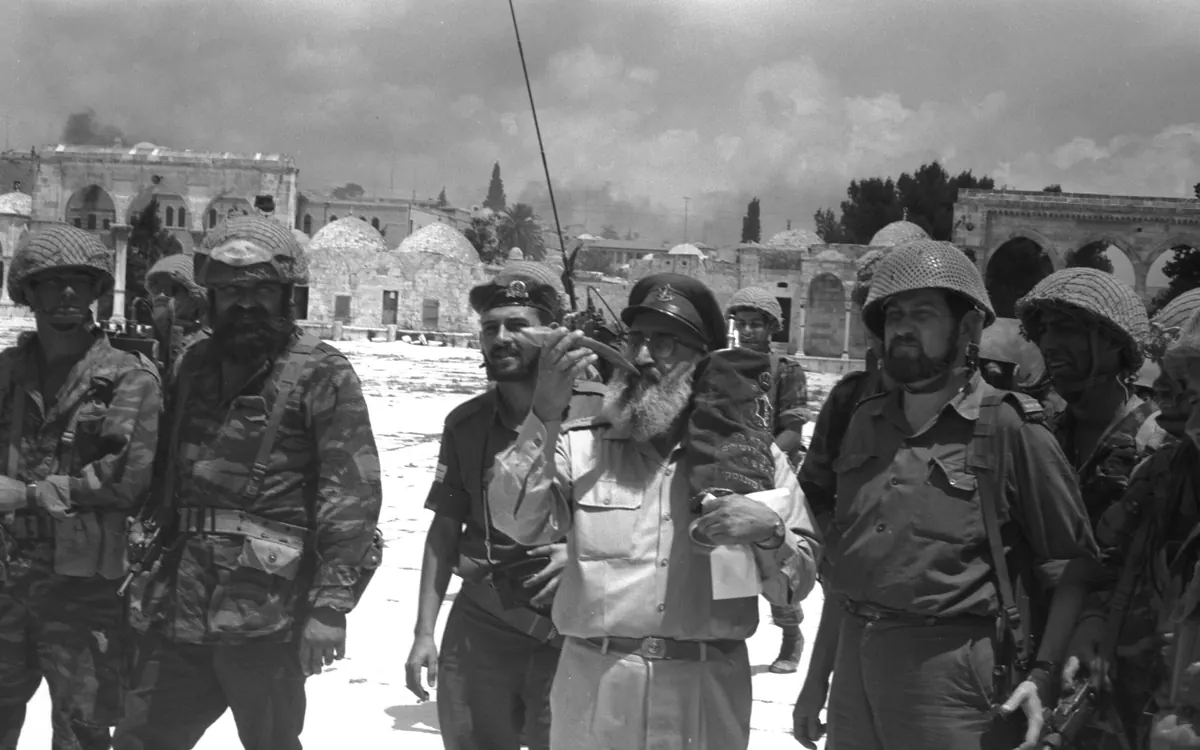
Jerusalem Day (Yom Yerushalayim) is a time when past and present come sharply together, and have the potential to define our future. Social activist and former Jerusalem city council member Rabbi Aaron Leibowitz joins me to discuss the potential of the holy city and this momentous day.
About this episode
Begin said that in Jerusalem the sky is blue and memory becomes clear. Rav Aaron Leibowitz, former city council member and founder of Hashgacha Pratit and Chuppot, speaks as an urbanite who fell in love with Jerusalem as a city before its holiness. His day-to-day heart is Machaneh Yehuda, the market, where the commerce and the interaction around it form an anthropological work of art forged by the people over the decades of return. He sees the city as a place where holy and mundane join rather than divide, and when the Mamilla mall opened against the Jaffa Gate he came to read it as the fulfillment of the prophets' vision, the sacred and the everyday building the city together, a tapestry expressive of the holy.
He names his acts of service. Two and a half years on the city council, a gift that wrought havoc on his family life, let him midwife three alternative schools, and he recalls teaching that education is about building the context for people to grow. Then came the work in kashrut, a national project born in Jerusalem because the city holds a strong moderate orthodox community that could trust a subversive agency, and in five short years it changed the game around kosher food. He got to know restaurant owners, who sit with the cabbies and the barbers at the pulse of a city, the food industry at the heart of whether its economy is healthy, the bread and butter of daily living in this unique blend of holy and mundane.
On Yom Yerushalayim, Leibowitz holds that in 1967 Am Yisrael did not conquer the old city but merited it, as a cab driver told his friend that you do not buy a house in Eretz Yisrael, you merit one. The shadow of the Holocaust made a second catastrophe so real that it wiped away the people's divisions, and in that brief unity they drew closer to the point where heaven and earth touch. He reads the Temple Mount above all as a sign of unity, and sees the work of healing rifts and uncovering common ground as the very work of building Jerusalem. The city, sought after by empire after empire, holds within it the schisms that trouble the whole world, religious and secular, Islam and the West, Palestinian and Israeli.
That makes Jerusalem a microcosm, and perhaps a place to bring the world a message of how such things come together. Practically he points to the interfaith prayer at the First Station the week before the day, led by Rabbi Tamar of the Tzion community yet careful to include orthodox voices. The gift Jerusalem offers the world, he says, is a renaissance of holiness, something even secular Israelis reach for when they call a wedding kadosh, a city where people can touch what is spiritually profound whatever words they bring. The challenge is penetrating the surface, since a city can pour its energy into facings, the Jerusalem stone laid over concrete and rebar, while forgetting that boundaries serve the higher value of shalom, of shlemut, of something being whole.
On the next phase, Leibowitz compares the activist Nir Barkat with the quiet Moshe Leon, finding that Leon, wanting only a fundamental calm, gives everyone what they need and acts like a father to the whole city, the strength Leibowitz sees in King David, who won every faction's trust by being there for the down and out. Drawing on Thomas Hubl on collective trauma, he notes that this is a country driven by trauma, where strength meets a wounded people with pushback, so the next phase is healing, leaders who are caring parents making a safe space for growth. He closes asking that people see Jerusalem's beauty, since beauty helps us see the holy, and it is the holy that truly makes Jerusalem beautiful.
Key ideas
- Rav Leibowitz fell in love with Jerusalem as a city, and finds its heart in Machaneh Yehuda where holy and mundane join.
- He holds that in 1967 Am Yisrael merited the old city rather than conquered it, the shadow of the Holocaust forging a brief unity.
- The Temple Mount reads above all as a sign of unity, so the work of healing rifts is the very work of building Jerusalem.
- Jerusalem holds the schisms that trouble the whole world and can bring a message of how they come together.
- The gift Jerusalem offers is a renaissance of holiness, something even secular Israelis reach for when they call a wedding kadosh.
- The next phase is healing, leaders who act as caring fathers making a safe space for a nation driven by trauma.
Chapters
- 0:00 An urbanite's Jerusalem
- 3:20 Machaneh Yehuda; the market
- 4:37 The holy and the mundane
- 5:44 Service on the city council
- 8:59 Changing the game in kashrut
- 11:11 1967; a city merited, not conquered
- 12:19 Unity that drew us closer
- 14:30 Jerusalem as a microcosm
- 19:01 Interfaith prayer at the First Station
- 24:30 A renaissance of holiness
- 28:52 Facings over the Jerusalem stone
- 33:11 The next phase; Barkat and Leon
- 36:24 A mayor who is everyone's father
- 37:32 Healing a nation of trauma
- 41:02 See the beauty, see the holy
Who, where and when
People
Rav Aaron Leibowitz, Menachem Begin, King David, Nir Barkat, Moshe Leon, Thomas Hubl, Barnea Selavan
Places
Jerusalem, Machaneh Yehuda, The Mamilla mall, The Temple Mount, The First Station
Texts
The Book of Isaiah, The Kedusha prayer
When
1967 CE: the Six-Day War and the old city, the days of King David, 2022 CE: the interview
Read the transcript
I come to Jerusalem, said Menachem Begin. There the sky is blue, and memory becomes clear. Well, I have the great blessing to be in Jerusalem almost every day, and not only is my memory clear, but I can tell you, the sky is the limit. I'm Rav Mike Foyer, and this is The Jewish Story. Season 5, Interlude, Interview with Rob Aron Leibowitz on Jerusalem. So I'm sitting here with Rav Aron Lidowitz, former member of the Jerusalem City Council, presently rabbi of the Anit Filah community here in Jerusalem, social religious activists with organizations that he's founded like Hashkacha Pratit, the private kashrut industry that's made amazing waves here in not just Jerusalem but the country as a whole, and Chupot, offering Chupon Kedushin to all of Am Yisrael in ways in which the Rabbanut is not, let's just say, willing or able.
and also happens to be a teacher and dear friend from my back in my Sula. Myakov days, Rav Aron, it's been too long. It's been way too long. I'm sitting here with microphones. Yeah, it brings back a really fun, beautiful memory. For folks who don't know, we have a whole series called Rabbis Out of the Box. You can actually write me an email, ravmikeforia at gmail.com. I'll share the links with you because it's not so easy to find out there in the universe of content. So I'm so excited in honor of Jerusalem Day. there are very few people that I could think of who could really engage in the two pieces that are most pressing in my eyes when it comes to Jerusalem today, and that is the Torah and the present.
What do I mean? We were speaking before we started about one of my favorite folks growing up was Once and Future King. The fictionalized, I guess they're all fictionalized, story of the Arthurian legend, but fictionalized for like children. And when I think of that idea, Once and Future King, There's the legend of the past. There's the great messianic expectation of the future. I often think of Jerusalem in that way. It's the once and future city. Start talking Torah with people. Whoa, what happened during the first temple, the second temple, or whoa, when the Messiah comes, let it be soon, let it be now. But very few people can bring the Torah together with Jerusalem today. And that's really something I've always respected in you.
It's something I'm looking to explore with me right now. But before we do, I just want to ask a simple personal question. You've been living here for quite some time. What does Jerusalem mean to you, past, present, or future? Well, first of all, one of the things I've discovered about myself is that, and it was a little bit surprising to discover that I'm really an urban. I'm an urbanite. I love living in the city, and I love living in hearts of cities. I love cities in general. I grew up in Berkeley, but I've always, when I would go to the city, which is San Francisco, for anyone who lives in the Bay Area, something would come alive. And I still love kicking around Manhattan when I'm traveling on business.
And I think that my first encounters with Yerushalayim were very much grounded in the fact that my Eliyai, I came to Israel as a teenager. We came to Netanya, and then we lived in Kfar Saba. And I would come to Yerushalayim, and there was something very vibrant and very alive. and I might be one of the few people when you ask them what they fell in love with in Yerushalayim they don't start with the holiness but they start with the fact that it's a city it's a very intense city and it's I think part of what lends it the intensity is the history and is the holiness and is the current events that energize so much of what happens here but I think that the bottom line is that what I love about But Yerushalayim, still in the day-to-day, you know, the Kotal is so strong for me, and it's such a blessing to be able to go to the Kotal.
But the heart of my day-to-day experience of Yerushalayim is Machan Yehuda. It's the market. And it's the experience of the combination of people, the interactions between people, the commerce, which is kind of the blood energy of any urban environment. The commerce and the interaction around the commerce and the unique flavor of what's this kind of anthropological work of art that the people who live in this city have forged over the course of the decades that we've returned in. That's a beautiful phrase, anthropological work of art. I mean, I hear in that both of vibrancy, like you said, life, just people. And I live a much more suburban existence than you do. I always have that feeling of the buzz when you come into Jerusalem.
But there's something deeper in that, in that somehow there's a tapestry which is being put together, I hear, in that life, which is expressive of the holy. And I think that in many ways, for me, that's what is so powerful about Jerusalem. It's not an either-or. It's not meant to be a place of dichotomies, where the holy is over there, and the profane stays over here, and never the two shall meet. I remember when the Mamila Mall opened up, which if people aren't familiar, is like a very high-end, open-air mall that butts right up the Jotha gate. At first, it was a little uneasy, I have to admit. Like the commercialism, the barbarians are at the gates, I think I might have even said to my wife. But the more I go there, the more I realize on some level it's the fulfillment of the vision of the prophets, that the sacred and the mundane should join together to build the city.
So I hear that, a follow-up question, because as someone who's been involved, even in the level of commerce, I mean, the Kashrut industry is about as commercial as it gets in this town. What do you feel has been your greatest act of service toward this city? That's a really difficult question to answer, or at least to provide one answer to. Okay, go. I think that I was really given this tremendous gift of two and a half years on Jerusalem City Council. and in some ways it was a gift horse because the havoc because you should have looked it in the mouth the havoc that it wrought on my family life and my communal life and my Torah study it was like a train wreck but at the same time at the same time it was really there was a side of it which was a gift because I was blessed to kind of midwife, three new schools in this city which serve kind of alternative educational communities, a democratic, experimental, orthodox elementary school, and a men's high school under the auspices of Pelech, which was formed as a women's high school, identifying that there are things and And also there's a yeshiva high school here in Yerushalayim called Hartman, which has a whole gender stream.
A yeshiva high school for men, which has a gender program, an advanced gender program for gender awareness. These were really very special privileges. And I think that that's one thing which I would say is that having the education portfolio during those two and a half years, which were very formative years, and being able to kind of bring to fruition seeds which had been planted before I got the ball, but being able to see them through, which sometimes is actually the larger challenge, was great. I just want to respond really quickly, and I'll let you get the answers. I will never forget that as my teacher and also working together as the program director when you were at Rosh Hashiva, but you always said to me that education was about building the context.
It was about facilitating people by building the context for them to learn and grow. So it doesn't surprise me at all that that speaks to you as such an act of service. Yeah, I think creating an environment for growth is really the key. And then next to that, I would say the work in Kashrut, which was really a national project, but changing the game around kosher food and having the opportunity to build relationships with the owners of restaurants and cafes because if you want to really get the pulse of a city, so there's the cabbies and there's the barbers, but also the food industry are really right at the heart of whether the economy of a city is healthy. That's daily living. Yeah, daily living and it's bread and butter, literally.
And getting to know, and some of these restaurants were some of the most successful restaurants and they were also some of the most cutting edge in that they were willing to go out on a limb and place a bet on a subversive Kashrut agency, which were... You think of yourself as subversive. I know that. Well, I grew up in Berkeley, so... If you weren't subversive, you would have been abnormal. Well, it took about 30 years for the Berkeley to come out, but eventually it did. You could take the boy out of Berkeley. But that was really a privilege, and the game has changed and in five short years we really changed the equations in Kashrut but also it's not coincidental that what we did was born here in Yerushalayim because there's a very special blend of holy and mundane in this city as you pointed out and the Kashrut work really touched on that And I don't think that what we did could have been born anywhere else, because when you're building a product like a kosher symbol, like a kosher supervision, you need to have a community.
You need to have customers. People who look to you. People who trust you. And Jerusalem is a very strong, moderate, orthodox presence, probably more than any place else in the city. a kind of a spectrum of identities and a very out-of-the-box kind of dynamic. Fantastic. Now I want to pivot a little bit from the personal to the historical, because of course the immediate impetus, I say immediate, right, for getting together is this upcoming Yom Yerushalayim, Jerusalem Day. You know, on the 28th of Iyar, the paratroopers come through Lion's Gate, right, up onto the Temple Mount, Harabite, be a dam of the Temple Mountains in our hands. There's a military victory, a liberation of half of Jerusalem. But what do you think actually changed on that day for Am Yisrael and for the world?
So it's interesting. I think it was about 15 years ago preparing a drashah for Yom Yerushalayim for my first troll in this city Kol Rina that it occurred to me that well, I'll back up a step. A friend of mine, Barnea Salavan, tour guide, an archaeologist, extraordinaire, yeah, so he tells a story about he was in a taxi cab, and he told the driver, you know, I just bought a house in Eretz Israel. I'm so happy. And the taxi driver said to him, you don't buy a house in Eretz Israel, you merit a house in Eretz Israel. That's a good answer. Yeah, like we said, the cabbies, they get it. So, what occurred to me was that really what happened on that day in Yom Yerushalayim was not that we conquered the old city.
or reconquered, however you want to term what happened. But we merited it. And what came up for me was that something, and this has to do with how I understand what's going on also in Tanakh, around Yerushalayim, and mostly around the persona of David, of King David. And to me, something happened at that moment that the entire Jewish people were focused on one thing, and that was the survival of the state of Israel. And for me, what Har Abayit, what that location, the Kotel and the Temple Mount, what they represent more than anything else, is a sense of unity. And what occurred to me is, is it possible that there was a unification of awareness and of knowledge within the Jewish people that made it all of a sudden possible for us to draw closer to that point in geography where heaven and earth touch.
Wow. This is opening up for me a completely different perspective. I mean, you're well familiar with this idea from Auschwitz to Jerusalem, right? This relationship between the Hurban, the destruction of a third of our people in the late 30s and mid-40s. less than 20 years later, you know, return to Jerusalem. There's many ways that for Greenberg, speak about that. But what you just said made such absolute sense is that the horror of the Holocaust made the possibility of a second tragedy in 67 so real that it was enough to wipe away the divisions, which God bless Am Yisrael are always there. It was enough to wipe away those divisions and think about it for just a brief period. And in such, there was a moment of unity by which we merited, as you say, as opposed to conquering or acquiring, we merited to come that much closer to the fullness of Jerusalem.
Wow. Yeah, and that for me is very significant because for me it points to where we have to be invested if we want to drive even closer to our vision. The work of healing the rifts, finding the common ground. And I don't think it's coincidental that the entire Western world and probably much of the world right now are faced with the challenges of polarization and alienation of the right and left wings of society. That question of how do you bring opposites together, or how do you identify the common ground that they share, and I think that there's tremendous common ground that we share. but uncovering that common ground and bringing ourselves full circle to the core values that are driving us into the places where synergy can be created and also the place where we can identify the contribution of the antithesis, star thesis.
To me, that work is the work of building Yerushalayim. There is no difference. To some extent, Yerushalayim will be built and is being built to the extent that we're able to address that. And I would say, and then the other side of that coin is, and this is something which became very clear to me when I was involved in local politics. I still am involved, but not as an elected official, as a voter and as a community activist. It's so clear to me that this city, which has been so sought sought after and fought for throughout history and has had so many different rulers and ruling nations. Empires. Empires. That's right. So this city has within it so many of those schisms that are challenging the world today, between religious and secular, between Islam and the world, between Palestinians and Israelis, and even to some extent the question of a divided city between two halves is a challenge distinct from what it is that separates them.
But how do you create a municipal structure which can create a shared vision when you have a dichotomy of populace? These challenges are, Jerusalem is a microcosm of some of the biggest challenges the world faces. And when I read in the Nevi'im, this is what they used to say as a city council member. Might these challenges that the city faces not be there for us to bring a message to the world of how we can bring something like this together? It's a powerful image because we're used to, and even referenced before, saying that the place where heaven and earth meet. And I certainly hold that fast in my heart. But something I heard you add there is it's a place where schisms meet. which is a fascinating notion because we don't think of schisms as meeting.
The schism is where things divide. But what you're pointing out is there's an incredible intersection of division that comes into a city who at its heart, as you said, is about unity. And that itself, I think, is an excellent sort of bridge to the next question I wanted to ask you, which is that I'm troubled by this day by Yom Yerushalayim. First of all, when I came here as a starry-eyed immigrant, it was great, right? and all the kids out in the white shirts and the blue and the flags. And I live in a community, the religious Zionist community, which is the only community within Israel that marks the day with any consistent practice. It's something I wasn't aware of then. The more I've learned, the more I've seen that for most people, this day is nothing.
And then even for my own community, the religious Zionist community, has become a troubling day in and of itself, without getting into the question of whether, you know, the flag march, which if people aren't familiar, there's a traditional march down through the Arab quarter, right, through the heart of it. It's a classic assertion of sovereignty in a way which always makes me wonder whether the lady doth protest too much. If there's only one day a year that you feel comfortable, you know, you and your thousand friends walking down this path, perhaps sovereignty is a bit of an illusion. We could talk about that some other time. But even now, we're getting threats from Hamas that if the Jews go, then last year we had almost a war, if you recall, there were missiles.
So obviously the day has a power. It's bearing a deep valence. What I would say is, what can we do practically to make this day more of what it could be? What would you say as a leader of a shul, as a community leader, people listening, they want to do something. What's something people can do practically? this coming Yom Yerushalayim I find I find I'm very moved by a prayer service which takes place every year in the first station here in Yerushalayim between different religious leaders including Islam and Christianity and Judaism and it's a prayer for Yerushalayim and it doesn't take place on Yom Yerushalayim itself it takes place the week before Yom Yerushalayim this week it will be on Thursday night and I was actually invited to be an active participant because my son is getting married next week.
I was glad you made time for me. I had to, yeah, so I would not be participating actively but to me that's a very, the prime driver of that is Rabbi Tamar the Rabbi of the Tzion community which I think are affiliated with the conservative movement but she's always careful to have orthodox rabbinic voices present and to me that the fact that this city has holiness which is present for all the religions I think provides a challenge but also an opportunity and when I spoke before about the things that are shared between polar opposites I think there are core values that all the Abrahamic traditions and really all spiritual religious traditions in the human landscape share, and I repeat, core values, not secondary values.
That's not to say that there are not differences and significant differences. Schisms even. Schisms even. But I think connecting and finding time around those core values is very powerful because I do not imagine that a time will come when Jerusalem will cease to have significance to Christians or Muslims, just as I don't imagine a time will come where Christianity and Islam will not continue to have their own unique teachings and gifts that they brought to humanity. If I have a vision, a messianic vision, of awareness of God surrounding the world, it is still one which has diversity and complexity and nuance. And so for me, that would be one thing. And I think that in addition to having the different religions, I think it's very important to connect Am Yisrael to this city.
And I think the way you connect Am Yisrael to the city are to connect them to one another. You know, I spoke at the beginning of our conversation, I spoke about the urban element and things. and really what is a city. And I think the question of what is a city is relevant to understanding Yerushalayim because Yerushalayim is Ir HaKodesh. We don't speak only about the Temple Mount as being holy. We speak about a holy city. And we even pray for the restoration of the holy city distinct from the Temple Mount, which means that in the divine vision that the Torah has, the urban experience has what to offer holiness, and holiness has what to offer the urban experience. And I think what's unique about a city as opposed to a village or a kibbutz or a kfar what unique about a city is its diversity That first and foremost what a city is It a complex organism That right And different neighborhoods and different communities and all different types, and creating an identity out of that.
So it could be nothing else. In other words, the Temple Mount could not be somewhere else if the Temple Mount is an expression of unity. It had to be within a city, because that is what the municipal project in humanity, I think, is about. So I don't even know if it means connecting them to Yerushalayim doesn't necessarily mean connecting them to Yerushalayim. It could mean discovering the Yerushalayim in their own city, discovering the diversity in their own city, discovering how there's a united vision, and how is it that somehow all the cities in Israel and all the cities in the world have some kind of sense of this kind of archetypical city, this Irak Kodesh, which is a model which offers something holy and something unique.
So it's a day for those who aren't able to walk the streets of Jerusalem to really find a moment or some energy to build or at least strengthen the vessels that hold the pieces together, especially in what I hear you saying, the ones that hold them together in a way in which their difference actually contributes as opposed to demanding that they become homogenized in order to make things a very stable, peaceful place, that the peace of Jerusalem is dynamic. A hundred percent. That it's dynamic and that boundaries maintain identity, and because of that they're very crucial, but also knowing how to strategically dissolve those boundaries and connect despite the boundaries, I think is a really precious learning and endeavor for us right now.
So in many ways, we've actually answered my next question. But nonetheless, I feel like I want to pose it anyway because I'm working with the past, present, future model here. And, you know, I'm all about structures. I can't give up on that. Which is that I wanted to ask you what you think that the gift Jerusalem has to offer to the world might be. I mean, you quoted Isaiah earlier. Ki mitzi on te te Torah. Out of Jerusalem comes Torah. All those images there also in the beginning of Isaiah, the nations flowing together into Jerusalem. There's some sense that Jerusalem has something to offer everyone. So what would you say that the great gift Jerusalem has to offer our world today? I think that, first of all, the world is very much in need of a renaissance in the area of holiness.
What would that look like? Well, when I say holiness, I mean holiness as something which somehow has to also transcend any kind of particular narrative about God, and perhaps even a requirement of belief in God in order to touch upon. I think that one of the things that's really amazing is if you talk to people who don't believe in God, secular Israelis, about what Jerusalem is for them, the word holiness will come up. And it's similar. Today I do weddings. That's a big part of my work is performing weddings. And I have 25 rabbis who are performing weddings. We're doing 400 weddings a year. And these are weddings that are outside the chief rabbinate. I'll never forget. Like a couple came to me and I recognized them from protests in Jerusalem.
The guy is like a merit activist in Jerusalem. Far left for people who aren't familiar. Merit is far left, anti-religious. At least that's the stereotype. and I said to him, you? Like, what are you doing here? Because Cyprus. Well, Cyprus or, you know, they're getting, they're similar projects to ours, which are completely secular, which will do a wedding, a completely secular Israeli wedding without, and he said to me, he said, yeah, but that's my activism. This is my wedding. I want it to be holy. And that's the word he used, kadosh. Now, I don't think that when he said holy, he was thinking the same thing that I think when I say kadosh, kadosh, kadosh, when I say that word three times in Kedusha. But I think he was saying the same thing.
He has an intuition that there are things which are spiritually profound, which are present in our life. I think that anybody would agree that the word love is a holy word, even if they don't have a religious context to frame that. And I think that that would be a tremendous step, would be for Jerusalem to become, and I think that it could be, because I think people's associations and also experiences in this city touch something which transcend, because I think this is a city where God, touched by God, and however you understand that, there is something present here which can touch people, and I feel like that's a huge gift. There's a powerful expression. First of all, I want to hold fast to that expression of a renaissance of holiness.
Because I think that that's a call to action for people who care about Jerusalem, who care about Torah, who care about holiness. That there's work to be done to give new life to this idea of holiness. And to do it in Jerusalem, if I understood you correctly, because the problem with holiness is that it comes with a lot of baggage, of language, of association, of divisions. My holy is in your holy and I have a lock on holy and we all know these discourses. But the power of the city, reality of Jerusalem is that you can leave your language aside, or you can keep it for yourself. We're all here together. It's a visceral experience. And so therefore, the gift, if I understood you correctly, that Jerusalem has to offer is a place to contact the holy, however it is you may believe that to be.
But the contact is real. It's kind of like when the reader reads from the Torah, the words, the same words go into all of our ears. As soon as we start to think about what we heard, the understanding fragments, but that voice was one voice. That's a powerful gift to give. And okay, so we can't avoid the question in the present, and what's the greatest challenge then that the city faces today? Here's Yom Yerushalayim. I mean, we're Jews. We can't have a fully happy day. Yeah, I think a big part of the greatest challenge is penetrating surface and superficial dynamics to touch upon core elements and core issues. It relates to what I spoke about before in terms of core values. I don't know if you'll remember this, but we...
I'm sure you'll remember the event, but I don't know if you'll remember this moment. We held an event in Salam Yaakov, our shared yeshiva space way back when, an event called the Vision Quest. Yeah, sure. And in that event, we had people say, what could they not live without? What values could they not live without? And put them on the board in their vision of Israel. And one person put on the wall Beit HaMikdash Temple. And then we told the group, the whole group, look at what's on the wall. Is there anything there that, if that's part of it, you want nothing to do with it? And there was a woman there, and she said, temple. That's part of it. I want nothing to do with it. And then you were facilitating together with Matt Mousner, I believe.
Or no, with Yonatan Sheffa? No, Yonatan Sheffa. Yonatan Sheffa, yeah. So you were facilitating, and one of you said, asked the first guy, so what is the Beit HaMikdash to you? And his answer was, a place where I can fully realize my potential. And when he said those words, there was a silence which came in the room. Like really a very profound silence. And then the woman in that silence spoke and said, that I could relate to. And that was a remarkable moment. And it's with me until today. Because the gift that you as facilitators gave was a gift of peeling away the surface and showing how beneath the surface, we're really all looking for the same thing. And, you know, one of the things which is really striking in this city is that we cover our buildings with Jerusalem stone.
Right. Now, we cover our buildings with Jerusalem stone. It used to be that the buildings in Jerusalem were built out of Jerusalem stone. And so now we don't build out of Jerusalem stone. We build concrete and rebar. Yeah. And then we put on this facade of like… It was a facing. A facing. A facing. We put on a facing. And aesthetically, it's important. And it creates a sense of unity and a certain municipal aesthetic. And all of that's beautiful. But I think it's important that we recognize that we could be spending most of our energy on facings when we're trying to deal with things. And I feel like that's the danger of a city, especially because we have so much tension and politics. Sure. We're pouring all of our energy into things which are secondary and not primary.
And when we remember that what's primary are human beings and God, and that the city was named with the word peace, Shalom, which comes from Shalem, which comes from Hol, and the boundaries are there, the Yira, the Yira that's in the name, the fear that's in the name of Yerushalayim is about boundaries. But we have to remember that boundaries are in support of a higher value, which is the value of shalom, of shlemut, of something being whole. So without the boundaries, I can tell you in all my counseling, there's no healthy relationship. And it's really a question of whether setting those boundaries, as you said, becomes a distraction, a superficiality that allows us to divert all our energies because it's easy to focus on in conflict, it's satisfied, etc.
Or whether those boundaries give us a sense of security of self enough to enter into a real relationship, where by joining together, we might actually discover that we're different than we thought ourselves, much less that others are different than we assume them to be. Yeah, 100%. That's a powerful vision. Okay, so to the last section, because I know our time is short. So I often think of Jerusalem as a city of Migdash v'Melech, right? Migdash, like the holiness, such a powerful definition. I don't recall actually that interaction, but a definition of a place where there's a fullness of potential, not just for ourselves as individuals or even for us as a people. It's somehow a creation. where the heaven and earth meet and Melech rule.
It's a city of government. There's not just a city, there's a country. So what do you see as the next phase for Jerusalem? We've been here, and in this case, not just Jerusalem, but all of Yudon Shimon, all of the post conquests of Israel which some people see as an expression of redemption and others as a bone in our throat that they love to spit out I mean let just call it what it is It a big part of the country And even if they're not willing to spit it out anymore because they're afraid of the consequences, they don't want to swallow it. You know? So what do you see as the next phase and the role that Jerusalem could play in that for us as a nation? Wow. That's a really wonderful question. and one that I don't have a clear and present ready answer for, which is also why I'm loving it.
The place which comes up for me to start is by comparing the last mayor of Jerusalem with the current mayor of Jerusalem. Nir Barkat, who was the mayor when I was on city council, was really a champion of a diverse city. and very much was elected in order to keep the secular population from leaving, which was a big challenge here. And his two terms, which add up to 10 years, were fraught with sectoral tension between Orthodox and non-Orthodox and Palestinians. The current mayor, Moshe Leon, is a Sephardic traditional Jew, not Orthodox. but really connected to Torah, connected to synagogue life, connected to tradition. And he was elected because he had the ultra-Orthodox vote. He struck some good deals.
And because Barkat didn't run. But I ask the secular activists who I'm connected to in the city today, who is a better mayor for Jerusalem? because Moshel Eon is not interested in making trouble. He's interested in sheket ta'asiati. We call it in Hebrew. I don't know what you call it in English. Like a certain fundamental quiet. He just wants things to be quiet. So because of that, it's in his interest to give everybody what they need. And that's what he's focused on. He's focused on giving everybody what they need. So that you do worse as a mayor. That's right. That's right. And you would think, oh, the secular residents of Jerusalem have fallen asleep because everybody knows that more resources are going to the ultra-Orthodox.
But more resources are going to the ultra-Orthodox because they are more politically engaged. Well, no, that's not what I was going to say. They have a stronger vote. There are more of them. And so really what he's doing is he's giving expression to a certain electoral reality, but he's also focused on what do you really need to be able to live here, and I'm going to give that to you. And he has a certain sense, and somebody told me that he feels the same way towards the Palestinian and East Jerusalem, and this is somebody who is an activist in the area of Palestinian rights in East Jerusalem. I asked him, how is Leon compared to Barkat? And he said, you know, he really feels like he's the mayor, so he's everybody's father.
He has a certain fatherly care for everyone who is here. Now, I think that that's something which King David had. King David had, how was he able to engage the trust of all the factions, despite the fact that he was from the tribe of Judah, which I'm sure those who follow your podcast are well-versed in the tensions between the descendants of Leah and the descendants of Russell. The truth is I started at the Book of Daniel, so they'd have to go to your podcast. Did you ever put out that stuff in the Book of Shmuel? I have three episodes recorded, but it's unfortunately not receiving the attention it needs. But it will come. It will come. It will come at the right time. So really my vision for that podcast series is to speak about how David emerges as king.
And one of the reasons he emerges as king and gives everybody's trust is first and foremost, he's completely there for the down and out. And those who feel like they were dealt a bad hand. Yes. And that's what Leon's doing here in Jerusalem. Those who feel like they were being dealt a bad hand, he's there for them. And it's created a dynamic which I think is rooted in the heart of this city. I think that the original creator of the city of David, that vision, that was his strength. Ironically, it's the non-activist. It's not the mayor who came to fix things. I went to a lecture of this fellow Thomas Hubble who deals with the healing of collective trauma. I was introduced to it by our good friend Danny Cohen, also a master of healing and inner work.
And Thomas said in this lecture, he said, you know, the problem in this country is because it was too much activism because everybody here is coming with trauma. The roots of the issues here are all traumatic. And when you come with strength, when you come with any kind of push on somebody who's traumatized, they'll always push back. They'll always feel more threatened and they'll always push back. So true. So as an activist, that really went straight to my core because I really sensed how true it was. And it created real shifts in my thinking about my work. And I think we're seeing here something that is really profound in terms of what will successful leaders look like as we move into the future. It might be that successful leaders, as we move into the future, look more like fathers and mothers and caring parents who are really most concerned with providing a safe environment for growth.
Because when people feel safe, then they're able to be vulnerable. And it's when they're vulnerable that they can be exposed to things that are outside their comfort zone and discover new connections. So if I follow the arc, then the next phase is really healing, is that recognizing how far we've come and the strength that really we have to marshal, focusing on giving people what they need in order that they can heal. And I want to repeat because I agree with you. First of all, I couldn't agree more with Thomas Weibel's analysis that we're a country in which it's so driven by trauma. But the specific insight that when you come with strength, even perhaps in a positive sense, and you engage someone who has a deep sense of trauma, almost always the reaction will be sort of equal and opposite.
Whereas perhaps here, a posture of healing, even from one person, in this case from the mayor, as you're pointing out, is very strong, not just one person, is the next phase. The phase in which we begin to heal by giving each other what we need. That's really beautiful. last question, because the Jewish story gets a very diverse audience. Most people won't be able to be in Jerusalem for Jerusalem Day, although give me a call if you're going to be around. Folks here in Israel and Jews and non-Jews and conservatives and progressives and religious and not, what do you want either, what would you like people to know or what would you like them to see when they look toward Jerusalem today? So first of all, I would love them to see beauty.
I think that this city is a beautiful city, and it's beautiful because of its visual aesthetic, but it's beautiful because that visual aesthetic is animated, I think, with something which is very soulful and very strong and very powerful and very healing when you open yourself up to that energy. And it's really heartbreaking that when you look to Jerusalem in the news media, what you see, well, when you look to anything in the news media, what you see is ugly. That's right. And it really isn't, it doesn't characterize the day-to-day in this city. Even Palestinian-Jewish relationships, and I think there's so much to fix there, and I think the Jewish people have so much to fix there. I'm not one of the people that say the whole package is on their end.
There's a lot of work. But the day-to-day in this city between Jews and Arabs is really inspiring. It's really inspiring to watch the kinds of interactions that happen between people. I feel like that's what people should see in the grassroots activism and the art that happens here. And the amazing relationships between religious leaders of different religions that happen here. and the day-to-day interactions of ultra-Orthodox and secular, which, you know, I would love people just to see what I see on a Friday morning in Machina Yehuda. You know that? Yeah. The market. The beautiful face of the city. I just walk. I just walk. Part of it might be the strong cup of coffee. I start my visit there. I feel like I'm walking in a car.
I recommend that to everyone as well. Because that definitely gives a heightened awareness, but I feel like I'm walking. I must be grinning like an idiot. at walking through the market because that's what I feel like. I feel like it just feels so connective and so open-hearted and so alive and so vibrant and so holy. So this is the piece that I'll draw together for the close here is that there's a special relationship between beauty and holiness in many world cultures. You know, in our particular culture in Torah, the most beautiful place that the Torah describes is the Holy of Holies. And it's that inner place plated in gold, which is rarely visited, but it is also the place where heaven and earth meet.
In that sense, this is the image I hear you asking that people have in mind this Yom Yerushalayim, and really, every day, is that look to see the beautiful because that will help you see the holy. And you should understand that it's the holy that really makes Jerusalem beautiful. So Rabbi Aron Leibut, mentor, friend, teacher, activist, politician, I bless you that your service to Jerusalem should not cease and that the Jewish people and all the people of the world should continue to benefit from it. I want to thank you for the time that you've given me. Amen. I want to bless us that we should have more opportunities in the future. Listen, folks, I want to hear your feedback. We're thinking about bringing back Rabbis Out of the Box as a part of Season 6.
Season 6 is coming. Send me your ideas. Who should I speak to? The ideas. Who's got the vision that you want to see amplified? Send me an email. robmikefoyer at gmail.com you can go to my website by the way if you want to give a little support there's not many stories like this happening in the world if you want to help make it happen you can click on that button in the upper right hand corner that says be a patron and you can give a little bit of per podcast support I want to thank also the Land of Israel Network that's thelandofisrael.com they're creating a center for global transcendence in the heart of Judea I want to thank the Pardes Institute pards.org.il for throwing the doors of the Beit Midrash open as wide as possible and I want to thank you for listening I'm Rav Mike Foyer and this is the Jewish Story.
More from Season 5
TJS S5 Interlude Historical Obligations Yom Ha'atzmaut 5782
The RRG Bet Midrash Torah Cafe hosts Rav Mike Feuer for a live word of Torah on Yom Haatzmaut - Israel Independence Day. How does history create obligations,...
Play Episode
TJS S5 Interlude Interview with Daniel Gordis
Menachem Begin has been part of our exploration of the Jewish Story since the uprising against the British back in 1944, and the Lebanon War was the last...
Play Episode
TJS S5E21 American Jewry circa 1984
As we circle in toward the end of season five, it is time to check back in with American Jewry. The 1980s were a time of economic and...
Play Episode