
TJS S6E21 The Final Episode of The Jewish Story
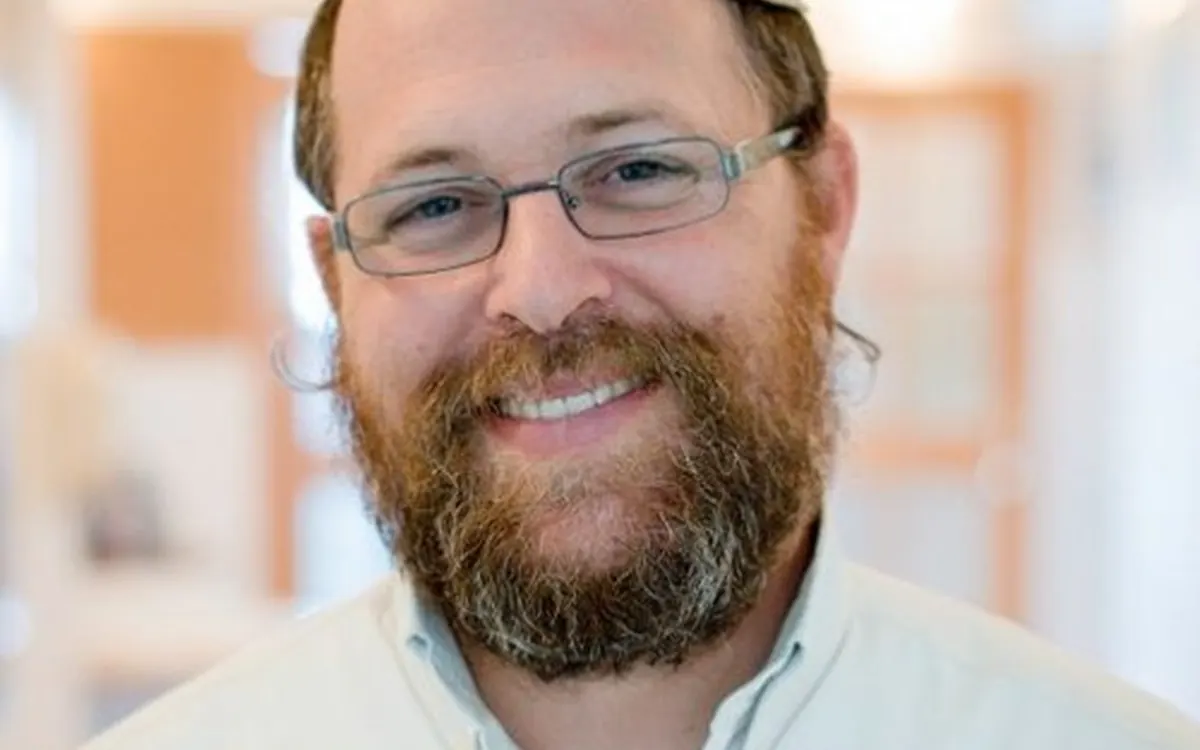
There is no way to give closure to six seasons of a story, but you have to try! Here is an interview with Rav Mike Feuer that looks back on the lessons of Jewish history and reflects on the challenges of today. It also announces tomorrow's new project - so stay tuned for more amazing stories with the Jewish Heroism Project.
About this episode
For the last episode Rav Mike hands the mic to his friend Eitan ben Avraham and steps onto the couch himself. The Jewish story, his telling of it, is coming to a close after six seasons and more than two hundred episodes, from the book of Daniel through the 1980s and into this season's horizon. He calls it the Jewish story rather than Jewish history because history is a Greek lens, and his goal all along has been integration, joining the internal Jewish memory with a critical historical perspective to do narrative therapy for the nation. The seasons compressed time, the first two covering millennia and the later ones shrinking to decades, until he reached the present and said stop. Six years of digesting it all, he says, tastes sweet, the richness of human experience and the grandeur of a spiritual vision, and leaves him a little exhausted.
Eitan presses him to name what he learned, and Rav Mike reaches for back-sighting, the navigator's trick of fixing a point behind you to extend a line toward where you are headed. He had naively believed that if he just told the story from Daniel forward it would be clear where we are going, and learned along the way that history is not simply there, which is why he calls it his story. Patterns do not repeat, since time is linear and culture and consciousness develop, yet they rhyme, because there is a rhythm to how human beings relate. The first pattern is that Am Yisrael has a central role to play whether we like it or not, as a cultivator of consciousness, Am Levadad Yishkon, a people that dwells alone, going deep within and then pouring outward.
A second pattern is the constant struggle between the material and the spiritual. Where wealth and culture flourish, the spiritual generator tends to take a back seat, which Rav Mike sees in an American Jewry whose light is not cranking out the way it could, and in an Israel where rising individualism saps the self sacrifice that lets the riches come forth. A third pattern is that to be a Jew is to swim upstream, to insist on independence while the world consolidated into Rome, to keep our own path while it divided into religious empires, and to move toward ethnic nationalism while it moves past the nation state. Asked where to travel in time, he chooses the Girona school of the Ramban that brought the Zohar to light, the standing temple, and the Vilna Gaon's students who came to redeem the land.
His heroes begin with the ones without a name, every Jew who stuck with it through mesirut nefesh, a giving over of oneself to the vision when they might have stepped off the path. He would love to meet Shmuel HaNagid, the scholar poet who marched at the head of a Muslim army, the Hasidei Ashkenaz who held the rope at both ends with a folk enchantment of God, and Dona Gracia the merchant queen who defied every convention. The villains come in threes, two evil queens who share a name, Izevel and Isabella, and the deeper enemy Amalek, the shadow side of Am Yisrael, the cynicism and nihilism that denies any greater light or ultimate unity. He names a subtler internal enemy too, an over attachment to the specificity of truth, the kelipah of our clinging to this is God's name and this is the way it must be done.
Rav Mike ends the Jewish story in order to take a more activist stance, convinced that the number one tool for turning values into action is heroic stories. We live in a world enamored of only victims and perpetrators, where a hero is dismissed as a villain with better PR, and he holds to his dying day that a hero is a person who strives to use power to serve good. His new project is the Jewish Heroism Project, a podcast that will flesh out what heroism is, its tools and qualities, drawing on the mythic frameworks the Torah offers, and growing into a curriculum for educators and leaders. Eitan calls it helping people tap into their Aleph male, the greatness within that we often lack the frames to understand, and Rav Mike names its destination as redemption, for the person, the people and the planet.
Key ideas
- Rav Mike calls it the Jewish story rather than history to integrate internal memory with a critical perspective, doing narrative therapy for the nation.
- Back-sighting means fixing where we have been so we can extend a line toward where we are headed, though history is never simply there.
- Patterns rhyme rather than repeat: Am Yisrael cultivates consciousness, struggles between the material and the spiritual, and swims upstream.
- His first heroes are the ones without a name, every Jew who stuck with it through mesirut nefesh.
- The villains run from Izevel and Isabella to Amalek, the shadow of nihilism, and the inner enemy of over attachment to the specificity of truth.
- He ends the project to launch the Jewish Heroism Project, since heroic stories are the tool for turning values into action, with redemption as the destination.
Chapters
- 0:00 Begin at the beginning; the last episode
- 2:07 Six seasons; starting in 2016
- 3:12 Why the story and not history
- 5:29 How it feels; back-sighting
- 6:38 Psychohistory; reading the writing on the wall
- 10:16 How it tastes; sweet
- 12:31 Patterns that rhyme; a central role
- 14:37 The material and the spiritual
- 18:00 To be a Jew is to swim upstream
- 19:03 Travel in time; the Girona school
- 21:19 Heroes; the ones without a name
- 25:54 Villains; the two queens and Amalek
- 29:17 The specificity of truth
- 34:57 An activist stance; heroic stories
- 37:13 The Jewish Heroism Project; redemption
Who, where and when
People
Rav Mike Feuer, Eitan ben Avraham, The Ramban, The Vilna Gaon, Shmuel HaNagid, Dona Gracia, Isaac Asimov
Places
Girona, The land of Israel, Spain, America
Texts
The Book of Daniel, The Zohar, The Foundation trilogy, Parshat Balak
When
1250 CE: the Girona school of the Ramban, 1808 CE: the Vilna Gaon's students reach the land, 2016 CE: the podcast begins, 2023 CE: the final episode
Read the transcript
Begin at the beginning, said Lewis Carroll, and go on till you come to the end, then stop. Well, I can't say I started at the actual beginning, but I've been going on for some while, and the time has come to stop. I'm Rav Molyfoyer, and this is the last episode of The Jewish Story. The final episode, an interview with me. I'm sitting here with my dear friend, Eitan van Avraham, and I have the announcement to make. Eitan, you ready for it? I'm ready. The Jewish story is over. No. I don't mean the story itself, but as a teller, I'm stepping off of the track. And in order to kind of process a little bit and bring some closure, as we like to say, to such a momentous occasion, I've asked Eitan to join me, and as he's done in the past, to take the mic so I can sit back and be on the couch for once in this practice.
So, Eitan? Just to reflect a little bit of what you just said and what we said before we started recording, the Jewish story, quote-unquote, i.e. Rav Mike's Jewish story is coming to a close. Your project, the Jewish story, is coming to a close. You are here now. and really part of what this podcast is about is to enter into a sense of closure. It's not even part, really. That's kind of all I can ask. Because, I mean, it's been six seasons. So to try to actually end it, which is why for some people this may feel abrupt, but for me it was just the way it needs to be. Right. So there's so many angles of penetration that we can enter into in terms of this story. But let's just start with some data, okay? Not a bad idea.
Right? So six seasons. So give that to me in a year. What year did you start the Jewish story? Oh, goodness. Well, I mean, the podcast, remember, is an outgrowth of a class that I've been teaching at this point for well more than 15 years. And it's ongoing. Jewish Story Live, moving back to our days. You can actually be live live this year if people are interested, be in touch. But the podcast itself, I think, is seven years ago. So that puts it at 2016, because I think that I've been stretching a little bit more than a year. Although I have to go back and look at the timestamps and the early recording. So you started this project, The Jewish Story, in 2016. And how many, like roughly, how many episodes do you think you've recorded?
There are over 200. The number 212, I think, might be actually accurate. But I can say with confidence there are over 200 episodes from the book of Daniel in a linear fashion all the way through the 1980s. And then for folks that have been around for this season, a little bit more of a horizon orientation, pick a point and flesh it out, as it were. And just to sort of refresh, if there's people who are just tuning in and really haven't actually listened to the podcast, why do you call it the Jewish story and not Jewish history? Well, because my goal all along has been integration. You know, history isn't an organic lens for the Jewish perspective on time. It's a Greek concept, right? Herodotus, father of history.
And as we've spoken about many times, you and I personally, and it's come up on the show, there is no word in the Hebrew language for history, historia. You actually study in the university here, even though you do it in Lashon HaKodesh in the Hebrew language. There's all kinds of perspectives on the past, memory being chief amongst them. But I call it the Jewish story because I'm trying to integrate the internal Jewish narrative, the way we remember, and a critical historical perspective, bringing factuality, asking questions from the outside, and to put them together in order to do a little bit of narrative therapy for the nation, to shift the way we tell our story about the past. It's a really ambitious goal.
I was thinking about it, and it's good that there's over 200 episodes, because if you were trying to do this in like two episodes or 20 episodes, that would be like a little bit, I think, underserving the project. but like 200 episodes of telling the Jewish story. Yeah, go ahead. And the funny thing is that the first two seasons were very rushed. You know what I mean? Like, season one goes from the book of Daniel, so you're talking about, let's just locate it in the 5th century before the Common Era without getting into the sikhsuch, the argument about that. It goes from then until the expulsion from Spain, 2,000 years of history. Season two goes from the expulsion to 1948, So that's another 500 years, 450.
Season 3 goes from 48 to 67. 4 goes from 67 to 73. You see where we're going with this? Time is being compressed. I know. I'm feeling it in my head right now. And so I got to the present and I said, stop. But let's just talk about that for a second in terms of how the first season covered over 2,000 years and the second season also covered 2,000 years. No, no. The second season was about 400 or 500 years. So 400 or 500 years. And then going into three, four, five, six, it was just like it went from centuries into decades. And partly it's because we have more information to crunch. We have more more data, more historical records, more stories, more narratives, more food for Jewish story thought. There were no audio clips slipped into my story about Alexander's appearance in the Middle East.
Exactly. How does it feel six years later to have digested everything you have imbibed? Well, digest is a big word. Let's just say that when I started this project, it was a personal motivation. personal motivation, remembering that it began, like I said, as a class, as I was really quite a young teacher, encountering the real educational, spiritual, moral, personal, psychological struggles of my students, and through them, Am Yisrael. And I became convinced somehow that if I could just back-sight, if I could tell the story from the beginning, you know what back-sighting is in navigation? Sometimes if you don't know exactly where you're headed, you've lost your line. But you know where you've been. If you can draw a line between yourself on the map and using your compass, figure out a point behind you, well, you can extend that line forward toward where at least you're facing and then figure out where you want to get to.
So I had this sense that if I could just look backwards and tell the story up until where we are now, that it would be clear where we're headed. and thank God I was too naive to think about what that really meant because I just went back to the book of Daniel and said, okay, let's go and here we are six, seven years later in the present, as always. Where are we headed? Because that's actually one of the things I wanted to ask. But this is a macro thing because like you said, back sighting, you did a macro back sighting for a macro front sighting, right? Yeah, you can't. Listen, you ever read the Foundation trilogy by Isaac Asimov? A long time ago, and I, yes, a long time ago. You should, by the way, reread them.
If anyone listening hasn't read them, stop now and go read those. It was fantastic. So one of the central ideas is what he calls psychohistory. Right? It's this guy, Harry Seldon, and the science of data has reached a point, Asimov was quite ahead of his time, where basically you could pick up enough data from the past and figure out inevitably what's coming in the future. I'm going to get into it right now. I've been accused of dabbling in psycho history in my day. But my point is, is that his whole theory only applied to like galaxy scale questions. It wasn't something that the individual could really sort of fall into that type of determinism that he was speaking of. And so it had to be macro because we're people traveling through time and we've been integrated into the human story since its earliest period of self-awareness.
And so therefore, to try to do anything other than the large scale, I leave that in the hands of prophets and God. And even then, the book of Daniel, the reason I started there for many reasons, but I would say in my guts, the number one reason is that Daniel's quality was the ability to read the writing on the wall. Remember, it's right there. Everybody's looking at it. The only thing that makes Daniel different than the people around him is he can tell what it says. And so in that same sense of back-citing, I had a sense that, listen, history's right there. Again, remember the naivete. History's right there. It's like I just got to learn it and we'll figure out where we're going. Well, I mean, learn many things along the way, not the least of which is that history ain't right there.
Because the mass of information, the perspectives available, the time that passes as you try to learn shifts your understanding inevitably. Nonetheless, the history is there. so going back to that metaphor of back sighting and sort of like okay if I'm lost and I have a destination or maybe I if we're going to use a metaphor let's be precise it's not that you're lost you know where you are and you know where you've been but you don't know how to get where you're headed and because you've lost to some of you you've lost your orientation let's say locate where I am in the present back sight to something where you know where you were you know which way you're facing Where am I? Okay, so let me check where I'm coming from, so that way I can figure out where it is that I'm going, or where I want to go.
At least where I'm headed, and if I need to do a course correction, that becomes possible. So I'm really, really curious. So one of the things I'm gathering is that it's not so simple to do backciting with Jewish history. I mean, the history in general is a bit of a fool's endeavor, because this is why it's called the Jewish story. I'm telling my story of Jewish history at the end of the day, because aside from the fact that every piece of information that I absorb integrates into me and my perspective, it gives something important or non-importance or draws connections between two sort of data. There's also the inevitable filter fact that I read every book, every perspective, every first primary document, secondary.
But again, I want to ask from your personal perspective, from your telling of the story, right? You have digested lots of books and clips and information. You have consumed, I would really say, more than a PhD level reading course. Right, exactly. So it's sort of like, that's what I'm saying is like, how does it taste and how do you feel now that you have digested? You know how it tastes? It tastes sweet. I got to tell you that the richness of human experience alone, much less the grandeur of the spiritual vision and the sense of hope that there's a reality to life beyond the very real but very individual struggles. I mean, I hate to say it. Like, I say it to kids all the time. HaKadosh Baruch Hu made a promise to, like, God made a promise to Israel.
God didn't make a promise to you or me. Right? So you need to do you. And whatever you is, and you're going to try to figure it out, and I have very deep beliefs about our obligations and our commitments and moral compass and all these things. But whatever you do, don't ever fool yourself that two things aren't simultaneously true. God made a promise to Israel and through Israel to the world remember but that God didn make a promise to you Except insofar as we all exist and that sort of gift of life is the greatest promise The gift of life means that you have something to do in the world That's how it tastes. It tastes sweet. How do I feel? To be honest, I'm a little exhausted. I wanted to do one last.
It was perfect. In terms of the rhythm of the season I've been doing, is picking something in the present, which is shaping the Jewish story, and then back telling the story from the 80s to try to give a more round as opposed to linear perspective, if you will. And what I wanted to do was pivot back to American Jewry. I had a whole series. I can show you the notes. American Jewry in the 21st century. It was a great idea, but you know how I feel? I'm done. I couldn't do it. And you know what? I'd rather not do it than to do it poorly. So here we are. What are some generalizations you can make about the Jewish people based on telling the Jewish story? What patterns do you see? You know, patterns are tough. There's a whole question of whether history repeats itself, which it doesn't, but it definitely rhymes.
And so therefore, there are ways in which we move as a people. Wait, unpack that. Unpack that. Nothing ever repeats itself because there's a linear element to time. Culture changes, human consciousness develops, the material circumstance. It's like to say that history repeats itself is trite, but it rhymes because there's a rhythm to the way human beings relate to each other, regardless of culture, consciousness development, and material context. There's some elements that I think really don't change. And one of those elements is that Am Yisrael has a central role to play in the human story, whether we like it or not. And that that role is as a cultivator of consciousness. Right? And that, you know, we're in this week's part, at least here in the land of Israel, is Parsha Balak, right?
And the great magician, necromancing sorcerer, prophet of the nations, Bilaam, gets all the best lines. In this book, arguably, in the Torah, he gets some of the best lines, which is why our sages said, actually, this part was written by Moshe. We'll get into that some other day. Either way, why am I mentioning it? Because he calls Am Yisrael Am Levadad Yishkon, a people that dwells alone. And we've spoken about this many times in the show. I bring it up all the time. I bring it up now, Why do I mention it? Because the rhythm that things run on is that we have to go deep within ourselves and then pour outwards. And we either do this as a conscious collective act of service, national service, divine service, we can speak about that further, and then offer the riches to the world, or we basically get forced into that circumstance by the mechanisms of history.
We get scattered throughout the world and added as an admixture to every culture. You know, there's basically almost nowhere you can go. Maybe parts of Asia where the Jews didn't really disperse. But aside from that, like, we're in the mix pretty much everywhere you go. And yet, right now, we're in a time where we're drawing back together as well. So that sense of mission, and also just, like I said, ingather, expands. and we can gather, expand. What patterns do you see? What patterns do you see in terms of the Jewish people? That was one pattern. Another pattern is we're constantly struggling with the material and the spiritual, which is, again, a human struggle. But insofar as material wealth and culture flourish, it's often simply the truth that our spiritual nature takes a back seat.
So I think this is a great struggle of American Jewry right now, for instance. The American Jewry has the most incredible freedom, integration, platforming, to use the modern term, that any Jewish community has seen in history. And yet, it pains me to say it, the spiritual generator ain't cranking it out. The level of light and motivation that connects directly, not as individuals, again, incredible. In the mix of American culture, I'd say lifting the bar for everybody. But as the Jewish people in that unique sense of cultivating consciousness, it's not happening. You know, and I shouldn't say it's not, that's unfair. It's not happening the way that it could. And so there's a challenge there. We see it here in Israel, too, right?
That the more that the materialism rises, the more the individualistic culture, which is the form it takes today, sort of saps a sense of self-sacrifice and collective endeavor that really is required for the riches to come out. Everything you're saying is awesome, but there's a part of me that just feels the need to just come back and squeeze it a little more. You have that need. It's fine. That's why we're having this conversation. So I'm going to do it as like a fill in the blank. One of the patterns I see about the Jewish people is that we struggle between material and spiritual greatness. But I want you to say that in a particular context to the Jewish people, not as a human experience. In this sense, we're just like everybody else, only more so.
I mean, look, the three Western religions, so to speak, Judaism, Christianity, and Islam, are all rooted in the Torah. Our job is to bring the Torah out as deeply as possible so that it affects and brings light and change, positive change, hopefully. to the world. But it's hard to do that when we're distracted or enamored of all the goodies that life can offer and the very easy and comfortable life, which, I mean, I was a child in the 80s in America. You don't get more easy and comfortable than that, that we have available. I don't know how more plainly I can say that. When you said that Jewish people have a role to play in history, whether we like it or not. Yes. That, to me, is like a pattern. That's a pattern that you've seen.
Because it's like you have literally made over 200 episodes, right? You can, at least on a personal level, back sight. Yes. So it's like, okay, so what have you seen? You've seen that the Jewish people have a role to play in world history, whether we like it or not. You've seen that we struggle with the material and the spiritual. I have another one, that to be a Jew is to swim upstream. that when world culture goes one way our natural, I don't know if natural, but our mode is to go the other and we need to embrace that. And why do you say what you say and how do you see that on like a claw level throughout all the centuries? That when the whole world was being consolidated or the whole western world was being consolidated into the Roman Empire, we insisted on independence.
When the world was dividing up into religious empires of Christianity and Islam, we refused to accept their new versions of salvation and stuck to our own. As the world was now moving beyond, so to speak, the nation state toward the global unity, we're moving toward ethnic nationalism. There's a pattern there, as you asked. It's not necessarily an easy one. I think of it as to be a Jew is to swim upstream. That's one of the reasons it's hard to have a Jewish state because it's like herding cats. Everybody's swimming upstream. Everybody's trying to swim upstream. I say that like driving in Israel is easy. You just need to understand that everybody has the right of way. That's brilliant. I'm going to quote you on that one.
Yeah, it's just like, who has the right of way more? Oh, that's Eitan. You said it so well. Let's move on from this pattern thing. Another question. If you could travel back in time to one chapter of the Jewish story, what would it be? Oh, interesting. I would have loved to see the Girona school. That time, the Girona school was where the Ramban, Nachmanis, so we're talking let's say somewhere in like from, it's a debate about what it begins, but let's say from like the 12th century through the 14th, this is the school that brought the Zohar to light as a text, right? This is the school where on one hand there was still a memory and often an experience of rich material prosperity. Remember the Jews in Spain, even in Christian Spain in the beginning, were like landholders.
It was fairly unique. And yet the darkness was already on the horizon. It was very clear that the Reconquista, the Christian conquest of the Iberian Peninsula, was already heavily underway. And the Muslims were getting pushed back. sort of like what we would call multicultural era of the golden age was over. And so just the richness of it that brought out such light. So I think that that was the first one that came up for me. What's two more? Oh, goodness. I mean, I would love to see the temple standing. I mean, even though we have a tendency to poo-poo the second temple, the Shekina wasn't there. I mean, to watch the glory of the Greco-Roman world revolve at a certain point around our national sanctuary would have been pretty awesome.
I like the early second temple. Maybe see the Chash Munai in their day. One more. I'm trying to be diverse here because it's more fun that way. Gosh. There's so many. So many. I mean, I think that there is to me also a fascination to the early, early pioneer, even pre-Zionist, like the students of the Grah, the Vilna Gaon, who came here to the land of Israel in the very beginning of the 19th century. And remember, the Vilna Gaon was sort of way ahead of his time in many ways, but in the sense that he convinced his students that it was the physical redemption of the land that would lead to the spiritual redemption. And so therefore he told them they must be farmers. Now these guys were yeshiva students.
Most of them didn't succeed in becoming farmers when they came here, but they came here with this beautifully naive notion that we must redeem the land. And I just think that with all the muddiness wrapped up in our national project today, to have that sort of purity of heart and spirit, I would love to taste that. Okay, so on that note, who are some of the heroes that stand out in your mind in the Jewish story? Well, the most important is the ones without the name. And I really have to say that, and I'm not just being trite, but I really mean it that if you want to know what the Jewish story is, it's misirut nefe. It's a sense of not just self-sacrifice, which is how that's often translated, nor necessarily martyrdom, which is also how it's translated, but a sense of literally giving over oneself to the vision.
The vision could be Torah in a narrow sense. The vision could be Torah in a broad sense. It could be peoplehood. It could just be the ethnic solidarity created by the oppression of exile. But I want to name that hero first. Every Jew who just stuck with it when there were many times when they could have stepped off the path. So that's probably more than any other. Others, I would love to meet Shmuel and Nagi. the great Rishon Torah scholar poet who was the only Jew that I aware of who ever marched as a general at the head of a Muslim army You know like come on how cool is that Plus I bet he had a super sensitive dress style because they were really into like the brocaded, like the look. That's one. You know, I've always been fascinated by Hasidai Ashkenaz, like the early Ashkenazi mystics who have a sense, I mean...
Is this pre or post Baal Shem Tov? Oh, well, pre. They were the real Hasidai Ashkenaz. So you're talking about... is that? What year is that? 12th, 13th century. Maybe a little bit later. You can say truly Hasidiy Ashkenaz goes 13th, 14th century. Yeah. But they were the spiritual companions of the Tosavists, often actually the same one. But why? Because it was a time of intense enchantment in Europe in general. I mean, you know, like in the Christian culture, folklore and Christianity, there was a syncretism that went very deep, right? That sort of integration of folklore into Christian mythology that allowed people to kind of like almost switch their gods, as it were. And to think that the Jews were immune to such a thing is foolish.
But the Jews appeared with a much richer grasp of their own culture, meaning the Christians were relatively new converts. So they leaned heavily toward the pagans. The Jews showed up with 1,000, 1,500 years of Torah under their belt. But nonetheless, they were still in the big, deep, dark woods of Europe. You can't argue with that. So that's why the Baal Shemt opened a few hundred years, went to the woods to find God. But they also saw all kinds of spirits and demons. So that sense of enchantment is one of the things that, to me, is the world is sorely in need of. Obviously, I'm not the first to say it. Modernity, according to Max Weber, was defined by disenchantment. So that's one. And one more, if I'm going to do one more.
You asked about heroes. So many. There's just so many. you're saying that some of your heroes just to reflect that last piece are just the Ashkenaz mystics of the twelfth who were able to hold the rope at both ends who were able to encounter God in every leaf and every tree during a time of like the dark ages in this is the high middle ages but whatever yeah dark ages is so pejorative also was earlier the were able to hold the rope at both ends. They had a deep, intense, personal, folk, magic experience of God, together with all the classical tools and structures of Torah learning. So, like, there was no abstraction to the Bore Olam, to the creator of the world. And that's really what I missed. Last one, because we could go on forever, would be Dona Gracia, the merchant queen.
I don't know if you've ever heard of her, but you're talking about a woman who defied every possible convention, including going toe-to-toe with the Pope, and was determined to serve her people, even at a time when obviously a woman of such power evoked wrath and antagonism from her, the people she was trying to help, even. Wielded real power and gave off to her son a vision of national redemption, which in many ways were the first sparks of what we call the Zionist revival. So, you know, big, big one on the charts. Alright, but there's that, so we'll stop with that. who are some of the greatest enemies. Ooh, the villain. It's very important, right? Because Joseph Campbell, a great scholar of myth, points out, since he was also a student of Jung in psychoanalysis, that the enemy really is a manifestation of inner struggle.
And everybody knows that. That's why there's this expression that you know a person by their enemies, right? One of the things that people need to know is that there are only two evil queens in Jewish history. really, truly, that we think of as our true enemies, and they both have the same name. You know who they are? No. So the evil queen of the Bible is Isabel, right? The sort of idolatrous daughter of Tyre who marries Ahab, the king of the northern kingdom of Israel, and brings Baal, and she's the opponent of Eliyahu, and now the Elijah the prophet, if people don't know. You can look it up in the end of the first book of Kings, second half. second half of our first book, King, and the beginning of the second.
And Isabella. As in Ferdinand and Isabella, because the expulsion from Spain was really driven, according to many, aside from the obvious, the big economic, her religious fanaticism, she was the one that Torquemada really got a hold in and convinced that the material and spiritual salvation of Christendom depended on the expulsion of the Jews. Isabella and Isabella. So those are pretty good villains as far as that goes. There's always Amalek, which is important. When you're speaking about Am Yisrael and our enemies, it's important to remember that Amalek, beyond the desert pagan nation that opposed us from the very beginning, really is the shadow side of Am Yisrael. The sense that the world could be absolutely otherwise.
And the great challenge to our mission, like I said, we have a historic mission. and our historic mission is the cultivation of consciousness in the belief that there's a unity of creation whose experience is available to every person and which can, in practical ways, influence our behaviors. It's not just some monk on a hilltop meditating alone. It's the way in which our bus drivers act and our presidents make their decisions and how much your plumber charges you to fix the toilet. You get my point? We have this frowning belief, and I'm like, says, that's nonsense. You know? Human beings are sophisticated animals. And, you know, you can do whatever you want, but people are not going to change. There's no greater light coming into the world.
There's no ultimate unity, right? So that shadow side of cynicism, despair, nihilism, and all that comes with it is the great villain. So you gave me two historical villains, and you gave me a spiritual villain. Right, who has historical roots, lest we forget. And there's a major question within even Jewish law, considering there are mitspot, whether conceptually speaking Amalek is constant, you know, as an inner dynamic or not, or whether they actually manifest it regularly in history and we have an obligation to actually fight them. But in terms of backsliding, in terms of the mountain ranges of peaks and valleys of Jewish history and Jewish enemies, who are some others? are over-attachment to the specificity of truth.
You know, Jews are splitters, not lumpers. We know this. Everybody's like, two Jews, three opinions, and all that. All those bad jokes that should I go to, and one I don't. But we often fail to see that that's the kill cool of our ultimate thief. It's the corruption of one of our prime qualities, is that we get fixated on the specificity of truth. This is God's name. This is the way it needs to be done. I think you might have been in class when Matt Mausner, I've got to say a thing in the name of its originator, said, you know, you could reduce the entire history of the rabbinic discourse to, you're not doing it right! And obviously he was joking, but he wasn't. And there's truth in that critical mind.
And we often forget that it's about God. And since everything, everything, not only comes from God, but ultimately if you let yourself go, is God, and God is more than everything, then it's very dangerous, yet overly fixated on the specific. Yes, real values have to have boundaries. Yes, actions demand decisions. Yes, yes, yes, I'm not arguing with that. But careful, you ask who our enemy is? Especially because we've been clinging to that for survival for 2,000 years. Me, not you. Me, not you. You know? And that's a great enemy. So that's another spiritual internal enemy, but I want some more external enemy. I know you would, but like I said, the external enemy is in the end of the day. Obviously there's Hitler, but that's like too easy.
That's passe. Right? By the way, everybody's a Nazi today. That brings us to another enemy, which is the relativism that fails to appreciate the power and importance and reality and truth in specificity. That's why I want to get specific, Mike. Come on. Well, listen, today I would say our number one enemy is the – I want names and addresses. I want names. We actually have a drone waiting to strike where he names. No, some historical enemies. Listen, I'm not sure because, you know, listen, for much of history, Christianity was our enemy. Bert and Isabella and Isabella was fascinating. Listen, for much of history, Christianity was our enemy. Is that true today? I think the question lies with us. I mean, I think it could be true, but I think that if we reorient ourselves, right, Basically, in my opinion, we declare victory in our age-old argument about who was right and move on and just relate to people as they are and not worry about whether they agree with us or not.
So then I don't think they'd be our enemy anymore. Is Islam our enemy? I think not at all. But are we in a political battle with the Arabs and Islam? Duh, obviously. And the specific, you know, I'll say that Palestinian nationalism as a secular nationalist movement, which depends on the replacement of the Jews in our land, is a major enemy. But it's the tip of the spear. It's part of a much larger vision that the Jews may not have specific manifestations. Right? And progressivism gets sucked in there in its universalist, globalist sense of, come on, man, we're looking for a world with no borders. and you folks are so hung up on your national security, right? But are these really enemies? A lot of it, I would say, is no, is if we're able to be ourselves, root ourselves both in our lands, our identity, and our sense of power, unique at this point in history, at least for the last 2,500 years.
Another enemy, the Greeks. Let's not forget them. I mean, you said Hitler was trite, so so were the Greeks on some level. At the same time, a lot of this that I'm naming is our old argument with the Greeks, which is their value to circumcision, right? The breach, the specificity of relationship, right? Think about what it is. Cutting of a boundary, right? Is that real? Did God actually say to Abraham, do this? Because that's the flip side of what I said. So we get very hung up on that specificity, but without it, we lack power. And we have a mission to do. And a mission without power is just a fantasy. So in terms of that mission, one of your quotes is that the Jewish history is narrative therapy for a nation.
Well, the Jewish story is about narrative therapy for a nation and telling a story of the past that upholds an identity in the present equipped to build the future that we want. Yeah, that's the tagline. That's what I'm trying to do. So, like, what, like, in terms of back-siting and in terms of Jewish psycho-history, and in terms of your own self like where do you see yourself and the Jewish story going So I mean this actually touches exactly on why I actually bringing this project to a close Aside from the fact that I think it an important skill in life to know when something over You know oftentimes we have to be pushed out the door whether it in a job or a relationship or a project You know, so you've got to leave them laughing.
But aside from that, I want to take a much more activist stance because I feel that we have a tremendous need for inspiration and motivation. and the tools that allow people to put their values and vision into action. And I have become convinced, having looked at 2,500 years of Jewish history in what I feel to be exhaustive detail, but obviously it's only scratched the surface, that the number one tool to do this are heroic stories. You know, if you think about it, everything that you've accomplished in your life, the things that matter to you at least, were touched along the way by heroic stories. people in your life who acted in heroic ways books that you read that inspired you and let you think how things could be otherwise things that you yourself did that you say ah, like you look at and say does this make sense to you what I'm saying?
right? we have an endless wealth of not just Jewish heroes but Jewish heroism right? the qualities the tools these interesting historical moments when people have an opportunity or they're called to a heroic decision or action. So what I see us going is we need to step into our heroic mode. We live in a world which has not only become convinced, but actually has become enamored of the idea that there are only victims and perpetrators. And therefore, the weak who aren't wielding power, who are victims, must be morally pure, because otherwise you're a perpetrator, right? And a hero is just a villain with better PR in this postmodern nihilistic world. right? But it's not true. A hero is a person who strives to use power to serve good.
And you can call me naive, you can be cynical, and we can get into very important discussions about what does it mean to use power and what's good. Those are important. But I will still hold out till my dying day and well beyond that there is both good and human beings know how to wield power. And when you put the two together, you have a heroic driver for a story that can bring the world forward. And so I'm actually kind of, what I'm trying to do a little bit is shed the narrowness and specificity of history in order to go deeper into the story. Not that I'm leaving history behind. I want to mine Jewish history for all of its richness, and that means facts matter. But I also want to fly in the mythic grandeur that the Torah and history offer, in which case I don't want to be held down by a pedantic, you know, did that really happen?
And the goal really is to look toward the present and future. So this is like a, I don't know if this is an invitation to talk about the next phase or when we're going to wait on that next. But of course, just because the Jewish story's over doesn't mean I'm done. We should jump into that. Spoiler alert, Rub Mike has a new project coming. This is a very important moment for me. I have finally come to the clarity of how I can best serve Am Yisrael. I don't think I had that clarity when I started The Jewish Story, because I was really more interested in figuring my own self out. Not that that fascination has ceased, but I really feel equipped at this point to make an offering to Am Yisrael and to the world through what I'm calling the Jewish Heroism Project.
It's going to be a podcast, because I do love to talk and tell stories, and it's going to be a podcast which will center on heroic Jewish stories. But at least the first season is going to make an effort to also flesh out what is heroism. Like I said, what are its tools? What are its qualities? How do we cultivate them? Not just in some grandiose, either Marvel superhero or historic Ramban, but also in our daily life, right? On a simple level, right? So I want to flesh that out. Together with some of the, let's call them mythic frameworks that the Torah really offers. And it's important to me to make clear that when I say mythic, that in no way means the opposite of the truth. This whole myth fact is a Western nonsense that I think the Jews need to move well beyond.
What I'm speaking about is the truths are so big which can't fit into the pedantic specificity of factuality. There are truths which need to be articulated in so many different ways in order to see their grandeur. And that's one of the powers of the endless heroic stories that Jewish history provides is that what emerges from it are central ideas, central human ideas, central specifically Jewish ideas, aspects of the Torah that I feel either haven't come to light or at least haven't been given the light that they deserve. And so it's going to be a podcast and God willing, out of it will come a curriculum that educators, community leaders and others can access, and really a mission about waking people up to the heroic potential within them and giving them the tools and frameworks to put it in action.
The Jewish Heroism Project, and you're the most qualified person to do the Jewish Heroism Project because you have been mining Jewish history or the Jewish story now for over 15 years and turning into podcasts for over six years. Not just that, by the way, I want to say that it's important to me that this brings so many aspects of my life together. That also, since I was a counselor in the woods with at-risk youth, trying to help some of America's more damaged children figure out how to get a grip on their lives, I have also spent quite a bit of time and energy and research into figuring out how human beings make decisions, how we take right actions, how we clarify our inner selfhood and vision in order to access motivation.
In my counseling practice, it's been a parallel to the narrative therapy for the nation. I've been helping people understand their own stories and to have agency in authoring the coming chapters. So I'm bringing both of those together in this with a much more clear and conscious intention. Like I said, it's not just about telling the story of Jewish heroes. It's unearthing the story and tools of Jewish heroism so that it becomes accessible, not just as an inspiring tale, but as a toolbox that a person can really cultivate within themselves so that when life calls us to heroism, be it big or small. It sounds like, just to bring it back to me for a second, it sounds like what you're talking about is helping people tap into their Aleph male.
In many ways, yes. I think it's one of the reasons that you and I have always gotten along to well, aside from certain compatible personalities, is we ultimately have the same vision for people. that there is a greatness within each of us that we often simply lack the frames to understand or the tools to access. And so therefore life gets us down because when we're presented with opportunities to take heroic strides, we haven't been trained. You know, and there's nothing to be ashamed of in that. It's just something to get to work on. So build for me the bridge between, you know, in terms, again, of this metaphor of like, of like knowing your past so you can have an identity in the present in order to create the future you want.
In a certain sense, personally, your past is the Jewish story. And now your present, yeah, like your present is in a certain sense bringing the Jewish story to the close, to a close, but it's for the sake of a future, which is the Jewish heroism project, which I really believe will make accessible the inspiration, the motivation, and the insights of, you know, a 3,000, 4,000-year-old tradition. And where do we head? I really believe. What's the point of every heroic story? Redemption. And I don't mean that in some trite sense of ayayayi mashiach, although we may have been made up. Right? I just mean it in the sense that there are, as individuals, more whole people that we could be more effective, more engaged, more inspired.
As a people, as a nation, we could certainly use our power toward greater good. And as a planet, there's much work to be done in how to harmonize the very diverse and very beautiful collection of beings that we have here on this spinning ball of mud. And there's no better way to do it than this story. And so how does it feel to be bringing the Jewish story to a close? so I'm sad because you know it's been a labor of love and you know love also has its arc sometimes but I'm elated because I feel such a sense of clarity that I successfully back sighted not for Am Yisrael necessarily knowing where we're going but for me in terms of where I need to head that I have absolute clarity and you know there's nothing more precious than clarity because from that flows energy, focus purpose and God willing right action so I'm ready to take that action and I think that's probably the best note that we can end on.
And I want to say that people should write to me, ralphmikefoyer at gmail.com. You can find me on Facebook or on Twitter, The Jewish Story. And keep your ears to the pavement, people. There will be a launch coming up of the Jewish Heroism Project. If you want to be part of it, send me your thoughts, your ideas, your requests, your heroic stories that you want to hear, ideas for where to go. If you want to be part of the production, there's a link going up very soon to raise money for the launch because of course they say the gematria between ratsu and matsui something which is desirable and something that actually exists you know what the gematria is? Kesef, money do the math by the way, it actually works it's fantastic if you didn't get that you can ask me about it later but it's a fantastic little Hebrew lesson that the difference between ratsu and matsui in numeric value is Kesef right?
So if people want to be part of supporting the Jewish Heroism Project, send me an email right now, and I will share the links. Otherwise, just keep your eye out because it's all going to go out there. Eitan, you, of course, are going to, as always, through Vision Traction and your fantastic work as a, not just a web designer, but as a conceptual giant of how actually to bring my ideas to the people in a way which isn't just accessible, but it's compelling. Eitan will be part of it all along, and I'm super excited, so thank you very much for taking your time. your brain power to squeeze me a little bit. I hope you got what you were after. And as long as we're thanking people, I just want to thank all the folks who have been with me all along, even if you picked up somewhere later along the way.
The story is certainly not over. And I'm not done telling it. There will be a digital subscription to a story in the live class coming out, so keep your eye out for that as well. But thank you. And I want to thank the Land of Israel Network. They've been an amazing platform companion along the way. They're building a center for global transcendence in the heart of the Judea mountains, you've got to see it. I want to thank the Pardes Institute, incredible, nurturing environment that really has helped me become who I need to be. Pardes, P-A-R-D-E-S dot org dot I-L. Check them out. They're throwing the doors of the Beit Midrash open as wide as possible. And, even if this is your first time, I want to thank you for listening.
Samaraj, Mike Foyer, and that was The Jewish Story.
More from Season 6
TJS S6E19 Temple Mount part III - The Narrative War
Why is the Temple Mount, the holiest site in Judaism a lighting rod for terrorist attacks and central to Israeli-Arab peace negotiations? Learn about how the Har HaBayit...
Play Episode
TJS S6E20 Temple Mount part IV
Was Ariel Sharon's visit to the Temple Mount in 2000 the trigger for what the Arab community calls the Al Aqsa Intifada? Or was this a pre-planned assault...
Play Episode