
TJS S3 Interlude Independence 5779 Independence or self-actualization?
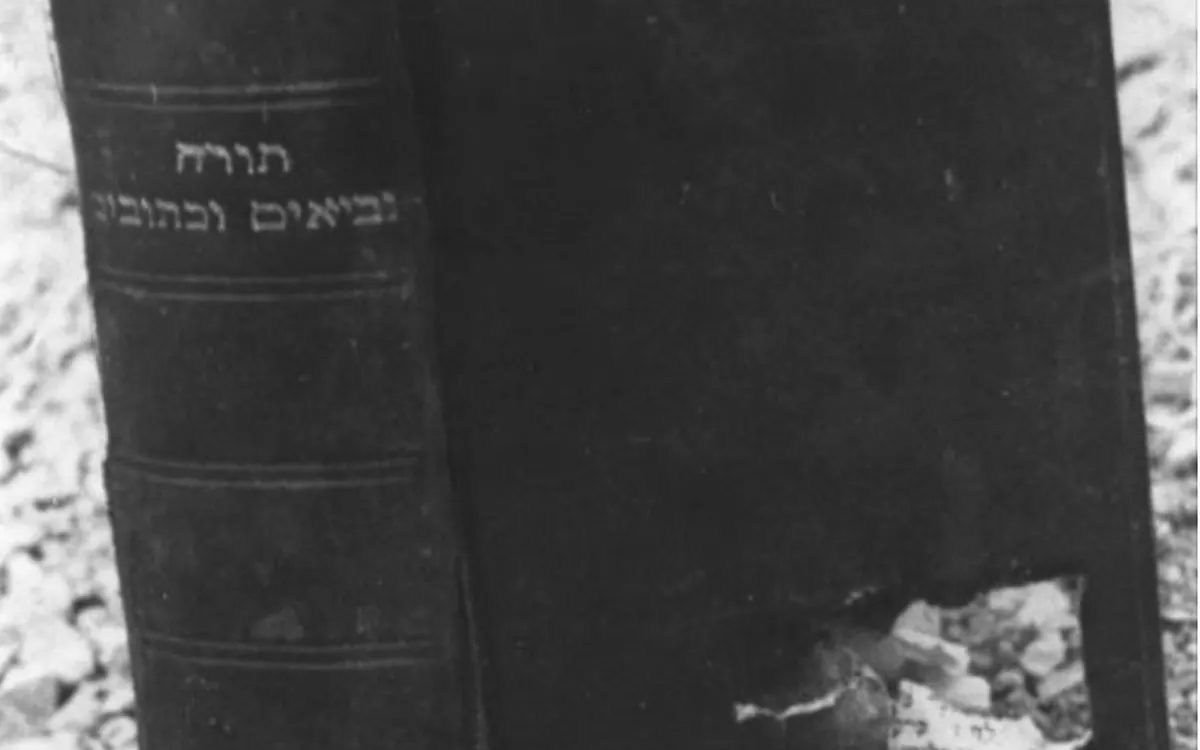
There is no word for independence in Biblical Hebrew, and the roots of the modern word can teach us much. This might right be called the day when we celebrate 'self-actualization,' but that leaves poses the question - how do we actually become a great nation in our land?
About this episode
Follow the path of the unsafe, independent thinker, says Thomas Watson. There is no word in Biblical or Rabbinic Hebrew for independence; atzma'ut was coined by Itamar Ben-Avi, son of Eliezer Ben-Yehuda and the first native speaker of modern Hebrew, to capture a modern concept foreign to the Bible, where the book of Judges shows that spiritual security provides physical security, that being true to our inner selves draws the divine grace for success. No word is created from nothing, and atzma'ut has a biblical root in etzem, bone, first appearing when Adam meets Eve and says this is bone of my bone, flesh of my flesh, the essential inner being that holds up the whole superstructure. This raises a fundamental problem for individual and nation: how do I know who I am. While subject to another's will, exploring who we are is bound up with rebellion, against parents, against cultural expectation, against foreign nations in the land, but the danger comes with the gift of independence, since it is far easier to define ourselves by what we are not than to decide what we are.
On gaining independence people and nations seek one of two poles. One is to find a new master, individuals seeking dominating relationships and nations becoming client states or conforming culturally, as in the Eurovision frenzy, which Rav Mike resists as an expression of independence. The other is to cast off everything we once were, the Zionist desire for a new Jew, which was not the Khmer Rouge, who took the French Revolution's year one to a murderous year zero and the killing fields, but which did seek to erase the past, the term min haTanach el haPalmach skipping the two thousand years of exile. Chaim Hazaz's story The Sermon gives voice to it through Yudka, who rises to say he is opposed to Jewish history because the goyim made it for us, oppression and martyrdom without end, and would forbid teaching children their ancestors' shame, independence as extreme autonomy even from the past. But both poles in their pure forms are myths: no one can wholly give authority to another, and no one can be wholly autonomous, since that would mean no shared language, calendar, history or relationships.
What emerges from the oscillation between authority and autonomy is authenticity, which always emerges from relationship, the most powerful tool for becoming who we long to be, itself the greatest expression of independence. So a more accurate translation of atzma'ut may be self-actualization, from etzem, and Rav Kook's favored term atzmiyut, selfhood, names true freedom: not a matter of status, since there is an enlightened slave whose spirit is free and a free person with the spirit of a slave, but the elevated spirit that lifts an individual or people to be faithful to their inner selfhood, the divine image within. This calls to mind Maslow's hierarchy, and Rav Mike applies it to a nation. At the base, physical needs: give thanks for the abundance of Jewish life today, the hills of Judea giving forth their fruit being the clearest revealed sign of redemption, be ashamed before the tomatoes for doubting it, with the caveat from his wife that a truly Jewish country is defined by social justice, so spend as much on tzedakah as on the barbecue.
Above the base lie safety and security and the emotional needs, deeply related in the present phase. The existential security that every war is do-or-die began to crumble with the Egyptian peace treaty of 1978, and since then security thinking has been clouded by two emotional needs. One is fear, part trauma, as in Begin's justification for Lebanon in 1982 that the alternative is Treblinka, when there may be space between. The deeper fear is of what the world will think, which cripples security even though Israel is the strongest power in the region, posing the question: client state or kingdom. The Shtadlan model of European Jewry, the representative who dared not appear too powerful lest he become a threat rather than a tool, lives on, as when Levi Eshkol told Ezer Weizman in 1965 to present Israel as Shimshon der nebbekhdiker, Samson the weakling, the Woody-Norris syndrome of smashing enemies then fearing the consequences, basking in triumph while haunted by annihilation, a fear of full self-actualization that holds us short on the pyramid.
What does it look like to be a great nation, true atzma'ut. Not imitating other nations however advanced or popular, as Leviticus teaches us to be a kingdom of priests and a holy people set apart, so it is not the ultimate expression of independence to win Eurovision. Yet it is a myth to dwell wholly alone, since a nation that wants to be truly autonomous cannot learn, teach or have relationships, all of which depend on empowering another to be an authority. Since the purpose of existence and the only justification for the pain of the quest for independence is complete redemption, our independence cannot stand wholly apart from the world. The answer Rav Mike longs for is prophecy, the national characteristic of Am Yisrael when all the people have a sense of God consciousness, which is why we sing Hallel on Yom Ha'atzma'ut. He closes on a word from the Declaration's phrase chayei komemiyut mamlachtit, komemiyut appearing once in the Bible, in Leviticus 26, where God brought Israel out to be slaves no more and made them walk upright, so independence means breaking the external yoke and the internal oppression both, and walking upright, free of external definitions, of cultural conformity and of the fear of wielding power, we can truly be atzmayim, self-actualized, a great nation in the land.
Key ideas
- Atzma'ut was coined because the Bible has no word for independence, and its root etzem, bone, names the essential inner being that holds up the whole.
- On gaining independence people seek a new master or cast off the past entirely, both pure poles being myths, as Hazaz's Yudka shows for autonomy.
- Authenticity emerges from the oscillation between authority and autonomy, always from relationship, so atzma'ut is better read as self-actualization.
- Applying Maslow to a nation, the abundance of Jewish life is a revealed sign of redemption, with the caveat that a Jewish country is defined by social justice.
- The Shimshon the weakling syndrome, basking in triumph while haunted by annihilation, is a fear of full self-actualization that holds Israel short on the pyramid.
- Komemiyut, to walk upright, means breaking both the external yoke and the internal oppression, so a great nation can be truly atzmayim in the land.
Chapters
- 0:00 The independent thinker; no word for independence
- 1:06 Atzma'ut coined by Itamar Ben-Avi
- 2:16 Judges: spiritual security
- 3:21 Etzem, bone; Adam and Eve
- 4:25 How do I know who I am?
- 5:28 Gaining independence; the danger
- 6:33 Pole one: a new master; Eurovision
- 7:42 Pole two: year zero and the new Jew
- 9:54 Hazaz's Yudka; history as shame
- 12:05 Both poles are myths; authenticity from relationship
- 14:20 Rav Kook on true freedom; Maslow
- 18:48 Physical needs; ashamed before the tomatoes
- 20:56 Social justice; the caveat
- 22:01 Security and fear; Begin and Treblinka
- 24:11 Client state or kingdom; the Shtadlan
- 25:18 Shimshon the weakling
- 28:33 A great nation; set apart, not alone
- 30:46 Longing for prophecy; Hallel
- 33:00 Komemiyut; walking upright
Who, where and when
People
Thomas Watson, Itamar Ben-Avi, Eliezer Ben-Yehuda, Chaim Hazaz, Rav Kook, Abraham Maslow, Menachem Begin, Levi Eshkol, Ezer Weizman, Yishai Fleischer
Places
The land of Israel, Harnof, Lebanon, Mount Zion
Texts
Genesis 2, The Book of Judges, The Sermon by Chaim Hazaz, Orot HaKodesh, Leviticus 26:13, The Declaration of Independence
When
1948 CE: the revolution of independence, 1965 CE: Eshkol and Weizman, 1978 CE: the Egyptian peace treaty, 1982 CE: Begin on Lebanon
Read the transcript
Bow the path of the unsafe, independent thinker, says Thomas Watson. Expose your ideas to the danger of controversy. Speak your mind and fear less the label of crackpot than the stigma of conformity. Well, I've never been much of a conformist, and there are definitely people out there who think I'm a crackpot. But I pride myself on being a bit of an independent thinker. Because I'm Rav Mike Foyer, and this is The Jewish Story. Yom Ha'atzma'ut 5779 Independence or Self-Actualization You know, it's always a challenge to come up with something new to say, and I feel a bit of pressure in particular around this very special day of Yom Ha'atzma'ut, Israeli Independence Day. So I thought to myself, we just go back to something we've touched on before, but I don't think we've ever really dug into.
And that is that there's no word in Biblical Hebrew, or Rabbinic Hebrew for that matter, for independence. Atzma'ut is a word that was created. Now, first of all, what's it mean? Atzma'ut, if you look in the Hebrew dictionary, it says, It's a situation in which a state or a country is not dependent upon any external force for the sake of its existence, be it physical or economic, Haganah, Agvulotar, for the defense of its borders, etc., etc. It's a word that was actually coined, interestingly enough, by Itamar ben Avi. Itamar ben Avi, Avi is an acronym for Eliezer ben Yehuda. He's the son of the man who invested his entire life in the revival of the Hebrew language. In many ways, he was the firstborn native speaker of modern Hebrew.
And in searching around for a word that could encapsulate what essentially is a modern concept, he had to coin his own. Now, why do I say it's a modern concept? Because it's not by accident that there's no such word in the Bible. This idea of not being dependent upon any external force is completely foreign to the way in which the Bible sees its existence, certainly the national existence of Am Yisrael. Just go back to the book of Shoftim, of Judges, And you'll encounter what's known as the cycle of the judges, this idea that Am Yisrael's spiritual security is what actually provides our physical security. That we, being independent in the modern sense, doesn't mean being strong and free and unencumbered by alliances or dependencies on other nations.
It means being true to our inner spiritual selves and through that receiving the divine grace that allows us to be successful on the battlefield or on the economic front. And so, Itamar ben Avi was forced to coin a word to encapsulate a modern conception of independence because the classic Hebrew language didn't provide it. However, you know, there's no such thing as creating a word out of nothing. Or, sure there is, but not in any successful sense. And so, the word atzma'ut does, of course, have a biblical root. The first usage of ayin tzari mem as a three-letter root, which is the way the Hebrew language works, goes all the way back to that story of creation. And not just the story of creation, but the story of the creation of Adam and Chava, of the first man and woman.
It says, V'yepel Hashem al-Him, Tardemah al-Adam. V'yishan, right? God caused a deep sleep to fall upon the first man. And he indeed slept. V'yikach achat mitzloutav. He took one of his ribs, you know the story. He closed up after him and said, God built that rib, which he took from humanity into woman. V'yiv'ah v'yiv'ah al-Adam. He brought her to the man. And what did Adam say? Vayimra Adam, Zot hapa'am. This time, etzem me'atzamai uvesar mi'bisari. This is bone of my bone. Flesh of my flesh. Because the word atzma'ut has its origin in the word etzem. Bone. It's the essential inner being which holds up the whole superstructure that's built upon it. And this first appearance with Adam's first encounter to Chava raises one of the fundamental problems that we all face as individuals and certainly that we face as a nation, which is, how do I know who I am?
He says, etzim me'atzmai, how does he recognize within Hava that which he already is? Now, as long as we're subject to the will of another, the question of exploring how we know who we are is really bound up with rebellion one way or another. We can rebel against our parents, everybody who's either been a teenager or who, like myself, is raising one in the house. knows that there is a deep need to push against the parent and the infrastructure that they provide in order to determine who we are. And another form of asking that question of who I am is pushing against cultural expectations, right? On many levels, what it means to be a Jew, to be part of Am Yisrael, is to be counterculture. After all, our father Abraham, the original Ivri, stood on one side of the world, and the whole world was convinced that idolatry was one way, and he said, No, it's got to be another.
And he was the first Jewish rebel. So pushing against cultural expectations. Of course, the classic form of independence, which is pushing against foreign nations within your land or getting out of exile. So that's all great. It's well and good. But what happens when I actually gain my independence? When I move out of my parents' house or I establish my comfort with my counterculture or I kick foreign nations out of my land and return home? Because suddenly most of us find it's far easier to define ourselves by what I'm not, to find the clarity of self through what I reject, than it is to actually decide what I am and what I long to be. Because that proves to be a much trickier proposition. And that's the danger that comes with the gift of independence.
Whether that independence is living on my own for the first time or building my own country for the first time in 2,000 years. And I'm here to tell you that in my experience, both personal and research, there are generally two poles that people and nations will seek consciously or not. One is to find a new master. Individuals will seek dominating relationships, people that will tell them what to do. Nations will often become client states, looking to sort of follow in the wake of some larger entity's vision. And then, of course, there's always the tendency toward cultural conformity. I've got to admit, I have a little bit of a bone to pick. In Israel right now, there's a frenzy around what's called Eurovision.
The fact that we as Jews have succeeded at the game of world culture and that we're hosting what apparently is the largest cultural event, in the minds of the Europeans at least, that could ever be. And that scene is a great victory and expression of our independence. The celebration is actually the week after Independence Day. I've got a little bit of a problem with cultural conformity as an expression of independence. So that's one sign. There's this desire to find a new authority. The other pull, by the way, is to try and cast off everything which we once were. Everything that was shaped by the past of oppression needs to go out the door in hopes of making a true revolution of self. And if you've been following the Jewish story for a little while, you're familiar with this as the desire of the Zionists to be a new Jew.
To get rid of what was the things that bind us to the old Jew in order to become all that we can be in the land. Now, in all fairness, the pioneering Zionists weren't exactly the Khmer Rouge of Cambodia. If you don't know the history just a little bit, the Khmer Rouge took their cue actually from the French Revolution. Because after the abolition of the monarchy in the revolution in 1792, I think it was, the National Convention instituted a new calendar, and they declared the beginning of year one. It's actually not entirely unreasonable. Plenty of people have done it. But the Khmer Rouge took one critical step further. Because they sensed that in order to really start again, it isn't enough to move forward from the point of revolution to say, ah, we've overthrown the past, now we're going from here on.
They had a sense that you have to destroy the past. And so they didn't go for year one, they went for year zero. Yeah, this is the idea that all culture and traditions within a society must be completely destroyed, and a new revolutionary culture built from scratch. Now, that might sound appealing. In theory, it might not. But you should understand that the effort to purge and replace history from the ground up for the Khmer Rouge meant that they rounded up teachers, artists, intellectuals, basically anybody who knew anything, and they slaughtered them in what are known as the killing fields. Now like I said the Zionists in their desire to create the new Jew were not that extreme but they did have a deep desire to free themselves by erasing their past That the origin of that wonderful term min hatanach el hapalmach from the Hebrew Bible to the striking arm of the Haganah underground and nothing in between.
The desire to make a link to this glorious biblical past and to erase 2,000 years of what the Zionists, or at least many of them, perceived to be the suffering of exile. We spoke once in season two about Chaim Hazaz's short story, The Sermon. Hazaz was one of Israel's most honored fiction writers, and frankly, one of the most influential thinkers in the early decades of the state. He wrote a short story, it's called The Sermon, and the main character is Yudka. Yudka in Yiddish means little Jew, and he's meant to represent just that. Am HaYisrael, the simple Jew. And Yudka's defining characteristic is his reluctance to ever speak in public, which is a challenge in a kibbutz society in which he lives, because everything is decided by committee.
And one day, when the committee of the kibbutz gathers to discuss the school curriculum, to everyone's surprise, Yudka asks to deliver a statement. Rehazaz pictures him stuttering and struggling, and finally manages to get out the following statement. I want to state that I am opposed to Jewish history, he says, Because we didn't make our own history, the Goyim made it for us. What is there in it? Oppression, defamation, persecution, martyrdom. And again, oppression, defamation, persecution, and martyrdom. And again, and again, and again, without end. Just a collection of wounded, hunted, groaning, and wailing wretches, always begging for mercy. I would simply forbid teaching our children Jewish history.
Why the devil teach them about their ancestors' shame? I would say to them, boys, from the day we were exiled from our land, we've been a people without a history. Class dismissed, go out and play football. You hear it? That's the desire for independence as an extreme autonomy, even from my past. I am dependent upon nothing. And it represents the opposite pole from what many people do when they're granted their freedom, which is rush to find a new master, a new authority. Because there's a continuum between authority and autonomy, And we always have a choice where we're going to land on it. But it's important to remember that either end of the pole, autonomy and authority in their pure forms, are both a myth.
No one is able to completely divest themselves of their responsibility for their life and give over authority to someone else. Even a client state, which follows in the wake of a world power, will have to make its own decisions at one time or another. And no one can be completely autonomous. Because if you're autonomous, it means that you have to create your own language, your own calendar, your own history, and furthermore, that you can't learn from anyone else or have any real relationships. So on one hand, slavery, meaning the acceptance of authority, is nothing that we want. And it's going to take a lot of work to liberate ourselves and to embrace the burden of freedom, the ability to actually make autonomous choices.
On the other hand, independence is not really having no dependency on any external power, like the Hebrew definition made it sound, which, by the way, just to be clear, it did make it clear that no such a thing actually exists. Because, after all, go free yourself from the biosphere. None of us are really autonomous. And I would offer that that realization which Adam had in the moment of meeting Chava, that place in which Eliezer ben Yehuda's son actually found the origins of a Hebrew word for independence, wasn't just a recognition of who she was. It was a re-understanding of himself. Remember, the phrase is, This time I see that this is bone of my bone, flesh of my flesh, He's not just understanding her, he's reconceptualizing himself.
And hence, the phrase which follows it. And that's why, it's interesting, he recognizes himself in her, and that's why a man can abandon his father and mother. He can abandon the context which created him. And, and cleaves to his chosen relationship, to his wife, and they become one, flesh, one new thing. Because between those two poles of autonomy and authority, which we're always bouncing between, be it an invitation or the real need to seek shelter under the wings of a more powerful entity that lie on the authority side, or the autonomous side, the desire to be who I want to be and the consequences be damned, we're always oscillating between them. And what emerges from them is actually authenticity, a real way of being.
And authenticity always emerges from relationship. Right relationship is the most powerful tool for coming to be who we long to be. And of course, coming to be who we long to be is perhaps the greatest expression of independence. So I'd like to offer that another possible translation of Atzma'ut, and perhaps really a more accurate one, is self-actualization. Because that's that etzem, that bone, that essential part that Eliezer Ben Yehuda's son identified and uses the root for the modern word for independence. And Atzmi'ut, selfhood, as opposed to Atzma'ut, which is kind of independence, is a favorite term of our master and teacher, Rav Abram Yitrach Cohen Cook, who never actually saw the independent state, but was certainly the prophet of its rise.
And his voice still echoes down through time. You have to read his works to appreciate how clear his vision could be. And in many, many places, he contemplates the nature of freedom. And in particular, the challenge of differentiating between the sort of external type of freedom, freedom from, and the true inner freedom, freedom of. As he says, the difference between a slave and a free man is not just a matter of status, because we can find what he calls an enlightened slave whose spirit is filled with freedom, and also the opposite, a free person who has the spirit of a slave. So what in Rav Kook's mind is true freedom? Self-actualization. He says, definitive freedom is that elevated spirit that lifts up an individual or a people to be faithful to their inner selfhood to that soul quality of the divine image which is within it to be free is to find one's self and actualize it which itself is as what he calls that element of the divine image which is within us as individuals and within us as a nation.
When I hear the word self-actualization, I can't but help think of Maslow's hierarchy. You remember it back in high school? I don't know, maybe you've done advanced learning in psychology and you've encountered it on a deeper sense. It's that pyramid at the base of which are the physical needs followed by safety and security and then the emotional needs of friendship and love followed by esteem, and finally there at the top, self-actualization. You know, originally in Maslow's mind, this was a sort of rigid hierarchy. In order for any motivation to achieve the higher level to occur, you had to get whatever level was below it taken care of. And today's scholars actually prefer to think of them as continuously overlapping.
Even when you're hungry, you might be motivated towards self-actualization. But I'm not really interested in theorizing about the pyramid. I want to know how we get to self-actualization. I want to get to the top. And I want to know how we do it, not just as individuals, but as a people. Because in my eyes, that is the great opportunity that I'm living, that we're living right now. We've been offered an incredible chance by the revolution of 1948. We have the chance to fulfill God's original promise to Abraham when he said, leave everything you know. Notice the pattern. your land, your home, your father's house, everything you know, and go to this land which I will show you, the Esecha, the Goy Gadol, the Avarecha, the Agadla Shemecha.
I'm going to make you there into a great nation. I'll bless you, I'll make your name great, and you shall be a blessing. Because there have been great individual Jews throughout time and all over the planet just as there have been great individual non throughout time and all over the planet My question on this Yom Ha this day of self-actualization, is what does it look like to be a great nation? And seeing as self-actualization, Atsma'ut sits at the top of Maslow's pyramid, I think he can help us. So let's start with the physical needs. And first and foremost, if we're going to talk about physical needs on a national level, I want to give thanks for the good life that we have today. It is not a simple thing to see the level of abundance in which Am Yisrael lives, be it here in the land of Israel or in the United States, or really throughout the world compared to most of our history.
Food, clothing, and shelter don't even touch what we've been given. And let's not forget that the Gemara and Sanhedrin says that when the hills of Judea give forth their fruit to feed Am Yisrael, there's no greater revealed sign of the redemption. I'll tell you a funny story. I remember that Rav Shom Gold told me once, right? He used to tell it as much as he could. He had a neighbor who was in Harnoff. It's a fairly religious neighborhood of Jerusalem, which means because of its religiosity, there's a little bit of skepticism around the Zionist notion that we're in a stage of redemption. And right after the disengagement, right after the Jewish communities of Gaza were destroyed, and their people evicted.
One of his neighbors came up to him in the McCullet, in the little supermarket there, as he's standing in the vegetable row and says, Huh, Gold, what do you think about your Zionists and redemption now? And he said, he turns on him, he said, you should be ashamed before the tomatoes. You should be ashamed in front of the cucumbers for even asking a question like that. You've got to know him to appreciate. Meaning what? Meaning the abundance within which we live and in particular, the land giving forth its fruit is the most revealed sign of redemption. and don't give up just because sometimes it seems like we're going backwards. And if you've been following season three, then you know that the ingathering of the exiles was a massive burden on this young country and our economic survival was far from obvious.
We don't have to go back hundreds of thousands of years to say, wow, wouldn't they be amazed to see what this country looks like right now. I know grandparents who are amazed to see what this country looks like right now. I do have to add one caveat from my holy wife. We were speaking last night at the third meal at the end of Shabbat, and she said that a truly Jewish country, when we're talking about what would a Jewish country look like, is one whose society is defined by justice, and in particular, social justice. Because I'm sad to say the price of our physical freedom and our physical abundance should not be the poverty of the poor. And maybe it would be a good thing for all of us to take that to heart this Independence Day, this day of self-actualization, and to spend as much on tzedakah as we do on the meat that we're going to put on the barbecue.
So that's the base level of Maslow. But really, I want to speak about safety and security and their emotional needs, which lie above them, and I want to speak about them together. Because in my humble opinion, the safety, security need, and the emotional need are deeply related to the present phase of our national existence. and it might just be the confusion between them that's preventing us from moving up the pyramid. Now, if you stay tuned for the rest of Season 3 and what may even be Season 4, you'll hear me make the argument that the existential security, the sense that every war is a do-or-die and that the axe is just hanging right over our heads, began to crumble here in our country, really with the Egyptian Peace Treaty of 1978, when suddenly it wasn't true any longer that every one of the states around us wanted to destroy us.
And that itself had direct consequences in the social response within Israel to the Lebanon War of the early 80s. It was since then that our security thinking has been clouded by two primary emotional needs. And the inability to separate the reality on the ground from the reality within threatens our independence even today. I mean, after all, what other people would tolerate 450 missiles begun completely unprovoked in one day? That's what's going on as I'm recording this even now. And one of the reasons that the press is offering for our sort of muted response to such a heinous crime is that we don't want to ruin our Independence Day celebrations. Oy, bey. So one of the emotional issues that's clouding our thinking is clearly fear.
Now, part of that is just trauma, be it personal and immediate. I mean, it's hard to know how many actual individuals are walking around in our country with post-traumatic stress disorder. I'm not just talking about those that have been inherited over time, which is very real. I'm talking about those that have actually been in war, right? So, I'll just quote for you Prime Minister Menachem Begin's justification to the Israeli cabinet on the eve of the Israeli invasion of Lebanon in June of 1982, and you'll get the point really quickly. He said, the alternative is Treblinka, and we've decided there will be no more Treblinkas. Really? Really, the only alternative to invading Lebanon is a death camp? I think that there might just be some space in between there for thought.
That's just one level of fear. But the fear I'm really concerned about, the one that actually thwarts our security, and thus our self-actualization is more than the fear of what our enemies might do to us if we don't get them first. Because honestly, we are the strongest military power in the region. They should fear us, not vice versa. But right now, they don't. And why not? Because the fear of what the world will think is also crippling our security. And that's a problem that we will explore at length in a coming episode. But for the purposes of the present discussion, I'll pose it like this. do we want to be a client state or a kingdom? Do we really aspire to independence with all the power and real responsibility that it offers?
Or would we rather hide behind the skirts of another nation, the United Nations, or just so-called international morality? There's an inner tension between being weak and being strong, which characterized the nature of European Jewish politics for the last 1,500 years. We call it the Shtadlan model. Shtadlan was the unofficial but culturally empowered representative of the Jewish community before whatever king or prince they found themselves facing as the local power. But the Shtadlan, and the way it's always presented, he was very stooped and sort of clever and would approach in a very humble manner, begging for whatever it was the Jewish people needed in that moment. But the Shtadlan wasn't a beggar.
Because if he was just there begging, what hope could he have had? He knew that he had something to offer, and that was Jewish power. The problem was that unlike the leader of an independent people, the shtadlan dare not appear too powerful. Or suddenly he ceases to be a potential tool or even client of whatever king or prince he's negotiating with, and suddenly becomes an independent threat. And we face this same situation here in the state of Israel. I'll give you an example from the history of the independent state. In 1965, Ezer Weizman, who was then IDF chief of operations, was on his way to America to present Israel's requests for airplanes to supply the IDF's air force, the IAF. And before such a critical trip, 1965, this is the lead-up to the Six-Day War, he went to Prime Minister Levi Eshkol to get advice on how exactly to present the state.
Should he portray Israel as a weak nation, one that desperately needs help and therefore is to be pitied? Or should he portray them as a budding regional power, which, according to Cold War logic, the United States should invest in? Now, Eshkol apparently didn't hesitate for a moment. He told Weizmann, you should present us as Shimshim de Nebedicher. He was a classic Yiddishist, meaning Samson the weakling. Samson is the archetypical powerful figure of biblical history. And the Nebedecher is the ultimate Yiddish exile expression of someone who has absolutely no ability to defend himself. And this tension characterizes us up to this day. My dear friend Yishai Fleischer likes to call it the Woody Norris syndrome.
On one hand, we're Chuck Norris. Woo-hoo, pow, bam! We smash our enemies, and then, oh, we did the cracks. Maybe we shouldn't have done it. I'm a little afraid of the consequences. But Weizman heard it first from Eshkel. Shimshon the Nebedecher. And you can find it today. On one hand, you walk the streets. You'll meet people who are confident that the Jewish state can overcome any and all obstacles in our path. On the other hand, if you speak to people long enough you also find that we haunted by the fear that annihilation is just around the corner and that our hands are tied by the world This tendency to bask in the triumphs of success while worrying that our situation is precarious and that we're victims of some world conspiracy hasn't gone away since Eshkol's time.
And I think that this is more than just an honest fear for what's a truly difficult situation, and it's more than the internalization of centuries of sort of like a hunched posture and not wanting to appear too strong. And it's more even than just the trauma of the very real pain that we've had. I think it's a fear of full self-actualization. It's a fear of what victory might actually look like if we decided that we were going to truly be independent. And that's what's holding us short on Maslow's hierarchy. We've got the physical needs, although we need to do the work. And please, let's all give a little bit of tzedakah to those who need this Independence Day. And our security on one hand is completely in our own hands.
We are the regional power. On the other hand, our emotional trauma and our unwillingness to own the responsibility and the glorious opportunity of being independent is holding us back, not just from self-actualization, but actually from real esteem, which underlies it. So I want to wrap up this ramble by going back to my question. What does it look like to be a great nation? What is national self-actualization? What is true atzma'ut? So first of all, let's touch that opening point once again because it's certainly not imitating other nations no matter how advanced or globally popular. And it's a repeated theme of the book of Vayikra, of Leviticus, the book that we're in the midst of in the public reading right now, which teaches us how to be the Mamlech HaKohanim, the Goy Kadosh, the nation of priests and the holy people, which God desires.
As it says, And I've set you apart from other peoples to be mine. We cannot be independent by wanting to be like anyone else. And it is not the ultimate expression of our independence to win Eurovision. Now, on the other hand, it's a myth to say that we're a nation that dwells alone, at least in the simple sense, because a person or nation that wants to be truly autonomous can't learn, can't teach, can't have relationships at all, because all quality learning and teaching and relationships are dependent upon my empowering you to be an authority in my life. And since I believe that the actual purpose of our existence, and certainly the only real justification for the pain and suffering which is bound up with our quest for independence, is Geula Shlema, its complete redemption.
And that means our independence can't find its expression by standing completely separate from the world. Now, that being said, we do need to figure out, to some degree, who we are before we can enter into right relationship that allows us to be all that we can be. And so what does it mean to be a great nation? A people struggling to actualize itself in the land. I hear you ask now, okay, Mike, you've caused all these problems and raised all these questions. Where are your answers? So I'll tip my hand, and I'll tell you what I'm waiting for, longing for, let it be soon, let it be now, even a little bit trying to work towards, and that is prophecy. because as Rav Kook says, this is the national characteristic of Am Yisrael.
When all of the people of Israel have a sense of God consciousness, then the prophets will be able to have that sense of divine communication. Now, I'm not necessarily talking about the dramatic word of God type that we've inherited from our holy ancestors, but I am thinking about the profound but simple sense of that national consciousness of rejoicing before God that gives us the capacity to give voice to a higher order of creation. And that's, by the way, why it's so important in my eyes that we all sing Hallel on this Yom Ha'atzmah. We all sing the Psalms of praises. Praises to God, who not only creates the context of creation that allows us to be independent, but blessed us to live in a time in history where it's found its fruit here in the land.
So, you know, aside from atzma'ut, from the question of what this independence or self-actualization means, on this Independence Day, I want you to think about just one more word, and we'll close with this. And it might actually give us a little guidance on how to bring all these lofty concepts I'm talking about down into our daily lives, and therefore move just a bit closer toward being a great nation that can merit the spirit of prophecy and bring redemption to the world. And that word is actually there in the opening line of Megilat Atzma'ut, the Israeli Declaration of Independence. And it reads as follows. The land of Israel was the birthplace of the Jewish people. Here, their spiritual, religious, and political identity was shaped.
Here, they first attained a statehood, created cultural values of national and universal significance, and gave the world the eternal book of books. And you may hear how this line actually encapsulates much of the ideas that we've raised here. It's not just the point of origin. This is where our spiritual, religious, and political identity was shaped, and therefore where we were able to give to the world things of national and universal significance. However, part of true independence, of course, is having a native tongue. And if you read this line in Hebrew, it sounds a little bit different, in particular in one phrase. Be'eret Yisrael kam ha'am Yehudi. Ba'u tzva d'muto ha'ruchanit, ha'datit, ha'medinit, uva'chai chaye komimiot mamlachtit.
Now the first part is just the same. The land of Israel, in the land of Israel arose the Jewish people. And there was shaped its spiritual, religious, and political, I don't know, character, identity. and there we lived a life of a kingly or a kingdom of uprightness it's very upright kingness it's almost impossible to translate which is why it says they first attained to statehood but it's this word that I want to leave us with because what exactly does it mean to be well Well, the crafters of the Declaration of Independence took this word, and it's the only time that this word appears in the whole Hebrew Bible is in the book of Vayikra, Leviticus 26.13. It says, I, Lord, am your God who brought you out from the land of the Egyptians to be their slaves no more.
Once again, independence certainly means being free from who broke the bars of your yoke. And I believe that that repetition is you don't have to just be free from the external oppression. You also need to break the internal oppression in order to be totally free. And then what? וְלַּשְתְכּם כְמִיּוֹתּ And it doesn't say, I brought you to the land. It says, I made you walk upright. Because once we learn to walk upright, be it in our personal lives, in our communal lives, in our national lives, right? We've been freed from the external definitions, from the need for cultural conformity, from the fear of actually wielding power in service of right and from a sense that others can define our being then, walking upright we can make it into the land where we can truly be atzmayim independent, self-actualized a great nation in the land and that's my blessing for us all on this Yom HaTzmood let it be soon, let it be now I want to thank a few people as long as I'm here I want to thank you for listening And I want to thank together with you all those people who give their hard-earned money to make the show happen, to keep it free, widely distributed.
And I want to invite you to join them right now. Stop what you're doing. Go to jewishstory.co. And there in the upper right-hand corner, you'll see a button that says Be a Patron. And you can click there and push on through for a little bit of per-podcast support. If that's too much, you can send me an email at robmikefoyer at gmail.com. Or you can find me on Facebook at jewishstorypodcast. And I'll give you the details there. I want to thank the Land of Israel Network, that's thelandofisrael.com, for creating a platform that allows me to reach so many amazing people. I want to thank the Pardes Institute, pardes.org.il, for building an educational institute that allows me to touch the hearts and minds of so many wonderful Jews.
And, once again, I want to thank you for listening. I'm Rav Mike Foyer, and this is The Jewish Story.
More from Season 3
TJS S3E4 Sink or Swim - mass immigration and the in-gathering part II
There are times in the history of peoples and nations when the decisions made shape the future. The three years after Israel's foundation saw its population double through...
Play Episode
TJS S3 Passover Interlude: The Exodus, a story beyond belief
The commandment around which seder night revolves is the telling of the story of the Exodus. Many people today struggle with questions of historicity, meaning - did this...
Play Episode
TJS S3E5 1949 Boundary issues - part I
In 1949 Israel was in the dangerous position of winning the battle and losing the war. Though ceasefire agreements were in place, peace remained elusive. This episode opens...
Play Episode