
TJS S3E5 1949 Boundary issues - part I
In 1949 Israel was in the dangerous position of winning the battle and losing the war. Though ceasefire agreements were in place, peace remained elusive. This episode opens an examination of the questions of international legitimacy, national cohesion and border conflicts which characterize the state even today.
About this episode
Daring to set boundaries is about the courage to love ourselves even when we risk disappointing others, says Brene Brown. With so many casting doubtful glances at Israel, the question is whether this is what we wished for. Rav Mike puts his cards on the table: of the twenty-five hundred years of the story, there is no period he would rather live in than the present, and it is because the best is yet to come that he must tell a challenging story, since every solution brings its own challenges. Zionism is the movement for Jewish national embodiment and the state its most concrete product, subject to the two problems of embodiment. The first is the edge: anything embodied in the world has edges, which on some level is absurd, as his daughter showed by pulling her sleeve a finger's width past the elbow, yet the edge is what forces us to make a value real. The second is that life is messy, since only abstractions are perfect, and an organic people that wants to thrive must plow through the mess toward the vision. A nation holds its boundary three ways: international legitimacy, national cohesion, and the raw fact of borders.
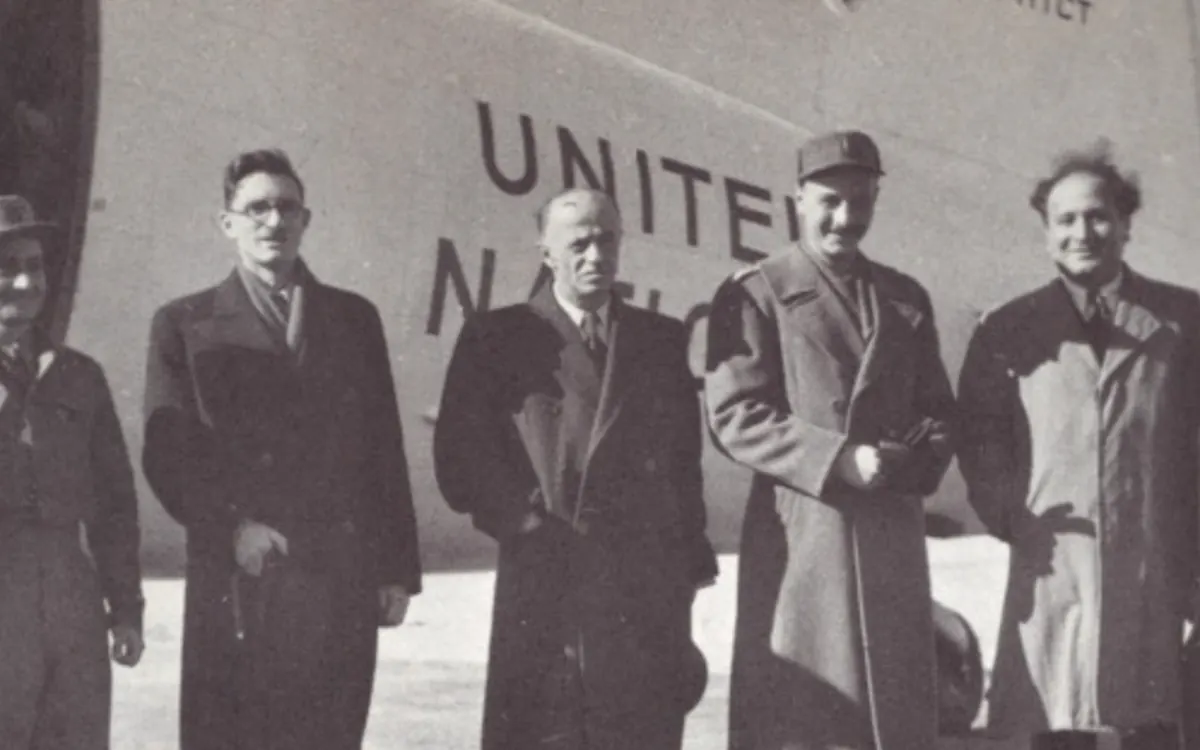
Ben-Gurion had refused to define the state's borders, setting it on a path to establish them through the fortunes of war rather than international legitimacy, a pattern that still holds. On May 20, 1948 the UN appointed Count Folke Bernadotte, a Swedish diplomat who had freed prisoners from the camps, as mediator, dedicated to a new model of post-colonial politics he would pay for with his life. In the first truce he named the barriers that have not changed: the Arab rejection of a Jewish state, Israel's new philosophy of ignoring UN boundaries and conquering what it could, and the refugee problem. His second-truce plan ditched partition for the realities on the ground, the Galilee to Israel and the Negev to an Arab Palestine annexed to Transjordan, with repatriation of refugees and an internationalized Jerusalem. The provisional government never meant to accept it, unwilling to sacrifice at the table what it won on the battlefield, and the radicals branded him an agent of British colonialism, so on September 17 a four-man Lehi team assassinated his motorcade in Jerusalem. His assistant Ralph Bunche shifted to separate armistice agreements, a glorified ceasefire, so the 1948 borders are not borders but ceasefire lines, the green line green because of the marker that drew it.
A few months after the assassination the UN passed Resolution 194, which created the Palestine Conciliation Commission and convened the failed Lausanne Conference of 1949. Two issues came out of it: the codification of an international claim to Jerusalem under UN control, to which Ben-Gurion responded by moving the government offices to Jerusalem and declaring in the Knesset that for the state of Israel there has always been and will always be one capital, Jerusalem the eternal; and the refugee issue, which resolved that refugees wishing to return should be permitted. The Arab states had no interest in absorbing their brothers or in creating a Palestine, as the Lausanne negotiations show, Egypt demanding the Negev for itself and refusing even Gaza, Jordan annexing the West Bank, so that until after 1967 the Arab goal was to expand their own territory, not to create Palestine. With hundreds of thousands of refugees Israel would not accept back and the Arabs would not absorb, UNRWA was born in December 1949, the only UN agency for a specific conflict, providing relief in place and letting refugee status be inherited, setting a pattern of zero-consequence warfare, as Sharett warned, where the Arab states could wage aggression, lose, and demand the status quo ante.
Israel hardened its stance at Lausanne, unwilling to compromise on any territorial or demographic gain of 1948, and every peace effort of the 1950s failed. The failure of UN diplomacy did not end the UN, because the other new reality of the war was the Cold War: the Truman Doctrine and the Marshall Plan, from which the Soviets were excluded, were its opening shots, and if the conflict could not be solved by treaty the West would manage it through Cold War politics. The 1950 Tripartite Declaration by the United States, Britain and France guaranteed the 1949 armistice lines, making the ceasefire lines sacred, and the Near East Arms Coordinating Committee managed the arms flow, a new colonialism where the client state replaced the colony, which kept the conflict from erupting until 1956. Meanwhile the chosen battlefield of the Arab states was economic: the Arab League's boycott, a central office in Damascus, a blacklist of companies, the severing of land routes and the pipeline, so that Israel became the only non-island nation reachable only by air or sea, the Straits of Tiran blockaded until 1956, a trigger of the wars to come, the economic outlook downright grim against austerity and mass immigration, the land of unlimited impossibilities.
Israel in 1949 was a strategic nightmare, the worst conceivable border, long and meandering without natural defenses, every city in artillery range, a ten-mile waistline. The land emptied of Arabs was followed by a massive demobilization to save the economy, leaving the new frontier undefended and unpopulated, so that infiltration, histanenut, began even before the war ended and the War of Independence in effect never ended, shifting from confrontation to infiltration, 10,000 to 15,000 incidents a year between 1949 and 1954, some refugees returning or farming, some thieves, some smugglers, and a small deadly percentage who came to kill, over 200 civilians dead. The fear undermined the resettlement of the Jewish refugees, and since military presence alone could not seal the border, only a settled population, nohachut, could, a policy of population dispersion began, 350 new settlements from 1948 to 1954 on or near the borders, kibush hashmama, the conquest of the wasteland, on cultivated land whose Arabs had fled or been driven out. But infiltration threatened it all, and nearly half the dispersed population left from 1948 to 1950, immigrants Eshkol called autumn leaves that tremble in an imaginary wind, until veterans moved into the border settlements and stiffened the resolve, forging a new Israeli character that could fight and win because it had come home, the second source of national legitimacy, national cohesion, with Moshe Dayan on the horizon.
Key ideas
- Embodiment brings two problems, the edge that forces a value to be made real, and the messiness that an organic people must plow through toward its vision.
- Ben-Gurion set Israel's borders to be won by war, not international legitimacy, so the 1948 lines are ceasefire lines, not borders.
- Bernadotte named the unchanged barriers to peace and was assassinated by Lehi; Bunche's separate armistices made the ceasefire lines sacred.
- At Lausanne the Arab goal was to expand their own territory, not to create Palestine, and UNRWA set a pattern of zero-consequence warfare.
- The Cold War's Tripartite Declaration froze the armistice lines while the Arab boycott made Israel reachable only by air or sea.
- Infiltration meant the War of Independence never ended, answered by population dispersion that forged a new Israeli character in the border settlements.
Chapters
- 0:00 The courage to set boundaries; is this what we wished for?
- 1:04 The problem of embodiment; the edge
- 3:13 Life is messy; three ways to hold a boundary
- 4:26 Borders won by war
- 6:37 Count Bernadotte
- 8:58 The barriers to peace; the second plan
- 11:08 The assassination; Bunche and the armistice lines
- 12:15 Resolution 194 and Lausanne
- 13:21 The claim to Jerusalem; Ben-Gurion's answer
- 15:32 The refugee issue; the Arab goal
- 17:42 UNRWA and zero-consequence warfare
- 19:51 Israel hardens; the Cold War
- 22:12 The Tripartite Declaration; arms
- 25:27 The economic war; the boycott
- 28:47 A strategic nightmare
- 29:50 Demobilization and infiltration
- 32:05 Population dispersion; the conquest of the wasteland
- 34:13 Autumn leaves in the wind
- 37:24 The rifle by the bed; veterans stiffen the border
- 39:32 National cohesion; Dayan on the horizon
Who, where and when
People
David Ben-Gurion, Count Folke Bernadotte, Ralph Bunche, Moshe Sharett, Levi Eshkol, Harry Truman, Albert Einstein, Barbara Tuchman
Places
Jerusalem, Lausanne, The Negev and the Galilee, Gaza and the West Bank, The Straits of Tiran, The Lachish region
Texts
UN Resolution 194, The Tripartite Declaration, The Truman Doctrine, The Arab League boycott resolutions
When
May 20, 1948 CE: Bernadotte appointed, September 17, 1948 CE: Bernadotte assassinated, 1949 CE: the Lausanne Conference, December 1949 CE: UNRWA established, 1950 CE: the Tripartite Declaration, 1948 to 1954 CE: 350 new settlements
Read the transcript
Daring to set boundaries, says Brene Brown, is about having the courage to love ourselves even when we risk disappointing others. While I'm not afraid to disappoint, I've got a fair bit of self-love, and I like to push boundaries. Because I'm Rav Mike Foyer, and this is The Jewish Story. Episode 5, 1949 Boundary Issues, The Ongoing Struggle for Statehood. So when I was growing up, my dad used to say to me all the time, be careful what you wish for, Mike, because you might just get it. And I know it may be a little bit scary to contemplate, or at least sound somewhat cynical. But seeing as so many people today, Jew and non-Jew alike, are starting to cast doubtful glances our way here in the state of Israel, we have to consider the question, is this what we wished for?
And before I get started, because frankly it's a conversation that will follow us through much of Season 3, I want to put my cards on the table. We've come a long way in the Jewish story, 2,500 years in fact, and there's no period we've discussed so far that I would want to live in more than the present. And it's actually because I feel that way, and because I actually believe the best is yet to come for Am Yisrael and the world, that I need to tell a challenging story. Because redemption looks very neat in the abstract. And I'm sure that in the depths of exile, the return to being a sovereign people in our land look like the answer to all our problems. But I'm confident you've begun to sense at this point of Season 3 that the Jewish story is not exempt from the fact that every solution comes with its own host of challenges.
Now Zionism, in my eyes, is the movement for Jewish national embodiment and the state of Israel its most concrete product. And as such, it's subject to the problem of embodiment in both its primary manifestations. We've spoken about it before. The first issue with all embodied phenomena is the edge. It may sound obvious, but anything embodied in the real world has edges. And that means on some level, it's absurd. You know, this is an example I've given you before. That when my 11-year-old daughter first began to push back against the rules of modesty in my house, which I try to hold at the elbow and the knee, and she held her shirt there and she pulled it down over the elbow and said, really Abba, that's okay, and pulled it back and said, but this isn't, that's okay, this isn't.
I looked at her and I laughed and I said, you've just uncovered one of the fundamental problems that we all have. Because a value is nothing but worthless abstraction until you embody it in the world. But once you do, someone's always going to be able to challenge it about the absurdity of where is the edge. I mean, if that doesn't make sense, you just think of a municipal boundary. The city of Jerusalem ends here. Why? I mean, I could stand on one side, the other. What's fundamentally different? And the answer is, if it's going to be a city, it has to have edge or a country. And that very edge is what forces us to fight to make our value real in the world. Because I'm not willing to point and say crossing this line is a violation of whatever, of a value or of a border.
And I question whether the issue at hand is really a value for me and whether the country is actually real. And as you're probably beginning to sense, we as a people and a nation state have major boundary issues. The second manifestation of the problem of embodiment is, of course, life is messy because only philosophical abstractions are perfect. Anything organic and growing is bound to make a mess. And in fact, it's our imperfections that allow us to grow and evolve. But we can only do so if we're able to hold the tension between accepting ourselves for what we are while simultaneously committing to be what we can be. There are lots of people out there who want perfect or nothing. And so when they look at the state, be it now or back in 1949, they chose nothing because it wasn't perfect.
Others are willing to settle for what they have now, and they'll never see redemption. This is good enough. Never got us anywhere. But an organic, embodied people that wants to not only survive but thrive has to plow through the messiness of life toward that vision that we're meant to birth in the world. In this episode, I want to begin a discussion of the boundary issues that Am Yisrael has. Now, really, there are three ways that we can hold that boundary. One is international legitimacy, and we'll touch today a little bit on the United Nations and the Cold War and the international context of the new state. Another one is national cohesion, the formation of a character that is truly Israeli. You see this person?
They're Israeli. That one is not. That's one of the defining characteristics of a nation. And the third one will just be the raw fact that if you're a nation-state, you've got to have borders. You might remember that in the discussions leading up to the Declaration of Independence back there at the end of Season 2, Ben-Gurion refused actually to define the borders of the state that he was about to declare. And he did it by pointing out that the UN, which did nothing to implement the partition plan of Resolution 181, and the Arabs, who declared war on Israel, had basically torn up any map to which Israel had committed. He said, we don't know what will happen. If the UN stands its ground, we won't fight the UN.
But if the UN doesn't act, and the Arabs wage war against us, and we thwart them, and we then take the Western Galilee and both sides of the corridor to Jerusalem, all this will become part of the state if we have sufficient force. Why commit ourselves? And so Ben-Gurion set his new state on a path to establishing borders through the fortunes of war, and not through a sense of international legitimacy. And that's going to have a lot of consequences in the episodes ahead. One wonders how he'd feel to know 71 years later that the pattern still holds true. Because as we're going to begin to discuss, the state of Israel has boundary issues. You know, I remember when, at the height of the Second Intifada, also known as the Asla War, the U.S.
government sent yet another special envoy to the Middle East in hopes of bringing about peace. It might have been George Mitchell. I can't exactly remember who. And I was sitting, reading about it in a Jerusalem Post newspaper, and I saw that there was a cartoon along with it. It showed Mitchell with a stack of papers in his hands, trooping with undue optimism toward the Middle East and about to step in a big pile of dog poo. and that's because there's a long history to the hopes that a foreign negotiator could somehow broker peace here in the Middle East. It was always a healthy dose of the colonial attitude that we in the region could never hope to get it right without some American or European to hold our hands or spank us when we wouldn't obey.
And really, that history began before the state was fully born. Already on the 20th of May in 1948, less than a week after the outbreak of Israel's war independence and the Declaration of Independence, there was a UN resolution which appointed Count Fulk Bernadotte United Nations mediator in Palestine. Now you have to remember, in 1948, the UN itself is a relatively new body, and it's looking to establish itself as an alternative to war and international power politics, and frankly has already succeeded in giving the stamp of legitimacy, because the United Nations means that anyone who is a nation is legitimate in the world and anyone who's not part of the club is not. So there's a feeling that it was UN Resolution 181 that had actually created the state of Israel.
Now that was a feeling that the Arabs might have shared in the sense that, well, one resolution can create, another one could destroy. But it was a feeling that Israel rejected. It's not just the whole history of the relationship between the Jewish people and the land of Israel. Don't forget that the partition plan and the War of Independence were preceded by more than a decade of Jewish struggle against foreign rule in the land. And whether it was the British or the United Nations Security Council, we weren't interested in repeating that folly. So Bernadotte was actually a Swedish diplomat originally. He'd made his name negotiating the release of Allied prisoners from German concentration camps, including, by the way, several hundred Jews from Theresienstadt.
And he had been chosen right after World War II, before the outbreak of the war, by the newly formed United Nations Security Council to be a mediator in the Arab-Jewish conflict that everyone saw on the horizon. And he was asked to dedicate himself to a new model of post-colonial international politics. And with that dedication, he couldn't possibly know that he'd pay with his life. Now, already, during the first truce in June of 1948, Bernadotte identified the barriers to peace, and they haven't really changed since. Number one, he said that the Arab world's rejection of the existence of a Jewish state was a major barrier to solving the conflicts, whatever its borders would be. Number two, he said that what he called Israel's new philosophy, based on its increasing military strength, of ignoring the UN-sanctioned boundaries and conquering whatever additional territory it could.
I would point out to him that it's consistent with the entire Zionist pattern of redeeming the land of Israel. Number three was the Arab refugee problem, which already, in June of 1948, he saw as a critical issue in the time ahead. Now, that first truce, as we know, proved to be nothing more than a chance for both sides to catch their breath, and fighting resumed. and a few months later, another truce came about. And this time, Count Bernadotte brought a comprehensive proposal to both sides of the battle. He ditched, basically, Resolution 181, that partition plan we've spoken about, and rather recommended that the final boundaries should reflect the military realities on the ground. The Galilee should go to the newborn state of Israel, and the Negev would be awarded to Arab Palestine.
But, contrary to the partition plan, this Palestine was no longer to be an independent state It would be annexed to Transjordan along with the mountains of Judea and Samaria that the West Bank that the Jordanians had seized right at the outset of the war And Bernanotte's plan calls the repatriation of all refugees and the internationalization of Jerusalem. Finally, in recognition of the bad blood that existed between the warring parties, he recommended that a Palestine conciliation commission be established to oversee and carry out any UN plan. It sounds like a lot, I know. But documents that were unearthed much later show that the Israeli government, the provisional government at that point, never intended to accept the plan.
They were unwilling to sacrifice at the peace table what they'd won on the battlefield. Nevertheless, they made a show of considering it, it's not so easy to just shrug off the institutions of international diplomacy. Meanwhile, the radical elements of the former underground had labeled the UN mediator as an agent of Britain's ongoing colonial aspirations. and as overly sympathetic to the Arab cause and finally as a deadly threat to the survival of the new nation. And we know that wouldn't end well. And that's why on Friday, September 17th, Bernadotte's motorcade was ambushed by a four-man team of Lehi assassins as it drove through Jerusalem. Now Bernadotte's murder is actually a complex story in its own right.
Maybe someday I'll get a chance to tell it. But for now, I just want you to know that his death didn't stop the war or halt the peace. Because he was replaced by his assistant, American Ralph Bunch, who, in his wisdom, shifted away from the idea of a comprehensive peace plan to negotiating separate armistice agreements between Israel and the so-called confrontation states. That's Egypt, Lebanon, Jordan, and Syria, all the borders around the new state. Remember, an armistice is not a peace. It's basically a glorified ceasefire. And that's why the lines, the so-called 1948 borders of Israel, aren't borders at all. They're ceasefire lines. They're basically where we managed to fight to, and they managed to fight to, and where we all ground to a halt.
The so-called green line that separates the West Bank, Judea and Samaria, from the rest of the state of Israel is green because that's the marker they used to draw it on the armistice map. Even though Bernadotte's vision for a peace plan didn't succeed, it nevertheless didn't disappear. Because remember, one of the ways in which any state then and now gains its boundaries, it's through international legitimacy. And so only a few months after his assassination, the United Nations voted on UN Resolution 194. They haven't come so far from 181, I guess. It consists of 15 articles, and we're not going to go through it all, because most of them focus on the sort of substance and process of that Palestine Conciliation Commission that he recommended, and which it indeed created.
The Commission would actually eventually convene the Lusanne Conference from April through September 1949 in Lusanne, Switzerland. It was the first in many attempts, failed attempts, to pursue peace through international diplomacy. There's no need to go into all the details of Lusanne. But a couple of critical issues did come out of Resolution 194 and the process that it birthed. First was the codification of an international claim to Jerusalem. One of the articles resolves that in view of its association with three world religions, the Jerusalem area should be accorded special and separate treatment from the rest of Palestine and should be placed under effective United Nations control. Now I have to say, at this point in the Jewish story, the idea that the nations of the world had any claim to Jerusalem, much less that I was going to trust them, I am the figurative of course, to be impartial protectors of the so-called three religions just kind of sticks in my throat.
And apparently, Prime Minister David Ben-Gurion felt exactly the same way because his response to this, once again, international claim to Jerusalem was simple and direct. Soon after the Luzan Peace Conference broke up in failure, he just moved all the Israeli government offices from Tel Aviv to Jerusalem. And when voices, some from within his own party, protested that the new state couldn't afford to alienate the whole world by rejecting a decision that had been taken by a majority of the General Assembly of the UN, this is what he replied in his Knesset speech. As you know, the General Assembly of the United Nations has, by a large majority, decided to place Jerusalem under an international regime as a separate entity.
It is to be hoped that the General Assembly will, in the course of time, amend the error which its majority has made, and will make no attempt to impose a regime on the Holy City against the will of its people. In the stress of war, when Jerusalem was under siege, we were compelled to establish the seat of government in HaKiriyah at Tel Aviv. But for the state of Israel, there has always been and always will be one capital only, Jerusalem the Eternal. Thus it was 3,000 years ago, and thus it will be, we believe, until the end of time. So the other fundamental concept that it's worth mentioning from Resolution 191 is the refugee issue. It resolves that the refugees wishing to return to their homes and live at peace with their neighbors should be permitted to do so at the earliest practical date and that compensation should be paid for the property of those choosing not to return.
Now, the Arab states showed no interest in absorbing the hundreds of thousands of their brothers who'd fled and were driven out during the war, unlike, as we detailed in the last couple episodes, what Israel did with the refugees from Europe and the Arab lands. But let's be clear, they also had no interest in creating a state of Palestine for them either. And that's obvious from the nature of the negotiations that took place at the Lusanne Conference. I mean, Egypt was demanding that Israel cede the Negev to them, to them, not to create a separate state. In fact, the only real attempt at a compromise was around the Gaza Strip, which even in 1949 was filled with refugees and a political hot potato that no one wanted.
Egypt was unwilling to annex the Strip and its inhabitants, explicitly stating that they were uninterested in creating a separate political entity between them and the new state of Israel. It was actually Ben-Gurion who proposed absorbing the Strip and its refugees into Israel, an idea which eventually collapsed. It sounds quite interesting in the light of everything that's happening today. But add to that Jordan's eventual annexation of the West Bank and the extension of citizenship to the populace. And you can see a very important point, that from Luzon on all the way through the aftermath of 1967 war, the goal of the Arab states was to expand their own territory, not to create a state called Palestine.
That was a tactic that they would come up with much later. But nevertheless, politics aside, there are still hundreds of thousands of refugees that Israel wouldn't accept back, and the Arabs refused to absorb. And so UNRWA was born, the United Nations Relief and Works Agency for Palestine Refugees in the Near East. I know that's a mouthful, just call it UNRWA. It was established in December of 1949, right after the breakup of the Luzon Conference. And UNRWA is actually the only UN agency which is dedicated to helping refugees from a specific region or conflict. It exists separate from what's called the UN High Commission on Refugees, because the UN High Commission has a specific mandate to aid refugees by integration into their country of residence, resettlement in a third country, or repatriation when possible.
UNRWA, on the other hand, provides relief and social services in place. Not only that, but it allows refugee status to be inherited by some descendants, as opposed to being lost in the case of the UN High Commission of Refugees. I don't want to get into the controversy over UNRWA right now. If you've been following the news during the Trump administration, it's taken some serious blows. But it's symptomatic of the takeaway we need to have from the Luzon conference, and that is the setting of a pattern of zero-consequence warfare. It's an idea that's dominated thinking about the region ever since. Basically, the Arab world could wage a war of aggression, lose, and then insist that Israel return to status quo ante without any consequences.
And the major victims of that, of course, were the hundreds of thousands of refugees who were frozen in place. In a speech before the Knesset, actually during the Luzan Conference, Israeli Foreign Minister Moshe Sherait warned against the consequences to the international community of accepting this kind of thinking. He said, Why indeed should the Arab states be considered entitled to territorial compensation? Whoever, wittingly or unwittingly, encourages the Arab states to believe that they may succeed in squeezing concessions from Israel and getting by political pressure what they failed to gain by a war of aggression will not be serving the cause of peace in the Middle East. That's a headline that could have been printed yesterday.
That being said, it's also important to recognize how Israel hardened its stance in the process of Luzon. There are going to be a number of other efforts at peace, public, private, domestic, international, that will be made all through the 1950s, and every single one of them will fail. And each historian blames who they will for that failure, but all of them recognize that Israel was unwilling at this point to compromise on any territorial or demographic gain it had made in the 1948 war. As I said, why lose the peace if you feel you won the war? So you add that to the inflexible position that the Arab states were largely unwilling to accept the Jewish state in their midst no matter what it sported, and throw in the instability generated by the refugee issue, we'll see that Israel may have won the battle for independence, but the war is far from over.
So we touched in the last segment about the failure of UN-led diplomacy in the Middle East. And I sure it bruised some egos but the breakup of the Luzon Conference and the ongoing instability in the Middle East didn threaten the existence of the UN The Western powers however saw things otherwise because the UN wasn't the only new global reality that was born out of World War II. On March 12, 1947, U.S. President Harry Truman appeared before a joint session of Congress and in an 18-minute speech laid out what became known as the Truman Doctrine. I believe it must be the policy of the United States, he said, to support free peoples who are resisting attempted subjugation by armed minorities or by outside pressures.
I believe that we must assist free peoples to work out their own destinies in their own way. I believe that our help should be primarily through economic and financial aid, which is essential to economic stability and orderly political processes. It sounds great. In fact, only a year later, the U.S. Congress approved what's called the Marshall Plan. That was the American initiative that devoted $12 billion to the reconstruction of Western Europe. But the fact that I said Western Europe should tip off to you what this was really about. The Soviet Union was offered, but they refused any of this assistance. They even blocked many of the newly so-called Eastern Bloc countries from receiving the American aid.
That's because the Truman Doctrine was the opening shot in the Cold War, and the world was quickly beginning to choose sides, or to be placed on one. And the Middle East was no exception. If the conflict between Israel and the Arab states couldn't be resolved through an international peace treaty, then the Western powers felt it needed to be managed through Cold War politics. And so in 1950, the United States, the United Kingdom, and France issued what's known as the Tripartite Declaration, which was their commitment to guarantee the territorial status quo that had been termined by the 1949 Arab-Israeli Armistice Agreements. And this is how the ceasefire lines of 1948 became sacred. The failure of the international diplomacy of the United Nations didn't stop the reality of Cold War power politics from solidifying the situation in the Middle East.
Because the Western powers were looking to maintain stability above all, and of course, the free flow of oil out of the Middle East. And perhaps, if possible, to convince Arabs and Israelis to make common cause with the West against the Soviet Union. And if not, at least prevent any part of the Middle East from being taken by force. And that last piece, the fear of force, was what led to setting up what was known as the Near East Arms Coordinating Committee in 1942. You know, there's a whole story of arms in the Middle East we could tell. Albert Einstein once said, one has to realize that the powerful industrial groups concerned in the manufacture of arms are doing their best in all countries to prevent the peaceful settlement of international disputes.
It may sound a bit cynical, but you have to take his words seriously. I mean, can you really believe that the major powers of the world are wholeheartedly dedicated to peace in the Middle East when they're making so much money off of selling arms to both sides. And that's without even going into the domestic arms industry. Nevertheless, the control of arms is one way to control a conflict, or at least manage it, if not solve it. The U.S. at the time was selling almost no arms in the Middle East. It was Britain and France that owned the market, and they had considerable competition between them, both on economic and political fronts. In many ways, this was just a new form of colonialism. The client state replaced the colony.
And each would periodically withhold arms from their rivals within the Arab and Israeli conflict, mostly when someone took action that threatened either British or French regional interests. And this branch of that tripartite agreement even had a clause that stressed that the three powers would sell arms only with an assurance that the purchasing nations could not use them for acts of aggression against other nations, although what exactly they were going to use them for, I'm not sure. Meanwhile, at least in the first few years of the 1950s, this chokehold on the arms flow helped to keep the conflict from erupting into full-scale war. That'll hold until the confluence of Israeli security needs and European colonial interests come together in the Sinai War of 56.
But the struggle between Israel and the Arab states is one of the most malleable conflicts in history. racial, religious, territorial, colonial, post-colonial, Cold War, you name it. It's basically a doppelganger. It just takes on whatever form is readily available. And I think I'm going to push off the conversation about, full conversation at least, about infiltration until next episode, because it's going to have the most impact going forward in the 1950s. But for now, let's just end with a word about economic war. The Arab League was formed in 1944, and one of its foundational purposes was to frustrate further Jewish economic development in Palestine by means of a boycott against Zionist produce.
And Resolution 16 of the League prohibited the purchase of Zionist goods lest this lead to the realization of Zionist political aims. Resolution 68 actually said that propaganda should be carried out to make the boycott of Zionist goods a creed of the Arab nations so that each Arab might preach it enthusiastically to all. With the end of the 1948 war and the signing of those armistice agreements and their solidifications through the Cold War politics of the tripartite agreements, the chosen battlefield of the Arab states became economic. And a central boycott office was established in Damascus with branch offices in the other Arab states. economic warfare officially replaced military confrontation.
Though, like I said, we'll talk about border infiltration in an episode to come. Now, this wasn't simply economic Cold War, where countries were either on the Arab side or on the Israeli side. A blacklist was created for individual companies that did business in Israel. And considering the size of the Arab purchasing block versus the Israeli one, it meant that many voluntarily complied with this blackmail. I remember growing up when we would come to Israel, you couldn't get Pepsi, only Coke. It wasn't until the Madrid Peace Conference of 1992 that Pepsi entered the market here because of the boycott. And beyond blacklisting, the Arab states surrounding Israel cut off all land routes connecting the countries, including severing the pipeline between Iraqi oil fields and the Haifa refinery and port that had been built by the British.
Furthermore, during the interwar period and World War II, Israel's economy had begun to thrive, driven largely by its historic role as a hub, transportation and trade and travel between East and West. But in 1948, Israel became the only non-island nation in the entire world that could be reached only by Air or Sea. The Arab states closed their ports and airfield to Israeli carriers and third-party carriers, transporting critical goods like oil for Israel were kept out as well. The Straits of Tehran, which gave the new Israeli city of Eilat at its southern extremity access to the Red Sea and therefore the whole world, was completely blockaded to Israeli shipping until 1956, choking the new port city and serving as a primary trigger to the wars of 56 and 67.
The surrounding Arab states even banned holders of Israeli passports or visa stamps from entering their nations. Israel seemed to be cut off. Now, I know from the perspective of today's startup nation, whose economy rivals anyone's in the world, certainly in the region, we might be tempted to see the boycott as no big deal, or even as a case of the Arab nations coming off their nose to spite their face. I mean, who really lost out? It's clearly been a failure either way. But nobody knew this in 1948. And when you add the boycott to the picture that I painted in the last few episodes about the austerity measures and the mass immigration, you can imagine that the economic outlook in Israel was downright grim.
It really seemed to be, as author Barbara Tuchman called it, the land of unlimited impossibilities. And we haven't even touched on the most painful challenge which it faced. Israel in 1949 was a strategic nightmare. As Ben-Gurion said, our border is the worst conceivable, extremely long and meandering, a land border lacking any natural defenses. If you look at the map, or I should say the armistice lines, it was surrounded by hostile states. All of the major cities were within artillery range. And not only that, the country had a 10-mile waistline between Netanya and the West Bank, which meant that one successful armored thrust could cut it in half. But that's not all. There's a major issue that we have to discuss, and I want to start the discussion now, but I'll leave its deeper analysis for another episode.
Because the sudden increase in land area, which was emptied of its Arab inhabitants in 1948, was followed by a massive demobilization of the IDF forces at the end of the war. They had to do it in order to try to save the staggering economy. And what that produced was large parts of this new frontier completely undefended. Not just undefended, unpopulated. And that meant that infiltration, or histananut, as it's called in Hebrew, by the Arab refugees began even before the war had ended. Israel was fighting to maintain sovereignty over the lands they conquered from day zero. In essence, in the eyes of many generals and politicians, the War of Independence never ended. It just shifted tactics from classic confrontation to infiltration.
Now, the Lebanese and Syrian borders up in the north were relatively straightforward and therefore easily sealed. And the border between the Negev and the Sinai Desert, all the way down south, was wide open, but that was the realm of the Bedouin. They were crossing back and forth for their own grazing and raiding purposes, but they were transient and even sometimes to be relied upon It was the borders with the Gaza Strip and the West Bank then as now that were completely porous and therefore the source of the problem Between 10,000 and 15,000 infiltration incidents occurred per year between 1949 and 1954. Now, some were simply refugees, farmers crossing over to work the land that they'd abandoned to maintain their family connections or just simply to return to home after the trauma of war.
Others were thieves looking to steal crops, irrigation equipment, farm animals, or anything else that wasn't nailed down in the Bordel settlements. And in the wake of a brutal war, one might try to stop them, but you could hardly blame them. And of course, smuggling is always a major industry. And then there were the small but deadly percentage who came to spy, sabotage, and kill. And in the period between 1948 and 1956, infiltration slowly but surely became the defining issue in Arab-Israeli relations, even more than the economic boycott that we discussed previously. More than 200 Israeli civilians and scores more soldiers were killed by these infiltrators. And these are painful losses, but not ones that threaten the civility of the state.
I mean, 6,000 had died in the Independence War. But beyond the loss of life and the economic damage, it was the fear that infiltration generated that almost undermined the young state's efforts to resettle the waves of Jewish refugees pouring in that we discussed in previous episodes. Now, security officials and policymakers agreed that the military presence along the border was not enough. Even if the state could have afforded to maintain the forces, only a settled population could actually seal Israel's borders. It's what's known as nohachut, widespread presence. And so, a policy of population dispersion began. We touched on this idea from a different angle in the last episodes. But not only did this dispersion ease the crowding from Israel's already settled coastal strip, it aimed to establish new settlements populated by these new immigrants in order to prevent Arab refugees from coming and returning to their own homes and lands.
If in the early days of the conquest of labor, back in the second Aliyah, the motto had been, where the plow stops, the border begins, now the motto of the sovereign state became, where infiltration stops, the border begins. And settlement was seen to be a far more effective tool than military presence in putting an end to it. From 48 to 54, only six years, 350 new settlements were founded. Almost all of them, collective agricultural, you know, Moshevim and Kibbutzim, located on or close to the borders. The Zionist leadership called it Kivush Hashmama, the conquest of the wastelands, the classic Zionist phrase. And they called it that despite the fact that everyone knew much of it was cultivated land, whose Arab inhabitants had either been driven out or simply fled during the war.
Some spoke in biblical terms of settling the refugees of Europe in the Arab lands in houses which they didn't build, on fields which they didn't plant. But it was Ben-Gurion who, as always, expressed the pragmatic goal the best. He said it in his introduction to a book which was praising the settlement of the Lachish region. That area now called the Lachish region lies at the gate to the Negev. The immigration waves of the last century could not penetrate this region, and after its conquest in the War of Independence, it remained for several years empty and abandoned because of the severe security danger. It split the country for years and enabled bands of smuggles and infiltrators to pass through even in peacetime.
No one could imagine 10 years ago what is today visible. Places that were scenes of combat in the War of Independence have now become strongholds and outposts in the South. And, if you have a sharp ear, you can surely hear how these factors set the stage for the narrative conflict to come. Zionist land theft versus building the country for the sake of a secure life. And we're still in that argument now. But constant infiltration actually threatened to put an end to all of these efforts. The issue was more than tactical. It was cultural, because many of the new immigrants had no experience in agriculture, and certainly none in settling a hostile frontier. In fact, from 48 to 50, fully 46% of the population that had been dispersed in these new settlements left.
Some were completely emptied of their inhabitants. There were efforts to even put up guards to keep people in, as opposed to keep the infiltrators out. Levi Eshkol, who was then head of the Jewish Agency's settlement department, wrote to Ben-Gurion in April of 1950, sounding the alarm about the security of these new settlements. He said, We're putting up dozens of new immigrant settlements throughout the Jerusalem corridor, on the Galilee's borders, and in other areas, just hundreds of meters from any lines. These immigrants, as a natural result of their wanderings, rootlessness and infirmities are like autumn leaves that tremble even in an imaginary wind. time will have to pass before they acclimatize and are educated to be confident of themselves and defenders of their settlements now veterans of the second aliyah like Ben-Gurion and Eshkol knew that life on the frontier had the power to transform that it could take these frightened immigrants from being leaves that tremble in the wind to strong trunks rooted in their soil I mean they themselves had experienced the healing power of coming to land, leave note, to build and be built.
The problem was they needed a chance to strike root. The army was stretched too thin to maintain the whole border in force. And we'll have to discuss, I think at this point in another episode, how they dealt with the problem. So the immediate solution seemed to be to go back to that classic Zionist model of having a plow in one hand and the rifle in the other. And for some, just receiving a weapon was enough of a life-changing experience. Listen to this letter one new immigrant wrote back to his family. And I have now received a rifle on my land to protect my home. I cleaned it and hung it by my bed. I lie and gaze at my rifle and I feel my confidence rising and expanding inside me like yeast dough, filling my heart, my blood, and all my bones.
From now on, I will not be afraid. There is a way to defend ourselves. It's a powerful expression of what for many may seem strange. those of us who come from peaceful countries, but to someone who was a product of 2,000 years of wandering and oppression, it seemed to be an instant solution. But for others, there was a lot more required to undergo the transformation into Israelis. But as opposed to the new settled immigrant Moshevim, there were plenty of kibbutzim and Moshevim that were populated by old-timers or youth movement members which were not abandoned during these difficult years. And because of this, they had the survival skills, the experience of hardship, and an ideological clarity that allowed them to overcome all obstacles.
Now, encouraged by the state, many of the veterans left their homes and moved into the immigrant border settlements as youth leaders, community organizers, or simply new members. And their impact in stiffening the result, in holding the border, can't be underestimated. And beyond the specific question of infiltration, or even the specific question of immigrant settlement, in many ways, these border settlements became a crucible. This is where a new Israeli character was formed, one that could fight and win against all odds because of the sense that we had come home. It's just like Ben-Gurion said during a debate over civil defense law in the Knesset in 1951. It's not the army that is decisive. What's decisive is the entire nation, the material and spiritual capacity that beats within it.
It's not the rifle, the artillery, and the airplane that battle and win, but the living person who uses them. And the capability of a man to face gunfire and death, his ability to fight, to win, depends not only on his technical abilities, but rather on the spirit that beats within him. And so this is the second source of national legitimacy. We talked a little bit about the international context, and we'll pursue it down through season three. I mean, after all, the international community is still trying to forge peace in the Middle East. But here we see another element, which is national cohesion. The way in which the adversity, economic, military, cultural, that the young state face, actually caused a new Jew, in the sense of that Zionist dream, to emerge.
and one who was capable and ready to fight the battles which lay in the decades ahead. And we're not going to do it now, but I'll give you a teaser for the next episode, because if there was one man who in the eyes of the nation embodied that Israeli spirit that beats within, who shaped not only the national policy toward infiltration, but also was able to fill the nation with courage in the face of its threat, it's going to be Moshe Dayan. But his story lies ahead. I just want to thank a few people now that I'm done. I want to thank all the folks that give their hard-earned money to help make this show happy, to keep it free and widely available. And I want to invite you to join them. Go right now to my website, jewishstory.co.
In the upper right-hand corner, you'll see a button that says, Be a patron. You can click on through there for a little bit of per-podcast support. I also want to remind folks that I'm happy to dedicate a show to anyone living or dead. Just send me an email and I'll shoot you back the details. That's rovmikefoyer at gmail.com. or you can contact me at Jewish Story Podcast on Facebook, or RobMight4 on Facebook. So I'm thanking folks. I also want to thank the Land of Israel Network. That's thelandofisrael.com for creating a platform that allows me to reach so many amazing people. And I want to put a little shout-out. Coming up on Shavuot, they're doing an amazing four-day program at the Zion Hotel in Jerusalem.
Be there. I'm going to be speaking, I think, on the last day, it looks like. I also want to thank the Pardes Institute, P-A-R-D-E-S dot org dot I-L. for creating an educational institute that allows me to teach so many wonderful Jews. And I want to thank you for listening. I'm Rav Mike Foyer, and this is The Jewish Story.
More from Season 3
TJS S3 Passover Interlude: The Exodus, a story beyond belief
The commandment around which seder night revolves is the telling of the story of the Exodus. Many people today struggle with questions of historicity, meaning - did this...
Play Episode
TJS S3 Interlude Independence 5779 Independence or self-actualization?
There is no word for independence in Biblical Hebrew, and the roots of the modern word can teach us much. This might right be called the day when...
Play Episode
TJS S3E6 The limits of retaliation
Every value has a boundary and every state a border, which means that often we have to fight to maintain them. Here is the story of Israel's struggle...
Play Episode