
TJS S3E6 The limits of retaliation
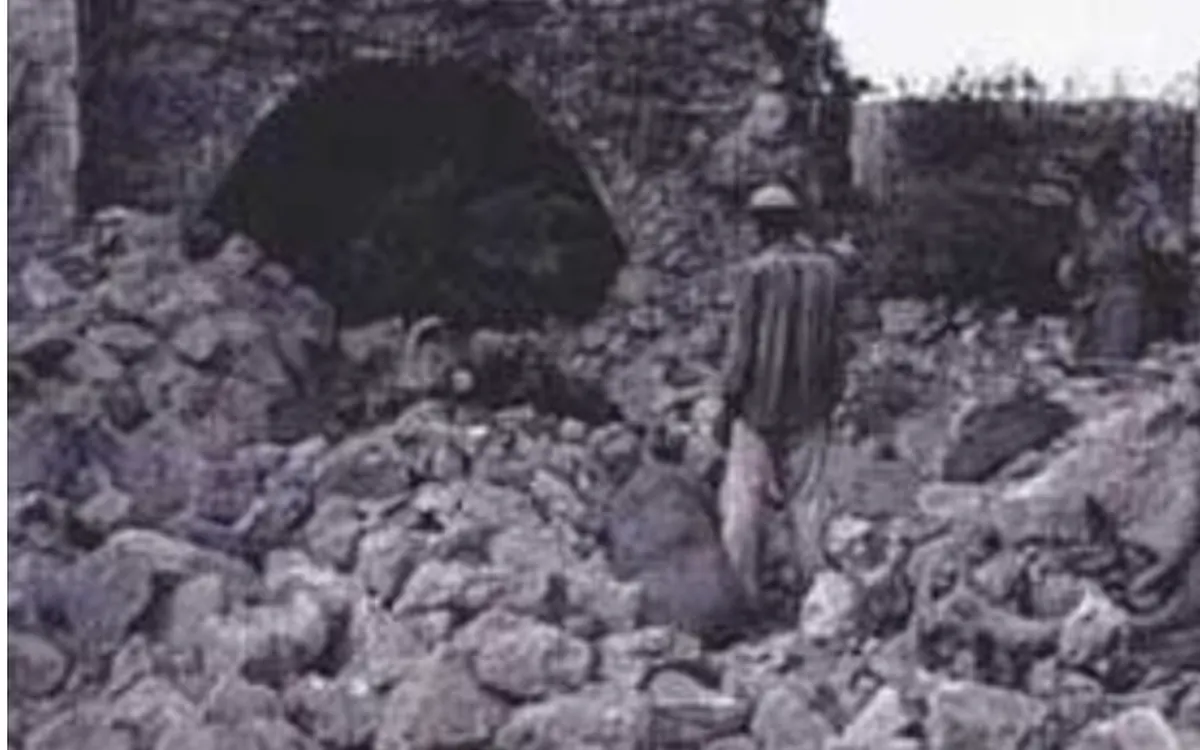
Every value has a boundary and every state a border, which means that often we have to fight to maintain them. Here is the story of Israel's struggle against infiltration in the 1950's and the moral complexity of retaliatory raids. Not an episode for the faint of heart.
About this episode
There is a righteous man who perishes in his righteousness, says Solomon, be not overly righteous. In the middle of the border wars, Rav Mike revisits the messiness of real-world morality against a disease of black-and-white simplicity, the progressive binary of victims and perpetrators in which anyone with power cannot serve good. But we believe in heroism, and in the Bible the heroes are always flawed, because real-world morality includes a willingness to use force to establish the boundaries of a value even at a cost, as Leibowitz said, that it is easy to express moral reservations about violence when one bears no responsibility for defending the community. In 1953, less than ten years after Auschwitz, the survival of the Jewish people was not a question; what was a question was whether the use of force was penny-wise and pound-foolish, whether the methods used to win the border battles promoted the next war, a cultural question too: who do we become when we choose the methods, since for Am Yisrael physical security has always been bound up with spiritual purity.
The problem of Jewish power is old: in the underground days the debate centered on havlagah, restraint, Dizengoff calling for self-control after the Jaffa murders of 1936, worried about retaliation against innocent Arabs, while Jabotinsky answered that in any war each side is innocent, and if you do not wish to harm the innocent you will die, so shoot and stop prattling. In the 1950s Ben-Gurion's cabinet split into political activists and military activists. The political activists, following Weizmann and led by foreign minister Moshe Sharett, sought conflict management over victory, international legitimacy as the holy grail, military restraint and even gestures to reduce tension, and the integration of defense and diplomacy; Sharett consistently opposed retaliatory raids as morally indefensible and a threat to Israel's standing, the real threat to its existence. The military activists, led by Ben-Gurion, held diplomacy subordinate to defense, that it does not matter what the gentiles say but what the Jews do, adopting Jabotinsky's iron wall that peace comes only when the Arabs internalize the impossibility of destroying Israel, so every provocation demanded swift overwhelming force.
Ben-Gurion needed a man to put military activism into the field, and found Moshe Dayan, born on Degania in 1915, the second child of the kibbutz movement, the embodiment of the new Jew, native Hebrew-speaking, who grew up wild among the Arab villages and learned a Jew could be a native, not an import. He joined the Haganah at fourteen, caught Yitzhak Sadeh's eye, guided Wingate's Special Night Squads and learned the power of retaliation and leadership by personal example, see me and do the same, lost his eye to a sniper and gained the black patch that became an emblem of the Israeli spirit. His personality dominated the IDF for three decades, valuing initiative and guile, as Sharon said, a hundred ideas a day of which ninety-five were dangerous, three bad, and two brilliant. Under Ben-Gurion he transformed retaliation from one tool into the primary means against infiltration, after the open-fire policy that claimed thousands of lives failed to stem the tide, advocating systematic strikes against the villages from which infiltrators came, telling Mapai in 1950 that retaliation is the only method proved effective, not justified or moral, but effective, since the nearby village then turns against the infiltrators and the governments act to protect their prestige.
But that efficacy worked on what scale, since the desperation remained, the refugees unable to return and unabsorbed, so fear of retaliation turned to anger and hatred, and infiltration and terrorism became appealing, war on the horizon. The refugees were more than half the population of Jordan, and King Hussein said that restraining infiltrators was playing with fire that could topple his kingdom, his grandfather Abdullah gunned down on the Temple Mount for opposing Palestinian radicalism. In October 1953 a grenade thrown into a house in Yehud killed Sultana Kanias and two of her children, after 45 civilians had died since May, and the people had had enough. Dayan had just formed Unit 101 under Ariel Sharon, a few dozen handpicked men disconnected from the ordinary chain of command, a weapon ready at hand. On the night of October 14 Unit 101 struck Kibya, dynamiting over fifty homes with the inhabitants still inside, 69 Jordanian civilians dead, which Sharon claimed he did not know were occupied, a qualitative shift and an international outcry; Ben-Gurion falsely claimed it was the work of vigilante citizens, which no one believed, and the UN Security Council expressed the strongest possible censure.
The state weathered the storm, and the dead of Kibya were an example, but Dayan, reviewing the policy, decided for reasons of public opinion and morale to shift the retaliatory raids from the village level to army and police posts, to pressure the governments rather than the people, a shift that grew the raids in scope and started a spiral toward the Suez War of 1956. Kibya is a crucible for testing what kind of people we wish to be, the brutal reality Jabotinsky named, the tension between the political and the military, and Dayan's question of what it means when the tactics of survival undermine the moral fabric they protect, the burden of returning to power as bearers of an ethic refined by centuries of powerlessness. The man who raised that question most sharply was Yeshayahu Leibovitz, whose fear was that the state would become more important than Jewish values. He held that Kibya could be justified before the world, as the atomic bomb was, but that we should not try to, rather recognizing its distressing nature, and he cited Shimon and Levi at Shechem, who had reasons yet were cursed by Jacob for generations, teaching that there may well be actions that can be vindicated and even justified and are nevertheless accursed.
Key ideas
- Real-world morality means using force to make a value real at a cost, and for Am Yisrael physical security has always been bound up with spiritual purity.
- The cabinet split into political activists, who sought international legitimacy through restraint, and military activists, who held that overwhelming force deters.
- Moshe Dayan, the embodiment of the new Jew, made retaliation the primary tool against infiltration, not moral but effective.
- Retaliation's fear turned to hatred as the refugees remained desperate, so the policy that deterred also fed the next war.
- The Kibya raid of October 1953 killed 69 civilians, a qualitative shift that drew the strongest possible UN censure and Ben-Gurion's false denial.
- Leibowitz taught through Shechem that an act may be vindicated and even justified and still be accursed, and that the state must not eclipse Jewish values.
Chapters
- 0:00 Be not overly righteous; the messiness of morality
- 2:14 Physical security and spiritual purity
- 3:20 Havlagah; Dizengoff and Jabotinsky
- 5:31 Political activists and military activists
- 8:48 Charett's restraint; Ben-Gurion's force
- 11:00 Moshe Dayan, the embodiment of the new Jew
- 13:16 Wingate; the power of retaliation
- 16:35 The black patch; guile and initiative
- 18:41 Retaliation becomes the primary means
- 20:46 Effective, not moral
- 21:55 On what scale; desperation to hatred
- 22:00 King Hussein plays with fire
- 26:22 The Yehud murders
- 28:29 Unit 101 and Ariel Sharon
- 30:41 The weapon ready at hand; the Kibya raid
- 33:02 69 dead; Ben-Gurion's false denial
- 35:05 The outcry; Dayan shifts the policy
- 37:15 The crucible; the burden of power
- 39:40 Leibovitz; justified and accursed
- 41:54 Shechem and the curse of Jacob
Who, where and when
People
Yeshayahu Leibovitz, Meir Dizengoff, Zev Jabotinsky, David Ben-Gurion, Moshe Sharett, Chaim Weizmann, Moshe Dayan, Yitzhak Sadeh, Orde Wingate, Ariel Sharon, King Hussein of Jordan
Places
Degania and Nahalal, The southern border, Yehud and the Segula cemetery, Kibya, The Beit She'an Valley
Texts
The Iron Wall, The operational order of the Givati Brigade, UN Security Council Resolution 101, Leibovitz on Kibya
When
1936 CE: havlagah and Jabotinsky's reply, 1949 CE: Dayan to Southern Command, July 1953 CE: Unit 101 formed, October 12, 1953 CE: the Yehud murders, October 14, 1953 CE: the Kibya raid
Read the transcript
I have seen everything in the days of my vanity, says the wise of all kings. There is a righteous man who perishes in his righteousness, and there is a wicked man who lives long in his evil. Be not overly righteous, warns Solomon, and be not overly wise. Why should you bring desolation upon yourself? Well, I'm not worried that I'm overly righteous, and I certainly don't think I'm overly wise, but I am Rav Mike Foyer, and this is the Jewish Story. Episode 6, Keep You in the Limits of Retaliation So we're kind of in the middle of a story. It's the story of the border wars, the border wars of value, and the border wars in the literal sense of how one holds up the edges of a nation-state. And I want to revisit this notion of the messiness of real-world morality.
There's a disease I see creeping through our society, and it's a black and white simplicity in relationship to the use of power. There is only, in our world, or at least in the eyes of the liberal progressive world, victims and perpetrators. There's no possible way, once all the grand narratives that upheld our sense of rectitude collapsed in the face of the last hundred years, there's no possible way that anyone with power is actually in the service of good. That binary, I think, is one of the great challenges that we as a people face. Because we do believe in heroism. And if you notice, in our stories, and I'm talking about the Bible now, the heroes are always flawed. Because real-world morality includes a willingness to wade in and sometimes use force in order to establish the boundaries of the value that you're defending, even if it comes at a cost.
And, you know, we'll speak about his story a little bit more later. But Professor Ishaib Ulewicz said, it's very easy to express moral reservations about acts of violence and slaughter when one bears no responsibility for defending the community in whose cause such acts are perpetrated. And this is what goes to the heart of this episode, the need to defend. Because it may be that from today's perspective, it's a little bit hard to relate to the survival of the Jewish people as an actual value. But in 1953, less than 10 years after the gates of Auschwitz opened, it wasn't even a question. What was a question was whether use of force, which the state of Israel adopted quite quickly and had deep roots, and if you've been listening for a while to the Jewish story, you know deep roots in the Zionist movement as a whole.
The question was whether the use of force was a case of penny smart and pound foolish. did the method used to win the battles along Israel's borders actually themselves promote the next war? And that's not just a technical question. It's not even just a military question. It's a cultural question. Because I also want to consider whether the methods that we use to defend our values, and in this case, our lives, even if they succeed in the short term and they hold off the barbarians at the gate, they keep our borders and our values strong and clear, what if they lead to a long-term erosion of the value itself? Because the question that we have to ask is not just how do we defend our values and our borders, but who do we become when we choose the methods to do it?
And when I look back across the arc of time to the entire Jewish story, and in particular to the books of the Bible, it seems to me that for Am Yisrael, our physical security has always been bound up with our spiritual purity. And that's our ultimate challenge. How is it that we can make our way in a messy world, failing always forward, defending both our values and our lives, and become the people that we need to be to bring about the world of which we dream? So the problem of Jewish power is nothing new to our story at this point. Way back in the underground days, I'm talking about the pre-state from the 20s to the 40s, the debate centered around that notion of havlagah, of restraint. Listen to these words.
The return of public security depends largely on the self-control and self-restraint of the Hebrew public. You might have read that in the papers today. But they were actually the words of Mayor Dissingoff, Tel Aviv's mayor, when he was attempting to calm his fellow Jews after the murder of 19 people in nearby Yapo at the onset of the Arab Revolt in 1936. And in particular, he and the other leaders of labor Zionism were truly worried about acts of retaliation against Arabs that they saw as innocent of this crime, and in fact, generally were. But, if you recall that period of our story, the prolonged and intense violence of the revolt caused many to question a policy of restraint and wonder whether the case was an attempt to maintain moral superiority or whether a minority surrounded by an antagonistic majority would always have to respond and that restraint simply fed the myth that the Jews were afraid to fight.
Because here's another side of the story. Do not dare to punish the innocent. What superficial and hypocritical nonsense. In war, any war, each side is innocent. What crime has he committed against me, that enemy soldier who fights me, and is as poor as I, as blind as I, as much a slave as I, who has been recruited against his will? There is no war which is not conducted against the innocent. Therefore, every war and the tribulations it brings is accursed, whether offensive or defensive. and if you do not wish to harm the innocent, you will die. And if you don't wish to die, then shoot and stop prattling. Those are the words of Zev Jabotinsky in response to Zizengoff and his allies. So we saw another round of this question of how to rightly use Jewish power in the lead-up to independence.
That question of whether good behavior would bring international recognition and therefore statehood, or whether the goal was to win our state on the battlefield. And the answer at that point was no more clear to Israel's leadership even after the war of independence when we'd won or today that matter. You can see this playing itself out in our public policy and in our papers. When faced with the question of how to navigate the dangerous waters of the 1950s, Ben-Gurion's cabinet was made up of two factions. They're called the military activists and the political activists. And because that split they represent endures, as I said, to our very day, it's worth giving it some detail. Now, political activism was inspired by the diplomatic vision and really the personality of Chaim Weizman.
I hope you recall that even at the height of the underground battle with the British in the 30s and early 40s, Weizman held out in his belief that diplomacy was the only means to win the day. He even threatened to resign from his position and perhaps betray the fighters to the British in order to force the Haganah out of their temporary alliance with the Irgun. This is what's called united resistance. Now, at this point in our story, in the early 50s, Weizman is president of Israel, which would be impressive if it weren't for the fact that it was a position largely created in order to pigeonhole him in some ceremonial post where he had no threat to his arch-rival Ben-Gurion. However, Foreign Minister Moshe Charette had taken up Weizmann's creed, and he had a lot of supporters, both in the media and in the government.
The essential elements of this political activist approach were, number one, conflict management over victory. Charette and his followers were skeptical of any comprehensive solution to the Arab-Israeli conflict, and thus they set their sights on containing it rather than winning it. And as a direct outgrowth of this management approach, notice, dismissing both victory and peace, they saw international legitimacy as the holy grail of security. Because only widespread international support would give Israel the sort of umbrella to continue to pursue its vital interests in the face of an ongoing and bloody conflict. Charette, therefore, pushed for good relations with everyone, with the UN, with the United States, with Europe.
He promoted outside mediation in the conflict. He was always looking for some bigger power to step in and save the day. And in particular, he saw the Jewish diaspora, and every day more so, American Jewry, as a source of indispensable moral, diplomatic, and of course, economic support. Now, in order to achieve international legitimacy, these political activists believed that Israel must show military restraint. Not only restraint, but they had to initiate every possible move to reduce tension at the borders. It wasn't just a matter of holding back. It was a matter of giving. And it should come to no surprise then that Charest consistently opposed retaliatory raids as a tool for combating infiltration.
In fact, in one cabinet meeting, he remarked, The question is, what's the lesser of two evils? To try to ease the tension while running the risk of further incidents in which we shall be the injured party? meaning to weaken our military posture or to launch a large-scale vigorous military operation aimed at putting an end to the problem of terrorist raids. An operation which will cause grave damage to the international standing of the country and will not achieve its direct objective. Notice he assumes there's no military solution. For the present he finishes and I lay great stress on the words for the present the former course of action is the lesser of two evils. Now, the political activists didn't deny that military force was sometimes necessary.
Their point was that it often made matters worse by fanning the flames of hatred and undermining Israel's status in the eyes of the international community. Force must be used only as a last resort when the national goals couldn't be achieved by diplomatic means. Now, in the list of their principles, last but certainly not least, the political activists believed in integrating defense and diplomacy. Meaning that Moshe Sharet wanted the foreign ministry to take an active part in shaping Israeli policy just as much as the IDF, rather than just explaining the actions of the army to the international community, which is largely what he spent his time doing. He was hoping to create a policy that could strike a balance between the extreme of relying on its own strength on the one hand and the extreme of simply yielding to international opinion on the other, in which case the state never would have existed to begin with.
And I can tell you now, whatever you think about his opinions, Moshe Shari was swimming upstream in the 1950s. Because the opposing camp, the military activist, was headed by none other than Ben-Gurion himself. And so military activism also has several characteristics. First, the clear sentiment that diplomacy is always subordinate to defense. There a quote attributed to many people out there that diplomacy is simply the art of saying nice doggie while you bend over to pick up a rock And Ben saw the IDF and the defense establishment as having the central role in the life of the nation as a whole And when it came to the conflict with the Arabs, his attitude that defense over diplomacy was absolute and really summed up in that famous quip, it doesn't matter what the Goyim say, but what the Jews do.
It's a bit ironic considering the antagonistic relationship that Ben-Gurion and Jabotinsky had, But in many ways, Ben-Gurion had adopted the stance that Zev Jabotinsky articulated in his famous 1923 essay, The Iron Wall. If you want a good thought on it, go back to Season 2, Episode 30. He says, peace will only be possible when the Arab states have internalized the impossibility of destroying Israel. And therefore, in Ben-Gurion's eyes, every provocation needed to be responded to with a swift and overwhelming force. So we add to this Ben-Gurion's attitude that Israel was fated to be a nation that dwelled alone. No matter what we did, we would be unable to rely on the UN, international observers, or any foreign state for our security.
And therefore it should come as no surprise that he saw diplomacy as simply a means of justifying the military moves that he made in the eyes of the world. And it should also come as no surprise that this was his attitude, having imbibed this notion of survivalist Zionism that we talked about at the end of last season. So, therefore, Ben-Gurion believed that reprisal raids and retaliation, and in particular against infiltration, were a useful deterrent. And, furthermore, not just a deterrent, they were actually the policy which he saw to be most likely to create a political climate which would actually be conducive to signing a new, more favorable agreement with the Arab states. In other words, the more it hurt, the more likely they'd be to come to the table.
Therefore, to him, a failure to respond to Arab violence in kind was nothing less than an expression of weakness and an admission that we don't belong here in the Middle East. And since he was both Prime Minister and Defense Minister for most of his career, that policy of military activism easily carried the cabinet. All he needed was someone in the army who was able to put in effect in the field. Moshe Dayan was born in May of 1915 on Kibbutz Deganya. I hope you recall that Deganya, of course, is the famous first kibbutz. I've spent some quality time there myself. And Dayan had the distinction of being the second child ever born there. He was the second child of the kibbutz movement. And not only that, Moshe Dayan was the embodiment of the new Jew.
Everything that Max Nordau had ever dreamed of. Native Hebrew speaking, born in the land to pioneer parents. After all, he was named Moshe, not from the giver of the Torah, but after Moshe Barski, who was the first member of Dagania ever to be killed in an Arab attack, actually died bringing medication to Dayan's own father. And young Moshe grew up in Nehalal, another collective settlement further north in the Galilee. And he grew up tough and wild. Because as was true of most of the efforts of Jewish agriculture in those days, Nehalal was planted in the midst of the Arab population. And as a boy, Moshe took to wandering through the villages that surrounded their settlement, speaking with the people, fighting with other tough kids.
In short, he took to acting like a local. And this import sense that he had, that a Jew could be a native among Arabs and not just a foreign import, would be deeply influential not only on his personal character, but on the military and political career which lay ahead. But not yet. At age 14, Dayan joined the Haganah, the underground army associated with labor Zionism, and his natural talents quickly caught the eye of Yitzchak Sadeh, the famous Red Army veteran whose spirit shaped the underground army of labor Zionism and infused it with a left-wing ideology. And when Ord Wingate formed his legendary special knight squads, he chose Moshe Dayan as his guide due to not only his military skills and toughness, but also his knowledge of Arabic.
It was from Wingate that Dayan learned what it really meant to lead in battle. From practical elements of how to select an ambush and the importance of owning the knight, to the essential principle of leadership, see me and do the same. It's an ethic of personal example which guides the idea to this day. the officers lead the charge from the front in our army. Wingate also taught Moshe Dayan the power of retaliation, because he saw this as the only hope for the Jews, surrounded by what he perceived to be a sea of hostile enemies. And the Jews, outnumbered, fighting insurgents embedded in a hostile population, could only rely on the fear of retaliation to keep the upper hand. You may recall, if you listened to it, and if not, you should go back, Back in Season 2, Episode 33, we spoke a little bit about Wingate's methods, how they were often harsh, sometimes downright cruel, but in the end, always immensely effective.
And that last piece is going to be critical in the mind of Dayan, because he's going to carry this notion of the power, importance, and effective nature of retaliation with him as he shapes Israeli military culture. So with the outbreak of World War II, Dayan, along with many of the Haganah, enlisted in the Allied forces, and he would sign to a small reconnaissance force based out of his own kibbutz, Kanita, not far from the Lebanese border, and from there they frequently infiltrated Lebanon, then controlled by the Vichy French. It was actually on one of these missions, as Dayan was scanning the enemy positions from the rooftop, that his binoculars were struck by a sniper bullet from hundreds of yards away.
Six hours past while he wallowed in his own blood. And they say that if it weren't for his iron determination, and of course the friends that cared for him, he certainly would have died. He didn't die, but Dayan did lose the eye, and the damage was so extensive that it couldn't be fitted with a glass replacement. And thus, the black eye patch would become not just a hallmark of his personality, but really an emblem of the Israeli spirit of the 50s became his trademark. Now is not the time, despite the fact that it's tempting to detail Moshe Dayan's rise through the IDF during and after the War of Independence. In his career, there will be no post of significance, which he doesn't fill, including, of course, Chief of Staff, and ultimately Defense Minister during the 56 and 1967 Six-Day War.
Because of that career, Dayan wasn't just the embodiment of Sabra, of native Israeli, in his personal story. He wasn't just the fulfillment of the new Jew in his sort of personal essence. His personality dominated the IDF during the first three decades of his existence, which means, in many ways, he really shaped the military and therefore national culture of Israel. It really was Dayan who brought the characteristic free spirit, because he so much valued initiative and creativity over discipline, and who saw guile as a critical tool of war, and he infused that notion within the army and therefore the nation. The best quote really comes from Ariel Sharon, who knew him well. He said Dayan would wake up with 100 ideas.
Of them, 95 were dangerous. Three more were bad. The remaining two, however, were brilliant. And it was under the guidance of his mentor Ben-Gurion that Moshe Dayan became the commander who transformed retaliation from a tool, amongst others, in Israel's defensive approach toward infiltration into the primary means of combating this problem. And the question that I have is whether that policy was brilliant, bad, or just dangerous. Now, before retaliation became the go-to move, the IDF's first response to the problem of infiltration had been an open-fire policy. It began already during the War of Independence. I mean, during war, you don't generally stop to see who's crossing the border. But by 1956, when it was still largely the policy, historian Benny Morris estimates that it claimed thousands of lives.
Just listen to this operational order from the Givati Brigade to one of its battalions on the border given a couple years after the war. The battle against infiltration in the border areas at all times of day and night will be carried out mainly by opening fire, without giving warning on any individual or group which cannot be identified from afar by our troops as Israeli citizens, and who are, at the moment they are spotted, infiltrating into Israeli territory. It was a death sentence for anyone who stepped into no man's land. But despite that, when Dayan was promoted to Major General and appointed commander of the Southern Command in October of 1949, it wasn't working. Infiltration was still the primary security challenge the region faced and really for the nation as a whole.
Even the planting of mines and periodic rounding up and expelling operations were unable to stem the human tide. And so Dayan began to advocate a systematic policy of retaliatory strikes against the villages from which the infiltrators left, or even just against those near the point of crossing. And he explained his thinking to the Mapai faction, that's the political party, Ben-Gurion's political party, to which Dayan also belonged, in the Mapai faction in Knesset in 1950. He said, retaliation is the only method that is proved effective, not justified or moral, but effective, when Arabs plant mines on our side. If we try to search for that Arab, it has no value. But if we harass the nearby village, then the population there comes out against the infiltrators, and the Egyptian government and the Transjordanian government are driven to prevent such incidents because their prestige is at stake, as the Jews have opened fire and they're unready to start a war.
The method of collective punishment so far has proved effective. There are no other effective methods. Did you hear how many times he used that word? Brutal, but effective, just as Ord Wynkate would have advocated. But the question is, that efficacy happens on what scale? Now, certainly the refugees in the border villages were cowed by these raids. But history also shows that the desperation remained, and the underlying problems, the inability of the refugees to return home, the unwillingness of the Arab states to absorb them and the cultivation of a consciousness that they had a right to return to the land which was blossoming under their gaze from across the border. And so as long as that desperation remained, that fear of retaliation quickly becomes anger and hatred toward those who retaliate.
And then infiltration and terrorism become an appealing means. And as soon as you lose any concern for your life, well then, war is on the horizon. Now that's just on the personal scale, but the Arab refugees were a destabilizing factor in the region as a whole, particularly in the Kingdom of Jordan, where Dayan focused his early efforts in the southern command. The Arabs that had fled and been driven out of the state of Israel at its birth were more than half the population of the kingdom of Jordan and the retaliatory strikes of Israel posed a particular problem for the king. On one hand IDF retaliation hurt his prestige. It didn't just hurt his prestige it risked scaling up and escalating into a full-blown war in which the king might just lose control of the mountains of Yudan and Sharon that he had seized illegally in 1948.
On the other hand If he restrained the infiltrators in order to prevent these retaliatory strikes, he risked toppling his kingdom altogether. As King Hussein of Jordan said to an American representative in the early 50s, when I wield my influence for the purpose of restraining infiltrators, I am playing with fire. Every move that could be interpreted as cooperation with Israel could lead to my overthrow. And he wasn't exaggerating. Hussein took the throne in 1952, less than a year after his grandfather Abdullah was gunned down on the Temple Mount in Jerusalem by a former member of Haj Amin Husseini's dynamite squad. That's Arab-Palestinian radicalism killing Arab leaders. For what? For the sin of opposing Palestinian nationalist aspirations.
So, retaliation may have been tactically effective for Israel. But as we move slowly toward the next regional war, only a few years away, We have to keep our eyes on its strategic value and how much the policy of retaliation will actually contribute to the next war. And as a sidelight, we'll discuss further whether that was necessarily a bad thing in the eyes of Ben-Gurion and Moshe Dayan. Now, of course, Foreign Minister Moshe Sharit and the political activists saw retaliation as a strategic nightmare. Sharit was constantly warning the cabinet against Dayan's method of maintaining the borders. He claimed that the policy was morally indefensible, and therefore that it threatened to undermine Israel's standing in the eyes of the entire world, and to Sharet, that was the real threat to Israel's existence.
No matter how painful the result of infiltration might be, they were pinpricks compared to what would happen if the world came down on them like a hammer. During one confrontation over the policy in 1950, this is what Dayan said in response. Using the moral yardstick mentioned by Sharet, I must ask, Are we justified in opening fire on the Arabs who cross to reap the crops they planted in our territory? They, their women, and their children? Will this stand up to moral scrutiny? We shoot at those from among the 200,000 hungry Arabs who cross the line to graze their flocks. Will this stand up to moral review? Arabs cross to collect the grain that they left in the abandoned villages, and we set mines for them, and they go back without an arm or a leg.
It may be that this cannot pass review, But I know no other method of guarding the borders. If the Arab shepherds and harvesters are allowed to cross the borders, then tomorrow the state of Israel will have no borders. And that, in a nutshell, is this problem of embodiment. Any value, even the decision to live, necessitates a clear boundary. And, as we mentioned once again at the beginning, maintaining those boundaries of a value is messy on the moral and practical plane. That's true of a value, and all the more so of a border. So long as the retaliation policy remained on low flame, the argument between Moshe and Moshe, between the political activists and the military activists, basically remained unresolved.
And you could even call it a machloket l'shem shemayin. Both were, after all, trying to secure the security of the state. But, you know, if you play with fire for long enough, someone's gonna get burned. Reading the headstones in the Segula Cemetery, you can encounter the same stories that mark any other burial ground. Peaceful passings, life's cut short, lost loved ones and those who married it to lie together. Most of the dead in the Segula Cemetery are from the town of Yehud, and if you look closely at their names and dates to death, a little bit of its story is revealed. because there were 15 Turkish families that had come almost directly from Izmir to Yudia in 1948, moving into the stone houses that had been abandoned by the Arabs who were driven out during Operation Dami at an early stage of the war.
Their names, the ages on the headstones, it all reminds us of how hard it must have been for that generation that lived in houses they didn't build and gathered from fields that they didn't sow in a land which was theirs, but so far from home. And if you keep looking, you'll find one grave whose epitaph exposes a story that triggered one of the most painful incidents in Israeli military history. It's a story that really lies at the heart of the tragedy of a state born in war. It reads as follows. Precious blood was spilled by the rioters. They had no mercy on a mother who was embracing her little ones as they slept. And beneath it lies Sultana Kenyas, age 39, her three-year-old daughter Shoshana, and baby Benny, age 1.
They died on the night of October 12, 1953, when a small group of terrorists crossed the Jordanian border and threw a grenade into the house while Sultana and five of her children were sleeping. It was a horrific attack, and it shook the Israeli public. It wasn't just the heinous nature of a crime, a mother dying with two young children. And it wasn't even that Yehud lays more than 10 kilometers from the Jordanian border, making this a strike not at the edges, but at the settled heart of Israel. What it was is that 45 civilians had died in cross-border raids since that May, and the people had had enough. United Nations observers and an Israeli representative managed to follow the tracks of the infiltrators with police dogs.
In a rare act of cooperation, the Jordanian authorities actually allowed them to cross the ceasefire line and continue eastward. After 14 kilometers, the tracks led to the village of Rantis, and there they disappeared completely. The response to these murders was immediate and catastrophic, but it had been a long time in coming. By 1953, the retaliation raids were already a tried-and-true method for the IDF. But the feeling had been growing for some time amongst the general staff that the regular infantry units employed, and even the paratroopers who had been brought up, were not really up for this task. There had been a few early failed efforts to create special forces units dedicated to the task, but it wasn't until July of that year, in the wake of the murder of two watchmen in a village close to Jerusalem, that Chief of Operations Moshe Dayan gave his consent to forming Yechidat Me'avechad, Unit 101.
And in order to do so, he called upon a man named Major in the reserves, Ariel Sharon. Now Sharon's story is a rich one, and it plays quite far out into Israeli history, but I'm not going to tell it right now. Maybe when we get to 56 or perhaps 67, we'll see. But for now, just know that Sharon was already well known to Dayan in 1953. In fact, he was well known to the entire Israeli army for many things. Just a year before, Captain Sharon at the time, on his own recognizance, had made a daring raid to kidnap two Jordanian Legion soldiers in the Beit She'an Valley in order to trade them for two Israeli soldiers who were being held captive by the Legion there. And so, when Sharon was chosen to head Unit 101, It wasn't despite his well-earned reputation for aggressiveness and insubordination.
He was chosen for the Dab because of them. Sharon began to gather around him a few dozen men. Many were handpicked from the agricultural settlements where he had grown up, and some were even veterans of the old Palmach, the striking arm of the Haganah. He equipped them with non-standard weapons and began an intensive program of training in small unit maneuvers, activation, and insertion tactics. Their night hikes were legendary and would often take them across the Jordanian border, where rumor had it that Sharon would seek out firefights with the legionnaires just to battle-harden his team. And aside from this unique training and equipment, what really set the 101 apart from the rest of the army was that it received its orders directly from the Matkal, from the IDF general staff, meaning it was disconnected from the ordinary chain of command, which characterizes military maneuvers.
And so, when Sultan of Kenya and her children were murdered, the government had a weapon of retaliation ready at hand. Only hours after the murder, Prime Minister Ben-Gurion, Defense Minister Pinchas Lavon, Chief of Staff Mordecai Matkleff, and Chief of Operations Moshe Dayan gathered for an emergency meeting. It was clear to all that the deaths at Yahud demanded the firmest possible response. In fact, as word of the decision to retaliate spread, only Moshe Charette questioned the wisdom of the response which was to come. This is what he said in his diary from October 14th. Only today, there was a meeting of the Israel-Jordanian Mixed Armistice Commission, at which a forceful denunciation of the act was adopted.
Jordan's representative also voted in favor of the resolution and said that his government took it upon itself to do everything to prevent such atrocities in the future. Under these circumstances, is it wise to retaliate, Even more so when we're already in conflict with the UN in the north and the south. But those words had an impact only on the page. The military activists ruled the cabinet, and the decision had been made. The foreign minister was not consulted. He was informed. The 101, who was supporting troops from a paratroop battalion, sat out on the night of October 14th for the village of Kibya, near Rantis, even though there was no evidence that terrorists had actually come from there. Later, Ariel's children would record in his book The Warrior that his orders were clear.
Kibbea was to be an example for everyone. And what ensued was the most devastating act of retaliation the state had yet known. The troops surrounded the village, blasting through its defenses with mortars and Bangalore torpedoes. And once the defenders were overcome, the soldiers dynamited over 50 homes. But the inhabitants were still inside. When the United Nations investigation team submitted its report, they said that bullet-riddled bodies near the doorways and multiple bullet hits on the doors of the demolished houses indicate that the inhabitants had been forced to remain inside until their homes were blown up over them. The UN claimed that the invasion force must have been at least 600 soldiers and all but constituted an outright act of war.
Shron himself would later claim that he didn't know that houses were occupied. After all, every previous raid had involved the destruction of a house or two, but everyone who'd taken shelter had been safe. Perhaps he said that why the villagers didn heed his warning to flee In the end of the day it may not matter what the story was because 69 Jordanian civilians lay dead inside those houses and the scale and intensity of the destruction of the Kibir raid was a qualitative shift in the policy of retaliation, as was the international outcry that it provoked. Surprised by the results of the attack, and suddenly on the defensive, Prime Minister Ben-Gurion at first tried to deny any army involvement at all.
He claimed that the raid had been carried out by Israeli citizens, fed up with constant threat of infiltration and moved to a vigilante act. None deplores it more than the government of Israel. If innocent blood was spilled, the government of Israel rejects with all vigor the absurd and fantastic allegation that 600 men of the IDF took part in the action. We have carried out a searching investigation, and it is clear beyond doubt that not a single army unit was absent from its base on the night of the attack on Kibya. In a later address that day, he turned his anger toward the sovereign state on the other side of the border and said, all the responsibility rests with the government of Transjordan that for many years tolerated and thus encouraged attacks of murder and robbery by armed powers in its country against the citizens of Israel.
Now the second one may have been true, but unwise. The first one was just patently false, and Moshe Shari warned him not to do it. And no one believed him. Ben-Gurion simply looked like a fool at best, at worst, like a liar. Like I said, no one in Israel or out was going to buy that this was the work of vigilantes. The U.N. investigation brought back enough evidence to show that this was a well-organized military attack. And as the report said, if Israel provided heavy weaponry to its citizenry, then it was also responsible for controlling them. The condemnations rained down in a way that Israel had never yet experienced. The U.S. State Department, European Governance, the U.N. Security Council, Resolution 101, expressed, quote, the strongest possible censure of this action.
Even many Jewish communities worldwide spoke out against the horror they held at such behavior. Kibbea marks a shift in Israel's diaspora relations, and we're going to speak in a coming episode about its formative impact on the American Zionist movement. But in the end, despite Moshe Sharet's fear and all the international anger, the state of Israel weathered the diplomatic storm and the dead of Kibbea were certainly an example for future infiltrators. Soon after the raid, David Ben-Gurion resigned as prime minister, claiming exhaustion from two decades of national leadership. And it's hard to say that Kibbea had anything to do with it for sure, but it certainly couldn't have helped. Moshe Sharet became the second prime minister of Israel.
He was chosen as his successor by the Mapai party. But don't worry, Ben-Gurion will be back before long. General Moshe Dayan became chief of staff. And in reviewing the retaliation policy up to and including Kibya, he decided that for, quote, reasons of public opinion and morale, the tactical and operational objectives should change. That the retaliatory raids, in his eyes, worked vis-a-vis the enemy, but they were damaging the social fabric they were meant to protect. From 1953 on, retaliatory raids began to take a totally different form. Their goal was no longer intimidation at the village level. Now they aim to pressure the Jordanian and Egyptian governments to rein in the people inside their borders.
And therefore the objective chosen were army and police posts rather than suspected villages. And that's why the raids grew actually progressively larger in scope and intensity as the 50s moved on. One might even say that this tactical shift from the village level to targeting the military in response to what Dayan perceived to be the harmful nature of retaliation to the fabric of his own society, started a spiral of escalation that eventually led to the Suez War in 1956. But that's a discussion that lies ahead. So Kipia is many things, and one of them is a crucible for testing our resolve to be a people and for asking the question of what type of people we wish to be. On one level, like I said, it bespeaks the brutal reality of life in a brutal world, and in a particularly tough neighborhood at that.
Like Jabotinsky said, if you don't wish to harm the innocent, you will die. And if you do not wish to die, then shoot and stop prattling. On another level, it exposes the tension between the political and the military as tools of survival. I wonder how Ben-Gurion's dictum sounds to you today in a world of global politics, BDS, and narrative warfare. Is it still true that it doesn't matter what the Goyim say, but what the Jews do? And then there's that third question, which is raised by Moshe Dayan's shift in strategic thinking. What does it mean to be a Jewish state? What if the tactics we use to protect our society actually gradually undermine our social and moral fabric? What does it mean to return to the privilege and burden of power as the bearers of an ethical culture that had been refined by centuries of powerlessness?
Now, the political and military activists may have disagreed on tactics, but their strategic goal was the same, survival. And I don't discount that goal, not in 1953 and not in 2019. But our mission as a people is to redeem the world, not just survive. And in order to do that, we need to make sure that we become who we need to be and not just maintain who we are. And the man who most vehemently raised this question of the impact that the tactics of survival might have on those who survive was Professor Yishayahu Leibovitz, professor of chemistry and neurophysiology at Hebrew U, Orthodox Jew, writer, philosopher, and all-around public intellectual, intellectual provocateur, I might add, because the professor wasn't afraid to slaughter sacred cows.
And deep in his heart, his greatest fear was that the state would become more important than Jewish values. And Kibya was the beginning of his literary onslaught against Israeli society. As he says, capable of defending ourselves and responsible for our own security. Defense and security often appear to require the spilling of innocent blood. It's the question of Jewish power. Can we maintain Jewish morality? Now notice he's not saying that violence is illegitimate. He's saying that the spilling of innocent blood is illegitimate. So he goes on, he says, we can indeed justify the action of Kibbeah before the world. Its spokesmen and leaders admonish us for having adopted the means of reprisal. And we could argue that we have not behaved any differently than the Americans when they deployed the atomic bomb where 100,000 civilians, mostly women and children, were killed in one day in order to bring about the quick termination of this nightmare of World War II.
And so the professor points out that we are in the sixth year of a war that was forced upon us and continues to inspire constant fear of plunder and murder. No wonder that border settlers and those responsible for life and security overreacted and reciprocated with a cruel slaughter and destruction. So Professor Leibowitz points out and makes it very clear that we could justify this accident. He said we could justify it, but let us not try to do so. Let us, he says, rather recognize its distressing nature. And then he says that there's a precedent for the question of Kibbeah. It's the story of Shechem and Dina. If you recall in the book of Breshit, when Dina is taken by the man of Shechem, by one man of Shechem, and raped, the brothers, Shimon and Levi, are unwilling to have their, as it says, their sister dealt with as a harlot.
And together with their brothers, they take their revenge and slaughter the whole city. Now, one could understand that act. It was not one of, as the oppressor says, pure wickedness and malice. But nonetheless, as he points out, because of their action, two tribes in Israel were cursed for generations by their father Jacob. And he points out that war is one of the manifestations of social reality. It's an inseparable part of life in the world until Mashiach has come. And he actually enjoins us to accept war without bitterness or protest, but also without enthusiasm and admiration. He says it's like we accept many repulsive manifestations of human biological reality. So he goes on and he says that the problematic issues really are the manner in which we conduct our war.
And it goes on every day and what's to be done after the war is over because the distinction between the justified and the blameworthy is very subtle. As the professor says, it's like that hand's breath between heaven and hell. And so I'll finish out with this last quote. although there are good reasons and ethical justifications for what he calls the Shechem Kibbe action the curse of Jacob when he told his children what would befall them in the end of days is an example of the frightening problematic ethical reality there may well be actions that can be vindicated and even justified and are nevertheless accursed so I just want to thank a few people, I want to thank all the folks who give their money they're hard-earned money help make this show free make it happen keep it widely available and I want to invite you to join them right now go to jewishstory.co and up in the right hand corner you'll see a button that says be a patron you can click on through for a little bit of per podcast support if that's too much for you you can be in touch I'm happy to have people sponsor the show I'm happy to receive donations and support in any way and even if you can't do the donation give your time give me a little review on iTunes or Stitcher or wherever else you listen to the show share it with a friend We're trying to get the word out.
So I also want to thank the Land of Israel Network. That's thelandofisrael.com for creating a platform that allows me to reach so many amazing people. I want to thank the Pardes Institute, P-A-R-D-E-S dot org dot I-L for building an educational institute that allows me to touch the hearts and minds of so many wonderful Jews. I want to ask you to be in touch with me. Find me on Twitter, that's The Jewish Story, or on Facebook, The Jewish Story Podcast, or Rav Mike Foyer. you can email me, robmikefoyer at gmail.com. I want to thank you for listening, most of all, because I'm Rav Mike Foyer, and this is The Jewish Story.
More from Season 3
TJS S3 Interlude Independence 5779 Independence or self-actualization?
There is no word for independence in Biblical Hebrew, and the roots of the modern word can teach us much. This might right be called the day when...
Play Episode
TJS S3E5 1949 Boundary issues - part I
In 1949 Israel was in the dangerous position of winning the battle and losing the war. Though ceasefire agreements were in place, peace remained elusive. This episode opens...
Play Episode
TJS S3 Interlude Jerusalem Day 5779
Every once in a while you have to get out of the house, and even out of the box. Where better to do that than Jerusalem, and who...
Play Episode