
TJS Interlude - Yom Haatzmaut Interview 2020
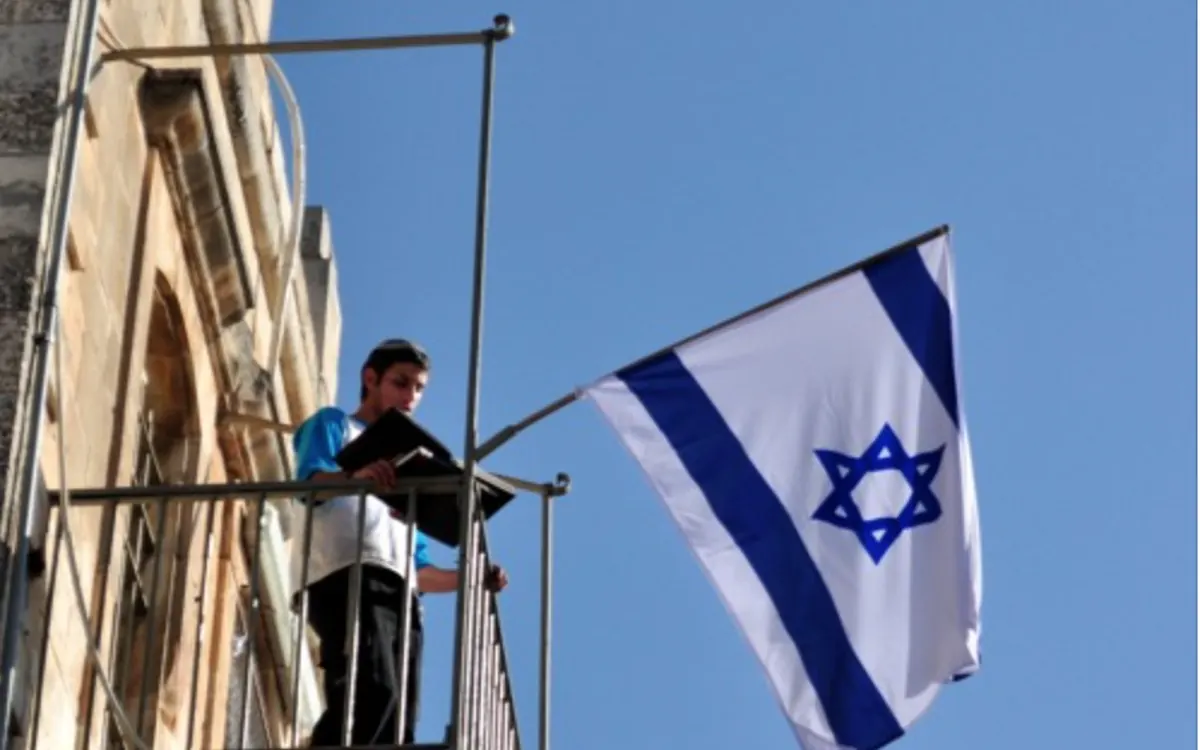
Here is an interview of me by Rabbi Yonatan from the RRG Beit Midrash at Hebrew University in which we reflect on Israel Independence day from the historical and spiritual perspectives. If you want some insight into the potential depth of this day, and how the strange circumstances of this pandemic year actually offer us a unique opportunity, then tune in. Chag atzmaut sameach!
About this episode
Interviewed on Yom HaAtzmaut 2020 just after the Yom HaZikaron siren, Rav Mike is asked about the historical significance of the state of Israel through the lens of both the Jewish and the human story. He answers that the old adage that victors write history is not true for us, since we have told our own story longer than any people alive, told from the perspective of those who nominally lost to the Greeks and the Romans who are gone while we remain, so we tell a story larger than the events at hand, and you do not know what a story is about until it is over. You might read the Bible and think Jewish kingship a failure, yet in 1948 there emerged a kingdom stronger and larger than any since Solomon. We are a people that embodies a promise, between creator and creation, that there will always be a place where heaven and earth meet, and our task is to cultivate that place within ourselves and in Yerushalayim and the temple. As Mark Twain noted, we have lived outside the model of history, and our power is not in history but in memory, shaping the future by telling the past so as to create a people in the present equipped to navigate toward where we want to go.
The story is a redemptive one on at least three scales, as Rav Kook teaches: the personal, since every human being is a world with their own redemptive story, which is the heart of spiritual counseling; the national historical, a scattered people back home rebuilding economy and politics and army with all their challenges; and the redemption of all creation, since we are a mission-oriented people whose task is to connect heaven and earth and actualize the divine image in humanity. It is more than a template another group borrows to rise from oppression, though his wife witnessed Eritrean refugees who literally walked out of Egypt celebrating the Seder, one recognizing the matzah as the bread of freedom Israeli soldiers once gave him. The world needs a center, not the kind Rome or America builds to rule from, but an anchor point around which the world finds its right revolution, which is why our task is to cultivate the place where heaven and earth meet, and in the COVID crisis the essential question of what is essential has never been more important, to build a society around the essence of humanity.
Asked for the weight of the moment when Ben-Gurion declared the state over the radio, Rav Mike recalls Moshe Sharett describing it as standing atop a tall cliff in high winds, the whole world and the Arab armies against them, and the real greatness of Ben-Gurion, toward whom he has deeply mixed feelings, was his ability to seize the moment and say it is now or never. He will fall on his knees and thank God they did it, since we received a vessel to shape the world, the lever being the Torah in its broadest sense and the place to stand being the land of Israel, exercised collectively within a sovereign entity that can marshal individual action into a truly collective vision. Toynbee thought us a fossil that could not grow flesh again, yet we broke his model, and his deeper point was that civilizations die when they cease to worship the future and begin to worship the past. The Zionist period swung us from venerating the past to a Nietzschean out with the old, and the task now is to keep the momentum while remembering that the further from Sinai the lower we descend, yet the further in history the closer to Messiah.
The interviewer brings the Sfat Emet, that the three pilgrimage festivals shine a light that Am Yisrael reflects back to create rabbinic holidays, Sukkot mirrored by Hanukkah and Shavuot by Purim, while Pesach still awaits its reflection, a fourth holiday that will mirror the leaving of exile in a miraculous way, which some say is Yom HaAtzmaut itself. Rav Mike holds the day has great potential but we have not yet done the work, since the average Israeli still experiences it as independence and a gashmi celebration of the barbecue, understandable but not sufficient to parallel Pesach. Historically Hanukkah was not celebrated as a national holiday until the time of Herod, and it took generations for the people to process its essential message, so our hope is to dig deeply and find the parallel to freedom, joining the liberation from to the freedom of, giving expression to some subjugated aspect of national selfhood essential to our mission.
Notably the word atzmaut does not mean independence, since there is no Hebrew word for independence, a non-Jewish concept because we are completely dependent on the divine, but comes from etzem, bone and essence, so it is better translated as self-actualization, an aspect of freedom that is process-oriented, which is why it falls in the heart of the Omer count. Yom HaAtzmaut teaches that liberation and freedom are not separate acts but an ongoing process of self-actualization, since created in the divine image our essence is infinite and there is no finishing the task, only the constant striving. As for how to celebrate in the pandemic, with the whole world sent to its room to think about what it needs to do, the invitation is to ask what is essential, what am I grateful for, and what will I do to preserve it, since there is no going back to a normal that was not so great, only forward. Rav Mike closes on hakarat hatov as recognition that reconstructs reality, telling the story of German grandchildren of Nazis who came to help build in Israel, and that you do not know what a story is about until you can recognize the next chapter.
Key ideas
- The Jewish story is told by those who nominally lost, so we tell a story larger than the events, and you do not know what it is about until it is over.
- Israel is a redemptive story on three scales, the personal, the national and the redemption of all creation, whose task is to connect heaven and earth.
- Ben-Gurion's greatness was seizing the moment, and the state is a vessel to shape the world, the Torah the lever and the land the place to stand.
- The Sfat Emet awaited a fourth holiday mirroring the end of exile, which Yom HaAtzmaut could become once we do the inner work.
- Atzmaut means not independence but self-actualization, from etzem, an ongoing process that falls in the heart of the Omer.
- The pandemic is an invitation to ask what is essential, since there is no going back to a normal that was not so great, only forward.
Chapters
- 0:00 Yom HaZikaron; welcoming Rav Mike
- 3:17 The Twain quote; telling our own story
- 5:33 Memory over history; the promise
- 8:55 A redemptive story on three scales
- 11:09 The world needs a center; what is essential
- 14:24 Ben-Gurion seizes the moment
- 17:39 Toynbee; worshipping the future
- 21:02 The Sfat Emet; the awaited holiday
- 23:14 Yom HaAtzmaut and the work not yet done
- 28:39 Atzmaut as self-actualization
- 32:05 Celebrating in the pandemic; what is essential
- 36:27 Go forward, not back
- 41:42 Hakarat hatov; recognizing the next chapter
Who, where and when
People
Rav Mike Feuer, Mark Twain, David Ben-Gurion, Moshe Sharett, Rav Kook, Arnold Toynbee, The Sfat Emet
Places
The land of Israel, Yerushalayim and the temple, Maaleh Adumim, Egypt and the Seder
Texts
Mark Twain on the Jew, The Sfat Emet on the festivals, The counting of the Omer
When
2020 CE: the Yom HaAtzmaut interview, 1948 CE: the declaration of the state, The Maccabean revolt and Herod
Read the transcript
All right, so hello everyone. Thank you so much for everybody who's here for joining. So even though the program Tanakh we're talking Yom HaTzma'ut with Rev. Mike Foyer, I do want to start by acknowledging that it's Yom HaZikaron. We just heard the siren here just very, you know, about half an hour ago. Israel Memorial Day. And I would like to first acknowledge all the students and alumni of ours who served in the IDF. And I know there's one on here who's going into the IDF. So I want to thank you for the service. Yeah. And give him a brush up for Shia who's going in. And for those who served, really thank you from the bottom of my heart. It's an incredible, incredible mitzvah that you participated in. And I really thank you.
And I want to dedicate the learning that we're doing Tanakh to those who gave their lives to serve and protect I'm Yisrael and Eric Yisrael. We will have you in mind Tanakh and we wouldn't be here without your sacrifice. So we'll definitely have those holy souls in mind. I'd like to, yeah, I'd like to welcome my dear friend and my Jewish history, Rebbe, Mike Foyer. Thank you so much, Mike. It's great to see you. I haven't seen you in too long. Let's give a little bit of background about you. Rav Mike Foyer holds an MA from Brandeis University and got his rabbinical ordination at Beit Midrash, Sulem Yaakov. He currently lives in Maladu, Maine, with his wife and five children. We're amazing, all of them.
Even after a month and a half together in the house, we're also amazing. Hence the earphones. his life mission is breaking down walls to build up consciousness Rev. Mike has pioneered a new approach to Jewish history for his podcast, The Jewish Story I'm a huge fan of The Jewish Story, I love it, I listen to it I saw that there was a lead up episode for 1967 that just dropped, and because I'm not commuting I don't get to listen to it right as soon as it comes out, but I'm very excited that's definitely on my playlist So everyone should check out the Jewish story as soon as we finish, if you have not checked it out. He's also the co-author of a biblical fiction series called The Age of Prophecy, which is also fantastic.
And he's a faculty member of the Pardes Institute of Jewish Studies. We give a special shout-out to Pardes for allowing Rav Mike to be here with me Tanakh for co-sponsoring it. Rav Mike, you want to give a little shout-out to them as well for helping us out Tanakh? Yeah, for folks who don't know what Pardes is, we are an open, inclusive, and intellectually challenging Jewish learning community here in Jerusalem with programs worldwide, especially opening up a whole bunch of stuff in North America. And I'm excited to say that despite the current very challenging situation, Pardes has been going strong. We've kept our year program not just afloat but really thriving. And, in fact, we're looking in the next month to end on a strong note.
We have a whole summer program coming up. And if folks are thinking about learning opportunities for the coming year, I highly encourage you to send me an email at ravmikefoyer at gmail.com. We're going to have very significant financial incentives available for people who want to take next year to do some realtor learning here in Jerusalem. A lot of great opportunities, fellowships, focused learning, part-time, full-time. It's really a place that our mission is to open the doors of the Beit Midrash as wide as possible so that all of Israel can really get a taste of their heritage. And I have to say that it's a mission I'm quite dedicated to. So thanks, Bardis, for letting me be here. Thank you, Reb Yom Taim, my dear friend, for inviting me.
And I'm excited to have a good conversation. Amazing, amazing. I'm so excited. And as far as I'm going to talk to you about history and Yom HaTzma'ut and the significance of this, I'm super excited. So I want to start off with the discussion Tanakh about Yom HaTzma'ut with a famous quote. I'm sure you've heard this quote before. Maybe some others in the audience have heard it as well. The Egyptian, the Babylonian, and the Persian rose, filled the planet with sound and splendor, and then faded to dream stuff and passed away. The Greek and the Roman followed and made a vast noise, and they are gone. All things are mortal but the Jew. all other forces pass but he remains what is the secret of his immortality this is a famous quote from mark twain from back in 1899 and here's this is what this quote says to me jews don't follow the rules especially the rules of history which is funny right because we have these huge tomes of law, but we don't follow the rules of history.
And all the more so when we talk about the return of the Jewish people to Israel and the establishment of the State of Israel, it is unprecedented, historically unprecedented, to the extent that it almost begs to be called miraculous. It's almost hard to describe without using some sort of language like a miracle. So here's my question to kick us off Tanakh. How do you look at the historical significance of the creation of the State of Israel, both through the lens of the Jewish story as well as the human story? That's a really great question. First, I would say that, you know, that old adage that the victors write the history, right? One of the ways you can understand the difference in the Jewish journey through time and that of other people's is that it's actually not true for us.
We've been people who've been telling our own story longer than any other people who is still alive on the planet, and that story has been told from the perspective of those who have nominally lost. Right? We lost. We lost to the Greeks. We lost to the Romans. You bring the list, even though they're all gone and we're still here. At the time in which the events were taking place, it often seemed that we had lost. So I would say that part of the way I understand what's happening is that we have a position of telling a story which is larger than the events at hand. what I mean, you think you know what the story is about but then if it's not over yet you don't actually know you read the Bible, you think that the project of Jewish kingship was a failure, right?
there was a period in our history, we had kings didn't work out, you know, some ups and downs but basically, but then all of a sudden in the year 1948 in the secular calendar emerges a kingdom which is stronger and at this point larger than any kingdom since the time of Solomon So was the story of kingship over? And that kind of answers the other part of your question, which is that I see the significance of the state of Israel on the human story level as simply an indication that you don't know what a story is about until it's over. And don't ever be certain that it's over because the Jews have a staying power, which is nothing short of astonishing. On the more rabbinic side of the divide, I would say that it's very important to remember that we're a people that embodies a promise.
We embody a promise between not just God and Am Yisrael, but between creator and creation, that there will always be a place in the world in which heaven and earth meet, so to speak. And the responsibility of Am Yisrael is to cultivate that place within ourselves, within sort of the history and within the present sociology of the world in which we live. and that it has a physical manifestation in Yerushalayim in the temple. It has, I would say, cultural and religious manifestations, but that's the promise. God says you do that task and you won't just survive, but you will thrive. I say that's my brief answer to what is a titanic question. Yeah, I threw you in deep at the beginning there. Last but certainly not least, I would say it's also a testimony of the fact that we're, you know, as Mark Twain noted, we have lived outside of the model of history for quite some time.
In terms of the way history is generally understood as kings and their wars and, you know, sort of socioeconomics, et cetera, the Jews have lived outside of that realm as a people for almost the last 2,000 years. The last 100 and 120, we've begun to step back into that. But our power is not so much in history as it is in memory. We shape our future by telling our past in a way which can create a people in the present that's equipped to navigate between what's happening now and where we want to get. And that's one of the great themes of the work I'm trying to do with the Jewish story, which is telling the story of the past in a way in which creates a people in the present that has the power, really, to take command of our future.
And I see the project that we have the sort of great merit to be sitting in the midst of right now as one of the greatest expressions of that ability to use memory as opposed to history as a tool to navigate time. I wrote down a couple of questions here, but the first one that pops out to me from what you shared, what is the story about? What was the Havamina? What did we think the story was about? And then what did we think it was about through the Middle Ages? And how did that unfold as far as understanding what the story is about? And what do you think the story is about? It's a redemptive story. It's a redemptive story, and it's important to remember as Rav Kook teaches us, there's always at least three essential scales on which that story takes place.
There's the personal. We believe very deeply in the value of the individual human being, right? Every human being is a world and therefore has their own redemptive story. One of the things I do that you didn't mention is spiritual counseling. And I find in my practice that helping people tell a redemptive story is one of the most liberating and empowering acts that I can do. So it's a redemptive story on that plane. It's also a redemptive story on the national historical plane in the simple meaning of redemption. People that were scattered from our land were now back and were rebuilding economy and politics and military with all the very deep challenges that those things bring, right? Don't forget that in many ways exile was a luxury.
We didn't have to struggle with these both logistical and moral issues. But on an even more profound scale, this is a redemptive story for all creation. We have a mission. We're a mission-oriented people. Our mission, like I said, is to connect heaven and earth and to help to actualize that human potential, which is the divine image in humanity. So when you say we're telling a redemptive story, our story is one of redemption, I get the sense that we're talking about something more than, let's say, for Africans in America and the slavery that they endured. that they would utilize our story to say, okay, here's a story of a people who have risen up from the ashes, come out of slavery, and come into greatness.
That would be a small part of the story, but it's a much broader kind of story about the redemption of the entire world. In other words, our story is not just our story. Our story is not just to be utilized, per se, by another group to show how one rises out of oppression, but that it's a story that everyone finds their place in. It is a story that everyone finds their place in, which is why not just the sort of African-Americans in the time of slavery, but, you know, here in Israel, last year, my wife was at a second Seder where Eritrean refugees, who literally walked out of Egypt to Israel, right? We're celebrating, and she tells this incredible story that one of the young men that was there, when they brought out the matzah, didn't know what it was, but he said, look, that's the bread of freedom.
And everyone looked at him and said, how do you know that? It turns out that this young man had actually crossed the border from Eritrea into Israel during Colmoy Pesach, I don't know, 10 years before, and the Israeli soldiers that found him were supposed to be Egyptians that were shooting them in the legs gave him food and shelter but but they were in a military base during Tessa So the only bread that they gave him what did they give him They gave him chocolate spread and matzah And they said, here's the bread of freedom. You picture these, like, secular Israeli soldiers, like, here you go. Here's the bread of freedom. So on that level, for sure, it's a very powerful, and we're a people that has been vulnerable to what's called cultural appropriation on a scale which, you know, is, like, inconceivable, right, for the last 2,000 years.
nevertheless, it's also a very down-to-earth social project. And I think it's important to remember that, is that the world needs a center. And it's not going to be the type of center that Rome attempted to build, or frankly, that America attempts to build, which is a center from which you rule. It's going to be an anchor point around which the world can find its right sort of revolution, so to speak. And that's what I mean when I say that our task is to always maintain, to cultivate that place where heaven and earth meet. Because, you know, look at the world right now. We're in this crazy crisis of, you know, the corona, the COVID crisis. And one of the most challenging and sort of enlivening elements of it is asking the question of, how do I reorganize my life?
What's essential? Right? Everybody out there is like, am I part of an essential industry? Can I go out and leave my house to do essential needs? There's never been a more important question that's been posed to humanity than what is actually essential. And our task in human history is to build a society around that which is essential, not in the sort of Maslow's hierarchy, food, clothing, shelter sense of essential, but in terms of what is the essence of humanity essential. It's a challenging task, and we haven't had an easy time of it, but I do believe that we're not only capable, that we're making progress. So if we can put together a government, then anything is possible. Yeah, well, by the way, don't counter coalitions before they're hatched, right?
We could be going to round four with a blink of an eye. Absolutely. But even that I would point out to you. But by the way, even that is proof the whole world is struggling with the question of what's the meaning of democracy as a political system today? and our democracy right now is working. I want you to know that. It's working almost too well because it's perfectly reflective of the fact that we as a people don't know what we want. If our democracy weren't working as well, we'd have had government long ago. The reality is that Am Yisrael doesn't know what we want and therefore, there you go, that's what you get. Now, I don't mean it's always pleasant, but I do want to give credit where credit is due.
It's working quite well. Amazing, beautiful insight. I want you to take us back through the lens of history to that moment when Ben-Gurion over the radio announces the Hachraza of Medina. Which, by the way, everyone has to go on YouTube and listen to that tomorrow. It is like a fantastic, the Shekhyanovi, Kiyamanovi, Ganazmanazet. It's like an amazing, amazing. It's amazing. I was talking to my wife, Dina, about this. What it must have been like to sit there and to hear that. Can you give us a little bit of the weight of that moment? You know, what's that moment about? I'll tell you, Foreign Minister Moshe Shari, who was actually at that point, I think, still Moshe Sher Tok, described the experience because, you know, they were subject to incredible pressure.
Just don't do it. Don't declare the state. The United States was saying, if you do declare the state, we won't back you. You know, the whole world was against them. The Arab armies around them were poised to invade, triggered by this declaration. and Shertock said it was like the experience of standing on the top of a very tall cliff in high winds. Right? That the potential, the danger, but the energy and the sense of a moment in time. And, you know, this was really the greatness of David Ben-Gurion, who, as a listener to the Jewish story, you realize I have deeply mixed feelings about, which I think he deserves. But nevertheless, his greatness was his ability to seize the moment. And that shouldn't be undervalued in history.
You can miss the moment. It does happen. And one of the great aspects of leadership is to simply say it's now or never. And I feel that the decision that was made to declare the state, and frankly, the entire path that led up to it, was messy. we're still paying for it in many ways and I will quite literally fall down on my hands and knees and thank God that they did it because we have been privileged to receive a vessel with which we can really shape the world you know that expression from Archimedes give me a lever and where to stand and I'll move the world well the way our history works is this our lever is the Torah in the broadest sense of all the wisdom that we've accumulated down through the generations, but the place that we need to stand in order to move the world is the land of Israel.
And to do that collectively, it's not just in the land of Israel as individuals, but it's actually within a sovereign, when we use the word state today, but I would say within a sovereign entity with a government, which is able to marshal individual action into a truly collective vision. Amazing. I feel like that moment broke the rules of history in so many ways. I mean, I've heard you talk about Arnold Toynbee, the famous British historian before, and the model that he had about, you know, how we were fossils and how we kind of came back. And once a fossil is fossilized, it doesn't grow meat on it again. So we broke his model. Jurassic Park aside. Right. You know, as far as Christianity's perspective of those Christians that believe that they were the new Jews and we would never come home.
I feel like that moment just broke so many historical paradigms. Yes. And let's touch Toynbee for a second, because Toynbee has a number of very interesting structures that uses to analyze history, even though many people dismiss him today. he was one of the last, if not the last, of the great historiophers. He had a whole philosophy of existence that he both used to understand history and that he demonstrated through history. One of his great points was that civilizations die when they cease to worship the future and they begin to worship the past. That ancestor worship is the indication that even though your civilization may culturally, economically, etc., continue to progress, you're a dead man walking.
And one of the fascinating things about the Zionist period in Jewish history culminating in not just the foundation of the state, but really in the creation of a modern Israeli identity, is that we went from a people who venerated the past on a scale which is hard to imagine to, in many ways, a very damaging shift to, like, out with the old, in with the new, the new Jew, right? The deeply Nietzschean sense of a break with history and the ability to free oneself through an act of will, which had a lot to do with the sort of courage that was displayed by the secular Zionist leadership in making the moves that they made. But there's a very good reason that we should maintain that momentum, right? Even though I think that giving up on our past is a ridiculous notion, I think it's also an impossible notion.
It's foolish to waste that wisdom. But nevertheless, we need to remember that the old notion of Yerida Keterot, this idea of the descent of generations, that the further from Sinai, from the source of Torah that we get, the lower in level we are, that's true. But don't forget that it's also the further in history you go, the closer you get to Messiah. Right? So that is part of the pattern that I see at this stage of history is we've turned a corner, that we need to begin to appreciate the fact that we are drawing closer to a redemptive era. And we have to ask ourselves the very important questions, not just what does the past ask of us, but what's our duty to the future? Amazing, beautiful. So you're already kind of touching on, again, on this idea of the redemptive nature of our story and kind of the spiritual underpinnings of who we are as a nation and the importance of our story.
So I would like to speak more about the spiritual significance, specifically about Yom HaTzmout. And there's an amazing piece in the Sfatah Met that we spoke about. The Sfatah Met is Rabbi Yehuda Arie Leib Alter. He is coming to us at the end of the 19th century in Poland. One of the great lights from the world of Hasidut was holding in all facets of the Torah. so he was also a lamb done yeah absolutely just a Hasidic Rebbe right right now he now his perushim on the Gemara are essential yeah fantastic so he says something very very interesting and he says the following that we have three holidays in the Jewish calendar known as the Shalosh Regalim and those are Bessach Shavuot and Sukkot those three holidays the Shalosh Regalim shine shines such an incredibly bright spiritual light like the sun that we as the Jewish people who are likened to the moon, we reflect that light back to God, so to speak, and through that create rabbinical holidays.
Now each of the Shalosh for Galim, these three holidays, which are holidays from the Torah, they have rabbinical equivalent, which is that response or that kind of reflection. Or Cholzer in the Kabbalistic terms. So for For Sukkot, the response would be Hanukkah. For Shavuot, the response would be Purim. Now, we could spend a lot of time going into why those are. It's an incredible... We could just say Hamavim, Yavim, Yavim. It's an amazing discussion to see those connections, and it's not a simple thing that he says. But Pesach, so Pesach says this, that's the one we're still waiting for, right? This is his time in the 19th century. In other words, there's going to be one more holiday, one more rabbinic holiday, one more holiday that kind of flows from within Am Yisrael, from the bottom up, so to speak, as opposed to the top down.
And that one we haven't yet reached. That one's going to mirror the leaving of Egypt in this incredible, miraculous way. Well, not Egypt per se, but leaving Galut, leaving exile in an incredible and miraculous way. So that's what the Slotdown net says. and we're waiting for that third holiday to awaken us to the miracles. Now, there are some that have jumped on the boat and said, hey, this is it. Don't we see now that with the establishment of the state of Israel, this is the third holiday. Yom HaTzmod is the third holiday that we've been waiting for. This is what the Svatament was hinting to. And it's a very powerful statement. It's profound, but it also has a lot of serious ramifications. for those of us that love poiling in the books.
And that is, wait a second, that's beautiful. But you're telling me now that Yom HaTzmuth is on the same spiritual level as Hanukkah? You're telling me that Yom HaTzmuth is on the same spiritual level as Boram? That's a bit of a leap. So I want to hear your feelings about this. Is this an exaggeration of the words of the Sathamet? Or is this right on target? Yom HaTzmuth is exactly, in your perspective, what we've been waiting for, and this is it. So there's two pieces, and I'm sort of debating in my mind which one to answer first. I'll say it like this. First of all, this structure of the De Rait and the De Raban, and the Torah holidays and then the rabbinic holidays is a very important structure to understand overall And in particular if you look both Hanukkah and Purim are historical events which the sages were able to extract an essential message and therefore elevate it to something that even when the relevance of the historical events themselves was no longer true, the Second Temple is destroyed, we're back in exile, nevertheless, Purim and Hanukkah remain expressions of a fundamental relationship between Am Yisrael and Kodesh Borehu, or even really just between Creator and Created.
We can talk about what those are, but as you said, we're going to leave aside the essential nature of dark and light, or the hidden and the revealed, etc., etc. So on that level, I would say, Yom HaTzimun has a lot of potential, but we haven't yet done the work. we haven't done the work because if you ask the average Jew and certainly the average Israeli what's Yom Ha'atzmuth about it's independence it's still associated with the if not personal at least close generational experience of like whew that was a brutal time we made it that's why the celebration is a very I would call it Gashmi celebration without any denigration of like the barbecue and out in the parks and, like, I'm just going to live a good life right now because the truth is I couldn't do it when I was fleeing from the Nazis.
I couldn't do it while I was fighting the Arab armies, and I'm going to do it now. So with real respect to that reaction, it's not sufficient if we're going to actually create a true parallel to pass on. so therefore well one moment because that is by the way when we spoke about what we were going to talk about Tanakh your question was like how should people celebrate Yom Ha'at Ma'ut in the current situation yeah yeah and we'll get there well I but I want you to remember this part of the conversation when we do so before I get to like what is that element I also want to add the historical perspective is that we have fairly decent documentation, as much as such things exist from that time, that Hanukkah wasn't really celebrated as a national holiday until the time of Herod.
So we're talking about, you know, 100, 150 years after the Maccabean revolt. And not only that, it seems that even then it was far from clear what the story was. I mean, you and I have spent many, many hours speaking about Hanukkah. If people are curious, it happens that my followers, your site falls out right by Hanukkah, so every year I give a sheer devoted to this topic. You can send me an email. I'll share that stuff with you. But my point is that it took quite some time for not only the spiritual elite and the leadership of that time, but for the people to process within their historical experience, what is the real message of Hanukkah? what is even once the temple is destroyed what is it about the experience of Purim that carries an essential part of our relationship and so now our hope here in the land of Israel now in the state of Israel is that we won't have to experience exile again but I would say if we don't want to experience exile again then we need to dig deeply within ourselves and figure out what is the parallel to freedom You know, and because the liberation from the throwing off the yoke of foreign rule, the escape from exile, must be sort of joined to the freedom of.
The ability to deeply articulate some aspect of personal and national and even sort of all creation's selfhood, which was truly subjugated. And that is the question that we have right now. What is the portion of ourselves which was otherwise unavailable or at least under subjugation, which we can now give expression, which is essential to our mission as a people in the world? If you think I'm going to answer that question right now, you're wrong. But this idea that, you know, on a simple level, we need kind of time just to digest this. But on another level, you know, speaking about the parallelism between Pesach and Yom HaTzma'ut, Pesach was exactly that. It was that freedom from, right? But then that's definitely not the end of the story, right?
We have these seven weeks period that we're in right now, this preparation towards that freedom towards. so it sounds like we're kind of waiting for the Shavuot piece to kind of come into play to maybe not necessarily as a top down but some sort of revelation as to where it is that we're going or what it is that we're doing. Well here I will give you a little bit of sense of what I think is happening because I don't believe in coincidence. I think that every experience in one's own life and historically is an invitation to either derive or create meaning. And so therefore the fact that Yom Ha'atzma'ut falls out during Sfirah Ta'Omin, it falls out in the heart of the process, can teach us a lot about what the essence of this day really is.
Furthermore, notice the word Ha'atzma'ut doesn't really mean independence. There is no Hebrew word for the word independence, because frankly independence in the classic Western sense is a non-Jewish concept. We don't believe in independence. We're completely tolui. We're completely dependent upon a Kodesh Baruch. We understand that we ourselves don't exist as isolated, not as isolated beings, not as an isolated people, that we are an expression of a will which is all-encompassing. Nevertheless, atzma'ut comes from what word? What's the root? We'll play a little game here. Etzem, atzma'ut, bones, the essence. Ah, good. So bones and essence. So therefore, atzma'ut is actually better translated as self-actualization, as the expression of essence.
And I would say that that's an aspect of freedom which is process-oriented. See, the challenge of the Pesach to Shavuot sort of like poles is that we see liberation and freedom, as essentially separate acts. Whereas I really believe that Yom HaTzmut comes to teach us that no, no, no. That really it's an ongoing process of self-actualization because we're created in the divine image. Here we get frustrated that you're not actualizing your potential, Jonathan. We've talked about that many times. And you remember what my answer always is? And it's not mine. It's actually about Daniel, God bless him, Daniel Cohen, our Rebbe, who says you should feel good about that because your essence is infinite since you're creating the divine image, so there's no hope to actualizing your potential.
But nevertheless, the task of the human being is to constantly strive. And I think that that's what Yod-Galat-Mut is really about. And that's a very difficult message to absorb when its first iteration is being embodied by a culture that just wants a break, wants to sit and barbecue. And it's been a hard fight. It was a hard fight to get out of exile. It was a hard fight to create this state. But then to try to say, yeah, but this is actually a day about constant struggle. Now, it might be that the way in which you celebrate constant struggle is this is the day off from it. and we recognize that the other 364 days a year, well, Shabbos excluded, that we're striving, et cetera, and this is a day that we just celebrate and take it easy, fine, but it should be within the context, in my humble opinion, of recognizing that atzma'ut, actualization, which falls out in the heart of the sphira, of the process orientation, of how we build the vessels that are going to be prepared to really hold the divine light, These are not accidents.
This is amazing, and we'll go into the last part I want to discuss with you about, which is how do we celebrate Yomatsu Mood this year? Are there different openings and opportunities that are available to us? You said you don't believe in coincidence, and maybe this offers us something that was not available otherwise that now we can step into, especially if striving is the theme of the day, which is very beautiful. understanding of that. What does striving embodied look like, and how would that look today with us being isolated in our homes? It's a great image, and I think we were joking earlier, it might have been on the phone or sometime, about how basically the whole world has been sent to our room to think about what it is that we need to do with our lives.
Think about it. I don't know if, they're starting to loosen up the closure right now, but essentially half the planet has been sent to time out. I want you to go to your rooms and think about what you've done, and don't come out until you're ready to change, right? And so on some level, that's the invitation here, which is, and it goes back to what I was saying before, is what's essential? That's the phrase we keep, essential services. You're allowed to go out for essential purposes, but this is what we need to ask ourselves. What is essential? And not, like I said, not in that sort of Maslow's hierarchy, what I would need just to survive, but like, what is my essence? Because if something is really my essence, then I can find a way to express it wherever I am.
You know, furthermore, what I would say is, what am I actually grateful for? Because the reality is, I can do a barbecue on the beach in Tahiti. I can do a barbecue in the park in New York City, right? And I'm not disparaging barbecues, even though I am a vegetarian. I happen to be the best vegetarian grill chef that you probably know, since I'm a very rare breed. I do serve my children meat. The point is that what is it I'm grateful for wrapped up in the opportunity that the very existence of the State of Israel offers me, whether I live here or not, by the way. And let's not forget that, is that the invitation and what the state offers is not exclusively available to those who live here, because it has changed Jewish existence forever throughout the world.
And so I think spending time figuring out what am I grateful for is a very important act, and having that time. and what is really essential to me. And I would say, last but certainly not least, what am I going to do to preserve that? Because the world which emerges at the other side of this crisis will not be the same as the one that we left, by definition. What it looks like, I'm not a prophet, nor am I a sort of political analyst. I'm not going to start hypothesizing about what is to come. What I can tell you is, you know, you never go home. There is no going back. Everyone talks about going back to normal, going back. Right, but that's not possible. Not only that, but normal wasn't so great. I mean, look at the world.
Like, you can talk about the environment. We can talk about socioeconomic inequality. We can talk about Amir Israel and whether we're actually succeeding in our mission. Let's take this opportunity, people. Don't go back. Go forward. Figure out what's essential and put our energy into that. And if I could wave a magic wand and do one thing right now I would sit the world leaders down in my living room and send my kids somewhere else and give them a good strong talking to about the opportunity that I really fear could be squandered here to on certain levels reset and reprioritize based on what essential And notice what is our atzma'ut, what is our essential self that is waiting to be actualized. Beautiful.
That's what I see. That's a lot to sit and to contemplate while eating that burger or soy burger or having a little Israeli beer, some cracked beer. I'm just excited to drink a little Israeli cracked beer. I'm just checking whether the cap was still on there. Well, I took it out of the fridge. It will be cold by the time we need to drink that. But that's some very deep contemplation that should take place and introspection and bidud, hidbodud, real meditation and contemplation that can come out. I thought of this question as well. I have a couple ideas that I wanted to bounce off you also. And I think the last one in particular really was influenced by my listening to your podcast. So let me share those with you.
So, number one, taking a walk, of course, with the masks and the social distancing and all of that. And this has to tie in with your gratitude. You know, the day in, day out when we're commuting, you know, driving quickly, taking the kids, that type of thing, there's opportunities to miss the beautiful flowers growing this time of year. I mean, there's a shetak, there's an area behind our place, which my kids, of course, have discovered, right, because it's within 100 or 500 meters, you know, and they're out there and kind of saw where they're bringing our two-year-old daughter with horror. There's like this big hill and you brought our two-year-old daughter up? Yeah, yeah, it's fine. Okay, but they've explored it all.
But there's all these areas and right now flowers and the laughter of a father, who knows. there's areas just within 100 meters of our home that I really don't know that I haven't explored so here's a chance with all the proper measures to be able to just walk around the area that I sometimes run past so quickly and stop and smell the flowers for lack of a better phrase to really appreciate and have that gratitude with those lenses of Yom Atsmut and the historical background that we spoke about and the redemptive story and just the simple expression of being of I'm standing in Eretz Yisrael and I grew up in you know Florida you know understanding and appreciating our story in a broader level of being able to stand in Eretz Yisrael you know last week being Yom HaShoah I was thinking a lot about Dina's grandmother my wife's grandmother who was a survivor and to imagine explaining to her in the work camp where she was that in 1948, only a few years after she would be released, that there would be a state of Israel and that her great-grandchildren would be speaking fluent Hebrew, growing up, walking around the streets with tremendous smiles and laughter in the Jewish state.
I mean, that's just, that's an amazing, you know, talking about contemplations, that's an amazing opportunity. So, you know, the point there would be to just, you know, as you say, gratitude, to take time to look at the little things. um that's one um certainly as you mentioned no constraints on eating or barbecuing um self-funny meme whoever is making money off memes right now is is really the humor is the humor is the best i think i've ever seen yeah no question so it was a pair of pants uh that were open and it said my buttons are social distancing so you know sitting around the house all the time with all the food there. You know, whatever money is saved for people on, you know, whatever Pesach traveling we didn't do, I think I've been three times the amount at the grocery store.
So, but there's certainly no problem as far as barbecuing and enjoying the chef. Besides eggs, I mean, the grocery shopping experience, which I know you and I both do, has been pretty normal. You know, the eggs was a bit of a challenge, but pretty, man, most everything is available. And that's pretty amazing. So the appreciation of that is fantastic. And then I think this is the last point. Again, this is the point that I think was somehow influenced by learning from you, is jumping back to that Pesach comparison. So Pesach, we have this incredible, beautiful, unique mitzvah called Tzpor Yitzhi of Mitzvahim, telling the story of leaving Egypt. And our sages insist that we don't just tell the story as it was, but that we have to live it.
And just to quote the Rambam's beautiful reformulation of that, right? We are obligated to show ourselves, to illustrate to ourselves as if we went out of Egypt right now. So to kind of extrapolate from that model and to utilize that and to, number one, tell our personal Aliyah stories for those of us who do live here. as I mentioned just very briefly, it's not in any way logical that someone who grew up where I grew up ends up where I've ended up. And, you know, most Cleveland guys don't get where you are either. So that's unique. Hey, hey, Cleveland represents, all right. Oh, okay. No, you're right. From Shaker Heights High School, not so much. Right, right. Tell, for those, as you mentioned, I agree that for those who are not able to be or don't, who are not here, who choose not to be in Israel right now, they can still tell their personal stories from time spent in Israel.
For anyone who spends any amount of time in Israel, they have stories that have been incredibly impactful to them, and they can share those stories as well, because those stories wouldn't be able to happen without the state. Can I share a story with you? Yeah, please. on that note, the Hakarat HaTov that you're talking about, right? We usually translate Hakarat HaTov as gratitude, but in this case, it's important to understand, it really means to recognize the good. And on a deeper level, it's critical to understand what does the word recognize mean? Right? Remember, because cognition is not what you know, it's how you know. It's not that I know there is one God, it's I know the world in light of the reality of one God.
As an example, imagine you're out for a run late at night, and you see some dark figure coming towards you in the shadows, and you're starting to get a little nervous, and the world's looking grim, and suddenly they step into the street lamp, and it's your neighbor, and you recognize them. Meaning you reconstruct reality in reflection of what you now see properly. So in light of that, I want to tell you a great story from my friend about what it really means, Machir Tov. So I have a dear friend and the founder of the Land of Israel Network, as you know, is a fantastic platform for all kinds of audio work and many other things. So Jeremy Gimpel, you know Jeremy, right, tells the story that these guys are building the world's Judean headquarters.
and whatever the politics of people listening, they just need to appreciate the depth of this story. As part of what they're doing, they're building this fantastic building, which is meant to be a house of learning for all the nations of the world. And they were contacted by a group, which at first they thought was just a standard Christian group that wanted to come build. Then it turned out during their conversations that it wasn't just a standard Christian group. They were German. And they weren't just German. They were a group of the grandchildren of Nazis who, in this man's name, in this man's words, who called up Jeremy, wanted to do tshuva. They wanted to do an act of repentance and a return to essential self by coming to Israel and helping to build.
Jeremy, great. Like, you know, you want to help us out? As he always jokes, it's like it's the best built room in the whole building. So there he is. And he's like over at the building site. and he's helping oversee, and he's got an Israeli sort of, you know, Kablan, a contractor who's overseeing the whole process. And here are these sort of young to middle-aged Germans on their hands and knees laying tiles and pipes, and he says to his Israeli foreman, he says, I want you to just imagine something. Imagine that you could step into Auschwitz right now, and that you could just go up to some suffering Jew who's literally in hell and just tap him on the shoulder and say, listen, listen, I know this is really bad, but just turn around for a minute.
I want to show you something. And the recognition of the good which God has in store for Am Yisrael, that would come into that wholeness of the picture, and I'm not trying to justify this suffering or to diminish, that's not the point. The point is that you don't really know what a story is about until you're able to recognize the next chapter. And so that level of seeing the fantastic goodness within which we live and recognizing, recognizing, coming to a different understanding of our lives personally, of our national history, and of really that relationship between heaven and earth around which creation revolves, that's the opportunity I think that we have in doing what you so nicely said, in telling our stories in a way in which ties the past to the present and gives us that energy of hopefulness for the future.
That's beautiful. You tied everything together so beautifully there. I think we should pause here. My last point, though, was to listen to a podcast like yours truly on the World of Independence. It's a great way to appreciate and hear the story. Actually, you know what I'll do? Maybe I'll go Tanakh and put some of that stuff back out on my social media feeds so that people can get a chance to listen. Those episodes are about the independence. They're good. I'd like a lot of fun. Yeah, absolutely. And please, I know that there's some of our group who's going to be interested to hear more from you. Where can they find you, Rav Mike? So you can reach me personally at RobMikeFoyer at gmail.com. You can find me on Facebook at RobMikeFoyer.
My audio is all on SoundCloud. You can find me on Twitter, The Jewish Story. My My website is jewishstory.co. And in particular, I'd like to say if people have questions about the Pardes Institute, we have even those who, not just even, those who are in America, we're running a full summer program online for a very nominal fee based on the hours of North America. And once again, I would say that if you're interested and even curious about learning next year, we're putting forth financial incentives that simply can't be deep. So send me an email. That's probably the best way to reach me, robmikefoyer at gmail.com. And I'm happy to pass on any and all information. Thank you so much, Mike. With this, I will have you in mind as I have my Israeli craft beer this year.
And I hope that next year you and I will get to share them together. I'll be thinking about gratitude. I will be thinking about what's essential. I think those are beautiful meditations. I thank you for your time Tanakh. It was awesome to be able to speak with you. And I wish you a hard summer. Kog Zemecki, you're very welcome, and thank you for the invitation. All right, Mike, take care. Thank you. Thank you, Mike. Thank you, Jonathan. You're very welcome. Bye, everybody. Take care.
More from Season 3
TJS S3 Interlude - Making every day count
The exodus from Egypt was only the first step on the road to Sinai. The bridge between Egypt and Sinai, between liberation and revelation, is embodied in the...
Play Episode
TJS S3E27 Six Day War I - beginnings near and far
Who can say when historical events like the Six Day War actualy began, and what were their causes? It is a daunting task, but not one which we...
Play Episode
TJS S3E28 The Six Day War II - The point of no return
The causes of war may be many and the road to its outbreak long, but every conflict has a tipping point. In this episode the noose seems to...
Play Episode