
TJS S3E28 The Six Day War II - The point of no return
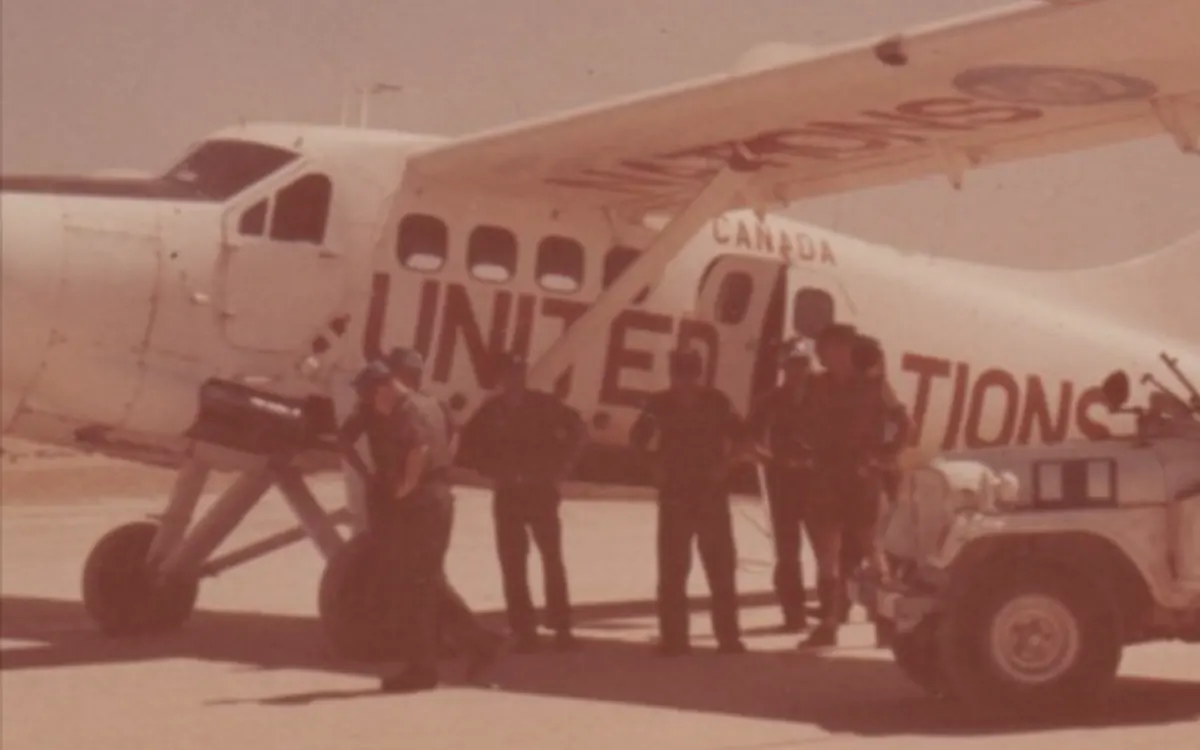
The causes of war may be many and the road to its outbreak long, but every conflict has a tipping point. In this episode the noose seems to close around Israel. As Egypt's re-militarizes the Sinai and the UN forces evaporate, we seem to have reached the point of no return.
About this episode
War is an ugly thing, said John Stuart Mill, but not the ugliest, worse is the feeling that nothing is worth war. On April 29, 1967, Egyptian parliament speaker Anwar Sadat left Cairo on a tour that returned through Moscow, where on May 13 the Soviets told him in no uncertain terms that Israel was planning to invade Syria between the sixteenth and twenty-second of May, claiming ten to twelve brigades massing on the northern border, pointing as proof to Israel's decision to exclude heavy armor from its Independence Day parade. What followed was a study in social psychology, since when Sadat returned, Nasser and Field Marshal Amr were already discussing a KGB report, and a message from Damascus confirmed the same dates, Amr even boasting of aerial photographs, so multiple pieces of intelligence all pointed to war and all happened to be untrue. The assessment was one part Syrian paranoia, far from unjustified since Israel had threatened retaliation for a year, and one part wounded pride from the war for water.
That struggle reached its culmination three weeks earlier, when on April 7 two Israeli tractors entered the demilitarized zone near Tel Katzir, many believe deliberately to provoke a response, and the Syrians opened fire, Israeli tanks replied, and the heavy artillery on the Golan rained down on the eastern Galilee, two hundred and forty-seven shells striking Kibbutz Gadot alone. Rabin had long argued only the air force could silence those guns, and when Eshkol gave in, the bombers launched escorted by Mirages, and in the dogfight over Kuneitra the Israelis downed six MiGs before a victory lap over Damascus itself, as many as a hundred and thirty planes joining, while no one in the Arab world lifted a finger to help. Nasser faced Field Marshal Amr, the hero of the fruitless war in Yemen and the only man with status to challenge him, pushing for a first strike, and the Syrians and Jordanians had mocked Nasser for his paralysis, so a display of solidarity with Syria was his only choice to outflank his rival at home and shore up his status abroad.
His options escalated: sending troops into the Sinai, low risk and low reward; evicting the UN emergency force stationed since Suez, a significant act of brinksmanship removing the buffer; or his ultimate weapon, closing the Straits of Tiran to Israeli shipping, which would gain the world's attention yet might mean war. Meanwhile the 1967 Independence Day parade was held in Jerusalem for the first time, a deliberate assertion of sovereignty over the divided city, limited by the ceasefire to foot soldiers and jeeps with no tanks or aircraft, and it drew protests, the UN warning of intensified danger, nations boycotting over the holy city's international status, and Ben-Gurion refusing to attend because Israel's failure to display heavy weapons was a show of weakness before the goyim. Two days before the parade the Soviet ambassador told Eshkol of the Israeli intention to invade Syria, and when Eshkol invited him to inspect the northern front, the chilling reply was that his job was to communicate Soviet truths, not to test them.
As the parade unfolded, Eshkol received his first word that Egyptian troops were moving into the Sinai, the intelligence branch convinced Nasser wanted only a propaganda victory, so the order was to do nothing provocative. That night Eshkol and Rabin heard the first performance of Naomi Shemer's Jerusalem of Gold, not knowing they would soon help transform it into an anthem. The Egyptian buildup tripled, armor and Katyushas and reports of poison gas used in Yemen, and though the posture was defensive, Rabin knew the scale itself was a blow to deterrence, so on the sixteenth he requested mobilization, but Eshkol, fearing to look the belligerent and to cripple the recession-hit economy, called up only two brigades. That very night the Egyptian chief of staff Fawzi arrived in Damascus and found nothing, no massing of forces, the Syrian army not even on alert, an assessment confirmed by Egyptian intelligence, the Americans and the CIA, so the Soviet reports were clearly fake news, yet this gave Nasser a no-lose situation to continue his buildup and reap the political benefits.
To take a posture of war the Egyptians needed to reoccupy Gaza and Sharm el-Sheikh, which meant removing the UN emergency force of forty-five hundred troops strung along the border, whose very presence had kept it quiet for a decade and kept the Straits open. The legal basis hung on a good faith agreement, so all Nasser had to do was tell them to leave, and on May 16 the letter reached General Rikhye, who played for time, telegraphing New York and telling his men at Sharm el-Sheikh to hold on. The Secretary General Uthant, after consulting the American ambassador Arthur Goldberg, folded like a wet noodle, conceding Egypt's absolute right to dismiss the force immediately, there is no alternative, no alternative other than war. On May 17 two Egyptian MiGs flew a reconnaissance pass over the secret nuclear program at Dimona, the nightmare of the Israeli government, and as Israel watched the political achievements of a decade dissipate overnight, a deep paralysis gripped the government and the Hamtana, the waiting period, had begun.
Key ideas
- Soviet disinformation of a fake Israeli buildup on the Syrian border, confirmed by multiple untrue reports, lit the fuse of the crisis.
- The war for water culminated in the April dogfight over Damascus, where Israel downed six MiGs while no Arab state lifted a finger to help.
- Nasser needed a display of solidarity with Syria to outflank Field Marshal Amr at home and shore up his status abroad.
- The 1967 parade in Jerusalem asserted sovereignty over the divided city, and Ben-Gurion refused to attend over the absence of heavy weapons.
- Fawzi found nothing on the Syrian border, so the Soviet reports were fake news, yet this gave Nasser a no-lose path to keep building up.
- Uthant conceded Egypt's right to dismiss the UN force immediately, and the reconnaissance over Dimona began the waiting period.
Chapters
- 0:00 Sadat in Moscow; the Soviet warning
- 2:15 Untrue intelligence; Syrian paranoia
- 4:22 The war for water; Tel Katzir
- 6:32 The dogfight over Damascus
- 7:37 Nasser and Amr; the need to act
- 9:51 Escalating options; the Straits
- 11:00 The Jerusalem parade; the protests
- 14:14 Ben-Gurion's boycott; the Soviet ambassador
- 16:28 The parade; troops into the Sinai
- 17:40 Jerusalem of Gold; the buildup
- 19:50 Mobilizing the reserves
- 20:54 Fawzi finds nothing; fake news
- 23:04 The no-lose situation; removing the UN force
- 25:27 Rikhye plays for time; Uthant folds
- 29:50 Goldberg; no alternative but war
- 31:59 The flight over Dimona; the waiting period
Who, where and when
People
Anwar Sadat, Gamal Abdel Nasser, Field Marshal Amr, Levi Eshkol, Yitzhak Rabin, U Thant, Arthur Goldberg, Naomi Shemer
Places
Moscow and Cairo, Tel Katzir and Kibbutz Gadot, Damascus and the Golan, Jerusalem, Gaza and Sharm el-Sheikh
Texts
The Soviet intelligence reports, Jerusalem of Gold, The good faith agreement of 1957
When
April 7 1967 CE: the water war climax, May 13 1967 CE: Sadat in Moscow, May 15 1967 CE: the Jerusalem parade, May 16 1967 CE: the UN force expelled, May 17 1967 CE: the flight over Dimona
Read the transcript
War is an ugly thing, but not the ugliest of things, says John Stuart Mill. The decayed and degraded state of moral and patriotic feeling, which thinks that nothing is worth war, is much worse. Now, I hear his point, but I'd like to imagine that there's a third option for our future. Because I'm Rav Mike Foyer, and this is The Jewish Story. Episode 28, Six-Day War Part 2, The Point of No Return The last episode, we spoke about the relative futility of looking for the pebble that launches an avalanche. And I warned you then that such a quest will likely teach you more about me than about the events themselves. Nevertheless, as we all know, it does make for good storytelling. So on April 29th, 1967, less than half a year after the disastrous Israeli raid on Samu that we spoke about last episode, Speaker of the Egyptian Parliament Anwar Sadat left Cairo on a diplomatic tour.
Now, I say less than half a year after Samu just to give you context, because the reality is that for Sadat, his mission had nothing to do with the Israeli-Arab conflict. Or so he thought. The speaker was off to Mongolia and North Korea, and his goal was to bring the greeting of the Arab world's foremost progressive regime to these bastions of progress and communism. And of course, that being the task, his itinerary had him returning by way of Moscow. The American diplomats in Cairo assured their superiors in the State Department that this trip was all about diplomatic courtesy and nothing more. Maybe they failed to read the cards right. Maybe they didn't appreciate that beyond being Speaker of the Parliament, Sadat was an original member of the 1952 Revolution, and his ideological purity was beyond question, and these had made him a trusted confidant of President Nasser.
And in addition, Sadat was a well-known, staunch opponent of any compromise with the existence of Israel, which in this case made him the perfect man to carry what the Soviets saw to be a critical message. He arrived in Moscow on May 13th, and Sadat immediately began a round of meetings with the highest levels of leadership, the Premier, the President, Foreign Minister Andrei Gromko, and the message he received from them all was quite clear and anything but diplomatic courtesy. The Soviets informed him in no uncertain terms that Israel was planning to invade Syria between the 16th and the 22nd of May, and they claimed that their intelligence agencies had identified between 10 and 12 brigades of Israeli troops already massing on the northern border.
That meant 40,000 men, hundreds of tanks, all poised to strike. As proof, they pointed to Israel's recent decision to exclude heavy armor from its upcoming May 15th Independence Day parade, an unprecedented exclusion for an event whose primary purpose was generally seen to be a public flexing of military muscle. You must not be taken by surprise, said President Pogorny. the coming days will be fateful. And what followed the Soviet warning is basically a study in social psychology. When Sadat returned to Cairo on midnight of the 14th, he found President Nasser and Field Marshal Abdel Hakim Amer already discussing the Soviet report. A local agent of the KGB had provided them with more details on the supposed Israeli mobilization that very morning.
And just before Sadat arrived, the following message was received from Damascus. We have learned from a dependable source that, one, Israel has mobilized most of its reserves, and that, two, it has concentrated the bulk of its forces on the Syrian border. Three, the Israelis are planning a large-scale attack on Syria, including paratrooper drops, to take place between the 15th and the 22nd of May. Field Marsha Amr even boasted of having seen aerial photographs that confirmed the disposition of Israeli forces. And so it appeared that multiple pieces of intelligence all pointed toward war, and they all happened to be untrue. The assessment of imminent war was certainly one part Syrian paranoia. One which was far from unjustified, by the way.
As the old saying goes, just because I'm paranoid doesn't mean no one's out to get me. Because for nearly a year, Israel had been making threats of retaliation against Syria over their sponsorship of terror, and threats which carried a new weight in the wake of that Samu raid we discussed last episode. Add to that territorial fear a deeply wounded pride, always a dangerous mix in a totalitarian regime. We've mentioned over the last several episodes bits and pieces of what historians call the war for water, the sporadic battle between Syria and Israel over control of land and water resources around the Sea of Galilee and the upper Jordan River. And in many ways, this struggle was just a prelude to the Six-Day War, and it reached its culmination only three weeks before Speaker Sadat left Cairo.
On the morning of April 7th, two Israeli tractors entered the demilitarized zone near Tel Katsir on the southern tip of the Sea of Galilee. They were aiming to work the land, but many historians believe they were also sent as a deliberate attempt to provoke Syrian response in order to pave the way for decisive Israeli action. Which, true or not, worked. The Syrians opened up immediately from short range with 37mm cannon fire, disabling both vehicles. Israeli tanks then struck the Syrian guns in response, at which point all hell broke loose. The Syrian heavy artillery batteries entrenched in the Golan Heights began to rain down fire for hours on the settlements of the eastern Galilee. According to the UN observers, by 1.30pm, 247 shells had struck Kibbutz Gadot alone, and buildings in many of the villages of the north were on fire.
The UN tried to broker a ceasefire, but the Syrians demanded that it be contingent on Israel stopping all work in the demilitarized zone for good, terms which were unacceptable to Prime Minister Levi Eshkol. From the outset, Chief of Staff Yitzhak Rabin had been advocated for an activation of the Air Force. In his eyes, only an aerial assault could possibly silence those guns on the Golan. And by mid-afternoon, with half the Galilee stuck in bomb shelters, the Prime Minister gave in to the request. Batur bombers were immediately launched, escorted by Mirage fighter jets. Now, when Syrian MiGs scrambled to intercept, it seemed that a full-scale war might just erupt. The dogfight began over the chief Golan town of Kunetra, and the Israelis downed the first two Syrian jets to arrive.
Frankly, the rest kind of turned tail and fled. But in the heat of battle, the Israeli pilots pursued the enemy all the way back to Damascus. And there, the entire populace was treated to an air show the likes of which they'd never seen before. As many as 130 planes joined the fight. And the Israelis shot down four more MiGs before indulging in a victory lap over the Syrian capital and cruising home. The Ba'athist regime would later claim that their heroic fighters had downed five Israeli jets. but the truth had already been seen. Israel had struck and won, and no one in the Arab world had even lifted a finger to help. Which leads us to the next factor in how it is that Soviet misinformation is about to light fire to the entire Middle East.
Egypt's relationship with Syria. Now, of course, President Nasser himself did not lack her paranoia. On the domestic front, he was very fearful of Field Marshal Amr's popularity within the army. You need to know that the Egyptian army had been bogged down in a bloody and fruitless war in Yemen since 1962. And if you read the papers, it's kind of repeating itself right now. Not with the Egyptians, but same idea, because in 62, it was a battle between royalist forces backed by Saudi Arabia, Jordan, and even Britain from afar, and republican forces backed by the Egyptian army and armed by the Soviets. This is not the time or place for an analysis of how Nasser's attempts to topple the conservative regimes of the Arab world in the name of his pan-Arabist progressivism intersected with Soviet expansionism What you do need to know for our story is that Field Marshal Amr was the people hero of the war in Yemen and that he had used that conflict to consolidate his grip on the army.
Now, popularity and military power and arrival are nothing that a dictator likes to see. And here, the Field Marshal was pushing for a first strike against Israel, claiming that his battle-hardened troops would achieve a swift and total victory and pointing to the Soviet evidence that such a thing was an imminent necessity. Nasser's assessment of Egyptian strength was not so sanguine. He knew that Amr prized personal loyalty over competence, and he also knew that the war in Yemen had sapped the military of both hardware and manpower. But the last thing Nasser knew was that Amr was the only man in Egypt with the status to challenge him. He couldn't afford to look weak in the face of his call to war.
The problem was basically the same on the international front. The Syrians and the Jordanians had mocked Nasser for his failure to respond to the Samu raid half a year before, and once again for his paralysis in response to the defeat of the Syrian Air Force in April, despite the existence of a mutual defense pact between Egypt and Syria. And now, if the Soviets were actually telling the truth, what would happen to Nasser's status as leader of the Arab world if he failed to act in the face of blatant Israeli aggression on such a scale. A display of solidarity with Syria seemed to be Nasser's only choice, both to outflank his rival at home and to shore up his status abroad, whether the Soviet intelligence was correct or not.
The only question was, how should he do it? Sending troops into the Sinai was a tried and true method, but its relatively low risk meant a comparably low reward, no one would be all that impressed by a bunch of tanks spreading out over the sand. He could order out the UN emergency forces that were stationed in Gaza and along the Sinai. They've been placed there as part of the separation of forces agreement in the wake of the Suez War back in 56, and the removal of foreign troops from Arab soil would please militants all across the region. Removing the so-called disgrace of 56 would certainly elevate Nasser's status at home and abroad more than just remilitarizing the Sinai, but it would also remove any buffer between Israeli and Egyptian troops, and thus was a significant act of brinksmanship.
And then there was his ultimate weapon. He could evict the UN from Sharm el-Sheikh at the tip of the Sinai Peninsula and close the Straits of Tehran to Israeli shipping, as they had been closed before 56. Now that was a dramatic move, one that would gain the attention of the world and placed Nasser once again at the forefront of struggle against the Zionist invaders. But it might also actually mean war. You know, just a couple weeks ago here in Israel, we celebrated Independence Day. And due to the corona crisis, it was unlike any other I've seen in my 18 years as a citizen. But this year's change in the festivities was really just a shift in scale. From public to private, the substance remained the same.
music, dancing, barbecues, halil. That's not how this day looked 50-plus years ago. From the very first in 1948, the state of Israel chose to mark Independence Day with military parades. Every year, marching soldiers, rolling tanks, and all manner of weapons would pass through the streets of a chosen city with fighter planes flying overhead as heads of states looked on and spectators lined the street. In the first two years after independence, the parades were held in Tel Aviv. And then they moved to Haifa, Beersheba, Ramla. By rotating the location of this display of power, Israel was basically demonstrating its sovereignty over the entire country. I mean, after all, like the great sociologist Max Weber says, sovereignty is the monopoly over the legitimate use of force to maintain order.
And this was a lot of force on display. In 1967, the decision was taken to hold the parade in Jerusalem for the very first time. Now, this was not a simple choice. The border with Jordan at this point was in a state of extreme tension since the Samu Raid. The threat of Syrian-sponsored terror was constant, especially since their air force had been publicly shamed. Many politicians and most of the general staff felt the question of war was no longer if, but rather when. Furthermore, the 1949 ceasefire agreement, which had split Jerusalem between Israel and the Hashemite Kingdom of Jordan, declared the city and its surrounding areas demilitarized. Neither state was permitted to introduce heavy weapons or fly military aircraft over its skies.
But despite all this, the government felt that it was critical at this point to emphasize Israel's hold over the divided city. In an attempt to minimize tension, the parade was designed to be a limited show of force. There would be foot soldiers, jeeps, artilleries, anti-aircraft, and of course, marching bands, but no tanks or aircraft. Nonetheless, as would be expected, protests erupted as soon as the plan was announced. First came the United Nations. Despite Prime Minister Eshkol's assurances to the UN Troop Supervision Organization, that's UNTSO, there would be no heavy weapons, and thus no violation of the ceasefire, they warned that such a parade would intensify the already dangerous situation.
You can see that nothing has changed from the UN in those 50 years. Lieutenant General Odd Bull, yes that is actually his name Odd Bull, he was the chief of staff of the UN in the region, was not expected to attend. The nations of the world protested individually as well. UN Resolution 181, also known as the Partition Plan, had declared Jerusalem an international city And though Ben-Gurion had ignored this element of the resolution from the outset, declaring Jerusalem the capital already in the end of 1949, nonetheless, there were many nations out there who had not given up on the hope of gaining peace by internationalizing the holy city. And thus, even countries which maintained good relations with Israel decided to boycott the celebration.
Great Britain, France, West Germany, and the United States all sent their regrets. The Soviets, needless to say, would also not be in attendance. And as a final blow to Prime Minister Eshkol's planned show of sovereignty, a week before the parade, former Prime Minister David Ben-Gurion announced that he would be a no-show as well. The old man was certainly not opposed to flexing Jewish muscle in Jerusalem. On the contrary, his opposition was on account of Israel's refusal to display heavy weapons. According to Ben-Gurion, Jordan's refusal to allow free access to Jewish holy places within the old city, not to mention their wanton destruction of the Jewish quarter in 1949, had undermined the provisions of the ceasefire from day one.
Therefore, Israel was under no obligation to honor such a provision, and to do so was nothing but a display of weakness before the goyim, a weakness in Prime Minister Eshkol which he continued to delight in pointing out. But in the end, it wasn't the limited guest list which spoiled the party for the Prime Minister. Only two days before the parade, in a strange display of political feeder, Soviet Ambassador Chewbacca presented himself to the Prime Minister and declared his knowledge of the Israeli intention to invade Syria. Now that may sound severe, but the Ambassador had made such claims before, and so Prime Minister Eshkol was not particularly worried, or even surprised. He denied the claim and simply invited Chewbacca to inspect the Northern Front for himself.
After all, it would be hard to hide tens of thousands of men and tanks. But Chewbacca's reply was downright chilling. He said that his job was to communicate Soviet truths, not to test them. And so, it was with a sense of waiting for the other shoe to drop that the Prime Minister reviewed the IDF troops marching through the streets of Jerusalem. Now, you may recall from the last episode that since taking office, Eshkol had devoted significant time and energy to strengthening and modernizing the army he now saw before him. And it worth saying right now that he deserves a tremendous credit for the salvation which lies ahead And so it was with justifiable pride that in his public address the night before he declared to the nation that Israel quote Firm and persistent stand has strengthened the awareness amongst our neighbors that they will not be able to prevail against us in open combat.
Despite those words, nonetheless, in his more private address to the Mapai party leadership, he issued a warning. We are surrounded, he said. We are surrounded by a serious encirclement of hostility, and that which doesn't succeed today could well succeed tomorrow or the day after. And lo and behold, as the Independence Day show unfolded before him in the Hebrew University Stadium, Eshkel received his first word that the circle of hostility was indeed drawing tighter. Vast numbers of Egyptian troops were reported to be moving into the Sinai. The initial assessments told the Prime Minister that the move was political in nature. The IDF intelligence branch was convinced that Nasser wanted nothing more than a propaganda victory, a show of support for Syria which wouldn't require him to fire a shot.
And so his initial order to the army were, do nothing which could provoke, not in the north and not in the south. But the truth is, there are some conflicts which cannot be avoided. Now the show must go on, and so the country celebrated. But as they did, the crisis deepened unbeknownst to the vast majority of the populace. That night, the Prime Minister and the Chief of Staff were privileged to hear the first ever performance of Naomi Shemmer's immortal song, Yerushalayim Shel Zahav, Jerusalem of Gold. Little did they know that in a matter of weeks, they would have a hand in transforming that song into an anthem of the Jewish people. Eshkol and Rabin, after hearing the performance, attended a reception at the home of Venezuelan millionaire, Maul Shirover.
Dispatches on the situation in the Sinai continued to arrive through the night. The Egyptian troops had taken up formation according to their conqueror plan. Egyptian chief of staff, Mohamed Fauzi, had flown to Damascus. Now, the IDF knew the conqueror plan, and they also knew that they required a prior warning of 48 hours in order to repulse it. And the question that bothered Eshkol that night was, does Israel have the time? At one point in the party, Eshcol's wife Miriam asked him why he seemed so distracted. Don't you realize there's going to be war, he snapped at her? By late that night, the night of the 15th of May, the situation had become critical in the eyes of Cheshut the Staff Rabin. From one division, the Egyptian forces of the side had tripled.
Armor, artillery, katusha rockets had all taken up position along with the infantry. There were even reports of poison gas in artillery canisters, a weapon that the Egyptians had used without restraint in the war on Yemen and one which no Jew would look upon lightly in 1967. The posture of their forces was still largely defensive. They were digging in, not massing to attack, and the UN emergency force was still in place, but the very scale of the buildup went beyond any display of power. Rabin knew that the presence of so many troops on Israel's southern border was itself a blow to a deterrence. At what point would the scales tip and the Arab states feel that Israel had lost its nerve and they were therefore free to strike?
The rhetoric emanating from Cairo told him that that point was not far off. If Israel now tries to set the region on fire, then Israel itself will be completely destroyed in this fire. And that was echoed from Damascus. The war of liberation will not end except by Israel's abolition. By the 16th, Rabin knew the IDF could no longer remain static in the face of the situation. He contacted the Prime Minister, requesting the mobilization of the reserves. Now, the Prime Minister felt that full mobilization was too extreme a response. First of all, he feared that it would make Israel look like the belligerent, and therefore undermine the diplomatic efforts he was already feverishly pursuing. And it would put a large percentage of the workforce into uniform, adding a crippling blow at a time when Israel's economy was in deep recession.
Therefore, only two brigades, 18,000 men, were called up and quietly transferred to the south. The atmosphere was tense and uncertain. But to Colonel Israel Liul, the Prime Minister's military aide to camp, things actually seemed quite simple. It was clear to all of us that we had reached the point of no return, he wrote in his diary. The lot had been cast. And Leor's judgment was confirmed that very night. When Egyptian Chief of Staff Mohamed Fauzi arrived in Damascus to investigate the Soviet claims of imminent Israeli invasion, it's unclear what he expected to find. But it's absolutely certain what he did, or rather did not see. And that was any evidence of Israeli buildup on the Syrian border. Fauzi met with the Syrian Chief of Staff.
He looked over aerial photographs. He even surveyed the border for himself in a private plane. Not only was there no sign of Israeli invasion, he found that the Syrian army itself wasn't even on alert. His initial dispatch to President Nasser read, there is nothing there, no massing of forces, nothing. And this assessment was bolstered by Egyptian military intelligence. They had sent several Israeli Arabs on a reconnaissance mission to the northern Galilee. Quote, there are no force concentrations, they reported, nor is there a justification, tactical or strategic, for such concentrations. The American embassy in Cairo concurred, as did the CIA. Even General Ad Bull, no lover of Israel, who'd been invited to tour the border said, we have no reports thus far of any Israeli build-ups.
Of course, he had to add, Israel does not have to concentrate her forces in any one area in order to mount an attack. Clearly, the Soviet reports were fake news. But this seemed to present Nasser with a no-lose situation. If they were actually fake news and there was no buildup, he could continue his own buildup in the Sinai and reap the political benefits without any real danger of war. Reactions throughout the Arab world to the remilitarization of the Sinai have been beyond enthusiastic. For the first time in years, perhaps since the first time in 1956, Nasser was once again being hailed as the hero of the Arab world. Field Marsha Amr felt much the same way about the situation. He had already used the build-up to place cronies in key positions amongst the troops in Sinai.
And despite Chief of Staff Fauzi's warning that with her budget already strained and her best troops entangled in Yemen, the army was in no state to fight a war, Amr apparently was. And in order to take a posture of war, the Egyptian troops in Sinai needed to reoccupy two key points, the Gaza Strip along the Israeli border, and Sharm el-Sheikh at the southern tip of the peninsula. And in order to do that, they would have to remove the United Nations Emergency Force stationed there since 1957. The force consisted of 4,500 international troops strung along the border in 41 observation posts. I say observation because by 1967, it was down to only half its original size, basically due to budgetary cuts which themselves were an outgrowth of a growing skepticism amongst western countries toward the UN as an effective peacekeeping mechanism.
So they couldn't possibly fight to prevent a war. But the very presence of international observers had helped to keep the border quiet for a decade and that was quite significant. You'll recall that the Fedayin raids from Gaza into Israel caused much death and in many ways had triggered the 1956 war. Well, they had ceased with the presence of the international force, and that force had made sure that the Straits of Tehran remained open to Israeli shipping to and from the port of Eilat. The problem was, the legal basis for this force basically hung on a good faith agreement, as it was called. In theory, Israel of its own free will had agreed in 1957 to consult the UN General Assembly and the Emergency Force Advisory Council before making any change to the mandate of the peacekeepers But in reality most scholars knew that there was no legal basis whatsoever for insisting that an international force remain on Egyptian soil All Nasser had to do was tell them to leave.
And that's exactly what happened. Now, there's much debate in the documentation amongst historians about whether the details of the letter that was delivered to commander of the UNEF, that's UNF, basically that was delivered to General Indar Reiki on May 16th at his post in Gaza, whether it reflected President Nasser's will or that of Field Marshal Amr. But the substance remained the same either way. To your information, I give my instructions to all UAR Armed Forces, UAR is United Arab Republic, that's the technical name for Egypt at this point, to be ready for action against Israel, the moment it might carry out any aggressive action against any Arab country. Due to these instructions, our troops are already concentrating in Sinai along our eastern border.
For the sake of complete security of all UN troops, I request that you give order to withdraw all of these troops immediately. Narekha was an old hand, both at war and international politics. He knew that the situation along the border was downright explosive, and he fully appreciated the potential consequences of withdrawing his troops. After all, only weeks before, he'd sent an urgent request to the UN Secretary General, Uthant, for an immediate emergency mediation mission between Egypt and Israel. By the way, he didn't even get a reply. Now, he simply tried to play for time. He told the Egyptian commander, whose troops had already occupied his position, that the removal of the UNEF was a political rather than military decision, and that he lacked the authority to withdraw.
Accordingly, he telegraphed Nasser's letter to the UN headquarters in New York and assured the Egyptians that he would act as soon as he had orders. And then he picked up the phone to give an order of his own. He contacted the commanders of the battalion at Sharm el-Sheikh, telling them to stay at their post as long as possible and to keep the Egyptians out by any means short of using force. Arthur Goldberg was the American ambassador to the United Nations in 1967. And he'll play a key role in how this story unfolds all the way through the famous UN resolution of 242, which brought a legal end to the war. So I feel like, even though it's a bit of a nod sequitur, now's a good time, at least to introduce him.
In many ways, Goldberg is the embodiment of the American Jewish story that we told in the first few episodes of this season. You can go back and do a review, or if you haven't listened to it, go back and give it a shot. Born to poor Russian immigrants in Chicago in 1908, he nonetheless graduated at the top of his class at Northwestern University Law School in 1930. He went on to become a prominent labor attorney, making such achievements like arranging the merger of the American Federation of Labor and the Congress of Industrial Organizations, the AFL-CIO. During World War II, he served in the Office of Strategic Surveillance services that was a precursor to the CIA, organizing European resistance to the Nazis.
After the war, he returned to practice and was a central figure in reshaping the post-war labor landscape, so central in fact, that in 1961, President Kennedy appointed Goldberg as Secretary of Labor. In 1962, Supreme Court Justice Felix Frankfurt retired, and Kennedy nominated Goldberg to fill what was then known as the Jewish seat on the court. But in 1965, Goldberg resigned from the bench to accept appointment by predecessor Johnson as ambassador to the UN. And that was despite the fact that Goldberg was an outspoken Zionist. Nonetheless, Johnson wanted him to represent the United States on the world stage. And perhaps these words of praise from Johnson, which are captured on an audio tape, explain why better than I can.
I quote, Goldberg would be able to answer the Russians very effectively. He's got a bulldog face on him, and I think this Jew thing would take the New York Times, all this crowd that gives me hell all the time, and disarm them, and still have a Johnson man. I've always thought that Goldberg was the ablest man in Kennedy's cabinet, and he was the best man to us. Goldberg sold bananas, you know. He's kind of like I am. He's shined some shoes in his day, and he's sold newspapers. He's had to slug it out. So when General Reich's telegram reached Uthant in New York, one of his first messages was to Arthur Goldberg. reassuring the American ambassador that, quote, there's a great deal of face and political maneuvering involved, but with careful handling, we might yet preserve the situation and UNEF's role.
Unfortunately, careful handling is exactly what the Secretary General did not give it. After consulting Goldberg, Uthant summoned the Egyptian ambassador to the UN, Mohammed El Khonni, into his office. He informed El Khonni that President Nasser had erred in treating the withdrawal of the UN emergency force as a military rather than diplomatic matter. Quote, UNF cannot be asked to stand aside in order to enable the two sides to resume fighting, he declared. And then, after recalling the Good Faith Agreement of 57 several times, after warning of the dangers of withdrawal and stressing the lack of any evidence whatsoever whatsoever of an impending Israeli invasion of Syria, Uthant folded like a wet noodle, saying if it was the intention of the government of the UAR, Egypt, to withdraw the consent which it gave in 1956 for the stationing of the UNEF on UAR territory, it is, of course, entitled to do so.
And seeing as that was indeed Nasser's intent all along, it's exactly what happened. In a meeting of the UNEF Advisory Committee that afternoon, Arthur Goldberg tried to rally the Western ambassadors to pressure the Secretary General to at least postpone a final decision. But Utham sided with the Pakistani and Indian delegates who insisted on Egypt's absolute right to dismiss the force unilaterally and immediately. One wonders whether it was a narrow-minded legalism or something else which led him to declare if the consent of the UAR ceases to exist, then UNEF has to be withdrawn. There is no alternative. No alternative other than war, that is. On May 17th, General Reichi received orders to withdraw his force from Gaza within 24 hours and from Sharm el-Sheikh within 48.
And that very day, Israel's deepest fears seemed to be confirmed when two Egyptian MiG-21s looped through Jordanian airspace, entering Israel from the east and swooped over the Negev before the IAF could even react. It was the first ever reconnaissance flight over the secret nuclear program in Dimona, and it was the nightmare of the Israeli government. And so, as Israel watched the political achievements of a decade dissipate overnight, deep uncertainty, and even a sort of paralysis gripped the government. The Hamtana, the waiting period, had begun. and it seemed the question was no longer what should we do but rather what will Nasser do I want to thank a few folks before I sign off I want to thank all the folks who give their hard earned money to help make the show possible to keep it free and widely distributed I want to invite you to join them you can go right now to my website that's jewishstory.co in the upper right hand corner you'll see a button that says be a patron you can click on that to make a little bit of per podcast support I also want to encourage folks, if they want to dedicate a show, either in honor of someone alive today or in the memory of someone who's passed on, you can be in touch with me at rovmikefoyer at gmail.com, or you can send me a message on Facebook, rovmikefoyer, and I'm happy to share the details with you of how you can do that.
I want to thank the Land of Israel Network, that's thelandofisrael.com, for creating a platform that allows me to reach so many amazing people. I want to thank the Pardes Institute, P-A-R-D-E-S dot org dot I-L, for building an educational institution that gives me the privilege of teaching so many amazing Jews. And I want to thank you for listening. I'm Rav Mike Foyer, and this is The Jewish Story.
More from Season 3
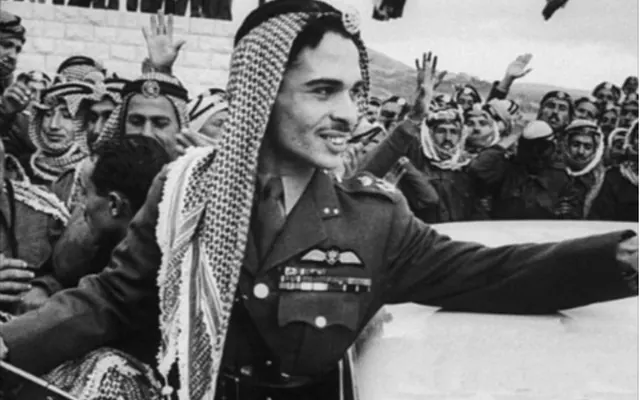
TJS S3E27 Six Day War I - beginnings near and far
Who can say when historical events like the Six Day War actualy began, and what were their causes? It is a daunting task, but not one which we...
Play Episode
TJS Interlude - Yom Haatzmaut Interview 2020
Here is an interview of me by Rabbi Yonatan from the RRG Beit Midrash at Hebrew University in which we reflect on Israel Independence day from the historical...
Play Episode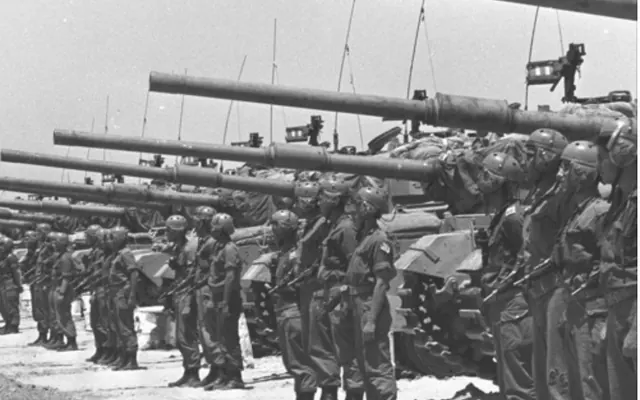
TJS S3E29 Six Day War III Israel dwells alone
The countdown to war is progressing, and the pieces are almost all in place. As the pressure mounts, some of the fundamental flaws which lie at the heart...
Play Episode