
TJS S3 Interlude - George Floyd and the burden of history
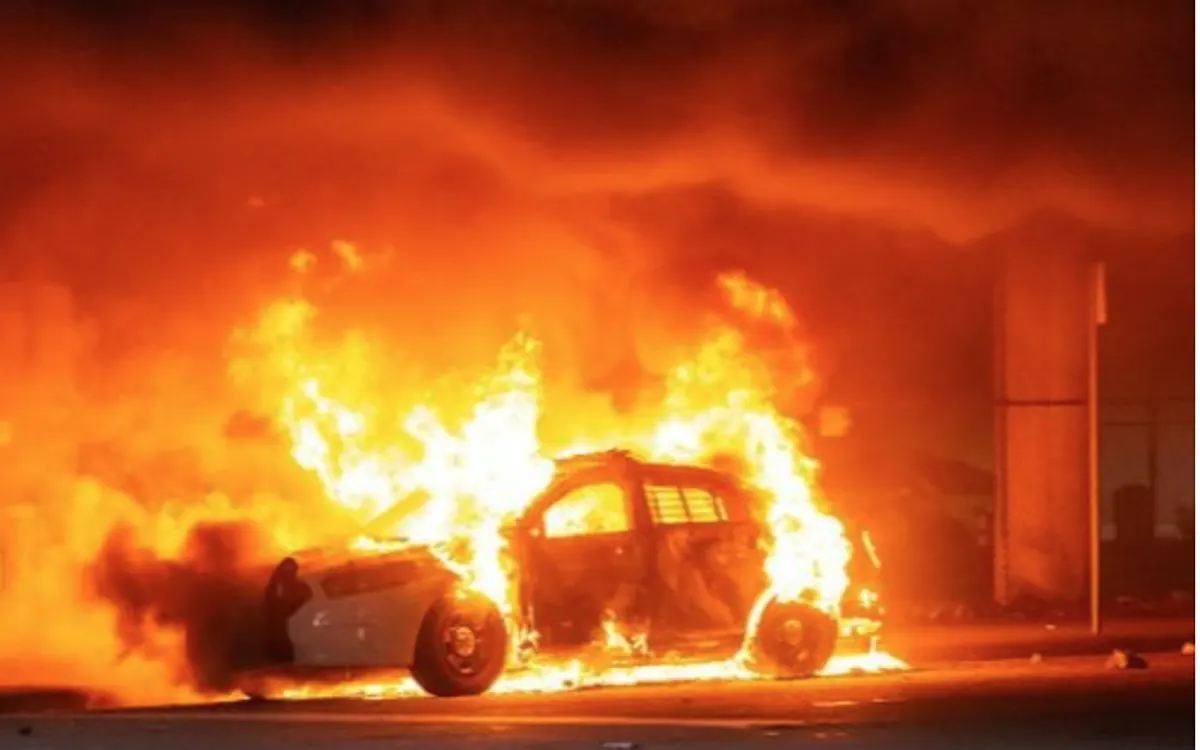
I can't watch what is happening in silence, but nor am I willing to simply be a cheerleader for chaos. Here are some thoughts on structural violence and what can all learn from the murder of George Floyd.
About this episode
Violence never brings permanent peace, said Dr. King. Rav Mike feels silence in the face of the murder of George Floyd would be a vote for the darkness, yet he does not want to co-opt others' narratives or join the virtue-signaling echo chamber, and he cannot speak to the Black experience in America since you can only talk about what you know. What he can offer is perspective, multiple frames of reference, and he warns he intends to disrupt, since education happens just beyond the edge of comfort. A settler rabbi might seem the embodiment of ethno-nationalist privilege, the world's last colonialist, and he will not waste time deconstructing that false narrative, since to call him a colonialist in the land of his people is worse than a lie, an assertion of a false reality that prevents getting at the real problems. But no illusion could seize the world's imagination if it were pure nonsense, so rather than believe the whole planet is made of fools and the wicked, the anger of the world toward a Jew in his land must be a source of critical reflection, since our road is right but our hands are not entirely clean.
He was recently called a Jew-hater on social media for simply asking what was the fundamental flaw of Zionism, a reaction symptomatic of a larger failure of critical thinking, which is most important when applied to what is most precious to us. Rav Saadia Gaon held we must rationally examine even the revealed truths of the Torah, and Zionism, far from divinely revealed, is eminently human, the source of both its importance and its flaws. He calls it the re-entry vehicle, the movement powerful enough to reroute Am Yisrael into Eretz Yisrael after two thousand years, whose purpose is served once it delivers us, and following Toynbee he warns that yesterday's solutions are often tomorrow's problems, so a society too wedded to its past successes to look at them honestly is headed nowhere. What to do on the crater edge of history is to live and rejoice at the fruition of a millennial dream, and to push the project forward to hand the world to his children a little better off, since we are far from done.
To extract the wisdom of the present we must think about how we got here, and what he sees on the streets of America is a terrible historical bill coming due. As environmentalists say we borrow the earth from our children, so on a social scale we also inherit the world from the past, and if that world was built by the labor of our own ancestors in an intergenerational dream, the debt we owe is gratitude, to cultivate and enrich and pass it on. But if the world we inherit was built by the toil of the oppressed and the sweat of slavery, the debt is far harder to pay and the healing far more profound. No society is wholly good or evil, and America, which has struggled harder and succeeded better than any at human freedom, was also built on the decimation of native peoples, slavery and institutionalized racial inequality, both true of the same home of the free. Until the Messiah there will be no debt-free society, and perhaps even then it will simply be a world where we all own our piece of the problem and have the will and tools to make it right.
Sociologists call this burden structural violence, and Johan Galtung defined violence as the cause of the difference between the potential and the actual, so a death from tuberculosis today, with all the world's medicine, is violence though an eighteenth-century death was not. When the officer pinned George Floyd's neck that was violence all could recognize, and what followed was a response to the structural violence toward people of color built into institutions like the police. Rav Mike offers a metaphor: he builds a bonfire of kindling soaked in gasoline on the sidewalk and walks away, and a passing smoker flicks a butt and the whole neighborhood burns, so the Minnesota officer flicked the butt but the fire burns on the structural violence inherited from slavery, Jim Crow and redlining. He does not justify the rioting and looting, since personal responsibility is an absolute value, but focusing on the failure of the few is an insufficient frame for the rage of the many, most of whom are protesters looking to leadership to dismantle the violence that confines them. Imagine a race where just before the whistle the announcer tells the Hispanics to step back ten paces and the African-Americans twenty, so the winner did no violence yet half the race was run before the whistle blew.
Out on a limb, he offers a personal thought and a divine one. To the Jews, get a thicker skin: never accept the antisemitic elements of the moment, but do not be distracted by them, and be so rooted in our own story that the anti-Israel plank in Black Lives Matter makes us think why it is there rather than rejecting it out of hand, since even if they hate us it is not all they are, and our mission is to spread God's light wherever we can. He tells of the 1992 Rodney King verdict at his high school, where a Black classmate shouted do not let him speak, he is a Jew, and a friend stepped between them, and it turned out the young man had been hit with a baseball bat the night before, a violent ignorant punk whose lived injustice was nonetheless real, and if you confuse the two you will get nowhere. On peace and justice, no peace without justice is not a modern slogan but Isaiah, the work of righteousness shall be peace, since highly unacceptable social orders like a police state are still compatible with mere quiet. He ends with the midrash where truth is cast to the earth so that truth may spring up from the ground, the truth that we are defined by our acts of righteousness, which can only grow when our societies are freed of the burden of history through the pursuit of justice.
Key ideas
- Silence before the murder of George Floyd is a vote for the darkness, and a settler rabbi can offer not the Black experience but perspective.
- Critical thinking matters most when applied to what is most precious, and Zionism, eminently human, is the re-entry vehicle with real flaws.
- We inherit the world from the past, owing gratitude for what our ancestors built and a far harder debt for what was built by the oppressed.
- Structural violence is the gap between the potential and the actual, the fire that burns on slavery, Jim Crow and redlining after one flicked butt.
- Personal responsibility is absolute yet an insufficient frame for the rage of the many, like a race half run before the whistle blew.
- No peace without justice is Isaiah, not a modern slogan, since truth must spring from the ground when society is freed of the burden of history.
Chapters
- 0:00 Silence is a vote for the darkness
- 2:15 The settler rabbi; the false narrative
- 4:28 Called a Jew-hater; critical thinking
- 6:40 Zionism as the re-entry vehicle
- 8:55 Live and rejoice; push forward
- 10:00 We borrow the earth from our children
- 12:11 Debts of gratitude and of oppression
- 14:28 Structural violence; Galtung
- 15:35 The bonfire and the flicked butt
- 18:00 The race run before the whistle
- 21:14 Jews, get a thicker skin
- 22:21 The Rodney King verdict; the real injustice
- 24:33 No peace without justice; Isaiah
- 26:44 The midrash; truth springs from the earth
Who, where and when
People
George Floyd, Martin Luther King Jr., Rav Saadia Gaon, Arnold Toynbee, Johan Galtung, Isaiah, Rodney King
Places
America and Minnesota, The land of Israel, Cleveland, Rural North Carolina
Texts
Violence, Peace, and Peace Research, Isaiah 32, Bereshit Rabbah on creation, Psalms 85
When
2020 CE: the murder of George Floyd, 1992 CE: the Rodney King verdict, the pursuit of justice
Read the transcript
I am not unmindful, said the Reverend Dr. Martin Luther King, of the fact that violence often brings about momentary results. Nations have frequently won their independence in battle, but in spite of temporary victories, violence never brings permanent peace. Well, I'm trying to be mindful myself, and I'm certainly looking for that permanent peace. Let it be soon, let it be now. It's Amrav Mike Foyer, and this is The Jewish Story. Interlude, George Floyd and the Burden of History So, from where I'm standing, the world is in a very tricky place right now. The type of pressures that are coming to bear could lead to building it up or burning it down, God forbid, to more justice or even greater oppression.
And this is perhaps nowhere more true than in the United States. It's a country toward which I feel a tremendous personal gratitude. and which I see as a unique achievement in the history of political experiments. And that's why I feel that silence in the face of the murder of George Floyd and the social explosion it has triggered is a vote for the darkness, for strengthening the violence which is swirling on the streets and built in to our institutions. Now, when I first sat down to compose this show, I basically did the mental equivalent of balling up an entire ream of paper and chucking it in the wastebasket. I mean, what can I really say? I don't want to make it about me, or even about the Jewish story.
This is not the time for co-opting the narratives of others, as some of our enemies out there are so unashamedly doing. And I think that, by and large, just simply virtue signaling is an obnoxious practice. So I didn't want to join the righteous echo chamber out there on social media, nor did I want to shift the focus onto how I feel, though that is what I know best. So that's true, and furthermore, I can't speak to the black experience in America because you can only talk about what you actually know. In the end, after an alarming number of fits and starts, I realize that what I can offer is a little bit of perspective. Multiple frames of reference is what I do, and hopefully they can shed just a little bit of light of understanding on the question at hand.
But before I do it, I feel like there's a bit of introduction in order, since it's likely that I'm going to upset someone who's listening with something that I say. And frankly, I might have already done it. And therefore, I want to make sure that my words are clear and understood. You know, my grandfather used to love to say, a gentleman never insults someone unintentionally. So for present purposes, I'll adapt that to, a thinking person never upsets someone unintentionally. And I intend to upset, or at least disrupt. I mean, after all, I'm an educator. And education happens just beyond the edge of our comfort zone. So let's go there a little bit, shall we? First things first, before I can even get to my perspective on the mess which is unfolding in America, and maybe even brush what it has to teach us about the Jewish story, let me be just completely blunt.
You might be wondering what a settler rabbi could possibly have to say about racial and social justice. I mean, after all, in the eyes of the world, and maybe even in the ears of certain present company, I am the embodiment of ethno-nationalist violence, the world's last colonialists sitting atop my heap of privilege using the tools of oppression to keep the natives at bay. Now, I'm not going to dishonor our country, nor waste my time deconstructing that false narrative for you right now. You can always listen to the entire Jewish story right from the beginning to get my thoughts on it, frankly. Suffice it to say for the moment that to call me a colonialist in the land of my people is worse than a lie.
It's an assertion of a false reality that prevents actually getting to the roots of what the problems, which are very real, actually are. But it is important to note that no such illusion could have seized the imagination of the world in the way in which it had, could marshal such energy and power if it were just nonsense. I personally refuse to give in to the tempting notion that the whole planet is made up of idiots and rashaim, of wicked people, despite the best efforts of a large part of the planet to convince me that it is indeed so. But if I don't give in to that, the alternative is that the anger of the world toward me for being a Jew in my land, the specific language which they use in the nature of their accusations, needs to make me think, because if they're not all stupid or evil, then there must be something going on.
I don't have to agree with them, mind you. That's not what I'm saying. I mean, after all, no one knows better than the Jews the lie of that old saying, if the whole world says it, it must be true. Nevertheless, the pain around us, the anger of the world, the particular forms and ideologies through which their hatred expresses itself, these have to be a source for critical reflection. Because I promise you, though our road is right, our hands are not entirely clean. You know, I recently got called a Jew hater on social media. I've been called a lot of things, many of them pretty awful, but this is certainly the first time I've been called an anti-Semite. And you might wonder, what was my unforgivable sin, which so provoked the wrath of this righteous defender of our people that he had to call me a Jew-hater?
Well, I simply asked, what was the fundamental flaw of Zionism? You might have listened to the episode, which is more than he did, by the way. That question alone was enough to evoke in my fellow Jew the following response. There was none, Jew hater. Zionism is a revolution. Anti-Zionism means that one preferred the status quo of the powerless, defenseless Jew. I refuse to accept a view that seeks a return to the powerless Jew. Listen, maybe he was just a troll. Or maybe I hit a raw emotional nerve and it was a bad day, though he did double down for a couple more days. Or perhaps this type of reaction is symptomatic of a larger problem in thinking, not just amongst our people, but in the world as a whole.
First of all, we have to beware comfortable dichotomies. That oh-so-useful tool that we use to tighten up party lines and find out who's with us or who's against us and keep people in line. Did you hear how he assumed I must be an anti-Zionist simply because I asked a question? And, as an aside, that everything hinges on power. But the real failure, and the one that connects to our story right now, is one of critical thinking. Critical thinking which is always most difficult and therefore most important when it's applied to that which is most precious to us. I mean, you might say that there are things too sacred to question, but then I'd point out to you that no less authority than Rav Sa'adj Gaon goes so far as to say that we have an obligation to rationally examine even the revealed truths of the Torah.
He cites Isaiah as his proof. And with all its miraculous achievements, Zionism is far from divinely revealed. On the contrary, it's eminently human, which is of course the source of its importance as well as its flaws. Zionism could be understood in many ways. But if I were to label its role in the arc of our people's history, I want to call it right now the re-entry vehicle. Cultural political religious movement which was powerful enough to reroute Am Yisrael in Eretz Israel after 2 years of wandering The impact was incomprehensible even though it was spread across the 100 years war we've been fighting. It unleashed forces that continue to fuse, warp, destroy, and create our society today. That's why, by the way, the situation here often seems so molten that people accuse me of living in the Wild West Bank.
And of course, a re-entry vehicle really only has one purpose. Even if it's not destroyed on impact, no one sees it as the means to get to the next state. Now, I have a boundless love and respect for Zionism, trust me, as well as driving direct daily benefit. But when I look at history, I try and live by Toynbee's principle that beware the fact that yesterday's solutions are often tomorrow's problems. A society which is so wedded to its past successes that it can't look at them honestly and therefore can't engage reality of the present is headed nowhere fast. Now, this is a bit of a diversion and more on it in season four, but basically I want you to keep it in mind in the coming discussion. I don't see what I have to say about America as irrelevant to what's happening here, nor do I give in to the facile comparisons between Palestine and Ferguson.
mind you. So here I am, settler rabbi, sitting on the crater edge of history, wondering what to do about it. Now, of course, one answer is always live, not just live, rejoice. Thank God every moment of my day that I have merited first generation in my family in 2000 years to see a fruition of a dream of millennia. That's an obligation in my eyes, not just an opportunity. The other answer of what to do is to push the project forward. Because just like everybody behind me did all that work to get me here, I want to hand the world on to my children a little bit better off. We're far from done here, people. Far from done. But of course the question is then, wither, O Israel. How am we supposed to divine the next stage of divine intention?
I mean, I can't resist making a plug for Torah, right? Because I thank God every day for the privilege of learning. But right now, we're talking about the world at large, really. I'm interested in America. I'm interested in the pain and suffering, the explosion of rage that's spilling across the streets of the American cities. And if we're going to be able to extract the divine wisdom, which is offered from the present, then we need to think a little bit about how we got here to begin with. And from my perspective, what I see in this moment on the streets of America is a terrible historical bill coming due. Now, you may be familiar, I hope you're familiar, with the saying popular in environmentalist circles, that we do not inherit the earth from our ancestors, we borrow it from our children.
And when we think about the planet, the saying is meant to communicate to us the essence of sustainability. Avoid living in such a way that you reap the benefits today and pass nothing but the consequences down the line. You have to resist the temptation toward endless consumption that will leave our children living in a desert flooded by a rising sea. Now, there's obviously more to the story than that, but it's a phrase worth contemplating before your next Amazon order. For present purposes, I want to apply this frame of intergenerational thought to society and history, and shift the emphasis of the warning ever so slightly. Because, of course, we also inherit the world from the past. On a social scale, this saying teaches us, know that the good world which you have inherited, the society in which you live, was built by the labor of others.
If this was the hard work and care of your own ancestors, laboring toward an intergenerational dream in which they were invested, as I feel so strongly from my own inheritance of Torah and Jewish society, then the primary debt you owe is one of gratitude. cultivate it, correct it, enrich it, pass it on. And above all else, if you have to indulge in the type of deficit spending, in the expenditure of social capital, in a way which might impoverish your society for a while, then teach your children to understand what you've done and why, and give them the tools to heal the hurts. But if the world we inherit was built by the toil of the oppressed, the sweat of slavery, then the debt is much more difficult to pay and the healing required far more profound.
Of course, reality being what it is, there's no black and white in these questions. Every society has debts of gratitude and bills due for the crimes of the past. Take America, for instance. No society has struggled harder, thought as deeply, and succeeded so well in the project of human freedom on a large scale. And for this, all of its citizens, no matter what their color, owe a debt of gratitude. Frankly, all of us do in the context of human history. And America has been built on terrible violence. the decimation of the native peoples the institution of slavery the institutionalization of racial inequality these are ugly and frightening building blocks of the very same home of the free and land of the brave both are true every society has a debt of gratitude and an inheritance of positivity which we need to pay forward and all of us have bills do for the violent violence of the past.
Now, to make it more complicated, sometimes that violence of the past was done in good faith, or at the very least ignorant, despite the pain which passes down the line. Bottom line, there's no society, past or present, which is either wholly evil or entirely good. And Adjievo, Mashiach, until the Messiah comes, there's not going to be one. And I actually suspect that even then, it may not be so simple. It could be that the ultimate realization of human society that we call the messianic era won't be debt-free. It will simply be a world in which we all own our piece of the problem and have a will and the tools to make it right. Now, sociologists call this burden of history built into every society structural violence.
Johann Galtung, in the seminal essay, Violence, Peace, and Peace Research, explains it like this. Violence is here defined as the cause of the difference between the potential and the actual, between what could have been and what is. Thus, he goes on and says, if a person died from tuberculosis in the 18th century, it would be hard to call it violence, since it might have been quite unavoidable. But if he dies from it today, despite all the medical resources in the world, then violence is present. Now you may be used to thinking of violence as when somebody whacks you over the head or destroys your property. So let me explain. When that cop pinned George Floyd's neck to the pavement, that was an act of violence which we all ought to be able to recognize That why the bystanders actually protested What followed was a response not only to his murderous aggression but to the structural violence toward people of color which is built in to the institutions of America, institutions like the police.
Let me give you a metaphor which might help. Imagine I build a bonfire in the middle of the sidewalk. Not like the flames itself. The structure. Heap on the kindling, the tinder, the wood. Douse it in gasoline. Pack it with coals. This thing is going to be huge. But then, instead of lighting it, I just stand up and walk away. Meanwhile, some guy's walking down the street, smoking a cigarette. Poof. Flicks his butt. Jerk. Poof. Whole thing goes up. Torches the house next to it. Next thing you know, three alarm fire. everything is gone. Now who exactly is responsible for destroying my neighborhood? The Minnesota cop who murdered George Floyd is the one who flicked the butt. It was an act of violence which frankly his record shows was far from unique.
But the bonfire burning in the streets of America and by the way, even if it seems to have gone out by the time you hear this, it's only smoldering. That bonfire is burning on the back of the structural and violence inherited from slavery, Jim Crow, redlining, and other forms of institutional oppression. Now, let me be clear. I'm not justifying the violence and destruction which has accompanied many of the protests, the rioting, looting, and even, God forbid, murder. Not even a little bit. Personal responsibility is an absolute value in my eyes. Without taking responsibility for what I do, what you do, we risk losing the divine spark within us, and with it, any hope for redemption on the personal, national, or universal scale.
But, focusing on the failure, the personal failure of the few, is an insufficient frame for understanding the rage of the many, because the streets aren't filled with rioters. The streets are filled with protesters, and there are also riots. The vast majority of people on the streets are not resorting to personal violence, but They are looking to the leadership of society at large to dismantle the structural violence which defines and confines their lives. And those of us who suffer less from this violence due to our color or our social status, we need to be cautious simply focusing on personal responsibility. Because at some point asking people to control themselves in the face of generations of structural violence while failing to offer any real solution and even often denying its existence is somewhat akin to shouting at the folks packed in the back of the bus to give it down so I can enjoy my ride.
Now, one more metaphor might help understand this nature of structural violence and the limitations of focusing on personal responsibility as the primary issue. Imagine all of America, or all the whole world, if you will, is lining up for a race. Now, if we all took our stance at the same starting point, then fine, let the best person win. And even if we arrange things like they do in large marathons and staggered our starting times according to the natural diversity of human individuals, well, ain't mal so. There's nothing to do about that. We're all created equal, not the same. But what if we all lined up at the start? And just before the whistle blew, the announcer came on and said, excuse me, all the Hispanics, please take 10 steps back.
All the African-Americans take 20 steps back. You see where I'm going? The guy who actually wins didn't commit any act of violence. He didn't personally turn around and shove his competitors back so he could win, because he didn't have to. And his justifiable pride in the hard work he did to achieve what he won might just blind him to the fact that half the race was run before the whistle ever blew. Galton says that structural violence is when, quote, human beings are influenced so their actual realizations are below their potential realizations. It exists when the social structure is built in such a way that it prevents a category of people, in this case, people of color, from even having the resources to realize that potential.
I will tell you a quick story. I remember when I was working as a counselor for at-risk youth in a wilderness therapy program, I was living with a couple of guys who worked for Teach for America in some of America's hardest school in rural North Carolina near the Virginia border. Anyway, school was completely resource poor, 100 percent, well, not 100 percent African-American, but almost 100 percent children of color. And it was it was a rough it was a rough environment. And one day I got a letter from a friend of mine who was teaching similar grades at a small private school in Vermont. and he was telling me about how they were just now packing up for the school ski trip up into the mountains. And when I told my friends working in this hardscrabble school, my friend Oren pounded it on the table and said, that's it, the revolution starts Tanakh.
Because when we fail to see and correct the terrible burden of history, which is embodied within all of our societies and is so often expressed quite simply as access to resource, then personal responsibility may still be an absolute value but it's an insufficient frame and it certainly can't provide understanding much less solve what happened to George Floyd and what's happening on the streets today alright as long as I'm out on a limb I might as well throw out a couple of final thoughts one personal and one divine the personal one is hey Jews get a thicker skin I would never ask anybody to accept the anti-Israel and anti-Semitic elements of what's happening. But don't be distracted by them either.
Now part of that requires being so deeply rooted in our own story, in our divine mission, and frankly in a strong homeland, that the anti-Israel plank in the Black Lives Matter movement should make us think, why is it there? What can it teach me about both Black Lives Matter and ourselves, as opposed to just rejecting it out of hand as a bunch of Israel haters. Because even if they hate us, it's not all they are. Because remember, unless you give in to the belief that the world is made up of nothing more than the wicked and the stupid, then the words of your enemies need to be an opportunity to clarify the nature and justice of your own position. And frankly, our mission is to spread God's light to the entire world, wherever we can make it shine.
And if we wait for the world to love or even accept us, we might as well throw in the towel. One more quick story. When I was in high school in 1992, when the verdict for the cops that beat Rodney King within an inch of his life, depending on your age, that was either a defining moment for you or you have no idea what I'm talking about. If you're in the latter category, Google it. But anyway, when the verdict came down, they were afraid that there would be riots in Cleveland, as there were in L.A., and some of the more politically conscious African-American students in my school pulled the fire alarm in order to get the whole school out front, and they had a podium with a mic and a PA system set up and they started to preach to the crowd Now just picture it I went to a school of 2 people 50 black to white Everybody out there They riling up the crowd And when you pull the fire alarm at a school everybody comes Police fire rescue All the forces of power, society, show up.
They take one look at what's happening and they say, we're just gonna let this run its course. So they got up on the podium and they started to preach. I don't actually remember what anybody had to say, but it was a lot of anger. It's a lot of anger, and you have to ask yourself why it is that young black men in Cleveland, Ohio would identify so deeply, and by the way, a public but highly privileged high school would so deeply identify with Rodney King. But at one point, the only white speaker got up to speak, and he happened to be a guy I knew. He was Jewish. And suddenly, as he starts to talk, one of my fellow students, a young black man in front of me shouts out, don't let him speak, he's a Jew.
Now, I, being who I am, wasn't going to just be quiet. And I kind of give him a little shove in the back and said, hey man, racism goes two ways. Turns around and look at me, and the first thing I notice, he's got a big bandage on his forehead. The second thing I notice is he's not twice my size, but I'd say one and a half, and looking like he's quite ready to throw down. Next thing I know, a good friend of mine from high school, Rich Summers, happened to play right tackle on our football team, steps right in between us, and he looks at this guy and says, yo man, don't say that crap, and stares him down until he walks away. And then he turns around to me and says, Mike, you are one stupid... He's like, you know where that patch came from on his head?
Somebody hit him with a baseball bat last night. Now, why am I telling you this story? Because the moral is that this was a violent, ignorant punk. but the injustice he lived was real and if you confuse between the two you'll never get anywhere in our mission now the last thought is on peace and justice now I'm sure you're familiar with the slogan by this point no peace without justice a lot of people want to dismiss it well no justice without peace I saw recently in an op-ed someone said the scales of justice are blind and therefore they can't be functioning when the justice is afraid that someone's going to chuck a Molotov cocktail at her head. Whatever, the question of whether justice is actually blind, I refer you back to that section on structural violence.
But in this case, are you aware that no peace without justice is not a modern notion? Isaiah said it first, 32, 17. V'ya ma'aseh t'adaka shalom, v'avodata t'adaka hashkeh duvetach ad olam. For the work of righteousness shall be peace. says the prophet, and the effect of righteousness, calm and confidence forever. And after the few words I've said about structural violence, I hope you understand why not only the protesters, but the prophet Isaiah recognizes the importance of the pursuit of justice as a precursor to the call for peace. Galtong's development of the idea of structural violence was a result of his research on the quest for peace. And as he says, if this, speaking of literal violence, where all violence is about, and peace, its negation, then too little is rejected when peace is held up as an ideal.
Highly unacceptable social orders would still be compatible with peace. Think of the police state that the Chinese are building right now. Oh, you'll have your peace and quiet. Is it one you want? You know, highly unacceptable social orders, like one in which driving while black is a crime potentially punishable by death. Now, this is the nature of the human endeavor. We're social creatures. We inherit society from our ancestors, and we bequeath it to our children. A posture of pursuing justice at least makes sure that enough of the inevitable debts, and I am saying inevitable, it's just part of history, those debts built into our society will get paid if we are pursuing justice and then we can hand off a world just a little bit better than the one which we received you know, the relationship between peace and justice illuminates the human condition and I'll end with this quote from our sages from Breshit Rapa from the great Midrash Rabbi Simon said it's a famous story when God came to create the world the angels ganged up and they took sides, right?
And they said, don't do it, God, don't do it. And the other side said, do it, do it. And then it quotes, the Midrash quotes the famous verse in the Psalms 85.11, generosity and truth, justice and peace, kiss. So then it embodies each one. It says the quality of loving kindness, of generosity, stands up before God and says, create man, do it. People do acts of chesed. Never undervalue that power. But truth stood up on the other side and said, don't do it, God. They're a bunch of liars. Justice stood up and said, do it, create humanity, because they're going to do acts of justice. But peace stood up on the other side and said, no way, man. These people can't get along. So what did God do? God took the original voice that voted against truth and cast it down to the earth.
And even though the angels protested and said, you're going to take your most precious possession, truth, and you're going to throw it down to earth, well then, emet me'eret titzmach, says the end of the Midrash. That truth will actually sprout up, spring up from the earth itself. If we want the truth to be that our creation was worthwhile, that we're defined by our acts of righteousness, and loving kindness and not the lies which we tell ourselves or which are built into our society, then this is the truth that has to spring from the ground, from our societies, when they've been freed of the burden of the past, of that heavy weight of history through our pursuit of justice. And then, God willing, we could merit to the next line in Isaiah's vision.
Yeshava mi bidinvei shalom. then my people shall dwell in peaceful homes in secure dwellings in untroubled places of peace let it be true for us all let it be soon let it be now Amen corner that says be a patron. You can click on that to give a little bit of a podcast support. Every dollar counts. Put your money where yours are, people. If that's not feasible for you right now, send me an email, robmikefoyer at gmail.com, or you can find me on Facebook, robmikefoyer, and I'll tell you how you can dedicate a show in honor of someone here today or in memory of someone who's passed on. I want to thank also the Land of Israel Network. That's thelandofisrael.com for creating a platform that allows me to reach so many amazing people.
I want to thank the Pardes Institute, P-A-R-D-E-S dot org dot I-L, for creating an educational institution that gives me the privilege of teaching so many fantastic Jews. And I want to thank you for listening. I'm Rav Mike Foyer, and this is The Jewish Story.
More from Season 3
TJS S3E28 The Six Day War II - The point of no return
The causes of war may be many and the road to its outbreak long, but every conflict has a tipping point. In this episode the noose seems to...
Play Episode
TJS S3E29 Six Day War III Israel dwells alone
The countdown to war is progressing, and the pieces are almost all in place. As the pressure mounts, some of the fundamental flaws which lie at the heart...
Play Episode
TJS S3E30 Six-Day War IV The waiting
Going into battle may take bravery, but waiting demands a certain type of courage as well. This episode lays out the final steps of the build up to...
Play Episode