
TJS S3E31 Six-Day War part V - something miraculous
What do you see as the greatest miracles in Jewish History? In many ways, how you answer indicates your understanding of history altogether. This episode deals with the first three days of the war, including the return of Am Yisrael to Jerusalem - I leave it up to you to decide where the miracle lies.
About this episode
Miracles, said C.S. Lewis, are a retelling in small letters of the story written across the whole world in letters too large to see. If asked the three biggest miracles in Jewish history, who would name Operation Moked, the turning point of the Six-Day War. The Hebrew nes means both miracle and a flagpole or sign, something lifted beyond the horizon in which we normally dwell, a reminder of the broader horizon within which the events of our lives take place. The Maharal taught two ways God runs the world, derech hateva and derech hanes, nature and miracle, and made a fascinating assertion about Joshua halting the sun: nature is universal, but miracle is a question of consciousness, so only those within the ofek, the horizon of Joshua and Am Yisrael for whom the miracle expressed God's will, experienced it at all, while for everyone else the world continued as always. Keep this frame in mind, since what the miraculous means for 1967 is a call to consciousness that should unite rather than divide, bringing as many as possible into the horizon of the story.
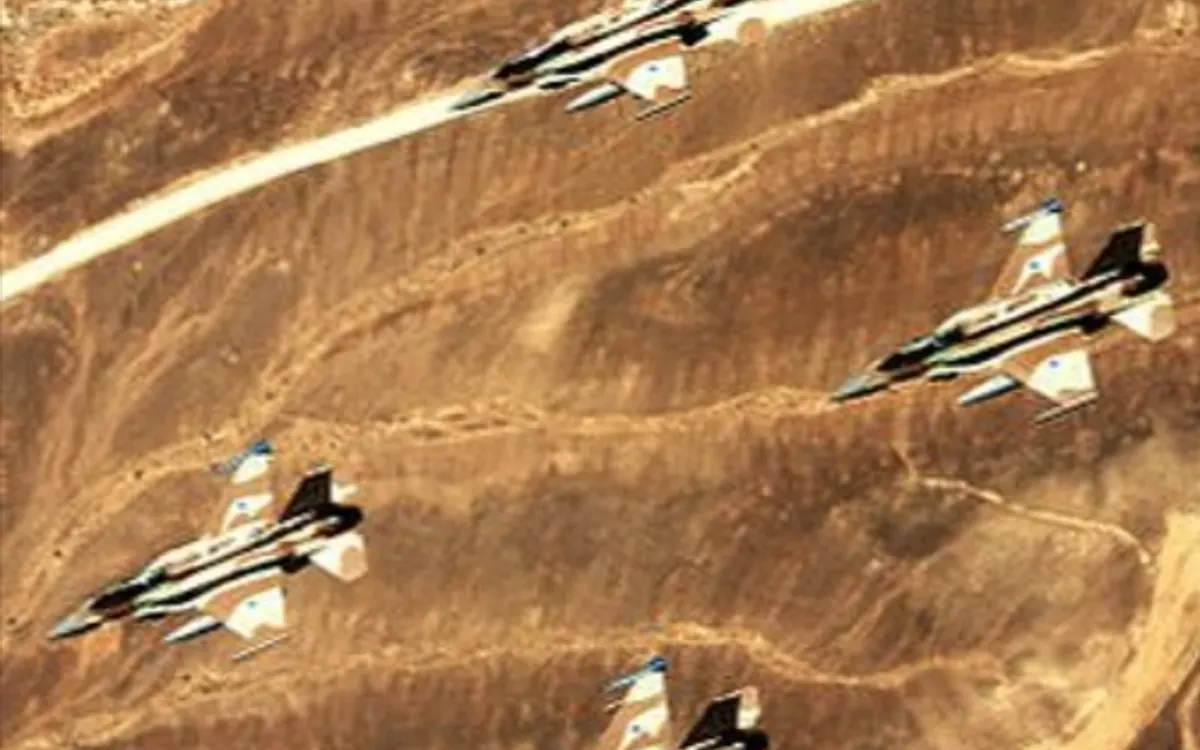
The spirit of Israel's heroes accompany us to battle, ran Air Force commander Moti Hod's orders on the morning of June 5 as he sent nearly two hundred planes aloft. Operation Moked was the culmination of more than five years of planning begun by Ezra Weizman, built on the knowledge that a hopelessly outnumbered Israel needed immediate air superiority and had to destroy the enemy on the ground, since a fighter jet is deadliest in the sky but defenseless on the tarmac. It required the world's first runway-destroying bomb, pilots drilled until turnaround dropped to eight minutes against the Egyptian eight hours, total surprise and radio silence skimming the wavetops, and intelligence down to when the pilots ate breakfast, which is why the strike came at the strange hour of 7:45. A Jordanian radar station at Ajlun saw the planes and broadcast the code word for war, grape, grape, grape, but the Egyptians had just changed their encoding frequencies and failed to tell the Jordanians, so it arrived as nonsense. Surprise was complete, a turkey shoot, and by 10:35 Hod could tell Rabin the Egyptian air force had ceased to exist, two hundred and four planes gone in the first wave for the loss of eight.
Moked was the beginning, not the end, and two motivations drive the coming phase. The first is survival, since Dayan, who felt a stone of agonizing weight roll off his heart, knew another victory might buy ten years but not peace, as he said in his eulogy for Roy Rothenberg that without the steel helmet and the gun we cannot plant a tree, and Israel was still the only non-island nation whose sole access was air or sea, nine miles wide at its narrowest. So the pragmatists sought selective expansion of the Golan, the hills of the Shomron and the Sinai buffer, as security or as a bargaining chip for peace. The second motivation is a sense of historic destiny, and for Am Yisrael destiny lies in Jerusalem. Fed by the fake news of Egyptian victory broadcast across the airwaves, King Hussein acted on Amr's false claim and shelled West Jerusalem, so despite Israel's appeal to stay out the Jordanian guns opened the second front, and when Begin heard of an imminent ceasefire he woke Eshkol at four to demand the cabinet decide the fate of Jerusalem, a gift of history future generations would never forgive them for refusing.
The battles around Jerusalem were some of the most brutal of the war, hand to hand in streets and trenches, and Dayan, who had wanted none of that Vatican, finally relented. Colonel Motta Gur's half-track crashed through the Lions Gate, and he declared the Temple Mount is in our hands, the voice of history claiming a return after two thousand years. Ezra Orni hung an Israeli flag over the Dome of the Rock, and for a mere four hours it flew, Rabbi Shlomo Goren sounding the shofar at the wall and reciting Shehecheyanu, this year in Jerusalem rebuilt. Then Dayan, watching through binoculars from Mount Scopus, radioed are you insane, do you want to set the Middle East on fire, and ordered the flag lowered, later entering the Al-Aqsa Mosque to assure the waqf and standing the army down off the mount, declaring the Temple Mount a historical site not to be interfered with, evicting Goren from the office he had begun to prepare. The national religious camp's later shift from dove to hawk is a response to these very events, a story that lies ahead.
Rav Mike ends on a Torah note, the Gemara in Sanhedrin that Hezekiah could have been the Messiah and Sennacherib the war of Gog and Magog, meaning the messianic process is not lockstep but always holds a possibility of success and a danger of failure, so certain generations have messianic potential. The Rambam taught that a king from the house of David versed in Torah who fights the wars of the Lord has the presumption of Messiah, chezkat Mashiach, and if he succeeds, builds the temple and gathers the dispersed, he is definitely the Messiah, since nothing proves like success. Put together with Shlomo Carlebach's Mashiach eyes, the ability to look at the world so as to bring forth its redemptive potential, this is how he understands redemption, which requires real-world politics and perhaps the wars of the Lord but above all a revolution of consciousness. Hezekiah fought the battles of the Lord and restored the Torah yet failed at hakarat hatov, recognizing the goodness done in the scope of the divine plan, and that might be the same failure of 1967, or it may not, since if the time was not right then leaving the flag would have brought destruction, and the real lesson is that redemption still lies in our hands.
Key ideas
- A nes is both a miracle and a flag lifted beyond the horizon, and the Maharal taught that miracle is a question of consciousness, not universal like nature.
- Operation Moked destroyed the Egyptian air force in hours, built on five years of planning, total surprise and a Jordanian warning lost in a frequency change.
- Two motivations drive the war, survival for the pragmatists who sought security or a bargaining chip, and a sense of historic destiny centered on Jerusalem.
- Fake news of Egyptian victory drew Jordan into shelling Jerusalem, opening the second front that put the old city in a Jewish government's hands.
- Motta Gur declared the Temple Mount is in our hands, but Dayan ordered the flag over the Dome lowered and stood the army down off the mount.
- Hezekiah could have been the Messiah yet failed at hakarat hatov, and that may or may not be the failure of 1967, but redemption still lies in our hands.
Chapters
- 0:00 The two meanings of nes
- 2:15 The Maharal; miracle as consciousness
- 4:23 A call to consciousness that unites
- 5:32 Moked; Hod's orders
- 6:41 Five years of planning; the runway bomb
- 10:00 The timing; Ajlun's warning lost
- 13:17 The turkey shoot; the air force gone
- 16:32 Survival; Dayan's stone lifted
- 19:46 Selective expansion; the Golan and Jordan
- 24:25 Fake news; destiny and Jerusalem
- 25:27 Begin; the gift of history
- 29:59 The brutal battles; none of that Vatican
- 32:16 The Temple Mount is in our hands
- 34:37 The flag raised; Goren at the wall
- 38:08 Dayan lowers the flag
- 39:14 Hezekiah who could have been the Messiah
Who, where and when
People
Moti Hod, Ezra Weizman, Yitzhak Rabin, Moshe Dayan, Motta Gur, Rav Shlomo Goren, King Hussein, Menachem Begin, The Maharal, The Rambam
Places
The Egyptian airfields and the Sinai, Jerusalem and the Temple Mount, The Dome of the Rock, The Golan and the Shomron
Texts
The Maharal's Gevurot Hashem, Sanhedrin 94a on Hezekiah, The Rambam on the Messiah
When
June 5 1967 CE: Operation Moked, June 5 1967 CE: Jordan shells Jerusalem, June 7 1967 CE: the old city taken, the hope of redemption
Read the transcript
Miracles, says C.S. Lewis, are retelling in small letters of the very same story which is written across the whole world in letters too large for some of us to see. Well, not only am I trying to see those letters, I'd like to know a little bit of what they say, because I'm Rav Mike Foyer, and this is The Jewish Story. Episode 31, Six-Day War Part 5, Something Miraculous. If I asked you to list the three biggest miracles in Jewish history, what would you say? Splitting the Red Sea, Plague of the Firstborn, the Mana, Sinai? Maybe you'd get a little more subtle and offer me the Hanukkah lights, Esther's rise to her place in the palace. But how many people listening right now would mention Operation Moked?
The critical turning point in the battles of the Six-Day War that we're going to speak about in a bit of detail in just a moment. I'm not simply throwing it out there in order to set the stage for what's to come. I'm giving it as an opportunity to contemplate what exactly a miracle might be. You know, the word for miracle in Hebrew is nes, and it has more than one meaning. Classically, like I said, if you ask a person what's a miracle, they'll start listing off the sort of cataclysmic events of the biblical narrative. They might also start talking about what we call the hidden miracles or the more subtle expressions of God's hand in their own lives. But I think the deeper meaning of miracle comes out when we look at its other definition in the Hebrew language.
And nes isn't just a miracle. It's also a flagpole or a sign. It's something which is lifted up beyond the horizon in which we normally dwell. I mean, after all, in the battle, or frankly, in the American national anthem, what is a flag on the battlefield other than a reminder of that which you are fighting for, which lies above the plane of struggle? It's an indication that there's a broader horizon within which the events of our lives are taking place. You know, the Maharal, great mystic sage of the late 16th and early 17th century, he teaches that there are actually two ways in which God runs the world. He calls them derech ha-teva and derech ha-nes, the way of nature, the physics that we're all familiar with, even though he lived in a world of physics, which was somewhat different than ours.
You know, but the world, as we say, kimin ha-go no-heg, functioning as we indeed expect it to, whether it's the laws of gravity, sociology, or anthropology. But then, says the Maharal, there's derhanes, the miraculous path. And yet, the Maharal makes a fascinating, fascinating assertion. You can look it up in his second introduction to his work, Gvurot Hashem, the sort of mighty acts of God. It's his sort of prolonged analysis of the events of the Exodus, along with his commentary on the Haggadah. But there in that second introduction, when he's talking about the challenges which the modern science of astronomy poses to the simple reading of the book of Joshua, when Joshua, of course, makes the sun and the moon stand still, he goes into a discussion of the relationship between this der ha-teva and der ha-nes, between the natural and the miraculous.
And with one hand dismisses the atheists, the other hand he dismisses the Christian scholars, then just points out, God can do anything, so why are we even having this discussion? But finally, he offers us a frame, which I think is quite important for the story we're about to tell. Because the Maral says, yeah, well, when Joshua made the sun stand still, and the astronomers say, that doesn't happen. Like, the whole world would spin out of control, etc. Furthermore, every single human being would have noticed if the sun stood still, because there's only one sun. The Maral says, no, that's not how it works. See, dercha teva is universal. Nature is nature wherever you may be. But der chanes, the miraculous guidance that the world receives, is a question of consciousness.
And the way the Maral puts it is that only those who are within the ofek, who are within the horizon of Yahushua and Am Yisrael, for whom that miracle was a critical expression of God's will unfolding in their historical journey, only they, those within that horizon, even experience the miracle at all. And for everyone else, der chateva, k'min hago, no heg. The world continues as it always must be. And I want you to keep this frame in mind as we go forward in this story, because the question of what role the miraculous plays in the war of 1967, we'll touch it today, but it's going to follow us for quite a bit of time to come, because it's going to play a significant role in the motivations of the actors who attempt to actualize what they feel to be the essential message of the victory of 1967.
And for me, what's important is that whatever we may think that message may be, it's a call to consciousness. And consciousness should unite rather than divide. I'm looking like the Maharal to bring as many people into the horizon of this story as possible. And so, as we go forward, I just want you to remember there's two ways in which you can understand. The way of the world and the way of a sign that lifts us up to a broader horizon and sends us a message about what exactly the events we're about to discuss might mean. The spirit of Israel's heroes accompany us to battle. The Mehoshua bin Nun, King David, the Maccabees, and the fighters of 48 and 56, we shall draw the strength and courage to strike the Egyptians who threaten our safety, our independence, and our future.
Fly, soar at the enemy, destroy him and scatter him throughout the desert so that Israel may live secure in its lands for generations. I know it sounds downright biblical, but these were actually the orders issued by Air Force Commander Moti Hod on the morning of June 5, 1967, as he sent nearly 200 planes aloft. Hod's an interesting character unto himself, the Israeli's Israeli. He was both father and child of the Israeli Air Force. He helped to fly Israel's first spitfires over from Czechoslovakia in 1948, thus giving birth to the IAF, and he completed his flight school training in Israel in 1949, which meant that when he took the post of commander in 1966, it made him the first commander of the Israeli Air Force to have actually earned his wings in an IAF course.
Now, Operation Mokade, as his attack plan was known, was the culmination of more than five years of planning. Its initial phases had been sketched out by Ezer Weizman, future seventh president of the state, while he himself had the role of Air Force commander before Hode. And they had worked together on it until one year ago, when Weizman moved on and up to the role of chief operations for the entire IDF, and Hode took over the Air Force. Hode had spent the better part of that year perfecting Mokade, and this day was about to prove whether it was an operation planning at its finest or the wildest Hail Mary pass ever thrown in the history of warfare. Ezra and Hode had known for years that in order to win any war, particularly the multi-front conflict which they saw coming on the horizon, Israel needed to gain immediate air superiority.
It's, by the way, one of the two pillars of Israeli military doctrine to this day. And since they also knew that they were hopelessly outnumbered, just the Egyptian air force alone had nearly 500 combat aircrafts, the only hope was to destroy the enemy on the ground. As Hode was fond of saying, a fighter jet is the deadliest weapon in existence in the sky, but on the ground, it's utterly defenseless. And in order to achieve that, it would require every fighter and bomber in the IAF to be aloft more or less at the same time. An incredible logistical feat in and of itself, but that wasn't enough. The first wave would actually have to destroy the Egyptian runways in order to prevent any counterattack.
And that was something which had never been done. But, you know, they say necessity is the mother of invention. And so the result of this need was the world's first runway-destroying bomb. It had a parachute to slow it after release in order to gain optimum penetration angle and a time-delayed rocket which then fired and drove the bomb straight down and through the runway where it left a five-meter-wide hole. But Hode knew that even this wasn't enough. because Egypt was only the first target. His pilots also had to be ready to defend Israel's skies and potentially take on the Jordanian and Syrian air forces as well. And so he concentrated on his human potential, always the backbone of Israel's power.
Training for better part of a year, he built mock Egyptian air force bases in the desert and he drilled his flight crews until the turnaround time for refueling and rearming a jet dropped to eight minutes. Just for comparison, the Egyptians was around eight hours. Finally, last but not least, there's always the question of intelligence and security. Internally, the planners knew that the mission had to be a complete surprise in order to succeed. Only a few top ministers even knew about Mokad. Even the general staff of the IDF received nothing more than a one-page briefing paper on the day of the attack. In after takeoff, the pilots were instructed to approach Egypt just above the wavetops in order to avoid radar detection and to maintain total radial silence.
Even a mechanical failure was going to require them to eject and dive into the sea rather than calling back to base. Now, on the external front, the planners needed to know everything they could about the Egyptian Air Force. Fortunately, Weissman had begun working on that well back in the early 60s, first with the help of Wolfgang Lotz, a German-born Israeli spy, who had gained critical intelligence on the entire Egyptian military by posing as a former SS officer. Add to this electronic intelligence and other high-placed sources so that by the time Moked was launched, Moti Hode basically knew how many planes, where they were, the pilots' training routines. He even knew what the pilots liked to eat for breakfast.
Okay, that might be an exaggeration, but he did know when they ate. And that's why the first strike was planned for the strange time of 7.45 a.m. Now, traditionally, one would think that dawn was the optimal time for an attack when the element of surprise was such a critical factor. But Hode knew, actually, that the entire Egyptian army was on its highest alert at first light, and that this level of readiness would expire at 7 a.m. each morning when breakfast was served, and then routine operational activities began at 8. With that in mind, he estimated that at around 7.45, most commanders would be en route to the bases and the pilots in their quarters making their last preparations for the day. Hote also knew, having flown over the Sinai himself many times, that early moanings over the peninsula are usually kind of misty, which meant reduced visibility, and he couldn't afford for his pilots to miss a shot.
On the other hand, by 7.45, the fog would have burned off, leaving targets clearly visible from the air. So the planes rose and as the minutes after launch ticked by he reviewed obsessively the details of the plan in his mind Never had it seemed to him more hopeless Dozens of squadrons were launching from different bases in Israel meant to rendezvous over 11 different Egyptian air bases, all while maintaining complete radio silence. The only communication was with hand signals from cockpit to cockpit. But while this was going on, Hode pushed the most terrifying thought out of his mind, that this was truly an all-out gamble. There were only a handful, perhaps maybe a dozen, fighter planes that had remained behind in order to protect Israel's city.
Should the raid be detected en route, the country was all but defenseless. And little did he know, they'd actually already been seen. One of the most powerful radar facilities in the Middle East was at Ajlun in Jordan. And at 7.15 a.m., as the first squadrons left Israel, the operators saw a massive concentration of aircraft lifting off from all over the country and setting out to sea. To them, it could mean only one thing. The duty officer leapt to his radio and blasted a one-word message over and over to his commanders in Amman. Inab, inab, inab, grape, grape, grape. It was the code word for war. Amman instantly relayed the message to Defense Minister Shas Badran in Cairo. Inab, inab, inab. But that's where the message died.
Because as they say, man plans and God laughs. Just the day before, the Egyptians had changed their encoding frequencies and, when doing so, had failed to update the Jordanians. And so, what came through was not the signal for war. It was simply an indecipherable nonsense. The radar operators at Ajlun watched those blips on their screen turn toward the sign, frantically broadcasting the warning, but lost in translation. By 7.30, the first targets had come into view, and what followed was, as the American ambassador told his superiors, a turkey shoot. Surprise was complete, and the devastation nearly total. The Egyptians were so unaware of the coming danger that their planes were parked on the runways without so much as a sandbag for protection.
The first wave of Israeli jets swooped up to 9,000 feet to begin their bombing run, and every radar in Egypt suddenly went berserk. Pilots scrambled out on the tarmac toward their planes. Few made it. Those who were able to fight back did so with pistols against fighter planes. First went the runways, as those Durandal bombs pockmarked them with craters. Some were set with delayed fuses, which were meant to prevent any repairs. Then came the long-range bombers, which, if one even got off the ground, could threaten Israel's cities. Fortunately, none did. After that, the first waves strapped every fighter they could, unloaded the last of their munitions on every missile, radar, and support structure in sight before returning to base.
It would be a 20-minute return flight, 8-minute refueling, and a 10-minute rest for the pilots before they took off again. But meanwhile, the second wave was immediately on their heels, already engaging targets across the Sinai. By 8 a.m., the first planes had returned to Israel, and Moti Hod and Ezra Weizem began to receive the reports. As they pieced together the information, everyone present was stunned. Six airfields completely destroyed, communications across the Sinai severed, 204 planes, nearly half of Egypt's air force annihilated in the first wave alone. And even more amazing was the minimal losses of Israeli pilots, eight planes and five pilots, which once again might be attributed to the finger of God.
But radar operators in Israel had noted two large transport planes in the air above the Sinai. They were afraid that these planes themselves might detect the raid. But they couldn't possibly know that on those planes were most of the Egyptian army's commanders, including Field Marshal Amr himself. Now Amr, ever suspicious of plots on his life, and none too confident, frankly, in the abilities of his men, had issued a no-fire order for all of Egypt's 100 anti-aircraft batteries and its 27 SAM missile sites. And that meant that not one shot was fired at the Israeli jets as they streaked over the Sané on their initial approach. The devastation continued for three hours, until finally at 10.35 a.m., Moti Hod could turn to the Chief of Staff Yitzhak Rabin and announce, the Egyptian Air Force has ceased to exist.
Operation Mokad was, of course, the beginning of the war, not its end. But the fact that Egypt's air force was eliminated in the first few hours, to be followed quickly by the crippling of both Syria and Jordan's fighters, certainly set the mold for what was to come. And our question is, what exactly was that? If you've been listening to the Jewish story for a while, you've heard me say any number of times that I am not a military historian. So if you want the details of the battles in the Sinai or how the Golan Plateau was taken, you're going to have to seek them elsewhere. I would highly encourage, as I've said before, Michael Oren's excellent book, Six Days of War. What I'm trying to do is to understand what do these events all mean?
How are they a product of the moment of the past? How do they channel forces in the present and where are they taking us in the future? Not to mention my own personal desire to catch at least a glimpse of the higher will peeking through these moments in history. So when we try and understand the coming phase of the war, as opposed to detail its events, there are two primary motivations that I want to keep squarely in the center of our focus. The first is survival. When Defense Minister Moshe Dayan heard the reports of Operation Mokade's fantastic success, he declared a stone, just one, but of agonizing weight, rolled off my heart. Now, if the IDF was on its way to smashing the Egyptians in the Sinai, to an extent which the Jews hadn't seen since the crossing of the Red Sea, what were the other stones weighing him down?
The answer is simple. Remember, Dayan was born in 1915 on Kibbutz de Ganya. He was its second-born native son. And since he could hold a gun, he'd fought in every war, battle, and border skirmish from before, during, and after the establishment of the state. So no one knew better than Dayan that another victory might buy 10 years of calm, but by itself, smashing the Egyptian army would not bring peace or regional acceptance. As he said in his famous 1966 eulogy for Roy Rothenberg, a security guard murdered outside of the Gaza Strip, how did we shut our eyes and refuse to look squarely at our fate and see in all its brutality the fate of our generation. Let us take stock today with ourselves. We are a generation of settlement, and without the steel helmet and the gun's muzzle, we will not be able to plant a tree or build a house.
That is the fate of our generation. This is our choice, to be ready and armed, tough and hard, or else the sword shall fall from our hands, and our lives will be cut short. And the truth be told, the situation of the state of Israel had not changed all that much in the ensuing 10 years since he gave that speech. She was still surrounded by hostile neighbors, far better armed, in fact, than they did in 1956, due to the Cold War-inspired backing of the Soviet Union, as we've discussed. She still had no natural borders and no strategic depth. The bulk of her population was concentrated along the coastal plain, that fertile strip nine miles wide at its narrowest point, dominated by the hills of the Shomron.
At this point, just to drive it home, Israel was the only non-island nation in the world whose sole means of access was air or sea. That's what it means to be surrounded. To Dayan and the other pragmatists on the cabinet, survival in the region meant more than beating the Egyptians, unless they wanted to do it every few years. Now, the war had begun with highly limited objectives, but once the shots began to fly, who knew where it would end? Ideally, the Golan Heights, from which the Syrians launched frequent attacks, must be secured. The hills of the Shomron to the east of the coastal plain, which practically invited an armored thrust to cut the country in two, should also really change hands. And clearly, only possession of the Gaza Strip and the Sinai Peninsula would provide the much-needed buffer between Egypt and Israel.
Now, such a selective expansion, as we'll call it, could provide the security which they sought, either as an immediate tactical benefit or in strategic terms as a political bargaining chip. It could be the price which Israel would pay for peace and finally regional acceptance. So you might say, but what about the Arab governments in question? I mean, aren't we talking about just taking territory? Well, first of all, Egypt could fairly be said to have gambled and lost when it came to Gaza and the Sinai. The Syrians? Decades of shelling and cross-border raids left no sympathy amongst the Israeli government for their territorial integrity. Now, as of yet, just to let you know, the Syrians had stopped just short of joining into the conflict, sufficing themselves with massing their troops near the border and making bloodthirsty declarations about destroying Tel Aviv.
This combination of militant pronouncements and practical inaction had quickly given rise to the joke that the Syrians are willing to fight to the last Egyptian. and it's true that with the outbreak of war in the Sinai the shelling of the Golan will start once again the desperate pleas of the residents of those northern settlements who were the country's largest lobbying group are not going to fall on deaf ears in the critical days to come Prime Minister Eshkol himself was a former farmer from up there in the Galilee and his lifelong devotion to the national water carrier gave him a particular longing for the headwaters of the Jordan which right now lie in Syrian territory Labor Minister Yigal Allon, head of the Ahdut Avodah faction within the governing alignment, and an old-time secular advocate of the vision of a greater Israel, had sworn to the residents of the north that the war would not end with Syria's guns still trained on them.
But, for now, Defense Minister Moshe Dayan held them in check. He sought to keep the army focused on the limited objectives which it had set from the beginning, and to minimize the cross-currents of international politics, which might cause them to be frozen by a ceasefire before they could actually achieve those objectives. Remember, the Syrians are a true Soviet client state at this point. But he knew their time would come. The other government that needs to be considered is, of course, Jordan. I'm not right now going to go deep on the fact that Jordan only became Jordan when it seized the hills of Udan Shomron, as well as the old city of Jerusalem through outright conquest when it expanded across the river in the year of 1948.
If we're going to say that all is fair in love and war, then that's got to be true of both sides. Practically speaking, though, Prime Minister Ashgol and his cabinet wanted Jordan to stay out of the war. So much so that they actually sent a personal appeal to King Hussein to that effect through multiple paths. By the way, that appeal was sent over the protests of Defense Minister Dayan who asked quite pointedly in the meeting doesn Hussein know he not supposed to attack us One such message was actually delivered to UN Representative General Ad Bull I just love saying his name by Foreign Ministry Rep. Arthur Lurie only a few hours after Operation Mokade was launched. And it read, at 8.10, Egyptian planes were spotted crossing into our airspace, and our planes and armor have commenced action against them.
The Foreign Minister asked that Ad Bull urgently convey to King Hussein that Israel will not, repeat, will not attack Jordan if Jordan maintains the quiet. But if Jordan opens hostilities, Israel will respond with all of its might. Bull was far from pleased to be delivering what he saw as a thinly veiled threat. He also took some exception to the claim that Egypt had begun the hostilities of Sinai. It didn't exactly match his read, but he was a professional and the message was indeed delivered. But it was too late. Now, partially the reason it was too late is fake news. I know it's a popular term today, but disinformation is hardly new to human history, and it played a major role in how the Six-Day War unfolded.
As Israel was smashing every airfield in the Sinai, the Egyptian airwaves were filled with government pronouncements of their victory. Field Marshal Amr himself sent a message to the Jordanian command announcing that in spite of the initial surprise, the Egyptian air force had destroyed 75% of Israel's air power, and that even now, the army was amounting its offensive. And as if to substantiate those claims, Jordan's Ajlun radar station showed hundreds of aircrafts approaching Israel from the Sinai, which of course were actually the returning first wave of Israeli jets, but they had no way of knowing that. The level of self-deception was almost complete. Cairo Radio was declaring that, quote, our airplanes and our missiles are at this moment shelling all Israel's towns and villages.
and they were calling on every Arab to avenge the dignity lost in 1948, to advance across the armistice line to the den of the gang itself, to Tel Aviv. But this fake news, and Jordan's ultimate willingness to act on it, brought into play the other motivation that we have to keep in our focus if we're going to understand how the world played out, and that is a scent of historic destiny. And for Am Yisrael, destiny lies not in the den of the gang itself in Tel Aviv, but rather in Jerusalem. Gentlemen, the Jordanian army is all but smashed, and our own army is at the city's gates. Our soldiers are almost in sight of the Western Wall. How can we tell them not to reach it? We have in our hands a gift of history.
future generations will never forgive us if we do not seize it. These were the words of Menachem Begin as he spoke to an emergency meeting of the Israeli cabinet late on June 5th, hours after the success of Operation Mokad. Now, Begin was a man who understood the gifts and the demands of history, including the very fact that he was there at all, huddled together with the other cabinet ministers in a storage room in the basement of the Knesset. What but the hand of God in history could have propelled him from Holocaust escapee to reviled underground fighter to perpetual opposition leader right to pillar of a unity government? Now, one may doubt whether it was the hand of God that placed Begin in the cabinet at this historic moment when the question of reuniting Jerusalem arose.
But there's no question as to why such a critical discussion was taking place in a broom closet. That's because Jordanian shells had begun raining down on West Jerusalem at around 9, 9.30 that morning, just before King Hussein declared on Radio Amman that Jordan had been attacked and that, quote, the hour of revenge had come. At first, General Uzi Narquis, IDF commander in the central region, hoped that Jordan would satisfy itself with a symbolic show of support for Egypt, firing off a few shells and making proclamations like the Syrians, but essentially honoring the status quo. Furthermore, he was under strict orders from Defense Minister Dayan to avoid any provocation, so much so that in some border areas, he told his soldiers to remove the clips from their rifles, lest the misfire set off another front in the war.
Nonetheless, Narquis had fought with the Harrell Brigade in 1948, and its failed attempt to seize the old city was an enduring memory, I would even say a motivation, as it was for every soldier who survived that failed attempt. He later wrote in his memoirs, Despite this restraint and the diplomatic attempts to hold off King Hussein, the Jordanian shelling intensified as the day drew on. The suburbs of Tel Aviv were subjected to a two-hour barrage, and just before noon, the remains of Jordan's air force, 16 American-made hunter-hawkers, struck Netanyahu, Kfar Sirkin, and Kfar Saba. The actual destruction was limited, but the psychological and political impact of these attacks was immense. Syria, seeing what was happening, launched its own air offensive in the north, and General Narkees, while continuing to restrain his own troops, now was engaged in exchanges of fire from the old city.
Surveying the extent of the attack the Soviet ambassador to Jordan told his American counterpart in Amman, our estimate is that if the Israelis do not receive arms we think the Arabs will win the war if they are allowed to fight to the finish. In the coming hours 6,000 shells rained down on Jewish Jerusalem and the Jordanian Legion was ordered to advance on Ammon HaNatsiv the government ridge which dominated the old city. This, combined with those sorties over Netanya were enough to change Dayan's stance on avoiding a second front not to mention the fact that the Sinai War was going smashingly pun intended. Just before noon, he finally relented in the face of Ezer Weizman's insistence, and the Israeli Air Force was once again unleashed.
Within an hour, Jordan had the answer to its shelling, as the remnants of its air force met the same fate as Egypt's, as did their 40th armored brigade, devastated from the airs as the fighters looped back over Beit Lechem, Hevron, and Yericho. Even in the midst of the escalation, though, General Ad-Bul made an attempt to broker a ceasefire, and it was an attempt which was accepted by the Israelis. But though he informed Jordan of the elimination of the Egyptian air force, contrary to the announcements which were made, Hussein was in no mood for compromise. We are today living the holiest hours of our lives, declared Prime Minister Juma on his radio address. We are fighting the war of heroism and honor against our common enemy.
We have waited years for this battle to erase the stain of the past. Loudspeakers from the top of the Dome of the Rock blasted out a much more straightforward message. Take up your weapons and take back your countries stolen by the Jews. The rest, as they say, is history. The battles around Jerusalem continued for another two days. It was some of the most brutal fighting of the war. Unlike the tank clashes and aerial battles over the Sinai, most of Jerusalem was taken through hand-to-hand combat in streets, bunkers, and trenches. As the IDF encircled the old city, international diplomacy began to swirl once again in the region. That's its own storm, and we'll discuss it, I think, in the next episode.
I only mention it now, because by the afternoon of June 6, King Hussein had realized the folly of his military approach, and was attempting his own route to a ceasefire. But at this point, Moshe Dayan was having nothing of it. He ordered the IDF to take all the high ground in Yudan Shomrom, the so-called West Bank, as well as to descend to Jericho and seize the Jordan River crossings. Only as they surrounded Jerusalem did he hesitate, saying, I want none of that Vatican. It's a statement that reveals much in its double meaning. The secular kibbutznik Dayan felt no pull of destiny toward the Temple Mount. On the contrary, he dismissed it as a Vatican, an irrelevant religious relic. Furthermore, Dayan also feared the reaction of the international Christian community, who he felt were not going to tolerate Jewish control of their holy sites, and if any of their holy sites were damaged in the fierce house-to-house fighting, which was certain to ensue with any conquest of the Old City, they would be enraged.
Now, he wasn't alone in that stance. In fact, his biggest supporter was actually Chaim Moshe Shapira of the National Religious Party, who resisted to the very end the notion of conquering the Old City. It may sound strange in light of the hawkish stance that the national religious world takes today. And that shift in the camp of the national religious world from dove to hawk is a story which also lies ahead and in many ways is a response to the events we're speaking of now. But it will come. It will come. So in the end, it was once again Menachem Begin who forced the issue. When he heard that the BBC was reporting rumors of an imminent UN Security Council ceasefire, one which was supported by both the Americans and the Soviets, which means it might have actually happened, he called Prime Minister Eshkol at 4 a.m., waking him up, and demanded an emergency cabinet meeting to decide the fate of Jerusalem once and for all.
And so the Israeli government gathered at 7 a.m. on June 7. By this time, the picture of the war was becoming clear, and to many, it was nothing short of miraculous. The Egyptian army was collapsing in the Sinai. Gaza was all but conquered. Most of the hills of Yehuda and Shomron had been taking, including those north and south of the old city. Even Latrun, that fortress which dominated the Jerusalem Tel Aviv Road, where the IDF had met a series of humiliating and painful defeats in 1948, was in Israeli hands. The issue of the Syrian front and taking the Golan's was becoming pressing, but for now, the only real question on the table was the old city of Jerusalem. Earlier that morning, before they met, Eshkol had sent one last appeal to King Hussein.
If you agree to peace talks, we won't invade. But he received no response. And so, at long last, after nearly 2,000 years of waiting, the question of Jerusalem was in the hands of a Jewish government. And the answer was, yes, send in the paratroopers. That was the famous recording of Colonel Muttagur, commander of the paratroopers who conquered the old city when he declared the Temple Mount is in our hands. Listen to it closely. This is way more than a report on developments from the battlefield to his commanders. It's the voice of history. He's stating a claim to having returned to the source after 2,000 years. Fugur and his man, the route to the Mount had been anything but simple or straightforward.
After all, Paratrooper Brigade 55 were an elite, highly trained, but unfortunately prepared for the wrong war. No one had expected the fighting in the Sinai to progress so smoothly, or for a second front to open up so fast. These men were actually trained for the conquest of El Arish, which is a heavily fortified town on the Sinai coast As their intelligence officer Arik Ahman later said I knew every Egyptian position there I knew next to nothing about Jerusalem And he of course was the intelligence officer. Nonetheless, despite the real challenges and the terrible fighting, it was Mata Gour's half-track which crashed through the massive bronze doors of the Lions Gate onto the Via Dolorosa, veering left almost immediately onto the Temple Mount.
Gour and Achman jumped from the vehicle and rushed up a flight of stairs leading to the golden dome of the rock. That's where he made that famous announcement, declaring to the world the focus of longing, the place toward which we prayed for thousands of years, is now at last in our hands. The brigade's chief communications officer, Ezra Orny, pulled an Israeli flag from his pouch and asked permission to hang it over the dome. Gour's response was classic Israeli. Yallah, was all said, accompanied by Achman, Ornick climbed to the top of the building and fastened the flag to a pole ironically topped with the Islamic crescent. And for a brief historic moment, a mere four hours, there it flew. Now down below, the paratroopers were clearing the rest of the old city, and of course taking that iconic picture by the western wall.
Ugh, the irony. I mean, after all, it's a wall. Of course, it's a retaining wall. the remnant of the structure upon which the holy temple was built. And as such, it's been sanctified by the prayers and tears of generation, and it's deserving of veneration. But we didn't pray 2,000 years for a wall. We prayed for a bite, for a home. Or, as Matagor put it, why go down to the wall? There it's crowded, closed in and low. Here it's unobstructed and elevated. I feel good being with King David and Judah Maccabee. Chief Rabbi of the army, Shlomo Goran, someone who will hear about more in coming episodes, knew what Gor was speaking about better than anyone. But in addition to being a fervent believer in the imminent redemption, he was also a true spiritual shepherd to his soldiers, and so he addressed them around the wall down below.
I am speaking to you from the plaza of the Western Wall, the remnant of our holy temple. Comfort my people, comfort them, says the Lord. This is the day we have hoped for. Let us rejoice and be glad in his salvation. The vision of all generation is being realized before our eyes. The city of God, the site of the temple, the temple mount on the Western Wall, the symbol of the nation's redemption has been redeemed today by you, heroes of the Israel Defense Forces. By doing so, you fulfill the oath of generations. If I forget the old Jerusalem, may my right hand forget its cunning. Indeed, we have not forgotten you, Jerusalem, our holy city, our glory. In the name of the entire Jewish people in Israel and Diaspora, I recite with supreme joy, Blessed are you, O Lord, our God, King of the Yerush, who has kept us in life, preserved us, enabled us to reach this day.
This year, he declared, in Jerusalem, rebuilt. Chequeyano! Chequeyano! Chequeyano! Las Paname! And for those four hours, it seemed it might indeed be so. That is, until the flag was spotted by Defense Minister Moshe Dayan. He was watching the battle unfold from his observation post on Mount Scopus, and when he saw the Star of David rise above the Dome of the Rock through his binoculars, he radioed Gurd and demanded, Are you insane? Do you want to set the entire Middle East on fire? And commanded him to lower the flag. Only a week later, the Defense Minister would enter the Al-Aqsa Mosque, also on the Temple Mount, remove his shoes and announce to the Muslim waft, the religious authorities, that Israel had not come to take away their shrine.
He had already ordered the IDF to stand down off the mount, and he had evicted Rabgorin from an office which he had begun to prepare on the edge of the plaza, declaring we must view the Temple Mount as a historical site, a relic of the past, and not interfere with the Arabs treating it as they do now as a Muslim place of worship. Now, there's more of the war ahead of us, and even more analysis to be done. My sense is that the bulk is going to belong to season four, but I do feel the need to touch on Dayan's decision. The political, cultural whys and wherefores, I think, belong to that analysis, and I'll leave for another time. History does have wisdom and lessons to offer here. But I want to end on a Torah note.
Our sages say in the Gemara and Sanhedrin, 94a, if you want to look it up, that King Hezekiah could have been the Messiah, and that Sen-Harev, his enemy from Assyria, could have been the war of Gog and Magog. Now, before we get to why he wasn't, just sit with that idea, could have been the Messiah for a moment. It means that the Messianic process is not lockstep, that there's always a possibility for success, and of course, conversely, a danger of failure. Now, I know it's a bit of a stretch to say that you too could be the Messiah, except if I say it in sort of poetic or the moral responsibility sense. But is it a stretch to say that certain generations have a messianic potential? That the leaders who recognize that, who make their decisions accordingly, are those who merit to push our story forward and maybe even bring it to its climax?
The answer, of course, is yes. And lest you think I'm taking a radical stance, I can cite as my source none other than the Rambam himself, who when he discusses the failure of Bar Kokhba's messianic revolt against Rome back in the second century, you can look up season one, episode 11 if you want, has the following to say. Now if a king should arise from the house of David who is versed in Torah and engages in commandments, and he enjoins all of Israel to follow in his ways and encourages them to repair its breaches, he fights the wars of the Lord that he may presume to be the Messiah. He has Chazkat HaMashiach, says the Rambam. And if he succeeds in his efforts, defeats the enemies around him, builds the temple in its proper place, gathers the dispersed of Israel, he's definitely the Messiah.
Now, this idea of Chazkat, Mashiach, that you could have the presumption of Messiah, together with the notion that nothing proves like success, I think has an important message for our discussion. Now, there is another angle on the Rambam. For those who might find the literalist approach to messianic redemption just a bit too medieval for their taste, Rabbi Shlomo Kalebach used to speak about having Mashiach eyes, about the ability to look at people, at the world, in such a way that you bring forth their potential, their redemptive potential. And if you put the two together, Rabbi Shlomo's Mashiach eyes, and the Rambam's Hezkat Mashiach, the presumption of Messiah, you'll get how I understand redemption.
The world without question needs to be reordered. Read the news. Look around. Israel needs to get on mission. Justice has to be done in every corner of the globe. And we need to let go of our obsession with consumption in order to apply humanity's considerable talents toward the true well-being of all life. That's going to take real-world politics. It might even involve the wars of the Lord, as the Rambam says. but it will certainly necessitate a revolution of consciousness, a shift in how we look at the world, at our fellow human beings, at the events of history, how we conceptualize God and seek the divine presence, trying to infuse it into our actions, and so much more. Without that shift in consciousness, action in the political world will remain what it's always been, a game of power.
It may produce a bit more justice for a few more people. It may ameliorate the damage our wasteful culture has done, but it will never set the potential of this planet free. So, why did Hezekiah fail to be the Mashiach? Well, the Gemara says the Holy One, Blessed Be, sought to designate Hezekiah as Messiah, and Tencherev as Gog and Magog. But the attribute of justice said before the Holy One, master of the universe, when it came to David, king of Israel, who recited endless songs and praises before you, you didn't make him the Messiah? Then, for Hezekiah, for whom he performed all these miracles and never recited praise before you, are you going to make him the Messiah? Hezekiah certainly fought the battles of the Lord.
And if you read both the text and the rabbinic narrative, he returned the crown of Torah to its glory, raising up the temple service to its proper place. But he failed when it came to Akarat HaTov, to recognizing the goodness which had been done, not just to himself, and not even just to his generation, but the goodness which he witnessed in the scope of the divine plan, he fell short. And that might be the same failure we witnessed in 1967. And yet, it may not. Now, I could tell you a tale, and it's out there, that sees the lowering of the flag from the Dome of the Rock as the first step in a retreat, a retreat which has continued basically unabated for more than 50 years, bringing in its wake bloodshed and shame.
But I can also spin you a story in which the time wasn't right. Because as our sages say, blasted be the bones of those who'd forced the end. If the time isn't right, then to leave that flag on top would have indeed brought destruction and not redemption. And of course, bottom line, no matter which narrative you find most compelling, the tale is clearly far from over the real lesson of Hezekiah's failure to be the Messiah and perhaps of Moshe'an's decision if you should call it that is that redemption still lies in our hands and I'm pretty sure that's a story we can all get behind I just want to thank a few folks I want to thank all the folks who give their hard-earned money to help make this show possible to keep it free and widely distributed and I want to invite you to join them Go right now to my website, jewishstory.co.
Upper right-hand corner, you'll see a little button there that says, Be a patron. You can click on that to make a little bit of per-podcast support. Or you can be in touch with me at ravmikefoyer at gmail.com, or you can message me on Facebook at ravmikefoyer, and I'm happy to share with you the details of how you can dedicate a show in honor of someone living today or in memory of those who've passed. I also want to thank the Land of Israel Network. That's thelandofisrael.com for creating a platform that allows me to reach so many amazing people. I want to thank the Pardes Institute, P-A-R-D-E-S dot org dot I-L, for building an educational institution that gives me the privilege of teaching so many wonderful Jews.
And I want to thank you for listening. I'm Rav Mike Foyer, and this is The Jewish Story.
More from Season 3
TJS S3 Interlude - George Floyd and the burden of history
I can't watch what is happening in silence, but nor am I willing to simply be a cheerleader for chaos. Here are some thoughts on structural violence and...
Play Episode
TJS S3E30 Six-Day War IV The waiting
Going into battle may take bravery, but waiting demands a certain type of courage as well. This episode lays out the final steps of the build up to...
Play Episode
TJS S3E32 Six-Day War part VI The power of determination
There are certain qualities which, when they manifest, define one's story -determination is one of them. Here is the story of the conquest of the Golan and the...
Play Episode