
TJS S4 Interlude R' Yitz Greenberg and the God of History

How we chew and swallow what history shoves down our throat can define us as individuals and nations. Here is an interview with R' Yitz Greenberg, foundational thinker on post-Holocaust theology. In it we explore how American Jewry began to process the memory of the Holocaust, the impact of the SIx Day War on their identity, and if one can see the God of History in the post-modern era. If you want to explore more of R' Yitz's thoughts, check out - rabbiirvinggreenberg.com/
About this episode
Rav Mike sits, virtually, with Rabbi Yitz Greenberg, an influential theologian of the Holocaust as a turning point and of Israel as the Jewish assumption of power, catching him in lockdown in Jerusalem. He opens by asking how support of Israel and the Holocaust became the twin pillars of American Jewish identity. Greenberg agrees with the description, then sets it in a broader frame. The Jewish people have had a disproportionate impact on world history, and the obvious core teaching is one God, the creator of a world that is itself a creation. More impactful still, he argues, is the teaching that this God is deeply involved with creation and loves it, wanting it perfected, and so recruits human beings into a partnership, the covenant, to repair the world and overcome the enemies of life. That vision, from ancient times toward the messianic age, is the narrative he wants recovered.
Judaism, Greenberg says, is the religion of life, which teaches that every act of eating, breathing, speaking, and loving is a choice between life and death, and the Torah's charge is to choose life. Teshuva, in that light, is the renewal of emotion and behavior rather than mere repentance for sin. Modernity drew Jews and everyone else because it promised to make the messianic dream real, with humans taking power through industry, science, and medicine to overcome poverty and disease. But in building all that capacity, people did not reckon that power serves evil as readily as good, and that power outside a framework of partnership and mutual respect can be turned to crushing and mass murder. The Nazis did exactly that, in the name of a perfect world, taking the Jewish dream and turning it into a nightmare.
The unprecedented part of the Holocaust, Greenberg says, is that a nation-state chose to wipe out every last living person in the community, and would have reached the Jews of the whole world if it could. He recalls Eichmann vowing to leap into his grave laughing, since he had killed so many they would never recover. Yet the assault on the Jewish people and its teachings did not end in collapse but in an astonishing renewal. Even assimilated Jews understood that this was too important to give up, and chose to live as Jews and remain faithful to the calling, half of them unsure what exactly they were risking themselves for. The most powerful statement of that resolve was taking power in the state of Israel, moving from the depths of powerlessness and exhaustion to the heights of rebuilding the value of life, from Auschwitz to Jerusalem.
In 1967 that movement was suddenly at risk. American Jews, like Jews everywhere, had found the Holocaust too shocking and devastating to face. Then came three weeks when Israel stood alone, America did not come through, and everyone was petrified that a second Holocaust was arriving. The lightning victory of the Six-Day War transformed everything. Greenberg says the deeper experience was the sudden realization that the intensity of the Holocaust was not twenty or thirty years gone, that it could have happened this very week, and combined with the fact that Israel won, this opened the floodgates. American Jews who had been afraid to think about Auschwitz suddenly said they knew exactly what had happened and could come to grips with it, because they had already responded with a renewal of the covenant. That was the transformational moment for American Jewry.
Rav Mike turns to historical mastication, the work of chewing and swallowing what life serves. Greenberg's tools begin with knowing you are not alone, that you join a chain whose wisdom is at your service, with Moshe, Rabbi Akiva, and Golda Meir alongside you. He reframes the destruction of the second temple as God asking the human partner to take more responsibility, a tzimtzum in which God self-limits out of love to make room for human freedom, so the Shoah came not as punishment for sin but as the age when God asks humans to take full responsibility. Postmodernity itself he reads as a response to the Holocaust, a refusal of the absolute concentrated power that made genocide possible, since only God is absolute and human absolutism is idolatry. Real hope, he insists, is a vision carrying a plan and a commitment, and choosing life is the privilege of a heroic age.
Key ideas
- Greenberg frames the twin pillars within Judaism's larger claim of a God involved with creation who recruits humans into a covenant to repair the world.
- Judaism is the religion of life, in which every act is a choice between life and death and the charge is to choose life.
- Modernity promised to make the messianic dream real, yet power outside partnership can be turned to mass murder, as the Nazis showed.
- The unprecedented horror of the Holocaust met an astonishing renewal, culminating in the Jewish assumption of power in Israel.
- The Six-Day War let American Jewry finally face Auschwitz, because victory came as a renewal of the covenant.
- Greenberg reframes catastrophe as the age of full human responsibility, a tzimtzum of divine love, with hope as a plan backed by commitment.
Chapters
- 0:00 Introducing Rav Yitz Greenberg
- 3:22 How the twin pillars arose
- 6:47 Every act a choice of life
- 8:55 Modernity as the Jewish dream
- 10:06 Power without partnership; the Nazis
- 12:22 The heroism of remaining a Jew
- 14:29 1967; the floodgates open
- 20:03 Historical mastication; the tools
- 22:15 You are not alone; the chain
- 25:27 The second temple; taking responsibility
- 28:01 Another tzimtzum; full responsibility
- 34:37 The God of history quote
- 37:42 Postmodernity as a response to the Holocaust
- 40:11 God self-limits out of love
- 44:29 Hope as a plan, not a dream
- 50:00 Choosing life; the privilege of the age
Who, where and when
People
Yitz Greenberg, Adolf Eichmann, Moses, Rabbi Akiva, Golda Meir, Rav Kook
Places
Jerusalem, Israel, Auschwitz, Europe
Texts
The Triumph of Life, The Jewish Way, The covenant, Deuteronomy on choosing life
When
1945 CE: the camps liberated, 1948 CE: the state of Israel established, 1967 CE: the Six-Day War, 1968 CE: Greenberg's AJC address, 2020 CE: the interview in lockdown
Read the transcript
The gem cannot be polished without friction, says an ancient Chinese proverb, nor man perfected without trials. Well, Lord knows I'm certainly far from perfect, but I am trying to deliver what I do with polish. Because I'm Rav Mike Foyer, and this is The Jewish Story. Interlude, Rav Yitz Greenberg and the God of History. So I'm super excited to offer everybody an opportunity which doesn't happen every day. I'm sitting here, well, sort of virtually speaking since we are in the corona age. I'm sitting here with Rabbi Yitz Greenberg. And if you are unfamiliar with Rabbi Greenberg, then I can tell you that he's an influential theologian, an activist who's been a seminal thinker on the Holocaust as a turning point in Jewish and Western culture.
and on the State of Israel as the Jewish assumption of power and the beginning of a new era in Jewish history. Rav Yitz has written extensively on the ethics of Jewish power. He served as the chairman of the United States Holocaust Memorial Council from 2000 to 2002, and he's currently writing a comprehensive theology of Judaism as a religion of tikkun olam, seeking perfect the world, and I'm actually kind of thinking that I'm going to pre-order my copy today if you haven't yet finished. Shalom, Rav Yitz. Thank you so much for joining me. My pleasure. Thank you. Where are we catching you right now? Let the people know. Well, happily in Jerusalem. That's a good place to be. In Jerusalem. My wife and I are new old.
At least it's three years old. Only three years. Wow. But of course of a lifetime of Zionist activity and of trying to connect Israel and American Jewry for the benefit of American Jewry as much as the benefit of Israel. But the truth is that we're in Jerusalem also in lockdown. We live in a home with our son and his family. He is immunity compromised. And for that matter, Blue, my wife and I are over 80. So we consider ourselves at risk population. So we have been very cheerful in trying to live up to responsible medical behavior. But there's been lots of time to write, read, and to join people like Mike Feuer on their program. Well, I'm super excited about it. I was telling you, actually, before we started, that it's a bit of a fan moment for me, because growing up in the Jewish world, first in the conservative movement, then moving into the Orthodox world, your writings have really been foundational in many ways in this struggle, which is a major topic on the Jewish story, of the engagement between Am Yisrael and modernity, you know, and even in post-modernity, which we've been dancing around, just to let you know, I think I told you, but our readers, our listeners, I should say, know, this season has started off with the question of the aftermath of 1967.
And in particular, I am interested, having grown up in the culture of American Jewry, which I, as far as I can tell, the product of the intersection between 1967 and the Holocaust. I was having a question on the table, as it were, before we jump back over in the show to Israel, which will happen probably another episode or two, is how did it come to be that support of Israel and the Holocaust broadly construed and became the two pillars, call it the twin pillars, of American Jewish identity, even within the Orthodox world and certainly in the world I grew up in, you know, it was basically little else in my education. So truth of the matter, even though it's not on my list, maybe just you want to say a word about that in your experience, having seen that transition in many phases, I'm sure, in American Jewish identity.
How do you think that happened? How did it come to be that the Holocaust and support of the state of Israel, which fortunately my listeners know was not a given amongst American Jewry in its broad sense. How did they come to be the twin pillars of American Jewish identity? Thoughts? It's a fair question. And it's, I would say, first of all, I want to say it is, it was, and I agree with it. Having said that, one nevertheless has to keep it part of a broader framework. At least that's my argument in this book, which you refer to, I'm just finishing now. Let me put it this way. I think the Jewish religion and Jewish people have been seminal in all of world history, not just in Jewish history. We've had a totally disproportionate impact on the world.
And one obvious example is that some of the key core teaching of our religion, which is a religion of 14 million people, probably the majority don't even practice it or understand it. 14 million soaking wet with bringing in everybody, right? Correct. The core ideas have shaped and are at the heart of Christianity, which is 1.9 billion people, and Islam, which is 1.1 billion and counting. So that's before we get to modernity. And in fact, I believe modern culture with its secular thrust, nevertheless, is in many ways a secular version of Jewish messianism, of the Jewish vision of the world. So again, it's a tremendously important people and impact. And again, I'll come to Auschwitz and Israel in a moment, but the main impact for Judaism, everybody thinks so, of course, is teaching one God, the creator, that this world is a creation.
And that is certainly a major tradition and impact of the Jewish people. Having said that, I think even more impactful was the Jewish teaching that this God is not just a creator, is deeply involved with creation and humanity, number one, loves creation, loves humanity. Tov Hashem L'Kol, we say in the Yashrei prayer three times a day if you're an Orthodox Jew. God is good to everyone because Rachamav, because God's compassion, mercy, really mother love, Racham Rachamav, is on all God's creatures. So God loves this creation, and this is the Jewish claim. God wants this creation to be completely perfected. perfected. It starts, it's grown, we now know it's 15 billion years old and counting. It's been a long path.
But it's got faults, it's got flaws, it's not perfect. But God has recruited human beings to join in a partnership, read the covenant, that's the main core Jewish teaching here, to repair the world, to overcome all the enemies of life. And the Jewish religion is the religion of life, meaning it teaches that our task is to live. To live, not only live it, but to fill the world with life. In the words of Yeshayahu, the world was created not to be empty or void, chaos. It was meant to be L'sheve, to be settled with life, to be filled with life. So the human task is to fill the world with life and to upgrade the world so that the existence treats life with all the dignity and preciousness that it deserves.
That's the history. And that's been the impact of the Jewish people, meaning the idea of repairing the world, the idea of human beings being called to use their strength for life, the Jewish religious idea that every act in life, that's again one of the most remarkable Jewish teachers, every act in life, eating, breathing, talking, loving, speaking, anything you want to mention, at every moment, every act is a choice between life and death. Wow. Osher says, I put before you at the yom et hachayim v'ta tov, life and good, et hamovet haorah, that's what the Torah is about, he says. Life and good on one side, evil and death on the other And I'm telling you, choose life. That's what your jewel is. Even individual behaviors, I believe, are meant to be.
You're maximizing your life. Tshuva, which we're about to celebrate repentance, is about correcting the flaws. But it's more than that. It's about the ability to not slip into death, into routine, into death of emotions, into death of life, but to renew life, to renew emotions. So as Rabbi Soloveitchi points out, it's not just a question of repenting for sins. It's correcting and enriching my daily behaviors so that they're alive and their choices of life and they're fully, maximally loving and responsible. So that's the background of our influence. How does this come to Auschwitz and Jerusalem? The answer to that question is very simply that we taught this idea of this partnership. And we taught this idea that life is going to win out, and that's the whole messianic vision, that the world will be someday completely perfected and will overcome poverty, will overcome hunger, will overcome war, right?
They'll beat their swords into plowshares. We taught all that. And modernity attracted Jews and attracted everybody because it promised that these ideas can be made real. In other words, modern culture's great dynamic was, Here humans take power, industry, medicine, science, commerce, and we'll correct all the evils, we'll overcome poverty, we'll correct all the illnesses, we'll cure them with science, we'll make this a kind of a paradise. That's the Jewish dream. But it turned out that in the process of creating all this power and all this capacity, people didn't think through clearly that all this power is available to evil as well as good. And that if you don't have this power in the framework of a partnership of mutual respect, but not only between humans and God and cooperation and partnership, but between humans and between generations, that all this potential power can be turned into evil, into crushing, killing, mass murder, and so on, which is, of course, what the Nazis did.
And by the way, they did this in the name of trying to make a perfect world. They took this modern dream, this Jewish dream, and they turned it into a nightmare. Now, as I, looking back, see this whole attack on the Jewish people, people attempt to wipe it out that's the unprecedented part of the Holocaust that a nation state chooses to wipe out every last living person in that community they got to European Jews but in their dreams and in their plans they would get the Jews all over the world and wipe them out so this was a tremendously powerful assault quite successful stunningly successful it killed 6 million Jews and I remember when Eichmann when Eichmann disappeared the first time after the war his friend, his co-conspirator, his fellow murderer of Hungarian Jewry, a man named David Vizlichny they were together and then he ran into hiding so Vizlichny said to him what will happen?
you know we've killed so many people they'll catch us they'll kill us they'll execute us and Eichmann said to him if I'm caught I will leap into my grave laughing because I didn't finish every last Jew that's what my dream was but I've killed so many they'll never recover so de facto he felt he had accomplished his goal but in fact that's not what happened so this tremendous assault on the Jewish people on the Jewish covenant on Jewish values they'd not only killed Jews They tried to kill all these teachings and all these visions of life and ethics. This highly successful did not lead to a collapse of the Jewish people, but an amazing sort of way renewal. Jewish people, including many assimilated people, and that's what you lived through in America, which was so stunning to me.
People understood that even though being Jewish meant that you were more likely to be killed, more likely to be excluded, They didn't get a chance to be admitted as refugees because they were Jews. Despite that, people sort of said, this is too important, and this is too meaningful for me to give it up and to turn back from it. And yes, I'm willing to. This is the heroism of the Jewish people. I'm willing to live as a Jew and remain faithful to this calling. And you know what? Half of them didn't know what the religion was about, and half of them didn't know exactly what they're risking for. but they understood that this was something of life and of central importance and they decided they're not going to give in they're going to go on and reliving and of course the most powerful statement of that the Jewish people's part was to take power in the state of Israel the Jewish people which was so totally powerless that it could not get refugee status it could not escape Europe the army, the allies did nothing to bomb the rail lines they did nothing to protect or save the Jewish people Whether bystanders in many countries particularly in Poland Lithuania Russia helped the Nazis instead of helping the Jews Given all that in an amazingly heroic response they said no, I do believe this must go on.
I am ready to commit to it. And that was the amazing statement of the Jewish people. We are going from Auschwitz to Jerusalem. and we're going from the peak or the depths of powerlessness and exhaustion and killing to the heights of life and renewing life and rebuilding the value of life. That's what the Jewish people did. And now I must say, American Jews at the time, America was opening up. It was accepting Jews for the first time in a total way. There had been anti-Semitism. The famous joke, five o'clock shadow that in the afternoon, even Jews who were with you in business after 5 o'clock they went home Jews did not socialize with non-Jews Jews were excluded from the country club so the Jewish people suddenly America opened up in the 60s and Jews were accepted and it could have easily turned into what's already becoming true increased assimilation but at that moment in the first response the response was not assimilation but renewal of Jewishness And more than anything else, that was the 1967 war that did that.
Because you might say American Jews, like all Jews in the world, found it very hard to deal with the Holocaust. It was so shocking and so horrifying and so painful and frankly so devastating and humiliating and the sense of helplessness. So people really had trouble coming to grips with it. what happened in 67, however, was, here was Israel, instead of coming to the Holocaust, the Jewish people took life and rebuilt, and that was great, but suddenly it was at risk, 67 had looked to the Jews of the world, looked to the world, that the Arabs were going to get together now, and crush and kill and destroy the whole Jewish people, and if you will, the second Holocaust is coming, that was devastating, There was a period of two or three weeks when Israel was all alone, when America did not come through, and everybody was really petrified that here it comes again.
And then, of course, you know what happened. It was the Six-Day War, lightning, unbelievably fast, total transformation. Israel won. Now, you might say, if one was just electrifying, that it won, that life won, that the Jewish claim that life is going to win out over death, or that love is stronger than hatred. That it worked on itself would have been a miracle. But in this case, I think it was really a deeper experience. It was for the first time people realized the intensity of the Holocaust just didn't happen 20 years ago, 30 years ago. It could happen. It could have happened yesterday. It could have happened this week. And that combined with the reality that they won, like opened the floodgates. floodgates.
So American Jews and Jews around the world, but American particularly, who've been afraid to think about the Holocaust, suddenly not only thought about it, they said, I know exactly what happened. And on the other hand, I can come to grips with it and I can deal with it because, you know what? Because, in fact, we've already overcome, we've already responded with renewal of the covenant. So that was the transformational moment for American Jewry. I've had one more common so when people ask what is the jewish religion's message so my argument is you have to recover the whole vision it's from ancient times till messianic that's the jewish vision that we're living in a world in history in this world in the five senses world we're going to overcome the enemies of life we're going to have to build a better society we're going to have to cure disease these are the things which the nevians say we can do and not just choose the whole world humanity can do.
But the Jewish people sort of felt that's what you should know if you're a knowledgeable Jew. Or for example, you'll say Judaism is from slavery, that's in Egypt, Exodus, to the final Exodus for the whole world. People didn't know that in American Jewry so much, but they did know, here's this kind of mini version from Auschwitz to Jerusalem from almost destruction or total destruction, but not final to, to renewal of life. And that became, you might say that became the vision and the narrative of the Jewish people. I think that was the correct narrative. That's an incredibly powerful image that you just gave that, that for American Jewry, whom, as you said, many, if not most at this point, had begun to disconnect from the depth of the roots of understanding of their culture and certainly of the textual engagement, et cetera.
But this visceral experience of moving from death to life, from Auschwitz to Jerusalem, as you've said, was tapped into an archetype, which is kind of built into our story of moving not just from death to life, but the exodus, you know, classically from Egypt to Sinai, and ultimately this sort of vision of moving out of the darkness of idolatry toward the ultimate sort of global messianic redemption. That's a very powerful and a very clear answer. Having said that, let me just say that to me the great challenge remains to reframe it. It's not just this 50 years or 100 years, that this is a lot of a 3,000 or 4,000-year journey, unfinished but getting closer to that dream. And so that's, in fact, that's our challenge, to restore the whole range of that vision and to live it.
So that's a beautiful segue, actually, to the question I want to ask you, which is that we've spoken a lot on Jewish story. I've been, you know, developed for years. I even sent you this email with the somewhat awkward, but I feel to be apt expression of historical mastication. This idea that we have to have an ability to chew and swallow what life gives us. And as individuals, I can tell you as a counselor, many people, the struggles in their present have to do a lot with the fact that there are pieces of their past they're unable to relate to. And certainly as a people, as you pointed out, we've got quite a long past which has much life and much death, much light and much darkness. And in particular, the phrase that I heard you say is that for many American Jews, we were simply unable to look at Auschwitz.
It was just too much in the first two decades, too dark, too evil. And as you alluded to, challenged too deeply the narrative of modernity, which I would like to return to at some point. And it was this burst of life and almost an experience of salvation didn't just sort of renew us and give us strength, but allowed us to look more closely at the darkness to understand what it really was. What I really like, before we get into the specifics of your theology, because I think that the work that you've done in thought and in clarifying and challenging a lot of the norms and paradigms that we've carried through time is a critical part of this process of digesting the past. Not just, you know, the chew and swallow model of mastication is important because, of course, not everybody succeeds in getting down their throat what life offers them.
We do choke, and the idea of choking on the ashes of Auschwitz is not outrageous in any sense. It's not obvious that people wouldn't just survive but begin to thrive once again. But what I'm wondering is, in general, from your life experience, as you mentioned, now thank God I've made this dream 80 years old. You've seen a lot, I'm sure, in your own life and the life of Jewish people. What do you see to be the tools? You can learn them from Jewish history. You can learn them from your own life. the tools or the frameworks that allow people not just to get through, but to transform, as you said, to look back and see, wow, this has actually all been one story, and so therefore the darkness itself is a source of strength that I need to incorporate and move forward.
What insights can you offer on how one does this process of a historical mastication? How do I as a person or we as a people chew and swallow something like Auschwitz in order that it actually becomes a powerful part of who we are? thoughts on that? It's not an easy process, obviously, but again, I would say, honestly, Jewish religion teaches, of course, revelation that not only there's a God, but there's God speaking, communicating, giving us messages, and again, messages of life, messages of good, messages of what we have to live for, and so on, and of course, I say the greatest message is v'chay bahem, and v'charta v'chayim, that this Torah is meant to give you life, and you should live it. You should live it in the fullness of, that's in fact part of the, to me, part of the greatness of the religious life is that it is a fuller life.
It embraces not only the seen, but the unseen. It embraces not only the present moment, but the past and the future, which are part of me and part of this journey. So the answer is that individual obviously has to choose life. That's the key to the whole thing. but the Torah and he has many resources in this breed if you choose life you will find that you have a Torah given to you by the people who brought the breed before your generation already their wisdom their suffering but their comeback their affirmation of meaning so if you join the breed and if you live by it it turns out you're not alone not only that God is with you but Moshe Rabbein is with you, Rabbi Akiva is with you, Golda Meir is with you.
In other words, you're part of a chain, and their wisdom and their life experience is at your service, and you can learn from them. Again, you can learn from their mistakes, not just from their accomplishments. But this, of course, is the key challenge of religious living and a personal living to whatever life gives me to be able to make this part of this total affirmation and total embrace of life itself. The Torah, after all, the two main commandments, if you will, between human beings is love your neighbor as yourself. The Torah wants us to treat every human being with love and to look out for them and to take care of them and to share with them. And on the other hand, the greatest, between God and humans to love God and to experience God's love in return that's something so this is what the Torah is trying to help us do and if we and what I think Torah teaching should be about encourage people to recognize this to realize they have these capacities themselves for love and for responsibility and for caring and for living and they build on it you build on it by developing your own abilities.
So I think this is the challenge, and this is the opportunity. And, of course, what makes it different, and this is you're making this point repeatedly, is that we're living in a particularly remarkable time, because most of our history, we live by the great events of Jewish history. Pesach, Exodus, it's not just Exodus and a holiday. We celebrated, you fed the stranger, you took care of the poor. you had honest weights and measures because if you see Mitzrayim gave you the Exodus gave you the faith that this is a life of good and we should be part of the good so along the way and this is the greatness of the Jewish religion too along the way when there were other events they confirmed this belief or sometimes they challenged it and the classic example is Chorban destruction of the temple in exile, the first and the second.
The second particularly was a challenge because it seemed to imply not that the good guys win and that the end life wins, but that we were in permanent exile and all but destroyed. But Jewish people, Chazal, the rabbis responded with this amazing life affirmation. They said, it's not that God has rejected us. That's what Christians said to us. That's what Islam said to us. On the contrary, God loves us, God has gone into exile with us, but this Hurban is simply the outgrowth of the fact that God is asking the human partner, that's the Jewish partner, and the human partner in the general Greek, to take more responsibility. So, for example, in the biblical period, when you wanted to know what to do, God sent you a message directly from heaven on Sinai, or through a prophet, right?
if you have a prophet to tell you what to do don't go to war, do go to war do this, stop doing that fine what the rabbi said is that God has self again and God did not split the Mediterranean Sea and drown the Romans because God wanted humans to take full responsibility Because humans unlike the first temple where the sins were, abuse of God and abuse of not living up to God's commandments, the sins of the second were the famous line hatred but of course not just hatred it's civil war it's reckless rebellion against the strongest army in the world and having a civil war in the middle or burning the food stores of jerusalem trying to force the rest of the people to fight the romans i mean so the jews mishandled and their punishment was not because because simply god did it but because the human behavior makes the difference.
Now, why am I saying this story? What we realized as we came to grips with this moment, is that's what happened in our lifetime. At least that's my thesis in my book. That we're living through a kind of another tzimtzum, in which the, for example, God did not save us from the Holocaust. But that's not because God doesn't care, or not because God doesn't exist, or not because God is rejecting and punishing us, as some haridim have claimed, but rather because we had reached the age where in the breed, God is asking humans to take full responsibility. So the truth was, and I know if Cook saw this, that God giving humans full responsibility, that's what modernity is about, taking power. Humans, Jews, should have gone back to the state of Israel and rebuilt it.
And of course, a minority did. But the majority, and I'm sorry to say, the orthodox were the majority at the time the majority of them did not see this and so they did not take power so they did not go back to Israel or during the 1930s and 1940s when again when God was asking humans to take full responsibility where the neighbors if they would have spoken up could save the Jews as they did in Denmark as they did in Bulgaria but instead they simply stood by or helped the Nazis and Eastern Europe, and therefore the Jews died. And so here was the same set of challenges. God was asking humans to take power, and when they did not, you have this catastrophic. Again, America, the Allies, Franklin D. Roosevelt, they did not lift a finger adequately.
And when they did, in this limited way, the War Refugee Board, under political pressure of Roosevelt, set up one crummy agency, didn't even give it a budget. Jews had to give the money to the budget, but it saved a couple hundred thousand Jews. And so, again, when the humans do take responsibility, and that's what happened in the war, the world Jewry woke up and said, we have no choice but to be Zionist, but to build our own state, just to make sure that no Jew is ever denied Silo again, and make sure that no Jew is trapped and there's no army and no people ready to come and help save them. This is the transformation of Jewish life that I believe is a continuation and fulfillment of what we've been having for 3,000 years, to take our responsibility under the covenant among other people.
And again, to me, it's one of the greatnesses of our time, that we understand now that we're not simply isolated. we're part of humanity that we can influence humanity we can move it and we can find allies who will work with us for the side of good so my point is this is the amazing challenge of being a Jew in our lifetime it's a chance to renew and deepen Jewish religion and Jewish life and Jewish teaching out of freedom, out of acceptance out of capacity it's like I tell people the great transformation in Tefillah 90% of our history The tefillah was, God, I'm lost. Abinu mal keino, eminu abinu mal masu, we can't do anything. Please save us. Thank God they never lost hope and they prayed that way.
But the tefillah of today is not, that's not the tefillah of today. The tefillah of today is we're saying, Hashem, you are my partner, you are my commander. I take responsibility. Help me. Help me. It's a very different kind of tefillah. So help me when I have an army to be ethical and humanly moral, responsible, to minimize civilian casualties, even though the other side is trying to use terror and hurt civilians. It's a different kind of tefillah. You might say it's a tefillah saying, I want to do miracles, but not miracles because I'm helpless and you'll do it for me. but I want to do miracles using the mind that you gave us using the chemicals and the genes and the immunity system that you put into our lives and making miracles on your behalf so Hashem works I think there's more miracles in my lifetime and yours than ever before in your history but Hashem does these miracles not by overriding natural law but by getting God's angels God's messengers, God's human partners to use these natural laws to pull the miracles.
That's amazing. Israel is a leader in a startup mission. Israel is a leader in medicine. Israel is a leader in so many of these areas. And the Jewish people, of course, the Jews have been leaders in so many areas of upgrading life. But that's the privilege of being alive at this time to make a contribution in that way. There's a fantastic frame I heard in this. First of all is understanding you're not alone. That there's a sweep of a narrative Something which has been very important for me in my journey in telling the Jewish story from the book of Daniel all the way through, my goal is to get to today, is understanding that there's a continuity which offers not just the wisdom of the past, but like you said, you're not alone.
I remember I had a teacher who used to say that what it means to be a Jew is to know you're not alone. God is always there, and you're part of the story. but even beyond that having the clarity on those prime values of love of God and love of one spell a human being and therefore that's always a guiding sort of standard for my actions one of the great challenges I see in people's ability to integrate the past into their present is they don't know what to do in any given moment when you have a clarity of guidance oh I know what I need to do now how do I do it in this specific case or not? fine There's a wealth of literature on that, but the value. And then last but certainly not least, and this is actually where I want to go with my next question, is this tremendous sense of ownership.
Of ownership over my life comes from a taking of responsibility. And most critically, an understanding that it's a shift in the human-divine relationship and not a breaking. And I want to follow up with that from a quote. last episode, I treated the readers to just this quote that I'll read you in a moment. The context was originally, I believe, given you gave us a speech at the American Jewish Committee Conference of 1968. But then over the next, it seems like, say, seven years or so, developed into a full-fledged essay, which people can find, by the way, on your website, which, remind me, what's the site? RabbiIrvingGreenberg.com. tremendous resources. I highly encourage folks to check it out. In fact, I'll put the link into the show notes when they go out.
But I want you to listen to this quote, and then I'm going to ask you a question. The quote is the following. If the experience of Auschwitz symbolizes that we're cut off from God and hope, and that the covenant may be destroyed, then the experience of Jerusalem symbolizes that God's promises are faithful and his people live on. If Treblinka makes human hope an illusion, then the Western Wall asserts that human dreams are more real than force and facts. Israel's faith in the God of history demands that an unprecedented event of destruction be matched by an unprecedented act of redemption. And this has happened. And what I want to ask you about is the God of history. Because one of the topics which has been swirling in my own mind in general and on the show in particular is the challenge of post-modernity to all of our models of covenant, theology, human relationship.
And the way I would define in this context, post-modernity, is the death of the grand narratives. All of the political, religious, even moral narratives that have upheld the fabric of human behavior have gradually fallen by the wayside. And here, the powerful statement you made is that there's a God of history, that somehow, not only a God of history, but as you pointed out earlier, that there's an arc of a story in our relationship to that God. And then, I think it's very important what you note is that it may be in the early chapters, so to speak, God was the main character. And we were a junior partner. But the arc of the plot is actually God gradually giving over to us the role of being main character.
Nevertheless, the specific question is, since hope is the most precious commodity, and when I speak to people individually and as groups, this is what I see is a great challenge. What does it mean to have hope in the God of history in the postmodern era? I heard in this quote, and what you said previously, that the great victory and even salvation capital S or small s, depending on how you see it, of 1967, gave a hope that allowed us to begin to digest Auschwitz. But here we are, 2020. Things are complicated in the state of Israel. Things are complicated in the world. Things are complicated in America all over. What does it mean today, in what we call the postmodern era, to have a hope in the God of history?
Again, of course, these are essential questions. Yeah, I'm not going easy on you. I'm spending a lifetime, and I'm still not sure. I have an answer. I've given already three different answers in the last 30 years. But to make it short and to go to the heart of it, first of all, I'm a big postmodern. I'm a big fan of postmodernity. And I'll tell you, I think in my judgment, it's really a response to Holocaust. And I'll tell you what it means by that. What made the Holocaust possible was the total concentration of power. All that industry, all that transportation power, all that gassing and killing power. Brought together with no check and no balance because there was only one party. There was no free press.
There was no opposition. There was no alternative. So what the Holocaust has made possible more than anything else is the overwhelming concentration of power. And that part of that power was a dominant narrative. Sure. The dominant narrative of the Western society or the Aryan society in Hitler's version. What post-modernity is about is that people woke up and said, never again. What does that mean intellectually and spiritually? There can be no more absolute power. There's only one absolute power, and that's God. And human power, when you absolutize it, it's idolatry. It's idol worship. And human power, Torah already taught us this, that even God unchecked and unlimited is death. Kilo Yorani Adon B'chai, if you meet God unfiltered, you will drop dead literally.
Wow. but out of love God self limits to make room for creation to make room for humans that's the whole process of the growing in the covenant God becomes more and more self restrained actually comes closer becomes more deeply and more sharing when God was this unlimited Elohim vital power you couldn't stand in the presence you had to if you didn't go to the base and they had all these shelters and they had lead or Kohanim or other people protecting you against the divine radiation, you would have dropped that. You couldn't exist. Hashem reduced all that voltage, came closer, and Hashem is closer and closer and closer. Hashem is present everywhere. And you make a bracha, you sort of realize that eating this apple, you see God's creative power.
You see the amazing flavor. You see a thousand aspects of that presence. So that is the growth that we're all working toward, this understanding. But come back to God of history. So in the first phase, yes, people thought God of history means God is pulling all the strings. And I have a guarantee, as long as I satisfy God, I will win. God will drown the Egyptians. God will smite the Malachites and do it for me. What we have come to see, that's not what God has in mind. God wants a mature fully responsible grown adult human being And therefore like I do with my children and like every responsible person does with the business that they in or the work they do as people are more capable of playing their share out of love, you invite them in to play their share.
It becomes richer, it becomes more effective. So this is what we are now working on, in which humans are carrying out all aspects of the breed, but they have a sense of purpose. So I have hope in the God of history only in the sense it's an act of faith and it's an act of love that I walk with God, even though this is the big change. Living after the Shoah, and the Charedim will forgive me, that I understand that the Shoah was not inflicted because God punished me because I didn't keep Shabbos. And it was not a punishment because I was a Zionist or because I became modern. on the contrary Hashem Hashem did allow has given humans freedom Hashem is holding my hand and going with me asking me to exercise my freedom the way Hashem wants me to and in partnership with Hashem but I don't have the guarantee that I once had I don't have the automatic if I you know push the right button and by the way it's in my judgment this is a more mature because I'm loving and working with God, not because a thunderbolt will hit me if I don't listen.
Bluntly, we're discussing the coronavirus now. I think the Haredi recklessness in saying, you know, I can go to a wedding or I can go to a davening and I will not catch it. I go to Uman because the Nacho will protect me against the virus. That's false. It's not true. it's a disrespect Hashem is saying I'm giving you these laws to live by certainly not giving you these laws to join together in a prayer that will make people sick and leave people dying so this is part of growing up now to see that we are part of this partnership but in this partnership we are free and responsible both and that Hashem I have hope in Hashem yes because this is my companion even when I walk in the valley of death I'm not alone I'm not alone as I said before not just because God is with me whatever and wherever but because human beings are with me because B'nai B'rit those who share the covenant are with me from the past as well as from the future I mean that's again one of the greatness of Yahadun that out of my great great great great great great grandchildren who I'll never live to see I believe they will carry on and they will take over the tradition and what I do has them in mind also.
So I'm not alone. I get the support from both sides. And this is really where we are right now. As I say again, in many ways I feel this is the heroic age of the Jewish people. Sure, it's scary. When you have an Iran that can threaten to make a nuclear bomb and throw it at Israel, and you know that they would do it if they could get away with it. So sure, it's scary. and no guarantee that they couldn't successfully inflict great damage. But we have the faith and hope that our promise, our vision, that history will be repaired and will be redeemed with our help and with the help of other allies that we have to seek out and work with. So that's what the hope is about. And the hope is an excellent example of what I'm talking about.
Hope is not a dream. it has a dream or it has a vision but a dream alone you know why? because great dreams don't have to be realized sometimes the dream is spoiled in the real world you don't want it to become a real thing hope describes the way I put it it's a dream that has a scenario that has a plan and that has a commitment to become real life now in the process a lot of slippage and a lot of problems and a lot of failures but that's what our hope is it's the vision of tikkun olam, it's the vision of Messianism backed by a practice and a plan and a commitment and a people and in fact a whole world that we can reach to join us in this process so that's where the hope is from it's not the false hope or I'd say not the false hope, the illusion that I'm guaranteed and I never can get hurt it's not the illusion of those who say, you know, God is with me means I go into battle and my bullets can't hit me.
It's not true. It's a false representation. But the God who shares my pain and shares my joy, who tells me how to go, who judges me and gives me sustaining strength when I do the right thing, and who judges me and gives me the correction when I do the wrong thing, that God gives me strength and hope, and that hope in turn, you know that's what we're doing we're converting the hope into real facts by building a better society by building a better world so in a sense if i if i understand you the the god of history in our day finds expression in two places one is in that that very human power to be agents and as you said this is a this is a heroic age and i'm i'm going to quote you on that one because i very much feel that one of the challenges of post-modernity is that by stripping away all the narratives about the use of power and the ideals to which it can be placed, it's reduced the world to victims and perpetrators.
And that a hero is nothing other than a villain with good PR. And on some level, the god of history in our era is that hope, which is an expression of our commitment, right, that allows us to keep moving forward and not the grandiose biblical God of history or even that last glimpse that maybe we got in 1967, which certainly in my eyes has a classic biblical frame. But now essentially through our willingness to maintain the hope, through commitment, as you so rightly said, otherwise it's just a utopian dream, and the assistance we get along the way. And the fact that the world has changed in so many ways, and that there are allies, and that there's a sense of common humanity, I think is a very important indicator.
Fantastic. What a beautiful answer. Well, I'm very aware of the time. And so as much as I want to add... One comment about postmodernism. So postmodernism, you caught me myself. I am offering, you've met a grand narrative in a period of postmodernism, which is saying no more grand narratives but that's a wrong interpretation what they're saying is that grand narratives should be treated with respect but with suspicion that the grand narrative has been a cover for terrible acts for discrimination against women for discrimination against blacks it's been a grand narrative and misused for patriarchy instead of for human dignity so it's not there are very legitimate questions about every grand narrative so again it's i come back to what i call pluralism not relative we're not saying that this is a wrong application in post-modernity that no story no narrative has any meaning it's all power and it's all who foists these ideas on you and who controls the medium and that's what that's not what we're saying is that the narrative has to be a analyzed and put in its proper limits again because humans all human activity must be limited that's what breed is about if it's not limited it becomes absolute and becomes absolute becomes idolatry and the Torah says to us only God is absolute and when God supports life God's absolutism supports life but human absolutism is death that's about Azura's death idolatry is death and the Torah God's Torah is the God of life but that life sustaining Torah puts limits on our behavior, it puts restrictions.
It says even the Orthodox, even the most devout narrative should be taken with a grain of salt. It works in the following ways. Push too far, it becomes wrong or it becomes wrong application. And therefore you have to be very careful about these things. As I said again, those who are saying, I go to Uman and Allah will protect me, they're taking a religiously powerful, beautiful idea that Tzadik is responsible for the Chassid and the Tzadik or defend there before God and turning into a death thing, irresponsible and destructive. So the answer, again, is come back to post-modernity. I think in a modest way, saying it with all qualifications and understanding that the opposition also has a contribution to make and the criticisms are not totally unjustified and there's room for improvement on our side.
Having said all that, in this more modest, responsible way, we can go on with the same commitment and the same vision, the same drive, maybe more so than the people who thought they had an absolute unmitigated word directly from God and everything was said was absolutely authoritative. in our more modest, affirmative way, I think we have no less a commitment and no less voluntary responsibility. In fact, I will finish with that. I think democratic armies fight harder than dragoon dictatorship armies because it's their choice. In a democratic economy, people pay their taxes more because it's their country and they have a say in it as against dictatorships. I feel in the same way a religion which stresses human choice and human freedom and human responsibility will prove to be more binding than all the official, you know, God says so, don't ask questions, don't raise any issues.
I think that's a misunreading of human nature of what God wants from us. God wants from us out of freedom, out of choice, out of knowing that it's not a guarantee, out of knowing that we're not going to automatically get a reward in this world for sure that we still want to do this because we share that belief, because we share that love of the vision, and we share that love of Hashem and our fellow human beings. So that's our task, and that's an amazing privilege to be alive at such a time. Most of Jewish history had no choice about being a Jew. Again, you know, frankly, if you tried to escape, they wouldn't let you, or they wouldn't let you by giving up being a Jew, and mostly they persecuted you.
Here, you can be wherever you want to be. So again, a lot of people will choose assimilation, but I think it really means that a lot of people will choose to be wise and responsible and committed Jews, and they will help repair the world, and they will help lead the world toward this repair. And that's ultimately choosing life, which is where you began. What a powerful thought to end a wonderful conversation. I'm so grateful that you take the time. and before we sign off if our listeners we have a wonderfully diverse audience it's one of the things I'm most proud of if people want to learn more read more about your thought where would you send them to? Thank you for asking there is this website RabbiEdwinGreenberg.com which has many of my most important essays and articles that's a good source I have some books my favorite up to now has been The Jewish Way which is about the holidays but it's really about the Jewish way through history.
It's about how this religion visions the God of history and the future unfolding and makes the point, by the way, that the holidays are not just the ancient holidays, but Yom HaTzmodel and Yom HaShuwa, that we're living through times in which major new holidays and major new revelations are happening before very hours. Having said that, the book is about to come out. I just finished it. I guess I don't want to have to publish it yet. It's called the Triumph of Life, and it argues, as I said, that Judaism is the religion of life, that every act, every so-called ritual act is really guiding us to choosing maximizing life and a human behavior and a life behavior. And I believe that. So keep your eye open for the Triumph of Life.
I hope it'll be out sometime soon, and we'll go from there. So, God willing, Michael Lechail, you should just continue to lead us and guide us with your thoughts and to inspire. It's been a tremendous inspiration for me in the past and to have the opportunity in the present is really a sort of genuine gratitude. The folks who are listening know that if they want to reach me, they can get me at RobMikeFoyer at gmail.com. You can find me on Facebook, RobMikeFoyer. I want to thank some folks before we sign off. All the folks who give their hard-earned money to help make the show happen, keep it free and widely available. I want to invite you to join them. If you want a dedicated show, be in touch. If you want to make a per-podcast donation, go to jewishstory.co.
You can see a button in the upper right-hand corner. You can click on that for a little bit of per-podcast support. I want to thank the Land of Israel Network. That's thelandofisrael.com for creating a platform that allows me to reach so many amazing people. The Pardes Institute, pardes.org.il, for building an educational institution and giving me the privilege of teaching amazing, amazing Jews. And I want to thank you for listening. I'm Rav Mike Foyer, and this is The Jewish Story. you
More from Season 4
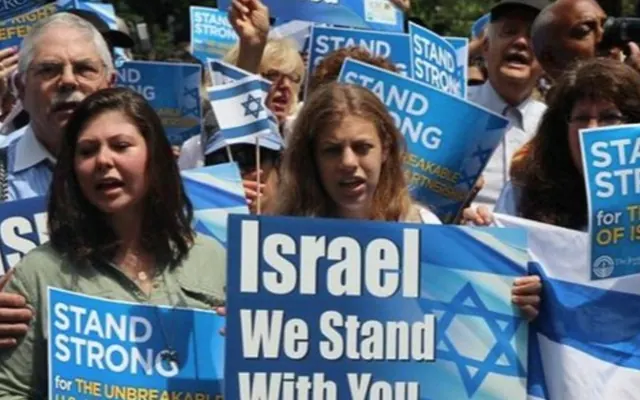
TJS S4E1 American Jewry after 1967 part I The Wisdom of the Moment
History is all about telling the story after the fact, but there is a particular wisdom to be gained in the heat of the moment which is easily...
Play Episode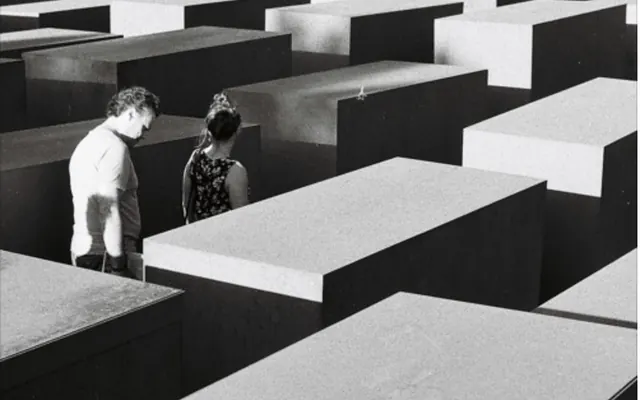
TJS S4E2 American Jewry after 1967 part II From Auschwitz to Jerusalem
As each decade passes, the Holocaust retreats in time and grows in memory and this is not a linear process - some years count more than others. This...
Play Episode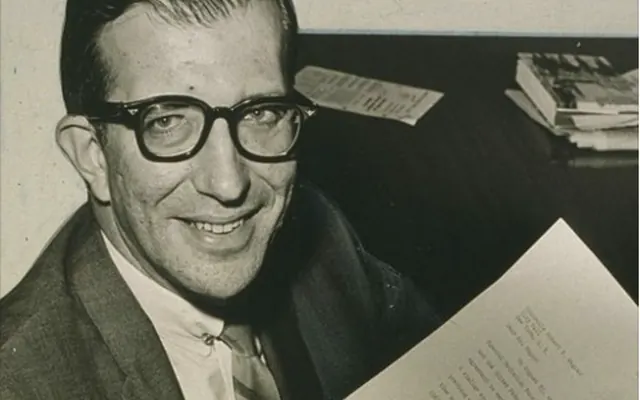
TJS S4E3 American Jewry after 1967 part III, the Ocean Hill-Brownsville strike
There are stories which are turning points in a larger tale, and there are those which prove to be tempests in a tea cup. The story of the...
Play Episode