
TJS S4E2 American Jewry after 1967 part II From Auschwitz to Jerusalem
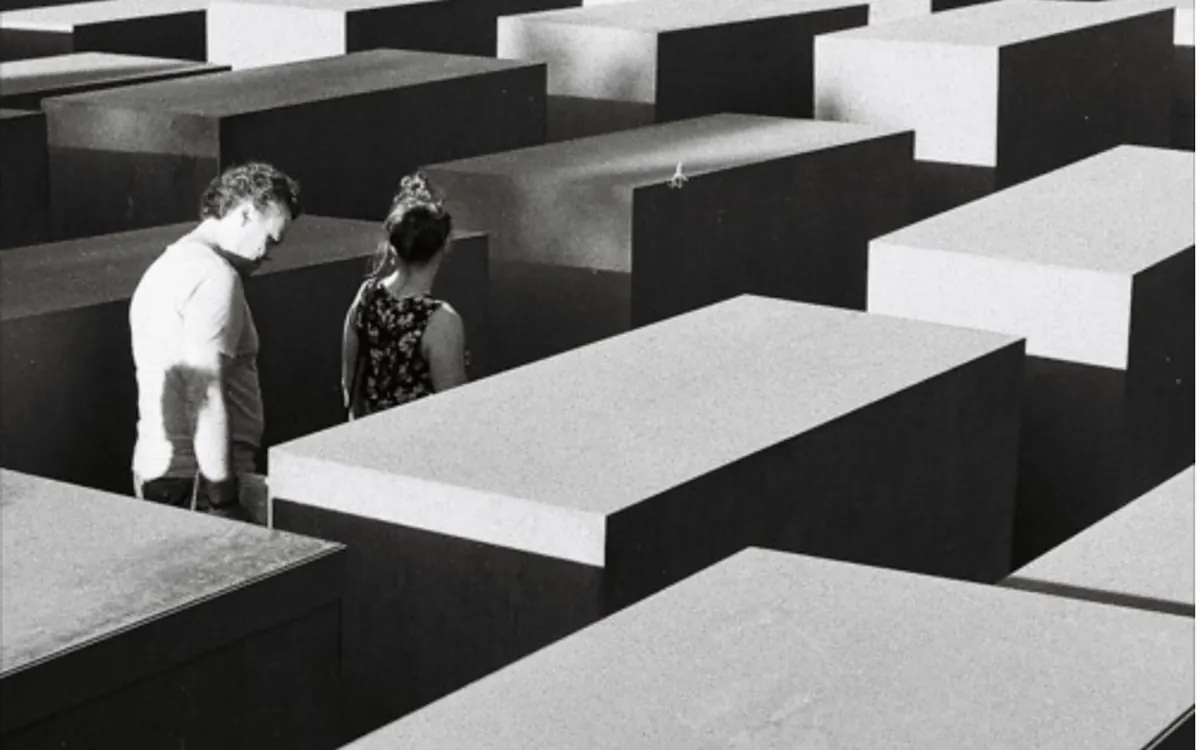
As each decade passes, the Holocaust retreats in time and grows in memory and this is not a linear process - some years count more than others. This episode looks at American Jewry's relationship to the Shoah before and after the Six Day War and adds an important piece for understanding how Israel and Auschwitz became twin pillars of American Jewish identity.
About this episode
They who hope in the Lord shall renew their strength, said Isaiah. When Rav Mike was ten, his great-aunt Helene began telling him stories of Auschwitz, and in those years he became a third-generation survivor without knowing it, since he had grown up among survivors, his teachers, the old ladies at the butcher, the men at the schvitz. His conservative Jewish education revolved around the Holocaust and Israel, so he assumed every Jew carried inherited memories of genocide. That taught him how malleable memory is, personal and collective alike. Memory is the process by which we fit the pieces of the past together to uphold a present identity, and since we are driven by aspiration and anxiety, that identity is future-oriented, which means the way we remember shapes the future we build. Rav Mike dreams of a future with no possibility of Auschwitz for anyone, and that begins with how we remember.
The question is the intersection between American Jews' experience of the Six-Day War and their absorption of the Shoah. For Rav Mike the central problem is comprehension least of all, since he is repelled by attempts to reduce Auschwitz to the dimensions of the mind, just as he rejects efforts to fully grasp Sinai. The real issue is how to build a relationship to the incomprehensible, and the options are the ones humanity has always used. Theology locates the Shoah within belief or reworks belief around it, and for Am Yisrael that turns on the question of covenant. Documentation seeks to know exactly what happened rather than why, driving an explosion of archives and testimony. Forgetting beckons through the soma of suburban ease, the wall Huxley described between the mind and the actual universe. And there is the path of action, asking what the Holocaust demands of me.
In the beginning the Holocaust was not the Holocaust. As the camps were discovered, the murders were framed as part of the general horror of war, the particularity of Jewish death obscured, since six million was only a fraction of the war's toll and the number was not known at once. The Allied Declaration of 1942 named humans, not Jews. Nuremberg subsumed the Final Solution under crimes against humanity. Alain Resnais filmed Night and Fog on the grounds of Auschwitz in 1955 and never mentions the Jews. Shirer's Rise and Fall of the Third Reich gave the genocide under three percent of its pages, and the 1955 Broadway Anne Frank turned a Jewish girl into a universal symbol of murdered innocence. The roughly hundred and fifty thousand survivors building new lives in America were silenced by guilt, by shame, and by neighbors who did not want to hear.
Time alone heals nothing, since trauma holds itself in the mind as an eternal present, a vortex pulling at the sufferer, so time plus work is what heals. Elie Wiesel was born in Romania in 1928 and sent to Auschwitz at fifteen, selected for the slave labor that saved his life. He held his silence until 1952, when Francois Mauriac looked into his tormented eyes and saw the death of God in the soul of a child, then urged him to tell his story. The nine-hundred-page Yiddish draft was pared into the slender Night, published in 1960, and it went all but unnoticed, since few wanted to hear of a uniquely Jewish suffering. A few years later Richard Rubenstein gave the death of God its cultural force in After Auschwitz of 1966, posing an inescapable either-or and choosing to condemn a God who tolerates the suffering of one innocent child.
Not every rabbi gave up on the covenant. Arthur Leliveld answered with Atheism Is Dead in 1968, restating a God who demands, who calls the Jew to be a co-worker in perfecting the world. Emil Fackenheim went further with his 614th commandment, that we are forbidden to hand Hitler a posthumous victory by despairing of God or the world, which Rav Mike reads through his own model of the Jews as the story that refuses to die. The thread runs back to shul. Yitz Greenberg, who had imagined a sign closing his synagogue, instead addressed the 1968 American Jewish Committee meeting with Cloud of Smoke, Pillar of Fire, declaring that if Auschwitz says we are cut off from God, Jerusalem says his promises are faithful and his people live on. As Borowitz put it, the war made evident what the Holocaust had made us doubt, and for Wiesel the war offered, more than anything, hope.
Key ideas
- Memory fits the past together to uphold a future-oriented identity, so how we remember the Shoah shapes the future we build.
- The central problem of Auschwitz is less comprehension than building a relationship to the incomprehensible.
- For two decades there was no capital-H Holocaust, as Jewish death was universalized into the general horror of war.
- Time alone heals nothing, since trauma holds itself as an eternal present, so healing takes time plus work.
- Wiesel's Night went unnoticed in 1960, and Rubenstein's After Auschwitz gave the death of God its cultural force.
- Fackenheim's 614th commandment and Greenberg's Cloud of Smoke answered Auschwitz with Jerusalem and the faithful God of history.
Chapters
- 0:00 Isaiah; Aunt Helene's stories
- 2:08 Historical mastication; choking on ashes
- 5:29 Theology, documentation, forgetting
- 7:41 When the Holocaust was not the Holocaust
- 9:51 Nuremberg, Night and Fog, Anne Frank
- 12:02 The silenced survivors
- 14:14 Time plus work; the vortex of trauma
- 15:21 Wiesel's Night; Mauriac
- 18:39 Rubenstein; after Auschwitz
- 21:56 The death of God and the covenant
- 24:13 Leliveld; atheism is dead
- 26:22 Fackenheim; the 614th commandment
- 28:39 The story that refuses to die
- 30:46 Back to shul; Greenberg's AJC speech
- 34:05 Borowitz; what the war made evident
- 36:16 Wiesel; more than anything, hope
Who, where and when
People
Isaiah, Helene, Elie Wiesel, Francois Mauriac, Richard Rubenstein, Arthur Leliveld, Emil Fackenheim, Yitz Greenberg, Eugene Borowitz
Places
Auschwitz, Romania, American suburbia, The Western Wall
Texts
Night, After Auschwitz, Atheism Is Dead, Cloud of Smoke, Pillar of Fire, The Diary of Anne Frank
When
1942 CE: the Allied Declaration names humans not Jews, 1955 CE: Night and Fog and the Broadway Anne Frank, 1960 CE: Night published, 1966 CE: After Auschwitz, 1968 CE: Greenberg's Cloud of Smoke speech
Read the transcript
But they who hope in the Lord shall renew their strength as eagles grow new plumes, said the prophet Isaiah. They shall run and not grow weary, they shall march and not grow faint. Rabbanu Sheolam, I'm hoping you will give me the strength to tell your story, because I'm Rav Mike Foyer, and this is The Jewish Story. Season 4, Episode 2, American Drury After 67, Part 2, From Auschwitz to Yerushalayim. You know, when I was 10 years old, my Aunt Helene began to tell me stories. Now these weren't your typical fairy tales, or even family legends that she wanted to pass down. In fact, technically, Helene wasn't even my aunt, but rather my great-aunt on my father's side, and the stories she was sharing were about Auschwitz.
In those few years, maybe from age 10 to 13, I became a third-generation survivor. Now, of course, I didn't know this at the time, nor did I realize that not every Jew my age was having the same experience. After all, I'd grown up with survivors. Sometimes it felt like they were everywhere. They were my relatives, my Hebrew school teachers, the old ladies and the butcher, the men I sat with at the Schvitz. My Jewish education in the conservative movement's supplementary schools revolved around the Holocaust. Together with Israel, it's basically what we learned. So I suppose I can forgive my 10-year-old self for thinking that everyone around me had memories, inherited or otherwise, of genocide. That somehow every American Jew can remember their sister's baby snatched from their hands as they got off the trains and watching its brains dashed out.
And if personal memory is so malleable, just imagine what collective memory looks like. Now, we spoke a few times last season about this idea of historical mastication, the process whereby we chew and swallow what life and history shoves down our throats. This is a very fraught process. First, of course, there's always the danger of failure. It's by no means a guarantee that individuals or nations will succeed in getting their teeth around everything that life serves up. Choking on reality is a definite possibility, and who wouldn't fear suffocation with a mouth full of the ashes of Auschwitz? And of course, even if we manage to chew and swallow the facts of life, digestion is its own particular challenge.
Getting the reality of the past down our throats is not a guarantee either that we'll absorb and integrate what it has to offer in a healthy way. In this process of historical mastication, memory is our primary tool. And I know I've said it many times, but hey, it's the beginning of a new season. So let's just recall that for me, memory is the process whereby we remember, where we take the pieces of the past and consciously or not fit them together to uphold our present identity. And since we're all driven by aspirations, anxiety, or both, that identity is future-oriented. Which means the way in which we remember the past not only creates and supports our present identity, it has a profound effect on the future which we build.
And I don't know about you, but I dream of a future where there's no possibility at all of Auschwitz for anyone. So somehow, we have to find the right way to digest the Holocaust. And it begins with how we remember. Our ongoing relationship to the incomprehensible horrors must be part of what makes us who we desire to be and carry us toward that future of which we dream. We began this discussion actually back in Season 3, and the truth is, it had a place at the end of Season 2 as well, because of course, memory begins in the very moment of experience, and not only after the fact. Identity formation through remembering actually can't be separated from experience, nor is it a one-time act. It's a constant consciousness.
It's an eternal, sacred task. So I want to take another swing at understanding this process of historical mastication in this episode. And right now, I'm specifically interested in the American Jewish experience. How the Holocaust was received, how it began to become memory, and what role it played in forming American Jewish identity. Now that's a big question, and one which is going to take quite a bit more time than we have today. The question which interests me right now is the intersection between American Jews' experience of the Six-Day War and their absorption and integration of the reality of the Shoah. Of course, that will necessitate a bit of looking back. In fact, that's going to take most of the episode.
but this will be hindsight in service of the present moment. I'm just fascinated by the idea that there was an immediate afterglow of the Six-Day War, which had a particular impact on American Jewry. And I suspect it played a specific role in framing and understanding the Holocaust. I did say understanding, but really the central problem in my eyes is not comprehension. I'm personally deeply repelled by most attempts to reduce Auschwitz to the dimensions of our mind, just as I reject efforts to make the revelation at Sinai something that we can fully grasp. The real issue here is how do we build a relationship to the incomprehensible? Now, the options open to American Jewry are going to be much the same as those which humanity has employed throughout time, fit to their particular historical context, of course.
One is theology. the attempt to locate the Shoah into classic religious belief or to rework those beliefs in light of its disruptive power. For Am Yisrael, the theological approach revolves around the question of covenant of Brit. And we'll soon hear a number of voices asking whether the model of relationship which has bound us to God up to now is actually adequate in the aftermath of Auschwitz. In addition to theology, there's also the attempt to document historical reality. Rather than trying to understand why the Shoah happened, many American Jews will be driven by the need to know exactly what happened. And the decades after 67, we'll see an explosion of study, archiving, listening to survivors, writing books, creating curriculums, on and on.
Mostly with the goal of documenting the reality of the Holocaust, rather than attempting to explain it. Then, of course, there's always the path of forgetting. The wealth and ease of American suburbia could easily be called the soma of human culture, just like Huxley said in Brave New World, erecting, quote, an impenetrable wall between the actual universe and the mind. Genocide is all but incomprehensible to begin with, but it makes no sense at all in a world of lawns and white picket fences. For American Jews, the path of assimilation into suburban culture depends on leaving their particular past behind, as we discussed last season. And this will, of course, include the Shoah. But even the melting pot of the American 50s couldn't completely erase the reality of almost 150,000 survivors in their midst.
And that's going to pose a particular challenge to the path of assimilation and forgetting, as we'll see at some point or another. So when it comes to the incomprehensible, we can grapple with why. We can attempt to map what. We can try and forget. Oh, and there's always the path of action of saying, well, what does the Holocaust ask of me? We touched that stance lightly in our discussion of sort of Jewish 60s activism last season and we're going to see it again, I'm sure, at some point. But for now, I'm interested in looking at this intersection between the Holocaust and the Six-Day War. And in order to do so, we're going to need a bit of a running start. In the beginning, the Holocaust wasn't the Holocaust, at least not with a capital H.
Because as newspaper, radio, and magazine stories began to introduce into world consciousness what the Allied armies had discovered in the concentration camps, they spoke of atrocities and framed them as part of the general horror of war, not as a systematic genocide. The idea that what had occurred in the ghettos and camps of Europe was a Jewish story remained at first ignored or maybe, in all honesty, unseen. I mean, after all, even if the world had known right from the start that 6 million Jews were murdered in the camp, one-third of our total population, that amounts to only 8% of the estimated 75 million people who died in the war. And there's no way people could know that number off the bat.
So from the outset, the particularity of Jewish murder, as opposed to death in war, was obscured by the way in which what was found in the camps was presented. And the truth is, the universalization of our suffering actually began before the liberation of Auschwitz. In his landmark essay, Cloud of Smoke, Pillar of Fire, which we'll hear a bit more about before the end, Rabbi Yitz Greenberg actually blames this focus on humanist values for the extent of the Holocaust. He says, blocked specifying Jews as victims of Nazi atrocities. As in the Allied Declaration of January 1942, Jews were not mentioned by name on the grounds that they were, after all, humans, not Jews, and citizens of the countries in which they lived.
The denial of Jewish particularity in the face of the very specific Nazi war on the Jews led to decisions to bomb industrial targets to win the war for democracy, but to exclude death factories, lest this be interpreted as a Jewish war. And so, it should come as no surprise if that was the attitude in 1942 that the mounds of bodies rotting in the camps were labeled as casualties of war crimes not victims of genocide. This universalization continued through the post-war Nuremberg trials. When presenting their case the prosecutors acknowledged the existence of a Nazi plan called the Final Solution to the Jewish Problem but they subsumed it under the general heading of crimes against humanity. And it didn't stop here.
In 1955, Alan Nays published a groundbreaking documentary called Night in Fog. It was actually filmed on the grounds of Auschwitz and Majdanek. And it never mentions the Jews. Not even once. Can you imagine such a thing? It was actually so controversial that there was an attempt to ban it in Israel. William Shire's 1960 bestseller, The Rise and Fall of the Third Reich, which really brought a deeper understanding of what had happened in Europe, to many English speakers, devotes less than 3% of its 1,200 pages to the Jewish genocide. Even Anne Frank's diary, seemingly the ultimate particular Jewish story, played a role in undermining the story of Jewish suffering at the hands of the Nazis. The 1955 Broadway adaption, which made Anne famous in America, transformed her from a young Jewish girl into a universal symbol of murdered innocence.
The diary's reflections on Jewish persecution and anti-Semitism weren't even included in the script. In fact, they were often replaced by comments she never made, like, we're not the only people that's had to suffer. There have always been people who've had to, sometimes one rice, sometimes another. So, at first, there was no Holocaust, at least in the sense of a unique and uniquely Jewish event. Now imagine, for a moment, the impact that this had on the nearly 150,000 survivors who were building a new home in America in the two decades after the war. I mean, just the psychodynamic of how they were received by their fellow Jews is complex in and of itself. The very fact of their arrival as a large group of identifiably different Jews pushed up against the assimilation sort of normalization ethic, which was at the heart of American Judaism of its day.
And of course, what they'd experienced, and therefore represented, was simply incomprehensible to Jew and non-Jew alike. now eventually we will trace how the assimilationist melting pot approached American culture gave way to a multicultural vision which celebrated ethnic particularity we started that discussion in season 3 but when we continue we'll see how one thing which shifts which emerges into this new safely particular space will be the voices of the survivors as the focus amongst Jews moves from the general to the particular desire to hear and preserve their stories will come to the fore. But in the first couple of decades after the war, many survivors just felt silenced. Silenced by their guilt for having lived when others had not.
By their shame at being the bearer of the heart of darkness into the bright and hopeful lives of American Jews. And silenced because those around them did not want to hear their stories. They didn't want to contemplate that it could have been me, or I should have done more, or even that such a thing is even possible. And so, the universalization of Jewish genocide into human suffering and war crimes, the desire of American Jews to be like their neighbors, and the silence of the survivors meant that at first, there was no capital H Holocaust. Now clearly, this changed. And the question is when. I mentioned earlier my Aunt Helene and how she told me her stories. Well, I'm not the only one she told. In fact, she was eventually recorded as part of Steven Spielberg's documentary project, He Should Be Blessed, for such a thing, and I'll never forget watching the recording for the first time.
After she makes her way through more than an hour of interview, telling story after brutal story, the majority of which I already knew, the camera pulls back, and you can see that she's sitting with her children and her grandchildren. And when the interviewer turns to her eldest son, my cousin Kenny, and asked whether he'd heard these stories, I was astonished to hear him say no. It was really then that I discovered that I was the first to receive those memories. And I've since learned that often survivors were unwilling or unable to tell their own children the stories which they eventually shared with the third generation. Now, I gotta tell you, I'm not a believer in this idea that time heals all wounds.
Time is certainly necessary, but it's insufficient for transforming trauma into memory. One of the ways in which we understand trauma at all is that the traumatic event doesn't actually exist in the past. It maintains itself in the mind in a sort of eternal presence. Think of it as a vortex. Chronologically, of course, whatever happened is in the past, but psychoemotionally, it's A constant now, which is pulling at the sufferer, always threatening to overcome and suck their current life into this vortex of trauma. So, time doesn't heal all wounds. Time plus work does. And the question is, what work needs to be done to heal the holocaust? Never shall I forget that night, the first night in the camp, which has turned my life into one long night.
Never shall I forget the little faces of the children whose bodies I saw turned into wreaths of smoke beneath a silent blue sky. Never shall I forget those flames which consumed my faith forever. Never shall I forget these moments which murdered my God and my soul and turned my dreams to dust. Never shall I forget these things, even if I am condemned to live as long as God himself. Never. That's just a small drop, a sample of the power of night. The autobiographical sketch written by Elie Wiesel after surviving Auschwitz and Buchenwald death camps. Wiesel was born in Romania in 1928, interestingly enough, not far from where my family originates. And he was only 15 when he was sent with the rest of Romanian Jewry to Auschwitz.
90% were killed upon arrival, including an estimated 96 members of my father's family. But Eli, young and strong, was selected for slave labor. Slavery was actually a miserable suffering which saved his life. And so he was 16 when the camps were liberated. If you want to know how he survived, read the book. For now, just know that he found refuge in France after the war, eventually engaging his facility for languages and writing to find work as a journalist. And despite the thousands of words which he wrote over the next decade, Elie Wiesel held his silence over what had happened in Auschwitz. The change began in 1952. when he met Nobel Prize winning French author François Mouillac. Eventually, the two would become close friends, sharing many things.
But from this initial encounter, the French author recalled nothing more than looking at Wiesel's tormented eyes and seeing what he called the death of God in the soul of a child. And it was Mouillac who encouraged Wiesel to tell his story. Perhaps as a devout Christian, he hoped to revive that dead God. or perhaps as an author, he understood the healing power of a story rightly told. The first Yiddish language draft was titled, And the World Remained Silent. But its 900 pages never saw print. It took a few more years until it was pared down into the slender volume of Night, published in French first and then translated in 1960. Now, eventually, Elie Wiesel's memoir would transform understanding of the Holocaust for Jew and non-Jew alike.
It's been translated into 30 languages and sold more than 10 million copies in America alone. I'm sure that many people now have been listening to it. When I was in high school, it was actually required reading. But, as we saw above, in 1960, very few people wanted to hear about a capital H Holocaust or relate to the particularly Jewish suffering which occurred there. And so the book went all but unnoticed upon publication. Now that's not to say that Wiesel wasn't expressing a feeling which was genuinely present in the world. There were many among Jew and non-Jew alike who felt that God had indeed died in the ovens. In 1966, scholar, writer, and conservative Rabbi Richard Rubenstein published his groundbreaking work after Auschwitz Radical Theology and Contemporary Judaism Now Radical Theology wasn his creation It was actually a movement known as the Death of God movement and it began with a handful of Protestant theologians.
Their primary influence was on the academic discourse. But as the optimism of the great society began to fade in the late 50s and early 60s, and the reality of America became one of racial struggle in the Vietnam War, the uncomfortable questions raised by these academics found resonance in popular culture. But it was really Rubenstein's move of linking the Holocaust with the death of God, which gave the movement its cultural movement, which included a 1966 appearance on the cover of Time magazine. I mean, how many theologians can claim that distinction? For the purposes of our discussion, After Auschwitz is one of the first Jewish theological works to ask how does the Holocaust now affect the covenant between God and Israel?
It's a painful but important question. And Rubensin had a very particular answer. He says that after the Holocaust, quote, Jews were confronted by an inescapable either or. One can either affirm the innocence of Israel or the justice of God at Auschwitz. And Rubensin chooses to condemn God. A God, he says, a God who tolerates the suffering of even one innocent child is either infinitely cruel or hopelessly indifferent. It's a dramatic statement. But to me, the logical conclusion which emerges from it isn't that God died in the camps, but rather that God never existed to begin with. After all, innocent children were suffering long before Auschwitz. and in that sense Rubensine was really a voice of the French existentialism and its vision of an absurd universe devoid of God which was gaining a lot of traction in Western culture in the 60s and this should come as no surprise Camus won the Nobel Prize in 1957 while Sartre refused his in 1964 we are at the heart of the rise of existentialist thought and as Rubensine himself wrote had I lived in another time or another culture, I might have found some other vocabulary to express my meaning.
I am, however, a religious existentialist after Nische and after Auschwitz. When I say we live in the time of the death of God, I mean that the thread uniting God, man, heaven, and earth has been broken. We stand in a cold, silent, unfeeling cosmos unaided by any purposeful power beyond our own resources. After Auschwitz, what else can a Jew say about God? The truth of the matter is that radical theology quickly lost its traction in the wider Christian world. Partially, it was just too much of a challenge to institutional religion to gain widespread acceptance. I mean, after all, thousands and thousands of clergy and countless institutions were bound up with the supposition that God was alive and well.
I would also say that such a radical theology, a death of God perspective, fails the primary test of religious thought. Can it offer the motivation and hopefulness people need to become something more than they already are? For Am Yisrael, as we will eventually see, the death of God ran smack into the reality of June 1967. Nonetheless, after Auschwitz is helpful for our current task, because it poses a challenge to some of the fundamental tenets of traditional Jewish theology, that a providential God acts in history, that the people of Israel were God's chosen people and therefore a focus of that providence, and that disasters are the result of the sins of Israel. Now, the three are obviously bound up.
As Rubenstein writes, how can Jews believe in an omnipotent God after Auschwitz? Traditional Jewish theology maintains that God is the ultimate actor in the historical drama. It has interpreted every major catastrophe in Jewish history as God's punishment of a sinful Israel. We've spoken about that many times in the show. Because of our sins we were driven from our lands. He goes on to say, I fail to see how this position can be maintained without regarding Hitler and the SS as instruments of God's will. To see any purpose in the death camps, the traditional believer is forced to regard the most demonic, anti-human explosion in all history as a meaningful expression of God's purposes. The idea is simply too obscene for me to accept.
Now, Rubensin was honest and far from alone in what troubled him. though his emotive response of refusal to accept doesn't necessarily equate with a theological force play. And not every rabbi was so quick to give up on the covenant. And of course, since every existentialist knows that context itself provides meaning, maybe Rubenstein should have waited a year before publishing, because 22 years after Auschwitz will look quite different than 21. The first reply to after Auschwitz was the aptly, if somewhat childishly named, Atheism is Dead, a Jewish Response to Radical Theology, published by Arthur J. Leliveld in 1968. It's really a restatement of classic theology, so I bring him just to show that there are many models for understanding the covenant after the Holocaust, and not all of them have to be so bold.
Though I do wonder what you think of the following statement. Auschwitz introduces no new problems, says Leleveld. It is the old problem of evil written large. It differs only quantitatively from prior problems. I gotta say, I'm not so sure. As the old saying goes, quantity has a quality all its own. I do appreciate the activist stance, which Leleveld asserts in the work. He posits that those like Rubenstein, who believe that God is dead after Auschwitz, had a primary misconception about the covenant to begin with. He says, the God of Judaism is the God who demands. The covenant obligation that is central in Judaism calls upon the Jew to be God's co-worker in perfecting the world, not to be saved, but to participate in the redemption of mankind.
This is not to say that Leleveld is untroubled by the horror of the Holocaust, as I cannot say that God willed the death of the six million, he says, so I certainly cannot praise him for their death. This to me is a repelling, blasphemous idea, but I cannot withdraw from the six million the dignity that lies in recognition that there existed among them a willingness to die in a fulfillment of a distinctive role. While I cannot say that God willed Auschwitz, I can say that God wept over Auschwitz. It's part of a larger package which asserts that one of the supreme values embodied in creation is human freedom of action. And so in my eyes, the critical conclusion that Lelevelle draws is that a Jewish response to Auschwitz should be to say, well, what is God asking of me?
Lelevelle, of course, was not the only one to pose that question. We actually saw last season, you can look it up, season three, episode 10, survivor, philosopher, and reformed rabbi Emil Thackenheim not only asked, but answered the question. And he said, we are first commanded to survive as Jews, lest the Jewish people perish. We are commanded, secondly, to remember in our very guts and bones the martyrs of the Holocaust, lest their memory perish. We are forbidden, thirdly, to deny or despair of God, however much we may have to contend with him or with belief in him, lest Judaism perish. We are forbidden, finally, to despair of the world as the place which is to become the kingdom of God, lest we help make it a meaningless place in which God is dead or irrelevant and everything is permitted.
To abandon any of these imperatives in response to Hitler's victory at Auschwitz would be to hand him yet another posthumous victory. Fagenheim called it the 614th commandment. and the implications of his words are fascinating to me. One way to read the shift in Holocaust memory and framing, which occurs in the late 60s, is in the context of the global slide toward humanist, universalist existentialism. I say slide with all of its negative connotations because though it may have appeared to many that abandoning particulars national and religious narratives would end human conflict, I mean, after all, imagine there's no country, it isn't hard to do, Nothing to kill or die for, and no religion to. Never forget how Camus opens the myth of Sisyphus by saying there is only one really serious philosophical question, and that is suicide.
Now, the problem is, what if that answer to many people is yes? Fackenheim understood that, quote, to despair of the world as the place which is to become the kingdom of God, lest we help make it a meaningless place in which God is dead or irrelevant and everything is permitted was to spit in the face of the martyrs by handing a posthumous victory to their murderer There a much longer discussion here that we can have at another time but I do want to say that those of you who have been listening since the beginning or at least for a while are familiar with my model how in every age Am Yisrael is rejected by mainstream culture because we don't fit the paradigm. To be a Jew is to swim against the stream.
We were the indigestible element of empire in the late antiquity of the Greco-Roman world. the obstinate refusers of salvation to the medieval Christians and even Islam, the alien other of modern humanist society. And here in the post-modern era, we're the story which refuses to die. This is the new element of covenant which Fackenhayn derives from Auschwitz and it's a light which emerges from the ultimate darkness. There are many other voices which discuss the nature of covenant post-Holocaust. And of course, Am Yisrael being who we are, it's a conversation which is far from over. It's a reality we have mentioned many times. We instinctively tend to locate the meaning of an event in our immediate experience.
Yes, of course I know what just happened. I lived through it, didn't I? But the reality is, there's an understanding which is only available after the fact. It's the positive side of Stegner's Doppler effect of time we mentioned last episode. Hindsight may dull the passions and power of experience, but it also offers the context and understanding which come from continually revisiting events which really matter. So like I said, there are many more voices to explore. Along with Rubenstein, Lelieveld and Thackenheim, I could add, Rav Soloveitchik, Eugene Borowitz, and of course Eliezer Berkovitz's Faith After the Holocaust is a must-read. It's far from a comprehensive list, and the conversation is ongoing.
but this is not our story right now because while it's noteworthy to me that we can find a cluster of works written and published between the mid-60s and the mid-70s all of which engage the question of the covenant post-Holocaust I'm still focused on the moment on that intersection between the memory of Auschwitz and the experience of the Six-Day War and to draw this part of our discussion to a close I want to take us back to Shul I hope you recall the anecdote which I shared last episode about Rabbi Yitz Greenberg, who when asked by a congregant in the lead up to the Six-Day War, they're going to wipe out Israel. What's going to be? He replied, they're not going to wipe out Israel. And if they do, there's going to be a sign up, the shul is closed.
His feeling was quite simple. Faith could not go on with an unmitigated catastrophe of that size happening again. As it so happens, the only signs hung in shul in the aftermath of the war were those of celebration, thank God. And Rav Yitzchak Greenberg himself was invited to address the 1968 American Jewish Committee annual meeting. This is the meeting, I hope you remember, that was marked by a triumphant sense of unity amongst Jews in America and Israel, and with a resolution that declared the deep personal attachment and the profound sense of a shared history and destiny that organically connect American Jews to Israel. Now, in Jewish tradition, history and destiny lie in the hands of God. And while 22 years after Auschwitz, the members of the AJC may not have been prepared to contemplate the theological significance of the Holocaust, or at least the difference in its significance between 1966 and 1967, Rav Yitz Greenberg was.
His speech was entitled Cloud of Smoke, Pillar of Fire, Judaism, Christianity, and Modernity after the Holocaust. And as the title implies, it's a sweeping examination of the world in which we live. Cloud of Smoke offers its own important element to this tide of covenantal theologies, as I'll call it, which pushed off the fear that God, or at least the God of history, was dead. Right now, I'm not going to offer you a full-length analysis. I do highly recommend reading the complete version. It was published as a full-length essay a number of years after the speech. You can email me, robmikefoyer at gmail.com or you can send me a message on Facebook robmikefoyer for the link or maybe I'll drop it in my Patreon feed if you want to get on there and give a little bit of per-podcast support if you're not already.
But I will say this is a teaser. I do hope and in fact expect that in the coming week or two Rob Greenberg himself is going to be joining me for an interview, a full discussion of his thoughts on the covenant in light of Auschwitz 67 and today. But I want to end on a very different note. don't underestimate how much of Richard Rubenstein's radical theology was fed by his disappointment and despair with God after the Holocaust and how much existential despair in general around the world was fueled by the murderous fruit of modern society after all, as philosopher and rabbi Eugene Borowitz put it the death of God shielded us from the tragic loss of the one God in whom modernity had avidly trusted ourselves, humankind.
Or as I like to say to people who ask me where was God in the Holocaust, first tell me where was man and then I'll answer your question. The sense of failure in divine relationship and the threat of depression which flowed from a loss of belief in human progress can't be held off by mere words no matter how sophisticated or wise. As Rabbi Greenberg said to the packed audience of the AJC conference, the only way in which we can incorporate Auschwitz into our history is through the return of the God of history in another act. Quote, if the experience of Auschwitz symbolizes that we are cut off from God and hope, and that the covenant may be destroyed, then the experience of Jerusalem symbolizes that God's promises are faithful and his people live on.
If Treblinka makes a human hope an illusion, then the Western Wall asserts that the human dreams are more real than force and facts. Israel's faith in the God of history demands that an unprecedented event of destruction be matched by an unprecedented act of redemption. And this has happened. Now there's obviously much more to consider, as we trace exactly how the Holocaust and support of Israel became the twin pillars of American Jewish identity in the wake of the Six-Day War. It's a process which will accompany us not just for episodes, but really for seasons to come. For now, I want to sum up this time of transition, which has the Six-Day War at its axis. Recall first that the initial trend toward universalization of the Holocaust as a human tragedy pushed up against any particular narrative of Jewish genocide, the Holocaust, with a capital H.
And for the first couple of decades after the war, this was supported by the assimilationist desires of many American Jews. Tribalism wasn't going to help them become as American as apple pie. but a shared commitment to human rights rooted in a universalist story of Auschwitz might. Add to this a piece which we didn't actually address here, but I'll mention and maybe come back to at some point, the failure of almost every ally from the so-called liberal coalition to stand up for Israel before, during, or after the war. There was a feeling that the Jews, if they were going to stand, they were going to stand alone. Add to that, also, the awakening of tribal solidarity we saw in the last episode, and a general American trend toward ethnic consciousness.
We have all the context we need for reworking our memory of the Holocaust as a particularly Jewish story. Of course, in religious terms, this became far more possible when it was paired with the Six-Day War. As Borowitz says, theologically put, the war made evident what the Holocaust had made us doubt. that the covenant between God and the people of Israel continued in full force. Now, all of these are worthwhile thoughts to consider, but even if they're all correct and true, ideas, in my experience, rarely have power to dispel the dark. We heard, at the end of last episode, Elie Wiesel's reaction to June 1967. He said to destroy Israel, to let it be destroyed, would have meant the end of an affirmation, The end of hope.
The end of our history. Which means that more than anything else, what the Six-Day War offered to at least one survival was hope. I just want to thank a few folks. I want to thank all the folks who give their hard-earned money to help make this show happen, to keep it free and widely available, and I want to invite you to join them. Go right now to my website, jewishstory.co. In the upper right-hand corner, you'll see a button that says, Be a Patron. You can click on that for a little bit of per-podcast support. Or, if you'd like, I'm happy to dedicate a show and honor someone you love or someone who's no longer with us today. Send me an email, rovmikefoyer at gmail.com. Or you can find me on Facebook, Rav Mike Foyer, and I'm happy to share with you the details.
I'd like to thank the Land of Israel Network. That's thelandofisrael.com for creating a platform that allows me to reach so many amazing people all over the world. I want to thank the Pardes Institute, P-A-R-D-E-S dot org dot I-L, for creating an educational institution that gives me the privilege of teaching Torah to so many fantastic Jews. And I want to thank you for listening. I'm Rav Mike Hoyer, and this is The Jewish Story.
More from Season 4
TJS S4E1 American Jewry after 1967 part I The Wisdom of the Moment
History is all about telling the story after the fact, but there is a particular wisdom to be gained in the heat of the moment which is easily...
Play Episode
TJS S4 Interlude R' Yitz Greenberg and the God of History
How we chew and swallow what history shoves down our throat can define us as individuals and nations. Here is an interview with R' Yitz Greenberg, foundational thinker...
Play Episode
TJS S4E3 American Jewry after 1967 part III, the Ocean Hill-Brownsville strike
There are stories which are turning points in a larger tale, and there are those which prove to be tempests in a tea cup. The story of the...
Play Episode