
TJS S4E3 American Jewry after 1967 part III, the Ocean Hill-Brownsville strike
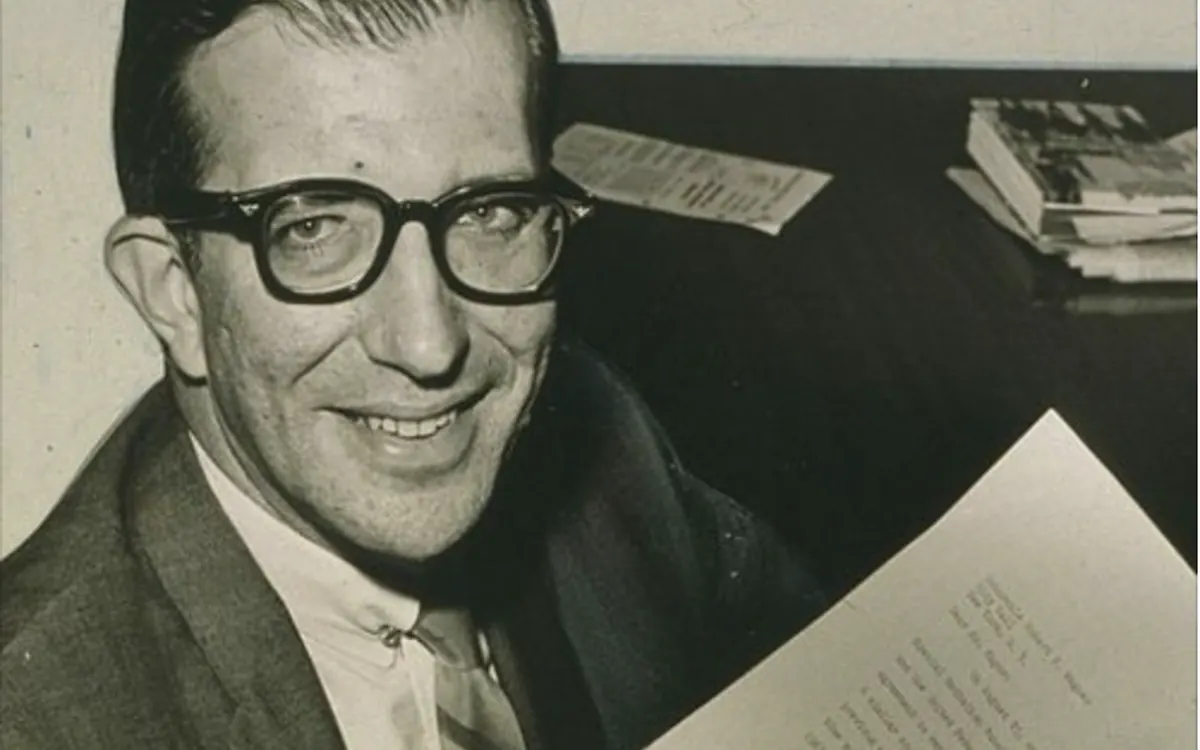
There are stories which are turning points in a larger tale, and there are those which prove to be tempests in a tea cup. The story of the 1968 NYC school strike could be read as both. Either way, this episode offers a look at a microcosm of Black/Jewish relations in 1968 which will have a profound impact down to our day.
About this episode
What happens to a dream deferred, asks Langston Hughes. Does it dry up, fester, or explode? Rav Mike calls this one of the hardest episodes he has made, warning that its link to the aftermath of 1967 will only become clear at the end. On December 26, 1968, the radio host Julius Lester invited a teacher named Leslie Campbell to read aloud a poem written by his fifteen-year-old student, a torrent of Jew hatred wishing the pale-faced Jew boy dead. Lester embodied a trend in the black community of the sixties. A young liberal idealist, he had joined the civil rights movement early, gone south with SNCC during the 1964 Freedom Summer to open freedom schools, then watched the movement turn toward black power, race pride, and militancy, as Stokely Carmichael's leadership detached itself from its Jewish allies and SNCC expelled its white members, most of them Jews.
Acceptance of that split grew harder after 1967, when American Jews awakening to ethnic solidarity met SNCC cartoons comparing Israeli soldiers to Nazis. The folk singer Theodore Bickel wrote an open letter refusing to stay silent while they insulted his people and spat on the tombs of Schwerner and Goodman. The black-Jewish alliance had always run mainly between the middle classes, while in the urban neighborhoods a harder tension simmered between Jewish merchants and the black residents who owed them rent and money. The story resists an open-and-shut reading. Julius Lester himself converted to Judaism in 1982, taking the name Yaakov Daniel ben Avraham, and was later forced from his academic post for calling statements of James Baldwin anti-Semitic, an early taste of cancel culture. Leslie Campbell, by contrast, had a long future of anger ahead.
The strike began on May 9, 1968, when the science teacher Fred Nauman received a letter announcing his termination. Nineteen teachers got the same notice, eighteen of them white, which in Ocean Hill Brownsville meant almost all were Jewish, and superintendent Rhody McCoy told the Times that not one would teach in the city again. The neighborhood had turned over within a generation, from a 1940 majority of Jews to a 1970 census that was seventy-five percent black and twenty percent Puerto Rican, yet the teaching force remained ninety percent white and largely Jewish. James Baldwin had written that the Negro is anti-Semitic because he is anti-white, and here the target was the history teacher and the principal rather than the landlord or the pawnbroker. Since knowledge is power, teachers who did not share their students' neighborhood or history were seen, in the rising climate of black pride, as pushing the supremacy of a foreign culture.
The dream deferred was a quality education, the great equalizer that a meritocracy requires to justify unequal outcomes by equal opportunity. Yet segregation in Brooklyn actually grew after Brown v. Board of Education, and a black separatist consciousness held that taking control of one's destiny meant taking control of the schools. The Ford Foundation's 1967 report backed community-controlled boards empowered to weigh race in hiring, one of the earliest American calls for race-conscious affirmative action, and Mayor Lindsay embraced it as a path to calm. The union stood in the way. Albert Shanker, a social democrat who had marched with Reverend King in Selma, was horrified, believing that hiring or firing by race betrayed the movement's creed of character over color. McCoy, who drew his inspiration from Malcolm X rather than King, made no secret that his goal was an all-black teaching force in his district.
Three strikes from September to November 1968 shut the whole system and threw a million students out of school, unleashing a civil war within American liberalism that tore apart blacks and Jews, civil rights and labor. When a crude flyer called Jewish teachers blood-sucking exploiters, Shanker printed half a million copies, giving the hatred far wider circulation. The insecure Jewish teachers discovered that they would be judged white whether they liked it or not. Bayard Rustin and A. Philip Randolph backed the union on the principle of job security and were pilloried by the black community, as King's vision faded into history. The deeper clash set the meritocracy that had opened doors for Jews against the structure of poverty and racism beneath it. Rav Mike closes with an ad forming Meir Kahane's Jewish Defense League, for whom this hatred was an environment of formation and never again meant never being caught by surprise.
Key ideas
- The poem read on Julius Lester's show in 1968 made the Ocean Hill Brownsville strike a public rupture of the black-Jewish alliance.
- The alliance had run mainly between the middle classes, while urban neighborhoods carried a harder merchant-and-resident tension.
- Nineteen teachers were fired in May 1968, almost all Jewish, in a district that had turned majority black while its teachers stayed white.
- The Ford Foundation's 1967 report backed race-conscious hiring, which Albert Shanker saw as a betrayal of King's creed of character over color.
- Three strikes shut New York's schools and forced the Jewish teachers to discover they would be judged white.
- The strike's hatred became the formative environment for Meir Kahane and the Jewish Defense League.
Chapters
- 0:00 Hughes; a dream deferred
- 1:10 The hateful poem on the radio
- 5:37 SNCC, Israel, and Bickel's letter
- 8:48 Fred Nauman's letter; nineteen fired
- 10:01 Ocean Hill Brownsville transformed
- 11:04 The teachers judged white
- 14:32 The dream deferred; meritocracy
- 16:53 Segregation after Brown; the crisis
- 18:04 Community control of the schools
- 19:04 The Ford report; race-conscious hiring
- 21:19 The union; Albert Shanker
- 24:42 McCoy, Malcolm X, and black control
- 27:03 The civil war within liberalism
- 31:23 The flyers; Jews become white
- 33:35 Meritocracy and its structure
- 35:48 Kahane, the JDL, and the thread to Israel
Who, where and when
People
Langston Hughes, Julius Lester, Leslie Campbell, Theodore Bickel, James Baldwin, Fred Nauman, Rhody McCoy, Albert Shanker, Malcolm X, Bayard Rustin, A. Philip Randolph, Meir Kahane
Places
Ocean Hill Brownsville, Brooklyn, New York City, Selma
Texts
A Dream Deferred, Black Power: The Politics of Liberation, The Ford Foundation report Reconnection for Learning, Brown v. Board of Education
When
1964 CE: Freedom Summer and the SNCC split, May 1968 CE: nineteen teachers fired, 1968 CE: the three school strikes, December 1968 CE: the poem read on the radio
Read the transcript
What happens to a dream deferred, asks Langston Hughes. Does it dry up like a raisin in the sun, nor fester like a sore and then run? Does it stink like rotten meat, or crust and sugar over like a syrupy sweet? Maybe it just sags like a heavy load. Or does it explode? Well, I'm a guy who's got plenty of dreams, and I'd rather not see them deferred. I'm Rav Mike Foyer, and this is The Jewish Story. Season 4, Episode 3, American Jury After 1967, Part 3, The Ocean Hill-Brownsville Strike. Well, I've got to tell you that this was one of the hardest episodes I've ever made, which you might have sensed from the mouthful of that title. Now, it's true for all kinds of reasons. After all, at this point in the COVID craziness, I've had five children camped out in my home office for six months, but mostly it was because I'm congenitally unable to tell a simple story.
Now, I know that in theory we're in the aftermath of 1967, and our goal is to understand how Israel's victory impacted the identity of American Jews. I'm not giving up on that. But I'll be honest with you when I tell you it may be hard-pressed to see exactly how the coming story relates to that theme. Nonetheless, I am confident that it does. I'll hint at why I think so at the very end if you make it there. And truth is, you'll really have to listen to the coming episode to appreciate the connection in full. But for now, here's the story. Hey Jew boy with that yarmulke on your head. You pale-faced Jew boy, I wish you were dead. You came to America land of the free and took over the school system to perpetrate white supremacy.
Now, if you read the news these days, you might think that I pulled that off the Internet and that it's been published in the last few months, but you would be wrong. These are just a few lines from a poem written by a 15-year-old student at junior high school 271 in the wake of a teacher's strike that consumed not only her own Ocean Hill Brownsville school district in Brooklyn, but actually all of New York City in the fall of 1968. And you would be right to wonder why a teacher's strike would evoke such vehement Jew hatred. And trust me, I left the worst parts of the poem out. And the poem made a stir not just because of its content, but really because of its public delivery. On December 26th of 1968, Julius Lester asked the student's teacher to read the poem aloud on his New York-based weekly radio show.
Lester embodies a certain trend within the black community of the 60s, and it's worthwhile to recall through a sketch of his life story. He was a young liberal idealist who had joined the civil rights movement in its initial phase in the early 60s. Lester then joined SNCC. That was the Student Nonviolent Coordinating Committee, to those of you who haven't done your review on Season 3. He joined during the 1964 Freedom Subur, and had been amongst the mixed group of white and black students from the North who went down and opened up the freedom schools in the South. But the movement was entering a more radical phase as the 60s progressed, and across the country, the familiar calls of freedom now and we shall overcome were being replaced by a more militant rhetoric, such as black power, race, pride, black dignity, and the third world.
As part of that shift, the black nationalist leadership led by Stokely Carmichael, who we discussed in Season 3, Episode 22, Look It Up, began to detach itself, as they said, from Jewish civil rights leaders, their traditional allies, and SNCC ultimately expelled its white members, the vast majority of whom were Jews. When we first encountered the rise of the Black Power Movement back in Season 3 and the challenges it presented to the so-called liberal grand alliance of blacks and Jews, you may recall that there were many Jews who felt angry and betrayed by SNCC's decision. Nonetheless, most, or at least many, were perhaps willing to hear the truth in Stokely Carmichael's assertion that Jewish allies need to focus on organizing with their own communities and to examine the racism in their own hearts.
As he and co-author Charles Hampton stated in their book, Black Power, The Politics of Liberation, the primary tenet of black power was, quote, before a group can enter the open society, it must first close ranks. They declared that the American pot had not melted, and that black Americans must develop a group solidarity to operate effectively from a bargaining position of strength in a pluralistic society. And then, in a statement which will have deep resonance for our story ahead, not to mention for the news today, Carmichael and Hamilton asserted that the middle class values were the backbone of institutional racism. Now, these assertions became much harder for many Jews to accept when they saw SNCC's response to Israel's 1967 victory.
Because just as American Jewry was awaking to this allure of ethnic solidarity and pride, and will return to the place in American Jewish culture, and certainly Israeli Jewish culture, which appreciates the notion that before a group can enter the open society, it must first close ranks. But, as I said, just as the American Jews were really awakening to the draw of that perspective, they were confronted by anti-Semitic cartoons and photos that compared Israeli soldiers to Nazis. As Jewish folk singer Theodore Bickel, long-time SNCC supporter, said in an open letter dated on August 25, 1967, not long after the war was over, Not being able to turn my mind from your monstrous comparison of my brothers with the arch-foe of my people, I shall leave you with this thought.
You may want to spit in my face for being whitey and a fat cat, but do not look to me for silence while you insult the memory of my people so recently martyred. You have no right to tamper with their graves. And think of Mickey Schwerner and Andy Goodman. You have no right to spit on their tomb. They died for a concept of brotherhood which you now cover with shame. So here we are in the fall of 1968. less than half a decade after Goodman and Schwerner died for the goodness of all humanity. And Julius Lester is hosting Leslie Campbell, teacher in the Ocean Hill Brownsville District and passionate supporter of the black power movement, so he can read the hate-filled poetry of his student on the air. I think that the black-Jewish relationship has always been more complex.
The black-Jewish alliance primarily involved middle-class blacks and middle-class Jews. But at the simultaneously in the black urban areas, you had this tension between Jewish merchants and the black people who lived in the community. Now, I wouldn't blame you for assuming that this is just an open and shut case of Jew hatred. Nothing really to learn here. But truth is, you'd be wrong. My father told the story that my great grandfather was a Jew, Adolf Altschul, the German Jew. But I really had no meaning to go with it until I began studying. and that was a revelation to me. In Judaism, I found a religion which focused on expression of gratitude rather than an emphasis upon sin, where to study was a way of praying, a religion in which people prayed in song.
It was a religion in which you could ask questions. At least you'd be wrong in regards to Julius Lester, who actually became Yaakov Daniel Ben Avram Vassar when he converted in 1982 and was forced out of his position in the Afro-American Studies Department of the New School for Social Research when he labeled certain statements of James Baldwin as anti-Semitic. It's an early occurrence of our current cancel culture. Campbell, however, will have a rich and angry future of hate ahead of him, and he wasn't alone. When Mayor John Lindsay vowed to fire the junior high teacher over the poetry reading, the principal of JSHS 271, Albert Vann, defended him, saying, in his hurry to appease the powerful Jewish financers of the city, the mayor had pleaded fast and loose with Campbell's reputation.
So like I said, this is a story with a lot of angles. And I have no interest in softening the hatred in that poem by contextualizing it. But if we're going to appreciate why what appears to be just another example of Jew hate and how it matters to our story, we're going to need to know a bit more about the New York City school strike of 1968. On the morning of May 9th, 1968, junior high school science teacher Fred Nauman received a letter that would change New York City, and some would say America. Now one thing's without question, it certainly changed things for Nauman, because the letter from the chairman of the local Ocean Hill Brownsville school board announced his termination effective immediately.
And he wasn't alone. Nineteen teachers received the same notice that day, and it so happened that 18 were white, which in Ocean Hill Brownsville meant almost all were Jewish. The one black teacher included on the list proved to be a case of mistaken identity and was reinstated almost immediately after the error was discovered. Now, reading the letter left some room for ambiguity about whether the teachers were being terminated or merely transferred. But in the coming days of controversies, members of the local school board insisted repeatedly that they had fired the teacher And Roddy McCoy local superintendent told the New York Times not one of these teachers will be allowed to teach anywhere in this city The black community will see to that.
Ocean Hill, Brownsville, is a small neighborhood in the corner of Brooklyn. It's historically working class, and for the first half of the 20th century, it was a haven for immigrants. And thus it should come as no surprise that the 1940 census shows that the majority of its 100,000 residents were Jews. And also, if you've been paying attention to the Jewish story for a while, or you just know a bit of the history and sociology of America at this point, you know that this is not the same as saying its residents were majority white. Now, by 1970, the neighborhood had undergone a revolution. It was driven by white flight to the suburbs, black immigration from the South, redlining, urban renewal, and a host of other factors.
But no matter what you see to be the cause, the census for that year showed that 75% of Ocean Hills residents were black and another 20% Puerto Rican. Now here's the catch. The teaching force in the local public schools in 1968 was still 90% white, the vast majority of whom were Jewish. And whether these progressive, educational, crusading Jews thought of themselves as white before the events that are about to unfold, by the end they understood that they were going to be judged to be so whether they liked it or not. In some ways, it was the educational equivalent of the economic situation which James Baldwin described in his 1967 New York Times article, Negroes are anti-Semitic because they're anti-white.
For Baldwin, it was the landlord, the butcher, the pawnbroker who were the targets of hatred as they locked up their store for the night and going home with your money in his pocket to a clean neighborhood miles from you, which you will not be allowed. to enter. But in Ocean Hill Brownsville, it wasn't the landlord, butcher, and pawnbroker. It was the history teacher, the principal, the superintendent. Now that might sound like a better situation. After all, the union to which all these teachers belong was known for its progressive, almost militant social stance. Its members were disproportionately minority. But knowledge is power. And that means education always dances around the edge of coercion. And when your teachers don't look like you, don't live in your neighborhood, don't share your history, then knowingly or not, they're selling something which can be a lot worse than bad cuts of meat.
They're pushing the supremacy of a foreign culture. And in 1968, the rising black power and black pride consciousness saw such a proposition as downright lethal. And so, when Fred Nauman received his letter that morning, there were clearly larger forces at play than his performance as a science teacher. In fact, for decades since 1968, historians and sociologists have loved to see the coming conflict between the Jewish teachers and black residents of Ocean Hill Brownsville as the definitive end of that grand alliance which had stood at the core of the civil rights movement since the 50s. Writer and scholar of education, Richard Kallenberg, even goes so far as to say that the Ocean Hill Brownsville helped spawn neoconservatism in New York City and nationally, as its implications led Jewish intellectuals like Irving Kristol, Nathan Glazer, Norman Paritz, to begin reassessing the position of Jews in American society and politics altogether.
That's a big change. And of course, inevitably, there are revisionists who argue that the strike was really a minor affair. It was a tempest in a teacup. And in fact, there never was a grand alliance to begin with. Now's not the time to start lining up the arguments on either side. I'll just let their disagreement serve as a warning to be wary of facile historiography. For right now, what I'm interested in is this story. because it serves as a microcosm for so many of the forces which will shape American life not only in the post-67 era, but are still playing out today. In particular, the coming storm created an atmosphere in which continued Jewish ambivalence about white identity became all but impossible in New York City.
And for the Jews, where New York goes, there go the rest of us. It also contributed to the rise of a very particular form of Jewish pride which we will reference today, but whose full story is really for another episode. But first things first, why did Fred Nauman get the axe? Well, it all starts with that question you heard in my opening quote, which was from Langston Hughes' poem, A Dream Deferred. It's a powerful poem, as well as a potent warning. And if you don't know it, I encourage you to Google it to read the entire thing. In that last line, Hughes asks whether a dream deferred sags like a heavy load. Or does it explode? In our case, the dream deferred was a quality education. And the socioeconomic equality, which at least offered a hope for.
You know, there's a lot of talk today about the American dream. Whether we need to revive it, whether it's completely dead, or whether it was simply a lie to begin with. I'm not going to weigh in on that one. But do recall that classic embodiment of the American dream, as contrasted with the nightmare of old Europe. If you work hard enough, son, you too could be president someday. It's based on the notion of meritocracy replacing aristocracy. In an aristocracy, you're born into your position, and that is that, never to be anything else. The idea of a meritocracy is where people get ahead or behind in life based on what they have or have not accomplished. Now, remember, that doesn't guarantee an equal society.
In fact, even in the ideal sense, a meritocracy will have social inequality. But it justifies that inequality of outcomes by claiming equality of opportunity. And the great equalizer of opportunity in democratic society is meant to be education. Now, the problem is that the success of a meritocracy requires society to be almost completely free of any structural ills, like discrimination, racism, uneven resource distribution within the educational system, because those things inhibit the equality of opportunity, which pretty much sums up the situation in Ocean Hill Brown's bill in the 60s. Schools in the neighborhood had a running tradition of failure, and the reform efforts of the last decade hadn't helped so much.
Despite the Supreme Court's decision, 1954, Brown v. Board of Education, which ruled against segregated schools, segregation in Brooklyn was alive and well. In fact, it actually increased in the decade following Brown v. Board of Education, driven by districting along racial lines and selective school construction. By 1968, when our story takes place, Ocean Hill Brownsville schools were so overcrowded that students were attending in shifts. 4,000 students were sent to so-called white schools in an attempt to integrate and ease the burden. but they were made extremely unwelcome, to say the least. Basically, in this school juristic, the American dream of rising up through the meritocracy, driven by hard work and inequality of opportunity, had run smack into the structural problems of urban poverty and racism.
And so it makes sense that by the late 60s, much of the black community in Ocean Hill Brownsville no longer shared the American dream, nor the so-called integrationist liberalism that characterized the early phase of the struggle for civil rights and certainly was a vision which drove the members of the teachers' union. A black separatist consciousness was on the rise, as we've spoken about elsewhere, and its proponents saw taking control of their own destiny as the only way to overcome the burden of history which they had inherited. It's something, by the by, that those of us who think of ourselves as Zionists ought to take seriously. And of course, in this case, taking control of their destiny meant taking control of the schools.
Already by the mid-60s, the Afro-American Teachers Association, which began as a group within the local American Federation of Teachers Union, was calling for community-controlled schools, for educating within a black value system that emphasized unity and collective work and responsibility, as opposed to what they labeled as the middle-class value of individualism. Lest you think that these are some woke notions of 2020, we're talking about 1960s. And in 1967, it suddenly looked like their dream would come true. The riots of 1964 and 65 had awoken many Americans to the volatile situation that had developed in their urban centers. And New York City Mayor John Lindsay was actively searching for ways to keep his city calm.
In 1967, he became an advocate of what he called greater community control as the path to social stability. And a major cause in that shift for him was a study issued by the Ford Foundation, entitled Reconnection for Learning, a Community School System for New York City, which laid the intellectual and political groundwork for community control of the schools. Just as a point of fact, the study noted that 50% of New York City public school students were black or Puerto Rican, while only 9% of the system's staff members were so. And as a solution for that inequality it called for the establishment of between 30 and 60 community control boards as it called them to replace the single centralized citywide white school board Now, these local boards were to be empowered to use race as a factor in hiring and promotion, justified by the study's assertion that black and Puerto Rican candidates often had special knowledge of and sensitivity to the environments of the pupils and should be given preference even when their professional qualifications did not meet standards.
This was, in fact, one of the very earliest calls for race-conscious affirmative action as a remedy for past discrimination ever made in America. And Mayor Lindsay loved it. He began to marshal wealthy businessmen, community leaders behind the plan, and that very summer, three districts were chosen as a first experimental phase of this decentralization. They were issued a $44,000 grant, quite a bit, in 1968 by the Ford Foundation and went about forming community-elected school boards and hiring administrators. And Ocean Hill Brownsville was one of the three. Now, initially, the decentralization plan was met with extreme enthusiasm. For local communities, it was black empowerment, which would finally free them from this intransigent white bureaucracy that ran their schools.
For Mayor Lindsay and the city elite, it was the perfect means to avoid urban unrest. For the Ford Foundation and the new left intellectuals of the city, it was an embodiment of the beloved principles of participatory democracy. There was just one fly in the ointment, the teachers' union, and somehow no one saw it coming. And so when Fred Nauman and his colleagues were fired, the experiment itself proved to be more volatile than anyone had ever expected. As I mentioned, the Teachers Union in Ocean Hill, Brownsville was a branch of United Federation of Teachers, known locally as the American Federation of Teachers, the AFT. By the late 60s, the AFT had unionized most of the schools in the city. It was a monopoly that gave it the ultimate weapon for labor's aspiration of collective bargaining power.
They could paralyze New York City schools. It was a huge victory for organized labor in the city, one which hadn't come easy, and it was largely the result of the efforts of union head Albert Shanker. Shanker was a native son, born to a newspaper deliverer and a seamstress who had imbibed the principles of social democracy from the earliest age. he had also absorbed the reality of what it meant to be a Jew in New York City in the first half of the 20th century. He grew up religious, but quickly left it behind when he left his parents' home. Nonetheless, his Judaism remained central to his identity, as he later said, and that might have been perhaps because of his repeated anti-Semitic beatings, which he endured in the city's public schools growing up.
When Shanker started out as a junior high school teacher, the New York City educators were paid less than people who washed cars for a living. And that wasn't the worst of it. There was tremendous turnover and absolutely no respect. He says that early in his career, he had an assistant principal who would spy on him with binoculars across the courtyard. It was all these experiences, along with his upbringing as a social democrat, which led Shanker to play a key role in drawing New York City's teachers into a cohesive force and winning them the right to bargain collectively. he took the reins of the AFT in 1964. Now along the way, Shanker had also become a staunch supporter of the civil rights movement.
He'd gone with a contingent of teachers to hear the Reverend Dr. Martin Luther King's address at the 1963 March on Washington. He'd marched with Dr. King in Selma in 1965. He was such a passionate supporter of integration that he butted heads on a regular basis with his union members for being too concerned, as they said, about civil rights and not enough about basic issues like wages and working conditions. And he was horrified by the Ford Foundation's report. Schenker surely understood and sympathized with the need for more black teachers. But in his eyes, hiring or firing based on race was antithetical to everything the civil rights movement had been about. He believed that the universality of Reverend King's message, that people be judged, quote, not by the color of their skin, but by the content of their character, was fundamental to the moral power and therefore hope for success of the movement.
It was not something to be casually dismissed, as the report seemed to suggest. And when newly appointed superintendent of the Ocean Hill District, Rhodey McCoy, dismissed 19 white teachers without due process, Al Shanker felt that he not only had the power, but the obligation to stop it. It's important to note that the liberal coalition backing this experiment in Ocean Hill, Brownsville, had assumed that Superintendent McCoy was an ally, someone that shared their values of desegregation and integration. But apparently they were unaware that Roy McCoy drew his inspiration from Malcolm X, not Reverend King. In fact, he was somewhat of a regular at X's home before his assassination in 1964. Rodney McCoy dreamed of black control over black lives.
Parents as librarians, community members patrolling the streets to keep the drugs out and the children in school. And as he said in a later interview, everybody in that community began to play a role in the schools. The school became a focal point of the community. I was a joy to go to the board meeting. Not only were the board members present, but the community folk were sitting around, and they had as much input as the board members, and it was always on a positive note. How do we help the youngsters? Now, Superintendent McCoy also understood that real control of the schools means the control of the teachers, and so he demanded as a condition of his employment the power to hire and fire both teachers and principals within his district, and he made no secret to the school board of his ultimate goal, an all-black teaching force.
in his district. And so, this new vision of black power and pride, as expressed through community control of the schools, ran smack into the classic liberal principles of integration and labor's right for collective bargaining. McCoy's dismissal of 19 white teachers led to a series of three strikes, which lasted from September to November of 1968. It shut down the entire New York City school system, throwing one million students out of school for a total of 36 days. At the time, it was the largest and longest set of school strikes in American history. And ironically, it was the strikes which gave Superintendent McCoy a taste of the opportunity of which he dreamed. And as he reached out to the community to fill his empty classrooms, the results surpassed his wildest expectations.
As he said in an interview given well after the strike was over, they began to see and understand that they had something to contribute, that they were just as capable of teaching their youngsters as the teachers were. And so they got involved in all dimensions of teaching, the research, program evaluation, teacher evaluation. And now these youngsters, who had previously seen 90% of the teachers white, are looking at their parents or the parents of their friends who were teaching. And this new role model was just fantastic. Now, this may have been a good opportunity for the community of Ocean Hill, Brownsville, but the rest of the city was not quite sure how to react. The liberals in particular were in a quandary.
When white people fired black people for no cause, they knew that was wrong. When conservative employers arbitrarily fired unionized employees, they knew which side they were on. But what was one to think when black people were firing white people? And when the assault on the labor union came from the left, the strike and the controversy around it unleashed a veritable civil war within American liberalism, tearing apart groups that had been allies for decades, black people and Jews, civil rights groups, and organized labor. That's not all it unleashed, because racial tension is never far below the surface in America's cities. and the Jews of the AFT Union were about to discover that they were indeed white after all.
Right from the start, some union members were concerned that their strike would be seen as anti-black. After all, the optics were just too good. But Al Shanker rejected that stance, responding, This is nonsense. this is a strike that will protect black teachers against white racists and white teachers against black racists. In his eyes, the question at hand was class, not race. What you have is a people in the upper, upper economic level who are willing to make any change that doesn't affect their own position. Schenker accused such people of condemning insecure middle class white teachers just because they didn't wish to sacrifice their jobs for black advancement. What if, he said, what if you gave 20% of Time Inc.
or U.S. Steel to the blacks? Who would be narrow then? An advertisement by the Ad Hoc Committee to defend the right to teach read as follows. The real issue now is job security. It is the right not to be fired arbitrarily by your employer because he doesn't like the color of your skin or the way you wear your hair or the political opinions you hold. Furthermore Shanker saw community control as a threat to the very existence of the union and everything that it had secured if the local Ocean Hill Brownsville board could arbitrarily fire personnel with no explanation what was to stop other boards in future decentralized districts from committing the same act A coalition of pro-labor, mostly white liberals, quickly lined up behind the teachers of the AFT, but they weren't alone.
Reverend Dr. Martin Luther King had been assassinated only months before, but some of his black allies supported the Union, People like Bayard Rustin, organizer of the March on Washington, and A. Philip Randolph, former head of the Brotherhood of Sleeping Car Porters. After all, hadn't Reverend Dr. Martin Luther King told the AFL-CIO, America's largest union, Negroes are almost entirely a working people. The identity of interests of labor in Negroes makes any crisis which lacerates you a crisis in which we bleed. After declaring their support, Randolph and Rustin held a joint news conference and released the following statement. It is the right of every worker not to be transferred or fired at the whim of his employer.
It is the right of every worker to job security. These are the rights that black workers have struggled and sacrificed to win for generations. But far from rallying support across racial lines, Rustin and Randolph were pilloried by the black community. As Rustin later recalled, you'd think we'd committed a heinous crime from the insulting telephone calls, vulgar letters, and general denunciation in the press we received from a number of black people. Basically, Reverend King's vision was fading into history, as his allies from the Washington March were effectively written out of this new front in the civil rights movement. As the strike wore on, the gloves came off. and it's important to know in that light that the high representation of Jews amongst the Ocean Hill Brownsville teachers was far from unique in the late 50 Jews had flocked into teaching in New York City driven no doubt by their social democratic ideals but also by the fact that they faced far less discrimination in public work than in the private sector at the time of the strike almost two thirds of New York City's teachers supervisors and principals were Jewish Now this led to a boiling over of the hatred that James Baldwin had described in that article written only a year before.
I quote, The Negro is really condemning the Jew for having become an American white man. The Jew profits from his status in America, and he must expect Negroes to distrust him for it. He is singled out by Negroes not because he acts differently from other white men, but because he does not. meaning the Jew, who was once an ally, is now just another enemy. Or, as one protester during the strike put it, we got too many teachers and principals named Ginsburg and Rosenberg in Harlem. Now, it's impossible from our vantage point to know just how widespread such statements or even the sentiments behind them really were, and everybody had an interest in making the situation worse. At one point, a leaflet was distributed to teachers in mailboxes at two schools, which labeled Jewish teachers blood-sucking exploiters, and called on them to get out of black schools.
But then, in hopes of winning public sympathy, Shanker had 500,000 copies of the flyers printed and distributed, thus giving them far more circulation than they originally would have received. Critics accused him of exploiting the ravings of a random crazy, as if they represented the opinions of black leaders in the district. The local board, in fact, issued a statement denouncing anti-Semitism, but Superintendent McCoy refused to condemn the Flyers. I have to work in both worlds, he said. We have more things to be concerned about than making anti-Semitism a priority. And it was less than a year later that his teacher, Leslie Campbell, praised the poem of his student, which we heard wishing death on the pale-faced Jew boy.
At the time, there were many who understood that to make the question of community control an issue of race was to oversimplify a very complex issue, just as it was to label the Jews as white. A representative of the Board of Rabbis in New York said the following. He said the experimental district would bring not just decentralization, but also disintegration and destroy quality education, the merit system in the teaching profession, ultimately the public school system itself. His was the voice, like Shanker's, that feared race becoming the deciding factor instead of individual ability. He feared it would lead to the collapse of the very meritocracy that had opened so many doors for the Jews in America.
On the other hand, the advocates of community control in the black community and black power didn't necessarily disagree with the theoretical idea of meritocracy. No, they were opposed to the actual social structure which underlay American meritocracy. Malcolm X may have been their inspiration, but surely Rhodey McCoy and his school board agreed with Dr. King's statement to the 1967 Kerner Commission. For it is obvious that if a man is entered at the starting line in a race 300 years after another man, the first would have to perform some impossible feat in order to catch up with his fellow runner. To the advocates of community control, Ocean Hill Brownsville offered no equality of opportunity. And therefore, the Jewish community's claim about preserving the meritocracy was just another defense of white privilege.
And so therefore, the black would go one way and the Jew another. Ultimately, the public was on Albert Schenker's side. and maybe justice was as well, I'll let you decide. The Ocean Hill-Brownsville experiment was shut down, and Albert Shanker went on to become one of the most important figures in American education. Leslie Campbell, the teacher who read that hateful poem on Julius Lester's radio show, left JHS 271 in 1969, less than a year after the strike, changed his name to Jitu Weusi, and began to publish a community newspaper called Black News. As an outlet for Black Power Views, Black News would go on to print the speeches of Louis Farrakhan, the poetry of Amiri Bekara, who, if you're not familiar with him, was infamous for his 2002 poem that suggested Israel bomb the Twin Towers.
And if you're wondering how Ocean Hill connects to Israel, a 1970 issue which sports cover art showing Arabs with rocket launchers forcing Israelis to drown in the Mediterranean, says the following, the same Jewish racist attitudes that many of us saw used against Ocean Hill Brownsville is only an extension of the racism they carry to Israel. By the way, the month after the poem aired, chairman of the Afro-American Student Association, a representative of the parents and students of Bedford Stuyvesant, and a student were guests on Julius Lester's program and all agreed that the poem was representative of the black community's sentiment toward American Jews. Rody McCoy stayed on as superintendent in Ocean Hill, Brownsville, for a year beyond the strike.
After that, he left to pursue his Ph.D. at the University of Massachusetts. His dissertation is a dissection of the strike and all the events leading up to it, and his bitterness is clear on almost every page. He says there exists a predetermined script, established by racist, capitalist America, which makes the education of black, poor, white, and third-world children in this country impossible. A violent revolution is necessary to have America's institutions serve all of its people. Because education can be translated into socioeconomic power, no white community is about to educate its black population. And finally, with an eye toward the coming chapter of the Jewish story, I'll mention an ad that was published in the New York paper, The Jewish Press, in the summer weeks leading up to the strikes.
It read, America has been good to the Jew, and the Jew has been good to America. A land founded on the principles of democracy and freedom has given unprecedented opportunity to a people devoted to those ideals. Yet now it finds itself threatened by political extremism and racist militancy. It's part of a call to arms by a then little-known rabbi named Meir Kahana, who was in the process of forming the Jewish Defense League to, as he said, do the job that the Anti-Defamation League should do, but doesn't. The hatred exposed by the Ocean Hill-Brownsville strike will actually be a critical piece of Rav Kahana's environment of formation. For as he taught his followers, never again means that the Jews should never again be caught by surprise or lulled into a foolish trust of others.
Okay, I want to thank a few folks now that I'm finished. I want to thank those that give their hard-earned money to help make this show happen. I want to invite you to join them. You can do that by going to my website, jewishstory.co. In the upper right-hand corner, you'll see a little button there that says Be a Patron. You can click on it to give a little bit per-podcast support. You're also welcome to contact me at robmikefoyer at gmail.com or on Facebook, Rav Mike Foyer. And I'm happy to share with you the details of how you can dedicate a show in honor of someone who's with us today or in memory of those who passed. I want to thank the Land of Israel Network. that's thelandofisrael.com for creating a platform that allows me to reach so many amazing people.
I want to thank the Pardes Institute, pardes.org.il for building an educational institution that gives me the privilege of teaching some fantastic Jews. And I want to thank you for listening. I'm Rav Mike Foyer, and this is The Jewish Story.
More from Season 4
TJS S4E2 American Jewry after 1967 part II From Auschwitz to Jerusalem
As each decade passes, the Holocaust retreats in time and grows in memory and this is not a linear process - some years count more than others. This...
Play Episode
TJS S4 Interlude R' Yitz Greenberg and the God of History
How we chew and swallow what history shoves down our throat can define us as individuals and nations. Here is an interview with R' Yitz Greenberg, foundational thinker...
Play Episode
TJS S4 Interlude - Ten Days of Teshuva
Here is a thought to help focus your practice during these powerful Ten Days of Repentance in between Rosh Hashanah and Yom Kippur. May we all be blessed...
Play Episode