
TJS S4E1 American Jewry after 1967 part I The Wisdom of the Moment
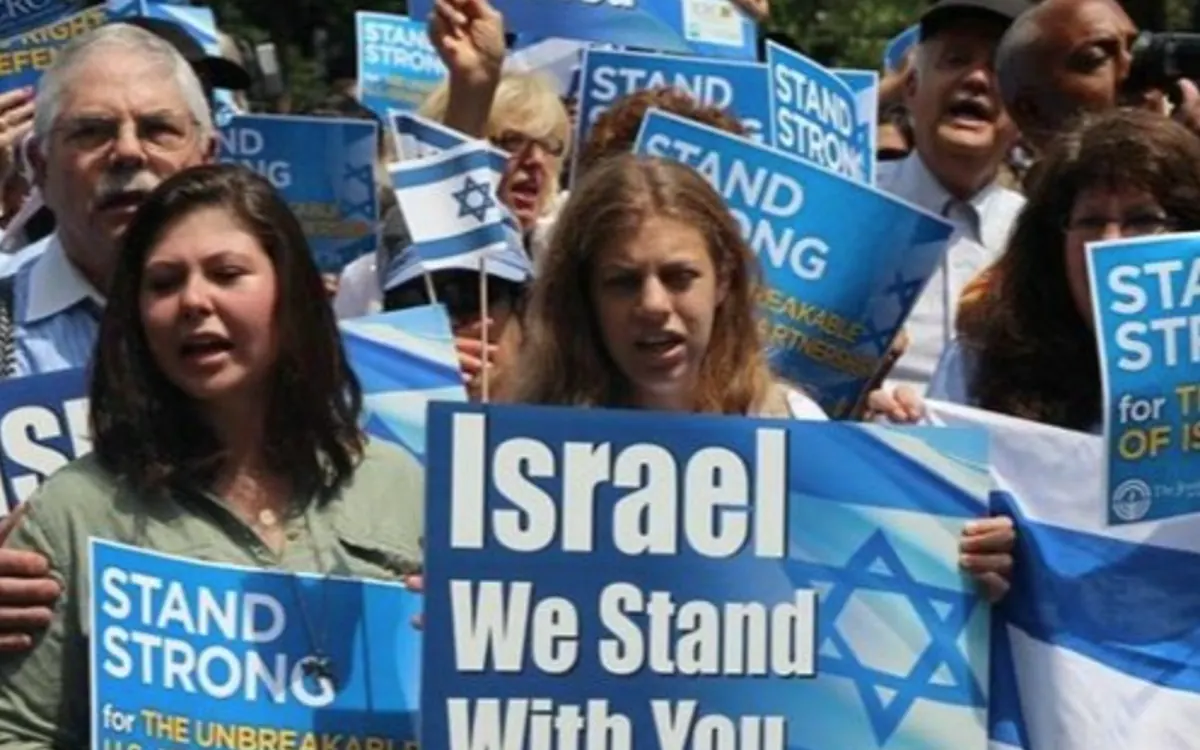
History is all about telling the story after the fact, but there is a particular wisdom to be gained in the heat of the moment which is easily lost in hindsight. The first episode of season four begins to explore the impact of the Six Day War on American Jewry through the wisdom of the moment itself.
About this episode
The meaning of life differs from man to man, from day to day, from hour to hour, says Viktor Frankl, so what matters is the specific meaning of a person's life at a given moment. Rav Mike opens Season 4 wondering what it is all about, pushing back on the mockery of 2020 hindsight, since historians and therapists live off the truth that we understand the significant events of our life only after the fact. Yet hindsight has blind spots, valuing the thirty-thousand-foot view while undervaluing the passion of experience, the subjective awakenings that emerge in the heat of the moment, and the dreams that have the power to change the world. Wallace Stegner's Doppler effect of time captures it, how a thing coming at you has a higher pitch than the same thing going away. The target is 1967 through 1978, and since something shifted in the Six-Day War, Rav Mike wants to stand in the day after rather than watch it retreat in the rearview mirror.
The moment of truth came for Rabbi Arthur Hertzberg on the night of May 26, 1967. Three days after Nasser closed the Straits of Tiran, with genocidal rhetoric pouring across the global media and Abba Eban getting only empty assurances from Lyndon Johnson, Hertzberg looked out at his conservative synagogue in Englewood and saw a Friday night crowd approaching high holiday numbers. Born Abraham Hertzberg in Poland in 1921, he came to America in 1926, shed his Hebrew name and his Orthodox upbringing, and became a leading scholar of the conservative movement, a disciple of Mordechai Kaplan and Salo Baron who taught him that Jewish identity in America would survive only if redefined and reconstructed. He made it his mission to craft a sustainable American Jewish identity, and loved to challenge every sacred cow, questioning a Judaism built on nothing more than support for Israel and veneration of the Holocaust. But not that night.
At the end of the service Hertzberg announced an appeal for Israel and, in an unprecedented move, called people to stand and declare their gifts before the congregation. In the space of an hour the room went from fearful and sad to elated, with the energy of an old revival, though the people were throwing down their dollars rather than confessing sins. His lengthy Commentary article of August 1967 set the mold for the standard telling of the war as a radical turning point. Later analyses complicate that story, and there is wisdom in them, yet Hertzberg caught a truth available only in the moment, that the power came from the act of giving itself, which moved people from passive spectators of tragedy to active participants in the struggle. Over a hundred million dollars was raised in under three weeks, mostly in cash, and Jonathan Sarna recalls that no one had ever seen anything like it.
The giving went beyond money. Hertzberg describes Jews in their thirties and forties who had never joined organized Jewish life suddenly emerging as leaders of the campaign, their contributions out of all proportion, driven by a wish to make up for past neglect and a need to be counted in a moment of manifest danger. Israeli consulates and Hillel directors were swamped by young people begging to take over the civilian jobs of mobilized Israelis, some ten thousand applications before the travel ban. One man arrived at the Jewish Agency at dawn, pushed forward his two sons, and said he had no money to give but here were his boys, please send them over. Truth tends to fade, which is why emunah is never a static state but an activist stance, a commitment to build a life that can hold the moments of truth we are graced with, and for American Jewry those vessels were the federations.
The deeper shift was national. Rav Mike reads Ben-Gurion through the old tension of whether the task is to save Am Yisrael or to save the Jews, an identification of self with the nation that could rise to the highest vision or sink to the lowest corruption. His foil was Jacob Blaustein, whose non-Zionist American Jewish Committee guarded the claim that American Jewry was a religious community within the United States, the basis of the Ben-Gurion-Blaustein accord. June 1967 forced a renegotiation. A mass Washington rally the elitist AJC would once have shunned became a victory celebration, and the 1968 resolution spoke of a deep personal attachment and shared destiny that organically connect American Jews to Israel. In Riverdale, Rabbi Yitz Greenberg had feared a second extinction and imagined a sign on his shul, yet terror turned to pride, welding Holocaust memory and support of Israel into the twin pillars, a week Elie Wiesel could compare only to Sinai.
Key ideas
- Hindsight offers the thirty-thousand-foot view but undervalues the passion of experience and the dreams that change the world.
- Hertzberg's Friday night appeal on May 26, 1967 turned a fearful congregation to elation through the act of giving itself.
- The power of the moment moved American Jews from passive spectators of tragedy to active participants in the struggle.
- Over a hundred million dollars was raised in under three weeks, and ten thousand young people applied to serve in Israel.
- Emunah is an activist stance, and the vessels that held the moment of 1967 for American Jewry were the federations.
- June 1967 renegotiated the Ben-Gurion-Blaustein accord, welding Holocaust memory and support of Israel into the twin pillars.
Chapters
- 0:00 Frankl; the wisdom of the moment
- 2:38 The Doppler effect of time
- 4:54 Three axes; across to American Jewry
- 7:06 Shifting trends to watch
- 9:21 The moment of truth; emunah
- 10:26 Hertzberg's Friday night, May 26
- 14:51 The appeal; from fear to elation
- 17:04 The act of giving itself
- 18:06 A revolutionary awakening; the money
- 20:20 Here are my sons
- 22:26 Emet and emunah; the vessels
- 24:41 Ben-Gurion; save the nation or the Jews
- 27:58 Blaustein and the non-Zionist accord
- 30:11 The AJC and June 1967
- 33:42 Yitz Greenberg; the sign on the shul
- 35:59 From terror to pride; Wiesel
Who, where and when
People
Viktor Frankl, Wallace Stegner, Arthur Hertzberg, Mordechai Kaplan, Salo Baron, David Ben-Gurion, Jacob Blaustein, Morris Abrams, Yitz Greenberg, Elie Wiesel
Places
Englewood, New Jersey, Washington, D.C., Riverdale, The Straits of Tiran
Texts
Hertzberg's Commentary article, The Angle of Repose, The Ben-Gurion-Blaustein accord, The 1968 AJC resolution
When
1967 CE: the Six-Day War, May 26, 1967 CE: Hertzberg's Friday night appeal, June 1967 CE: the victory rally in Washington, 1968 CE: the AJC resolution of organic connection
Read the transcript
For the meaning of life differs from man to man, from day to day, and from hour to hour, says Viktor Frankl. What matters, therefore, is not the meaning of life in general, but rather the specific meaning of a person's life at a given moment. Well, I've been blessed to live a life rich in meaning, but right now, at the beginning of a whole new season, I'm simply wondering what it's all about. Because I'm Rav Mike Foyer, and this is The Jewish Story. Episode 1, American Jewry After 67 Part 1, The Wisdom of the Moment. Anybody else feeling the pressure? Starting something new always brings to mind that classic phrase, Ko Hatchalot Kashot. All beginnings are super difficult. And now that I've gotten that feeling out of the way, I just want to bring up another issue.
Does anybody else feel that the phrase 2020 hindsight has lost all of its charm in the last eight months? Yeah, I'm sure you do, and we've seen it all over social media, but I want to push back just a little bit, because despite our mocking stance on the 2020 number, the wisdom of the phrase hasn't lost any of its force. Because it's simply a bread-and-butter assertion of historians and therapists that we only really come to understand the significant events of our life after the fact. While this is true, and I basically make my living off it, hindsight also has its blind spots. It's important to remember. The post-game analysis, they allow us to see much that we miss in the moment. The objectivity offered by a remove from the events in question and the so-called 30,000-foot view, which can only be attained by seeing the whole after the events have unfolded.
Yeah, that's a lot, but after-the-fact perspective tends to value the power and passion of experience. The subjective awakenings, the internal truths, will only emerge in the heat of the moment. Not only that, but when hindsight is applied to life or history, we risk forcing unique events into general molds and narratives in our attempt to gain understanding. The need to make sense of the past leans heavily on frameworks, which may or may not fit the truly life-changing historical events. For instance, I never listen when someone tries to compare the situation in our fair little country to anywhere else in the world. Because as far as I can tell, there is no precedent for people reconstituting itself in its native homeland after 2,000 years of exile.
Now, I suspect that at some point in the last three seasons, we spoke about this idea of the Doppler effect of time. It's a notion which the American author Wallace Stegner develops in his great novel, The Angle of Repose. And this is how he says it. The sound of anything coming at you, a train or the future, has a higher pitch than the sound of the same thing going away. If you have perfect pitch and a head for math, you can compute the speed of the object by the interval between its arriving and departing sounds. I have neither perfect pitch nor a head for mathematics. Anyway, who wants to compute the speed of history? Like all falling bodies, it constantly accelerates. But I would like to hear your life as you heard it, coming at you, instead of hearing it as I do.
A sober sound of expectations reduced, desire blunted, hopes deferred or abandoned, chances lost, defeats accepted, griefs borne. This quote, for me, puts his finger on the problem of all historiography, one which is particularly acute in the season to come. And that is, since I could never access the actual experience of the players in history, And because, consciously or not, I have some sort of larger narrative into which I weave the events that I'm examining, the desires, hopes, dreams, and griefs of the people involved are systematically undervalued in my analysis. And the dreams, of course, are specifically what has the power to change the world. So we've got a whole season ahead of us. My general target, just so you know, for this chapter of the Jewish story is from 1967 through 1978.
And you may know why that number would be chosen. You may not. I guess you'll just have to wait and see how it unfolds. But here at the beginning, in 1967, we can all agree, historians, politicians, theologians, that something changed in the Six-Day War. That the world in which we live, certainly from Israel, but really for the nations as well, underwent some sort of shift. Now, we're going to trace that changing reality in Israel, amongst the Jews of the diaspora, and also in the international community. But at this point, having spent all the time that we spent putting together the details, we have a unique opportunity to try and understand the actual experience of the Six-Day War and how it impacted the world in the immediate aftermath, instead of looking at as it retreats in the rearview mirror, so to speak, in that Doppler effect of time metaphor.
So in general, the three axes of investigation that I laid out at the beginning of last season haven't disappeared. On the contrary, after two decades of the state, they've become even more relevant. And so they're going to continue to guide us to some degree in what lies ahead. And you'll remember those are Amba'artzo, what does it really mean to be a people in our land? The Jewish people as a whole, what is the relationship between the Jews who live in the land of Israel and those who do not? And of course, Israel amongst the nations, the perennial question, the Jewish question. Now, season three ended with a focus on the event in the land of Israel, but I haven't gotten to their aftermath quite yet.
We haven't touched that question of what it means to be a people in our land. Now that the land is tripled in size, Yushalayim is when you read your night and ha-habayit be a-denu, right, the temple mounts in our hands. That's going to be a big discussion, and frankly, it probably won't end this season. And of course, we know that the Six-Day War shook the entire Middle East, and through the Cold War and the religious awakenings to come, actually shook the whole world. We'll come to that discussion as well, don't worry, but not yet. Today, I want to start Season 4 across the Atlantic from where we were last, in the heart of American Jewry. In Season 3, we devoted significant time to the development of American Jewry in the 60s, I hope you recall.
We laid out the narrative themes of black-Jewish relations, the role of Jews in shifting American culture and politics, the question of assimilation, and many other elements. We spoke even about 1967, but mostly as the summer of love, we barely touched on how the event in Israel in June of 67 impacted American Jewry as a whole. So in the episodes ahead, there are a few shifting trends we're going to need to keep an eye on. And consider how much they're actually a response to the Six-Day War, and how much they represent a more local, organic American Jewish process. So let's just give them a little bit of thought what they are. One is the gradual shift in infrastructure, meaning fundraising, education, the communal structures of American Jewry toward Israel.
I mean, by the time I grew up in the 80s, Israel was the center of my Jewish education, and raising money for her was a virtual mantra. That's just how we did it. But as we've seen in previous episodes, this was not the case in the first two decades of the state. Another development we're going to have to watch is going to be the digestion and integration of the Holocaust into the consciousness of American Jewry. That's, of course, a process which continues even today. And my sense is it's going to take at least another hundred years or so before we can really come to any real terms with that event. but American Jews' experience of the agony and ecstasy of June 67 will play a significant role in how the Holocaust is received into their hearts and minds.
We're going to also trace how the Jews navigate the larger American shift away from the melting pot model of society and toward what we call the toss salad. If you were paying attention last season, you heard that as the 60s drew to a close, ethnic pride began rapidly to replace assimilation as the cultural American aspiration. And let's not forget that it was actually American Zionist Horace Callen who first introduced that idea and that model of social structure as an intellectual aspiration. We'll come back to him, don't worry. Then there is, of course, this wave of Jewish pride and Zionist identification which will sweep American Jewry in the wake of the war, which will have a significant and complex set of influences on the emergence of the Jews as a distinct ethnic voice in the, quote, chorus of American culture, as Callan called it.
So basically, we've got our work cut out for us. And I'm going to take it slow in order to be sure that we do the job right. And frankly, like I said, at every beginning, there's always a sense of, I just need to catch the wheels and traction, and we'll see where this heads. But, like I said, all these are questions of the historical perspective. To be analyzed after the passage of time has smoothed out the passions, like Stegner said. Right now, we still have the opportunity to be in the day after. And I'm interested in the power of the moment, in the transformation offered by experience rather than its subsequent understanding. So, let's strike while the iron is hot. I hope you had a moment of truth at some point in your life One of those experiences when the world sees rim with fire and every detail stands out as if it will be eternal.
Now, it's a truism that those moments fade. We don't live in the world of truth. We live in the world of right and wrong. And the bright light of truth is quickly dimmed by the shades of gray that make up the nuance and complexity of our existence. Now, that's not to say that truth is unavailable. It's just that it's a precious and fleeting experience. One, which if we want to hold it, actually demands emunah. But I'm going to come to that in just a little bit. For now, the moment of truth around the Six-Day War came for Rabbi Arthur Hertzberg on the night of May 26, 1967. Now, I can imagine that this was a hard night for Jews all over the world. If you recall, only three days had passed since Nasser placed his blockade on the Straits of Tehran, and since then, the global media had been projecting his torrent of genocidal rhetoric and hate all over the world.
And we know for sure that it was a hard night for the Israeli government, because this was the night on which Foreign Minister Abba Evin was finally able to get his meeting with President Lyndon Baines Johnson, a meeting which resulted in nothing more than empty assurances and a stark warning against Israel going it alone. But for Arthur Hertzberg, Rabbi of Emanuel, a large conservative synagogue in New Jersey, it was also Leel Shabbat. And as he looked out at the gathering congregation that evening, he sensed that something unprecedented was underway. Now, as somebody who grew up in the active arm of the conservative movement, I can tell you that Friday night services were sweet. They were joyous, but they were never crowded.
Friday night was a time when the deeply committed came together, not a mass community event. But on the night of the 26th, the sanctuary there at Emmanuel was near capacity even before the service started. The numbers were actually approaching high holiday crowds, which in the conservative movement is the high water mark of attendance. Now since, until his death, Rabbi Arthur Hertzberg was a pillar of the American Jewish establishment, before we talk about this night in particular, I think he deserves a quick introduction, at least before we get to his moment of truth. Born Abraham Hertzberg in Poland in 1921, his family immigrated to America in 26. And as he grew, Arthur shed his Hebrew name, and eventually even his Orthodox upbringing, going on to become one of the leading scholars, actually, of the conservative movement.
But despite that shift, Arthur Hertzberg was no assimilationist. He maintained a lifelong love of and commitment to Jewish learning and culture. In fact, fought to defend its status in the eyes of his increasingly assimilated congregation. As he would say later in life, I never use my heresy as the excuse to prefer the majority culture to my own. Hertzberg, like I said, was a scholar and disciple of both Mordechai Kaplan, founder of the Reconstruction movement, and Jewish historian Salo Barron, who really founded the whole field in America. And they instilled in him the idea that Jewish identity in America would survive only if it was redefined and reconstructed. So it should come as no surprise that I've chosen him to examine this moment of definition for American Jewry.
In fact, since his student days, crafting a sustainable American Jewish identity became a lifelong mission. And in the six decades of his career, Hertzberg was a pulpit rabbi. He was the leader of several major Jewish organizations. He published numerous books and articles beyond count. Along the way, he made it his business to challenge every sacred cow of American Judaism. Living by the simple dictum, a rabbi should be where the real issues of society are. not where the safe platitudes are to be preached. In particular, Herzberg constantly questioned the viability of a Jewish identity built on nothing more than unwavering support for Israel and veneration of the Holocaust. Those are the twin pillars, by the way, of non-Orthodox American Judaism in the post-67 era.
And, once the euphoria of the war had passed, he was amongst the first to advocate for the establishment of a Palestinian state alongside Israel. Basically, he loved to rock the boat. But not Tanakh. The night of May 26, the rabbi was at one with his congregants. They were united by their fear that the boat might actually go down. That the war clouds gathering in the Middle East would break into a storm that would wash away Israel altogether. Now in Tel Aviv, they were in the midst of the Hamtanah, the waiting period that we spoke about last season. and on some level they were able to handle it better by filling sandbags, converting parks into cemeteries and readying their guns. But none of those were an option or even a necessity in Englewood for better or worse.
But Hertzberg was a leader and he knew that if the somber mood that he felt was allowed to persist and spread he risked letting his congregation slide into despair and that that was a real danger for American Jewry. And so in that moment, he decided to take a risk. It may appear small, but in the end, it was quite significant. At the end of the service, Rabbi Herzberg stood up and announced an appeal for donations with all the money to be devoted to Israel's well-being. And in what was really an unprecedented move, he called upon people right then and there to stand up and declare their contribution before the congregation. And with that, everything shifted. In the space of an hour, the room went from fearful and sad to elated.
It had all the energy of an old-time revival. But rather than confess their sins and spit out the devil, the people were declaring their support and throwing down their dollars. Now, Hertzberg wrote one of the first analyses of American Jewry's reaction to the Six-Day War. It was a lengthy article in Commentary Magazine published in August of 67. I'll put the link up on my Patreon feed. In many ways, this article set the mold for the standard historiography, the way the story gets told, how the Six-Day War was a radical turning point for American Jewry. Much ink has been spilled since then, demonstrating that not so fast. It wasn't really so, pointing out that there were many organic processes of change already underway before 67, that in fact, it wasn't a mass movement.
It was only the committed who changed, while the uncommitted continued to drift away, etc., etc. And there's wisdom in these 2020 hindsight analyses. But Hertzberg article, written two months after the fighting ceased, expresses a truth which can only be found in the moment. In it, he describes that Friday night in his shul. And he notes that the power that transformed his congregation came not from some sense that their money would somehow save Israel. I mean, no one was that foolish, but rather from the act of giving itself. That in that act, all the people present moved from passive spectators of an unfolding tragedy to active participants in the struggle, and that made all the difference. The fear of the consequences, which come from standing passive in the face of evil, obviously resonates with American Jewry's experience of the Shoah, of the Holocaust, and in fact is going to be a keystone concept for us as we attempt to understand how support of Israel and Holocaust memory welded themselves together to attain the status within American Jewish identity that they have to this very day.
I'll mention a little bit of this more before the end. But for now, just know that Congregation Immanuel was far from alone. In the article, Herzberg paints a picture of a revolutionary awakening of Jews across America. The amount of money accumulated in the three weeks between the blockade and the victory was unprecedented, not just in Jewish terms, but in the history of private philanthropy in America altogether. Well over $100 million in less than three weeks, the majority in cash. Professor of Jewish history Jonathan Sarna put it this way, the unbelievable amounts of money that were collected before and during the war, nobody had ever seen anything like it. American Jews didn't want people to say we did nothing.
There wasn't much they could do, but they knew they could give up their wealth. And of course, since the beginning, giving has been a bedrock aspect of Jewish identity in general, and American Jewish identity in particular. We spoke last season about paycheck Judaism. And many communal institutions functioned essentially as a means to redistribute wealth to those in need. It was a role that made them leaders in communal affairs altogether. And that's why when the National Board of the United Jewish Appeal met in special session on May 29th, only a few days after Hertzberg's service, to launch its nationwide emergency campaign, they assumed that they would lead the way. But they were already too late.
That moment of giving in Temple Emanuel was part of a grassroots upwelling, and by the time the UJA board even met local campaigns were already underway in dozens of communities no one waited no one needed to be told that this was the time to act And not just that Herzberg notes that many of the Jews in their 30s and 40s who had never before participated in organizational Jewish life, suddenly emerged as leaders in both the giving and the organization of the campaign. He points out that the financial contribution of these new elements were astonishingly large, all out of proportion to what one would have expected. And he hypothesized that their desire to make up for past neglect was driving them.
Not just that, it was also a wish or perhaps even a need to be counted in during a moment of manifest danger. Now, if Hertzberg had any doubt that this was a defining moment, a drawing of lines, an awakening of identification between American Jewry and Israel, the volunteerism, which went well beyond the giving of money, sealed the deal. Toward the end of the article, he describes how in the last days of May, Israeli consulates and Hillel directors across America were overwhelmed by hundreds of young people who wanted nothing more than to go to Israel to take over the civilian jobs of their peers who were mobilized in the army. By the day the war broke out and a ban of travel to the era was imposed by the American government, some 10,000 applications had been recorded throughout the country.
And on June 5th itself, the outpouring of volunteers was so intense that it completely swamped every one of the bureaus of the Jewish agency. A high official of the agency told Hertzberg that as he arrived at the front door of the building very early in the morning, a cab drew up and a man jumped out, followed by two younger men. He stopped this agency official and he said to him, I have no money to give, but here are my sons. Please send them over immediately. Now, what could be more true than that? So like I said, I hope you've experienced a moment of truth in your life. Some point at which you said, yes, yes, that is it. And if you have, then you probably know the bittersweet nature of truth in our world.
That it tends to fade. It's dulled by time, battered by doubt, undermined by what the world around you says is reasonable. And if, God forbid, you let that process go unchecked, you may very well come to question whether that moment occurred at all. And this is the relationship between emet and emunah, between truth and faith. or rather truth and faithfulness because emunah is never a static state of being. Emunah is not something which you have. Emunah is something which you do. It's an activist stance. At its heart, emunah means a commitment to building one's life into a vessel which can hold those moments of truth with which we're graced. Now I've seen this reality countless times on the personal scale as a counselor.
Realizations about our behavior, our drives, our dreams, our deepest wills, the nature of relationship and communication are really powerful moments of truth. They can bring us to tears. I've seen kids vomit. But if they're not followed by a deep commitment to an ongoing process of change and growth, to a rebuilding of our life around the reality which has been exposed in the moment, then that reality quickly fades. and we often will move back into a posture of defending a way which we most likely don't even want to be. And what's true for the individual is true for the nation. A moment of truth like the Six-Day War sheds a great light on who we are and where we're headed. That light will fade unless we build the vessels to hold it.
And for American Jewry, those vessels are communal organizations. Of course, they don't have a government like we do here in Israel. And in general, we can see from the literature that there was an undeniable shift in American Jewish institutional infrastructure in the decades post-67. If you grew up in the American Jewish world like I did, this is the arrow of the rise of the federations. Their importance grew exponentially, just as the goal of providing economic assistance to Israel eclipsed the goal of communal social services as their primary purpose and, of course, fundraising target. And that growth was driven also by the move of Israel towards center stage and the general Jewish communal agenda.
The federations weren't just expressing the same concern as the average American Jew. They were offering the opportunity for the individuals to put their money where their heart was and feel part of this great adventure. And before too long, even on the local level, federations were standing beside synagogues as the most critical grassroots Jewish institutions, which is the way in which many Jews became bound to Israel. Now that's the big picture of the Amunah, which reflects the effort to hold this moment of Emetz of 1967. But I'm still interested in the heat of the moment. You know, I recently had an exchange with a listener who confessed to me, you know, I'm really starting to hate David Ben-Gurion.
His particular beef in the moment was that he saw Ben-Gurion's constant bowing to the colonial powers as despicable. And it's a complaint which I share. But you know, in my experience, Ben-Gurion stirs a lot of bad blood out there. It wasn't just this particular listener. He's simultaneously the most revered and the most despised of all Israeli leaders. And both for good reason. Now is not the time for a full analysis of Ben-Gurion's character and motivations. Go back to end of season two and season three if you really want to get my full take. But what I see to be his primary driver in decision-making is actually directly relevant to our present discussion about the shifting nature of the relationship between American Jewry and Israel on the institutional front.
If you look back over the decades between, I don't know, let's say, between the Balfour Declaration of 1917 and the Suez Campaign of 56, it's not hard to discern a primary tension amongst Jewish leaders and intellectuals. And I'll sum it up like this. Is our task to save Am Yisrael, the Jewish nation, or to save the Jews? And the question was especially sharp as the Shoah began to unfold, and information of what was happening to so many European Jews began to leak out. A lot of the ugliness and the attitude of the Yishuv leadership at the time was, of course we care about every Jew in theory, but we're fighting a war to save the nation, So we'll save this Jew or that one insofar as the national goal is met.
And if you look closely, you'll see the same reasoning in Ben-Gurin's attitude toward the suppression of the underground, which he considered to be jeopardizing the national home. And he, of course, brutally suppressed. And that was an act in which he took pride, remember, declaring that the cannon which fired on the Altalena would be placed in the courts of the Third Temple. I think it also played a role in both the conscious and subconscious suppression of the survivor identity within the first couple decades of the state. And I could bring many more examples. It's certainly a primary split between American and Israeli Jewry. Now, for Ben-Gurion himself, it actually reached the point of an almost absolute identification between self and welfare of the nation, read state.
Something which, in fact, can be the highest vision, but can also bring about the lowest corruption. The difference, as unfortunately we see in our day, is really whether that's an identification of self with the state's well-being or self's well-being with the state. But we can talk about that some other time. On the flip side of Ben-Gurion and the national perspective is American Jewry, founded on a religious and not national association. Their founding identity was much more about the Jews than Am Yisrael. Now that's of course not to say communal identity wasn't central to American life, but it is to say that for the formative decades of Zionism, among American Jews, the nation was by and large not their focus.
And the obvious choice for Ben-Gurion's foil in leadership on the American side of the ocean was Jacob Blaustein, his partner in the so-called Ben-Gurion-Blaustein Accord, which we detailed back in Season 3, Episode 11. If you want, go back and read up on it. But for now, just recall that this agreement set the modus vivendi, which ruled relationships between Israel and American Jewry for the first two decades of the state. And I can sum it up in the simple statement, quote, The Israeli government speaks only for its citizens. Jews of other countries are not part of that nation. Okay, that may sound obvious, But really, American Juries aren't part of the Jewish nation? The American Jewish leadership and the bulk of American Jews wanted to be Jews, not the Jewish nation.
And Ben-Gurl and Blaustein Accords served to keep their national identity at arm's length. But like so many other things, the event of 1967 forced a renegotiation. The institution that Blaustein headed, the American Jewish Committee, had been a flagship non-Zionist community organization of American Jews since well before the state was born. It was founded in 1906 in wake of the Kishinev pogroms with the stated purpose of advocating for the defense of Jews everywhere and they sought to distance themselves from Jewish nationalism from its first emergence Now, it's true that as the existence of the state post-48 became fait accompli, the AJC moved marginally closer to a Zionist worldview, driven both by a genuine concern for their co-religionists, as they called them, and by the gradual spread of Zionist sympathy amongst mainstream American Jewry.
After all, they are a communal organization. Nonetheless, they never really shed their mildly anti-Zionist reputation. And while they worked to help the young state, they also zealously guarded against any perception, public or private, that American Jewry was anything other than a religious community within the polity of the United States. Hence, the Ben-Gurion-Blaustein Accords. And that gradual shift toward a more Zionist worldview hit its inflection point, surprise, surprise, in June of 1967. Now, as the tensions grew through the spring, the AJC was increasingly active in calling upon the American government not to abandon Israel. And as spring turned towards summer and the pressure rose, a mass rally was planned.
The goal was to bring as many Jews and Israel supporters as possible to Washington, D.C. on June 7th. It was precisely the type of public event of the show of force which the elitist AGC had always shunned. Even during the Holocaust, they preferred high-level discussions and quiet diplomacy to mass action. But this time, something was different. AJC President Morris Abrams not only endorsed the rally, but he urged local chapters to encourage their members to attend. Now, of course, if you're following the dates, the war broke out before the rally occurred. And on June 5th, the AJC leadership was gathered in a special emergency mission, certain that the state could not possibly survive without direct American intervention.
And they were on the verge of deciding to throw all caution to the wind and make a direct appeal to the administration to save Israel when two phone calls came through, one after the other. The first was from the Israeli embassy in Washington, informing them that Israel had already won the war, and thank you, but no thank you, we do not need American assistance. Now just picture it. Complete confusion, stunned and in disbelief. Morris Abrams and his colleagues put down the receiver and tried to figure out what had just happened when the second call came through to dispel the cloud around them. It was Joseph Califano this time, special assistant to President Johnson, who announced, quote, Israel has won the greatest victory in the shortest campaign in all history.
Now, needless to say, that planned rally became a victory celebration, and the AJC suddenly found itself standing front and center in the midst of the mass expressions of relief and joy at the national salvation. President Morris Abrams was a featured speaker in a speech which was basically unprecedented. In the history of his institution, he exclaimed, we did not foresee that tiny encircled Israel would be able to overcome fanatical adversaries equipped with Soviet arms. But the people of the book have proved the verities of the book, not by power nor by force, but by thy spirit, saith the Lord. Those are poetic words. But if you really want to understand what happened, it would only come slightly later in the resolution passed at the annual AJC meeting in 1968, where the total shift becomes apparent.
It reads, The overwhelming and spontaneous response of American Jewry when Israel was threatened last year has made manifest to all the deep personal attachment and the profound sense of a shared history and destiny that organically connect American Jews to Israel. That's a national perspective. And like I said, sometimes the truth only comes out in the moment. There's one more aspect of this moment of truth that I want to touch on, and that's how the Six-Day War affected the way in which the Holocaust was absorbed into American Jewish memory. This is a huge topic, and I can tell already, not just by looking at the clock, but by looking at my notes, that it's going to need an episode of its own, at least.
Certainly one for America and one for Israel. But since I've mentioned it a couple of times, it deserves at least a nod at the present moment. And because my focus is on the truth, which becomes clear in the moment, rather than the understanding that emerges over time, I want to take us back once again to June 5th, 1967. And not just back to June 5th, but back to Shul. On the morning of June 5th, 1967, as Israeli Air Force streaked over the Sinai Desert, and Moti Hode was chewing his fingers in the IDF headquarters waiting for word about Operation Mokade, Rabbi Irving Yitz Greenberg sat amid his congregants in the synagogue in the Riverdale neighborhood of the Bronx. They were praying the daily prayers, but to say that the rabbi was distracted would have been a gross understatement.
In fact, Yitz Greenberg was filled with dread. He was consumed by fear that the Jewish people were facing extinction for the second time in only 25 years. He later recalled one of the people in his shul saying, they're going to wipe out Israel. What's going to be? To which he replied, they're not going to wipe out Israel. And if they do, there's going to be a sign up. The shul is closed. Faith could not go on with an unmitigated catastrophe of that size happening again. Now, the question of what faith looks like after the Holocaust actually became a center point of Rav Greenberg's thought. And his teachings on the subject would be a significant element in his rise to the leadership of the liberal side of modern orthodoxy in the decades ahead.
In fact, at the very same AJC annual meeting we just mentioned, Rabbi Greenberg gave a landmark speech entitled Cloud of Smoke, Pillar of Fire, Judaism, Christianity, and Modernity After the Holocaust. We're going to discuss it in an episode to come. For now, we can say for sure that thank God the rabbi was not forced to hang a clothes for business sign on his shul. On the contrary, within days, the fear that it permeated the room had turned to relief. And as the details of the astounding victory became known, that relief turned to pride. Embattled Israel had tripled its territory and taken control of all of Judaism's holiest sites. It took some time for him to see it, but eventually Yitz Greenberg realized that this rapid shift from terror to power, which he and the rest of American Jewry experienced in June 67, would set up Holocaust memory and support of Israel as the twin and intertwined poles of American Jewish identity.
It was a week so profound that when author Yossi Klein Alevi reached for a metaphor from Jewish history to contain it, all he could say was there was an emotional trajectory that united Jewish people in a way I don't think we've seen since the revelation at Mount Sinai 3,500 years before. And I can say that nothing short of such a redemptive revelation could possibly help Amisra begin to digest the catastrophic revelation of Auschwitz. Now, digestion is a slow and steady process, so right now I'm not going to explore exactly what that meant. Instead, I'm going to end once more in the moment with a quote from Elie Wiesel, a man who perhaps did more than most to help mend Israel's broken heart and digest the wake of the Shoah.
Has the Six-Day War produced a change in my Weltanschauung? Mews Wiesel in early 68? I'd go even further and say that the change was total, for it involved my very being as both a person and as a Jew. To destroy Israel, to let it be destroyed, would have meant the end of an affirmation, the end of hope, the end of our history, which we shaped as both Jews and human beings. The end of Israel would mean to me the end of man. Whatever happened last year represents for me, and I hope for you as well, a moment in which each gesture became an elan, an opening toward pride and humility and above all, astonishment. For me then, the problem is not how to explain it, but rather how to capture it, how to keep it alive and make it mine.
I just want to thank some folks. I want to thank all the folks who give their hard-earned money to help make this show happen. Now is the time, people, to put your money where your ears are and help make Season 4 happen. Go right now to my website, www.jewishstory.co. You'll see a button in the upper right-hand corner that you can click on to become a patron and make a little bit of per-podcast support. I'm also very happy to dedicate shows. Be in touch with me, RobMikeFoyer at gmail.com, or you can find me on Facebook, RobMikeFoyer. and I'll share with you the way in which you can dedicate a show in the honor of someone with you today or in the memory of those who've gone. I want to thank the Land of Israel Network, that's thelandofisrael.com, for creating a platform that allows me to reach so many wonderful people.
And I want to thank the Pardes Institute, pardes.org.il, for building an educational institution that gives me the privilege of teaching so many fantastic Jews. Finally, I want to thank you for listening. I'm Rav Mike Foyer, and this is The Jewish Story. .
More from Season 4
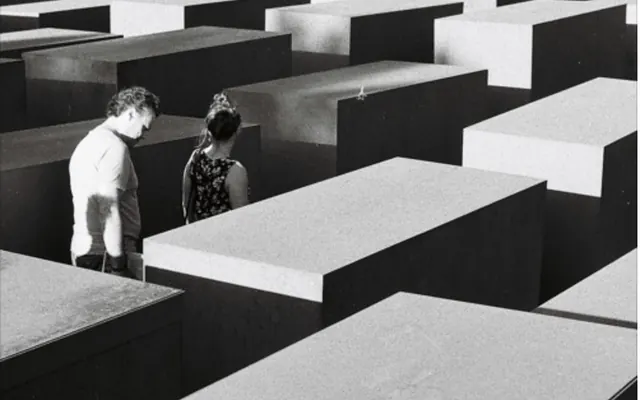
TJS S4E2 American Jewry after 1967 part II From Auschwitz to Jerusalem
As each decade passes, the Holocaust retreats in time and grows in memory and this is not a linear process - some years count more than others. This...
Play Episode
TJS S4 Interlude R' Yitz Greenberg and the God of History
How we chew and swallow what history shoves down our throat can define us as individuals and nations. Here is an interview with R' Yitz Greenberg, foundational thinker...
Play Episode
TJS S4E3 American Jewry after 1967 part III, the Ocean Hill-Brownsville strike
There are stories which are turning points in a larger tale, and there are those which prove to be tempests in a tea cup. The story of the...
Play Episode