
TJS S4 Interlude - Interview with Yossi Klein Halevi
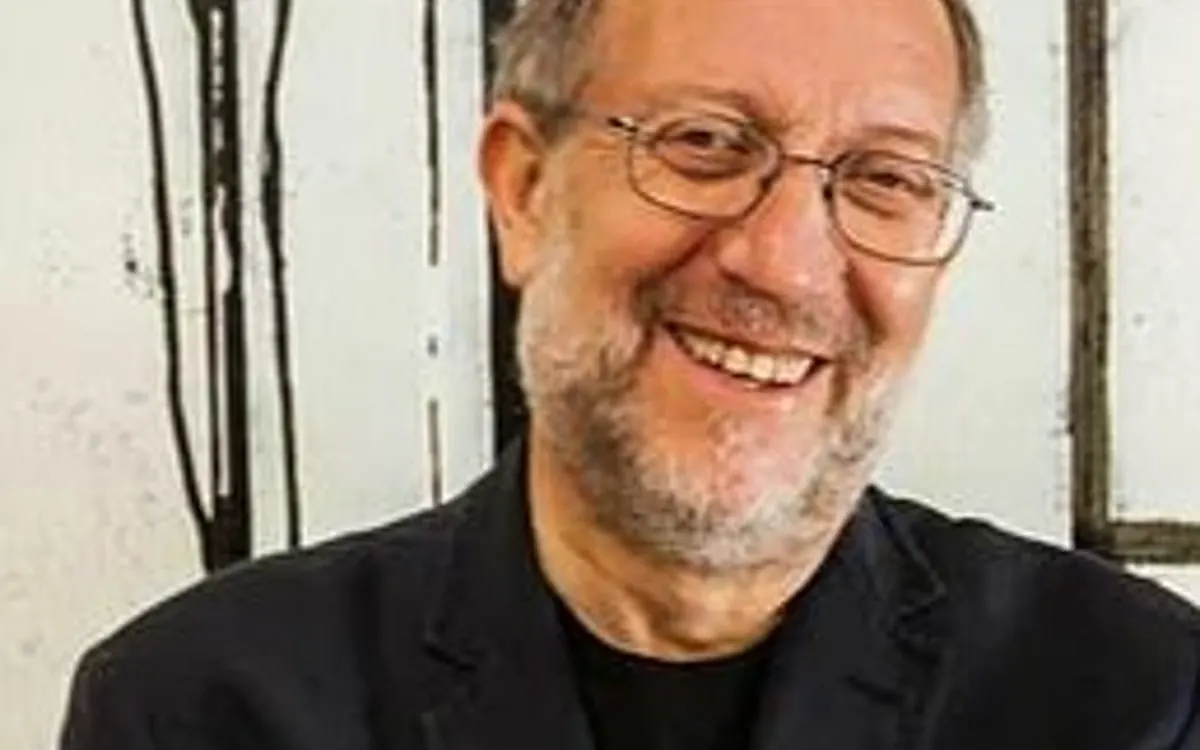
This week I host author and thought leader Yossi Klein Halevi. Our conversation touches on his personal experience the early struggle for Soviet Jewry, the challenges of writing, the power of Jerusalem to evoke dreams and much more. Tune in for an inspiring episode treating the impact of 1967 on past, present and future.
About this episode
Between things known and unknown, says Huxley, are the doors of perception. Rav Mike welcomes Yossi Klein Halevi, senior fellow at the Shalom Hartman Institute, to reflect on the material they are both working through. They start with Meir Kahane, subject of Halevi's first book, Memoirs of a Jewish Extremist, whom he describes as an anti-traditionalist fundamentalist, a radical theologian who built his own coherent theology by extracting from the four-thousand-year tradition its elements of vengeance and its glorification of violence. Where the sages said the Torah has seventy faces, Kahane found the seventy-first, and that theology laid the groundwork for atrocities done in the name of Torah, above all Baruch Goldstein's 1994 massacre of twenty-nine worshippers in the Tomb of the Patriarchs, which Halevi calls a monumental desecration of God's name. He traces Kahane's pull to the late sixties, when he himself was a teenage activist in the Soviet Jewry movement founded by Yaakov Birnbaum and Glenn Richter.
Kahane arrived telling Brooklyn kids they were doing it wrong, that the way to the front pages ran through violence, and his slogan never again referred to Jewish behavior rather than to the non-Jews, meaning Jews would never again stay passive while others were threatened. His genius, Halevi says, was crystallizing an overwhelming, unformed moment, the first reckoning with the Shoah as it turned from lived experience into memory and the shock of the Six-Day War, into a dangerously simplistic equation plugged into a call to action. Halevi credits the Soviet Jewry movement with bringing American Jewry of age, moving it past an old mindset that expected Jews to fight for everyone else's causes while keeping a low profile on their own, and he sees AIPAC as an organic outgrowth of that experience. The movement changed the psyche of the community, giving it the confidence to stand up and speak its mind.
They turn to Like Dreamers, Halevi's eleven-year study of the paratroopers who reunited Jerusalem, and to its multivocal form. For a long time the book had no voice, only a cacophony of left and right, until he woke one morning realizing the voice was the soul of Israel arguing with itself, which was also his own voice as an immigrant who landed in the summer of 1982 amid the Lebanon war and the full force of the left-right schism. He refused to join a tribe, choosing instead to join Am Yisrael in all its glorious messiness, subscribing to the settler magazine Nekuda and the left-wing Koteret Rashit and filtering the same events through both. His sense of Klal Yisrael he traces to being a Levi whose job is to serve the whole people, to a father whose Torah after the Shoah was Jewish unity, and to a childhood that moved between a Hasidic shtiebel and a conservative temple to feel at home among all Jews.
On Jerusalem he speaks of a Jewish version of the Jerusalem syndrome, the sense after nearly forty years of being a time traveler, a visitor from the Jewish future, who has never recovered from the realization of return. Recalling his own arrival at fourteen in the summer of 1967, weeks after the war, he describes the messianic anticipation, the rumors of a shoemaker's vision and an old Jew leading the paratroopers, and an emotional trajectory that ran from apocalyptic dread in May through relief and joy to euphoria, messianic fervor and awe, only twenty-two years after Auschwitz. Jerusalem collapses past, present and future, which is the dreamlike quality itself, and it is the most religiously cosmopolitan city in the world, though he feels it still lacks a real Eastern presence. From there they move to his work directing the Muslim Leadership Initiative and his book Letters to My Palestinian Neighbor, subtitled a new conversation.
Halevi expects a coming showdown with the Shiite axis of Iran, Hezbollah, Syria and Hamas even as much of the Arab world winds down its old war, so that an Arab-Israeli conflict gives way to a Muslim-Israeli one that demands a deep religious infrastructure, which is why the Gulf states frame their peace as the Abraham Accords. He is viscerally afraid of a Palestinian state and equally horrified at giving up Judea and Samaria, taking the settlers' starting point yet coming out, with pain, on a two-state solution set in a regional framework with Israel's new Arab allies. His book, translated into Arabic and reviewed warmly in Saudi media, tries to model respectful, passionate disagreement over irreconcilable narratives, telling the Jewish story to a Palestinian audience and giving them the last word. He closes that 1967 gave a mythic counterweight to the Holocaust, and that having seen the impossible repeatedly, he believes we live in a time of mythic fulfillment where redemption is also possible.
Key ideas
- Halevi reads Kahane as an anti-traditionalist fundamentalist who found the Torah's seventy-first face, a theology of violence that led to Goldstein's 1994 massacre.
- The Soviet Jewry movement brought American Jewry of age and gave it the confidence from which AIPAC organically grew.
- The voice of Like Dreamers is the soul of Israel arguing with itself, the form of an immigrant who refused a tribe and joined Am Yisrael in its messiness.
- His Klal Yisrael comes from being a Levi, from a father whose post-Shoah Torah was Jewish unity, and from a childhood moving between shtiebel and temple.
- Jerusalem makes him a visitor from the Jewish future, collapsing time, with 1967 running from dread through euphoria to awe only twenty-two years after Auschwitz.
- His new conversation models respectful, passionate disagreement over irreconcilable narratives, and he holds that we live in a time where redemption is possible.
Chapters
- 0:00 Huxley; introducing Yossi Klein Halevi
- 2:09 Kahane the anti-traditionalist fundamentalist
- 6:00 A poisonous theology; the Goldstein massacre
- 8:07 The Soviet Jewry movement; never again
- 13:41 American Jewry comes of age; AIPAC's roots
- 16:14 Like Dreamers; the soul of Israel arguing
- 18:26 Landing in the schism; refusing a tribe
- 21:45 Klal Yisrael; a father's Torah of unity
- 26:13 A pluralism built on the Shoah
- 27:18 Jerusalem; a visitor from the future
- 30:40 From dread to awe; the trajectory
- 34:00 The Muslim Leadership Initiative; a new conversation
- 38:14 A coming showdown; Israel's Arab allies
- 44:53 Modeling respectful disagreement
- 52:38 A mythic counterweight to the Holocaust
- 56:59 A time of mythic fulfillment
Who, where and when
People
Yossi Klein Halevi, Aldous Huxley, Meir Kahane, Baruch Goldstein, Yaakov Birnbaum, Nachum Barnea, Anwar Sadat, Menachem Begin
Places
Jerusalem, Brooklyn, Judea and Samaria, Abu Dhabi
Texts
Memoirs of a Jewish Extremist, Like Dreamers, Letters to My Palestinian Neighbor, Shivim Panim LaTorah
When
1965 CE: joining the Soviet Jewry movement, 1967 CE: in Jerusalem after the war, 1982 CE: aliyah in the first Lebanon war, 1989 CE: Berlin after the wall, 1994 CE: the Goldstein massacre
Read the transcript
There are things known, and there are things unknown, said Aldous Huxley, and in between are the doors of perception. Well, Lord knows, I'm always looking to know more, and there are probably things I'd like to unknow. And unlocking doors along the way is what I'm all about. Because I'm Rav Mike Feuer, and this is The Jewish Story. Season 4, Interlude. Interview with Yossi Klein Halevi. Okay, so I know everybody is as excited as I am to continue the story of the land and the state rolling out of last episode. And don't be afraid. I'm going to do it. I'm working on something really exciting right now. I'm very charged on the story of the return to Gush Etzion, right, the Etzion block, if you're familiar.
But that's going to lie a little bit in the future. Because right now, really in response to your feedback about the interviews that I've done so far this season, and before I even get into it, please, the feedback is critical, people. Rav Mike Foyer at gmail.com Rav Mike Foyer on Facebook you can find me Rav Mike.com you can even find me on the Jewish Story website wherever you look I'm happy to hear what it is you think I ought to be doing so do it so as I said in response to your feedback and of course not solely your feedback because really it's my interest to speak with the guests I have today because I'm pretty excited I'm excited for the opportunity to speak with Yossi Klein-Halevi he's a senior fellow at the Shalom Hartman Institute non-resident fellow of the Trends Think Tank and Abu Dhabi, and of course, author, op-ed writer extraordinaire, and I believe father as well, yes?
My God, three kids. Yeah. Well, and that is perhaps the most precious task. You know, so what I would like to do is give my readers an opportunity to sort of hear your perspective on the conversation we're already having. I filled you in a little bit before the show, but I'll just kind of remind you, and I've I've spent the first five episodes of Seed and Floor exploring the impact of the 1967 Six-Day War on Israel and on American Jewry. And I feel that for a number of reasons, you're going to have not only unique insight, but on a number of the things we've touched on. So with your permission, I'm going to dive right in. Sure. So I started off in America. One of the episodes I did was on the early Soviet Jewry movement.
Something I know that you were involved in and I'm excited to hear a little bit about. And in particular, I used it as an opportunity to introduce a very powerful and in the minds of many problematic personality at that point in Jewish history was Rav Meir Kahane. And for folks that don't know, your first, I believe your first book, yes? Memoirs of a Jewish Extremist? Yep. Fantastic book. Something that actually resonated much, if not with the particulars, having grown up at a different time in a different place, but at least with a certain element of the arc of personal development really spoke to me. And it's a book about your journey from the JDL, from involvement in that Soviet Jewry movement, to, let's just say, a very different place.
So opening question, I would love it if you could share with me and with everybody listening, a memory, a thought, a feeling from the time, from the late 60s, 1968, you know, 60s, 69, which for you really captures Rav Kahana. Well, it's good to be with you, Rav Mike, and thank you for the podium. I haven't thought about Mayor Kahana for a very long time. I certainly don't think of him as Rav Kahana. I don't think of him with that weight of tradition. And I see him as a rebel against the tradition. I see him as a fundamentalist, but an anti-traditionalist fundamentalist in a very paradoxical kind of way. Can you explain that a little bit more? Anti-traditional fundamentalist. Yeah, I think that Mer Kahana, who claimed to be speaking from the depths and authenticity of Torah, actually was a radical Jewish theologian.
And is one of the few people in our generation who created his own theology. I think it was a poisonous theology. I think it was a theology that was really based on hatred and revenge and violence. But what he did was, and this was quite an original move, he extracted all of those elements within our 4,000-year tradition. And, you know, in the corpus of Jewish tradition, you can find a lot. Almost anything. You can build a case for really, as you'd say, almost anything. And so he brought together elements of vengeance against the Gentiles for persecuting us, fantasies, messianic apocalyptic fantasies of vengeance, not just a legitimization of violence, but a glorification of violence. And I think you have to work especially hard in the Jewish tradition to find that, to find glorification of violence.
But he did. He, you know, to the credit of his very fertile and, to my mind, distorted worldview, he really was able to put together a coherent theology. And I see that theology as an authentic response to the Holocaust. And by authentic, I don't mean that it's a good theology. No, it doesn't. I understand what you meant. I think it's a poisonous theology. And the same way that Satmar is a genuine Jewish theology. Certainly. The Satmar Rebbe based his anti-Zionism on texts. And you can certainly interpret our texts in many directions. You know, when we say that the Torah has 70 faces, well, Mayor Kahane found the 71st. and so what he did was lay the groundwork theologically for some of the worst atrocities that have been done in the name of Torah in our generation I'm thinking of the Goldstein massacre in 1994 when Dr.
Baruch Goldstein who was one of Kahana's most loyal followers in Khanat's special love for Dr. Baruch when he went into the tomb of the patriarchs and matriarchs and opened fire on a group of Muslims in prayer for 29 worshipers. And, of course, saw that as an act of sanctifying God's name because he was coming directly out of the tradition of Khanat's theology. In my mind, it was one of the monumental examples of desecrating the name of God. So there's something very powerful in how you're presenting this. And despite the amount of research I've done, that frame, I think, eluded me. And I really appreciate the presentation that his power was in the radical nature of the theology that he proposed. And, you know, my rabbi always said to me that the Torah is written in such a way that it teaches you about yourself, which is another way of saying what we were saying is that you look, you're going to find.
And a lot of what you'll find you already had. Who was your Rebbe? My Rebbe is Daniel Cohn. He's the Rabbi Shura of Bada'in. He's terrific. Wonderful human being. And so what I'm wondering in that light, again, I'm not asking you to psychoanalyze, but from your experience, because you had, to some degree, at least a direct relationship with Americana, yes? Yes. I did. What was the source of the attraction and the power and the challenge he was able to pose at a time when there were many other voices attempting to do so? Well, I gravitated to Kahana before he became a theology, before he became Kahanism. And this was in the late 1960s. I was 16, 17, and already very active in the Soviet Jewry movement. I joined the movement in 1965 when I was 12.
I was the precocious activist. And I was part of what was called the student struggle for Soviet Jewry. Sure. Hopefully my listeners know exactly what you're talking about. So that was really the, I said, we launched the Soviet Jewry protest movement. We spoke a bit about Yakov Birnbaum. So Yakov and Glenn Richter, they were the founders, the soul of the Soviet Jewry movement. And I was one of their young disciples. and Kahane came along in the late 60s and said we're doing this all wrong we need to get into the news, we need to get the front pages and the way you do that is through Vibe now bear in mind that this is the late 60s if you've seen Chicago 7 film that's on Netflix it's on my list it's great, it's actually a great film although I heard they scrubbed Abbie Hoffman's Yiddish out of it Well, they also missed one of the greatest American Jewish moments, which is when Abbie Hoffman turns to Judge Hoffman, two Jews named Hoffman.
Shandler for the Goyen. That's right. And so this is the atmosphere. It's the late 60s. Violence, quote Gary Rubin, violence is as American as apple pie. I hope people are listening to that now when the fears that what's happening in America is so different it's not a good thing, don't get me wrong but it's not so exceptional yeah, and that's right and the sense of this is now our moment we are going to the JDL, the Jewish Defense League is our expression of the 60s but bear in mind as well that there's a convergence of influences. We are the generation that's just beginning to deal with the Shoah. We're the first generation to come of age for whom Shoah is somewhere between a contemporary lived experience.
My father was a survivor. I grew up in a survivor home. The Shoah was not abstract to me. It was a lived experience. And yet it's also becoming history, becoming memory. It's the beginning of the memory. It's the beginning of the memory. And so we're struggling with, what do we do with this thing? And the Six-Day War has just happened, speaking of which. And so we are, there's a great Hebrew word, Mutzah. We are emotionally flooded. I can't even think of a translation for that. We are overwhelmed by input, historical input from every direction, from the Jewish story, the Israeli story, the American story. And Mayor Kahana comes along and puts it all together. And that was his genius in the late 60s. he tells us kids in Brooklyn that we need to take our role in the front line of responding to the Holocaust.
And when he came up with the slogan, never again, he didn't mean never again will there be a Holocaust. He made that very clear. He said, you know, how do we know if there's going to be another Holocaust or not? Never again will Jews not fight back. Never again will American Jews be passive while other Jews overseas are threatened with annihilation. So never again referred to us. It referred to Jewish behavior. It didn't refer to the non-Jews at all. Kind of couldn't have cared less about the non-Jews. Go ahead and try. Try another Holocaust. This time we're ready. And that was the mentality. That was the approach. So that's very helpful. I hear two things in here. correct me if I'm wrong, one was the ability to take this sort of overwhelming, complex, and still unformed situation and crystallize it into what was perhaps a dangerously simple equation, but to...
Yes. Yeah. Simplistic. Yeah. And to plug that into a call to action. Yeah. We can be part of this work process, not just an observation. Yes. Jewish theology at its best, because there's a behavior which it dictates. Yes. And Kahana was certainly right that the Soviet Jewry movement was the moment when American Jewry came of age. It was the maturation process, certainly for me personally, but I think generationally. Nationally, it brought us out of an old American Jewish mindset in which you were expected to defend other people. You could fight for civil rights. You could fight against the war in Vietnam. But when it came to Jewish causes, you had to keep a low profile. Fantastic. And so we changed the psyche of the American Jewish community.
And I see the emergence of AIPAC as having really been, in some sense, an organic outgrowth of the Soviet Jewry experience. And I think that if you were to poll AIPAC activists and leaders certainly of my generation you will see overwhelmingly that their baptism so to speak, in Jewish politics. What's the Soviet jury? Yeah, I think that you are unquestionably correct about that. Amazing. So, Rokana is going to appear again in the thread of our story once he moves to Israel in 1971 and begins to stir the pot in even deeper and darker ways, I would say, here. And so with your permission, I want to turn to another topic because I have to tell you, there was like an embarrassment of riches when I thought about what I really want to speak to you about.
But I want to say that your book, Like Dreamers, is without question one of the better books I've read. Now, I'm a reader, and I don't say that lightly, but I just enjoyed it on so many levels. I'm so glad. The narrative, the imagery, the richness of the historical record that you're sort of representing. And I want to actually come to a question specifically on Jerusalem in a moment, because, of course, Jerusalem plays a powerful role in the whole saga of what was 1967. But first, I actually want to ask you about the multivocality of the book. So if people haven't read it that are listening, Like Dreamers tells the story of a group of young paratroopers who were part of reuniting Jerusalem in 1967.
And you follow their lives sort of where they head from that seminal moment. And along the way, explore the various ways in which such a biblical scale event was embodied, engaged, fought over and thought of in Israeli society. And what I found so particularly engaging and powerful is that you chose to do it through parallel and to a certain degree, interwoven narratives. And the reason it speaks to me is because multivocality is something I really strive for in my own way in the Jewish story. I'm trying to integrate the traditional and the critical voices. I'm bringing together intellectual, spiritual, and political threads. And I'm trying to learn to speak a language that, you know, sort of a believer in God and someone for whom God is a character in a cultural drama are able to find their sense of place within it.
So just first, can you say a word about why you chose that mode, this sort of multivocal mode, to tell the story of such an event? I wouldn't have been able to answer that question when I started the book. It was an intuition. The book took a very long time to write. It took me 11 years of more or less full-time work. Well, you succeeded. Well, thank you. And one of the reasons why it took so long is that I didn't have a voice for a very long time. The book didn't have a voice. It was only a cacophony of competing voices. There was a left winger, the further left winger, the right winger, the further left right winger. And I said, what's the voice? And one morning it was it was literally this way. I woke up and I suddenly realized that's the voice of the book.
The voice of the book is the soul of Israel arguing with itself. And then I realized something else. that is actually my Israeli voice because I moved to Israel in the summer of 1982 beginning of the first Lebanon war that was the moment when the left-right schism really emerged full force that summer because that was the first war, thank God the only war that not only failed to unite us but the war itself was tearing us apart And so I landed in the middle of the worst moment in the Israeli schism until the Rabin assassination. Yeah, sure. And if you're a new immigrant and you're landing in a country that's tearing itself apart, really, at the very least, two Israels, probably more, what do you do?
You have two options. One option is to join a camp. This is going to be my Israel. And many of my friends who made Aliyah in the 80s did that. They either became part of settler, religious right wing Israel, or they became part of Tel Aviv, secular left wing Israel. You find your tribe. You find your tribe. And I felt I didn't move to Israel to join a tribe. I moved to Israel to join Am Yisrael in all of its glorious messiness. And really, and I just wanted to open myself up to the whole experience. And so I started to listen and to try to learn and absorb. What are these guys saying on the right? What are these guys saying on the left? What do they really say? What's really inspiring and frightening them?
And I took a subscription to two magazines. I became a devoted reader of Nekudah, which was the magazine of the Yesha Council. The voice of the Gush Emunim was more or less defunct by that point, but it was their voice nonetheless. It was the voice of a very wide spectrum, but still of the settlement movement. And the second magazine that I took a subscription to was called Koteret Rashid, which was edited by Nachum Barnea. Nachum Barnea, of course, is Israel's preeminent columnist for Yidiot Akronot. And it was quite a left-wing magazine. And I would try to filter the same events through Nekuda and through Koteret Rashid. and that was my training I realize now that was my literary training for like dreamers I have to ask though because it's so relevant right now America's tearing itself apart we're dancing on the edge here I don't want to cast aspersions at anybody else do you think it was a tunat nefesh do you think it's just something within you that caused you to respond that way was there something in your education was something in your life experience I think it's important something you can offer to people The sense of Klai Yisrael, of being responsible for the totality of the Jewish people, or refusing to plant my flag in a particular tribe, comes from, well, maybe it's because I'm a levy.
And our job is to serve the whole Jewish people. Beautiful. I never thought of it quite that way. I took the name Halevi. It wasn't my given name. It's the name that I called up to the Torah, of course. It was given, but not by your parents. You'll say Ben Asher Halevi. I just took that name. But I think that's... I wonder. That's... The Soviet Jewry movement was grounded in a trans-Jewish experience. I'll give you an example. Jakob Birnbaum, when he conceived of the student struggle for Soviet Jewry, went to two institutions seeking recruits before he even founded the organization. He knocked on dormitory doors at Yichiv University, and he knocked on dormitory doors. They still had a dormitory then. The Jewish Theological Seminary, the conservative.
Right. And he went back and forth between YU and JTS and that became the nucleus of SSJ. And so built into the Soviet Jewry movement is this sense of commitment to the totality of the Jewish people. The way in which you save Soviet Jewry is by saving American Jewry. by cohering American Jewry. And so that was my training. That was my upbringing. And the other teacher that I had, this was my father. My father's takeaway from the Shoah was that when we're united, we are indestructible. And when we're divided, as we were in Europe before the Shoah, we are vulnerable. And my father's main Torah was Jewish unity. So it's not so surprising. And so then the multivocality of like dreamers, if I understand you correctly, first of all, you pointed out it was not where you began.
Where you began sounds like is a process of almost sinun, like a sorting of all these voices that you'd absorbed. And not even trying to give them coherence. Right. And then at a certain point realizing actually cacophony is a constructive force if there's something that can hold it. That's a great way to put it. If there's a Klaal Yisrael, then somehow all these voices specifically in their discord are adding something. And so it becomes, on a sense, if I understand you correctly, the only way one could tell the story of something as big as Jerusalem, because to tell it through one voice or the other, to attempt to blend them into some harmony would be a false presentation. Yes. I'll give you another example of my father, my father's approach to Jewish unity.
when I was growing up we dove and mostly in a stable a little Hasidic synagogue that was from the region that he came from in Hungary Transylvania you were on the Hungarian side of Transylvania yes I was on the Romanian side so I don't know that we're allowed to have this conversation well well the truth is the truth is it was Romania but the Jews didn't recognize it depends on the year is your family from Transylvania My father's family is from, if I'm sure I'm saying it wrong, but Kreshenev, which is outside of Siget. Okay, right. That's the area. My father was from Nodkaroy, my mother was from Nodbania, which is the big city. Transylvanians. So the other piece you were going to give, we're going to play georgiography another time, huh?
Okay, that's perfect. So we davened in the Neobadner, which is another town from there. And every so often, usually on Rosh Chodesh, my father would not go to the shteebel. And instead, we would daven Temple Emanuel, which was the big conservative synagogue on 14th Avenue in Borough Park. It was kind of like semi-standalist that there was a conservative synagogue in Borough Park. You know, and my father went there because he loved the cantor, Shinovut Kusovitsky, who dove in there on Rosh Chodesh. And he always made sure, you know, we would sit in a back pew to be a little bit separate so we wouldn't be in the seating. But I don't know of anyone else among my friends, for sure, who would go back and forth between Temple Emanuel and the Nearby.
That is a very, very sense. And what he was telling me, implicitly, was I want you to feel comfortable among all kinds of Jews. That's nice and beautiful. And if Jews are coming together after the Holocaust, praise God, don't look at the fine print. Don't think, ah, well, they're not doing it in the way that I think they should be doing it. If they're coming together to praise God, that's a miracle. That's something that we celebrate. And that became, for me, the foundation of my own Jewish pluralism, which is a pluralism that's not based on Jeffersonian principles. It's based on the Shoah. It's based on the Soviet Jewry movement. It's based on my reading of Shivim Panim LaTorah, 70 Faces of the Torah.
It's an organic product of, sounds like your life experience and the inheritance you have from your forefathers. Also an organic product of the Torah's perspective. If there's a Chalya Israel, then all the pieces are part of it. Perforce. Beautiful. So thank you. That's a very powerful answer. And as a follow-up, since the book is like Dreamers about Jerusalem, I feel some sense of due diligence to my listeners who are interested in the time period. Can you tell me what you think after having done such an enormous amount of research, by the way? I can't, that's one of the things, I had your book open in front of me while I was writing the current episode, so if you get a chance to listen, you'll hear your voice.
The, what do you think it is that makes Jerusalem so attractive to dreamers? I mean, there's a Jerusalem syndrome, people comment, what is it about Jerusalem that attracts dreamers? yeah I think that I think all Jews or most Jews Jewish version of Jerusalem syndrome one way or another I'm here I think we're we are overwhelmed in Jerusalem and we're overwhelmed certainly by the fact that we're back and that this is our you know i i i i have i've lived in jerusalem now for almost 40 years wow and i um i can't say that i have completely gotten used to it of course on some level it's my daily life and i complain about traffic and and you know the whole thing and at the same time i i have never recovered and i hope I never do recover from that realization that I'm a time traveler.
You know, I'm a visitor from the Jewish future. And I feel that way. And so look you know I was also in Jerusalem in the summer of 1967 I was 14 I was 14 years old And the war ended And my father said that it We going And we got on a plane two or three weeks after the end of the war. And I'm in Jerusalem. And that was the happy ever after of Jewish history. Yeah. It was over. It ended. Jewish history ended and we won. And there was very serious messianic anticipation that summer. There were all these rumors. There were stories about a Jerusalem shoemaker who had had a vision about Mashiach. There were these stories that were circulating about an old Jew who was leading the paratroopers through the alleys as they were fighting.
All these legends. And I could tell you what the actual real events were that the legends were based on, because they're actually real events that happened. Unfortunately, not about the Mashiach, but quite extraordinary stories. And so it was the most remarkable moment. Now, again, bear in mind that it's 1967. 22 years after the end of the Shoah think of where we were 22 years ago is that that far away in the easy memory of most people alive yes and 22 years before the Six-Day War Auschwitz had just ended and so this radical dissonance and really the sense of moving from apocalypse to redemption with and then to complicate it even more, you've got the transition from May 1967 to June 1967. May 1967, the weeks before the Six-Day War, the whole of the Jewish people is living in fear that God forbid another Holocaust is about to happen.
The Arab armies are going to overrun Israel. And the euphoria that we feel in June 67 is first of all, the sense of overwhelming relief that the Shoah had been preempted, second Shoah. And there was this emotional trajectory of moving from dread, apocalyptic dread, to relief, to joy, to euphoria, to messianic fervor, to awe, and then, you know, when you see the paratruper standing at the wall, the sense of awe, and then messianic fervor. That's the trajectory. So there's something really strong I heard in the two pieces. You said it sort of separately, but one was the sense of time. Like, I'm a visitor from the Jewish future. There's something about Jerusalem that almost collapses past, present, and future.
And that's a dreamlike quality in and of itself, right? Absolutely. And so therefore, on some level, and you think about even how Jerusalem represents for our Christian brothers and sisters out there now, the Muslim world, I feel like, is changing perhaps its ability to relate to Jerusalem outside of the immediacy of conflict. And there's some offer that Jerusalem makes where you can step outside the linear nature of time, which is, of course, the ultimate dreamlike quality. The other one you're speaking about is the very deeply visceral emotional trajectory. What I've been thinking of is psycho-emotional whiplash almost. In the sense not just in twofold from the Shoah to 67 and then the immediacy of the war itself, something we spent a lot of time speaking about.
Of course, that transition is also dreamlike because it goes from one state to another with almost no sense of gradation. So that's an excellent, excellent answer. So there's this real sense of the simultaneity of time. You live in multiple eras and you go in and out of these experiences. I also think that the power of Jerusalem is that it is the most religiously cosmopolitan in the world. You have everybody and everything here. we don't have much of a even amongst the Jews amongst the Jews, among the Christians you have a Muslim presence we're missing a real eastern presence here we'll get there I mean in many ways my experience is that I love to think of the Torah as a story that everyone can tell and I had a student challenge me on it once very beautifully and she said well what about sort of the whole east which doesn't have the personal god conception and our narrative structures basically don't really match the way in which to be grossly over generalizing that the eastern world looks at the relationship of the the divine to the human and the only answer I could give is that when we actually are able to speak it then we'll just sit and meditate together I mean, it doesn't have to, it's not, there is a space where the words that make up our narratives do become superfluous and there's what to learn there.
So it's a beautiful. Good way to put it. It's a beautiful picture you're painting there. On that note, actually, to some degree, you know, when I looked on your website, I noted that you currently co-direct the Shalom Hartman Institute's where you are a senior fellow. their Muslim Leadership Initiative. And it's something I'm actually curious to hear about in its particulars. But first, just a little context from the last episode for the listeners, and so you know where the question is coming from. When I was speaking about the impact of 1967 on the political consciousness of the Arab populace that Israel conquered, right? And I say that in such an abstract because what I found in my research is some saw themselves as little Jordanians.
Some saw an incredible opportunity to finally sort of coalesce as Palestinians. Others thought, wow, you know, there's this category called Arab Israelis. Maybe like, well, that door will open for us. And others, frankly, like most people were just trying to survive and make a living, you know. So the key is that the possibilities were wide open. And, of course, life doesn't always stay that way. But I was also thinking about, in that light, your latest book, which is Letters to My Palestinian Neighbor, which I admit I have not yet read it. But you subtitled it A New Conversation. I would say that the operative word there is yet. That's why I chose it. No, it is on my list. Trust me. Listen, a determined reader gets to his goals, but he also understands his paces.
And thank God I got a lot to read. So let me recommend to you, if you do read it, read the paperback edition. Yeah, why? Because it has an epilogue of 50 pages of Palestinian responses. Oh, excellent. That's a good tip for me and for anyone else listening. I will remember by the end to make sure we know how to get it makes it more interesting for sure so that's actually quite to the point because what interested me when I was looking at it on your website is the word new, a new conversation about narratives and peace because the Jewish story is engaged with history, nonetheless for me personally what was or even speculating about what might have been is a far less interest than what could be and you've clearly taken an activist role on a stance on Muslim-Jewish relations personally.
And right now, we're all witnesses to this potential for regional change embodied in the Abrahamic Court. You said you're part of this think tank based in Abu Dhabi right now. It's an amazing thing. Who could have imagined such a thing? I was just saying, right now, the White House is... Two months ago. Two months ago. If you would have told me I was going to be a fellow in a think tank in Abu Dhabi, you know. You would have laughed. And yet, like I said, the White House right now is literally still up for grabs. Everything's on the table. It feels like, in many ways, everything's on the table. And though that is, of course, nerve-wracking for everyone, no matter what stance they take, nonetheless, it's a tremendous sense of possibility.
So I'm going to have the chutzpah to ask you, what's going to be in Muslim-Jewish relations? Rather, more specifically, what do you dream of seeing in this region? And what do you think will actually happen? what I think will actually happen is that we're probably heading toward a major showdown with the Shiite parts of the region Iran, Hezbollah, Syria which is part of that alliance the Alawite part of Syria which is close to the Shiites Hamas, which is not Shia, but is really that part of the Muslim Brotherhood that has aligned itself with Iran to some extent. I think that one way or another that showdown is unavoidable. I think that Iran has declared war on our existence. And even as much of the Arab world is winding down its war against Israel's legitimacy.
This is an extraordinary moment. There are some who have characterized this moment at the end of the Arab-Israeli conflict, I think. But it could be. It could be. But we now have a Muslim-Israeli conflict. And so I think that the religious work there is more important than ever before. We need a deep religious infrastructure. This is not going to be a western peace. We're not going to create a peace that will be devoid of a religious component. A commonality of interests. Yes. Look, I think a commonality of interests is what primarily motivating the Gulf states to seek out Israel. Protection against Iran, joint economic ventures. That's all fantastic. Notice the language that the Gulf states has used to frame the peace.
They're calling it the Abraham Accords. And I don't think that's just a... I don't think it's just public relations. I think it's a deep expression of a need to create a peace that has religious resonance, religious legitimacy. A shared narrative, too. Yes, yes. So the question here is, how do we proceed with a regional peace with the Arab world, mindful of probably a coming war that we have with Iran and Hezbollah and Hamas? And how do we strengthen the positive regional trends? And what do we do about the Palestinians? One of the breakthroughs that we've had in the last few months is ending the Palestinian veto over our ability to make peace with Arab countries. Now, the truth is that Sadat and Begin, 40 years ago, ended that veto.
So this is, in some sense, the belated vindication of their vision. I hear that. And it is coming to fruition. The Saddam Begin vision is coming to fruition. But the Palestinian issue isn't going away. And those on the right who think that we can permanently circumvent the Palestinian issue are going to come up against a hard reality. And we have to figure out what do we do to move us in a better direction. now I am very afraid of a Palestinian state for all the reasons that Israelis know I think those reasons are all legitimate at the same time I am almost viscerally horrified at the thought of giving up Judea and Samaria because I believe deeply that it's ours the Jewish people has a historic right to that land.
The problem is that there's another people there. And so my starting point is the same as the settlers. It's not my end point. My end point is that with all of the pain and the reluctance and the fear, I nevertheless come out on the side of a two-state solution because I don't see another alternative. And is a two-state solution possible? Certainly not anytime soon. But what I do think might be possible for the first time is to begin to think seriously of a regional framework in which a two-state solution can come. And I'm going to use a phrase that I've never imagined I would use before, which is Israel's Arab allies. We actually have strategic allies in the Arab world now with whom we can negotiate, with whom we can discuss our security issues on a Palestinian state, who would get involved economically in ensuring that this Palestinian state moves in a productive direction.
in other words we're not in this alone anymore now we have it's still premature we don't yet know where this process is going but something is happening and so I feel that the book that I wrote two years ago which was really more of an intuition and almost a forlorn hope has now met its moment And I getting responses You know, the book has been translated into Arabic and put online for free downloading in Arabic. I'm getting responses from all over the Arab world. The book was favorably reviewed in the Saudi media. I got better reviews in Saudi Arabia than I did in the New York Times. Don't feel bad about that. the definition you're Israeli so at this point that's a given but it's impressive nonetheless unbelievable really you know I'm not kidding my the review of the times was terrible the review of the Saudi paper Al Majala was was terrific so the there's there's a piece again that subtitle just keeps coming to me is this um so like new new conversations and and narratives and I hear the almost well it's called the dissonance within you in terms of values, vision visceral attachments etc.
but the refusal to give in to hopelessness and I think that that's a very important piece if people didn't catch that is that a lot of the either or crowd us or them, one or two etc. a lot of it is in many ways giving us even to giving in either to hopelessness and then cruelty or sort of like a utopian sort of, oh, it's going to be okay, you know, because the Messiah will come, et cetera. And what I'm curious about is the work that you're doing with the Muslim Leadership Initiative. How do you feel like it's concretely oriented toward creating these new conversations, a new narrative? Because I'm not personally convinced that the state is a helpful model in general, frankly, for a political organization in the region.
And so my feelings on one state versus two are less than clear. But what I do very much relate to is what you're saying is that once you have something like the Avram Accords, which is grounded in a shared narrative, which by nature pulls us toward looking at each other in different ways and we're not intrinsically opposed or completely foreign, et cetera. I wonder if you feel that there's potential for that level of narrative work, just open up creative paths. What does our future together look like? For me, the issue has long been as long as one accepts the reality that no one's going anywhere, just take that off the table, consciously or not, then you're forced to think about things differently.
Yeah. In terms of a state as a framework for a political organization, I feel as strongly as I can feel about almost anything that if we don't have a state structure for the Jewish people in the Middle East, we are not long Well, I'm not looking to give up our state structure So we can't tamper with that and one of the reasons why I very reluctantly come to a formula is because I think that we'll have coherence, continue to have coherence and be able to defend itself. I think we're going to have to separate from the United States to some extent. There is no complete separation, which we find in many ways. I'm looking out the window here at the Indian Village, literally right here on the next hill.
So it's a separation is to some extent an illusion, but nevertheless, I think we need to strengthen rather than undermine the state structure of Israel. So what I'm hoping for in this, as you call it, a new conversation on narrative, it's a very interesting phrase because narratives are not new. narratives are our story, our history, but a new conversation of narratives. For me, what that means is really what I tried to do in the letters book, was to tell our story, the story of the Jewish people, the Israeli designer story, to a very tough audience, which is Palestinians, the Arab world. And in 100 years of conflict, no Israeli writer ever sat down and said, You know, I'm going to try to tell my neighbors what my story is.
And so that's what I tried to do. And at the same time, I invited my neighbors to write me their stories. Now, if I'm asking a Palestinian to listen to a Zionist story, I'd better be prepared to listen to a Palestinian story. And so what I decided to do in my book, in the paperback edition, was to give the Palestinians the last word. And so I end the book with their responses to my narrative. Now, much of what I publish, I find very problematic. I deeply disagree with much, if not most, of Palestinian reading of history of this conflict. But I felt the need to honor those Palestinians who had the courage and the goodwill to write back to me. And I also wanted to model in the same book, I wanted to model what a respectful disagreement over irreconcilable narratives would look like.
Now, that's very counterintuitive to this moment. It's countercultural. It is. As you indicated earlier, we are now at a terrifying moment in the dysfunctionality of American discourse. And so what I'm trying to do in this book is model what it's like to be in the middle of a life and death conflict, which we are here, and still to say I'm going to passionately offer my narrative, my understanding of this conflict. But at the same time, I'm going to try to accommodate the counter narrative. and you know when I wrote this book I set out to find partners I didn't know if I would find anyone and thank God I found people who have really become partners for me in this very complicated project of modeling respectful passionate disagreement this is it's a very powerful model in and of itself and I hope that people listening can appreciate that it's got a implication certainly for what's happening in America also on our streets right now thank god things haven't reached the boiling point yet but there are enough fractures within Amnesty that we could use this type of ability to hold a difficult conversation and the piece that I want to pull out aside from the parallel to the multi-vocality of like dreamers that's what strikes me is that that was more of an internal discourse like dreamers and here you're you're extending the sort of boundary to the conversation but what really strikes me and I want people not to miss is the power that if you're going to have a conversation with someone you have to be willing to hear what they say not agree with it not legitimize it that's called the conversation yes well unfortunately it's a dying art I know we've been going for a while speaking of dying art I want to ask you with your permission one more brief question and we'll wrap it up because I want to give you a last word here As I mentioned before we got started, thank God the Jewish story has a very diverse audience.
Jews and Christians, conservatives and progressives, religious and not. But for sure, there's a good number of American Jews listening amongst everyone else. And I just want to ask, what sort of element of perspective would you want to give the listeners on the Six-Day War? How did it change the world in ways you want them to understand? And most importantly, what do you think it asks of them? I can say, first of all, how it changed the Jewish people is that it gave us a mythic counterweight to the Holocaust. And the creation of Israel in 1948 to some extent did that. But Israel of 1948 was framed pretty much almost completely in secular terms. We were still too close to the Holocaust to see Israel in religious mythic terms.
There were some Jews, of course, who did. But I think that most Jews, and I'm thinking of my father and his generation, certainly saw the Holocaust and saw the state of Israel in very practical terms as refuge. We're able to defend ourselves. Now, it was all of that. But the Six-Day War added in the dimension of Israel. and I think that if Jews today are able to say the Hallel or able to praise God, it's because of 1928. And in terms of how it changed, and so it changed everything. We have 2 million former Soviet Jews living either in Israel or the United States because of the Six-Day War. That was the trigger that empowered their Jewish their quest for Jewish identity. We have an American Jewry that is self-confident, that is at once more American and more Jewish than it was 50 years ago.
And that as well is a result of the Six-Day War. I think maybe you're a product of that as well, whether consciously or not. Oh, consciously so. No question. And so the Six-Day War changed everything and also gave us the kinds of challenges and internal Jewish conflicts that we never imagined we would be facing. Certainly the generation of the Holocaust couldn't have imagined. What do you do when you have a situation where some Jews actually feel we have too much power? You would have told my father after the Shoah, you know, we're going to have too much power. he would have thought you're out of your mind. And so the kinds of dilemmas we face, moral dilemmas, this is also the same. In terms of the world, the Six-Day War was really, I think, a moment when religious Christians began to pay much closer attention to what's happening here.
Certainly. and the relationship between Judaism and Christianity more broadly and I'm not only speaking about evangelicals I'm speaking about the Catholic Church it began in the Church it began with the Catholic Church it began with Vatican II in 1965 but the post-Six-Day War era really brought to maturation this historic encounter between two estranged religious siblings. And so in so many ways, it changed Jewish reality and I think changed the reality of the world. And one thing you think it asks of us now? I'll answer very much as someone who has experienced moments of redemption in this generation. I'm thinking of the Soviet Jewry Movement, which was a movement that anxiously invoked the language of Geulah.
We saw ourselves as fighting for a second exodus. That was the language we used. And I think of being in Jerusalem in the summer of 67. And I'll tell you another moment. I was in Berlin in 1989, right after the wall fell. I was there as a journalist. And I spent that year following the falling dominoes in Eastern Europe and seeing the Soviet empire implode. And I have seen the impossible. repeatedly. And so I think that what the Six-Day War tells us is that we are living in a time of mythic fulfillment, where anything and everything is possible. The worst is possible, is possible. We live in an era where, gosh forbid, nuclear war is possible. Anything is possible. But if anything is possible, redemption is also possible.
Wow. So I don't think we could end on a more powerful note than that. I want to thank you for your time, your focus, and for the work that you do. If people want to get your books, know more about what you think, what's the best way that they should go about doing that? They can look up my website, yossikleinhalevy.com. Great, I'll drop that in the show notes. Great, thank you. or going to Amazon. And it's all there. It's a connected world. Wonderful. Well, in addition, thank you. I want to thank all the folks that are listening, especially the folks that give their hard-earned money to make this show happen, keep it free and widely available. I want to invite you now, if you're listening, to join them. You can go to my website, jewishstory.co.
In the upper right-hand corner, you'll see a button there that says, be a patron. Click on that for a little bit of per-podcast support. If you want to dedicate a show, be in touch with me. You can find me on Facebook, RobMikeFoyer, or RobMikeFoyer at gmail.com. I want to thank the Land of Israel Network for creating a platform that allows me to reach so many wonderful people on the flank, the Pardes Institute, p-a-r-d-s.org.il, for building an educational institution that gives me the privilege of teaching so many fantastic Jews. And I want to thank you for listening. I'm Rav Mike Foyer, and this is The Jewish Story.
More from Season 4
TJS S4 Interlude: Interview with Dr. Michael Oren
In this interlude I am joined by special guest Dr. Michael Oren, author of Six Days of War: June 1967 and the Making of the Modern Middle East...
Play Episode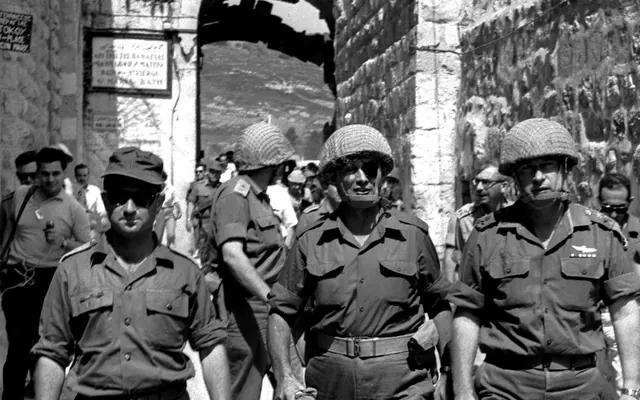
TJS S4E5 Israel after 1967 part I: In new territory
Abundance is always a blessing, so long as one has the capacity to receive it. In the weeks and months after their victory in the Six Day War...
Play Episode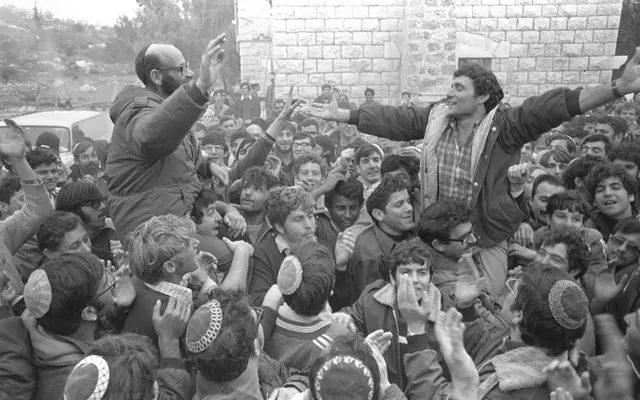
TJS S4E6 Israel post 1967 part II - A Greater Israel
One can look at life as one long string of decisions, whether for individuals or nations. Israel had a number of decisions to make in the wake of...
Play Episode