
TJS S4E6 Israel post 1967 part II - A Greater Israel
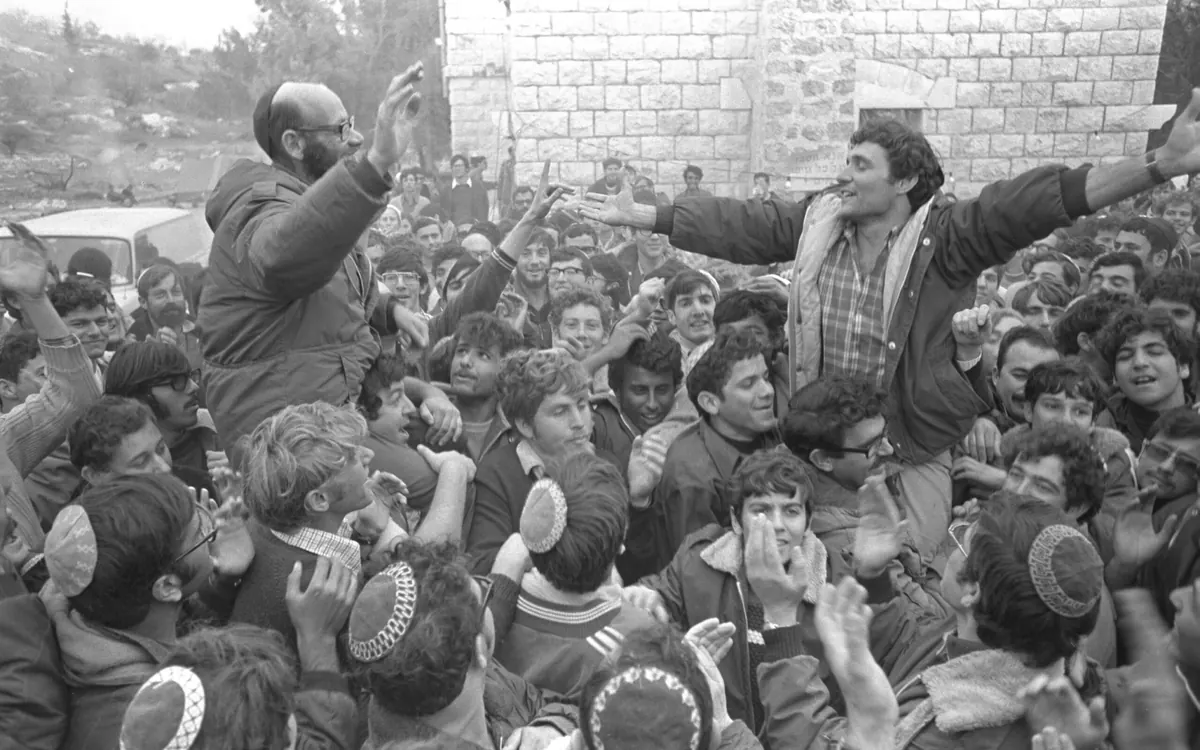
One can look at life as one long string of decisions, whether for individuals or nations. Israel had a number of decisions to make in the wake of the Six Day War and none was more pressing than where to place the borders. Here is an episode about some of the factors in that decision - the Yigal Allon Plan and the return to Kfar Etzion - which helped shape the future. Learn about child survivors of the Gush Etzion massacre such as Hanan Porat, the members of the Gush Emunim movement. Plus, Rabbi Tzvi Yehuda Kook, the Merkaz HaRav yeshiva, Prime Minister Levi Eshkol, Kiryat Arba, Hebron, Natan Alterman and more.
About this episode
At Sinai God called Israel a kingdom of priests and a holy people. The podcast has spent a long time on the kingdom. This episode turns to holiness, and specifically to sacred space, which Rav Mike says the Jewish people lost touch with for two thousand years while becoming specialists in sanctifying time. We built cathedrals out of Shabbat and the holidays. Then 1967 handed back the hills where you can walk with a Bible in hand and watch the past unfold, and nobody was prepared for the encounter. Israel was so unready for the sanctity of place that when Motta Gur and Moshe Dayan handed the Temple Mount back to the Muslim authorities, the rabbis lined up behind them.
The story is told through Hanan Porat. He was one year old when his family moved to Kfar Etzion, the third attempt to settle that rocky hillside south of Jerusalem after Yemenite families in 1927 and Shmuel Holtzman in 1932 had been driven off by Arab violence. The religious kibbutz founded in 1944 swore in its plantation scroll not to rest until the hills were covered in fruit and forest. In the war of 1948 the Etzion bloc was besieged and fell on May 13, the day before independence, and its defenders were killed, many while surrendering. The women and children had been evacuated. Every Memorial Day the orphans were taken to a lookout to gaze at the one surviving landmark, the lone tree, and Hanan, who had kept the children together into their twenties, brought them on Independence Day 1967 to hear his teacher at Mercaz HaRav.
That teacher was Rav Tzvi Yehuda Kook, and what he said that night has become famous: that nineteen years earlier he could not rejoice at partition, and then the cry, where is our Hevron, where is our Shechem, our Jericho? Weeks later Hanan, a paratrooper, was on the Temple Mount, and as his teacher walked to the Wall, Hanan’s heart was already flying south over Bethlehem to a lone tree on a hilltop.
Rav Mike then turns to the decision makers. Levi Eshkol’s guide was the Allon Plan, a pragmatic attempt to keep maximum territory with minimum Arabs, with the Jordan River as the eastern border and Jerusalem annexed. Even that dry document, he notes, names Kiryat Arba, a city that did not yet exist. Behind the known value of security lay the unknown unknown: the messianic spirit that bubbles under Jewish history. Its unlikeliest voice was Natan Alterman, the poet of 1948 and a Ben-Gurion loyalist who had never mourned the old city, and who a week after the war wrote that the victory had erased the division between the State of Israel and the Land of Israel. He founded the Movement for the Whole Land of Israel, argued from historic right rather than security, rejected the term occupied territory, and warned that denying the Zionist case for the whole land would in time undermine Israel’s right to exist within any borders.
Hanan went to Dayan and was refused; Dayan was waiting for a phone call from King Hussein. The children of Kfar Etzion went to the National Religious Party, and to Eshkol, who finally said he would not stand in their way. In September 1967, a week before Rosh Hashanah, the fourth settlement of Kfar Etzion began in an abandoned Jordanian army camp. Hanan drew his own lesson about the leaders of his day: they were willing to follow more than to lead, like the dog that runs ahead of the wagon until the crossroads.
Key ideas
- Jews spent two millennia sanctifying time and lost the experience of sacred space. 1967 returned it, and the intoxication of place is where holiness and idolatry start to blur.
- Kfar Etzion fell on May 13, 1948, the day before independence. Its orphans, the children of Kfar Etzion, became a sacred trust for the young state.
- Rav Tzvi Yehuda Kook’s Independence Day address in 1967, where is our Hevron, where is our Shechem, was heard as prophecy when the war came weeks later.
- The Allon Plan was the pragmatic guide to Israel’s borders and was never formally adopted. Even it could not avoid a whiff of the messianic.
- Natan Alterman, the left’s poet, converted to the whole land of Israel a week after the war and argued from historic right rather than security.
- Historic decisions are often made by the unknown unknowns. The return to Kfar Etzion in September 1967 was the first.
Chapters
- 0:00 A kingdom of priests and a holy people
- 1:08 Sacred time, sacred space: what 1967 returned
- 3:21 A. D. Gordon and reunion with the land
- 6:48 Hanan Porat and the three attempts at Kfar Etzion
- 10:05 The siege and the fall, May 13, 1948
- 12:20 The children of Kfar Etzion and the lone tree
- 13:26 Independence Day 1967: Rav Tzvi Yehuda's address
- 16:48 Known knowns and unknown unknowns
- 20:07 Eshkol, security and the Allon Plan
- 25:41 Natan Alterman, poet of 1948
- 27:52 Facing an unprecedented reality
- 29:57 The Movement for the Whole Land of Israel
- 33:12 Alterman on immigration and the empty formula
- 37:31 Hanan walks home
- 40:42 Dayan refuses, Eshkol relents: September 1967
- 42:50 The face of the generation is like the face of the dog
Who, where and when
People
Hanan Porat, Rav Tzvi Yehuda Kook, Rav Avraham Yitzchak HaKohen Kook, Levi Eshkol, Yigal Allon, Moshe Dayan, Natan Alterman, David Ben-Gurion, A. D. Gordon, Uri Tzvi Greenberg, Rav Moshe Levinger, Michael Hazani, Donald Rumsfeld
Places
Kfar Etzion and Gush Etzion, Migdal Eder, Mercaz HaRav, Jerusalem, The Temple Mount, Kiryat Arba, Jordan Valley, Cafe Kassit, Tel Aviv
When
1927, 1932, 1944: three attempts at Kfar Etzion, May 13, 1948: the fall of Kfar Etzion, Independence Day 1967, June 16, 1967: Alterman's article, September 1967: the return
Read the transcript
Everything, this is Paulo Coilo, which is done in the present, affects the future by consequence and the past by redemption. Well I definitely appreciate the consequences of my action in the present, and I'm praying for the redemption, let it be soon, let it be now, because I'm Rav Mike Feuer, and this is the Jewish story. Season 4 Episode 6, Israel Post-1967 Part 2, the beginnings of a greater Israel. You know, anyone who knows me knows that I am a mission-oriented person, I like to get up in the morning, and know what I'm all about, and allow my actions to be guided by that bigger picture I'm pursuing. And what holds true for me, I really feel holds true for Am Yisrael as a whole, we have a mission, and we could define it in many ways, but for the present purposes I'd like to say that our mission comes in the characterization, which God gives us right before we receive the Torah at Sinai, which is that Mamlaikh Kohanim, the Goi Qadosh, a kingdom of Kohanim of priests, if you will, though I take exception at that translation for reasons that will remain unexplored for the present, and Goi Qadosh, a holy people.
We spend a lot of time talking about Mamlaikh, about the establishment of a government within the state of Israel, and trust me we're far from the finish, but for right now, in this episode and perhaps the one that follows, I want to touch a little bit on what it means to be a holy people, and in particular, what this idea of holiness means. You know, for nearly 2000 years, since the destruction of the temple, Am Yisrael has somewhat lost touch with the experience of sacred space, I'd say somewhat, but in reality, we've kind of lost it all together. On the other hand, we've become downright specialists in sanctifying time. We've woven cathedrals out of time, the Shabbat, the Moadim, the holidays, every day has its touch of the sacred, but we've lost the experience of that sacred space.
Now, I say the experience, not the concept, because our learning has explored the idea of sacred space quite intensively, which itself adds the problem, because we had so much pushed the sanctity of the world either into time or into the theoretical notion of space that we were wholly unprepared for the actual impact of the encounter with the sacred space. And this in many ways is the power of 1967, and it's not just the return to the ultimate sacred space of the temple now. I mean, frankly, we didn't really return there. Israel was so wholly unprepared for such a visceral encounter with the sanctity of the physical world that when Motta Gur and Moshe Dayan rushed to give control of the mount back to the Muslim authorities, the rabbis lined up behind them in approval.
Nonetheless, there was a return to the holiness of place in 1967, more powerful even than that of 1948. And why that is, we're going to begin to explore today. My sense is going to take us at least two episodes. In a sense, the years between 1948 and even really before that, the pre-State phase in 1967 were a process of reunion, of reuniting with the physical reality of the land. We've spoken in the last three and a half seasons many, many times about the power of the phrase, because of our sins, we were exiled from our land. Now, the Zionist period, in which I include 48 to 67, we find an engagement of the problem which is posed by the second half of that phrase, we were distanced from our soil. It's a sense of alienation from the grounded nature of reality.
You know, as the prophet of the religion of labor, A. D. Gordon wrote in my dream I come to the land, and the land is abandoned and wasted and delivered into the hands of strangers. The devastation darkens the light of its countenance and embiters its spirit far from me and strange to me is the land of my fathers. I also am far from her and strange to her. It was a dominant theme in the early Zionist experience. I mean, how could it not be going from the intellectual context or the shadow or just the simply merchant-oriented culture of Europe and finding themselves once again attempting to attach to the land? In Gordon's mind, and really the classic Zionist vision, it was labor which would reunite us with this land.
The plough would make us sweat, cause the land to grow and transform us both. As he says, you will come to create here a new life, a life of your own, then the glowing ember will again be rekindled, it will become a blaze, you will revive again, your people, and your land. Now there's an intoxication which the physical experience of the land offers that can only really be understood by one who feels it. In the secular Zionist phase, this intoxication was frankly sexual, not only in the obvious imagery of mastering the land through agriculture, but in the uncomplicated freedom and return to natural self that sexual passion offers. That intoxication is not going to disappear in 1967 on the contrary, for many it will become stronger and frankly it will cause cross-currents because when you mix, of course, the physicality of space with its sanctity and its intoxication, you're dancing around the edges of idolatry already.
We're going to have to explore that my sense is it won't lie in this episode but in the next, but let's just put it on the dashboard nonetheless. For now, what 1967 added was the magic of the sanctity of place. The Six-Day War returned us to the heartland, to the hills where you can literally walk with a Bible in a hand and watch the past unfold. If you haven't done it, it has to be experienced to be believed. And because of that overwhelming power, the intoxication found within the sanctity of place, when you do that, you can feel the past merge with the present and that in turn offers the ultimate temptation, the pull of the future. Hanan Porat was born in 1943 in the frankly awkwardly named Kfar Pines, but fortunately for us, his family moved him at a tender age of one to the new kibbutz of Kfar Etzion and Gush Etzion, or the Etzion block as it's known, just south of Jerusalem.
Now I said new kibbutz, but in reality, this was the third effort to establish a village on that particularly rocky hillside of Eretz Yisrael. The first had been undertaken by a group of Yemenite families in 1927. They called their new home Migdal Eder, a name taken from the place where Yakov camped just after burying Rachel, you can look it up in Bereishit 35:21. But for all the love and extreme hard labor they brought to that hillside, which they chose, everything they built was swept away by the Arab riots of 1929. The second attempt at settlement was driven by a German Jew named Shmuel Holtzman, who purchased the lands of Migdal Eder from its Yemenite owners, and also its surroundings in 1932.
The village was renamed Kfar Etzion in his honor, eight being tree in Hebrew, as Holtz is wood in Yiddish, and the name is basically all that remains from that attempt. It too was cut off by Arab violence in the revolt of 1936-39. But they say the third time is the charm, and Hanan Porat's parents felt that this time would indeed be different. Not only was the shoe much stronger than it had been previously, but the need to strike root in the land was even greater, as the slaughter of the Jews of Europe accelerated, and the British kept the gates of Israel firmly shut against them. And so, a group of young religious pioneers determined to reestablish Kfar Etzion as a religious kubuts. Nothing could express their all but messianic hopefulness better than the Kfar Etzion plantation scroll signed in January of 1944.
Two thousand years ago, it reads, these slopes reverberated with the sounds of a multitude of trees and life that teamed all about. Today they stand bleak and desolate. We have taken this oath upon settling in Kfar Etzion. We shall not rest nor no peace until we cast off the shame of beariness from these highlands, until we have covered them with fruit and forest trees which together shall give forth a song of rebirth, which the prophet Ezekiel foresaw. But you, O mountains of Israel, you shall shoot forth your branches and yield your fruit to my people, Israel. By 1945, a second pioneer group had joined the first establishing the village of Massuot Yitzhak, in Turing, followed a year later to be matched by Revadim in 1947, this time, founded by the pioneers from the far left, Hashomer Hatzair movement.
It was an extraordinary burst of pioneering spirit and material success. The thriving Kibbutzim were dubbed Gush Etzion, after the flagship settlement, the Etzion block, and they were a boar of defense on the southern approaches of the Holy City, and frankly an inspiration to the entire Jewish world. All that changed in 1947. With the publication of the UN partition plan, the block was assigned as Arab land. And though that plan was rejected outright by the Arabs, the war which they wage was even harder on the settlements of Kfar Etzion than the plan had been. Already by December of 1947, during the so-called War of the Roads, that preceded the invasion of five Arab armies, the Etzion block was cut off by siege.
In the next five months, witnessed some of the most heroic and most tragic events of the war of independence. Every settler became a hero, but perhaps the most famous for the convoy of 35, whose failed attempt to break the siege ended in their torture and death, and his essential element of Israel's natural mythos to this very day, my kids hiked the path they took on an annual basis. One by one, the settlements fell to the siege, and the defenders contracted their lines of defense. The final assault on Kfar Etzion came on May 13, 1948, the day before the Declaration of Independence, all but for the defenders were killed, many murdered in the act of surrendering. Hanan Porat and the rest of the women and children had been evacuated months before.
He was almost unique in that his father was in Jerusalem as well, responsible for organizing the convoys, which were attempting to break the siege. On the night of the 13th, they gathered around a short wave radio as they did every night to hear the reports from Kfar Etzion when the command of the siege addressed them directly. Our spirits are strong, you too must be strong, he said, then they heard the sounds of gunshots and explosions, followed by only two words, malkanafla, the queen, which was the codename for Kfar Etzion, had fallen. In an instant, Hanan was surrounded by orphans and widows. In the coming months and years, he and his peers became known as the Children of Kfar Etzion, and in a nation which lost 1% of its entire population in the war of 1948, they became something of a sacred trust, or a repository of the painful memories and the dreadful cost of independence.
As Prime Minister David Ben-Gurion said in his eulogy for the fallen of Kfar Etzion, their sacrifice, more than any other war effort, saved Jerusalem. The Gush Etzion campaign is the great and terrible epic of the Jewish war. If a Hebrew Jerusalem exists, the gratitude of Jewish history goes first and foremost to the fighters of Gush Etzion. Every Yom Hazikaron, the memorial day for the fallen of Israel's war, there was a commemorative ceremony on Mount Herzl, the military cemetery, for the 240 fallen heroes of the Etzion block, and of course, their children were present. As if that weren't heartbreaking enough, once the ceremony was over, the children would be taken to a high lookout point, like Mevo Beitar, south of Jerusalem, to gaze back at the lost home which few actually even remembered.
All that was visible was the famous Alon HaBoded, the lone tree, which was the last standing landmark of the Kfar Etzion of the past. In the Gome, one of the children, recalled it like this, to us she said the children of Kfar Etzion and to our mothers, the tree was a symbol, a symbol of hope, a symbol of faith, a symbol of the certainty that the day would come that we would return to the place. Now, not all of the lone tree's symbolism was so peaceful, another child looked far at the Etzion, put it like this, there was some who stood in silence during those hours of contemplation, and they were overcome with a feeling of anger that the Arabs had subjugated us, and in their hearts it was a prayer for revenge and acquittal, a prayer mingled with a dim hope almost dreamlike that he who sits above the world would restore them their stolen land.
From the outset, Hanan was a leader amongst the children, maybe it was that his father had survived, or maybe it was simply his particular soul, but throughout the difficult months and years which followed the fall of the gush, he assured him time and again that they would indeed return home. Even as the children grew up and headed in all the directions which life had to offer, Hanan maintained the connection between them right into their 20s, and it was because of him that they were together on Independence Day 1967, weeks before the outbreak of war. He brought them to Mercaz HaRav yeshiva, where he was a student and had already become a part time teacher. You will recall, I hope, that Mercaz HaRav was founded by Rav Avraham Yitzchak HaKohen Kook as part of his vision to reawaken Israel and Jerusalem as a spiritual center of the world.
Now, Rav Kook died in 1935, but his son Rav Tzvi Yehuda Kook was alive and well, and it was his Independence Day address which Hanan had brought the children to here, they, like everyone else in the hall, were unprepared for what he had to say. 19 years ago, said the rabbi, on the night when the news of the United Nations decision in favor of the reestablishment of the state of Israel reached us, when the people streamed into the streets to celebrate and rejoice, I could not go out and join in the jubilation. I sat alone and silent, a burden lay upon me. One can only imagine how these words resonated with Hanan and the other children. The same partition, which had split Eretz Yisrael, which had caused Rav Tzvi Yehuda to mourn, had made them orphans.
During those first hours, I could not resign myself to what had been done. I could not accept the fact that they, indeed, quote, have divided my land, as it says, in the prophet Yoel. At this point, Rav Tzvi Yehuda fell silent, clearly shaken by inner pain, a pain which Hanan and the children felt in their own flesh. You could have heard a pin drop when he finally cried out. Yes, where is our chevron, have we forgotten her, where is our shrem, our Jericho, where have we forgotten them, have we the right to give up even one grain of the land of God, and that night, nineteen years ago, during those hours, as I sat trembling in every limb of my body, wounded, cut, torn to pieces, I could not then rejoice.
He was speaking the words, a Hanan's heart, giving voice to his pain, the pain of the children around him, whose very families had been truncated during those hours, nineteen years ago. In his words spoke not only pain, but longing, a longing for home, which was at once both personal and national, consuming, in its all-encompassing nature, and as it turns out, those words were more than a little bit prophetic. The very next day, Nasir began to mobilize his army into the Sinai, and the march to war began. Hanan was summoned back to his paratroopers unit, and with them, he conquered the temple mount, less than a month later. He next saw his teacher, as he walked his way slowly through the streets of the old city, winding the path toward the holy wall.
It was a sight made to strike anyone with the all of heaven, but by the time the rabbi had passed, Hanan's heart was already leaving Jerusalem. Off it flew, over the walls and stone behind it, passing over the newly conquered Bethlehem and into the hills beyond, coming to rest, only when it reached a lone tree on the hilltop. At last, the way was clear to go home. If you were to make a big decision, I mean really big, the kind that makes or breaks lives, even if only your own. I think this is one of the most difficult aspects of life decision making, and we're woefully untrained at it. I often find myself listening to others in my counseling practice as they attempt to wait out the options facing them to parse out what really matters, it's a process that really needs guidance.
And two primary challenges to decision making, which I've identified, are naming the factors which deserve real consideration, and assigning a relative weight to each one as you try to make your choice. First of all, there's the basic difficulty of the task, you have to figure out your values, and the variables, and that requires a comprehensive analysis of the situation. But there's also the problem of the unknown. And I can't resist putting this problem in the words of former Secretary of Defense Donald Rumsfeld, I wonder if you remember who he was. He gave it an answer to a challenge about the lack of evidence for the Iraqi weapons of mass destruction program, those of you who know what I'm talking about, can send me an email, ravmikefeuer@gmail.com, but what he said was, there are known knowns, there are things we know we know.
We also know there are known unknowns, that is to say, we know there are some things we do not know, but there are also unknown unknowns, the ones we don't know, we don't know. Now if you recall, he was roundly mocked for the statement, in fact, if I say this to my brother right now, he'll burst out laughing on the spot. But in my eyes, it actually makes perfect sense, there are things you know, there are things you know you don't know, and then there's the great unknown. And his last words should serve as a warning to us all. He says, and if one looks throughout the history of our country and other free countries, it is the latter category, meaning the unknown unknowns, that tend to be the difficult ones.
And I think this is what we mean, when we talk about a historic decision, when a leader is faced with a choice that will be decisive for their nation, that we hope there's some element in them which is reading the lay of the land correctly. And we're hoping that their choice not only matches the terrain of knowns, but proves to be the right one. The problem is that when the topography offers multiple ways forward, it's often the factors we cannot see, which we don't even consider because we're not conscious that they're there, which really define our choices. And so, sometimes it is the unknown, unknown, which make history. In the wake of the Six-Day War, Prime Minister Levi Eshkol had some pretty big decisions to make, not the least of which was where the borders of the state now lie.
My contention is that the choice which was made was both conscious and unconscious. Based on one factor that was very clear, and another driver which lay deep below the surface, or maybe just out of his sight. Now the well-known value of security, the unknown was the Messianic spirit, which is always bubbling below the surface of Jewish history. Now, security of course was nothing new for Eshkol and his cabinet, or really for their entire generation. I mean, they'd witnessed the Nazi Inferno and fought three major wars in the 20 years since. They knew quite well the value of defensible borders. If anything did change in the days after the war, it was a new found empowerment around proclaiming security as an unassailable right.
In the eyes of many, Israel's unated victory meant she could now unilaterally redraw her borders, and it was justified by the narrowly diverted disaster which the whole world had stood by and watched. When Prime Minister Eshkol weighed the value of security into the question of where Israel's borders should now stand, you need to know that his guiding document was what's known as the Allon Plan. This was a plan presented by Labour Minister Yigal Allon only a month or so after the war's end. The recall, Alon was a founding commander in the Palmach, hero general of the war-independence, and the representative of the Achdut HaAvoda faction in Eshkol's alignment government. Achdut HaAvoda, if you don't know, had always been the left-winged dreamers of a greater Israel, driven by a sort of utopian romantic vision of Israel's destiny to spread out across its ancestral lands.
And so Allon himself had no qualms about looking at the recently conquered territories as a historic birthright, nonetheless, the essence of his plan was a practical question. How does one dance at two weddings? The plan exhibits the same confusion which confounds Israeli government decision making to this very day. How can we be both Jewish and democratic? Or to put it more blunt terms, how can we control maximum territory with minimum Arabs? And despite its overwhelming pragmatism, even Allon couldn't avoid a whiff of the messianic, whether he knew it or not. The plan has four essential principles. One, it says peace with the Arab states and the Palestinians is both possible and essential. Two, the geostrategic integrity of Eretz Yisrael will be preserved with borders that provide Israel with security and prevent future wars.
Three, a Jewish majority will be maintained, which will allow Israel to exist as a democratic Jewish state based on the principles of the Zionist vision. Four, the Palestinian people will be given the opportunity to realize an independent national life or existence without threatening the security of the state of Israel. Now, it's important to note on that fourth one, Allon went back and forth of whether that was the Jordanians or the Palestinians. But practically speaking, what Allon really wanted was to widen Israel's ways as the opposite of what we're all after at this stage of life. Before the Six-Day War, the country was less than 15 km wide at its narrowest. And now he had almost 65 km from the Mediterranean to the Jordan to work with.
The Eastern borders was to be the Jordan River. It was a boundary that just made sense, both geographically and strategically, and Allon aimed to add to it a strip 15 km wide along the valley, the location of the present settlement in the Jordan Valley. Jerusalem and its surroundings were to be annex, along with a band of the mountains of Yehudah up to 25 km wide. The plan specifically names Kiryat Arba as a link between the negative and the self in the Jordan Valley on the east. As for the rest of the borders, the plan says that quote, only essential changes will be made. And there it is, gone is the sense of expansion driven by the sweep of history and the fortunes of war that we heard from Ben-Gurion's provisional government during the war of independence, which Allon himself was fighting.
You got Allon wanted nothing more than what he saw to be a stable piece of the pie. And yet, even in its dry pragmatism, you can hear the Messianic siren call, strategic integrity of Eretz Yisrael, the land of Israel and not the state of Israel, that call for a Jewish majority in order to preserve not democracy per se, but rather the Zionist vision. And of course, small but significant, the identification of Kiryat Arba as the furthest extension of the areas to be annexed. It's a city which doesn't even exist in Allon's day except as a biblical memory. It existed once and will be built again, that story is coming next episode, but at this point, it is not yet. And nonetheless, Allon uses it as a reference point in his so-called pragmatic proposal.
Now, the Allon Plan was never adopted formally by any Israeli government, but it served as the semi-official guide to every security-based negotiation to come over the next six decades. If you're familiar with President Trump's plan, you might find the details of the Allon Plan strikingly familiar. But somehow, despite all its pragmatism and strategic wisdom, it's never worked. Even at this point in our story in 1967, when Israel had the power to dictate its own terms, apparently there were other factors at play. Especially, that unknown of all unknowns, the messianic spirit of Israel, which attaches us to the sanctity of the place in which we find ourselves, and which has the neck of popping up at the most untanny of moments.
Not that Alterman was the poet of his generation, the generation of 1948. Alterman came up to the land of Israel in 1925, and before World War II had even broken out, he established himself as a major force in both journalism and Hebrew literature. He was a poet, after all. From the outset, Alterman was also a devoted follower of the Mapai party, but more than anything else, he was a devotee of its leader, David Ben-Gurion, which was more than just personal politics. Throughout the pre-State struggle, and right up through his death in 1970, not an Alterman published a weekly column on the events of his day, first in Haaretz, then in the Mapai newspaper Davar, and finally in Maariv. And it may seem strange, but his articles were written in rhyming verse.
You might think that would limit his appeal, and his audience, but you would be wrong. His voice was so well read, and well respected, that his poetic editorials often went beyond expressing public sentiment and into shaping it. Now, Alterman was unashamedly Zionist, reveling in the return to Jewish sovereignty and power as a historic revolution. At the same time, he was a critical thinker, unafraid to challenge what he deemed to be a failure of power, like the martial law imposed on Israeli Arabs after 1948, or the Kfar Kassem Massacre of 1956. Unlike many of his fellows on the left, Alterman had a love for diaspora culture, and he wasn't afraid of religion. He also vehemently opposed Marxist revolutionism, while at the same time rejecting the revisionist right as anti-democratic.
And most significant for our story, he was never known as a passionate defender of the integrity of the land of Israel. On the contrary, unlike fellow poet Uri Tzvi Greenberg, Alterman never denounced the partition of 1948. He never mourned the loss of the old city or expressed longing for the holy places left behind Jordanian lines, lost to Jewish access. He was briefly swept into Ben-Gurion's Messian excitement around the conquest of the Sinai in 1956, but with the Prime Minister's decision to withdraw, he wrote an article in March of 1957, which asserted that geographical boundaries are not political borders. They are all turnitives for the map and the land, he proclaimed. And this is why, not an Alterman's article of June 16, 1967, published less than a week after the war, fell like a bomb on the Israeli reading public.
It was titled Facing an Unprecedented Reality. This victory is not only about returning to Jews, their nations ancient and exalted possessions, for they are engraved in its memory and the profundity of its history. More than anything else, this victory has erased the division between the state of Israel and the land of Israel. All that was missing in this historical connection was for the Jewish people to weave together with what has been gained, the inseparable three-way thread, the chut hameshulash which can't be broken. Now, this is the kind of heady rhetoric associated with Uri Tzvi Greenberg and that so-called right-wing extremists Menachem Begin, not the poet, who'd given the voice to the Palmach generation.
And this was not a passing phase, a burst of excitement around the victory. Alterman had been consumed by the ecstasy of history, and he was truly converted to a vision of the greater Israel. And like so many who have a newfound passion for their faith, he needed to take action. In general, Alterman had held court at his corner table in Cafe Kassit on Dizengoff Street for decades, dispensing wisdom, criticism, and guidance to a generation of literary greats. And now, in addition to the book launches and theater reviews and political arguments, a different type of meeting began to take place. Alterman aimed to win supporters for his vision of greater Israel, and he wasn't alone through these meetings and conferences and writings by July.
He and those of like spirit had formed HaTnua LeMa'an Eretz Yisrael HaShlema, the movement for greater Israel, or literally the wholeness of the land of Israel. It was a political coalition which had never been seen. It crossed all boundaries, labor Zionists, sat with revisionists, kibbutzniks with capillus, along with Nathin Alterman, other leading literary figures were involved, Haim Gouri, Uri Tzvi Greenberg, S. Y. Agnon, known just a name of few. And their platform was really quite simple. They said that the Israeli government must keep all the areas conquered in the Six-Day War, and it must settle them with Jews. Now Alterman became the voice of this new movement, writing a torrent of articles and an attempt to sway public opinion.
Interestingly, he rarely resorted to the security-based argument in making his points. He wasn't unaware of the strategic importance of the conquered territories, and the appeal that that argument had, nonetheless, he considered this at best a secondary issue, what he called the nosei keilim, the armor-bearer of the primary argument. And while he criticized Prime Minister Eshkol and others who took that pragmatic view, Allah, the Allon Plan, he especially despised those who saw the lands as a bargaining chip to be held out for future negotiations. In response to Defense Minister Moshe Dayan's, famous phrase that Israel was, quote, living for a telephone call from Arab leaders, Alterman wrote, The prescription not to hand them back until peace talks is worse than it seems.
This assumes that the territories do not really belong to us. To Alterman, the real question was one of historic rights. Yehudan Shumran, the West Bank, so called, in particular, were the cradle of the nation to which Jews had an unbroken connection and an undeniable and inalienable historic right. He particularly and vehemently opposed the term occupied territory, which seemed to assert that the war had placed in their possession a foreign land. They occupied us, he wrote. They embraced us in the arms of the past and future, and we are not free men to detach ourselves from them either willingly or through decision. His sense of historic destiny of the demand which victory had placed on the shoulders of this generation drove him to ever greater height.
We are not free men he wrote to decide how to behave, not on the government level, the military level or the personal level. We are obligated to act this way just as our own biography obligates us. Above all, Alterman advocated the idea of settlement. He called continually from the very beginning for the launch of a massive movement into the newly conquered lands, and he wasn't alone in this, even amongst voices on the left, at the annual council of HaKibbutz HaMeuchad, the United Kibbutz movement. On November 9th, 1967, a resolution was passed to establish settlements in what they labelled as the liberated territories. As one delegated declared in the debate leading up the decision, why isn't the example of Nazareth Illit, which was a Jewish city that was built above the most of the Arab Christian but the Arab city of Nazareth in the pre-67 days?
Why isn't the example of Nazareth Illit just as valid for Hevron, Jenin, Shechem, and other cities? Why don't we not propose this? It is the only way there will ever be a greater Israel. Now even in his consuming passion, not an Alterman was not unaware of the challenges posed to this vision of greater Israel, but the Arab populists resided in these newly one lands. And like the country in general, he wavered between what I would call a humanist and a nationalist stance. No doubt he wrote, our first and foremost conclusion is the obligation to grant these populations civil rights, legal defense, freedom of religion. But for all this liberalism, Alterman rejected any claim of another people to self-determination within the boundaries of the land of Israel.
There is a factual and ideological emptiness in that artificial and spurious population going by the misnomer of the Palestinian Arab nations, harsh words, and he fought vehemently against the attempts by the Zionist left and other international groups to rewrite both the Palestinian and the Zionist narratives as parallel stories. To claim that, quote, the Jewish people and the Palestinian Arab people were twin entities with equal rights to the entire land of Israel. In his article, the empty formula, Alterman called this reformulation of the Zionist narrative desionization. He understood posionism before it was even posed. And in what I see to be a precian observation, noted that far from making Zionism more acceptable in the eyes of the world, this self-desionization, meaning self-denial of the Zionist justification for our greater Israel, would lead eventually to casting doubt on Israel's right to exist even within the pre-67 borders.
The moment we admit to the fiction of Palestinian nationalism, that is when Zionism will be equated with the plunder of a living nation's homeland. To the extent that we now assist in implanting this consciousness in the world and in our own inner awareness, the more we invalidate the historical, humane basis of Zionism, and consign it only to our bayonets. Now more than anything else, Alterman saw mass immigration as the key to realizing this vision of greater Israel. It was the critical third strand in that inseparable three-way thread which he saw as binding together people, state, and land. In a July 7 speech, less than a month after the war, he declared the quote that the battle for the Jewish people was nothing less than the urgent and inevitable continuation of the Six-Day War.
Since the last day of the Six-Day War, he said, it is becoming possible to be a Jew, and is forbidden to be a Jew if we succumbed complacently to the fact that due to the lack of tens of thousands or a few hundred thousand Jews, we shall have to sever Jewish history at the moment of its climax. Meaning, he understood that without a massive influx of Jews, the ability to fill this new land with glorious life would be taken away from the state of Israel. Everyone wasn't alone in this sense that Jewish history had reached its climax. We've seen it in a number of places, nor was he alone in the sense that to succumb to complacency in the face of its call would be a great failure. And while he preached and wrote, others were actually beating their swords into plowshairs ready to return home to the land.
Three days after the war's end, a special visit to Kfar Etzion, or at least it's a location, was arranged for the survivors of its fall in 48. When they saw for the first time with their own eyes the total devastation of everything which a day in their loved ones had labored so hard to build, many shed bitter tears of grief. Hanan Porat didn't wait for any invitation or special visit, nor did he expand his energy on grief over what had been. Once the moment he saw his teacher Rav Tzvi Yehuda in the old city, Hanan had been like a man in a dream. He hitched a ride south with an army jeep and started and stared in wonder at the flags surrender which covered Bethlehem as they rode through the city, just south of Jerusalem.
And when they left that city, Hanan jumped out and headed into the hills on foot following a narrow and pitted asphalt road. As he advanced deeper into the hills, the paths seemed to spring up around him, buildings were rebuilt, children began to play, parents smiled. It'd been more than 20 years since he'd seen any of this, but the memories were fresh as if they'd been driven deep into his heart and mind, and not just his own memories, but the collective memory of Kfar Etzion of an entire pioneering generation. As he later described it, an enormous effort was made by the parents to gather every scrap of information and memories, and to nurture the desire to remember amongst the children, the power of memory nurtured by the parents and survivors of Gush Etzion was the spiritual focus from which later came the realization of the return home.
So it wasn't just the call of the past which Hanan brought belt around him, it was the pull of the future as well. When he returned to Jerusalem, Hanan sent out a survey to the children of Kfar Etzion asking if they were prepared to go home, gatherings and discussions ensued, and asked the plans we had to coalesce, the question of what form the new settlement should take arose. Eventually, they agreed it should be a kibbutz like its predecessor. Now this is not such a small choice for Hanan's religious upbringing, and his mind set shaped by Mekhazirav, the kibbutz was really the province of the secular pioneering world, but now, not only would they be honoring their fallen parents by going home and rebuilding what had been lost, they would be able to claim the mantle of the pioneers who'd founded the state in what they deemed to be their effort to bring that vision to its fruition.
Now of course, not all the children saw the rebuilding of Kfar Etzion in such grandiose terms. Many felt they were simply going home and some even suggested that a memorial by the lone tree might suffice, but not for Hanan. He was on fire. He was driven by a vision of redemption which couldn't satisfy itself with half measures. He was feeling the call of national destiny. As he later described it, but we, the children of Kfar Etzion, a small handful of friends weaving dreams had felt for 19 years ever since our home was destroyed, about a single plot of land can be multiplied by 10, by 100, by 1000, by a million, and you'll have the yearning of the whole people for the whole land from the time its exalted house in Jerusalem was destroyed 1,900 years ago.
Do you hear the momentum in the simple desire of a child to return home? Now Hanan first turned to Vince Minister Moshe Dayan and petitioned for the permission to return and rebuild their destroyed home. Dayan refused flat out, saying again that he was waiting for a phone call from King Hussein and implying that he wasn't going to let anything get in the way. Hanan was nearly crushed by this first rejection. How could anyone deny the right of a child to go home? And how could a leader in Israel deny the significance of this moment for the nation as a whole? A small group gathered around him, including Rav Moshe Levinger, whose story we're going to hear in the next episode, and they began to consider a clandestine act of settlement when history is moving you along, even the government ought not stand in your way.
But at the same time, others were bringing to bear all the political pressure they could on Prime Minister Eshkol. At first, Dayan was able to hold his own and convince the Prime Minister to ignore the demands of Hanan and his friends. But eventually, the young ones were able to convince Michael Hazani, head of the national religious party, the NRP, to support their bid. Now, this was a major shift, and it's a story we'll explore also next episode. The idea that the settlement movement consists of the national religious camp, maybe a given to you. But as we heard with not an ultraman just a few minutes ago, this was not the case in 1967. I'll tell that story like I said next episode. For now, in the end, it was the NRP pressure that did the trick.
Hanan and a delegation of the children of Kfar Etzion were invited to meet with Prime Minister Eshkol. And at the end of their conversation, he stood up and said, where is Kfar Etzion? There is Surbaha? All right then. We'll say we've got a little enclave of the Jerusalem quarter there. We won't stand in your way. And just like that, the door was open. Now, Eshkol, it might have appeared a simple decision. After all, the location was well within the boundaries of the alone plan. And it was really only about a few children long to go home. Of course, their passionate pioneering spirit appealed them as well, all in all, like I said, a seemingly simple decision. And that's not, of course, how it appeared to Hanan Porat.
On September of 1967, only a week before Rosh Hashanah, 5738, the first group of settlers moved into an abandoned Jordanian army camp on the hilltop next to the old Kfar Etzion. The fourth settlement effort had begun. Despite the debate within the government, dignitaries of every stripe appeared at the festive ceremony, marking the rebirth of Kfar Etzion, and some who had opposed it even weeks before now sang its praises. Hanan Porat was chosen to represent the settlers themselves of the ceremony, but it was only later amongst his friends that he gave voice to his innermost thoughts. His brief struggle with the powers that Be had taught Hanan something about the political leaders of his day, that they were willing to follow more than they were willing to lead.
And in his words with his friends, he compared them to what the Mishnah says about the generation which will proceed the Messiah, that the face of the generation will be like the face of the dog. He explained with the image of a dog racing out in front of a wagon. He appears to be in the lead and may indeed think he's guiding the wagon of long. All this he said is just fine, of course, until you come to a crossroads. Then the dog has no choice but to let the cart go by to see where it's heading. Then he races past it and leads it along again. In Hanan's eyes, and in the eyes of the people around him, the country was at a crossroads. The only question which remained were who would lead in which way would they go?
I want to thank a few folks before I sign up. I want to thank all the folks who give their hard earned money to help make the show happen to keep it free and widely available. I want to invite you to join them. Go right now to my website, www.jewishstory.co. In the upper right hand corner, you'll see a button there. It says be a patron. You can click on that to give it a little bit of per pod cat support. If you'd like to dedicate a show, an honor of someone who's with us today, or a memory of one who's moved on, you can send me an email at ravmikefeuer@gmail.com.com or you can find me on Facebook and ravmikefeuer@gmail.com and I'm happy to share with you the details of how we can make that happen. I want to thank the land of Israel Network, that's thelandofisrael.com, for building a platform that allows me to reach so many wonderful people.
I want to thank the Pardes Institute, pardes.org.il, for building an educational institution that gives me the privilege of teaching so many fantastic views and I want to thank you for listening. I'm Rav Mike Feuer and this is the Jewish Story.
More from Season 4
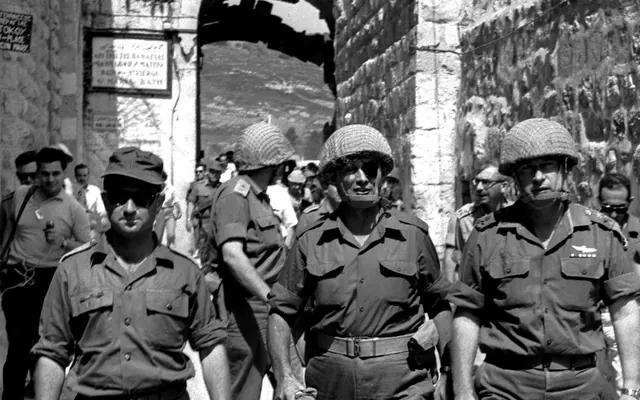
TJS S4E5 Israel after 1967 part I: In new territory
Abundance is always a blessing, so long as one has the capacity to receive it. In the weeks and months after their victory in the Six Day War...
Play Episode
TJS S4 Interlude - Interview with Yossi Klein Halevi
This week I host author and thought leader Yossi Klein Halevi. Our conversation touches on his personal experience the early struggle for Soviet Jewry, the challenges of writing,...
Play Episode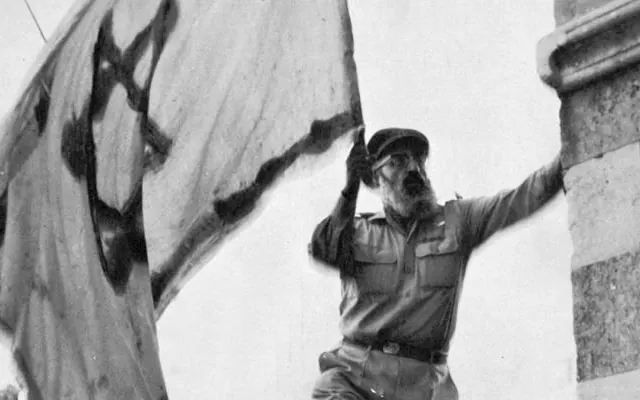
TJS S4E7 Israel post 1967 part III Settling Hebron
The return to Israel can have two meanings - a return to the Land and a return to essential self. The birth of a settlement movement striving for...
Play Episode