
TJS S4 Interlude: Sukkot
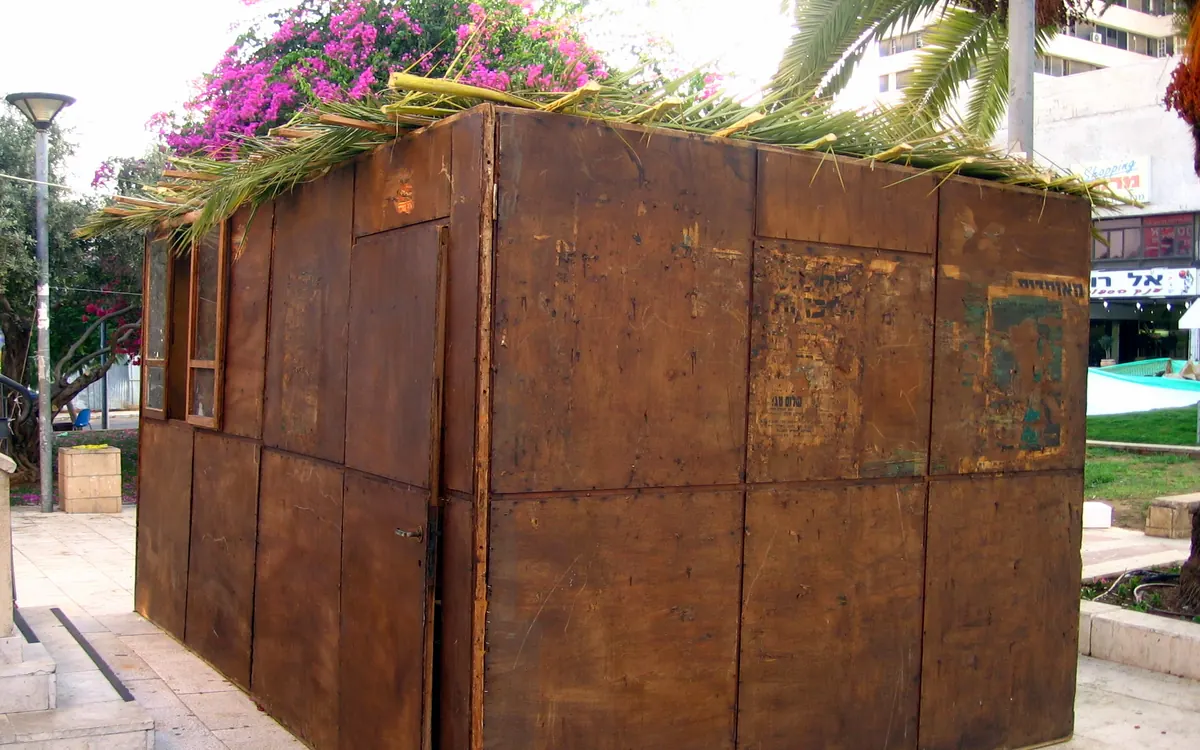
If you feel a bit like the world might be falling apart, then look to the sukkah for how to hold it together. Here are a few thoughts for the Jewish holiday of Sukkot on faith, joy and how to build a better world. Chag sameach!
About this episode
Others have seen what is and asked why, says Picasso, I have seen what could be and asked why not. Sitting in his sukkah in the troubled autumn of 2020, Rav Mike wonders aloud about the fundamental challenge of the hour, can we hold together, or will we fall apart. What divides us is always easy to see, politics, religion, economics, and in these years race, and our communication technology has supercharged the old habit, building parallel universes and echo chambers that let us treat anyone outside our world as an alien. The things that unite us globally are mostly negative, COVID and climate, and the structures that emerged from the Second World War, the UN, the nation state, scientific rationalism, materialist consumer culture, seem to have run their course. The alternatives on offer left and right ask us to cash in our freedom for safety, the oldest totalitarian trick, and he refuses it.
It is time to build something that can unite the world without demanding we check our minds and our differences at the door, and maybe the sukkah is the model. The sages call it the ultimate unifier, saying all of Am Yisrael is fit to sit in one sukkah, which, given how fractious and stiff-necked a people committed to truth can be, is no small accomplishment. The reach extends to the nations, since when the Temple stood seventy bulls were offered over the week of the festival as atonement for all the peoples of the world, and Zechariah pictures the survivors of the nations making pilgrimage year by year to celebrate the Feast of Booths. The structure has two requirements, a roof and walls. The Zohar calls the schach the shade of faith, and since the covering must leave most of itself in shadow while the stars shine through, Emunah is always an interplay of light and darkness.
The first person the Torah ties to Emunah is Avraham, an accomplished reader of the stars who in his old age despaired of his barren future, yet rather than surrender to the darkness he cried out, and was told to count the stars, so shall your offspring be. His greatness was that he cried out at all, refusing to let what is dictate what will be, becoming Rosh HaMaaminim, the first of believers. The two human responses to evil times are despair and despotism, giving up hope or shrinking the world to something we can control, and the sukkah rejects both, since on the festival we leave the safety of our built environment and embrace the uncertainty beyond our walls. To sit in the sukkah is to dwell in the ratzui and not the matzui, in what we want to be and not only what is, and that Emunah pairs with bitachon, a trust that acts, because prayer is the final refuge of agency.
The walls come next, and the minimum of two handbreadths and a bit, as the sages measure it, forms the shape of an embracing arm, a hug, which Rav Mike says the world badly needs, along with empathy for the pain behind the riots in America and Israel whatever ideology fuels them. There is a strange goodbye prayer for the sukkah that longs for the sukkah of Leviathan, and the Gemara in Bava Batra founds both Sukkot and the Messianic era on that beast. Leviathan embodies the joy God takes in creation, the Psalm says He formed it to play with, and the Maharal calls it the foundational stuff of creation. Play means total immersion and freedom, which you gain only by accepting rules, arbitrary though they are, since a World Cup team that stormed the field with cricket bats would win nothing and destroy the game.
Stravinsky said the more constraints one imposes the more one frees oneself, and a sukkah built from the skin of Leviathan teaches that boundaries are a source of play and meaning rather than things merely to be broken, with simcha as the very feeling of Emunah. The last task is to sit together, to learn how we all fit in one sukkah, and Rav Mike reads the Abraham Accords as a shift to a different story, from power politics to the recognition that family is what unites. He closes with Rav Kook, who hoped humanity would be united as one family, not one nation, because family does not go away when you close your eyes, and who taught that Knesset Yisrael is a storehouse of spirits holding every lofty inclination. When Am Yisrael reaches its true diversity and is fit to sit in one sukkah, the nations will gather in Jerusalem to celebrate alongside us.
Key ideas
- The question of the hour is whether enough unites us to hold together, when our echo chambers let us treat the other as an alien.
- The sukkah is the sages' model of unity, since all of Am Yisrael is fit to sit in one, and the nations once had their atonement there too.
- The roof of schach is the shade of faith, an interplay of light and darkness, and Avraham's greatness was crying out rather than surrendering to the dark.
- To sit in the sukkah is to dwell in the ratzui, in what we want to be, pairing faith with a trust that takes action.
- A sukkah of Leviathan teaches that boundaries are a source of play, freedom and meaning, with simcha as the very feeling of Emunah.
- Rav Kook hoped we would unite as one family that keeps its colors, so that a people fit to sit in one sukkah draws the world to Jerusalem.
Chapters
- 0:00 Why not; can we hold together
- 1:07 What divides; the echo chambers
- 2:15 What unites; COVID, climate, apocalypse
- 3:23 The postwar structures run their course
- 4:29 The sukkah as unifier; one sukkah
- 6:33 Zechariah; what is the sukkah
- 7:37 The roof; the shade of faith
- 8:48 Avraham, reader of the stars
- 10:55 Despair and despotism; ratzui not matzui
- 13:12 Crying out; prayer as agency
- 14:22 The walls; a hug and empathy
- 16:32 The goodbye prayer; Leviathan
- 18:38 Play and rules; Stravinsky
- 22:03 Boundaries, simcha, and joy
- 23:08 Sitting together; the Abraham Accords
- 24:10 Rav Kook; one family, one sukkah
Who, where and when
People
Pablo Picasso, Avraham Avinu, Rebbe Nachman, The Maharal of Prague, Igor Stravinsky, Rav Kook
Places
The sukkah, Jerusalem, The land of Israel
Texts
The Zohar on the shade of faith, Zechariah 14, Bava Batra on Leviathan, Psalms 104, Genesis on Avraham and the stars
When
2020 CE: recorded in the sukkah amid COVID, 2020 CE: the Abraham Accords
Read the transcript
Others have seen what is and asked why, said Pablo Picasso. I have seen what could be and asked why not. Well, I'm not really sure what's about to come out, but you know what I say? Why not? Because I'm Rav Mike Foyer, and this is The Jewish Story. Interlude for Sukkot. So I'm sitting here in my sukkah, and the truth be told, for days I've been trying to think about what exactly I could add to your thoughts in these fantastic and somewhat troubled times. And the truth of the matter is, I'm not sure. But sometimes you've got to put all the pieces out there and just see how they land. So if you're ready, here we go. Because as I'm sitting here, surrounded by these wonderful walls and the beautiful schach above, I have a feeling that there's a fundamental challenge which the world is facing, and I want to think together a little bit about how to do something about it.
And that question is, can we hold together, or will we fall apart? Does enough unite us today, which will allow us to overcome the very real challenges of our generation, or will we once again be witnesses to the type of descent into chaos that the world has seen before? Remember, as, well, at least people say, Mark Twain said, history may not repeat itself, but it sure does rhyme. Now, what divides us is always easy to see. Politics, religion, economics today, race is a big one. There's certainly nothing new in any of those. but we can see in our day that our culture has produced an incredible capacity to construct parallel universes echo chambers which allow us not just to completely dismiss anyone who doesn't live in my world but to see them as an alien and you know what we do to aliens all you got to do is watch a couple of sci-fi movies it doesn't end well by the way a little bit of recommendation either for your whole way of viewing or just for your own edification when the time is right You've got to see the new Netflix documentary, The Social Dilemma.
It will make you think twice about what exactly is happening to our world. So anyway, like I said, the dividers are always easy to see and frankly, nothing new. Bottom line, if we want to know whether our world will hold together or fall apart, what we really have to know is what unites us. Now, unfortunately, the most obvious global uniters are negative. The whole world right now is grappling with COVID. And no matter where you fall in that continuum between it's all lying, we're all going to die, it's a shared reality. Or we could go with, I don't know, climate change, global warming. Be you skeptic or true believer, just remember, like a rising tide lifts all boats, a rising sea is going to flood all coasts.
And perhaps the precautionary principle deserves some attention there. But these are just the things which unite us across the globe. and I'm not going to lie to you, I smell a little bit of apocalypse in the wind, which if you're familiar with the holiday, is not entirely unseasonable. Nevertheless, I'd like to see something better emerge from the bits of chaos which are already swirling around us. When I look around, what I see is the structures which emerged out of World War II, which remember, was really the last truly global conflagration, the UN, in order of the nation states as our political structure, The idea of scientific rationalism as our guide and the materialist consumerist culture as moral imperative seem to have run their course.
Unfortunately, to be honest with you, the alternatives I see being offered out there right now aren't so appealing. Whether you look left or right, there's a growing sense that the insecurity of the world is an opportunity to demand we give up our individuality, our particular culture, and even our history. In short, people want us to cash in our freedom in return for safety. It's the oldest totalitarian trick in the book. I'm not buying it, and I urge you not to either. Today's tribalism isn't about finding what makes you proud to be who you are and a way in which you can add to the cultural symphony of the world. It's about lining up with solidarity against the enemy. It's time to build something new.
It's time to create a structure which can unite the world without demanding we check our minds and differences at the door. And maybe, just maybe, the sukkah offers us the model. And this is where I start to head into complete supposition. So just see where this goes. After all, the sukkah is conceived by our sages as the ultimate unifier. I'm not even going to go into the idea that it is like the chuppah, the marriage canopy, under which God and Israel, after all the hard work of the last two weeks are finally able to find our sweet rest. That's a whole other level. Right now, I'm just talking about people. So Sages say in the Gemara and Sukkah that all of Am Yisrael is fit to sit in one Sukkah. And if you've ever met any Jews, you realize that's no small accomplishment.
I'm not talking about the dimensions of how big that Sukkah would be. I'm talking about the idea that we are very fractious and, dare I say, stiff-necked people. One of the ways in which to look at that, you could say, is that we're deeply committed to truth. And therefore, the slight gradations that we perceive in moral imperatives, in, I don't know, actual, real experiences, those slight gradations can cause us to fracture along very sharp lines. And so, therefore, the idea that the sukkah, all of Am Yisrael is fit to sit in one single sukkah tells us there's something about the sukkah which can draw us together. And not just Am Yisrael, but actually the whole world. Because, like the Gemara says further on, that on every sukkot, when the temple was standing, there were there were these 70 bulls that were offered over the course of the week of the sukkot holiday.
And as Rabbi Yochanan says, Oylehem na'ovde kochavim, she'avdu ve'en yodim ma'a she'avdu. Right? Woe unto the nations of the world who lost something and don't know what they lost. Because when the Temple stood, these bulls were offered as a kapara, as an atonement for the sins of all the nations of the world. That's just in the past. We know that the Messianic Vision also draws the world together around Sukkot. Take a look at Zechariah 14, 16. By the way, if you haven't read the 14th chapter of Zechariah, you've got to do it. It's cinematographic. There's a word for that. It's cinematographic in its excitement. But it says, All who survive of the nations that came up against Jerusalem, you've got to read the parik in order to understand the context, shall make a pilgrimage year by year to bow low to Melech Hashem Tzvo the King Lord of the Hosts and to celebrate the Feast of Booths So there something about this holiday which unites And what I want to do is just take a few minutes to wonder what that may be and see if it offers us any insight on where we might go other than the fractured world which seems to be presenting itself.
So let's begin with what exactly is the Sukkah. On the simplest level, it has two fundamental requirements, a roof and walls. So let's take it from the top. The Zohar calls the Sukkah, Tzile Dimehem Nuta, the shade of faith. Now I say faith, but we've spoken many times in the Jewish story about the impossibility of really fully translating the word Emunah. and the Zohar is specifically talking about the schach, those branches which we lay across the rafters which make up the roof of the tzuka and in calling it that shade of faith it's adding something to our understanding of what exactly a moon is because remember the schach is not a real roof it won't hold out the rain and we have to be able to see the stars through its branches but at the same time it's not a skylight that just lets the sun in it has to be what we say Rov Tzel, the majority of it is actually in shadow.
And what that means is that Emunah is always an interplay between light and darkness. Now the first person with whom Emunah is associated in the Torah is Avraham Avinu, who before his journey toward God had been an accomplished reader of the stars. And there in his ninth decade, despite all the goodness God had given him, Abram despaired of his future. He looked around and he said, I've got everything and yet I have nothing because I don't know where this is all going. He had no children. He looked up at the heavens and indeed in reading the stars he saw a barren future. But rather than despair, rather than give in to the darkness, he cried out in pain. And he was answered, look toward heaven and count the stars, said the Lord, so shall your offspring be.
And the Torah tells us that Abraham, quote, believed in the Lord, and he accounted it to him as righteousness. This was the ultimate moment of belief. But what really was its greatness that God could give him of child? I mean, granted, that's impressive. It's hard to believe that in his ninth, I guess, tenth decade, technically, that such a thing would happen. But it is God that we're speaking about after all. In my eyes, the greatness of Avraham's belief was that he cried out to begin with, that despite his vast knowledge of the stars and the darkness he saw there, he was able to believe that somehow things could be otherwise. Or at the very least, he was unwilling to accept that what is dictates what will be.
In other words, he had hope. You know, Rebbe Nachman teaches that emunah starts only when the intellect is unable to understand. And then one needs emunah, or as my Rebbe used to put it, your emunah, it's appropriate places you use your intellect right up to the point in which it's no longer the proper tool, and then your emunah steps in. Avram looked at that world filled with sadness, and he refused to accept its darkness. He stepped beyond the shadows of a world which was bounded by what he knew, into the hopefulness of what might be, of the divine light that always shines brightest in the darkness, if we look for it. And that's how he became Rosh Hama Aminim, the first of believers. Now, the two basic human responses to evil times are despair and despotism.
People give in to thinking that everything is darkness and shadow, as opposed to just being Rosh Hama Aminim, a majority of it, and therefore they give up, lose hope, or we strive to create a shrunken world. We sacrifice our freedom of thought and even behavior, our ability to wonder what might be it, to question in return for a world which we believe we understand and thus can be controlled. But in reality, all we do is make ourselves all that much easier to be controlled. But an amuna, which is built into the roof of our sukkah, rejects both these motions of the mind and soul. Remember, on Sukkot, everything we're doing is leaving the safety of our built environment, of the world which reflects the might of our own hands, and therefore is limited by our capacity to conceive.
And we embrace the uncertainty which lies beyond the walls we construct. This schach I'm looking up at right now is not going to keep off the rain should it come. And trust me, I got a lot of important stuff out with me here, but the reality is I don't want it to. I want to live in a world in which that risk carries the ultimate reward. Because I want to take shelter in the divine promise of what might be. What might be, not what will. Another way of saying this is that sitting in the sukkah is to dwell in the ratzui and not in the matzui. It's a willful act of living in what I want to be and not just what is. Now don't misunderstand me. You could see that as a retreat from the world. But real Emunah is always combined with B'tachon.
B'tachon is a sense of trust, but it's not passive. It's indicated by an ability to take action, which is based on that perspective of faith. I mean, after all, though the Sukkot that I'm sitting in right now is a reminder of the clouds of glory which God surrounded Israel in the wilderness, today we're sitting in a shelter we built with our own hands. And furthermore, all week long we pray that God should lift up the Sukkah of David which has fallen. And we're talking about the temple. Let it be soon, let it be now. And that's the ultimate real world global construction project. Avram looked at the darkness and wasn't afraid to cry out. Cry out in Amunah, in hope, in belief that there was something more which awaited him.
something beyond which he could read in the stars. And that ability to cry out is the ultimate source of action. Remember, prayer is the final refuge of agency. When you don't know what to do, you can always pray. And here we are in our separate sukkahs, staring up into the shade of the schach, and the stars shining through can recall that promise which is hidden in the incomprehensible. And so it just might be that what needs to unite us in the world going forward is no longer this scientific certainty that we could grasp the world, but a shared wonder and a willingness to step into what might be. And then we could be open to the question of what actions we're being called to in order to build a more faithful world Now once you have the roof that shadow of faith that reminder that looking into the darkness shouldn cause you to shrink in despair or to try to shrink the world to fit your understanding, but rather to take a leap into the light of the unknown, the next thing we need is some walls.
Now, first of all, a simple observation. It's a little bit cheesy, but worth mentioning nonetheless. You know, the minimum requirements for the walls of a soaker are what we call two amot and a tefach. Two walls and a hand's breath. Now put your arms straight out in front of you. Bend it at the elbow. You've got one wall where your shoulder to elbow go, and then you've got a second wall from the elbow to your wrist. Bend the wrist towards you, and you see there's three walls. And know what else you have? It's a hug. You ever feel that the thing the world needs most is just a hug? there is such a need for the unconditional love which will allow us to heal for recognition of the amount of pain which is floating around out there I want to say this now that you may be watching on your social media feed or maybe out your windows the riots and chaos which have been sprouting up in the streets of America and here in Israel as well and you may have judgments about BLM about the Haredim about the protesters about all these things and you are welcome to that I encourage you never to give up on your opinions.
But I also encourage you to open your heart to a little bit of empathy because what you see out the windows, whatever ideology is fueling it, is also fueled by a lot of pain. That's just an aside. What I really want to say about the walls of the Sukkah, it has to do with a very strange practice that we have. Now, do you say a goodbye prayer for your Sukkah? I hope so, because we're going to put a lot of work into building it and love and care and dwelling in it. deserves a goodbye. And there is actually a traditional prayer which will only take you a moment. It goes like this. Let it be your will, Lord our God and Lord of our fathers. Just like I sort of upheld all the laws and sat in this Sukkah, so may I merit in the year to come may I merit to sit in the Sukkah of the Leviathan.
Now that's a strange goodbye. What's with the Leviathan, and why is the Sukkah wrapped up with this mythical beast? Well, the Gemara Mbam Batra actually says that Sukkot and the Messianic era are both founded on the Leviathan. Amar Rabbo Amar Rabbi Yochanan. Atidakodesh boruchu lasot sudal tzadikim y bisro shel Leviathan. In the future, God's going to make a celebratory meal for the righteous from the flesh of Leviathan. You know, there's an old yeshiva joke. Why would God serve fish to the righteous at the final meal and not meat? Because the righteous won't trust God's kashrut. Anyway, that aside, what I'm interested in is the next piece. It says, Amar Rabbi, Amar Rabbi Yochlan, Ati l'kodesh boruchu l'asot sukkah le tzadikim me'orol shel leviatan.
That in the future, God is going to make a sukkah for the righteous from the skin of leviatan. Now, what is the Leviathan? And how is it connected to the sukkah? and what can it teach us about at least a certain inner posture we can have if we want to move the world toward a little bit more unity. Now, on the most fundamental level, Livyatan is an embodiment of the joy which God takes in creation. If you look in Psalms 104, line 26, it says, Speaking about the seas where the boats go, and this Leviathan whom you created to play with. And the Gemara Neboda Zara actually says during the last quarter of the day, all God is doing is playing with Leviathan. Now what does it mean God is playing with Leviathan?
Well, according to the Maharal, the great sage of Prague, Leviathan is actually the foundational stuff of creation. Call it the spiritual primordial soup. And if you put these two notions together, the idea that Livyatan's skin will be the walls of a redeemed Sukkah, or the Sukkah of Redemption, perhaps more rightly said, and is the foundational stuff of creation, I think we can derive a fundamental lesson about the walls which hold up that tzachah, about the role which boundary conditions play in complementing Emunah for building a world which might actually hold together. Now, when you think about play, you might be thinking about games. And one of the most important things about games is that they all have rules.
But you know what the trick is? The rules of a game don't actually matter. There's nothing fundamental. In fact, they're often quite arbitrary at the same time. They're what makes a game meaningful and fun. I've used the example many times. Just imagine you were watching the last World Cup. And Croatia, seeing that they were down by two, sends six guys on the field with cricket bats who wallop the defenders, pick up the ball, and spike it in France's goal. Not only wouldn't they have won, they have taken all the fun out of the game. Because by undermining the rules, which may be meaningless in and of themselves, they destroy the purpose. A game is no fun and absolutely meaningless without them. and there's a very deep lesson for us in this that God wants to play with creation and play is absolute immersion and freedom what could be better than really careless play and you gain that immersion and freedom by accepting the rules for what is God plays with Leviathan, the essential stuff in creation and brings about a creation which confines which has boundary conditions and actually transforms those boundaries into a source of creativity.
I'll give you an example if you have no idea what I'm talking about. Igor Stravinsky, one of the great composers of the 20th century, and a man certainly known for breaking all the rules of composition which preceded him. Nevertheless, when asked why he held to rules at all, answered, the more constraints one imposes, the more one frees oneself. And the arbitrariness of the constraint serves only to obtain precision of execution, meaning that the rules set us free and they in particular add an element of creativity. Building our messianic sukkah from the skin of Leviathan means living in a world where the boundaries define life as a source of play, freedom, and fun and they're not simply there to be broken.
Games are only fun because of the rules arbitrary though they may be and life is only meaningful because of the boundaries which we set upon it. You know, one of the great challenges our world sees today is that all boundaries constrain. The definition of freedom which the West has offered is, I can do whatever I want. And not only is that a lie, go ahead and test the boundary conditions of your ability to fly, but it robs us of the greatest joy in life which is meaningful play And so what I believe this Sukkah of Leviathan can teach us is that there is a set of boundaries which are fluid and enough that they can embrace us all. But they will give our actions meaning. Remember, when we sit in the Sukkah, we're eating, we're drinking, we're schmoozing and sleeping.
It's the stuff of life. We're eating that flesh of Leviathan. And in that elevated state, we actually are in the other world in this world at the same time we're taking all of our actions even the most physical and raw and elevating them simply because we've put a boundary around ourselves and said that it is meaningful or we've been instructed and so it might just be that this state of joy and by the way the Maharal also teaches that simcha, joy, is the emotive state of emunah that what it feels like to believe is to be joyful, is to have boundary conditions which allow you to push against and to create and to give meaning to your actions, that this is what the world needs. We need to draw some boundaries in order to be able to feel what real freedom is, and that's the freedom to create together.
Now last, but certainly not least, once we have our roof, our schach, our sila de mehemnuta, that shade of faith. And we've got the walls of Leviathan, the boundary conditions, the rules, which even if you see them as arbitrary are actually what makes game fun and life meaningful. What we need to do is sit together. We have to learn how we can all be within one sukkah. Now I have to tell you, one of the ways in which I think we can do this is by employing some creative thought and some real vision for the world. I'm astounded by the reaction to the recent Abraham Accords and how they've been received on different sides of the political line I don't want to go too deep into it now because it just came up in my mind and I'd really like to put it aside but let me just say this is that whatever you think about the need to rearrange the Middle East and where sort of righteousness and justice etc.
reside just notice that on one level what allowed for the shift in dynamic between Israel and the Arab nations was going to a different story. Instead of political nationalism or power politics, we're calling this the Abraham Accords. Someone had the vision to realize that there's something fundamental which unites us. And that fundamental thing is family. And I want to end on that note because, of course, God willing, everyone's sitting together with their family and their sukkah right now. Or if you're lucky like me, you closed the door and got a few quiet minutes. And I want to share a thought with you from Ralph Cook, which has to do with the challenge of diversity and unity. Because, of course, coming together can mean giving up on our individuality, but that's not what the Sukkah is about.
The Sukkah is about what's called meikif and orpnimi. It's about this light which surrounds us, but the individual light which shines from within. The Sukkah embraces, but the four species which we bind together in order to fulfill the mitzvah within it, each maintain their integrity. There must be a way in which we can bring the world together, which doesn't mean we have to check our individuality at the door. So Rav Kook says, It's fitting that humanity be united in one family. And it's so important to me that he says family and not into one nation or to one world because Rav Kook understands that family is that thing which when you close your eyes, it doesn't go away. What he's saying is, like it or not, we are one family.
What we need to do is to unite. He says, And all the conflicts and bad traits which arise from the divisions of people and their borders will cease. He's not looking to get rid of the divisions of people and their borders. He's looking to get rid of the conflicts and bad traits which arise from them. But he says the world requires, in order to do this, an essential refinement. Some advance through which humanity will integrate all the richness of the colors which are particular to each nation. And he says that is going to be fulfilled by Knesset Yisrael, by the sum total, the spiritual unity of the Jewish people, which he calls a storehouse of spirits, which contain within it every ability and every lofty spiritual inclination.
Every time you look at another Jew who's not like you, and you think this person isn't a Jew, and it's a sad fact that many of us tend to do that, just remember what Rav Kook told you, that Am Yisrael, Knesset Yisrael, our spiritual sum total, is actually like a great spiritual storehouse which contains within it every lofty spiritual inclination that every Jew you know is striving somehow to articulate some different aspect right, wrong, healthy not healthy, I'll leave that to each individual case but don't deny what's driving the process. And so Rav Kook says that when Am Yisrael comes to that complete fullness, when we reach our true diversity, and we're connected with every people around the world, then by unifying ourselves, we can draw the world together.
When Am Yisrael is fit to sit in one Sukkah, then the nations of the world will gather together in Jerusalem to celebrate Sukkot together with us. In other words, when we recognize that we're family, and that even though there's much which divides us, what fundamentally unites us is far stronger, then we'll be fit to sit together. And in that, our light will go out to the world, and one day we'll see the building of the temple which will bring the world together in a truly unified light. Let it be soon, let it be now. this is just a few Sukkot thoughts happy to hear your responses and while I'm at it I want to say thank you to all y'all for putting up with such loose thinking and I want to bless you that it should just be a beautiful Chag I want to thank all the folks who give their hard-earned money to help make this show happy to keep it free and widely available I want to invite you to join them now's the time to put your money where your ears are and help make season 4 sustainable you can go to my website jewishstory.co in the upper right hand corner you'll see a button that says be a patron, you can click on that for a little bit of per podcast support if you'd like to contact me about sponsoring a show, you can write me at rovmikefoyer at gmail.com or you can personal message me at rovmikefoyer on Facebook, I want to thank the Land of Israel Network, that's thelandofisrael.com for creating a platform that allows me to reach so many fantastic people, I want to thank the Pardes Institute, p-a-r-e-s dot org dot i-l for building an educational institution that gives me the privilege of teaching so many wonderful Jews.
And I want to thank you for listening. I'm Rav Mike Foyer, and this is The Jewish Story.
More from Season 4
TJS S4 Interlude - Ten Days of Teshuva
Here is a thought to help focus your practice during these powerful Ten Days of Repentance in between Rosh Hashanah and Yom Kippur. May we all be blessed...
Play Episode
TJS S4E4 The early struggle for Soviet Jewry
It is a truism that struggle brings out unexpected powers from within us, and what's true in life is true in history as well. The struggle to liberate...
Play Episode
TJS S4 Interlude: Interview with Dr. Michael Oren
In this interlude I am joined by special guest Dr. Michael Oren, author of Six Days of War: June 1967 and the Making of the Modern Middle East...
Play Episode