
TJS S4E8 War of Attrition part I
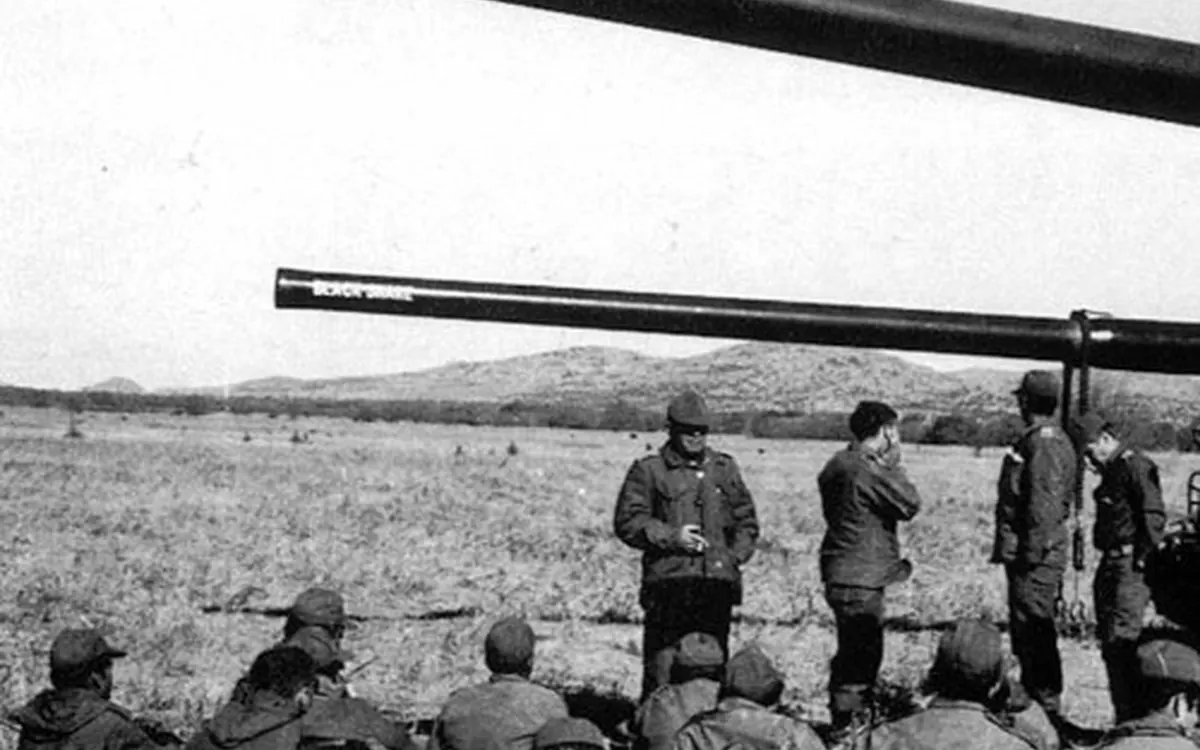
Changing our conceptions is one of the hardest things in life to do, for countries as well as individuals. Israel's stunning victory in the Six Day War of 1967 brought many blessings, but it also posed certain challenges in how to understand the post-war reality. Here is the first episode on the War of Attrition with Egypt and General Naser, a conflict so poorly understood that many people don't even know it happened.
About this episode
A conception, Rav Mike begins, has staying power because once we truly know something we inhabit it rather than the reverse, and we guard it like a mother bear her young. A conception well fit to its situation lets us scale up to a broader horizon and drill down into the details, but like everything born it must one day die, and 1968 was a year when conceptions cracked everywhere, Chicago and Prague and Paris. Egypt's Nasser gave the War of Attrition its name in a 1969 speech, though the fighting had been underway for two years without Israel quite noticing that a new kind of war had begun. The opening shots came less than a month after the Six-Day War, when an Egyptian commando crossed the canal near Port Said, and the heavy artillery on the west bank gave a bitter first taste of three years of battering.
Nasser knew he could not erase the humiliation of 67 head on, so he chose a war of attrition, low risk and relatively high reward. Tel Aviv was out of reach, but her sons were lined up along the canal like ducks in a row. He told his confidant Heikal that Egypt had manpower reserves to spend and Israel did not, a brutal calculus aimed at two fronts, restoring his army's morale in the phase of defiance and sapping Israel's will to fight. Dado Eleazar admitted that nothing was worse for Israel than a war where 300 Egyptians and four Jews die each day, and by the war's end in 1970 that tally proved almost exact, 1,424 Israeli dead over three years. Yet the euphoria of victory stood in for the will to fight, and the discotheques of Tel Aviv rocked while the Sinai shook.
Historians cannot even agree when the war began, and Rav Mike's vote goes to the afternoon of October 21, 1967, when the destroyer Eilat was sunk by missile fire off Port Said, the first vessel ever sunk by a missile boat in wartime. The Navy had not shared in the glory of June, and the Eilat held an unchanging patrol pattern that made her a sitting duck. Two missiles struck, then a third two hours later, and of 199 crewmen 47 were killed. For Egypt it was a clear victory, still celebrated today with a golden jubilee medal, and for Israel a disaster. More than that, both superpowers watched closely, because the Eilat went down to a Soviet-built missile, and the Sinai was on the fast track to becoming a proxy conflict to rival Vietnam, with Soviet advisors and modern guns pouring into Egypt.
Short of long-range artillery, Israel would have to rely on her air force, and the French embargo meant the United States was now the only game in town. In January 1968 Levi Eshkol became the first Israeli prime minister invited to the president's home, meeting LBJ at his Texas ranch for a taste of barbecue diplomacy, and what he wanted was the F-4 Phantom. The entire American political and defense establishment opposed the sale, fearing an arms race and the drain on Vietnam, but Johnson felt a deep attachment to Israel and liked the prime minister. He would commit only to keeping Israel's needs under active and sympathetic examination, hardly the planes she needed. Eshkol followed with a personal letter on the eve of Israel's twentieth anniversary, appealing for the weapons to prevent further war and encourage a peace that, though it tarries, would surely come.
Through the summer of 1968 pressure mounted, both party platforms adopted an AIPAC plank for military aid, and both candidates backed the Phantom sale. In October Johnson signed the Foreign Assistance Act and ordered negotiations, and the deal was announced in December, 50 Phantoms for 285 million dollars, the largest arms deal Israel had yet signed and a shift that made America her principal supplier. The Soviets answered with 200 MiG-23s for Egypt, and the Middle East arms race was now part of the Cold War. Rav Mike closes where he began, with conceptions. The general staff lived in a posture of permanent victory and could not conceive of defensive war, so the Barlev line was built as a response to a war they barely understood. Stuck in old conceptions, they would pay a near disastrous price.
Key ideas
- A conception has staying power because we inhabit it, and Israel could not see that it was already fighting a new kind of war.
- Nasser's war of attrition was a brutal calculus of blood aimed at restoring Egypt's morale and sapping Israel's will to fight.
- The sinking of the Eilat was the first time a missile boat sank a warship, drawing both superpowers into the Sinai as a proxy ground.
- The euphoria of the Six-Day War stood in for the will to fight, so the trickling death of attrition did not yet crack Israeli morale.
- Eshkol's visit to Johnson's Texas ranch began the long dance that made America Israel's principal arms supplier.
- The general staff's posture of permanent victory left them unable to conceive of defensive war, and the Barlev line would cost them dearly.
Chapters
- 0:00 Conceptions and their staying power
- 2:09 1968; the world questions itself
- 3:19 The first shots; Port Said
- 5:34 What Nasser meant by attrition
- 7:53 Psychological war on two fronts
- 9:00 The acceptable number of casualties
- 11:18 Discotheques while the Sinai shakes
- 12:26 When did the war begin?
- 13:33 Operation Shock; the Barlev line
- 18:00 The sinking of the Eilat
- 22:23 A proving ground for the superpowers
- 24:38 Soviet arms and advisors pour in
- 25:47 Eshkol goes to Johnson for Phantoms
- 30:18 The long fight for the F-4
- 36:54 The deal is done; the arms race
- 40:11 Stuck in old conceptions
Who, where and when
People
Gamal Abdel Nasser, Mohammed Heikal, David Eleazar, Moshe Dayan, Chaim Barlev, Levi Eshkol, Lyndon Johnson, Charles de Gaulle, Shlomo Artzi, Ariel Sharon
Places
The Suez Canal and Port Said, The Sinai, Tel Aviv and Haifa, The LBJ ranch in Texas, Cairo
Texts
Nasser's 1969 attrition speech, Shlomo Artzi's Chom Yuli August, Eshkol's letter to Johnson, Resolution 242
When
October 1967 CE: the Eilat sunk, October 1968 CE: Egyptian bombardment and Operation Shock, January 1968 CE: Eshkol visits the Texas ranch, December 1968 CE: the Phantom deal announced, 1969 CE: Nasser names the War of Attrition
Read the transcript
All the revision in the world, says T. Lawrence, will not save a bad first draft. For the architecture of the thing comes or fails to come in the first conception. And revision only affects the detail and ornament, alas. Well, as far as I can tell, the world was conceived right in the first place. But I'm not shy to do a little bit of editing. Because I'm Rav Mike Foyer, and this is The Jewish Story. Season 4, Episode 8, The War of Attrition, Part 1. You know, you may be aware that changing our conceptions is not a simple thing. It's really quite difficult to break the mold in how we know the world. And I think that conceptions have such a staying power in our life because once we come to truly know something, we have a clear conception of what is, it takes on a life of its own beyond the way we see it.
Hence the fact we say, my conception of something was born out of my experience. It was born out of it. Because true conceptions are born into the mind. And once they are, we inhabit them and not the opposite. And of course, like all of our children, we tend to take a guard and defend posture around our conceptions. If you don't think what I'm saying is true, you go ahead and attack someone's more precious conceptions and see if the reaction you get is anything short of wounded mama bear defending her young. Now, that's not to say this is all bad. A conception which is well fit to the situation can allow you to scale up to see a broader horizon within which it fits, and it can help you drill down into the details to do the work in everyday life that every right conception demands.
The real problem is that just as all conceptions were born at some point in the lives of people or nations, so too they all must die. Now, at this point in our story, it's important to note that in general, conceptions are being rocked all over the world. I mean, 1968 is a year of potential revolution. Chicago and the Democratic Conventions, Prague and the Soviet invasion, Paris and the student riots. riots. The whole world is questioning its conceptions, and as we're going to see, perhaps Israel would have done well to look a little closer at its own. It was Egyptian President Gamal Abdel Nasser who gave birth to the idea of a war of attrition, and he named it in 1969 during his annual address honoring the day of the Egyptian Revolution.
Now, I want to be clear, the war was well underway by 1969. Frankly, at that point, Israel and Egypt didn't pummel each other all but continuously for two years. So continuously, in fact, the politicians and military leaders in Israel hadn't really noticed that a war was happening at all. They hadn't woken up to that this was something new, a different type of conflict to which they had to adjust. So, I want to be clear. Nasser wasn't making a declaration of war in this 1969 speech. He was making a statement of fact and of determination. And he informed the Egyptian nation, quote, we are ready for a long-term battle of attrition against the enemy. The opening shots of what came to be known as the War of Attrition were actually fired less than a month after the Six-Day War ended.
You might think a victory of that magnitude would have brought the region more quiet but you couldn't be more wrong. Any parent that's ever punished a child knows that this is true. On July 1st, an Egyptian commando unit crossed the Suez Canal to attack an IDF mechanized infantry force positioned down the east bank about 10 kilometers south of Port Said. Now just to locate us in case you're unfamiliar, Port Said is the city which dominates the northern entrance to the canal. It had been a thriving metropolis, well that might be an exaggeration, a thriving city for more than 100 years. But in the course of the War of Attrition, it's going to become a ghost town. Nothing more than a key forward defensive position for the Egyptians and the headquarters of their blockade on the canal.
Now, eventually, the Israeli unit managed to drive the Egyptian attackers off, but it came at a high price. Commander Major Uriel Menuhin was killed and 13 of his soldiers wounded. And perhaps most significantly, much of the success of the attacking force was due to the heavy artillery fire provided by Egyptian batteries on the west bank of the canal. It was a bitter first taste of the battering Israeli forces will take from these guns over the next three years. Now, since its inception, the idea had been light on long-range artillery. After all, the primary battle doctrine was Aharai, after me. You learn to charge quite quickly when your country is only nine miles long at its widest point. So for two decades, they've been investing in more mobile approaches to war, I'll call them.
The Egyptians, on the other hand, had plenty of space to spare and they were loaded for bear. Israel will feel the pain of this deficit over the next three years as Egypt's guns wreak havoc on their positions up and down the eastern bank of the canal. It was a strategy that Egypt would pursue to much success, low risk, relatively high reward. And it quickly became the first half of a pattern that we'll watch for three years. The second half was, of course, set the day after the raid, when Israeli fighter bombers struck across the canal, aiming to destroy those artillery positions. That type of tit-for-tat can escalate quite quickly, especially when one side is effectively using fighter bombers as makeshift artillery.
And trust me, it will escalate. But before we go there, we need to understand this war. We have to understand what exactly Nasser meant when he announced a war of attrition. In the wake of the Six-Day War defeat, Nasser knew he was in no position to erase the humiliation of 67, as it was known, at least not yet. But he also had no intention of making peace, at least not of accepting the offers which were radiating out of Washington, which he considered, frankly, beneath his consideration. I hope you recall from a previous episode the rejectionist stance embodied in the three no's of the Khartoum Conference. No peace, no negotiations, no recognition of Israel. Well, that type of political rejection quickly requires a military posture as well when your army is facing the enemy across a relatively narrow body of water.
So Nasser wasn't yet ready to confront Israel head on, but he knew that there's more than one way to wage a war. Tel Aviv might now be out of his reach, but her sons weren't. In fact, since Israel's victory in June 1967, they were lined up along the eastern side of the canal like ducks in a row, ready to be picked off by his artillery. The war had taught Aser that Israel's air force could and would exact a high price for Egyptian bombardments, but frankly it was a price he was willing to pay. As he told confidant Mohammed Haslein Heikal, editor of the Cairo newspaper Al-Ahram, he said, quote, if Israel succeeds in inflicting 3,000 casualties in this campaign, we can go on fighting nevertheless, because we have manpower reserves.
If we succeed in inflicting casualties, he will unavoidably find himself compelled to stop fighting, because he has no manpower reserves. It's a brutal calculus, and it was about more than numbers. The War of Attrition was a psychological warfare on two fronts. The first was actually aimed at the home front. Nasser needed to begin his renewed battle by restoring the morale of his army and the country as a whole, so recently crushed by Israel in the Six-Day War. Arab historians call this early stage of the War of Attrition the phase of defiance. The very fact that the Egyptians were unwilling to give up, in fact, that they dug in along the eastern bank of the canal and engaged in constant skirmishes with Israeli forces, showed Nasser's men and his country that there was no reason to give up and acquiesce to Israel's seizure of the Sinai.
The second front in this psychological war was, of course, against Israel, where his strategy of attrition was aimed to break national will as much as it was to spill blood. Nasser knew that the Jews love life, and that constant casualties, even in low numbers, could force a crack in Israeli public morale, sapping their will to fight. This new type of war meant that there was no need for massive battles, and therefore no need to risk another massive defeat. All that was required was a constant hammering of Israeli positions with long-range guns, and periodic rage which drew blood, even if only a little. And if Israeli jets gave devastating response, well, he had the manpower reserves after all. Now, on one level, Nasser's assessment of Israeli morale was not incorrect.
Chief Operations Officer Dado Eleazar, he himself said, nothing is worse for Israel than a war of attrition in which 300 Egyptians and four Jews are killed every day. Now, four a day, or 300 for that matter, may sound like an awful lot. But by the war's official end in August of 1970, Datto's hypothetical tally was almost exactly correct, at least on the Israeli side of the equation. 1,424 Israeli soldiers would die in the War of Attrition. That's nearly twice as many as the 776 who fell during the Six-Day War. But these more than 1,000 casualties took place over three years, not six days. and frankly the Sinai feels awfully far from Tel Aviv. As it turns out, Nasser's assessment of Israeli society was correct, but perhaps premature.
The trickling death of a war of attrition will actually be a major factor in undermining Israel's will to fight in Lebanon in the 80s. But at this point in our story, we're still in the 60s and in the wake of the Six-Day War. and the euphoria brought on by that kind of victory serves quite well in place of the will to fight, at least in the short term. Furthermore, the Israeli public felt no existential threat from Egypt's attacks, no matter how massive they might have felt along the canal, nor did they hold any moral qualms about the IDF's often disproportionate responses to them. And, sad to say, history has proven that there is a so-called acceptable number of casualties which societies are willing to bear.
Don't forget, it's the 60s, not just in America, but Israel as well. And the difference is that while the youth of America are combining the freedom and hedonism of the hippies with the political consciousness of the anti-war movement, in Israel, they've got the former without the latter. It's a vanishingly small element in Israeli society that's ready to protest war during the summer of love. But the youth are definitely ready to rock. The way it described by some historians that while the western Sinai was shaking from artillery fire the discotheques in Tel Aviv and Haifa were rocking to the sounds of music It a crazy image but try to imagine the dance floors packed with young people as war heats up once again.
Many of them, in fact, are soldiers on leave from the Sinai, and I can only imagine that they came there to forget their fear, if but for a little while. A strange and even troubling situation. One that was immortalized by Israeli musician Shlomo Arti in his song, Home Yuli August, the July-August heat. He says, grab a Haifa cab, and I jump to the discotheque. There's prostitutes on the wall. But me, inside my body, there's just a burning demon. Balev as I go to dance with dead soldiers in my heart. The War of Attrition fails to fit the mold of Israel wars in so many ways that it should come as no surprise historians lack consensus even about when it began. Now, I already mentioned one option, that is Egyptian raid of Suez, which took place only weeks before the end of the Six-Day War.
This may serve the technical purpose of when the first shots were fired, but a border raid does not a war make. And they were nothing new to Israel in the summer of 67. They've been going on since the state was born, and frankly, they're still happening today. Another option I'd offer is March 3, 1969. This was the day on which Egyptian President Gamma Abdel Nasser announced that the ceasefire, which had ended the first round of post-67 skirmishes, was officially over. Now, the July 67 raid I mentioned earlier was followed by a creeping escalation of forces. By the fall of 68, the Egyptians had more than 100,000 troops dug in along the western side of the Suez, along with countless tanks and guns. The first salvos began in late 67 and early 1968, and they drew mostly symbolic Israeli responses.
It appears in retrospect that Israel's restraint may have been a mistake, because once his army was well dug in and their guns in place, Nasser decided that that first phase of defiance was over. It was time for the phase of confrontation. On October 26, 1968, the Egyptian guns opened up along the entire length of the canal with a devastating bombardment, so intense that it left 15 Israeli soldiers dead in the forts that were meant to protect them. When Defense Minister Moshe Dayan went down to visit the canal the next day, he was shocked to see that the hardest-hit positions looked as though they had been, in his words, struck by a typhoon. And this time, the Israeli response was swift and equally shocking.
Sayeret Matkal is a group of special operations soldiers attached to the general staff of the Israeli army. And they sent a commando unit ferried by helicopter deep into Upper Egypt. The targets were two bridges over the Nile and a critical transformer substation on the Aswan Cairo power grid. Now, this may not sound like your traditional military target, But this was called Operation Shock, and as you'll see, it had its effect. The raid was a spectacular success. With no warning whatsoever, Cairo, the capital city, was plunged into near-total darkness. And when emergency crews were rapidly dispatched to fix the problem, they were unable to reach the damaged site due to the traffic chaos resulting from the downed bridge.
Now, in his eagerness to fulfill his new slogan, that which was taken by force can only be recovered by force. Nasser had forgotten the basic element of Israeli military doctrine, always take the battle to your enemy's territory. The west bank of the Suez Canal might have been heavily defended and thus ready for this new stage of confrontation, but the critical infrastructure of the rest of Egypt was wide open to IDF attack. As a result of the raid, as I said, called Operation Shock by Israel, the Egyptian government halted all military options for five months in order to fortify the vulnerable home front. And, contrary to that general posture I just labeled, the IDF responded in kind, constructing more than 30 heavily fortified positions along the east bank of the canal, stretching a 160-kilometer front.
It was the beginnings of the Barlev line, named for General Chaim Barlev, who was then IDF chief of staff. By the time it was completed, The Barlad line will include a massive sand barrier lining the entire canal on the eastern bank at a height of 20 to 25 meters, backed by a line of 22 forts and 35 strong points, each one ringed by nearly 15 circles of barbed wire and minefields to a depth of 200 meters. And beyond that lay a complex system of support roads and prepared firing positions for tanks and artillery. It was essentially a new Maginot line. It was the largest engineering project Israel had undertaken to date, costing upwards of $300 million by the time it was complete. Advocates of the far-left line estimated that it could hold off a full Egyptian assault for up to 48 hours, something that would allow Israel to mobilize and attack in return.
The fact that the Egyptian army will breach it in less than two hours is a story we'll have to tell another time. For now, Egyptian artillery assault and Israeli commando raids of fall 1968 led to a ceasefire that lasted until, as I said, Nasser annulled it. As he made clear in his speech made to the Congress of the Arab Socialist Union in March of 69, the so-called Middle East crisis, which is in fact our natural and rightful struggle, is now entering a very important and serious phase. There was a time we used to ask our soldiers at the front to account for their actions if they fired at the enemy on sight, for we were not prepared for the complications. Now the picture has changed. We ask every soldier at the front to account for his action if he sees the enemy and does not fire at him.
So, one might say that this was a definite statement that things had changed, that gloves were off. In light of the events between July 67 and March 1969, I have to say that Nasser's declaration marked an escalation in the conflict, but not its beginning. My vote for the beginning of the War of Attrition actually goes back to late afternoon, October 21st, 1967, not long after the end of the Six-Day War. It's a day which not only marked the return of full-scale war between Egypt and Israel, but also will frame its global context. This was the day on which the INS destroyer Eilat was sunk by missile fire off the Mediterranean coast north of the Sinai. Now, I have to say that, truth be told, the Israeli Navy did not exactly share in the glory of the June 67 victory.
In fact, in the eyes of many military historians, its performance had been downright poor. And the general staff certainly recognized, even before the war, that the Navy was in need of an overhaul. And now, in the post-war reality, this was only more pressing. The Six-Day War may have helped Israel's ground forces by shortening the land borders by 650 kilometers, but its maritime boundary had actually been extended by nearly 1,000. Maybe that's why the naval conflict was the first to escalate. In July of 67, right after the war, the Eilat encountered two Egyptian torpedo boats during one of its patrols off the northern Sinai shore. In giving chase, she eventually sank both boats with loss of all hands on board.
It was a rare moment for the Navy, but while Israel was celebrating its victory, the Egyptian naval forces were already planning their revenge. And so late in the afternoon of October 21st, the Eilat reached the western boundary of her patrol line. According to the ship's log, the weather was exceptionally clear, seas, wind, calm, so calm in fact, that the skyline of Port Said was clearly visible to the south as the crew prepared to turn back, which of course meant that the destroyer itself was also visible from Port Said. Unbeknownst to captain and crew, the Eilat had been under observation since that July skirmish, and only a fool could fail to notice her unchanging patrol pattern, which made her easily tracked by shore-based radar and essentially a sitting duck.
Just as the destroyer reached its western turning point, the radar stations on the outer harbor fed fire control solutions to two Egyptian missile boats stationed just inside the breakwater. Lookouts on the destroyer reported a flare and smoke from the mouth of the harbor, and battle stations were called. The Eilat began evasive maneuvers, and when the first missile was spotted, it appeared that it might miss well behind. And then, at six miles out, it suddenly turned inbound, heading direct through the ship and striking it in the stern. The Eilat was just able to send out a distress call before the second missile struck amid ships. Unable to maneuver, listing it on fire, the crew tried in vain to keep the ship afloat.
Two hours after the initial attack, a third missile struck, igniting the ammunition in its hold and triggering a series of secondary explosions. The decision was made to abandon ship, and 15 minutes later, the a lot went down. By the time the rescue operation was complete, of the 199 crewmen aboard, 47 were killed in action, 16 declared missing, and more than 100 wounded. Navy and civilian doctors and nurses battled to save the lives of wounded crewmen from the Israeli destroyer Elath, sunk by Soviet-built Egyptian missiles. Israeli Defense Minister Moshe Dayan states that President Nasser had resumed hostilities when he ordered the missile attack. In a memorial address, the commander of the Israeli Navy says, The account will be settled.
The blood of our comrades will not be forgotten. It was clear victory for Egypt. and such a boost to morale that it's actually still celebrated today. In fact, only two years ago, Egyptian President Abdel al-Sisi decreed the issuing of a commemorative Golden Jubilee Medal for the entire Egyptian navy on the occasion of the 50th anniversary of sinking the Eilat. So you can imagine at the time, it fit perfectly into Nasser's goal of restoring Egyptian honor and morale. And of course, it was an unquestionable disaster for Israel. But why call this the beginning of the War of Attrition? I'll tell you why. Because if you want to understand the significance of the war, which is so often lost in the shuffle between 67 and 73, I mean, ask your friends how many wars there were that Israel fought, and whether this one counts.
If you want to understand it, we have to keep our eye on the global context, like I said. The Eilat was the first vessel ever to be sunk by a missile boat in wartime. This was an important milestone in naval warfare. And in the Cold War being waged by America and the Soviet Union, through proxies throughout the world, it caught a lot of people's attention. Or, if not a lot, the right people's attention. Because as Israeli diplomat Yitzhak Herzog observed after the war had ended the War of Attrition quote did not attract worldwide attention But nonetheless many of its events were to be complete innovations in the history of warfare, with the battlefield around the Suez becoming a major proving ground for the military equipment of the two superpowers.
Both the USA and the USSR were watching closely as the Eilat went down, and not at the fact that she was sunk, but at how it happened. And as we'll see as this story unfolds, both superpowers are going to begin to pour arms into this conflict, quickly making it a testing ground for their latest and greatest killing machines. Less than a week after the Eilat went down, Israel retaliated by shelling the Egyptian refineries and fuel depots at the northern terminus of the canal. 103 Egyptians were wounded and killed. two of the site's refineries were totally destroyed. It was an attack that caused more than $100 million in damage to the Egyptian oil industry, temporarily wiping out 80% of their production capacity.
And this was the point at which the Soviet Union decided that they couldn't allow their client state to be so easily pushed around. 80% of Egypt's oil producing capacity goes up in flames after a three-hour artillery exchange with Israel across the Suez Canal. Both nations accuse each other of starting the incident. Flames could be seen 40 miles away. 400 firemen battle the inferno, which sweeps through two refineries and a number of storage tanks spread over a 10 square mile area. So they began to pour massive amounts of new equipment into Egypt, particularly large numbers of modern long-range artillery pieces. And in a new and critical development, because, of course, the Soviets had given plenty of arms to Egypt before, at least 1,500 Soviet military advisors also arrived.
They were the first of thousands of Soviet military personnel to come. The Sinai was now on the fast track to becoming a proxy conflict to rival even Vietnam. Short of artillery, Israel knew she would have to rely on her air force to counter this new threat. French aircraft had long been the mainstay of the IAF, But since the outbreak of the Six-Day War, the French government had embargoed armed ships to Israel, which meant it was time to find a new supplier. On January 6, 1968, the White House press office issued the following statement. The Prime Minister of Israel, Mr. Levi Eshkol, has accepted President Johnson's invitation to visit him at his Texas ranch. The President and the Prime Minister will discuss subjects of mutual interest in the bilateral relations between their two countries, as well as the situation in the Middle East in general.
Now these days, the idea of a President inviting Israel's Prime Minister for a visit hardly seems extraordinary, though it might feel a bit more so than it has in the coming four years. But in the 1960s, this was a noteworthy event. I mean, after all, Lady Ashkol was the first Israeli Prime Minister to ever make a state visit to America, and that was only in 1964. Even the legendary David Ben-Gurion never reached the White House. He did meet with Presidents Dwight Eisenhower and John F. Kennedy in what are called in polite company backdoor meetings, and when they happened to be in New York at the same time. But we all know that a legitimate relation isn't let in by the backdoor. And now, Levy Eshkol wasn't just going to the White House.
He would be meeting LBJ at his Texas home to get a little taste of what journalists called his barbecue diplomacy. On the 7th of January, some very chilly citizens of San Antonio gathered at Randolph Air Force Base to help President Johnson welcome Prime Minister Eshkol of Israel. Taking advantage of his visit to the United States, President Johnson invited the Prime Minister and Mrs. Eshkol to be his guest at the Texas White House. Far from the prying eyes of Washington was the perfect environment in which the President and the Prime Minister could discuss subjects of mutual interest, which for Levi-Ashkoll meant arms. Now, now's not the time to delve into the world of the international arms trade, although that time may come for an interlude on the subject.
Some of you listening probably know it's a topic of particularly passionate interest for my holy wife. For now, I need to stay focused on Israel and our war. Like I mentioned, before the Six-Day War, France had been Israel's major arms supplier, particularly when it came to fighter planes. It was French fighters that had led the charge in the miraculous opening strike of the war. It's a relationship that had grown out of the French-Israel cooperation in Algeria and in Egypt, culminating in the 1956 Suez campaign and the launching of Israel's nuclear program. Those are episodes you can find back in Season 3. But, as French President Charles de Gaulle told Foreign Minister Abba Ibn when he was pleading for French support in the lead-up to the Six-Day War, 1967 is not 1957.
The French embargo on Israeli arms sales was so complete that in 1969, Israel ended up stealing from a French harbor five missile boats that had been commissioned and paid for back in 1965. It's a story worth looking up, by the way. Check out the Cherbourg Project. So at this point, the U.S. is the only game in town. And what Prime Minister Levi Eshkol was asking for was the highest stakes in the world of air warfare, the F-4 Phantom. Now, the seemingly straightforward request for advanced fighter bombers gave birth to what we know today as the complex political dance which sits at the intersection between domestic and foreign policy that we call U.S.-Israel military relationship. In our day, American military aid amounts to well over $3 billion annually to Israel, most of which, of course, is funneled directly back to the American defense industry, thus making it both a foreign and domestic industry, because that's a lot of power.
But in 1968, Prime Minister Eshkol was coming to LBJ essentially with hat in hand. The quick flight to the LBJ ranch gave Mrs. Eshkol and the Prime Minister a chance to see some rugged land, not unlike their own, harsh at times, but giving satisfaction to those who work to give it life. This great land of Texas, it reminds me very much of parts of my own country, although there is, of course, no comparison in size. I can see here the results of pioneering and dedication, the beauty men can create when they are free. Both men shared visions and a national purpose far brighter than their abilities to make deserts bloom. The political maneuvering began well before Eshkol arrived in Texas. The U.S. had also imposed an arms embargo on the Middle East in the wake of the Six-Day War.
And it was only in late October of 67, after Egypt sunk the destroyer lot, that certain senior members of Congress began to call for greater military support of Israel, and the administration therefore leaked the news that this embargo was about to be lifted. Israel's response was immediate request for more A4 Skyhawks and 50 F4 Phantoms. Both the State Department and the Joint Chiefs of Staff were firmly opposed to the sale, particularly to that of the Phantoms, America's most powerful fighter. Their logic was that the U.S. could prevent an arms race by simply refusing to supply Israel with more sophisticated weapons. Instead, a continued embargo would actually force a diplomatic solution to the conflict.
The end of 1967 saw a deluge of letters from congressmen urging Johnson to sell the planes to Israel, but he held fast. The pressure mounted as Prime Minister Eshkol's visit approached. In addition to the political opposition to the sale now, though, the Navy and the Air Force stood opposed to the sale of any fighters, fearing that reducing American stocks of these critical weapons would have, quote, a serious effect on the operational forces in Vietnam. Remember, Johnson's the one who oversaw the tremendous increase in that conflict. And so, when Lady Ashgol arrived at President Johnson's ranch on the Pernalus River, he was already swimming upstream. Now, if you want a great description of their meeting, I highly recommend you read Yehuda Avner's book, The Prime Minister's.
In fact, I highly recommend you read it anyway. For our purposes, basically, the entire political and defense establishment were ranged against Eshkol. But, President Johnson had always felt a deep attachment to Israel and a deep commitment to her security. And frankly, he liked the Prime Minister. Nonetheless, the only commitment the President would make at the end of their meeting was a promise to keep Israel's military needs, quote, under active and sympathetic examination, which was hardly a promise to sell Israel the fighters that she needed. The Prime Minister followed up his state visit with a personal letter to President Johnson, sent at the end of April 1968. And in it, he outlined the latest developments in Middle Eastern arms race, urged the Americans to take a stand for Israel's security and regional peace, and closed with an impassioned and personal appeal.
Mr. President, I write to you on the eve of Israel's 20th anniversary. Israel came into being against the background of the destruction of a third of our people at the hands of the Nazis. In the 20 years of our existence, it has had to fight three wars for its survival. Throughout this period, only the maintenance of the minimum arms balance has saved it from destruction. I appeal to you on behalf of my people to grant us the weapons necessary to prevent further war and to encourage the process towards peace, which, though it tarries, will with God's help surely come. Through that summer, pressure mounted on the President to make a decision. At the end of July, the House and Senate adopted a resolution calling for the sale of an unspecified number of supersonic military planes which would provide Israel with a deterrent force.
International forces began to come into play as well. On August 21st, the President's special assistant, Ernest Goldstein, a Jew who, by his own confession, had stayed out of the Israel question up to now, wrote a memo warning that the Soviet invasion of Czechoslovakia provided evidence that the Russians' lack of restraint, quote, might find its counterpart in the Middle East. And he urged Johnson to provide phantoms to Israel before the election. Now, it may have been those electoral pressures which actually decided the issue in the end. Because even though Johnson had declined to run in the 1968 presidential election, he couldn't ignore the needs of his party. That August, both national conventions, Republican and Democrat, if you're not familiar, adopted platform planks which were supplied by the American-Israel Public Affairs Committee, that's AIPAC, calling for military aid to Israel.
And both candidates made a strong statement in support of the phantom sale. At the Menebrith convention in Washington on September 8th, Hubert Humphrey warned, quote, want of strength whets the appetite for war, for aggression. Israel must have the means to defend itself including such items as phantoms Not to be beat Richard Nixon told the same audience only a day later that the bounds of power must be tipped in Israel favor to deter Arab aggression. Therefore, he believed Israel must have, quote, a technological military margin to more than offset her hostile neighbor's numerical superiority. If maintaining that margin should require that the U.S. supply Israel with supersonic phantom F-4 jets, we should supply those phantom jets.
It seemed nonetheless that the president might hold firm. He gave his first major Middle East speech since June of 67 at that same B'nai B'rith convention. He told them he had, quote, no intention of allowing the balance of forces in the area to become an incentive for war. We have proposed the urgent need now for an international understanding on arms limitations for the region. Now, despite that stirring call for arms control, in the weeks after the convention, the U.S. closed a $100 million deal with King Hussein of Jordan for U.S. Hawk missiles, and it approved the sale of an additional 12 A4 Skyhawks to Israel. It seemed that despite Johnson's words, his administration was moving closer to the Israeli view that in order to have peace, you needed to have strength, that to negotiate from a position of weakness was actually to invite war.
And so it was that on October 9th, President Johnson signed the Foreign Assistance Act of 1968 and announced that he had not only taken note of the section concerning the sale of planes to Israel, but was also asking Secretary of State to initiate negotiations. The deal was done. The sale was actually announced on December 27th. Israel was to receive 16 Phantoms in late 1969 and another 34 in 1970. At the cost of $285 million, it was the largest single arms deal signed up to that point by Israel. And for America, it was a shift in foreign policy. As Secretary of Defense Paul Warnke later told Ambassador Yitzhak Rabin, until now the United States had avoided becoming Israel's arms supplier, but this had changed.
Quote, we will henceforth become the principal arms supplier to Israel. involving us even more intimately with Israel's security situation and involving more directly the security of the United States. And, of course, in 1968, every action on the arms sale front had an equal and opposite reaction. When they heard of the U.S. agreement, the Soviet Union began delivering 200 MiG-23s to Egypt. The Middle East arms race was now officially part of the Cold War. So most of the pieces are now in place for understanding the war of attrition. We've got Nasser's model of making Israel bleed and the psychological warfare that that represented, both in supporting his home front and in attacking Israel's. We're also aware that the war of attrition is going to play a key role as a Cold War proxy conflict and military testing ground.
And we'll see how these elements unfold in the coming episode. One thing I actually failed to mention was the diplomatic roundabout that gained speed after Eshkol's meeting with Johnson. Together with his commitment to, quote, study with sympathy Israel's arms need, the official statement that came out of that meeting declared itself fully behind Security Council Resolution 242 that had ended the Six-Day War in which the diplomatic world hoped would bring lasting peace to the region. I leave it to you to decide whether an agreement to sell hundreds of millions of dollars in arms to both sides of a conflict and then seeking diplomatic solutions are compatible. But for now, just know that Swedish diplomat Gunther Jaring had been appointed as the UN Secretary General's Special Representative at the end of 1967 and he was empowered to pursue Resolution 242.
Israeli Foreign Minister Abed Ivin immediately presented Jaring with elaborate proposals on an agenda for peace discussions throughout the region. But, every proposal he made lacked the one condition which the Arab states considered essential, a full Israeli withdrawal from territories taken in the war. Despite this, Jaring is going to rack up an immense number of frequent flyer points in the coming year or two, pursuing an elusive and ultimately hopeless agreement. As President Nasser told his cabinet in February of 68, we will cooperate with Jaring, although we already believe he will fail in his mission. We will cooperate with the devil himself, if only to prove our good intentions. However, we know from the start that we are the ones to liberate our land by force of arms, the only language Israel understands.
Let the U.S. assist Israel, but they know very well that we have not been defeated in the war as long as we have not negotiated with Israel. So, we've got all the elements for what's going to be a very messy war. And before I end this segment, I just want to add one final thought. You can call it a strategic analysis, or perhaps an analysis of failure in strategy, one that brings us back to where we began with the discussion of the power of conceptions to shape the world in which we operate. In a democratic society, the military is meant to be a tool of the political echelon, and they're meant to have a strategic vision. And frankly, when an army has its own strategic vision for the country, it rarely ends well for democracy.
And that being said, for Israel, the IDF had always been more than an army. It was the infrastructure for most of the pre-state struggle. It was a primary tool for creating a society at all after independence. And of course, power and source of pride and sense of safety for the entire country after independence. And so it should come as no surprise that in the post-67 reality, most politicians didn't bother to develop an independent strategic approach to managing Israel's conflict with the Arab world. They just listened to the generals who'd won an all but miraculous war. The problem with this is that neither the politicians nor the generals were actually equipped to appreciate how profoundly their victory had changed the strategic reality.
they were stuck in old conceptions, lots of them. We touched on this inability to appreciate the new reality a little bit in the episodes around the first sparks of the settlement movement and the inability to conceive the impact that messianic longing was about to have on their society. There's many other conceptions which are going to be challenged in coming episodes, but for now I want to end with the military face of what it looks like to be stuck in old conceptions. The Six-Day War produced a rare and somewhat paradoxical situation for Israel's military. On one hand, it was an unprecedented victory. And on the other hand, there was an almost complete inability to understand its consequences. The attitude that prevailed in the IDF general staff immediately after the war was one of permanent victory.
They created a new reality. The Arabs will never dare to mess with us again. And add to that a key attitude that pervaded the military before 67, the almost total dismissal of defensive fighting as a real need in war. It's not that the IDF lacked basic military knowledge about the defensive posture. It's just that since its beginning, its mission had been to defend both the pre-state and then the post-state along very precarious ceasefire lines. And therefore, no one questioned that the best defense was always a good offense. And now that the country had tripled in size, you might hope the posture would shift to how best to preserve and defend these territories gained. But you would be wrong. During a general staff meeting in September of 1968, Chief of Staff Barlev said the following, If we hang on to some defensive conception, it's an optical illusion.
Because in the final analysis, we've always said we will stop the enemy's attack and we will shift the war to its land. I think that this was valid during the period of the Green Line, meaning 48, and it's also valid today. And our forces need to be trained to stop a surprise attack and switch to offensive response. The chief of staff went on to say that if another war erupts, it might become necessary to occupy targets forward of the canal, like Cairo or Alexandria. First of all, notice, if another war erupts, as I just told you, another war had already erupted, but they were unable to see it because it didn't fit their conception of what a war was. Furthermore, when Israeli military historians examine this type of approach, they call it the expansionist posture.
One which might be understandable as a tactical military doctrine, seize the high ground, take your enemy's territory, but it's going to have potentially disastrous political costs once the war is over. Now, despite the reluctance to engage or even to conceive of a need for defensive fighting, as the war of attrition drags on and casualties begin to mount, even the general staff can't avoid the responsibility to find some way of protecting their troops positioned along the Suez, and hence the immersion of the Bar Lev line, which didn't actually reflect a shift in thinking toward how do we defend what we've gained, but rather a response to a type of war that they didn't really understand, in fact, one that they weren't really aware was happening.
Even at the time, there was no consensus that the Bar Levine was a good ideal, by the way. In particular, Generals Ariel Sharon and Yisrael Tal strongly opposed it. They argued that an offensive posture was more in tune with Israel's character and its forces, and that such a defensive posture amounted to an admission of defeat. Remember that when we get to the Yom Kippur War of 1973. In the end, like I said, the line was constructed. But there was no parallel shift in military conceptions. The traditional doctrine of bringing the war to the enemy's territory remained in effect. And the results will be near disastrous. There's Israel's army, poised, looking down, so to speak, or looking across the canal, just waiting to spring into action, but not understanding that they're actually in a posture of defense.
American and Soviet weapons will begin to pour into the Sinai, making the cycle of attack and counterattack not just a local escalation but one that will push the world to the brink of nuclear war. But that's a story we'll have to wait for another time. Before I sign off, I just want to thank some folks. I want to thank all the folks who give their hard-earned money for helping make this show happen, keeping it free and widely available. I want to invite you to join them. Go right now to my website, jewishstory.co In the upper right-hand corner, you'll see a button there that says Be a Patron. you can click on that to make a little bit of per-podcast support. Or if you'd like to dedicate a show in honor of someone who's with us today or in memory of someone who's moved on, send me an email at robmikefoyer at gmail.com or write me a personal message on Facebook, robmikefoyer at Facebook, and I'm happy to share the details with you.
I want to thank the Land of Israel Network, that's thelandofisrael.com, for creating a platform that allows me to reach so many amazing people. I want to thank the Pardes Institute, P-A-R-D-E-S dot org dot I-L, for building an educational institution that gives me the privilege of teaching so many fine Jews. And I want to thank you for listening. I'm Rav Mike Hoyer, and this is The Jewish Story.
More from Season 4
TJS S4E7 Israel post 1967 part III Settling Hebron
The return to Israel can have two meanings - a return to the Land and a return to essential self. The birth of a settlement movement striving for...
Play Episode
TJS S4 Interlude: Interview with Rabbi Berel Wein
It is not every day that you get to speak with a legend, much less interview one. Here are some precious words I had with the 'alter rebbe'...
Play Episode
TJS S4 Interlude Hanukkah 5781: Letting the light out
Rav Mike's annual shiur in honor of the yartzheit of his father, Charles M. Feuer, ob"m. Gratitude is one of the keys to happiness, especially in dark times....
Play Episode