
TJS Live - Survival Zionism I
You know about labor Zionism, revisionist Zionism, practical Zionism and religious Zionism - but have you heard of survival Zionism? Here is the first episode in a six part LIVE series on the crucial years of 1938-45.
About this episode
Rav Mike opens the Omer series under the classic frame of destruction to rebirth, from 1938 to 1948, and offers a second frame alongside it, the emergence of survival Zionism. Zionism shaped what we know as Judaism today, yet before the war it was one voice among many and hardly the leading one. The decade became a great evolutionary moment, what he grimly calls the great selection, since those outside Europe had a chance to live and those inside had far less. The driving question is which qualities allow a people to survive, and whether those same qualities build a society in which we would want to live. Survivability and sustainability can pull against each other. With that frame set, he turns back to 1920 and the land of Israel.
The story begins with the fall of Tel Chai in 1920, a small agricultural settlement in the northern Galilee overwhelmed after months of border skirmishes. The name bound to it is Yosef Trumpeldor, the one-armed soldier who dropped his gun and picked up a plow, whose dying words became it is good to die for our country. Aaron Sher said something less famous and more expressive, that one does not desert a place nor give up what has been built, the ultimate survival stance. Tel Chai also opened a rift that runs through the whole story. Was Trumpeldor a soldier defending a farm or a farmer forced to take up a gun? Everyone agreed the land was the goal, and they divided over the proper means, the plow and its productivity or the gun and the realities it dictates.
A month after Tel Chai came the Nebi Musa riots in Jerusalem, where the mayor and the young Haj Amin al-Husseini whipped a festival crowd into violence, mingling local nationalism with an older religious hatred of Jews holding power. Jabotinsky gathered decommissioned legionnaires and offered to keep the peace, and the British promptly arrested him, since an empire has no use for a private Jewish militia. From this he drew his lifelong conclusion, that the world gives you nothing and you hold only what you can defend. In 1923 he founded Beitar and published the Iron Wall, the first hard look at the Arabs and the Zionist project. He pledged equal rights and refused to eject anyone, and insisted that a peaceful aim cannot always be reached by peaceful means, since the Arabs are a living people who know what we want and will resist until an iron wall convinces them.
The real split was over how to wield power. Everyone wanted more Jews in the land, and the question was whether the iron wall would be built of Jewish soldiers or British ones, what Jabotinsky called the militarists and the vegetarians. The third aliyah built institutions, the labor union that Ben-Gurion dreamed into a state within a state. The fourth aliyah, the Grabski aliyah from Poland, brought a middle class of merchants who wanted urban commerce and the freedom to do business, and Tel Aviv became a city. The economic crisis of 1925, the strike breaking, and the murder of Chaim Arlosoroff poisoned the blood between labor and revisionist. At the 17th Zionist Congress in 1931, Ben-Gurion and Berl Katznelson outmaneuvered Jabotinsky, and from then the labor world held both the institutions and the political machinery.
In 1935 Jabotinsky broke completely with the World Zionist Organization and formed his own, the same September the Nuremberg laws declared, in Rav Mike's reading, that the Holocaust was coming. The formal split among the Jews hardened exactly as the pressure rose. On Tisha B'Av 1938 Jabotinsky stood in Warsaw and begged Polish Jewry to see the volcano, to eliminate the exile before the exile eliminates them, and promised that whoever escaped would live to see a Jewish state. He foresaw the catastrophe and still could not pull the trigger toward war, and his disciple Menachem Begin rose at the Beitar conference to call the youth to collect iron and build a military future. The decade would open fighting on four fronts, Jew to British, British to Arab, Jew to Arab, and Jew to Jew, and survival Zionism would be forged in that fire.
Key ideas
- The decade from 1938 to 1948 was a great selection, and the real question is whether the qualities that let a people survive are the ones that build a society worth living in.
- Tel Chai set the rift between the plow and the gun, with Aaron Sher's stance that one does not give up what has been built.
- The Nebi Musa riots began the cycle of Arab violence, British order and political concessions that would strengthen the empire.
- Jabotinsky's Iron Wall pledged equal rights yet insisted only firm resolve would bring the Arabs, a living people, to accept a Jewish majority.
- Labor and revisionist Zionism split over how to wield power, and at the 1931 Congress Ben-Gurion took both the institutions and the political machinery.
- On Tisha B'Av 1938 Jabotinsky warned Polish Jewry to eliminate the exile, and Begin answered with a call to collect iron and prepare for war.
Chapters
- 0:00 The great selection; survival Zionism
- 4:46 An evolutionary moment, not rebirth
- 8:07 Tel Chai; the plow and the gun
- 11:47 Whose myth? the rift opens
- 16:12 The cycle of riots and commissions
- 17:20 The Nebi Musa riots
- 21:51 Jabotinsky arrested
- 24:05 Beitar; death before dishonor
- 31:11 The Iron Wall
- 38:05 Militarists and vegetarians
- 41:30 The third and fourth aliyah
- 46:17 The entrepreneurial aliyah
- 50:48 The Jewish Agency; the 1931 Congress
- 56:29 Jabotinsky breaks away; Nuremberg
- 64:25 The warning in Warsaw
- 72:03 Begin's call to arms
Who, where and when
People
Yosef Trumpeldor, Aaron Sher, Zev Jabotinsky, David Ben-Gurion, Chaim Weizmann, Berl Katznelson, Haj Amin al-Husseini, Menachem Begin, Yosef Chaim Brenner
Places
Tel Chai and the Galilee, Jerusalem, Transjordan, Tel Aviv, Warsaw
Texts
The Iron Wall, Brenner's eulogy for Tel Chai, Jabotinsky's Warsaw speech
When
1920 CE: the fall of Tel Chai and the Nebi Musa riots, 1923 CE: Beitar and the Iron Wall, 1931 CE: the 17th Zionist Congress, 1935 CE: Jabotinsky breaks away; the Nuremberg laws, 1938 CE: the warning in Warsaw
Read the transcript
hit the recording here okay as always i want to thank the parties institute prds.org.au for making this class happen hi everybody it's great to see everybody those uh i don't can't see everybody in totality but i think i might even know everybody i can see on the screen which is always exciting. So this is the beginning of the Omer series. What I want to do is take two or three minutes to paint a big picture about what we're going to do, both just practically running the class and also like what are we going to do over the next seven classes. And we're going to dive right in with a bit of a frame. And today's all about the backstory, because even though, well, I'll get there in a second. So the technical side of things, as always, I've got the chat open here.
If I lose someone or something is not clear, it's reasonable. Ask me for a date or a name. Please don't ask me to spell complicated names quickly, though, because I'm bad in every language, as many of you know. So that stuff is great, et cetera. I will pause for people's questions. I've received a significant amount of feedback and requests that we keep things to questions and not an opportunity to express opinions. I'm not so fond of cutting people off and I'm sharing some feedback that I've received. And I ask that we all be partners that your insights are definitely welcome, but we all need to be conscious of the time. And I will also be so that and as much as I can, seeing people's smiling faces and the nonverbal responsiveness is really just especially to me.
It makes my job possible. OK, that's that from the technical side. In terms of what I want to do, the class is entitled From Destruction to Rebirth, which is a classic phrase or framing for this period from 1938 to 1948, and nonetheless true for its usage. But I want to offer you a slightly different frame for understanding it, and not in contradiction to, but let's say in addition. And that's going to be the emergence of survival Zionism. right and we've i will get like i said the backstory today and explain a little bit more what i mean about that but in order to do so we i want to recognize the fact that zionism shaped what we know about judyism today except from a historical perspective meaning one could maybe make an argument that israel is moving out to the center certainly for american jewry perhaps world jewry but for the last since the emergence of the state for certain and even before that some momentum was pulling that way, right?
The Zionists won, so to speak. And so I want to understand how did that happen and what in particular allowed people to survive. And of course, the parallel question that we're going to discuss is the people who survive have certain qualities that allowed them to do so. Are those the same qualities that will lead to building a society in which you want to live and which will thrive? Those are by no degree of certainties. Evolution is a fickle beast. But so in order to do that, I'm going to start with the first two classes in the land of Israel. Like I said, today is going to be the backstory, a little bit of introduction of the struggle within the Shuv, the Jewish settlement there. And then next week, we'll do the other half of that with the end of the Anglo-Zionist alliance.
It's a total breakdown, if you're familiar with, during the Arab revolt, and we'll speak about that. And then I want to go to American Jewry and ask – actually, to be honest with you, either to American Jewry and ask what was American Jewry doing when the war broke out and as it rose. Or we might make a pit stop in Europe first. I haven't decided which order, but we need to see America, we need to see Europe. And then I want to close back, of course, here in the land of Israel with the War of Independence. I'm not a military historian. I want to say from right now, the War of Independence is going to be a setup for me. I mean, I'm going to set up and then I'm going to tell you, and you all know we won, et cetera.
It was a very hard war. I'm going to tell you that now, like just to keep clear expectations. I may touch on a couple of things. Perhaps the question of the struggle for Jerusalem is always worthwhile, but that's the big picture. And that's what I hope to do. We have seven classes. I think it's reasonable. So, okay. We good to go? It was clear. And my email is on. I'll put it here now just in case people don't have it. Do one last sort of like professional thing. And then we'll actually get started on the sweep of history. Let's make. And you can always be in touch with me. I did get some helpful feedback from people. And so that is definitely, I may not always change, but I will read it. That's for sure. Tov. So we're going to tell the backstory.
Like I said, the framing that I want to add to the sort of destruction and rebirth model of understanding what happened during this. can I ask somebody to mute themselves there? This tremendously traumatic decade for the world as a whole, remember, and Am Yisrael is like in this sense, like on top of the top of it. So the frame I want to add is that this was a great evolutionary moment in the Jewish story. If you think of Europe as we left it in the flow of our class, or as you may know it, right, if you weren't part of that, every type of Jew, every way of seeing Judaism, every way of seeing the Jews, every way of seeing what Am Yisrael should be doing, could be doing, every way of thinking we're just like everybody else and we want to be the secular communist, etc.
You can picture it. And Zionism is by no means the strong opinion amongst them. Because we know that the socialist, Buddhist world in the pale were being numerically superior. And we'll see some of the shifts of that with the rise of Beitar and revisionist Zionism today. But bottom line, Zionism is not a given, that it is the contender. And numerically speaking, of course, the number of Jews in the land of Israel during this point in the development of the Yishuv, the Jewish settlement there, is insignificant. You know, it's in the tens of thousands, maybe top 100,000. We'll have a census in 1922. We'll check in a second. But nonetheless, World War II will come, the Shoah will come, basically like this.
Imagine all those Jews sitting around a table, you know, the communist, atheist, religious Zionists, the, you know, visionary, nationalist, et cetera, et cetera. And then everybody either get on the boat or you're done. 1938, 1939, depending on where you are. 40, meaning it did fade, as we'll see. It wasn't like the gates were shut immediately. But it happened pretty swiftly when it came. And if you were outside of Europe, you had a chance of surviving. And if you were inside, you had a far, far less. And that's, I hate to say it, a great evolutionary movement. We could call it the Great Selection if you want to be Darwinian about it and a little bit grim in terms of the resonance to that word and the actual process of elimination.
But it is the great selection. And what we have to understand, like I said, is what are the qualities and historical circumstances that promote what survives? Zionism is the leadership model. And then what type of society will those people build? What are they striving to build? How much does their vision of that society, what they're striving for, allow them to survive? And like I said, a deeper question for us today is are those qualities what will build a society in which we want to live, which will thrive, which is sustainable? There's a word I would offer to you. Survivability and sustainability are not always, sometimes they're in conflict, you know, in the immediacy of situations in particular.
That's the emergency medical model. If you've ever worked in medicine at all, it's like I don't care how much plastic you're wasting, how many extras you used, what you broke in the process. Is he going to live or is not? Right? And so that survival mode is not the same as sustainable, though, you know, please God, sustainability is a good survival tactic in the long run. So so in that sense, what I want to line out between this week and next week are two conflicts, one within, particularly within the issue of the Jewish settlement in Israel. But it reflects a split within the world Jewry at large, and it plays itself down to today. And the other one between Arab and Jew, which obviously is still unfortunately alive and well with us today.
So in order to do that, I want to actually start way back in 1920 with the fall of Tel Chai. Right. I'm going to put here because I see it hasn't come up. That's a link to just a Word document, like I said, from my notes. I thought it'd be helpful. But there's not so many dates. Tel Chai, if you're not familiar with the story, in a very small nutshell, was a Jewish agricultural settlement, which was in the northern Galilee, which in 1920, if you recall, the British and the French were carving up the whole Ottoman Empire before the war even on their maps. And as Arab nationalism became an ally to British imperialism, right, and the same time that Montgomery's troops walk into Jerusalem, his troops also go into Damascus and end up establishing Faisal, one of the sons of the Sharif of Mecca, that's down there in Arabian Peninsula, as king in Damascus, if people are familiar.
If not, just the British and French are going to do their colonial dance in a very sharp, sordid way in the northern Galilee. And you have Jewish agricultural settlements up there that are these sort of small, pragmatic Zionism, find a piece of land, live on it, and don't move, right? And so in 1920, after a significant amount of border skirmishes, the Jewish settlement of Tel Chai is overwhelmed by, you can call them Bedouin, call them heiress. That's what you call them, by the way, is itself an indication of a lot of politics. But, oh, gosh. I miss my dramatic opening. I just looked at my notes and I thought, well, we'll come back to it. I guess we'll dive in. We'll end there. We'll end there. You always just look at your notes, right?
So Telchai's fall is what we're actually interested in. Too much of the backstory will get you overwhelmed. And you may be familiar, who was the famous personality whose name is bound up with the fall of Telchai? It's Yosef Trumpledor. Trumpledor. Right, who we lost, saw as Zev Jabotinsky's companion in creating the Jewish Legion. And therefore, in that narrative was the ultimate soldier and the one-armed hero who dropped his gun and picked up a plow and headed for the borderlands to redeem labor itself, not just the land on which he was going to build. And then his famous words are, it's good to die for your country, right? This is the sort of mechama that, according to tradition, he gave to his companions and therefore to the country.
But the reality is Aaron Sher, who was actually one of the casualties of the first battle of Telchai, because like I said, it was eventually overwhelmed. There was more than one battle. Aaron Sher actually said, one does not desert a place nor give up that which has been built. not nearly as famous but far more expressive about what was actually happening at telchai i'll say it again one does not desert a place nor give up that which has been built that if you want to define where zionism is at this point that it's where it's at and by the way that is of course the ultimate survival stance right you don't give up or give anything you've built that's it we're not budging. And of course, the unstated part is that they're the forward moving edge.
This is not purely a defensive posture. Let's just be clear on that. As we get to the Arab-Israel conflict and its origins, mostly next week, then we will see. But as a expression of national will and what the society that's emerging is organizing around, Tel Chai comes to embody also a very important tension, I would even say rift, within the narratives and within the community of the Yishuv and ultimately of the Jews. What is that rift? Was Chombaldor a soldier who was defending an agricultural settlement, or was he a farmer who was forced to pick up a gun to defend his land? You know, in the old discussion between the plow and the rifle or the spear, you know, if you're in the book of Nehemiah, which is a little bit more in our tradition, right?
In that old tradition, what is Ikar and what is Tafel? What is the primary and what is the secondary? Right? And even if, by the way, everyone agrees that in an ideal sense, the land is the goal. Nonetheless, what is the proper means at this point in very tense, you know, world history and in particular Jewish history? Meaning, should we be focused on the plow and the productivity, and that should be the ideal which inspires us, or should we be focused on the gun and the realities which that dictates? So if you know more than a little bit about what comes forward, you'll recognize that the religion of labor, the conquest of labor, the socialist labor world that we detailed in our previous semester is obviously going to pick up the image of the plow And the pioneer becomes the sort of cultural organizing myth of the leadership of the early state, for sure.
And it continues even in many imagery to this day. And on the other hand, the gun becomes an absolute reality. I mean, this is in many ways the beginning of a hundred year war that we're in year 101 of. Right now, one could say, if you wanted to, we could debate about when the Hundred Year War between Arabs and Jews began. But Tel Chai is arguably it. And so from this sense of the emergence of survival of Zionism, it's always important to put some peg there. Right. But in terms of the struggle within the Yishuv, and when I say for control of a national myth, I mean, literally within a few years of the fall of Tel Chai, the 11th of Adar, the day in which it falls, becomes a place for youth pilgrimages and the sort of the nascent educational ministry, which exists within the Jewish agency, whose birth we'll discuss shortly, will begin to publish essays and poetry.
We'll see then that's the labor establishment side. Zeb Jabotinsky, who was the companion of Trump-Odor in the army, of course, takes his myth and makes it a very simple argument for the fact that the world will never give you anything. You'll either take something or hold on to what you can defend. Right? And it's not that Jabotinsky is opposed to the idea that the land, he wants the wholeness of the land, as we'll see further on in his ideology, but his focus is on the fact that the world will never give you anything. You will either get what you take and, of course, and or what you can hold on to. Right? But I want to give it the words of, since we're doing this as the backstory, of Yosef Chaib Brenner.
it was like a pillar of the Hebrew Renaissance we can't tell his story but whose words he had a tough life, we saw Brenner in the Afal Pichin, I mentioned him if you recall if not then I don't want to overwhelm people but he gave a eulogy for Telchai that really says it all he says a cold calculation would have left no room for doubt that Telchai should have been evacuated but the heart, the selfless heart believed in miracles it believed the normal laws would be suspended that devotion was everything, that love for piece of earth could move mountains. Besides, if we left every place in which there was danger, there would be no place we would not have to leave, no position we would not have to retreat from, but to where?
Right? And those two pieces, the heart, the heart, the intoxication with the piece of land, and the very real, did you hear, almost grim sense, and by the way, even if you're not feeling particularly intoxicated and you want to retreat, where exactly are you headed in your backwards motion. You know, those two pieces will really define a lot of this drive to survive. But the first splits, just like I said, nascent, really exists in who's trying to grab the myth of Tel-Khai and what's its lesson. But it doesn't really start to become sort of a lived reality beyond post facto, you know, academic analysis until the cycle of what, you know, classic Zionist history calls, the cycle of Arab riots and British commissions begins.
Right. You know, if you have that timeline there, if you want, I can actually people don't have it just like I'll just list them. There are major, so to speak, riots in 1920. We're known as the Nebi Musa riots. In 1921, the Jaffa riots. There are others in there, but the perhaps most famous next one is 1929, the Hevron riots, or what many people know as the Hevron massacre. and then as we'll speak about next week there's a full scale what's called the Arab revolt which itself is an interesting framing that we'll push on a little bit next week which is really a war between the British and the Arabs that the Jews are mixed in on in every possible way but in those cycles of increasing violence the question of how do we survive and what type of society should we build is going to become increasingly a source of internal division.
So again, I'm going to try to keep it separate, but we need to understand the way in which Tel-Kha'i gets seized upon, and there's a quick sort of parting of the ways between Javotinsky and what eventually becomes known as revisionist Zionism, and mainstream, we'll call it labor Zionism, because it's an easy sort of marker that people know, although it's a bit of an already historical anachronism to call it that already, but nonetheless, it's that world. So I want to tell you the story of one, the first riot, the Nebimusa riots, in order so that we can understand the cycle of what happened. We'll speak a little bit more about the later consequences next week, and we're going to keep an eye in particular on the, let's say, moral and historical conclusions that Jabotinsky draws from this and how they differ from the sort of what will become Ben-Gurion and Chaim Weizmann, etc.
that world. You guys with me? Where we're going with this? So the Nebuchadnezzar riots happen only a month or so after Telchai, which is why I like to look at them together. And Nebuchadnezzar was a I mean, if you guys are driven east from Jerusalem, best underneath my house, the highway goes down to the Dead Sea, you pass the turnoff for Nebuchadnezzar. It's a shrine, which according to many traditional Muslim sources is where Moses was buried. Obviously differs with our whole story about him both A, not knowing where he's buried, and B, being Avery Ardain, but we don't need to get into that now. And it was a certain place of pilgrimage for a long time. The Turks had a hand in building it up because pilgrimage is good for the economy.
So here we are in 1920 with tens of thousands of Muslims gathered in the walls of the old city of Jerusalem ready for the festival And while they waiting they are addressed by two voices from different places One is the mayor office and it is the mayor himself who with the municipal building who's addressing him. His name is Musa al-Husseini. And the other was Musa's nephew, Amin al-Husseini. Now he chose a different platform, which was the Jerusalem Arab Club, which is interesting that it existed already because it means that you had a nationalist club within Jerusalem in 1920, Arab Nationalist Club. Wasn't certain at this point, just without going too far into the backstory, whether that nationalism was Syrian nationalism, Arab nationalism, Palestinian nationalism.
But at this point, one could say it's about to become Palestinian nationalism within a matter of minutes. So you have the mayor and you have al-Husseini, who is a child of the Sharif of Jerusalem, Mufti, sorry. They called him the Mufti, not the Sharif, the Sharif of Mecca. and moved to Jerusalem, and will become Hajj Amin al-Husseini soon enough when he makes his first Hajj, which is how many people probably know him. And I'm not going to overwhelm us with details on what comes next, but what is important that we understand is that these two figures, one political and one religious, are looking to whip up the crowd. And in that point, their sort of rhetoric to do so is a mix of power politics, cries of freedom, you know, independence, independence, remembering again that the Tel Chai battle was part of the fight for an independent Arab state centered on Damascus.
Remember, this is the Arab nationalism, but also the classic, you know, Palestine is our land, the Jews are our dogs, Kaiba, Kaiba, Yahud, right? And classic Arabic sort of religious Jews, remember the Kaiba, the army of Muhammad is returning. And that mingling is going to define this sort of environment in which survivalist Zionism is going to emerge within the land going forward. The mingling of sort of local nationalism, which would go from being Arab to Palestinian nationalism, like I said, it's an academic question at what point in this story, but it's emerging here. You want to push it a little bit further back, you can find documentation beyond that. We can talk. But mixed with a deeply indigenous opposition to Jews in power at all, as Jews, not as some sort of secular nationalist entity.
so this doesn't end well as you can imagine it's the first riot and when I look at the numbers that I wrote down for myself and the results of it it was four five Jews dead four Arab died 23 Arabs and 216 Jews injured now it's important to note that that the Arabs were killed were killed by British attempting to control the situation right because they are at this point the mandate and law and the British are certainly about law and order, you know. Furthermore, the Anglo-Zionist alliance at this point is still fresh off the press, and for most people, a happy thing, although we'll see not, I would say happy under very limited terms, because as this sort of multi-day riot is getting underway, a very clear split emerges amongst the Zionist executive leadership, many of whom are in the land.
Chaim Weizmann and the official leadership, Weizmann wasn't there, if I'm not mistaken physically there, but the official leadership basically looked to the British, said this is this Anglo-Zionist alliance. They are law and order. They should solve this problem. Jabotinsky saw the solution to be, no, no, no, we need to be ready, willing, and able to fight. Remember, there was a decommissioned Jewish legion kind of like scattered around the very small Jewish community of this country at this point, even if it was only in the matter of hundreds, if not low thousands, that was men who had been trained to fight. And indeed, he gathers some of them together as well as obviously other sort of interesting parties and he had already begun training before this riot broke out being who he was he presented himself um as violence broke out to the british military governor i think it was stores at this point um and offered his assistance showed that he was armed and said we'll help keep the peace so what does the british military governor do promptly takes his weapon and takes him into custody and searches offices his residences of any known associates he may have, because, of course, the British aren't interested in a private militia at this point.
What ends up happening is that I think 19 people get arrested. Yeah, 250 rounds of ammunition, three rifles. I mean, he's got a small stash. And Jabotinsky actually, at first, is not there. Like, they let him go. They took his pistol, let him go, and then they basically follow it, et cetera. But he turns himself in. He says, well, these men were under my command. You know, if you're going to take them, take me. and they are more than happy to oblige. And it's at this point for him that he begins, he's not quite yet persona non grata within the British mandate, but soon enough he will not be able to enter any longer in the eyes of the British. And it really flows from here in his sense that the only way that Jews will be able to survive is by taking activist stance toward any violence which is shown toward us.
And by activist, it doesn't mean by encouraging another people to maintain law and order. That's the key split. The mainstream Zionist executive, which will soon be the Jewish agency, says we have the Anglo-Zionist alliance, the Balfour Declaration, the British. We are effectively a small cultural group within the Commonwealth. We're not looking to keep order in the British Empire. And Jabotinsky's point was we're not looking to be part of the British Empire. We're looking to be a Jewish state. And the breaking point, you know, pragmatic Zionism was grow, grow, one more dunam, one more goat. So Jabotinsky was one more person who knows how to shoot a gun and is willing to do it. As we'll see that, willing to do it piece, even he, in the end, perhaps may have balked.
But the cycle wouldn't be complete if there weren't a commission afterwards. And indeed, there was an investigation. Rich had a commission. I'm not going to overwhelm you with names of commissions, et cetera. We'll get to the key ones as the land starts to get divided up probably next week. But for now, it's a cycle. The Jewish provocation in its essence is moving in. Their response is political, religious, et cetera, and it periodically breaks out into violence. The who started it thing is always an open question, et cetera. But most of these things I think are reliably documented that the Jews were not starting violence. Unless, of course, one says just by moving in, that was an act of conquest, which, you know, as we'll see shortly, is an important point.
And then the British, both in an attempt to maintain order, but also an attempt to enhance their own power and control, because the British are very quickly, if you're unaware of the cycle, going to see that they have a strong interest in not letting anyone but themselves control this region. It dominates the Suez Canal. It connects to the oil fields in Baghdad. It is perfectly positioned for projecting power in the entire eastern Mediterranean. It's, from an imperial standpoint, a rather critical piece of land. And Jews, Islamic, prosperous local citizens are great. You know, so are Arabs, right? And if there's going to be a conflict between the two, if it's controllable, even better. Because every time violence breaks out, more law and more force steps in.
And the structures of power move ever more firmly into British hands and into British interests, as we're going to see as we look at the conflict outwards next week. But again, for now, this cycle repeats itself, like I said, in 1921, and it will go further. But I want to extract an important piece of thought out of it, because in 1923, a few things happened. First of all, in 1923, Jabotinsky forms Beitar. The Beitar youth movement will become the largest youth movement in Poland, Jewish youth movement. There may have been non-Jewish youth movements, I don't know. Although there were 100,000 Jews in Beitar, Poland, when Menachem Begin was was had in 1938. I think it was in my numbers. So that's even if you're fudging in a little bit on your registration rolls, that's still pretty impressive.
And so he and that's, you know, 20 years later. Sorry. 15 years later. So 1923, he found Beitar. Beitar, of course, is a references to things. It's a Aroshe Tebo, the acronym for Brits Yosef Trumpledor. You know, this covenant, which is the covenant that it's good to have a land to die for. If you're going to say it's good to die for your land, you've got to have a land to die for. And what's increasingly becoming Javitsi's perspective is not just that we have to be ready to fight, etc., but we want to revise the momentum of the Anglo-Zionist alliance. because these um the cycle of riots and commissions that i mentioned as i said that we're strengthening british power we're also dividing off the land right this is the point at which the the the area of trans jordan was defined as a separate entity from the palestine mandate and then subsequently written out of the mandate it's a complicated question there it's behind us i can't go into it but either way that's when trans jordan gets put off the map which is why the revisionists, I'm sure many people are familiar, classically will take the picture of both sides of the Jordan as their aspirational notion.
And the word revise in its simplistic sense, it has a lot of explanations, right? We'll be basically revising that policy. He doesn't actually found the revisionist movement within the world Zionist movement until 1925. But Beitar comes first, the youth movement. Brit Yosef Trompedor represents that sort of power myth image of what a Jew is in our day is ready to defend and even take it the other piece of course is um is that betar is the name of the last stronghold of the barcochva revolt back second century to you know put things in full perspective the third of the three roman jewish wars and the one which was the ultimate destruction of the jewish settlement at the end of the second temple period i mean it was the temple been gone but that was the end of the period for all intents and purposes and whom the rabbis labeled as, you know, a sinner, if not deeply problematic, and that this was a disastrous, et cetera.
And for most of subsequent Jewish history, Baruch Hu was not a happy hero. We've spoken about his revival, Max Nordau and muscular Judaism, et cetera. So don't miss the fact that when Jabotinsky chose Beitar, it wasn't just Joseph Trumpledor and this local national myth hero whom he knew, but it was also honor, or let's say death before dishonor. Just say it like it is. death before dishonor a noble fall is something which we as a people must need to learn to do again because it's there are certain things that it's better to die for and that's not an exile mentality if you think of the degradation and the dishonor so to speak to which our people were subject you know in europe because he's a european jew but i mean throughout the world in the preceding 15 1600 years you know 18 whatever i forget what year we're in 1900 you do the math You get my point, right?
That's a big switch. The big switch is an interesting question because on the surface of it, that type of self-sacrificing attitude is not such a survival move. Jews learn to bend because the stiff-necked tree is broken by the storm. The willow that can go back and forth survives. and yet Dziplinski's contention was there are moments in history or there are moments in cultural evolution or however you want to conceive of it when no, actually dishonor is worse than death and it's not survivable you won't be the person because just as we say, the qualities that allow a person to survive, are they the ones that we want to build a society are the qualities that allow one to bend and bow and sort of like scrape and do whatever you need to do are those the qualities on which you want to build a society as well.
It's tough. It's a tough call. So he, in founding Beitar, and then in 1925, founding within, again, the World Zionist Movement, just like there are, you know, the labor Zionists and general Zionists and religious Zionists, it's a political entity, which essentially is what our Knesset grows out of, right? The Jews have parties and vote for slates, and they're organized around ideas and personalities. So he found that within it in 1925, and he's already starting to see that his thinking and his vision for the Jewish people are not just drifting from mainstream, but are much more militant, because the other side of the voice is build, build, build, grow, grow, grow within the empire structure, and frankly, if the British want to take care of our dirty work, more power to them.
And on that note, I'm going to talk about his essay, The Iron Wall, but I want to make sure I haven't lost anyone. the things people need to be clarified because I'm throwing a lot of information because this is the back story. Yeah, Barbara, I see it. Yeah. When you threw in that whole Transjordan, I don't know where it came and you can talk quickly about that. Okay, so I'm going to go back over that when we go next week to look at the Arab revolt and how the British really continued their dividing up this region and giving it to multiple peoples. Remember that theme we spoke about last semester how the British promised to the Arabs, the Jews, they promised the Pharaoh. Essentially, that process won't end.
They're going to cut off pieces of this mandate and do different things with them. Next week, I'll give you more details. What is against Jordan? Basically, the eastern side of the Jordan River. It's the modern state of Jordan. Modern state of Jordan. Oh, okay. You're going to do more next week. Thank you. That's exactly the type of question that I want you to ask. I don't want to lose you on point of information because I don't want to assume. Thank you. Other things, people, yeah, Avram. A small point, you had mentioned General Montgomery. I think you meant Allenby. Oh, yes, thank you. Montgomery, next war. That's your time period. Thank you for catching me on that. Other things, we're going to, okay, I see my hand raising.
Okay, so there's an essay that Jabotinsky writes that really will, I think, bring into focus the essential question that's dividing the Jews of the Yishuv and increasing the Jews of Europe. Like I told you, Beitar is going to have 100,000 members, which means that all the folks that don't join but still agree with them. It's a real voice. His essay is called The Iron Wall. It's called The Iron Wall. He publishes it in 1923. And it is the first extensive treatment that I'm aware of, of the reality of the Arabs and their implication for the Zionist project. Now, you would think by 1923, somebody would have thought about it but i'm not going to go into the backstory but it's the intoxication and with the land the conquest of labor and the pragmatic one dude i'm here one goat here peace actually in many ways allowed them not to ignore the Arabs but to romanticize them into part of the landscape or fit them easily into sort of like sort of fantasies of class evolution and feudalism etc but jeff wiktynski was always looking at the hard picture That was his style.
So what does he write in the Iron Wall? First of all, he says, I'm reputed to be an enemy of the Arabs because he was seen as the one who was willing to use violence, who wants to have them ejected from Palestine. They were already framing him, they being the mainstream Zionist movement. Ben-Gurion, as we'll soon see, becomes his personal enemy, which is never a good thing at this point in Jewish history. And Ben-Gurion had a number of people that he labeled as such. So I'm reputed to be an enemy who wants to have them ejected from Palestine and so forth. It is not true. I am prepared to take an oath binding ourselves and our descendants that we shall never do anything contrary to the principle of equal rights and that we shall never try to eject anyone.
This seems to be a fairly peaceful credo. That's the beginning of the Iron Wall. It's a willingness to take an oath for equal rights and a refusal to eject anyone from their home. Now, that may sound to you as basic common sense and decency. That may sound to you as astounding. It may sound to you in many ways. What's important is to understand that this is the side of Jabotinsky, which he builds in some ways into his movement of the sort of classic liberal. He's a classic liberal. He believes in human freedom, economic freedom, personal freedom, national freedom. And he had been involved in what was known as the Helsinki negotiations, et cetera. I mean, he worked in this question, and this statement is a genuine reflection of how he sees the world, as is the next statement.
But it's quite another question whether it's always possible to realize a peaceful aim by peaceful means. Meaning, that's my aim. Now, how will we get there? And he goes on to describe a situation that are peacemongers, as he calls them. His rhetoric was always stunning, according to the reports, both in writing. I love reading his stuff in translation. even but um but apparently as a speaker he was astounding as well but our peacemongers are trying to persuade us that the arabs are either fools who can deceive by masking our real aims or corrupt and can be bribed to abandon to us their claim to priority in palestine i repudiate this concept of palestinian arabs we may tell them whatever we like about the innocence of our aims but they know what we want as well as we know they did not want right which is essentially the zionists want one thing, Jewish immigration, he goes on to describe, and that's what the Arabs don't want.
And if you pretend anything else, that we can buy them off with improved economic conditions, that we can just keep blowing smoke in their faces, that no, no, no, we're not looking to take over, then you're either a fool or a bigot, right? And so he goes on to say that Zionism is either moral and just or it's not. And he says, if we hold that Zionism is moral and just, Justice must be done. So, as he says, no matter whether Joseph or Simon or Ivan or Ahmig agree with it or not. This pledge of equality and liberty, etc., is premised in his eyes on the idea that the Zionist project of creating a Jewish majority in the land of Israel, which is how he insisted on defining it, and was ultimately that insistence on defining the goal of the Zionist project as creating a Jewish majority in the land of Israel.
is what causes him to lose power or any hope of power in the 17th Zionist Congress. And in the long run, will cause him to actually break with the World Zionist Organization and attempt to create his own parallel Zionist world. But it's that vision. So he says, that's what we're all after. And there only one way to achieve that behind an iron wall Because the Arabs will not accept it And we believe it just And the only difference between what he calls our vegetarians right He says this is our Arab policy whether we admit it or not. In this matter, there's no difference between our militarists and our vegetarians, except that the first, the militarists, prefer that the iron wall should consist of Jewish soldiers and the others are content that they should be British, right?
And this is what you have to see through his eyes to really understand the analysis I'm trying to get at in the essential conflict amongst Jews, which will get that baked through this moment of crisis and evolution that we're going to see in this coming decade, which is that either everybody agrees that the goal here is getting all the Jews, if not all the Jews, getting lots of Jews into the land of Israel. And everybody recognizes that's going to involve some force. Says Jabotinsky, if you can't do it for yourself it's not going to get done says ben-gurion klein weitzman and the sort of mainstream voices which are coming to control the first zionist executive and then soon to be jewish agency no no that's what this anglo-zionist alliance is about they will do it right and um this distinction is going to lead to a conflict between them meaning one might think okay so each will try their own etc but the british aren't going to put up with jabotinsky and his armed jews as i already pointed out to you.
And they will therefore very quickly, you know, when you have a group of people who insist on enforcing the law themselves, and another group of people who see themselves as the duly constituted authorities, you're heading for conflict really quickly. And you see how it's splitting the Jews for right now, right? And it's a matter of vision. And what we're going to see is that the framing of this question is going to be a way in which, you know, each side is going to be able to vilify each other down to this day. As Jebzinski points out, as long as the Arabs feel there is the least hope of getting rid of us, they will refuse to give up this hope in return for either kind words or bread and butter, because they're not a rabble, but a living people.
You hear that? He says, the iron wall works, and it's actually a peaceful solution, because as soon as we project the absolute inflexible statement we are here and there's more of us coming you may have full rights and whatever gets built here but we are here and there's more of us coming and if and if they won't give it to us we're going to take it and whatever we take we're going to defend it now do ben gurion and haim weissman and the other zionists disagree with him not really but they would prefer that the british are the ones who establish the fact that we're here and there's more of us coming and whatever we get we're gonna not give it up because telchai is a message for everyone you do that by the plow or by the the sword is its own machok its own disagreement but the essential message of telchai as i told you the words of arendsher is you don't give up what you've already built everybody agrees with that and so jevetzynski in many ways is calling out a emerging partnership between the power structure of mainstream Zionism and the power structure of the British mandate, which is going to end in some very messy and complicated relationships, as we will see.
So, but the real, like, split between he and the mainstream is going to come over a couple of things. So, Mike? Yes. Just one question. Yes. But when the Labour saw that the British weren't defending them, what was their attitude? Although, no, the British were defending them. No, but they were defending the Arabs. Like I pointed out to you in those first riots and the Jaffa riots that came, etc. Also, by the way, in the Hevron riots, the vast majority of Arab casualties, I mean, more or less all of them, with a few exceptions, were British-caused. And as we're going to see next week in from the 1936 to 1939, what's known as the Arab Revolt, and we're going to do that next week, the British will systematically crush Arab military abilities.
And by the way, that will have a deep influence on the situation on the ground when the war of independence comes. We'll get there. But perhaps what you're echoing, Barbara, is that the British are going to play the Jews and the Arabs off against each other. Right. They prefer the Jews as victims. They don't want them armed themselves. Like I said, this is going to get messy. But this is the back story. We're not there yet. And so that's why this machlokit between the mainstream labor, the British, it's an Anglo-Zionist alliance. They're going to protect us. Jabotinsky's saying it's not going to work. There's another piece that gets driven between the revisionist Jebtinsky world and the, say, Ben-Gurion labor world, and it's important to understand.
It's another piece of the backstory in terms of the third and fourth aliyah. The third aliyah I'm not going to go into right now except to say, if you recall, the second aliyah was the ideological, pioneering, first kibbutz, numerically not so sort of large, but ideologically very strong. And it ended with the Anglo-Zionist alliance. I mean, it really ended technically World War I when it was impossible to immigrate anymore. But the fruit of it was the Anglo-Zionist alliance. The third aliyah follows the war and basically goes for three or four years. And it's institution building. This is when things like the Hista Druze, like the National Labor Union and political parties, et cetera. And this is when labor Zionism is able to go from being sort of ideologically motivated small groups of people clinging and purchasing land to starting to purchase large tracts in the Jezreel Valley that the Jewish National Fund is starting to get.
And therefore, you're going to start building collective abilities to bring together farm products and distribute. And the vision, by the way, at this point of institution building for the socialist labor Zionists is driven, of course, by the Soviet Union just over the horizon, which in the early 20s, in many people's eyes, was a world power growing faster and leaps and bounds. I mean, a lot of people had no idea what was going on, but, you know, Ben Gurion and other labor Zionists will go to the Soviet Union to see, you know, like, you know, farm equipment and demonstrations of the advances of the communist state. And they'll be very moved by this idea of what they call the shortcut, that they could just leap to this socialist utopia without the classic Marxist evolution from feudal agricultural to capitalist to the rule of the proletariat.
And it's almost an intoxicating time. Again, numerically, not so large. There's a census. The mandatory government takes its first census in 1922. We're talking about 84,000 Jews in the land, and they're 11 percent of the population. But 1923, by the next year, there were 8,000 immigrants every year, which is a significant increase. Now, so what happens is that sort of that institution building and the Ben-Gurion vision and political, social, and national are all one thing, remember, in this vision. He has a vision of the Easter route as a national union, which will literally collect the wages of every laborer and give them their daily bread in his more, like, absolutist, fantastic moments. We'll see that he switches out of that soon enough.
But that's the ideal, and it feels like it's reality until 1924. 1924, two things happen. There is, if you're looking at that document that sent you, of course, I always forget the name of the act, the Johnson-Reed Act. Congress in America passes severe restriction on immigration. And when we've spoken in the past about this wave of Jewish immigration between 1880 and 1920, that's what people talk about. We talk about, like, you know, two, three million Jews make it from Eastern Europe to America. it's, well, what's the 1920s? Really, technically, 1924 is the true end with this Johnson-Reed Act that shuts down immigration from the, sorry, into the United States, which at first increases. And then technically, and, you know, in many ways, there's like a makhluket, is that part of the, is that the end of the third aliyah or the beginning of the fourth?
But for our purposes, we don't need to get that detailed. What we do need to know, though, is that we're going to call it the beginning of the fourth, is that together with it is a nationalist policy in the Polish state, which suddenly makes it very difficult for the Jewish middle class. The Jewish middle class has had it good in Poland for a long time. Remember, most of the Jews flooding into America were coming from the pale, from Russia. The Jews of Poland were doing okay. But suddenly you're going to get a bad life for the Jews in Poland. There's no escape to America. Where are the ones that are mobile going to go? Suddenly they come to the land of Israel. And it's known as the fourth Aliyah. It was also nicknamed the Grabski Aliyah because that was the name of the Polish finance minister at the time.
And what's critical is that this is a very different wave of immigrants. Now, 67,000 Jews will come between 1924 and 1929. That's a huge – remember I told you in 1922 there were 80 – what did I say? 84, something like that. I mean, it's two-thirds. It's like two-thirds in addition to what were, and half of them will be from Poland. And the majority of those won't be pioneers. They're certainly not ideologues. They're middle-class merchants, and they want an urban life, and they want to reproduce the life of commerce and trade and industry that gave them the life that they knew. This is the point at which Tel Aviv actually really becomes a city and ceases to become like a Jewish dream of a beach town. You know, it's the entrepreneurial aliyah, which stands in deep opposition to the labor movement aliyah.
In fact, like all those institutions and that excitement that eats the druid and that Zionist labor vision utopian happening now collapses in the face of this because suddenly you have a middle class. And they have very different interests. And they're not interested in collective farming. They're certainly not letting you take their wages. They want freedom to do business. And freedom to do business in a socialist country is not freedom. It's not a socialist country. It's a British mandate where the Jews who wield a lot of the power as the middlemen have a particular worldview and are attempting to organize. You understand how complicated it gets? And these people are new citizens who want resources, et cetera.
Many of them are, if not now, they will soon be members of Beitar and will have a more revisionist perspective on, you know, Jabotinsky and who gets to rule. But really, it's at the end of 1925 that yet another crisis will strike and it's going to be another defining moment in this internal Jewish conflict. So far, we have the gun in the plow. we have what jebus is called the vegetarians and the militarists meaning our is our iron world going to be held up by us or is it going to be held up by the british because we all agree we want more jews right and now what's really going to happen is is um the classic left-wing right-wing distinction between freedom of commerce capitalist society and the social society and it will take place around um first an economic crisis like i said in 1925 it was basically the worst the Shuvat seen.
It's triggered by all kinds of stuff that we don't need to get into. But people can't pay their mortgages in Tel Aviv. The labor market shrinks rapidly. Businesses start to collapse. If at this point, by the way, in the bigger picture, this crisis will also lead momentarily into the forms of the Jewish agency. Because there's a new level of both financial support from abroad, which is needed, and a new level of just institutional organization. you know and the former sort of euphoria of full employment and socialist utopia is now a lot of people out of work and oh wait we have a question there yeah Esther did I lose you? yeah can you answer it? you're muted but if you have a question if I miss you if you could ask the question I want to keep moving oh you're trying to unmute yourself and you can't do it I'm sorry if you if you figure out the mute just interrupt me okay so so um you know for the sake of time what's ultimately going to happen is that Jabtinsky is going to take very public in this case written stances on breaking the strikes.
Because these laborers are coming in, they don't necessarily want to play the game of the Histadrut and register within the Histadrut labor union. They have basically a labor market that they control. Employers come to the Histadrut, Histadrut gives out labor. But of course, there's another way to work that, which is that the employers are there and the labor just comes and knocks on their door. So a lot of these young Poles who aren't socialist idealistic and are hungry and out of work and are sensing that they're already being excluded from the halls of power because they have a more revisionist mindset on a militancy about many things, are suddenly finding themselves excluded from the labor market, but having access to being what we call strike breakers, right?
And there's actually violence already by 1930, 1931, I think actually is the one that there will be a direct attack, a Baytar rally in support of, you know, labor and their worldview will be attacked by history activists so badly that there'll be a whole fight within the labor leadership over it. But I'm only telling it to you now in the big picture. So you appreciate that these are the types of tensions that are getting built into the foundation of this society. It's the gun versus the plow, the do it ourselves versus let the British take care of it. And now it's going to be personal freedom and liberty economically, or sort of a socialist state where there's a network of power that we fit into.
And you see how the revisionists are being cast in each of these cases as outsiders. So that process of casting them as outsiders really culminates, like I said, I've referenced a few times, in first the formation of the Jewish agency, which in 1929, Chaim Weizmann, who's the head of the General Zionist Party, There had been a Zionist executive, which was basically like a committee formed out of the World Zionist Movement that was running Zionist activities within the land of Israel. By 1929, they realized they needed a more robust administration that could interact with the British and pursue clear policy. And like I said, in face of this economic crisis, raise money from abroad and administer it on the ground to keep the community together.
This is a big revolution for the Jewish story because the Jewish agency is the first active arm of the Zionist movement, which includes non-Zionist organizations. Remember, at this point, the Zionists in their own world are supreme and that's all that's important, et cetera. But if you look at them globally numerically, they're not in the lead. And so Weizman will bring in non-Zionist organizations basically to help raise money, but also because to try to continue to build this sense of common destiny. That Jewish agency and the sort of Zionist executive that parallels it now within the World Zionist Movement will come to a head of conflict basically in 1930. I think I, wait, hang on. Did I write it in my notes here?
Sorry. I lost. I don't want to quote the wrong year to you guys. it's 1931 i didn't i didn't put it here which is that the 17th zionist congress in 1931 is the basically the political showdown that sets the stage now for how this these two diverging sides of the jewish story within the land of israel are going to embody themselves in separate political entities which we still have today right those political batteries are still in it. So what happens there? Like I said, Chaim Weizmann and the General Zionist have been dominating the Zionist organization since the Anglo-Zionist alliance. I mean, what could be more impressive than that? Jabotinsky has been bucking from within that for this revisionist stance.
We don't need the British. They're no longer our allies, but they sort of are, but they're not really, but they sort of are, but they're not really, but we need to revise. Notice he's not stepping away yet, but he's been pushing against that assumption that our goal is to be a commonwealth and specifically pushing that the goal is a Jewish majority in the land of Israel right and then we have the labor Zionists as we'll call them as a whole who have been set out to gain power on the ground building of the Eastern Druid and all these organizations I spoke about and have now realized Ben Grin and his companion Beryl Katnelson who story we're not going to tell right now have realized that the way to power is to have as many institutions on the ground as possible and a lock on the political mechanism.
And so in 1931, the 17th Zionist Congress, the General Zionists have dominated for a long time, but they're in decline and they don't have a majority, right? When the votes are tallied, they actually have a plurality, right? Meaning they're the largest party, but the Workers' Party, Ben-Gurion's world, has 29%, while Jabdinsky's revisionist party has 21%, which means that the General Zionist can make a coalition with either one. This should sound familiar, that there's like a center which can't rule on its own, but it can make a deal with the left or it can make a deal with the right, but it must do one of them. And what entails is something which would look exhaustingly familiar for those of us who've been here for the last, you know, four rounds, I don't know, whatever, of ideological negotiations.
Because, of course, at this point, there's always power, and there's always money, and there's always personality. But, you know, Ben-Gurion on one side and Jabotinsky on the other are also ideologues. And so each of them has its insistence of a platform which the general Zionist must sign on to in order to become their partner. And each of holds out, etc. In the end, it turns out that Javotinsky is either the more uncompromising of the idealists or just slower off the gun because at a certain point he decides to let go, according to the way it's reported, to let go of his insistence that it be a definition of Zionism, that the goal is a Jewish majority in the land of Israel. Some people say he was rejected because of it.
Some people say he was willing to let it go. But either way, he was too late because Ben-Gurion and Burl Katzelsen had already struck a deal The workers parties agreed to support the General Zionists And it was from this point on in 1931 that it took three more years basically until the workers parties were now the majority Not majority they had the plurality and then were able to form the coalition themselves as a center party and then ultimately would take the majority. But it was from here on out that Van Grun and the socialist Zionist labor world controlled not just the institutions on the ground, but the political institutions that now administer them. Right? 1931, and of course then Jabotinsky has his decline out.
By 1935, it's only four years later, Jabotinsky will break completely with the World Zionist Organization and form his own new Zionist organization. One starts to feel bad at a certain point about like, I'm going to take my ball and go play on my own field. It's just such a sad part of the Jewish story. This is indeed what happens in 1935, and at this point, like I can't tell the whole backstory but the blood between the labor left as we call them today and the revisionist right is so bad that it wasn't just the street violence around strike breaking there's a whole story which is very deep and complicated which is outside of our scope of the murder of Chaim Lozorov which threatens to actually send the yeshuv into civil war because the left accuses revisionist scientists of actually pulling the trigger and not just being involved And it's a complicated, as we say, ad hayomazet.
To this day, if you bring up the case of the murder of Chaim Oluzhov here in modern Israel, knowledgeable people will start to take sides and debate and details. And it's a parsha, as we say. But I bring it here only not to overwhelm you, but just to point out how bad the blood really is. now 1935 is a good place to push pause because of course what else happens in 1935 as i deliberately put in those um in those the timeline i gave you is that the nuremberg laws are passed in september of 1935 i mean the nazis have been in power if i'm not mistaken they actually rose to power 33 maybe it was i'll check that detail when we when we get back into the the rise of january 30th 1933 yeah great thank you um but but but i reason i chose the nuremberg laws wasn't just because that was the moment at which Jeb Tinsley decides to take his ball and go play on his own field.
And the split within the Jews living in the land of Israel, which is reflective of the split of the Jews of Europe as well, remember, it's not just a small fish in a big fish in a small pond problem. That split becomes formalized just as the Nazis are powerful enough to make a legal declaration that the Holocaust is coming. Right? I mean, that's basically how I view the Nuremberg Laws. That is the legal declaration that the Holocaust is coming. They may not have known what it was going to look like at that point. Nobody else could have known, et cetera. But once you pass laws like the Nuremberg laws, it's not going anywhere good. And therefore, one would hope that the Jews would have the ability to drop their differences, circle wagons, and try to pull it together.
And unfortunately, we'll see that that's not such a simple process right through. But they are in a survival posture. I'm going to pause for questions in one second, but I just want to remember that what's driving this is a deep disagreement on many fronts. First of all, and actually only many fronts, a base of how to best wield power. How to best wield power. That the Telchai split over the myth is that it's not just the gun, the plow. Remember, they're both tools of power because everyone's goal here is to survive and to return to the land. We may have different visions of the political structure that we'll have. We may have hazy messianic visions of the process or maybe have very pragmatic visions of it.
But the goal is to return to the land, either all of us or the Jewish people in capitals, whatever that means numerically. But that's an assumption that whoever's not here is not really the Jewish people. Don't forget that about the Zionist vision, right? But there's an increasing sense that basically somebody's just dialing up the heat on the planet. and as that pressure rises with the heat rising and and the need to survive becomes more and more pressing the decisions made about water proper tactics what's the vision or the vision versus the revision remember revisionism is simply on its simplest level jeb tinsley saying we need to revise this whole anglo zionist alliance vision and and move toward a state ultimately would be the language he chooses, whereas his opponents, Ben-Gurion and ultimately Chaim Beitzman as well, but are more interested in growth within British context.
What's the end goal? Yeah, we talk about it, we don't talk about it. Ben-Gurion is a complicated leader and we will give him his day. But that's the backstory. I have a place I want to end with shortly, but I'm going to pause for questions, clarifications, things to people before we wrap it up. yeah Barbara yeah alright I got lost when you were talking about labor and his tad root first of all if you can be more I mean I don't know this stuff I wish I did I lost you in who are they or why are they important in other words I thought they were equal labor and his tad root were more socialism and then you said they were fighting with each other and I'm like maybe I misspoke no The Histatut is the national labor union that was formed by the Polizia and the workers' parties, ultimately evolved into what we think of as, like in politics, as the labor party, ultimately involved in that.
And a vision of Zionism represents labor Zionism. The Histatut is a particular institution which Ben-Gurion had a grand vision of turning into a parent state, literally. Like a socialist. But when you were talking about there was an economic crisis. Yeah. And so therefore, as the laborers, man on the street, lost some of them lost faith in those institutions. Some of them didn't have faith in the begin with. So it wasn't the movement. It was the laborers, not labor. There you go. Excellent. Great. Excellent. Other clarification things, people, before we close it out here. okay so so um so then uh this is actually remember when i said the beginning oh i forgot about my my dramatic move my dramatic moment so so i guess i can come back to it um now i have to of course find the page because i was so shocked when i looked at it give me one second you hear this um so you know when i you know as i said from the beginning that this this frame of um destruction and rebirth is a classic frame.
It's an important frame, but I think it's a little bit naive in the idea that rebirth implies that what was there before is born again. Whereas the model I want you to think of, and this was the back story we're going to move forward from today, the model I want you thinking of is evolution. What comes next is not. Whatever got destroyed before will not be born again. Something will be born out of its destruction, right? But it will be something in many ways wholly new. Of course, nothing is wholly new, and evolution is that gradual process. I'm sure I've told you guys my favorite evolutionary image that you have to remember that, you know, of course, the birds came from the dinosaurs, right? But there was never a parakeet that woke up in the morning and said, what happened?
Yesterday I was a pterodactyl. It doesn't work like that. There is a way in which what is is an expression of what was. But there are evolutionary moments in that great selection image with all the discomfort that it intentionally carries, I want you to remember. These are evolutionary moments, and therefore what comes through is both sorted and what survives can get baked in. And I'm going to keep sounding the warning note because I think it's important. Don't forget that one of the truths of history that Arnold Toynbee in particular pushes is that yesterday's solutions become tomorrow's problems. right the the means that we use to survive and solve historical situations if they become an ends unto themselves can often become the next major challenge that we face as a society there's a lot of wisdom in that observation and we will pursue it at a future time for now i want to give one last warning because it's 1938 fun now we're going to actually pick up in 1938 um tishabav in fact, in Warsaw.
And Zev Jabotinsky is addressing the crowd. And he says to them, it's three years I'm calling on you, Polish Jewry, the crown of world Jewry. I continue to warn you incessantly that a catastrophe is coming closer. I've become gray and old in these years. My heart believes that you, dear brothers and sisters, don't see the volcano, which will soon begin to spit its all-consuming lava. Now, when he says his heart bleeds, Jabotinsky will be dead by 1940, if you're unaware. Essentially of a broken heart. Many ways similar to his ideological mentor Herzl, who extinguished his life in the pursuit of the Zionist vision. And so, but this is 1938, and he's still there calling, he says, now I've been calling to you, you won't see this because you're immersed and sunk in your daily worries.
today however i demand from you trust it's shabab after all you were convinced already that my prognosis had proven to be right if you think differently then drive me out of your midst however if you believe me then listen to me in this 12th hour in the name of god let any one of you save himself as long as there's still time and time there is very little and then he says an amazing thing what else i would say i'd say to you on this day of shabab is whoever of you will escape from the catastrophe, he or she will live to see the exalted moment of a great Jewish wedding, the rebirth and rise of a Jewish state. I don't know if I'll be privileged to see it. My son will. I believe in this as I'm sure that tomorrow morning the sun will rise.
And then he says to them, eliminate the galuts, the exile, or the galut will eliminate you. now those are strong words and they fit his style there's a couple of pieces in here which we need to appreciate first of all is context it's 1938 jabotinsky is no longer in the land he's not welcome in the land the british have long since banned his entry into the land furthermore the the jewish agency which becomes the political organizing body of the jewish community yeshu which will ultimately evolve into what's known as the provisional government which itself will then evolve into the first knesset they're more than happy to keep jevotinsky out because they see him not only as their political opponent but at this is the point at which, if not now, then soon, Ben-Gurion will take to calling Vladimir Zev Jabotinsky, you know, Vladimir Hitler.
You know, yeah. Now, granted, he didn't know what was happening in the death camps yet when he said it, but still, right, that's how bad the blood is. The one piece is the context. He is speaking from outside. On the other hand, there is this sense that 1938 is when the gates were still open. Now, as we'll speak about, open to get out of Europe is not the same as open to get into the land of Israel. And that's the other side of the story that we'll begin to tell next week. But nonetheless, they could have gotten out. And people don't because they're immersed in their daily worries, which is a truism which bears repetition every day. And last but certainly not least, there's a faith. You know, Jebautista's not a religious man, not even one of these other Zionist stories that he was religious and he gave it up, like was true of many of the laborers.
I mean, Ben Grimm was raised in a very religious. Jebautista, as we spoke about in its time, was a cosmopolitan. He grew up extremely russified with very little Jewish connection. But that hope that he's expressing is an element of the sort of messianic vision that arises out of an absolute lack of other choice. Meaning, did he really not have any other choice? Every individual makes that decision for themselves. But from the historical perspective and from the story of what is going to go forward, it will really be his disciples, people like Menachem Begin, who actually, we could give one last sort of closing word to Begin as long as we have five minutes left, who ultimately feel that there is no other choice.
And when you have no other choice, remember I told you the real question which we hinge on is how do you wield power? The pragmatic and labor Zionists who became the mainstream political organization who controlled the institutions within the British mandate will feel they have time. They feel they have time because they're building gradually. They feel more or less secure. They have very pragmatic goals. It's not the Jabotinsky, both sides of the Jordan vision. it's a little bit here, a little bit there. They feel they have time. Jebutinsky, and one could argue, by the way, as we will later, they were either personally detached from what was happening in Europe, even though their families were all there, or ideologically detached in the sense that they were actually on Israel now, and all those other were the dust of history, you know, which is an attitude that we will discover as we go forward in uncomfortable ways.
but they felt they had time they didn't feel this pressure and what I want you to hear in this speech from Jabotinsky is a clock that is ticking down to as they say it's about to strike and that knock on the door of who gets out and who stays in will be this evolutionary watershed moment and yet and yet and yet there's something about Jabotinsky just to finish the story because I have five minutes that he won't pull the trigger See, what's brewing now within the land of Israel, and we're going to tell its story next week, so this is a good lead-in, is war. Because at a certain point, Jeb Tintin's iron wall becomes an iron pot on a stove. What happens if you put on a pot on a stove and put a lid on it and crank the heat up?
It boils. And if you put a lid on harder, it boils over. And if you weld the lid on, kaboom. eventually the efforts that the british are using to maintain order on the ground and keep the jews one could argue at a low level of conflict but let's just say maintain order we'll talk more about the complexity next week those efforts are going to create an explosive situation but jebotinsky is seen within beitar first as this great leader and we didn't speak about it because it's only so much you can do in the backstory but he is glorified as a leader to the point where it It becomes easy for his opponents to accuse him of dabbling in fascism because there's really a charismatic sort of cult of personality that emerges around him.
Right. But be that as it may. He can't pull the trigger. Beitar has a hundred thousand foot soldiers, essentially, in Poland by 1938. And they're already engaged in a little bit of weapons training and quiet agricultural training and illegal immigration training. but their leader is not willing to take that last leap. And so at the Warsaw 38 Beitar conference, which happened that same year of Tishabab, right? Jabotinsky gets basically called to the mat by his own disciple, Menachem Begin, who appears on the stage after Jabotinsky speaks and says, we don't wish to become subjects of ridicule and shame. Let Jewish youth collect iron. Let it create the military potentialities. Then we shall ensure for the Jewish nation a better tomorrow.
Meaning he makes a call to arms. And we'll tell Menachem Begin's story on its own. It's coming. But in that sense, I'll end having been called out in his unwillingness to pull the trigger. I'll end with these words from Jabotinsky in his response, because he gets the last words of the conference. He is Rosh Beitar, as they say. He took the stage, and he could see that things were going to a war, and he says, God chose us for basically pain and suffering, for the hangman's rope, and for prisons. These will accompany your lives in the struggle for freedom of our land and nation, but the day will come when the nation will choose you to lead, and the crown will be truly yours. And if today the youth in Eretz Israel have taken up arms, then remember, this is the work of Beitar.
Therefore, carry with dignity and pride your name, Beitari. And what we're going to do next week is we're going to see how these words were indeed a call to arms. And that fighting is about to open up on two fronts. Well, really three. Jewish to British, British to Arab. Actually, four. Jewish to Arab and Jew to Jew. And that's going to be a complicated story that will start to unfold and is a big part of this emergence of survival Zionism. So that was the back story. We actually made it to 1938 in a very rushed, but hopefully coherent fashion. And we'll pick up next week with the Arab revolt, which, you know, it's like 36 to 39. So 838 is right in the middle of it. All right, folks. Everybody have a great week.
And we'll see you then. Thank you. Thank you very much, Mike. Thanks to all of you. Tomorrow, Kalei Bendor is back with us from 930 to 1030, followed by Alex Israel. and the Zoom links will be sent out to those of you who have just recently registered. So don't worry, you will get the link before the classes. Look forward to seeing you tomorrow. Bye. Bye.
More from Survival Zionism (Live)
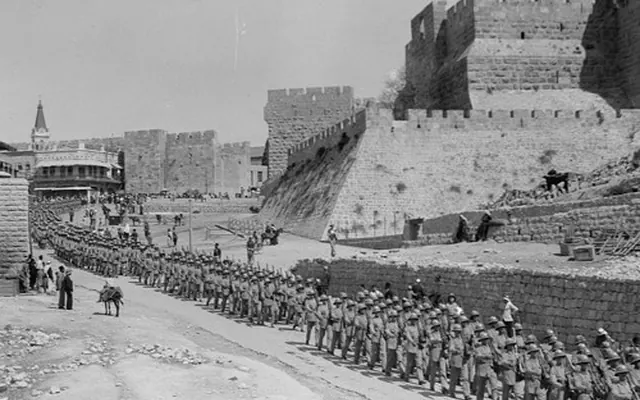
TJS Live - Survival Zionism part II
Here is the second installment in my LIVE series exploring survival Zionism. This episode explores many of the roots of the Arab Israeli conflict and how they contributed...
Play Episode
TJS Live - Survival Zionism part III
Here is part three of my live series on Survival Zionism. This episode takes us to Europe in the war years and explores the evolution of the Final...
Play Episode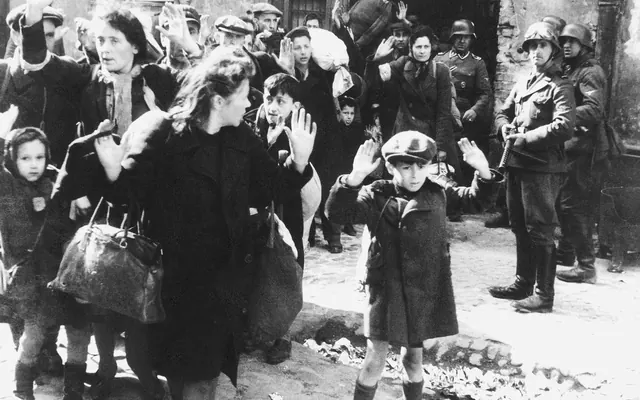
TJS Live - Survival Zionism part IV
Here is part four of the live series on Survival Zionism. This episode tells the story of the Warsaw Ghetto. If you like the live style, sign up...
Play Episode