
TJS Live - Survival Zionism part II
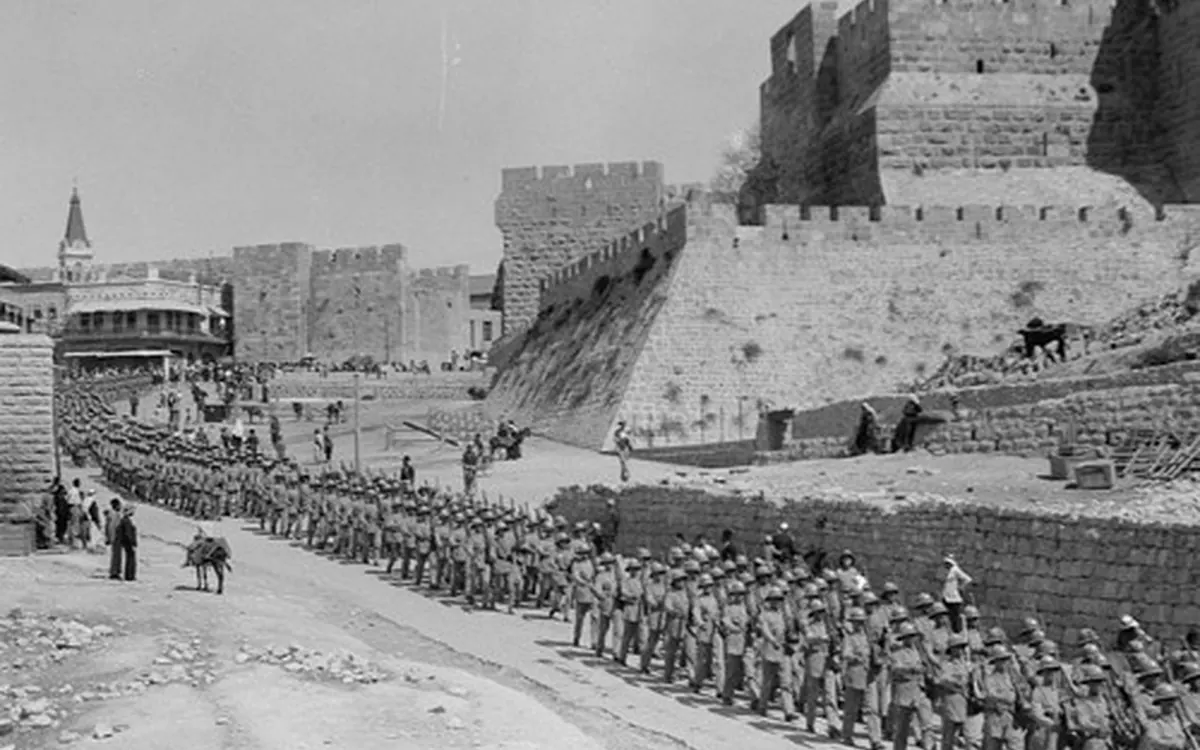
Here is the second installment in my LIVE series exploring survival Zionism. This episode explores many of the roots of the Arab Israeli conflict and how they contributed to the formation of a new brand of Zionism. If you like the live style, sign up for this year's online class at jewishstory.co/registerclass/
About this episode
To live is to suffer, said Nietzsche, and to survive is to find some meaning in the suffering. Rav Mike returns to the pot on the stove. Put a lid on it and it boils, weld the lid and crank the heat and it explodes, and if the vessel somehow holds, the contents go to plasma, a complete transformation. The Jews who emerge after 1948 will have weathered exactly that pressure. Today he adds the Arab-Jewish conflict to the intra-Jewish one, and traces a debate alive in Israel still, whether restraint is the ultimate expression of strength or whether strength lies in the willingness to wield power. By the mid-thirties even Ben-Gurion had accepted Jabotinsky's hard equation, that Jews want mass immigration and Arabs do not, and that only an iron wall of British or Jewish soldiers would settle it.
The Arab revolt grew from a political consciousness that had been ripening and only needed an event to hang its hat on. Urbanization, peasants evicted as land was sold beneath them, and a rising literacy carried revolutionary thought into a society still bound by family and clan. Palestine was ceasing to be seen as southern Syria. Haj Amin al-Husseini, Grand Mufti of Jerusalem and head of the Supreme Muslim Council, gathered these forces, founded the Palestinian Arab Party in 1935, and built a rejectionist stance both religious and national, teaching that the land was a Muslim trust. His youth corps, the Al-Futuwa, was modeled on the Hitler youth, and he opened a direct line to Nazi Germany, admiring how Hitler rose from six followers to a nation of sixty million.
On April 15, 1936, armed men set up a roadblock near Tulkarm, extorting Arabs and shooting Jews, and within days violence raged. The response that mattered was the Arab Higher Committee and its general strike, which held for half a year, demanding an end to Jewish immigration and land purchase. What followed was a three-way guerrilla war among Arabs, British and Jews, and the British crushed the first wave while killing far more Arabs than the Jews lost. The British had created a thrice promised land and wanted it for the Suez Canal, the Haifa port and the oil pipeline. Their Peel Commission in 1937 admitted the mandate was unworkable and proposed partition and a transfer of populations, and the Zionist congress voted to accept, since partition offered a state and a refuge.
Alongside the violence ran the debate over Havlagah, restraint. The Tel Aviv manifesto and parallel speeches by Ben-Gurion made restraint the official Zionist response, rooted in the vulnerability of a small minority and a fear that the West would never forgive Jewish revenge. Ben-Gurion held an absolute belief that military force must stay subordinate to political authority, and he threatened resignation to keep the Haganah in line. The breakaway Irgun had already rejected restraint, and the mainstream answered with the language of purity of arms, claiming the moral high ground while branding the revisionists terrorists outside the camp. Rav Mike hears a warning in the phrase political maturity, since drawing the line of moral purity in the use of weapons is even harder than defining self-defense.
The man who gave the labor mainstream the tools to apply force was Ord Wingate, a dispensationalist Christian who read his Bible and believed the return of the Jews would usher in redemption. He formed the special night squads and pressed on their leaders, who became the Palmach, a brutal arithmetic, that for every one of yours they kill you kill ten. He is remembered in Israel as Hayadid, the beloved friend. The British crushed the second revolt so thoroughly that many historians credit it with paving the way to the Jewish victory of 1948. Two days after Hitler entered Prague came the White Paper of 1939, choking immigration toward an Arab majority state. Ben-Gurion vowed to fight the war as if there were no White Paper and the White Paper as if there were no war, a desire to dance at two weddings.
Key ideas
- The pot on the stove holds until it transforms, and the Jews who emerge after 1948 will have weathered a pressure that made them something new.
- Arab political consciousness ripened through urbanization and literacy, and Haj Amin al-Husseini gathered it into a rejectionist movement tied to Nazi Germany.
- The 1936 roadblock and the Arab Higher Committee's general strike opened a three-way guerrilla war among Arabs, British and Jews.
- The Peel Commission admitted the mandate was unworkable and proposed partition and transfer, which the Zionist congress voted to accept.
- The debate over Havlagah and purity of arms let the mainstream claim the moral high ground while branding the revisionists terrorists outside the camp.
- Ord Wingate's night squads stamped a brutal arithmetic on the Haganah, and the 1939 White Paper choked immigration as war broke out.
Chapters
- 0:01 To survive is to find meaning
- 3:39 The pot on the stove; plasma
- 11:54 The birth of Arab political consciousness
- 14:20 Haj Amin al-Husseini; Al-Futuwa
- 16:43 The April 1936 roadblock
- 17:50 The Arab Higher Committee; the strike
- 20:38 A three-way guerrilla war
- 25:06 The debate over Havlagah
- 29:49 Military power under political authority
- 33:54 Purity of arms; the cultural struggle
- 36:41 The Peel Commission; partition and transfer
- 43:34 The second revolt crushed
- 46:02 Jabotinsky on terror and the innocent
- 52:36 Ord Wingate; the special night squads
- 69:13 The White Paper of 1939
- 70:30 War; dance at two weddings
Who, where and when
People
Haj Amin al-Husseini, David Ben-Gurion, Zev Jabotinsky, Meir Dizengoff, Ord Wingate, David Raziel, Moshe Dayan, Chaim Weizmann
Places
Tulkarm and Jaffa, The Haifa port, The Galilee, Prague, Geneva
Texts
The Iron Wall, The Peel Commission report, The White Paper of 1939, The oath of Al-Futuwa
When
1936 CE: the Arab Revolt begins, 1937 CE: the Peel Commission and partition, 1937 CE: Lewis Andrews assassinated, 1939 CE: the White Paper, 1939 CE: the invasion of Poland
Read the transcript
To live is to suffer, said Friedrich Nietzsche. To survive is to find some meaning in the suffering. Well, we've all suffered a little bit, and I'm sure you know what that means. I'm Rav Mike Foyer, and this is the Jewish Story. We interrupt your regularly scheduled programming to bring you part two of the Live Survival Zionism series. If you like this live Jewish story, you can join the upcoming weekly class beginning August 8th. Send me an email at robmikefoyer at gmail.com. Find the details on Facebook, robmikefoyer.com, or check out the website, jewishstory.co, for all the registration information. Hope to see you there. All right, as always, I want to thank the Pardes Institute, pards.org.il, for making this class happen.
And good morning, everyone, to all of us wherever we are. We are deep in 1938. Now, I was speaking with a couple people before the class started, and I noted the fact that even though this class is looking at the years from 1938 to 1948, not all years are made the same. And somehow, 3839 presented Am Yisrael, the Jewish people worldwide, with some very serious decisions. Right now, we're still in the land of Israel, and I'll come to what we want to speak about class today, you know, momentarily. But I just want to keep the big picture in mind. Over in Europe, of course, 39, 38, 39 is going to be the closing of the gates for the Jews at a certain point very soon. Even if one wants to get out of Europe, it's not going to be so simple any longer.
You know, you one could argue that's really more 3940 that American Jewry is presented with the choice as information begins to leak out about exactly what's begun in Europe. And there's going to be a decision which needs to be made about American Jewry about what stance to take toward the war. So that being said, our second class today is going to focus still in the land of Israel. We've got one hanging question. A number of you reached out to me and asked. I said that Jabotinsky at the end of last class said Jabotinsky wasn't willing to pull the trigger. And and it was an obscure statement deliberately. So to some degree, I think perhaps not. I could have been a little more clear, but meaning we're going to come back to this question of pull the trigger on what.
Right. And that's one. Number two, last week, we spent most of our time focused on the intra-Jewish struggle between what is developing into the what we today think of as the left and the right. But the labor Zionist ruling mainstream class and the revisionist more right wing pushed toward the underground represented by Jabotinsky, the youth group Beitar and ultimately the revisionist political movement. That was the intra-Jewish. We're going to add to that today the inter- sorry, the Jewish-Arab conflict, which I referenced. And more than anything else, what I want you to think of is that image of the pot on the stove, right? And I gave to you last time, if somebody could mute there, I don't see who it is, but we're getting some background noise.
The image of the pot on the stove, remember, if you put a pot on the stove, you put a lid on it, It boils. Maybe if you hold the lid down, it boils over. If you weld the lid in place and you keep cracking up the heat, at some point it's going to blow. I would point out, just for the sake of appreciating the power of the metaphor, for those of you who are a little more science-minded, you know that if you could somehow reinforce that pot to the point where it won't explode, what happens next? You go solid with good gas. What's the next phase? Anybody know? Plasma. right that the reality is one of the ways when we get to 1948 what we're going to see is the establishment of a vessel which could hold so much pressure that there's a truly transformative event and one could argue that the that the people israel the jews whatever term you like who emerge post-1948 will have weathered such pressure and the vessel which they create though it may appear fragile will actually have been so strong that it allows for a complete transformation.
And there's profound implications to that in terms of the world in which we live today, but I just wanted you to see the full arc of the metaphor. Today, this is what I want to do. Like I said, I want to add the, we're not leaving the Jew versus Jew element of the conflict out, but I want to add the context of the Arab-Jewish conflict. In particular, if you want to keep your eye out, What I want to trace today is the history of one of those primary debates within Israeli society to this day, which is is restraint, the ultimate expression of strength. Or is sort of a aggression sounds a little bit too aggressive or is the willingness to wield power. Right. The ultimate expression of strength. And we're going to see the roots of that debate in Israeli society today.
So you guys ready? We're good to go. Let's roll. Okay, just, Dorothy, if you could hit mute there. Yeah, thanks. Just a couple of points to keep them on the board that we hit last week, that the struggle between the Jews, and you can think of it as a personal struggle between Ben-Gurion and Jemtizkin, if you like, to personalize things, right? We can trace it all the way back in the 30s, you know, through, and we could say the unsolved murder of Chaimor Lazarov, which we didn't speak about, but I referenced, to the attack on the Alta Lena boat, which you're not familiar with in 1948. We will tell that story at the end of this course, all the way through to the assassination of Prime Minister Rabin. Why do I mention it?
Because I want you to appreciate that the power and problematic of having a state is that the conflicts which gave birth to it are embodied within the social and political and economic structures today. This is not simply history any longer. It's also a way to understand the world in which we live. And the conflicts are the path of class warfare as the launching pad of the Jewish future versus that of individual liberty and what we would call economic liberalism of the state. It's also a conflict between the gradual infiltration, pragmatic Zionist model of one more dunam, one more goat versus the sort of grand political vision of Herzl of high diplomacy and being, you know, the empire giving us our state.
It's struggle between Jabotinsky and Ben-Gurion for the control of the World Zionist Organization and the Jewish agency, which will become the Knesset. that this is not just some sort of petty institutional infighting, but they both realized that whoever controls the pre-state political bodies will indeed be the government when the moment of truth comes, because even though they envisioned that moment of truth in very different ways, the sense of the rising pressure was that that moment is on the horizon. And like I said, you have to add to this lots and lots of pressure. Just in terms of our personalities, Ben-Gurion is undisputedly in control. He controls the Jewish agency. It's true that Chaim Weizman, who is not a labor Zionist, he's a general Zionist, he's more the middle of the road, is still in control of the World Zionist Organization.
But the base of his power is European Jewry. And European Jewry as a base of power is not long for our story. Jabotinsky, by the point we're reaching today, 36, 37, has been pushed all but beyond the pale. Right. Remember, in 35, he broke away from the World Zionist Organization and created his own new Zionist organization. And his revisionist party have been successfully labeled basically as dissidents and even dangerous fanatics. And we will add terrorists to that language today. Nonetheless, and this is why I bring it up. The truth that Jabotinsky spoke in his essay, The Iron Wall, published in 23, about the fact that there's a simple equation that what the Jews want is mass immigration to the Palestine mandate to the land of Israel.
What the Arabs want is not that. Right. And that the only way that that will happen is behind an iron wall, says Jabotinsky. And the difference between what he calls our vegetarians and our militarists is whether you want that iron wall to be made up of British soldiers or Jewish soldiers. That truth has begun to sink in, even to Ben-Gurion. As he says, there's a fundamental conflict. We and they want the same thing. We both want Palestine. And Ben-Gurion, by the time we get to our story of 1936 and what's called the Arab Revolt, will have realized that you can no longer sort of call the violence and opposition, which the Jews are experiencing, hatred or hooliganism. Right. There's this myth which exists within the labor world that the Jews are so good for the Arabs, for the local economy, for their culture, for their political development, fill in the blank.
So it must be that anyone who opposes us is simply a hater or a hooligan. But the reality is the numbers speak themselves, that the the Arab population within the mandate at the beginning of the 1930s was 82 percent. By the end of the 1930s, it's 70 percent and land purchases are continuing apace. And there's this crazy phenomenon that I have a quote here from the German consul in Jerusalem who notes that Arab nationalists in the daylight are crying out against Jewish immigration and in the dark of night are selling their land to the Jews. Right. That this momentum is part of a very important process of politicizing this conflict. because the Arabs of the mandate can do the math, and therefore they understand where things are going.
Now, the pattern of the conflict that we're about to describe is actually quite simple, and I want you to just hear the pattern, and then we'll speak about the specific case. The pattern is this, the pressure of Jewish immigration and land purchase, which, remember, Jabotinsky pointed out, either it's moral or it's not. If it's not moral, then don't do it. But since he, of course, believes that Zionism is moral, in which case we're going to pursue it and consequences, not consequences be damned, but his whole point was only a firm opposition and an unyielding iron wall will cause the Arabs to accept this reality and negotiate with us. Insofar as we show weakness, they will believe that we don't really mean it, and they will use all their forces to push us out because, as he pointed out, they're not a rabble, but rather a living people.
So the pressure of Jewish immigration and land purchase, the response i'll leave it as response i'm not going to get into the whole who started it thing of arab violence british brutal repression of the arabs as we're going to see today right because the british are the law and order force in the mandate but followed by political concessions right immigration and land purchase violence usually in the form of riots although today we're going to see a full-scale revolt the british will suppress the violence but then will issue new rules, new commissions, new white papers, which will shift the political situation ever more toward enhancing British imperial power by using the Arabs as their, if not allies, and at least sort of passive recipients of their largesse.
That pattern, by the way, we didn't note it, but that's how three quarters of the Palestine mandate will become the state of what is then known as Transjordan, today known as Jordan, in the wake of the 1921 riots. It's what will curb Jewish immigration in the wake of the 1929 riots. What changes in the 1936 to 1939 Arab revolt is political consciousness. So I want to explain sort of the birth of Arab political consciousness within the Palestine mandate, and it will help us understand, by the way, what's happening all over the world. It's important to remember that, that as the great colonial empires are breaking up and World War II will really be their end. One could say that World War I really shook many of them, but World War II will truly be the end of the great colonial European empires.
What's happening is political consciousness is emerging all over the world in various forms. So it's just important to note that this is not a unique phenomenon, but its local manifestation, of course, has its own particularly unique aspects. So first and foremost, Arab nationalism is a regional phenomenon, and the Palestinian branch of Arab nationalism has begun to mature and its maturation and its militancy will come together. What's happening is that Palestine is becoming seen as something other than southern Syria. Originally within the Ottoman Empire, Palestine didn't exist as an independent entity. It was part of the Syrian province of the Ottoman Empire. But slowly, slowly, a group of local intellectuals, economic forces, religious leaders, and we'll see, by the way, dispossessed urban youth, I'll explain that in a second, are growing in their consciousness, which is slow to overcome the sort of family clan regional loyalties, which still today define much of local Arab society.
But it is happening. And in many ways, the big forces that are feeding it are urbanization. As the British come in, and Jewish land purchase leads to larger scale agriculture. Peasants are being evicted from land, which is often sold out from under them, and they're moving to the cities. Also, people are moving to the cities because of employment opportunities. Well, the problem with urban youth is they lack, again, the family clan land-based ties, which basically can control them. Add to this a rapid rise in literacy amongst Arab youth. I mean, the Ottoman Empire had no interest in investing in the educational infrastructure of this region. The British, on the other hand, do. There's a pattern which will repeat itself in 1967.
Those of you who are more familiar with modern Israeli history, that the Jordanians deeply neglected the educational infrastructure of what they called the West Bank of Judea and Shomron, whereas Israel invested heavily. But, you know, with education comes literacy, comes politicization, because you suddenly are exposed to currents of world thought, and in particular, in this case, revolutionary thought. There's also the regional picture that I'm not going to go into, like I said. Just remember that this is not alone. These pieces will be harnessed by the personality that we met last week, Haj Amin Husseini. As I pointed out to you, he is the son of the Mufti of Jerusalem himself, will become the Grand Mufti of Jerusalem.
And when his father, I think his father actually retires, I don't think he dies and inherits it. He is dominating at this point of the mid-30s Palestinian politics. He's the head of the Supreme Muslim Council. It's a sort of umbrella Arab group, which was formed in the wake of the 1921 riots, basically so that the British government could have an address, you know, if they wanted to speak to the Arabs. So they created a Supreme Muslim Council to be that address. In 1935, he also forms a political party. It's called the Palestinian Arab Party. And the goal is specifically to compete with other Arab parties that are willing to talk to the Zionists. From the beginning, he represents a complete rejectionist stance, both from a religious perspective, right, that this is the – he's the one that really begins to teach that this is Muslim religious land.
It's a religious trust, and it's forbidden to allow anyone else to hold it. He also, like I said, from a political perspective, as a non-compromising stance on on Palestinian national identity, as opposed to the more pan Arabist Arab national identity. You can be an Arab nationalist and let the Jews live in Palestine because you might be willing to find your national identity in Damascus or Cairo or Amman. You understand the difference? It's the local nature which is fueling the conflict. But, you know, the the platform of his party calls for resistance and it sets up a youth corps, the Al-Futuwa. I'm sure I said horribly wrong. It's named for an association of Arab knights from the Middle Ages who fought the Crusaders.
And it's modeled consciously on the Hitler youth. And in this, it's important to note something which I'm betting some of you are familiar with, that Hajime al-Hasani begins making ties with the emerging Nazi regime in Germany right off the bat. Right. At their founding meeting, he actually declares that Hitler had started off with only six followers and now he led a country of 60 million. And he was someone to be admired and and indeed sort of imitated. And I'll just give you a quote from the oath that his youth corps took and you'll understand where it's headed. Life, my right. Independence, my aspiration. Arabism, meaning Arab nationalism. My principle, Palestine, my country, and there is no room in it for any but Arabs.
In this, I believe, and Allah is my witness. Now, I give this to you not as some sort of propaganda move so you know they're all against us, but so you appreciate the level of pressure and absolutism which is emerging in this conflict. If you remember, we talked about the Weizmann-Faisal discussion back in last semester. That set a sense that the Jews and the Arabs could work it out, that there's a flexible situation under the umbrella of the empire is fading fast. And really, it's going to come to a crashing halt in the events that begin on April 15, 1936. April 15th, 1936, a group of armed Arab men set up a roadblock in the hill country near Tukarm, which is in the west-central Shomron. And they start stopping each driver that passed.
If the driver was an Arab, they extorted money out of him, telling him that there was a revolution coming and it always needs funds. If he was a Jew, they shot him. And three Jews indeed died before all traffic ceased on the road. The next day, at the funeral of one of the Jewish victims in Jaffa, a crowd turned violent and began to attack Arabs on the streets. A rumor spread quickly that an Arab woman and several Syrian laborers had been murdered. And in response, an angry mob surged out of the Arab border of Jaffa. And what resulted was two days of raging violence, death, injury, damage. But here's the key. And we've seen this cycle before in 20 and 21 and 29 and others. The difference is the political consciousness, which was already cultivated and just needed an event on which to hang its hat.
The response to this violence was the formation of the Arab Higher Committee. The Arab High Committee was essentially a coordinating committee and its act was to declare a general strike They declared that the Arabs of the mandate would only go back to work when the British halted Jewish immigration and land purchases Now, a general strike sounds like a major event. Oh, by the way, they also were demanding that the mandatory authorities allow for the election of a popular legislature. Right. The sort of democratization of the mandate and recognize that since the Arab population was still at around 70 percent of the local population, that meant that they would dominate any institution which sort of came into being.
Now, the strike lasted half a year. And in truth, economically speaking, it wasn't as devastating as it might have been. The Haifa port remained open, which from the British imperial standpoint was sort of a non-negotiable. The Haifa port is extremely important, not only for the sort of general goods being shipped, but it is the tap line, the oil pipeline, which goes from the fields in Mosul in Iraq, which were British controlled, straight across, you know, the Iraqi and Jordanian deserts and then through has its exit point at Haifa, where there are refineries in the port. So do not miss the importance to the imperial effort of controlling the Ivah port. So the port stays open, the railways are still running, and, you know, the harvest is still brought in.
But nonetheless, the power of the political act, of a centralized local Arab entity which can declare a strike and for half a year maintain at least its appearance, right, it basically gave rise to a new class of political leadership. No longer the very conservative, mostly religious, land-based, Klan, local authorities. Now we have a almost runaway process which is being led by younger, more urban, radical, nationalist voices who are not only ready for violence, but see violence as a primary tool in pursuit of what it is that they want. because in addition to this strike, really 1936, April of 1936, marks the beginning. It's hard to know what it's called. Like I told you, it's called in the history books if you look up the Great Arab Revolt or the Arab Revolt of 1936-1939.
But really, it's a three-way civil war fought mostly as a guerrilla conflict. I say three-way because there are Arabs, there are British, and there are Jews. Now, between April and October, what's that? That's, you know, say five, six months. You can do the math. There are nearly 2,000 attacks on Jewish targets and almost 800 more on British security forces and government officials. 80 Jews are murdered. Hundreds are wounded. There's widespread destruction of property. But that doesn't hold a candle to what the British forces do to the Arabs in return. 900 Arabs are killed and wounded in the first months of the revolt. And that's despite the avowed policy of the mandatory forces not to use full force. And this is important to understand.
That at this stage, the British high commissioner, General Arthur Walshup, recognized that he's not just a military commander, nor is he just a local politician. He is a representative of colonial imperial policy. And this is the point at which we begin to appreciate how messy the situation that the British created really is. Remember, this is the thrice promised land. They promised it to the Jews. They promised it to the Arabs. They even promised it to the French. right but really the empire wants to keep it as we've said because of the control of the Suez canal to the south because of its position on dominant position on the eastern seaboard of the Mediterranean because of the critical nature of the Haifa port to the the oil industry and because of the perception that there is a coming war right even though the British are still in their appeasement mode no one's kidding themselves well no one many people are not kidding themselves that there is a conflict once again coming with Germany and that Britain will bear the brunt of it and so the High Commissioner's goal is to preserve British prestige, which isn't just ego.
You know, the ability of a few British troops to walk the streets and keep the peace is based on a sort of a respect and a perspective that they represent real power. He wants to preserve that prestige. He wants to also, of course, bring stability. You know, he needs the economy to run, needs quiet in the streets. And he doesn't want to incur the bitterness and animosity of the local Arab majority because they also are coming to represent tens if not hundreds of millions of Muslims around the world who are beginning to perceive this seemingly local conflict between a bunch of Jews and a bunch of Arabs over what is admittedly a less than impressive piece of land as representative of the struggle for independence of the Arab peoples against foreign empire.
And that is what the British do not want. They do not want this to be a flashpoint to the uprising, which would stretch from the Eastern Meditation all the way through the jewel of the empire into India, which is, by the way, ultimately what will happen. So he, even though he's not using full force, manages to suppress the initial wave. And something else which is very important here is that that during this wave of violence, Hajime al-Husseini is able to co-opt the Arab higher committee. And as the violence spread, he uses the chaos and violence to systematically assassinate and exile any political opponent he has. so that when the smoke clears from the first round of violence, Hajime al-Husseini will be solidly in control of the reins of power, which means that the British only have one address at this point to whom they can go if they want to speak to the Muslims or the Arabs of this region.
Pausing, that's the beginning of the uprising. I want to talk about the real debate which lies at the core of it for the Jews. But before I do, people need clarifications. Did I lose anybody with that information? Yeah, Habram. Okay, so are you going to speak about it in terms of the Jewish response? I'm curious to see how that will unfold with Jabotinsky's followers. That's what we're about to do right now. Okay, okay. Yeah, Peter. The 1929 riots, which my understanding is that they were critical with the murders of children in Hevron. Yes. Did Haj Amin al-Husseini start that, or was it his father who organized those riots? So 29 lies a little bit behind us. What I would say is that the trigger point for 29 was the Jewish presence at the Kotel.
So it was indeed triggered by the religious authorities. I don't off the top of my head know exactly the role that Hajime Al-Aussemi played, so I don't want to hypothesize. Okay, thank you. Other points of clarification? Okay, so there is an internal debate which will parallel this violence. And it's known in sort of the annals of Israeli history as the debate over Havlagah. Havlagah is an important term. Havlagah means restraint. It means restraint. So in April 19th, right, this is less than a week after that roadblock, basically at the end of these riots that I described, which occurred, which were really the beginning of the Arab revolt. April 19th, the Tel Aviv municipality published a manifesto which called on the public to refrain from irresponsible acts and declared that, quote, return of public security depends largely on the self-control and self-restraint, havlagah, of the Hebrew public.
Now, this, on the surface of it, was the mayor, you know, the mayor, mayor Disengolf. It's really annoying that his name is mayor because he was the mayor of Tel Aviv. Mayor Disengolf. It was his attempt to calm the situation after the murder of Jews in nearby Joppa. On the other hand, it was a coining of the terms of debate. Notice, that's a moral assertion that the return of public security depends on self-control and self-restraint of the Hebrew public. And one could just easily say, no, the return of security depends on crushing the violence. You know, but he says it depends on restraint. And at the very same time, in what seems to have been a coordinated effort, Ben-Gurion and the JNF president, Menashe Moushishkin, who is a very important figure in the labor Zionist movement, delivered parallel speeches in essentially the same vein at various meetings of Zionist parties in Jerusalem.
pushing this idea that Havlaga, restraint, is the official response of the Zionist entities to this wave of Arab violence. Now, this has a couple of roots. First of all, in the first Aliyah and even in the second Aliyah, there was a recognition by the Jewish immigrants that they were a small minority, that they were vulnerable politically and therefore in a military, at least from a security standpoint, and that passivity in the face of violence was really the only safe response. What are you going to do? You're a handful of Jews surrounded. If you start getting angry about them poking at you, they're just going to poke harder. Even Hashomer, which if you recall was the first official armed Jewish defense organization formed in 1909, even they rejected revenge or civilian terror, retaliation, in favor of a defensive posture, meaning we don't do anything unless we're attacked.
And selective focus attacks indeed were sort of used, but in a very last resort manner. Right now, that's an interesting idea. But there's two things that have changed since then. First of all, the heat's gone up. Like I pointed out to you, the pressure is rising. Second of all, the Jews aren't scattered, you know, isolated agricultural communities anymore. They have a centralized quasi government in the Jewish agency. They have a direct relationship with the British mandatory authorities who can wield the full force of the empire, should they so choose. And they have a conflict, right? Because while the labor Zionists are sort of espousing this theory or doctrine of restraint, by the way, it's becoming harder and harder to restrain angry Jews.
In mid-May, only a month after the opening of the revolt, Ben-Gurion has to throw his trump card and threaten to resign from his position as a Jewish agency chairman, which, by the way, if you know anything about Ben-Gurion, that's his ultimate threat. And he will use it throughout his career, and it works. Everybody's afraid. Up until he finally loses his position in the mid-'60s, everyone is afraid of life without Ben-Gurion. So when he threatens to resign, people back down. But he has to use it in order to control the Haganah commanders. Remember, the Haganah is the militia, which is essentially under the direct control. It starts out as part of the Hizadruth, thus making the Hizadruth the only union in history with its active army.
Although one could say that actually the Soviet, you know, whatever. But, you know, because he has to threaten to resign in order to control the commanders. Now, here is a very important point that I want you to just put in the back of your mind, which will come out extremely strongly by the end of this series. And also, you just need to know in order to appreciate the rest of Israeli history, which is that Ben-Gurion had an absolute belief in the subordination of military power to political authority. He himself was never a military guy. He was never in Hashomer. He never served in the Haganah. He was a politician. And he understood that if you're going to create a state, military force is necessary, but it must be subordinated to what he deemed to be legitimate political authority, meaning he wasn't afraid of violence, not by any means, but he believed that only politicians should decide where, when and how to use it.
Now, this had caused a split in Haganah already back in 1931, right, when the sort of Jerusalem district commander, whose name was Avram Tahomi, together with many of his men basically refused to turn in their weapons after an operation. And they formed something they called the Irgun Tzavah Le'umi, the Etzel, or as it was known, Irgun Bet. If you're familiar with the Etzel, many of you probably think of the Etzel as the armed entity associated with Jabotinsky and the revisionists. That's what they became. But they really split off from the Haganah in the beginning because they rejected back in 31, before the Arab revolt began, they rejected this stance of restraint even before it had been crystallized in the word Havlagah at this point.
Now, it's important to appreciate that this idea, this doctrine of Havlagah was not without logic or even a moral claim. The Jews are still numerically weak vis-a-vis the Arabs and therefore ultimately dependent upon the British military's strength. And that means that they had to be very cautious in their own use of violence. They feared a brutal British repression of Jews should they dare to use violence. They also believed, and this is an interesting one, Ben-Gurion is quoted in many places as saying that, quote, the West will never forgive us, us being the Jews, if we indulge in revenge. And that's why he emphasized over and over again the moral superiority of restraint and even claimed for a man who actually did have some roots in Jewish tradition, that Jewish tradition dictated retaliation should be limited to those directly involved in the text.
Something which, by the way, is not necessarily true. You know, meaning, as I'm sure you guys are wise enough to know, one can make a strong argument in Jewish tradition for almost anything. Right. And this is the point at which Parsha Dina. You guys familiar with the story of Dina in the book of Genesis, I hope, where Dina, daughter of Jacob, is taken and sexually abused. She's raped by Shechem, son of Hamor, one of the sort of local leaders of the city of Shechem. And in revenge, the brothers slaughter the whole town. I'm not going to tell the whole story. And Jacob is, you know, basically is miffed at the fact that the brothers slaughtered the whole town. It's a complicated story. I'm not going to get into it there.
But really, most of the commentary in Jewish history looks somewhat askance at the brothers, Shimon and Levi, who led the charge to kill all the men of Shechem. And even in the text itself, I mean, Jacob curses their anger. Saul Chertokovsky, who is one of the sort of great literary lights of Israel in the 30s, writes a poem called Parshat Dina, where he praises the ethic of revenge. So this is a cultural struggle as much as it is a political struggle. And what you'll end up with at the end of it is multiple armed camps with very different ethics. But to keep the sort of details of our of our flow. So in 36, Ben-Gurion is still managing to keep control, even though, like I pointed out to you, this Etzel, Yergun Tsevayalumi, has split off and is seeking leadership and will come to Jabotinsky for it.
And because Ben Gurion is able to maintain control, he also gains a major achievement that in the first year of the revolt, the British agreed to arm and train 3,000 Jews, right, and allow many more to participate in their security activities. This is the base for not just a Jewish militia under British command, but Ben Gurion envisions it really as the core for an army because he doesn't see the mandate as a permanent phenomenon. He boasted this is already a little army. Now, that being said, restraint may have been an important point of moral conflict within the Jews, but it was perceived by the local Arabs as a sign of cowardice. The Jews were judged as a people as, quote, whose veins flow with milk and not blood.
And in August of 1936, only a few months after the revolt started, 30 more Jews are murdered in a single month. And a fierce debate begins, and finally, within the left, within the labor movement about whether they should abandon restraint, right, finally, two nurses are ambushed and killed as they're leaving a hospital in Joppa on August 17th, and the restraint begins to crack. both the Haganah without orders and this new entity of the Irgun Tzavay begin to take their own revenge and the quote that I have here is that the Mapai Central Committee says a war is being fought between two peoples over the future of the country now notice a war is being fought between two peoples over the future of the country those peoples being the Arabs and the Jews this leaves out the British right which is very deceptive because Because without getting into the details of who said what, etc., there's a debate over whether throwing off restraint will allow us to push back the Arabs or throwing off restraint will basically be as Moshe Shurtock, who becomes Moshe Sharet, second prime minister of Israel.
He says that it's suicide and the destruction of all we've built and that when Shurtock saw the desire to give up restraint and attack the Arabs, what he saw was the destruction of the second temple. Now, in the end, the voices of restraint are able to hold back the Haganah and the labor Zionist mainstream leadership is able to keep control of their militia. But what really stops things from spiraling out of control is the fact that the British step in and crush the revolt in its first phase. um and by the end by the by the end of 1936 which is the end of the first phase of the arab revolt there's a couple of things that we have first of all each of the two primary streams of zionism which we'll call labor and revisionist now have their own militia right because as i said to you the leaders of the yurguns vallumi look to jabotinsky for their leadership now jabotinsky as we'll see is not yet advocating revolt that's the place just to answer the question that people where he wasn't ready to pull the trigger.
He spoke about the need for power, for dignity, to be ready, but he was not yet willing to give the order to fire. He still also has this vision of the British granting us the right to form an army. He's not interested in an underground struggle. He has this political vision that we will indeed become people in our land with official sanction. That's one result. The other result is that once the British get control of this first wave of violence the inevitable commission follows And so what comes next is known as the Peel Commission And I told you guys the details of each of these positions is actually I think not so critical for our understanding. But I'll give you the quote on the sort of the mandate given to the commission so you can appreciate what was happening.
Remember, the pressure of immigration and growing Jewish political power, the eruption of the Arab revolt in 36, the British managed to suppress the immediate violence, but their response is the following. They want to ascertain the underlying causes of the disturbances which broke out in Palestine in the middle of April, to inquire into the manner in which the mandate for Palestine is being implemented in relation to the obligations of the mandatory toward the Arabs and the Jews respectively, and to ascertain whether either the Arabs or the Jews have any legitimate grievances upon account of the way in which the mandate has been or is being implemented. Now, in the summer of 1937, the Appeal Commission released its conclusions.
And, you know, each side, even though the Arabs claim they're going to completely boycott it, which is a pattern they established already back in the 20s, nonetheless, they unofficially give hours and hours of testimony, whereas the Jewish agency, the official Zionist representatives within the issue, of course, are more than happy to be cooperative. We're still in the realm of the Anglo-Zionist alliance, although it's obviously fraying, right? The Appeal Commission releases the conclusions, a 400-page report. I'm going to read it all to you right now. That was true. But the essence is that they determined that the causes of the Arab revolt were the desire of the Arabs for national independence, their antagonism to the establishment of a Jewish national home in Palestine, and their fear of Jewish domination fueled by the rush of Jewish immigrants escaping Central and Eastern Europe.
Notice it's 1937 now, Right. Hitler came to rise in 33. The Nuremberg laws are passed in 35, but the gates are still open. Jews, in theory, can leave. But what's about to happen is that they're going to close in a large way because the conclusions included the first time an official British government commission admitted that the mandate as it was had become unworkable and that what needed to happen was partition. They needed to split the mandate into an Arab and into a Jewish section. It goes further, by the way, and says in order to do so, there must be a transfer of populations. There was a recognition that if you're going to split this place into Arab and Jew, they're all living mixed together right now.
We're going to need to move Arabs from the area that will become the Jewish state and Jews from the Arab that will become the Arab state. Now, Hajime al-Ossedi rejected the idea of partition out of hand and he threatened to renew violence. the Jewish agency was torn. On one hand, everybody knows the story of Solomon's wisdom, right? You guys know the story that the two mothers come to Solomon with a living baby and a dead baby, and they claim that this one, the live one is yours, no, sorry, the live one is mine, the dead one is yours, etc. And Solomon says, well, cut the live baby in half and give half to each one. And the mother who says, no, no, no, don't kill the baby, let her keep it, is the real mother, because no mother would want to see her child cut in half.
You hear this language all the time that, in fact, even Yasser Arafat quoted it against the Jews, that our willingness to accept partition indicates the fact that we were not really attached to the land. Because someone who is attached to the land, like a mother, won't allow her child to be divided. And they appreciate that logic. On the other hand, land is not a baby. You know, the metaphor falls apart because you cut land in half. Half land is something. It's not just something, but in 1937, it's a lot because they realized that the opportunity. Now, the British didn't just offer partition and transfer. They're starting to speak for the first time about the establishment of a clear state instead of this vague Jewish home, which means that they might actually, they being the Zionists, have a refuge for the Jews of Europe in a time where the world is getting dark very quickly.
And so therefore, under the leadership of Ben-Gurion, also Chaim Weizman, and Yitzhak Ben-Zvi, who, if you're not familiar with what he is, he was a major player. Well, yeah, Avram, if you see Avram's quote that Palestine had been partitioned, okay, fine. But what's left now, it's only so far back we can go. But under the leadership of Ben-Gurion, Chaim Weizman, Yitzhak Ben-Zvi, the 20th and 9th Council votes 300 to 150 to accept the Peel Commission. because essentially for the first time, the British agency described the Jewish home as a Jewish state on the way. And whatever his borders looked like, they also knew, and this is the place we have to appreciate Ben-Gurion's role of leadership, they also knew that, okay, whatever the borders look like, that's always negotiable in the face of the realities which come.
Ben-Gurion will consistently pursue a policy. As much as, you know, the Jews today like to accuse the Arabs of what's known as the phased approach, if you're familiar with this idea, right? Oh, we'll give them a little bit and they'll establish a state and that won't really lead to peace. It will lead to a launching of a new phase of war. Well, in many ways, Vingarian and the labor Zionists had a similar approach. We'll take whatever you can give us, but we're always looking for more. And war is a far greater tool for setting national boundaries than negotiation. In the end of the day, though, the British themselves scrapped the Peel Report. They realized that the threat of a renewed violence, plus the growing shadow of war, 1938, meant a need to placate the Arab world as a whole, and they start to back away from this language of establishing a Jewish state at all, and essentially, the Peel Report dies in its reality, but what it does do is it establishes this idea of partition and transfer as the basis for peace negotiations between Arab and Jews to this day.
You know, if you think about it, really, it begins here. Now, on September 26, 1937, Lewis Andrews, British commissioner of the Galilee District, is assassinated by Arab militants, and it's a new wave of violence that erupts. This is different than the first wave of violence, which was between Arab and Jew, mostly while the British attempted to control the situation. This is an all-out assault on British rule and the sort of shift of the Palestinian national consciousness to an anti-imperialist stance. The British Empire is now the enemy, right? And we can imagine the British response was swift and stunning. And in 1938, the months that follow this attack, you know, 68 British subjects, 292 Jews and at least 1,600 Arabs are killed.
By the end of 1939, Arab estimates are that some 5,000 are killed, 10,000 are wounded and nearly 6,000 in prison. Palestinian American historian Rashid Khalidi says that over 10 percent of the adult male population was killed, wounded, imprisoned or exiled. The exact numbers are, of course, always a matter of debate. But what we need to appreciate for the coming story is that the British response to the second phase of the Arab revolt was so shattering that many military historians actually say it paved the way to Israel's victory in 1948. because as we'll speak about, there were two phases to the War of Independence. And before the surrounding Arab states invaded, there was a guerrilla warfare, what's known as the War of the Roads, that we'll tell that story, between Arabs and Jews within the mandate.
But the British had crushed the Palestinian ability to muster real force by the end of 1938. this is the point at which Jabotinsky becomes a very vocal voice for what's known as the breaking of restraint you know because he did as I pointed out to he in that first round had instructed the members of Beitar and the revisionist movement which was gradually gaining control over this new Irgun Savailumi to display restraint and patience right he did so because he believed like I told you that establishing a Jewish battalion like he had done during World War I, officially sanctioned by the British, a Jewish army, was the only way to really defend the yeshuv in a politically sustainable fashion. Militias may get the job done, but they may cause as many problems as they solve.
But nonetheless, listen to this quote, which he gave after the outbreak of the second wave of violence. Because like I said, he's opposed to terror and reprisal on moral grounds. I want to be clear, by terror and reprisal, what do I mean? It's not a defensive attack. I mean, I think most people will agree that, you know, if somebody's coming to kill you, you get up early and kill them first. That's self-defense. Right. If there are enemy bases. Well, it's an extension of self-defense to say, why should I wait for them to come kill me? I'll attack their bases. What about attacking a civilian population in revenge? now you could say that we'll cow them into thinking twice and we're going to see with the person of ord wingate how that becomes part of the ethic of the labor left soon but but you could also see how there's a there's a very profound moral question because you are essentially attacking people who at least in act are innocent jemtinsky says he's opposed to terror and reprisal on moral ground except when there's no choice do not dare punish the innocent what's superficial and hypocritical nonsense.
In war, any war, each side is innocent. What crime has he committed against me, that enemy soldier who fights me, and is as poor as I, as blind as I, as much a slave as I, who has been recruited against his will? There is no war which is not conducted against the innocent. Therefore, every war and the tribulations it brings is a curse, whether offensive or defensive. If you do not wish to harm the innocent, you will die. And if you do not wish to die, then shoot and stop prattling. Right? And this is the ethic that Jabotinsky pushes almost to the edge. Because he says this in 1938. Like I pointed out to you, though, he was unable to give the order to those tens of thousands of Beitaris and the Irguns of Ilumi, which is an armed militia within the country, to take an active stance of war.
And what we'll see, not next, because next I think we're going to jump to Europe, but when we come back the land of Israel probably in three classes is that there's a revolt in the making and it's going to break away from its restraint in a in a profound and dramatic fashion um there are many other elements which I don't feel like I need to tell you the every incident of the cracking of their strength and yet the British managed to hold etc there is one personality I would like to introduce But before I do, I'm going to pause once again for clarification questions, things that people want to know. Yeah, Barbara. Why would the Arabs do something as stupid as revolt against when they saw they were getting killed?
I mean, they're not stupid, right? So they're revolting against the British. They're getting decimated. Why continue? It's a great question. And it's one which, by the way, we can extend to almost every anti-imperialist movement. on some level there's the sort of passionate do or die element which is freedom as you know you know the Maslow's hierarchy you guys familiar with Maslow's hierarchy this idea that human decision making is based on like a pyramid at the base is your physical well-being and then you can get to your sort of emotional well-being and then your psychological well-being then at the top is what Maslow calls self-actualization or we might call identity and the principle is basically people don't act on the higher level until the bottom ones are taken care of.
So when you ask that question, Barbara, I hear you saying, like, why would people endanger themselves in a futile struggle? Well, the reality is that history is generally made by people who invert Maslow's hierarchy. They're willing to give up their life, their emotional and psychological well-being, et cetera, for their identity. And that's why I began where I began, with the emergence of Arab political consciousness, which is so precious that they'd rather die than sacrifice. That's one piece. Another piece that I didn't sort of detail so well to you is, because there's only so much we can do, is the global context is that this prestige of the British Empire in particular, and the colonial empires in general, is being battered in the late 30s.
The Libyan struggle against the Italians, you know, the Ethiopian struggle, you know, the British are being pushed and pulled by the Nazis. Hajime al-Husseini builds a direct line of communication with the emerging power in Germany. So they have reason to believe that the British are not as all-powerful as they appear. That's, I think, the short answer to your question, which is an important question. These are also you bringing up. I've got to get depressed in that context. Thank you. Other questions or clarifications? I missed what you said about why the British abandoned the Peel Committee or let it go by. Could you say some more about that? Sure. I mean, the Peel Commission on the surface of it was a pragmatic response saying these Arabs and Jews aren't going to get along.
We need to separate them. Kind of like when I send my children to separate routes. And since there are more Arabs than Jews, we'll give the Arabs more. And since they're all mixed up, we have to transfer. That sounds really great. But what happens is the Jews were willing to compromise at this stage if the Arabs saw no need to. They felt that they had the upper hand. And then when the Arabs in 1938, sorry, when the British in 1938 started to look at the world situation and started to realize that they were about to fight the German Empire alone, potentially, and that, remember, from the Suez Canal to India, there are, let's just say with a gross estimate, 100 million Arabs, all either under direct British rule or indirect British rule, sitting across strategic oil supplies, strategic lines of communication and transportation.
Right. The British could not afford. To antagonize such a large populace sitting in such strategic regions on the eve of war. That's, I'd say, the most sort of concrete answer. We could also speak about anti-Semitism, et cetera, which may or may not have played a role. But at this point, I think it's enough. That work. Thank you. Other other clarifications people want. okay so what time is it okay good let me just give you one second to check where we are okay so um there's a um like i said there's there's a whole depth of detail that we could go into in terms of what's called the breaking of the restraint at what point does havla got does this ethic of restraint begin to crumble and there's a personality who i want to introduce because he's going to become important later.
And then there's one more term. That personality is a man named David Raziel. Raziel was one of the commanders of this Irgun Bet, the Irgun Tzvay Lumi. And remember, there's no absolute distinction between Haganah and Irgun at this point. And what will come, those who are more familiar with Israeli history, what will come to be known as the Lehi, the Lohamai Cherut Yisrael. Also, these are definitely separate institutions, but people float between them. And certainly, their ideological alignments on paper are very clear, but we all know how that is. I just think of like, I remember I once asked my great aunt, who grew up in Europe pre-war and survived the Holocaust, were you Hasidim or were you Mitnagdim?
She said, oh, Michael, it wasn't like that. She's like, when the Ravi came around, we took out our Shreimals. When the Rosh Hashim came around, we took out our Gemara. She's like, we were Jews. you know um so so in many ways like there are there are flavors of jews here right but but more than anything else it's it's it's personality as opposed to program that drives things david raziel by all accounts was a commanding personality and he is the one who really began on what was known as black sunday november 14th 1937 right because i told you the end of 37 38 is when this new wave of violence breaks out who who began to shift from what he called passive to active defense. Now, he's still calling it active defense because he says, defensive actions alone can never succeed.
If the objective of war is to break the will of the enemy, this cannot be achieved without shattering their power. We clearly cannot be content with defensive action. Purely defensive tactics will never break the enemy's strength. All these calculations lead to one conclusion. He who does not wish to be defeated must attack. And I want you to hear that. He who does not wish to be defeated must attack. And as much as the labor left and their mainstream ethic wants the British to do it for them, they're being pulled, kicking and screaming toward the conclusion that no one will defend you but yourself, right? And in order to soften that transition, what happens is Ben-Gurion and the other leaders of the Yashuv coin a new phrase.
Again, I make this sound like 2020 hindsight. I make it sound like they did this deliberately. And maybe they did. I don't know. Maybe there were meetings in which they sat down and discussed these things. My experience of history is that these ideas tend to emerge in more organic response. But this is another piece, in addition to the idea of Havlagal, restraint. And remember, we're still debating restraint today. When Hamas launches missiles out of Gaza and they strike, they wrote, an immediate debate takes place in Knesset. is strength shown by us saying, listen, those are just a few missiles. You're not going to provoke us. We will restrain ourselves, and that's where real power lies. Or is that weakness and a failure to respond, and real power is to crush them where they are.
You understand? I'm not going to take a side on that. But if you listen to the news, you realize that that debate is still going on. So there's another one, which is not a debate in Israeli society anymore. And in fact, I heard the chief of staff use this phrase in his speech on the Yom HaZikaron, the Remembrance Day for the Fallen of Israel's Wars, which is the idea of purity of arms. Toa Neshek, a purity of arms, right? That as the mainstream Zionist labor left begins to move gradually toward the recognition that they must employ force and not simply or they simply can rely on the British to take care of their problems right they begin to assert and i just read you this um jewish agency manifesto which was published at the end of 1937 he says the yeshu is severely tested during the period of bloodshed and withstood it i mean they're talking about the first wave of violence with courage and tenacity It defended all our positions, but also maintained a purity of its arms of defense out of moral recognition and political maturity.
Right. Purity of arms means you only use weapons in defense or in this notice, purity of arms as as moral recognition in political maturity. And it's that political maturity that should make a little warning light go off. you know, it's hard enough to define self-defense. I don't know if anybody here has ever had to sit on a jury trial, if there are any lawyers, et cetera, but, you know, I'm sure we're all familiar enough with the legal system to know that defining the boundaries of self-defense are not as simple as saying, he hit me first. But defining what's moral purity and political decision-making is even worse. And what we're going to see is that as the mainstream political entities of the Jewish agency and the other sort of the Yishuv, the official Jewish leadership, espouse this notion of restraint and purity of arms.
They're doing two things. They are claiming the moral high ground and simultaneously condemning Jabotinsky, the revisionists, and the Yergun Sevaillumi as terrorists who are willing to use violence on innocent civilians and thus ruining everything for all of us. They're impure. They are impure and therefore lie outside the camp. Do you hear how resonant that is with classic Jewish thought? So this idea of purity of arms, in many ways, doesn't hold up to history. So I have one more personality I want to tell you about. It was just an exceptional personality you need to know. And then there's the sort of dramatic finishing of time here. So let's talk about Ord Wingate. I just want to to show hands, who's heard of Ord Wingate?
Good, most people have heard of him. So this won't be necessarily new, but hopefully it will fit into a different picture. Because Wingate is the one who gives ultimately the mainstream Zionist movement the tools to employ force in a way which is a little bit less than pure, but leaves its stamp on the ethos of the Israeli army to this very day. So Wingate was born in 1903 in British colonial India. His father was an officer in the British Army. His mother was a missionary, Christian missionary. They were members of what were known as the Plymouth Brethren. Plymouth Brethren are a Christian denomination who are dispensationalists. We spoke about dispensationalist Christianity a while ago when we spoke about the role of Christianity and the rise of Zionism.
Dispensationalists, in a nutshell, have the belief that there is a thousand-year kingdom which will be ushered in, right, the kingdom of the Messiah, the return of their savior, and will be a new dispensation. That's where the language is. It's a whole new sort of almost metaphysical reality, if you will, that will be ushered in. So that's not critical to understand, you know, what that means from a theological standpoint. However, what is critical is that many of these dispensationalists in Wingate's generation believed that the advent of this new dispensation hinged on the restoration of the Jewish people to their land. And that's what made them Zionists. And Wingate, on a simple level, believed the Bible was true.
And if you believe the Bible true, that means you believe that God gave the land of Israel to the people Israel, which in his day meant the Jews, and that their return, like I said, was going to usher in the redeemed world, which he saw as a blessing for all mankind, which meant, on some level, by any means necessary. And if you could bring redemption tomorrow, wouldn't you be willing to push the boundaries of morality in order to make it happen? I won't let you, I won't make you answer it, but it's an important question. So he was commissioned into the British Army in 1923, like his father before him. He served in India and Sudan, where he studied Arabic and Semitic culture and acquired a deep familiarity with the Middle East and was a natural leader, if known as more than a little bit eccentric.
I mean, he was given to sort of wearing an alarm clock on his wrist instead of a watch, eating raw onion for its health virtues and lounging around in the nude. Like he was known as a very strange character, but incredibly natural leader. And by 36, he'd been commissioned as a captain. And that year he was transferred to the Palestine mandate as a staff officer for military intelligence. And that was the year, of course, that the Arab revolt was fully underway. Now, his instant assessment was that this was a full scale guerrilla war, not just civil disturbance, and that it was best fought with small commando units. He believed that these units should be staffed by Jews and led by the British. Now, at first, he was ignored, if not outright rejected, because like I pointed out to you, the British wanted to maintain control of power.
They were nervous enough about training Jews to participate in the police force for keeping general order. They weren't really interested in empowering them with commando training. But he was so intensely focused on this topic. And somehow Wingate had a knack, and all the history books speak about it. He had a knack for making political connections that allowed him to sort of circumvent his immediate military superiors. So he would tell his commanding officers, this is what we need to do. His commanding officers would say, you're nuts, just follow orders. He would make contact with some politician who would get his idea passed down the line. And next thing you know, right, after only four months in the mandate, after telling every politician that he get his hands on that the British Empire should ally itself militarily with the Jews, he started to get traction.
Now, remember, on the surface of it, the idea that the Jews are the natural ally of the British Empire by this point in history is ridiculous. They don't have an army. Right. They're on population sense, a handful of people. The Middle East is rich in oil resources. It's home to all the British strategic military bases you can think of. It's a stride there out. It's to India and the Far East, like I told you. And at this point, tens of millions of Arabs and 100 million Muslims in the empire had to be more important than the Jews as war was clearly on the horizon. But Wingate just kept pointing to his Bible, saying the Jews are natural soldiers. and if we train them, they will be our allies and they will defeat, basically 10,000 Jews will defeat 10 million Arabs, he said.
And everybody scoffed. But what did he do? He just simply wouldn't give it up. In 38, when the second round of violence was that tight, he submitted a report entitled Secret Appreciation of Possibilities of Night Movements by Armed Forces of the Crown. The idea was basically to take the combat to the enemy, take away their initiative, and, quote, produce in their minds the belief government forces will move at night and can and will surprise them either in villages or across the country. And this is the ethic that he finally succeeded in getting approval to teach to the Jews. He created Jewish commando units commanded by himself at first and then other British officers who were able to give them training.
And the basic principle was quite simple. They were called special night squads. And Ord Wingate impressed upon all the people who become leaders of what's known as the Palmach, the striking arm, which will grow out and we'll tell that story, which will grow out of the Haganah, the militia. right? People like Yitzchah Sadeh, Moshe Dayan, you know, others whose names for whatever reason are not coming into my brain right now, but when we tell the story of the Palach, we'll talk about Niga alone, etc. He impressed upon them a very simple truth. You will never outnumber the Arabs, and therefore they must fear you. For every one of yours they kill, you must kill 10. For every house of yours they damage, you must burn down 20, right?
And because Wingate not only was a child of the empire in terms of his military training, but in terms of his attitude toward the native populace, he was more than willing to use things like torture, interrogation, intimidation, collective punishment, in order to offset the numeric disadvantage at which he found himself. And he passed on that ethos to the leaders of the Haganah, who became the Palma, is striking on, who really in the end formed the idea. Now, you cannot appreciate how deeply these two pieces of ideology imprinted themselves upon this conflict. One is that he had this religious vision which fueled his duty as an officer, right? And the other was that the only thing which will allow you to control this situation is if your enemy fears you at night and suspects that you will be everywhere at all times in an every brutal fashion right or wingate and he has some fantastic eventually by the way the his his pro-zionist stance made him unacceptable to the imperial forces and in 1938 sorry 39 he wasn't just transferred back to britain But his passport was stamped with a mark forbidding him reentry into the mandate.
Right. But that time, really, his work was done. He's known in Israeli history as Hayadid, the beloved friend. Like if you say Hayadid, you know, people who know Israeli history know you're speaking about Wingate. And, you know, I'm going to give you this quote by him and I'll let you contemplate. in context of this question of restraint and purity of arms, and yet the reality of the brutality which was ranged against the Jews and the Yishuv. And in the back of your mind, Jabotinsky's essential assertion that either Zionism is moral, in which case we will pursue it, or it's not, in which case we should just give up now. So Wingate, his own epitaph was given basically before he went into battle in 1944 in Burma during the war.
He said, and be satisfied. So Wingate helps the Jews prepare themselves for not only end of the Arab revolt, which really becomes comes to an end when the British decide to completely crush it, as I told you, in 38 and 39, right? But he also prepares the military culture, if you will, as well as their tactical capacities for the coming conflict of 48. And in that light, we need to hit fast forward on history and appreciate where we're going. Because of course, in March 15, 1939, Hitler enters Prague, right? This is the great act of appeasement, the Sudetenland and, you know, the European history where Britain decides that it is better not to fight, but as we know, was basically just roiling the waters and throwing blood and ultimately end up incitement.
But what What matters for our immediate story is two days later, remember the pattern, pressure of Jewish immigration, land purchase, Arab violence, brutal British suppression, and then the commission? Well, we saw the first round of that with the Peel Commission. The second round of violence had its own, and the British were even more brutal because, as I pointed out to you, the second round of the Arab revolt was oriented as much toward British imperial institutions as it was toward the Jews, and the Jews upped their game under the training of Wingate. But what came after? What was the political decision? Well, the White Paper of 1939, published two days after Hitler entered Prague. And what it said was essentially the conclusions of the Peel Commission, which, remember, defined the causes of the revolt as Arab fear at the rise of Jewish, you know, immigration land purchases.
that that was what caused the violence, that the white paper shut the doors of the mandate to anything more than symbolic immigration. Basically, 75,000 over the next five years. And anything past that would be contingent upon Arab approval. Similar restrictions were placed on land purchase. And in a more profound political stance, it declared that after 10 years, the mandate would be granted independence. Now, in light of that previous clause, choking immigration, essentially meant that they were going to give birth to an Arab majority state in the mandate where they had been instructed to pave the way for the Jewish national home. Ben-Gurion's initial response was explosive. And it seemed that he declared the Anglo-Zionist alliance officially over and was ready to fight with his own party to encourage people that the time had come to throw off restraint and to begin war with the empire itself.
But before this new fighting Zionism, as he wanted to call it, could get off the ground, history moved even faster. Because, you know, in mid-August 1939, the 21st Zionist Congress convened. Now, if you're familiar, that on August 23rd, 1939, the Molotov-Ribbentrop pact was signed. It was a non-aggression pact between the USSR, between the Soviet Union and Nazi Germany, which was a sign to anybody who didn't have their head buried deep in the sand that war was imminent. So the debate within this 21st Zionist Congress, which was the last Zionist Congress held within Europe, in Geneva, shifted very quickly from focus on this McDonald white paper of 1939, which seemed to be choking the Eshuv and was a matter of life or death.
And shall we fight the empire? Within days, it suddenly began. Well, I'll just tell you how Chaim Weizmann, president of the WZO, said it. My heart is full to overflowing. The surviving remnant will continue to work to fight to live until better time than these arrive. And for those times, I wish you all au revoir and peace. And the delegates of the conference scattered to the four winds in hopes that they would either themselves be able to get out or they would be able to save their families. Because, of course, on September 1st, 1939, only a week later, right, the Nazi Germany rolled into Poland from one side. And about a week later after that, or two weeks, I think, actually, technically, the Soviet Union came in from the other side and World War Two had begun.
And now Ben-Gurion and the labor Zionists realize that that despite their anger over the shutting of the doors of immigration to Palestine, which in their eyes could have been the solution to the Jewish problem. Right. Despite their anger, most of the Zionist leadership saw Hitler as the number one enemy of the Jews. And the British is the only thing which stood between him and world domination. And so as Ben-Gurion declared, we must assist the English in their war as if there were no white paper and resist the white paper as if there were no war. And, you know, perhaps there's been no more powerful expression of a desire to dance at two weddings than this in Jewish history. As we'll see, not next week, because next week we're going to go to Europe and see what this looks like from the inside.
But once we come back from Europe, as we're going to see, Ben-Gurion was not supported by many voices because there is a revolt not just against the white paper, but against the British Empire on the way. And that's the story that lies ahead. Now we have a couple of minutes left. We'll pause for clarifications, comments or questions before we wrap it up. It might be naive, but why the British were so powerful in the Middle East? As you say, they were from Israel all the way to India and further. They were so, compared to the world population, they were so few Arabs. And there was so much land there, Syria, you have it, Georgian. Why didn't they slowly, slowly create jobs or what have you to resettle those positions because they wanted to keep Haifa?
They were interested in keeping Israel for themselves. You answered your own question. In the end of the day, the way I'm going to present it, remember, these things are like, you know, the whys of history are matters of debate. My ad here, I'll tell you now, and then I'll substantiate it more when we speak about the revolt against the British, is that it was British imperial interests to control this region. One of the primary tools of imperial control has always been divide and conquer. A low level of conflict between Arab and Jews actually served British interests. And the proof is that when that level got past low to medium and high, they crushed the Arabs quickly. and in the end of the day it was only the unwillingness of the Jews to accept that situation in their continual fight against the British combined with the circumstances of World War II which in the end drove the empire out of here but that story lies ahead that story we will tell other questions or comments before we wrap it up you're very welcome great guys, good work and I look forward to seeing you all next week before I sign off I want to thank a few people I want to thank all the folks that give their hard-earned money to make this show possible, keep it free, make it widely available, I want to invite you to join them.
Go to my website, jewishstory.co, and you'll see a button in the upper right-hand corner that says, Be a Patron. You can click on that to make a little bit of per-podcast support. I'd also like to invite you while you're there to sign up for Jewish Story Live. The upcoming weekly live class is beginning on August 8th. It's going to be a whole lot of fun. I want to thank the Land of Israel Network. that's thelandofisrael.com for creating a platform that allows me to reach so many wonderful people. I want to thank the Pardes Institute, P-A-R-D-E-S dot org dot I-L, for building an educational institution that gives me the privilege of teaching so many fantastic Jews. And I want to thank you for listening.
I'm Rav Mike Foyer, and this is The Jewish Story.
More from Survival Zionism (Live)
TJS Live - Survival Zionism I
You know about labor Zionism, revisionist Zionism, practical Zionism and religious Zionism - but have you heard of survival Zionism? Here is the first episode in a six...
Play Episode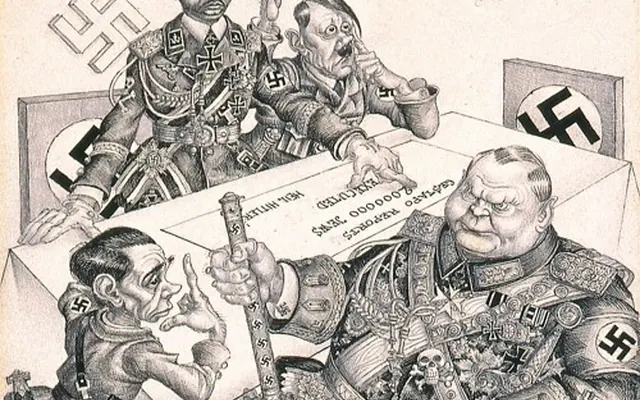
TJS Live - Survival Zionism part III
Here is part three of my live series on Survival Zionism. This episode takes us to Europe in the war years and explores the evolution of the Final...
Play Episode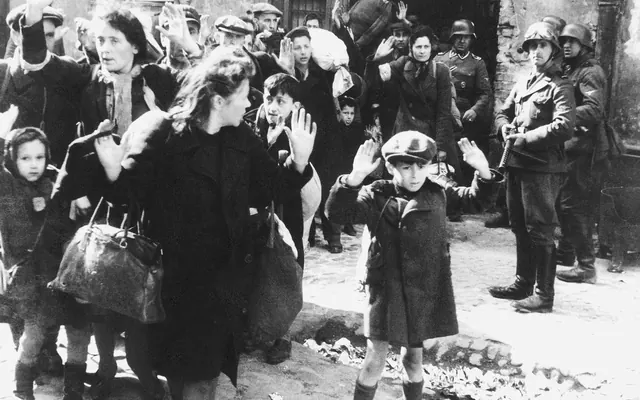
TJS Live - Survival Zionism part IV
Here is part four of the live series on Survival Zionism. This episode tells the story of the Warsaw Ghetto. If you like the live style, sign up...
Play Episode