
TJS S5 Interlude Crowning the King 5782
Sometimes a simple question sparks the deepest thoughts. This episode is in answer to a simple question - what is the story of Rosh Hashanah. It explores the nature of kingship and the crown in Jewish tradition, and offers some guidance on how we can all approach telling a different story of our lives in the coming new year.
image from: www.flickr.com/photos/xeni/436828769
creativecommons.org/licenses/by-nc-…a/2.0/legalcode
About this episode
Rav Mike's son asks him what the story of Rosh Hashanah is, and the honest answer is that it is all about crowning the king. To appreciate that, go back into Elul, the month we sing as HaMelech BaSadeh, the king in the field. Beyond the usual sense of a God made suddenly available, Rav Mike offers the field as a field of possibility, the idea that nothing is set in stone and there are moments when everything is in flux. Borrowing a little physics, he likens it to a wave that stays indeterminate until it is observed, and then collapses through the power of seeing. That power of seeing, of choosing, is the link between the open field of Elul and the crowning of God as king on Rosh Hashanah.
The Gemara in Rosh Hashanah describes three books opened on the day, for the wholly wicked, the wholly righteous, and the middling ones held in the balance until Yom Kippur. Rav Mike asks the honest question of whether this is literally true, since the wicked do not drop dead after the holiday and few of us are wholly righteous. His answer is that the books are an open field, and the work of the month is a cheshbon nefesh, a personal accounting that celebrates the victories as much as it challenges the failures. Then you choose, are you a righteous person who sometimes fails, or a wicked person who sometimes does right. If you judge yourself righteous your life will be life, and there is no greater death in life than to call yourself wicked.
This is the heart of his counseling work, the dynamic between malchut and keter, kingship and crown. Malchut, at its most profound, is the capacity to hold the context that lets the pieces come to right relationship, the vessel he calls identity, how the pieces of past and present make up a me. He commends a nightly practice of playing the day back like a movie, without judging, just to see it, for a month. Yet malchut is only what is, and you do not want to be a passive observer of your life, you want agency. The second step is to see what lies outside that sum total, the vision and values that give malchut a higher order, so that you become an active shaper rather than a pawn on someone else's board.
To look ourselves in the face he turns to Moshe, who came down the mountain on Yom Kippur with a shining face. The Recanati reads the radiance as Moshe's clear vision of the divine, but Rav Daniel Cohen taught that an aspiklaria is a mirror, so that Moshe alone could look himself fully in the face and bring the Torah into the world. One practice for accessing that crown of values is to identify your externalities, the places where your arbitrarily bounded life takes in and offloads into the larger systems around it. Seeing them grants higher order thinking and real agency. Yet the greater picture can paralyze, and so the antidote to our control response to uncertainty is bitachon, a deep trust that accepts not knowing while committing to act in service.
If you are going to serve, you have to know whom you serve, and there is a rabbinic phrase that has always moved him, ein melech b'lo am, there is no king without a people. Real kingship needs a horizontal dimension, an interpersonal vessel large enough to hold the pieces of the divine vision in right relationship, which is the story of Rosh Hashanah and the call to Abraham to leave everything and build a new malchut for a great nation. Rav Mike reads the end of the Rambam's great work, where redemption brings material abundance and a godly consciousness, and insists the missing piece today is moral clarity and a social will to care. This is narrative therapy for a nation, a memory more than a history, retelling the past so we all become one bound unit to crown the king with a whole heart.
Key ideas
- The story of Rosh Hashanah is crowning the king, and Elul is the field of possibility where nothing is yet set in stone.
- The three books are an open field, and the work of the month is a cheshbon nefesh that chooses whether you are righteous or wicked.
- Malchut is the vessel of identity that holds the pieces in right relationship, and keter is the vision outside it that grants agency.
- Moshe's shining face was an aspiklaria, a mirror, the clarity of looking himself fully in the face and bringing the Torah down.
- Identifying your externalities grants higher order thinking, and bitachon is the antidote to the control response to uncertainty.
- Ein melech b'lo am, there is no king without a people, so crowning the king needs a horizontal bond, as it did for Abraham.
Chapters
- 0:00 The story of Rosh Hashanah
- 1:05 Elul; the king in the field
- 2:09 The field of possibility
- 4:19 The three books
- 6:36 A righteous person who fails
- 9:00 Malchut and keter
- 11:09 Taking agency over your life
- 13:28 The problem of prolonged uncertainty
- 14:31 Moshe's shining face; the mirror
- 16:42 Identify your externalities
- 20:03 Bitachon as the antidote to control
- 23:25 Ein melech b'lo am
- 25:32 Abraham and a new malchut
- 26:36 The Rambam; abundance and moral clarity
- 28:42 Narrative therapy; memory and history
- 31:57 A guda echad with a whole heart
Who, where and when
People
Rav Mike's son, Moshe, The Recanati, Rav Daniel Cohen, Abraham, The Rambam, Bob Dylan
Places
The field of Elul, Mount Sinai, The land of Israel
Texts
Rosh Hashanah 16b on the three books, The Mishneh Torah, Genesis on the call to Abraham
When
the month of Elul, 2021 CE: this Rosh Hashanah interlude, the day of redemption
Read the transcript
On Rosh Hashanah, the head of the new year, it's written, and on the holy fast of Yom Kippur, it's sealed. And my wish for everybody listening, and for everyone who isn't, is that we should all be written and sealed in the book of life, now and forever. I'm Ramayk Poyer, and this is the Jewish Story. Interlude, Rosh Hashanah, crowning the king, 5782. So I was sitting with my son in the car today on the way to school, only the second day of school, so we're still fresh in the routine. And he asked me, Abba, what's the story of Rosh Hashanah? Before I even get into it, the educational system has taught him what he said. He said, well, there's always a story. What's the story? And at first, I got to admit, I was stumped.
And in all honesty, I gave him, you know, a reasonable answer. But it caused me to think that maybe I should come home and speak to you. Because the story of Rosh Hashanah actually is quite clear when I think about it. It's all about crowning the king. Now, in order to appreciate that, we've got to go a little bit backwards into the month of Elul. The month that has preceded this fast approaching great and awful day of the Lord. This is going to be a lot of that drama. You'll have to forgive me. I've had quite a bit of caffeine this morning. So, this month of Elul, these 30 days are characterized by what we often say or sing, HaMelech Basadeh, HaMelech Basadeh. The king is in the field. Now, usually, when we speak about the king being in the field, it's a reference to the idea that God on high, as it were, the transcendent divine who stands outside of and therefore can dictate the actions of creation, is usually unavailable, frankly, even to our prayers.
But there's a special time of year when the king comes out of the palace, beyond the four walls of the fortress and into the world which we know, the field. And that's very true and it's real and it's important. The intimacy above all else is appealing. But I'd like to offer you another understanding, which I think helps us to actualize the avoda, the spiritual practice of actually crowning God king in the coming days. And that is that the field that we're speaking of is not just some bunch of wildflowers out there in the sunshine where God wants to be alone together. It's a field of possibility. It's the idea that nothing really is set in stone. Oh, life moves in cycles. We make decisions and it flows from there.
But there are moments, times of the year even, when everything is available. It's all in flux. It's a field of possibility. and that's really what Elul is I'll explain in a moment because what goes together with that field of possibility the sum total of opportunities which face us in any given moment and certainly in the year ahead is our ability to collapse the wave function I'm sorry if I'm scaring you with a little bit of physics but there's this notion in quantum physics that a wave, sorry, a particle of life is both a particle and a wave I don't want to get into the background story of it you'll just have to take it from me if you're not familiar with the physics, that it is simultaneously a particle and a wave right up until it's observed.
Once it's observed, once there's some sense of other that stands outside of it, it collapses either into a particle or a wave. I will actually collapse into it, but we're not going to get into it. Fine. You get my point. It's indeterminate up until we see it. And that power of seeing, that power of dictating, is the relationship between the field of possibility, which is offered to us in the month of Elul, and the ability to crown God king at the end of it on Rosh Hashanah. Let me explain. The Gemara on Rosh Hashanah says over there in 16b, if you want to look it up and fact check me, Rabbi Kruz Padai said in the name of Rabbi Yochanan that there are three books opened on Rosh Hashanah. And this is what actually was scaring my son this morning, because thank God his teachers mentioned it yesterday.
They say that the Holy One, blessed be He, is looking at one of holy wicked people. That's W-H, not H-O. Holy, completely wicked people, one of completely righteous, and one of the benonim. Those in the middle, whose deeds are equally balanced. And it goes on to say that the completely righteous are immediately written and sealed for life on Rosh Hashanah. The wicked are immediately written and sealed for death on Rosh Hashanah. and the rest of us, please God, middle people, are left suspended between Rosh Hashanah and Yom Kippur. And if we merit, we're written for life. And if we do not, God forbid, we're written for death. Now, there's a lot of drama in this, and I like the image of God as judge with the books open.
But there's also a fundamental question or two that comes out of this, not the least of which is, is that really true? And now, I'm not being a heretic, I'm just asking a factual question. If all of the wicked, whose evil deeds outweigh their good deeds, according to the standard understanding of the Amara, are written and sealed for death, we don't see a bunch of people dropping off the face of the planet immediately after Rosh Hashanah, or frankly, even in the coming year. And, let's face it, most of us that survive are hardly wholly righteous. so it's a challenge to understand what it is that the Gemara is asking us to understand about this day but I think that the key lies in the notion that these books are open they're an open book like an open field that all month long I hope that you've been engaged in a little bit of introspection doing a Cheshbon Nefesh this personal accounting that we'll speak a little bit more about as we go further into this tirade and if you haven't It's not too late now.
Take the time to sit down and think for yourself about who you are right now and how you've gotten here over the last year. It's been a wild ride, I bet. No matter who you are or where you are, it hasn't been an easy year, as if there ever is one. But this, I think, for many people has been harder than most. By the by, don't just focus on the bad. If you really want to know who you are, you have to celebrate the good and the victories as much as you need to challenge yourself in the places of weakness and failure. And once you have some sense of picture of the past, give yourself the time to also set some goals for the future. Who do you want to be? And in fact, you can't really talk about who you want to be unless you can realistically look at who you are.
Once you've done these two things, and by the by, I encourage you to get in touch with me if you want a little bit of help in this. It's a big part of my counseling practice in general, and certainly right now, helping people to understand the vision which they have inside themselves and crystallize that into actionable goals. And that's why I'm speaking to you about this topic right now. You have to see this field of possibility. All of the things that this past year has made up you to be. And to see that they're not set in stone. When you put them all in place, they offer many opportunities going forward. That's the possibility that emerges from this field. And then you choose whether you're going to be written and sealed in the book of death.
or whether you're going to be written and sealed in the book of life. Are you a righteous person who fails, like all of us? Or are you judging yourself to be a wicked person who sometimes does the right thing? If you judge yourself to be righteous, and of course have challenges and flaws, then I promise you that your life will be life. But if you choose to see yourself as wicked, even though sometimes you do the right thing, when there's no greater death in life than that. And that's how I understand this Gemara. And what about those of us in between who are hanging in the balance between Rosh Hashanah and Yom Kippur? Well, actually, that's quite simple. If you see yourself as hanging in the balance, then you know it's game time.
If you want to understand who you really are, you've got to wait until the pressure is on. People rise to the challenge. If you're not really sure whether you're a righteous person who sometimes fails or you're a wicked person who sometimes does the right thing, push yourself to be the person you want to be between Rosh Hashanah and Yom Kippur. This isn't trying to pull a fast one on God. It's not racking up brownie points before the final scores are in. It a question of when the chips are down who am I really Can I take the agency to declare myself to be in the book of life Or am I stuck in a story that forces me to call myself amongst the living dead So this is where I want to go on a slightly deeper level in this Rosh Hashanah interlude.
So as I mentioned, the idea of crowning the king, of taking all the possibilities of what life offers me, be it in the year past or in my entire past, and making a choice about who that's going to help me to be, is a big part of my counseling work. When I work with people, I speak often about this dynamic between malchut and keter. Malchut is kingship and keter is the crown. And the whole idea of Rosh Hashanah is I'm putting the crown on the king's head. So we ought to understand those two things. Malchut, in the simplest sense, or at least to me, the most profound definition that comes out of our mystic tradition, is the capacity to hold the context that allows the pieces to come to right relationship.
It's the vessel in my personal life that I call identity. How do all the pieces of my past and present make up me? and on a larger level, as we'll speak about later, it could actually also be classic malchut, a kingdom, a national existence. But I want to start with the personal level for now. This identity, this ability to have a me that puts the pieces hopefully in right relationship, it's not enough to just be reactive. I am who I am because this is who I am and this is how I came to be. I need to not only understand, to do the cheshbon nefesh, the personal accounting, by the way, which shouldn't just happen once a year, Ideally, it should happen every night before you go to bed. You want to change your life?
Try this for one month. It's a big challenge. But before you fall asleep, sit and play your day back like a movie. See from the moment you got up where you've been, who you've interacted with, how you felt, the things that you did. Don't judge. At first, the goal is just to be able to see it. And by the way, that's challenging enough. If you can see your day through, and it takes practice, from morning to night, for a month straight, I promise you we'll have a profound insight on who you are, who you think you are, where you're strong, where you're weak, and where the possibilities really lie. But that type of accounting is only the first stage. That's getting a grip on malchut. Malchut is simply what is.
But you don't want to be a passive recipient or even a passive observer of your life. You want to be a subject, an active shaper. you want to have agency in crowning yourself king in your own life. And it's probably worth it to make a caveat here, that king, I know, is a male term, both in English and in Hebrew, but it's important to note that malchut, kingship in Hebrew, is a feminine aspect. That's a discussion that perhaps we should have at some time, but I think it would take us too far, sorry, although I do feel, not because of PC concerns, but because, God forbid, any woman listening should think that this doesn't apply to her as much as it applies to any man. This is a human quality. Jew, non-Jew, man, woman, anything that you may choose to be in between.
We're all faced with the same challenge. How do I take agency in my life? The first step is understanding, like I said, what's malchut? The sum total of being. The second step is to see the thing which lies outside of that sum total. my vision, my aspiration, that which inspires me, my values, to see those ideals which I am striving for, and to access those ideals in order to give a higher order and organization to Malchut. Maybe it would help to give a specific example of what I'm speaking about, since I'm just kind of freestyling here. You know, I've seen in the last year and a half in my own life, in the life of my family and people that I'm working with, that the primary problem which we all face is prolonged uncertainty.
Now, that doesn't mean it's the worst problem for everyone. Many people, God forbid, have been sick. Many face terrible financial struggles. Many are seeing their family dynamic crumble before their very eyes. But I think what underlies it all, this incredibly large and sometimes intensely subtle sense of how do we cope when we are no longer certain? When all the things which make up the normative assumption, the people I love, will always be there. My job is where I go every day. My children go off to school for the majority of the day. You fill in the blank all the things that help us cope with life in general by assuming that the way they are is the way they will always be. So many of them have fallen to the acts of the post-COVID world.
And one of the ways in which we can best deal with that is by taking a good hard look at ourselves. What do I mean? You know, Moshe was up on the mountain for 40 days. I mentioned before that my son asked me, what's the story of Rosh Hashanah? I realized, gosh, I had a couple of good answers. That's okay. I'm picking him up too. I'll get him back. But Moshe was up on the mountain for 40 days, from the beginning of Elul all the way through the 10th of Tishrei, which is Yom Kippur. I don't want to go into it now, and I'm sure I've done it elsewhere, but it's important to know that on Yom Kippur is the day that Moshe came down to the mountain with the second set of tablets, those that lasted. But not only did he come down with the second set of tablets, his face was shining.
And not just in that Karli Bach sense of, wow, he was really happy, his face was shining. I mean his face was literally shining. That's where the notion that Jews have horns come from. Karan o penei Moshe. The skin of Moshe's face was literally shining. Keren being both horn and a ray in Hebrew. And the Reconati, great mystic commentator on the Torah, says that haremes b'kirun penei Moshe. What's hinted at in the fact that Moshe's face was radiant, ki nistakerb as peklaria hameira, is that he looked in his clear, well, clear what? Usually, aspiklaria mi'ira is translated as a clear lens or through a clear glass, right? That Moshe, alone amongst all the prophets, saw clearly. And it's usually understood, since nobody really knows what an aspiklaria is.
It's a Hebrewization of some old Greek term that we don't really have certainty on, right? But everyone assumes that Moshe saw clearly what? He saw clearly God, which, by the way, has plenty of support in the text itself. and says the Reconati, his clear vision of the divine presence caused a light to well up from within him that was so strong it shone from his face now, I'm not going to argue with the Reconati but my Rebbe, Rav Daniel Cohen always used to say to us, if we don't know for sure what an Aspiklaria is well, perhaps we could hypothesize and he said this in the name of the Ibn Ezra even though, in all honesty, I've searched high and low and asked him, and never really understood where he got it from, nonetheless, I'll say it in Rav Daniel's name, that an aspikalaria is actually a mirror.
And that when Moshe was up there on the mountain for 40 days, what he was doing was coming to a clarity of ability to see himself. That Moshe alone, of all the prophets, was able to look himself fully in the face. And in looking himself fully in the face, he had the capacity to bring the Torah down into the world, which of course was the ultimate crowning of God King. Now, When we look ourselves in the face, I'm sure we all see many things. But one practice I commend to you in order to do this spiritual task of crowning God king in your life, in order to access the crown of values and vision that lie outside the immediate realm of your life, your identity, your malchud, is to identify your externalities.
In economics, environmental economics at least, when we speak about externalities, externalities. We're talking about the larger system within which we function, right? If I think about the cost of gas simply by looking at the amount of money on the register as I pull the trigger on the pump, I'm not actually seeing its full cost. There are externalities. How much environmental degradation happened at the point of source when they pulled it out? I'm not paying that cost the locals are How much does it cost that pollution that goes up in the air in health care as it affects people lungs I not directly paying that cost but by the way that bill comes due for us all You understand These are the externalities The way in which our somewhat arbitrarily defined malchut, the boundary of our life, interacts with the larger systems within which we function.
If we identify the places where we are intaking and offloading at all times, remember, no man or woman is an island. If we're able to do that, then we're able to ask certain questions, to make decisions, and to take actions which are reflective of higher order thinking. Now, that could be a higher order thinking in the material sense. I'm going to make my economic decisions based on the environmental impact and not just the immediate cost analysis of what I purchase and what I use. That can be higher order thinking in the material sense, or it can be a higher order values-driven thinking. Sometimes when we make our decisions, they're based on ideas of what is fair and right and not simply what is of a utility to me or someone else.
No man, no person is an island. We're intaking and offloading from our lives all the time. And by the way, If we're not making conscious choices of serving the ideals and vision that live outside of our life, if we're not making a conscious choice to serve our king, well then, if you're not serving your king, you're serving someone else's. Because I'll say it again, like I've said it before, Bob Dylan told you, everybody got to serve somebody. If you're not an island, and there are systems within which you are embedded, and you choose not to think about what they are, then you are a pawn on someone else's board. You're not crowning the king. You're being used to prop up the throne. You have to know how we receive what we receive and where our garbage go.
And when we see that, we gain greater agency. Our individual actions can be far more reflective of our values and vision. We're crowning the king in our own life. but one caveat about what this has to do with certainty and uncertainty. You know, because you're thinking, I identified the problem here as prolonged uncertainty. Now I'm talking about Moshe and externalities. Mike, what's the point? Well, here's the thing. You have to understand the systems within which you live on a physical, emotional, psychological, spiritual level. And like I mentioned, the COVID collapse has taught us more about those things than perhaps any of us really wanted to know. And in order to maintain agency, you have to make decisions based not just on the existence of those physical material systems, but of the moral, religious, spiritual systems, which are your true values.
And one of the ways you can gain certainty is by knowing what you really value and believe and guiding your behavior accordingly, not being reactive, but responsive to the reality around us. Because there's a problem. Gaining greater agency by seeing the bigger picture works right up until that picture paralyzes us and makes us question the meaninglessness of our actions and insights in the face of things which are so much larger than we, which is also the experience that many people are having in COVID. You can set your goals. You can refine your behavior. You can have clarity on the crown that lies outside the boundaries of your malchut life identity existence. and all of a sudden a pandemic is going to come along, put your kids in the house, shut your business down, and make, God forbid, your loved ones go away.
So therefore, certainty is not what we're after when we try to look ourselves in the face, but rather, bitachon, a deep trust. Bitachon, a deep trust in God, I might say, is the antidote to our control response to uncertainty. When things are uncertain, we want to control. But the problem is we can only really control if we reduce the world to a manageable picture. If you reduce the world to a manageable picture, you're ignoring the reality of those externalities. There is no control that reduces the world to a manageable kingdom. With a king, we really want to worship. Because in the end of the day, if we reduce the world to a manageable kingdom, then that king is really just a distorted image of ourselves.
Those of you who are familiar with Jewish texts will know that that's the image of Ahasuerus in Purim. Hamevin yavin. Those who know, know. Those who don't will have to wait until Purim and maybe we'll speak about it then. For now, I just want you to appreciate that the crowning of the king within your own life, your ability to access the values and vision that lie outside the immediate realm of your daily life and to inform your actions, behaviors, and decisions with that vision is not about being certain that it will be worthwhile and that it will all work out, but it's about holding the wonder of the vastness of existence. It's not about choosing your king and submitting to that king's power, or never, simply about that.
It's also about the courage to stand in wonder on the edge of the infinite and to take part in bringing creation out of the void one step at a time, even though you can't be certain that it's going to work. This notion of bitachon, of trust, is an acceptance of uncertainty together with a commitment to taking action to serve. And if you're going to serve, you have to not only know the boundaries of your kingdom, what your malchut is, you have to know whom you're serving, who wears the crown. You know, there's a phrase in the rabbinic tradition which has always been resonant for me. Ein melech below am There is no king without a people You know, if I get on a white horse put on satin robes, a crown grab a scepter and ride through the streets declaring myself the king of Siam unless the people of Siam say hey there's the king I'm just a crazy guy on a horse The idea of crowning God king is a collective action that am, that people is part of what makes God king and on a basic level, answering my son once again, although perhaps I should make him listen to this, that's the story of Rosh Hashanah.
That malchut, real kingship, needs a horizontal dimension. There needs the interpersonal connectivity, a large enough vessel that can hold the profound pieces of the divine vision in order that they can come to right relationship. Because when those pieces relate properly to one another, that's when we experience Malchut that's when we really experience God's kingship in the world and the greater the skill we perceive that right interaction then the greater the kingdom and of course the greater the king and this has been part of the Jewish story since the very beginning I mean see the initial promise to Abraham when God says leave your land your birthplace and your father's house and go to the land which I will show you that's a complete uprooting of context God says to Avraham I need you to make a new Malchut you for yourself are going to have a new identity you're going to reach way outside of what you know in order to reorganize on that personal level we were just speaking about but the goal wasn't for Avraham alone it was never for Avraham alone the idea of God relating to one human being is a universal human phenomenon and in no way particularly relevant to the Jews there are holy people from every corner of the planet.
What Avraham was called to do was to go to a new place and there, I will make you into a great nation. That the vision of crowning God king as a people on a scale where the right interactions that will be perceived will be so grand that the whole world will know that there is a king. That is the mission. and it's why, by the by that the vision of Tzedek Hebrati of social justice in today's terms has always been bound up with the Messianic redemptive vision I could bring you an endless number of sources to demonstrate that but I always moved by the one that is located at the end of the Yad Chazakah the Rambam classic work of Halakha of Jewish Law also known as the Mishnahh Torah By the way it often missed There is a narrative thread a narrative arc, I might more properly say, to the Yad Chazakah.
It opens with the awesomeness of creation and it closes with redemption. He says, Well, what do you think in those days? In those days of redemption, what's going to be? Well, he says, There won't be hunger, or war. No envy and no competition. Because goodness, and not just goodness in the moral sense, but even material abundance will be poured out in plenty. It will have the true influence. It says, And all the delegacies will be as readily available as dust. This may sound familiar. He's describing our world. We live in a world of material abundance such that humanity has never known. Now you're going to say back to me, Mike, but what about the global self? What about the billions of people on the planet who actually don't have enough to eat?
And I'll tell you that that is not a problem of material abundance. It's not a failure of technical ability. It's a collapse of moral clarity. We lack the social will. We don't care enough. about our fellow human beings to share the wealth. And we don't on the individual level, and since we don't on the individual level, the governments, which reflect our will, certainly in the democratic world, more than they oppose our will, one hopes, won't reflect it either. That that's the real change, which is why the Rambam ends. Therefore, meaning, once all these problems, the technical issues of material abundance are taken care of, Israel will be a very wise people, understanding the deep and sealed matters, and will achieve, achieve a divine consciousness to the extent that a human being is really capable.
And then he quotes, oh, that lovely verse, the earth will be filled with a godly consciousness in the way in which the waters cover the sea. this is the vision now he presents it as first take care of the material and then consciousness will emerge which I believe is true but what I'm pointing out is that the work of crowning God king is the work of realizing that until we have that horizontal sense of justice then we will never receive the consciousness for which we so profoundly long and that brings me to how I want to close this little Rosh Hashanah rant. And by the way, I want to say now, send me your thoughts. I've encountered a few people lately who found my edges, either in a pleasant or an unpleasant fashion.
I always appreciate it when you let me know what you think. Send me an email, ravmikefoyer at gmail.com. You can send me a personal message on Facebook, ravmikefoyer. You can find me on Twitter, Jewish Story as well. Reach out. Smoke signals work. I don't care. But tell me what you think, especially if you disagree. But now for the final words. You may or may not know that the way I approach what I'm doing on the large-scale level is narrative therapy for a nation. In the same way, when I work with individuals, I'm trying to help them reframe. Take the facts of their life, right? That looking back, that Cheshbon Nefesh, that accounting that we started with, you can't change or ignore the real pieces of what you've done, who you've been, what's happened to you.
You don't have to change those. What you need to do is change the way you fit them together. into the story that you want to tell. On the personal level, am I a good person who fails, but fundamentally I am good, and therefore I will live? Or am I a bad person who sometimes does what's right, and even if I happen to eke out an existence for the coming year, I'm dead inside. On the same level, or in the same way, really, we can do this type of reframing, this type of narrative therapy, on the national level, and that's why we as a people are enamored of memory, and not history. We're not interested in a literal accounting of what was. We're interested in a retelling. Memory is always the redemptive perspective on the past.
It's the way in which we tell a story about what was that will evoke a future worthy of the depth and holiness which it represents. Right? Now, of course, as in my own life, as in family, as in a nation, we don't always remember the past the same way. And we certainly don't always tell the same stories about it. And that's why it's so important now. Ein melech belo'am. There is no king without a people. That horizontal element. And I'll go further and say that ultimately, letak in olam b'malchut shadai, right? To establish the whole world as God's kingdom is our mission, which means it's not enough just to talk to our fellow Jews about the past, present, and future. It has to happen as a global conversation.
And of course, like the Rambam pointed out, we are uniquely positioned to manage that speaking task. There has to be a level in which we learn not to tell the same story, God forbid, monochromatic approach to the past, but to tell a harmonious one. Because really, the stories of the past that we have to learn to tell and retell will be judged by their efficacy in helping us to build a future together. And that leads me to my final words. These words which are the most beautiful and evocative of the tefillot of the prayers, at least to me, that we're going to say over and over again in the next few holy weeks. V'chein teim pachtcha Hashem el-ein al kol maasecha, right? Put your fear, right? And the awe of you upon all of your creations and everything which you've made.
V'hirucha kol maaseim yishtachol v'fanecha kol abroim. I'm not going to get into it now, but just appreciate. Any God that doesn't make you tremble is too small. is a reflection of the limitations you have placed upon your conception of creation. Think big, people. Think so big beyond law, beyond story, beyond the fabric of the material world. Think so big that you find yourself trembling in fear and awe on the edge of the infinite. And then, This is the vision, that we will all become a Guda Echad, one bound-together unit to do your will, Lord, the Levav Shalem, with a whole heart, not out of duress. Not because someone else told me I had to. Not because the socioeconomic system forces me to. Not because the law threatens me if I do otherwise.
But because I can feel deep within me that the story of the past is pointing me and you and us together toward a future which will truly crown God King and bring blessing to creation this year and the next forevermore. I want to bless you that it should be a healthy year. It should be a happy year. It should be a year of growth, of challenge, of success, and of inspiration. I want to invite you to share with me all your thoughts now and in all of the months ahead. Shana Tova, a sweet new year from me to you wherever you are. I just want to thank a few folks. I want to thank all the folks that give their hard-earned money to help me produce this show, to keep it free and make it widely available. I want to ask you to join them now.
It's a great time at the beginning of the year. Tshuva Tzedakah Utefillah, right? That repentance, a little bit of tzedakah, and prayer are the way in which we can change our status. You can go right now to my website, jewishstory.co. In the upper right-hand corner, it says Be a Patron. You can click on that to give a little bit of per-podcast support. If you want to make a one-time donation, you can also find me on PayPal. robmikefoyer at gmail or you can get in touch with me. I'm happy to share with you details of how you can dedicate a show in honor of someone you love who's with you today or someone you love who is no longer with you. I also want to thank the Land of Israel Network. That's thelandofisrael.org.
Building a global center for spirituality in the heart of Judea. I want to thank the Pardes Institute. P-A-R-D-E-S dot org dot I-L. Throwing the doors of the Beit Midrash open to as wide a range of Jews as possible. And I want to thank you for listening. I'm Rav Mike Foyer, and this is The Jewish Story.
More from Season 5
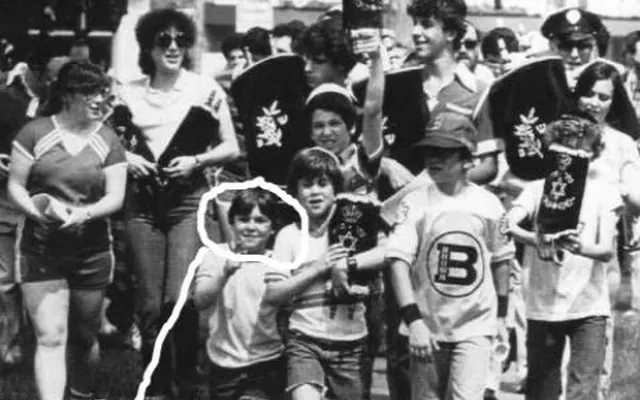
TJS S5E1 A portrait of American Jewry, circa 1974
The changing culture of American Jewry after the Yom Kippur War in Israel and the Vietnam War meant leaving old neighborhoods, a surge in Zionism and new developments...
Play Episode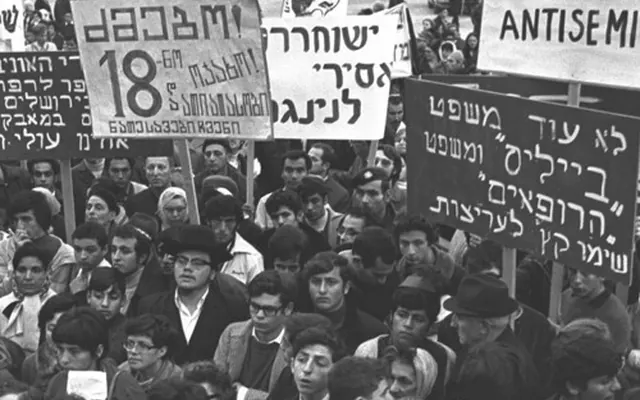
TJS S5E2 Let My People Go - the ongoing fight for Soviet Jewry
Rav Mike Feuer talks about Russian Jewish refuseniks, why they were denied exit visas to immigrate to Israel, and how the Communist regime eventually let them go. Learn...
Play Episode
TJS S5E3 Feminism and American Judaism
The feminist movement and Jewish American life came together in the 1960s and 70s - each influencing the other. In this episode we touch on Betty Friedan's Feminine...
Play Episode