
TJS S5E1 A portrait of American Jewry, circa 1974
The changing culture of American Jewry after the Yom Kippur War in Israel and the Vietnam War meant leaving old neighborhoods, a surge in Zionism and new developments in the Jewish community like the Havurah movement. We explore the publication of the First Jewish Catalog: A Do-It-Yourself Kit edited by Richard Siegel, and Michael and Sharon Strassfeld and the shift from left-wing liberal to neo-conservative in the writings of Commentary Magazine editor Norman Podhoretz. Plus, Rav Mike gets personal and talks about his own Jewish upbringing.
About this episode
Impressionism, said Matisse, is the newspaper of the soul. Season 5 opens with a portrait of American Jewry in 1974 painted in that spirit, in brushstrokes rather than a photograph. Rav Mike starts with the numbers anyway: the 1972 National Jewish Population Study found about six million Jews, the largest concentration in the world and nearly half of world Jewry, and also a community in relative decline. Jews married later, had the smallest families, 1.7 children already in 1955, and between 1966 and 1973 intermarried at 31.7 percent, the highest rate ever reported. The study’s own warning stays with him as an educator and a father: the likelihood of intermarriage is greatest for those who cannot clearly describe their upbringing. Substance matters.
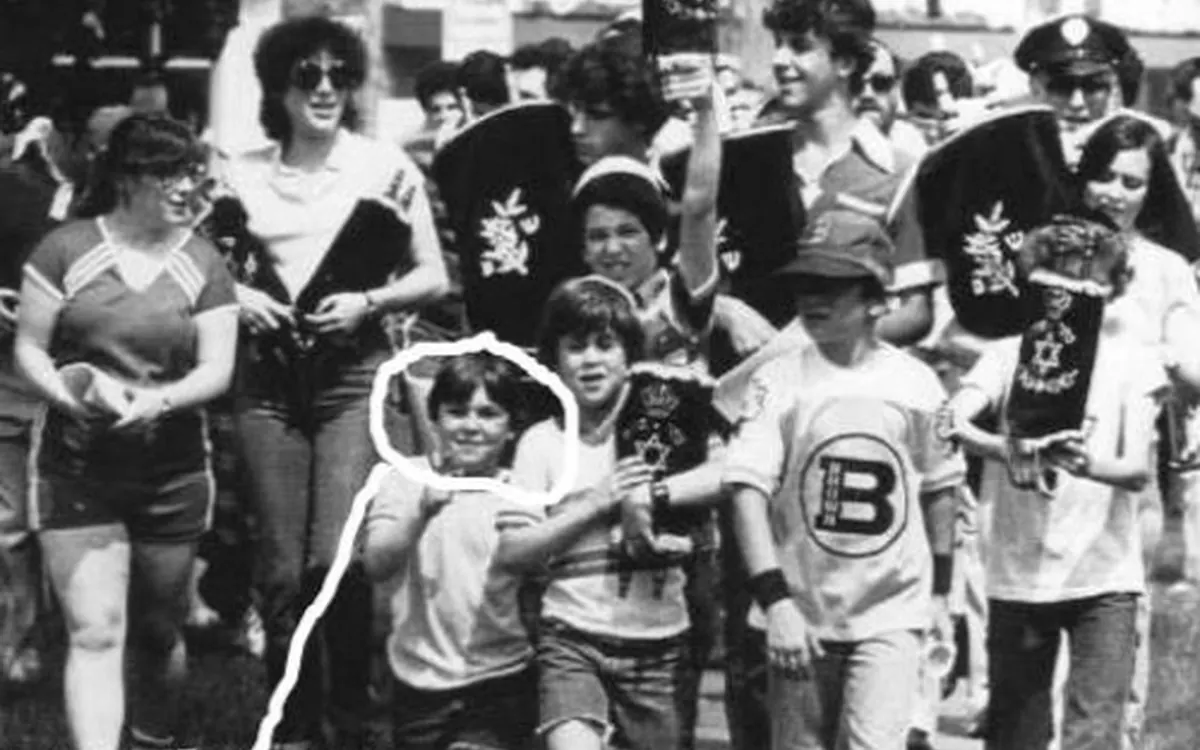
The immigrant story was ending. Between 1964 and 1968 only 39,000 Jews entered the United States. Second and third generation Jews were fully American, suburban, mobile, willing to take the posting in Seattle, and less inclined to live near Jewish institutions. Rav Mike puts himself into the picture, born in 1974, and offers his earliest Jewish memory: carrying the Torah scrolls from the old B’nai Jeshurun on Mayfield Road in Cleveland to the new purple palace in Pepper Pike, the suburban mega-synagogue of American Jewry. He is careful to say this was no loss of soul. He had a very good early Jewish life, and part of the reason was a book.
The First Jewish Catalog, published in 1973 by three members of Havurat Shalom, was a do-it-yourself kit for Jewish life, modelled on the Whole Earth Catalog and Our Bodies, Ourselves. It told you how to build a sukkah, where to hang a mezuzah and which wedding bands to hire, Shlomo Carlebach’s phone number included. It sold half a million copies, more than any JPS book but the Bible, and was read across the spectrum. Rav Mike then tells the story of the havurah itself: founded in Cambridge in 1968 as a seminary partly to keep its students out of Vietnam, with Art Green at the other end of the phone, it mixed conservative rabbis, Lithuanian yeshiva seriousness and the sixties, prayed in circles on pillows with niggunim, and under the influence of Reb Zalman Schachter changed the way Jews daven. Its utopian phase lasted five years, and the one thing its members fully agreed on was opposition to the war. They never, one founder recalls, marched for Soviet Jewry.
Hawks in the Middle East and doves in Vietnam: that generation puzzled non-Jewish politicians. For the last brushstrokes Rav Mike turns to a very different Jew, Norman Podhoretz of Commentary, son of Brownsville, liberal, anti-war, who after the disaster of his book Making It drank nearly a fifth of Jack Daniels a day until a thirty-second vision in a field in Delaware County in 1970 convinced him that Judaism was true. He put the mezuzahs back on the doorposts, turned Commentary against the left, and in 1972 asked the question that defined the new line: is it good for the Jews?
His 1974 article in the New York Times, Now, Instant Zionism, claimed that the Yom Kippur War had converted all of American Jewry to Zionism. Irving Kristol and Irving Howe, who agreed on nothing, both said they cared desperately. Campuses that Jewish leaders had called a disaster area for Judaism gave a million dollars and 25,000 farm volunteers; the UJA raised three and a half times what it raised in 1967. Why? Podhoretz’s answer was the threat of annihilation, felt in America as a threat to one’s own home. Rav Mike, born three weeks after the article, adds an epilogue: so long as the danger hangs in the air, there will be no defections. Within a decade the danger receded, Lebanon muddied the waters, and the converts began to leave the fold.
Key ideas
- In 1972 there were about six million American Jews, nearly half of world Jewry, with the smallest families and the highest intermarriage rate ever recorded.
- Intermarriage was highest among those who could not describe their upbringing. In the American cultural marketplace, substance is what holds children.
- The First Jewish Catalog, 1973, was the do-it-yourself inheritance of a generation: half a million copies and a new, participatory, less hierarchical Judaism.
- Havurat Shalom began as a seminary to escape the draft and became a revolution in prayer. Its members marched against Vietnam and never for Soviet Jewry.
- Norman Podhoretz’s vision in 1970 and his question, is it good for the Jews, turned Commentary into the cradle of neo-conservatism.
- Instant Zionism after 1973 rested on the threat of annihilation. When the threat receded, so did the conversion.
Chapters
- 0:00 Impressionism, the newspaper of the soul
- 1:04 The 1972 National Jewish Population Study
- 3:13 Family size and intermarriage
- 5:26 From immigrants to suburban Americans
- 7:41 Cleveland, 1979: the purple palace in Pepper Pike
- 9:57 The First Jewish Catalog, 1973
- 11:07 The Whole Earth Catalog and Our Bodies, Ourselves
- 14:34 Havurat Shalom
- 16:46 Art Green and a seminary to escape the draft
- 17:54 Prayer in a circle; Reb Zalman
- 20:11 Shalom: Vietnam and the limits of the havurah
- 23:34 Hawks in the Middle East, doves in Vietnam
- 24:45 Kissinger and the big Jews, December 1973
- 26:01 Norman Podhoretz and Commentary
- 29:19 A vision in Delaware County, 1970
- 32:39 Now, Instant Zionism
- 36:10 Campus, money, and 99 percent
- 38:29 Why: the threat of annihilation
- 40:44 Epilogue: born three weeks later
Who, where and when
People
Norman Podhoretz, Art Green, Reb Zalman Schachter, Shlomo Carlebach, Michael and Sharon Strassfeld, Richard Siegel, David Roskies, Barry Holtz, Henry Kissinger, Irving Kristol, Irving Howe, Henri Matisse
Places
Cleveland: Mayfield Road and Pepper Pike, Cambridge, Massachusetts, Brownsville, Brooklyn, Delaware County, New York
Texts
The 1972 National Jewish Population Study, The First Jewish Catalog, The Whole Earth Catalog, Our Bodies, Ourselves, Commentary, Making It, Now, Instant Zionism
When
1968: Havurat Shalom founded, 1970: Podhoretz's vision, 1972: Is it good for the Jews?, 1973: the Catalog published, December 6, 1973: Kissinger meets the intellectuals, February 1974: Instant Zionism
Read the transcript
Impressionism, said Henri Matisse, is the newspaper of the soul. Now I'm trying just to take it all in and report it like I see it. I'm Rav Mike Feuer and this is the Jewish story. Season 5 Episode 1, a portrait of American Jewry 1974. Well, I don't know how you, but I'm pretty darn excited to say that this is the beginning of a whole new season of the Jewish story. There's so much on our plate, there's so much behind us I can't believe for full seasons and there's so much ahead we're getting ever closer to the reality in which we actually live. Now I said portrait in the title of this show, but in reality it's going to be far more of an impressionistic study than a photographic one. There's so many pieces that we have to put on the board.
There's a struggle for Soviet Jewry, which is about to reach its inflection point. There's shifting cultural and social norms. There's a whole religious saga and of course the ongoing and increasingly complicated relationship between American and Israeli Jewry. But for now, let's actually start with the numbers. In 1972, the American Jewish Yearbook sponsored the first ever nationwide survey of Jewry as a whole. In part, it was a response to the absence of any question about religious affiliation on the 1970 National Census and it was also a reflection of American Jewry's rising sense of self and a desire basically to get to know. The survey is a gold mine, including demographic, sociological communal questions, but like I said, we're going to start simple.
The Jewish population of the United States was around 6 million upon publication and revision of the numbers in late 1973. I say around because questions of method and accuracy led to a significant variation. But nonetheless, 6 million is an evocative number of Jews in any circumstance and surely good enough for government work as they say. That number constitutes the largest concentration of Jews in the world, more than 2.5 times the number of Jews in Israel in 1973 and nearly half of world Jewry as a whole. Nonetheless, despite the status of Jews as one of the three major religious groups in the US, they are in numeric decline relative to the general population. This 72 study found Jews to be 2.94% of the resident US population and that's down from their peak of 3.7% back in the 20s and seemingly it's continuing to fall.
Because overall, the study found that relative to other religious groups in the US, Jews will marry later, had the most feral attitudes toward the use of contraception and thus the smallest families. Already back in 1955, the average size of the Jewish family was only 1.7 children. Remember, 2.1 is considered to be replacement. Add to that, the fact that the proportion of Jews intermarrying between 1966 and 1973 was the highest ever reported, 31.7%. Now, in the section of the survey which deals with intermarriage, the study sounds two cultural alarms, worth contemplating though, truth be told in our day that the train has really already left the station nonetheless, the first was a surprise surprise that reported parental opposition to interdating, or the lack of opposition, is strongly correlated with intermarriage.
In less gobbledygook language, if your parents infused with the notion of we don't date the Goyin, then whether by threat or refusal to meet your date, you were far less likely to marry out. I know that's not so PC, and in fact, when such an attitude is linked to an almost total lack of substantive education on what it means to be a Jew, why it's important and how to make it a central part of your life, if it really boils down to 6 million people died, so you have to marry a Jew, well then, it all but amounts to cheap tribalism at the best and racism at the worst, and that leads me to the second observation from the study. It reports quote, the likelihood that intermarriage will take place is greatest for those who cannot clearly describe their upbringing, or who do so as marginally Jewish, like that hurts as an educator and as a father, but there you have it, substance matters, never forget that in the great cultural marketplace, which is America, you have to be able to get your messes across loud, clear, and deep to your children, otherwise you risk losing them.
Now there are other sociological factors at play working together with intermarriage to break down what I might call the tribal fabric which had held American Jewry together for a few generations. The American Jewish community that entered the 70s was still holding on to the immigrant tale as its backstory, but that's changing rapidly. With the exception of a bump immediately post Holocaust, the waves of Jewish immigrant America are long over. Between 64 and 68, a total of only 39,000 Jews, 2.3% of all immigrants entered the US as permanent residents, that's down from the millions coming less than 60 years before. And this transition from a foreign born ethnic immigrant, what we would call subsciety, is roots in Europe and the experience of an urban ghetto in the US, is shifting to second and third generation native born American Jews.
These are people who fully Americanize, many suburban born with an identity, value structure and vision that often differs radically from their immigrant predecessors. Aside from this, there's one more factor and that's the geographic distribution. As the last cultural barriers to employment and social acceptance seem to drop, the Jews are spreading out across the country and in that, they're following Americans in general. Now they're largely moving in response to professional opportunities that are open up. The parents of their immigrant generations and the children of the immigrants, built family businesses. Their pursuit was for wealth and security and they hoped to pass those on to their children when the time came.
Well many of the children received this and suddenly wealth and security were less important than status and mobility. And to get ahead in the newly mobil corporate culture of the 70s, you have to be willing to take that posting in Seattle, remove the family to Austin for a few years. Family ties are also less important to Americans in general going into the 70s and remember the Jews are just like everybody else, only more so. And of course, with that declining education and religious cultural identification, Jews no longer feel it's so critical to live in areas of high Jewish concentration that can offer them so-called religious institutions and services. I mean, even within the cities of high Jewish concentration, Jews are spreading out.
And that brings me to the truly seminal event of American Jewry of 1974, my birth. Now, I'm joking, but not entirely because within the context of the Jewish story, you're listening to me and on some level, it's my story you're hearing. And in 1974, I'm going to become a live observer. My earliest Jewish memory is actually from 1979, but I'll slip it in here because in some ways, it's a perfect reflection of the cultural shift I'm attempting to describe. I always love to say that the Jews and Cleveland have been moving east for generations. And in a few thousand years, they might actually make it to Israel. But my memory is of taking the Sifrei Torah, the Torah scrolls, from the old B'nai Jeshurun conservative synagogue where I grew up down on Mayfield Road, if you happen to be a Clevelander, to the new purple palace in Pepper Pike, a classic example of the suburban synagogue, though many of which were built in the 50s, it's really in the mid 70s that they come into their own.
The sort of mega church of American Jewry, if you will. And I actually have a picture. I may or may not succeed in using it as the cover photo for this episode, but you got to take a look at what it looks like to march eastward into a whole new environment. So there's going to be a need for some denominational reflections ahead, but we'll leave them for a further episode. We're going to have to understand the resurgence of orthodoxy in America, after, by the way, ethyulogy had been written and delivered well back into the 50s. We need to take a closer look at the struggle of conservative Judaism within which I grew up, to become a vibrant American Torah as it settles in the suburbs, and we're going to have to revisit the reform at still the quintessentially American brand of Judaism.
But for now, enough of the numbers, I set out to paint an impressionistic picture. I don't want you to think that this move I'm describing my earliest Jewish memory from the old building to the purple suburban palace was somehow a loss of soul, that the old heimish Yiddishe shul was being replaced by faceless suburbia. I'm a country. I got to tell you, I had a very good early Jewish life. I grew up in a synagogue with a lot of spirit outdoor services on Friday night, at least in the summer. It was Cleveland youth groups singing a sense of community. And much of this was a testimony not only to the leftover of the hippie-dippy vibe of the times, I do have photos of me infringed leather vests, but to the power of timely publication.
One of the most important books, perhaps the most important book of American Jewry, was published in 1973. It's called the first Jewish catalog, and it was a truly revolutionary and quintessentially American publication. In many ways, it's the subtitle, which says it all, a do-it-yourself kit. The goal of the catalog was to be a portable and easily accessible inheritance, and from the moment it was published, it brought its gospel to Shul's summer camps, JCC's, and every type of Jewish educational environment, form or informal across the land. And it was a huge addition to the life and vibrancy of the mix wherever it went. Now it's important to note that by 1973, the Jewish catalog fit a mold, which was resonant with the Jews coming out of the college and graduate school haze of the 60s in early 70s, with a desire to do, and a new awareness of their ability to build community from the bottom up.
The whole earth catalog, Bible to budding eco-activists and conscious planet lovers across the land, was first published in 1968, but its definitive form came in 1971. That's when the addition was published with the great Apollo 4 photograph of the earth, as seen from space that classic emblem of Earth Day, as its cover. 1971 was also the year that the Boston Women's Health collected published the first edition of our bodies ourselves. A mix of social manifesto and how-to manual for women looking to love their bodies. So it came as no surprise, to the Jewish 70s, when three members of havuraht Shalom published the photo and illustration laid in 320-page guide to everything Jewish only two years later.
Open it up, you can learn how to build a soccer, where to put a mizuzah, which blessings to say over what, and it even gives you guidance for sitting Shiva. But this isn't a work of Jewish law, it's a catalog. As original editor Sharon Strassfeld put it much later. It was a catalog, if you want to tie tzitzit, here's how to do it. It didn't imply that to be a Jew you had to keep kosher, observe Shabbat, et cetera, et cetera. What the catalog really was about was sharing our Jewish lives with people, saying, we're doing this, we enjoy this, we think you might too. And like I said, it was a huge success. Taking together with the second and third editions in 76 and 1980, the catalog has sold around half a million copies.
No book published by the Jewish Publication Society, JPS, except for their Bible, has ever sold more copies. And what's just as important, from the outset, it was read across most of the spectrum of American Jewry. Despite its liberal vibe, it was even reviewed by the Orthodox publications of its day, something of course which would probably never happen now. Editor Michael Strassfeld is certainly able to recognize this important from the perspective of American Jewry today. He says, it's a little chutzpadik to say this, but I think it really had a fairly large impact. A number of years earlier, it might not have gotten any attention, and a number of years later, it might not have felt so different or groundbreaking.
You know, it is true, sometimes timing is everything. And the catalog is not just a source of timeless wisdom, it's a window into the practical side of the Jewish experience of 1973, well beyond the questions of Jewish law. It warns those who plan to hitchhike around Israel to get a haircut as quote, Israelis are wary of foreign hippies. It offers a list of where you can rent a Jewish movie in most major American cities, and it gives a Jewish white pages of recommended wedding bands, which doesn't just include Shlomo Carlebach, it gives his phone number and address as well. Now, we've touched a few times on the shifting reality in America through the early 70s, as ethnic pride in some ways will overtake the more universalist elements of counter-culture and activism.
And as the erosion of faith in old institutions reaches its absolute peak, that's an overall shift that will find expression amongst Jews in many ways, and we'll come back to it elsewhere. In particular, it will play a very important role in the struggle for Soviet Jewry to be discussed in a coming episode, but the catalog and everything it represents is no less a perfect embodiment of this shift toward ethnic pride. As Strassfeld said, I think part of what the counter-culture was about, and the Jewish counter-culture specifically was democratizing things, to open up access to lots of people move away from what was perceived as higher article. He goes on to say, in the case of synagogues, services were run by the rabbi and canter, and often people on the pews were pretty passive.
And I think that part of what was in the air at the time, in the 60s, was the sense that things could change, be open to change, and that there's a new generation that wants to do things in a different way. Now, it's worth it, aside from my enthusiasm about the first Jewish catalog, which you must get your hands on if you've never seen, it's worth it to give a moment to havuraht Shalom, the environment out of which the catalog emerged. The havuraht Shalom, in the words of its own members, was one part Ashram, one part shtiebel, meaning Old Yiddish Shul, a mix of Beit Midrash and Urban Kibbutz, which was completely unique when it began, and in many ways launched not a movement, but a whole face of American Jewry.
And a face which is definitive to this very day, I mean, if you look even passing glance at a list of the names that represented the first three cohorts, it's a who's who of a certain subset of Jewish scholarship in learning. Art Green, James Cougal, Gail Rhymer, Lawrence Feindani, Matt Nahemia Polin, and we could go on. Not to mention, of course, the three editors of the catalog, Richard Siegel, Michael and Sharon Strassfeldfeld. Now, these names may need nothing to you personally, but if so, you can trust me that you should be impressed. havuraht Shalom was founded by seven teachers in a class of 11 students in September of 1968. It was a small communal Jewish fellowship in Cambridge, Mass. Its full name was havuraht Shalom Community Seminary, and by taking that apart, we can learn quite a bit.
The choice of seminary was a practical response to political realities of the day. The war in Vietnam was rapidly escalating, and one day in mid-1968, college students woke up to the news that grad school would no longer exempt them from the draft. So, unless they were physically unfit for service, willing to flee to Canada, or simply fortunate enough to have pulled a high number in the draft lottery, the 4D deferment which was given to ministers and divinity students was the best bet for any male under the age of 24 looking to avoid a premature death in Southeast Asia. So, when Barry Holtz finished tough college in the spring of 1968, hoping to pursue a graduate degree in English, instead he picked up the phone and called a recently ordained rabbi from the JTS that the Jewish theological seminary of the conservative movement and suggested the creation of a new rabbinical training school in Cambridge, largely in order to stay out of Vietnam, but it turned out to be a faithful call because the rabbi on the other line was no one less than art green.
Currently, scholar, theologian, and founding dean of the non-denominational rabbinical program at Hebrew College in Boston, but then a young and energetic dreamer, plagued by what he saw to be the spiritual crisis of American Jewry and ready to take a practical stab at solving it. And that brings us to the word havurah. havurah is really a spiritual fellowship and it has quite profound roots in the history of Judaism. I'm not going to go into them now, but here what happened was a faculty mostly of conservative rabbis gathered together in order to combine what they had absorbed in their education, a tolerance for a diversity of thought and practice, which was really rooted in the American university as well as JTS, along with the intellectual rigor, spiritual, and existential seriousness that many of them brought from their Lithuanian yeshiva experience, all, of course, spliced by the 60s.
At prayer, they sat on pillows in a circle opening with niggunim, the wordless chasiddic melodies that often played a role of mantra to open the consciousness and lift the soul before formal prayer. By the way, for many, this is why they had come, this revolution of prayer to actually daven, to lift themselves out of the system of ritual obligation and rabbinic hierarchy into a world of prayer that flowed from the personal and together with Rabbi Shlomo Carlebach, they changed the way in which American Jews and Jews across the world prayed. Now what they were doing was certainly rooted in form and practice in the classical liturgy, but if this davening obeyed anything, it was the ethos of the havurah, of the religious fellowship, and of course the inspiration of the moment.
It's a transformative approach to prayer, one that they called a spiritual evolution and some members even labeled themselves now as homo davenens, the human being who prays. Now the archetype that they looked to for this homo davenens was of course Reb Zalman Schachter, a man whose story really should be told in its own right, maybe I'll do it at some point, Polish-born, raised in Vienna, interned in Vichy-France, trained as an early Chabad shaliach in the states and now known, alav hashalom after his death, as the founder of renewal Judaism, founder of spiritual godfather prophet. But by the time he joined havuraht Shalom while on sabbatical from the University of Manitoba, Reb Zalman had already broken with orthodoxy and was ready to help take a renewed Judaism into the spiritual stratosphere.
But of course it's only one of the polls of spiritual fellowship. There was learning going on to match it. In the havurah, on some level, everyone is both teacher and student. And everyone, male and female, once admitted to the fellowship, had to commit to a serious program of learning whether they were preparing for the rabbit or not. You know the midrush teaches us that the Torah was given black fire on white fire, and this was a group which aimed to see that in every sense. Tripping on acid could be done leshem shamayim for the sake of heaven, and they consciously modeled themselves on the member of the Zohar's, holy chavraya, a mystical text that they would study in the early hours on the morning.
What's important to understand is that once it exists, spiritual fellowship can be contagious. And in the coming years, havurah's style prayer and learning spread through Jewish communities across America carried and facilitated by the catalogs do it yourself, instructions. It was a model which would never actually replace the synagogue for most American Jews. But its approach and ideas became a part of mainstream Judaism basically lightening the atmosphere, giving a less formal environment, more focused on promoting community amongst members, open to discussion based learning, group singing, participatory prayer. So again, the name, when it comes to the full name, havuraht Shalom, community seminary.
We got havurah, spiritual fellowship, community and seminary. What about Shalom? Well on the service of it, that's the easiest to explain. Founding member David Roskies says that havuraht Shalom's utopian phase, as he calls it, lasted for a brief five years from the fall of 68, it's founding to the summer of 1973. Apparently that was enough, because like I said, their mixture of fearless textual engagement, meditative parent passionate social engagement, didn't just create what's known as the havurah movement, it added an energy to American Jewry which is still bearing fruit today, that's to be discussed. But To Roskies is the word Shalom in the havurah's name, represented the one issue on which this eclectic band of spiritual travelers actually held a unified opinion, their opposition to the Vietnam War.
Now it's no worthy to me, personally, that Roskies' recalls marching as a havurah against the war, one time in Washington in 69 they went and carefully observed Shabbat even as they did so. But he has no recollection of ever marching together on behalf of Soviet Jewry, whose struggle had already begun in this utopian phase, or frankly any other Jewish particular cause in the years following. And we'll have to return to this tension between the particular ethnic identity and the universal vision of tikkun olam fixing the world, which was embedded in the way in which the havurah approached not just their Judaism, but their relationship to the world at large, because it has big impact today. But for now suffice it to say that not only have they taken refuge in the havurah to avoid the draft, they were spiritually and ideologically opposed to the war, like the majority of American Jews.
And therefore it should come as no surprise that once that war began to wind down, and the threat of draft receded, the core members began to spread out and carry their vision in all kinds of directions personal and professional. Now at the end of 1973 Vietnam wasn't quite over, but it had been somewhat displaced amongst Jews as the centerpiece of discussion when they wanted to engage issues of power and international politics. And I can imagine that when the members of the havurah gathered for Sukkot in the fall of 1973 and their talk turned to the war, it was just as likely they were referring to the one that had taken place on Yom Kippur in the Middle East and not the ongoing conflict in Southeast Asia.
There's was a unique generation, one which non-Jewish policymakers and politicians always found hard to fathom. By and large they were hawks in the Middle East and doves in Vietnam. And in order to understand how such a stance could be organically Jewish, and to add a few more brushstrokes to this impressionistic presentation of American Jewry of the early 70s, let's take a look at a very different type of Jew than the ones which were reading the Jewish catalog. On December 6, 1973, in the immediate wake of the Yom Kippur War war, Secretary of State Henry Kissinger held an ad hoc meeting with a group of leading Jewish intellectuals. Now if you look at the list, you'll find a set of high-powered professors and college deans primarily from Harvard, Kissinger's alma mater, as well as a collection of public individuals like the editors of commentary and dissent magazines, Norman Podhoretz, and Irving Howe.
Now within a few years, these men and women would make up the core of a new political brand, the neo-conservatives. It's a title that some embraced while others rejected, but at this point they were all still seen as staunch representatives of what we might call the liberal left. Now in and of itself, the meeting was nothing unusual. Kissinger always valued the insight offered by fellow intellectuals, and in this case he wanted to speak with the big Jews in order to communicate his version of events which had brought the Yom Kippur War to an end. That way, he could reach the Jewish American public, and even to some extent the Israeli government, in a clear but unofficial manner. For right now, the substance of their discussion is not my central concern.
We'll return to it another time. What interests me at the moment, in my attempt to paint this portrait, is commentary magazines editor Norman Podhoretz, who will play a central role in shaping a very specific face of American Jewry post-Yom Kippur War. Now founded by the American Jewish Committee in 1945, to be a monthly magazine of opinion, commentary's mission was described by its first editor as quote, an act of faith in our, meaning the Jews, possibilities in America. Meaning the very act of thinking that Jewish opinions matter, and in fact tailoring them to questions of the American issues of the day, was an act of faith that Jews actually belong. It was a small publication, one which in its origin self-consciously avoided making waves.
Norman Podhoretz was going to put an end to that, because when he became commentary second editor in 1966, Podhoretz immediately set about transforming the publication, firing most of the staff, expanding the letters section which is always so essential to the intellectual, dropping the poetry and exercising the last touches of insider's Yiddishkeit. As one contributor put it, he removed the mezuzahs from all the door posts. He made commentary what intellectual Jews of the 60s wanted it to be, a magazine for every educated reader run by Jews. Now, Norman Podhoretz is his own version of the Jewish story. Just to touch on it, son of Galician immigrants, he was raised in the Brownsville neighborhood of Brooklyn.
If that strikes a memory chord, you may recall it back in season 4 episode 3. We spoke about the Ocean Hill Brownsville school strike of 1968, and the lasting impact it would have on black Jewish relations in America. But Podhoretz was well out into the world when that exploded. He grew up in Brownsville when it was a Jewish ghetto. Now, not exactly a red diaper baby, nonetheless, Podhoretz took in socialism with his mother's milk and filtered it through the liberal American education at which he excelled. By the time he became editor of commentary, Podhoretz was a typical example of the liberal left. He loved Kennedy, he opposed the war in Vietnam, and he looked down upon the radicals of the new left.
He was in sync with his readership, the intellectual readership of the day, and apparently bringing that perspective to the magazine worked. By 1968, commentary circulation was up to 64,000, and it's editor a nationally respected critic and commentator. A personal storm entered Podhoretz' life at the end of 1968 when he published his book Making It. I'm not going to go into the details for now. Let's just say it wasn't well received, and it transformed many of his friends into enemies overnight. It also affected his life in more fundamental ways. He started to look beyond the commentary world, seeking giants in academia, and began drinking almost a fifth of Jack Daniels a day. At the time, Podhoretz had a contract to write a book on the 1960s, as I said, though anti-war, by 68 he was already skeptical of the new left, and in turn they had taken toward identity politics, not to mention the enormous contempt he held for the hedonism of the hippie counter-culture.
So Podhoretz took off for a writer's colony in Saratoga Springs, hoping to knock out a manuscript in good style. But unfortunately, a writer's colony is not exactly where you want to be if you have a drinking problem. And after some time, a friend and fellow colonist told Podhoretz he needed to get out, he needed to dry out, and so he got in his car and drove off to a farmhouse he had recently bought in Delaware County. And it was there in the early spring of 1970 that he had his vision. And I mean that literally. He'd finished his writing for the day, and walked outside Martini in hand, filled with a sense of life's content. And then it happened, quote, I saw physically in the sky, though it was obviously in my head, a kind of diagram that resembled a family tree.
And it was instantly clear to me that this diagram contained the secret of life and existence and knowledge that you had to start with this, and you followed to that, it all had a logic of interconnectedness. Sounds awfully 70s, right? The vision lasted only 30 seconds, and it changed its life. And considering the impact that Podhoretz will have an American Jewry and the general American political cultural discourse in the coming decades, it's not an exaggeration to say that it actually changed the world. So what did this vision mean? Well, as Podhoretz described to his biographer Thomas Jeffers, it was absolutely clear to him what it meant. The diagram was telling him Judaism was true. And not just the ethical teachings of Judaism, he meant Judeaic law.
And in that moment he vowed to change his life. And all appearances did Potter stop drinking. He began speaking intensely to friends and colleagues about their spiritual condition, as he called it, and he transformed commentary magazine once again. It now became the scourge of what he labeled left-wing permissivism and progressivism. It attacked feminism. It attacked homosexuality. It attacked affirmative action. But in 1972, Podhoretz wrote the column which truly defined the new editorial policy and its significance for our story. The title was, is it good for the Jews? The mezuzahs were officially back on the doorposts. Now, if you think his book making it made ways, at this point old friends stop speaking to Podhoretz and old contributors drop the way like rats from a sinking ship.
But not to worry, they were quickly replaced by a new stable filled with hawks and conservatives seeking a rallying point and platform in the liberal atmosphere of the early 70s. Now, in light of this role and the backstory we just told leading up to it, it should come as no surprise that Podhoretz found himself amongst the chosen few, meeting with Kissinger in the wake of the Yom Kippur War. And as I said, we'll have the policy discussion at a later date. For now, I want to add a last few brushstrokes to this impressionistic portrait of American Jewry circa 1974. Taken from an article, Podhoretz published in the New York Times entitled, Now Instant Zionism. Ever since October 1973, with the outbreak of the Yom Kippur War, it has been clear and clear that something new has happened to the Jews of America.
They have all been converted to Zionism. The article goes on to say once upon a time there were anti-Zionist Jews in America, there were non-Zionist Jews in America, and there were Jews in America indifferent to the whole issue of Jewish statehood. What the Yom Kippur War has revealed is that many who were formerly hostile or indifferent to Israel have by now either become Zionists or have simply faded away. Now that's quite an opening salvo, even for a fighter like Norman Podhoretz, especially when you consider that it was being published in the New York Times, a paper not exactly known for its love of Zion. But don't worry, if you take the time to read the whole article, you'll see that he backs it up.
After detailing what exactly happened to the elements of reform, orthodoxy, and socialist Jewry, which used to stand against Zionism, or at least stand aside from it, Podhoretz identifies the last culprit, which he feels fell to the cataclysm of the Yom Kippur War. In the past, he says, in differentism ran high amongst Jewish intellectuals, very few of whom ever found anything to interest or attract them either in the idea of Jewish statehood or in the concrete existence of the state of Israel. He goes on to say that in 1961, commentary magazine had asked a group of 31 young, as he calls them, American intellectuals of Jewish origin, how they felt about the state of Israel. And what they found was that all but two or three disclaimed any sense of personal connection or commitment.
And in fact, they all rushed to disassociate themselves with what they called the chauvinism of Israel and labeled as the parochialism of the Zionist movement. But now, said Podhoretz, something has changed. He notes that even as the Yom Kippur War was raging, Irving Kristol, editor of the public interest, wrote the following, I am not an orthodox Jew, I am not a Zionist, and I did not find my two visits Israel to be particularly exhilarating experiences. Truth to tell, I found Israeli society on the whole quite exasperating and none of Israeli ways of life had any great appeal for me. Still, I care desperately. Irving Howe, editor of the sent magazine, who, Podhoretz notes in the article disagrees with Crystal on any political issue almost a matter of faith, agreed with him on this one, writing, when the Yom Kippur War broke out, my reactions were astonishingly intense.
I have never yielded to the claims of religion, Jewish, or other. I have never been a Zionist. I have always felt contempt for nationalist or chauvinist sentiments, yet I found myself grabbing editions of papers as I had not done since 1939. Another group where Podhoretz saw a real shift, among whom indifferentism, as he calls it, had run high in the past, is Jewish college students. He knows first that what might have been considered once upon a time benign disinterest. In the late 60s, was in danger of being pushed over the edge into outright hostility by the influence of the new left on American campus. Just imagine him writing in 1974 that quote, in recent years, according to a report in the New York Times, assemblies of Jewish religious and secular groups have deplored the campus as a disaster area for Judaism.
Now that was almost 50 years ago. Nonetheless, he goes on to say that the Hillel Foundation, which had been operating Jewish Student Centers at that point on hundreds of American campuses for 50 years, reports that nothing in its entire experience, quote, prepared it for the massive and unprecedented response by Jews on campus in the October War. The response, quote, astonished Jewish communal leaders by its intensity, which they measured by students' contributions of more than a million dollars to the Israel Emergency Fund, and the rush of some 25,000 Jewish students to register as volunteer agricultural workers on Israeli farms. Now, according to Podhoretz, the polls of his day indicate that a staggering 99% of all Jews supported Israel in the wake of the Yom Kippur War.
How do they do so? Through telegrams, letters, delegations to government officials, petitions, volunteers, etc. But as he notes, most people did it through giving money. More money, in fact, than ever before in history. Even the record sums contributed in 1967 were far exceeded in 73. And in fact, in the wake of the Yom Kippur War, financial support for Israel reached what officials called incredible heights. To be exact, the United Jewish Appeal received three and a half times as much money in 1973 as it did in 1967. And these sale of Israel bonds more than doubled were speaking about well over a billion dollars. There had never been anything like it in fundraising, not amongst Jews or non-Jews in America.
Now, after this triumphant description of what Podhoretz labels, the mass conversion of American Jewry to Zionism, he poses a simple question. Now, we all know the old joke. Two Jews, three opinions. And from the time of the Torah, you can see that even a leader like Mosheh couldn't get us to agree on much. How then? Has a virtual unanimity been achieved on what was once amongst the most divisive issues for American Jews? And as I said, one answer is that the reality of the state of Israel and shifting American sociology have made the original varieties of anti-Zionism simply fade away. They didn't stand the test of time. The other answer offers a crucial insight for how Jews are moving away from Zionism today.
And that is, according to Podhoretz, that Jews feel the threat of annihilation. He notes that in the 1950s, when Israel seemed reasonably secure, the number of Jews voicing no opinion to pollsters on the fight between Israel and the Arabs was as high as 16%. But in 1967, the proportion of the unopinionated drop to 1% and it stayed there ever since. In his eyes, some sense of solidarity remains, even for what he calls anti-parochial, anti-nationalist individuals of Jewish origin. It's hard for them to remain indifferent to the possible slaughter of other Jews. But Podhoretz insists this is not just about fellow Jews living over there. When in 1967, and then again in 1973, the Jews of Israel were suddenly and violently hurled into mortal peril, the Jews of America responded, not as people doing something in a philanthropic spirit for others.
He says they responded as though their own lives, their own families, and their own homes were immediately and imminently at stake. The feeling was, and is, he says, that if Israel were to be annihilated, the Jews of America would also disappear. Now, in classic neo-conservative style, Podhoretz then lays out a picture of the threat being experienced Arab and Transagents, so the imagination, the danger of Israel being sold down the river by America in its pursuit of detente. It's a process by the way he calls the Taiwanization of the conflict. Referring to how, in the early 70s, America built ties with China in order to offset the Soviets, and in order to do so, I had to pull back from their unequivocal support of Taiwan.
It's a dynamic which deserves some attention in our day, but specifically, for our point, Podhoretz concludes by saying the following. It is this very danger that has turned almost every Jew in America into a Zionist. Remember, it's a danger he points out which isn't happening to people over there, but which is viscerally experienced as a danger to Jews right here. And so long he goes on to say as it goes on hanging in the ominous political era, there will be no defections from the Zionism to which they have all by now been so thoroughly and passionately and unequivocally converted. Now, as someone who was born in 1974, in fact, just about three weeks after his article was written, I want to add a little bit of an epilogue.
I definitely absorbed this sense of existential fear and the solidarity which it promoted, but it wasn't just the vulnerability of Israel, or even the stories of the Holocaust which I absorbed from my great aunt. It was a sense that what it meant to be a Jew was to live a tenuous existence, but note his closing point. So long as it goes on hanging in the ominous political era, there will be no defections from the Zionism which has been so passionately adopted. That's in 1974. Within a decade, the sense of imminent annihilation will have receded, and things like the invasion of Lebanon will muddy the moral waters. Is it then any wonder that so many of those converts to Zionism are today leaving the fold or simply being born outside of it?
I want to thank a few folks before I sign up. I want to thank all those who give their hard earned money to make this show happen, keep it free, widely available. I want to invite you to join them right now. Go to my website, jewishstory.co, in the upper right hand corner you'll see a button that says be a patron. You can click on that to give it a little bit of per podcast support. I'm also going to invite you to join the Jewish story live or exploring the roots of our conflict today in the years 1945 to 67. Go to jewishstory.com, you'll see a button there that says Jewish Story Live, you can sign up for a monthly subscription. I also want to thank the Land of Israel Network Building, a Center in Judea, which is bringing the world together for global spirituality.
That's thelandofisrael.com. I also want to thank the Pardes Institute, pardes.org.il, working to throw the doors of the Beit Midrash open as wide as possible. And I want to thank you for listening. I'm Rav Mike Feuer, and this is the Jewish Story.
More from Season 5
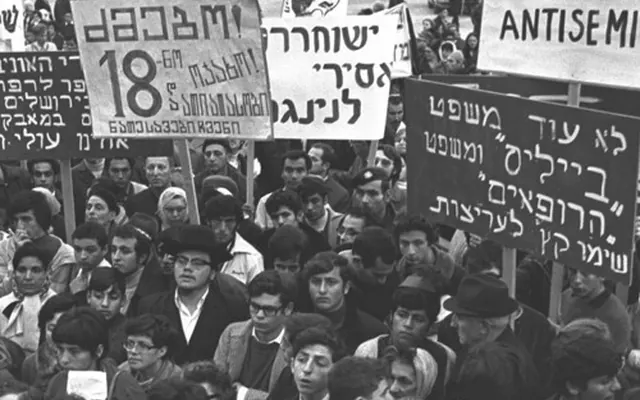
TJS S5E2 Let My People Go - the ongoing fight for Soviet Jewry
Rav Mike Feuer talks about Russian Jewish refuseniks, why they were denied exit visas to immigrate to Israel, and how the Communist regime eventually let them go. Learn...
Play Episode
TJS S5 Interlude Crowning the King 5782
Sometimes a simple question sparks the deepest thoughts. This episode is in answer to a simple question - what is the story of Rosh Hashanah. It explores the...
Play Episode
TJS S5E3 Feminism and American Judaism
The feminist movement and Jewish American life came together in the 1960s and 70s - each influencing the other. In this episode we touch on Betty Friedan's Feminine...
Play Episode