
TJS S5E3 Feminism and American Judaism
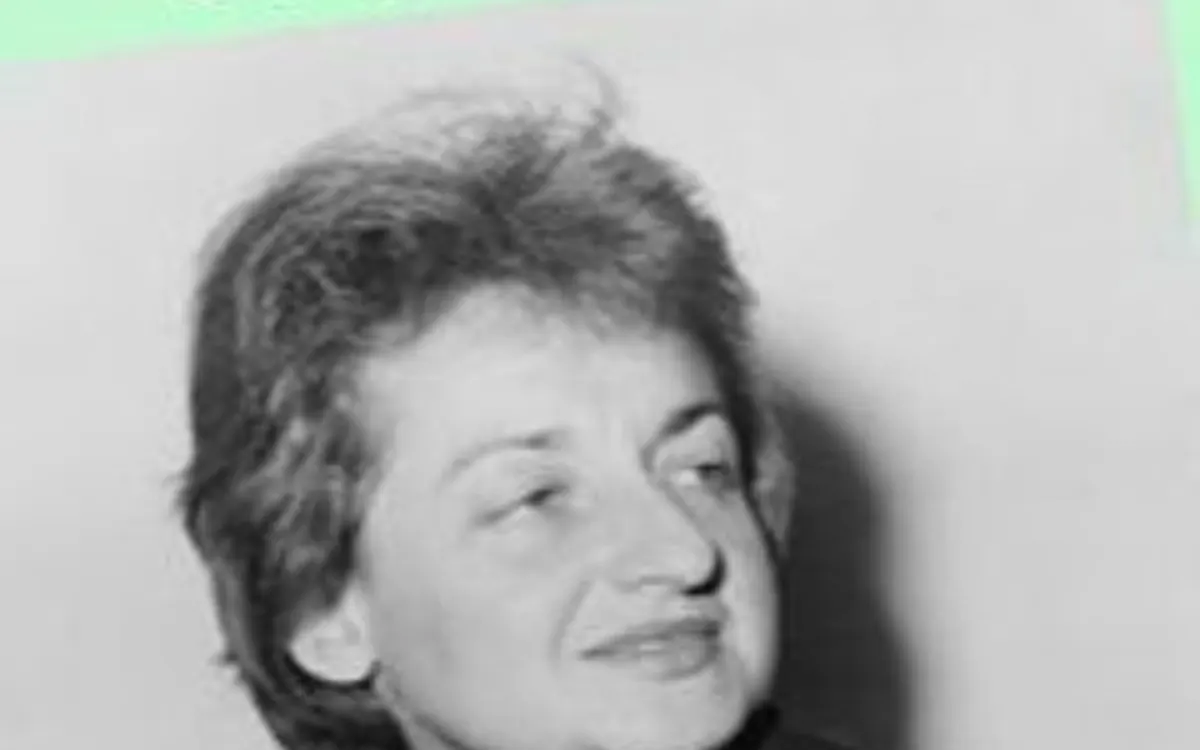
The feminist movement and Jewish American life came together in the 1960s and 70s - each influencing the other. In this episode we touch on Betty Friedan's Feminine Mystique, the religious activism of women like Sally Priesand and the Ezrat Nashim organization. We will also explore how feminism and antisemitism intersect, from Elizabeth Cady Stanton's Womens Bible to the 1975 United Nations World Conference on Women in Mexico City which Betty Friedan, and fellow attendee Letty Cottin Pogrebin, founding editor of Ms. Magazine, called a turning point for many things to come.
picture from: Victuallers
creativecommons.org/licenses/by-sa/3.0/legalcode
About this episode
Rav Mike opens with the thought experiment of asking traditional Jews whether they are feminists, which draws out history, sociology and apologetics, and insists that for 1970s America a grasp of feminism is essential to the Jewish story. Jewish women played key roles across the rise of American women, from suffrage through the labor movement to reproductive rights and the Equal Rights Amendment. The first wave rose with the modern discourse of rights, around property and the vote, and a married woman's right to her own credit was not secured in law until 1974. That first wave also held the first meeting of feminism and anti-Semitism, when Elizabeth Cady Stanton's Women's Bible called the contempt for women a Jewish dispensation, a serpent reproduced in every later religion.
The second wave is where the story turns, and its spark was Betty Friedan's 1963 book, The Feminine Mystique, written to name the problem that has no name. Born Betty Naomi Goldstein in Peoria, Illinois, she grew up as the outsider, the only Jewish girl welcome in business on weekdays but not at the country club, and later traced her passion against injustice to the injustice of anti-Semitism. She studied psychology at Smith, reported for a communist-led labor paper, then married and landed in the suburbs with three children. Out of that she attacked the American dream itself, the nuclear suburban family she called a gilded and deadly cage in which women were unpaid household workers cut off from meaningful work, intellectual life and personal development.
Her most Jewish and most provocative move was to call suburbia a comfortable concentration camp, claiming that women who adjusted were in as much danger as those who walked to their death in the camps. Rav Mike flinches at the appropriation, wondering whether she was an early soft Holocaust denier or whether she truly felt a slow crushing death, and notes she broke a taboo on how Jews spoke of the Shoah without ever naming herself a Jew. The book sold millions, she helped found the National Organization for Women, and for all her radical insight she was later labeled a moderate. The radical wing, strongly Jewish, went further, and Vivian Gornick's Woman as Outsider echoed Stanton, wanting out of Judaism and the patriarchy at once, seeing them as one and the same.
Then Rav Mike turns the question around and asks what feminism did to American Judaism. He resists the easy charge of patriarchy as a system of power built to oppress, preferring to ask how Judaism became male-shaped and what we ought to do about it. He offers a continuum between autonomy and authority, holding that oscillating between them is what yields authenticity, both authentically human and authentically Jewish. Reform, declaring itself progressive, ordained Sally Priesand in 1972 after Regina Jonas in 1935 Berlin, and Judith Plaskow reached into Midrash with The Coming of Lilith rather than walking away. The Conservative women of Ezrat Nashim presented Jewish Women Call for Change at the 1972 Rabbinical Assembly, and in 1973 the movement voted to count women in the minyan.
The chapter closes on a global stage, at the United Nations World Conference on Women in Mexico City in 1975, which Friedan went to lead in the name of female equality. She found that few delegates cared for women's issues as such, that she and her peers were mocked as spoiled bourgeois elite, and that microphones were cut and speakers shouted down in what felt to her like the menace of the goose step. She watched Leah Rabin booed and was escorted out for her safety, and the resulting declaration was among the first international documents to brand Zionism a form of racism. For Friedan, Pogrebin, Bella Abzug and Judith Plaskow it was a painful awakening that pushed them toward becoming Jewish feminists, and it heralded a global upheaval ahead for the state of Israel.
Key ideas
- Jewish women shaped American feminism from suffrage to the ERA, often out of the alienation they felt growing up as outsiders.
- The first wave met anti-Semitism in Elizabeth Cady Stanton's Women's Bible, which called contempt for women a Jewish dispensation.
- Betty Friedan named the problem that has no name and called suburbia a comfortable concentration camp, breaking a taboo on the Shoah.
- The radical wing, strongly Jewish, wanted out of Judaism and the patriarchy at once, seeing the two as one and the same.
- Feminism reshaped American Judaism through Sally Priesand, Judith Plaskow's Lilith, and Ezrat Nashim's call for change.
- Mexico City in 1975 branded Zionism a form of racism and pushed many feminist Jews toward becoming Jewish feminists.
Chapters
- 0:00 What feminism actually is
- 2:19 The first wave; property and the vote
- 3:33 Elizabeth Cady Stanton's Women's Bible
- 6:47 The problem that has no name
- 7:53 The outsider as a Jew
- 13:28 The comfortable concentration camp
- 15:41 Founding NOW; the moderate
- 16:46 The radical wing; Vivian Gornick
- 18:58 What feminism did to Judaism
- 21:11 Autonomy, authority, authenticity
- 23:25 Reform; Jonas and Priesand
- 25:44 Judith Plaskow; the coming of Lilith
- 27:02 Ezrat Nashim; a call for change
- 30:11 Women counted in the minyan
- 34:48 Mexico City; the world conference
- 37:12 Zionism as racism; a painful awakening
Who, where and when
People
Elizabeth Cady Stanton, Betty Friedan, Vivian Gornick, Gloria Steinem, Bella Abzug, Letty Cottin Pogrebin, Sally Priesand, Regina Jonas, Judith Plaskow, Leah Rabin
Places
Peoria, Illinois, The New York suburbs, Mexico City, Berlin
Texts
The Women's Bible, The Feminine Mystique, The Coming of Lilith, Jewish Women Call for Change
When
1963 CE: The Feminine Mystique, 1966 CE: the founding of NOW, 1972 CE: Ezrat Nashim's manifesto, 1973 CE: women counted in the minyan, 1975 CE: the Mexico City conference
Read the transcript
When dictatorship is a fact, said Victor Hugo, revolution becomes a right. Well, right or wrong, I'm looking to overturn a few things. I'm Rav Mike Foyer, and this is The Jewish Story. Season 5, Episode 3, Feminism and American Judaism You know, if you wanted to witness a really interesting interaction, go ahead and ask a group of traditional Jews, much less Orthodox rabbis, whether they are feminists. Now you're bound to get some significant insights on history, sociology, personal psychology, and maybe even theology. Not to mention a good amount of apologetics. And aside from the fun of the image which this thought exercise is meant to provide you, Thinking about it should raise the question of what feminism actually is and why it excites so much energy, be it for or against, among so many people.
Part of it, of course, is simply ignorance, which, frankly, is inexcusable at this point. I mean, what do we call ignorance in the information age? Google it, people. Another is fear of the packaging. I find that feminism is often bundled together with a host of other isms today. It's part of the group think. And many of those isms are downright hostile to traditional Judaism and frankly often Jews altogether. Now, if you wait around long enough and ask real questions, you might actually get to substantive opposition. After all, there are philosophical differences which are legitimate to lay on the table. But truth be told, I haven't come to debate the merits or liabilities of feminism as a worldview, and the challenges or blessings or both that it offers to Am Yisrael.
I'm just trying to tell my story. And here in 1970s America, there can be no question that a grasp of the feminist movement is essential for understanding the Jewish story. From a wide angle view, I think it's fair to say that Jewish women have played key roles in all aspects of the rise of American women. from suffrage to the labor movement through reproductive rights, the ERA, that's Equal Rights Amendment, and gender equality. And seeing as the roots of the story in the suffrage movement lied way back in the early 20th century, now is not the time for a full recap. It is, however, worth getting a basic understanding of the arc of development of feminism in America and how it helped to shape the Jewish story and was shaped by it in turn.
The so-called first wave of feminism came out of antiquity and really began with the rise of the modern discourse around rights, in specific, around women's rights vis-a-vis property possession and voting. Unless you think I threw property in there just to sound dramatic, you ought to know that the right of a married woman, and often even of a single woman, to apply for a credit card or a bank loan wasn't universally guaranteed in law in the United States until the Credit Card Act was signed by President Gerald Ford on October 28, 1974. But the classic battle of first-wave feminism was around the right to vote and the status which that carries in democratic society. And not surprisingly, it's in the first wave that we also find the first intersection between feminism and anti-Semitism.
The Women's Bible was written by Elizabeth Cady Stanton and a committee of women at the turn of the 20th century. Its purpose was to challenge the traditional position of religious orthodoxy, in their case Christianity, that women ought to be subservient to men. Despite this being a Christian effort, Stanton identifies the contempt for women as what she calls a Jewish dispensation and labels it a serpent all through history, one which reproduced itself in all subsequent religions, meaning Christianity as well. She says as long as the Pentateuch, that's the Torah for those of you who don't know, is read and accepted as the word of God, a proper respect for all womankind would be impossible. Now not surprisingly, along with her contempt for Judaism, We find a condemnation of the Jewish God as painfully male, and, frankly, a discarding of the Jewish people, a denigration in classic Christian anti-Semitic language as devious, petty, immoral, etc.
Now, it's true that subsequent Christian feminists distanced themselves from her attitude. The questions she raised and the fringes she offered still remained. Did the Jewish people carry forward the story of female inferiority? And should we therefore be blamed for our sins, so to speak? Keep that in mind when we get to the end of the episode. Nonetheless, despite their differences, the 20th century offers a clear record of Jewish and Christian feminists working together and succeeding in the first wave battles of property, labor, and suffrage. For our story, it's really the second wave where things get interesting. Beginning in the early 60s and lasting certainly through the 70s, although there's a whole Megillah, a whole, I don't know how to translate a whole Megillah into regular English, there's a whole long story about how to break up second, third, and maybe even fourth wave feminism.
But the second wave that began then in the 60s was focused on women's rights and issues of discrimination. As such, second wave feminism shared much of the social momentum of the struggles for civil rights and against the Vietnam War that were going on at that point. as well as many of their tactics and philosophies. In fact, over time, many women came to see feminism not just as a movement for rights within existing society, but as a battleground for women's liberation. It's a shift that parallels the evolution of the civil rights movement toward black nationalism and third world liberation that we've discussed. And the core names of the women who launched the second wave are dominantly Jewish. Journalist and social activist Gloria Steinem, lawyer, activist, and politician, Bella Abzug, author, activist, Letty Cotton, Pogrebin, just to name a few.
And as we'll touch on later, perhaps, the radical voices which took the second wave toward the revolutionary stance of women's liberation were also strongly Jewish. So there's no question that the rise of American feminism in the 1960s and 70s was as much a chapter in the Jewish story as it was in American history. And if we want to understand this powerful social movement on its own terms, and in particular, the second wave of feminism that plays such an important role in this chapter of the Jewish story, then perhaps the simplest way to do so is identifying the primary problem which it aimed to address. You know, it's kind of like learning Rashi, if you've ever done that. If you want to understand what Rashi has to say about a verse in the Torah, you need to know the question he's asking.
As we say, what's bothering Rashi? Otherwise, the answer he offers will be often elusive. And in 1963, Betty Frieden, a 42-year-old Jewish woman from the Midwest, published The Feminine Mystique, according to most authors, serving as a major spark for lighting that second wave. And in her introduction, Frieden says the book was written to address the problem that has no name. So I guess that's where we begin. Betty Naomi Goldstein was born in Peoria, Illinois in 1921, a child of immigrant parents who were part of that massive wave of millions of Jews leaving Russia and Eastern Europe for the Golden Medina that we've spoken about so many times before. Later in life, she would describe her childhood as happy, but nonetheless marked by a feeling of marginalization.
They were one of the only Jewish families in the city, and she always felt on the outside. Even though Betty's father owned the finest jewelry store in town, they called it the Tiffany's of the Midwest, people were happy to do business with him on the weekday, but didn't want to see he or his family in the country club on the weekends. And as the only Jewish girl in her high school, Betty wasn't invited to join the social clubs, and in fact, had few friends. She grew up with what she described as, quote, the sense of being an outsider, a part special, not like the others. in short, as a Jew. Now, this outsider's experience actually, in many ways, served as the foundation for her work to come. Ever since I was a little girl, Frieden said, I remember my father telling me that I had a passion for justice.
But I think it was really a passion against injustice which originated from my feelings of the injustice of anti-Semitism. It's beautiful in its simplicity, isn't it? Her experience actually mirrors that of so many American Jews who dove headfirst into the battles for justice that really made the 60s and 70s what they were. Frieden left the Midwest for Smith College, where she studied psychology and gained a broader critical perspective on the social issues of American society. Graduating summa cum laude in 1942, she launched off on a brief career as a reporter for the UE News. That was the paper of the United Electrical Radio and Machine Workers of America, which happened to be the largest communist-led institution of any kind in the U.S., and thus added the radical labor lens to her understanding of American society.
And then, for better or worse, the American dream caught up with Betty when she married Carl Frieden in 1947. In less than a decade, the promising young psych student and budding labor radical was a housewife living in New York's Rockland County suburbs with three children in a yard, riding that wave of Jewish immigration out of the urban ghettos and into white America that we discussed back in Season 3, Episode 9, Look It Up. Later, in her work, The Feminine Mystique, Frieden would draw on this experience to critique the American dream altogether. She attacked the notion that a woman's fulfillment could ever come in the form of what she calls the nuclear suburban family in a wonderful double meaning.
This working father, homemaker mother, several children, pet or two, single house in a green residential area station wagon in the drive To Frieden the life of wage earner and homemaker of children station wagons was nothing but a gilded and deadly cage in which women were actually unpaid household workers and chauffeurs, cut off intentionally from meaningful work, intellectual stimulation, and personal development. But she never quite fit that mold, because even with her suburban domestic duties, Betty Frieden was still freelancing for women's magazines to add to the family income and to keep alive her independent creative soul. And it was at a Smith College reunion where she first found the inspiration for what would become the Feminine Mystique.
It began as a simple survey of her classmates. She was curious to see how those who had once worried that a college education would interfere with their desire to raise a family were faring. And what she found was a widespread and profound lack of fulfillment on almost every front. When Frieden extended her inquiry to other college-educated women, she found not only did they share those feelings, but she realized that she did as well. As she wrote in the preface to the Feminine Mystique, gradually, without seeing it clearly for quite a while, I came to realize that something is very wrong with the way American women are trying to live their lives. It was, as she called it, the problem that has no name.
The problem, she writes, lay buried, unspoken, for many years in the minds of American women. It was a strange, stirring, a sense of dissatisfaction, a yearning that women suffered in the middle of the 20th century in the United States. Each suburban housewife struggled with it alone. As she made the beds, shopped for groceries, she was afraid to even ask of herself the silent question, Is this all? Now, to call her book revolutionary is really an understatement. This was no simple analysis of the problems that individual women faced in accepting their lot, as they say. It was a critique of American society as a whole, One which claimed that after World War II, psychoanalysts, sociologists, advertisers, business leaders, and educators had essentially conspired to craft the notion of the feminine mystique in order to stifle women's ambitions and keep them in their place.
And what was that mystique? It was the assumption that a real woman would be fulfilled from housework, marriage, and children. That a feminine woman shouldn't want to work, get an education, or even really have political opinions. It was an important attack, to say the least. But you might be wondering what it has to do with the Jewish story. Well, while Frieden's childhood experience of alienation from the surrounding society was certainly formative to her critical perspective, she did not write the Feminine Mystique as a Jew. On the contrary, Frieden had long considered herself by the time the book was published as unaffiliated and even agnostic Jew. The most Jewish part, actually, of the feminine mystique is arguably when Frieden shocked her readers by describing suburbia as nothing less than a death trap for women, or more properly, as a concentration camp.
It's definitely one of her most provocative passages when Frieden claims that, quote, the women who adjust as housewives, who grow up wanting to be just a housewife, are in as much danger as the millions who walk to their own death in the concentration camps. She goes on to refer to suburban homes as comfortable concentration camps and to develop a theme that the feminine mystique and all of its cultural apparatus were organized to dehumanize and ultimately destroy women just as surely as Nazi Germany had been for the Jews. Now, can you imagine saying that in 1963? I might be tempted to label Frieden as the first of the so-called soft Holocaust deniers, those who appropriate the incomprehensible in order just to make their point.
I might also suggest that perhaps the experience of gender oppression masked by the facade of suburban gentility was actually experienced by she and others as a slow and crushing death of millions of women. Either way, Frieden was breaking a taboo on how Jews talked about the Shoah before American Jews had even really begun to speak about the Shoah. And she did it without ever mentioning that she herself was a Jew. Have no fear, though. I can tell you now there's a Zionist awakening ahead for Betty Friedan. For right now, despite the reactions of male editors, publishers, and reviewers who attacked her thesis as overstated and provocative, the Feminine Mystique was an instant success, especially among the white middle-class women whose lives it so painfully described.
The book sold 3 million copies in the first three years of its publication. And along with the 1963 President's Commission on the Status of Women and the Civil Rights Act of 1964, helped to push the issue of women's rights into the forefront of the American discourse. Frieden became an instant leader of the women's movement, which had already been gaining ground before she wrote the book. In 1966, she joined the UAW union organizer Dorothy Hainer and civil rights attorney Pauli Murray to found National Organization for Women. That's now. She was involved in the creation of both the National Women's Political Caucus and NAROL, that's the National Association for the Repeal of Abortion Laws. She helped lead the women's strike for equality in 1969 that brought thousands out into the city's Fifth Avenue.
And, of course, she supported the ERA. But truth be told, for all her radical insights, Frieden would ultimately be labeled as a moderate among feminists, a term which wasn't meant as a compliment. There's another story that could be traced about the emergence, as I mentioned, of the women's liberation movement out of Frieden's style of feminism. And as I mentioned, Jewish women were deeply involved in developing the theories and the radical actions for female thought and change. Like Frieden, at least in the beginning, most of these women did not pursue women's liberation as Jews. They were fired by a universalist vision of common sisterhood more than they were of a particularist identity. And some, in fact, consciously or not, were echoing Elizabeth Cady Stanton's view that Judaism was actually the source of women's problem.
I'll bring you a prime example from a 1970 article entitled Woman as Outsider, written by radical feminist critic Vivian Gornick. In the fierce unjoyousness of Hebraism, as she calls it, woman is a living symbol of the obstacles God puts in man's way as he strives to make himself more godly and less manly. She says, If a rabbi should but look upon my face, vile hot desire would enter his being and endanger the salvation of his sacred soul. So he has made a bargain with God and constructed a religion in which I am all matter and he is all spirit. I am yet the human sacrifice offered up for his salvation. That's just a taste. The article goes on to denounce the Jewish family as a women's prison, Jewish communal work as resting on female volunteers who are essentially slave labor that make it possible for the paid male employees to achieve their goals.
In short, Vivian Gornick made it clear and spoke for many of her peers that she wanted out. Like I said, she wasn't alone. Many of her companions in the radical wing of the women's liberation movement wanted to free themselves from their Jewish identity as much as from the patriarchy. In fact, they saw the two as one and the same. But even as they were moving farther out, and arguably losing their opportunity to influence the Jewish story except from afar, there was actually a growing movement of women looking to move deeper in and thus gain a greater leadership role. So far, I've touched the tip of the iceberg on how Jewish women had an impact on American feminism. Though even with recognizing the formative impact of the alienation many felt from growing up Jewish, there's an open question of how much they did so as Jews.
But now I want to touch on the inverse question. What impact did feminism have on American Judaism? And this is where that thought experiment with which I open starts to get juicy. It's become popular in certain circles since the 70s, as I mentioned, to label Judaism as a patriarchal religion. Certainly, I hear it from my students at Pardes all the time. And if by patriarchy one means that Judaism is a religion which has been largely shaped by men, in a society which placed the male practice of commandments at the top of the hierarchy of religious necessity, well, then that seems to me undeniable. But my sense is that in common usage, patriarchy implies far more than that. It often holds shades of the accusation that Judaism is a system of power in which men use their position and knowledge to exclude and oppress women in order to prevent them from taking an equal or even leader place.
And I can't really sign on to that definition. First of all, when I say Jewish religion, I mean the fusion of law, narrative, and sociology, which surround our attempt to actualize the Torah in the world. Of course, with such a combination, it's inevitable that personal and social psychology are in the mix. And there's no question that Judaism as we know it embodies a good deal of power and control of men over women. I don't question that. My question is how it became that way and what we ought to do about it. If you think back to some of the episodes in the middle of season 2, I hope you'll recall that the question of whether Judaism is a historical phenomenon, whether it's evolved through time and therefore might in theory be need of periodic revision or at least revisiting that was a question that lay at the root of the splintering of Judaism into various denominations in the early 19th century in Europe And I not going to recapitulate the journey of each of the Jewish movements since then in order to understand the stance they take on the role of women in Judaism in America in the 1970s.
That's way beyond the scope of our present episode. But I will say a couple of pieces of introduction before I jump back into the narrative flow. First of all, I have to admit that I am an evolutionary thinker. I see evolution operating on every level, biological, sociological, consciousness, and cosmic. That being said, it's always important to recall that evolution doesn't necessarily have a teleology, meaning it doesn't inevitably lead to somewhere, and certainly not to some intrinsically higher or more perfect form. The future is not, by definition, better than the past. What evolution does allow an organism or system to do is to best adapt to its environment. And therefore, sometimes the resulting changes can be seen and judged as progress, and sometimes they're just the quirks of what the environment pulls out from us.
I leave you to consider whether the advent of Homo sapiens represents biological progress for planet Earth, whatever we ourselves may believe about our moral and spiritual superiority. The notion that evolution is driven by adaption to the environment leads to my next point. What America offered in general to the world was unprecedented freedom. Yes, yes, I'm aware of all the myth-busting and the denigration of that dream, some of which is honestly deserved. Nonetheless, certainly for the Jews, it was and hopefully will remain a land of unprecedented personal and communal autonomy, which really reached its inflection point in the early 70s for the reasons that we've been detailing for the last few episodes.
By autonomy, I mean the ability to make choices based on personal preference and opinion unconstrained by the authority that comes from traditional perspectives, social pressure, or law. An important continuum I often offer to people when I'm working with them in a counseling context. On one end lies autonomy. I do it all myself. I make my decisions myself. I decide what's right and wrong. On the other end lies authority. The people around me are right. God is right. Law is right. Society is right. I externalize the standard of measure for my decision making. Now, no one is completely living on either end. No one's completely autonomous. Because if you were, you wouldn't be able to have a relationship that had any meaning or learn from anyone else.
And of course, no one completely abdicates their autonomy and bows to authority. Even if someone tells you what to do all the time, you still have to decide whether to do it or not. What I find is that if we oscillate in situations between accepting our autonomy and bowing to authority, what eventually emerges is authenticity, the reality of ourself in relation. And what is of interest to me, as we touch oh so lightly on the impact which feminism had on Judaism in America, is if and how that interaction drew out elements which were both authentically human and authentically Jewish. Now, for now, I'm going to leave orthodoxy out of our discussion. As the most law-bound, bowing to authority and socially conservative element of the Jewish world, it was naturally the slowest to change.
Now, that might tempt me to make an argument that such measured change is bound to be more authentic, but I'm not entirely sure that's true. I will say that today there's an interesting evolutionary process happening around women within orthodoxy, but in the 1970s, that was all but invisible. The Reform Movement, well, since its inception, it's been declaring itself as progressive, taking ever more autonomy to itself, and looking to adapt the Torah to what it calls the spirit of the times. Thus, it should come as no surprise that already in 1935, Regina Jonas was the first woman to attain private ordination within the Berlin Reform community. Nonetheless, it was in America that the Reform movement really came into its own as a freestanding community, as we've spoken about many times.
And so it should come as no surprise that the American Seminary, Reform Seminary, Hebrew Union College, was the first to officially declare a female rabbi in 1972, Sally Priesend. And even with this progressive institution, hers was a hard-fought battle. When Priesen was admitted to HUC, the school had to labor her as a special student because all the dorms were from then and she needed to live off campus. And there were many doubters amongst her classmates and teachers, people who called her quest for ordination a passing fancy, classic dismissal of women, and even said that she was really in rabbinical school in search of a husband. The dean of HUC publicly worried about how prison would fulfill her rabbinic duties while raising children.
Despite all this, she opened the door for hundreds, maybe thousands, I'm not counting, who followed in her reform rabbinate. And at the risk of wading into an ugly debate, whatever you may think qualifies a person as a rabbi, these women are certainly leaders of their communities. I have a little bit of an urge to continue detailing all the influences that a feminism had on American Judaism in the early 70s, but I'm frankly overwhelmed by the material. You should know in general, I leave out more than I say. Something as simple as Judith Plaskow's 1972 essay, The Coming of Lilith, deserves an entire episode. But Plaskow will go on to become a scholar and theologian who today is renowned amongst American feminist thinkers, religious and not.
But in 1972, while attending a conference on women exploring theology, she reached for the classic Jewish mode of Midrash, the narrative exploration of text, in order to rework the shadowy rabbinic figure of Lilith, the first woman of the creation story, to the rabbis. Yes, Lilith was a demonic figure who frightened them in her independence. But in Plaskow's short piece, which is well worth reading and easy to find online, by the way, The Coming of Lilith, she portrays the two wives of Adam as encountering one another separate from him and forming a sisterly connection which exposes the unexamined bond between God and man. This is classic Midrash. And where else but America in the early 70s? Would a woman simultaneously have enough knowledge to feel so sharply how she was constrained by the elements of the rabbinic narrative, and nonetheless chose to go deeper into that medium rather than to simply walk away?
So like I said, there is an endless amount of material to be covered. Send me your thoughts and questions in general. By the way, rovmikefoyer at gmail.com or you can find me on Facebook at rovmikefoyer. I'm always happy to hear your comments. If there's something I miss or, God forbid, get wrong, let me know. There's so much more to explore. But for now, I'm going to end this section with the conservative movement. I haven't given them their due after all. On March 14th, 1972, a group of women calling themselves Ezrat Nashim, which is the name both for the women's section of the synagogue where women sit, the Ezrat Nashim, but it can also be read as Help of Women, presented a manifesto for change at the Rabbinical Assembly Convention of the conservative movement.
You're talking about more than a thousand rabbis gathered. Now, Ezra's Nashim, actually I should probably call it Ezra's Nashim, was started from within the New York havurah. You remember the havurah movement from a couple of episodes ago? It was a group of young, well-educated women out of the conservative movement, and their manifesto was entitled, Jewish Women Call for Change. It says the following, Jewish tradition regarding women, once far ahead of other cultures, has now fallen disgracedly behind in failing to come to terms with developments of the past century. The social position and self-image of women have changed radically in recent years. And it goes on to describe how the conservative movement has acknowledged this by increasingly educating their female children alongside men.
And they say to educate women and deny them the opportunity to act from this knowledge is to an affront to their intelligence, talents, and integrity. And then they deliver a warning. We are deeply committed to Judaism, says the manifesto, but cannot find adequate expression for our total needs and concerns in existence's women's social and charitable organizations. If the movement denies women opportunities to demonstrate these capacities as adults, it will force them to turn from the synagogue and to find fulfillment elsewhere, which was not an empty threat. Many of the most talented women of that generation did indeed turn elsewhere. They go on to say it's not enough that Judaism views women as separate but equal, which of course in 1972 is a big stab, nor to point to Judaism's past superiority of other cultures in its treatment of women.
We've had enough of apologetics, enough of Bruria, Devorah, and Esther, enough of Eshet Chayel. And then come the demands. It is time that women be granted membership in synagogue, counted in the minion, allowed full participation in religious observance, recognizes witnesses, allow to initiate divorce, permitted and encouraged to attend rabbinical school, etc., etc. And they say for 3,000 years, one half of the Jewish people have been excluded from full participation in communal life. We call for an end to the second class status of women in Jewish life. You hear the echoes of the 1970s civil rights language? Now, though Ezrat Nashim was denied the request to address the rabbinical assembly directly, their manifesto was included in the packets distributed to all of the rabbis in attendance.
Nonetheless, despite the sense that they were well received, the conservative movement was not quick to act on their recommendations They only followed Hebrew Union College in admitting women to the rabbinical school in 1983 almost a little bit more than 10 years later There was however one victory which they achieved, which got a lot of press. The New York Times ran an article on September 11th, yep, 1973, with the headline that read, Conservative Jews Vote for Women in a Minion. Of course, the byline, Irving Spiegel. He says, in a radical break with rabbinical tradition, conservative Judaism will allow women to be counted in dominion. I'm not going to go into it now, but it's worth wondering why the New York Times is running this line.
The article goes on to say that by a vote of 9 to 4, the Committee on Jewish Law and Standards, which serves as the basis for religious law decision-making within the conservative movement, had voted, quote, men and women are to be equally included in the count of a required quorum for Jewish public worship. It then quotes Rabbi Judah Nadich, president of the 1100-member rabbinical assembly, who had championed the whole move. The change of status in women is one of the welcome revolutions of our day, he says. It is time that the status of Jewish women in Jewish religious and legal life should be heightened. Now, even the dissenting minority felt the need to couch its opposition to this change in social rather than halachic legal terms.
According to Rabbi Seymour Siegel, chairman of the committee who actually was in the opposition, he said, most synagogues were not ready for such an innovation and the institution of new norms might disrupt the unity of the congregations. That deserves some reflections on its own. but the concluding comments of the article provide us with a perfect snapshot of denominational life in early 1970s America. Commenting on the decision, Rabbi Israel Klavan, Executive Vice President of the Rabbinical Council of America, that's the leading Orthodox Rabbinic body, says, quote, Orthodoxy holds that the richness of Judaism's heritage, its tradition, forecloses such drastic changes in religious practice. The author of the article then feels the need to explain to the reader that the Orthodox adhere to a strict observance of religious laws.
Conservative Judaism has tempered its observance of these laws with a tradition of rabbinical reinterpretation, while Reformed Judaism stresses the need for adjustment to contemporary needs. What strikes me as interesting is if, as the author says, it's the Reform movement that, quote, stresses the need for adjustment to contemporary needs, then how are we to understand Rabbi Siegel's defense of the decision to count women in a minion, which he championed. He says, quote, the changing role of women in society now makes it advisable in view of the majority of our committee to afford equality to women. This is a perfect expression of a question that arose in the 70s and will have significant impact on the viability of the conservative movement.
Are they now simply conservative small c? Just a little bit slower to change than the reform movement? just as interested in shaping Judaism to meet contemporary needs and distinguished only by their hesitation to do so? Now, frankly, with all my devotion to the importance of questions of religious practice, these issues might strike even the average committed Jew as a bit of a tempest in the teacup, getting all upset about things which weren't going to have a huge impact on the world at large. So I want to take the last few minutes of this episode to close on a different note. Because in the mid-70s, along with the general changes in the status of women within American society, and the struggles within the various denominations of the religious status of Jewish women, Jewish American feminists were about to be swept into a storm of a global scale.
Early in 1975, the United Nations announced the first World Conference on the Status of Women. It was part of the 1975 International Women's Years, quote, observed to remind the international community that discrimination against women continues to be a persistent problem in much of the world. The conference was to take place in Mexico City, hosting delegations from around the world June 19th to July 2nd. In her status as feminist trailblazer, Betty Friedan was chosen to lead a large delegation of American women to the conference. It was an experience that changed her life, but not exactly how you might think. I went to Mexico City this summer of 1975 to help advance the worldwide movement of women to equality, Friedan later recalled.
She had joined the Women of the World, united for the first time to address the monumental problems of female infanticide, illiteracy, high mortality rates, poverty, involuntary pregnancy, domestic violence, and so on, she says. But apparently, that's not why many of the other women had come. By coincidence, or divine grace, the conference took place only a few weeks after Saigon fell. And that blow to the American empire, as many of the attendees saw it, might have been part of the extenuating circumstances which contributed to the drama that unfolded. Because Frieden quickly found that few of the delegates actually even seemed interested in women's issues per se. She and her fellow American feminists were mocked as spoiled bourgeois elite, raising marginal concerns to avoid confronting the real issues of racism, imperialism, colonialism, global poverty.
And what followed at the conference was a foretaste of the global discourse to come, a rude awakening for Betty Frieden and many other Jewish American feminists in attendance. After the conference, Frieden wrote an article entitled Scary Doings in Mexico City, in which she described a downright thuggish atmosphere filled with intimidation. She spoke about critical moments in which microphones were turned off and speakers were shouted down. And as she wrote, quote, the way they were making it impossible for women to speak on the most innocent, straightforward of women's concern seemed fascist, like to me, the menace of the goose step. Frieden watched in shock as the Israeli Prime Minister's wife, Lea Rabin, was booed and boycotted.
Under attack, actually followed by gunmen and advised to get out of town, Freddie Friedman was ultimately escorted out of the conference by three large women from Detroit who were concerned for her physical safety. In such an atmosphere, it should come as no surprise that the resultant declaration on the equality of women was one of the first international documents that labeled Zionism as a form of racism. It declared that women were, quote, natural allies in the struggle against any form of oppression, including colonialism, neocolonialism, Zionism, racial discrimination and apartheid, thereby constituting an enormous revolutionary potential for economic and social change. This was consciousness raising of a different sort.
I mean, Frieden had been criticizing American society for years, she and her fellow feminists, and had regarded Judaism and Israel with an ambivalent eye it best. But after the conference, Frieden saw the flaws of democracy in a new light. At least in America, they acknowledged sexism as a real problem. Furthermore, she and other American feminists of a Jewish persuasion began to view their Judaism and even Israel in a new light. As delegate Ledi Kodin Pagrebin said, the Declaration was the initial click that started me on my life as a Jewish feminist. Or, as Congresswoman and conference delegate Bella Abzug said, Zionism is a liberation movement for a people who have been persecuted all their lives and throughout human history.
She saw any affront to Israel or to Zionism as an attack on the survival of the Jewish people. And in 1975, it wasn't long enough from Auschwitz to dismiss such a thing in the name of international women's solidarity. Judith Plaskow, not surprisingly, saw the conference and the resultant wave of anti-Semitism through her theological realm. She was watching Christian anti-Semitism re-emerge within the feminist movement, noting that, quote, there's a new myth developing in Christian feminist circles, which perpetuates traditional Christianity's negative picture of Judaism by attributing sexist attitudes to Christianity's Jewish origin, while at the same time maintaining that Christianity's distinctive contributions to the so-called woman's question are largely positive.
She ends by saying the feminist revolution has furnished one more occasion for the projection of Christian failure onto Judaism. In short, the Mexico Conference was a personal, painful awakening for many of these women. It pushed them toward becoming Jewish feminists rather than simply feminist Jews, as it were. Or maybe in the reverse, we'll have to think about that. You get my point, though. it also heralded a global upheaval to come for the state of Israel and not just American Jews but that's a story which really belongs to a chapter ahead I just want to thank some folks before I sign off I want to thank all the folks who give their hard-earned money to make this show happen, to keep it free and widely available I want to invite you to join them right now go to my website, jewishstory.co you'll see a button in the upper right-hand corner you can click on that to make a little bit of per-podcast support or if you'd like to dedicate a show in honor of someone who's with you today or in the memory of those who've passed on, send me an email at ravmikefoyer at gmail.com or a message on Facebook, ravmikefoyer, and I'm happy to share with you the details of how you can do so.
I want to thank the Land of Israel Network, that's thelandofisrael.com, creating a global center for spiritual transcendence in the heart of Judea. I want to thank the Pardes Institute, B-A-R-D-E-S, that's org.il, for throwing the doors of Beit Midrash open as wide as possible and let the Jews know. And I want to thank you for listening. I'm Rav Mike Foyer. This is The Jewish Story.
More from Season 5
TJS S5E2 Let My People Go - the ongoing fight for Soviet Jewry
Rav Mike Feuer talks about Russian Jewish refuseniks, why they were denied exit visas to immigrate to Israel, and how the Communist regime eventually let them go. Learn...
Play Episode
TJS S5 Interlude Crowning the King 5782
Sometimes a simple question sparks the deepest thoughts. This episode is in answer to a simple question - what is the story of Rosh Hashanah. It explores the...
Play Episode
TJS S5 Interlude - Sukkot 5782 Seeking joy
Sometimes its seems that joy is the most desirable and least available aspect of human experience. In this episode Rav Mike seeks out some insights from Sukkot, the...
Play Episode