
TJS S5 Interlude - Sukkot 5782 Seeking joy
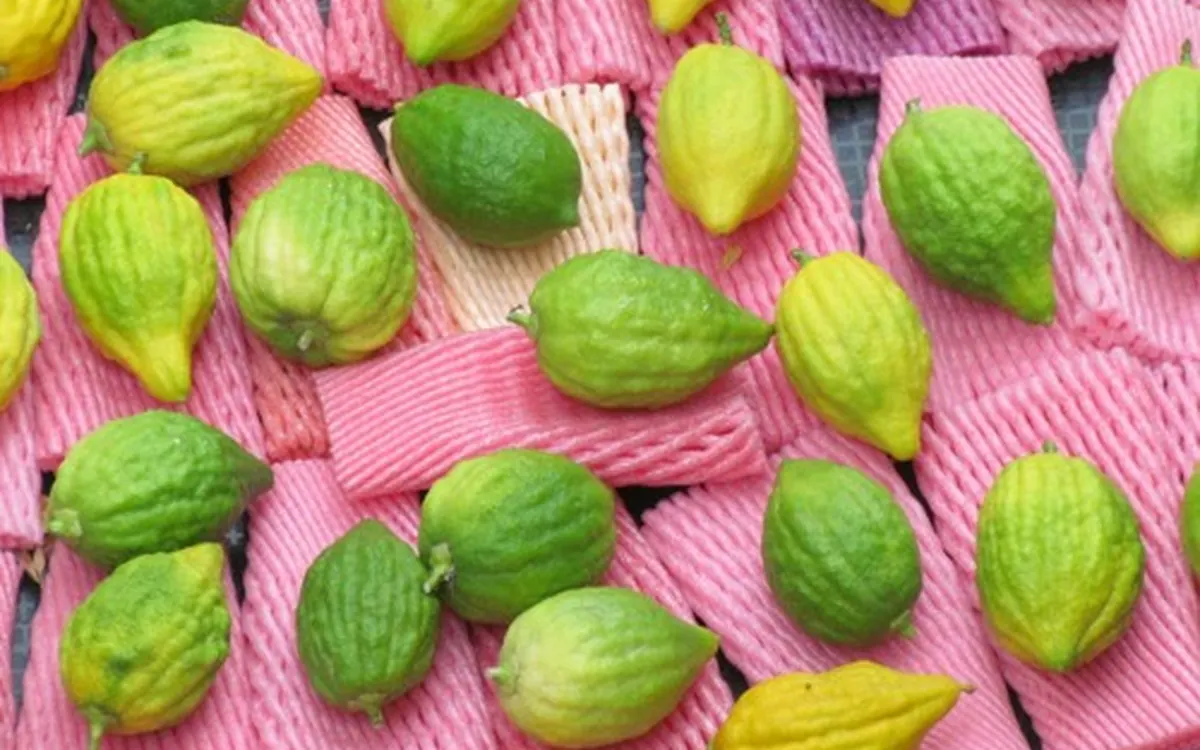
Sometimes its seems that joy is the most desirable and least available aspect of human experience. In this episode Rav Mike seeks out some insights from Sukkot, the festival of joy, on how we can enhance this aspect of our lives.
About this episode
The Baal Shem Tov taught that prayer with joy is better received than prayer with tears, and Rav Mike wonders what this holiday, zman simchatenu, has to teach about living in joy. First he names the sickness, borrowing from Eric Fromm that the awareness of human separateness is the real cause of our pain, and that the deepest need is to overcome it, to leave the prison of our aloneness and find at-one-ment. The season has been a long process, from crowning the king on Rosh Hashanah, through the bridge-building apologies and hard conversations between Rosh Hashanah and Yom Kippur, to the day of atonement itself. Once the barriers are set aside, the time of at-one-ment has arrived, and that is what the sukkah is for.
Looking down the ridge at all the separate sukkot, each family alone in its hut, he cites the Gemara that all of Israel is fit to sit in one sukkah, one palace of many rooms devoted to being in this together. Beyond the Jewish bond there is a universal teaching, that the sukkah offers the makif, a surrounding light so vast it cannot be grasped and must be dwelt within. You reach it through a decision, which is why we hold the lulav, a palm frond shaped like a sword, the ultimate expression of agency. You wave it in every direction to draw that breadth of consciousness down and put it where it belongs, in the heart. The act of ultimate agency is to decide that creation is one and that you choose not to be alone.
Joy also comes through plain acts of loving kindness. In Deuteronomy's account of Sukkot, joy is central, and the harvest feast commands us to rejoice together with the Levite, the stranger, the orphan and the widow. Where the idolatrous world rejoices by overindulging in abundance, the Torah says find the real power of the harvest by giving to those who do not have. More in the pocket does not translate into an experience of abundance, since plenty of people cannot pry their fingers from a penny, and what they lack is an abundance of self. The Gemara says the one who comforts the poor with words does greater good than the one who gives money, reading Isaiah that you should give the hungry your soul. No one is too empty to give of themselves.
The kicker is that you should not wait to feel full before you give, since giving is how you discover your source of abundance. He turns to another source of joy that he hears about often, the saying that there is no joy like the resolution of doubts, which the Metzudat David draws from a verse in Proverbs. There is nothing more niggling than the inability to decide, and once the analysis is done the only thing left is to choose and so create a world to live in. Yet people are deceived into thinking they must make the right decision, when the truth is that agency does not end at the moment of choice. Even after you decide, you still decide to make the decision you made the right one, the ready, fire, aim of a life rather than ready, aim, aim.
A third resolution of doubt is to resolve to remain in doubt, since the Arvei Nachal teaches that the joy of the wise is unceasing because what they seek, the infinite, has no limit, so the desiring never ends. Stepping into uncertainty, certain only that the pursuit is endless, is the greatest joy he can imagine. He closes with a memory of a nameless three-year-old shaking a lulav with priceless joy, and with the Rambam, who ends the laws of Sukkot by calling joy a great avoda and the one who holds back from it a fool. King David danced before the ark, and when Michal mocked him he answered that he would make himself lower still, knowing he was nothing before God but a creature who could rejoice.
Key ideas
- The Baal Shem Tov prized prayer with joy, and the sukkah answers Fromm's problem of human separateness with at-one-ment.
- All of Israel is fit to sit in one sukkah, one palace of many rooms devoted to being in this together.
- The lulav is a sword of agency, waved to draw the vast makif of consciousness down into the heart.
- Real giving flows from an abundance of self, and comforting the poor with words can do greater good than money.
- Do not wait to feel full to give, and agency does not end at the moment of a decision, so ready, fire, aim.
- The deepest resolution of doubt is to resolve to remain in it, since seeking the infinite is a joy that never ceases.
Chapters
- 0:00 The time of our joy
- 1:10 Fromm; overcoming separateness
- 2:25 From atonement to at-one-ment
- 3:35 All of Israel in one sukkah
- 4:44 The makif; a light too big to hold
- 5:47 The lulav; an act of agency
- 8:01 Joy through giving
- 10:11 The abundance of self
- 11:14 Give of yourself; do not wait
- 13:30 The joy of resolving doubts
- 15:34 Where the doubt really lives
- 16:37 Ready, fire, aim
- 18:50 Resolving to remain in doubt
- 20:59 The boy with the lulav
- 22:04 King David dances before the ark
- 24:16 Get out and shake it loose
Who, where and when
People
The Baal Shem Tov, Eric Fromm, The Ari, Rav Shagar, The Metzudat David, The Rambam, King David, Michal
Places
The sukkah, The city of David
Texts
The Art of Loving, Sukkah on the one sukkah, Deuteronomy 16, Proverbs 15:30, The Arvei Nachal
When
2021 CE: this Sukkot interlude, the harvest festival, the bringing of the ark to Jerusalem
Read the transcript
Prayer with much joy, said the Holy Baal Shem Tov, is certainly better received by God than prayer with sorrow and tears. And even though I'm feeling a little bit of heartbreak, we all should be happy about that. I'm Rav Mike Foyer, and this is The Jewish Story. Interludes to God, learning to be joyful. You know, every year I have the same thought. It happens around about the first time I hear a shofar blast in Elul, and it goes something like this. This is all what we have to go through in order to get to Sukkot. And here we are, sitting in the Sukkah at long last, Zman Simchatenu, the time of our joy, as our holy sages call it. And I was wondering what exactly this holiday has to offer to you and to me to learn a little bit more about how to live life and joy.
Because I can tell you, when I speak to people, as a friend, as a parent, as a spouse, and certainly as a counselor, what I see is, second perhaps only to love, joy is the most desired and the least understood aspect of human experience. And before I can start charging into the nominal pieces of advice that this holy holiday gives us on how to live a happier life, I think I might need to identify at least some of what's making us so unhappy. As I was sitting in the sukkah the other day, I came across a powerful statement by Eric Fromm, author of The Art of Loving. Fromm says it's actually the awareness of human separation, which is really the cause of all of our pain. He's focused on shame, guilt, and anxiety as a psychoanalyst, but really, what does shame, guilt, and anxiety add up to, if not deep unhappiness?
The deepest need of man, says Fromm, is to overcome this separateness, to leave the prison of our aloneness. He says that life has one fundamental question. How to overcome separateness, how to achieve union, how to transcend one's own individual life and find what he calls at-one-ment. Now, fortunately, I think that our holiday has what to offer in answer to this fundamental question. If I look back over the last month and a half, what I see is quite a process. Really, it hit its first peak in the crowning of God-King on Rosh Hashanah. That great day for which we all pray, let it be soon, let it be now. V'yasu kulamagudah achat lasot ritzoncha beleva av shamlim. that the whole world will make one unit in order to do God's will with a whole heart.
And that wholeness of heart and the unity which it provokes is certainly the first step on the way to a solution to this problem of separateness. And then we took the time to recognize the fact that grand visions aside, they'll never come into the world without the piece-by-piece labor of fixing what lies between us, between our friends, family, etc. And so, between Rosh Hashanah and Yom Kippur, there were apologies, commitments to change, deep and difficult conversations, introspective prayer, all of which are tools to build bridges and remove walls that divide us, whether from God, one another, or ourselves. And once that work has been done, and the Day of Atonement comes to an end, the time of at-one-ment has arrived.
That's what the Sukkah is all about. Now this happens on so many levels. As I look out the window of my sukkah, I can see down the line of the ridge, one after another, all these individual sukkot. And you might think, well, we're all in our own movie. We're actually alone in these little huts, maybe with our family. And it's true that inviting guests is an essential aspect of the time. But nonetheless, aren't we all alone in here? But that's why the Gemara and Sukkot says, כל אזרח בישראל ישבו בסוכות means מלמד שכל ישראל ראוים לשב בסוכה אחד that all of Am Yisrael is actually fit to sit inside one sukkah. That in a sense, this space which we enter, when we leave the normal and step out into something a bit more spiritual is actually one space.
There may be many rooms, but it's one palace, devoted to a sense that we are in this together. Even if, as in that existential sense, every human beings somehow is alone in their subjectivity, nonetheless, our common humanity unites us. And that's an important piece of joy to take from this holiday, to know that on some level we're in this together. But that's a purely Jewish notion. What about the fact that there's a universal aspect to this holiday from which we can learn? Well, this is what I will say about that. There's a mystic teaching that what the sukkah actually offers is the makif, which is the largest we can grasp. Now what's a Machiave? A Machiave is a surrounding. Think of it as something so big, an element, a plane of consciousness, if you will, so vast that it can't be grasped and comprehended, fully understood and internalized.
It has to be dwelt within. It's that somewhat blurry notion of truth, of the reality of existence, which really lays beyond the edges of our waking mind, which nonetheless we attempt to navigate as we make our way through life. That's the real unifying factor. Something which unites all of creation. Not just under but with God. It's the at-one-ment that's meant to emerge from the reconciliation of the estrangement which has been this whole process. The estrangement that our thoughts and behavior create between one another, with ourselves, with God, and ultimately with creation. That if Yom Kippur offered us atonement in the sense that the barriers which held us apart were put to the side, then Sukkot is meant to offer us a consciousness that allows us to step into a oneness, a unity of being.
Now, that just sounds fantastic, but how is it done? Well, it's through a decision. You see, the problem with the makiv, with a light which is too big to comprehend, is that you'll never get there through a purely intellectual pursuit. There has to be a decision, which is why our holy mystics tell us you should hold the lulav. I don't know if you've ever noticed, but a palm fron looks a lot like a sword, the ultimate expression of personal agency. And you take that sword you step out into the sukkah the ultimate expression of a world which is too large to even be grasped much less controlled and you wave that lulav every possible direction Why? Because you're drawing down that breadth of consciousness which really is too large to hold, and you're putting it where it belongs, in your heart.
That's what the Holy Ari says. He says that we're drawing down the godly consciousness and putting it in our heart through the lulav. Now what's fantastic is that this is an act of ultimate agency. The act of ultimate agency to decide that it is indeed one creation, that humanity is one family, that Israel is one nation, that we can all sit in the Sukkot together. As Rav Shigar says, Zehu so'da kavanot b'netilat lulav b'chagah sukkot. This is the secret of our inner orientation when we take the lulav inside our sukkah and chagah sukkot, it's an overcoming of one's self which actually conquers existence. The ability to say that though the truth is too large to graph, though the unity of the universe is beyond my comprehension, I choose not to be alone.
And what greater source of joy could there be than that? I have a sense that probably it's worthwhile to come down to earth if people want to really know what it is to be happy. And, you know, overcoming human separateness isn't just done through mystical contemplation or the understanding that the vastness of the universe is something which I can bring down from above to below through the power of my lulav. It's also done through simple acts of loving kindness. You know, if you look in the book of Davarim of Deuteronomy, in the 16th chapter, in the verses that speak about the holiday of Sukkot, you'll see that joy is a central aspect. And that's not surprising, since this is, of course, the day of the ingathering from the threshing floor and the wine vat, when we're commanded to hold the feast of Sukkot.
The Samachta b'chagecha. And you shall rejoice in your festival. Atah avin chavitecha. You, son and daughter, male, female, slave, Levite, stranger, fatherless, and the widow in your communities. And once again, seven days you shall rejoice over everything which the Lord, your God, has given you. right? Ach Sameach right? You shall be nothing but happy now on the surface of it, it's quite obvious why Chag Sukkot would be singled out as the festival of joy, it's a classic harvest festival I mean, all over the world, in every culture the time of abundance is a time of rejoicing and we don't really need to explain why but as always, the Torah is positioning itself in parallel to, if not sort of deviating from the norm of the idolatrous world in which it found itself.
The roots are the same. Any agricultural society is going to rejoice in a time of harvest. But the Torah, rather than saying that your rejoicing should come in an overindulgence in this abundance which seems to have no bounds, says that you should find the real power it offers through giving to those who don't have. I mean, listen, it's obvious to say that if I have lots of material wealth, than I have a greater capacity to give. But I'm sure that for some of you that sounded somewhat false because beyond just the truly technical sense, more in my pocket means I can give out more, we all know that more stuff does not necessarily translate into an experience of abundance. There are plenty of people in the world who have far more than they need and yet find it difficult to pry their fingers off of even a penny to give to another.
and that's because what they lack is a sense of abundance of self the real capacity for giving without bound without expectation of return is rooted in an abundance of selfhood in the recognition fact that even if I had nothing physical to give I always can give of myself you know the Kamara in Bob Bacha says a beautiful thing which I find to be a guiding inspiration in all my work and that is that the one who gives comfort to the poor with their words, in many ways, does a greater good than those who simply offer them money. And they cite as the source for this beautiful saying a line from the prophet Isaiah, which says, V'tapek v'raev nafshecha. That literally means that you should give the hungry your soul.
This is a true sense of personal abundance. There is no one in the world who cannot give of themselves, provided they understand that they themselves are a source of abundance. And so the Torah tells us that at this time of harvest, when the whole world is rejoicing, guzzling wine, eating meat, living up the good life, now is the very time to make sure that you're not giving to yourself, but you're giving of yourself to another. And this act is the only thing, really, which allows us to cultivate a sense of a source of abundance in one's self. Now, here is the kicker. You may be thinking right now, well, Mike, that works for you. But what about me? I don't feel up to it. I feel sad. I feel separate. I feel alone, inadequate.
Fill in all the negative words that, trust me, I can say about myself as well. And my answer to you is, that's precisely why you need to give. Don't wait until you feel a sense of fullness that will allow you to give to another. Give to another and you will discover your sense of abundance of self. This is one of the important wisdoms of the holiday of Sukkot. We go to the stripped down mode, to our hut on the porch out in the corner. Maybe I have to borrow it from a friend and it's from there that we offer our hospitality. Because the more material items I have and my ability to give them to another aren't going to make me feel abundant. On the contrary, they often lend themselves to a sense of scarcity.
I couldn't, in fact, host everyone in the world, could I? But when I step out into that stripped-down version of existence, when I'm left alone, without all the material items that prop up my sense of self, and I touch my true potential, my ability to give of myself, my soul, my heart, my listening ear, my caring thoughts to another, then I find the droid of what it truly means to give. The next one I'm not sure has so much to do with Sukkot, but I've been thinking about joy and wondering what its sources are, and so I thought I'd share it with you. And it's one that I hear an awful lot, not so much in my counseling side, but in my coaching work as well. There's an expression which gets a lot of usage in the religious world out here, which is, There's no joy like the resolution of doubts.
I went searching for the source of this, assuming that it was a phrase of our sages, But what I found, actually, it's an understanding of a verse in Proverbs, in Mishle. You can look it up, 1530. And the verse says, Right? That what brightens the eyes gladdens the heart, and good news puts fat on the bones. I'm going to leave the second part aside for now, though trust me, there's more fat on my bones now, certainly, than there were three days ago before this Chag. I want to focus on the first part. What brightens the eye gladdens the heart. because there the commentator, the Mitzudah David, uses our phrase for what people claim is the first time. He says, When your eyes are brightened, meaning you clarify things, around your doubt, then your heart rejoices, because there is no joy like the resolution of doubts.
Now, this has a number of levels, one of which I think is indeed related to Sukkot. First of all, simple things first. There's nothing more niggling than the inability to make a decision. And sometimes, when we've done all the good practices of this thing, the pros and cons, and speaking to the people whose advice that we value, and trying to imagine ourselves in one situation or the other, there's nothing left but to choose. and through that choice we exercise one of the primary powers that human beings have over creation which is to create a world in which we live this is this power of in fact I think it's another expression of that phrase I used from Rav Shigar before of the overcoming of one's self which actually conquers existence why?
because where does the doubt actually exist? within me not within this situation There's no end to the number of analyses I can bring to a particular, I don't know, problem which I face. But in the end of the day, the doubt exists within me. And therefore, removing the doubt is a great joy because now I have clarity of purpose, a path ahead on which I can spend my energy and, God willing, a potential for success. And that's the most important piece. As long as the doubt is all you have, then you'll never choose and therefore you can never succeed or fail. But I think there's more to it than this. And this is another piece I want to make sure you understand. Is that oftentimes people are deceived by the power which this phrase seems to offer.
Just make a decision and you've got to make the right decision. And you can do all the analysis, etc. And if you make the wrong one, oy vevoi, you're stuck in the wrong world. But the reality is it's simply not true. There's a difference between making the right decision and making the decision that you already made the right one. even after the hachra'ah after this decisive move of this not that yes not no up not down however you want to look at it you haven't lost your agency once you make a decision now you have to decide to make it the right one right it's a an idea which really changed my professional career comes from a wonderful book with a slightly cheesy title called Secrets of the Millionaire Mind right and there he teaches that those who are stuck in poverty and I don't mean poor people literally out in the streets, but in their professional development, are often hung up on this idea of ready, aim, fire.
We've all heard it. We've said it. Maybe we've even practiced it. You want to make sure you're ready. Take aim. Get precision. Understand the situation. Do your analyses. Do diligence, business plan, et cetera, et cetera. The problem is, as he points out, that most people hang up on aim. Ready, aim, aim, aim, aim, aim, aim, aim. Ah, the suffix. The doubt, because it could always be otherwise. There could be another element which I need to analyze. Perhaps there's an opportunity just around the corner which I haven't considered. Why make my decision too soon? And thus, we hang in Suffolk in uncertainty, which of course, as Mishla just taught us, is a source of real misery. So better to do the opposite, which is ready, fire, aim.
Oh yeah, do some diligence. Take a good look at the situation. Understand your options. But then, take a move. And you know what? Once you ready, fire, aim, aim, aim, aim, you'll discover that your agency extends well beyond the moment of decision. When Mishnahh tells you that Ein, or when the Mitzurah David says, That doesn't mean that it's only the right decision that makes you happy. It's the ability to exercise your agency that makes you happy. And that doesn't just happen at the moment of decision. It happens with the whole life, which flows from there. You never have to give up on it. A third level, which is perhaps more related to Sukkot, is the fact that there's more than one way to resolve a doubt.
One is to decide what's right, what's wrong, like I said in the beginning, make a decision. The other is to maintain my agency and say, even after I've made my decision, I'm going to continue to work to make the decision I made, the right one. I strongly encourage you to pursue that path. The third is to decide that uncertainty itself is one of the great sources of joy. HaTarat HaSafeik not in the sense of resolving a doubt but rather in a poetic sense resolving to remain in doubt listen to this quote from the Arve An Nacha it's Reb Shlomo Eidchitz if you're interested he's the author of the Lusheh Sarad those of you who learn the Shulchan Aruch out there otherwise it's just a fascinating statement about how wisdom brings joy why he says because the wise have joy in that they feel they have achieved some of the wholeness of wisdom some not all Because he goes on and says that of necessity this joy has some end, since it's the product of human comprehension and we are not infinite.
Nevertheless, it continues to grow. And that's because those who seek something which is of a limited nature, once they achieve it, their desire and joy ceases, right? Nothing lasts forever. The resolution that comes from making a decision also leads to the end of a path. But, if that which one desires and seeks has no fundamental limit, then the desiring comprehension will never cease. This is why the joy of the wise is continual and unceasing. And as it is written let all who seek the Lord rejoice And he ends in that God and God perfection are limitless All those who seek God though they will grasp what they do nonetheless will be ever desiring. The joy will never cease, increasing as one comprehends evermore.
And therefore, stepping into uncertainty and being certain that what you have is an unending pursuit of the infinite is the greatest source of joy I can imagine. So, one final thought. There's a favorite story that I like to contemplate this time of year, every year. It's back when I was a young parent. I think we had one or two children. It was a friend over with her three-year-old boy. And my wife and I and she were sitting around talking about the holiday. The fact that it's Zman Simchateno And frankly, not an easy time for parents of little children. I mean, frankly, when is? But we in particular were talking about the fact that it seems somewhat strange that the Torah would choose a palm frond as the instrument of joy.
I mean, it's not really so exciting, is it? And all of a sudden we hear a racket from the other side of the sukkah. And lo and whole, who should it be but this young boy, who shall remain nameless to protect the innocent? He's got a hold of this lulav and he is going to town. He's shaking up, down, left, right. He was doing the electric slide with this thing, even though he didn't even know what it was. And the look of joy on his face was absolutely priceless. And I think of this every year as I'm standing around with my fellow Jews in shul, shaking our palm fronds. And I'm thinking to myself, sometimes in order to be happy, what you have to do is just step out and do something crazy. Now, I don't mean any old crazy thing.
The act of craziness has to be an expression that there's a larger world within which we exist, that the rules of daily decorum, which guides our professional, personal, social lives, are not the be-all and end-all of existence. You know, the Rambam chooses to end his treatise on the laws of Sukkot with this very sentiment. He says, The joy which a person derives from doing good deeds and from loving God, avoda gedolahi this is a great spiritual practice do not undervalue the power of joy and its importance as a person seeking God and he furthermore goes on and says that a person who holds himself back from this joy deserves to be punished and he specifically says anyone who is arrogant and insists on sort of being dignified on these occasions, is not only a sinner, but a fool.
And in order to demonstrate this, he tells a story in brief. It's a story which you may know that King David, the young king, as he's rejoicing before the Lord, bringing up the ark to be in the city of David, is leaping and dancing, frolicking and swaying, and from the window is watching his wife, daughter of King Saul, Michal. She criticizes him and says he's lowered himself in the eyes of the people. After all, here's the king in a linen shirt out there showing who knows what as he leaps and spins. And what he says is incredibly important. I will make myself even more contemptible than this, humbling myself in my own eyes. Meaning what? That David was happy in that moment. not just because he'd had a great victory and that this was being expressed in his ability to bring the Ark of the Lord up to Jerusalem but because he understood that he was nothing in the eyes of God other than a creature who could rejoice.
He allowed himself to let go to do something which all the social structures of his time fought against and yet which he knew spiritually was the absolute essence of service. Now, I'm not necessarily telling you you should go out there and dance on Main Street, although it wouldn't be so bad. But the freedom offered by stepping outside of the norm, by doing an act of divine service purely because you know it's pleasing in the eyes of God, or if that's not your thing, doing an act which frees you from the expectations of society, family, and friends, and allows you to express something from deep within, well, there can't be a greater source of joy than that. And so here at the end of this holiday, in this somewhat loose, but hopefully lucid, explanation of a little bit about what this holiday has to offer in teaching us how joy can be achieved, I just want to review.
First, it's not good to be alone. Stepping into the sukkah should be moving into that great embrace, not just the social embrace of hospitality or even the national embrace of all of Israel, sitting in one Sukkah, but the understanding that we all exist together in the shadow of God. Another piece of that joy is the ability to give, not because you have much outside of yourself to give to others, but because you have the infinite within you just waiting to be awakened by the act of giving, that abundance of self, which is the ultimate source of joy. Then there's the letting go of certainty. Yes, make your decision. Yes, make sure the decision you made is the right one. But then decide the fact that you don't know is just an opening to the possibility for growth and change and not being condemned to a life of doubt.
And last but not least, get out there and shake it loose, people, because this is time to be happy. Chag Sameach. I just want to thank a few folks before I sign off. I want to thank all the folks who give their hard-earned money to make this show happen, to keep bit free and widely available. I want to invite you to join them right now. You can go to my website. That's jewishstory.co. In the upper right-hand corner, you'll see a button that says Be a Patron. You can click on that to give a little bit of per-podcast support. You can also send me an email or a personal message on Facebook, Rav Mike Foyer, and I'll share with you details how you can dedicate the show in the honor of someone with you today or in the memory of those who've passed on.
I also want to thank the Land of Israel Network. That's thelandofisrael.com. Creating a global center for spiritual transcendence in the hills of Judea. I want to thank the Pardes Institute, pardes.org.il, throwing the doors of the Beit Midrash wide open as possible in order to let my people know. And I want to thank you for listening. I'm Rav Mike Boyer, and this is The Jewish Story.
More from Season 5
TJS S5 Interlude Crowning the King 5782
Sometimes a simple question sparks the deepest thoughts. This episode is in answer to a simple question - what is the story of Rosh Hashanah. It explores the...
Play Episode
TJS S5E3 Feminism and American Judaism
The feminist movement and Jewish American life came together in the 1960s and 70s - each influencing the other. In this episode we touch on Betty Friedan's Feminine...
Play Episode
TJS S5E4 -Zionism is Racism
If Israel is meant to be a light to the nations, then how they see us offers illuminating insights. In this episode we meet the Non-Aligned Movement, Israel's...
Play Episode