
TJS S5E4 -Zionism is Racism
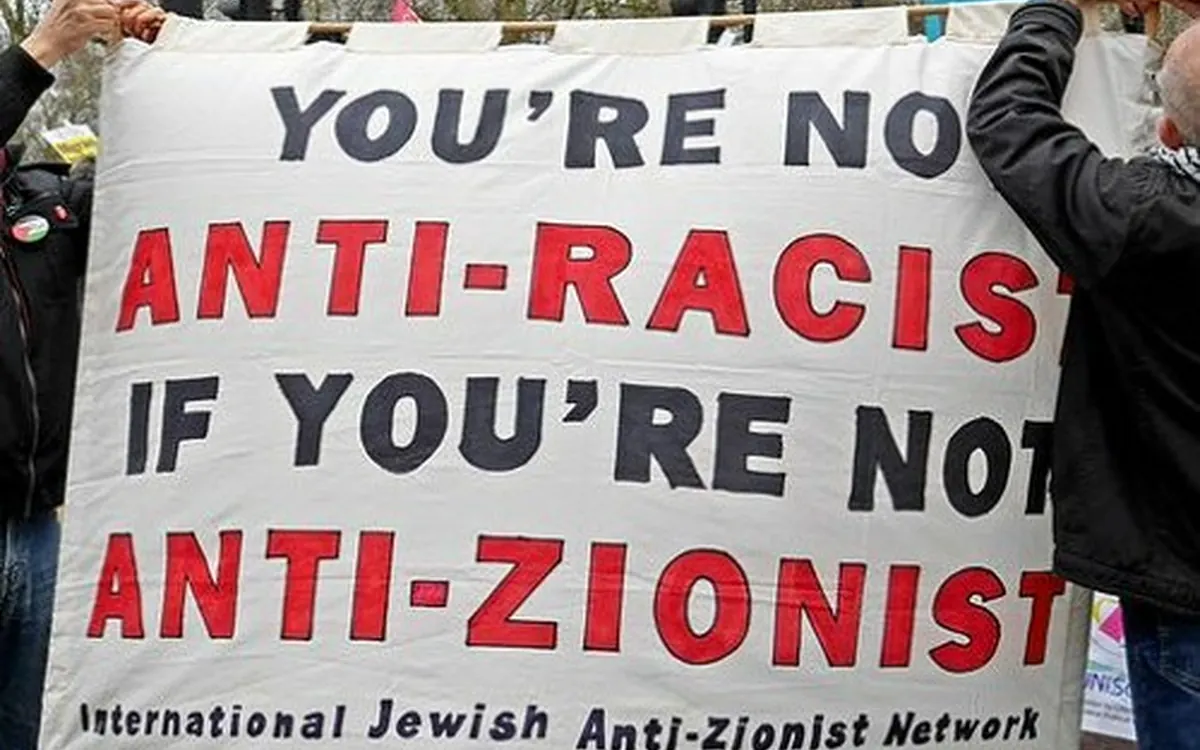
If Israel is meant to be a light to the nations, then how they see us offers illuminating insights. In this episode we meet the Non-Aligned Movement, Israel's relationship with Africa, President Mobutu of Zaire, Ugandan leader Idi Amin, US ambassador to the UN Daniel Patrick Moynihan, and Israeli delegate to the UN Hadassa Ben-Itto. All of them want to know whether the national liberation movement of the Jewish people is racist and akin to apartheid, and what it means for oppressed peoples of the world.
About this episode
Isaiah says God made Israel a covenant of the people and a light to the nations. Rav Mike opens with a question hidden in that phrase: which is the purpose, the light or the one it shines for? Deuteronomy, read on its own, offers the non-Jew little beyond flee, submit or die. Isaiah makes the nations the keystone of the mission. Ben-Gurion, lover of the Bible, quoted the light unto the nations constantly and described the state as a crucible meant to reveal qualities hidden in the Jewish people. So what the nations see by Israel’s light tells us something about the mission. And the nations, since 1945, have had a forum.
For a country of 0.1 percent of the world’s population, Israel gets a great deal of UN attention. Israelis mostly dismissed it, in Ben-Gurion’s phrase, as um shmum. Rav Mike argues that by 1973 the dismissal was no longer safe. The United States did not cast a single Security Council veto until 1970; after Taiwan’s expulsion in 1971 and the tripling of the membership with post-colonial states, the General Assembly became a forum for the unfinished revolution, and the rebel’s instinct needed an oppressor. The Soviet Union courted the new states, the civil rights movement’s turn toward black liberation echoed back and forth with the UN floor, and Vietnam finished off any hope that America would lead the developing world.
The turning point was the fourth non-aligned conference in Algiers in 1973. Indira Gandhi spoke of the story of man as his progressive emergence into freedom, and singled out one state for advice: Israel cannot purchase security by incurring the hostility of its neighbours. The Algerian foreign minister spoke of imperialist Zionist aggression. Cold War historians read Algiers as the inflection point of a Soviet campaign to unite the communist bloc, the Arab world and emerging Africa, and the one thing they could all agree on was bashing Israel.
Africa is the painful part. Since the mid 1950s Golda Meir had built an aid program on a real parallel between Jewish and African liberation, and by 1972 Israel had 32 missions across the continent. When Israeli troops crossed the Suez Canal in October 1973 it sounded to Africa like a conqueror returning, Sadat called on the Organization of African Unity, the oil embargo added money to solidarity, and even Tanzania, whose president had called Golda the mother of Africa, broke relations. In December 1973 a resolution on South Africa condemned the unholy alliance of colonialism, racism and Zionism; in November 1974 Yasser Arafat stood at the UN in fatigues with an empty holster and said he had come with an olive branch and a freedom fighter’s gun.
Resolution 3379, in November 1975, determined that Zionism is a form of racism and racial discrimination, 72 votes to 35. Daniel Patrick Moynihan said the United States would never acquiesce. Rav Mike ends with Hadassah Ben-Itto of the Israeli delegation, who described the explosion of joy on the floor, the embraces and whistles, and said that the hatred was crawling on the floor and that she felt it physically.
Key ideas
- Isaiah’s light unto the nations ties Israel’s existence to what the nations see by its light. The UN is where the nations say what they see.
- Um shmum stopped being a safe attitude by 1973. The General Assembly had become the forum of the post-colonial revolution, and the revolution needed an oppressor.
- The Soviet Union used Israel as the common enemy that could unite the communist bloc, the Arab states and emerging Africa. Algiers 1973 was the inflection point.
- Israel’s African policy, built by Golda Meir on a genuine parallel of liberation, collapsed within weeks of the Yom Kippur War.
- The road to 3379 ran through Mexico City, the OAU, Lima and Arafat’s speech. In 1975 the UN determined that Zionism is racism, 72 to 35.
- The hatred was crawling on the floor: Resolution 3379 was the moment Israeli diplomats felt antisemitism physically.
Chapters
- 0:00 Israel and the nations: Devarim and Isaiah
- 4:27 Ben-Gurion and the light unto the nations
- 7:45 Um shmum: Israel and the UN
- 10:59 Taiwan expelled, and the post-colonial General Assembly
- 13:17 Columbia 1967, Vietnam and the Soviets
- 15:30 The UN as bastion of hope; the non-aligned movement
- 16:32 Soviet prestige after 1973: Egypt and Syria
- 19:55 Algiers 1973: the fourth non-aligned conference
- 22:17 Indira Gandhi's advice to Israel
- 24:30 Israel's African policy: Golda Meir and Ben-Gurion
- 28:55 The African break after the Yom Kippur War
- 32:20 December 1973: Zionism first linked to racism
- 33:26 1968 to 1974: a Palestinian people at the UN
- 36:42 Arafat at the UN, November 13, 1974
- 38:51 Idi Amin, expulsion, and Moynihan
- 42:04 Resolution 3379
- 45:15 The hatred was crawling on the floor
Who, where and when
People
David Ben-Gurion, Golda Meir, Indira Gandhi, Yasser Arafat, Daniel Patrick Moynihan, Idi Amin, Anwar Sadat, Hafez al-Assad, Mobutu Sese Seko, Julius Nyerere, Hadassah Ben-Itto
Places
The United Nations, New York, Algiers, Bandung, Mexico City, Lima, Durban, Africa
Texts
Isaiah 42, Devarim, Gemara, Avodah Zarah, UN Resolution 3379, UN Resolution 3151, UN Resolution 242
When
November 29, 1947: partition vote, 1971: Taiwan expelled, September 1973: Algiers conference, November 13, 1974: Arafat at the UN, November 10, 1975: Resolution 3379
Read the transcript
"'I am the Lord,' said the prophet Isaiah, "'I cold you with righteousness, and I will strengthen your hand, and I formed you, and I made you for a people's covenant, for a light to the nations. All I'm looking to do is just shine a tiny bit of that illumination. I'm Rav Mike Feuer, and this is Jewish Story." Season 5 Episode 4, U.N. Resolution 3379, Zionism, is racism. You're a half to admit when I look around the world today, and when I glance back over history, the relationship between Jew and non-Jew has never been a simple matter. Amongst all the complicating factors, one which is fascinating to me, is the fact that we have lived in the past and currently exist both as a national majority hosting non-Jewish minorities within a Jewish society, and as a Jewish minority within larger non-Jewish societies.
There's a whole path to pursue there on the very different nature of the Jew and the relationship to non-Jew at home and abroad. For right now, I want to touch the biblical frame. I'm sure it's familiar. Israel in its land, when faithful to God and Torah, are meant to be a glory to the divine name or become a disgrace to it when we go astray after the false gods of the nations. Israel in exile is presented as a sheep amongst the wolves held up by a miracle and disgracing God's name by our very presence outside the land, but nevertheless protected always by the divine presence which followed us into exile, and thus ultimately a living testimony dispersed around the world to the hope for redemption.
Now our sages live the layers of this very complex relation between Israel and the nations, as it of all through independence, exile, kingdoms, empires, societies around the globe. And if you want to look at their words, I highly encourage you to take a glance at the nexus of their examination, if I could say it's a pretentious phrase, in the first chapter of the Gemara and of Avodah Zarah. If you're not capable, I'll just tell you that what you'll find there, or frankly interstellar shouldn't say, capable is the only qualifier, what you'll find there is a conversation so to speak between the books of Devarim, Deuteronomy and the book of Isaiah. Now if you open up Devarim and you ask yourself, what's the role of the non-Jew in the Jewish story?
It doesn't look so pretty, basically it boils down to flee, submit, or die. If the orientation toward the land and the seven nations that were living there when God brought us out to Egypt and into Israel, and frankly flee, submit, or die is kind of a kind presentation, this was the brown fielding of the land of Israel to allow the Torah to really strike root and flourish as a society. That would be grim if I didn't put it next to Isaiah, where suddenly the non-Jew is not a barrier that stands between us and our ability to fulfill the divine mission, but on the contrary, seems to be actually the keystone, I mean it's after all Isaiah that I quoted in that opening who labels us as a light unto the nations.
A simple question for you, which is the actual purpose, the light, or the one for whom it sheds illumination? That's not just a tricky question, it comes to the heart of what it is that Isaiah imagines the relationship between the Jew and non-Jew to be, which is that God wants to shine light to the whole world and for whatever reason in the divine wisdom, God chose Israel to do it. Let me look at the actual source that I quoted to you. This powerful phrase, ve'etencha livrit am le'or goyim, I will place you as a brit am, as a covenant, people, as a light amongst the nations. We see that our national existence is bound up with our ability to bring that light to the world. And you may find it surprising, but in my humble opinion, there is no one who understood this more than former Prime Minister David Ben-Gurion.
Worker, scholar, military leader, lover of the Bible. Ben-Gurion was a man of many parts. He looked to infuse the country with a special spirit drawn from the prophet Isaiah that Israel be a light unto nations. Ben-Gurion was famous for quoting the phrase of light unto the nations, and even for introducing into the discourse of modern Israeli politics, this notion that we were meant to be am segula, I think is the phrase. So it's been exceptional people. And in one of the books that he wrote before he passed from the world stage, Ben-Gurion said the following. He said, the Jewish state, which in one stroke, brought Am Yisrael and all of its ancient history together with the modern history of humanity, is meant to reveal and awaken the qualities hidden within the Jewish people to make us a light unto the nations and to pave the way toward a new world which will not give lie to the great Messianic vision.
I mean, beautiful words, but notice the dynamic that he's mapping out there, that the state is a vessel which brings together Am Yisrael and all of our history with the modern situation of humanity, and that vessel is also accrucible. It's meant to pull out from within us to reveal, he says, the qualities that we may ourselves not even know about, that will make us the light unto the nations, because of course, a light is only helpful if it provides the illumination which the person who's trying to see requires. We don't want to blind anybody. And you know, I have to say, when I look around, we're not there yet. In fact, I often feel how painfully far we are from using the challenging natural situation that we found ourselves in the last 100 years as accrucible to break down the old, to forge a new and to discover within ourselves that divine light which we much shine nonetheless.
There are definitely ways in which we have succeeded and continue to do so, and there have been moments of truly global revelation. I leave it to you to define them for yourself. I've had my say once or twice over the last few seasons. So it's important to me right now is this dynamic between the light and the nations to a light unto the nations, right? Because I think we can gain a lot, specifically from the perspective of the non-Jew. What the non-Jew sees in the Jew and what they see in the world by the light of Israel's actions. It can tell us a lot about where our mission lies, be that something we need to do more of or perhaps the places in which we're casting shadow rather than light. But of course, individuals and nations never look at things the same way, and so we're often hard pressed to separate our opinions about what they think of us from what they actually do and to know which ones are seeing us in a true light.
Now, fortunately for our story, the nations of the world happen to have a forum at this point, the United Nations, if you will, and they've even graciously allowed Israel to join as a member of state. So it might seem to be a good place to start if we want to hone in on what the mission and the challenges of our days might be. For a country which makes up just around 0.1% of the planet's population, Israel gets an awful lot of attention from the United Nations. And that's been true for quite some time, truth is, from the start. And in our day, that overattention has become a downright obsession which verges on absurdity. The UN's focus on Israel, mostly today in my eyes, serves to illuminate the farcical nature of the institution itself.
I mean, come on, China and Pakistan have seats on the council for human rights, and that didn't happen overnight. This focus on Israel began with the drama of the birth of the state in the post-Nazi era, bound up with the birth of the UN itself in at least a moral and visionary sense if it not actual practical one. And of course, for the next 25 years of the existence of the United Nations, Israel was at the center of three regional conflicts and one misguided colonial adventure, all of which generated outrage, debate, ceasefire, resolution, peacekeeping forces of one kind or another. And I have to say that for quite some time, that attention generated almost complete indifference from Israelis, both the national leadership and the citizen on the street.
Many saw the forum actually as an enemy from the outset, but most simply dismissed it. It was irrelevant from November 30th on. That was the day after the United Nations voted in favor of the 1947 partition plan. The United Kingdom, abstain, the United States, yes, far away, yes, Venezuela, yes, Yemen, now, Yugoslavia, abstain, the resolution of the ad hoc committee for Palestine was adopted by 33 votes, 13 again, then abstain. Um Shmum is of course how Ben-Gurion famously put it, um being the acronym for the United Nations and then Shmum being a complete dismissal. And that dismissal has trickled down through the ages to our day in the form of that radical bumper sticker. You can still occasionally see on cars of a certain vintage that reads UN useless nobody's.
But though there are still plenty of holdouts that relegate the UN to irrelevancy by 1973, the Israeli leadership should have sensed that the situation in the general assembly was not so easy to dismiss any longer. Did you know that from the birth of the United Nations until March 1970, the United States did not issue a single veto, they didn't have to put the kibosh on one security council resolution. That by the way was in contrast to the Soviets, who used their veto power so frequently in the first two decades of the UN that their representatives were collectively known as Mr. Yet. But after 1970, the US started to throw down that blocking vote while the USSR increasingly no longer needed to. The change began with the expulsion of Taiwan from the UN in 1971, their place was taken on the security council by the communist people's public of China still held there today.
That slap in the face to American international diplomacy was at least in part an expression of a larger trend in the growth of the United Nations membership. In 1975, there were nearly three times as many member states in the UN as there were in 45 at its founding, and most of these states were what we call post-colonial, many born through armed rebellion at least in part. Now as someone who has a rebellious nature, I can testify that the attitude never really goes away, especially not when it's succeeded in bringing you greater liberty. Once a taste of liberation and the rebellion that drove it gets into the core of your identity, it's not so easily discarded. And so it comes to know as surprised as me that the General Assembly of the United Nations quickly became a new forum for this struggle.
Here diplomacy and rhetoric were the tools of war, and the single vote per member state created in a egalitarian environment fraught with potential. All that it really required was the oppressor they were looking to overturn, and from whom they needed liberation. Now, to some, it was obvious who that might be, because when you looked at the Security Council, you would see the old colonizers holding permanent seats and veto power. But those were really the past, essentially dead men walking in the post-colonial struggle. The United States was really destined to become the embodiment of imperialism in the world moving forward. What happened, in part, because as the civil rights inclusion attitude of the early 60s within America moved toward the separatist black liberation posture of the 60s and 70s, this is a dynamic that we've described in past episodes.
Well, as that was going on, the discourse on the streets of New York City actually began to echo magnify and flow back and forth with the voices of natural liberation on the floor of the U.N. I mean, listen to this, already in 1967, while protesting the construction of a new building by Columbia University in, of course, New York City, a young black American student could declare that there was just one oppressor in the White House, in Columbia's Low Library, in Albany, New York. And he said, you strike a blow at the gym, the building they were fighting, you strike a blow for the Vietnamese people, you strike a blow at Low Library, you strike a blow for the freedom fighters, Angola, Mozambique, Portuguese, Guinea, Zimbabwe and South Africa.
Now, that may sound a little grandiose, but it also might sound familiar if you've been listening to the news for the last couple of years. And that shift in the intra-American story alone wouldn't have been enough to cement the U.S. as the embodiment of imperialist oppressor, though it is what welded the racial frame firmly in place for the coming battle of discourse. There was also Vietnam. And as American idealism died for so many at home and abroad, any hope of the U.S. leading the developing world also evaporated. Of course, to this intra-American discourse and Vietnam, we have to add the Soviet Union. The Cold War potential of a general assembly stacked with angry revolutionary voices was not lost on the U.S.S.R.
and they moved quickly to court the delegates of these emerging nations, forging a political front against Western imperialism. Together, these factors were enough to drive the breakdown from bastion of global hope to platform for political theater of the absurd on a global scale. And it wasn't sarcasm on my part to call the UN a bastion of hope. Only in its birth in the wake of war, too, many individuals and nations saw the UN as a symbol of a better world in the making and as a practical foundation for building it and none more than the Americans who saw it from its inception beginning with the Allied nations as a natural extension of the moral and practical leadership in the United States at Elden, World War II.
And by making its home in New York City, the UN became for many a manifest expression of American liberal democratic idealism writ large on a global scale. The UN sparked an almost messianic hopefulness, enough to overcome much of the traditional American isolationism which would have had the country retreat after World War II. That glow lasted for a couple of decades, but it was already fading and in fact about to burst in a somewhat ugly way as the 70s progressed. I need to add to this idea just a little more emphasis on these emerging nations. Many of these nations had joined what was known as the non-aligned movement. It was born out of the 1955 Afro-Asian Conference held in Bandung Indonesia.
And initially, this idea of a non-aligned movement reflected desire of many of these emerging states to basically stay out of the polarized Cold War world and offer a visionary alternative. But you know, no organization is ever free of its own leanings. And as the post-colonial area progressed, more and more states were born and the US grew ever more in its role as Bogeyman. The movement almost inevitably took on a certain tilt toward the Soviets, but still, for whatever reason, opposition to the United States wasn't really enough to fully rile up the troops. For that, we would require Israel. I hate to say it, but Soviet prestige took a beating on the battlefields of Sinai and the Golan in 73. The initial gains made by the Egyptians might have had to some degree a redemptive effect on the image of Soviet military technology, which had been badly damaged by the Israel's route of the Arabs in 67.
But politically speaking, they were on the outs in the Middle East, which did nothing to improve the communist appeal amongst all these emerging states and national liberation movements around the world. I mean, the Soviets got the boot from Egypt before the war ever broke out, if you recall. And once it ended, Egyptian President Anwar Sadat was moving firmly into the US sphere where Egypt remains this day. We'll speak in coming episodes and really we've already begun to about how Sadat managed to use that political about-face to gain through diplomacy what he failed to achieve through war. And frankly, I don't want to overemphasize how the Soviets left the Middle East. I mean, Syria was still a Soviet client state, and as such would lead the rejectionist front, so to speak, clinging to those three nose of the Khartoum conference, no recognition of Israel, no negotiation with no peace, and they do so to this very day.
In fact, in the decades after 73, Hafez al-Assad of Syria would emerge as one of the Soviet Union's most valued and well-supplied third-world clients, as they call them. But one whose hard-line stance even the Kremlin found exhausting. As the Soviet ambassador Damascus said, it's true that Syria accepts from the Soviet Union aid, loans, student exchange, military programs, when you think of it, it accepts everything from us, except advice. So maybe you could say that, in a certain sense, the US and the USSR split the difference in the Middle East. You take Egypt, we'll take the Syrians. But remember, the Cold War was a global battle, much of which was waged through the perception of power. Therefore, the Soviets felt the need to seize the initiative in the Arab-Israeli conflict, and thereby strengthen their standing as a global leader.
And we all know that nothing unites quite like a common enemy. And though, like I said, as the embodiment of Western imperialism and the inherent of the colonialist mantle, the US was actually the obvious target. There was perhaps something just too big to rally the troops against the Americans. I mean, after all, really was Yugoslavia's disapproval on the General Assembly floor really going to make a difference to America one way or another. But the Soviets had good news. If you're looking for an enemy, there's always the Jews. In 1973, heads of state from 76 nations assembled in Algiers for the fourth non-aligned conference since 1955. They were overwhelmingly representative of this wave of emerging states that I described, and not just fully formed post-colonial state.
They were representatives from 16 so-called liberation movements present there, 14 from Africa, and of course, the Palestine Liberation Organization, the PLO. And in some ways, this fourth conference marked the end of the original cold war momentum of the non-aligned movements. I mean, after all, they taught between the Soviets and the US was in the air. Nixon had already gone to China. A few months before the conference, East and West Germany had recognized one another, and they were on their way into the UN as full members. But the representatives gathered in Algiers may have felt the cold war waning. Nevertheless, they also knew that their struggle for liberation was far from over. And in fact, there was a whole new front of what we call neo-colonialism on the rise.
As Prime Minister of India, Indira Gandhi said in her dress, we should direct our labors to carry forward the unfinished revolution of our times. One aspect of this revolution is the political liberation of the peoples of Africa, Asia, Latin America, and the Caribbean. Another is the endeavor to overcome the economic, technological, intellectual consequences of colonialism. But in reality, the revolution is much larger in its scope, she said. The story of man is the story of his progressive emergence into freedom. The unfinished revolution must therefore continue until freedom is assured to all, until inequalities amongst nations and within them are narrowed and until the power at the disposal of nations is tamed through institutions in which all peoples can participate.
A powerful global vision, one that frankly stirs me and one in which Israel at the time would have liked to position itself as a bridge between the economic, technological, and intellectual resources of the developed world and the needs of the developing world, uniquely positioned in that sense to shed light amongst the nations. But in the eyes of the Prime Minister of India, and frankly, the vast majority of delegates listening to her speak, Israel was on the wrong side of history when it came to the unfinished revolution. Because amongst all the states and movements which Madame Gandhi named in her speech, labeling their struggles as just or their actions as imperialists, there was only one which she singled out to give specific advice.
We support she said the just cause of the Arab people for the return of their occupied lands and for the restoration of the inalienable rights of the people of Palestine, Israel should realize that it cannot purchase security by incurring the hostility of its neighbors. The short term gain will be a long term loss. Now, there's certainly some truth in her message about short term gain and long term loss which deserves reflection nonetheless. I wonder on what level she was aware or willing to see that simply by existing the Jews have always incurred the hostility of our neighbors, be they Greek, Persian, Christian, Arab, or Modern European. And our return home to Israel was actually meant to put a little space between us and the neighbors of good fences, make good neighbors after all, but somehow the return of the Jew on a nation-state scale simply evoked the hostility of neighboring nation-states.
And of course, the prime minister of India was not the only speaker at the conference in his opening address. The Algerian foreign minister told the assembled delegates that it is more than ever necessary to use all means to speed the victory of African peoples. Sounds good. And then he added, in the same manner the Palestinian people have a right to be able to rely on the resources of the non-align. Furthermore, we must give equal support to the Arab countries' victims of imperialist, Zionist aggression. These are the type of words which express the real purpose of the conference, at least from the Soviet perspective. It wouldn't surprise me all that much, with a phrase like imperialist Zionist aggression if the Russians had a hand in writing his speech.
In the eyes of Cold War historians, this Algiers conference was the inflection point in a Soviet campaign, a new goal to unite the communist block with the Arab world and the sub-Saharan emergent African nations. And the one thing which they were able to agree upon, which the Soviets could so easily use to bring them together, was bashing Israel. Now, this union was not only good for the Russian armist business, and ripe for profit, frankly, in every way. He created a decisive majority in the United Nations General Assembly, one that could give voice to Soviet policy in a third-world style, so to speak. Now, by the way, as an aside, the Algiers conference also happened to serve as a convenient context for much of the pre-war Yom Kippur War planning between Arab states.
From Algeria, the delegates gone on planes and went to New York City for the opening of the UN General Assembly, where their anti-Israel rhetoric only increased on October 4th. Only two days before the Egyptian Syrian surprise attack, President Mobutu of Zaire, addressed the General Assembly, saying that the continuing hostility in the Middle East was forcing Africans to choose between, quote, a friendly country, Israel, and a brother country, Egypt, and that for him, the choice was clear. Now, it's nice that President Mobutu characterized Israel as a friendly country, could have been a lot worse, but the fact that a pledge of brotherly allegiance for Egypt over the friendship of Israel came specifically from an African leader left the bitter taste in Tel Aviv.
Because though I characterize Israel's attitude toward the UN at this point as um shmum, she was not actually so dismissive as that might have led you to believe. In fact, since the mid-50s, Israel had pursued a policy of offering technological, social, and even financial assistance to emerging states around the world, particularly in Africa. There is a very complex story to be told of Israel's relationship to Africa, past, and present. And I might touch on it in more depth when we get to the story of Entebbe, but for now, the idealistic motivation behind this African policy was expressed by its architect, Golda Meir, who saw a clear parallel between the Jewish and African struggles for liberation and a practical ability to bring together their shared goals of nation-building.
Like them, she said, we have shaken off foreign rule. Like them, we had to learn for ourselves how to reclaim the land, how to increase the yields of our crop, irrigate, how to raise poultry, how to live together, and how to defend ourselves. Israel, in her eyes, was the best model for the newly independent African states because Israelis, quote, had been forced to find solutions to the kinds of problems that large, wealthy, powerful states had never encountered. Now, the more pragmatic side of this policy was voice, of course, by none other than Ben-Gurion, who went addressing the Knesset on the issue of Aid to Africa in 1960. A time where Israel was hardly swimming in national wealth said, our aid to the new countries is not a matter of philanthropy.
We are no less in need of the fraternity of friendship of the new nations than they are of our assistance. Since day one, Israel had faced a large hostile voting bloc in the General Assembly, and that was, of course, the Arab and Muslim states. When the USSR severed diplomatic ties after the Six-Day War, that bloc was joined by the communist countries, which meant that on the floor of the General Assembly, Africa was Israel's only hope of avoiding constant censure, and even the risk of expulsion. Remember, Taiwan got the boot in 1971. This is why Africa became a battlefield between Israel and the Arabs. So much so that Dan Avni, the Deputy Director of the African Department in Israel's foreign ministry, described it as, quote, a fight of life and death for us.
In the one country, one vote model of the General Assembly, every nation, no matter how small or seemingly uninfluential, mattered. And so Israel developed one of the most extensive networks of diplomatic missions for outside states in Africa, at all. In 1960, there were six, 61, 23, and by 1972, 32 diplomatic missions across Africa. In addition, technical assistance programs sent hundreds of Israeli advisers to Africa each year, and hosted more than twice as many Africans in Israel. Now, Israel's economic position in Africa continued to expand after 67, but the political ground had already begun to shift with that victory and a changing perception of Israel from the David facing the Goliaths of the Arab world to the Goliath, standing on the necks of the Palestinian people.
Nevertheless, a truly catastrophic failure in relations waited for the Yom Kippur War. Days after the President of Zaire had given his warning on the floor of the UN, when the Israeli counterattack crossed the Suez Canal, their boots on the ground had a bit too much of the sound of a conqueror coming once again to take the land of Africa. Egyptian President Sadat requested that the organization of African Union of which Egypt was a founding member immediately condemned the Israeli Act. And the Secretary General complied urging solidarity with, quote, Egypt, our sister state and founding member of our organization and to our Arab brothers. The results, frankly, were predictable. They may have varied in the intensity of their rhetoric, but in some sense they were all the same.
For instance, Tanzania declared its unflinching support for the Arab countries in their just struggle to resist Israeli aggression and regain their lands which had been illegally occupied by Israel. Now this from a country whose President Julius Nyerere had called Golda Meir the mother of Africa. In the months ahead, immediately after the Yom Kippur War, the soaring price of oil had an irresistible financial pull to the call of Third World Solidarity in November of 73. When the OAU Council of Ministers joined the Arab oil embargo on the imperialist states as it were of South Africa, Portugal and Israel, the Arab producers simultaneously announced the launching of a development bank to assist African states' initial capitalization of $190 million.
Now, not everyone in Africa took such behavior lying down. Many, in fact, saw it as rank ingrates. In the last week of November in 1973, an editorial in the Sunday Nation, one of Kenya's major newspapers declared that the African-Break in diplomatic relations was, quote, national ingratitude and diplomatic ineffectiveness. It noted that Israeli aid programs, quote, have been more successful than those of most of the major and richer nations and therefore declared national ingratitude that only one, meaning Kenya, only one of the African countries thinks the Israeli for anything. That being said, can you two broke diplomatic ties a few days later and it seemed to be a matter of time before Israel had to face nations united against her?
You know, I've heard many people call the 2001 Durban Conference on Racism, a carnival of hate, a festival of hypocrisy for its anti-Israel and, frankly, anti-Semitic energy of so much of its proceeding, which I think is for sure true and many market as a turning point in the attitude of the developing world toward Israel. But that last piece we know is false because in reality, we saw last episode that the 1975 Mexico conference on the status of women was in many ways the first such fate has to remember Betty Friedan's, horrified shock. And now we have a little bit more of a context to understand how it was that such a wild revolutionary energy was ready to turn on the Jewish state. But technically, it was actually December 1973, that for the first time Zionism was officially associated with racism in a general assembly resolution.
The focus of resolution 31-51 was actually South Africa's apartheid policy, nonetheless at the end it condemned quote, the unholy alliance between Portuguese colonialism, South African racism, Zionism, and Israeli imperialism. Israel's isolation and vilification of UN took a quantum leap not much later in November of 1974. Now remember, since 1948 or really earlier, Israel and to a lesser degree American policy had fought against the recognition of the Palestinians as a separate people, both insisted that the Arabs of the former mandate be treated as refugees whose needs were humanitarian and not as a people with political aspirations. We saw back in seasons 2 and 3 that the Arab states more or less agreed if they saw the Palestinians as a separate national entity, it was primarily as a tool in their war against Israel.
They were interested in creating a state of Palestine in the West Bank when Jordan annexed it or in the Sinai or the Gaza Strip when Egypt seized those. We also, if you recall, saw that even UN resolution 242, which officially ended the Six-Day War, failed to mention the Palestinians and referred only to the refugees. Apparently, Prime Minister Golda Meir could be forgiven then when she claimed in 1968 that the Palestinians as such did not exist. When were Palestinians born? What was all this area before the First World War? When Britain got the mandate over Palestine, what was Palestine then? Palestine was then the area between the Mediterranean and the Iraqi and border. You say there's no such thing as Palestine?
No, East and West Bank was Palestine. I'm a Palestinian. From 21 until 48 I carried a Palestinian passport. There was no such thing in this area as Jews and Arabs and Palestinians. There were Jews and Arabs. But it was actually in that very year, in 1968, that a series of resolutions began to be presented in General Assembly, which addressed not just the plight of Palestinian refugees, but began to craft them as a Palestinian people, one with inalienable rights, rights to self-determination and the right to struggle to achieve it. And of course, these resolutions were supported each and every one by the emerging post-colonial states. Beyond simple solidarity, we have to ask, how is it that the Palestinians came so quickly to embody the developing world's vision of the ongoing struggle for liberation and equality of this notion that if one is not free, then all are not free.
We've touched on the question in past episodes, and I'm not looking to do the dive at present. I want to tell the story, but I have to say, why is it that India, for instance, didn't hold that role? I mean, who can't get behind Prime Minister Indira Gandhi's closing words, at Algiers? Once we returned rebels, I invoke the spirit of rebellion, she said, against all assumptions of superiority, against all attempts to dominate or dictate. At the same time, I invoke the spirit of a wider responsibility. We are responsible not to our individual countries alone, but to the peace and prosperity of the whole world. Let us bind us anew to the ideal of active non-alignment. Let this be the message of Algiers, like all enduring ideas it is old, hit ever, timely and new, stirring.
But whatever answer you offer as to why, it was the words of Yasser Arafat, which ended up giving voice to liberation movements of the world, not Indira Gandhi. And he offered them on a big stage for the first time from the floor of the United Nations, on November 13th, 1974. The difference, said Arafat, between the revolutionary and the terrorist, lies in the reason for which each fights. Whoever stands by a just cause and fights for liberation from invaders and colonialists cannot be called a terrorist. Those who wage war to occupy, colonize and oppress other people's are the terrorists. Now you can imagine, in light of everything we've discussed, that those words, and the challenge that they represent to conventional morality as indebted in the power hierarchy of international politics in the post-colonial world, resonated with many of the members of the General Assembly who themselves had fought for their freedom and, during the process, like we've been labeled as rebels, it's not terrorists as well.
But Arafat wasn't satisfied with just overturning the moral tables. He went on to point a finger at the weakness of the international body which he was addressing. The Palestinian people had to resort to armed struggle he said when they lost faith in the international community, which ignored their rights. And when it became clear that not one inch of Palestine could be regained through exclusively political means. And finally, he made his appeal and his threat. The chairman of the PLO and the leader of the Palestinian Revolution appeals to the General Assembly to accompany the Palestinian people in its struggle to attain its right of self-determination. I have come bearing an olive branch and a freedom fighter's gun.
Do not let the olive branch fall from my hand. Famously, Arafat, as he delivered these words, was standing on the floor of UN in army fatigues, wrapped in a kaffir and sporting an empty gun holster. He'd been forced to at least leave the gun behind, but the message was not lost. Less than two weeks later, the PLO gained observer status in the UN as a liberation movement. And soon after, momentum began to build toward the expulsion of Israel from the international body at the General Assembly meeting in October 1st of 1975, Ugandan dictator Idi Amin declared the people of the United States of America must rid their society from the Zionists in order that the true citizens of this nation may control their own destiny and exploit the natural resources of their country to their own benefit.
I call for the expulsion of Israel from the United Nations and the extinction of Israel as a state so that the territorial integrity of Palestine may be insured and upheld. That's a frightening prospect, and it wasn't the only voice raised toward that end. It was only strong Western opposition, which was able to squash the ideal that Israel should be expelled from the UN, likely to be replaced by the way by the PLO. With the representative in the United States, Daniel Patrick Moynihan, warning that such a move would force the US to reassess its UN membership. The lie is that Zionism is a form of racism, the overwhelmingly clear truth is that it is not. Zionists define themselves merely as Jews, and declared to be Jewish, anyone born of a Jewish mother or, and this is the absolutely crucial fact.
Anyone who converted to Judaism, the state of Israel, which in time was the creation of the Zionist movement, has been extraordinary for nothing so much as the range of what I call sometimes racial stocks from which it has drawn its citizenry. There are black Jews, brown Jews, white Jews, Jews from the Orient and Jews from the West. The United States rises to declare before the general assembly of the United Nations and before the world that it does not acknowledge, it will not abide by, it will never acquiesce in this infamous act. There will be time enough to contemplate the harm this act will have done the United Nations. Historians will do that for us. But if Israel was not going to be expelled, it could still be labeled the pariah state and isolated in every way in the general assembly.
And as we saw last episode, the best way to do that was to label it as racist. In July of 1975, the UN conference in Mexico condemned colonialism, neocolonism, Zionism, racial discrimination in apartheid. Only a month later, the organization of African Unity stated that, quote, the racist regime in occupied Palestine, and the racist regime in Zimbabwe in South Africa, have a common imperialist origin, organically linked in their policy aimed at repression of the dignity and integrity of the human being. Did you hear that? That Israel is responsible for the oppression in South Africa. This was followed quickly by declaration from the non-aligned conference in Lima, happening at the same time, which quote, severely condemned Zionism as a threat to world peace.
I'm not quite sure how we're threatening most of the world, but, okay, but the culmination really came with the introduction of UN resolution 3379 to the third committee of the general assembly in October of 1975. The resolution opened by recalling the United Nations Declaration, I'm the elimination of all forms of racial discrimination, a declaration which said, quote, any doctrine of racial differentiation or superiority is scientifically false, morally condemnable, socially unjust and dangerous, something which the Jews, only 30 years after the Holocaust, could certainly testify to. It then went on and noted all the chapters I just named, that 73 general assembly condemnation of the unholy alliance between South African racism and Zionism, the Mexico City Declaration, the OAU's 1975 resolution and the Lima statement.
All this served as a setup to the final definitive line, which, quote, determines that Zionism is a form of racism and racial discrimination. Now, I mean, after all, if everybody says it, it must be true, right? When the resolution left committee and faced a vote of the general assembly, it was pushed through by the Soviet Arab Development World Coalition, 72 to 35, with two abstentions. Truth be told, it was a less than resounding victory, certainly short of the hundred or more votes that coalition was used to obtaining in the GA. And many, in Israel and around the world, originally saw it as an irrelevant act, just another part of the theater of the absurd, which the general assembly was rapidly becoming.
I actually am hoping, in the coming week or two, to interview an expert or two on the topic, people that can help us explore the significance of resolution 337 now, how intersected with the Cold War, what it can teach us about our present posture in the eyes of the nation's world, how in many ways, contributed to the transformation and maybe even erosion of the concept of racism altogether, but this is all about the story right now. And so therefore, I want to end with an image. Hadassah Ben-Itto was a member of the Israeli delegation to the UN and she was present when the resolution was passed on the floor. She later described the response of the assembly as an explosion of joy, complete with clapping and mocking whistles.
But there was no joy in the Israeli delegation. This is how she described her feeling. It was not only an excitement, the hatred was crawling on the floor. People embraced as if they'd won the biggest victory of their lives. We felt like pariahs. We should know that it was not just another resolution of the United Nations. Someone like myself who had never felt personally attacked by anti-Semitism really felt it physically while sitting there. And if that doesn't strike a shadow on your heart, then I'm not sure what will. I want to thank a few folks before I sign up. I want to thank all the folks who give their hard-earned money to make this show happen. Keep it free, make it widely available. I want to ask you to join them right now.
Go to my website, www.jewishstory.co. In the upper right hand corner, you'll see a button there that says, be a patron. You can click on that to give a little bit of per-podcast support. Or if you're looking to make a one-time donation, you can send it to PayPal. Rav MikeFore at gmail.com is the associated email. I'm also happy to dedicate shows and honor of those you love and those who have passed on who. Send me an email at that Rav MikeFore at gmail.com address or a direct message on Facebook or Twitter. And I'm happy to share the details. I also want to thank the land of Israel Network. That's thelandofisrael.com, creating a global center for spiritual transcendence in the heart of Judea. I want to thank the Pardes Institute, pardes.org.il for throwing open the doors of the Beit Midrash as wide as possible.
Come on, let my people know. And I want to thank you for listening. And this is the Jewish story.
More from Season 5
TJS S5E3 Feminism and American Judaism
The feminist movement and Jewish American life came together in the 1960s and 70s - each influencing the other. In this episode we touch on Betty Friedan's Feminine...
Play Episode
TJS S5 Interlude - Sukkot 5782 Seeking joy
Sometimes its seems that joy is the most desirable and least available aspect of human experience. In this episode Rav Mike seeks out some insights from Sukkot, the...
Play Episode
TJS S5 Interlude - interview with Gil Troy
Historian and author Gil Troy joins me for a follow up to the 'Zionism is Racism' episode. We talk 'Moynihan's Moment,' the rise of the PLO, the mental...
Play Episode