
TJS S5 Interlude - interview with Gil Troy
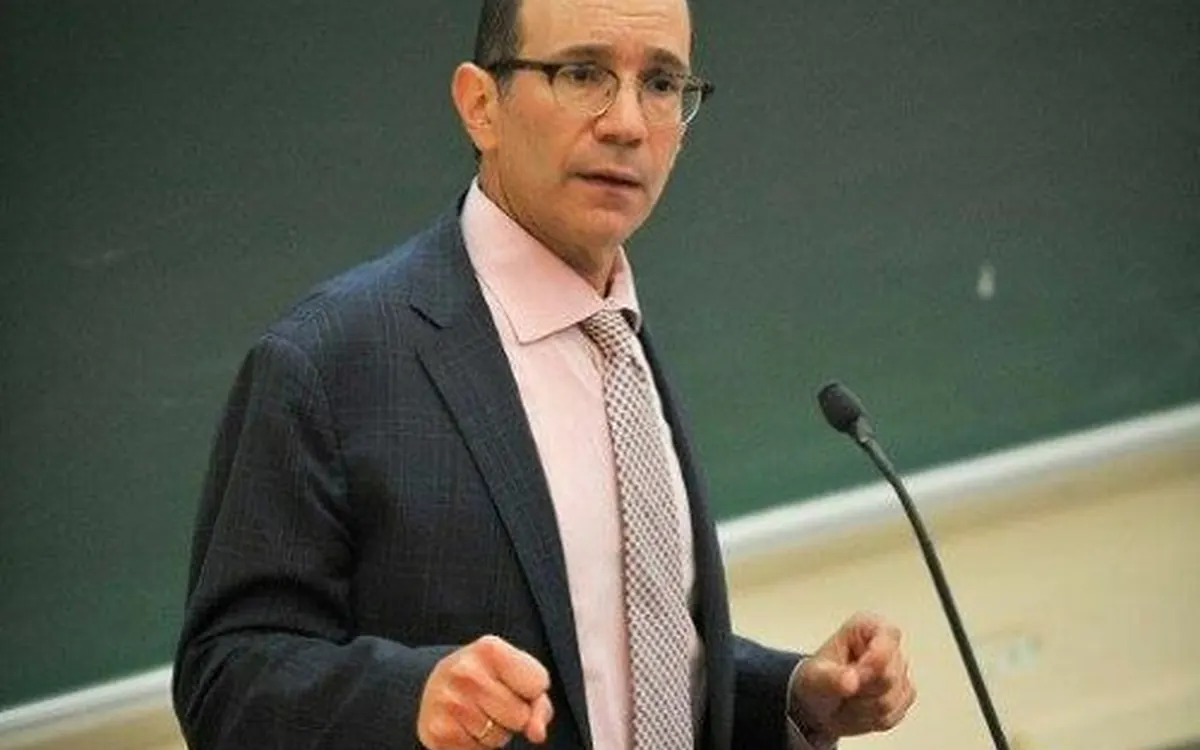
Historian and author Gil Troy joins me for a follow up to the 'Zionism is Racism' episode. We talk 'Moynihan's Moment,' the rise of the PLO, the mental health crisis on American campuses and much more. Tune in also for a fascinating discussion that lays out 'Identity Zionism,' a vision which offers hope for Am Yisrael and the entire world.
About this episode
Rav Mike welcomes the historian and Zionist Gil Troy to talk about his book Moynihan's Moment, framed by Ben-Gurion's image of Israel as a light unto the nations. He offers two sides of that light, the light you look at and the light by which you see a room, and where the developing world saw Israel as a colonial settler state by 1975, Daniel Patrick Moynihan saw the world by Israel's light. Troy describes Moynihan arriving at the United Nations as a grumpy bipartisan academic who had served four presidents and never quite got the Israel thing, having grumbled in the Nixon White House about Jews being anti-war on Vietnam and pro-war on Israel. Three things changed him, and the first was simply that a New Yorker sees bullies and sees them beating up on America's friend.
The second change was that Moynihan stopped asking what was wrong with Israel the accused and began asking what was wrong with the accusers, the roll call of Arafat, Idi Amin and the Soviets. The third and deepest came through his friendship with Chaim Herzog, son of a chief rabbi, brother-in-law of Abba Eban, born in Belfast, a fellow public intellectual who shared his Irish roots and his love of language. Through Herzog, Moynihan discovered the Israel he had never known, a force for liberalism in the world, and he grew passionate enough to declare in November 1975 that America would never acquiesce in this infamous act. When Troy is asked who our Moynihan is today, his answer to students is that you be it, because the work of Zionist awakening is personal, a Herzl moment that each person can have.
Asked how to build Jewish identity, Troy calls himself an identity Zionist and warns that the conversation spends far too much energy defending Israel and worrying about the accusers. He wants Jews to be Jew-positive and Israel-positive, to strengthen the core like Pilates, and he points to Birthright, which has brought hundreds of thousands of young people simply to taste the place. He names a one-two punch on young diaspora Jews, the fierce pressure to perform and the message that everything Jews are good at, religion, nation and community, is illegitimate, which leaves them stripped of identity and filling the waiting rooms of campus mental health. Drawing on Durkheim, he calls it anomie, a listlessness of purpose, and he offers a grounding in a story measured in millennia that is at once particular and a model for everyone.
They turn to the power of words, and Troy notes the shift from the Arab-Israeli conflict to the Israeli-Palestinian conflict, and from there to the Arab-Israeli conflicts, since adding a single S bursts a whole set of lies about an Arab world forever united against Israel. The Yom Kippur War ended the era of conventional wars with Arab neighbors, and the Palestinians, in a brilliant maneuver, learned to be the ultimate victims of settler colonialism by pairing with the two great emotional conflicts of the seventies, the Black and white struggle in America and South African apartheid. They found the perfect enemy in the Jew, tapping centuries of hatred. The declaration that Zionism is racism, revoked only in 1991, worked its way into the American Jewish heart until rabbinic students could call for Israel's own racial reckoning.
For a solution, Troy counsels a deep breath and honest polling, since social media distorts who Jews really are, and he wants to activate what he calls the silenced majority, the sane sixty or seventy percent in the middle who have been bullied into quiet. He refuses to argue on the bullies' terms of settler colonialism and apartheid, and instead wants people to turn on their brains and see complexity, to walk away saying they now see the grays. He closes by calling himself a winner of the great Jewish lottery, waking to jog through the old city and say hallelujah, part of an army of love, and he leaves Rav Mike's listeners with his jujitsu, the J-E-W who turns the negative to the positive and is never alone.
Key ideas
- Ben-Gurion's light unto the nations has two sides, the light you look at and the light by which you see, and Moynihan saw the world by Israel's light.
- Moynihan stopped asking what was wrong with the accused and asked what was wrong with the accusers, changed above all by his friendship with Chaim Herzog.
- When asked who our Moynihan is today, Troy tells students you be it, since Zionist awakening is a personal Herzl moment.
- Identity Zionism strengthens the core and answers a mental health crisis Troy calls anomie, with a story at once particular and universal.
- Adding a single S to make the Arab-Israeli conflicts bursts the lie of an Arab world forever united against Israel.
- Troy counsels a deep breath, honest polling, and activating the silenced majority to see the grays rather than the bullies' slogans.
Chapters
- 0:00 An interview with Gil Troy
- 1:04 A light unto the nations; two sides
- 3:21 Moynihan the grumpy academic
- 4:32 What is wrong with the accusers
- 5:41 Chaim Herzog; a friendship over language
- 7:53 Who is our Moynihan today
- 12:18 Identity Zionism; strengthen the core
- 18:01 Particular and universal
- 19:10 Anomie and the mental health crisis
- 21:37 From the conflict to the conflicts
- 24:52 The perfect victim and perfect enemy
- 27:19 The declaration revoked; words matter
- 28:29 A racial reckoning; the big red lie
- 33:01 Take a deep breath; honest polling
- 35:09 The silenced majority; seeing the grays
- 39:40 Living the miracle
Who, where and when
People
Gil Troy, Daniel Patrick Moynihan, Chaim Herzog, Abba Eban, Yasser Arafat, Natan Sharansky, David Ben-Gurion, Emile Durkheim
Places
The United Nations, Belfast, The old city of Jerusalem, South Africa
Texts
Moynihan's Moment, Why I'm a Zionist, Never Alone, The Zionist Ideas
When
November 1975 CE: Moynihan's UN speech, 1973 CE: the Yom Kippur War, 1975 CE: the Zionism as racism resolution, 1991 CE: the resolution revoked, 2021 CE: this interview
Read the transcript
Political language, said George Orwell, is designed to make lies sound truthful and murder respectable, and to give an appearance of slidity to pure win. Well, I surely know the power of language to make something out of nothing. I'm Rav Mike Foyer, and this is The Jewish Story. Season 5 Interlude, an interview with Gil Troy on Moynihan's Moment. So, okay, I'm here now with Gil Choi. He's an American historian, Zionist activist, author of 11 books and countless articles. He's a regular columnist. You may know him from the Jerusalem Post. And his recent book is actually, together with Nathan Sharansky, Never Alone, Prison, Politics, and My People. I'm actually particularly excited to hear about that. And, of course, what drew me now is Moynihan's Moment, America's Fight Against Zionism as Racism.
And we'll tell that story a bit in our conversation here. It's a 1975 piece, and that's why we got here. Gil, hi, welcome to The Jewish Story. Thanks so much for joining me, by the way. Making time for these things is never simple, I'm sure. It's all good. Well, I don't know if it's all good, but at least I appreciate it. So just to bring you into the flow, I gave my listeners the frame of the story last week. In telling the story of Zionism as racism, I would say in the context of this idea of Israel being a light unto the nations. I want to read you a quote, actually, that I gave last week, but it's always worth repeating. It's from David Ben-Gurion's Minna Yisrael Ham-Mechudeshe. It's a work, I'm guessing, as a longtime Zionist yourself, you've at least heard of, maybe you've read it.
He published it in 69, so it's sort of the end of his life. And famously, Ben-Gurion was deeply involved with, even made, I would say, a lot of use out of this idea of Israel being a light unto the nations. And he says, the Jewish state, which in one stroke brought Am Yisrael and all its ancient history together with the modern history of humanity, is meant to reveal and awaken the qualities hidden within the Jewish people to make us a light unto the nations. And I just think, first of all, it's a beautiful idea that the state is a vessel that kind of evokes from us this light, which we can then shine to the world. And when I told the story last week, my focus was on how Israel was received in the eyes of the developing world post Yom Kippur War.
I gave a little bit of backstory. I've been telling the story since actually the book of Daniel, to be honest with you. And there are plenty of people out there who have been listening since then. But in the immediate, in that sense that as the developing world and the post-colonial world and the sort of national liberation movement momentum, which I know you know well, looked at Israel. what did they see because my contention is this idea of being a light to the nations has two sides you see the light and then there's what you see by the light of so to speak right the light bulb i can look at and it's impressive and shiny maybe it's a color who knows but then i can see in the room and it personally was eye-opening to me when i read your book moynahan's moment how profound the groundwork had been laid for the world in which we live today which will come to further I mean, today it's almost become passe to call Israel a colonial settler white supremacist state.
I never realized that that was a done deal in certain respects, at least in language, if nothing else, by 1975. That was hugely eye opening for me in your book. And I appreciate you for it. We will come back to it. But right now, what I'm going to ask you to sort of speak to is the other side. What do I mean? If that's how the nations saw Israel and the whys and wherefores we'll get to. My experience was that Daniel Patrick Moynihan was the other side of the coin. He saw the world around him in light of Israel's struggle. He wasn't a Zionist as far as I understood it. He certainly didn't approach the question from a Zionist standpoint. So if Moynihan didn't approach this declaration as a Zionist, how is it that he became the champion of the fight against this UN resolution that declared Zionism is racism?
As you point out, Daniel Patrick Moynihan, when he came into the United Nations, was a Ben Harbour professor, had served in the Kennedy and Johnson and Nixon. And now Ford administrations was a remarkable display of bipartisanship. We badly need the United States. Unique even in its time. He had a lot of Jewish friends, but he couldn't get the Israel thing. In fact, having been in the Nixon White House, saying, how come Jews are so anti-war when it comes to Vietnam and pro-war when it comes to Israel? Oh, the rub of the early 70s, right? And he also said, as an academic, I never got one of those cool free trips to Israel, so I was always kind of grumpy. He was a grumpy academic. He loved being a grumpy academic.
Three things happened. One, he's a New Yorker, and he sees bullies, and he sees bullies beating up on America's friend, Israel. And he understands that part of the mentality is they're doing it in order to get to America, because of Vietnam, because of what's going on with the emergence of the developing countries. And so instinctively, he defends Israel emotionally, first because it's just – he says it's an attack on democracy and decency. So the first thing, he's against bullying. But then you're right. As he starts going more into the story of Israel, a second thing happens. He says, what's wrong with us? Why do we always focus on what's wrong with the accused rather than what's wrong with the accuser?
And as someone who was a World War II veteran, as someone who was fighting the Cold War, as someone who understood, and we need to learn this lesson again today, the fury and the evil of totalitarianism, he said, who's on one side, who's on the other side? Yasser Arafat, Idi Amin, the butcher of Uganda, the Soviets, they're all on one side. They are the accusers. So I'm not asking what's wrong with Israel the accused. I'm asking what's wrong with the accusers. And then deeper into his story, especially as he befriended a man whose last name will certainly be familiar, Chaim Herzog, who's the father of the current president, Yitzhak Herzog, but is part of a famously legendary Zionist family. He was the son of the great chief rabbi, Yitzhak Herzog, who helped write the prayer for the state of Israel, which we say every week.
He was the brother-in-law of Abba Eben. He was really part of like, if there was a Zionist aristocracy, he was it. Well, that's what they say about Houdin, right? Right. And Chaim Herzog and Moynihan, when they first met, Herzog looks at Moynihan with the time had a little bit of long hair because he was, you know, still in the Harvard professor thing. He was worried that he was a little bit on the hippie side. and Moynihan in their first meeting started asking him about the settlements because Moynihan liked to kind of push. So Herzog said, is this guy going to be my friend or not my friend? They turned out to be the best of friends. They shared an Irish background because Herzog's father had been Rabbi of Ireland and Chaim Herzog was actually born in Belfast.
And they shared a love of drinking and they shared a love of the Irish culture at its best, not its anti-Semitic worst. Language. Language, love of language. They were both public intellectuals who really didn't belong in the diplomatic world because they really believed more in ideas. They both saw the danger of Zionism as racism being injected into the international bloodstream. But more than that, through talking to Chaim Herzog, through learning that the Talmud teaches us words matter, Moynihan also discovered that Israel was indeed a light unto the nations. Moynihan also discovered the Israel that he never really knew about, because he never really paid attention to. He started understanding why his friends cared so much about Israel.
He understood the instinctive Jewish post-Nazi anti-Tolitarianism thing of we need a home. But he started seeing Israel in all its dimensions, in all its glory, as really a force for liberalism, lowercase l, in the world. Democratic liberalism, liberal nationalism. And so he got more and more passionate. And then certainly after he left the ambassadorship and was senator from New York for terms, he was an ardent advocate for Israel. And when I came out with my book, Moinehan's Moment, the question I was asked most frequently on the circuit was, who's our Moynihan today? Yeah, I always had a good answer. You have to be it. That is a good answer. You're an educator. I said, especially to students, I said, you be it, right?
Because it ain't Chuck Schumer. And it ain't AOC. And it ain't like if we go through the whole litany of how many New York... I want to build on that piece right there because it's beautiful. This story has come up many times in the Jewish story, this idea of there's a Zionist conversion power. You can see it. I mean, the famous story of Max Nordau. Certain people have these moments. And in a sense, Moynihan's moment, as you so nicely titled the book, is also a very personal moment. Like you pointed out, it's just so beautifully in the connection with Chaim Hurtog interpersonally. But your first book is actually also about a Zionist moment. It's called Why I'm a Zionist, Israel, Jewish Identity and the Challenges of Today.
And it was published at the height of what I still call the Oslo War. I know that sets me in a certain place in the political spectrum. But it was a the whole world has forgotten it, frankly, and except for those who had to live through it. And it's a time which is definitive to the situation here, which maybe we can get to. But first question is still Zionist. as of yesterday still and why uh well first of all i i call these hurtzel moments right because what's the original what's the what's the birth story what's the birth story of of of uh and it's exaggerated a little bit because he had many more ties and the affair was over dramatized but many of us had our moments look look at my name gil troy it means that i get great reception in greek restaurants it means i get a lot of helden of troy jokes i bet you do yeah the face that launched a thousand chips.
We're going to call this episode the face that launched a thousand chips. And it means I can fit in. I meant that I could fit into America. But I also was taught by my parents to stand out. And how do you balance that? And so it literally is 20 years ago at the very start of, I also don't call it the intifado because the intifado means the shaking up, the evil uprising. Yeah, it's a very specific thing. The uprising against the evil occupation. And we never found, we called it hamatzav, the situation. We called it the war against Oslo. We called it war. Arafat's war. We know from the Civil War, because I grew up in the North, called the Civil War, not the wall between the states or the war of Northern aggression.
He or she who names the phenomenon wins. And we didn't even have the spine to name the phenomenon and call out the evil behind it. So, indeed, I'd written a whole bunch of books about American history, but at that moment, in April 2001 the Jewish world is reeling people are on the defense here in Israel Also if you recall it was only in April 2002 that Sharon understood that the only way to fight terrorism is to take the war into their. I remember it clearly. And all we were doing was reacting, reacting, reacting. By the way, in the United States, until 9-11, most American Jews were underreacting. But to the extent that anybody noticed it, and I was in Canada at the time, the Canadians, especially the Canadian Jews are going, wait a minute, the UN is against us.
What did we do wrong? And like Moynihan, I said, what are we doing right? And look at all the attempts. I don't care where you stand on the Oslo peace process, but I defy my historian friends to find me a moment in history when a country won territory in a war of self-defense and gave it back for the sake of peace. I can only think of two examples. One, Israel in 1978, 1979 with Egypt and the Camp And the second is the hostile peace process. When we withdrew, right? Area A, area B, area C, what we were doing was we were reducing our footprint, Tzahal's footprint, the IDF's footprint in cities, in major Palestinian cities, in order to cut down on the tension. And had they responded differently, they might have a state today.
But instead, they made it very clear that Maladumim and Jerusalem and Tel Aviv and Hadera and Haifa and Gaza are all one thing. They're all settlements. And that voice has only become stronger. But I want to focus actually on the second half. I poked you with this, Phil Zionist, because I assumed you were. But thank you for that honest response. The second half of the book, the title, rather, really speaks to me. because the Jewish identity building, the Jewish story for me is, that is my goal. I'm attempting to tell a story that builds a present identity, which can be empowered to reach the future we want. So I relate very much to the goal. And I'm curious, looking around today, what do you think is the best way to actively build Jewish identity?
So I think we have to distinguish between Jewish identity and diaspora Jewish identity in Israel. I call myself an identity Zionist. I think we spend far too much time and energy in the Zionist conversation defending Israel, worrying about the accusers, worrying about delegitimization. And I fight that tooth and nail, right? Sure. But I don't want to be an anti-Semite, and I don't want to be an anti-Anti-Zionist. I want us to be Jew-positive and Zionist-positive and Israel-positive. That's a great phrase. Jew-positive. And I call this Pilates. I want us to strengthen our core. And it's a classic thing. somebody says to me, oh, you're involved with Birthright, that amazing program that brings, that's already brought 700,000 young people to Israel, they go, well, do you teach them propaganda?
Do you teach them Hasbara? Do you teach them how to defend yourself? Absolutely not. Because they have to come to that. First, I have to teach them to love Israel, to love the Jewish people. They are the generation that doesn't even know how to ask the question. They're a generation and what happens is, so the first best answer for a non or non-engaged Jews abroad come to Israel. Simply by seeing this place and counting, not in decades, as I do as an American historian, not in centuries, as we would do if we were British historians, but in millennia, seeing the normalcy and seeing the uniqueness, feeling a sense of community. You could go to the United States and describe Shabbat in your neighborhood and my neighborhood, But you have to taste it.
And even in a secular and what they call I hate the word secular because it's Israeli Jews are so living on the Jewish clock, living in the Jewish space, speaking the Jewish language that to call them secular is really misleading. But go to the most non-religious neighborhoods in Tel Aviv on a Friday afternoon. They can hear quiet, let alone the quiet you'll hear on Yom Kippur and on Shabbat. And so the experiential dimensions of Israel are our best, are our first best case. The second case, the more intellectual and ideological case is this. We're living in a world where the pressure for our young people, again, I'm focusing abroad, to get into college, to perform, is so great. And it happens in the Dati community, too.
Oh, yeah. Parents are in denial about it. Are they? In the Jewish, they always say they always blame it on the schools, the media and the kids. And I say, look, look, look at the pressure you put on your kids. You have to have the sky high GPA. You have the perfect CV. You have to write that insane essay at the age of 17 about why I am the most important person, perfect person in the universe. And then you wonder why students get to college. By the way, that's easier to do when you're 17 than it is when you're 47. Touche. And they come to university. And first of all, the university system now tells them that all the things that we Jews are good, like religion and nation and community aren't. But we'll put that aside for a second.
OK, I watch these kids. I love these kids, but they often sign up and then go straight to university health services for their meds and for the psychological appointments. And it's not just because of the pressure. It's not. It's because they've been stripped of their identity because the pressure to get into the university. And then I'm going to put on my Harvard jacket or my Yale shorts or my Princeton orange or whatever it is. That's not much of an identity. And what we have to do is to go back. And so I look at Zionism as a countercultural move, as an opportunity not only to give our Jewish kids roots, community, identity, liberalism, lowercase l, freedom, belief, a whole package, A whole conversation of 3,900 years about who we are, how we can be somebody better, and how we can commit to one another.
And by doing that, save the world. That's true, tikkun olam. But I also want that to be a model to our non-Jewish friends, because they, too, are suffering. And that's identity Zionism. So I want to make sure I understood you, because it's beautiful. First of all, you described the problem as what I would call a one-two punch. There's this pressure that the youth in general feel today. and the world's always been success oriented, but I think that certainly in the last five, 10 years, just the competition is fiercer and the attitude is more. I hear it. And together with that pressure comes the sort of, let's call it the price of entry into the environment. It comes to the adversity and all the things that, let's say in the broadest sense, Jewish culture holds dear become irrelevant, if not illegitimate.
And that's tremendously uprooting. And then you're pointing out that it, finds its expression in what is not an exaggeration to call a mental health crisis. I mean, we're not alone in pointing the finger at that. But the solution that you offer is quite powerful and beautiful, which is that a grounding in a richness of culture, what to me I think of as the breadth of story, like you point out, not a question of decades or centuries, but millennia, right? And then, so importantly, which I'm sure you did it self-consciously, but I want to make sure people listening understood was that it's both particular and universal meaning encouraging these students to go deep into their story while understanding that it is a model for potentially everyone's story it's it's world saving oriented in its own personal being but also serves as a model which means it loosens up some of the sort of particularistic you know uh the jewish supremacist accusations at level for sure look when i yell and say i'm a zionist i'm not saying I'm going back to the ghetto.
I'm not saying when I say I'm a nationalist, I don't say I'm putting up walls. I'm opening hearts. I'm opening my arms. And I'm saying, and how do you fly? You have to fly with your right wing and your left wing, right? If you only have one wing, you plummet down. And so I want a big, broad, beautiful conversation about who we are and who we can be. And I just feel lucky. I'm not arrogant enough to say, I'm not smart enough even to say that we've got the best way, the only way. All I know is it's my way. And I know that it is a way that has grounded me and my people and people I cherish and respect. And it helps me get into the conversation of meaning and purpose. And that's, by the way, to go back to the university students, when I speak to mental health professionals, it's not just the pressure that they have.
It's not just anxiety they have. They have what the sociologist Emil Durkheim called enomi, a listlessness, a purposelessness. So I've got the grade. I might get to the Wall Street job. But what is that? Why? Why? Right. And so people think it's because of the pressure and it's not. Yale, which is considered to be the Happy Ivy League, had a class on happiness. Twelve hundred students signed up and it was and many of the much of it. Many of the homework assignments were little practicums of take yourself on an art date or make yourself happy. It wasn't just the psychology. It was really this professor saw these kids that they needed boosters in how to be happy, how to find happiness. And there was an article in the New York Times, and in that article, where they said that Yale had 50% of their undergraduates at one point or another would have such a mental health crisis that they would turn to mental health professionals.
Now, anyone who needs a mental health professional should go, right? I'm not disrespecting that, but what I'm saying is, what does that show? What does that show? What does it say about where are you threat? And these are the best of the brightest. Well, in many ways, I hear you saying it's almost because they're the best and the brightest, at least that they experience this so severely, because the unmooring is even more disruptive. Fantastic. That's an important point. Identity Zionism as a not just an approach to building Jewish identity, but almost to human well-being. Fantastic. What was Sinai all about? Setting an example, right? This is continuing to say. That's the light to the nation. So I want to change tacks back to the story of Zionism is racism.
In the last episode, when I was telling the story, I noted that the rise of the PLO to real international standing was bound up with many of the same processes that produced the Declaration. We've named the sort of advent of a third world liberation front, so to speak, within the UN General Assembly, the post-colonial era, and in particular, the reframing of Israel as a colonial power, which is a theme that I've been tracing for my listeners basically since 48 in many ways. But it also wrapped up with a key shift in language I want to focus a little bit on language because you an author and because it already come up several times between us is that there a key shift in language around the Arab conflict which essentially at this period changes to the Israeli conflict And I want to know how you understand the causes and the consequences of that shift.
Or if you disagree, that's fine. But from the Arab-Israeli conflict to the Israeli-Palestinian conflict. So I think there is this profound shift before I get to the causes. another way of framing it is not just that we go from the Arab-Israeli conflict to the Israeli-Palestinian conflict, but we also go from the Arab-Israeli conflict to the Arab-Israeli conflicts. Once you put an S on it, then all of a sudden you say, okay, because what's happened is that the Palestinians have kind of hijacked the entire conflict. And first of all, it leads to Jewish despair and despair from others to say, oh, it never changes. We just had the Abraham Accords. We had peace with Egypt, we had peace with Jordan. The Palestinians want us to believe that nothing ever changes, but it's not true.
The Palestinians want us to believe that it's the entire Arab world united with them. It's not true. The Palestinians want us to believe that we're racists. Have you seen the excitement that Jews have about the Abraham Accords? Israelis have about the Abraham Accords? They're ecstatic. People from Bahrain and the UAE and going there. What kind of racist behavior is that if we were truly racist against Arabs? It wouldn't be like that. So by adding the S and talking about the Arab's early conflicts, we burst through a whole bunch of lies. Two key causes. Number one, 1973, the Yom Kippur War. Michael Oren, the great historian, has this great riff about how Americans have this amazing ability to take a surprise attack like Pearl Harbor, and because we won, treat the whole thing of World War II as a victory.
Israelis take the surprise attack. And because, of course, we lost 2,700 young people. Yes. And we're forced to kill 10,000 Arabs. Yes. Because of that, we don't celebrate the amazing victory we had. But in West Point, when they teach about the 1973 war, they teach about an extraordinary military burst of genius, where by the end, after only three weeks, we were not only on the road to Damascus, we were on the road to Cairo. Yeah. And so it came at a high price, of course, they acknowledge, but this is a victory. And the victory we couldn't even begin to fathom in 73, 74, 75 was since 1973. We haven't had a conventional war with an Arab neighbor. The big old fashioned 48, 56, 67, 73 wars. Tank battle invasion.
Ended, right? And eventually we had peace with Egypt. You could talk about it as a cold peace, a warm peace, peace with Egypt. Peace with Jordan. Syria has imploded. And so the the the armies that were threatening us in the most existential way are gone. Now, that doesn't mean we don't have we don't have problems. So we have the Israeli-Palestinian conflict. We have the Israeli-Iranian conflict. We have the Israeli-Hezbollah-Lebanese conflict. There are other conflicts. But first of all, we see that it's manageable and the things change. And secondly, we see. So that was the first point. The second point was, indeed, the Palestinians in the most brilliant PR maneuver in the last half century figured out how to be the ultimate black people of the world, even though there are dark skinned Israelis and light skinned Palestinians.
They figured out how to be the ultimate victims of the colonialist settler colonialists, Israel apartheid, white privilege. It keeps on changing. Right. The slurs against us keep growing. And they figured out how to do it in a way that no one ever holds them accountable for any mistakes they make, any murders, any terrorism. Unbelievable. And why? Because they had the perfect enemy, the Jew. And I hate to sound like some kind of paranoid Jew with anti-Semitism. But the two sides of it was they, one, they hijacked the language and two, they found the perfect victim. They're the victim, right? They worked on the world and they did it tapping in to centuries and millennia of Jew hatred, of anti-Semitism, of stereotyping.
And so now Israel, which once was the colonial poster child, right, a democratic country that emerged from the colonial, the British colonial empire, is now seen as not just the ultimate evil in the world. But how can Israel be an example of settler colonialism? Who's our mother country? Our mother country, our mother country is our fatherland. Our mother country is our homeland. Yeah, but this brings us excellently to the next piece, which is like you're putting out. You called it propaganda, and I know you meant that with seriousness, but it was a mastery of the language in many ways, which is why I focused on. I love you added there, but simple S at the end of the I'm going to take that and I'll say it in your name.
A simple S at the end of the Arab-Israeli conflict shifts everything. And the reason I pointed out the shift to the Israeli-Palestinian is because already the power balance is different than the language. And we've traced in the Jewish story some of the roots of what you're speaking about in the sense of the Palestinians becoming the perfect embodiment of national liberation movements. I'd be curious, perhaps, to know what you think about the Soviet role, which many people say was really an orchestrating role in that ship. It wasn't like the PLO came up with it on their own, so to speak. They just happened to play the perfect poster child. But I want to actually focus on this power of words that you mentioned there.
You know, as you well know, and I haven't said it to my listeners, but many may know that on December 16th, 1991, the declaration, the UN declaration that Zionism is racism was revoked through a separate declaration. If I'm not mistaken, you even said that may be the only declaration that that has ever been revoked. Yes, sir. You're nodding. Great. I'm glad. So, you know, people like, and even your story, you point out, many people said that, like, what difference does it make? The UN General Assembly Declaration, even Israel in many ways, the Israeli government held that. But as an author, I mean, words matter. This we've already established even in our conversation. So can you tell me a little bit how you see the consequences to Israel, to the Jews, even to the international community that flowed from a UN declaration that Zionism is racism?
the consequences. Let's look at it in the most simple way. Last May in the United States of America, basically two days ago, there's a racial reckoning. And began, you know, this racial reckoning obviously had been building for a long time. But this is this is the mark after the George Floyd murder. It was a huge upwell. And how is it that at that moment when America has such a complicated story about whites and blacks, and slavery and racism, that somehow or other, Israel and the Israeli-Palestinian conflict got intertwined, and we also started talking about Israel in racial terms. So that the most recent May, May 2021, 90 rabbinic students from Reform and Conservative seminaries signed a letter in which they said, Israel needs a racial reckoning like America, in the most self-indulgent way as if it's similar conflicts.
So what happened? This really took about a genius propaganda move. The Palestinians and indeed the Soviet orchestrators, and what's amazing is that the Soviet Union dies in 1991. Yeah, but the Russians haven't gone away. The big lie, what Daniel Patrick Moynihan brilliantly called the big red lie, because it's a communist lie, maybe we haven't called the big red-green lie because it's a communist lie that also Islamists, outlasts the Soviet Union. And they figured out, That four letter word that could kill the Jewish people. In the court of public opinion, it could kill Israel's reputation that could also even worse. Work its way into the American Jewish heart, the liberal heart and have even American Jewish leaders looking at Israel as a racist state.
and looking at the whole conflict through this distorted lens of black-white when we know that Israel, as I've said before, has dark-skinned Israelis and Palestinians are sometimes light-skinned too. It's ludicrous on the face of it, pun intended, to call it a racial conflict. You can say they hijacked or they surfed on two of the most powerful emotional conflicts at the moment in the 1970s. 70s, one, the black-white fight in the United States of America, and the second, South Africa. Right. And they were able to take those two and then bring Israel in, implicate little Israel, un-colonialist Israel, non-racist Israel. And by the way, if we can go back to Daniel Petrov Mourney, it's something brilliant in his speech.
In November 10th, 1975, when he got up and he said, the United States rises to declare that it will not acknowledge, it will never acquiesce in this infamous act. He said, he did a whole thing, he did a deep dive into what the word racism means. And he said, Judaism is this unique mix of nation and religion. I can convert into the Jewish religion, and I therefore become a member of the Jewish nation. So he said, when most nations, basically, how do I join the nation? I'm born into it. So he says, Judaism, Zionism, is the least race-based, the least biologically driven, the most permeable, the most flexible, the most open form of nationalism that he could think of. And the fact that it was being accused of racism.
Again, said nothing about Israel, the accused, but it said a lot about the anti-Semitism, the bigotry, the narrow mindedness and the manipulatives of the accusers. And that's a big lie. I mean, it's a gap between the reality and the accusation. You know, I asked my mom, who is a listener and a fan, by the way, I said, OK, I'm going to have this interview. She happens to be visiting right now. I'm like, what should I ask? And she said very simply, how are we supposed to take a declaration like Zionism is racism seriously? It's true. And put it out, especially as you point out in Monan's moment, there were actually developing nations who fought against the declaration, not because they were so big of a fan, but they were afraid of the gutting of the meaning of this term because it mattered to them, whether it was in South Africa or other emerging nations, right?
But today, like you're pointing out, it's not only it's stuck, but because it's so central to the American discourse and to the global discourse, which is gone after it, racism is the ultimate frame, not only for understanding this conflict and understanding in quotes, but also for labeling the villain very clearly you know So like where it gone since then So I hear the causes well what do you feel have been the critical consequences And by the way if you have any thoughts on how to engage the challenge I'm happy to hear those as well. So, yeah. So one of the big things that did happen was the Soviet, the Soviets were pushing it, but South Africa, right? As the Soviet Union collapsed, the cause of fighting apartheid, which was a heinous system, took over.
and that got a lot of the that's the bridge right and then you have other bridges like the Durban conference uh but ultimately if we look if we look at what's going on today in an era where in the enlightened world in the liberal world uh Jewish and otherwise uh race has become such an issue such that I have students who tell me that the only reason why Jews did well in America was because they were white and I say wait a minute you have no idea in the 1930s and the 1950s and the 1970s, when Jews would walk down the street, even if they didn't have Kipot, people kind of knew who a Jew was and who a wasp was, right? And there were Jews who tried to pass. And how many books and movies were written and broadcast about Jews trying to pass as wasps?
So the oversimplification of, oh, it's black and white, serves the Black Lives Matter agenda at this point, serves the breast-beating, wealthy white agenda, the elite white agenda. Ironically, the white supremacist agenda as well. And it fits into the white supremacist agenda. It's insane. But here's my, you asked for what the solution is. Yeah, sure. The first thing we have to do is take a deep breath and start doing more effective polling. I think we have led the world of Twitter distort us, the world of social media distort us, the loudmouths distort us. The more I travel and I speak to real live students and back when travel was a verb, I could do this more. But the more I speak to Jews, I'm told by Peter Beinart and the far left that most young Jews are fed up with Israel and hate Israel.
And then the tale of woe. When I meet young Jews. First of all, the great issue isn't their disdain for Israel because of the occupation. The great issue is their total ignorance about what Israel is and who Israel is and where the Middle East is. And then when they come to Israel through birthright or other means, they don't look at it through a political lens. They look at it through an identity lens. Two eyes wanting to see things dimensionality. And so. I think we have to do polling both in the American Jewish community and in the broader world community and activate what I call the silenced majority. In the 1960s, they talked about the silent majority. They've been silenced. They've been canceled. They've been bullied.
We have to teach the 60, 70 percent in the middle. Who don't who aren't waking up every day, super politicized, who aren't going to cancel you if you say the wrong thing and are simply so afraid of being canceled. They've gone quiet that the self cancellation that they're doing in the self, the self abnegation that they're doing politically is harming us all. It's happening in Washington where the crazies run the extreme, the experiment in the right and left yelling, screaming one another. There's a there's a same middle. You can love him or hate him. But Joe Biden was elected on that premise. Yeah. African-Americans in South Carolina, who are supposed to be rapid, crazy, yelling and screaming extremist radicals said, I don't want some radical like Bernie Sanders or Elizabeth Warren.
I want a grown up in charge. Now, maybe he's a little too grown up, but that's all. I want a moderate. I want a moderate. I want. Right. So there's a moderate streak in America. There's a moderate streak in the American Jewish community. There's a sane streak in America. There's a sane streak in the Jewish community. There's a sane streak in the world that's being obscured by social media. So before we even get to the conversation about how do we frame a conversation, who are we? The first thing is, is, is let's see who's out there. And I like to take the deep breath, actually, is what you said was very always worthwhile advice. slow it down and then because then because i think the american jewish establishment in particular is making a mistake they're they're letting these bullies run the conversation and then when they try to defend israel they defend israel to them let me tell you something once you're using phrases like settler colonialism and israel apartheid and and zionism is racism i have nothing to say to you because you are you've you've so departed that you're so in your tribal truths you're so in your shutdown mode self-referential language self-referential libelous lies truth doesn't matter but if I thought that 80% of the American Jewish community was speaking like that I'd really be in trouble I think that perhaps 80% of the professoriate and rabbinic students might be speaking like that and the 80% of the loudmouth are speaking like that so we need to identify the people in the middle and then message to them and the message to them is about identity the message to them is about reality the message to them is also most important about complexity my academic colleagues can go to starbucks and they can write 35 different papers about the complexity of starbucks about the why do you pay six dollars and fifty cents for a dollar twelve coffee in the anthropology of starbucks and who sits where in the history of coffee and on and on everything's everything's as my mother would have said a misa a story yeah right when it comes to israel slogans Israel apartheid.
Zionism is racism. So first of all, the academics choose to turn off their brains when it comes to Israel is a form of anti-Semitism. But secondly, all I want. I don't want anybody to agree with me. I want people to just turn on their brains, see dimensionality, see complexity. I always say, if people walk, if I walk away from a speech and people say, Hallelujah, I see the light. I'm in trouble because somebody else is going to come after me. They're going to be smarter. They're going to be funnier. There's something to be better looking and they'll see their light. But if they say, ah, I see the grays, then we've got a conversation going. So I want to see this. First of all, it's excellent. Excellent. I don't want to lose track of it.
First of all, deep breath. Slow it down. Honest polling. Practically speaking, like get a bit. And don't forget this silenced majority, as you so nicely said, and speak to them, remembering that to enter into the stream to try to engage on their languages already to waste energy and perhaps even to lose. And that there's a world that we can serve. And that image of you're not looking for the hallelujah moment of seeing the light brings us back to where I began, which is that you may not look at me to see the light, but you want to shed some light so people can look at things on their own. And so beautifully, you know, the story of Moynihan's moment, he speaks one individual, a very powerful political individual, but at the end of the day, one individual's awakening and not only seeing the light of Israel, but first actually seeing the world by Israel's light.
And then, as you point that out, you know, seeing the light of Israel. And I think offers us both insights on the past and some hopeful and even action-oriented perspective on the future. Before we wrap up, two things. First of all, you have a new book with Natan Sharansky, The Zionist Ideas, Never Alone, Prison, Politics, My People, as well as much other material. If people want to get the things you've written to know more, how would they best do that? So I have a website, www.giltroy.com. Perfect. And on the website, you can sign up for a newsletter. And all the books you very kindly mentioned, Moynihan's Moment, The Zionist Ideas, Never Alone, are all on Amazon. and they're all attempts to kind of get the conversational ball rolling.
And I can say personally from having read Moynihan's moment more than cover to cover, all worthwhile. All worthwhile. Last thought. The audience I have, thank God, is not small and it's very diverse. Jews and Christians, conservatives and liberals, religious and not. What's one thought either on the story of Moynihan's moment or just simply on what matters to you? What's one thought I'd like to leave that type of audience with? I woke up this morning living as a spoiled Jew, as a winner of the great Jewish lottery and the great historical lottery, because for all our challenges, for all our problems, how many Jews, if you think about it, in the last thirty nine hundred years, were able to wake up in freedom, be wake up in prosperity and see wake up in a free and prosperous and democratic and Jewish state called the state of Israel.
And I woke up and I jogged through the old city of Jerusalem. And I said, as I say every morning, hallelujah. I'm living the miracle. I'm living the dream. We definitely have challenges. We definitely have troubles. We definitely have enemies. But we've always had challenges. We've always had troubles. We always had enemies. I don't think we've ever before had so many assets. I don't think we've ever before had so many non-Jewish friends. We have friendships with the United States of America. We're losing America. 72% of Americans continue to consistently support the state of Israel. We say, oh, we've never had such problems. We also have not just an army, the IDF, which I'm so proud of, which my daughter, my fourth child, is joining next week.
We have an army of love. We have soldiers like you and we have soldiers like the listeners who are willing to not just fight for Israel, but to live in Israel, live for Israel, and most important of all, celebrate Israel, celebrate Judaism, celebrate Zionism. So my thought would be the jujitsu, J-E-W, take the negative and turn it to the positive. Don't be weak. Don't give in. Don't let the bullies bully you. But more important, don't let the bullies run the conversation either. We are the silenced majority, but we're the happy majority and we're the lucky majority. And let's continue to toast how lucky we are, how fortunate we are to have this amazing community and this amazing conversation. and that's why we titled the book Never Alone because when you're part of this Jewish world, you're part of this Jewish network, you're never alone wherever you are.
Oh man, beautiful. That's a beautiful, beautiful thought. Gil Troy, historian, author, Zionist, activist, thank you so much for taking the time to speak to me here on The Jewish Story. Before I sign off, I want to thank a few other folks. I want to thank everybody that gives their hard earned money to make the show happen, to keep it widely available and free and I want to invite you to join them. You can go right now to my website, jewishstory.co and you'll see a button in the upper right hand corner that says Be a Patron. And you can click on that, give a little bit of per podcast support, or you can write me an email, robmikefoyer at gmail.com. By the way, that's my PayPal associated account as well.
I'll give you details on how I can dedicate a show or how you can get involved. I want to thank the Land of Israel Network. That's the landofisrael.com for creating a global center for spirituality in the heart of Judea, the Pardes Institute, pardes.org.il, for throwing the doors of the Beit Midrash as wide open as possible. Let my people know. And I want to thank you for listening. I'm Rav Mike Foyer and this Jewish story.
More from Season 5

TJS S5 Interlude - Sukkot 5782 Seeking joy
Sometimes its seems that joy is the most desirable and least available aspect of human experience. In this episode Rav Mike seeks out some insights from Sukkot, the...
Play Episode
TJS S5E4 -Zionism is Racism
If Israel is meant to be a light to the nations, then how they see us offers illuminating insights. In this episode we meet the Non-Aligned Movement, Israel's...
Play Episode
TJS S5E5 - Gush Emunim
Many things within Israeli society were threatened with collapse in the wake of the Yom Kippur War, and perhaps the most profound danger was a loss of spirit....
Play Episode