
TJS S5 Interlude - Don't lose the thread
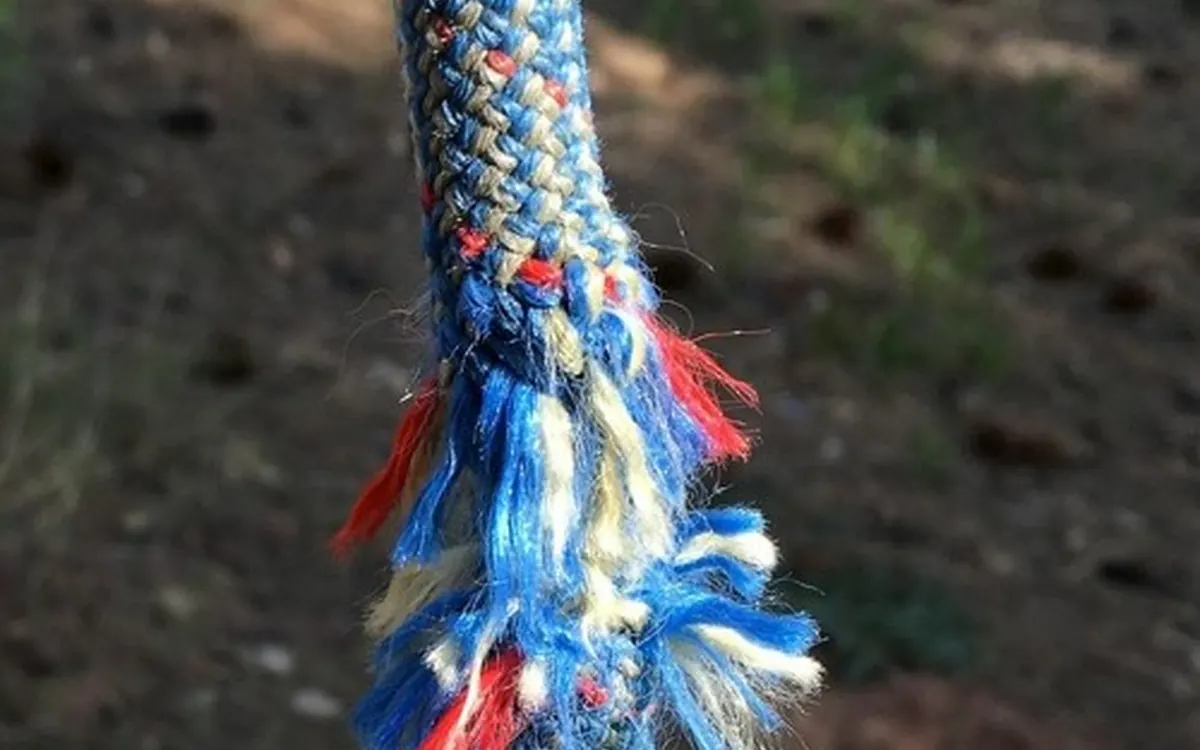
Is anyone else feeling a little frayed around the edges? Here is an interlude where I give some insight on how to avoid snapping under the pressure of our world, and even how to fray with grace. Send me an email at ravmikefeuer@gmail.com if you want to set up a counseling session about how to take these ideas deeper into your life.
About this episode
After a hectic week where things fell apart again, Rav Mike offers free-flowing thoughts and asks whether anyone else is feeling a little frayed. A neighbor with four children once told him that three kids is about learning to juggle, and four is about accepting how many balls you will simply drop while you keep juggling. That is what fraying means, individual thoughts and actions coming undone from the whole like strands loosening before a thread breaks. Part of survival is learning to fray with grace, which flows from knowing that fraying is nothing to fear or be ashamed of. It is a sign that you are at your edge, which can be a growth edge or a breaking point, often hard to tell apart.
Fear of the edge is natural and even healthy. As a climber, Rav Mike was never afraid of heights, only of falling, and backing away slowly is not always a bad instinct. There is no shame in fraying either, though that is easy to forget in the airbrushed smoothness of a world we glide through with a finger on a screen. His wife once came back from the park with a revelation about why life felt harder for them than for their Israeli neighbors, that none of the neighbors grew up believing life was supposed to be easy. When a pretty existence becomes the standard, we feel ashamed of how rough things honestly are, and things that are hard become harder once we feel bad about them being hard.
Snapping goes beyond fraying, when a thread actually lets go, in an angry moment, a bad decision, or something weightier that was binding an important part of life to the whole. The tools of managing fear and shame still apply, used with caution, since snapping carries larger consequences. Do not build a world in which you know you will snap, and do not be afraid or ashamed to ask for help before you do. A priori fear of snapping can be paralyzing, freezing us in the face of a decision that must be taken. The greater danger is freezing before life itself, since a sudden static state pulls strangely on the whole system, and whatever is weakest pops because of that fear rather than despite it. Stay loose.
The fear after a snap is that you might fail again, and here is good news, you are far more resilient than you know, and repair is almost always possible. Choose life and move forward. Shame must be managed too, since too much of it leaves you unable to look your actions in the face and fix them, while none at all means you never examine them. The deeper answer is compassion. Rav Mike's heart goes to Jacob, the threefold cord that is not readily broken, who binds the pieces of a difficult life into a whole because he never snaps. His strength is rachamim, compassion, the union of Abraham's chesed and Isaac's gevurah, boundless love married to the power of drawing lines.
Rachamim shares its root with rechem, the womb, and that tells us what compassion really is, the capacity to hold space for someone to come to be. A judge can take the snapshot and sentence the boy who broke his teacher's nose, or widen the frame to ask how he came here and where he will go. Compassion is no compromise and no blind eye, an activist stance that builds a vessel to hold life's difficulties. Rav Mike asks us to cultivate it first for ourselves, then for our families, and then for Am Yisrael, a people failing forward for three thousand years. Each of us is a thread in the weave of creation, ducking and turning around one another, and if we hold that compassion, we will not lose our thread.
Key ideas
- Fraying is strands coming undone from the whole, and part of survival is learning to fray with grace.
- Fear of the edge is healthy, and there is no shame in fraying in a world that airbrushes life smooth.
- None of the Israeli neighbors grew up believing life was supposed to be easy, and so felt less ashamed of hardship.
- Ask for help before you snap, and beware freezing before life, which makes the weakest thread pop.
- You are more resilient than you know, and repair is almost always possible, so choose life and move forward.
- Rachamim shares its root with the womb, the capacity to hold space, for yourself, your family, and Am Yisrael.
Chapters
- 0:01 Feeling frayed these days
- 1:04 Juggling and dropping balls
- 2:10 Fraying with grace
- 4:31 Life was never supposed to be easy
- 5:43 Wearing frayed edges with pride
- 6:51 When a thread actually snaps
- 8:07 Ask for help before you snap
- 9:16 The danger of freezing
- 11:25 Staying light-footed
- 12:31 You are more resilient than you know
- 14:45 Jacob, the threefold cord
- 15:56 Chesed, gevurah, and rachamim
- 17:00 Compassion is not a compromise
- 18:03 The womb; holding space to become
- 20:18 Compassion for Am Yisrael
- 22:30 Weaving the fabric of creation
Who, where and when
People
Rav Mike Foyer, Rav Mike's wife, Jacob, Abraham, Isaac, Khalil Gibran
Places
Israel
Texts
Kohelet on the threefold cord
When
2020 CE: the pandemic begins, 2022 CE: rounding the corner on year two
Read the transcript
Out of suffering have emerged the strongest souls, said Khalil Gibran. The most massive characters are seared with scars. I don't want to overplay my suffering or anything, but I think it's time we talked about this. I'm Rav Mike Foyer, and this is The Jewish Story. Interlude, Don't Lose the Thread I have to ask, is anybody else feeling just a little bit frayed these days? I've had a bit of a hectic week, and as part of it, things have fallen apart once again, and that gives me an opportunity to bring to you a little bit more of free-flowing thoughts on the situation at large. I have a listener, friend even, out there who's constantly hocking me to give a little bit more insight of what it is that I do in narrative therapy, in my spiritual counseling practice, And I thought maybe we could take a particularly timely aspect of the work and apply it somewhere I think it really relates to us all.
So like I said, feeling a little frayed? I once asked a neighbor, friends of ours, who were the first to have four children, what it was actually like. At the time, I think we might have even only had two. It could have been three, but we certainly weren't there. And she told me, well, if having three kids is about learning to juggle, four is about learning to accept how many balls you're simply going to drop, and yet keep on juggling. And that's what feeling frayed is really all about. There are dozens of things that aren't getting done. Countless others which are done less well than I want. There's a feeling that I'm doing too many things at once. This may sound familiar. Because what do we mean when we say something is frayed?
It means individual thoughts and actions have come undone from the whole, like a thread that begins to fray, throwing those little strands off before, God forbid, it actually breaks. Now, I did have four kids, by the way, and then five. And I have to say that in many ways, that experience doesn't begin to touch what we've all been going through for the last two years. And I think we need to spend a little bit more time talking about it, not just venting, but contemplating what it is we can learn and how it is we can survive. Because part of survival is learning to fray with grace. And fraying with grace all flows from knowing that fraying is nothing to be frightened or ashamed of. In fact, in many ways, it's simply a sign that you're at your edge.
And remember, even though many people aren't quite so comfortable at that edge, It can be a growth edge or a breaking point. The two are often hard to distinguish. And sometimes which one you're looking at depends a lot on the attitude you bring to bear. And of course, the tools you have to manage it. So fear and shame are pretty much the challenges we face when dealing with being afraid. Now, fear of the edge is natural, even healthy. I remember when I was a climber and people would say to me, aren't you afraid of heights? I would say, no, no, no, I'm not afraid of heights. I'm afraid of falling. If you don't quite know where the edge is or it gets right up there in your face sometimes in life, it's not such a bad instinct to back away slowly.
And of course, your growth edge is rarely pretty or free of cost. So like I said, you can't be afraid to fray. Sometimes, in fact, you have to put yourself out there into a situation and get a little bit messy. Of course, there's no shame in fraying either. That's really easy to forget in the sort of evil smoothness of the world we've created for ourselves. You noticed where we spend so much time watching, gliding through time with our finger on the screen, airbrushing life as it pops up before us, lest we have anything ugly. I mean, nobody wants me to expose my warts on Instagram, which I can understand. Nonetheless, there's real danger. We've gone well beyond paving the world to make it smooth for our travel.
We've begun to shape our experience of our own lives in a way in which doesn't really allow for the ugly texture, which often gives it its real substance. Because the problem is when a pretty existence becomes the strive for standard in life, I can quickly come to feel ashamed of how rough things are for me in honest actuality. And what's worse, things are hard enough being hard. But we all know they're made infinitely harder when I begin to feel bad about how hard they are. Like there's something wrong with me because I struggle. I'll never forget when we had three or four kids, my wife and I, we used to look at the Israeli families in the park, and in particular, the mothers who seemed a lot more relaxed than we were.
It wasn't looking like it was easy, but somehow it didn't seem as hard as it was for us. And one day, my wife comes back from the park, I got it, I got it, I got it. I had no idea what she was talking about at the time, but she said, I figured out why things seem so much harder for you and I than it do for our Israeli neighbors. I said, what? She said none of them grew up believing life was supposed to be easy. And that makes a big difference. See, because life was hard and we thought it was supposed to be easy, so we felt bad about it being hard. And that's what it means to feel ashamed of being afraid. We're looking around in the world and we're seeing how smooth it is out there for everyone who's, of course, only showing us what they want us to see.
And we begin to feel ashamed of that frazzled fray, the edges where my individual actions, my thoughts, even bits of my relationship start to come undone. You know, I feel shame for my frayed edges. I hide, deny them, sometimes even to myself. And that's sad, since in the end we all share the experience of life coming apart when we reach the edge. And it might even be silly, because perhaps I should be taking pride in the fact that I'm growing, that I'm surviving in the face of such challenges, and my very frayed state is a sign. I wear it like a badge. So don't be ashamed to fray. You don't have to hang your warm places out in public. That's not what I'm asking you. But you don't have to hide them either.
And sometimes it worth wearing them as a mark of pride So fray with grace people Don be scared and don feel ashamed Now this is the first step because managing the messiness around the edges in a somewhat difficult situation is an important skill, but we've all been under an awful lot of pressure lately. What happens in life when a thread actually snaps. Whether you want to admit it or not, we have all snapped at one time or another and at some level or another. I'm talking about something that goes way beyond fraying. That sense that I'm not able to hold everything I'm doing together in a clear, tight thread any longer. Bits of my actions, some of my thoughts, perhaps even some of my relationships, they come unwell.
wound from the hole and I get that kind of fuzziness around the edges. That's not what I'm speaking about. Because snapping is when something actually lets go. It can happen in the moment. An action which has come so profoundly apart from the whole of my life that there's likely to be repair required in the aftermath or at the very least some pain caused when it does. the angry moment, the bad decision. You know what I'm speaking about, right? But it can be something more weighty as well. Because sometimes when I snap, that thread which let loose was actually binding an important part of my life to the whole. And that needs to be treated on a completely different level. Now, I find that the management tools of not being unduly ashamed or afraid to fray still apply when it comes to snapping, although use with caution, because by definition, snapping always has larger consequences than simply being a little bit, you know, around the edges.
Now, there might be parts of life, in fact, that I would pursue despite my frayed state. I'm willing to let some balls drop if I'm able to juggle the things that really matter to me, but you never want to build a world in which you know you're going to snap. So I think it's worthwhile to take some time to think about how to manage this because we all do it. I am telling you, people are under an incredible amount of pressure right now. And we all need to be on our A game, even if it feels like we're in round 11 of a 10-round fight. Anybody else have that feeling here as we round the corner on year two? And I want to say, do not be afraid or ashamed to ask for help before you snap. You can reach out to me, RobMikeFoyer at gmail.com.
I work with people all the time, helping them hold the pieces together. Not just hold them together, but to stitch them into a little bit of a tighter weave. We'll speak about that at the end. But even if it's not me, even if you want a loved one or a friend, have a beer, a cup, a coffee, give yourself a nap. Do something for yourself before you snap. Now, like I said, these tools I mentioned before of avoiding undue fear or shame are relevant here. A priori fear of snapping under pressure, the feeling before I ever get into the game that I might blow it, is dangerous because it can be paralyzing. You need to be ready to act. When we freeze in the moment, facing a decision or an action that part of us knows must be taken, And most of the time, that failure has consequences which are manageable.
Although, you know, we all know that the stakes in any given moment are potentially quite high. But the bigger danger, and this I see when speaking with people about their life, particularly now when so many pieces seem to no longer fit in the way they used to even a year ago. Freezing in the face of life in general. if I let myself get gripped by a fear that I'm going to snap under the unbearable pressure of the multiple realities of my life, that's when real trouble beckons. Life is dynamic, and we always have to remember that. The threads of our existence are always pulling, going slack, twisting, turning, making knots. And really, what we're aiming to do is distribute our energy through all those pushes and pulls in a productive and even joyful fashion.
Think of dancing. If I freeze in the face of that, given pull of my reality, because I'm afraid that some threat of my life won't bear the pressure if I tug anymore, or if I let one go slack, it will go forever. What often happens because of that fear is that the sudden static state I find myself in pulls strangely on the entire system, and therefore whatever is weakest actually pops despite my fear or really because of it. So that's the danger of too much a priori fear, of facing the world afraid that you might snap because snapping happens and in order to avoid it, it's best to stay loose, people, however you do it for yourself. I know that asking you to be light-footed after the whole world has been grounded for two years might sound a little bit ridiculous, but you know what?
Tune in come Purim time and we'll talk about joy and how to get it for now, just remember that a priori, worrying about snapping, being afraid of it, might not be your best strategy. And the nature of the fear I feel after the fact, once I've already snapped once, is clear if I failed once, I might indeed do it again. I have seen a lot of breakdowns in my own life, in my community, in my counseling practice, and I've got good news for you. you're way more resilient than you even know. I don't necessarily think we all want to find out quite how resilient we are, but the truth of the matter is the fear that we feel after something has snapped that it might happen again should be accompanied with the fact that most of the time we are able to put things back together.
And sometimes there's a lesson in why I snapped, whether it was a weak thread to begin with, whether it wasn giving attention to where it was worth or again that part of a longer conversation But just believe me when I tell you I speak from a broad experience you are more resilient than you even believe And along with that repair is possible There are very few things in life which can't be, if not fixed, at least put back together in the semblance of a life you want to live. And ultimately, that's the real answer to the fear of a repeated failure. Choose life and move forward. Snapping happens. The alternative of not choosing life is nothing that any of us really want to face. So in addition to managing the fear around snapping comes that element of shame.
And this is actually quite crucial if a little bit less involved. We have to manage the shame we fear, we feel, when we really break in some way. Because if I'm too ashamed of what I've done, I'll never be able to look it in the face. And then I'll be incapable of actually fixing it. However, if I'm not ashamed at all, I won't bother examining my actions to begin with. So there's a fine line between the two which has to be found for each of us. So that's for fear and shame. But what about managing my life so that I don't snap? Like I said, at least not irreparably so. In order to do this, we don't just need to manage fear and shame. We have to cultivate compassion. I gotta say, in the contest for favorite biblical figures, my heart goes out to Yaakov Avino, Jacob III of the patriarchs.
Now this might strike you as a bit strange, because a quick reading of his life story could give you the image of a crafty character at best, somebody with a sketchy relationship to the truth, whose family relationships do leave something to be desired. But sometimes when I read his story, I get a sense that he's actually the epitome of someone who's holding on so tight above that his feet never actually slip below, even though he's traversing about as difficult a terrain as the Bible offers anyone. And this is why we call Yaakov the threefold cord, that threefold cord which is not readily broken. Not just because he combines the spiritual paths of Avraham and Yitzchak into a sustainable vision for a people, that he transforms those individual divine covenants into not just a familial, but ultimately a national covenant.
it's also because of the end of that verse. The 3-4 cord is not readily broken. Yaakov is uniquely able to bind the pieces of his difficult life together into a whole, largely because he never breaks. And his strength, his ability to stand up in the face of difficulty after difficulty, I think largely comes from the fact that he is the embodiment of compassion, what we call Rahamin in Hebrew, right? I said, and perhaps you're familiar with this idea, that Yaakov combines the spiritual path of both Avraham and Yitzchak. But what do we mean by this? Classically, when we talk about Avraham, we speak about him in terms of chesed. He's that boundless generosity, the unconditional ability to love. And that's very important.
On the other hand, we have Yitzchak, who we say is Gvurah. He's that mighty power of drawing lines. The very nature of conditionality which allows us to be discerning in the world and figure out what is right and what is wrong. Just as important. But when you put them together, you get a very important quality of rachamim, of compassion, I think is the best translation. Not mercy. Because to me, when we say mercy, it brings to mind the sort of cultural package of the West and largely Christianity, in which mercy basically is spiritual welfare. That, what am I supposed to do? Humanity, or perhaps when I look in the mirror, I don't deserve to exist, but I'll have mercy on myself. I'll let myself off the hook.
I want to tell you, compassion is not a compromise. It is not a stance that allows me to turn a blind eye to the grim realities and avoid judgment. On the contrary, it's an activist approach to building a vessel for my life that allows me to hold all the difficulties in a way in which is really constructive. What do I mean? Rachamim, the Hebrew word for compassion, has a three-letter root, as is true of all Hebrew words, which comes from rechem. Rechem means womb. A womb tells us exactly what real compassion is. It's the capacity to hold space for someone to come to be. I don't have to judge you in the snapshot as I see you. Like a judge sitting in the court when a criminal comes before him and he says, listen, you took that orange juice bottle and you broke the nose of your math teacher.
This is your sentence. True story, by the way, with a camper I once had. That's a snapshot of this boy's existence and an accurate judgment. Rahamin widens the frame. It's the judge looking at the question, how did this boy come to this place where he would throw a bottle at his math teacher and break her nose? And furthermore, where will he go should I judge him on that act? That ability is an ability to hold space which understands where we've come from and where we are heading. It's holding space for someone to come to be, which of course is exactly what a womb is. And what I want to tell you is that right now, the most important capacity that we can all cultivate in order to avoid that snap. Remember, being afraid, that's a reality of life.
And it might even be a desirable one because I'm sure there are many things you want. But in the face of the pressures that we are all bearing now and really who knows what to come you don want to snap And aside from managing the fear and the shame like I mentioned only a few minutes ago the next step, and really the most important, is to cultivate compassion. First and foremost, for yourself. You need to understand, not intellectually, but really, in your heart and in your deepest kishkas, for lack of a better term, in the pit of your stomach, You need to feel compassion because you came from somewhere before you're faced with the pressure that you feel like is going to break you in the last two years.
And there are places where you dream of going. This isn't a letting yourself off the hook. It's giving yourself the space to grow through. And it's maybe a little bit harder for most people to apply to themselves, sadly. But when you're looking at your spouse or your children, all these people, your friends that you've been trapped in the house with, locked down in the community, or maybe just feeling a little bit boxed in by the world that used to seem so large, when you look at them, you've got to have an attitude of holding space. It's positively redemptive, I promise you. Right? We have to have this compassion for ourselves. In detail how to cultivate it, I would encourage you to reach out to me.
Rob and Mike Foyer at gmail.com. I'm happy to have a conversation about it. But I also want to add that beyond our personal life, and certainly toward our spouses and our children and our friends and our parents, I'm going to make a call here that you also have a little bit of compassion for Am Yisrael. Why? Because, you know, if being afraid means a little bit of the fiber in a thread starts to let go, those individual actions and thoughts and bits of relationship that you're not able to keep aloft and God forbid, snapping means there's a thread in that cord that breaks, but still ultimately there's something that binds it together and that's why you have to have Rachmanut, I want you to have compassion on Am Yisrael whether you're a Jew or not I invite you to consider the fact that there's one thread that binds the world together on some level.
Well, it's not really a single thread. Each of us is made up of all our experiences bound together into the thread of our lives. And when we bind ourselves to one another, we can make families, communities, peoples a species. And I think at the core of that story is a sense of a people who were put on a mission and have been, frankly, failing forward for 3,000 plus years. Yeah, I said it. Feeling forward because we have compassion. We have the ability to hold the space, to remember where we were, to look who we are in the face, and to have a hopefulness about where we're headed. Have some Rachmanut on Am Yisrael. Please, it's been a long road. That doesn't mean letting us off the hook. I'm not looking for a free ride.
Because remember, a Rechem has strong walls which are nurturing at their touch. there has to be a holding of a line. In my own life, I need to tell myself what's right and wrong. When I face my spouse, I need to know my boundaries. When I look at my children, I certainly need to teach them where the lines in life are. But when we come up against those lines with one another, it needs to be with that chesed, with that unconditional desire that there be life in this contact. And I implore you to have it on every level because each of us is bound together in some way. Rachmanut on yourself. Rachmanut on Am Yisrael. And frankly, if you have a real hope for redemption, on all creation. Because, like I said, there isn't just one thread.
Each of us is bound to another family, community, nation, species. In fact, there's not even a single cord that binds us, even though I do think that Am Yisrael has a particular role to play in putting the pieces together. But in a sense, we're all participating in the warp and weft of creation. Each of us, in our own thread, is pushing forward, diving under, jumping over in the weave of the fabric of the world. We tie our lives together, duck, turn around each other, sometimes tying the knot, and sometimes getting a little bit tangled. But if we really have faith in ourselves, and we're able to embrace with compassion where we've come from, where we are, and where we hope to be, then we won't lose our thread.
We won't be ashamed to fray, and we'll have the compassion that releases the tension. Because you know what? Sometimes if a thread breaks, something rather big hangs on it. and we can look out for one another to make sure that nothing serious snaps. And if we're lucky, then what we'll experience is that the challenges that are putting those pressures on us right now are making a beautiful tapestry out of our existence together. So that's what I have to say on this little off-the-cuff enjoinder, that we all take a little bit more time to put the pieces together in a way in which don't be afraid. Learn to fray with grace. don't let yourself snap have a little compassion for yourself and those around you and the world and last but certainly not least keep picturing how all the pieces are put together as you weave the thread of your life forward in your own story God bless you be strong and be in touch if you need I just want to thank some folks I want to thank all the folks who keep this show happen to make it free and widely available I want to invite you to join them you can go to my website that's jewishstory.co in the upper right hand corner there's a button that says be a patron, you can click on that to make a little bit of per podcast support, I want to thank the Land of Israel network, that's thelandofisrael.com they're building a center for spiritual transcendence in the heart of Judea I want to thank the Pardes Institute p-a-r-d-s.org.il for throwing the doors of the Beit Midrash open as wide as possible, and I want to thank you as always for listening, I'm Rav Mike Foyer, and this is the Jewish Story
More from Season 5
TJS S5E10 Menachem Begin 1977 election aftershocks
Menachem Begin's upheaval victory in the 1977 Israeli elections was the beginning of revolutionary change for the Jewish State, not the end. Some who rejoiced will be bemused,...
Play Episode
TJS S5E11 - The Camp David Accords
The domestic political upheaval of the Menachem Begin victory in 1977 was followed quickly by an international earthquake in 1978 when Israel and Egypt agree to make peace....
Play Episode
TJS S5 Interlude - Interview with Settler Leader Daniella Weiss
It is rare that someone who begins a movement is still leading strong fifty years later. Daniella Weiss was part of the original settlement of Judea and Samaria...
Play Episode