
TJS S5E13 - Settler Violence? The Jewish Underground of the 1980s part II
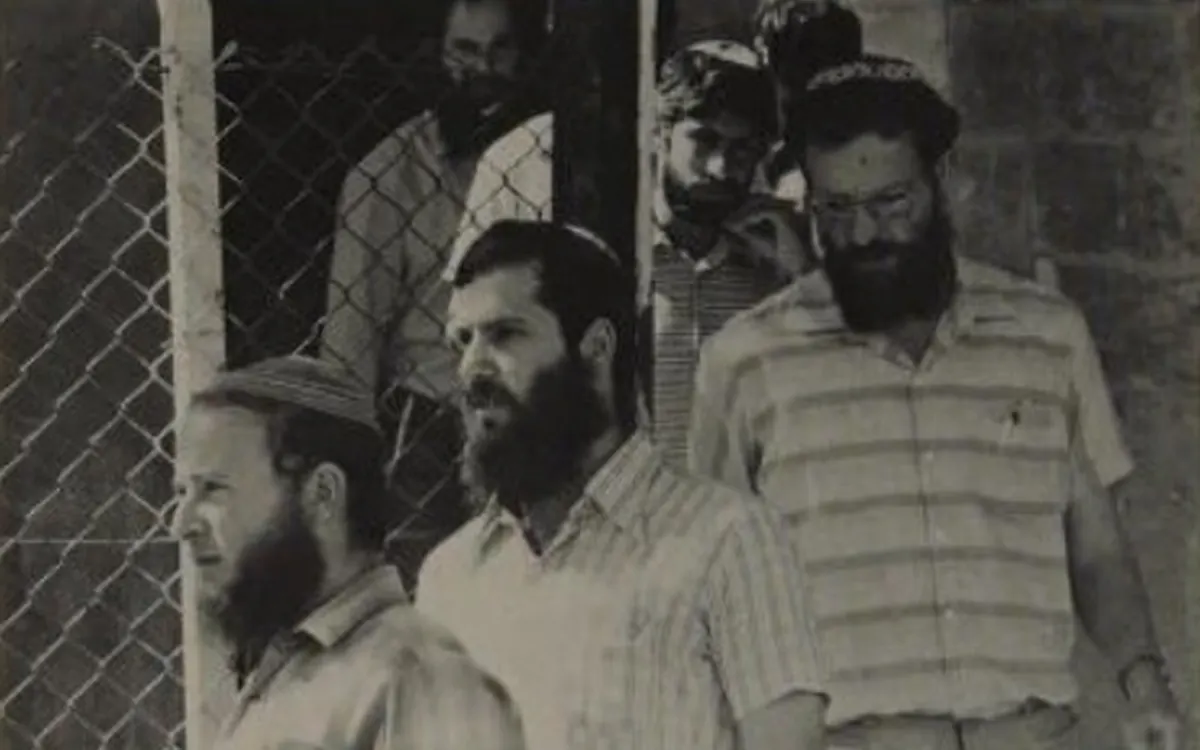
Today the media loves to discuss "settler violence," but it is rarely interested in its historical origins. This episode picks up the story of Yehuda Etzion and Menachem Livni who had set out to trigger redemption by any means necessary. As it turns out, events went in another direction and their actions continue to have consequences down to our day.
Learn about the ambush in Hebron at the Beit Hadassah building that killed six people and other Arab terrorist attacks. This led to the deportation of Hebron mayor Fahd Kawasme, and two other PLO affiliated West Bank Palestinian leaders. The Jewish Underground activities resulted in the attacks on three Arabs mayors in Judea and Samaria: Bassam Shakaa of Shchem, Karim Khalef of Ramallah and Ibrahim Tawil of El Bireh. Find out how this chapter in Israeli history effects us today.
About this episode
Violence has a seductive power and we rarely take the question head on. Rav Mike opens with the bully and the nose, with Rav Shlomo Riskin’s teaching that haba lehorgecha, if someone comes to kill you, kill him first, is the Torah’s most absolute moral statement because it means evil exists, and with Ernest Renan’s observation that unity is always brutally established. He adds Frantz Fanon’s collective catharsis, the violence of the colonised that the world celebrates, and names the double standard: settler violence and Palestinian violence often use the same methods and are judged by different scales. His demand is simple. If we are going to talk about Jewish power we have to talk about violence, without the illusion of purity of arms and without Machiavelli.
The history begins with Menachem Begin presenting Camp David to the Knesset: autonomy for the Arabs of Yehuda, Shomron and Gaza, the civilian administration withdrawn, the army staying. Rav Mike reads that as ceding social and economic sovereignty while keeping territorial sovereignty, a model he believes could work, and then shows where it broke. The 1976 municipal elections, held by the Rabin government under a widened franchise, put PLO-aligned nationalist mayors in 18 of 24 councils. Begin’s government stripped the councils of powers and cultivated village leagues; the Palestine National Front and then the National Guidance Committee organised resistance to Camp David; and politics and violence became intertwined.
On the night of May 2, 1980, six yeshiva students were murdered outside Beit Hadassah in Hevron, a year after Rabbanit Levinger and Sarah Nachshon had led women and children back into the building. Rav Mike follows that night through Zambish, who had warned the military governor an hour before Shabbat and was told to sleep quietly; through the late meeting at which Ezer Weizman resisted expulsions until Raful Eitan said if not now, never; and through the helicopter that carried the mayors of Hevron and Halhul and a sheikh to the Lebanese border.
Then the Underground. Menachem Livni, who had been watching the Hevron mayor’s house since the murder of Yehoshua Saloma on Tu BiShvat, decided the tit-for-tat was over and it was time to strike the head of the snake. Yehuda Etzion, whose plans to blow up the Dome of the Rock were already months old, agreed on condition that the two of them stay out of the direct action. Thirty days after the massacre, on June 2, 1980, bombs went off under the cars of the mayors of Shechem and Ramallah. The bomb left at the mayor of El-Bireh’s garage blinded the Druze army sapper Suleiman Hirbawi, and Etzion wrote him an anguished letter from prison. Rav Mike reads a 1983 study in which 28 percent of settler men admitted to vigilante activity and draws the conclusion: when private citizens use violence to keep order, the state has lost its monopoly and is no longer fully sovereign.
The debate inside the Underground is the heart of the episode. Etzion, the convictional criminal who treats the horror of violence as proof of its necessity, argued that only a government may declare war and that revenge would derail redemption. Livni and Shaul Nir set the agenda instead: the Islamic College attack after the murder of Aharon Gross, and finally bombs on Arab buses, where they were arrested. The question of violence and sovereignty, power and revenge, Rav Mike says, has only become more pressing today.
Key ideas
- Jews are just like everyone else, only more so. Telling the Jewish story honestly means telling the story of Jewish violence.
- Begin’s Camp David model, autonomy without territorial withdrawal, depended on partnership on the ground that the politics of 1976 to 1980 destroyed.
- The 1976 elections brought PLO-aligned mayors to power; Begin’s government answered by stripping their powers, and the National Guidance Committee answered with strikes and incitement.
- Beit Hadassah, May 2, 1980: six students murdered in Hevron, three Arab leaders deported to Lebanon that night.
- The mayors’ cars, June 2, 1980: the Underground’s first attack, and the sapper it blinded, show how violence escapes the circle its planners draw.
- When citizens use violence to maintain order, the state has lost its monopoly on force. The Underground is a story about sovereignty.
Chapters
- 0:00 The seductive power of violence
- 1:08 Haba lehorgecha: moral clarity and its cost
- 3:22 Renan and Fanon: unity is brutally established
- 5:37 Settler violence, Palestinian violence, and the whole story
- 7:50 Begin presents Camp David: autonomy and sovereignty
- 11:07 The Palestine National Front and the 1976 elections
- 15:42 Begin's government and the village leagues
- 16:50 The National Guidance Committee
- 17:58 Beit Hadassah, Hevron
- 19:15 May 2, 1980: six murdered outside Beit Hadassah
- 21:33 Mayor Fahd Qawasmeh
- 23:48 The night of the murders: expel the mayors
- 27:13 Their blood will not be silent
- 28:23 Livni and Etzion decide to act
- 33:07 Striking the head of the snake
- 35:20 June 2, 1980: the mayors' cars
- 36:26 The sapper Suleiman Hirbawi
- 37:35 Reactions, denial and amnesia
- 39:53 The Shin Bet hits a wall
- 41:03 Etzion, the convictional criminal
- 43:19 Esther Ohana, the Islamic College, and the buses
- 45:35 Violence and sovereignty today
Who, where and when
People
Menachem Begin, Moshe Dayan, Ezer Weizman, Raful Eitan, Fuad Ben-Eliezer, Menachem Livni, Yehuda Etzion, Shaul Nir, Rav Moshe Levinger, Rabbanit Miriam Levinger, Sarah Nachshon, Zambish, Fahd Qawasmeh, Bassam Shaka, Karim Khalaf, Ibrahim Tawil, Suleiman Hirbawi, Rav Shlomo Riskin, Ernest Renan, Frantz Fanon
Places
Beit Hadassah, Hevron, Kiryat Arba, Shechem, Ramallah, El-Bireh, Ofra, Rosh HaNikra
When
September 1978: Camp David, April 12, 1976: municipal elections, May 2, 1980: Beit Hadassah murders, June 2, 1980: the mayors' cars, 1983: Esther Ohana, Aharon Gross, the Islamic College
Read the transcript
People sleep peacefully in their beds at night, said George Orwell, only because rough men stand ready to do violence on their behalf. Now, I'm not looking to do violence on anybody's behalf, but I am feeling a little rough around the edges. I'm Rav Mike Feuer, and this is The Jewish Story. Season 5 Episode 13 The Jewish Underground Part 2 No, violence seems to have a seductive power. Our media's full of it. It rotates around our discourse, and nonetheless, we rarely take the question head on. I mean, on one level, it presents itself as the most obvious form of pragmatism. As an American parent of Israeli children, I have come to recognize that sometimes the solution to the neighborhood bully is not moralizing, agonizing, philosophizing, and telling your children why that bully is such a bad person, it's telling them the next time he does that, pop him in the nose.
And in certain contexts, violence seems to offer a stunning moral clarity. I will never forget that at the height of the second intifada, what some of us still call the Oslo War back in 2002, when Rav Shlomo Riskin told us in sure in our class that the most absolute moral statement that the Torah makes was haba lehorgecha hashkem lehorgo, and someone's come to kill you, kill him first. Because as he told us, that means that evil really does exist, and that the proper response to it is not negotiation, reframing, or complex philosophizing, it's to destroy it. But of course, as soon as I begin to speak of the utility of violence in getting the job done, or the moral clarity it might presuppose, the Greek chorus of faux moral culture is going to begin to preach about its cost, or perhaps even the intrinsic evil of violence.
And one of the greatest challenges I feel that we face in Telly and Jewish story today is the sense held both by Jews and non-Jews that our national rebirth is somehow contingent on the moral purity of the methods we use to achieve it, not that I'm advocating a swing in the other direction, and that I'm going to start claiming that the ends simply justify the means that we can do whatever we need to survive. But I would note that the illusion that we've had a purity of arms is just that, it's an illusion. It may or may not be a noble aspiration to use force only in defense, but it's never a reality in the complex nature of the world in general and in the process of national rebirth in particular, and that's why telling the cold historical truth about how we got to where we are is often frowned upon by lovers of the simplistic version of the national story.
As the French philosopher Ernest Renan said in his essay, what is his nation which you haven't read it? He wrote an 1882 and it's just as relevant today as it was then. He says, historical inquiry, that's what we're doing if you missed it. In effect, throws light on the violent acts that have taken place at the origin of every political formation. Even those that have been the most benevolent in their consequences, unity says Renan is always brutally established. You notice that even the most benevolent in their consequences, there are still things we'd rather not think about. It also troubles me that in the eyes of the world today, in that strange moral compass that seems to guide us, not all violence is created equal.
In his work, Black Skin, White Mass, West Indian political philosopher Frantz Fanon, introduces the idea of collective catharsis. Now in ancient Greek, catharsis meant to purify cleanse or purge, and when Fanon used it, he's speaking of the colonized subject's experience of violently ridding himself of colonial rule. Now here, violence isn't just a means toward the ends of external liberation, throwing off the yoke of the foreign oppressor, it's an internal process which is meant to remove or if not meant, removes the feelings of self-loathing and inferiority that have internalized after generations of that foreign oppression. This is the type of violence which is being celebrated around the world.
That struggle for national liberation, it's what causes people to ennoble children who will throw rocks through windshields in the struggle for their self-hood. In our story, it seems that collective catharsis is applied to some and not to others when you watch the talking heads on television. They will speak at the same time about the horrors of settler violence and the understandable and even noble struggle against occupation. Now I'm not asking you to take sides, I am however insisting that you see the whole story because sometimes those two groups are using the exact same methods of violence and if you condemn the violence for violence's sake, then you have a question to answer which is why?
If you're going to tell me you're taking sides and you believe one side's cause is just and the other one is not, so fine, we can discuss that. But this somewhat hypocritical focus on settler violence instead of asking the question of how did we get here, what are they trying to achieve? Or by the way, the flip side, this somewhat hypocritical focus on Palestinian violence instead of asking the question of what are they after and how do we get here? Well that's not serving anyone. I want to look at the whole story and the truth of matter is Jews are just as capable of violence as any other people remember, the Jews are just like everybody else, only more so. Now the world however, loves to see this as a lowering of our moral status as opposed to the elevation of our struggle because you may think we have a state but I got news for you.
When you've been colonized, body, mind and soul for 2,000 years, it's going to take more than 70 odd years to throw off that yoke. But the world loves it. Every time we slip, every time we choose violence, they shout, see, they're Nazis just like anyone else. There's anyone else so frequently compared to their mass murder as I think not. And we ourselves, meaning the Jews, love to live in denial. For two generations of American Jews, it was, oh no, Jews don't do that. Right? Whether it was excess drinking domestic abuse or playing football, no, no, Jews don't do that. And within Israeli society, we've been insisting that our arms are pure, sometimes even as our sons and brothers are gagging their hands, quite dirty, I mean after all, read the news.
We need to talk about violence. And I think it needs to be part of that larger discussion of Jewish power. Otherwise, we're going to be trapped within our own illusions. Or the false morality that the world projects through media and politics, unable to make real moral decisions, to act clearly when required, to use the means necessary to achieve our goals and to restrain our children when that's what's required. The comfortable aspect of exile, never forget, was the moral luxury of not having to face those issues, at least not on the national scale. And that shouldn't be replaced by some polyanna attitude that our national rebirth is free of violence, or a Machiavellian approach that coldly accepts its reality, more than anything else.
If the leaders don't lead on this question, the people will find someone else to follow. The Prime Minister Menachem Begin presented the camp David Agreements to the Knesset. His focus was on selling the potential for peace with Egypt, Israel's most powerful enemy. During the visit of President Sadat to the country and to Jerusalem, a tremendous agreement was achieved already, namely, no more war, no more bloodshed, no more attacks. As we are very grateful to President Sadat, it is a great moral achievement for our nations, for the Middle East, indeed, for the whole world. But many of those about to vote on the accords were just as keenly interested in the question of how those accords would affect Jewish sovereignty over Yehuda, Shomron and Gaza.
And if they listen closely to the Prime Minister, they could be forgiven for being somewhat confused. On one hand, Begin made it clear that autonomy for the Arabs of the land meant the withdrawal of Israeli sovereignty, said the Israeli military government and its civilian administration will be withdrawn. The Arab residents will elect on their own an administrative council, which shall not interfere in the running of their day-to-day affairs. On the other hand, Begin wasn't retreating from the defining aspect of state sovereignty, with a monopoly on the legitimate use of force to maintain order. He said, as regards our national security, the key point is that the idea is to remain in Yehuda, Shomron and Gaza.
We've agreed to withdraw a certain number of our soldiers, while the rest of the soldiers will remain, the soldiers of Israel, and only them will safeguard our national security. Now elsewhere, I've laid out for you the idea that we can distinguish between three dimensions of sovereignty, economic, socio-cultural and territorial, and perhaps we could make Begin's distinction fit this bill. Israel was willing to seed much of its socio-cultural and economic sovereignty, the day-to-day affairs, while retaining territorial sovereignty our army will remain. It's a complicated approach, but I really deeply believe it's possible. Of course, it would also require a fairly whole-hearted partnership from the two different peoples on the ground, which is why the real deal-breaker came in the later statement that the Prime Minister made, one which received almost universal approval from the Knesset, but which was based, in my humble opinion, on a fundamental misunderstanding of the reality on the ground.
He said the murderous organization, known as the PLO, an organization that Begin never failed to compare it to the Nazis, the murderous organization known as the PLO is not and will not be a factor in negotiations. Now, I'm not questioning the refusal to negotiate with an organization bent on Israel's destruction, nor do I want to right now dive into the discussion about the echoes of the Holocaust that always rang in Prime Minister Begin's ears, but in order to understand the eruption of violence, which lies ahead, and has essentially continued not only unabated but along the exact same patterns ever since, we need to understand how it's rooted in part, if not entirely, in the erosion of sovereignty, which means you need to hear the problem in declaring that, on one hand, air residents will elect their own leaders without interference, while on the other hand, placing the PLO beyond the political pale.
For nearly a decade, a political organization known as the Palestine National Front had acted as the PLO's proxy Yehuda, Shomron and Gaza. Since the end of the Yom Kippur War back in October of 1973, their focus was on showing strength through strikes, demonstrations, basically social organizing, often in support of events happening in the outside world like Yasser Arafat's 1974 UN appearance. That phase of activity culminated in many ways on March 30, 1976, with the first land day, whose disaster story we discussed back in episode 7. The Israeli responses to these actions tended to be, how shall I say it, swift and merciless. But the more PNF demonstrators were beaten or shot, the greater their political capital came.
Don't forget that equation. The willingness to suffer violence and use violence is instant political capital in the current situation. On the internal political front, meaning amongst the Arabs living in Yehuda, Shomron and Gaza, their mission was to consolidate a Palestinian national consciousness, something which was by far not a given, and it meant opposing any local leader who leaned toward the Hashemites and wanted to see themselves as an adjunct to the Jordanian Kingdom, or was willing to turn to Israel for patronage on the village level and simply let bygones be bygones with the whole national narrative altogether. In only weeks after land day, when municipal elections were held throughout the conquered territories on April 12, 1976, their efforts bore their first real fruits.
Now, when you read up on it, you'll find that many historians and political critics are baffled by Prime Minister Rabin decision to hold elections only weeks after land day. At a time that the PLO influence abroad, they just recently been declared the sole legitimate national representative of the Palestinian people, and at home they pulled off massive land day demonstrations was never higher. Furthermore, these were the first elections held under new regulations which expanded the franchise to a significant degree. Under the old Hashemite system which had been in place up until now, voting had been restricted to men above 21 and even included some requirements for property ownership, all of which served to keep power in the hands of the traditional landed elite.
People, or shall we say men, who tended toward an accommodationist stance with whomever they sought to be the ruling power. Now, under the new Israeli regulations, things were democratized, women and younger men were given the franchise for the first time, a change ironically which was protested by the Hashemite government as a grave violation of the 4th Geneva Convention. You can chuckle over that one later. The PLO on the other hand was overjoyed, and for the first time instructed their supporters to take part in the election, an act of normalization which until now have been strictly forbidden, and the results of course were predictable. PNF Slates captured 18 of 24 city councils, most by overwhelming margins, and their candidates became mayors of almost every single large city in Yehuda, Shomron and Gaza, and that new political face was younger, 67% were under the age of 50 and 10% were under the age of 30 and better educated, more than half had a higher education.
Nevertheless, despite their youth and what turned out to be both leftist and nationalist political orientations, they were still overwhelmingly from the wealthy and prominent families, something that caused Prime Minister of being and his advisors to conclude that despite what it looked like, no radical shift had really occurred. He and his labor government hoped to cultivate this new generation of leadership as the local alternative to PLO despite the views which they espoused, but that policy and whatever might have offered should have been successful was yet another casualty of the 1977 electoral upheaval within Israel. Because soon, Menachem Begin and the Likud were in charge, and they viewed the nationalist mayors and those city councils and the PNF altogether as a sign of rising Palestinian national consciousness, and thus as a critical threat to Israel's goal of extending sovereignty over the lands conquered in 67 as well as to her immediate national security.
And so Begin's government worked to weaken the control of these newly elected councils and mayors. They took away fundamental municipal powers like water and electricity placed them under the ages of the military administration. They also began to cultivate what they called village leagues, basically seeking to empower pro-Hashemite leadership, who were seen as more open to an autonomy agreement than the municipal bodies that had now been taken over by the PLO. Looked at together, these and other measures amounted to a sea change in the policy that had been created by Moshe Dayan in the first months after the 67 war. He and the labor government had been ambivalent about sovereignty and they questioned the need for total control of the territories for sake of security and practically were only interested in an economic integration between Israel and its new territory and therefore their posture was minimal armed intervention in civil domains.
As Dayan himself said, if the average Arab resident never saw an Israeli soldier, then that was all to the good. The newly coup government however saw the rise of the PLO in the 76 elections as a clear sign that policy had failed. The enemy was at the gates and their response was to push toward direct military control over increasing eras of civil affairs. Dayan's vision of autonomy had been rejected. In fact, he resigned from Begin's government in October of 79 over differences on this very issue. Now, we have to add into this mix, how news of the camp David accords themselves were received by the Arabs of Yehuda, Shomron and Aza after all, their fate had been discussed extensively without ever having been consulted.
In October of 78, immediately after the ratification of the court in Knesset, a series of public meetings were held throughout Yehuda, Shomron and Aza to devise strategies to oppose them. And the immediate result was the National Guidance Committee, a committee of 22 leaders of unions, professional associations, municipal officials, including many of those newly elected nationalist mayors. Politically, the National Guidance Committee spearheaded resistance to camp David and coordinated opposition to these village leagues and the civil administration, which quickly came into being under Begin's government. But, since politics and violence are deeply intertwined at this stage of our story, and perhaps altogether, their activities extended beyond the strictly political as well.
When Rabbanit Miriam Levinger and Sarah Nachshon led the return of women and children to Beit Hadassahh in Hevron that we spoke about in the last episode, they knew that the return of a Jewish presence to the holy city of Hevron was not without risk. We've come back to Hevron, the Jewish city that is many inhabited by Arabs, and we're finding a way of mutual living. There's a basic confrontation here about the sovereignty over the land of Israel. But I think that once the Jews themselves realized their strong eternal time, the land of Israel, then eventually the Arabs also will reconcile themselves to the fact of Jewish sovereignty over all of Israel. Many people have asked, how can you live here if the inhabitants here don't like you?
So I always answer in return that I don't think that wherever we were anywhere in the world, people particularly liked. And the basic question here in Israel is that we are no longer guests in a host country where we are dependent on the mood of the leader. That if the leader likes the Jews, then they can live well and if he doesn't like the Jews, then they had to better watch out. Here in Israel, we have our own government and our own army. And it won't be again like it was here. We are in our own sovereign land and we will find a mutual way of life together with the local inhabitants. Hevron will no longer be Judenrein, declared Rabbanit Levinger in a television interview, given soon after their surprise return.
There might be bloodshed here, but we won't leave Beit Hadassahh promised Nachshon in reply. And unfortunately, both were proven right. The Jews of Beit Hadassahh are still standing strong today. And we close laps episode with the horrible murder of 60 Shiba students gathered outside of Beit Hadassahh on the night of Shabbat. While Shabbat prayers, including women and kids, were on their way, as usually, from Me'arat HaMachpela to the Beit Hadassahh, they opened with a fire, another one with 600 grenades. From this direction, they all stood on the roofs. Have you any indication where the terrorists actually came from? What country? According to what we have found, we can assume that they are local. That terror attack took place on May 2, 1980, a little more than a year after the first return of Jews to Hevron.
And it was actually not unique, but rather the latest and most horrific fulfillment of Nachshon's prediction. Shiba student Yehoshua Saloma had been murdered nearby only a few months before, as he was shopping for fruit for Tu BiShvat in the Arab market. The Jews of Hevron, and in fact, those of Yehuda and Shomron altogether, saw these murders as part of a larger pattern. There had been a rising time of stonings, Molotov cocktails, threats and incitement all driven by the National Guidance Committee, whose local representatives were bent on driving them out from the foothold they gained in Hevron, in particular. The new mayor of Hevron was Fahed Qawasmeh, one of the young nationalists elected in 1976.
Originally, Qawasmeh was seen as a moderate by the military government. Someone known for his skill in maneuvering between the pressures of the extremists within his own camps and the demands of the Israelis who were now in charge. Government officials often complemented him publicly for this bouncing act, loudly praising his municipal achievements and attempting, of course, to hold him up, and perhaps that's why when Qawasmeh met with Yasser Arafat in a bid for a role in national leadership, something which was in fact illegal under Israeli law at the time, the government refrained from taking any action against him. He had since become one of the most influential members of the National Guidance Committee, and the hope was he would be able to guide them towards safer ground.
But the move of Jews into his town precipitated a major change in Qawasmeh's moderate attitude. Less than two months before the main massacre, he'd push for a protest strike and his words approached a declaration of civil revolt. This is the end of the period of protests, he said, rallies and petitions. We shall now have to use all available means. The mayor then called for the downfall of the Zionist empire and declared, I find it easier to be deported from my homeland than to accept the settlement of Jews in chevron. And now, after six boys were dead, he was about to get his wish. Zambish had replaced Manachem Livni as the head of the Kiryat Arba Administrative Council, and it was in that capacity that he met with the military governor of chevron only an hour before Shabbat on the day of the murders.
The security situation in chevron is deteriorating, he warned, and we're worried. The hostile incidents are becoming more frequent every day. The government poo poo disconcerned telling him to relax. You can sleep quietly, he said, we've sent in reinforcements. But unfortunately, as we've seen, Zeb Zambish got very little sleep that Friday night. While the army was hunting the perpetrators, and the Jews of Hevron were counting their dead and wounded, the commander of Yehuda and Shomron, Brigadier General Benjamin Fuad Ben-Eliezer appeared at Zambish's house to summon him to a late night meeting with the chief of staff. That was Shabbat, which meant that Zambish would only travel by car if it were a matter of life or death, but he was afraid that without his voice there, the military brass might decide to continue their policy of inaction and sweeping such murders under the rug.
And it was in fact that policy, which in his mind, had led to the bloodshed that night, and so he went in the car with Fuad. Defense Minister Ezer Weizman soon arrived at the meeting as well. He'd been hosting Egyptian Defense Minister at a dinner party when word of the murders came, and it stopped first at Beit Hadassahh before joining the meeting. There, Rabbi Levinger, spiritual leader of the Hevron community, had pleaded with him, it's all because of Qawasmeh, he created this atmosphere, throw him out, I beg of you, throw him out. When Weizman reached the government building, he found the discussions had progressed well beyond Qawasmeh. Coordinator of operations in Yehuda and Shomron, Danny Matt, had put forward a proposal to expel all the members of the National Guidance Committee, and it seemed that everyone assembled was in support.
Now, the Defense Minister quickly poured cold water on that idea, calling it a political nightmare, and he even resisted the compromise proposal of expeling Qawasmeh together with Mohammed Milhem, the mayor of nearby Halhul, and Hevron religious leader Sheikh Rajab al-Tamimi, citing legal constraints. In the end, Chief of Staff Raful Eitan convinced Weizman otherwise. He said, you can always call another lawyer and another legal advisor, but you should know that if this isn't the time for expulsions, there will never be a time. Tomorrow, we won't do a thing. The Defense Minister capitulated in the face of these blunt words, and the orders were given. Officers were dispatched to gather the three Qawasmeh Milhem and Al-Tamimi, who were told they were being flown to a meeting with the district commander.
But, after lifting off, their helicopter headed straight north to Rosh HaNikra, town on Israel's northern border, where the three were placed in a military vehicle and driven across into Lebanon. At the same time, military bulldozers were sent to destroy the Hirbawi family home in Hevron, from whose roof the terrorists had attacked Beit Hadassahh. Meanwhile, his work done, Zambish headed back to Kiryat Arba on foot in respect of the sanctity of Shabbat. He needed to speak to his people, because, though the military men may have thought their job was done, Zambish knew that for the Jews of Hevron, the fight was really just beginning. Lo yishtok damam, their blood will not remain silent, was the defiant cover page of the settler journal Nekuda in the wake of the six murders in Hevron.
Even before the bodies of the boys were in the ground, it was clear that Rae was boiling over in a way not yet seen among the Jews of Yehuda and Shomron. Rav Eliezer Waldman had lost three of his students in the attack, and he warned Defense Minister Ezer Weizman not to come to the funerals as, I won't take responsibility for the results, he said. As they laid one of the boys to rest in the old Jewish cemetery in Hevron, a group of youths, a costeter or a porter, thinking that he was the local porter of Israeli daily Maariv, that had given them such bad press and shouted, sonei Yisrael, enemy of Israel, and when they realized they were wrong, they turned their anger on the display windows of nearby Arab shops, the shattering of glass drowning out the cries of the mourners.
These displays of sound and fury faded quickly, just as much as they had come, but some of those gathered to honor the dead had more concrete ideas of revenge in mind. As one resident of Kiryat Arba told reporter, there will be a reaction, otherwise we may as well pack up and leave. Ever since the murder of Yehoshua Saloma back in February on Tu BiShvat, Menachem Livni had been staking out the house of Hevron Mayor Fahed Qawasmeh intent on revenge. He took no comfort in the fact that Qawasmeh was now exiled to Lebanon, but rather seethed at himself in his comrades, if only he hadn't been so lax he said, perhaps the six boys would have lived. It was a mistake, a hesitation that Livni was determined not to repeat.
And so he turned to Yehuda Etzion, with whom you may recall, he had been developing plans to blow up the Dome of the Rock for months. Etzion supported a revenge tech in principle, but he felt that no one who was part of their revolutionary redemptive plans should be involved lest the Messianic vision be derailed when they got arrested. Livni argued against him, pointing out that no one else existed to take responsibility. Furthermore, he asserted anyone who's out to blaze a trail for the Jewish people should also make sure that their blood isn't shed. I consider this a question of pikuach nefesh of saving lives that ought to defer even the Temple Mount Plan for a certain period of time. Faced with that argument, Etzion agreed, stipulating only that he and Livni themselves should not be involved in the direct action in order to protect their ultimate plan.
Both the men agreed that the National Guidance Committee was directly responsible for the escalation of attacks in Yehuda and Shomron. General Danny Matt, OC Central Command, was forced to admit this in an interview with Israeli Daily Maariv when confronted with the question, did Mayor of Shechem, Bassam Shaka actually go out and commit acts of terror only a few months before? He had responded, yes, beyond his duties as mayor and as one of the leaders of the Arabs in the territories. Even Prime Minister Begin told the Knesset Committee on Foreign Affairs and Defense when it was debating whether to exile Shechem. The mayor of Shechem is a major organizer of subversive activity in various planes and his role in the radicalization and intensification of this activity in Yehuda and Shomron is extensive and weighty.
And yet, when the ministerial committee decided to expel Shaka five months before the Beit Hadassahh murders, they were denied the power by the Supreme Court. Instead, Shaka was paraded through the streets of Shechem as a hero and he declared the failure of Israel to expel him as the greatest Palestinian victory since the Six-Day War. This was more than a high level political decision. When Shaka was given permission to stay on his mayor, the defense minister as a wise man called his counterpart in Egypt and told him the peace process will continue. That message trickled right down through the ranks of the army and the IDF began to show a market reluctance to maintain order in the field. Soldiers were denied authority to catch stone thores even after dozens were wounded on the road, sometimes seriously.
Others complained that with the new open fire orders, they'd rather run away from riders than shoot at them and find themselves in jail. It was at this stage that the Jewish residents began to take matters into their own hands as well, launching punitive missions, shattering windshields of parked Arab cards, adding chaos on the ground and deepening the sense amongst Jews of Yehuda and Shomron that they had only themselves to rely on. You know, in 1983, there was a study by an American PhD student of attitude amongst the Jewish community, specifically the Jewish community of Yehuda and Shomron, and he found that 28% of men and 5% of women questioned admitted to having participated actively in some type of vigilante activity.
68% agreed with the statement that, quote, it is necessary for the settlers to respond quickly and independently to air harassment of settlers and settlements. And the research concluded, the vigilanteism of Gush Emunim settlers is part of an organized strategy of social control calculated to maintain order in the West Bank. Now, if you unpack that, it's very simple to see what it means. When private citizens use violence to maintain order, the state has lost its monopoly and therefore, it's no longer really sovereign. Now, it is important to remember that the difference between a vigilante and a revolutionary in this context is that the vigilante feels that he's dragging the state to do what it ought.
And therefore, it doesn't necessarily see himself in opposition to the state. Nonetheless, remember, favors maxim that what a state is is a monopoly on the legitimate use of force to maintain order. So even if what you're doing is phenomenally in service of order, it is also legally opposed to the state. Now, with the murders in Hevron, Menachem Livni was actually finished with this tit for tat reprisal approach. There would be no more sneaking into Arab villages at night to break windshields and response to throwing stones or shooting out their electric lines in response to the Jews telephone lines being cut. It was time, he said, to strike the head of the snake. At first, he and Exion actually wanted to strike at a large part of the National Guinean's Committee's leadership, but that was incompatible with their other objective, that the attack should be clearly connected to the murder of the six boys at Beit Hadassahh, and therefore should take place exactly one month after the massacre, marking the end of their 30-day morning period.
And so the end, they decided to strike five men. Bassam Shaka, mayor of Shechem, Karim Khalaf, mayor of Ramallah, Ibrahim Tawil, mayor of El-Bireh, Dr. Hamzi Natsheh of Bethlehem, and Ibrahim Dakak, really the intellectual head of the National Guidance Committee, he lived in East Jerusalem. Using his skills as a combat engineer, Livni would construct small bombs designed to be attached by magnets to their victims' car. They made the bombs small enough to main, and not to kill. Their mission here was to send a message, and in many ways they felt that if the mayor survived, they would be a living order to all who came after them. The two then said about recruiting a team, approaching people one by one in whispered conversations, all of which opened with some variation of an idea as taking shape to avenge the murders at Beit Hadassahh.
There was reconnaissance, training, and even several snafu's. When the time for action came, the sixteen men involved, even only succeeded in planting three of Livni's bombs, time to go off when mayor Shaka, Karif and Tawil started their cars in the morning of June 2nd, 30 days in the Gregorian calendar after the Hevron massacre. On the morning of the attack, Yehuda Etzion sat in his second year, fear of statistics course at Hebrew U. His mind was far from the numbers on the board, but he had decided that it was a small class, and his absence would be noticeable and therefore an unnecessary risk. As soon as class ended, he rushed out, and whipped out his transistor radio on his way to the bus, flipping it on just in time to hear the radio announcer report that the mayors of Shechemon Ramallah had been seriously injured.
Anonymous at Eselin sabotaged the cars of Bassam Shaka and Karim Khalaf last night, said the announcer, security forces have launched a vigorous investigation to identify the perpetrators. Incidentally, today marks the thirtieth day since the massacre of his Shiva students, in Beit Hadassahh. As he boarded the bus, Yehuda Etzion heard the passengers around him discussing the news. I'd kiss their hands, exclaimed one old woman, but the announcer had said nothing about Mayor Ibrahim Tawil of El-Bireh. That terrible news came to Etzion only as he reached the hitchhiking post on his way back home to Ofra. The bomb that had been intended for Tawil, for technical reasons, was placed on his garage door rather than under his car.
And at Etzion's insistence, a warning had been passed along to the military, warning in fact which led to two people sitting in jail, but nonetheless, it had failed to prevent the tragedy. After the explosions under the first two cars, a team was sent to Tawil's house, and in the process of investigation, the bomb went off, blinding army sapper Suleiman Hirbawi. It was a horrible expression of the law of unintended consequences, and how violence has a circle which we often cannot constrain. And after his arrest, Yehuda Etzion sent Hirbawi an anguished letter begging his forgiveness and attempt to explain why it was that the action had been taken. But Hirbawi's blinding wasn't the only outcome. The immediate effect of the attack on the Mayor's was exactly what the two men had intended, lived in Etzion, I mean.
It struck fear in the heart of the Arabs of Yehuda and Shomron. And at Etzion, Maariv described the situation on the ground like this. It is a stunning, unbelievable phenomenon. Residents step out of their homes in the morning in fear and walk around their cars in fear. The tables have been turned. The Arabs are afraid of uninhibited Jewish terrorists. But fear and violence have a way of gaining a momentum all their own. The reaction to the bombing of the two Arab Mayor's cars was far more varied amongst Jews than it was amongst the Arab population. In private, many celebrated the act of revenge. Even military commander Fuad Ben-Eliezer joked to settlement leaders about blowing the legs off the mayor of Shechem.
It's a pity he said, didn't aim a bit higher. And many in Yehuda and Shomron were in fear themselves, thinking that retribution of the Arabs will be quick to come, while others insisted that the attack would bring the safe and quiet which they desired. Throughout the country, voices were raised in discussion over whether this wasn't the false flag operation and attempt by Arab provocateurs to paint the settlers as violent extremists. And, in what I see as a stunning case of national amnesia, which wiped out the entire era of inter-communal violence that preceded independence, I remember, the lechi and the Ergun, many declared Jews are never terrorists. The Nekuda Journal even printed an edition whose title asks, who aim the blow at coexistence?
In which one editorial declared, their indications that it is not reasonable that Jewish hands carried out these acts. And it's even less likely that Jewish settlers in the area were involved. Their only wish is that these parts of the homeland, the very heart of Arab Israel, come under Israeli law. If so, is it not pernicious to undermine this very rule? On the cover of that edition, was a beautiful picture of an elderly Arab man in friendly conversation with Yehuda Etzion. Now, Prime Minister Menachem Begin, on the other hand, was a deep believer in the rule of law, and quite familiar himself, remember, with the use of violence against one's enemies? He announced the kineset, crimes of the most serious nature were committed this morning.
I've ordered an intensive investigation to identify the criminals and bring them to trial. But, despite their greatest efforts, everywhere the general security services that the Shin Bet turned, their investigations hit a dead end. Nobody was talking. No one seemed to know anything. Even one of the unused bombs that had been stashed in a fuse-buck in the Kiryat Arba Council building of all places was discovered, it didn't lead to a break in the case. And what about the newborn Jewish underground, as the media was calling them? Well, many of the participants in this mayor's affair, as it was called, were encouraged by their success. The bombings, after all, were followed by more than a year of quiet on the ground.
And in light of that, some of the more belligerent called to plan further attacks along the same lines, I mean, why wait? Wasn't Livni's switch to stop the tit for tat and take a proactive stance against people who were clearly their enemies? Yehuda Etzion, on the other hand, felt even more strongly now that their focus must return to cleansing the Temple Mount. We're not going to be despicable terror organization, the kills in Arab and response to any slight provocation he told them. In many ways, Ezion is the archetype of what sociologists call a convictional criminal. These are people who actually have horror violence. Who see it as wrong, in fact, they're not trying to justify it. In fact, they point to his very evil as proof of its necessity.
I know that sounds strange, but just think of this sentence, the very fact that someone normal like me would do something so horrible like violence is proof that it had to be done. Or, as Yehuda Etzion himself stated during his trial for the attack on the mayors, I insist that this operation was right. So right in fact, that to the best of my understanding, even the law that prevails in the state of Israel could recognize its justice or ought to have recognized it as a pure act of self-defense. But the situation at stake was a case in which the policemen, so to speak, responsible for the matter not only stepped aside, not only ignored the gravity of the case and the fact that the murderers were allowed to act freely, but developed with them a friendly relationship.
This situation serves was a case of no choice, a condition that created a need to act in the full sense of the word for the very sake of the preservation of life. Powerful words, but perhaps Yehuda failed to understand that violence always has its own internal logic and a momentum which is not so simple to stop. Much, much later, during a 2015 interview, because he's alive and well, living in El Farah right now, 26 years after he was released from prison. Or a reporter asked Yehuda Etzion about the violence he saw amongst the youth of the settlements which he had given his whole life to build all that settler violence you're seeing so much press about today. And this is what he said, I can hardly find words strong enough to say how I distance myself from them and reject them.
Violence has no role now, said Ezion. On the contrary, what's needed now is some quiet an environment for letting a seedling grow, unique conditions and violence contradicts these conditions. Heart felt words, but perhaps a little disingenuous considering how events unfolded back in the 80s because it was hardly the acts of a convictional criminal that landed Ezion and his fellow conspirators in jail. Now, there's a long and complex next chapter to the development of the so-called Jewish Underground. And seeing as it's somewhat bound up with Israel's withdrawal from the Sinai, I'm going to have to leave much of it for a hypothetical later discussion. But for the purposes of drawing this story to a close, know that the violence inventions didn't stop with the murders at Beit Hadassahh or the bombing of the mayors.
Esther Ohana was murdered by a stone through her windshield outside of Hevron in 1983. And Rav Moshe Levinger declared her funeral blood for blood, it's not enough to build settlements in Yehuda and Shomron. We must also show the local population an iron fist, the Jews are not a vengeful nation, but there's a limit beyond which there's no choice. And once again, his student Menachem Livni was listening. And as he'd already shown, unbeknownst we think to his teacher, his willingness was there to act. The time came once again with the murder of 18-year-old Yashiva student, Aharon Gross in, Hevron's main square, only a few months later. And the group, which Israeli media had been calling the underground for quite some time, was once again called into action.
Now, you would assume opposed their plan, declaring it immoral, as well as a squandering on revenge of energies that should be devoted to their plan for bringing redemption. But his words went unheated as an irrelevant idealist. And so it was, three young men, three young Jews, their faces wrapped in keffiyehs entered the courtyard of the Islamic College in Hevron and opened fire on the students, killing three and wounding dozen war. This time, the voices of condemnation were all but universal, even amongst the leadership of the Jews in Yehuda and Shomron. Only Rav Levinger applauded the act, declaring that whoever did this has sanctified God's name in public. And so plans for redemption became acts of revenge, and moved quickly toward the sense that only an underground can ensure the safety of Jews throughout the country, to establishing what we might call a balance of terror, by showing that terror was a two-way street.
As Shaul Nir one of the gunmen in the Islamic College attack wrote after his arrest, were commanded to love and respect every creature, but an intolerable situation as risen in Israel. The state has unfortunately abandoned its claim to full sovereignty and the enforcement of law. As Jews and human beings, we cannot ignore the moral imperative of self-defense. Any ethical system in danger in our lives and the lives of our children is false. Our actions are meant to show the Arab population that continued terrorist activity or identification with it will bring unpleasant results. In their internal debates, Yehuda Etzion argued against his stance, telling his comrades only in war does one kill the enemy indiscriminately, and only a government has the right to declare war.
Furthermore, even a government that acted properly according to Torah would not consider all the Arabs' enemies who should be killed. In turn, Menachem Livni accused his friend of coisting himself in the ivory tower of Shabtai Ben-Dov's writings while Jews are being slaughtered in Hevron. And in the end, it was Livni and Shaul Nir who set the agenda for the underground. And when all of its members were finally arrested, they were in the act of planting bombs on Arab civilian buses. But the debate on which their actions rested, this question of violence and sovereignty, power and revenge has only become more pressing in our day. One time donation or dedicated show, I'd also like to thank the Land of Israel Network, that's thelandofisrael.com, creating a center for global transcendence in the heart of Judea.
I want to thank the Pardes Institute, pardes.org.il, for throwing the doors of the Beit Midrash as wide open as possible. And I want to thank you for listening. I'm Rav Mike Feuer, and this is the Jewish story.
More from Season 5
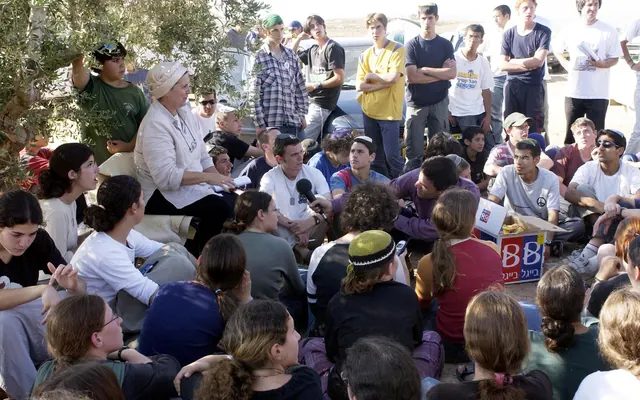
TJS S5 Interlude - Interview with Settler Leader Daniella Weiss
It is rare that someone who begins a movement is still leading strong fifty years later. Daniella Weiss was part of the original settlement of Judea and Samaria...
Play Episode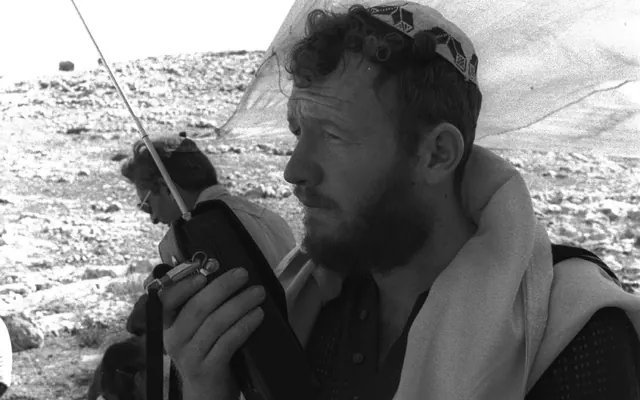
TJS S5E12 The Jewish Underground part I
In politics as in physics - for every action there is an equal and opposite reaction. Prime Minister Menachem Begin's signing of the Camp David Accords with Egypt's...
Play Episode
TJS S5 Interlude - A conversation on violence with Rabbi Yehuda HaKohen
There are some conversations which Am Yisrael is just not having. As a follow up to some of the issues raised in the last few episodes Rav Mike...
Play Episode