
TJS S5E18 Lebanon War part III - the invasion
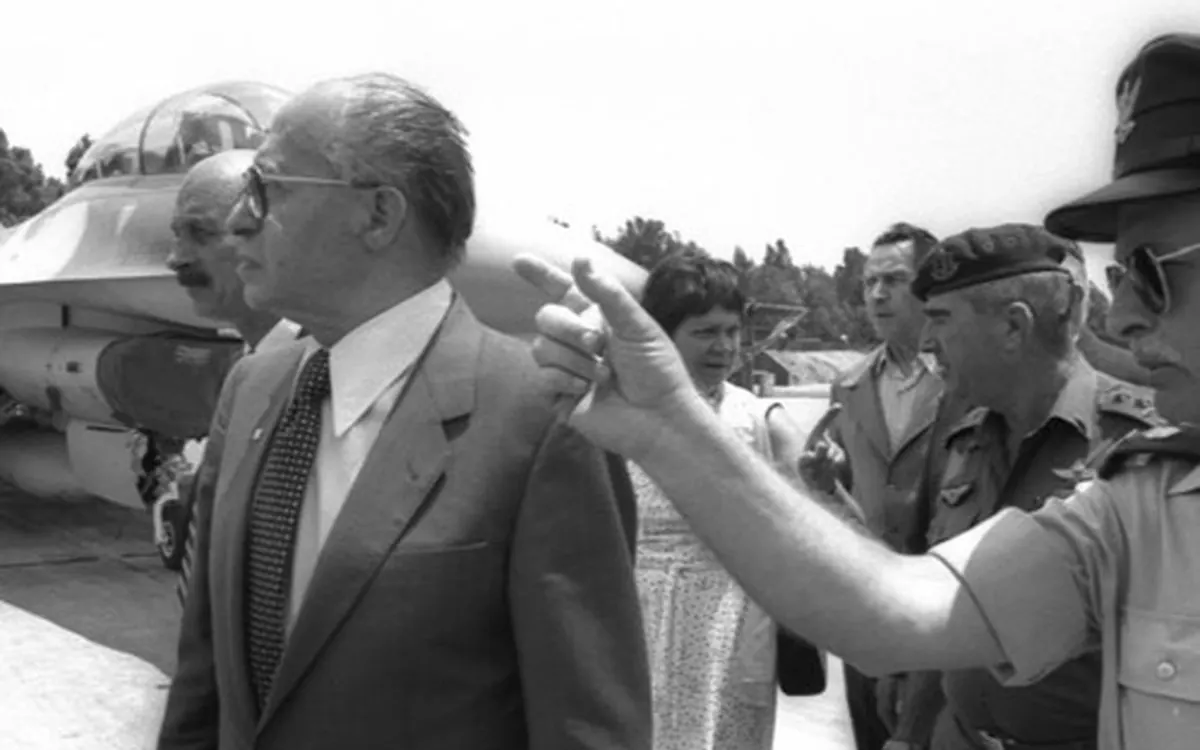
Crossing into Lebanon to destroy PLO started as a successful mission, and when the IDF destroyed the Syrian SAM belt in the Bekaa Valley through Operation Mole Cricket 19 it looked like victory was assured. Nonetheless as Defense Minister Ariel Sharon pursued Yasser Arafat of the PLO (and his dreams of a peace treaty) into the Siege of Beirut, he discovered that his Maronite allies were not to be trusted and that it is easier to enter Lebanon than to leave.
About this episode
The spectacle of a battlefield, said Napoleon, should fill princes with love of peace, and on June 5, 1982, Israel adopted Resolution 676, Operation Peace for the Galilee. Its four points sound simple, to place the Galilee beyond the range of terrorist fire, to leave the Syrians alone unless attacked, and to aspire to peace with an independent Lebanon. Yet a goal so specific and principles so open invited mission creep of epic proportions, since the PLO headquarters sat in West Beirut while its guns lined the border. Rav Mike notes that Bashir Gemayel was asked to prepare for war on June 4, before the resolution, and that the targets lay well beyond the forty kilometers the cabinet had approved, a sign that a larger game was in play.
On June 6 nearly eighty thousand soldiers in three divisions poured into Lebanon, one racing up the coast, another into the UN zone thick with PLO forces, a third toward the Awali while staying west of the Syrians. Reports from the front were positive, and the action had been declared a two-day affair. Almost at once, though, Defense Minister Sharon pressed for a full invasion, insisting it was all of Lebanon or none at all, since pushing the PLO back forty kilometers left the Syrian sanctuary from which a new infrastructure would sprout. Yehoshua Saguy again warned of a clash with Syria and a quagmire near Beirut, but labeled a naysayer, his caution was brushed aside while Sharon quietly set Big Pines in motion.
Operation Mole Cricket 19 became one of Israel's legendary war stories, the first time a Western-equipped air force destroyed a Soviet-built SAM network. On June 9 drones triggered the Syrian radars, waves of fighters and Phantoms followed, and radar-tracking missiles destroyed all nineteen batteries in the Beka Valley in two hours without a single loss. The air battle that followed, the Beka Valley turkey shoot, saw eighty-two Syrian planes downed for none of Israel's. Commander Ivry ran real-time voice contact with every pilot, a capability new to aerial war. The victory restored the fighter jet as the king of modern warfare, yet it pushed Syria and the region toward surface-to-surface missiles and Scuds, the roots of the rockets ringing Israel in our own day.
Reagan asked for a ceasefire, and Israel declared a unilateral one on June 10, yet the real question had only begun, what it meant to win. To stop short left the PLO command intact in West Beirut and the Christians isolated, nullifying Sharon's political dream, while every day of siege gave Arafat a propaganda victory. The Maronites proved exactly the unreliable allies Saguy had foreseen, willing to hold the Green Line but unwilling to storm West Beirut and root fifteen thousand fighters from among half a million Muslims. Gemayel saw no gain in bleeding his men and alienating the city before his August election, preferring to let Israel pay the price. And so the dirty work fell to the IDF, and the long siege of Beirut began.
Four hundred tanks and a thousand guns poured fire on Beirut for more than two months, the air force striking stronghold after stronghold while water and electricity were cut off. Arafat played the camera, declaring a new Stalingrad, and Sharon and Eitan answered with a war of attrition that Arafat, raised on short Israeli reprisal raids, had not expected. On August 12 a day of saturation bombing killed more than three hundred, until Reagan phoned Begin warning of grave consequences and the bombs ceased. The PLO sailed for Tunis on August 21 under a multinational force, and two days later Bashir Gemayel was elected president, credited by everyone but the Israelis with removing the hated PLO. For one bright moment, it seemed the war might have been worth it.
Key ideas
- Resolution 676 set a narrow goal with open principles, inviting the mission creep that carried Israel toward Beirut.
- Sharon pressed for all of Lebanon or none, quietly setting Big Pines in motion behind the cabinet's forty-kilometer approval.
- Mole Cricket 19 destroyed nineteen Syrian SAM batteries and downed eighty-two planes without a single Israeli loss.
- The turkey shoot restored the fighter jet's crown but pushed the region toward the surface-to-surface missiles that ring Israel today.
- The Maronites held the Green Line but refused to storm West Beirut, leaving the siege to the IDF as Saguy had warned.
- After a two-month siege the PLO sailed for Tunis, and Bashir Gemayel was elected president of Lebanon.
Chapters
- 0:00 The battlefield; Resolution 676
- 1:06 Four points; the forty kilometers
- 4:33 Gemayel asked to prepare for war
- 5:46 The Green Line in Beirut
- 6:59 The invasion begins; three divisions
- 8:05 Sharon; all of Lebanon or none
- 10:20 Mole Cricket 19; beating the SAMs
- 13:41 The Beka Valley turkey shoot
- 18:13 Ivry's real-time command
- 21:32 Eighty-two planes; a new standard
- 23:42 The consequences; surface-to-surface
- 24:47 Reagan's ceasefire; what is victory
- 30:14 The Maronites will not fight
- 33:32 The siege of Beirut tightens
- 39:05 Arafat breaks; the evacuation
- 42:25 The PLO to Tunis; Gemayel elected
Who, where and when
People
Menachem Begin, Ariel Sharon, Raful Eitan, David Ivry, Yehoshua Saguy, Bashir Gemayel, Yasser Arafat, Philip Habib, Ronald Reagan
Places
West Beirut, The Beka Valley, The Awali River, The Green Line, Tunis
Texts
Resolution 676, The Big Pines plan, Begin's telegram to Gemayel
When
June 1982 CE: Operation Peace for the Galilee, June 1982 CE: Mole Cricket 19, August 1982 CE: the PLO leaves for Tunis, August 1982 CE: Gemayel elected president
Read the transcript
The spectacle of a field of battle after combat, said Napoleon Bonaparte, is sufficient to inspire princes with the love of peace and the horror of war. Well, I definitely love peace, and war is horrible without question. But what I see is it's hard to know what decisions will give us more of the first and less of the latter. I'm Rav Mike Foyer, and this is The Jewish Story. Season 5, Episode 18, Lebanon War Part 3, The Invasion. On Saturday night, Moshe Shabbat, June 5, 1982, the Israeli government adopted Resolution 676, Operation Shalom HaGalil, Peace for the Galilee. The resolution only consists of four deceptively clear points. First, of course, there is the name. And then there was the goal, to instruct the IDF to place all the civilian population of the Galilee beyond the range of the terrorist fire from Lebanon, where they, their bases, and their headquarters are concentrated.
In addition to that explicit goal came two other critical principles, which, while specific in their own right, could be read in many ways, and thus left anyone listening wondering what exactly do they bode for the conflict to come. Number three says during the operation, the Syrian army will not be attacked unless it attacks our forces. And number four reads, Israel continues to aspire to the signing of a peace treaty with independent Lebanon, its territorial integrity preserved. Now an operation so specific in its goal, but so wide open in its principles, has the potential to be both powerful and point effective. Move in, clear the terrorists beyond a certain line, and move out. However, it also leaves the door open to mission creep of epic proportions.
For instance, what if the terrorist headquarters are in a different place than most of their artillery, as is the case here, headquartered in West Beirut, but grouped along Israel's northern border? And what happens if the Syrians don't want to give up their position in Lebanon and treat an Israeli invasion as a bit of a threat? Now, knowing some of the backstory that we've discussed, You might be forgiven for also reading this resolution as an announcement of an opening gambit in a much larger game. A game whose pieces have been laid for some time. Of course, couched in terms to make it digestible to the public whose sons, brothers, and fathers are going to fight and die in that war. This analysis, the idea that this was the beginning of a plan long laid, became the favorite frame for academics and certain politicians after the war.
You may recall the attempted assassination of Israeli Ambassador Shlomo Argov on June 3rd, two days before Resolution 676. With their ambassador critically ill in hospital after being shot in London last night, the Israelis have taken swift action in retaliation. Mr. Shlomo Argov was shot outside the Dorchester Hotel in Mayfair, and four men are now helping the police. The Israeli government showed their anger with deeds rather than words. Their jets bombarded targets around the Lebanese capital, Beirut. Later, Palestinian guerrillas struck back against Jewish settlements in the north of Israel. Demonstrators from the Union of Jewish Students and Board of Deputies protested this afternoon outside the London office of the Palestine Liberation Organization.
But PLO spokesmen in London and Beirut have denied any involvement in the shooting. These politicians and academics saw the announcement as one of a lore-long plan and looked at Argov's near death as nothing more than an excuse. Chief of Staff Rafael Eitan, who actually directed the invasion, fought that interpretation his entire life, insisting that the government's response to the shooting of Ambassador Argov was, quote, not designed to serve as the opening blow. We bombed the terrorist bases because the government felt it was time to explain to the PLO that all such acts were considered violations of the agreement. what brought the war on was the severe response, during which the terrorists bombarded northern Israel with great intensity.
Now, you have to follow what he's saying. This is more than simply, they started it. There was a ceasefire in place, negotiated by the Americans, and what Eitan is trying to say is that the PLO had abandoned it and gone back to war. This may well have been true from Eitan's perspective, But Maronite Christian leader Basha Gamayel got the message to prepare for war already on June 4th. That was before Resolution 676. He was asked to have his men open fire along the Green Line in Beirut and to be prepared to receive Israeli combat teams which were going to land at Juna, north of the city. Now, don't forget that the aspiration of signing a peace treaty with an independent Lebanon stated in Resolution 676 means a Christian Lebanon.
most especially to Defense Minister Ariel Sharon, whose grand vision is what's driving this unfolding situation. Also remember that Gamayal had urged Chief of Staff Rafi Eitan to launch this invasion months ago, saying that he would require at least three months in a cleansed Lebanon, a term that's going to take on chilling connotations soon enough, to organize a successful presidential campaign for the elections in the end of August. Hence the fact that even before the war was officially started, Gamayal is now being asked to take sides. And perhaps the military and political leadership in Israel should have taken greater notice when he refused both requests. The requests themselves beg the question of what exactly the operation the government has just launched really is.
Because despite the fact that the cabinet ultimately agreed to limit any incursion of the soldiers to a depth of 40 kilometers, which they considered to be far enough to distance PLO artillery from the Galilee. Both the targets that Gamal was assigned were well beyond that range. Juneh is a coastal city controlled by the Christians about 10 miles north of Beirut. And the green line was the line of demarcation between Muslim and Christians in Beirut that emerged out of the 1975 Civil War. By the way, just as a side note, unlike the green line in Israel, the one in Beirut was actually named for the color of its foliage. It originally marked the line of confrontation, the battle line, between the Muslim factions controlling West Beirut from the Christian Lebanese front in the eastern half of the city.
But of course it evolved to separate Shia from Sunni as well because, you know, Lebanon. This might have been another sign which Israel's leadership ought to have taken to heart. Because between these sides, a decade of brutal war had created a no-man's land of fear and death in the heart of Beirut. An urban battlefront so permanent that it became choked with vines, brush, and weeds that glowed green within the blasted concrete. Well, listen, no matter who started it, or how, or even why, On June 6, nearly 80,000 Israeli soldiers, three divisions of army and infantry, supported of course from the air, poured into Lebanon with the goal of pushing the PLO back beyond that 40-kilometer line. One division raced up the coast, capturing Tyre and bypassing Sidon for a later encirclement.
The second pushed due north into the area supposedly patrolled by the UN force in Lebanon. Now, ironically, that was the region most dominated by PLO forces, and the IDF set to work, quote, purging terrorist concentrations in place there, as their orders for the day read. The 3rd Division moved toward the Al-Wali River a little bit further to the east and north, staying well west, however, of the Syrian forces who moved down to occupy Jizine at the southern end of the Beqa Valley. It's worth it to pull out a map of Lebanon if you want to follow. Reports from the front were largely positive in the first 24 hours. And since the operation had initially been declared a two-day action, that boded well for its goals.
Nonetheless, almost from the very first moment the cabinet approved his operation, Defense Minister Sharon began to advocate for a full-scale invasion, not to stop at 40 kilometers, declaring that really this was a case of either all of Lebanon or none at all. Now, on the surface, Sharon's logic appeared sound. There were other military men in the room, and they could well see that pushing the PLO back beyond 40 kilometers wouldn't actually achieve Israel's goal. Oh, it might mow the lawn in that awful euphemism of our day, meaning break the back of the present infrastructure which the PLO used to terrorize northern Israel. But the Syrian presence in the Beka Valley in eastern Lebanon gave the PLO a sanctuary to fall back on, run from which a whole new infrastructure would quickly sprout again.
Now, military intelligence head, Yoshua Sagoy, tried to slow Sharon's momentum, pointing out, once again, inevitability of clashes with the Syrian forces and the potential for the IDF to bog down should they come too close to Beirut. But in the stormy interpersonal atmosphere which always surrounded Sharon, Sagoy had already been labeled as a naysayer and maybe even as a political opportunist so his warnings were easily brushed aside. Unbeknownst to the cabinet, and perhaps even to Prime Minister Begin, in his mind the defense minister had already thrown out the Little Pines military plan, which he had presented and for which he had received their approval. Limiting the IDF to a 40-kilometer penetration was little more than a glorified border raid in Schrode's eyes and wouldn't serve his military or his political goals.
Sharon had moved on to Big Pines, a far more expansive military plan which he had prepared, one that involved moving all the way to Beirut, linking up with the Christian Palangists there, and ultimately fulfilling the dream of crowning a Christian king, so to speak. Now Sharon wasn't afraid of Beirut. And in his mind, in fact, that's where real victory and peace lay in the form of a treaty signed between Israel and Lebanon by the soon-to-be-elected President Bashar Gamayal. And, in the eyes of this bulldozing defense minister, if that required fighting the Syrians in Lebanon, so much the worse for them. Operation Mole Cricket 19, yes, that's really the name, is one of those crazy Israeli war stories that shaped the world's military technological history, but which most people have never heard of.
Back in Season 4, Episode 14, I actually told another one of these stories, The Boats of Sherberg. Go listen to it again. About how Israel's efforts to maximize its naval potential after the Six-Day War basically revolutionized naval electronic warfare. And I can imagine, looking around, that there's another one of these stories unfolding right now. One that will have to be told in the future about Israel role in the cyber wars of the 21st century But in the summer of 1982 Israel legendary victory came by beating the Soviet SAMs at the height of the Cold War. SAM, S-A-M, is an acronym which stands for Surface to Air Missile. It's the way in which you shoot down airplanes. And the Soviet Union had been supplying its most advanced versions of these air defense systems to the Syrians since the early 70s.
And by the by, if you read the news, They haven't stopped since the Soviet Union had gone, but the Russians know how to do business in the region. Molkricet-19 was a type of operation which is known as a SEAD, Suppression of Enemy Air Defenses, and it was launched by the Israeli Air Force against Syrian targets early in the war on June 9, 1982. The reason the operation proved so groundbreaking, if not world-famous, is that it became the first time in history a Western-equipped air force successively destroyed a Soviet-built SAM network, thus proving that it could be done. The suppression operation also boiled over into a massive air battle, the largest the world had seen, actually, since Korea, and one of the biggest post-World War II.
Israeli victory would be so complete that the battle became known informally as the Beka Valley Turkey Shoot. Now, I'm not going to review the whole story for right now, but just remember that Mold Cricket 19 has been a long time in coming. You may recall how at the end of the War of Attrition in 1970, Egypt violated the ceasefire right away by lining the Suez Canal with SAMs supplied by the USSR, and that these missiles were what devastated Israel's air force in the opening days of the Yom Kippur War three years later, just as then-opposition leader Menachem Begin had warned they would. The presence on the canal of such a thick ray of missiles gave birth within the Israeli Air Force leadership to the idea of developing an advanced suppression of air defensive campaign well before war broke out.
But for many reasons, none were tried in 1973. However, just like the rest of the military, the Air Force had learned many hard lessons from that war, and they knew that if real fighting were to break out with the Syrians in Lebanon, their air defense systems in the Beka Valley, cutting north-south through Lebanon, would have to go. The first contact between the Israeli and Syrian forces occurred on Tuesday, June 8, only two days after fighting began. As the head of military intelligence had warned, really, it was inevitable. The evasion force marking Israel's eastern flank was tasked to link up with those in the center and the west, and ultimately to surround Sidon on the coast, meaning they were trying to stay to the west of the Syrians.
But, in order to do so without being fatally exposed, they had to advance toward the Syrians at the head of the Beka, and they had to do so with enough credible force to push them back into the Shuf Mountains to the east. And no one likes to be threatened, right? Especially not an army. At first, tank and artillery fire were exchanged. Then, the Syrians moved down to reinforce their position at Jizin to block the Israeli advance. And, of course, the IDF had to send an armored force into the city to clear them out. And that type of escalation and conflict demand air cover. And before anyone really knew it, eight MiGs were downed by the IDF, IAF, I should say, the Air Force, in dogfights. Now, the situation on the ground was growing increasingly complex and crowded Syrian troops, Palestinian guerrillas, IDF armor, infantry, helicopters, all packed into this tiny operational area.
But the reality is the complexity paled in comparison to the nightmare unfolding in the skies. Air Force Commander General David Ivry knew that a guiding principle that had been written into Operation Shalom HaGalil was to avoid war with Syria. But two days in, that already appeared to be wishful thinking. And near sunset, reconnaissance flights spotted five more batteries of SAMs moving forward into the Bekaa. In the 1,500 square miles of airspace, there were already more than 100 planes aloft. It was a saturation zone, which not only demanded every extent an unparalleled level of command and control, but it risked turning its pilots into easy shots for the now 19 batteries of surface-to-air missiles the Syrians possessed.
At the same time that Ivra was reassessing this combat environment, down in Jerusalem, Defense Minister Sharon was pressuring the cabinet to expand its horizons, explaining that direct confrontation with the Syrians was now inevitable, and that he who strikes first often has no need to strike again. At 11 p.m., the IDF entered Ain Zahalda and were pinned down by a Syrian division. This was too great a check to allow, and the defense minister received authorization from the cabinet to execute Mole Cricket 19 in order to take control of the skies over Lebanon. Now, you should know that the belt of Sams which Israel faced in the Beka Valley was thicker than perhaps anywhere in the world other than around Moscow.
Nonetheless, Commander Ivory had found the advance of these new batteries, which made it even worse, strangely reassuring. Why? Because if the Syrians were actually preparing for regional war, they wouldn't have moved their SAMs forward into the Beka, they would have pulled them back to defend Damascus. Bringing them to Beka, therefore, suggested that his air force could eliminate the air defenses over Lebanon without undue strategic risk. Which, of course, in no way reduced the danger of the mission presented to the brave pilots tasked with actually executing this unprecedented operation. Nonetheless, by 2 p.m. on June 9th, Ivory received the green light for Mole Cricket 19, and the strike force took off at that very moment.
As soon as the cloud of blips appeared on the Syrian radar screens, the order went out to all their combat patrols to return immediately to base and land. It wasn't cowardice. This was strategy. Because with their planes safely out of the way, the Syrian commanders figured that they now had a free-fire zone and prepared to display the superiority of Soviet SAMs over Western fighter jets. The skies above Lebanon were indeed about to become a free-fire zone, but not in the way they expected. Later, Commander Ivory recounted the extent of the preparation which had gone into the operation. For months before the war, Israeli drones had tested the radar and communication frequencies of the SAM batteries, And in the weeks before, clandestine ground operation had added further data to give Israel an exact picture of how to take the edge in electronic war.
The suppression plan had been exhaustively rehearsed by pilots. In some sense, since the Yom Kippur War, air crews had made so many attack runs against dummy sites in the Negev that they could see them in their sleep, while the Air Force Command practiced jamming fighter and ground communications so often that they knew the frequencies by heart. But Ivry knew that with all their preparations, success hinged on timing and orchestration, which verged on the impossible. In the first stage, a series of drones, technically they were unmanned vehicles at that stage, but we call them drones today, headed into the Beka Valley, triggering the Syrian SAM radars. Meanwhile, behind them, squadrons of F-15s and F-16s fanned out to provide interception and air defense.
When they were in position, the F-4 Phantoms moved in for the actual attack, launching waves of high-speed radar-tracking missiles directly at the now-engaged SAM batteries. Woven in and out of these three waves of planes was an ongoing rhythm of radar jamming and suppression. As Ivory later said, you have to find a way when to jam and when not to jam. You can jam it when you need to assist your fighter planes, and you cannot jam it when you want to get information, when you want to listen. He was truly in a jam. On top of it all, the fighters themselves carried electric countermeasure pods to foil any missiles that might manage to lock onto their plane. You're getting a picture of the complexity? From his command post in Tel Aviv, Iverian actually had two-way voice communications with every single one of his pilots.
It was a real-time command-control intelligence capability, all but brand new to aerial warfare. And because the fighters were striking locations long mapped out, The attack, when it was called, actually unfloated at blinding speed. Ivory sent the F-4s into battles in groups of four, making sure that each could clear the area before sending in the next. Added to this was the speed of the missiles they used, which further reduced their exposure to the remaining ground defenses. And within two hours, all 19 batteries were destroyed, and the IAF had not lost a single plane. The Syrian fighter jets were caught badly out of position by the attack. After about 20 minutes, when the situation became more clear, they did manage to scramble to the skies again in hopes of defending the remaining missile batteries, but it was really too late.
They were off on the wrong foot to begin with, and their confusion was compounded by the fact that Israeli jamming scrambled their communication with ground control as soon as they launched. Furthermore, the extent of the devastation unfolding was a psychological gut punch, a fatal disadvantage in a dogfight. Ivery described the Syrian pilot's state of mind as far as he understood it. He said, once you start to lose, you think, well, I'm going to be a target. I'm going to go over there because I've been summoned? From his command post, he could hear the Israeli fighters shooting down sometimes two or three out of a four in a Syrian attack group. And the more they came, the lack of confidence on their side grew greater.
And that's when it became a turkey shoot. Within the first half hour, 26 Syrian planes were downed. And when after two hours the SAM attacks were complete, the pace of destruction only increased. By noon on Friday, June 11, when a ceasefire finally took effect, Israeli pilots had shot down 82 Syrian planes without losing a single one of their own. It was only icing on the cake that the way was now cleared to provide full support to the IDF ground forces. Countless tanks were quickly destroyed from the air. A whole Syrian division attempting to reinforce from the north was stopped in its tracks basically by planes alone. And whatever lay ahead for Israel's invasion, the Beqat Valley Air War had set a new standard for what victory from the air looked like.
The Israeli Air Force had demonstrated also to the eyes of the world that even a multi-layer mobile SAM complex could be dismembered by a well-coordinated air attack, combined, of course, with this new level of electronic warfare. Not just in the Middle East, but all over the world, the fighter jet had just regained its crown as the king piece of modern warfare. in more local news Israel owned the skies as I said over Lebanon and had established a level of deterrence vis Syria which really lasts to this very day but remember war is never a straightforward process As Commander Iver himself later observed the very crushing nature of Israel victory had some unintended and negative consequences. Israeli tanks roll into southern Lebanon.
Israel's invasion was the biggest development in the area since the 73 war. And yet no surprise. The Israeli armed forces have been massed along the northern border of their country at least four times over the last few months. By June, tensions were at their height, and the Israeli military were finally given the goal. The Israelis said they had one goal, to root out once and for all Palestinian bases across the border from their northern settlements, and then to establish a buffer zone 40 kilometers wide so that Palestinian shells would never again threaten Israeli civilians. The Beka Valley air war was watched by the entire world. And it became obvious, especially to the Arab states, that challenging Israel in the skies was simply a vain pursuit.
And no one saw this more clearly, of course, than the Syrian minister of defense who watch as his most sophisticated and expensive weapons were swatted from the sky like a bunch of mosquitoes. And so he concluded that the next war with Israel was going to be surface to surface and not surface to air anymore. It was at this point that Syria and Iraq began to buy Scud missiles from the Soviets. Missiles that could be launched in Israeli cities from well within their own territories. And they would be so within a decade. And every other bad actor in the region began to scramble to build, borrow, or steal the most deadly rockets they could possibly lay their hands on. Hence our situation today, ringed by hundreds of thousands in the north and tens of thousands in the southwest.
In Moscow, Israel's victory also sent shockwaves through the military hierarchy. Their best systems of the Soviet Union had just been trounced. And the only honest conclusion one could draw was that Western technology was far and above superior to their own. There are those analysts, actually, who say that the lesson learned by the Soviet hierarchy from the Beka Valley Air War triggered the acceleration of the arms race in the 80s, which many attribute as the ultimate cause of the collapse of the Soviet Union. Now, for present purposes, there's no need to let fancy fly so far afield. because what's absolutely certain is that the Beka Valley turkey shoot had opened the gates for Israel's advance as deep into Lebanon as she cared to go.
On June 9th, Prime Minister Menachem Begin received a letter from President of the United States Ronald Reagan requesting Israel declare a ceasefire at 6 a.m. the next morning. Now, Reagan's request did not take the Prime Minister by surprise. In fact, he was already in discussion with American Special Envoy Philip Habib on how to bring the operations to a close. But Begin didn't want to rush the job. At that point, the PLO had actually fallen back on the Syrian line and were still strongly entrenched only 18 kilometers from the city of Mithula, leaving the entire Galilee panhandle within their firing range. However, progress on Shalom Agalil's immediate battlefield objectives proved to be remarkably swift.
And by noon the next day, on the 10th, Begin felt far more confident, and thus Israel announced a unilateral ceasefire on June 10th at 12 p.m. But of course, the battlefield may have shaped up as desired in a few days of fighting, with the PLL swept back from the border and the Syrian air defenses in tatters. But pursuit of the political objectives, spoken or unspoken, of Shalom al-Galil had yet to really begin. The day after the ceasefire was announced, a liaison officer from the Christian forces joined up with IDF paratroopers on the road to Beirut, and two days later, Ariel Sharon went north to Juna to meet face-to-face with Bashar Gamayel. Now, this may have seemed premature or even duplicitous considering the deal that was just made, but ceasefires are difficult to maintain, even in the best of circumstances, and impossible in this one.
The PLO had an existential commitment to Israel's destruction. It was literally the only reason for their existence, and thus, they weren't about to stop fighting. The Syrians had a dripping, bloody nose begging to be avenged. And so, despite the announcement of ceasefire, fighting continued more or less on all fronts. The problem that the cabinet in Israel now faced was no longer victory on the battlefield. The Israeli Air Force owned the sky, and by all accounts, the ground troops were pushing forward, if not without resistance, certainly with momentum. Now the cabinet had to ask what it really meant to win the war. Now, it may seem like a stunningly obvious question, what does it mean to win the war?
But even a cursory glance at the history of wars will show you that in reality, crystalline clarity on what victory looks like is often the crucial distinction between winning and losing. That's a lesson we have failed to internalize. The illusion that victory meant pushing the PLO back by 40 kilometers was becoming ever more clear as an illusion. That might clear out many terrorist bases, but the PLO headquarters and command structure would remain untouched in West Beirut, where, by the way, the core of their fighters had already fallen back, ready to rebuild as soon as the IDF withdrew. Furthermore, leaving the line of evasion south of the Syrian line meant that they would maintain access to Beirut, meaning the Syrians would, and thus be able to support and resupply the PLO at will.
Not to mention the tactical threat posed by Syrian artillery high in the mountains along the IDF's eastern flank. To halt before, Beirut also meant leaving the Christian forces there centered in East Beirut, isolated and extremely vulnerable to the PLO and Syrians, thus effectively nullifying the political dimension of Sharon's plan. Even if Gamal could become president in such circumstances, he wasn't going to feel he owed anything to Israel. And, last but certainly not least, everyone around the cabinet table in Jerusalem knew that the clock of international diplomacy had already begun to tick. Soon enough, Israel would face enormous pressure to pull back all the way beyond the Latani River, which at its closest is only 4 kilometers from the border, if not to quit Lebanon altogether.
And there was no force willing or able to fill the space north of Israel's border and keep the peace. The Christian Maronites wouldn't, And UNIFIL, that United Nations force responsible for preventing PLO activities in the first place since 1978, had already proven that they couldn't. And so the problem seemed clear. If Israel didn't go far enough, they risked having invaded Lebanon for nothing at all. And now the truth of Defense Minister Sharon's words rang clearly in their ears. Either all of Lebanon or none at all. We came here to fight and destroy the terrorist organizations that have been killing and murdering our people for years and years. That is our goal here. Once we finish it, we'll move immediately back.
We don't have any interest whatsoever to stay here, not our country. We don't need even one square inch of this country. On the other hand, Defense Minister made it clear that in his eyes, there was a solution. Let the IDF push all the way north to the Damascus-Beirut road, thus driving a wedge between the PLO and the Syrian forces. And then, by linking up with Bashar Gamal's forces coming out from eastern Beirut, they could establish a corridor which would be wide enough to defend from the PLO on the west in western Beirut, on one side, and from the Syrians to the east. Finally, that would mean, instead of being safe in their headquarters, with command structure and core fighting strength intact, Arafat and his men would now be trapped between their enemies in the sea, to be destroyed or deported as the situation required.
This was the military-political intersection of the Big Pines military plan that Sharon had never shared, even perhaps with Prime Minister Bacon. When Sharon met with Bashar Gamayal in June, he was under the assumption that the IDF would have no need to enter Beirut. All they had to do was encircle the city, while the Maronites crossed the Green Line to destroy the PLO in West Beirut, with, of course, Israeli air and artillery support. But the inaction of the Lebanese forces during the opening phase of intense fighting should have been a warning to Sharon. Though eventually Gamayal and his father would joyfully greet Israeli paratroopers who arrived at the entrance to Beirut, they also would make it quickly clear that their phalange and allied militias were willing to aid the IDF in every possible way, except by actually going into combat.
They were willing to reinforce the green line between Muslim and Christian Beirut. No PLO fighters would escape, but the dirty work of destroying them, that was to be left to the Israelis. Let's face it, 2020 hindsight, but it might have been obvious that Bashar Gamayal had no intention of storming West Beirut to root 15,000 PLO fighters out from amongst half a million Muslims. Not only was it militarily hazardous, it would be politically lethal. The Israeli leadership may have seen it as right and correct that the Maronites helped liberate their country and pave their own road to power, but Gamal saw things quite differently. The presidential election had finally been fixed for August 23rd, And in Gamal's eyes, there was nothing to be gained in meanwhile sacrificing his men while alienating the Muslim half of the city, even though most longed for the PLO to go.
As far as he saw it, there was actually a simple, maybe even elegant solution. If Israel wanted to become a regional player by making political change through invasion, which is nothing new, of course, in Lebanese history, let them pay the heavy price that the capture of West Beirut was bound to extract. And so, less than a week into the war, Rosh Amman, the head of military intelligence, Sagoy's first prediction had proven correct. The Maronites were not the reliable allies which the Mossad and the cabinet ministers wanted to believe them to be. Soon enough, his second and more horrible prediction would prove true as well, that the encirclement of Beirut was going to be the beginning of a long siege and an even longer invasion.
At first, the government tried to hold firm. On June 15th, they adopted a proposal stating clearly IDF forces will not enter West Beirut, but that task would be left to the phalanges. But frankly, the writing was on the wall. Military logic dictated encirclement of Beirut in order to keep a safe position in the battlefield and in order to achieve the purpose of the operation the crushing of the PLO And now it was clear that it would be done by the IDF or no one And furthermore it was increasingly clear that if it were done it were best done quickly Not only is the clock ticking on international diplomacy, but every day under siege gave the PLO an enormous propaganda victory. Arafat and his men were already heroes at this point in the eyes of national liberation movements all over the world.
Now, as they dug in, they declare themselves the defenders of a new Stalingrad, ready to hold off the full might of the IDF with their bare hands if necessary. That's the fast track to global stardom. So, all the cards are laid for a swift and massive attack on Beirut, with or without the phalangists. All the cards but one. The U.S. administration had begun as sympathetic, let's say, to Israel's need to drive the PLO off of her northern border. When Foreign Minister Yitzhak Shamir had visited Washington back in February of 82, he had in his hand a list of more than 200 ceasefire violations. And Secretary of State Alexander Haig appeared so understanding that in fact he'd later be accused of having green-lighted the war during their meeting.
But Haig resigned less than three weeks after the launch of the invasion. and Defense Secretary Caspar Weinberger was now the loudest voice in the American cabinet. His chief interest was that the U.S. not be perceived as complicit in the destruction of Beirut much less as involved in it and that was a difficult task from the outset considering that much of the devastation was likely to occur with American weapons. Now, that shift in American support didn't change the strategic and political reality that Israel faced. The PLO must no longer exist in Lebanon at the end of this war. What it did change was the political calculus around determining how to reach that end. America sent a very clear message that this conflict would end only with a diplomatic agreement.
And Phil Khabib then went back into high gear, pulling every political and personal lever he could lay his hands on. The risk of a massive strike without American support, now explicitly in opposition to Khabib's mission, breaking the ceasefire Israel itself had declared, seemed untenable to Begin, Sharon, and Shamir, who sat at the heart of the decision-making process. Israel declared its desired position on the 27th of June, two weeks after the encirclement of Beirut, with a resolution that proposed that PLO simply leave. It called for, quote, all 15 terrorist organizations, of which the RUF organization called the PLO, to hand over their weapons to the Lebanese army and depart in a column down the Beirut-Damascus highway under the aegis of the International Red Cross.
Seemed simple, right? Accept defeat and leave with your lives. No more suffering. Now, ignoring the laughable idea that Syria was going to welcome with open arms a militia which had first all but toppled the Hashemite kingdom of Jordan and then brought down total ruin on Lebanon, escape wasn't in Arafat's immediate interest. He was facing a choice. die as a heroic martyr in Beirut or lose your leadership and likely your life by accepting a U.S. broker deal to get out of Beirut as fast as possible the only possible victory Habib could have offered him was recognition of the PLO as the sole legitimate spokesman of the Palestinian people but President Reagan and his cabinet weren't willing to go that far and so the PLO leadership was in no hurry to make a deal and this is where the ugly calculus of the siege of Beirut really began to unfold.
Habib didn't have many cards facing Arifat. But on the other hand, Israel had accepted the American demand for negotiation. Therefore, they couldn't take matters in their own hands by breaking into the city and crushing the PLO without unilaterally declaring Habib's efforts a failure and, of course, breaking the promises to their own electorate that their sons wouldn't be sent to die on the streets of Beirut. But, and don't forget this, they couldn't leave the PLO intact without having waged war for nothing. Arafat understood this picture quite well. Furthermore, at first at least, he felt time was on his side. Every bomb dropped them Beirut, increased his stature, blemished Israel's, and further split the Jews.
So he played the camera and watched as public opinion in Israel and amongst American Jews began to fracture. That's a story we'll tell in another episode. We are now stronger, more stronger than any period before. It is enough for us. Now we are in invasion. We are facing aggression and Israeli occupation. So it is something complete. But Arafat also miscalculated. He believed deeply in the Israeli tradition of short, sharp reprisal raids. That's how Israel has operated for decades. Go in, mow them down, and get out. I mean, he'd literally been raised on those raids. And thus, Arafat underestimated Defense Minister Sharon and Chief of Staff Rafi Eitan's willingness to launch a different type of war, one of attrition and not of conquest, and their willingness to do so despite the massive suffering it would entail.
Starting in mid-June and lasting for more than two months, 400 Israeli tanks and nearly 1,000 artillery pieces poured down fire on Beirut. The Air Force struck every known PLO stronghold in the city. By the end of June, over 500 buildings had been reduced to rubble. Through the month of July, the siege of Beirut tightened. In addition to the intensive shelling and aerial raids, Israel now began to add intermittent cutoffs of water and electricity to Beirut. Finally, the onslaught became unbearable even for the PLO, and Arafat began to negotiate with Special Envoy Habib in earnest. At first, he tried to hold out for concessions, insisting that the PLO office in Beirut may open and that his men be incorporated as units into the standing Lebanese army, but Begin and Sharon hadn't come this far to quibble with a terrorist or to leave the PLO a base from which they could rebuild.
Every last fighter must go, and the bombardment would not cease until they left. On August 4th, Israeli troops took over Beirut's international airport and made it creep slowly and ominously toward the western suburbs. Meanwhile, that day, the Air Force flew 127 sorties in the space of 10 hours, accompanied by a non-stop naval bombardment from vessels offshore. This was the point at which Arathat finally broke. He had nowhere left to hide, and it appeared nowhere to go. Not one single Arab government was prepared to offer he and his men sanctuary. They needed the PLO terrorists like the rest of us need plague. But Habib continued to work his diplomatic rounds. And within a week, the Syrians had begrudgingly agreed to accept 4,000 of the fighters.
Even the Hashemites relented in the end, to the extent that they took in half that number. The rest of Arafat's men were found homes dispersed throughout North Africa, primarily where he went in Tunis. Habib's plan also called for a multinational force, a group of French, Italian, and American troops that would enter the city simultaneously with PLO and Syrian withdrawal. Leaving the PLO intact after two months of brutal siege was only half a victory, keep in mind, for Prime Minister Begin and Defense Minister Sharon. And unbeknownst to them, there was still a high price yet to pay. That's another aspect of this war that will really open up next episode, when we dive into the shifts in how Israel was seen and portrayed in world media, world governments, and even at home.
For now, just know that under intense American pressure, Prime Minister Begin acquiesced to Philip Habib's plan on August 12th. Even then, in order to drive home to Arafat that there was no longer any room for maneuver, Sharon unleashed a wave of saturation bombing, the likes of which Beirut had never seen. For almost a full day, fire rained from the sky. By many accounts, more than 300 were killed in that day alone. The bombardment, in fact, was so intense, it prompted President Reagan to pick up the phone and call Prime Minister Reagan directly, warning him that, unless the bombings stop immediately, I am fearful of grave consequences between our countries. The President had made his point. The bombs ceased to fall.
But the Prime Minister had made his point as well, and the evacuation of the PLO began on August 21st. The first of their units boarded a Greek ship for Tunis, just as French troops arrived in the city, and for 12 days of gun-firing parades and public bravado, the withdrawal continued. Of course, Houdin jeered from the side all the while by Christian onlookers. Israel, in turn, ceased all bombing, restored water and electricity to the western half of the city, and withdrew its troops slightly southward. On August 23, 1982, even as the PLO withdrawal was at its height, Maronite Christian leader Basha Gamayal was elected president by a comfortable margin. I mean, after all, everyone but the Israelis believed he'd engineered the removal of the hated PLO from Lebanon.
The fact that he'd done so without joining into the fighting only made him appear all the brighter in the average voter's eyes. Despite the feelings of Maronite betrayal, and the horror at the cost it had exacted from both Beirut and Israel, Prime Minister Begin sent Basha Gamayal the following congratulatory telegram. Warmest wishes of the heart on the occasion of your election. May God be with you, dear friend, in the fulfillment of your great historic mission for the liberty of Lebanon and its independence. Your friend, Menachem Begin. And for one bright moment, it appeared that perhaps the evasion and siege might have been worth it. The PLO was gone from the northern border, and the Falangists now held the presidency.
Defense Minister Sharon's Big Pines military vision might not have panned out exactly as he'd hoped, but nonetheless, Lebanon was free of the PLO and in position to follow Egypt as the second Arab country to make peace with Israel. But just remember that cruel lesson of life and history, many a slip, twixt the cup and the lip. And as we'll see in the next episode, all it takes is one well-placed explosion to dash even the brightest hopes. I want to thank some folks before I sign up. I want to thank all the folks who give their hard-earned money to help produce this show, keep it free and widely available. I want to ask you to join them right now. You can go to my website, Jewestory.co in the upper right-hand corner you're going to see a button that says Be a Patron.
Click on that to give a little bit of per-podcast support. Or reach out to me, robmikefoyer at gmail.com or you can find me on Facebook, robmikefoyer. I'm happy to share with you the details about how you can do a one-time donation or even dedicate a show. I also want to thank the Land of Israel Network. That's thelandofisrael.com. They're building a center for global transcendence in the heart of Judea. I want to thank the Pardes Institute, pardes.org.il, for throwing the doors of the Beit Midrash open as wide as possible. And I want to thank you for listening. I'm Rav Mike Foyer, and this is The Jewish Story.
More from Season 5
TJS S5 Interlude: What Makes Someone a Jewish Leader?
Sometimes a listener question can cause a whole interlude. Here is an exploration of Jewish leadership and its roots in the Jewish story. Along the way we touch...
Play Episode
TJS S5 Interlude: interview with Ambassador David Friedman
We are all actors in the Jewish Story, and part of the art of becoming a main character is knowing how to seize the moment. Here is an...
Play Episode
TJS S5E19 Lebanon War part IV - Sabra and Shatila
The assassination of Christian Lebanese Phalangist leader Bashir Gemayel was an explosion which rocked the region, and the massacres at Sabra and Shatila which followed in its wake...
Play Episode