
TJS S6 Interview with Rabbi Aharon Ariel Lavi
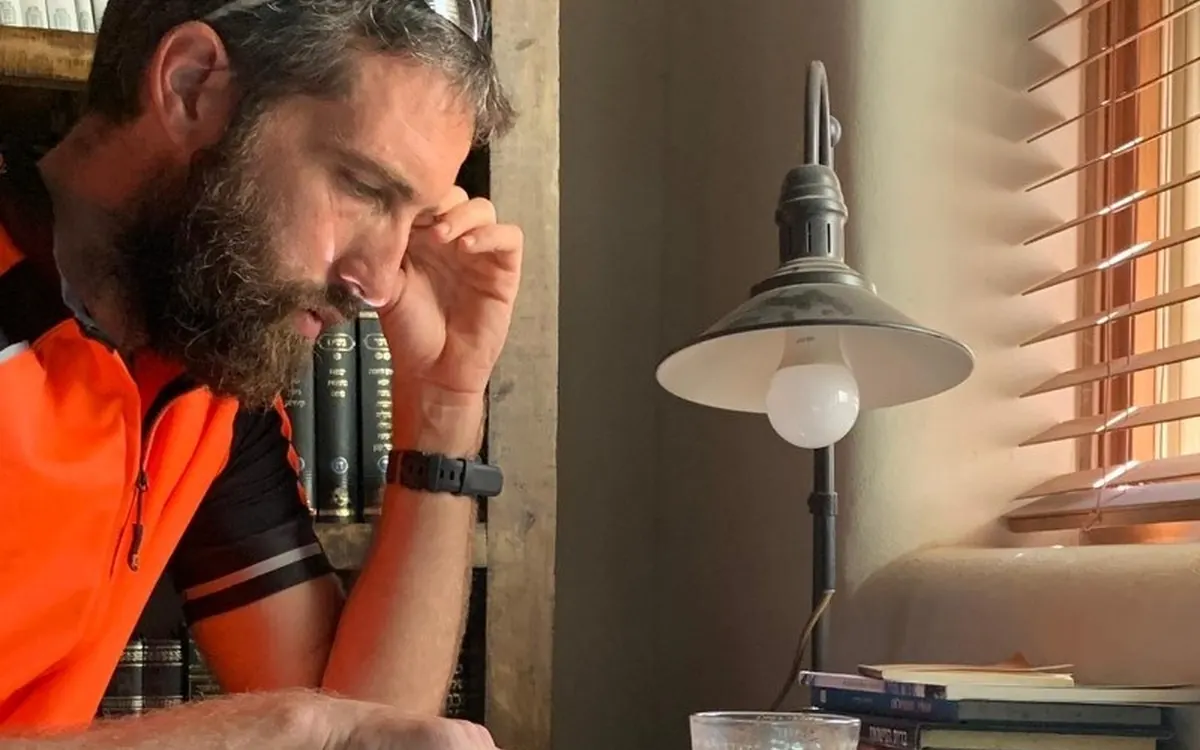
Here is an interview with Rabbi Aharon Ariel Lavi, of Hakhel: The Jewish Intentional Communities Incubator in the Diaspora, an expert on the biblical sabbatical year - shemitta. This is our first taste of a "future vision" for the Jewish people, as well as some stirring thoughts for Rosh Hashanah, the Jewish New Year.
About this episode
Teshuva, taught Rav Kook, draws on the longing of the whole universe to become better and more pure. In this Rosh Hashanah interview Rav Mike roots return in rachmanut, compassion, whose source is rechem, the womb, the holding of space for process that must precede any return. His guest is Rav Aharon Ariel Lavi, rabbi, columnist and expert in what we might call Jewish economics, founder of Hakel, the Jewish intentional communities incubator out of Hazon, who lives in Shuvah on the Gaza border. He moved there with a group of newly observant young people looking for where the country needed them, into a place that was aging out, and helped build it back to forty-five families with a kindergarten and a school. The name Shuvah means return.
Most young Jews, Rav Aharon explains, are moving away from synagogues, federations and JCCs, yet they are leaving the institutions and not Judaism itself, a pattern that cuts across America, South Africa, Australia and Europe. Building community is a profession, not rocket science but a real discipline, and on their own only two groups in ten succeed. Hakel gives nascent communities mentoring, networking and seed funding, raising the odds to seven in ten, and it now serves 130 communities in thirty countries. He tells of Super, a small Russian-speaking soup kitchen in Melbourne for Holocaust survivors that exploded during the harsh COVID lockdowns and became a social restaurant. The deeper lesson of Shuvah is that the real power of return comes when you share it and it bears fruit.
His book is called Seven, after the sabbatical year. People picture Shemitah as a utopian Eden, but the historical sources from the Talmud Yerushalmi and Josephus show a genuine crisis, with people leaving the land to avoid it. His thesis is that Shemitah was meant to be a pre-planned crisis injected into the system, which yields the benefit of a crisis itself and softens the unplanned crises that come anyway. Shuvah's years under rocket fire forged a resilient community whose wisdom in handling anxiety now helps Ukrainians facing the same for the first time. The startup nation was born of crisis in the military, and he reaches for high-intensity interval training, where growth happens precisely when you push past your comfort zone and then rest.
Then comes Shemitat Kesafim, the release of debts. Clean slates were common in the ancient world, used by kings like Hammurabi to reset society so people regained hope and could be recruited to armies and public works, since hope is the ultimate social commodity. The Jewish innovation is threefold: a national clean slate for everyone, known in advance by calculation, and expropriated from the king so it became a constitution standing above him. That move broke the cyclical thinking of the ancient world, turning an endless loop into a spiral that moves forward, a vision of progress rooted in the prophets. Hillel the Elder's prozbul eventually cancelled it, once a simplistic application meant the rich would stop lending to the poor the Torah had warned against.
Applying these ideas today means avoiding fundamentalist copy-paste, since halacha walks and evolves because it is resilient. Distill the core: a pre-planned crisis for stable growth, and a refusal to let one random mistake send a person into lifelong servitude, which Yovel undoes by freeing slaves and returning land. Apply it to the volatile job market through a pre-planned sabbatical for retraining and growth, funded from our own pension savings as we live and work longer. Asked for a hero, Rav Aharon resists naming lone great men, whose fame is often good PR, and points instead to communities and modern halutzim, pioneers who join self-interest to a social role. The guidance we need is people asking what they can do for society that also serves them.
Key ideas
- Return is rooted in rachmanut, compassion drawn from the womb, the holding of space for process that must precede any teshuva.
- Young Jews are leaving the institutions and not Judaism, and Hakel raises a community's odds of success from two in ten to seven.
- Shemitah was designed as a pre-planned crisis, which brings its own benefit and softens the unplanned crises that come anyway.
- The ancient clean slate restored hope, and the Jewish innovation made it national, known in advance, and set above the king as a constitution.
- That shift turned the ancient cycle into a spiral of progress, and Hillel's prozbul later cancelled the release once the poor stopped getting loans.
- The core ideas fit a modern sabbatical for the job market, funded from pensions, and Rav Aharon's heroes are pioneering communities, not lone tzadikim.
Chapters
- 0:00 Teshuva and the longing of the universe
- 2:11 Compassion before return
- 3:14 Meeting Rav Aharon Ariel Lavi
- 4:21 Building Shuvah on the border
- 6:30 Hakel; the incubator
- 7:32 Leaving institutions, not Judaism
- 8:36 The Super kitchen in Melbourne
- 10:53 Seven; Shemitah as crisis
- 13:01 The pre-planned crisis
- 16:20 Crisis yields innovation
- 23:51 Shemitat Kesafim; releasing debts
- 25:01 Clean slates in the ancient world
- 28:12 The Jewish innovation; above the king
- 30:16 From cycle to spiral; progress
- 38:48 A sabbatical for the job market
- 47:30 Heroes as pioneers, not martyrs
Who, where and when
People
Rav Kook, Rav Aharon Ariel Lavi, Hillel the Elder, Hammurabi, Josephus, Michael Hudson, Charles Eliot, Rav Jonathan Sacks, Queen Elizabeth
Places
Shuvah, The Gaza border, Hazon, Melbourne, The land of Israel
Texts
Seven, The Jerusalem Talmud, Rav Kook's work on Shemitah, The Torah's law of release
When
136 CE: Bar Kokhba revolt scatters the people, 1880 CE: the academic sabbatical begins, 2008 CE: the mortgage meltdown, 2022 CE: the Rosh Hashanah interview
Read the transcript
Tshuva, said Rav Kook, comes from the longing of the entire universe to become better and more pure, stronger and more elevated. The repentance of an individual, and certainly of the community, draws its strength from this life force, which flows unceasingly. Well, I'll never stop longing for that source and trying to move everything I can around me a little bit closer to it. I'm Rav Mike Foyer, and this is The Jewish Story. Season 6, Episode 3, an interview with Rav Aaron Ariel Lavee. So, before we get started on the main event, I just got a note that a friend said a most stunning thing to me the other day. He said, just being born into this world is a trauma that we all have to work through. He actually said it in the context of the type of work that I'm trying to do with people, which, remember, if you want to do a little bit of inner work, access the wisdom of the Torah, together with the tools of modern coaching and counseling, be in touch with me, ravmikefoyer at gmail.com, happy to talk about the spiritual counseling.
But for now, I pointed out to him something which has really been sitting with me for a long time, that the Alter Rebbe, the father of Chabad Hasidut, said that really we all have to have for being thrust into this confusing physical world. What does that mean? Well, Rahmanut really is usually translated as mercy. I like the English word compassion. But ultimately, it has its root in the word Rechem, meaning womb in Hebrew. He's saying we all have to hold space for that pure side of us, that godly piece of the infinite which is trying to make its way in this world. And not only do we have to have compassion on ourselves, we have to have compassion on existence, says Rav Kook, because we're all trying to get back to that source.
And this compassion really is the basis for the acceptance of process, that we're all struggling to become and overcome, which has to precede any tshuva, whether you think of that as repentance or as return. We're all trying to get at an authentic way of being who we are. It's true of each of us, it's true of the universe, and it's true of the Jewish story. We're in a process here, people. And this episode is going to introduce a new element to Season 6, which is why I'm taking a minute to give it a bit of a sort of backstory along with the fact that I couldn't resist adding my own Rosh Hashanah thought into the mix. It aims to connect the new year, which is shortly upon us, to my goal of laying out a vision of the future, of interviewing people here in Israel and abroad who have a sense of what the Jewish story might become.
And I want to use this chance as a reminder to tell you, reach out. Give me the names of the people with a vision out there. And by the way, as long as I'm speaking directly to you, take this opportunity to support Season 6. go to jewishstory.co in the upper right hand corner click on that button there to give a little per podcast support or reach out to me directly rovmikefoyer at gmail.com or rovmikefoyer on Facebook happy to share with you ways that you can support including dedicating one of the coming shows to someone you love be they here with us or having moved on so for right now sit down, relax, tune in for the first element of vision of the coming Jewish story I'm here with Rav Aaron Ariel Lepi.
He's a rabbi, he's a columnist, he's an expert in what I might call Jewish economics. He's founder of Hakel, the Jewish intentional community's incubator out of Chazon, and he lives in Shuvah at the Gaza border. Rav Aaron, thank you so much for joining me today. Hi, Rav Mike. Good to see you. Good to see you too. Last time we saw each other, we were on another continent. It's kind of hard to believe, isn't it? So we're back home, though in different cities. Well, it depends if you count the land of Israel as part of Africa, or part of Asia, or part of Europe. Oh, don't get me started on my geological side of things. We are technically on the landmass of Asia, but there is a valley rift to our east that separates us from the continental plate.
However, there's another one to our west, which separates us from the African continental plate, which means, of course, being Jewish as we are, we're just kind of on our own. But that's as far as I'm going to go with that. Before we dive into the sort of meat of our discussion today, which is really going to revolve around Rosh Hashanah, the beginning of the year, in a very unique way that I think that you have to approach it, I just actually want to ask a personal question. I mentioned in the introduction that you live in Shuvah, in the sort of Gaza belt. And for many people listening, that seems like the equivalent of living on the edge of a firing range. How exactly did you get down there? You were not born in Shuvah, I'm correct.
Yes, where were you born? No, I was wearing Khiat Yvon, which is in the northern part of Israel. Then I moved to Jerusalem to do my BA in economics back then, like 15 years ago. Met my wife, got married. And then, you know, housing prices back then were high, but now I realize they were pretty low compared to what we have today. It's all relative, right? It's all relative. It's all like double since then. So we tried to find a place where we can actually create a community, a community of Baalet Shuvah mostly, people who are like newly observant, but also in a place that makes sense for the country. So we went to the government. We asked them, we have a group of young people. Where do you need us? They told us there's this place called Shuvah on the Gaza border.
It's edging out. Nobody wants to go there. Maybe you can give it a shot. We came here. It was a love at foresight. And now we have about 45 families and a wedding list and a new kindergarten and a new school. It's life where really, you know, as you said, people were aging out. one, at least from a distance, can imagine that it feels like you're moving into a very difficult neighborhood. And yet you've brought incredible life there, if I understand correctly. For us as Jews, as you said, we're on our own. So difficulty is actually yield innovation and thinking out of the box and the new creations. So it seems like this type of community, like of Baal Etchuva, a community that connects Torah with life and stuff like that, there was and there still is.
There is a need for that, and there is demand. Was moving there part of your work with HaKel, or did moving there come first and then this idea of a Jewish intentional communities incubator? Did that come after? I'm also curious, what exactly is a Jewish intentional communities incubator? What does that mean? Well, yeah, actually, it was the latter. So, HaKel was inspired by Shuvah and by many other communities in Israel called Kehilot Mishimatiot, Garinim, Urban Kibbutzim intentional communities I mean communities with a purpose and then when I was living in New York the previous Shemitah year actually, seven years ago the UJ Federation of New York asked me if I can take this model and run a pilot program and see if it can somehow attract young people back to Jewish life because most young Jews are actually moving away from synagogues, JCCs, federations but it doesn't mean that they're moving away from Judaism they're moving away from the sociological structures You're speaking on America now.
It cuts across the board. It's in South Africa and Australia and Europe, everywhere. Interesting. Literally everywhere. So they're moving away from the institutions, but not something Jewish per se. Exactly. And many of them are trying to create their own communities, which you may know by the name of independent minyanim, all kinds of eco-villages or whatever. But most of them will fail. Actually, only two out of ten will succeed. The other eight will fail. Why? Can you tell us the number one reason? Because building communities is not trivial. You don't just put people in a room and they become a community. It's a bit more complicated. There are certain partners that repeat themselves, certain challenges, structures, vision, decision-making.
It's not rocket science, but it is a profession. And what we do in the incubator, we take those nascent groups and give them professional mentoring, networking with other communities, some seed funding, trips to Israel to learn from the Israeli communities. And all in all, we have been able to raise the chances of success from two out of 10 to seven out of 10. That's a big shift. And you feel you have communities out there that have been successful? Can you tell us one just short story about something you feel that people can learn from? Yeah, so we have 130 communities in 30 different countries. Amazing. Wait, you said 30 different countries? Yeah. 130 communities in 30 different countries. That's really around the world.
Amazing. Yeah, it's all continents. So it's Australia, North America, Latin America, Europe. We have some exotic places like Kyrgyzstan, Kazakhstan, South Korea. But most communities are like the regular places. Just one story, I just met with them this morning. They're called Super. That's S-O-U-P-E-R, like a soup, in Melbourne, Australia. So they started as a small community of Russian speakers who live there. They started with a small soup kitchen that gave meals for Holocaust survivors. and then came COVID and it exploded because they were the only organization actually positioned to deliver food to people in isolation and quarantine and during lockdowns. Melbourne had the most severe lockdowns in the world, by the way.
And now they have a whole restaurant. It's a social restaurant that serves kosher, traditional Russian food, but also uses the profit to support social activism. So that's one story, but there are many more like it. So there's really a very powerful message in what you said is that, first of all, you know, community building is a science. It may not be rocket science, like you said, but it requires some intentionality and guidance. And that guidance is out there, which I hope people listening right now, if you've got a community going and you feel like it could use some guidance at the end of the show, I'll give people an opportunity to hear how to be in touch with you. I'm sure that there's a process.
But almost on a, I don't want to say on a deeper level, but on a more calendar orientation, the place that you move to is called Shuva, which means return. Right. Here we are at the height of the month of Elul, this month of return. And from what I heard is you said in Hebrew, meaning it was built by people returning to a deeper relationship to Torah, people returning to a place in the land of Israel, which was at risk of aging out and, God forbid, being abandoned. But what's the message is that the real power of return comes when you're able to share it with others. That your own personal experience didn't just take your energy and sink it into a spot and let it grow, which is beautiful. It took your energy, and sinking it into that spot and growing, it gave forth fruit that you're able to share.
What a fantastic model. I'm going to use the fruit metaphor to shift gears. You ready? Because I know that you have a book about the Shemitah year, the seventh sabbatical year. What's the name of the book? So the book is called Seven, because Shemitah is the seventh year. Right. Seven, it's Shemitah-inspired social economic ideas. Shemitah-inspired social economic ideas. idea. So before I get into my question, just tell us a little bit about what you see to be the sort of social economic basis for the seventh sabbatical year. Whoa. Small question, I know. Yeah, it's a short question, a short answer. I'll try to make it short. So Shemitah, many people tend to think of Shemitah as a utopian year, like the year where everything falls into place, and we live like in the Garden of Eden.
You can read many commentators from the Middle Ages, all the way to Avcook, late 1900s, early 20th century, about Shemitah being this fantastic year of equality and going back to nature and all that. Which is a valid interpretation. But if you read more historical sources from the Talmud of Rushalmi, from Roman writings about the, from Plavius, you know, Josephus Plavius, you see that Shemitah was actually kind of a crisis. People weren't hungry. It wasn't so fun. People moved out of the land of Israel to avoid Shemitah. Actually, most of the material we have from the rabbis is not on how to keep Shemitah. It's what to do with those who try to bypass Shemitah. And how to, like... Pause for a second. It's very important what you're saying because it often irks me that we approach Shemitah and many other tremendous legal halachic questions as a problem to be solved.
And maybe I'll come to my issues with that later. But what you're pointing out to me is that it's kind of always been that way, practically speaking, for an agrarian society to sort of let go of its means of production. Inevitably, it's a problem to be solved. It was actually a much more severe problem than our generation. I mean, they could not import food in the masses and prices that we can import. I mean, they had to rely on local agriculture. If it's not utopian, what's the social vision? Just God's looking to make our lives difficult? So exactly So at first I was perplexed I mean that a question that ignited my interest in this topic and the whole book I mean why would our Torah why would our tradition impose something which is not so fun I mean yeah Wait you didn seriously ask why would our tradition impose something which is not so fun I'm hearing Jews out there in the distance rolling their eyes.
No, no. I'm kidding. But, you know, some things are not so fun, okay? I get it. Kashrut might not be so fun. Shabbat sometimes may be boring. You know, other stuff can be not so fun. Dabbing is not always the funnest thing to do. but still nothing comes anywhere near a crisis like Schmitta. This is an existential crisis. This is an economic crisis. People went hungry. It's not just some discomfort. Right. Crisis is a very different thing. It's on a different scale and different level. The answer, one answer I would like to propose, which is really the axis of the book, is that Schmitta was actually supposed to be this way. It was supposed to be and still is supposed to be a pre-planned crisis. Interesting. Now, why would you inject a pre-planned crisis into the system?
Isn't it better to live a life free of crisis? Well, of course it is. But that's not realistic. Until Mashiach comes, until the end of time, crises are a part of life. And what Schmitt tells us, actually, that's really in a nutshell, is that if you incorporate and integrate or inject a pre-planned crisis into the system, you get two benefits. First, you get the benefit of a crisis per se. I'll say more about that in a minute. Second, you get to alleviate some of the frequency and the harshness and severity of unplanned crises, which are going to happen anyway. Sure. Disaster. You know, just ask me about Shuba. Let's connect the dots. So, yes, this is an area that lives in a constant crisis. Well, it fluctuates.
Sometimes, right now, it's quiet. About a month ago, it was not quiet. It depends on the time of the season. But this, let's say, cycle of crisis has actually yielded a very strong community in this area, very strong social services, very innovative ways on how to deal with children with anxieties. And now we can take this knowledge and apply it to other places, but not necessarily deal with people with, for example, in Ukraine. So the knowledge we have in dealing with crisis was very valuable for people who met such a crisis for the first time in their lives, the first time in the history. Let's just say it very bluntly. You have been under rocket fire for years, and communities that have not only survived but thrived have wisdom to offer the Ukrainians who are now living under rocket fire, God forbid, for months at this point, but it could go on.
Exactly. Let's look at it on a larger scale. The Israeli economic miracle, what we call the startup nation, was born out of a crisis. I mean, the cradle of the high-tech industry was actually the military. Absolutely. That's where the havoc industry started in the 1980s. And those crises forced us, actually, to come up with innovative technologies that then boomed into what we know today. Just to exemplify this with a story, a joke, actually. It's not a historical story. Sure. There's a joke that says, you know, one day God sends a message that nobody can deny, and he says, you know, no, guys, I've had enough. I know I promised not to bring another flood, but you've gone too far. I'm taking it back. in two weeks from now, I'm flooding the world, and that's it.
I'm done with humanity. So the Christians go to their churches and pray and try to convince them not to. And the Muslims go to their mosques, and the bodies go to their temples. And then the Jews get it together in Jerusalem, and they say, okay, we have two weeks to figure out how to live underwater. Let's get started. Oh, that is good. Yes. A crisis yields productivity and innovation. One of the best examples I like to use to exemplify this, as I told you, I'm also a mountain biker, instructor and racer. And one of the best ways, most effective ways to train for racing is what we call HIIT. It's high intensity interval training. So the way to train your body is to purposefully and in a planned manner get it into a crisis, go to a higher heartbeat, higher intensity than you're used to.
That's where you make progress. That's where growth happens. Yeah, that's where it changes the structure of your cells. It changes the structure of your lungs. When you go beyond your comfort zone, and then you go back to rest, and that's how you make progress. So if I understand you correctly, the seven-year cycle of the sabbatical year, in a sense, shuts down the agricultural means of production so that society can grow through crisis. I might call it an evolutionary driver. Right. I'm thinking about that either the Chinese symbol or the good old fashioned Homer Simpson line. Crisis tunity. Right. That there's there's a tremendous opportunity which comes through crisis. I'm understanding you correctly there.
And the second piece that you mentioned is that if that in itself softens the impact of the inevitable crises that life sends us without sort of a preplanned. cyclical approach. Exactly, because you're well-trained and you know what to do when a crisis hits. So when the real crisis hits, not the real, I mean like the unplanned one, you have the resiliency to overcome it. So I actually want to ask you about a specific crisis because I had this experience. I've been here in the land of Israel now for 21 years and I came actually right after Shemitah cycle and it was a fantastic starry-eyed you know, the new old land, new immigrant, very much in the paradise model that you mentioned at the beginning, very quickly confused and mystified.
But over the past couple of Shemitah cycles, I saw a society, religious society, in which I'm embedded, beginning to organize itself in amazing ways. Religious society was organizing itself in amazing ways to try to access different sort of means of production and things that Americans might call community-supported agriculture in linking the consumer and the producer during the seventh year, stuff that I was very excited about. Furthermore, I got to see, at least from afar, in the broader world, not just the exclusively religious consumer, that Shemitah was gaining traction in people's imagination, and it was starting to embody certain conceptions. And then this past cycle, it was as if it all dissipated almost without a trace.
And my feeling was, and I actually asked you this when we were in South Africa, my feeling was that we'd just gone through a crisis of COVID and that basically nobody had it in them. Was that true? Is that really what happened? Am I just imagining it? Well, you know, as a historian, I think it hasn't been enough time to really say what happened. So what I'm going to say now is very, you know, cautious. but after all the reservations required so yes, first of all there was a process that started almost exactly 21 years ago in that Shemitah cycle of people rediscovering Shemitah because what happened is that Shemitah actually after the Bakokval rebellion 136 AD most Jews had to leave the country Shemitah became irrelevant maybe Shemitah's a film which we can talk about in a minute but that was also not so relevant because of crucible so it became one of those things that you can just, they're in the Torah, but it's not really relevant to anyone.
When we came back to the land, Shemitah became all of a sudden like a problem. So that was a technical issue. And then, about 15, 16 years ago, Chazon and other organizations that were heavily immersed in Jewish environmental thought, started looking for Jewish resources, Jewish background, Jewish... So yes, you have the Bereshit, and you have that famous Midrash of God telling men, you know, keep in mind not to win my role because there's no one to fix it after you. But okay, it's not enough. I mean, how many times can you quote... How many times we can quote the same five sources? It's one of my issues with Jewish environmentalism in general. We can talk about that sometime. Right. And then Shemitah all of a sudden emerged as like this huge resource of wisdom about the environment, society, the economy, just like groundbreaking, out-of-the-box idea from millennia ago.
and then books were started to be written source books were started to be compiled even out Rav Kook was translated into English Rav Kook wrote a very extensive book on Shemitah like a hundred years ago it was translated into English by Edith Sinclair and then in the last Shemitah cycle it was we started talking about this Shemitah year two years in advance started planning started like okay let's do it not last minute like Israelis let's do it in an American way this time let's plan in advance it's funny by the way people who don't live in Israel don't realize is that despite the fact that we know it's coming, we're preparing for seven years, Shemitah takes everyone by surprise every time. Yeah, every time.
What? Shemitah's like, folks, come on. We've been counting. Yeah, we've been counting this for like thousands of years. But yes. Nonetheless. Kind of like Shemitah. And then really what happened on March 2020, like Adar, Tafshin Pei, is that COVID hit like two and a half years ago. Yeah. And then people started asking themselves. First of all, people didn't have the bandwidth to deal with anything except for surviving. One crisis at a time, please. One question at a time. And also, it sort of like started questioning the whole idea, like, you know, maybe Shemitah is not such a good idea. Like, do we really want, like, a full year of everybody off their jobs? And, like, that's what sparked my thought about this book.
Now, I think it's going to rebound. That's, again, that's a projection into the future. I think Shemitah is a very strong idea, especially after COVID. it's even stronger. If you interpret it in this way, as a pre-planned crisis, and not as a utopian year, I think that, God forbid, if there will be another crisis, then I don't know what's going to happen. But if things evolve sort of like normally, I think the next Schmitt year we will see even more activities, books, booklets, podcasts, whatever, thought about it. And by the way, it's not only Schmitt. I mean, many Jewish ideas, ancient Jewish ideas, are having some... Gaining traction. Yeah. Interaction. Which makes sense. You know, we had the first phase, like, of first generations, built an enemy of Israel.
Now we have a state. Okay, what's next? What do we do with it? We're going to get to that before we're done. Actually, I want to speak about one specific that people are probably less familiar with. I think a lot of people, if they have knowledge of Shemitah, think of it because of the language of the sabbatical year as related to the land, which it certainly is. But there's a whole other side of Shemitah, which actually is coming rapidly upon us in its halachic legal manifestation. That's called Shemitah Kisafim. For our listeners who aren't familiar, this is the releasing of debts. It is debt forgiveness, which I think we'll come to eventually, is a pressing issue in the world today. Watching the American discourse around student loans and the need to forgive that.
We're seeing many issues around the world in terms of housing prices and predatory loans. America had an economic meltdown in 2008 over mortgage debt, right? Which, by the way, was a Schmitt a year. We'll get to that. Right. And domestic debt, be it credit card or otherwise, is a corrosive element of economies around the globe. So here we have a biblical idea that we're supposed to let go of our credit that we've given to other people once every seven years. First of all, can you tell us a little about the crisis or the opportunity which lies there? Yeah, so just to put it in context, Shemitah has actually seven components. So Shabbat of the land is one of them, Shemitah of the film is another one. There's also Jubilee and Akhil and other parts, if you want, we can get to them.
But Shemitah is a broad issue. It's not just these two. So first of all, yes, the crisis of death is a big one, evolving one, growing one, but it's not a new one. When I did my research, the most fascinating fact I found, one of the most fascinating facts I found, is that actually Shemitah Safim, or death relief, or clean slates, how are they called, was a very, very common practice in the ancient world. It was not a Jewish invention. The kings used it as a tool to enhance their power, to give relief, et cetera, yeah. Yeah, they did. So in case some of our listeners are not familiar, I'll just give like the basic overview. So what would happen every seven to 10 years is that if I give you and a few other people a loan and some of you default, when you default, first you need to give me all your cattle.
That's just the recourse. If that's not enough, I take your land. And if that's not enough, I take you and your family as slaves. So what would happen after a few years is that a very small group of people at the top would own most of the land, most of the animals, most of the capital, most of the people, actually. Let's call them the 1%, shall we? It wasn even a pyramid The pyramid has some width to it Yeah some strut It more like an upside down champagne cap So there a small minority at the top and then a huge majority at the bottom with a few more people on the scale, but it was very polarized. Now, when rulers like Hammurabi, like Egan Dagan from Mesopotamia, all kinds of ancient rulers, when they proclaimed a clean slate, it wasn't because they believed in social justice or because they believed in equality or whatever.
These are very modern ideas. We need to be very careful of projecting modern ideas on the past. This wasn't the idea. The idea was that because the vast majority of their population actually sank into death and slavery and had no hope, so when they needed to either conquer another country or defend themselves from another king, no one would come. Yeah, one would have to lose. Yeah, because people who have nothing to lose have no motivation to do anything. Like, what are you going to do? Kill me? Okay. If I go to the army, I'm going to die anyway, so I don't care. So they would proclaim a clean slate to actually reset the system, enable people some hope, and then they can recruit them to the army or to other public works, like building the pyramids or whatever it is, or building the walls of the city or any other thing they would need.
Thus proving, by the way, that hope is the ultimate social commodity. And if you can provide it, then you have power. So that's what people in power did. So it was in cycles. So you lose hope over a cycle of years, and then you get it again. It was a very common practice. So what's the Jewish innovation here? There is a Jewish innovation, which is very, very important. A, it's national clean slate for everybody. But the two other ingredients are the most important ones. the second one is that it's well known in advance you know exactly when Shemitah the Hebrew monetary Shemitah is going to happen it's going to happen in about five days at sunset on Sunday that's Erebor Shoshana at sunset exactly all the laws are remitted and you can calculate this into the future in a thousand years from now you can know exactly when it's going to happen that's one thing the other thing is that it was actually expropriated from the king so it's no longer a decision of the king to do a clean slate.
Usually they would do it on their birthdays or the anniversary of their rulership. It became a constitution. So the king has no say on when Shemitah's will is going to happen and what are going to be the rules. This is all preset and predetermined for generations. And this is one key Jewish idea. For example, that's not the main issue of a conversation, but just to give an example, this whole idea of everybody are equal in front of the law and everybody are below the law. Like the law stands above us all. That's a predominantly Jewish idea because up until then, kings had different kings, nobels, rich people had different legal systems than the peasants and the commoners. So that's one key idea. But even deeper than that, and then we can talk about okay, but why did we cancel such a good idea?
Even deeper than that, the fact that you make it into a regular mechanism actually broke the cyclical thinking of the ancient world. Because for the ancient kings when they did a clean slate this wasn't about moving forward. This wasn't, again we need to be careful of projecting progressive ideas on ancient cultures. Their idea was exactly the opposite. It was going back. It was resetting the table and going back to square one and then people accumulate that and then we're going back to square one. In the Jewish sense, it's a progress. It's something different. Really? And where do you see the progressive element? Because I've often, even myself, characterized the sabbatical cycle and the jubilee as a returning to the point of origin.
Where is the progress you feel that you see built in? Let me first exemplify this with a math test, okay? Uh-oh. Not too difficult, don't worry. If I give you the following series of numbers, 2, 4, 6, 8, what would be the next three numbers in this series? 10, 12, 14. Right. And I, like Leroy Sushant, I'm going to be a mentalist and project that all of our listeners would say the same response. Which is true, by the way. 2, 4, 6, 8, 10, 12, 14. Add infinitum. And it can continue like this. And it's true. I'm not tricking you. but this answer even though it seems to us like pure mathematics it is actually contingent on the culture because if you would ask this question in ancient Mesopotamia Babylon, parts of Greece some 2500, 3000 years ago 4000 years ago, the answer would be 2468 642 and then again and again and again in cycles now this is also a mathematically valid answer it's not right or wrong, it's about a paradigm it's about a concept when we broke away from there's a book by Michael Hudson that explains this very beautifully he actually reviews all the clean slates in history, in ancient history but if you take this idea of actually expropriating the Shemitah Safim, the monetary relief from the hands of the king, so it's no longer related to his cycle, but it's now a cycle of its own and it's connected to the pre-planned crisis, and also to the basic Jewish idea of prophecy that Jewish prophets had a vision into the future.
They had a vision for thousands of years. So these are the foundations of the idea of progress. Not going to politics between progressives and conservatives. Not going to that. No, I understand. Meaning, one can picture the Shemitah as an endless cycle in the ancient world sense, or we can think of it as a spiral, which goes round and round, but continues to move forward. But moves in a direction. In a direction. And it's fascinating what you pointed out, is that numbers, in your example, a sequence of numbers, appear objective, but the reality is the way in which we frame them is a product of our culture. And if I heard you correctly, it's really this sort of driving vision of Torah, whether it's embodied by the prophets or the commandments, that gives a progressive assumption, to use our modern terms, a progressive assumption to what would look like an unending cycle.
I heard you okay there? Yeah, pretty much. my PhD is about progressivism and conservatism so I won't go into too much into that but Judaism has a combination between the two it's like a progressive culture with conservative checks and balances but that's a whole different conversation if you want to have it in the future I would love to have it in the future actually right now I want to ask you a specific question though about the future as long as you threw the F word out there if you use my bad humor you know there's some value that societies are really struggling around today. I've talked to a number of people, friends of mine in the States, both who have been struggling with student loans, people who paid off student loans, people who never had them.
But what you hear when you get beyond the angry political rhetoric is there's a conflict of values. Some people see financial prudence as a value. Some people say it's an absolute value to pay off your debt. Some people, et cetera. But what do you see to be the central value embodied by this clean slate, by this Shemitat Kisafin, the debt relief of the seventh year? And how, by the way, as a follow-up, would you see that as a platform for building our society going forward? Okay, so first of all, we just need to put it again in context. Because in the ancient world, people didn't have the concept of investment. The concept that the loans they would take back then was for regular livelihood. That's why it doesn't make sense to charge interest because that money doesn't make new money.
It's just a bridge loan. It's just to bridge the gap until your crop's sealed or whatever. We call it seed loan, literally. Yeah. Now, the concept of investment, you know, I lend you money and you might build a business with that money, which makes profit and value, and then enough value to pay me back my loan plus some interest and also puts you on a different economic level or position. Sure, you're giving me capital. Yeah, that idea, again, it's cultural. It's pragmatic. It evolved in the 16th, 17th century, pretty much. So applying Schmitt-Axthethem to our world as is a problem because the context is different. We should also mention, for those who don't know, that Schmitt-Axthethem was actually cancelled more than 2,000 years ago.
There was a mechanism put in place called Prus Buu, you sell a document, all the loans are transmitted to the court, and that's it. So practically there is no Shemitah Safin for a very long time in the Jewish culture. Specifically for the reason, just as long as you opened it up, that there was a recognition on behalf of Hillel the Elder that the society in which he lived could not function with a simplistic approach. And he was afraid in particular that people would simply cease the loan. Exactly. Right, as the Torah warns. So the rich people will not give any more loans to the poor people. But nonetheless, do you see then that this is an anachronism? Or is there a value that can somehow be embodied in building a better future for our society?
Yeah, so yeah, I definitely do. But I think that we need to be very careful when we do it. So one approach, which is a fundamentalist approach, which I think we should be careful of, would say, okay, let's take past ideas and just try to copy-paste them into our society. Let's do clean slates. Let's do a sabbatical year for the entire market every seven years. And just coerce our ideas on reality. But Judaism is not like that. Judaism evolves. Judaism, halacha evolves. Halacha means, sounds like the word halicha, to walk in Hebrew. So Jewish law walks and evolves and changes over time. And it's not because it's flexible or not serious. It's because it's very resilient. And like you pointed out, the world changes over time.
So why would you think that the law wouldn't? Well, some people think that we just need to live what our ancestors lived. Now, what we should do, I think, and again, that's only my opinion, let's try and distill the core ideas of those mechanisms. Let's go back in time, try to understand what was the core idea behind Shemitah. and then let's go back up in time and see how it can be applied as an idea to the modern economy. So let's try and do this in our contemporary economy. So, first of all, just the two basic core ideas. Okay, just to summarize what we talked about. One core idea is a pre-planned crisis as a mechanism for, I would say, stable growth. like less destabilization, less fluctuations, a more stable progressive path.
That's one side of it. The other side, or Shemitah Safim, and even more so the Yovel, is that we do not want a society in which a random mistake sends you on a lifelong servitude. A bad crop harvest. Yeah, for some reason, crops didn't work this year. you can pay back the loan, you sink into that, you become a slave, and that's it. That's the end of your life. So Shemitah Safin gives you those windows, and Yovel, which is the 50th year, actually releases Jubilee. Jubilee releases all the slaves and returns all the lands to their original owners, exactly because they had to give them away because they had too much debt. That's the reasoning behind Yovel. Now, so these are the two basic ideas. Pre-planned crisis as a mechanism for growth, and trying to avoid random mistakes, sending people into a lifelong servitude or derailing their lives entirely.
Now, let's see how can this apply to one of the major crises that we have in our economy, which is intensifying, maybe a challenge, not necessarily a crisis, which is the volatile job market. So if you take people, I'm 39, I think you're about the same age. 48. Anyway, we're the same generation. So, technically, I'm Generation X. Oh, I'm Dolores Millennial alive. I was born in 1982. So, I'm sorry, but I'm going to deny that we're of the same generation. Anyway, you were saying. Approximate generations. Now, our parents' generation, in our parents' generation, people in their 60s and 70s and 80s now, it was very common to graduate from college as an accountant or whatever, get a job in accountants in an accounting firm and retire after 50 years from the same career one maybe two places sure It was very common Many people we know that have retired lately the boomers that was their life path for the most part.
Now, if you talk to people, you know, my generation and younger, you don't need to talk. You can just look at reality. That's not going to happen. My goodness, I have three jobs right now. And how many jobs have you had over the last? oh my god who's counting anymore that's not just jobs in the same field no we have people moving from lawyers into high tech from high tech to education from education to sports people make huge shifts in their lives it's very rare to find people in the same job if people in like let's say like 20s or 30s they've kept the same job for the last 5 years it's very increasingly rare sure increasingly rare now even more than that I have 5 kids ages 1.5 to 14, you met two of them in South Africa.
Very sweet. Yeah, the jobs they're going to work at have not been invented yet. I don't even know how to prepare them to the future job market because the jobs and professions of the future have not been invented, are still in the making. For example, think about, you know, if you would have told someone 20 years ago that their job is going to be a LinkedIn profiles editor or a Facebook page manager. I don't even understand the language. What are you talking about? People make a fortune from editing LinkedIn profiles. It's a profession. It's an actual job. Yeah, yeah, sure, sure. Now, on the one hand, that's great. We get to change jobs. We get to change places. It's a global economy. We move from one place to another.
Lots of creativity, lots of innovation, lots of freedom. It's fantastic. But what about all the people who are actually the majority, who cannot adapt so quickly, who actually experience those transitions as a crisis, who actually, many of them find themselves thrown at the side of the world, derailed. In COVID, we saw it very... Oh, we saw it quite sharply. People in tourism, for example, their lives got derailed. Now it's coming back, but not everybody has been able to survive those two years in a nice manner. So we have a crisis here. Now, why don't we take the core ideas of Schmitta and create some sort of a sabbatical year which can be applied not only to the academia, but on a larger scale. Now, by the way, the sabbatical year in academia, in the universities, was also obviously inspired by Schmitta.
It was first initiated in 1880 by Charles Elliott, who was the president of Harvard. And because Harvard is a central university, it became prevalent and spread out. But what he said and the people after him said, was that we're doing this sabbatical. It's even called sabbatical. Yeah, it's obvious. That's where they took the idea from. We're taking this one year off every six years as a paid relief, paid leave, sorry, for the professors. But we're not doing this for the welfare of the professors. If they want to go on vacation, they have vacation days. They can go on vacation like any other employee. It is for the benefit of the institution. It is for the benefit of the students. Because we want our professors to take time to update their knowledge, to do research again, to visit another university.
And we want to have them back as more professional, more up-to-date, more efficient professors. Now, why don't we take this idea and apply it to most sectors in the market in a way that can look something like this. First of all, it doesn't have to be the same year for everybody. That would be fundamentalism. It doesn't have to be a full year every six years. It can be six months every five years. It depends on your cycle of life. but the idea will be that in some sort of an agreement and in my book I have a very detailed proposal I won't go into all the details just giving you the headlines in some sort of an agreement between you and the employer and the government you take a pre-planned crisis you take a pre-planned sabbatical the purpose of that sabbatical is not to go to Sinai and relax on the beach it's actually to take a training learn a new skill see what's going around in your field looking for the next thing, looking at a different field.
To invest in growth. Yeah, invest in growth, what we call lifelong learning, which is a nice slogan, but nobody really does that. And then you make the transition. Either you go back to your previous job, but you're much more productive and efficient, or you take this time to make the transition into your next phase in life. And the benefit, again, is not only for you and for your family, that you get some more time with your family maybe. it's also for society at large because one of the biggest problems we have especially in Israel by the way is the problem of productivity we're not really tapping into the full potential of all citizens ain't that the truth on every level for many reasons I want to pause there to make sure I heard you correctly because this is an idea that can be crystallized here which is that I'm also wary of your time here I'm always watching the clock that essentially taking this these two fundamental principles the idea that having a pre-planned crisis prepares us better for the vagaries of life and difficulties and that the core value is that no one should get stuck in life or at the best we can we should build structures to allow people the space to grow and change rather than get plowed over you know by by the event that happened to us And then to build, and this is, I think, a key piece, a social structure that exists almost above the law, not a political decision.
It's not one that's subject to the powers that be, but it's a foundation for a society which is able to then grow change in a dance. I heard you okay there? Yeah. That's the idea. Now, what's the problem with this idea? Give us one problem, then we're going to wrap it up because you told me you had to stop. I'm watching the clock here. Who's going to pay for all this? Like, who's going to pay for those? That's always the problem. You know, they said that the difference between the gematria of Ratsui and Matsui is Kesef. Kesef, yeah. You can actually look that up. By the way, it actually works. The numeric difference between what you want and what you got is money. Exactly. So who's going to pay for it? Tell us quick before I ask my last question.
So the government is not an option. Governments are second in their own debt. Not that. Governments don't have money. People have money. Governments take it from them. Exactly. You can't take money from one pocket to another. So people have money. People have savings. Now, let's couple this with another question we have in our society, which is that we live too long. I mean, I think this is a joke. No, but I understand what you mean. Yeah. People live into their 70s and 80s and 90s even very easily. We're just saying goodbye to Queen Elizabeth today. She lives to the age of 93, and that's not so unusual. I mean, that's happening more and more, for sure. It's happening more and more. Now, we still retire at the age of 67 or 65 just to live 30 years of boredom.
and trying to survive from our pension funds. And as you may know, there are more people in America that believe they're going to meet a UFO or an alien than people who believe they're going to get something from the social security system. I think I might actually be part of that demographic. Maybe. Social security, it's a pyramid. It's a fancy madness. You put money into people who live right now. For sure. By the way, America is going to collapse in 2034. In Israel, it's going to collapse in 2044. Can I quote you on that? Those are like very specific numbers. No, these are numbers from their reports. I can send you the reports. Yeah, these are official reports. Social Security of America. So then where is it to be paid from?
Tell us bottom line. Okay. So what if we take our pension funds that we pay, that we save anyway, and sort of like break our retirement into pieces? So we use the funds we have in the pension fund, after a few years, of course, you can do it on day one, to fund those six months or a year of sabbatical, and then in order to compensate for the last years, we work a longer time after retirement, which makes now more sense because we haven't worked for 50 years in a row. We had those breaks in the middle. So now we can work until the age of 70 in jobs that do not require physical strength. So it's a modern embodiment of the biblical structure, of a socioeconomic structure that really reflects the realities of today.
Like you say, we live longer, we work longer, but embodies those very specific values that you see as rooted in Torah. It's a powerful thing. I apologize for bringing it to a quick close, but we're right at the end of time here, and I cannot resist. I have one completely out of left field question to ask you, which is that I'm in the middle of a discussion about the electoral issues that we are facing in our fair country. Yet another crisis. I'm not going to drag you into politics. Don't be nervous. But as part of that, I'm trying to get people like yourself, people who have vision of a better society, and I'm asking a very simple question who's your hero that you see out there today not necessarily in politics tell us just who should we be looking to right now if we want to see someone who's embodying values hope vision can you name someone for us?
I actually don't like this question I'll tell you why and I'll give my answer you're such a Jew you gotta fight with the question before you can answer go ahead um I think we've spent too much time, and I have a whole series of books, you know, about the greatest figures in history, the greatest philosophers, the greatest this, the greatest that. A lot of that is just good PR. Those people just had good PR, and that's why you remember those people. And, yes, there are great people in our generation. Rabbi Zaks was one of them for sure. Rabbi Riskin is one of them. I can think of a few more names, but I think what I'm looking, the people I look up to is more groups of people, movements of people. Great.
Communities of people. So give us one. A community that is able to embody in its life, you know, both Judaism and sincere social fairness and a care for the environment. These are the role models. And this can also be scaled. Because let's say you have this genius and righteous person, this Tzadik. That's great. But those cannot be replicated. Okay. You can't multiply them. They're one of a kind. So good. So where are you looking to then? who should we look to what community or group of people or movement that embodies some of that heroic idea oh so I think some of the communities that we have now in Israel which I would consider as like modern halutsim modern pioneers yeah like pioneers in general I think pioneers that's the kind of people I would look up to people who not martyrs that's the difference not people who sacrifice themselves no no it's a completely different thing pioneers are sort of like, they combine their self-interest in a good way, like they want to live a decent life, with opportunity for society.
So they don't have to identify, okay, like what's, where are they needed in society, and what could be their social role? I don't think we could do better than that, in terms of the guidance I'm looking for, is that if we're looking for heroes in the world, we need to look for the people who are asking the question, what can I do for society? Which will also serve me, like you pointed out. It's not a martyrdom, but that's really what allows us to grow, to face the type of crises that you identified as one of the underlying issues that sort of brought Shemitah down into the world, and God willing to bring us to a better future. Well, Ravon, Ariel, Lavi, thank you so much for joining me. If people want to find your book or they want to hear more about Hakel, your sort of Jewish Intentional Communities Incubator, How can they reach you?
Where should they go? So I'm obviously on Facebook, on Twitter. Our website, we have the website for Akel. You can go to hazon.org slash Akel. That's H-A-K-H-E-L. The book is available on Amazon in English. It's available also in Hebrew. Seven, Shemitah Inspired, Social and Economic Ideas, Harona Realty. No, it's the era of Google. You can just look it up. Just Google. Excellent. That is the perfect response. Well, thank you so much for taking the time and sharing your thoughts with me. I look forward to the ongoing conversation. And as long as I'm thanking people, I want to thank all the folks who give their hard-earned money to make this show happen, keep it free, widely available. I want to call on you to join them now.
No better time than the present. At the beginning of a new year, if you want to help make Season 6 the best it can be, go to my website, jewishstory.co. In the upper right-hand corner, you'll see a button that says Be a Patron. Click on that to give a little bit of her podcast support. Or you can write me, robmikefoyer at gmail.com. Find me on Facebook. I will share with you details of how you can dedicate a show in the coming season. I want to thank the Land of Israel Network, thelandofisrael.com. They're building a center for global transcendence in the heart of the Judean Mountains. I want to thank the Pardes Institute, bardes.org.il. They're throwing the doors of the Beit Midrash open as wide as possible.
And I want to thank you for listening. I'm Rav Mike Boyer, and this is The Jewish Story.
More from Season 6

TJS S6E1 Prologue: A new perspective
Season six has finally begun! Here is a prologue to help frame the chapter to come. In it I touch on the power of prophetic sight, the book...
Play Episode
TJS S6E2 Electoral dysfunction part I
Part one of an in-depth look at the historical sources of the present issues in the Israeli elections for Knesset.
Play Episode
TJS S6E3 Electoral Dysfunction part II
The unity government wasn't born yesterday, it has a long history in Israel. Tune in to this ongoing exploration of the evolution of Israel's electoral system to learn...
Play Episode