
TJS S6E2 Electoral dysfunction part I
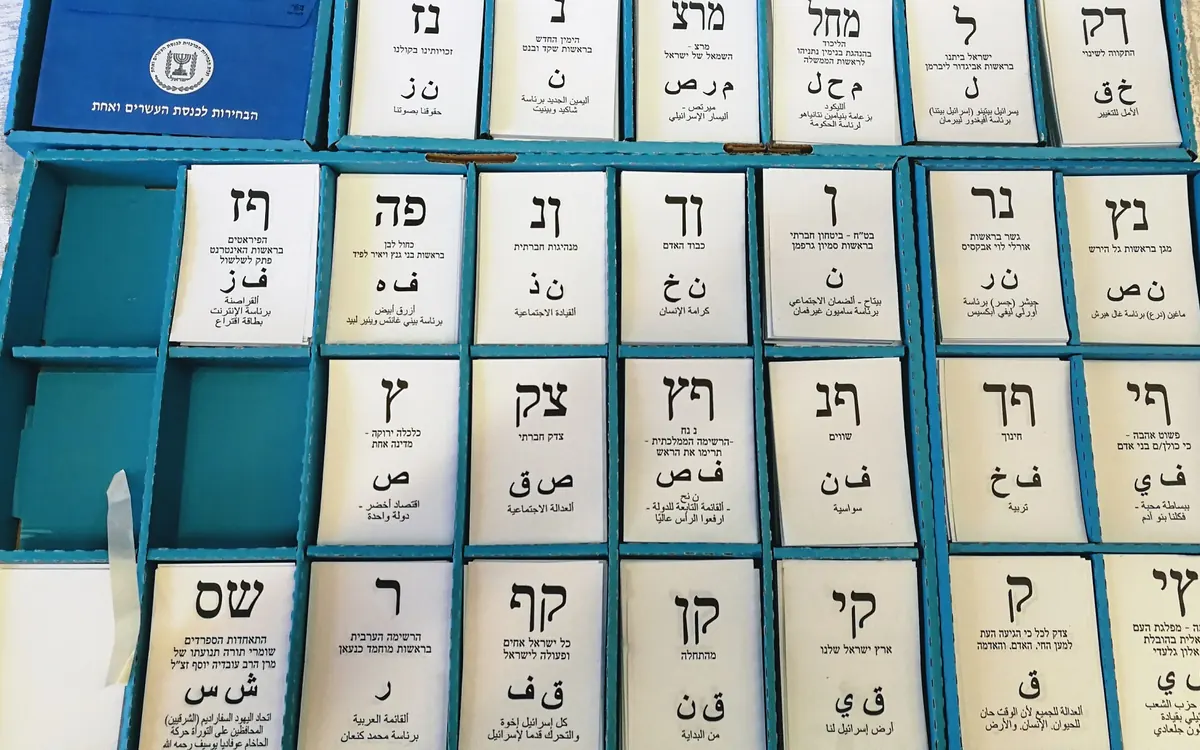
Part one of an in-depth look at the historical sources of the present issues in the Israeli elections for Knesset.
About this episode
Democracy, John Adams warned, can wither and murder itself. Rav Mike opens season six with a quest to trace key pieces of the present Jewish story from the eighties forward, and he starts with the problem making the most noise, the electoral system. Israel faces its fifth election in less than three years, each cycle costing billions, while real issues go neglected. His critique is loving. Dozens of countries were born after the war and you would not want to live in one of them. Israel runs one of the purest proportional systems on earth, the Knesset almost a mirror of the people, so the machinery works and the people simply do not know what we want. As Golda told Nixon, she was prime minister of six million prime ministers, a joke that is not all that funny.
Our divided nature is a feature of who we are, a people whose mission is bound up with oneness yet made of twelve tribes. The thirty-seventh chapter of Ezekiel dreams of uniting Yosef and Yehudah, a redemption that thrives through our distinctions and seeks diversity within unity. If Rav Mike had to name an origin point for our parliamentary culture, it belongs in Basel in 1897, where 208 delegates ranging from Marxist materialist to religious messianic agreed on little beyond the dream of Zion. That first meeting gives his opening takeaway. You never get all the Jews to think alike, thank God, and to get them to act in concert you need a profound sense of external pressure and a clear vision. The trouble today is that we feel no pressure and generate no vision.
The structural issues arrived twenty years later under the British, who introduced proportional representation into the 1920 assembly election to give ideological diversity its due, and Israel runs on that choice to this day. Back in 1861 John Stuart Mill praised proportional rule for representing every minority, while Walter Bagehot warned it would breed special interest parties pledged to one interest and party politicians answerable to no district. Ahdut Ha'avodah won only seventy of 314 seats, beginning fifty years of dominance that still required a coalition. No party has ever won an outright majority in an Israeli vote. So a near insane ideological diversity, magnified by proportional representation and the complexity of coalition building, was baked into the system before the state was even born.
Independence in 1948 brought no reset. Rather than design a government of our own, the leadership lowered the Union Jack and ran the Star of David up the same flagpole, and the proportional system survived as a product of wartime emergency that has in a sense never ended. Run on program, Rav Mike learned working with troubled teens, and never on personality, because a thing built to last must outlive its builder. Yet personality keeps warping our politics. It began with Ben-Gurion, and when the bureaucrat Levi Eshkol replaced him, Menachem Begin urged Eshkol before the Six-Day War to step aside for the eighty-one-year-old Ben-Gurion, who had to lead. In crisis people reach for a strong figure who makes them feel safe instead of shouldering the responsibility themselves.
The most disastrous case Rav Mike witnessed was the 2005 disengagement from Gaza. Elected as a warrior and settlement builder, Ariel Sharon pursued the opposite policy, and when his own party rejected it he simply formed Kadima, personality trumping policy and nearly driving the democratic structure off a cliff. The 1977 Mapach added another layer, as Begin's Likud unseated labor and invited Agudat Yisrael into the coalition, ushering in real competition between blocs where small sectoral parties became kingmakers. The National Religious Party ended its historic covenant with labor and jumped to the right. On an August morning in 1983 Begin stood up at a cabinet meeting and announced he would retire, offering only the words I am no longer able, his heart broken by his wife's death and the deaths in Tyre.
Key ideas
- Rav Mike opens season six by tracing the loudest problem, an electoral system that has produced five elections in three years.
- Israel runs one of the purest proportional systems on earth, so the Knesset mirrors a people who cannot agree on what we want.
- Our divided nature is a feature, and getting Jews to act in concert takes both external pressure and a clear vision, which we now lack.
- Proportional representation entered under the British in 1920 to honor diversity, and Bagehot's warning about special interest parties has come true.
- Independence brought no reset, and the proportional system endures as a product of a wartime emergency that never ended.
- From Ben-Gurion to Sharon's disengagement, personality has warped a system that should run on program, and 1977 made small parties kingmakers.
Chapters
- 0:00 Democracy can murder itself
- 2:08 The loudest problem; the sandwich
- 4:17 The purest proportional system
- 5:21 Divided nature as a feature; Ezekiel
- 7:39 Basel 1897; the first Congress
- 9:59 The British and proportional rule
- 12:06 Mill versus Bagehot
- 14:23 1920; twenty parties, one room
- 16:37 Coalition rule and its challenges
- 18:46 1948; no reset, same flagpole
- 21:08 Run on program, not personality
- 23:18 Ben-Gurion and the old man
- 25:28 Sharon and the disengagement
- 29:01 1977; the ultra-Orthodox enter
- 32:19 Begin invites Agudah in
- 35:32 Begin resigns; I am no longer able
Who, where and when
People
John Adams, Golda Meir, Richard Nixon, David Ben-Gurion, Levi Eshkol, Menachem Begin, Ariel Sharon, John Stuart Mill, Walter Bagehot
Places
Basel, The land of Israel, Gaza, Sinai, Tel Aviv
Texts
Ezekiel 37, The Camp David Accords
When
1897 CE: the first Zionist Congress, 1920 CE: the assembly election, 1948 CE: statehood and no reset, 1963 CE: Eshkol replaces Ben-Gurion, 1977 CE: the Mapach, 1983 CE: Begin resigns, 2005 CE: the Gaza disengagement
Read the transcript
Remember, said John Adams, democracy never lasts long. It soon wastes, exhausts, and murders itself. There never was a democracy yet that did not commit suicide. Well, those are words of warning. I'm Rav Mike Foyer, and this is The Jewish Story. Season 6, Episode 2, Electoral Dysfunction, Part 1. Okay, I'm ready. My quest this season is to identify key pieces of the present Jewish story, whether the strong points or the weak ones, and to try and trace their evolution at least from the 80s to the present day. And all that with the express intent of gaining some sort of insight on where this story is headed. Now, I have to admit, before I get started, I spun my wheels for quite a bit of time trying to figure out where to begin.
And by the way, your suggestions were extremely helpful. Keep them coming. Rav Mike Foyer, gmail.com. Or you can send them to me on Facebook, Rav Mike Foyer. I really want to hear what you think. Nonetheless, even with all your help, it's a bit of an overwhelming task to try and figure out the perfect place to start. So rather than try, I'm going to use the tactic that most of us really use in our daily lives. focus on the problem making the most noise. And as far as I can tell right now within the state of Israel, that's our electoral system. In less than two months, we're going to be holding our fifth election in less than three years. And while I wouldn't yet call the political system here disastrous, it definitely has the smell of crisis in the air.
Now, I know the cynics will say that the main job of every politician is to get reelected. And so in some sense, our leaders have been working quite harder than usual since 2019. But there are a host of issues within our society, great and small, that are being neglected. And each voting cycle costs the economy more than three and a half billion shekels. Do the math. Not to mention that Omnisrael has a mission to the world. And it's crying out for leadership on all levels. If we can't do it here in our national embodiment, where will we get it done? So I figure I could do worse than starting by taking a good hard look at how the current political mess came about. Now, I do want to say that though my goal is critical, it's also loving and constructive.
So it's always worth using the good old sandwich method for feedback. If you haven't taught or haven't been taught that simple but surprisingly effective means of giving critical feedback, it's time to learn. It's really simple. First, you start by saying something positive. And then you deliver the critique that you'd like to give. And you always close with another positive observation, hence the sandwich. So what's good to say at the start? First of all, I remember once when I was in yeshiva, we were chatting for class and someone was complaining about the state of Israel. And Rabbi Bravander interrupted, something he generally didn't do. Now, he was not one to be afraid of criticizing the country or its policies, but what he said struck home so well that I remember it to this very day.
Dozens of countries, he said, dozens of countries were created after World War II, and you wouldn't want to live in a one of them. Now, be that technically true or not, the point stands. I'm not about to rattle off all the reasons I love it here, but in relation to the question at hand, I will maintain my pride in Israel's ability to generate and sustain a vibrant democratic system since its inception, really since before, as we'll see. And lest you start angsting over the injustice, apartheid, fascism, racism, and all those other wonderful epithets people love to throw, just remember that we're in an evolutionary process here. take a good look at American history and check out what the democracy looked like in 1863, only 74 years after its founding.
Truth be told, one might be tempted to look at the continual election cycle that we've been occupying as a great victory for democracy. I mean, the Israeli parliamentary system operates on one of the purest forms of proportional rule out there in the realm of the republics. Now, I'll explain the mechanics and their problematics of proportional rule shortly, But for now, what it means is that the entire electorate is one district, and therefore the number of seats any party in the Knesset gets is almost exactly in proportion to the number of votes that party got in the general election. In other words, the Knesset is as close as you can get to a reflection of the people who chose them, which means that the system works, just that the people don't know what we want.
Or perhaps I could say it differently, we all think we know what we want individually. We just can't sustain a substantial enough conversation around it in order to join together into a stable vision that can give us a stable government. Like Golda Meir once told Richard Nixon, You're the president of 150 million Americans. I am the prime minister of 6 million prime ministers. It's a joke, but it's not all that funny. Now, I might be tempted to trace the present electoral issues back to the mythically fractious nature of the Jewish people and to say that the structure of our electoral system isn't the issue. It's working just fine, in fact. It's just reflecting a very old problem. After all, since his brothers beat up Joseph, threw him in the pit, and sold him into slavery, we've been suffering as a people from an inability to get along.
And if you trace the narrative thread of national divisiveness through history, it's generally brought punishment and exile in its wake. Let that be a warning to us all. Nonetheless, our divided nature is not a bug. It's a feature of who we are. You ever wonder about it? We're the people whose mission is bound up with oneness. One God. One Torah. One people. One land. Twelve tribes. Huh. And if you open up the 37th chapter of Ezekiel, you'll find there a vision for redemption. One that's about uniting Yosef and Yehudah, bringing the brothers and the tribes back together. Now, despite God's promise there that the result will be one king and one kingdom, let it be soon, let it be now, I see no reason to believe that that will require the differences between us to cease.
On contrary, the Hebrew universalist vision, as my friend Yehudah Cohen likes to call it, is all about learning to thrive through our distinctions, not in spite of them. We're about a people who sees diversity within unity. And in a world threatened by so many corrosive divisions and so many false illusions of how we can just homogenize and make the world one place and get along better, that's a vision worth pursuing, no matter what challenges stand in the way. So, before we dive into the backstory and the critique, which I think is going to take more than one episode at this point, I leave you with this image. Despite the seeming inability to produce a leadership that can govern wisely, much less lead with courage, there's only one place in the world where Jews of every type, regardless of race, class, creed, or even religion, have managed to sit together.
And that's in the Knesset. Now, we may not all get along there, but we do stay in the same room. And in my eyes, that's more than half the battle. If I were to define an origin point for Israeli democracy, or at least for our parliamentary culture? It belongs in Basel, Switzerland in 1897 at the first Zionist Congress. Now, among many other important factors, the ideological diversity which will come to define Jewish parliamentary democracy was on full display there in Basel. The dream of Zion may have united the 208 delegates, but their broad range of worldviews stretching from the Marxist materialist to the religious messianic meant that that was about it for bringing them together. That first meeting gave birth to many things, and not the least amongst them was a legislative body known as the Zionist Congress.
It actually exists as a parallel to Knesset to this very day. It's the WZO, the World Zionist Organization, and yes, they hold elections just like we do in Knesset, and perhaps that deserves its own story. But this first attempt at reawakening the collective political will of the Jewish people was marked from the outset by the type of intense ideological debates and partisan politics which remain its inheritance till today. Nonetheless, despite that sort of fractious and partisan nature, the urgency of the hour, and the compelling nature of the dream of Zion were enough not only to hold the delegates together but to get them to agree on a plan Now that in many ways our first takeaway You never get all the Jews to think alike Thank God But if you want them to act in concert then two things are required.
A profound sense of external pressure and a clear vision. And the reality is, perhaps we don't realize how dicey the situation is in which we find ourselves today. we aren't feeling the pressure, and we certainly aren't generating that vision. So anyway, ideological diversity, in all its beauty and problematics, was there at the root in Basel. But the structural issues, which are causing so many of our present electoral problems, didn't kick in until about 20 years later. At that point, the British were the colonial rulers in Zion, having received a mandate from the world powers to foster a national home for the Jewish people. The British quickly found out that this was easier said than done. Aside from their own competing interests of empire, the Jews themselves couldn't exactly agree on what that home should look like, or frankly, even whether it was such a good idea to build one in the first place.
In an attempt to create somebody, some entity that could represent the Jews of the mandate before the British authorities, elections were held for an assembly of representatives on April 19, 1920. Now, the British were surely well familiar by this point with the whole two Jews, three opinions problem. And in order to ensure that ideological diversity was properly represented, a system of proportional representation was introduced into the election for the assembly. Now, I promise you a word of theory, and here it goes. Because as a result of that original decision by the British, made in hopes of creating big tent Zionism, the state of Israel still functions on proportional representation even today.
In fact, like I said, the Knesset is elected through the most extreme form of proportional representation found amongst any of the world's democracies. And when we combine that with the ideologically passionate nature of our people, it's thrown some real wrenches into the functionality of our political system. Now, in general, electoral systems fall into two categories. I hope you're taking notes. proportional representation, and relative majority. It's really not so complicated. The proportional system is simple. You treat the entire country as one electoral district, and then each political party gets a percentage of seats in parliament proportional to the number of overall votes received in a single nationwide election.
I mean, make it easy. If there are 100 seats in Knesset, you just get however many seats are reflective of the percentage you get in the vote. Simple, right? The plurality system, on the other hand, works by breaking the country into districts. And each party runs in that district. Voters cast ballots for candidates in their district. And then the party wins in one region and might lose in another. Now, the standard wisdom is that while the proportional system represents the people's collective will with maximum accuracy, The plurality system offers greater stability because it forces a candidate to represent or at least speak to the majority within their district from which they come. Already back in 1861, the philosopher John Stuart Mill held a heated debate with the economist Walder Bagot over the relative merits or problems of these two systems.
Now listen closely to their points. Mill maintained that proportional approach offers the representation of, quote, every minority in the whole nation and would allow legislators to represent, quote, a voluntary constituency of true supporters defined by their political beliefs rather than an arbitrary constituency defined by geographical coincidence. meaning he didn't want to end up in a situation where just because I lost out on the majority vote in my town the person who represents me doesn't actually represent my beliefs. Well, that sounds great. But in response, Bagot warned that because there'd be no need in this proportional approach to court the majority it would produce special interest parties with members of parliament who, quote, pledged to the consideration of one interest only.
Furthermore, he worried that without a direct responsibility to an electoral district, a place where real people lived real lives, those representatives will quickly become, quote, party politicians selected by a party committee and pledged to party violence. Does that sound at all familiar? But you know what? The mandatory authorities weren't interested in electoral theory. They just needed to get all the Jews in one room, which can be kind of like herding cats. I mean, just read the Bible. In that first election in 1920, there were no fewer than 20 parties competing for 314 seats, all to represent the Jewish population of less than 70,000. And the assembly representatives that emerged set the mold for some key features of our current electoral system.
The first, like I said, was ideological diversity, and with it, downright animosity between the competing parties. In a move that foreshadowed major political challenges to come, the ultra-Orthodox Akudat Yisrael party actually boycotted the elections because they rejected political Zionism altogether. Now, they came back in the following election once they realized the Zionists weren't going anywhere and, frankly, were holding the keys of power. The next element set by that 1920 election, like I said, was structural. proportional representation seen as a means of giving maximum expression to ideological diversity, a value, perhaps not the most important one. Last but not least, was the reality of rule that flowed from this combination of ideology and structure.
The big winner in that first election was Ahdut Ha'avodah, the Union of Laborers. It was a union of workers' parties, which was the predecessor first to Ben-Gurin's Mapai party and ultimately to the modern labor party. And despite the fact that this was the beginning of a dominance over the political system that would last for almost 50 years, Achtut Avoda won only 70 of the Assembly's 314 seats. That's just over 22%. And that meant that in order to form a cabinet that could make policy proposals to the British, they weren't ruling yet, the winning party first had to build a coalition of supporting parties. Now, coalition rule is not intrinsically bad. On the contrary, every great ruler of yore had to unite the tribes before creating their kingdom.
And the process of consensus building, which brings a coalition together, ideally allows many voices around a ruling table. But the challenges of coalition rule can be quite acute, especially when the leading party is increasingly dependent on small ideological sectoral parties to even stay in power, much less govern. And since 1920, no party has ever won a simple majority in an Israeli vote. The closest anyone ever came was in the labor alignment, that's Ahdut's inheritor, took 56 out of 120 seats in Israel's 1969 election. And the situation today is far less stable. The latest poll I just looked at placed the largest number of votes going to Likud at 32, just over a quarter of the Knesset. In a parliament where gaining even a dominant plurality is increasingly impossible, the pursuit of legitimate sectoral interests by small coalition parties means that Bagot's warning about special interest parties whose members were pledged the considerations of only one interest, has played out in our day to the extreme.
So here we have it, an almost insane ideological diversity, exacerbated by proportional representation, which gives each of those ideological voices disproportionate power, and the subsequent complexity of coalition building. I won't review it now, but you should go back to Season 2, Episode 29, and you'll hear how an almost identical process unfolded in that world Zionist organization, which of course was dominated by the labor movement as well. These together meant that both the legislative bodies were fit to the same mold when independence was declared in 1948. Now, you might think that this was an opportunity for a reset, that such a crucial question as what is the best possible electoral system would have been given a critical review at the birth of our country.
But if you've been following the Jewish story since season two, then you know that wasn't the case. Not with the electoral process, and not with many other important issues. Rather than build a governmental structure of our own, in many ways, what the Zionist leadership did on May 15, 1948, was to pull down the Union Jack and run the Star of David up the very same flagpole The notable session of the provisional government of Israel headed by Mr Ben This was their last meeting before the elections the first to be held in the new state Widespread preparation by each of the 20 political parties have resulted in a heavy poll, while Israel remains the center of worldwide attention. Now, in fairness, when David Bar-Rav Chai, chairman of the election committee, addressed the provisional Knesset about the preparations for Israel's first ever general election, the War of Independence was still going hot.
And as he said, the committee spent little time exploring theoretical alternatives, even while some members support, in principle, a regional system. Almost all members concluded that in these elections, and under the current circumstances of war and large-scale mobilization, this theoretical debate isn't important. If we want to carry out an election quickly, we have no choice but to opt for a national proportionate system. Any other system would demand much more complicated preparation and will be impossible to carry out within a short period of time. In other words, our present electoral system was the result of a state of emergency and in a sense has remained in one ever since. I worked as a counselor for at-risk youth for a couple of years in the woods of North Carolina.
And we used to drill our staff with a fundamental principle, run on program, not on personality. We all have personal strengths, and it's natural to play to them, even positive. But when you're trying to build something which will last beyond your presence, be it a group of emotionally troubled teens or a nation state, the cost of such a strategy often outweighs the benefits. You know, Abraham Lincoln, great American leader, used to teach that a good leader is not someone on whom an endeavor depends, who, when they leave, the situation falls apart, indicating how crucial they really were. A good leader is someone who builds an organization so well that it will thrive once they are inevitably gone.
And that brings us to another cause of what I see to be our present electoral dysfunction, the failure to build on policy, on program, rather than on personality. You may have noticed, unless you've been asleep for the last three years, that at least here and in the United States, there are certain big personalities which are warping the fabric of the electoral system. And that's not to say that B.B. or Trump are either the devil or the messiah that people love to make them both out to be. It's simply to point out that big personalities have a unique ability within democracy to draw people into their orbit, and thus to somewhat sway or even warp the electoral process. Now, on some level, once again, this is a feature, not a bug.
I mean, after all, democracy is meant to be a government which represents the people. And if that's so, then someone who can excite the people's interest, who can speak in a way where they feel their voice is being given a platform, will always have a disproportionate power within that form of government. Nonetheless, when we combine that fact with a certain type of personality, both in the leader and in the electorate, it can cause real problems for the long-term health of a nation, what I'm calling electoral dysfunction. The U.S. Constitution has built into it a number of ways in which it aims to minimize the impact of this populist element, we'll call it. The separation of powers, the electoral college, certain roles that the Senate plays.
But here in Israel, we have no such protections. In fact, we don't even really have a constitution. And in the absence of a clear structure, of a program to which we are all a priori committed, personality has always had an outsized impact on our politics. That began, of course, with David Ben-Gurion, who not only led the Yishuv during the pre-state era and drove the founding of the state, but served as its prime minister for most of the first 20 years. Now, you can go back to season two and three for the full picture of the role that Ben-Gurion played in shaping the state of Israel and its politics. But for present purposes, I want to understand the impact of personality on political decisions. And in order to do that, we can take a small story, which occurred in his life in the lead up to 1967 Six-Day War.
At that time, Levi Eshkol was Prime Minister. He replaced Ben Green in 1963. And people, by and large, perceived Eshkol as a bureaucrat. Hardworking, well-meaning, efficient, but not exactly inspiring. And therefore, not the guy you look to in a crisis. And that's why, in the very last weeks before the war broke out, opposition leader Menachem Begin came to Eshkol with a wild proposal, that he step down and agree to be Ben-Gurin's deputy in a wartime government. Now, by that time, Ben-Gurin was known universally as the old man. And that wasn't an epithet, it was a compliment. He was the old man in the sense that he was the backstop for the national identity. But Eshkol protested, impossible, Ben-Gurion is 81.
To which Begin responded, true, but, quote, I'm firmly of the belief Ben-Gurion has to lead the nation in this hour of peril. Did you hear it? Has to. Meaning, without him, we're lost. And if Begin felt that way, despite the bitter battles he'd fought with Ben-Gurion, some of which actually involved spilling blood, imagine how the rest of the country felt. They wanted the old man. As it turns out, Ashgol didn't step down, and in fact, proved to be a tremendous wartime leader, in my opinion, saving the country from disaster, not quartering it. But the story exposes what I feel to be one of the great challenges underlying our current electoral issues. In the face of crisis, oftentimes people seek out a strong personality that will make them feel safe, as opposed to taking the responsibility themselves to consider carefully what decisions have to be made.
That's what a democracy really thrives on. A citizenry who takes seriously their responsibility and doesn't try to offload it to charismatic leaders. Now, the most powerful and disastrous example of the phenomenon that I personally witnessed occurred in the lead-up to the 2005 disengagement from Gaza. Ariel Sharon, for whom I voted, by the way, had the ultimate driving personality. And he came close to driving the democratic structure of our state right off a cliff in pursuit of his aims. And whether you think those aims were personal or national, we need to learn from his example. Now, I will give an in-depth discussion of the disengagement. That'll be when we look at the situation in Gaza. But for present purposes, just know that when he was elected, Sharon was elected as a warrior.
He was a builder of settlements. He was the man who once declared, Din Nezarim ke Din Tel Aviv, that the fate of Nezarim, a small embattled settlement within Gaza, and the fate of Tel Aviv were one and the same. Little did we know at the time that it meant he would jeopardize the fate of Israel's coastal cities. Now, not only did Sharon pursue the opposite policy from which he was elected to do, he then promised to abide by the vote of his party's membership when he found that there was a little bit of opposition to that decision. Lo and behold, though, when the Likud membership roundly rejected his disengagement plan, he simply took his parliamentary power and formed a new party to pursue this policy opposed to his electorate.
And, frankly, people loved it. He was a bulldozer once again. Sharon got the job done. When his personality had pursued settlements, the right loved him. And now that it was prepared to destroy them, he was embraced by the left. Like I said, the analysis of his decision and its impact on our country lies at another time. For now, I want you to appreciate how his personality so profoundly trumped policy. and even any meaningful discussion of it within the electoral system. I mean, I remember listening to the radio one day in the lead-up to the disengagement. They were asking a woman why she wouldn't send her children out of Gaza as if she were keeping them hostage, using them as chips in this political game.
She pushed back hard and pointed out that when the decision was made to move the Haifa Zoo, two years were taken to study the potential impact on the animals to figure out the right environment within which to transplant them, to figure out the process by which it should be done. And now, six months after a decision was made, her home was going to be destroyed. So in this case, personality didn't just overwhelm policy, it actually threatened the very structure of democracy. Sharon's lack of accountability to the voters who elected him was so profound, he managed to form a ruling party in Kedema, which was not even elected So together with the ideological diversity at the base of Jewish culture really and the structural issues built in since pre times I want to place personality into the mix of our electoral dysfunction.
So, we have some conceptual sources of our present political challenges. Let's take a few minutes to pick up the thread of history close to where we left it off. Last season, we spoke at length about the 1977 Mapakh, the upheaval in which Menachem Begin and his Likud party finally managed to unseat the labor alignment after a rule that stretched back to pre-state days. Now, if you want, you can listen to episodes 9 and 10 from last season for the full picture. For now, I want to add a couple of nuances which continue to have a profound impact on our current electoral situation. The first, which may seem small, but is in many ways the most important insight, is the role that the ultra-Orthodox political parties began to play within the electoral system in the aftermath of Begin's victory.
Because in the late 70s, Agudat Yisrael was still more or less the sole political voice of what we know today as the Hredi world. and they had last sat in a ruling coalition in 1952. That's 25 years before. And they only did that because in the wake of the Holocaust and the founding of the state, the leadership of the Haredi world saw that participation of the government was really a matter of survival. However, after a few years sitting with Ben-Gurion's left-wing secularists and, more importantly, after ironing out specifics with that government about autonomy and education, the postponement of military service for men, aspects of Shabbat observance in public, and rabbinic control over personal status, that sense of pressure was relieved.
And that's why in 1953, the Aguda withdrew from the government over a question of recruitment of religious girls into national service. As a result, the religious leadership of the ultra-Orthodox world, known as the Council of Torah Sages at the time, ruled that the party, Agur HaYisrael, could no longer be partnered, quote, in any Zionist secular government because it could not accept responsibility for actions perpetrated and sanctioned by the Zionist secular government which conflict with religion and tradition. Isolation and a large degree of non-cooperation now became a defining factor in what emerged as Haredi life. I mean, essentially they accepted the state as a fait accompli, one which couldn't be totally ignored.
But Knesset participation, active governmental participation, was only allowed bid'yavad, post facto, or at least ad hoc. So that representatives of the Goudat Yisrael stayed in the Knesset in order to protect the community's vital interests and to protest the violation of religious principles, but they never sought to join the government again, or at least not for 25 years. And during the next two decades, the Haredi community flourished. This is the era in which they created the scholar society that we know today, based on yeshiva learning. And I do want to say as an aside, whatever issues you might have with that, we have to learn from a society that managed to build itself on something other than consumerism.
But I digress, because that building of the scholar society, of course, didn't happen in a vacuum. It happened with both the direct and indirect of assistance of the state, as well as major donations from diaspora Jewry. But by the mid-70s, community leaders saw that the coffers were running out and were increasingly appealing to the government, direct or indirect, through their party, Agudat Yisrael, for allocations to yeshivas and other educational institutions. Those pleas were more or less ignored until the Likud came to power in 1977. The turning point was under the leadership of Menachem Begin. because in his quest to build a stable right-wing government, a new phenomenon in the state of Israel, Begin invited Agudah Yisrael to join his coalition.
Now, forced to decide between their rhetoric of non-cooperation and the real needs of their community, the choice was clear. Furthermore, Begin wasn't the face of the labor Zionism of old with its socialist roots and anti-religious attitudes. He was a traditional man who shared a language, a cultural language, with the Haredesha world. And so Akgudat Yisrael indeed joined Menachem Begin's government, but with one reservation. They didn't want to be part of the cabinet. Their political involvement was limited to partnership in the coalition and taking the chairmanship of the Finance, Labor, and Social Welfare Committee in the Knesset, a committee that plays a key role in budget allocations. Now, this isn't just purely about one sectoral party and its quest for funds.
By the way, the Haredi parties may be painted with that brush, but they are far malone in that behavior. What really matters for the larger picture in our story is that for the first time in Israel's history, 1977 ushered in an era of real competition between left and right wing blocs for rule, and neither had a decisive plurality, which meant that sectoral parties like Agudat Israel were going to exact significant rewards for playing the role of kingmaker. And of course, the Aguda wasn't the only small party that quickly realized the potential of a truly competitive political field. In simple mathematical terms, the labor alignment could have actually formed a narrow government in 77. But as soon as the results were in, the National Religious Party announced that it saw itself as a natural parter in a government headed by Begin.
Now today, that may seem obvious, but this was the end of a long-lived partnership between religious Zionism and the labor movement. It's a partnership that went so far back, it was called the Historic Covenant. And it came to an end, surprise, surprise, over ideological issues and sectoral interests. As we discussed last season, Begin's passionate support of the construction of settlements in the lands captured post-1967, combined with a rising ideological fervor within the national religious world, to cause their political parties to jump ship from the left and join the right. This is a process which we will trace more in the future, but I want to wrap things up for now. Begin faced re-election in 1981, and the fragmentation of the electoral field only increased.
It was driven by things that we're going to trace in the next episode, the shift of Mizrahi voters away from Labor into Likud, the splitting of the right-wing bloc at the time over Begin's decision to withdraw from Sinai, and the increasingly difficult economic situation in Israel. In the end, Begin was forced to form a narrow coalition supported by only 61 members of Knesset, a sign of things to come. And the truth is, his government was stable enough. I mean, it did pursue peace with Egypt and wage war in Lebanon. So it's really hard to know what the future might have held had Begin continued to lead. But on August 28, 1983, Menachem Begin stood up at 11 a.m. during a regular cabinet meeting and announced his intention to not only resign, but to retire from public life altogether, offering as explanation only the words, I am no longer able.
Truth be told, his heart was broken. Months before, his beloved wife Elisa of 43 years had died. And soon after, 75 Israeli soldiers were murdered in the bombing of a building in Tyre in Lebanon. And from that point on, Begin grew increasingly reclusive, seldom appeared in public. Nonetheless, his announcement set off a frenzied effort by his allies to try to convince him to stay and widespread speculation amongst the press about the possible political motivations for dropping such a bombshell. However, unlike Ben-Gurin before him, who used the threat of resignation periodically as a doomsday device to get his way, Begin's chief spokesman, Ori Parat, said Menachem Begin is not Machiavelli, and when he says something, he means it.
Begin's departure marked the end of an era in Israeli politics in many ways, some of which we've touched on. And though his successor, Yitzhak Shamir, will continue to uphold that quality of when he says something, he means it, we're going to have to trace the continuing development of our electoral dysfunction in the coming decades. I just want to thank some folks before I sign up. I want to thank all the folks who give their hard-earned money to make this show happen, to keep it free and widely available. I want to call on you to join them now. You can go to my website, jewishstory.co. In the upper right-hand corner, you'll see a button that says Be a Patron. You can click on that to give a little bit of per-podcast support.
Or you can send me a message, rovmikefoyer at gmail.com, or on Facebook, rovmikefoyer. I'm happy to share with you the details of how you can dedicate a show this season. I also want to thank the Land of Israel Network. That's thelandofisrael.com. They're building a center for global transcendence in the heart of Judea. I want to thank the Pardes Institute, p-a-r-d-e-s.org.al, for throwing the doors of the Beit Midrash open as wide as possible. And I want to thank you for listening. I'm Rav Mike Foyer, and this is The Jewish Story.
More from Season 6

TJS S6E1 Prologue: A new perspective
Season six has finally begun! Here is a prologue to help frame the chapter to come. In it I touch on the power of prophetic sight, the book...
Play Episode
TJS S6 Interview with Rabbi Aharon Ariel Lavi
Here is an interview with Rabbi Aharon Ariel Lavi, of Hakhel: The Jewish Intentional Communities Incubator in the Diaspora, an expert on the biblical sabbatical year - shemitta....
Play Episode
TJS S6E3 Electoral Dysfunction part II
The unity government wasn't born yesterday, it has a long history in Israel. Tune in to this ongoing exploration of the evolution of Israel's electoral system to learn...
Play Episode