
TJS S6E1 Prologue: A new perspective
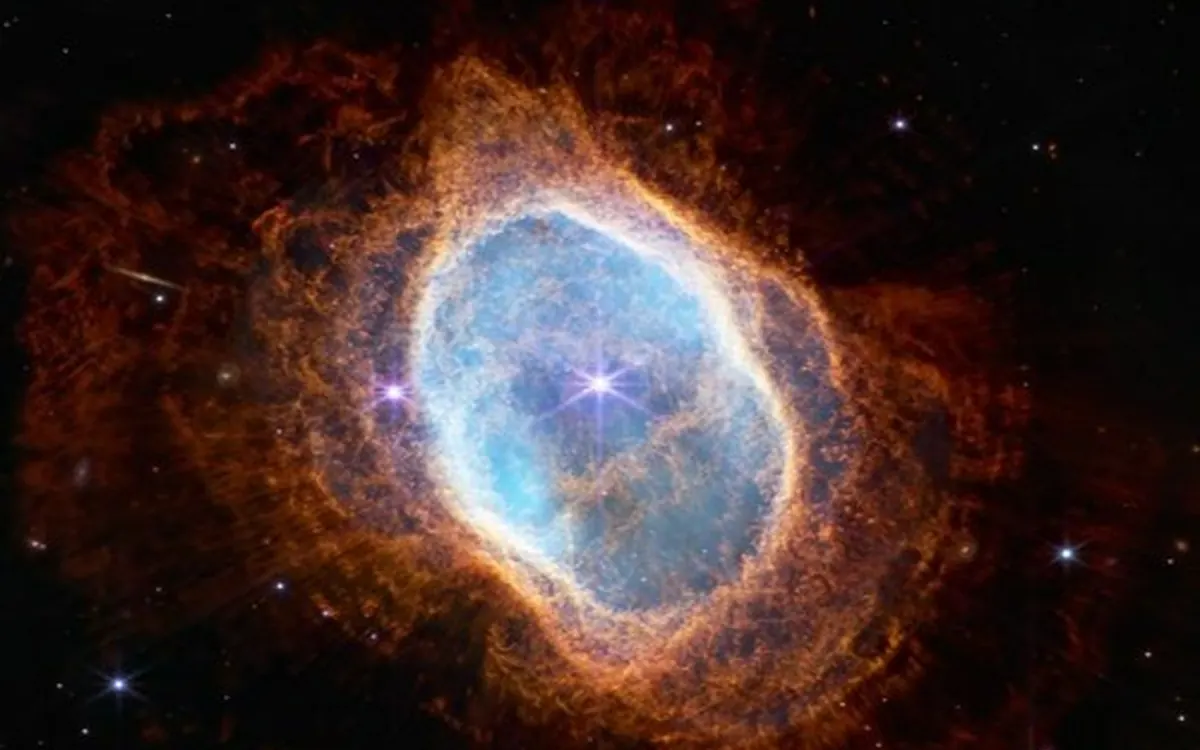
Season six has finally begun! Here is a prologue to help frame the chapter to come. In it I touch on the power of prophetic sight, the book of Daniel and why in the month of Elul we say that the king is in the field.
image from: www.flickr.com/photos/nasawebbte…scope/52212049510
license: creativecommons.org/licenses/by/2.0/legalcode
About this episode
What do you do when history runs out? For five seasons the Jewish Story told the past, and the past is easy to talk about because there is always the escape hatch of “that was then, this is now.” Season 6 begins with Rav Mike admitting that he is terrified, because this season turns to the present, and the mirror is far more frightening than the window. From his counselling practice he knows that people can tell their story and can even picture their future. Where they freeze is the question of where they are stuck today.
The frame for the season comes from Jeremiah. God appoints him over nations and kingdoms, to uproot and to build, and then asks a question: what do you see? Jeremiah sees an almond branch, and God answers heitavta lir’ot, you have seen well. Rav Mike follows that word through the lamps of the Temple and the grinding of the incense, where heitiv means preparing something so completely that the slightest spark sets it alight. To see well is to look at the world in a way that readies it for change. He is no prophet, he says, but he is willing to take the prophetic stance of looking and letting what he sees force a critique.
That critique starts with a distinction the whole season will rest on: Medina and Malchut, state and kingdom. Rav Mike calls the State of Israel the most profound spiritual event in Jewish history since the destruction of the Temples, perhaps since the Exodus, and also insists that we were taken out of Egypt, given the Torah and brought to the land as vehicles for Malchut Shamayim, the kingdom of heaven, and never in order to establish a state. Zionism and its state are the re-entry vehicle. The picture he offers is of space pioneers who have landed on a new world and, instead of spreading out, huddle in the wreckage of the pod and cannibalise its parts. That, he says, is why the term “settler colonialism” stings: we are still not acting as though we are from here.
From there he returns to where the whole podcast began, Daniel’s vision of the statue, and does something he has held off for years. The sages read the gold, silver, brass and iron as Babylon, Persia, Greece and Rome, and read those four exiles back into the second verse of the Torah. Exile, on this reading, is built into creation; it is the driver of the evolution of consciousness, from the cosmic to the human to the national to the psychological. And the feet of iron mixed with clay, the divided kingdom? Rav Mike names them the post-colonial world, the Roman model of the state carried everywhere by modernity and welded, badly and with blood, to soil where it is not native. Israel itself is a divided kingdom, hanging fire from election to election.
He ends as an apocalyptic optimist. Things may have to get worse before they get better, but the vision in Daniel ends with a lasting kingdom, and the task now is to read the writing on the wall and start building. For Elul, the month of return, he leaves one image: the king is in the field. Most of the year the context is set in stone, the burden of history already shaped by generations we never knew. Once a year it opens into a field of possibility.
Key ideas
- Season 6 changes direction: from tracing the past forward to looking at the present and tracing its roots back to the mid 1980s.
- Jeremiah’s question, what do you see, and God’s answer, you have seen well, set the method: seeing in a way that prepares the world for change.
- Medina is not Malchut. The State of Israel is the re-entry vehicle, and the mission is to leave the pod and build a kingdom that can hold the pieces of creation in right relationship.
- The four kingdoms of Daniel are written into creation itself. Exile is essential, and it is the engine of consciousness.
- The feet of iron and clay are the post-colonial world: strong states, poorly joined to their soil, and Israel is one of them.
- The king is in the field: Elul is a field of possibility, and the future is a springboard rather than a product of the past.
Chapters
- 0:00 Season 6 begins: what to do when history runs out
- 1:05 The escape from the burden of history
- 3:15 The mirror is more frightening than the window
- 5:22 Jeremiah: what do you see?
- 7:35 Seeing well: the lamps and the incense
- 10:55 Am, Torah, Eretz, and the state: Medina and Malchut
- 13:07 Huddled around the re-entry vehicle
- 14:11 Settler colonialism and acting like we are from here
- 15:16 What I see when I look at the state
- 18:35 Back to Daniel: the four kingdoms and the four exiles
- 20:53 Exile as the driver of consciousness
- 24:16 The feet of iron and clay: the post-colonial world
- 27:39 A divided kingdom, and an apocalyptic optimist
- 32:07 The king is in the field
Who, where and when
People
Jeremiah, Daniel, Nebuchadnezzar, Abraham Joshua Heschel, Reish Lakish, Rav Kook, Dave Mason, Rabbi Yehuda HaKohen
Ideas
Medina and Malchut, Malchut Shamayim, Settler colonialism, The four kingdoms and four exiles, Teshuva, The king is in the field
Texts
Jeremiah 1, Daniel 2, Bereishit Rabbah 2:4, Devarim, Ha'azinu, The Age of Prophecy
When
Elul 5783, September 2022, The mid 1980s, where Season 5 left off
Read the transcript
A king's heart is like rivulets of water in the Lord's hands. Wherever God wishes, God turns it, but I'm no king, but Lord, point my heart where you will. I'm Rav Mike Feuer, and this is the Jewish story. Season 6 Call of a New Perspective If you don't know by now, the tagline of the Jewish story podcast is telling a story of the past that upholds a present identity equipped to build the future which we desire. And without undue pride, I think I've done a pretty decent job of talking about the past over the last five seasons. But every year, more and more people have been hitting me with the same joke. Hey Mike, what are you going to do when time runs out, when history comes to an end? And we've kind of hit that point, and to be honest with you, it's not so funny any longer.
I'm terrified. We talk about kol hatchalot kashot, all beginnings are difficult, but this season feels somehow different. It's easy to talk about the past. I mean, even the most disturbing skeletons in the closet, the harshest revisionist critique I'm willing to level at sacred ideas and institutions can all be held off with a relatively simple statement. Well, that was then. This is now an effort to escape the burden of history, and it comes in many forms. It underlines the yolo, you only live once, attitude of rampant consumerism, and frankly, shallow fun that I see so much around me. It also, in its own way, drives the desire to destroy historical monuments around the world in our efforts to divest ourselves of the pain of the past.
You can see it in many places if you look. But the raw truth is it doesn't work. History is always present, no matter how hard we might try to deny it. And so, much of season 6 is going to be devoted to the question of how we carry the weight of the past in the present. The rest of the season is going to be devoted to how we work with that weight in order to build our better future. Don't worry, it's not going to be all about bearing burdens. But for right now, I find myself in the present moment, faced with the present rather than the past, and that's a new posture for me to be taking behind the mic in public as it were. So just as a reminder, those who didn't memorize every word I said at the end of season 5, or perhaps to those of you who didn't listen to the epilogue, new, new, new, my goal moving forward into this season is to look at items, phenomena, physical, cultural, spiritual pieces of our present reality, and to trace the roots back to where we left off our story in the linear sense in the mid 80s.
Sound straightforward, right? The only problem is looking the world in the face is never as easy as we might hope. I, by the way, know this quite clearly from my counseling practice. When I first sit with a client, I often open with the question, tell me your story. And my experience tells me with a minimal amount of encouragement, most people can summon up a tale of the past. Now it might be as full of holes as Swiss cheese, but it's a story nonetheless. Later in the process, we'll generally get around to speaking about values in vision, and I'll ask, tell me what your life looks like in 5 years and 10, what will they say at your eulogy? Now that's significantly harder, but with support and proper guidance, people most often discover they do have a dream of the life that they desire at least in the broad outlines they can see their possible future.
But when I ask what you're doing today, where are you stuck? Where are you flourishing? It's your greatest strength and your greatest barrier. How do you yourself contribute to the challenge you face in your life and relationships? You'd be surprised how many people freeze up and find it all but impossible to look honestly at themselves in the present. The mirror is far more frightening than the window. We're protected from the past by a bubble wrap of memory. We frame everything as we've spoken about many times, and it's easy to cast a future in a rosy light if we want to, but looking at the present in the face, bringing an honest eye to the world that I'm actively building, that can't hurt. If you don't know, I'm deeply invested in the prophetic side of what it means to be a Jew, both personally and professionally, aside from my passionate love for the writings of the prophets and the deep faith that their words will come to fruition, let it be soon, let it be now.
You can actually check out the practical applications of my obsession with prophecy. In the project known as the Age of Prophecy, that my partner Dave Mason and I are striving to bring to the world. You can check out the books, you can send them your email, if you want to be part of the launch, there's a self-fulfilling prophecy, seven-day challenge of videos and exercises coming just after Sukkot. But for now, one of the things I love most is the initial interaction that we often find between prophet and God. It's a crucial part that in textual analysis we call minui hanavi, the appointing of the prophet. But aside from the way it works in the text, it's a deep insight often into human spiritual psychology.
The great American teacher Abraham Joshua Heschel said that the prophets were people from whom God had removed all the blinders and rationalizations, all the filters we use to move through the present, without letting the pain and injustice of the surrounding reality overwhelm us, are ripped away by the divine experience. And the next thing you know, you got Isaiah screaming on the street corner because one person doesn't have what to eat. And one of the deepest moments of the pointing of a prophet I find at the beginning of the book of Jeremiah, when God poses the ultimate question, he says, what do you see? He says, Re'eh hifkadticha, see, I have appointed you. I've appointed you to stay over nations in kingdom.
That's a big job to uproot, pull down, destroy, and overthrow, build, and plant. It's interesting, by the way, note that the prophet bespeaks God's will, but somehow God has placed Jeremiah in the position of builder, destroyer, planter, and uprooter, and why, because of the question which comes next. Then it says, the word of Lord came to me. Mah atah ro'eh, Yirmiyahu, Jeremiah, what do you see? What do you see? Look at the world, and in your seeing, build and destroy, plant and uproot. Now I'm not a prophet, but as I said, I have a growing need to look things in the face. Now I'm out of some masochistic desire to be able to hold the pain, but because real change always begins with an honest look at what is.
By the way, that's why getting out of denial plays such an important role in the recovery of an addict. In the same way, if we as a people want to move forward in our history, then we need to be able to take a good look at where we are. But looking isn't enough, right? Because when Jeremiah looks around, and he says, makel shaked ani ro'eh, sees a almond branch. And God says to Jeremiah, heitavta lir'ot, you're seeing good kid. ki shoked ani al devari la'asoto, so it's all right because God is, play on the words, God is eager, is imminent to fulfill God's will. Right now, I want to consider, what does that reply mean? Heitavta lir'ot, yes, seen good. You know, that phrase, heitiv is a very interesting use of the Hebrew, right?
To make something good. We find it in a couple of interesting places, right? We see it in, in hatavat hanerot, the preparation of the lamps in the temple. We also find it in rabbinic literature that when the grinders of the spices for the incense work, they would say, hadek heitev, heitev hadek, crush good. Now, what are the lamps in the temple being prepared? And the grinding of the spices for the incense, having common. And what can it teach us about what it means to see the world rightly? Well, I've got newsroom. Heitavta, heitiv, is to make something completely ready for its purpose. At the slightest touch of a spark, the incense gives forth scent. And at the lightest flame, the lamp, which has been properly prepared, bursts into flame.
Both the lamp and the incense have a job to radiate. One light, the other rei'ach nicho'ach, a pleasing saver, right? Now that means that to see well is to look at the world in a light that prepares it for change. Now again, I'm no prophet. Certainly not in the sense that I have any pretense to know the future or claims to have touched the divine. But I am willing to take that classic prophetic stance of looking at the world and letting what I see force me to a critique of speaking truth to power and demanding that we as a people be more than we yet are. And when we open our eyes and see if we are able to give up to see well, we might just might be moved in the present to build that future of which we dream.
When I look around at the world, in my efforts to understand the Jewish story, there are always three dimensions which need to be considered. Am Yisrael, Torat Yisrael, and Eretz Yisrael, the people of Israel, the Torah of Israel and the land of Israel. And we will use those three dimensions to focus the exploration as we attempt to connect present and past, as opposed to past and present, in this year's season six. And of course today, in addition to Am Torat Yisrael, there is a fourth factor, Medinat Yisrael, the state of Israel. In the ways in which this political entity does and does not give right expression to the people of the Torah and the land is actually going to be the subject of the coming season.
Because in a sense, the primary driver of the Jewish story as I see it today is the struggle between the Medina and the Malchut, between state and kingdom, between the reality of our embodied political existence and the dream of what it is to play the role we were meant to play in creation. And since much of the criticism in the coming months is going to be leveled at the state, I do want to stay right off the bat that not only am I personally grateful for its existence. I believe that the state of Israel is the most profound spiritual historical event in Jewish history, certainly since the destruction of the temples and perhaps since the exodus from Egypt. Now that being said, it's crucial to recall that we were taken out of Egypt, given the Torah and brought to the land all as vehicles from Malchut Shamayim, for the kingdom of heaven, not in order to establish a Medina, a state.
Now that definition of Malchut that we've been working on needs to be recalled. Malchut is the context that holds the pieces of any situation, letting them come to right relationship as passive or as active as the situation might demand. And this is true on all levels, individually, functions as identity. How do I hold myself into a wholeness? To personally, it functions as leadership, any group from a couple all the way through a country needs a context that allows the pieces to come to right relationship needs of Malchut. And cosmically, God is holding the big picture and Zionism and the powerful state which it has created are best related to in my eyes and our story as the reentry vehicles for Israel into Israel, paving the way for Malchut and as a call to action for Torah, Israel to wake up and start to lead throughout the world.
I'm going to unpack all that in the coming season, but the only way I can get started this week with my promise myself that this was an unrestrained rant if you can't tell. So please stick with me. So many of our struggles today as a people, whether here in Israel or around the world and especially for American Jewry can be understood as rooted in our fear of what we've actually done by returning to the land of Israel and building a state. I mean, just think of space pioneers fleeing a ruined world, their intergalactic vehicle manages to cross the void impacting on the surface of a new home. Now they have everything with them they've need. All that's required is to trust that they've arrived, spread out, flourish, become the people who they can be in this wonderful new environment.
And instead, what do they do? They huddle around the wreckage of their space pod, hunkering in its shade, cannibalizing its parts just to survive. This is so much of our posture today. We haven't moved away from the glorious reentry vehicle of Zionism and really set ourselves to the true task of re-rooting ourselves in the land of Israel, in the Torah of Israel in a way in which doesn't simply worship the past, but envisions the future. We haven't really become the people of Israel fully again. Oh, we are Jews returned to the Middle East, however. Now just think of the hottest term of debate today, one of the swords being wheeled against us in the narrative war for out there as my friend Yishai likes to call it, Settler Colonialism.
In the coming episodes, I promise we will delve deep into the depths where that monstrously clever narrative weapon has been forged and what it means, maybe I'll even bring in my friend Rabbi Yehuda HaKohen for an ideological analysis of it, but for now, in the simple sense, Settler Colonial means, hey, Jews, you ain't from here. Or at the very least, you're not acting like you are, and practically that amounts to almost the same thing. And that's why that term might hurt, because we're not actually acting like we're from here. We're not striving to build a context which is powerful and visionary enough to hold the context for all human beings between the river and the sea, much less one that could serve as a foundation for a faltering world, we're trying to figure out how to wield state power in the service of increasingly narrow interests.
So when I hear the echoes of that prophetic call, God is asking me to look at the state in which I live, or what do I see? I see a military posture that assumes a maintenance of conflict rather than victory. I see a relationship to Torah that depends on legal positions and spiritual perspectives, which are from long ago and far away, I honor that they're necessary, but they're not sufficient. I see a political system spinning its wheels, spraying mud over issues of rhetoric and personality while fundamental social questions are suffering from neglect. I see an international posture which waivers between client, state, and quasi-regional power spiced with the role of arms dealer and aid worker in almost equal measure.
And of course, not everything I see is bad, God forbid. I mean, when I look out my window quite literally, I can see the growth. The sheer vibrant life in the state of Israel is astounding. And if you've ever been here, in many ways, it's its strongest appeal. I mean, all you have to do is look at my kids, frankly, to see that life is good. And I'll take time in the coming season to sit with everyone I can find who has a vision of how to share that good life with an ever larger portion of the population and the world. Now send me your names. Who's got the vision that you want to hear taken apart in a good interview? You're now remembered, though. If the old Yiddish proverb was, it's hard to be a Jew, shver tzu zayn a Yid, right?
That used to be a gospel truth for the Ashkenazim in exile. Now beware the danger of a life in the man where it's too easy to be a Jew. Or as I recently read, in the name of the Hungarian speaker of the house, Laszlo Kover, he said, we must make sure that good times do not create weak men, and that those weak men do not bring hard times upon our people. Or frankly, let's go to the source. God told Moshe to write it down at the beginning of Ha'azinu, that song of witness and warning that concludes the Book of Devarim. When I bring them into the land flowing with milk and honey that I promised on oath to their fathers, and they eat their fill and grow fat and turn to other gods and serve them, spurning me and breaking my covenant.
So I'm aiming to look at the world, and most specifically at Am, Torah, and the land in a way that by seeing it, we begin to make change. Not a prophet. I expect no divine imprimature on my observation, but I do take the heart, that response which God gave to Jeremiah. Heitavta lir'ot, right? I'm aiming to look the world in the face in a way that forces me and you into action to confront reality in a way which is like a match touched to a well laid lamp or incense ready to burn, because the time has come, spread out beyond that entry vehicle, and think about how we can build a kingdom which can bring light and fragrance to the whole world. Right now my Jewish story live class has gone back to the beginning to the story of Daniel.
I'm loving it. Anyway, it's not too late to sign up through LL, you're welcome to do it, send me an email ravmikefeuer@gmail.com, or you can go to ravmike.com, you'll see a button at the top there at ravmike.com. You see a button that says TJS Live, click on that and you'll get all the instructions. Meanwhile, I mention it now because there are many reasons I start the Jewish story with the story of Daniel, but the most essential is the vision that appears in the second chapter of Daniel. One that offers a picture of Malchut of kingship through the sweep of history, it's that vision of the idol which Daniel saw, or technically Nebuchadnezzar, King of Bavel saw that Daniel interpreted the head of gold, the arms and chest of silver, the belly and thighs of brass, the legs of iron, the feet of iron and clay.
And our sages, when they looked at that story, saw what they called the four exiles, the four kingdoms within which Israel would exist, who would create the context for the world which we knew once kingship was taken away from the people of Israel, right? They were Bavel, Babylon, the Madai Paras or Persia as we know it, Greece and Rome. But the truth of matter is, when the sages looked at that story, they saw way more than the four kingdoms that would rule over in Israel in exile, creating as we called it the known world. In fact, they tied it into creation itself. If you look into the Midrash, Bereishit Rabbah 2:4 if you want to look it up, it says there, there was Reish Lakish patach kra be'galuyot, you understood the second line of the entire Torah, as speaking about exile, when it says ha'aretz hayta tohu vavohu vechoshech al pnei tehom, he says, Well, Tohu, that's Bavel, right?
Gives the three's in there, Vohu, that's Persia and gives the three's in Khoshech, darkness that's Greece, right? Not the Enlightenment, the Indarkment and last but certainly not least, right? The Tahom, the Abyss that was Rome because they couldn't see the end of that phase. Aside from the poetry and the historical analysis, there's a principle being expressed here, which is universally relevant. And all the more so, by the way, in the month of Elul, right now, when we're looking to do teshuva, whether you call that teshuva Repentance or Return, whether it's going back to a judgment of where we should be or return to who we truly are, and the principle being expressed by seeing the four phases of exile, these four kingdoms of history, written into the fabric of creation is that exile is not accidental, it's essential to the divine plan.
And in many ways, I might call exile the driver for the evolution of human consciousness. Go with me on this one. The original exile was God throwing the world out there, creation has other than God. That's the striving of all creation to get back to source that Rav Kook calls primordial teshuva. That's the original exile. The human condition itself is exile, think of the story of the Garden of Eden. Ever since Adam took agency without responsibility, eating the apple while blaming Eve, she shatter the wholeness of our consciousness with creation and creator, and we got the boot from the garden. That's the exile of human condition. There's of course the national historical phase of exile, meaning Israel kicked out from its land.
That's hard to imagine that as purely historical accident, and it's too easy to label it as classic moral failure and inability to hold on to the covenant, because the book of devouring was speaking of both our exile and our return before we ever entered the land. So it seems that exile was already built in at that point. Furthermore, it's a reality that in exile we have evolved as a people, becoming ever more of ourselves even when we were absent from our native soil. In fact, our big challenge is how we bring that self back to our native soil and join the two more fully. The evolution of our national consciousness has certainly brought the Torah of Israel more fully into the world, and remember, repeated failure is the essential driver for all evolution.
That and time. So we have, from the cosmic to the human to the national, and last but not least, we have the self-self alienation, that awful, psycho-emotional face of exile. No one likes to feel estranged from their own being, yet it seems that life inside and out is so often oriented toward knocking us off the base of our sense of self. Now some of that is simply the suffering of existence, but consciousness is a lot about how we explore new horizons and how we embrace unconsidered perspectives, and that means that without a bit of alienation, we can't learn or grow. So you'll have to accept my contention that exile is not accidental. It is actually a built-in driver for the processes of creation and in particular the evolution of consciousness.
And that's why when Daniel, in the second chapter there, lays out the historical progression of kingdoms of kingship itself, Malchut through history, he's actually mapping an evolution of the socio-political and ideological systems that can hold the context for a good part of the world to come to consciousness, right? Because insofar as a political system holds the pieces of our lives in right relationship, which is the definition of healthy Malchut, human consciousness, flowers, and evolves, when that system falters chaos emerges once again. Now just a quick review here at the beginning of season 6, the sages saw Babylon as hasn't taken the Malchut, the kingship from God, and given it to the nations, and hence the golden head of Babylon.
Those silver arms of Persia brought Israel back to the land and to the temple, even though not the lasting kingship. The bellian thighs of brass were Greece, the core of Western culture, and those legs of iron were the legions of Rome that marched the known world circling the Mediterranean and subduing whomever they encountered. And I've held off for years from naming the feet of ironing clay in Daniel's vision, but in the spirit of my ongoing rant and of breaking the mold in season 6, I'm going to throw down the gauntlet and I'll say that when I look at Daniel's vision and I wonder what those feet of ironing clay might be, I see the postcolonial world. Why? Because it says there, in Daniel chapter 2, line 41, you saw the feet and toes part of powder's clay and part of iron.
That means it will be a divided kingdom, Malchut peliga, right? It will have only some of the stability of iron it says, umin nitzbeta di parzela. The Western world, in modernity, brought the Roman model to the whole world through colonialism. This idea that a powerful state, which builds internally a republic and is fed externally by conquest and expansion, went all around the world. And now such states in various degrees of development are scattered on five continents, plus of course, their home base in Europe. Now the model of republic is an excellent tool for wielding power on a social scale. We're benefiting it from a here in the state of Israel, but as a tool, it can be used as readily for justice and healthy growth as for evil.
And it's not organic to most of the places where it is found to say the least, even if I were willing to say that the Western style state is the best possible social organizing model. And I'm not, because I'm still holding out for humanity's social creativity to produce something better. But even if I were willing to say that, the way in which the state came to what we today call the post-colonial world makes it a foreign element at best. And that's the very type of ad mixture in the metallurgic imagery of Daniel's vision that he's speaking about. Min nitzbeta di parzela. There is some of the stability of iron in the world we say today. Very strong states, many parts of the world are stable and thriving.
That political military model forged by Rome can indeed wield power almost anywhere. But because of the burden of history, it's joined with the local soil. Quite poorly. In many places, it's simply non-native to the environment. And even where it's managed to weld, it's mixed with an enormous amount of blood. And that's why our world is a divided kingdom, Malchut peliga, a world in which the powers that be are a matter of hot debate, whether they're good or bad. And frankly, who they might actually be. This sense of a divided kingdom can be felt quite strongly here in the state of Israel today. I mean, forget whether we're a Malchut or Medina, we're a Medina, we are a state, not a kingdom. But even within that state, Jewish or democratic, ethnic or civil, religious, secular, both, it's not for naught.
That our electoral system has been hanging fire for more elections than I care to recall. And it's looking to remain there. That is, until things fall apart. Let's not forget. Daniel's vision actually ends with a lasting kingdom which emerges out of the collapse of all those remnants of previous Malchut, all the models of kingship which preceded it. And it's not just a promise of a political kingdom. In my eyes, we're talking about a watershed in the evolution of human consciousness. Has God promised in the Book of Davarim that when our final return to the land comes in the heart of our children, right, the umal Hashem Elokecha et levavcha, that will love God with all our hearts and our souls in order to live, not just ourself, but to bring deeper life to the world.
Now I generally avoid messy and expectation in my professional life. If you're ever at the third meal on Shabbat, you can hear it playing around the table. There's good reasons for that. At the least of which, that I firmly believe our focus should be on what we have agency to actually affect, not on the divine plan unfolding around us. Nonetheless, I'm breaking mold here. And when I feel God's call to look at the world, Jeremiah, what do you see? It isn't hard to paint an apocalyptic picture. I mean, read the news, war in Central Europe. It's threatening in the South China Sea as well. You ran, going nuclear as if inflation goes ballistic, monsoon, heat domes, drought, famine, everything you could imagine.
For God's sake, not long ago, water levels dropped so low in one European river they exposed a rock with an inscription from an early 17th century monk that reads, when you see me, weep. But I am an apocalyptic optimist. Even if things have to get really bad first, they will get better. Now you might say, like our sage said, yeitei velo achminei, let the Messiah come. But after I'm gone, please, so I don't have to see the process. I don't have to witness the suffering of a world, which is falling apart before it can come together in an embracing sustainable Malchut. But I'm not willing to take a passive stance at the very least. Like Daniel, I want to learn to read the writing on the wall. To see where the world is already headed in hopes of being able to build the future, which is possible and to start right now.
You know, there's a cry, which has become popular in the environmental movements. Speaking about climate change, we don't have time. Now you may feel that's true or not true in terms of the science, but it's an incontrovertible moral truth. We have no time left to ignore the reality of the present. The question is, do we have enough faith to look at what is while holding on to a vision of a hopeful future? Can we take that evolutionary visionary leap? Okay, last word in this rambling prologue. First of all, have no fear. This episode I'm getting back to history. I believe the first item I want to look at is the separation barrier that scars the land not far outside my window. So stay tuned for a few episodes on the historical roots of the barrier that marks the state of Israel and how it came to be with roots in the 1980s.
Also, please send me questions, ravmikefeuer@gmail.com or you can find me on Facebook, send me a personal message there. I want to experiment. Just making an episode every couple of months or so, that's purely a response to what on your mind. If you send me those questions, I will engage them directly. Last, I want to end with a thought on Malchut for Elul. And what kingship might mean in this month, which is setting us up to return to it is we believe we really ought to be. You know, there's a beautiful phrase which gets set a lot in this month, the king is in the field. It conjures up images of springtime, of intimacy, there's much to be said about it. But to me, the most simple thing to understand is that when the king is in the palace most of the year, then the Malchut is already set in stone, right?
The context that holds the pieces in right relationship has already been dictated and the truth of matter is, oftentimes life feels that way. We live the burden of history. The world we have now is shaped in generations which we'll never know, and sometimes that can feel quite confining. It might remove our sense of agency and with it, our sense of hopefulness for possible future. But every year, we return to this time where we say the king is in the field, and that's not just a bunch of grasses and wildflowers, that's a field of possibility. I want you to take seriously this prologue, to help me see what's in the world, not just as a product of the past, but as a springboard for the possible future, that when we set ourselves to the task of bringing real Malchut to the world, a real kingship that can hold the pieces of all creation and right relationship to give expression to that beautiful divine will that there be more life, and that that life be good for all of us, feel the sense of possibilities in the king, in the field of possibilities, and join me in the journey ahead of trying to imagine a future by looking the past and the present squarely in the face.
I want to thank everybody. I want to thank the folks that give their hard-earned money that make the show possible to keep it free widely available. I want to invite you to join them, especially now at the beginning of season 6, be a patron. Go to my jewishstory.co website, you'll see a button in the upper right-hand corner there that says, be a patron, click on that, give a little bit of per pod cast support, or reach out to me, ravmikefeuer@gmail.com, or on Facebook, I'm happy to share with you how you can dedicate a show in the coming season. Also I want to thank the Land of Israel Network, that's thelandofisrael.com, they're building a center for global transcendence in the heart of Judea. I want to thank the Pardes Institute, pardes.org.il, for throwing the doors that Beit Midrash open as wide as possible, and I want to thank you for listening.
I'm Rav Mike Feuer, and this is the JewishStory.
More from Season 6
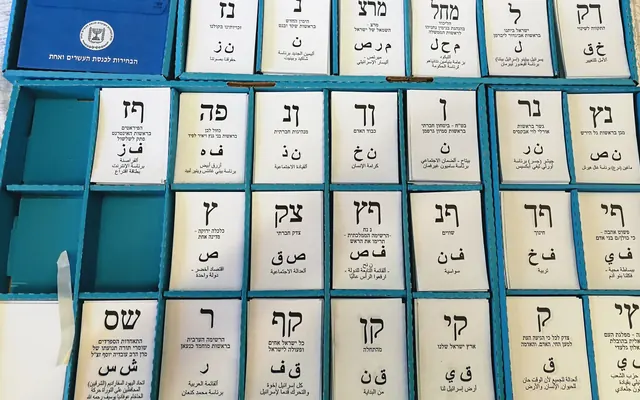
TJS S6E2 Electoral dysfunction part I
Part one of an in-depth look at the historical sources of the present issues in the Israeli elections for Knesset.
Play Episode
TJS S6 Interview with Rabbi Aharon Ariel Lavi
Here is an interview with Rabbi Aharon Ariel Lavi, of Hakhel: The Jewish Intentional Communities Incubator in the Diaspora, an expert on the biblical sabbatical year - shemitta....
Play Episode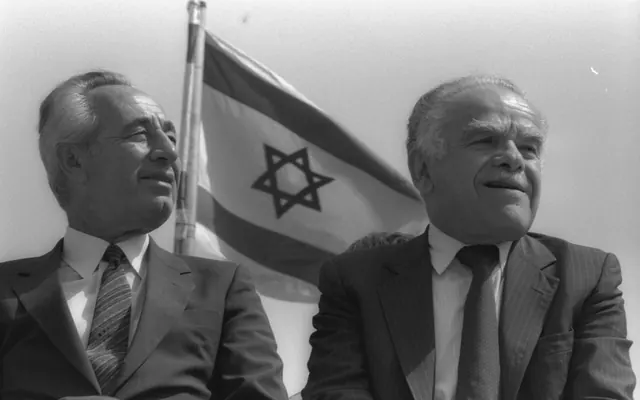
TJS S6E3 Electoral Dysfunction part II
The unity government wasn't born yesterday, it has a long history in Israel. Tune in to this ongoing exploration of the evolution of Israel's electoral system to learn...
Play Episode