
TJS S6 Sukkot interlude - A matter of faith
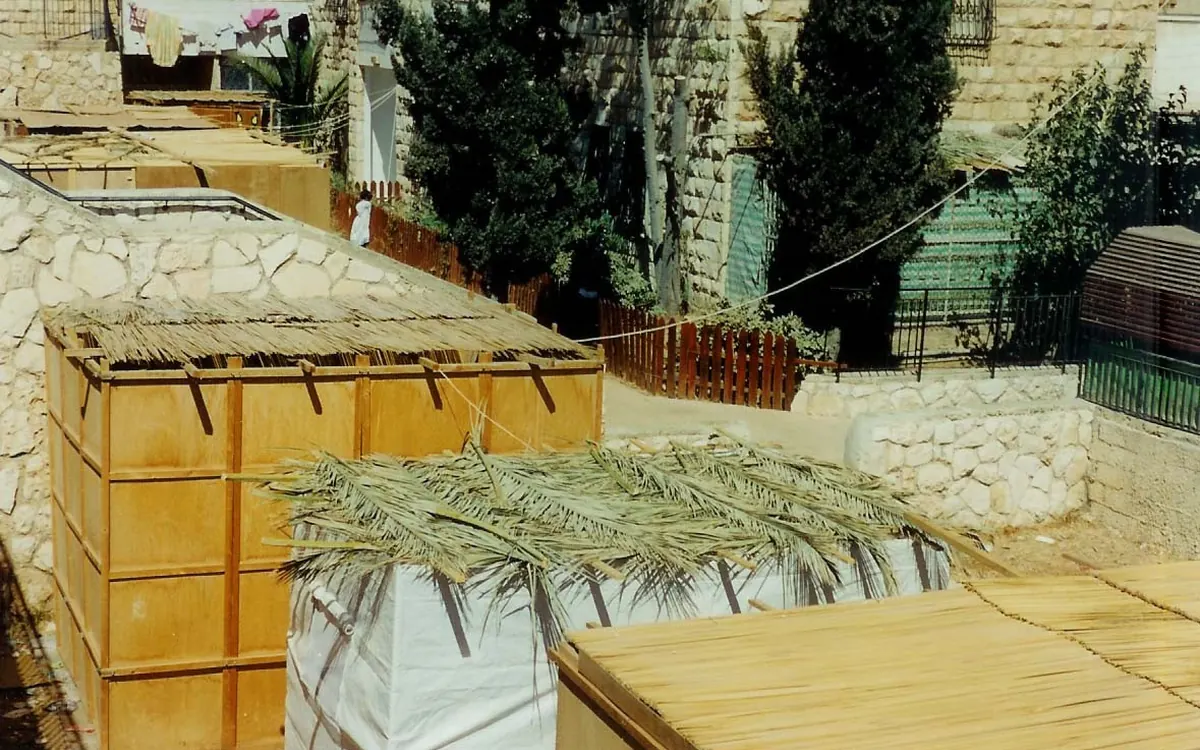
The Zohar calls the Sukkah "the shade of faith." Here are some impromptu thoughts from me to you as I sit in the shade of my sukkah - inspired by these holy days, but relevant all year round.
About this episode
Faith, said Elton Trueblood, is trust without reservation. Rav Mike sits in his sukkah at the edge of the Judean desert, its roof more shade than light, which the Zohar calls Tzila deMehemnuta, the shade of faith. He steps out of the season's big picture to speak on a personal level about light and darkness in life. His one-on-one spiritual counseling helps people engage both in a way that builds and heals rather than destroys. It often begins with a conversation, telling your story, and through reflection deepening the narratives of which a life is made, which enhances agency and allows the practical work of clarifying vision and crystallizing goals. Those conversations keep unearthing the essential questions, matters of emunah.
Reb Shlomo used to say that to have faith in Mashiach you have to believe in Am Yisrael. Rav Mike adds that you cannot believe in Am Yisrael while lacking faith in humanity, since the Jews are like everyone else, only more so. Faith is not something you have but something you do, a posture we take toward the world, an inner frame that lets us receive reality as it is and work toward what it might be. Rav Shagar describes emunah as a giving over of oneself and a decisive tipping of the scales, and says that to have it I must know how to cut a covenant. Emunah exists only insofar as it has a vessel, and the covenant is that vessel.
A covenant is more than a contract. Every relationship holds contractual elements, and the second paragraph of the Shema is the yoke of the commandments, the payoff of rain in its season. But the first paragraph is love of God with all my heart, an acceptance of divine kingship without thought of reward, a bond that transcends the transactional. Marriage is the model. Naming where the give and take works, or fails, is important, and still, without an essential bond of faith in one another that rests on commitment and not on any deal, the relationship faces a different order of challenge. Emunah begins with giving ourselves wholly over to our own reality.
Embracing one's own reality means accepting the rightness of who I am right now, however flawed, the at-one-ment with oneself that must precede any atonement, the inner work at the heart of Yom Kippur. Only then can the sharp inner decision, the tipping of the scales, let me embrace a shared reality. After that comes bitachon, trust, where faith hits the road. Rav Mike's advice is to take a risk, because until we step out we cannot know what truly drives us. He recalls the high ropes course, perfectly safe in a harness yet terrified atop a telephone pole, where the real risk is discovering our self-imposed limits. The sukkah works the same way, moving our precious possessions outside to live exposed on the porch.
For negotiating faith and agency he offers the frame of hero, victim and villain, which he credits to Donald Miller. The victim abdicates agency for comfort, the villain enhances agency but offloads consequences onto others, and the hero asks how to use what happens to become more of who they want to be, which presupposes a vision. Rabbi Akiva taught that everything is foreseen, and yet agency is given, the world judged favorably and going after the majority of our actions, so swing at every pitch. Rav Mike closes on the bond between emunah and simcha, the Maharal's teaching that joy is the emotive state of faith, and Rabbi Nachman on the intimacy with God that is the greatest joy of the sukkah.
Key ideas
- The sukkah roof, more shade than light, is the Zohar's Tzila deMehemnuta, the shade of faith under which Rav Mike speaks personally.
- Faith is something you do, a posture toward the world, and to believe in Am Yisrael you must also have faith in humanity.
- Rav Shagar teaches that emunah needs a vessel, and the covenant is that vessel, a bond that transcends the contractual.
- Emunah begins with embracing your own reality, the at-one-ment with oneself that must precede any atonement.
- Bitachon is where faith hits the road, and the way to know what drives us is to take a risk, like the sukkah or the high ropes course.
- Hero, victim and villain frame faith and agency, and Rabbi Akiva's everything is foreseen yet agency is given calls us to swing at every pitch.
Chapters
- 0:00 The shade of faith
- 1:12 One-on-one spiritual counseling
- 2:20 Faith in Am Yisrael and humanity
- 3:24 Faith is something you do
- 4:44 Cutting a covenant; the vessel
- 7:07 Covenant beyond contract
- 8:11 The marriage model
- 9:16 Embracing your own reality
- 10:19 At-one-ment before atonement
- 11:25 Bitachon; take a risk
- 12:28 The high ropes course
- 13:35 The sukkah as risk
- 17:07 Hero, victim, villain
- 19:15 Rabbi Akiva; foreseen yet given
- 23:41 Emunah and simcha
- 26:00 Rabbi Nachman; the joy of intimacy
Who, where and when
People
Elton Trueblood, Reb Shlomo Carlebach, Rav Shagar, Donald Miller, Rabbi Akiva, The Maharal, Rabbi Nachman, Bob Dylan
Places
The Judean desert, Jerusalem, The land of Israel
Texts
The Shema, The Zohar, Pirkei Avot, Sichot HaRan
When
1609 CE: the Maharal of Prague dies, the second century CE: Rabbi Akiva teaches, the Sukkot holiday
Read the transcript
Faith, said Elton Trueblood, is not belief without proof, but trust without reservation. And I trust you'll believe me when I say the world is founded on faith. I'm Rav Mike Foyer, and this is The Jewish Story. Season 6, Sukkot Ijulut, A Matter of Faith Well, I'm sitting here in my beautiful sukkah in the edge of the Judean desert, looking up at the roof. You may or may not know that the roof of the sukkah is defined by the fact that it has to be more shade than light. That's why the Holy Zohar calls it Tzela de Mehemnutah, the shade of Emunah, of faith. That interplay between light and darkness in life is pretty much what drives me, gets me out of bed in the morning. So I want to take a moment to step out of the flow of the big picture of the Jewish story, the narrative therapy for a nation, and speak on a more personal level as long as I'm here at home.
I want to talk about faith and a little bit about light and darkness in life. I call what I do one-on-one spiritual counseling. Now, practically speaking, that means helping people engage the light and darkness of existence in a way which builds and heals rather than does damage and destroys. What's that look like? It often begins with a conversation. You tell me your story. And through some introspection and reflection, we can deepen understanding of the narratives of which our life is made up. That, in my experience, enhances agency, which in turn allows for the practical work of clarifying vision and crystallizing goals. Because if you don't know where you want to be, then how can you possibly set the standard of action which will get you there?
Now, conversations about life stories often unearth deep questions. Not just the particular ones about ourselves and what it is we're trying to accomplish, but also the essential existential questions. Questions like matters of emunah, of faith. So I can't reach you all right now. But sitting here in my sukkah, under the Tzila de Mehemnutah, that shade of faith, as the Zohar calls it, I am thinking of you. I want to tell you, reach out if you want to do some work, or if you need a little bit of support, RobMikeFoyer, gml.com. You can find me on Facebook, RobMikeFoyer. I'm happy to hear your thoughts, and even to do some work together. But for now, since, like I said, I can't reach you all, I'll just tell you this.
You know, Reb Shlomo used to say that in order to really have faith in Mashiach, to believe that the Messiah is going to come, you have to believe in Am Yisrael, right? Not just in general, you have to believe that the Jewish people have the capacity to take creation to that next level with which we've been passed. Now, I'll add to this, the Sukkot is the holiday of universal redemptions, the time in which the mission of the Jewish people comes together with the vision of humanity to try to bring God's own plan for creation to fruition. So like I said, I'll add to Reb Shlomo's belief in Am Yisrael and say, how can you have faith in Am Yisrael if you lack it in humanity? I mean, after all, the Jews are just like everybody else, only more so.
So here I am, sitting in my sukkah, looking out at Jerusalem, and I want you to know that wherever you are, whoever you are, I have faith in you. And that's probably the best introduction I can give to a little bit of discussion about what exactly emunah might mean. Now my rabbi always used to say to me, faith isn't something you have, it's something you do. And even deeper, it's a posture that we take in the face of the world. An inner stance, call it a cognitive frame or a spiritual framework, which allows us to receive reality as it is and to work and pray toward what it might actually be. And when I look at one of my favorite spiritual teachers, I see that he defines emunah, this faith, as hit masrut v'hachra'ah, a giving over of oneself, hit masrut, and a decisive posture, a hachra'ah, a tipping of the scales, as it were.
But of course, the $64,000 question that matches those ideas is, how exactly do I do it? So I'll give you a line from that spiritual teacher, Rav Shaggar, I didn't actually say his name, which to me really encapsulates the motion of soul that we need in order to create a life of emunah. Rav Shaggar says, In order that I should have faith, even though I said it's what we do and not just what we have, nonetheless, in order that I should have faith, that I should have trust. Emunah and emun are closely related. I have to know how to cut a covenant, to make a covenant, and how to give myself over. Now, first of all, before I get into the details of that incredible statement, it's critical to note that Emunah exists insofar as it has a vessel.
In this case, Rav Shagar is saying that the vessel for Emunah is the covenant in which it finds expression. But I can't help noting, sitting here in the Tzila de Mehenuta, right, this shade of faith of my Sukkah, that the Sukkah is the ultimate vessel for faith. Maybe we'll touch a little bit more on that at the end. Right now, you might think that a covenant, which Rav Shaggar said is the real vessel for Emunah, is an expression of a faith that already exists. I mean, call it the formalization of a relationship. We trust each other. We have faith in each other. Now, let's make a deal. Let's cut a covenant. But really, that's a contract, not a covenant. Now, every covenant has contractual element to it.
Don't get me wrong. There is a back and forth even in the covenant which God made with Israel to keep the commandments. It includes a payoff for our efforts. If you obey my commandments, I will grant the rain in its season. And I might as well say, please, Lord, let it rain. Let it pour. That's the second paragraph of Kriyat Shema, the Declaration of Faith, really the ultimate statement of Amunah in Jewish tradition. And reciting it regularly is called the act of accepting the yoke of the commandments, of affirming our contract as it were, right? We'll do this, God do that. But it's the second paragraph of that Declaration of Faith. The first is about loving God with all my heart all my soul all my might It an acceptance of divine kingship without consideration of reward It bespeaks a connection which transcends the contractual And that's really where covenant comes into its own.
Think about marriage. Whether you're married, whether you have been or want to be, it's an important model, right? There are certain contractual elements to every relationship, and a marriage is no different. And when I work with couples in my spiritual counseling practice who are struggling to build the marriage they want, or save at least the one they have, I often find it helpful to make explicit the places where the give and take, where the contractual are functioning, or not functioning as the case may be. And that's an important process. But if there's no essential bond which transcends the transactional, a faith in one another, that depends fundamentally on commitment to one another, and not on any deal, explicit or implicit, it, no matter how crucial, then, in my experience, that relationship faces a different order of challenge.
Hence, Rav Shigar's description of the motion of soul that's required of us to have emunah, lichot brit, uledat lehit maser, to create a covenant, or literally to cut a covenant, and to know how to give ourselves over to one another. because emunah, on a certain level, is a giving over ourselves to a wholeness of reality. It begins, by the way, with giving ourselves wholly over to our own reality. Now, I'm not just talking about that old stoner experience of, Whoa, dude, what if we're like all just characters in somebody else's dreams? Although, I have to say, if you're watching the world closely, especially the one that's built its faith on science, That old escapist fantasy is making a surprising new comeback these days.
The high priests of the tech world seem to be increasingly obsessed with our world perhaps being some sort of simulcrum, right? A self-generating AI program of vast complexity, but of course lacking any imperative or even moral significance. But meanwhile, when I say that Emuda begins with embracing one's own reality, what I mean is that there needs to be a profound acceptance of the rightness of my existence. Not just my right to exist, but the rightness of who I am right now. No matter how flawed I may be, or how great my aspirations are to be more. It begins with the acceptance of what I am. This is the at-one-ment with oneself, which must precede any atonement that can be gained for breaking a covenant or even a contract with any other, be that other a friend, a business partner, my wife, society, or God.
The whole idea of atonement that we made central to our practice just a few days ago on Yom Kippur really has to begin with being at one with myself. Because once I give myself over to myself, accept that indeed this is who I am, no matter who it is I want to be, then and only then am I truly able to make that inner motion, that sharp decision, the hachra'ah, the tipping of the scales that allows me to embrace a shared reality. Then I can commit to marriage without expecting a tit-for-tat on which it can rest. Then I can live in a God-saturated creation which asks something of me in my every action because I've given myself entirely over to definitive existence, and therefore I can find that definitive existence in others, as well as its significance.
There's a lot more to be said there. You know, like I said, reach out, we can talk. But for now, if you want to know where the potential practice might lie, how we might cultivate this ability for hit masrut v'hakra'ah, for giving ourselves over and for making that inner decisive shift, well, we're better off actually speaking about bitachon than emunah. You know, emunah, if I was going to translate it, would best be called faithfulness. And bitachon, which in modern Hebrew is, of course, security, I would say is trust in. Bitachon is the bridge between the inner decisive posture, the hachra'ah, and its outer manifestation in my actions. B'tachon is where faith hits the road, so to speak. And if you want to learn how to do it, my advice to you is take a risk.
Because whatever it is, we believe that we believe. However it is, we think we know the world. Until we're willing to step out a little bit, say, get outside the comfort of our home and live on the porch for a week, we can't really know what's driving us. I'll give an example from a former part of my life. I used to work with at-risk youth in a hoods-in-the-woods program. We call that, you know, the lingo of the time. But one of the things I did with those kids was high ropes course. If you've never done it, I highly recommend it. But even if you haven't, picture yourself standing on top of a telephone pole. Now, on one hand, you're perfectly safe. There are wires and harnesses and ropes holding you secure.
You know intellectually that you can't fall. However, I promise you, as someone who's both done it himself many times and coached others through the process, it doesn't matter what you believe in that moment. Standing on top of a telephone pole is really scary. And even though we set up the situation that there's no actual danger, the real risk you find in that moment is discovering your self-imposed limits. How much of the world in which we live is bounded by the willingness we have to push its boundaries, or the lack of our willingness? The sukkah works the same way. Here we come. We move, according to the halakha of Jewish law, our most precious possessions. I'm here with my computer, my books, my bed.
It's all out here. And if it rains, we're going to get wet. And if it shines too hard, I'm going to shvitz. That's sweat for those of you who don't know Yiddish. Right. Furthermore, this is both a private but also public space. We've done all this hard work over the last month plus to become better people ourselves in our marriages with our friends, family, et cetera. And now we're all going to sit outside on a porch where I promise you, people are probably listening to me speak right now. It's private. No one can see me. But I know for a fact that I'm not alone. It's a good test case. It's a small risk that I can take to see whether my changes have already been real. Sukkot also, by the way, is the harvest holiday.
We are supposed to be post-labor. It's not time to work anymore. It's time to know that if I've done my hish dadlut, I've made my efforts, that the sustenance which comes to us from elsewhere anyway, whether you believe that God the economy or the bank Our sustenance comes from elsewhere and therefore we have a limited ability to control how it flows Now the time to believe that we have what we need Just to give it a more practical edge, I'll tell you, for me, as someone who's self-employed, the real risk is that Tishrei, which is our current month in the Hebrew calendar, if you're unfamiliar with it, has the wonderful combination of the highest expenses and the least number of working days, even billable hours of any month in the Hebrew calendar.
That's an interesting combo. Now, you might be tempted to tell me that, listen, it's all well and good to take risks when you're up on a telephone pole and hooked into a harness that you can see up to a wire that you can touch if you reach out far enough. But putting my faith in God and taking real risks in life is too much. Well, there's only really one thing I can say to that. many, many times here on The Jewish Story. We've touched on Bob Dylan's famous line that everybody got to serve somebody. And if you don't choose to serve God, then you're going to choose to serve other interests in your life, whether you know it or not. So I'll add a twist to that concept. Everybody got to take shelter in a storm.
Life is a storm. Creation poses profound challenges. it's just so much bigger than we can imagine much less relate to and on most of its scales it's completely out of our control and that's why when things happen to us as opposed to us doing things we have to take shelter somewhere and I'll say this about Emunah about faithfulness either I trust in Hashem or I trust in something else and the conscious choice to accept that I have faith actually gives me a freedom that following the science under the illusion that it's an objective reality simply can't provide. You know, so often when I speak to people, I find that one of the greatest challenges that we all share in life is how to negotiate between faith and agency.
I mean, not that everyone conceptualizes the problem that way. On a simpler level, it's simply a question of how we deal with the tension between what happens to us in life and how much we can or cannot do about it. And in my experience, there's no better frame for allowing us to understand the potential postures we can take than that of the hero, the victim, and the villain. It's not mine, by the way. This belongs to Donald Miller. You can look up his book, Hero on a Mission, if you want a better articulation. But for now, just know that if I choose to be the victim, then I'm abdicating agency. And in return, what I receive is a sense of comfort. Well, what could I do about it? I essentially have faith in my lack of agency.
I'm just a chip on the surface of the sea, tossed by the storms of life. Everything happens to me. Therefore, I don't have to worry about what I might do. I could also choose, and mind you, none of us is one or the other. We're always taking a bit of these postures in any given moment. I can also choose to be the villain. Now, the villain, on one hand, ignores any responsibility, any consequences of their actions, and in doing so, it allows them to take out the suffering which life dishes on others. Meaning what? Things happen to me, and I get upset. I want to react. Now, most of us are socialized well enough to know, don't take out your anger on others. The villain has let go of that. And therefore, on one hand, they enhance their agency.
They choose to do whatever they do. On the other hand, they ditch their consequences and therefore basically offload any responsibility. And well, I don't have to tell you, villains are not exactly pleasant people. Last but certainly not least comes the hero. Victim, villain, hero. The hero lives life with a simple question. Because the hero isn't different than the victim or the villain. Everything happens to us on a certain level. It's just that the hero knows that when something happens to me, the best thing to do is ask the question, how can I use this situation to become closer to who I want to be? How can I use life to become more of who I want to be? Now, notice there's a very important point here.
That presupposes that a hero has a vision of who it is they're striving to be. Hence the fact that I said that a crucial part of my spiritual counseling practice is clarifying vision and crystallizing practical goals. But for present purposes of our discussion of faith, I'm not going to try to unpack the metaphysics that underlie this question of where God's will leaves off and my agency begins, how much happens to me, and how much can I actually do in life. It's a classic problem of faith, no doubt. Rather, I'm going to give you the incredibly sweet words of Rebbe Akiva, written back in the second century, the common era, one of our great sages. He says, He says, Everything is foreseen, and yet, agency is given over to you.
Furthermore, everything is judged favorably. God has a good eye on creation, and all the world goes after the majority of our actions. Now, I find this to be one of the most important frames for negotiating this tremendous tension we all face between whether we're going to be a victim and have the world happen to us, a villain and take out what happens to us on the world, or a hero and use what happens to us in the world to become more of who we believe we can be. First of all, everything comes from God. You don't have to believe in God to believe that. You can just say that the world happens to us. On the other hand, I have agency. And until my dying breath, I will insist against every determinist, metaphysic, philosophizing, scientific rationalist, and everybody else who might join that team who tells me that the game is sold, I'll tell you that you always have what to do.
Furthermore, God has a good eye on creation. B'tuva olam nidon. Right? it's crucial to know that what underlies existence is love. And even if you don't believe there's a personality which loves you, just look around at the world. There's so much life. Choose to do the things which enhance it. And last but certainly not least, swing at every pitch, people, because everything goes after the majority. I can tell you as a parent that if we were looking at the actual scorecard, I would be looking pretty grim. But on a batting average, if I'm up at about 250, hitting one out of every four, I'm doing pretty well, right? So this tension between being hero, victim, or villain, how much agency do I take and how much do I recognize everything belongs to God, has actually an important middle stage There something between me and the infinite And that the stories we all share as human beings Hence the fact that the Jewish story as I said so many times is narrative therapy for a nation.
Because any decision I make to cut a covenant, in that language I offered earlier, to have emunah, and demonstrate it through the bitachon of taking risks and choosing to be a hero, All those decisions, all those decisive stances and risks I might take, play out on the personal plane. But as much as I'm at one with my own story, embracing whatever role I choose, I can't ignore the larger narratives. There are peoples, societies, there's a creation which we share, and they all have a topography to their tales. So whatever individual path I may forge through them, it's kind of like a man walking through the mountains. You can decide where you go, over, around, and even through, but you don't get rid of the mountain range.
The collective community of faith, which I hope you share, if not in its physical manifestation, at least conceptually, I hope there is a world in which there are others like you who share your faithfulness to fundamental principles. that really is a shared language of meaning and action, one that we cultivate both physically by being together and by speaking to each other even over the radio waves, in quotes. But collective emunah is always a secondary layer because its true depth rests on how deeply each individual holds God in their heart. so as decisive as I may be about my faith sometimes life swoops in and takes my agency for a ride and I just have to figure out what I'm going to do about it so I feel like I ought to quit while I'm ahead I hope that this is making a little sense to you you know send me your feedback I never really know if I'm getting through when I go into the abstract But a last thought on emunah, on faithfulness.
And that is the incredible connection between emunah and simcha. Emunah and true joy. The Maharal, great sage of Prague, beginning of the 17th century, he dies, 1609. He says that simcha, joy, real depth of joy, is the emotive state of emunah. And I can give you any number of reasons for that. And by the way, I would point out, for those who don't know, that Sukkot is called Zman Simchatenu, this time of our joy, because what could be better than where I am right now, sitting under the shade of faith? The first place that I find the joy which flows from Emunah is in the fact that it allows us to put down the burden of existence. Emunah is an ahdut of consciousness. It's a unity of consciousness. It's what allows me to realize I don't bring myself into being.
I'm just so glad to be here right now in the Sukkah doing nothing. And sometimes on Sukkot, if I get deep enough into that, I'm also here being nothing, as it were. That's the highest state which we can really touch in our prayer. And the first step in tasting the joy that comes with the faith of knowing that you don't have to make your own life happen is to let go of all the expectations or entitlements which may be driving you. The next step is to recognize that our existence is an expression of God rather than a creation unto itself. I'll let you chew on that and see if it makes you happy. Another piece here, and maybe the most fun, is that Emuda is also found as a profound play. it's a tasting of the fleeting experiences of existence but not as something shallow but rather as something precious in their impermanence you know there's an incredible Torah which Rabbi Nachman uses to open his book Shichot Aran it's a quote from the Psalms it says I know that God is great and that our Master is above all other Lords Okay, it's a quote from Psalms.
And he says, Taviyah Melech, who wrote this, he says, I know, specifically, says Rabbi Nachman, specifically, I know. Why? The greatness of the Creator is impossible to explain to someone else. Your conception of God, which, of course, is the foundation for faith, cannot be explained to another person. Right? Why not? Because it's so deeply personal. He goes further. He says, You can't even actually hold a conception of God from one day to the next. When it shines forth in your moments or sparks, as he says, and you have that moment of inspiration, you just need to be at one with that conception. You can't try to tell it to yourself. He says, You can't explain from one day to the next. or as the Zohar puts it it's a quote from the end of Mishle her husband is known in the gate we only can know God according to that which our heart measures meaning that Imunah is an expression of the deepest intimacy that real faith exists between God and I and if I've learned anything in my spiritual counseling practice working with couples, working with people one-on-one is that there's nothing more precious in life than intimacy.
And the fact that I can create a space within my heart, that I can carve out a space here in my sukkah, that we as a people, as a human species, can create a shared existence in which we can find an intimacy with God, that's not just the most profound faith. It is the greatest joy. And I wish it for you, and I hope you bless me back with it, that we should all taste a little bit of the joy of faith in this Sukkot holiday. So I want to thank you for listening. I want to thank all the folks who give their hard-earned money. I invite you to think about supporting Season 6. Go to my website, jewishstory.co. You'll see a button there in the upper right-hand corner that says Be a Patron. You can click on that to give a little bit of per-podcast support.
Not too late to dedicate a show this season. Send me an email, robmikefoyer, gmail.com. Or you can find me on Facebook, robmikefoyer. I'm happy to share with you the details of how you can do so. I want to thank the Land of Israel Network. That's thelandofisrael.com. They're building a center for global transcendence in the heart of the Judean mountains. I want to thank the Pardes Institute, pardes.org.il, for throwing the doors of the Midrash open as wide as possible. And I want to thank you for listening. I'm Rav Mike Foyer, and this is The Jewish Story.
More from Season 6
TJS S6 Interview with Rabbi Aharon Ariel Lavi
Here is an interview with Rabbi Aharon Ariel Lavi, of Hakhel: The Jewish Intentional Communities Incubator in the Diaspora, an expert on the biblical sabbatical year - shemitta....
Play Episode
TJS S6E3 Electoral Dysfunction part II
The unity government wasn't born yesterday, it has a long history in Israel. Tune in to this ongoing exploration of the evolution of Israel's electoral system to learn...
Play Episode
TJS S6E5 Boundary Issues part I
Almost two thousand years ago the Sages determined that Am Yisrael was bound in exile by an oath not to go up to the land "like a wall."...
Play Episode