
TJS S6E4 Electoral dysfunction part III
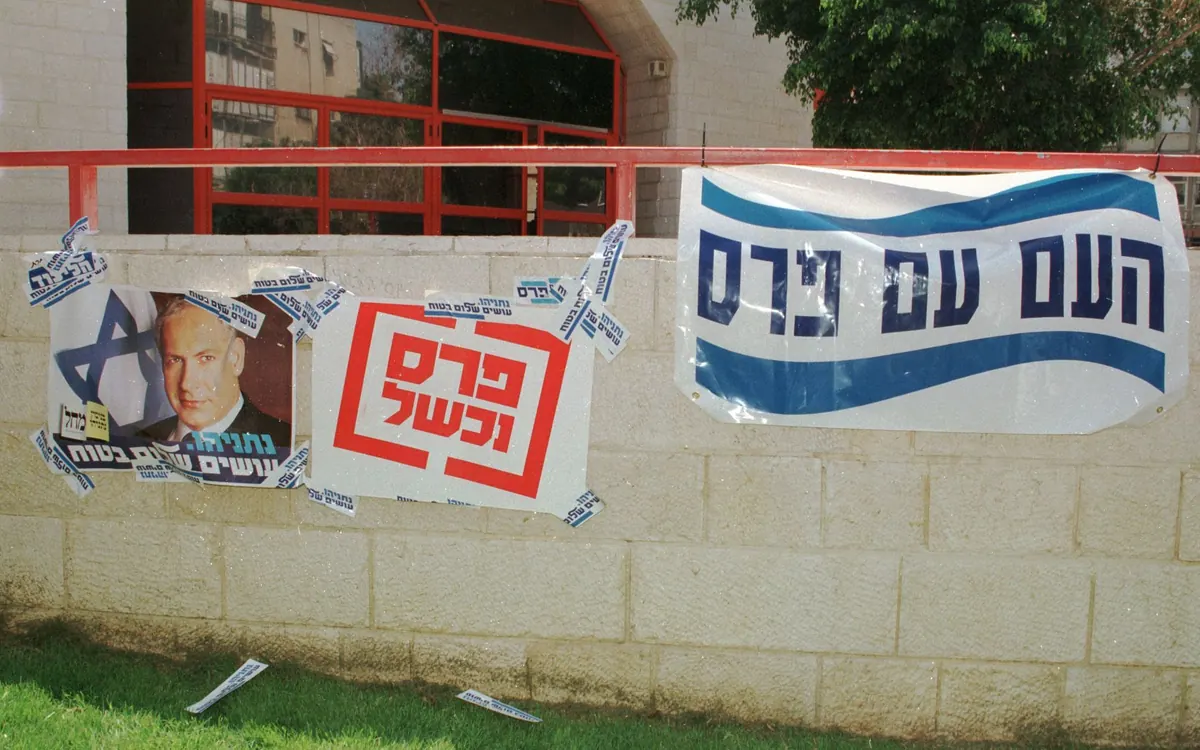
Here is the final installment in the series detailing the evolution of Israel's electoral system. It brings us almost all the way to the present, touching on topics like the Oslo Accord, electoral reform and Israel's Supreme Court along the way. If you want to have a better understanding of our current electoral dysfunction, then tune in now.
About this episode
A nation that prefers disgrace to danger, Hamilton said, is prepared for a master. Rav Mike opens with David Libai's 1990 lament that elections are held but no one knows who will be prime minister, with decisions made outside the party by an authority or a great rabbi, and the whim of a single member of Knesset deciding the fate of the people. The structural picture so far is proportional representation and a low threshold producing a bipolar system, two large but non-dominant parties ringed by satellites, plus personality large and small. This chapter adds the political decisions of the nineties that pushed us toward the polarization and paralysis we know today.
After Peres's stinking trick, the public backlash forced a small measure of reform. A grassroots Public Committee for a Constitution, led by figures like Libai, proposed three fixes: raise the threshold from one percent, penalize members who leave their list or join a no-confidence vote, and directly elect the prime minister in a quasi-American executive. Reformers hoped this last was the magic bullet that would end the blackmail of small parties and let a prime minister finally govern a stable body. They could not have been more wrong, and the story of why waits for later, but the politicians watered the changes down and delayed direct elections to 1996.
The 1992 election. Shamir's narrow right-wing government had proven stable through the Intifada, the Gulf War and the first wave of Soviet Jewry, and he struck Syria hard at the Madrid conference in 1991. But Likud supporters had cooled, and the raised threshold combined with the Soviet influx nearly doubled the votes a party needed, knocking out small right-wing parties like Tchia and wasting their votes, while the left consolidated into Meretz. Rising Arab turnout added at least two seats worth of votes to labor and Meretz. Rabin formed the government with the new Meretz party and Shas, which broke from the right-wing bloc to pursue its own institutional interests.
Then Oslo. Rabin had promised an agreement within months, and under electoral pressure and his fear of the demographic hourglass a secret channel with the PLO took off without his knowledge, Beilin fearing Rabin would stop it before it began. The cabinet approved it, but Shas resigned, leaving a minority of fifty-six, and the agreement passed sixty-one to fifty only with the outside support of Arab members of Knesset. Many on the right came to feel the system was broken and turned against them, a feeling that deepened in 1995 when Rabin enticed the Tzomet defectors into the short-lived Ye'ud party, among them Gonen Segev, later jailed for treason and spying for Iran.
The Supreme Court belongs here too. The 1948 Harari decision deferred a constitution to basic laws passed slice by slice, their entrenched status unresolved for forty-five years. In 1992 two basic laws on civil rights passed almost unnoticed by barely half the Knesset, and in the 1995 Bank Mizrahi ruling Aharon Barak declared a constitutional revolution, the court granting itself judicial review and reproducing itself through its own appointments. Add the launch of direct elections in 1996, Arthur Finkelstein's belligerent campaign for Netanyahu and the advertisement built around the bombed 18 bus, and the cult of personality became a permanent and corrosive feature of Israel's electoral culture.
Key ideas
- David Libai named the sickness in 1990: elections held where no one knows who will be prime minister, the vote decided outside the party.
- The reform committee proposed raising the threshold, penalizing defectors, and electing the prime minister directly, delayed to 1996.
- In 1992 the raised threshold and Soviet influx knocked out small right-wing parties, and Shas broke left to let Rabin govern.
- Oslo ran through a secret channel hidden from Rabin and passed 61 to 50 only with outside Arab support, convincing the right the system was rigged.
- The 1948 Harari decision deferred the constitution, and in 1995 Bank Mizrahi let Aharon Barak declare a self-reproducing constitutional revolution.
- Direct elections and Finkelstein's campaign around the bombed 18 bus made the American-style cult of personality permanent.
Chapters
- 0:00 A nation that prefers disgrace
- 1:12 Libai names the sickness
- 4:43 The public backlash; a committee
- 5:57 Raising the threshold
- 7:04 Penalizing the defectors
- 8:08 Direct election of the prime minister
- 10:25 Oslo and the 1992 election
- 13:51 The threshold knocks out the right
- 16:02 Meretz and the Arab vote
- 18:20 The secret Oslo channel
- 20:35 The vote; 61 to 50
- 23:59 The Ye'ud defectors
- 25:11 The Supreme Court; Harari
- 28:36 The basic laws pass unnoticed
- 33:06 Barak's constitutional revolution
- 36:22 Direct elections; Finkelstein and the 18 bus
Who, where and when
People
Alexander Hamilton, David Libai, Shimon Peres, Yitzhak Shamir, Yitzhak Rabin, Yossi Beilin, Gonen Segev, Aharon Barak, Benjamin Netanyahu, Arthur Finkelstein, Ehud Barak, Ariel Sharon
Places
Madrid, Jerusalem, Yudah and Shomron, Gaza, The United States
Texts
The Basic Law of Human Dignity and Liberty, The Oslo Accords, The Camp David Accords, The Declaration of Independence
When
1990 CE: the stinking trick and reform, 1991 CE: the Madrid conference, 1992 CE: Rabin's victory and the basic laws, 1993 CE: the Oslo vote, 1995 CE: the Bank Mizrahi ruling, 1996 CE: the first direct election
Read the transcript
A nation, said Alexander Hamilton, which can prefer disgrace to danger, is prepared for a master, and deserves one. Well, I'm not ashamed to say, I'd rather live in danger than dishonor. I'm Rav Mike Foyer, and this is The Jewish Story. Season 6, Episode 4, Electoral Dysfunction, Part 3. In May of 1990, veteran labor member of Knesset David Libai, an ardent campaigner for electoral reform, summarized the state of Israel's political system like this. Elections are held, he said, but no one knows who will be prime minister. Not only because it's a matter for coalition negotiations, but because a situation has been created where parties, especially small ones, are the ones who decide. At times, the decision is made not within the party, but without, by an authority or a great rabbi.
The whim of a single Knesset member can decide not only who will be Prime Minister, but also the fate of the people. And that was more than 30 years ago. Up to now, we've identified the core elements of our problem. How proportional representation, together with an absurdly low threshold for electoral victory, has created a bipolar system. Two large but non-dominant parties surrounded by smaller satellite parties. We've added to this the issues of personality, both large in the form of populist leaders and small in the shape of petty self-interest. Libai was dismayed not only by the structural issues that allowed each of these small factions to play the large parties off against each other. Basically, they would constantly up the ante in coalition negotiations by using promises made by one side as a baseline demand for joining the other.
He was also deeply troubled by the fact that the prime minister was being reduced to the role of a playground monitor, spending his time managing his minister's failures, feuds, and transgressions in order just to stay in power rather than to actually lead the country. And the present chapter in the evolution of Israel's electoral system is aiming to add another element, the impact of certain political decisions of the 90s, and how they pushed us toward the combination of polarization and paralysis which we face today, the electoral dysfunction, as I've called it. So, picking up the thread where we left off. In 1989, Shimon Peres' stinking trick brought down the unity government that he himself had formed with Yitzhak Shamir, and proved to be dirty enough to actually provoke a small measure of electoral reform, though that certainly wasn't his intent.
It wasn't just how dirty his actions were, or even the shameless wheeling and dealing to build a coalition without having to face new elections that followed his act. It was simply how public the whole process became. As two Israeli sociologists later wrote about that period, the three-month crisis, more than ever before, made most Israelis aware of the problem. But almost everything that took place had happened before. Coalition horse trading, political blackmail, and extortion by small extremist parties, shameless open political bribery, complete disregard for matters of national interest. What was special, they wrote, about the 1990 spring crisis that it happened on a larger and more intense scale.
Hundreds of millions of government dollars were already committed as coalition bribery to tiny parties. Top minister and bureaucratic positions offered to inexperienced and corrupt members of Knesset in exchange to their votes. Several, especially unscrupulous members of Knesset used the opportunity to split from their mother parties, instantly tripling and quadrupling their price in the political market. Now, there's no way I can trace the evolution of our political system up to this day in gross detail. But just know that these phenomena not only didn't go away through the 90s, in fact, if anything, they've only gotten worse. But for a moment there, in the spring of 1990, it seemed the Israeli public had finally had enough.
A popular protest movement exploded onto the scene. There were hunger strikes, mass demonstrations, a petition signed by over half a million citizens demanding change. A Gallup poll taken in May of 1990 reported a whopping 89% of the public supported some sort of electoral form. And those are the types of numbers that no politician can afford to ignore. Now, already in the late 80s, a grassroots movement calling itself the Public Committee for a Constitution for Israel, led by prominent law professors and Knesset members like David Libai had submitted a sweeping proposal for electoral reform. Now their name is significant, Public Committee for a Constitution. You can go back to Season 3, Episodes 7 and 8 to get the whole story of why Israel had no written constitution.
In fact, has none to this day. But for now, just know that the committee represented a growing sense amongst the politically aware elite. that the decision which had been made to avoid a constitutional structure of government and law may have allowed the country to get off the ground in its delicate early decades, but the bill for kicking that problem down the line was coming due in the 90s. And I'll touch briefly on a different element of that failure and its impact on our current political crisis later in the episode when we talk about the dicey position that Israel's Supreme Court plays in its politics. But for now, the committee's proposal focused on what they saw to be the primary problem in Israel's electoral system, the mess of coalition politics.
We've traced it fairly well up to now, and it aimed to solve that problem through three primary means. The first was to raise the electoral threshold from 1% to 1.5%, in hopes of at least somewhat reducing the fragmentation of the electorate and allow for larger, less ideological and more pragmatic parties to emerge. By the way, for your information, the threshold has been raised several times since then. It now stands at 3.25%. Though some would say that this has led to an emptying out of the idealism that once fueled Israeli politics. The Jews were never satisfied. A second element of the proposal aimed to penalize members of Knesset who abused their position for self-gain once they were elected.
Any member of Knesset who left their party list to which they'd been elected or who joined in a no-confidence vote against the government to which they had joined would no longer be able to join another existing party. You couldn't simply get elected and then jump ship. Or they wouldn't even be able to run in the coming election on the list of a party presently in the Knesset. The goal was to prevent the shameless phenomenon of people getting elected by a specific community and then simply shopping their vote around in the coalition building process rather than serving that community's interests. That may sound vaguely familiar if you read the news these days. Last but certainly not least was a third proposal, and what many reformers hoped would be the magic bullet that would solve all of Israel's electoral issues, direct popular election of the Prime Minister.
Now, the basic law, Knesset, which established the original structures of government in Israel, had made a classic parliamentary democracy, where executive power resided in whichever member of Knesset had enough support to form a government coalition, hence Prime Minister, first amongst equals rising out of the Parliament. The new proposal aimed to create a quasi-American-style executive branch without getting rid of the relationship to the parliament. It's a mess. Basically, Israelis would vote on two ballots in each election, one for their party of choice, and one for whatever member of Knesset they wanted to be prime minister. The proposal would require that Victor capture 50% of the popular vote, with the aim of creating a strong leadership whose mandate didn't rest on a volatile commission.
It also strengthened that prime minister-to-be by allowing him or her to appoint cabinet ministers without approval of the Knesset, like the American president does, and by requiring a qualified majority, that's 70 out of the 120 members of Knesset, to pass any no-confidence vote against them. The idea was that citizens would now know who was the prime minister on the morning after election, and that the potential coalition partners would enter negotiations with someone who already had a mandate to lead. Proponents assumed that this would reduce the blackmailing influence of smaller parties, as they called it, and individual members of Knesset, reducing fragmentation in the party system, allowing the prime minister to finally run the government as a stable and cohesive body.
Unfortunately, they couldn't have been more wrong. but the story of why we'll have to wait till later. Because not only did the politicians of the present Knesset water down these proposed changes, they stipulated that direct elections for prime minister wouldn't even begin until 1996. Because nothing works in electoral politics like kicking the can down the road. Nonetheless, credit where credit is due. On March 18, 1992, the last day before disbanding to face re-election, Knesset passed an amendment in the Basic Law Knesset in an attempt to bring some sort of reform to Israel's electoral system. However, the impact of any changes to the structure paled in comparison to the fateful political decision with which the Israeli electorate was presented in the summer of 1992.
It's no exaggeration to say that the Oslo process of the 90s changed the arc of the Jewish story in a fashion which few political decisions ever have except perhaps the revolt against Rome back in the second century. Therefore, have no fear, we will unpack the Oslo process in a thorough fashion. But right now, I mention Oslo because amongst its many effects were those it had on the evolution of Israel's present electoral dysfunction, mostly the erosion of public confidence in the Knesset. And that means we need some basic context to understand. The elections for the 13th Knesset took place in June of 1992 The narrow right government Yitzhak Shamir had managed to cobble together after Perez pulled his stinking trick had proven to be remarkably stable.
Considering it faced the ongoing intifada, meaning war at home and massive condemnation abroad, the first Gulf War, meaning scud rockets, missiles falling from the sky, and the initial flood of Soviet Jewry, that's a testimony to many things, not the least of which was Shamir's steadfast nature. And to all those pressures, being half-bullied and half-enticed by U.S. Secretary of State James Baker into joining a multilateral Arab-Israeli peace conference in Madrid in 1991? Prime Minister Shamir was the first to speak, plunging into a biting attack on Syria that set the tone for the day. Today, Syria is the home of a host of terrorist organizations that spread violence and death to all kinds of innocent targets.
Syria merits the dubious honor of being one of the most oppressive tyrannical regimes in the world. As arranged ahead of time, Shamir then left the conference to return to Israel in time for the Sabbath. To Shamir's empty chair, Syrian Foreign Minister Shara, visibly angry, delivered a stinging response. And through it all, Shamir's hard-headed approach to Israeli sovereignty and independence of action did not change. Which perhaps didn't bode well for the Likud electoral prospects in the summer of 1992, because whether Shamir knew it or not, the times, they were a-changing. Now, despite all those major events I just listed, truth is the electoral campaign of 92 was remarkably sedate. After a decade in power, the Likud supporters were simply no longer so passionate about the party.
In the end, what brought Shamir down was the fact that so many were disgusted with the corruption of a ruling party having been in power so long that they didn't bother to vote, though few were despairing enough to actually cross electoral lines, God forbid. Add to this the personality of the two party leaders. Neither Yitzchak Shamir nor Yitzchak Rabin qualified as the fiery type. They in fact got along so well that the televised debate held a week before the vote was downright low-key. And that wasn't just a matter of style. After nearly five years of fighting the popular uprising, which had broken out amongst the Arabs of Yudah Shemron and Gaza in 1987, both candidates were well aware that the electorate had shifted significantly on Israel's most divisive question, the future of Yudah Shomron and Gaza.
In January 1986, 47.1% of Israelis polled expressed a preference for the status quo over giving up those territories, but in 1991 that number had plummeted till 5%. The feeling in the air was that decision time had arrived. And while both camps had their radical solutions, population transfer on the right and a Palestinian state on the left, moderation was the flavor of choice during the 1992 election campaign. So much so that in their debate, Rabin and Shamir agreed on a policy, negotiated autonomy for Palestinians, followed after three years by negotiations on final status. It was essentially what Menachem Begin had signed off on in the Camp David Accords back in 1978. And perhaps due to this somewhat feigned centricism, structural issues ended up having a profound effect on the outcome of the vote.
The raising of the electoral threshold to 1.5% was already in effect, and that change, together with the wave of Soviet immigrants pouring into Israel, meant that the number of votes a party needed to enter Knesset went from 22,000 in 1988 to almost 40,000 in 1992. That's nearly double in the space of four years. As a result, many of the small ideologically appealing parties failed to cross the electoral threshold. The biggest single loser was the right-wing hardline party Tchia, which dropped from three seats in the 12th Knesset to zero in the 13th, wasting 32,000 votes for the right in the process. Now, it's true that one of the smaller Arab parties suffered a similar fate, but in general, the right was much harder hit by this combination of factionalism and higher threshold than the left.
Because in addition to the lost Tichia votes, many votes were cast for two lists headed by Rav Moshe Levenger and Rav Eliezer Mizrahi, both rooted in the Gush Emunim messianic vision of a greater Israel, all of which went down the drain when neither passed the threshold. Together, those votes would have added two members of Knesset to the right-wing bloc, giving Yitzhak Shamir the margin he needed to rule, and perhaps changing the track of the Jewish story for the foreseeable future. The left largely avoided this problem by a last-minute consolidation of three ideological parties, Mapam, Rat, and Shinui, into the Meretz party, which still sits in Knesset today. It's also important to note the impact of rising Arab voter participation on the 1992 election.
Not only did the numbers rise in general, but 53% of the vote in Arab localities went to mainstream Zionist parties. That may be hard to believe, but even the National Religious Party and Shas received close to 9% of their total vote in Arab townships. The real impact, however, was on labor and merits, which together received at least two whole Knesset seats worth of votes from Arab localities. That was two more than the right received. Together with that boost, Rabin was able to lean on the five members of Knesset voted in by the Communists and Arab Democratic Party to give his center-left coalition the edge it needed to hold off any right-wing challenge. Now, it would have to wait for another 30 years before the Arab party Ra'am entered the government as an independent player in our day.
But the shifts which paved the way for that move began in 1992. Now, you may be wondering, what does this all have to do with the Oslo Agreement? Now, during the election campaign, Rabin promised his voters that he would reach an agreement with the Palestinians within six to nine months from his victory, which indeed he achieved in July of 1992. Rabin formed Israel's 25th government as a coalition of labor's 44 seats, together with the new Merits Party's 12, and six from the Sephardi religious party Shas, which broke with the right-wing bloc to pursue its own, let's call it institutional interests. Rabin also received a promise of support from outside of his government, from five members of Knesset, from those communist Hadash and Arab Democratic parties, in return for a pledge to strive to close the socioeconomic gaps which plague their constituency.
It was a fateful pledge, as we'll see. Now, by May of 1993, Rabin's promise of peace in our time was looking increasingly empty. The window that had opened through the Madrid process in 1991 had proven more or less fruitless. And, with the Intifada petering out, Israelis had largely come to terms with the suppression of violence in the territories and were ceasing to feel the type of pressure that they previously had. But not so Rabin. With the dovish members of his party, like Yossi Belen and Abraham Berg, pushing actively for Palestinian statehood, he was feeling the electoral pressure of his promise both within his party and without. Add to this that ever the pragmatist, Rabin had become increasingly concerned, some said obsessed, with what he called the demographic hourglass.
The threat he perceived posed to Israel's future as a Jewish and democratic state by rapid population growth amongst the Palestinians. Those two pressures, electoral and let's call it population strategic, came together into a political revolution. Unbeknownst to Rabin, a diplomatic initiative had taken off between Israel and the PLO. Now, if it sounds strange to you that there were negotiations going on with Israel's bitterest enemy without the knowledge of the sitting prime minister, you're not alone in that. I'll just say to you what chief Israeli negotiator, unappointed, and then deputy prime minister Yosif Balin said afterwards, I knew that if I told Perez, who at the time was foreign minister, about this, he would be required to update Rabin, and I feared that Rabin would demand the process be stopped before it began.
Yes, you heard that correctly, meaning, God forbid, the Prime Minister should stick his nose into our diplomatic business. Now, Balin actually didn't even report on the Oslo process to his superiors until he held a draft agreement in his hands. We'll speak about the problematic nature of that process when we get to Oslo in its full. For now, focus on the parliamentary impact, Mike. Bottom line, Rabin was under time pressure in an electorate, and he took this surprise initiative in hand under the belief that not only would it help him, ultimately it would be reversible if it proved foolhardy. After all, he was dealing with the PLO, the masters of the bait and switch. On August 30th, 1993, Prime Minister Rabin presented the secret Oslo agreement to his own government.
The 18-member cabinet was dominated by labor and merits and therefore quickly approved the plan. The Knesset vote, however, proved far less simple to achieve. Shas had only agreed to join Rabin's government on condition that any attempt to bring a final resolution to the status of Yudash, Ramon, and Gaza would be brought either to a national referendum or to new elections. It's a truism of Shas, though they themselves may have drifted between left and right in governmental politics, their constituency leans heavily to the right. And that's why the sole representative that Shas had in the cabinet had abstained in the initial vote, and now the party resigned from Rubin's government en masse before it presented the Oslo Agreement for Knesset approval.
Rubin was left with a minority government of 56 members of Knesset, 44 from labor, 12 from merits, and if you do the math, that's not enough. Nonetheless, he brought the agreement to Knesset, and after three days of debate, a vote was held. The six members of Shah subsistained rather than voting actually against the agreement As party leader Aryeh Dery explained from the plenum Maran Avadya Yosef meaning Morenu Rabbenu our master and teacher Rav Avadya Yosef, instructed us that it was impossible to vote against any chance for a process which might open a new page and lower the military threat against the state of Israel. Rather, Rav Avadya told them, absent yourselves from the day of the vote. Vote with your feet, as it were.
In the end, it was the pledge of outside support by five Arab members of Knesset, which allowed Prime Minister Rabin to pass the most momentous diplomatic initiative since Israel declared independence, 61 in favor, 50 against, with 9 abstentions. Now, some saw this as a victory of democracy. After all, every member of Knesset represents a constituency of citizens. Others saw it as the failure of the Zionist project. I mean, with all due respect to questions of citizenship, the state of Israel had been founded as a platform for the national re-embodiment of the Jewish people and their political aspirations. You're welcome to take whatever stance you like. And, of course, we'll discuss it further. I'll just point out at the moment that the passage of such a policy in such a manner all but welded in place the left-right, or I might say peace versus victory split which already existed in the electorate.
Furthermore, and perhaps more importantly, it planted in the hearts of many on the right the sense that the electoral system was not only deeply broken, but was being used unfairly against them. Now that feeling deepened profoundly in 1995, when Rabin was once again faced with a paper-thin majority and the need to pass the second phase of the Oslo Agreement. In order to do so, he enticed three members of the far-right Tzomit party to break away and form the short-lived Ye'ud party. Now you should know, the eight members of Tzomit had been elected specifically to oppose the Oslo process. But now, Esther Salmovich, Alex Goldfarb, and Gounen Segev were handsomely rewarded for their, let's call it, political flexibility.
The most egregious, who will make my point, was actually Gounen. He didn't just become Minister for Energy and Infrastructure, a position for which he was eminently unqualified, although in that respect, hardly unique as a cabinet member. He went on to a career in drug smuggling and espionage on behalf of Iran. Gwinnett was finally arrested for treason in 2011 and is presently serving a significant prison sentence. So, like I said, the diplomatic and historical impacts of the Oswald process will be discussed at a later date. For now, just know that in the 90s, it dealt a heavy blow to public confidence in the parliamentary process. Now this may seem like a totally unrelated catwalk, but we need to talk about the Supreme Court.
Now I place it here in the flow of the story because, once again, the early 90s proved a decisive era in our political question. It's a curious thing, by the way, that both in Israel and America right now, the role of the Supreme Court has become a major political football. Here, it's the right wing waging an all-out assault, While in the U.S., the rumblings of the same have begun on the left, I'm not going to dive into comparative analysis. Don't worry, because my goal here is to both be brief and to clarify a single question. Why has attacking the Supreme Court become so central to right-wing electoral politics in Israel? But, as a launching point, I will say that the difference between the tension in Israel and that in America is that over in America, the Constitution makes the rules about the court, while here the Supreme Court made the Constitution.
As I said earlier, go back to Season 3 for the full story of the evolution of Israel as a constitutional democracy. For right now, here are a couple of broad strokes. The decision of Israel's first Knesset not to write a Constitution, even though that was the mandate for which they'd been elected, is known as the Harari decision of 1948. Harari was a member of that first constitutional assembly, wasn't even a Knesset. And when it proved increasingly difficult to get the assembly degree on anything, he proposed the following. The first Knesset assigns to the Constitution, Law, and Justice Committee the preparation of a proposed constitution for the state. The Constitution will be made up of chapters, each of which will constitute a separate basic law.
The chapters will be brought to the Knesset as the committee completes at work, and all the chapters together will constitute the constitution of the state. It's known in Hebrew as shitat salami. Better to do things slice by slice than to attempt to resolve the whole package. And in truth, it mostly worked, at least in the beginning. From 1948 until 1992, the Knesset passed nine basic laws, which allowed the country to function just fine. But despite their name as basic laws, and despite the intention of the Ferrari decision, the question still remains whether these were truly constitutional in nature. Meaning, specifically, did these basic laws have what's known as entrenched status? A status that limited all subsequent parliamentary actions by their superior legislation?
Or were they just more laws codifying existing practice, albeit of a fundamental nature? That question was more or less ignored for the first 45 years of the state. And in practice, Ben-Gurion's vision of power resting solely within Knesset, I might call it parliamentary dictatorship, became the law of the land. That fit quite well in the decades of one-party rule and centralized government, when the general attitude of Israeli society was always to place the good of the country above individual welfare. By the way, that's when the question of how much power Israel's Supreme Court was meant to hold first became an issue. As a general principle, entrenched constitutional law, law that limits the power of other legislations, requires a court with the power of judicial review.
That's what happens in the United States. The Supreme Court rules solely on one issue, whether the law in question fits within the constitutional framework. Now, absent such a framework, and absent such a direct empowerment of the court, Israel's court nonetheless did everything it could to take a particular stance. And that stance was to balance what it perceived to be as a threat posed to civil rights by Israel's governmental and political culture of collectivism. Mostly, through the values enshrined in the Declaration of Independence, the court fought to give individual rights a constitutional status without having an actual constitutional legal basis. Basically, they would take challenges to laws and policies on that basis.
But the court refused to take the final step. They refused to repeal legislation, even when they saw it as harmful to human rights, because, as Supreme Court Justice Miriam Ben-Parat said in 1987, in the absence of a constitution, the Knesset possesses the power and authority to pass a discriminatory statute, and if it has done so, there is no option but to act upon it. That changed in 1992 with the passage of two new basic laws that for the first time directly addressed civil rights, the law for freedom of occupation, and the basic law of what's called human dignity and freedom. The first deals with freedom of occupation. The second includes several rights which are seen as foundational in all democracies.
Property, movement, liberty, dignity, privacy, powerful and sweeping. Now, for our present purpose of exploring the impact on the parliamentary culture, it's crucial to note that these fundamental laws were passed without any fanfare. In fact, with a notable absence of attention even. In 1992, Professor Amnon Rubenstein was a member of Knesset on behalf of the left-wing Merits Party. He was Justice Minister, eventually, in Yitzhak Rabin's government and prime author of these new basic laws. In a 2000 interview, Rubenstein said the following. Most of the media never even reported on the legislative process, and the television entirely ignored it. When the law passed the second and third readings, journalists reported it, but some editors didn't consider it newsworthy.
Most of the media never told their readers that the Knesset had passed the law as revolutionary, as the basic law, human dignity, and liberty. Now, you can say what you will about the responsibility of the media and a democracy. But the more problematic part of the process was the parliamentary failure to engage such crucial legislation. Basic law, human dignity, and liberty was ratified in a vote that included 54 out of the 120 members of Knesset. Yes, that's less than half. 32 in favor, 21 against, and 1 abstention. It's not a very impressive showing for what proved to be a constitutional revolution. As Likud member of Knesset, Michael Aitan, later described it. One day, or more precisely, one night, in perfectly ordinary circumstances, two laws were brought to vote with less than half of the House members present.
Nobody mentioned that this was a constituent assembly, nobody spoke about a revolution, and nobody said that a constitutional change was underway. They voted. After a few months, the people were told, a revolution has taken place. No, this was the first revolution that took place without the public knowing about it. Only after the fact was it informed of the revolution. I mean, truth be told, in fairness, it wasn't the actual passage of the basic laws which made it a full revolution. It was highly received by Supreme Court Chief Justice Ahren Barak. Until 1995, it wasn't entirely clear that these new laws enjoyed any constitutional supremacy over other Knesset legislation. It's true that the freedom of occupation law included a provision which prevented other laws from infringing on it, but both laws had written into them a limitation clause, which stated that, quote, there shall be no violation of rights under this basic law except by a law befitting the values of the State of Israel, enacted for a proper purpose, and to an extent no greater than is required.
Meaning, yes, these are indeed basic laws, important laws, but they don ultimately override the power of the Parliament to legislate against them in the interests of the state However Arun Barak read things quite differently As he later said in March 1992 two basic laws are enacted in absolute silence March passes. April, May, nothing. Nothing at all. And I read the two basic laws and I say to myself, this is our constitution. And then, in a brief lecture I gave, I spoke of a constitutional revolution. and then it was done. The truth is, the moment of truth came in 1995 when Israel's Supreme Court ruled on a case called Bank Mizrahi versus the Minister of Finance declaring that the enactment of those two basic laws actually signified the elevation of all the basic laws to supremacy over ordinary legislation.
It was a historic decision, to say the least, the equivalent, for those of you who have a little bit of constitutional knowledge out there, of the 1803 Marbury v. Madison case in which the U.S. Supreme Court established the principle of judicial review. The difference is that while the U.S. court interpreted its power in light of a written and agreed-upon Constitution, the Israel court had just granted itself the power to strike down new legislation which contradicted any basic law. In other words, on the basis of legislation passed by one quarter of the Knesset, the Supreme Court created a constitution out of the basic laws and gave itself the power of judicial review of all subsequent legislation and even government action.
Now that is a revolution. Now you need to add to this if you want to appreciate its impact on the parliamentary process, the way in which the court is actually appointed, which is not by the Knesset. Members of the court are selected by Israel's president from candidates who are submitted by what's called the Judicial Selection Committee. The committee has nine members, three sitting court judges, two cabinet ministers, including, of course, the Minister of Justice, two Knesset members, and two representatives of the Israel Bar Association. But all that doesn't really matter because by established practice, all appointments to the court require an affirmative vote from all three current sitting justices, which means, in essence, the court reproduces itself.
and because its historical arc of development has made the court a bastion of liberal progressive values that means that as the left has lost the electoral power it once held in Israel they've nonetheless maintained a legal stronghold within the court which is able to reproduce itself it's a stronghold made profoundly more powerful by the decision of the court itself based on legislation from a fraction of the Knesset. And when you add to this that the whole process happened together with Oslo, then you're ready to understand why today reigning in the court has become a major electoral issue. There is so much more to be said. In a story like this, the job is never done. But in truth, I think there's only one more element I need to sketch out in order that you can have at least a decent understanding of our current electoral dysfunction.
Because with all the structural issues, proportional representation, low electoral thresholds, bipolar coalitions, and the political events, Oslo and the Constitutional Revolution, chief amongst them, so much of our present problem hinges on the issue of personality. Yes, BB or low BB. and issues of personality were enormously exacerbated by the advent of direct elections for prime minister that launched in 1996 there's a whole story to be told there especially about how direct elections intersected with the unraveling of the Oslo peace process and like I said, I'll tell that story don't be worried, all in good time but for now, we're interested in one specific way that this experiment in direct election which lasted only for three rounds of elections, profoundly changed Israel's electoral culture.
And that was the entry into Israel of American-style political campaigns. I'll never forget the first time when I was, I think, 16 years old, I saw an Israeli political ad on television. It blew my mind. It was early 1990, during the wheeling and dealing, by the way, that followed Prez's dirty trick. And I was visiting a teacher of mine in Netanya. As a former American, he knew I would appreciate it. And so when an ad came on for a certain political party, he came, he called me over to watch. What appeared on the TV indeed blew my mind. It was a paragraph of text explaining the party's position. And they left it on the screen for two full minutes, ample time to read, contemplate, and even discuss. Now, I don't remember the party or the position being articulated, but I'll never forget his point.
Even on mass media, the political discourse of his day revolved around substance, not around style. That changed massively in 1996 with the first direct election runoff between Shimon Peres and Benjamin Netanyahu. Now, for honesty's sake, I have to note that the first time American image makers and strategy consultants were imported as hired guns for an Israeli political campaign was actually during the 1981 contest between Menachem Begin and Shimon Peres, but their impact paled in comparison to what happened in 1996. In the lead-up to that election, polls were showing Peres heavily favored over Netanyahu. Yitzhak Harbin had only recently been assassinated, once again an event with profound impacts, which we will explore, and Peres had inherited his mantle of martyrdom.
Furthermore, the country at this point was deeply invested in the Oslo process, despite the sense that it might be unraveling before their very eyes, and Netanyahu had positioned himself as a staunch opponent to it. Enter this equation, American political consultant Arthur J. Finklestein. Finklestein had made his name working for Republican candidates since way back in Nixon's day, and he now became essential to Netanyahu's efforts to turn around in the polls, orchestrating a groundbreakingly belligerent campaign which sought to portray Bibi as the candidate who would not only assure security but would guard against the division of Jerusalem. Oddly enough, Finkelstein and Bibi received help from a strange quarter, the newly murderous Hamas terrorist group which orchestrated a string of bus bombings during the campaign allowing Finkelstein to craft an advertisement which will never be forgotten.
It just showed an image of the bombed out 18 bus in Jerusalem as an announcer said in Hebrew, no security, no peace, no reason to vote for Perez. It was a confluence event that caused many people to say cynically that Hamas had actually elected Netanyahu. Because despite Perez's initial massive lead, Bibi rode that wave of violence to victory, cementing his nickname as Mr. Security. The nature of the campaigning went from bad to worse, with the next direct electoral runoff in 1999 between Netanyahu and Ehud Barak. The Republican Finkelstein was now opposed by James Carville, Bob Shroom, and Stanley Greenberg, three of America's top Democratic consultants, sent, some say, directly by American Democratic officials.
personality and partisanship now knew no bounds, as all limitations were broken, both between personal attacks and blatant foreign influence on Israel's election. Barack won that 1999 election, but only to go on to pursue the disastrous 2000 Camp David peace negotiations right into the even worse Second Intifada. Again, stories which will come. What you need to know is following his failure, Barak resigned with these noble words. I will officially advise the president of my resignation in 60 days and go to special elections for prime minister. Due to the emergency situation the country is in and the need to continue reducing the violence and moving forward the chances of peace negotiations, I have decided to ask again for the mandate of the people of Israel.
What he failed to mention was that the move was also political strategy. Benjamin Netanyahu was not at that moment a member of Knesset and thus was prevented by Barak's sudden resignation from running against him for prime minister. Barak, by the way, also failed to succeed. In the wake of the spiring violence, Ariel Sharon decimated Ehud Barak by the largest margin in the history of Israeli elections. He took 62.4% of the vote. and there is much, much more to be said about how that victory played out but I think in essence my task is really done all that remains is to reiterate though the direct election of Prime Minister lasted only until Sharon's victory the damage was done the cult of personality had never been far from Israel's electorate and the advent of modern campaign advertising made it a permanent feature which we know and hate today So now we're equipped, perhaps, to understand our present electoral dysfunction.
Problems of structure, proportional representation, the bipolar electoral map with all the coalition issues that come along. Problems of politics, profoundly formative decisions taken without a decisive mandate, and at least perceived to be attacks from one side on the other. And, of course, our most pressing present issue. Yes, Bibi. No, Bibi. And with that, I think my job may be done. Before I sign off, I want to thank folks who give their hard-earned money to make this show happen, keep it free and widely available. I want to call on you to join them now. I need your help supporting Season 6. Go to my website, jewishstory.co. You'll see a button there that will be a patron, and you can click on it to give a little bit of per-podcast support.
Or write me an email, robmikefoyer at gmail.com, or find me on Facebook, Rav Mike Foyer. Happy to share with you information on how you can dedicate a show or give a one-time donation. I want to thank the Land of Israel Network, that's thelandofisrael.com. They're building a center for global transcendence in the heart of the Judean Mountains. I want to thank the Pardes Institute, p-a-r-e-s.org.il, for throwing the doors of the Beit Mead Drozh open as wide as possible. And I want to thank you for listening. I'm Rav Mike Foyer, and this is The Jewish Story.
More from Season 6
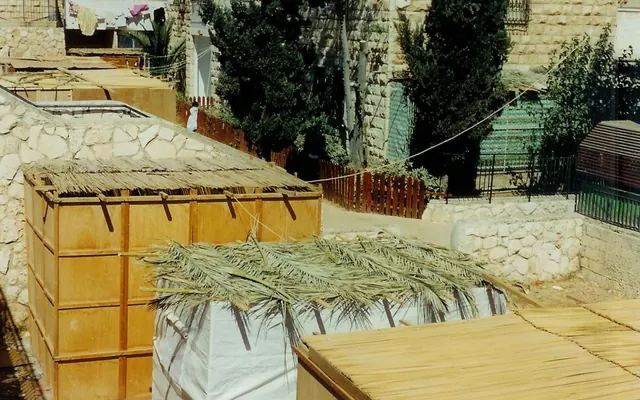
TJS S6 Sukkot interlude - A matter of faith
The Zohar calls the Sukkah "the shade of faith." Here are some impromptu thoughts from me to you as I sit in the shade of my sukkah -...
Play Episode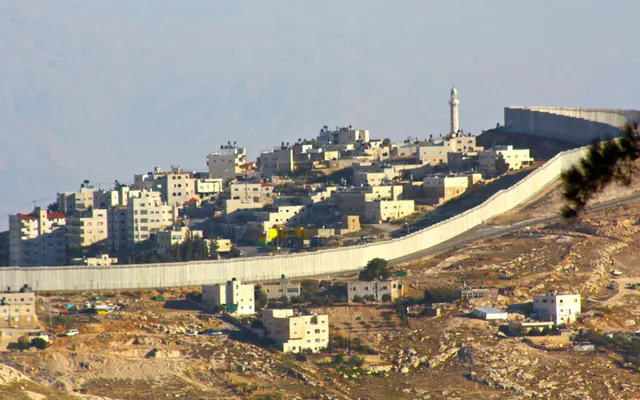
TJS S6E5 Boundary Issues part I
Almost two thousand years ago the Sages determined that Am Yisrael was bound in exile by an oath not to go up to the land "like a wall."...
Play Episode
TJS S6E6 Boundary issues part II - the intifada
When the intifada erupted it caught the Israeli army and leadership unprepared. Part two of the series exploring the evolution of the separation barrier explores Defense Minister Yitzhak...
Play Episode