
TJS S6E6 Boundary issues part II - the intifada
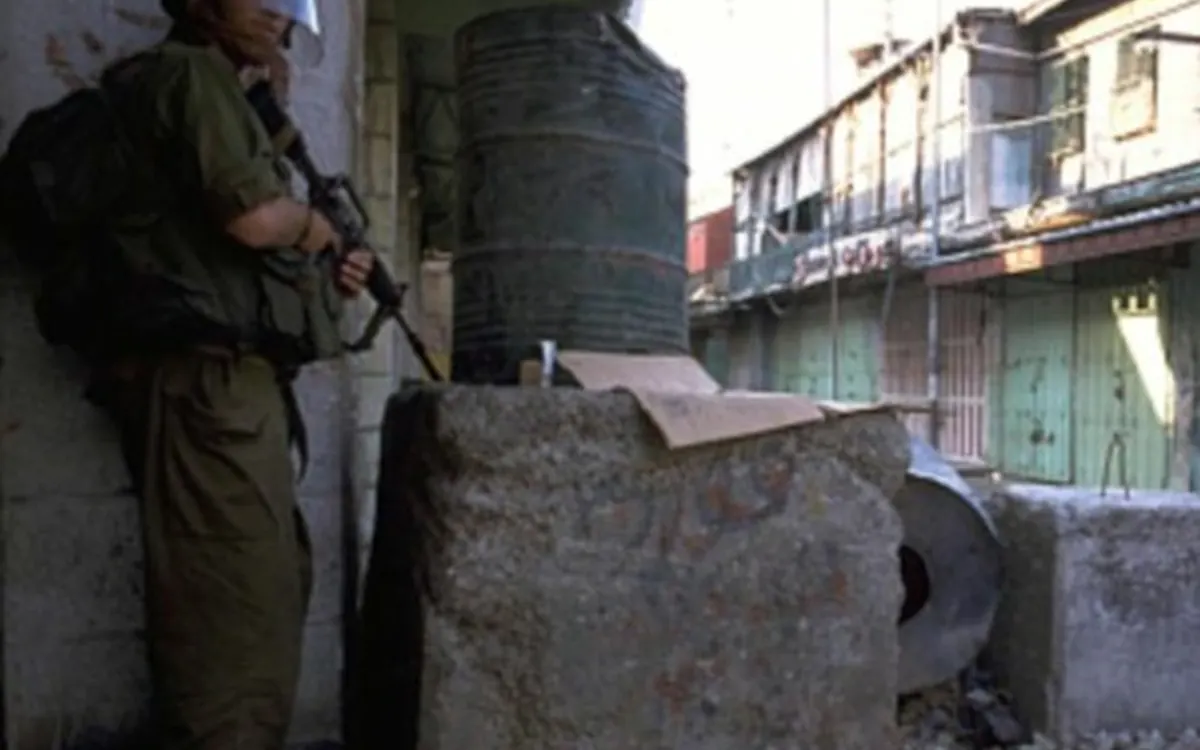
When the intifada erupted it caught the Israeli army and leadership unprepared. Part two of the series exploring the evolution of the separation barrier explores Defense Minister Yitzhak Rabin's "iron-fist" policy response as part of arc of government decisions that move from suppression to separation - all in avoidance of sovereignty.
About this episode
People sleep peaceably, Orwell said, because rough men stand ready to do violence. Rav Mike concedes that a crackdown can work and violence can suppress violence, but a system that depends on it is no environment for growth or healing. He recalls the woods of North Carolina, the alpha males who kept a tight ship until they went off-shift and the group exploded, and the counselors who called themselves alpha moms because they knew violence has limits. Weber defined the nation-state as a monopoly on the legitimate use of force, and so long as a significant part of the populace sees that force as illegitimate, order faces a constant and often violent challenge.
The Intifada, the shaking off, was an upwelling of widespread resistance of a new type that caught Israel ill-equipped, with ten thousand soldiers mustered as riot police and riot gear scrambling to replace combat weaponry. It landed in Shamir and Peres's unity government, and both deferred to Rabin, whose arc would run from suppression to separation, all in avoidance of sovereignty. Israel had been confused about sovereignty over Yudah, Shomron and Gaza since 1967, treating it as a bargaining chip, as breathing room, or as a messianic frontier. The Jews moving in complicated Weber further, since they wanted to be citizens of a Jewish state on sovereign land.
A storyteller holds triggers and causes apart. The spark came on December 8, 1987, when an IDF transporter hit a van near Gaza and killed four workers from the Jabalia camp, and a rumor of deliberate revenge swept the camps. At the funeral thousands poured out, the army position was besieged, troops opened fire and killed a seventeen-year-old boy, and the bomb exploded. Deterrence had already weakened after Lebanon, and the failed reconquest of Balata, where the Shabiba youth of Fatah had taken over security, set the mold. Former Gaza mayor Rashad al-Shawa warned that after twenty years people had lost all hope, and people without hope have nothing to lose.
Rabin's Iron Fist, issued January 4, 1988, gave the IDF broad leeway to use force and blows rather than live ammunition, and UN and hospital workers soon reported hundreds of fractured limbs among men, women and children. Street violence dropped, and Rabin boasted that beatings had strengthened the population's fear of the IDF. But he overplayed his hand, as random beatings, collective punishment and destructive house searches reached even those who stayed home, pushing masses from passive anger to active opposition. In that sense the Iron Fist was a policy overreach that transformed an explosion into a mass uprising, fueling rather than suppressing it.
Rabin was echoing Jabotinsky's Iron Wall, by violence you will gain nothing, without hearing the irony, since he too would draw that conclusion and shift toward separation in the early nineties. He never aimed for sovereignty over the land or its Arabs. At home the policy cracked the consensus. Legal voices called the beatings manifestly illegal, Morris Abram warned that American Jewry could no longer defend Israel, and mothers told the radio they now feared for their sons' souls. Peace Now revived, fifty thousand marching in Tel Aviv, and the telling thing is that their primary fear was the effect on Israelis, so separation already loomed on the horizon.
Key ideas
- A crackdown can suppress violence, but a system that depends on force is no environment for growth or healing.
- Weber's nation-state is a monopoly on legitimate force, and when the populace sees that force as illegitimate, order is constantly challenged.
- Rabin's arc ran from suppression to separation, all in avoidance of a sovereignty Israel had been confused about since 1967.
- The Jabalia accident of December 1987 triggered an uprising whose deeper causes were decades of subordinate development and lost hope.
- The Iron Fist of January 1988 dropped street violence but reached even those who stayed home, turning an explosion into a mass uprising.
- The policy cracked Israel's consensus, reviving Peace Now, whose primary fear was the effect on Israeli souls, so separation loomed.
Chapters
- 0:00 Violence can suppress, not heal
- 1:05 Alpha males and alpha moms
- 4:20 Weber and the legitimate use of force
- 5:29 The Intifada catches Israel unready
- 6:52 Suppression, separation, avoided sovereignty
- 9:06 The Jews moving in
- 11:16 Triggers and causes
- 12:22 The Jabalia accident
- 14:36 Balata; the Shabiba
- 17:55 Al-Shawa; nothing to lose
- 21:21 Control, not oppression
- 25:57 The Iron Fist policy
- 28:29 Why the Iron Fist backfired
- 31:41 Echoing the Iron Wall
- 33:57 The home front cracks
- 35:03 Fear for their souls; Peace Now
Who, where and when
People
George Orwell, Max Weber, Yitzhak Rabin, Yitzhak Shamir, Shimon Peres, Amram Mitzna, Rashad al-Shawa, Ephraim Sneh, Zev Jabotinsky, Morris Abram
Places
Gaza, The Jabalia camp, The Balata camp, Shechem, Tel Aviv, Nazareth
Texts
The Iron Wall, The New York Times interview
When
1967 CE: confusion over sovereignty begins, May 1987 CE: the battle of Balata, December 1987 CE: the Jabalia trigger, January 1988 CE: the Iron Fist, January 1988 CE: the Peace Now march
Read the transcript
People, said George Orwell, sleep peaceably in their beds at night, only because rough men stand ready to do violence on their behalf. Oh, for a good night's sleep. I'm Rav Mike Foyer, and this is the Jewish Story. Season 6, Episode 6, Boundary Issues Part 2, The Intifada. You know, anyone who thinks that a crackdown never works hasn't been hit in the face with anything harder than a pillow. Violence can indeed suppress violence. That's just the reality of life. The problem is that a systematic use of violence, or any system that depends on it, or the threat thereof, is never really going to be a prime environment for widespread growth, and certainly not for healing. though it can succeed in producing a world which is orderly and even largely safe.
That needs to be thought about. You know, when I worked in the woods with at-risk youth, I was tasked with maintaining order among at least 10 young men between the ages of 12 and 16, all of whom had been classed emotionally disturbed and thus merited to be with us rather than sitting in youth prison. Keeping control, as you can imagine, was no simple task. And all the more so was the challenge of actually fostering the behavioral work that we were aiming to do with these kids. Safety was often a real and present issue. In order to deal with that, I saw amongst the people I work with a couple of classic alpha males. Actually, usually mostly ex-army guys, though not exclusively. What they did is they would establish themselves as the big dog within their group.
either through actual physical confrontations or simply through raw intimidation. And I promise you, their groups were a tight ship. They ran safe and orderly right until these counselors happened to go on time off. And then kaboom! Struggle for that alpha post, something which most of the other counselors were simply not equipped to handle, even when they knew it was coming. I've seen some pretty ugly breakdowns in two years. Now, there are others amongst us who recognize that need for controlled violence in order to maintain dominance and therefore a safe environment over these loopy young men, while at the same time we recognize its limits. Because my boys were in the woods because of angry and violent behavior.
They were hoping, whether they knew it or not, to internalize enough social, emotional, behavioral tools in order to control the consequences of their trauma, they needed a lot more than order to heal and grow. And just so you know, we didn't call ourselves alpha males. We called ourselves alpha moms. That's something to be thought about both on the personal and the national level. Anyway, for present purposes, the problem with violence isn't that it never works. It's that a violent reaction, especially a true crackdown, rarely works for long, even if it does at all. And the other part of the problem is it's so easy to choose as a strategy, especially when you're facing violence in your own turn. This is the truth in Asimov's judgment, that violence is the last refuge of the incompetent, placed in the mouth of Salvor Hardin for my fellow geeks.
Violence is the last refuge of the incompetent means that when imagination fails, you can always bust some skulls. You'll get everybody's attention, if not their compliance. But of course, having people's attention isn't always a good thing. There's also a shortcoming in violence becoming a go-to strategy. And remember, for much of human history, it's been the glaringly obvious choice for lots of people. Because like with every other chosen strategy that we use consistently to handle our problems, it becomes difficult to look at solutions outside of that range. Hence the dilemma of having only a hammer and seeing all our problems as nails. No matter how you slice it, one thing is certainly true. In the Jewish story, we've been living by Weber's definition of the nation-state now for more than a century.
Remember, that's a system with a monopoly on the legitimate use of force to maintain order. And so long as those who use force are seen illegitimate by a significant portion of populace, then what we get is a constant and often violent challenge to the order they're seeking to maintain. And right or wrong, that's what makes crackdowns happen. The name for what's coming is the intifada. It comes from the Arabic meaning shake off or get rid of. As far as I can tell, it's like shaking off sleep or a dog shaking off water from its coat. And it will be an upwelling of intensely passionate and uniquely widespread resistance to Israeli rule in Yudah, Shomron, and Azzah. It is going to include plenty of violence, but of a different type than Israel had yet faced.
You know, at this stage, Israel and the IDF are still licking their wounds from Lebanon. Both the horror of urban warfare and siege around Beirut, and the shame and pain of the Shiite guerrilla campaign that drove their retreat into the security zone along the border in 85. Now, only two years later, a whole new form of violence will erupt and catch the country ill-equipped to deal with, both literally and figuratively. Because for the first time, 10,000 soldiers are going to be mustered to keep public order rather than fight battles. Riot gear will have to replace combat weaponry. Tzahal will literally be caught scrambling to make that happen. And what's perhaps even worse is that Israeli politicians will find themselves reaching for outmoded tools as well because they haven't really considered how to deal with a situation of this nature.
The outbreak of the Intifada is in early December of 1987, and that means it lands squarely in the time of Yitzchak Shamir and Shimon Peres' unity government between the Likud and the labor. Now, neither Shamir nor Peres were strangers to leading a nation at war, but in the crucial early phase of response, both deferred to Yitzchak Rabin, hero general, hard-nosed pragmatist, and currently defense minister. The ARCA policy that Rabin will initiate at the end of 1987 might be labeled from suppression to separation, remembering that he'll go from being defense minister in six years ultimately to being prime minister and finally backing the Oslo agreements. And of course, let's not forget that all this story is just one more chapter in service of understanding how he got a separation barrier staying its way 700 kilometers through Israel, dividing both the people and the land.
That's really what I'm aiming to do, to chart out an arc that goes from suppression to separation, and to point out that it's all in avoidance of sovereignty. Now, in fairness, the posture of avoiding sovereignty can't be laid at Rabin's door, only the policy of how to do so while struggling to maintain order. because if you've been listening to the Jewish story for any amount of time, then you know that Israel has been confused about its sovereignty over Udash, Rom, and Azzah since that week in which they were won in 1967. Whether they relate to it as a bargaining chip, they treat it as breathing room or are pursuing it as a messianic frontier. Sovereignty is a messy and poorly understood concept.
And because of that confusion, the crucial importance of labor's maxim has been neglected, if not lost altogether. Now, there are strong, what we might call political military elements in Palestinian society, nationalists, communists, pan-Arabists, and soon-to-be jihadists, all actively working against Israeli control with violence and without it. However, much of the Arab populace will stay away from that violence, though they've come to see the security services use of it as illegitimate. Nonetheless, residents always value public order to some degree until the price for it becomes too high. And since 1982, when the Sinai Accords first floated the notion of a negotiated Palestinian autonomy, the Israeli government itself seems to no longer claim a monopoly on power in the West Bank and Gaza.
Add to this the complex impact of the Jews moving in, Population in Yudah, Shimon, and Aza will more than double in the four years leading up to the Intifada, hitting 60,000 by 1987. Nominally, they want to be citizens of a Jewish state living on sovereign Israeli land. And so that should help Weber out. But back in Season 5, Episodes 12 and 13, if you want to check it out, we spoke about the Jewish underground of the early 80s. these men saw the violence they employed as self-defense and maybe an active deterrence. And their hope mostly was to force for more Israeli sovereignty, not to undermine it. Nonetheless you can say that they saw the Israeli state as having a monopoly on the legitimate use of force That why they took the law into their own hands And frankly their actions clearly did nothing to enhance order Not to mention a small but potent element amongst the so-called settlers, which was eager to push forward a messianic vision that would make these questions of limited sovereignty obsolete at best.
Sounds like a mess, right? Well, yeah. And what's going to unfold will be first a rush by the Israeli state to suppress Arab violence, simply in an attempt to maintain order, without any vision of what it means to be sovereign over those lands or the people living in them, and then ultimately a policy of separation. Us here, them there, being the best that they could muster for a social vision. because in 87, Shamir and Perez, who were leaving the country, certainly shared no vision of sovereignty over these lands. The right was still dreaming somewhat innocently about greater Israel, while the left, being far less enchanted with the territories of 1967, was hearing more and more the pragmatist separatist voices, along with more radical calls for actual Palestinian state.
Most would have agreed with the estimation of Ephraim Snet, Brigadier General, former head of the civil administration in the West Bank, and now a new member of labor just as the Intifada breaks out at the end of 87. He was seen as a hawk by his fellow Labor Party members, but no one questioned the authority of his knowledge and experience when in the weeks after the outbreak he said, you can't separate the two societies economically, but you can separate the two sovereignties. If I want to eat fresh pita from the oven, I can drive a few minutes to Calquilia. I can go there without being sovereign. However, the Intifada will catch Israeli leadership unprepared for creative or even long-term thinking.
So the loss of order was almost inevitable, and perhaps so was the crackdown. When you tell a story, it's always important to hold the distinction between triggers and causes as clearly as possible. By the way, that's true in personal work, and it's true in the Jewish story. Triggers are events that align the moment, that put things together in the immediate in such a way that they give expression to deeper causes. You can call those causes currents or momentum for potential change in the story, and the trigger brings them into position in a new and powerful fashion. Now, of course, the two are always related to some degree. How could the trigger work if it had no connection to the explosion? But the trigger is always defined by the specificity of the moment that allows you to say, well, I mean, I know that happened, but it could have been otherwise.
For instance, when Gavrilo Princip fired the shot that killed Archduke Ferdinand, touching off the causes underlying the war to end all wars, right? That's World War I. if he hadn't pulled that trigger, would World War I never have happened? At the same time, right, isn't it true that Europe could only dance on a powder keg of nationalism, imperialism, and economics, etc., for so long with a candle in its hand before some spark made it blow? And the spark that will trigger the underlying causes of the Intifada happens on December 8, 1987. An IDF tank transporter was traveling just north of the Gaza Strip when it hit a van carrying Arab construction workers from the Jebalaya refugee camp. They were on their way, of course, to work on construction sites in Israel.
The accident was horrible. Four men were killed, six were wounded, and the fuse was lit. A rumor swept Gaza and the West Bank that the driver had actually hit the van deliberately, an act of revenge for the murder of an Israeli only two days before. That river moved so fast, in fact, that when thousands poured into the streets of the Jabalaya camp for the actual funeral, hundreds of others came out in other Gaza camps. Angry cries of jihad, jihad, filled the air. The IDF position in Jabalaya was immediately besieged by stone throwers, while other mourners left the graveside to set up roadblocks throughout the camp. No reinforcements were sent, because no one thought that this was anything more than a disturbance.
The APCs, which eventually tried to move through the crowd, were actually turned back. In fear of being overwhelmed, the troops in the position opened fire with live ammunition on the crowd, wounding a number of people and killing a 17-year-old boy. And now the bomb exploded. Truth be told, Israel's overall deterrent posture had been deeply weakened well before. Hezbollah's successful campaign in southern Lebanon, pushing them back to the security zone, made it look like the Fury to IDF had been defeated by guerrillas, and so that it might be defeated in the same way again. Add to this a spectacular terrorist raid involving hang gliders over the border from Lebanon, together with a prison break which created popular heroes and excited Palestinian morale on the streets readying people for resistance.
And then, in May, only half a year before the Gaza explosion, the IDF decided to challenge the Shabiba for control of the Balata refugee camp outside of Shechem, and failed. The Shabiba were the youth wing of Yasser Arafat's Fatah movement, centerpiece of the PLO, and they organized life in many of the refugee camps, everything from trash pickup to education to mosque renovation. In the spring of 87, they had basically taken over security as well. They'd systematically challenged every IDF patrol in the camp, attacking every outpost with stones and Molotov cocktails, to the point where the situation became so severe that the army and the civil administration simply withdrew and left the Shabiba to maintain public order, which included stringing up informers, pimps, and drug dealers.
Now, Fatah, or Shabiba more correctly, could claim the camp as liberated territory. Words that reverberated throughout Palestinian society. So much so that the IDF decided on May 31st that they needed a reconquista. But they failed. Or, more accurately, decided that the cost of success was too high. Which, when it comes to sovereignty, is basically the same thing. When the army moved into the camp to search outwander terrorists, political activists, and weapons, They rounded up several thousand young men for questioning. But almost immediately, the entire populace of the camp, led by masses of women and children, descended on the Israeli troops, pelting them with stones and bottles. Commander General Amram Mitzna, later to be another leading figure in the Labor Party, saw that the choice was either to open up with live fire to protect his troops or withdraw without having completed the mission.
He chose to spare the lives. And the Battle of Balata became an instant legend, a mini intifada which really set the mold for what's to come. And by the way, Israel hasn't been sovereign in Balata since, if it ever was. So those are the triggers. In speaking about the causes, it's common to point to overflowing tide of Arab frustration over the economic, social, and political limitations that brought about the intifada. I sketched a bit of that backstory last episode, but for now, just listen to the words of Rashad al-Shawa, former mayor of Gaza, which were offered three days after the Trachet accident that killed the men of Jubalia. One can expect such events after 20 years of harsh occupation. People have lost all hope.
They're completely frustrated. They don't know what to do. They've adopted a line of religious fundamentalism, which for them is a last resort. They've lost hope that Israel will ever give them rights. They feel that the Arab states are incapable of achieving anything. They feel that the PLO, which they regard as their representative, failed to achieve anything. What has happened is an expression of the frustration and the pain over the continuing Israeli occupation. Now, at first glance, former Mayor Ahshawa's words may have sounded fairly standard and, sadly, to be expected. As he said, one can expect such events after 20 years of harsh occupation. People have lost all hope. They're completely frustrated.
They don't know what to do. Now, we could debate the harshness of Israel's military government before 87, but frankly, it's pointless. We absolutely need to take notice of the obvious and so often forgotten words that people without hope have nothing to lose. And when they don't know what to do, violence is always easy at hand. But beyond this, there are a few key points in Asha'u's words that actually show his political sophistication. They've adopted a line of religious fundamentalism, which for them is a last resort. Now, I'm not sure about the last resort thing, frankly, because Muslim identity runs much deeper than Palestinian for many. Nonetheless, on some level, all fundamentalism is a last resort, or at least a last stop.
But we will speak about the important rise of nationalist Islam as a leading force in Palestinian society as at least triggered by the Intifada if not caused That probably come next episode He goes on he said they lost hope that Israel will ever give them rights Now, that's more than a complaint. It's a recognition that Israel will never really be sovereign in the eyes of the Palestinian. True sovereignty hinges on taking true responsibility for everyone and everything within your borders. In our world, that means granting clear and defensible rights, no matter how limited they may be. And that's exactly what the army, the civil administration, and the Israeli political echelon seemed incapable of doing in the late 80s.
In my opinion, because they lacked any coherent vision of what it meant to be the Jews in the land, much less how to be sovereign over the Arabs. And last, he said, they feel that the Arab states are incapable of achieving anything. They feel the PLO, which they regard as their representative, failed to achieve anything. The PLO at this point is still broken and enfeebled after their expulsion from Lebanon by the IDF, so much so, in fact, that it's going to take an Israeli political initiative to revive them. The Arab Summit, meaning all the Arab states other than the PLO, which was held in November, just a month before this outbreak, virtually ignored the Palestine question, as they call it, Focusing instead on the Iran-Iraq war that was raging at the time.
That assembly in Amman even voted to reestablish diplomatic relationships with Egypt, bowing to the reality of the Israeli-Egyptian peace. There could be no more humiliating reminder that the Arabs of Gaza and the West Bank were on their own. But of course, once you recognize that, then you recognize that your fate is in your own hands as well. Despite the characterization offered by former mayor Ashawa, the reality of Israel's military rule over Yudah, Shomron, and Gaza had not been as universally harsh occupation as he hoped to represent. Don't worry, I'm not about to wade into the polemic over whether the Palestinians are better off or worse off after their conquest, nor the mess of deciding what measure actually really matters when it comes to ascertaining someone else's welfare.
nor am I going to try to uphold the so-called enlightened occupation rhetoric that was quite popular in the mid-80s. But I will say that until 1987, the policy pursued by the civil administration on the military, social, and economic front was not one of oppression, but one of control. And that meant it was oriented at all costs toward quickly suppressing outbursts of violent and even non-violent defilants, like non-tax payment or strikes, in order to avoid at all costs widespread and sustained resistance. Now, a military government, by definition, has far more tools for control at its disposal than a civilian one. And so legal, economic, and personal punishment were quick and intense for those who chose to engage in resistance.
But, you know, when the goal is stability, there's, of course, always a carrot that goes with the stick. And that's why we spoke last episode about the rapid rise in the standard of living, health care, live birth rate, higher education that followed Israeli conquest of 1967. The economic and social development actually fostered by the military government may have been oriented to creating a subordinate society, but it allowed for the emergence of a rich Palestinian social fabric. dare I say, of an actual Palestinian society, because ironically, they were united as one political entity for the first time ever under Israeli rule. Absent any local leadership beyond the mayoral level, and often alienated from the PLO's attempts to control the situation on the ground, by the 80s, the West Bank and Gaza boasted an impressive array of unions, student organizations, religious societies, women's circles, mutual aid, etc.
And while Fatah and the Shabiba did provide a broader leadership umbrella in many places, like I said, as did the Islamic Association of Gaza, that story soon to come, it will be this grassroots foundation that really defines the opening phase of the Intifada. But I digress. If we're in search of the causes that transformed the trigger of December 1987 into a true popular uprising, as opposed to leaving it as a sustained street violence, which the civil administration was equipped to handle, then we've already named a few. Clearly, economic, social, and political limitations of life under military rule, call it occupation if you must, is a cause. There are the larger political and economic shifts also that we've touched.
The sense of despair with the PLO and the Arab world's ability to solve the Palestine problem. a sense that the Jewish presence in Yudash Shumran and Gaza had reached a tipping point the influx of Soviet Jews together with the loss of remittances from the Persian Gulf due to the Iran-Iraq war but in my efforts to stay focused on the Jewish story and more specifically to understand how military rule traced an arc from suppression to separation which produced the wall instead of sovereignty then we have to pick up back in Jabaliyah. Now, hours after that initial rioting broke out during the funeral on December 9th, the fire had spread to the refugee camps throughout Gaza. It was a quick step from there to the West Bank.
And within two days, even the major Arab towns of Uddan Shomron were alight. But it was the 12 days of sustained rioting in the refugee camps, which forged a new, and at least for now, dominant force in Palestinian society. And that was the people of the refugee camps. The leaders of the demonstrations and riots rocking the camps might look familiar in their pictures today. They took to covering their faces with keffiyahs, that longtime symbol of Palestinian resistance, the checked scarf, both to prevent identification and to hold back the tirgis. Black and white for Fatah nationalists, red and white for the leftists, green and white for the Islamists. And thus, the party distinctions were clear from the outset, but they were street-level differences.
At this opening stage, no national organization could claim a real role in what was unfolding. It'll take almost half a year before Hamas emerges as the driving force in Gaza and before Fatah Mani manages to draw many of the grassroots leaders in line behind their policies. both elements that will play a serious role in the move toward separation. But before we can get there, with all these causes, we need to talk about Yitzhak Rabin's Iron Fist policy and how, in many ways, it became a key cause in the transformation of the Intifada from an outburst into an uprising. Now, to say that the opening explosion of violence was unprecedented is an understatement. The loss of control in Yudash from Ronan Gaza was so rapid and complete that at first, Israel's military and political leadership were simply at a loss for what to do.
As one empathetic Israeli correspondent put it, the long tradition of capitulation to Israel was supplanted, almost magically, by a mood of defiance. In a matter of days, the West Bank and Gaza Strip had become the scene of an all-out fray between a native population and an occupying power. The system that allowed the occupation to continue for more than two decades simply collapsed in the face of the violence. None of the old rules applied anymore. Dramatic words. But truth is, one old rule actually remained there to rely on. Fight fire with fire. The problem was that it didn't work either. Within a month, at least 36 Palestinians were dead from Israeli gunfire, and the violence showed no signs of abating.
And that's when Defense Minister Yitzhak Rabin issued orders for his iron fist policy. He gave the IDF broad leeway to impose curfews, conduct widespread random house searches, and to use, quote, forced strength and blows rather than live ammunition to suppress the riots and demonstrations. Now, the policy produced instant results, though perhaps not entirely the ones Rabin was looking for. In the wake of the new orders issued on January 4, 1988, UN relief workers and hospital staff began to report hundreds of fractured limbs, hands, skulls amongst Palestinian men, women, and children. Not surprisingly, this came together with a marked reduction in the level of street violence. So much so that Rabin was able to post to the press, the use of force, including beatings, undoubtedly has brought about the impact we wanted, the strengthening of the population's fear of the IDF.
But some might say that he overplayed his hand. The analysis is actually quite simple. Up until now, the policy of suppression had limited violent resistance to the hard core of activists, terrorists, and desperate men who were motivated enough to risk severe punishment for their actions. But the Intifada saw for the first time masses of Palestinians taking to the streets. And for the first time a huge chunk of the population actually moved from passive anger to active opposition Why Well from a rational actor analysis there room to say that it was actually the Iron Fist policy itself Rabin's new orders sent a tidal wave of violent punishment flowing out from the IVF troops toward the Arab populace at large, regardless of innocence or guilt.
Random beatings, collective punishments, widespread curfews and destructive house searches, all meant that even those who chose to avoid acts of resistance were likely to be punished anyway. And that, in turn, pushed many of them over the edge toward action. Because if you could stay home and be safe, that's one thing. But when you're met with increasingly broad violence, whether you stay home or not, well then, the situation begins to spiral rapidly. And in that sense, the Iron Fist proved to be a policy overreach that helped transform an explosion into a mass uprising fueling rather than suppressing it. Not that this was a conscious perspective anyone was holding at the time. I mean, two weeks after initiating the Iron Fist, meaning a month and a half after the outbreak of the Intifada, Rabin defended his policy in an interview with the New York Times.
The television pictures of confrontation are ugly. Any violence is ugly. But you don't expect us to say, since there's violence, we are giving in. We have to drive home to their minds and hearts. By violence, you'll gain nothing. Now, whether he knew it or not, Rabin was echoing Jabotinsky's Iron Wall essay written more than 60 years before. And he was expressing a truth that every authority figure knows, whether they're willing to admit it or not, that the retreat in the face of violence often means a greater loss of control and certainly a loss of legitimacy. Nonetheless, I have to wonder if Rabin heard the bitter irony in his words, we have to drive home to their hearts and minds, by violence, you'll gain nothing.
I mean, two can play at that game. Because ultimately, Rabin will draw the same conclusion about his own policies, hence his shift toward political separation in the early 90s. Now, that being said, Rabin was never amongst those who aim for sovereignty over Yudash, and Aza, and certainly not over the Arab population therein. As he made clear in that very same interview, this is a confrontation, he said, between two different entities political and religious. He asserted, quote, the determination of the eastern border of Israel must include a solution to the Palestinian problem. I believe that without Palestinians being part of the negotiations, there will be no lasting solution. Nonetheless, as a man raised in the military almost since he could walk, Rabin felt his Iron Fist policy would promote that ultimate separation.
Little did he realize it would risk dividing Israeli society first. In our world of media saturation, politicians always have one eye on public opinion that was just as true in the 80s as it is now. Polls indicated that, at least initially, most Israelis reacted to the opening wave of violence by supporting the hardline law and order position taken by Shamir and Perez's unity government. But cracks in the consensus were there from the beginning, Not long after Rabin announced the Iron Fist, Labor Knesset member Abdul Wahab Darwashwa announced to a cheering crowd in Nazareth that he was resigning in protests. Voices of concern were heard right away in the legal community as well, people insisting that the army's use of beatings to punish demonstrators was actually illegal.
A soldier, they said, has the right to use, quote, a reasonable amount of force to protect himself, to arrest a person who commits a crime, and to disperse demonstration. But punishment was the job of the courts. There is no right to break someone's arm just because he violated the law, said David Kretzmer, professor at Jerusalem's Hebrew University Law School. If beatings are used as a form of summary corporal punishment, they are manifestly illegal. Anyone who orders such beatings and carries them out is criminally liable. Those voices, however, were soon drowned by a groundswell of public protests against the Iron Fist. Since the siege of Beirut, the international media had delighted in highlighting Israel's use of force.
And now, pictures of IDF soldiers swinging batons in crowds of women and children were all but saturating the airwaves. So much so that Morris Abram, chairman of the Conference of Presidents of American Jewish Organizations, and a vocal supporter of Israeli policy, actually telephoned the defense minister to express sharp criticism and shock over the new Israeli policy. He warned, in words that are oh so familiar today, that while it wasn't his business to tell the defense minister what to do, if the policy continued, American Jewish organizations would no longer be in the position to defend Israeli actions. But the real resistance to Rabin's policy came from the home front. Remember that in the opening phase, Israel mobilized nearly 10,000 soldiers to restore order in Yudah, Shomron, and Azzah, each of whom had family, friends.
Now, while the Papists may have supported a strong stance on law and order in the abstract, that's very different than hearing what it looks like on the ground first person from your sons, brothers, and fathers. Nava Aizen's son was serving in an army unit in the Gaza Strip, And he told her that soldiers had no choice but to carry out their orders, because it was far better to beat Palestinian demonstrators than shoot them. But, as his mother told Israeli radio, she was deeply disturbed. What will happen to him when he kills his first demonstrator, she asked. In Lebanon, I was afraid for his life. Now, I'm afraid for his soul. It was that fear that revived the organization Peace Now, and accelerated Israel along the track toward the divided society we see today, of which the wall is only one expression.
You may recall from back in Season 5 that Peace Now actually began as a spontaneous wave of support for the peace process with Egypt and that it was really forged during Lebanon as it coalesced into a movement that organized the largest protest in Israel's history. 300,000 people gathered in Tel Aviv to protest against the Sabra and Shatila massacres. But since 1982, the movement had been all but dormant. Two recent protests against Israeli policies in the territories had fizzled before they'd even really begun. But the iron fist proved enough to galvanize the movement into action. Get it? Galvanize? On January 23rd, an estimated 50,000 people converged on Tel Aviv, marching under the banner of Peace Now.
Earlier that day, 7,000 Arab Israelis had gathered in Nazareth, long the political center of their community, and in a sign of things to come, many waved the then-banned Palestinian flag. The speeches in Tel Aviv might sound familiar today, but in 1988, they were fresh and even raw. The events are having a destructive effect, said Rami Tremon, Peace Now activist. The army's behavior in the territories will become a standard of behavior in Israel itself. Who do blows hurt more, asked Danny Gall. The young Arabs hit or the young soldiers doing the hitting? The blows of those hit will go away in a few days. I don't know if the blows to the heart of those who do the hitting will ever go away. Now note that that primary fear was the effect that suppression will have on Israelis, not its effect on Palestinians.
Hence the fact that separation is on the horizon. The January 88 protest was the largest Israel had seen since the Lebanon War, And it began a process that, in fits and starts, will drive almost half of Israeli society toward the separation stance of the Oslo Agreements. Peace Now, of course, wasn't the only organization calling for an end to the Iron Fist policy. They were just the largest. Oz V'Shalom was a small religious peace movement, and its spokesman Yechezke Landau expressed its position in classically Jewish language. He said, we now have the anguish of power instead of the anguish of powerlessness that we had for so long. But early in our history, we knew it. The prophets came to remind the kings that they lived under God with a system of values.
The uprising, he said, makes me both less optimistic and more. Less because it feeds the hardliners on both sides. More because it's so obvious that the occupation is untenable. It can't go on indefinitely. Prophetic words. He was perhaps mistaken about how obvious the Intifada's ending could be, but he was certainly right about how it fed the hardliners. You know, it's not called the wall that Hamas built for nothing, but that's a story I'll have to tell in the next episode. I want to thank the folks out there who give their hard-earned money to make the show happen, keep it free and widely available. I want to call on you to join them now. I need your support for Season 6. Go to my website, jewishstory.co.
upper right hand corner there you'll see a button that says be a patron and you can click on that to give a little bit of per podcast support or you can be in touch robmikefoyer gmail.com or you can find me on Facebook I'm happy to share with you the details of how you can dedicate a show I also like to thank the Land of Israel Network that's thelandofisrael.com they're building a center for global transcendence in the heart of the Judean mountains I want to thank the Pardes Institute pardes.org.il for throwing the doors of the Beit Midrash open as wide as possible and I I want to thank you for listening. I'm Rav Mike Foyer, and this is The Jewish Story.
More from Season 6
TJS S6E5 Boundary Issues part I
Almost two thousand years ago the Sages determined that Am Yisrael was bound in exile by an oath not to go up to the land "like a wall."...
Play Episode
TJS S6E4 Electoral dysfunction part III
Here is the final installment in the series detailing the evolution of Israel's electoral system. It brings us almost all the way to the present, touching on topics...
Play Episode
TJS S6 Interlude - On violence
In this episode we take a break from tracking the evolution of Israel's separation wall to consider the deeper issues of violence on which it is built. Rav...
Play Episode