
TJS S6E7 Boundary Issues part III
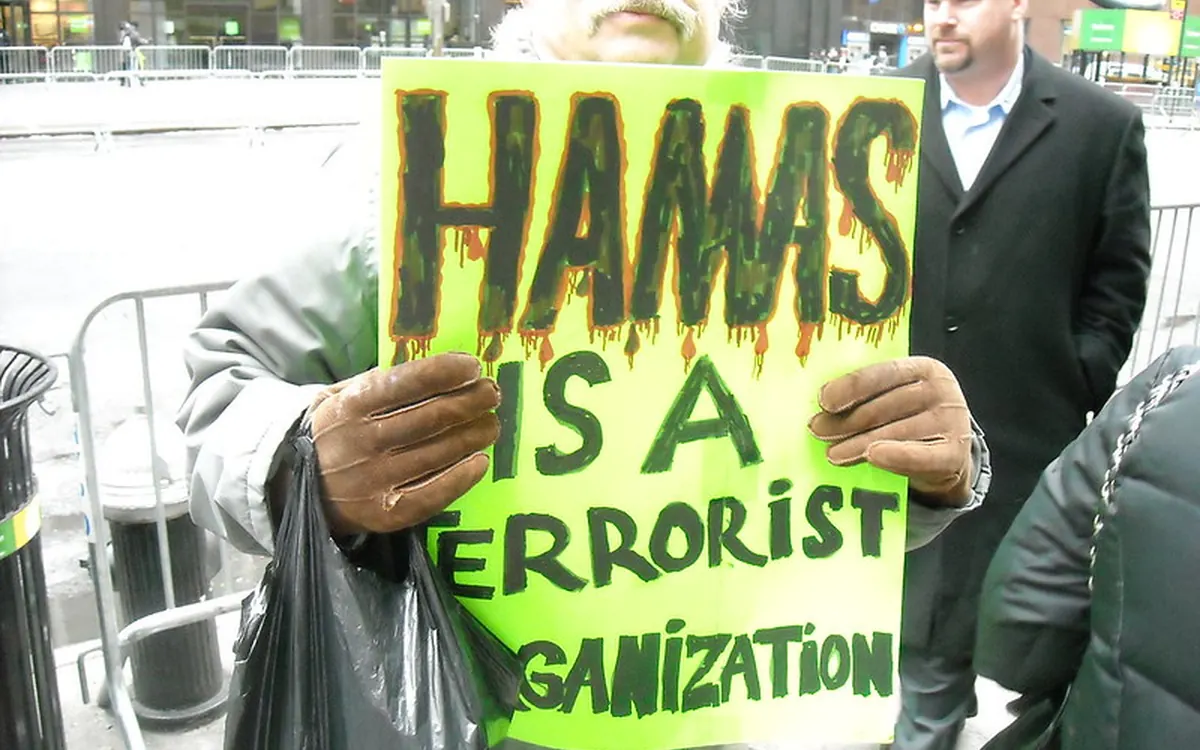
Violence often has an arc, and in this episode we trace how the intifada progresses together with the Israeli policies of suppression and separation. Along the way we outline the birth of the Hamas terror organization and end on a childhood note from yours truly.
About this episode
Tolle offers three options for an intolerable present: leave it, change it, or accept it totally. Rav Mike traces an arc of avoidance that produces a wall no one really wants, aimed at avoiding Israeli sovereignty between the river and the sea. Weber again: so long as Israel refuses the monopoly on legitimate force, competition over force is guaranteed, and with the accumulated bad blood here, violent opposition to military rule becomes almost inevitable. Suppression can hold order but is never seen as legitimate, so many on both sides opt for separation, and the world comes to see us as occupiers in our own land precisely because we refuse to claim it as sovereign.
Sovereignty, he insists, is malchut, kingship, holding the context that lets the pieces come to right relationship across the personal, interpersonal and cosmic scales. On the national level it is harmony between justice and power, comprehensive responsibility for people, land and resource, and a sweeping social vision. Every sovereign island in history has survived by establishing and maintaining its boundaries, which is why that ancient oath against coming up as a wall still warns us. A fractured world is dangerous, and shards can cut deep, so we put up walls. But if we refuse to be sovereign within them, those walls are counterproductive at best.
Violence has a logic all its own. The riots radiated from Jabalia into strikes and commercial shutdowns enforced by the Shabab, whom shopkeepers feared more than the IDF. Thousands of weapons stayed hidden by design, because by spring 1988 the PLO dominated the United National Leadership of the Uprising, with Abu Jihad charming and bullying the grassroots from Tunis. He held back the guns, since images of so-called unarmed women and children facing combat troops could bring the world crashing down on Israel. The present phase of the struggle hinged on Western media and not on holding ground, and the world swallowed a reversed story of David and Goliath.
The violence was still real and deadly, with the IDF registering forty-one thousand attacks in eighteen months and 154 Israelis dead by the official end in 1993, alongside an intrafada that may have killed a thousand Palestinians as suspected collaborators. Israel moved from suppression through surveillance, the Shabak, undercover Mistaravim units, roadblocks and closures, the very tools of separation, until the politicians' acceptable minimum was reached and kept well away from most Israelis. But Gaza bred something that would blow apart both suppression and separation, the suicide attack, pioneered against the IDF in Lebanon and soon carried by Hamas, which claimed its first bus with the 405 driven off a cliff in July 1989.
Hamas grew from the Mujama, Sheikh Ahmed Yassin's branch of the Muslim Brotherhood, which built clinics, mosques and schools while the secular nationalists were bled dry, and which Israel tolerated as a counterweight to Fatah, recognizing it in 1979 and standing aside as the camps fought. The palestinization of jihad, the 1984 weapons cache, and the 1987 founding of Hamas with its genocidal charter followed. The uprising faded as Arafat blundered by backing Saddam. Rav Mike closes with his own through-the-looking-glass ride in 1991, stoned on a bus in the Jordan Valley, when he realized that on the other side of that fence he would probably hate himself too.
Key ideas
- The arc of avoidance produces a wall no one wants, since refusing the monopoly on force guarantees a violent competition over it.
- Sovereignty is malchut, holding the context that lets the pieces come to right relationship, harmony between justice and power.
- The PLO held back the guns by design, because the struggle hinged on Western media rather than on holding ground.
- The violence was real, with 154 Israelis dead and perhaps a thousand Palestinians killed as suspected collaborators in the intrafada.
- Israel reached for the tools of separation, but Gaza bred the suicide attack, carried first by the 405 bus driven off a cliff in 1989.
- Hamas grew from Yassin's Mujama, tolerated as a counterweight to Fatah, and the uprising faded as Arafat blundered by backing Saddam.
Chapters
- 0:00 Three options; the arc of avoidance
- 1:13 Refusing the monopoly on force
- 3:33 What sovereignty might look like
- 5:48 Boundaries keep us safe
- 7:54 The logic of violence
- 9:00 Hiding the guns by design
- 11:26 Abu Jihad and the PLO
- 12:32 The struggle for the cameras
- 14:43 The real toll; the intrafada
- 17:58 Separation or sovereignty
- 19:03 Surveillance and Mistaravim
- 21:11 Gaza breeds suicide terror
- 23:23 The Mujama and Sheikh Yassin
- 25:35 Tolerating the Islamists
- 30:01 Palestinization; the weapons cache
- 35:33 The end of the Intifada; a personal ride
Who, where and when
People
Eckhart Tolle, Max Weber, Yasser Arafat, Abu Jihad, Sheikh Ahmed Yassin, Moshe Arens, Yitzhak Rabin, Ariel Sharon, Sayyid Qutb, Abner Cohen
Places
Gaza, The Jabalia camp, Tunis, The West Bank, The Jordan Valley, Iran
Texts
The Hamas charter, The New York Times interviews, The Quran
When
1967 CE: Islam rises under Israeli rule, 1979 CE: the Mujama recognized, 1984 CE: the weapons cache, 1987 CE: Hamas is founded, July 1989 CE: the 405 bus attack
Read the transcript
If you find your here and now intolerable, said Eckhart Tolle, you have three options. Remove yourself from the situation, change it, or accept it totally. If you want to take responsibility for your life, you must choose one of these three options. And you must choose now. No pressure, but life waits for no one. I'm Rav Mike Foyer, and this is The Jewish Story. Season 6, Episode 7, Boundary Issues, Part 3. So we're tracing an arc. It's an arc of avoidance, one which produces a wall that no one really wants. Well, maybe you'll tell me that's not exactly true of no one. But if you actually see the security bearer as the best possible situation, then I question either your imagination or your motives. Let's not forget, what this arc aims to avoid is Israeli sovereignty between the river and the sea.
And the points along its path trace the progress from suppression to separation. The policies and events that help actually transform the Arab populace of Yudah, Shomron, and Gaza into, I might call it a growth medium for competing rule. Now, of course, there were many ideological, cultural, and historical and personal reasons which might push the Arabs of the land to prefer Palestinian sovereignty over Israeli, not to mention the accumulated animosity that came from decades of subordinate development of their society. But even leaving those aside, Max Weber's definition of territorial sovereignty, remember, a monopoly on the legitimate use of force to maintain order, means that so long as Israel refuses to actually exercise that monopoly in full, there's going to be a competition in the exercise of force.
And considering those questions of culture, history, and bad blood, which do indeed lie between Arab and Jew here between the river and the sea, that makes violent opposition to Israeli military rule as opposed to sovereignty almost inevitable. Now, Israel will be able to maintain power and a significant degree of order through suppression of that opposition. But without true sovereignty, the means that we employ will never be seen as legitimate, almost by definition. And eventually, many people on both sides of the fight will opt for separation over a seemingly endless struggle. That desire is going to be aided by the okets, by the real stinger in Weber's oh-so-vague use of legitimate when defining force.
Because so long as Israel avoids full sovereignty, all its competitors need to do is disrupt order. And then the means used to regain that order automatically undermine our posture of legitimacy. And lo and behold, the bulk of the Arab populace, a significant chunk of the Jewish populace, and people around the world will begin to see us as occupiers in our own land. Basically because we refuse to claim it as such. Now before we move forward in tracing that arc from suppression to separation, which eventually produced our wall, I do want to raise the question of what the alternative might actually look like. And as complicated as I'm tempted to get in painting a picture of what Israeli sovereignty might look like, the essential idea of sovereignty is simple and quite well known.
Because even though the modern Hebrew term for sovereignty is ribunut, I prefer the old-fashioned malchut, kingship. It's a term I love because in my counseling practice, actually, I work with people on gaining malchut in their lives across three dimensions, actually. personal, interpersonal, and cosmic, meaning identity, leadership, and malchut shamayim, the kingdom of heaven. And on each scale or dimension, that malchut, kingship, sovereignty, is about holding the context that allows the pieces to come to right relationship. Now, in order to paint the picture and show you that most of us really know what sovereignty looks like, I'll start with the personal level. A healthy identity means integrity between my values and my actions.
I actually do what I say and express my beliefs through my behaviors. It includes a sense of broad personal responsibility, and it's driven by a vision of the self that I desire to be. And that's why sovereignty on the classic national scale is not so hard to describe. And that's, after all, what we're discussing here. its harmony between justice and power. It's a comprehensive taking of a responsibility for people, land, and resource. And it's a sweeping social vision. I'm going to leave the divine sovereign discussion for another time. But I can tell you that while picturing sovereignty may be challenging, the world has developed some decent models to work with on both the personal and national levels.
The real challenge lies in holding oneself sovereign in the face of the realities of life. Establishing and maintaining sovereignty is a lot harder than just picturing how it might be. Human history is messy and violent. If you didn't know that, you hadn't been listening close enough to the Jewish story. And pretending otherwise has never made it any less so. And in that sense, by the way, of messy and violent history, we Jews are just like everyone else, only more so. Now, there have been islands in this chaos, sovereign realms, I might call them, places and times carved out by people and peoples pursuing their vision or, frankly, running in fear. And those times and places of rich resource and reasonably just administration have all been flawed and temporary.
But they've shown us the possibility for a better world. Many of them left an inheritance of wisdom, knowledge, and hope. Now, no one knows the violence of history better than the Jews, at least in our collective personality. And we've always understood that violence as a function of the very brokenness of the world. again on the personal, political, and cosmic scales. And through the millennia of brokenness and violence, we've recognized a truth and nourished a dream. The dream is, let it be soon, let it be now, that the world will one day be healed personally, politically, and cosmically whole, rebuilt on the foundation of our restored kingdom. The parallel truth that comes with that dream is that every sovereign island in history, Just like every living organism survives through one thing, establishing and maintaining its boundaries.
And therefore, our kingdom will be no exception. As whole as the world of which we dream might be, that doesn't change the fact that boundaries are what keep us safe in the face of its incomplete brokenness and violence. the risks inherent in trying to unite the world by creating yet another bounding kingdom to keep ourselves safe are quite clear in fact, they underlie that ancient injunction we spoke about in the first part of this series against Shaloyalu Kichoma that Israel should not come back up as a wall en masse I refer you to that discussion and why it is perhaps we did so anyway but meanwhile, just remember a fractured world is a dangerous place shards, after all, can cut quite deep. And so the reality of our existence demands that we balance the hope for wholeness with our imperative to survive, both for the sake of the dream and for our own sake.
And so we put up walls. But if we refuse to be sovereign within them and to use them as a platform for the fulfillment of that dream, well then, they risk being counterproductive at best. It's often said that violence has a logic all its own, and the Intifada proved no exception to this rule. You'll recall it began with that explosion of rioting that radiated out from the Jabalia camp in December of 1987. There was a month of upheavals in the refugee camps throughout Gaza and the West Bank, which, after a brief lull, spread even further to the cities and the travel routes between them. Commercial shutdowns and strikes quickly joined the riots and demonstrations, acts of resistance that Israel found even harder to control than the rock-throwing mobs.
Those shutdowns, by the way, were enforced by the grassroots leadership, which had emerged from the initial wave of rioting, and Arab shopkeepers quickly came to fear these Shabab youth even more than they did the IDF. Despite the rising intensity of the violence, Its most visible tools remained rocks, bottles, knives, and Molotov cocktails. And hence the fact that Defense Minister Rabin's orders in response were to break arms and legs of rioters, rather than rolling tanks against terrorists. It looked more like a neighborhood slugfest over territory than an actual war. Which is not to say that these were simply unarmed masses rising in revolt, like it was presented on television. Israeli intelligence knew well that there were thousands of weapons in the territories at the outbreak of the Intifada, and the fact that they remained largely unused was not an accident.
This began simply as a function of the reality on the ground. The street-level leadership of the opening phase didn't control the guns that lay in the realm of national leadership. But while these young men and women gave the Intifada its initial populist face and proved to be a lasting leadership element within Palestinian society after the first Intifada, they didn't stay in charge of the actual uprising for long. Already by spring of 1988, about half a year in, the PLO had come to dominate the United National Leadership of the Uprising, UNLU as it was called, that was directing the violence in the West Bank. We'll speak about Gaza some other time. As early as February, this UNLU was already working out its printed pronouncements through fax exchanges with the PLO leadership in Tunis.
Those broadsides were crucial in providing both messaging for the masses and specific direction for their violence, and each was now personally approved by Yasser Arafat. And from their base in Tunis Arafat deputy Khalil al better known as Abu Jihad worked to charm bribe and bully the grassroots leadership into obedience a task at which he was mostly successful Now, as a veteran of both the Black September uprising and the Lebanon War, Abu Jihad knew all out the power of guns and, personally, how to use them. But at this stage, he and the other PLO leaders saw the wisdom of keeping firearms out of sight. Because no amount of ammunition currently available in the West Bank or Gaza could hope to defeat the IDF in the field.
But endless bloody rioting might break the will of Israeli society to suppress it. Hence, al-Wazir surely smiled at those Peace Now protests and the public agonizing by soldiers about the Iron Fist policy. Also, properly broadcast images of so-called unarmed women and children confronting combat-ready soldiers could bring the world community crashing down around Israel's ears. The PLO quickly came to see that the present phase in their struggle for independence hinged on holding the attention of Western media and not on holding ground, even more than the final phase of the battle for Beirut had. Therefore, the decision to hold back the guns, while stoking extreme public violence that was often, by the way, preceded by a phone call to key journalists, informing them exactly where and when the next spontaneous confrontation would take place.
By 1989, the world media, and thus many of its viewers, had swallowed the story whole. In general, since Lebanon, world opinion had shifted away from the idea of an Arab-Israeli war. Some say that, by the way, was a Soviet-driven propaganda campaign to change, something I perhaps we'll talk about with another speaker soon. But practically speaking, at this point, few media outlets were interested in running a story where Israel played the plucky modern David facing the massed armies of an Arab Goliath. After a few months of made-for-television-quality rioting, the world was starting to see the Israeli-Palestinian conflict and not the Arab-Israeli war. This one was where children faced down a Jewish military giant with nothing but a sling and a stone.
Most viewers, of course, were entirely ignorant of just how deadly a sling can be, despite the fact that they may have read the story of David and Goliath, and equally foolish if they thought that Abu Jihad and the PLO were suddenly adverse to killing Jews. It was just that the use of guns threatened that public perception, one that had been created at the initial outburst that the Intifada was a popular uprising, and not a new phase in a decade-old Arab-Israeli war. And thus, the Kefya-wrapped youth flinging mostly rocks, but maybe the occasional Molotov cocktail at riot troops, replaced the suicide commandos that had provided the inspiration at the end of the Lebanon War only two years before.
Now, that being said, the violence was both real and deadly. The IDF registered almost 41,000 attacks in the first 18 months of the uprising, charting a clear progression, by the way, from rocks and knives to Molotov cocktails, and yes, even guns and grenades. Explosive riots and demonstrations were still spiked by vicious murders, and by the official end of the Intifada in the fall of 1993, 154 Israelis, mostly civilians, would be dead. Add to this count the unrestrained violence that was unleashed toward their fellow Arabs. Within the first year, more than 90 Palestinians were tortured and killed as collaborators. And as the IDF honed its rules of engagement and its suppression strategies, this so-called intrafada actually claimed more lives than Israeli weapons.
Some say as many as 1,000 Palestinians would die for real or imagined collaboration, land sales to Jews, public immorality, and simple personal revenge. As we saw last episode, Israeli leaders were initially quick to judge the situation in Udash, Shimon, and Gaza as a loss of public order, albeit on an as-yet unprecedented scale, and hence the fact that the IDF's vaguely defined operation goal became to restore normal life, Arab and Jewish, to the territories, ultimately with an iron fist if necessary. But even as Defense Minister Rabin's orders to meet violence with violence were put into effect, it was becoming increasingly clear that the situation on the ground was moving toward a politically guided rebellion one which would not be easily suppressed no matter how many bones were broken and perhaps would be exacerbated by just such a policy.
Because even as public pressure was mounting to restore order, driven by the stonings on the road, the economic pressures and the experiences of tens of thousands of troops in the field, an understanding was beginning to emerge amongst political leaders across the spectrum that this intifada, as they too now called it, could not be stopped through military means, at least not without resorting to what was considered unacceptable levels of violence. Hence the fact that in that same article I quoted last episode, where after only six weeks of rioting, Defense Minister Rabin was defending the Iron Fist policy by saying, we have to drive home to their minds and hearts. By violence, you'll gain nothing.
He nonetheless also stated, the determination of the eastern border of Israel must include a solution to the Palestinian problem. I believe that without Palestinians being part of the negotiations, there will be no lasting solution. Notice, despite pushing suppression, Rabin is already moving towards separation. Remember that when we get to Oslo, because the only real question is where that eastern border will lie. Now, the awareness that the power of this uprising had made the Intifada a political struggle, and therefore required a political response, was just as apparent on the opposite end of Israel's political spectrum. In that very same series of interviews by the Times, Likud minister and former defense minister Moshe Ahrens also recognized that suppression wasn't a long-term solution to the situation.
But he was not an advocate of separation. In the long run, said Ahrens, someone will take formal sovereignty. If it's Israel, the population should be given the right to become citizens of Israel. We have to find ways of building a common society where the non-Jewish population feels at home and loyal to Israel. Those are the words of a so-called hard right. So, both separation and sovereignty are in the air, or at least in the mouths of our politicians, after only six weeks of violence. That's a victory in the eyes of the rioters. But practically speaking, a political solution of any sort seemed a distant thought. After two months of rioting, the political echelon began to reorient from their goal of restoring order to one of achieving what they called an acceptable minimum of violence.
That shift brought with it a new set of means, the next step in our arc from suppression to separation. At first it was thought that enhanced surveillance might do the job. Nip the riots and attacks in the bud before they flower. The General Security Service, also known as the Shabak in Hebrew, ramped up its spy networks and technical capabilities in an attempt to indeed preempt the violence. But the continual murder of collaborators in public and often horrifyingly brutal fashions quickly dried up the informants. The people of the West Bank and Gaza were far more frightened of the rebels than any Israeli threat or enticement. Nonetheless, cases tried by Israeli military courts jumped from 1,200 a year pre-Antivada to 30,000 post-outbreak, and the population of Palestinians in jail swelled.
The army also leaned on Israel's history of daring commando action to suppress the violence. Specially trained undercover Mistarvim, these masquerading units were formed to hunt down the hardcore leadership of the uprising, often dead or alive. And not only in the West Bank and Gaza, an Israeli commando squad managed to bring justice to Abu Jihad in Tunis in April of 1988. Nonetheless, the violence continued. And so gradually the tools of separation began to work their way into the repertoire. Mobile roadblocks, curfews, closures of individual villages and cities, and eventually the periodic cutting off of Yudah Shomron in Gaza entirely from the rest of Israel. and still the violence was not completely suppressed.
Specific events that I'm not going to go through, but you can learn the history on your own, would spark explosions. But after 18 months of murder and mayhem, the politicians' acceptable minimum had mostly been reached, especially as most of that minimum and the means used to achieve it were kept well separate from the majority of Israel's populace, enhancing that sense of us here, them there. Now, despite the public amends we heard from Peace Now last week and the dark forecasts of several early analysts, neither the IDF's military apparatus nor Israeli society at large disintegrated in the face of this ongoing battle. If anything, this new form of violence became routine the same way past fights had been and thus rendered at least tolerable.
Part of what it is to be Israeli is simply to recognize that we came up out of exile fighting. And that may not cease. Many just sighed and said, We got through Pharaoh, we'll get through this too. It's a mix of fatalism and optimism, which I find uniquely powerful and totally Israeli. Now the result of this policy arc may have appeared to be stability. But this first phase of the Intifada gave birth to something in Gaza that will eventually blow the hopes for both suppression and separation right out of the water. Today, sadly, the notion of a suicide bomber motivated by homicidal Islamic beliefs is all too familiar. Most Americans associate this sick phenomenon with 9-11, of course, certainly the world's most famous and horrific suicide attack.
And if you've been listening closely to the Jewish story, you may recall that the tactic was pioneered against the IDF by the Shiite guerrillas in southern Lebanon, who eventually became Hezbollah. The Chronicles of Terror kept here by Israeli officials actually mark July 6 1989 one of the most horrible moments of the Intifada as the first suicide attack within Israel That was the day that a Palestinian terrorist hijacked the number 405 Eged bus en route from Tel Aviv to Jerusalem, grabbing the wheel straight from the driver and running it right off the edge of a cliff, killing 16 people and seriously injuring 17 others. It was the single deadliest attack of the Intifada. even though the terrorist himself survived.
In fact, he was released in a prisoner exchange for Gilad Shalit over 20 years later. Fourteen people were killed and 27 injured when an Arab grabbed the steering wheel of a bus and drove it into a ravine. Five American tourists were among those hurt. The bus was traveling from Tel Aviv to Jerusalem. It plunged 200 feet near the town of Abu Ghosh and burst into flames. The attack puts into jeopardy the latest peace initiative aimed at ending a Palestinian uprising in Israel. The bus driver survived, though badly injured. Before being taken to hospital, he identified the Arab, who also survived and is now under guard in hospital. For now, Israel is united in its mourning, but after that will come the anger and the retribution.
Peace, a word much used of late, has a hollow ring Tanakh. Keith Graves, BBC News, Jerusalem. But I digress. All this being said, for the average Israeli, when I say suicide attack, you say Hamas. Hamas is an acronym for a phrase in Arabic that I'm not going to bother mangling right now in public. It translates roughly as the Islamic Resistance Movement. That murderous movement that we know today actually began as the Mujama al-Islamiyah, either the Islamic Center or Islamic Union of Gaza, it was an outgrowth, a local branch, if you will, of the Muslim Brotherhood that itself had been founded in Egypt in 1928. Maybe someday I'll do a series tracing the history of militant Islam. But for now, just know that the Brotherhood is its godfather.
Originally a religious and social movement, driven by the pan-Islamic belief that all Muslims should ultimately be united under one political entity, their slogan kind of says all we need to know. Islam is the solution. That phrase remained an attitude rather than a political stance for most of the Brotherhood's early history. The secular leadership of the Arab states like Egypt may or may not have personally respected Islam, but they brooked no competitors from it for leadership. And hence the fact that the Brotherhood's presence in the Gaza Strip was deeply suppressed by Nasser during Egyptian rule. Ironically, the appeal of Islam as a political organizing principle began its rise in 1967, just as Gaza came under Israeli military rule.
The first years following Israeli conquests involved a brutal battle to suppress the secular nationalists, pan-Arabists, and communists who were dead set against accepting the loss of 1967. This is the era, if you recall, in which Ariel Sharon gained his nickname of the bulldozer by plowing roads through the refugee camps in order to gain control and recklessly crushing anyone who dared to resist. The Brotherhood stayed out of that fight. Led by the quadriplegic Sheikh Ahmed Yassin, the Mujama focused on building clinics, filling blood banks, providing daycare, soup kitchens, and youth clubs throughout the Gaza refugee camps. And thus, as the secular nationalists were being bled dry, The Islamists were building mosques, proliferated from 77 in 1967 to 150 in 1986.
The daily number of worshippers in Gaza doubled as well. And by the mid-70s, the Mujamah had created a cradle-to-grave service from religious, social, and education, as well as a clandestine political network, which actually threatened to become a rival to the secular Fatah. they also began to enforce fundamentalist religious norms wherever they could shutting down movie theaters burning cafes that sold alcohol beating people who were guilty of public immorality women began to wear veils and men sport big beards by and large, Sheikh Hassin the leader of the Mujama steered away from politics in the first decades of Israeli rule just as he had done under the Egyptians and hence the fact that the Israeli authorities saw him, and the Islamists in general, as interested in studying the Quran rather than confrontation.
And they were pleased. So pleased, in fact, that by 1979, the Mujahideen was officially recognized by the Israeli military government as an association and allowed to establish the Islamic University of Gaza. Now a hotbed of anti-Israel militant Islam. You know, hindsight to 2020, but some would say nonetheless that Israel perhaps should have read the writing on the wall. I mean, already in the early 70s, Sheikh Yassin had reprinted the writings of Saeed Khutub, the Egyptian member of the Brotherhood, who, before his execution by President Nasser, advocated global jihad. He's seen today as one of the founding ideologues of militant political Islam. And though Yassin and the Islamic Association steered clear of politics, like I said, at least in public, they were nonetheless unashamedly anti-Semitic in their publications.
As one detainee told his Israeli interrogators, the resurrection of the dead at the end of days is conditional upon every last Jew being destroyed. That's an important message. And also in the mid-70s, rumblings reached Abner Cohen, then head of Israel's Religious Affairs Department in Gaza. Traditional imams began to warn him that Sheikh Hasin had no real formal Islamic training and was ultimately far more interested in politics than faith, no matter how he appeared. They said, keep away from Yassin, he's a big danger, later recalled Cohen. But these and other warnings were ignored. Not only was the Islamic Association working to improve quality of life in the camps, something which Israel deeply desired, contrary to popular belief, they also provided an important counterweight to the secular nationalist PLO, perceived as the true enemy of Israeli rule.
Clashes between the Islamists and left-wing nationalists in Gaza were not uncommon, and Israel often stood aside when it looked like the Islamists would come out on top. When this internal Palestinian conflict escalated in the early 80s, it spread to college campuses in the West Bank, and the usually aggressive Israeli security forces stood back and let the fires burn. One military intelligence officer in Gaza recalled receiving inquiry from the soldiers manning a checkpoint on the road out of the Strip. They'd stopped a bus carrying Islamic activists who were going to join the battle against Fatah at the Birzeit University, the epicenter of the struggle between the two groups. His response? If they want to burn each other, let them go.
In retrospect, it proved a foolish attitude, because Israel missed a crucial arc of development that transformed the Mujama from a charitable association into the spearhead of militant Islamic resistance. The shift might be said to have begun in 1979 with the success of the Islamic Revolution in Iran. Sheikh Yassin began to cultivate what we might call the Comenius model. The Islamic preacher turned political revolutionary and terrorist mastermind. the publications of Mujama began to identify Israeli rule rather than the secular Arab leadership with the spread of drugs and moral laxity spurred of course by the intelligence services use of drug dealers and prostitutes as informers and collaborators handbills and preachers cried out against the spread of Jewish corruption in Palestine claiming that Israel is a central part of a plan to fragment the Islamic nation to westernize it, to subjugate it, to enslave it, to paralyze its will, and cast an eternal yoke over its neck.
It doesn't get much worse than that, does it? The other shift, which was missed by Israeli observers, was what's called the palestinization of the Islamist camp. Now, formerly, jihad was preached with a pan-Islamic focus. It was a global jihad, and it provided a limited appeal to the nationalist passions of many Palestinians, living under what they considered to be foreign rule. In the early 80s, however, that universalist Islamic core of Yassin's teachings began to give way to a nationalist focus and a rhetoric, speaking of Palestine and Palestinian political goals as the aim of jihad. Finally, in 1984, the military received a tip-off they couldn't ignore from Fatah supporters, of course, that the Gaza Islamists were collecting guns.
the Israeli forces moved in and indeed uncovered a cache of some 60 pistols and submachine guns hidden in Sheikh Yassin's mosque he was subsequently arrested and sentenced to 13 years in prison but as he told his investigators the weapons were for use against rival Palestinians not Israel and thus was released after only a year free to continue building and cleansed by his arrest of the allegation that he was collaborating with the Israelis Now, not everyone was completely blind to what was going on. Around the time of Yassin's arrest, Abner Cohen, again, that religious affairs official, sent a report to senior Israeli military and civilian officials in Gaza. He described the Sheikh as a diabolical figure and warned, I believe that by continuing to turn away our eyes, our linear approach to the Mujama will in the future harm us.
I therefore suggest focusing our efforts on finding ways to break up this monster before this realogy jumps in our face. Prophetic words, but too little, too late. The habit of turning a blind eye to Islamists in order to allow them to compete with Fatah had already blinded Israeli authorities to the threat that they posed as well. The final push toward Islamic violence also came through an intra-Arab competition. The Muslim Brotherhood's non-confrontational political stance toward Israel didn't sit well with all of its members. And in the early 80s, a small faction had broken away, calling itself Islamic Jihad. Yes, you know them from the news today. It was an Islamic Jihad terrorist, by the way, who grabbed the wheel and drove that 405 bus off the cliff.
That split pushed Yassin to finally form his own security apparatus in 1986. and though at first it was mainly used to protect his own network and suppress what he called social deviance it was ready and waiting when the intifada erupted a week after the first riots in the Jabalia camp a Sheikh Yassin stronghold Yassin and six other leaders of the Mujama declared the foundation of the Islamic resistance movement or Hamas Less than a year later they released their charter If you haven't read it, you must. Because in addition to being a classic compendium of every anti-Semitic conspiracy theory you could imagine, and probably some you've never read, it declared jihad its path and death for the cause of Allah its most sublime belief.
that last line enshrining the sanctity of suicide and murder proved decisive for its formation in 1989 Hamas carried out its first attack on Israel abducting and killing two soldiers Israel subsequently arrested Sheikh Yassin sentencing to life and rounding up more than 400 suspected Hamas activists the Sheikh went to prison but the rank and file were actually deported to southern Lebanon there of course they hooked up with Hezbollah now the Iranian-backed A-team of terror. By the way, many of those deportees later managed to return to Gaza, bringing with them their newfound skills. Hence the fact that the first actual suicide bombing on Israeli territory was carried out by a Hamas terrorist in April of 1993.
He managed to murder two Israelis, but his real target was the peace process between Israel and the PLO, which by then had just begun to come to light. So eventually, to understand Hamas, the PLO, and the wall, which is of course our goal, we're going to have to return to Oslo. But not today. Today, I want to end on a more personal note. With all the debates around what caused the Intifada, they pale in comparison to the question of what exactly brought it to an end. Some will say it was the success of Israeli suppression, noting that after the Temple Mount riots of 1990, another story that I'm going to have to find time to tell, violence basically petered out under pressure. Others point to shifts in the Israeli momentum.
As we've discussed, the Iron Curtain fell in 1989 and the floodgates opened to an influx of Soviet Jewry. Now, nothing boosts morale on the national project on the sense that we need to move forward no matter what than the requirement of giving shelter to over 700,000 political refugees who truly, in them, Eretz Acheret, have nowhere else to go. Some point to the political leadership of the PLO, which fumbled basically all the political capital they gained in the first few years of the uprising. With the collapse of the Soviet Union, and the rise of what we like to call the unipolar world, Together with an incredible swell of public empathy amongst Americans for the Palestinian cause, fueled by all those pictures on the nightly news, the time should have been right for the U.S.
to step in and force a solution to the problem of the Palestinians and the Israelis. Likely one better than the Palestinians could have hoped for before their uprising. But, in a diplomatic blunder of epic proportions, PLO Chairman Yasser Arafat made the decision to support Iraqi dictator Saddam Hussein when he invaded Kuwait. I guess his excitement at seeing missiles rain down on Tel Aviv overcame his common sense? No matter what, that blunder took the wind out of the PLO's political sails, just as the world's attention was being diverted from Israel's struggle with the Palestinians on the ground. Now, that was quick, and we'll come back to it. By the way, my discussion of triggers and causes triggered some listeners out there, and they let me know.
So I want to encourage you, give me your feedback. We're in an exploratory phase here. RobMikeFoyer, gmail.com. Send me a message on Facebook, RobMikeFoyer. I want to know what you think, good, bad, or otherwise. Because next episode, I'm going to chart the end of this arc from suppression to separation and explore some of those points I threw out there in greater detail, including how it came to be that a process which on paper was meant to bring peace actually brought more war and destruction and laid the foundation for the wall dividing our land. But like I said, for now, I feel the need for a more personal wrap because in the end of the day, I can't resist a good story. It actually begins with a confession.
I got stoned in the West Bank. I know what you're thinking, but it's not what you think. You know, in 1990, I was supposed to come to Jerusalem on a high school program known as Tichon Ramah Yerushalayim. It's a semester program, we won't get into the details, but it was canceled due to the outbreak of the Gulf War. Surely, small amongst the tragedies of the time. I remember watching, this was of course the first made-for-TV war, huddled with my mom in the blankets, as every moment brought greater tension until ultimately the scuds began to fall on Israeli cities. Well, when it was all over, I got to participate in a fact-finding mission for my youth group, United Synagogue Youth. It was called the Nachshon Fact-Finding Mission.
Truth is, we did two things. My dad, Alevashalom, and my brother and I went and volunteered on the kibbutz for a few weeks and then I glommed on to that mission. So how does the story begin? It begins with me on my way down to Jerusalem to celebrate Passover with the Friedman family, leaders of USY, if you recall, famously wonderful people, right? Incredibly bad food. There I am on the bus, listening, of course, to Bob Marley's. In fact, I was listening to the song Three O'Clock Roadblock, if that means anything to you, as we rolled through the refugee camp on the edge of Ramallah because the roads at the time went straight through. And as I'm looking out and I see the chain-link fences separating the road from the houses beyond and some kids playing soccer in the distance, I had a through-the-looking-glass moment.
Here's Bob wailing about 3 o'clock roadblock in my ears. And here are these kids who live a reality of roadblocks as I'm rolling along in a, not incredibly comfy, but at least somewhat so, bus on my way to celebrate the festival of freedom. And in that moment, I realized that if I were on the other side of that fence, I'd probably hate me too. It was a small crack, but a significant one. So I went into Jerusalem, celebrated Pesach, had a wonderful time. You know, in the back of my mind, I saw the connection between the two, but the truth of the matter is one doesn't shift gears so quickly when it comes to their narrative foundations. And on the way out, back to the kibbutz up north, which was Kibbutz Teganya, right there on the edge of the Kinneret, I had what we might call another through-the-looking-glass moment.
It was night. We're rolling along the Jordan Valley when all of a sudden a glow appears on the horizon. It turned out to be a barrier of burning tires. Now, at this point, even though, as I said, the Intifada was petering out, it was far from over. So we all knew that this was not good news. Fortunately, the procedure was well known. The bus driver called a patrol. The patrol came and quickly surrounded the bus and cleared the road because the strategy was block the road, attack the bus. And we kept rolling. and then suddenly, boom! Within a minute, the front windshield had shattered. A block larger than the man's head lay in the middle of the bus and all hell broke loose. We're sitting there. Bus driver pulled over to the side.
One of the soldiers, in contradiction to every possible open fire order, began to fire his M16 out the window. Now, I don't know if you've ever heard the sound of a saty-automatic rifle inside a closed metal box, which is a bus, but I'll never forget it. There I am on the floor when the chayelet, the female soldier who had been next to me, had actually dumped her chocolate ice cream into my lap when she jumped up in response. I'm on the floor. People are screaming in a language I don't actually speak. There's gunfire, and I'm staring at my lap going, I can't believe there's chocolate ice cream all over me. These are my favorite pants. Stunning, to say the least. Now, just to bring the story to a close, sure enough, eventually a patrol came.
they bolted a big piece of plexiglass onto the window. We swept up the floor and just kept going. Now, eventually, stress being what it is, I fell asleep. Ended up waking up just as the bus was rolling away from what I thought was my stop. Yelled, stop, stop! Jumped off into the total darkness, not at all knowing where I was. Thank God somebody stopped to pick me up when I was hitchhiking. It was this guy, I couldn't understand what his girlfriend was saying, but she was clearly berating him, saying it functionally in Hebrew, When you were a kid and you hitchhiked and people didn't stop picking you up, you hated it. God bless her wherever she is today. They got me home. And when I walked in and my father and brother were awake, waiting, wondering where I could possibly be, and one of our companions saw the look on my face and handed me a glass that was surely filled with something I shouldn't have been drinking at the age of 17, I knocked it back and I said to them, you won't believe what just happened to me.
What's the real epilogue? Well, first of all, when I went back to speak, to give my report for the fact-finding mission, I told those two stories together. That through the looking-glass moment, and the sense that the violence is always around the corner, and that perhaps until we learn to connect the two, suppression would not work. Sounds really dramatic. It might move you, it might make you think I'm specked, but at the time, it was not well-received. Because the slight American dis-ease over the optics of the Intifada pouring through their televisions, the ugly violence which eventually would contribute to their support of the Oslo process, that shift wasn't quite there in the JCC that day, nor was it so near to the average American in 1990.
91, I think it was, actually. Furthermore, and this is to carry going forward, that whole story, from my through the looking glass moment or through the chain link fence to my daydreaming to the attack and bolt on the plexiglass windshield and just keep going all happened on the roads and when next week we look at the Oslo project I'm going to present it to you not just as a peace process but rather a path toward separation and the roads will prove to be key to understanding where exactly our wall came from but that of course is a story for another time before I sign off I want to thank the folks who give their hard earned money to make the show happy keep it free, widely available and I want to invite you to join them go right now to my website jewishstory.co click on that button in the upper right hand corner for a little bit of per podcast support I need your help to make season 6 keep on happening I also want to thank the Land of Israel Network, that's thelandofisrael.com they're building a center for global transcendence in the heart of the Judean mountains.
I want to thank the Pardes Institute for throwing the doors of the Beit Midrash open as wide as possible. That's pardes.org.il. And I want to thank you for listening. I'm Rav Mike Foyer, and this is The Jewish Story.
More from Season 6
TJS S6E6 Boundary issues part II - the intifada
When the intifada erupted it caught the Israeli army and leadership unprepared. Part two of the series exploring the evolution of the separation barrier explores Defense Minister Yitzhak...
Play Episode
TJS S6 Interlude - On violence
In this episode we take a break from tracking the evolution of Israel's separation wall to consider the deeper issues of violence on which it is built. Rav...
Play Episode
TJS S6E8 Boundary issues part IV
Though the first intifada paved the way for the wall, the second - known as the Oslo War - brought it into being. This episode makes a bridge...
Play Episode