
TJS S6 interlude - Greek Wisdom and cultural sovereignty
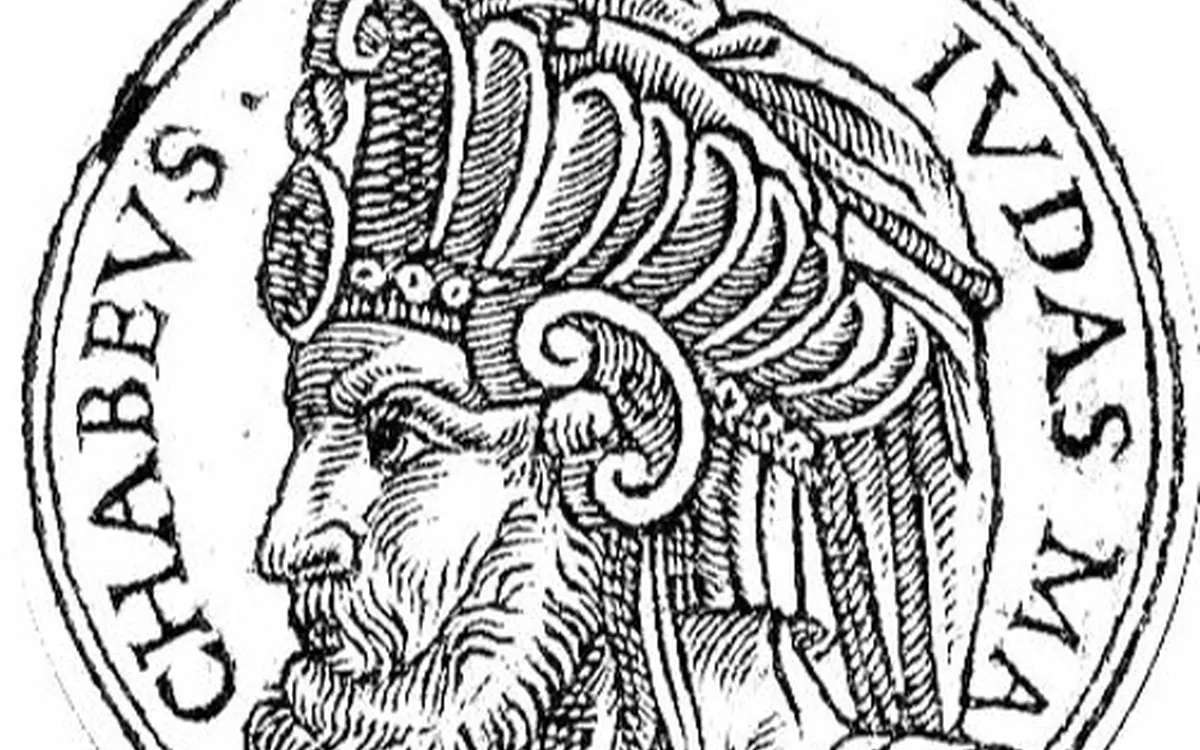
Here is my annual Hanukkah class in honor of my father, Charles Feuer/Betzalel ben Avraham ob'm. As the end of the Hasmonean kingdom that was established after the Hanukkah war, the Sages decreed "cursed by the man who teaches his son Greek wisdom." This talk explores what that wisdom might be, how to hold it off and why doing so is central to our national struggle for cultural sovereignty.
About this episode
Sovereignty is not given, it is taken, said Ataturk, and Rav Mike offers a shiur on the twenty-third yahrzeit of his father, Charles Martin Foyer. He admits how hard it is to find something to say about a man he has not seen in twenty-three years and knew mostly as a child, and he shares a fragment his mother gave him, that his father at nineteen, newly fatherless, drove home from Ann Arbor to collect rent so his own mother would not have to. He wonders what drove this son of a man who stowed away from Europe in 1937 and left ten siblings behind, a father who lived in the shadow of the Holocaust and died on the run. The power of the Torah, he says, is to bring healing, and so he turns to Hanukkah.
There is a famous problem in the Rambam, who writes that on Hanukkah kingship returned to Israel for more than two hundred years until the Second Temple fell, which seems to celebrate Herod and the Roman procurators. Rav Mike answers with cultural sovereignty, which has three layers alongside the territorial and the economic. Territorial sovereignty is a monopoly on the legitimate use of force, economic sovereignty runs through taxation and today is challenged by transnational corporations, and cultural sovereignty, deeply misunderstood, is the one that answers the problem. Whatever the kings or the Romans did, the temple stood and the Kohanim served, an anchor around which the sages built their most powerful model of a culture rooted in its own center, and that is what the Rambam is really celebrating.
The Maccabees fought on all three fronts, and their motto reduces to sovereignty over geography equals theology, ruling the spiritual high ground, since the celebration of the rededicated temple began a twenty-year war rather than ended one. But their fall is a cautionary tale. The Gemara in Sotah tells of the brothers Hyrcanus and Aristobulus at war over Jerusalem, raising sheep by basket for the daily offering until an old man versed in Greek wisdom told them to send up a pig, and when it clawed the wall the land of Israel shook. Greek wisdom, as Rav Mike reads it, means stepping outside your own story to claim an objective, scientific, rational vantage and gain power, and by stepping outside their story the Hasmoneans invited in Rome, the very pig that took their territorial sovereignty away.
He distinguishes language from wisdom. Language is a technical tool, a bridge to a world of meaning, and a frame that brings a world into being, since a slab of stone and a tree trunk both become a table only as we designate them, and it is never value neutral, as king and melech summon different worlds. The Baal Shem Tov reads the verse that God's word stands forever in the heavens to mean that speech is the ongoing substance of creation, the power of the one who acts running through what has been made, so the logos leads to philosophy and the living word leads to prophecy. From here he draws practical counsel, that Torah must come first because we absorb the new in light of what we already know, and that consciousness is emergent and must be guarded against a culture of chaos.
The deepest point concerns received wisdom. The Kuzari and the Ramban both hold that Greek wisdom is limited by what a human being can derive, while Torah is limited only by what a human being can receive, and the Ramban calls the arrogance that denies anything it cannot grasp the very root of idolatry, the reduction of the infinite creator to a graspable concept. Rav Kook asks why the vessels shattered when God poured the first light into the world, and answers that God gives according to the divine measure and does not hold back, so that being broken by that light we can put ourselves back together and become creators who receive still more. Low expectations are the greatest danger, and cultural sovereignty begins by telling our children they are prophets and giving them everything, even at the risk of breaking.
Key ideas
- The problem in the Rambam dissolves through cultural sovereignty, embodied in the temple that stood whatever the kings or Romans did.
- Sovereignty has three layers, territorial, economic and cultural, and losing the cultural one costs you the others.
- The Hasmoneans fell when they stepped outside their own story to grasp Greek wisdom and invited in the pig that was Rome.
- Language is never value neutral, and the living word, in the Baal Shem Tov, is the ongoing substance of creation rather than a tool.
- Greek wisdom is limited by what we can derive, while Torah is limited only by what we can receive, even being broken by the light.
- Cultural sovereignty begins by telling our children they are prophets and giving them everything, even at the risk of breaking.
Chapters
- 0:00 Sovereignty is taken, not given
- 1:06 Remembering his father
- 5:38 The problem in the Rambam
- 6:43 Three layers of sovereignty
- 8:54 The spirit of the Maccabees
- 11:08 The Hasmonean civil war
- 13:14 The pig and the siege
- 15:21 Language and wisdom; logos
- 17:25 Language brings a world into being
- 18:28 The living word; the Baal Shem Tov
- 20:52 Torah first; what we already know
- 23:06 Consciousness is emergent
- 29:34 Integrity; gates bowing to values
- 32:45 Derived and received wisdom
- 34:50 The Ramban; idolatry of the graspable
- 38:59 Rav Kook; broken by the light
Who, where and when
People
Mustafa Kemal Ataturk, Charles Martin Foyer, The Rambam, The Ramban, The Baal Shem Tov, Judah HaLevi, Rav Kook, Aristotle, Hyrcanus, Aristobulus
Places
The Temple, Jerusalem, Cleveland, Ann Arbor
Texts
Hilchot Hanukkah, Sotah on Greek wisdom, The Kuzari, The Sifra
When
167 BCE: the Maccabean revolt, 63 BCE: Rome enters Jerusalem, The siege of Hyrcanus and Aristobulus, 1999 CE: his father's death
Read the transcript
Sovereignty, said Mustafa Kemal Ataturk, is not given, it is taken. That sounds like a call to action to me. I'm Rav Mike Foyer, and this is The Jewish Story. Season 6, Interlude, Greek Wisdom and Cultural Sovereignty Well, in just a minute I'm going to let you into my live class from my father, Charles Martin Foyer of the Taliban Avraham's 23rd anniversary of his death is your site. Before I do, I just want to say that I think there's a primary challenge we face with people today that's coming out in all kinds of ways, and that is the struggle for cultural sovereignty. So here's some thoughts on how that connects to Hanukkah. Enjoy. You know, I say it every year, but every year it becomes more clear to me.
There is no one, aside from my mom and my brother, really, that are regularly part of my life that ever knew my father. And yet there are some of us in this room that have been here. I'm sorry about that, the annoying. There are some of us in this room that actually have been together on this day, if not every year, then certainly many years in a row. Many years in a row. And I really just appreciate you guys coming. And I'm going to do my best to bring honor to my father, but Sal Ben Avram, Charles Martin Foyer. I want to take a quick moment to say something about him, and then we'll dive into the top of the show today. It's not so easy, I've got to say, to every year try to think of something to say about my father when I haven't seen him for 23 years.
And even then, when most of my relationship with him was a child, and we're all parents here, we understand that as children we don't really know our parents. We see them as parents, we see them as people, maybe a little bit, but as a peer, as someone you get to know, it's a challenging thing. Nonetheless, I was talking to my mom when she was here for Anaria's Bar Mitzvah, and we were actually speaking about the idea that when you're looking to get married, you want to see how a man treats his mother, because really, in many ways, that's how he's going to treat his wife. and she said that my father was always tremendously good to my grandmother. You should know, by the way, my father was good to my grandmother and once he was married, he was good to my grandmother via my mom who did a lot of the, let's say, groundwork there.
But she told me a little fragment of a story, something I'd never heard before, which is that my father's father, my grandfather, died at the same age that he did, at 53, and my dad went off to college. He was 19 when his dad died. And my mom said that he came home regularly from Ann Arbor to Cleveland, drove home to collect rent from a couple of apartments in Cleveland that his father had owned, that his mother's father had owned. I don't know if you know, my grandparents were first cousins. That's why the teeth are all messed up there. Why am I telling you this? Because it really struck me. I can't tell you how broken I was in the immediate aftermath of my father's death. And here he was at age 19, 20, driving down from Ann Arbor, at least, you know, semi-regularly, to collect rent in Cleveland.
so that his mother didn't have to do it. First of all, but second of all, it really opened up for me a question that I've had for a long time. This has been a pretty driven time for me. A lot of hustle. Maybe I'll mention a couple of the projects later. I don't know. We'll see if it's appropriate. But I've been thinking a lot about my dad and how he died and how driven he really was. And I just, if I was going to ask one question right now, I'd like to know what was driving him. And I think about the fact that he was the child of technically not a Holocaust survivor, but that's only because his father stowed away in a boat in 1937, literally snuck on board to get out of Europe. And his ten brothers and sisters, my father's aunts and uncles, were left behind.
I grew up with the remnants of his family. Actually, there were four brothers and sisters that his father managed to save, which is amazing. But no one else from that family that I ever got to know. And so grew up in the shadow of the Holocaust, losing his father at 19, having to, by the way, avoid war in Southeast Asia at a very low draft number for the Americans who understand what that means. And so I don't know that he ever had a moment, and he died literally on the run, moving, running from one place to another. And on one hand, I feel that hustle and the sense of entrepreneurship and the sense of a drive because the world doesn't wait. On the other hand, I have a great hope that it will be a long-distance way.
So that being said, you know, the Koch HaTorah Merappe, the power of the Torah is to bring healing into the world. So I wanted to share a thought on Hanukkah with you guys, if I may. So the title of the shir is Cultural Sovereignty and the Dangers of Dat Chitzoni, of an External Consciousness. What do I mean? There's a problem in the Rambam. There's a couple of short source sheets here if people want. Just take a look. There's a problem in the Rambam. It's a well-known problem. The Rambam, when he introduces Hilchot Hanukkah, which is together with Hilchot Megillah, it's there in the third parakech, he tells a story. He tells a story. He tells a story you know, right? That they erased our religion. They didn't let us learn Torah and mitzvot.
And they took our money and violated our families, etc. etc. But then he says, The Hasmoneans, the Kohanim, sort of overcame, and they killed the Greeks, and they saved Israel from their hands. They established a king amongst the Kohanim, which if people are familiar, it's a big machlog between the Rambam and the Ramban, whether that was a good thing or not. There's no question in the Rambam's mind, this was a good thing. Because what does he say? The Chazer Malchut L'Yisrael yeter al-mataim shana ad-churban hashini. Malchut, sovereignty, kingship returned to Israel for more than 200 years until the destruction of the temple. So what's the problem in the Rambam? You're telling me that on Hanukkah we're celebrating hordus?
Right? You're telling me that we're celebrating the Roman procurators and Herod Agrippa? You know, when you look at the kingship, the Hasmoneans ruled from about 152, maybe 142, it's a bit of debate, until 63. After that, it was Romans and Herod and this. It's a strange thing. The Rambam's telling us that we're celebrating kingship? Now, you can take the hard nationalist stance on this and say, yeah, better to have a commonwealth and a kingdom than not. And leaders come, leaders go. And we can always pray for better leaders, but better to have a bad leader than no leader at all. And there's something to be said to that. But I actually don't think that that's what the Rambam's talking about. So, because we have a similar problem in our time.
right? Sovereignty is a pressing issue today. And if we want to understand the Rambam, and we want to understand Hanukkah on a different level, and we want to understand current events, including the most recent election and the struggles to create a government out of it, then we need to appreciate the fact that sovereignty has three layers. And I've spoken to some of you guys about this, but it's always worth reviewing. What are they? Territorial sovereignty. You control, right? That's Max Weber's definition that you have a monopoly on the legitimate use of force to maintain order. You have the army, the police, and anybody else who raises a gun to someone else is a criminal or at best a vigilante. Territorial sovereignty, but people make the mistake of thinking that that's what sovereignty is.
It's only one layer. There's also economic sovereignty, which is complex, and I don't want to really go too far into it right now, but taxation. Right? By the way, one of the biggest challenges to the nation-state today in its sovereignty is, of course, transnational corporations, because the fact is, what makes me sovereign is my credit card in the world. And credit card companies answer to no one. Right? Leave economic sovereignty aside. Then there's this third. There's territorial, there's economic, and there's cultural sovereignty. Cultural sovereignty is deeply misunderstood. If people pay attention to it all, it means, oh, we get to speak our language, we get to make our own textbooks. But cultural sovereignty is actually the answer to the problem in the Rambam.
It's also what Hanukkah is about, and by the way, it explains what's happening in our country today. What do I mean? Well, the Rambam's easy. When he says that, he means real cultural sovereignty, embodied in the temple. Because whatever the kings or the Romans, the temple stood, the Kohanim served, and we had an anchor which the sages began to really develop their most powerful sort of model of cultural sovereignty around that center point. So without going deeply into the Rambam, because it's not our topic, number one. Number two, what about Hanukkah? Well, you know, the spirit of the Maccabees, which is with us alive and well today, can be reduced in many ways to this wonderful phrase of sovereignty over geography equals theology.
You've got to rule the spiritual high ground. That's what the Maccabees were all about. They were after the Temple. People often forget that the celebration of Hanukkah, of the rededication of the Temple, was the beginning of a 20-year war, not the end. But it was really the goal. And then, of course, today, well, let's just get it straight, by the way, to understand in the Maccabees. They fought for territorial control to get the Seleucid Greeks out. They also fought to get rid of taxation and tribute. That's economic sovereignty, right? And last but certainly not least, they wanted purification of the Mikdash and the people from the Hellenistic influence. And that's what I want to focus on. But just to make clear the full picture is that today, in my humble opinion, the recent elections we have were about the question of whether this is going to be a Jewish or democratic state.
Leaving aside the fact that we can debate about Jewish, we can debate about democratic, in the most simplistic sense, a good chunk of the electorate said, if you force me to choose, I'll go Jewish. Because there's an attack on our cultural sovereignty. Which, by the way, if people happen to not be pleased with the government, then they need to think about how it is you can return cultural sovereignty in a real way. So, okay. We're fighting on all three fronts, you may notice, in our world today. And I want to focus on the power of cultural sovereignty. Because as much as the Maccabeans, the Hasamanean kingdom, is an inspiration to all Jewish nationalists throughout history and certainly today, there's good reason that the Zionists revered the Maccabees and the Hanukkah, so in many ways redeemed them in their secular sense.
Nonetheless the story of how their kingdom ends is a cautionary tale If people aren familiar it here on the source sheet from Sotah I brought an excerpt first from the Mishnahh and then from the tale of the Gemara The Mishnahh says, During the pulmos of Titos, Titos was the emperor, of course, who destroyed, he was the general, Vespasian became emperor, Titos was his son, he actually was the general that destroyed the temple. went on to be emperor after him. But during that struggle, the Great Revolt, as we call it, the Chachamim made two declarations, two gezerots, what do they call it, decrees. They said, no more crowns on the brides, leave it for another time of discussion, and don't teach your children to speak Greek.
Remember, speak Greek. That's where the Mishnahh puts it. And then the Mishnahh tells a story. I'll just tell it to you outside for the sake of time. The last two princes of the Hasmonean house to rule, or to struggle for rule were Hyrcanus and Aristobulus. They were brothers. And in their time, their mother, Shlom Tzion, had ruled the kingdom for a number of years. When they became old enough to rule, the problem was is that Hyrcanus was the elder, but he was a weak personality. Aristobulus was younger, but he was quite a fire breather. And a civil war broke out between them. And it centered as, unfortunately we know for history is not uncommon, around Jerusalem. Right? One was inside, one was outside. They were waging this war, couldn't be beat.
But what was happening the whole time, because they weren't just kings and they weren't just warriors. What else were they? They were Kohanim. So the Ovoedah has to go on. So literally, the Gemara tells a story that every day, the defenders inside would lower down a basket of coins and every day, the attackers outside would put two sheep for the Korban Tamid and they'd hoist it up. And then, says the Gemara, along comes this man, right? He says, There was this old guy. he knew Greek wisdom. And he kind of disparages them and he says, in this sort of Greek way, he says, you moron. If you keep this up, you'll never win. So, what does he suggest? He says, next time when they lower down the basket, instead of putting the offerings in it, put in a pig.
Indeed, that's what they do. and then the pig sticks its hooves halfway up the wall of Jerusalem. Jerusalem is there pulling it up and the whole land of Israel shakes. And then say the Chachamim, that famous phrase, right? Arul Adam she gadel chazim, right? Cursed is the one who raises pigs. Varul Adam she yelamed le binoh chachmet yavani. And curse is the one who teaches their son Greek wisdom. And this is the classic expression that we have a war with Greek wisdom. It's a war with Greek wisdom, but first of all, I want to know what it is, because we're waging this war today. We're waging this war today. It comes in many forms. People will say you're not allowed to learn math. They'll say you can't learn science.
I'm not going to go into a big, deep analysis of the details. I want to understand how we fight for cultural sovereignty. Because bottom line, it's very simple in this story what it is. It's that the Jews, even when we were fighting each other, we were all inside our own story. we might struggle for power we might have family issues but in the end of the day we understand that we're in the world to keep heaven and earth connected through the mikdha and it never occurred in this story to either brother to step out of that story in order to gain power that's what Greek wisdom is step outside your story with a claim to be objective scientific rational and gained power. And indeed, that's what happened.
Of course, the pig is Rome, in the rabbinic mind. And indeed, the Hasmoneans, by losing their grip on cultural sovereignty, stepping outside their story, they brought in the vehicle, which eventually took away their territorial sovereignty, which is the exact opposite of how their story began. So what I want to do is just look a little further into this battle for cultural sovereignty and understand how this colonizer of our culture of Hellenism, which has not gone away by any means, really can be resisted. Now, first of all, we have to notice the distinction that the Gemara makes between language and wisdom. He spoke to them in Greek and he was learning in Greek wisdom. The old man there learned in Greek wisdom, spoke to them in Greek.
And one way that we define what we're struggling against, this Chokhmat Yavan, is this conflation of language and wisdom. called logos. In Greek and then in certain elements of early Christian theology, the logos, right? Language is a fascinating thing. Anybody who knows me knows I love to talk. My father, all of us, loved to listen. We were a great pair. I think one year I remember telling people that somebody asked me, tell me something your dad once said to you that you'll never forget. And I realized I didn't remember one thing because he was always listening. Now granted, I was also talking. Now you may think that's how, but when I was a teenager, it was like out of control. I've learned to control myself.
You can laugh later. But language is a powerful tool. It's a technical tool for communication. It's a bridge to an entire world of meaning. And it's potentially a frame for bringing a world into being. What do I mean? Example. A table. It can be a technical tool for communication. Get the donut that's on the table. That's it. It can also be a bridge to a world of meaning. because, right, well, let's table that for now. We're all here around one table, aren't we, people? I mean, it's a conceptual frame. It's not just an object which is identified. It holds richness of meaning, language. And last but certainly not least, think of the vastly different things that we automatically identify at the table. I could put a half tree trunk with stumps around it, some Art Deco metal thing, and a slab of stone, and maybe even a sheet on the floor.
and your minds would all say, look, at those different tables. That's bringing the world into being. None of them is a table other than how you designate it. This is the nature of language. Right? And it never values neutral. Simple example of that, the difference between king and melech. I say king to you, we're into divine monarchies, you're a guy with the funny hat and the sword and the horse. I say melech and you're thinking about the struggles. Which melech? Hamelech? Melech is here, the melech, like Malmahud said, good kings back it. You understand? Language never values neutral. So on one level, this is why our tradition tells us that we need to teach our children Hebrew. And for no reason other than that, those of us who've moved from an English-speaking world to a Hebrew-speaking world have done a tremendous act of, I don't know what you can call it, defense, of active defense in fighting this battle for cognitive, for cultural sovereignty.
speaking our language. You know, the way Torah says logos, speaks about this creative power of language, tries to move away from this dichotomous subject-object. Language is a label. It defines things. The utility of it is in holding the world at arm's length so it can be described. The way the Torah speaks about it, actually, at least in the Baal Shem Toh, which as far as I'm concerned, that's the whole Torah, right? The Baal Shem Toh quotes the Pasuk, Le'olam HaShem De'varcha Nitzav B'Shamayim. It's from Tehilim. Your word is always established or standing in heavens. And the Baal Shem Tov says that when God spoke the world into being, that wasn't a one-time act. That language is kocha poel benifal. It's the power of the one who acts running through the one who has been brought into being, who has acted upon.
Language is the ongoing substance of creation. It's not a tool for manipulation. It's not a way in which we can bring order. It's a way in which we bring into being. So the Logos perspective leads to philosophy, right? And the Torah is to prophecy, right? The word of the Lord in its simplest sense. Now, banning Greek wisdom is an insistence on a sovereignty of Jewish consciousness in language and in action. And even if we actually use the Greek language as a technical tool, right, because there have been some pretty from Jewish philosophers, right, there's not an absolute dichotomy here. Nonetheless, Torah consciousness is never an abstract sovereignty. Never a thought frame that I use to understand some world out there.
That itself would be a Greek mode of approach. Philosophy gains perfection in abstraction. It struggles with reality. Whether it's the Platonic ideal or whether it's moral systems, philosophy's perfection is found in abstraction. The perfection of the Torah comes in organic expression. That's why it's full of mitzvot and not philosophy. It's full of things to do, and that's why those things are best to be done, properly be done, embodied in the land of Israel. As a people, no less. So, how do we gain this sovereignty of consciousness? And how do we use the tools of wisdom, language, and action to build that into a cultural sovereignty, which can be a foundation for the fullness of multiple. So, a couple of thoughts on that.
First of all, the Torah's got to come first. What do I mean? In cognitive development, we speak about different stages in an infant and in a young child's development where the mind is a sponge. There are a few people here who are multilingual, and there are those of us who have struggled later in life to learn other languages. If you've struggled later in life to learn another language, you know the experience of coding and decoding. Sometimes you'll reach fluency, where you're now beginning to think in another language, but it takes a lot of work. Why? Because there comes a point when we're no longer young and absorbing the whole world as a sponge. And we begin to absorb new information in reference to what we already know.
You understand the difference? If you speak to a young child in multiple languages, they just absorb the languages. You speak to an adult in multiple languages, they will hear that language and with lesser or greater sort of facility will translate in their mind. They will code and decode because they have to understand in light of what they already know Therefore Torah has to come first in this struggle I have a text from Sifra right Midras Halacha here from Akhari Mot It says, it's a pasuk there, you should go in the words of the Torah from Vayikra. The words of the Torah should always be primary and not secondary. Right? You're give and take, meaning you're primary occupation should be with Torah.
And don't make them an admixture. Notice, so far, it didn't say anything against learning Chochmat Yavon or other wisdom. What it said is that when you learn Torah, learn Torah. Do it in reference to itself. And do it first. And then it says, Shalot Amar, lamad eti Chochmat Yisrael elmod Chochmat umot alam. I already got the Torah, wisdom, from Am Yisrael. Now I'll go learn the wisdom of the nations. Tamu l'omor l'aleche v'hem, e'in charashai li'pater mitrochan. No, this is your world, says the Sifra, and you should never leave it. Now this is obviously an absolutist stance, and as we'll see later, the sages softened it to some degree, right? But the first step is to appreciate, and listen, even though, as someone who's a Baal Tshuva himself and was raised completely within the secular intellectual world, which is a Greco-Roman intellectual world.
Nonetheless, there is some reverse engineering which can be done. And even if you can't change what you learn first, you should always be aware of the fact that we come to understand what we understand in light of what we already know. And if you cannot keep that idea front and center, you will never have personal cultural sovereignty, much less on a national scale. So, next step is that consciousness is emergent. You don't just have it. It's constantly coming out, and therefore it has to be maintained. Right? We're bombarded in our world. We're bombarded. Language, thought, images, it's an assault, a full-scale assault on consciousness, and therefore on cultural sovereignty. And I'm not a conspiracy theorist in this sense.
I don't think there's some sort of committee out there looking to wreck Jewish culture. I just think that it's a culture of chaos. Most people walk around, if not most, many, with someone else's voice in their head all the time. Podcasts, music, videos. And then they're surprised when they can't bring their own thoughts together. Right? So when it comes to sovereignty, it's important for me to note, that there are actually three scales. And I'm going to confuse people. There are these three aspects of sovereignty, territorial, economic, and cultural, but there are also three scales. And this is a primary... Those of us who've done some personal work together have heard me say this. This is a primary tool I'll use in my counseling, is that Malchut has three scales.
There's the personal, we call that identity. There's the interpersonal, classic leadership, all the way up to Malchut, kingdom, etc. And there's Malchut Shemaim. It's the kingdom of God, as it were. Ideally, they're nested within each other, and each one supporting the depth and breadth of one another. Right? And if you ever want to speak to me more about that, you can do so. But why do I say it? Because the next source teaches us how important that relationship is. Right? So it says, Ben Dama asked, Ben Dama, Ben Achoto, asked Rabbi Ishmael, he says, what about me? I've learned the whole Torah. Right? can I go learn Greek wisdom? And what's Rabbi Shmuel? It's a fairly well-known text, say, from Menachal Siret.
He says, no, he says, the pasuk says, It should never leave your mouth and you should be involved in it day and night. So he says, basically, go find me a time that's neither day or night. That's when you can learn Greek wisdom. It's a classic answer, right? But notice, it's not an essential opposition. just says, listen, you don't waste your time. You don't waste your time, you waste your time. But you've got to find time to wait, and you don't have it. Now that's an ideal, because the Gemara goes on and says that, And that actually sort of conflicts with a different opinion from this age. It says, Whoa, whoa, whoa. When it says that you should be involved in Torah on day and night, It's not an obligation.
It's not a commandment. Hei le'bracha. Kodesh Baruch Ha'yoshua, right? Kodesh Baruch Ha'yoshua was really committed, right? Because when Moshe goes up on the mountain, Yeshua is right there with him. And it says by Yeshua, it brings the Pesach here. It says, Lo yamush, Meshartot Yoshua ben Nun. Na'ar, Lo yamish mitoch ha'o'el. He never left the oil. It was a blessing. The Kodesh says, I bless you if the Torah is so precious to you that it will never leave your mouth. This is another lesson. parents, educators, and for ourselves. If it's not precious, it will never be sovereign. If it doesn't matter to you, then something else will replace it. It is the nature of the world in which we live, in general, and all the more so when we live in a world in which your attention is the most precious commodity for ravenous organizations that are surrounding you even now.
Right? It has to be precious to you. How do you make it precious? Well, you can understand the importance of history. You can delve deeply into it. You can build relationships around it. Right? But if it's not precious, it simply will not be sovereign. And the last piece here, I think, is an important warning to all of us, parents and educators in particular. It says, The words of the Torah should not be an obligation. And that's usually understood to mean a burden. Right? It says, But you're also not allowed to excuse yourself and say, this is too much for me. We have to work to figure out how to derive pleasure from the words of the Torah. Right? They should be a khol. They should be an inspiration. It's work, in the same way that any other labor which is growthful as work.
But they can't be a chobah. So, one more practical piece here, and then we'll think a little bit. I'll pause maybe if we want questions and clarifications. And then we'll think a little bit about what exactly wisdom is. I'm sorry, that's driving me nuts. I've got to close that. Okay. so there's a text here from Eicha Raba talking about the gates the gates of Yerushalayim your gates have sunk in the ground Rabbi Huna B'Shem Rabbi Yossi Oma'r that the gates actually gave honor to the Aaron when it came to the temple why? because there's a story in the back story here is that when that when Shlomo Melech came to open up the gates of the newly built Midrash, they only really opened for the Aaron. V'vichach lo shalat behem oyev.
Since the gates gave honor to the Aaron, the enemy could not control them. Right? And this itself is a very important lesson. It goes on, by the way. This is the famous quote of, like, if someone says to you there's wisdom amongst the nations, believe them. If someone says to you there's Torah amongst the nations, don't believe them. So what's the connection between the gates and the Aaron and wisdom amongst the nations? Well, I'll tell you. The Oyev, the enemy, can't win when our daily decisions about where to put our attention, when our gates bow to our true values. That is the most difficult challenge we all face. We call this integrity. Integrity is when our behaviors match our beliefs. And when we ask ourselves, where does our integrity reside?
It's a very important question, by the way. Everybody has a place where their integrity resides. There are places where we're challenged more, places where we challenge less. Your integrity resides in the place where you have absolute belief in yourself. And if there's nowhere you have absolute belief in yourself, then that's where you need to begin. You need to find somewhere where you have absolute belief that your behaviors will match your beliefs and build from there. this is a practical piece of advice I like to give to everyone that there are three steps to mastering anything anything at all only three discipline focus and a sense of ultimate concern discipline means you show up but if you just show up and just kind of imagine if you ran every day but you never paid attention to your form you cripple yourself So you have to focus when you're showing.
It's a practice. It's not just an exercise. And then, the reality is, it actually has to matter to you. If it doesn't, if it's not a matter of ultimate concern, you won't master it. How many people in this room can play one song on the guitar at least? Okay, it's an odd crowd. If you were younger, I know there's people here. Yeah, exactly. There's for sure several. But you guys, it's a little bit different because it's actually important enough to you guys that you've mastered an instrument. But you get the difference. is there's plenty of people out there who can play one or two songs that are a few chords. And why? Because at a certain point they had enough discipline that they put in enough focus that they learned.
And then at a certain point they were like, this is just not that important to me. I'm not going to spend three, four hours a day practicing. Which is fine. It's not a judgment. My point is, though, when you want to understand the relationship between the gates and the arm, when you want to be able to actually get the wisdom of the nations without thinking that that's what the Torah is, then you must master your daily decisions so they bow to your essential values. You have to have that integrity which is driven by a sense of what is an ultimate truth. So those are some practical pieces in this battle for cultural sovereignty. I want to say a word on wisdom and then we will finish up. You guys with me?
Okay. Okay. Good. At this point you have to be. Right? Okay, I'll tell it at the end. So, So wisdom a funny thing you know I mean we in a battle of conceptual frameworks of language of how we relate to the world but actually I think that I found a couple of sources here that to me put the finger on really where I think the challenge lies and really opens up a lot of the light of Hanukkah I found a piece here from the Kuzari I don't remember if I put it on the source sheet there Kuzari's not on the source sheet okay so I'll tell you in general that Kuzari's a fantastic book I'm not going to go into it right now. You'll trust me. Read it yourself if you haven't yet. He says, He says, you can't complain about the philosophers not understanding the world, right?
Because why? They didn't inherit wisdom or true religion. Inherit. He says, they're Greek. And he goes on to say that, you know, that Greek wisdom is derived from it. whereas but actually wisdom that comes as an inheritance from Adam from the first human something which is upheld by a divine divine principle there's an inheritance a wisdom that's passed on now it's very interesting he goes on and you might think on one hand this is just very old school Jewish supremacy. Like, we got the word, and you don't. Okay, the truth is, Rabbi Yudah, my lady, definitely felt that way. But it's more than that. Because he's being very specific in contrasting wisdom which is derived by human behavior, which remember, the Midrash there said, This is the distinction that he's making.
Because beyond that claim that we have the real tradition is an important assertion about the fundamental difference between derived wisdom and inherited or received wisdom. Because philosophy is intrinsically limited by human capacity to derive, while Torah is only limited by the human capacity to receive. I'm going to say more about that in a minute. Furthermore, Greek wisdom in specific derives its power from definitions, distinctions, boundaries, that's the logos that we spoke about. That's language. And that's a powerful tool, but it's also limiting. That's what language does. language kills as it communicates. Everybody's had this experience that you have something inside you which is so real and you want to share it with someone you love, someone who cares and what do you have to do?
You have to put it into words kill its liveness and give it over to someone else in hopes that you can make some sort of connection. There's no other choice except to be together in the experience. That's a very different posture than communicating. So the Ramban when he's commenting actually on Tzio Hazel, over there in 16th chapter of Ha'ikra, says also a very similar thing. He says, We've got to shut the mouths, I've got to love his language, right? Of these people who are, you know, so wise in the natural world, the philosophers. Who get pulled after the Yivani, which in the Ramban, most people agree is Aristotle. denied the existence of anything other than that which he could sense materialism and he was so arrogant to think who of Talmudal, he and his students the wicked students it's the Ramban after all anything which he cannot grasp is not true.
This is the root of idolatry. If you want to understand what idolatry is and where it still exists and how our cultural sovereignty is threatened by it today, I'll say it again. You know, people talk about objectification. Objectification of women has been a discourse in our culture for a while. Whether it's made any advances in our behavior, this is own question. But, right, what does it mean when we objectify someone? Instead of them being a live subject that we relate to as an actor, We, you know, squeeze them into our perception of it. It happens in relationships. It happens especially between spouses, you know. And that's its own challenge. What happens when you objectify God? What do we call it? When you reduce God as the aimsof, infinite creator, to a concept which is bound by my understanding.
What's that called? It's called idolatry. When you reduce the, well, you know, Well, that's one manifestation. But careful, because all religion dances around this. People who live in formal religions shouldn't throw stones, to mix a metaphor. Meaning all religions dance around this problem because all religions depend upon reducing the infinite to the graspable. The question is, do they point the way to the infinite or do they substitute for it? That's a discussion for another time. But for now, I want you to understand that what the Ramban just said parallels what Rabbi Yudah Levi said. Rabbi Yudah Levi says that Greek wisdom is always limited by that which it can derive, whereas true wisdom is limited by what a human being can receive.
And the Ramban said, yeah, the Greeks, they deny anything which they can't grasp. They live in a small world of their own making. So what's the answer to that? The answer, in my humble opinion, how do we substitute? By the way, this sounds great, but we're losing this battle in the world as a whole right now. We're losing this battle. Because the nice thing about the Greek wisdom is they have activist priests of technology. We're all carrying the products of how powerful it is to reduce the world to what we understand, and what's graspable in our pockets. it's interesting. I'm not going to spin off into AI, but it's fascinating what's happening to science right now as we're heading back into a world in which we actually don't understand how the things we make operate, which opens up all kinds of interesting questions.
But I'm going to stay focused and just offer you this piece from Ralph Cook as a bit of a counterpoint to a different type of wisdom. Ralph Cook, right, I hope people are familiar with this idea that when God created the world originally in the mythos that the Arizal gave us, Right? That God shined one light of the divine into the world, and the vessels that were meant to receive it shattered. This is called the shattering of the vessel. So Rav Kook addresses this question, like, why do the vessels shatter? What's this? I mean, if anyone's ever heard this story, it probably occurred to you, why can't God make a world that can receive God's light? This is the only answer I've ever seen that satisfies me.
Rav Kook says, well, God doesn't hold back. God gives according to the divine measure. Because if God held back, you would always be stuck as a created being. low expectations are the greatest danger. You want to gain cultural sovereignty then we need to tell our children that they're prophets or will be soon. We need to open out a horizon for them which is beyond what they can imagine and then give them everything we have. Even at the risk of breaking. Why says Rav Kook? Because when God gives according to God's measure and we're broken by it we have the opportunity to put ourselves back together. and we can become creators and not just creators. This is what Rabbi Yehudah Lebi meant. The power of received wisdom is limited by only that which we can receive, including being broken by it and reconstructing ourselves to receive even more.
God doesn't hold back. There is no limit to divine wisdom. If you live in a world in which you have to shrink the world to fit your understanding in order to live within it, then you live in a small world. and I'm willing to bet you're probably hiding from its brokenness so just to try to pull a thread through all that is that understanding the real full wisdom of the Hanukkah story is to understand the power of cultural sovereignty right that without it territorial sovereignty disappeared like that and this is a challenge we face today what does it mean to be a people in our land Right? There's a sovereignty also of personal consciousness that I would define as integrity that underlies it. By the way, if you've read the books of Maccabees, right, religious martyrdom, especially in Maccabees 2, is a central theme.
That's the great assertion of integrity. You can take my body, but you'll never have my soul. On the individual level. There's a national consciousness, which is telling our story. Not always in a critical stance, and you guys know that I love the critical part, but not always because sometimes you tell your story because it's your story. You don't worry about what other people think of it or how it appears in the light of others because then it's not your story anymore. There's a place for that, but not when you're telling your story. Last but certainly not least, there's a divine concept, which is having a Muna in a redemption, that there's light no matter how dark the world may appear and that there's always something bigger on the horizon.
so you know I don't have some dramatic finish here this is just what's on my mind today and I would say it's also a bit of a call to action that the fight for sovereignty can appear very narrow but the reality is something we can all do is to build the base for that Jewish consciousness which itself when brought together as a people becomes cultural sovereignty that's a driver the ability to really return Malfu to our land. So I just, I want to invite folks, as a taste of a little bit of the creative avenue, we're launching our first Age of Prophecy content online on Sunday. The link is already up. The cart is open. If you go to theageofprophecy.com, you'll see the Self-Fulfilling Prophecy Challenge.
You sign up, you get seven days of videos, wisdom that Dave, my co-author, and I have derived from the prophets, and an exercise to try to take that wisdom and actually make it actionable in your life. There's a bunch of exciting stuff there. You should check it out, ageofprophecy.com. You'll see, just scroll down, you'll see the link to the self-fulfilling prophecy. There's lots of other stuff going on. People have questions, you can be in touch with me either physically here or at, you know, ravmike.com. You can always send me a message. And thank you all for bringing honor to my father's memory. everything I've said really is for the sake of the Elohim Nishanat the Talbim Avraham Yezichon Baruch Amen
More from Season 6
TJS S6E9 Boundary issues part V
Uzi Dayan was national security advisor to both Ehud Barak and Ariel Sharon, helping them navigate the stormy waters of the Camp David summit, the Oslo war and...
Play Episode
TJS S6 interlude - The Age of Prophecy
Here is an interview with my dear friend and co-author Dave Mason. In it we explore imagination as a tool of spirituality, the challenges of co-writing a novel...
Play Episode
TJS S6E10 American Antisemitism part I
Antisemitism It's an old topic, but somehow seems to be making yet another comeback in America. Here is the introductory episode in my quest to understand the rebirth...
Play Episode