
TJS S6 interview with Rabbi Shmuly Yanklowitz
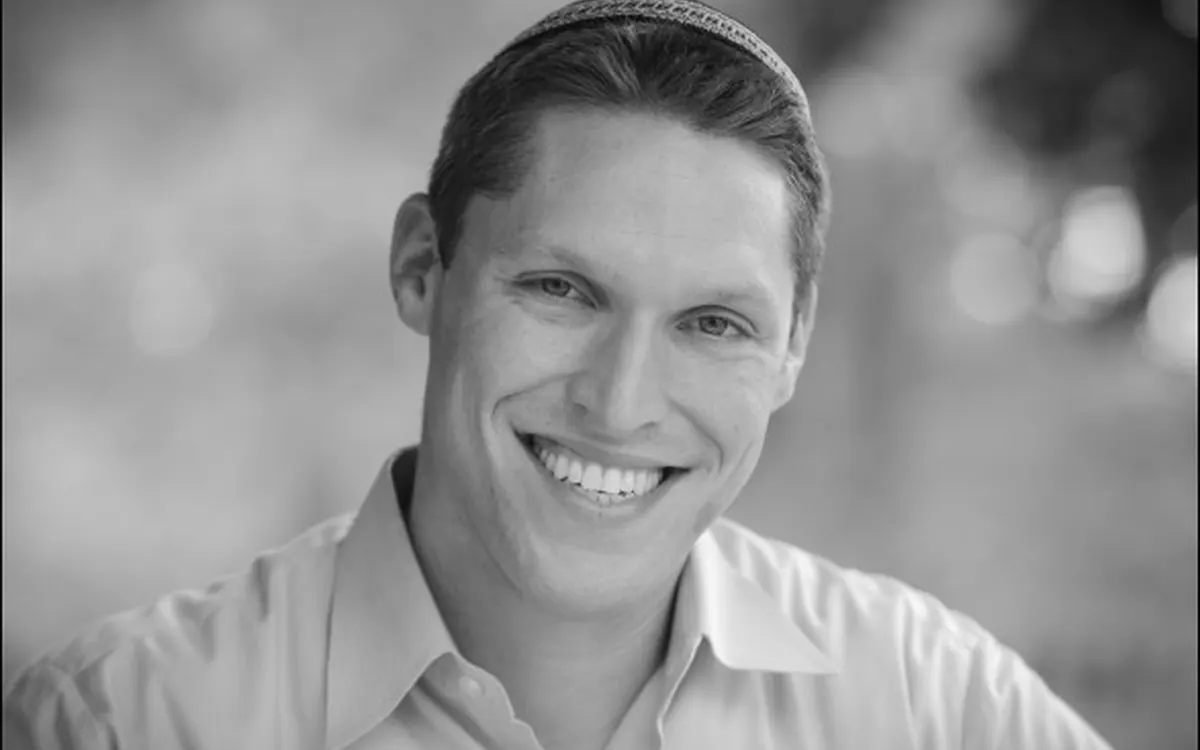
Rav Mike Feuer interviews educator and activist Rabbi Shmuly Yanklowitz and discuss what it means to be both progressive and orthodox in the Jewish world, as well as his vision of the Jewish story, Israel and Zionism past present and future.
About this episode
In Phoenix, Rav Mike is hosted by Rav Shmuly Yanklowitz, educator, author and activist, who calls himself a progressive Orthodox rabbi. The term sounds like an oxymoron, Orthodox frozen and progressive moving forward, yet Shmuly roots it in Rav Kook's image of a God who is both alive and evolving and eternal and rock solid. He describes a life of being rooted and having wings, anchored in the ancient mesorah of halacha and Talmud Torah while remaining forward looking, since for him Torah itself moves toward Mashiach and the light. There is a Yeridat HaDorot that distances us from Sinai, and alongside it a drawing closer to truth, so we are pulled both ways at once, and a Judaism that reflects the divine has to hold both.
The hardest part is living in that paradox without collapsing into one pole. Socially there is the insecurity of a Venn diagram that does not overlap, no ready community for a person who refuses to be predictable, and internally there is the Yirat Shamayim of wondering whether he is choosing rightly when everyone around him picks a side. Shmuly is neither a daas Torah man who outsources every question to a rebbe nor a pure autonomy man who follows his gut, and so he relies on a cycle of act and reflect, dance floor and balcony, held together by tefillah. He refuses the skepticism that paralyzes, since you still have to dive in and do the mitzvah even when you cannot measure its impact. The Ramban taught that Moshe almost missed the burning bush because he had not prepared himself to see, and preparing ourselves to see is the willingness to be called.
Rav Mike asks what part of the Jewish story today is being missed, and Shmuly begins with the emptiness. The two narratives that carried us, the great trauma of the Holocaust and the great glory of Israel, now divide us more than anything, both of them politicized and polarized. The deepest problem is the lack of a shared story of who we are and where we are going, which is both a crisis and an opening. He feels it as a father, when one of his children said, I do not care about this the way you do. The piece he most wants in the conversation is the link between our inner and outer lives, the Baal Shem Tov's teaching that what bothers us most in the world mirrors our own souls, so the change we fight for outside has to be matched by character work within.
We are a people of action, Shmuly says, almost every mitzvah an act, and the rise of the subjective and reflective as a core part of Jewish life is a gift of modernity worth cherishing, since it lets us uproot in ourselves the very evils we scream about in the world. We change the world by modeling rather than by preaching. On the rift between American and Israeli Jewry, Shmuly knows every camp from the inside, birthright and a Lakewood kollel, a caravan on a Gush Etzion hilltop and progressive justice spaces, and he feels homeless and at home in all of them. The deepest divide is the loss of any interest in relationship and the embarrassment of the other. The bridge is a shared love of the same values held differently, since the progressive space has grown past a simple ahavat Yisrael.
Getting people to take that risk, to see worth in the one who opposes them, depends on rooting our sense of value in Tzelem Elohim rather than in our ideologies, so a challenge to the idea does not feel like a threat to the self. Much of what plays out today is a trauma response, both the great collective traumas of violence and survival and the private ones of childhood, and the healing begins in a sense of divine abundance. Rav Mike hears the same Jewish and human story digested in different ways, Israeli and American Jews with much to offer one another. The chapter ahead that excites Shmuly is a proactive stance with the power history has granted, zooming from self to family to nation to cosmos, a plurality of authenticity and harmony modeled above all by listening.
Key ideas
- Progressive Orthodoxy is rooted wings, anchored in halacha and mesorah while looking forward, since Torah itself moves toward the light.
- Living in the paradox means holding both poles through a cycle of act and reflect, held together by tefillah, rather than collapsing into one camp.
- The deepest problem in the Jewish story today is the emptiness where a shared narrative stood, as Holocaust and Israel now divide more than they unite.
- Our inner lives mirror our outer lives, so the change we fight for in the world has to be matched by character work and spiritual practice within.
- We change the world by modeling rather than preaching, uprooting in ourselves the evils we protest outside.
- The bridge between American and Israeli Jewry is a shared love of the same values held differently, and the willingness to see worth in the one who opposes us.
Chapters
- 0:00 The absence of good; arriving in Phoenix
- 1:07 Progressive Orthodoxy; rooted and winged
- 3:25 Holding both poles; the hardest challenge
- 4:31 Social and inner insecurity
- 5:43 Not a skeptic; act and reflect
- 8:00 The calling; preparing ourselves to see
- 9:02 The emptiness; two narratives that divide
- 11:11 Scarcity of identity; inner and outer
- 12:14 A wholeness we are tasked to build
- 13:21 A people of action; the rise of the subjective
- 14:27 Modeling, not preaching; American and Israeli Jewry
- 16:39 Good motives; a love of shared values
- 17:45 Taking the risk; worth in Tzelem Elohim
- 20:14 Trauma response; divine abundance
- 22:48 The next chapter; harmony through listening
Who, where and when
People
Rav Shmuly Yanklowitz, Rav Kook, Rav Mike Feuer, The Ramban, The Baal Shem Tov
Places
Phoenix, Arizona, Gush Etzion, Lakewood
Texts
The burning bush in Shemot, The teachings of Rav Kook, The Baal Shem Tov on the mirror of the soul
When
2000 CE: the first year of Birthright, 2023 CE: the interview in Phoenix
Read the transcript
When you have the opportunity and the ability to do good, said Yvonne Chouinard, and you do nothing, that's evil. Evil doesn't always have to be an overt act. It can be merely the absence of good. Oh Lord, you put me in this world to do something, so let me do it. I'm Rav Mike Foyer, and this is The Jewish Story. Season 6, Interlude An Interview with Rav Shmuley Yanklowitz So I'm sitting here with Rav Shmuley Yanklowitz Educator, author, activist And actually my host in this moment Because I am not at home for the first time in a long time I'm here in Phoenix, Arizona I'm super happy to be here Thank you for joining me on The Jewish Story It's an honor to be with you Honor And be in conversation Thank you So, you know, before we dive into your vision of the Jewish story, I want to know a little bit of your story.
I've heard we have an association through various listservs and other activities. And I've heard you perhaps describe yourself as a progressive Orthodox rabbi. And my curiosity is that most people would assume those two don't go together. Orthodox is like frozen. We don't question these things. The progressive is moving forward. How does it work? I love that question because that's at the heart of my Torah and ideology and worldview. where, you know, Rav Kook talks about, we say, God is alive, evolving, changing. I know this sounds heretical. And then Kayam, God is not changing, and God is eternal and rock solid. And I think that that halakhtabedrachav moment, that model of emulating the divine in being evolving and growing and adapting and also being really deeply rooted really roots my life in terms of thinking each day, how do I be consistent in what matters to me most, my family, God, my avoda, my spiritual work, and how do I continue to learn and grow and adapt?
And I think of Kev Yechol, like I have no idea what God is like, but that being a helpful model to think of it. So progressive orthodoxy, sounds like an oxymoron to some, but for me, it's about how to be rooted and have wings. It's about being rooted in our ancient Masora of Halakha and just Talmud Torah and Mitzvot, but also doing that in a way that is forward-looking. And I don't say forward-looking because that's trendy or because that's political, but forward-looking because I think that that's the actualization of what Torah is. That Torah is moving towards Mashiach. We're moving towards the light. Yes, there's Yeridah to Dorot. There's the decline that we're getting further from truth, further from Bereshit, from creation, further from Sinai.
We know less, we're less connected. I believe that. But then there's also this other narrative of like, we're getting closer to truth and to progress. And I think that we have to be pulled in both directions at once, in a sense. And part of that here is just the spiritual honesty, which is that if you look around in the world, there are truths which we build on, which remain unchanged, unchallenged, but the world never stops, right? And so if we see the world as a reflection of the divine, so somehow we have to do both. Yeah, we have to do both. And that's really hard to do because progressives just want to move forward on whatever is the new emerging thing. Traditionalists want to slow it back. But I think the integrity to live in the paradox, to live in the tension and the struggle of being pulled in multiple directions.
And that's not some wishy-washy, let's all be centrist kind of thing or be predictable. It's a notion that each of us has to respond to what we're seeing and what we're hearing. That was what our ancestors did. I mean, when we read the Torah, we see how adaptive they are to the moment. So what's the biggest challenge you've faced personally in being able to hold these two very powerful poles into a life that has to be lived? You get up every morning and you have a family, thank God, and you do things. What's the biggest challenge you've faced? So there's the insecurity socially. There's the insecurity internally. And to unpack those, the social one is that we live in a world of polarities where either you're in a religious, political, progressive space, or you're in a religiously traditional space.
And if you don't choose those, you're kind of out. You're kind of in a – Yeah, the Venn diagram doesn't overlap. And so you're like, where's my community? Where's my people if I'm not predictable? And I don't want to just have, you know, be an abandonment ideology. And then there's the own Yerash Shemayim, kind of awe of the heavens of like, am I making the right choices? Because if all these people are choosing that, those people are choosing that, maybe I'm doing it wrong, you know? And so – and not having always models or mentors that do it exactly the way you do it. Like, I'm not a Das Torah guy where I just go to a Rebbe and ask my questions and do what they say. I respect people who want to do that.
Nor am I a pure autonomy guy who says, I'm going to follow my gut. You know, like I want to be rooted but also like critically thinking. So how do you make that decision? Yeah. How did I or how do I? How do you? I mean, it sounds like it's an ongoing. Yeah. Yeah. So I think, you know, I actually believe that HaKadosh Baruch Hu is everywhere. And in particular, inside of us. and that can lead to like an arrogance or like a miss you know fundamentalism but i believe in like a humble way that like there are forces inside of us pushing us in directions that are divinely guided and um that if we feel morally called to something or spiritually called we should really pursue that and that's scary for a lot of people but you know i wouldn't be jewish if i hadn't if i if i didn't believe that because it's like got me there yeah so so that's my first answer.
My second answer is that I'm not a skeptic. I'm not someone who is paralyzed in skepticism, which says, oh, I don't know if there's a God, so don't pray. I don't know if I'm making the right moral political choice, so don't go act. I don't know, but you still got to act. You still got to dive in, even though you don't know if it works. You still got to do meets vote, even if it's like you don't know if the impact is there. I feel like there's the skepticism of what's right, what's true, but then still the sense that we have to have the hishtalte and the emunada. Right, got to do the effort. Yeah. So how do I try to do that? With a lot of difficulty. But I would say just this constant cycle of act and reflect act and reflect and just being on the dance floor and being on the balcony and going back and forth and without tefillah and other spiritual practices I don know I could do it So it's on some level a constant return to self and saying like, what am I really being called to?
And I hear in this a commitment both to self-honesty and to a tradition that exists outside of you that you live in real awe of, but not frozen by models you've inherited or other people's ideas. It sounds quite challenging. Yeah, it is challenging. I'm lucky in that I'm a little bit of a simple Jew in that faith in God is easy for me. A love for Torah is easy for me. For some people, those are real struggles, like the struggle of faith and the struggle of belief and a ritual, those feel like just sweet to me. And that's a real bracha, a real blessing for me because I know people really struggle with that. I think that the difficulty is in trying to hold it all together because you use the word calling.
And it's funny, I was in a documentary when I was a rabbinical student called The Calling where they followed me around along with some Christian students and some Muslim students. And at the first I was like, oh, such a Christian term, The Calling. Like called, you know. But then I really couldn't believe this is a Jewish thing. You're called. And I know you do a lot of work in the realm of the imaginative and the realm of just boundless potential, potentiality. And I love that. And I also sort of feel like that the ability or willingness to be called is the willingness to imagine and see beyond what we can see. The Ramban says that Moshe Rabbeinu missed the Snet Inenuukal. that the burning bush is right in front of Moshe Rabbeinu and he can't even see it, Ramban says, because he hadn't spiritually prepared himself.
If we don't prepare ourselves to see and hear, we can't even get there. So I partially view it as an avodah sesham, a service of God. I don't even know what that means really. But I partially view it, and I hope this doesn't sound narcissistic, but a service of self in that the spiritual process expands me to see and feel like that's not as hedonistic. It's because I want to live fully. Yeah. There's a greatness that every human being is capable of, and it's both frightening, and at the same time, it will find its way out one way or another. So I want to shift the scale a little bit, because part of what I'm trying to do in this subset of the Jewish story is explore what's happening today. And I know you move in a lot of worlds, and I know also you're connected to a lot of people.
So I'm curious what you see to be right now in the Jewish story writ large. Some of you feel to be a crucial part of the story that's not getting attention. Wow. Wow. Oh, my gosh. I love that question. Well, let's start with the emptiness because the two narratives that carried us for so long, our great trauma and our great glory of the 20th century, the Holocaust and the founding of Israel, as you know, were the two experiences and narratives that united the Jews for so long. And now those two uniting factors are two that divide us more than anything. That the conversation at the Holocaust is usually politicized, either for a hawkish conservative agenda or for a universalistic liberal agenda. The narrative around Israel is more polarizing in Israel and out of Israel among Jews and beyond.
And so just to grasp this notion that the biggest problem is a lack of a story, the lack of a cohesive narrative that we share collectively of who we are and where we're going. And that's partially a crisis, but partially a great opportunity. Sure. And now we're all fighting to fill that space with what we think the dominant narrative should be. But I really love people having their own stories and figuring out if there's any way those stories can come together, to be heard together, to be listened to together and potentially come together. And I think about that as a father because my children, you know, one of my children said to me recently when I was dropping them at a Jewish learning program, I don't care about this the way you do.
And I'm like, oh, my gosh. Oh, I've heard that one. First time you ever said this. I was like, why isn't your story my story? You're like, what do you mean? I've educated for you. I still have the same story. Sure. And all of a sudden, like, they're diverging paths, and that's scary for Jews. Like, some Jews want every Jew to be the same. Right. I think you called it surplus of identity is what you called it? A scarcity of identity. A scarcity of identity. I don't know that I have the chutzpah to say, like, the story I want to share is one I want every Jew to be thinking about because I think there's so many that are valid and important. That wasn't your question. But I think one of the ones that I want to have out there is really the one about our inner lives and how they reflect our outer lives.
That sense that whatever change we're working for in the world is reflected just as deeply, ideally more, with our inner work. Through our me-dotes, our character development, through our therapy and reflective work, through our spiritual practices. that the stuff that's bothering us we're fighting for is just as deep. Like when the Besh says, the Baal Shem Tov says, that the things that bother us most in the world are a mirror to our own souls. For us to really do that. And that, I think, will expand our imaginative capacities and our spiritual potentiality and our potential to be together. So in a sense, the piece that is most pressing, which isn't getting attention, is the link that both on a personal level and on a national level that we represent between the spiritual and the manifest, and then taking seriously that as a task, not as just an idea that's floating up there, oh, the Jews represent this or that.
No, me personally, that I need to work in my life to make sure that the inner struggles and the outer actions are reflective of a vision for myself, for my people. And I think you're correct, that we tend to think of mitzvot as things we do, and those of us who are concerned about the more inner aspects, be they the sort of therapeutic reflective or the sort of spiritual mystic, there's a disconnect. And what I hear you saying is that we should understand that there's a wholeness between the inner and outer worlds and we're tasked basically with building it. Right. Yes. I love the way you said that. And I think that's part of the secret sauce of what the Jews bring to the world. Yeah on the one hand we people of action Almost all of our mitzvot are actions The first thing we learn about God is Bareshit Bar Elohim at the Shema Yeditar So God creates God acts Action is who we are And unfortunately, it's not till modernity that this reflective piece even becomes kind of pervasive.
Of course, there were always spiritualists and the like, but until Freud, until modernity, until we have this, the Musar movement, the birth of Hasidut, I mean, this notion that we should all be doing that is really a new thing. Again, I don't want to cast aspersions. Of course, there were Jews always doing that. The rise of the subjective as a core part of the Jewish experience, the human experience. Right. You're correct. It's a product of modernity. And one for us to cherish. And I think that that enables us to not live with hypocrisy, that the things we're screaming about in the world, that we're uprooting those same evils in ourselves. It enables us to understand that more than preaching, we're going to change the world by modeling, by just being the people we want to be.
I know that's the people I've been most inspired by. Not things they've taught me, but things I've seen them do. I think that that is a crucial piece that I really want to repeat, is that on some level, the thing that's not getting attention is the way they change the world is by modeling and not by preaching. I know our time is limited, so I want to push forward a little bit. There's a lot of talk today in the news about the relationship between American and Israeli Jewry. And I know this is another world where you have connections on both sides of the ocean, as we say. So what would you see that can be done to build deeper connection between American and Israeli Jewry? I love your question so much.
So let me just share who I am in that regard. My Judaism really became most robust through birthright. I was in the first year of birthright. Like the Zionist story was directly linked with my own kind of Jewish story. I then went on to live in the Haredi world. I was learning in a Lakewood Kolel in the ultra-Orthrax world. than lived in the religious Zionist settler world, living in a caravan on a hilltop for two years in Gushet Zion. And also find myself in a lot of social justice progressive spaces where the relationship to Israel is very different than mine. And I really get all sides of it. I think of my friends who proudly call themselves settlers or don't call themselves that. And I love them. And I love the story they have to tell.
And I think of my progressive activist friends and what they want to see for a perfectly just state of Israel in their mind and what that means to them. And boy, do I see the divides. And I think the biggest divide I see is not actually what they think is right and wrong, although that's huge, is just having any interest in being in a relationship whatsoever. And a real kind of embarrassment of the other. This progressive American Jew has no clue what's going on. They're on the sidelines. They don't see the truth. They don't live it. They don't have to sacrifice anything. They can say whatever they want. They're just doing it to be popular and be trendy, and they're assimilated. And on the other end, these are religious fundamentalists who are the most dangerous threat to Judaism of people who are oppressors and occupiers and people who are destroying everything we love about liberal Judaism.
And I hear both of those sides, and I'm in those conversations, and I feel homeless in both spaces and a love for both spaces. And I really think the motives for all of that, of course, there's tons in between there. And the motives for all of them are really good in terms of what they want, what they're pursuing. And I think that's the starting place is actually getting into a place where we can see that nobody's coming from a place to destroy, that people are coming from a place that's really constructive and just have really different worldviews that need to be understood. And I don't know that the answer is Ahavati Israel, love of fellow Jew, because I think that the progressive space at least is a little bit post, not only post-nationalism, but post-peoplehood.
So I think that connecting space is not on a love of fellow Jew, but really of a love of similar values. How can we find those same values that are manifest so differently and understand that we both love that same value? And let's find out what that meeting place is. I think there's a lot more in common than not. And part of what I hear in that assumption of commonality is it's also necessary to get open people's willingness. Like there's a risk. I think there's a risk that you left unstated in there. And that's the sort of boldness I hear in your willingness to, although it sounds like you don't really have a choice internally, but your posture of living in multiple worlds. And I'm curious, how do we get people to take a risk like that?
Because I know people in both those spaces as well, and there is a lot of security and identity that assumes that the person who is opposing you is irrelevant or fundamentalist or ignorant or wrong, and there's a risk in me opening myself to saying, wow, this person who is so strongly opposing me actually shares some of my core values. They might have insights on the questions that are important to me, How do you think you can get people to take that risk? Oh, my gosh. So I think that's the core of all of it. I love the work you do, and I love the way you think about the world. I really mean it. I think it's incredibly rare. I appreciate that. And so I appreciate the ways you're thinking about this stuff and your capacity to listen.
And for me, I think it is doubling down on our Selem Elohim, our image of God, in the sense that we find our sense of worth internally and not our security in our external ideologies. If my worth is found in my political camp, my religious denomination, my ideology, my gosh, everything's at risk when that thing's attacked. But if I can reach a stage of adult development where my sense of worth and value is so deep that any threat or risk to the stability of those ideologies, it doesn't touch my core. That's real spiritual work. Now, I think that white supremacy in America produced a sense that our value is based on what we produce. You're only worth what you can produce in the world, what you get paid for a job, what you produce for the system of the economy.
And I think for us to break away from that kind of American capitalistic ethos into this radical spiritual approach of self-worth, I think that is part of what it might take to be more comfortable with an identity that feels like it puts our identity at risk. I'm curious what you think about that. Well, first I want to make sure I heard you correctly, which is that what happens is when one roots in a sense of intrinsic worth of self, then you can have ideologies and ideas, but if your identity doesn't hinge on them, then when it's challenged, it doesn't shake you into that sort of fight or flight response because identity becomes a life or death issue on that level and you left it unstated but I think I understood that you also then able to see the intrinsic worth in the person who opposes you if you don define them by their belief right it not a utilitarian value oriented what can you produce how do you help forward what i'm after but rather oh look you yeah yeah yeah but the difficulty there is i love how you said that um the difficulty there of course is the need to do healing first because yes if we have trauma if we're led by trauma, then nothing's safe.
So you asked me what I thought, and that was exactly where I was going to go, because I see a lot of what's happening today as trauma response. Yes. And I think that the very ability to bring Israeli Jews and American Jews together and have Jews begin to speak to each other about the very different strategies, consciously or not, that we've chosen both for survival and together with that for digesting our trauma, will open up the fact that we're playing out the same story, the same Jewish story, same human story, in very different ways, and that we have what to offer each other. Right. I love that. And it's not only the collective traumas, the most extreme ones of violence and existential survival.
It's the personal ones. I mean, what kid didn't grow up feeling that they're not fast enough and strong enough and beautiful enough and smart enough? The traumas of childhood. I mean, I guess we probably met some people who somehow dodged that. But in my experience, most people I've met, well, certainly myself, the trauma of just living in a messy world that's oftentimes cruel. Instead of not being enough. Yeah, exactly. And rooting itself in the sense of the divine abundance is the first step, which is excellent. Well, I know your time is short. I want to ask one last question, wrap some things up, which is, you know, what do you see ahead? What would you say is the chapter heading for the next phase of the Jewish story, if not in absolute, the one that excites you?
And I want you to keep in mind that there's an audience out there of Jews and Christians, progressives, conservatives, religious and not. So something you feel like people could take away. Yeah, absolutely. So I think that there's so much to draw from here, but this notion of the self, the family, the community, the nation, the global humanity, the cosmos, and zooming out, and having to think about that question on all spheres, and the interconnectedness of a spiritual revolution where we find that oneness. we find that interconnectedness to be shalom and to be whole and to produce shalom, to produce a sense of peace through that connectedness as opposed to this world of division. And I think that that's a great contribution that Jews can help to make in a sense of a lot of our systems of modernity have crashed or are crashing.
And we can't root our confidence in them, but in something much deeper. And so we've come so far as Jews. man, if we only had American Jewish power, we've come so far. If we only had Israeli sovereignty, we've come so far. But now to think about the next stages of how do we leverage our power, our privilege, our opportunity for actualization, the actualization of Jewish culture, the actualization of Jewish values in the broader sphere, to not just be on the defensive of anti-Israel stuff and anti-Semitic endeavors. Of course, you have to fight those. but also to be on the offense, so to speak, of putting good out in the world, of building bridges around wisdom traditions, building wisdom, excuse me, spreading good around supporting the vulnerable.
And I think we're doing that. But I think that next level is that spiritual level of exactly what you talked about, of how we see each other, of how we can understand each other. and doing that in a way that neither goes into this force of unity, that we are the same, nor of kind of radical polarities, of just radical difference, but holding on to that uniqueness and loving it. You know, it's like if the flood story was about radical difference, nobody would unite, and that being a big problem. And then the Tower of Babel being the opposite, total unification and uniformity. It's like figuring out those sins, those sins of not enabling authenticity but a plurality at the same time. And so I'm really excited about that.
And that includes a whole lot of stuff. It includes Torah and Mitzvot. It includes Israel. It includes like spiritual practices. But it also goes beyond it as well and enables us to come together to listen. And I think that your podcast and your work are the best testament to that because it really starts with listening, which you do as a counselor, which you do as a host of this great podcast, which you model in your life. And I think that we live in an age where everyone's got a microphone and everyone is yapping. And with all respect to that, because there's a lot of great voices to hear, I think this ability to truly listen and be transformed is what you're modeling for us. So if I had to bring it together, then the next chapter is taking a proactive stance with the power and privilege that history has granted us at this phase to bring the world together, not in sameness, but in harmony.
Yes. And to bring your Torah from last night, which I heard, that be robust wherever you fall out. Yeah. Fight for something. Just don't fall into the trap of giving up. Yeah. Follow your truth. All right. Amazing. Rav Shmueli Yankalutz, thank you so much for taking the time. Thank you so much. And if folks want to hear more of this Torah from Rav Shmueli, what's the best way they can find you? Oh, my gosh. So many ways. There are a few podcasts we have through Valley Beit Midrash. I give a weekly class on philosophy class. And I've got TikTok account, Instagram, Facebook, Twitter, all that stuff. And my organizations are Uri Litzedek, Valley Beit Midrash, Yatom, and Shemayim, and Torah Tchayim. All right. Excellent.
So thanks so much. I want to thank also all the people who give their hard-earned money, make the show happen, keep it free, widely available. You can join them now. Go to jewishstory.co. There's a button up in the right-hand corner. Click on that. Give a little per-podcast support. Be in touch. RobMikeFoyer at gmail.com. Find me on Facebook. I'd also like to thank the Land of Israel Network. That's thelandofisrael.com. They're building a center for global transcendence in the heart of the Judean Mountains. I want to thank the Pardes Institute, pardes.org.il for throwing the doors of the Midrash open as wide as possible. And I want to thank you for listening. I'm Rav Mike Foyer and this is The Jewish Story.
More from Season 6
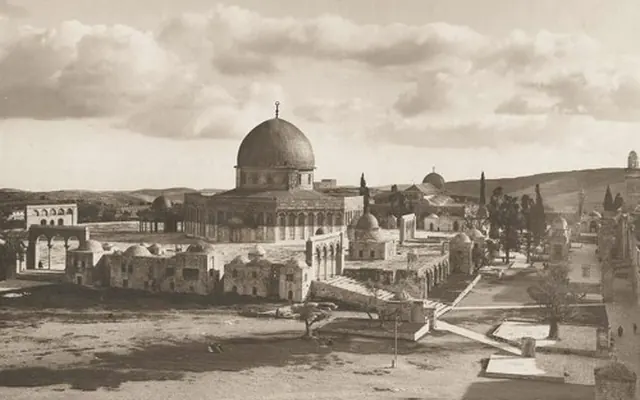
TJS S6E17 The Temple Mount part I - The Hinge Point
Every tale has a point around which it revolves, and for the Jewish Story that is the Temple Mount. Here is the opening round in a new series...
Play Episode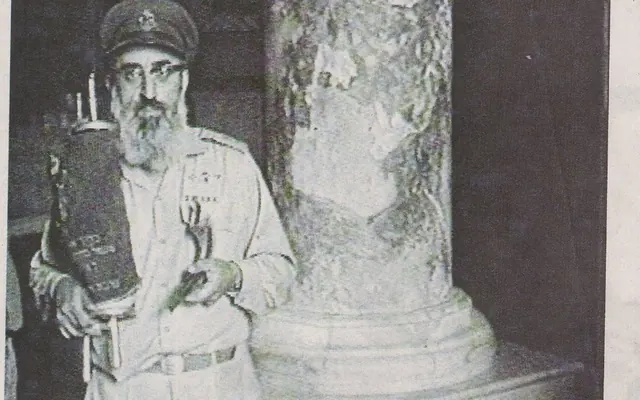
TJS S6E18 Temple Mount part 2 - The Status Quo
Should Jews be allowed to pray on the Temple Mount? Or will it inflame Muslim sensitivities? Learn the history of this debate from the Six Day War in...
Play Episode
TJS S6 Interlude - Future of American Zionism
Rav Mike Feuer speaks at Valley Beit Midrash in an event co-sponsored by Temple Chai entitled "Is There a Future for American Zionism? American Zionism in the Era...
Play Episode