
TJS S6 Interlude - Future of American Zionism
Rav Mike Feuer speaks at Valley Beit Midrash in an event co-sponsored by Temple Chai entitled "Is There a Future for American Zionism? American Zionism in the Era of the Ethnic State."
Image: Public Domain Dedication. Public Use Notice of Limitations: www.dvidshub.net/about/copyright
About this episode
Recorded live at Valley Beit Midrash, Rav Mike sets out to trace the evolution of American Zionism as both an idea and an institution, and he insists the real question is whether there is a future for people who call themselves American Zionists. He offers a working definition, Zionism as the movement for the national embodiment of the Jewish people, broad enough to hold the religious and the Marxist, specific enough because it is national. Before anything else he asks each listener to answer a question, am I a Zionist, and what does it mean to me, since we shy away from critical thinking about identity precisely when the world presses against it. Identity is a life and death issue. The people who flip Maslow's hierarchy, who must be who they are even at the cost of their lives, are the ones who make history, and American Zionism stands at a critical juncture.
A word on posture first. Zionism in America began as a radical fringe that ran against the mainstream idea of what it meant to be an American Jew, since a civil America welcomed the Jews as a religious community and the Reform movement at Pittsburgh in 1885 disavowed the national elements of Jewish life. That fringe is being pushed back to the margins today, and Rav Mike's counsel is to lean into it, since a movement that fights to keep its dominance loses the ideals that gave it power. The roots of a particularly American Zionism lie in the social justice frames of early twentieth century progressivism. Its iconic convert was Louis Brandeis, the people's lawyer, who discovered the Zionist ideal through the ethnos of immigrant laborers and taught that loyalty to America itself demands that each American Jew become a Zionist.
The less familiar figure is Horace Kallen, immigrant son of an Orthodox rabbi, who swam against the stream of his age. In his 1915 essay Democracy versus the Melting Pot he rejected assimilation, hearing America as a chorus of many voices and arguing that the purpose of a society's shared economic life is to foster the riches each ethnos brings, a tossed salad in place of a melting pot. He called it cultural pluralism, and it came decades before its time and grew directly out of his Zionism, his belief that the Jews as a free people could add a truer tone to the concert of human cultures. The institutional story runs through the Brandeis and Weizmann controversy over what the World Zionist Organization was, a sovereign body for a people without a state or a technical job to build a home in the land, a fight the Europeans won.
The birth of Israel in 1948 was a crisis for American Jews, since political Zionism had achieved its purpose and now a voice across the Atlantic called them home just as America threw its doors wide open. The Blaustein and Ben-Gurion controversy crystallized it, touched off by Weizmann speaking of one third of our nation annihilated and Ben-Gurion declaring that Israel gathers in the exiles. Jacob Blaustein heard an attempt to lump American Jews into a foreign nation and to drain their young core, and filed a formal complaint. The accord they reached was one people, two nations, each state speaking for its own citizens, and American Jewry fine where it is. On that foundation American Zionism rose toward near hegemony, its support for Israel conditioned on Israel being a liberal democracy that reflected American Jewish values.
That covenant has broken down, and Rav Mike reads it through the lens of couples counseling, de-escalation, rebuilding a shared language, and forming a new covenant, the way marriages do around seven to ten years when people have grown. The hard question is what it means to be an American Zionist in the age of the ethnic nation state, when many Israelis forced to choose between Jewish and democratic will say Jewish. His suggestions lean into the ecosystem model, helping Jews be proud and reviving the conversation about what an am is, naming the scarcity of identity that makes room for the other only by erasing him. He calls for educational renewal that reunites the portable homeland of text with the actual homeland, and finally for a hundred thousand American Jews to come home and become a bond between two halves of the people.
Key ideas
- Zionism is the movement for the national embodiment of the Jewish people, and the real question is whether there is a future for those who call themselves American Zionists.
- American Zionism began as a radical fringe against the mainstream idea of being an American Jew, and the counsel today is to lean back into that fringe.
- Its roots lie in social justice and cultural pluralism, carried by Brandeis, who called loyalty to America a demand to become a Zionist, and Kallen, who coined cultural pluralism out of his Zionism.
- The Blaustein and Ben-Gurion accord settled on one people and two nations, with American support for Israel conditioned on its being a liberal democracy.
- That broken covenant is rebuilt the way a marriage is, through de-escalation, a shared language, and a new covenant.
- Scarcity of identity makes room for the other only by erasing him, while an abundance of identity, rooted and strong, can receive him.
Chapters
- 0:00 Is there a future for American Zionism?
- 3:13 Defining Zionism; am I a Zionist?
- 4:21 Identity as a life and death issue
- 6:28 A radical fringe; Pittsburgh 1885
- 8:37 The roots in social justice; Brandeis
- 10:43 The people's lawyer discovers Zionism
- 12:50 Dual loyalty; a demand to become a Zionist
- 14:59 Horace Kallen swims upstream
- 17:09 Democracy versus the Melting Pot
- 20:25 Cultural pluralism out of Zionism
- 22:36 The Brandeis and Weizmann controversy
- 27:53 The birth of Israel; a crisis
- 30:08 Blaustein and Ben-Gurion; one-third of the nation
- 33:30 The ingathering bombshell; the accord
- 38:53 The broken covenant; de-escalation
- 41:01 The age of the ethnic state; coming home
Who, where and when
People
Louis Brandeis, Horace Kallen, David Ben-Gurion, Jacob Blaustein, Chaim Weizmann, Abraham Maslow
Places
Valley Beit Midrash, Phoenix, America, The land of Israel, Europe
Texts
Democracy versus the Melting Pot, The Pittsburgh Platform, The Blaustein-Ben-Gurion accord
When
1885 CE: the Pittsburgh Platform, 1915 CE: Democracy versus the Melting Pot, 1948 CE: the birth of Israel, 1950 CE: the Blaustein-Ben-Gurion accord, 1967 CE: the turning toward hegemony
Read the transcript
The following is a speech recorded last week live at Vali Beit Midrash, co-sponsored by Temple High, entitled, Is There a Future for American Judaism? I want to introduce our speaker for Tanakh, Rabbi Mike Foyer, is an educational entrepreneur, content creator, and spiritual counselor. phrases you didn't use like 40 years ago, who uses the power of story to teach and inspire. He's the host of the Jewish Story History Podcast, co-author of the Age of Prophecy Biblical Fantasy series, and offers narrative therapy to people around the world. No matter how Rev. Mike is engaged, his mission is always the same, telling a story of the past to uphold an identity in the present equipped to build the future of which we dream.
Please join me in welcoming Rabbi Mike Foyer. Okay, the funny thing is that you really said that you don't normally speak about Israel twice in the same month. I didn't actually come to speak about Israel. I came to speak about American Zionism. At heart, the question of whether the two are the same thing actually lies at the center of what I want to speak about Tanakh. You know, the question that we pose for the class is, is there a future for American Zionism? So I can get that out of the way right away and say, yes, everything has a future. Whether it's a good one or not is a different question, right? Everything has a future, even if that future is an end. There's nothing really that just simply ceases to be.
But really, what I want to do Tanakh is a little bit with you, trace the evolution of American science. Trace this evolution as both an idea, you might even say an ideal, and also as an institution, because those are very important. Like I was saying earlier during dinner, their ideas and the way they actually are manifest in the world, and to the extent that they map on one to the other, they're usually successful or less so. And I do want to say that sort of my general goal in the Jewish story, in the personal work I do with people, in all my creative content, is what I call narrative therapy for a nation. That there is a way in which we can tell a story without fudging the details or, God forbid, falsifying, but the way we frame the past is actually what upholds our present identity.
And I see at the core of the question of, sort of, is there a future for American Zionism? The question of, like, really, is there a future for people who call themselves American Zionists? American Zionism as a, it's big institutions, et cetera. That's its own question. I'm not here to talk about organizational development, et cetera. Right? But is there an identity out there? I am an American Zionist. which has a future. And then, of course, a lot of it depends on what type, sorry, a present, and that depends on what kind of future it envisions, both here in America, and, of course, the connection to Israel, inevitably so. And in order to do that, I have to give at least a working definition of Zionism, which, if you know anything about Jewish history, is a messy proposition.
But I'll give you this, is that to me, I consider it the movement for the national embodiment of the Jewish people. Movement for a national embodiment. I think broad enough because it's always been a tremendously diverse movement, broad enough to include the religious, the Marxist, and everything in between. At the same time, it's specific enough because it's national. There's some idea that beyond the personal, beyond the communal, beyond the sort of religious, sort of all-encompassing perspective of Torah, there's something called a national embodiment, and that's, of course, where things start to get edgy, especially today. Now, before we get started into my spiel, and like I said, what I'm going to do just methodologically is trace a little bit of the past, you know, of the evolution, use that to surface some of the questions that are pressing on present identity, and then at the end, depending on how much time, either during the talk or I'll wait until the question and answer to think about the future together.
But before we can do that, you all have to ask yourselves a question. And that question is, am I a Zionist? The answer, by the way, doesn't have to be yes. It doesn't mean if you say no, you get up and leave. But, you know, if we ask, if there's a future, we have to be willing to ask ourselves, am I an Zionist? What does that mean to me? There's a degree to which we all shy away from critical thinking when it comes to questions of identity. We get comfortable with who we are. We assume we know what that means. And when the world starts to press up against it, either we shut down and just do the fingers in the ears that we Zionist Jews are all really good at. No, no, I don't want to hear you. Or we drop things that perhaps actually matter to us because we don't know how to examine them critically and help them evolve into the present situation.
So you have to ask that question. Am I a Zionist? What does it mean to me? What does it ask of me? And what dimensions of my identity does it hold? So I really want to stress that one, is that identity questions are life and death. In general, in history, you can see it over and over. People are familiar with Maslow's hierarchy, just by show of hands. People heard of Maslow's, right, this basic idea that there are sort of like fundamental needs, then once you get those physical, physiological, fundamental needs, you can move on to sort of psychological needs that get met, or psycho-emotional, et cetera, et cetera. And at the top, what's at the top of Maslow's hierarchy? Self-actualization. I've got news for you.
It's the people who flip Maslow's hierarchy that make history. It's the people who absolutely must be who they are, even at the cost of their very lives, are the ones who actually make history. And that's what I mean when I say that identity is a life or death issue. It's not any critique of who, what, where, but just notice that. Maslow's right about daily life. But the reality is that most of our lives is not quite as daily as we might think. And the American Zionist movement, in my humble opinion, and I'm speaking to all of you out there, whoever you are, right, is at a critical juncture. And the last thing you want to do at a critical juncture is drift through without a little bit of critical thought.
So, okay, shall we? Before I go into the evolution, I want to say one word on posture, and it will really actually serve to start that. It's very important to remember that Zionism in America began as a radical fringe. Radical fringe. It was a small, and truth be told, ran against not just the mainstream institutionally, but the idea of what it meant to be an American Jew. If you look into the late 19th century, I'm not going to go into the whole history of American Judaism. You can look it up, or you can listen to my podcast back there in probably season two. But America, because of its very nature, is a civil state, and I'll have more to say about that, welcomed the Jews on a level which, historically speaking, we have never seen.
Welcomed us, not just as individuals, but even as a community, but primarily as a religious community. The idea of being a nasio, or an ethnic group, was not really there at the beginning. It was more like, you know, check your culture at the door, and join, as an individual, fine, but join the community. Furthermore, if you're familiar with the history of the Reform Movement in particular, which certainly in its early age might have gotten overtaken by the conservative movement at a certain point, but it was the core religious movement of American Jewry and the Pittsburgh Convention in 1885 which actively disavowed which was consistent with Reformed theology the national elements of Jewish life.
So therefore, Zionism as a movement for the national re-embodiment of the Jewish people was very fringe. Why am I mentioning that? Because it's being pushed back to the margins right now. And I've got news for you. If you want to survive as a Zionist, lean into that momentum. The time has come to go back to being a radical voice with a challenging vision for two reasons. Because you don't have to be a leather man to know which way the wind blows, right? And to fight against that is always a mistake. The other one is there's nothing worse than a movement that seeks to fight to maintain its dominance and hegemony because that's the fastest way to lose the ideals that gave it that very power to begin with.
Once you're fighting for position instead of for principles, the discussion is basically over when it comes to real contributions to life. So that's just a warning. Let's talk about the past. That's my strong suit anyway. So I want to make a contention that the conceptual roots, the ideal of a particularly American Zionism, are actually in the social justice and ethnic identity frames that were part and parcel of progressive early 20th century American thought. The progressive movement, today the word progressive has sort of come back into use in fashion, but the progressive movement of early 20th century America, it's a whole world. Which I say when you may go out there and learn about it if you don't know.
It's fascinating in and of itself. But when it comes to its intersection with Zionism, if I asked who was the most famous personality in the history of American Zionism, any votes? American, particularly American Zionism. It's so interesting. Brandeis, come on, people, you all got it wrong. I mean, that's the worst thing of a teacher. Like, you only get it right when you get my answer. Right? But certainly the iconic sort of convert, most famous convert in the early days to American Zionism was Louis Brandeis. And I say convert because that's a fascinating element of the history of early Zionism, is that people literally would, like, light up overnight with this idea, which was so radical. What is conversion other than the sense that you've stepped through a boundary into an entirely different way of knowing the world and knowing yourself?
And that's how radical Zionism was for Jews all over the world, and in America, no less so. So Brandeis, right, I hope people know, he was a son of what was called the second wave of American Jewish life, the classic aristocratic German Jews. People know American Jewish history. If not, it's not so important. But he was the essence, native-born, Kentucky of all places, right? He goes to Harvard Law School in 1876. There's a legend, by the way, that he graduated at the highest grade point average ever. I don't know if it's true, but they don't tell those stories about me, so we can assume he must have been an impressive student. I didn't go to Harvard even. But he rose to fame during the great labor battles of the early 20th century.
He became known as the people's lawyer. And, of course, is perhaps best known for his career on the American Supreme Court. He embodies the ideals of social justice, supremacy of law, democracy in its real American essence from the early 20th century. And discovered in 1912 or so the Zionist ideal. It's an interesting side note of American Jewish history, that he discovered the Zionist ideal working in the labor movement when he encountered the Jews of what's known as the third wave, the big two-plus million Jews who came from Central and Eastern Europe between 1880 and 1924. And he encountered these people as laborers, not as Jews. but he was blown away by the ethnos, by this sense of peoplehood, which was completely foreign to it.
Brandeis grew up in about as non-Jewish a fashion as a person could do by his own testimony. He had no connections to community, to synagogue, to anything other than sort of nominal identity, as we call it today. And yet, there he is in 1915, leading spokesman to the American Zionist movement, which sounds impressive until you realize that in 1915, the American Zionist movement was about this big. Right? But, you know, and I'll just give you some of these words from the 1950 Zionist convention to give you a sense of his belief. By battling for the Zionist cause, the American ideal of democracy, of social justice and liberty, will be given wider expression. And this is what I mean when I say that the ideological roots of an American Zionism are literally, as I said, in the social justice and liberty that were part and parcel of American society in the early 20th century.
And not only is there the positive side, Brandeis also was able to forge an American Zionism because he was able actually to counter, or at least deny the primary fear of all American Zionists, which is still there today, although much less so, and that is that they would be forced to choose. Forced to choose. Loyalty, he says, to America demands that each American Jew become a Zionist. Only through the ennobling effects of its strivings can we develop the best that is within us and give this country the full benefits of our great inheritance. It's a very interesting attempt to dance at two weddings. Only through becoming a Zionist, said Brandeis, will we, as a community of Jews, be able to give to America the greatness of our inheritance.
Because he understood that there was a level of communal organization, of national embodiment, where the individuals become more than the sum of their parts, that only such an organization could offer. So, like I said, the ideological roots of American Zionism, in this visionary liberal stance, an almost messianic belief also in the potential of human society, which is very important. I'm giving you these things because if you want to understand where you're headed, you have to understand where you're coming from. And the core fear is dual loyalty, both as its classic anti-Semitic charge. The Jews are always in it for themselves, and if you create a foreign country, they'll be in it for that foreign country.
That's got some old roots in the history of anti-Semitism, but also as a genuine conflict in identity and really a tear in the Jewish soul. I don't know if they do it anymore, but when I was growing up in the youth group that I was part of. It was a classic conversation. Are you a Jewish American or an American Jew? I think that's a bit passé today. They still do it? That doesn't mean it's not passé. I referred to you by earlier. Perhaps it's not really the important question. We'll come to that at the end. So I want to add one more piece to the early American history. A less familiar figure. Anybody heard of Horace Callen? Should I show a hand? Anybody? Bueller, Bueller, right? That's tragic. That is actually really tragic, and also, unfortunately, not surprising.
Who was Horace Callen? So, unlike Brandeis, the native son of America, he's the immigrant story. Horace Callen, son of an Orthodox rabbi. They came from Austria. He was five in 1887 when they came. So it was really the beginning of that whole sort of central-eastern European wave of Jewry. Also rose to the top. Oh, those Jews, right? He studied philosophy at Harvard under George Santayana, of those who don't recall history are doomed to repeat it. Fame, it was more than just a quote. He was an important philosopher. Was personally hired by Woodrow Wilson to be the first Jew to ever teach at Princeton. Ultimately went on to be a founding member of the New School for Social Research in New York City. Crucial time for America.
Early 20th century. Right? When the American voice, so to speak, its identity, was still indistinct. And what we're going to see is that Callan swam against the stream. And I would just say as an aside that that is actually the crucial Jewish posture, which is what makes it so difficult to build a Jewish state, by the way. I once had a friend who opened up a school for kids who didn't fit in other schools and was surprised when it fell apart. Right? So you take a people who have a 2,000-year history of swimming against the stream, and you put them all into one state, and you get hundreds of thousands of people in the streets every week when they don't like what the government did, which, in my humble opinion, is a good thing.
Whatever they're standing for. I'm not really interested in the issue. I want people that care enough to get out in the streets when they don't like what's happening. But I would say also this, is that history is a funny thing. that Jewish history is meant to be more than a subplot. You could say, here's European history, and there's a subplot that's Jewish history. The best way to illustrate it, actually, is the difference between women's history and feminist history. Women's history was presented as a subplot. Here's history, and here's where women showed up in history. Feminist history is a critical lens. How do I look at what you tell me is history through a lens of certain sort of intellectual, philosophical, theoretical constructs.
So Jewish history can function the same way. The question is, what's the critical lens? I've got the answer for you. I can tell you very simply is that the Jews are the insider-outsider, number one. Jews throughout history have risen to the top of societies, but have always, by choice or not, been held on the outside as well. Number two, you know the old saying that the victor writes history? The Jews are the exception to that rule. And those two things together offer a very important critical lens on the world story. But I digress, except to say that that was Callan's role. So Callan here is at the heart of academia in early 20th century. And he wrote a very important essay called Democracy vs. the Melting Pot in 1915.
And it's important to note that the melting pot was considered by American progressives at the time to be the essence of democracy. Get them in, melt them down from all over the world, and produce the scene called America. He says, our spirit is inarticulate, not a voice, but a chorus of many voices. He's speaking about America, each singing a rather different tune. How to get order out of this cacophony is the question for all those who are concerned about those things which alone justify wealth and power, concerned about justice, the arts, literature, philosophy, science. What must, what shall this cacophony become? America hasn't changed all that much, has it? But it's important, really, what his answer was.
Because Callen rejected what people at the time were calling the miracle of assimilation. This idea that there could or even would be a movement to melt down countless immigrants from all over the world and essentially make them into the sort of outlook and spirit of the original British colonists, even though that was never spoken outright. This idea that the melting pot was going to produce something wholly new was not entirely true. It was being melted into, not melted down. So he rejected that idea both as sort of anathema to democracy, that simply robbed people of their identity, was not going to serve that, but also as truly counterproductive. It's a great loss, in his eyes, to the American nation, the cultural pluralism which was available.
Now, I see people nodding, but we live in the 21st century. The idea of cultural pluralism in 1915 wasn't just foreign, it was absurd. In the idea, in the sort of eyes of most of the intellectual aristocracy of America. His whole idea is the common life of the commonwealth is political-economic. And serves as the foundation and background for the realization of a distinctive individuality of each nasio, by which he means like an ethnic group, that composes it. Meaning what? Society is social economic infrastructure. And the whole purpose of that society is to foster the riches that cultural diversity offers, not to rely on assimilation, right? You're not looking for one voice. You're looking for a symphony.
So the cacophony that he was experiencing was because there needs to be some sort of working out of a modus vivendi, of how to live together. But the goal is not actually monotone. And he called it, as I said, cultural pluralism, which we know today. Horace Callan created in the history of American academics the idea of cultural pluralism what became known as the tossed salad as opposed to the melting pot And it only came into fashion of course 50 years after Callan advocated for it And what important to me that you know is that it was a product of his Zionism. How could that be? Well, the answer actually is quite clear. He says Zionism is the solution of the Jewish problem. This is 1910, before he wrote Democracy vs.
the Melting Pot. Because if the past is any warrant for the future, Oh, there is every reason to believe that with the Jews as a free people in Palestine or elsewhere, notice he was a territorialist, not necessarily a Zionist, just the Jews as a free people, that unique note which is designated in Hebraism has a chance to assume a more sustained, clearer, and truer tone in the concert of human cultures and may genuinely enrich the harmony of civilization, meaning as in the nation, so in the world. that for the Jews to have a place where we could be a people amongst other peoples is part of his vision for the world just as for the Jews to have an ethnic identity within a nation which fosters cultural pluralism will create a symphony with a nation, so too within the world.
And his Zionism preceded his notion of cultural pluralism. So aside from sort of general knowledge, again, I'm stressing to you that the roots of a particularly American Zionism are in social justice, the democratic ideal, and cultural pluralism. Things that I think it's a little sad to say. Many people do not associate with Zionism, at least in its mainstream manifestations, today. Quick word on the institutional evolution, because I said we're talking about the ideal and the reality. There's a classic incident in American Zionism, which really set the mold for many of the things that we see today. And it's known as the Brandeis-Weizman controversy. You always have to have a good title in history, otherwise people aren't paying attention.
If you really want the full story, I'll just plug, go to Jewish Story. You can find it. I think I wrote down Season 3, Episode 2, for those of you who are really paying attention. But, you know, it was a breakdown between U.S. and European Zionist leaders that actually led for the Europeans to become the head of the World Zionist Organization, which ultimately meant of the movement and the state of Israel. That's kind of the way that evolution happened. I'm not going to drag you through the details, but you just know the core issue at hand was really about what was the World Zionist Organization. Anybody remember the World Zionist Organization today? It's still around. Live and well, it has the World Zionist Congress, I think it calls itself today.
In my humble opinion, this is a side note, a very important institution in today's discourse. because it's a non-national, people-wide forum. And therefore opens up, as we'll get to at the end, some of the potential for a level of discourse and activism which isn't intrinsically bound up with the nation-state. Not that I'm opposed to the nation-state, I'll just say it now. I'm a happy nationalist. But it's not, I would say, a necessary but insufficient element for what it is we are as a people. But we'll get there. So, but what was the Weizmann-Brandeis controversy? Well, like I said, in a nutshell, it was over what was the WZO? What was the World Zionist Organization meant to be? To the Europeans, it was the sovereign body, the people who didn't have a state.
The Europeans saw no future. European Zionists saw no future for themselves in Europe. Now, remember, of course, European Zionists, like American Zionists, in 1920, were a small radical fringe. Biggest Jewish organization pre-World War II in Europe, anybody know? What? The Bund! And they were far from Zionists. Right? Unfortunately, they were also wholesale slaughtered. But nonetheless, the European Zionists saw no future for the Jews in Europe, and therefore saw no need for any organic local organization. And that's why the WZO was, in their eyes, a sovereign body of the people who didn't have yet a state. Of course, whether that sovereign body actually represented the people, that's an interesting history of Zionism in and of itself.
However, the Americans saw it in no way or shape or form the same thing. It was an institution whose purpose was to build a Jewish home in the land of Israel. It was a techni in Hebrew. It was a technical job. You had one job. One job, which is part of the problem. Because when that job was filled, then why do you still exist? We'll come to that question, too, right? But you can see the very big difference. Because in America, there was something called the American Jewish Congress, which had come into being in 1918, which, if there were any contender for a genuine voice of sovereign American Jewry, that was it. There are other institutions, but so the Americans in no way saw the WZO as sort of the sovereign body of a Jewish people.
There was a whole fight there. I'm not going to drag you through it. Of course, it also had to do a lot with very different attitudes, you know, because Brandeis was, as every good progressive was, a deep believer in administration and proper financial dealings, etc. The Europeans were, let's say, less concerned. with those things. I don't know if you know how the country runs today, but they won on that one, too. Okay, so what's the takeaway from this sort of very brief historical review? It's number one, core values of an American Zionism are social justice, democratic society, and cultural pluralism. Which means if there is a future, it can only, for American Zionism, it can only grow out of that past.
I mean, it can become a different thing, but if you want a future for American Zionism, That's where your resources are in ideal. Also very important to note, in terms of this question of dual loyalty, etc., is that historically speaking, American Jews have never seen, American Zionists even, have not seen themselves as being in exile. So we like to soften that word and call it diaspora. But I'll give you a working definition. Exile is the belief that I belong somewhere else. Really, in a nutshell, that's all it is. Right? You guys, it's probably true in Phoenix and Scottsdale like it is in Florida. You meet a New Yorker in Florida, and you say, where are you from? They say, New York. How long have you lived here?
25 years. They're in exile. So the Jews, wherever we have gone, for most of our history, have had this story that we don't belong here. In America, as in other places, but in America, there's a core element of the American Jewish story, which just simply rejects that. We do belong here. Now Brandeis and Callen had their ways that they felt that they could reconcile. Being a Zionist, committed to the national embodiment of the Jewish people, and an American. But just understand that that tension is there at the base. And that's why the history of American Zionism is oriented toward building a home for the Jews in Israel, not what Zionists called the negation of exile which is going to lead me to the next piece I'm going to save if there are clarification questions if I lose anyone you can ask me now but otherwise I'm going to save the time for the engagement at the end we good?
yeah K-A-L-L-E-N Horace Ellen highly worthwhile he's got some great essays I didn't actually give you my email but rovmike.com you can reach out to me I'm happy to share essays and stuff that I have with you. Okay, so scrolling forward in our time, I'm not going to trace the entire history of Zionism from 1920 to 1948, but let's just say that the birth of Israel was a major crisis for Jews all over the world, and U.S. Jews probably more than most. There was a bell curve distribution at that point amongst American Jewry when it came to Zionism. There was a small, active group who were passionately Zionist. There was a vast bulk that were sort of non-Zionist, meaning they weren't opposed, but they weren't card-carrying members.
And then there was a small, active group of anti-Zionists. It's important to know that, by the way, because today a lot of people get very edgy when you talk about American anti-Zionism. American anti-Zionism is just as dyed-in-the-wool American Jewish as American Zionism. That doesn't mean you have to like it, you don't have to accept it, but you should understand, it is not a new or foreign element to American Judaism. It is an old and venerable one. You can take your pick on what you think about it. So the crisis is basically we've achieved our purpose. Do we now fold up shop and stop being Zionists? Do we fold up shop and go to this state that we just helped build? What exactly do we do as a movement?
In a certain way, political Zionism achieved its purpose in 1948 and should have shut down. If you know anything about the history of Zionism and its relationship to the state of Israel, It was a very rocky decade when it came to that question. And here, in the most profound sense, there was an identity issue at the core. Just at the moment that American Jew is hitting its stride, the doors post-war were being thrown literally economically and socially wide open to the Jews. Yes, anti-Semitism was a reality in American history. Yes, but it just pales in comparison to anywhere else in world history, right? America opened its doors happily to the Jews. And then just at that moment, there's this sort of trumpeting voice from across the Atlantic saying, come home, you don't belong there, come home.
And the last thing American Jews, and even American Zionists wanted, was to be considered as a foreign people. And this led to another controversy. We're Jews after all, aren't we? This one's known as the Blaustein-Ben-Gurion controversy. I'll just keep giving these taglines. So who was, we all know who David Ben-Gurion was, of course, famously, the old man. father of the state, the guy who does handstands on the beach in Tel Aviv. You can take a pic of your image. Jacob Blaustein is less well-known. He was the president of the American Jewish Committee. Not to be confused with the American Jewish Congress. What is it with the Jews and acronyms? I'm not sure. We can talk about it later. But he was probably the most powerful Jew in America at the point that the state of Israel was born.
And this controversy was touched off by two speeches. One speech was given by Chaim Weizman, president of the new state of Israel, at the Constituent Assembly in 1949, when he made this seemingly simple and tragic statement that by all the hardships, weariness, and sorrow in tribulations have been our portion during the last 70 years when one-third of our nation was annihilated. I won't ask by raise of hands, but how many people think one-third of our nation was annihilated in the Holocaust? wait, wait, what could possibly be controversial about that, right? It's the difference between one-third of the Jews and one-third of our nation. See, because when Chaim Weissman said that, he meant it as our nation.
And when Jacob Blaustin heard it, he understood that. And he said, whoa, whoa, whoa, whoa. The Jews, your nation, the Jews, right? You are a nation-state. We are American citizens. We have this weird relationship that we're also one people, right? Okay, that was edgy, and he actually, by the way, filed a formal complaint with the Israeli ambassador, lest you think that this was just like sort of backroom mutterings. By the way, you think that the American Jewish and Israeli communal controversies today are hot? Nothing. I'm telling you people, nothing compared to the 50s. Don't be afraid. Where we are right now in history and all the difficulties and the tensions are nothing new. You know some Jews, I'm guessing.
Communal battles are nothing new. And so long as they are honest and driven by something other than personal self-interest, which is a big challenge, right? Then they're generally productive. At the very least, they're not destructive. You had a clarification question? Jacob Blaustein. So anyway, Blaustein, you know, as I said, he asserted to the ambassador, the Israeli government speaks only for its citizens, and the Jews of other countries are not part of the citizens of that nation. It should have been one-third of the Jews, not the nation. It may sound like hair-splitting, but not in 1949. Also, I said that there's this core principle historically of Zionism, what's known as Shlilat HaGalut, the negation of exile.
And that has a vast literature. It's very interesting. It could be physically, let's get out of exile and go back to the land of Israel. It could be the old, you can take the Jew out of exile. Can you take the exile out of the Jew? This whole new Jew concept that there was something that was meant to come, something which is worth considering. we'll get to that when we get to the close. But the real bombshell that led to the breakdown and reformation of a relationship was when Ben-Gurion in 1949 got up and declared that Israel promotes the ingathering of the exiles from their dispersion. Again, this is like bread and butter. Of course the Israelis think everyone should move here. But this was an explosion.
It's one thing to be lumped into another nation state as like foreign citizens and that's edgy for Americans. It's another thing to have that nation state actively calling to gut your young, active, intelligent, engaged core, just as America is throwing its doors wide open to Jewish life, this we cannot have. And so there was a near breakdown, and not a small thing when you consider the history of political, financial, moral, emotional, psychological support that American Jewry has given to the state of Israel. It was a near breakdown. And Blaustein, if Blaustein had turned and said, we'll have nothing to do with the state of Israel anymore, history would be very different today. What would it be?
I don't know. I don't play the what-if history game. Like in Palms, it would be very different. Right? And so therefore, they literally had a formal exchange of letters. Blaustein came to Israel nominally on a, you know, like a federation tour. Like, basically. I mean, there wasn't a federation yet, but you get my point. But he, it was a formal exchange of speeches and letters with Ben-Gurion. I'm not going to sort of drag you through the details of what they said, but the agreement was basically one people, two nations. one people, we're in it together, but the state of Israel speaks for its citizens, American Jewry speaks for its citizens, and each nation's state will do what it does, number one. Number two, the American Jewry is just fine where it is.
We love to have you here if you want to come, but we're not going to try to drag you across the ocean. This was known as, actually, the Blaustein-Ben-Gurian Agreement, or a cord is a very important moment because it really opened the door for a very powerful, lasting relationship and for the rise of American Zionism, not just to the mainstream, but almost to hegemony. I'm not going to trace the whole history, but from between the turning point in 1967 and then 1973, there was a point at which probably 95% of American Jews would have identified themselves as Zionists. and even those numbers have surely fallen by then, it's still well more than half. That's a pretty amazing shift from a radical fringe movement that was going not just on the fringe, but against many of the principles of American Jewish history.
Now, one of the ways it happened, and this is very important for the present discussion, is that there was a not-so-subtle conditionality in American Jewish support for Israel. And that was that Israel is a stronghold of democracy in an area where liberal democracy is practically unknown. Is that Blaustein made it very explicit that in order for American Jewry to support Israel, Israel had to be reflective of the values of American Jewry, which I just pointed out to you, were social justice, liberal democracy, and cultural pluralism. Now, whether Israel really was in the 1950s is an important and interesting question. By the way, spoiler, the answer is no. But relative to its surroundings, yes. And the question also was whether that's a legitimate conditionality, meaning like, well, how come you're only going to support us if?
You know what the answer to that question is? That's called relationships. Everybody supports each other if. There are very few unconditional relationships in life. And on that note, what I want to do is touch the takeaways, and then we'll move sort of a little bit into the more present and future. So what's the takeaways? first of all, to add to the core roots of American Zionism, that once the state was born, its support for Israel was all but explicitly contingent on the idea of being a liberal democratic nation. Dare I say, a light unto the Middle East. Right? It was at the base. And foundational also in American Jewish education, Zionism became core. I mean, how many people here feel like they had a Zionist, significant Zionist element in their Jewish education growing up?
Right? They, right, if we hit my demographic, I promise you, with the exception, maybe the exception of the Orthodox world, it's every single one. That was all we did. We used to eat carob on two beshvots. And, of course, what happened to American Zionism practically, it evolved into not just an educational force, but the Israel lobby, quote-unquote, with a very important social and political force that has maintained, notice, a core relationship of values. Not crass political utilitarianism, but liberal American values shared. We speak about this language, and it's not just propaganda, but it's being challenged today. One way or another, this covenant has broken down. One way or another. You can blame whoever you want.
You can say why it's broken down, but we see today in the press, we see in more personal settings, this covenant between American Jewry, American Zionist Jewry even, right? And the State of Israel has broken down. I do couples counseling, and one of the things that I work on, one of the models I work on, is that when things break down, there are three steps, right? First, de-escalation, which, by the way, I would just give you as a general rule, right? The actions are always encouraged. Conversation preventing, rarely so. Right? We all have that urge to, like... And I get it. Actions, and I really, to be honest, I don't care what your actions are. Whatever your policies are, actions toward a better world, better relationship, always worthwhile.
May not be successful, but always worthwhile. Very rarely is this good. So de-escalation. Rebuilding communication. There are constructive contexts. And that's, by the way, rebuilding a shared language, which is much of what it is that needs to be done. is that there's a language which is tired and really no longer applicable so much to what does it mean, like I said, to be a Zionist. What does the state of Israel mean to American Jewry? Who needs who? And that leads to the third piece. Once you can de-escalate and begin to rebuild communication, a new shared language, then there becomes a new covenant. You see this a lot in marriages around seven to ten years. People get married on an assumption of who I am, who you are, who we are together.
That assumption is generally, if people think about it, it's reasonable. But people change. People grow. You wouldn't want to be married and not change and grow. But that means that there's a time in which there might be a need to form a new covenant. It could be something as simple as, yeah, I thought I wanted to stay home, and now I want to work. Or it could be something as simple as, right, well, I thought I was religious and I was not. We could go wherever it is. People change. And if they don't, there's usually something wrong. But change is frightening and threatening, and things are changing in the world today. Therefore, there's a need for a new covenant. And that kind of brings us to the last piece.
You guys still with me? All right, yawn if you're having fun. All right. You know, the original title I wanted to give for this was From Ben-Gurion to Ben-Gvir, which I think is catchy, but for whatever reason, it didn't fly. But instead, what we ended up with is this question of whether American Zionism in the age of the ethnic state. Now, for many people, that's a scary term. Ooh, he said the E word, right? As a point of information, the difference between a civic nation state and an ethnic nation state is worth understanding, because the civic nation state is a rare beast In fact I can think of two really one and a half The prime civic nation state in world history is the United States of America A country which, with all of its flaws and its difficult history, which is true of every country, has succeeded in creating a nation which doesn't have an ethnos.
There's no core people that everybody's trying to be. Obviously, there's tension there, but that has really succeeded in melding a society. Israel lies somewhere between. An ethnic nation-state, right, let's just go with the French. Everybody loves the French, right? Meaning, they're the French people. It doesn't mean you can't be a French citizen, but France is struggling with this, like many other countries in Europe. But essentially, there is a culture, a language. Even though it's a secular state, there's still a core religion. There is obviously a culture, which they're quite proud of, if you haven't noticed. And often these things are even enshrined in law. I mean, you know, there are dozens, literally dozens of states around the world which enshrine their religion in law.
It's, by the way, noteworthy that when Israel does such things, it becomes a source of world controversy. That's a discussion for another time, but worthy of note. The essential difference between an ethnic nation-state and a civic nation-state is that an ethnic nation-state assumes that there's a people which lies at the base of the state. and there's always going to be a negotiation between sort of non-peoplehood and the citizen and the state, et cetera. And a civic nation state assumes that the citizen stands vis-a-vis the state and there is no ethnic group which has that sort of middle space. Now, I should also say, because it's important to understand, that in the world as a whole, law and narrative coexist.
There is no law without a story to support it because then it's simply power, and there is no story without law to sort of make it real in the world because then it's just a fairy tale. This is why the Torah presents itself as it does. There's a strange mix of law and narrative, rabbinic law, and it's not a Jewish thing. You can find it everywhere. Here in America, in a nutshell, the way I understand many of the social breakdowns that America faces is that the stories that bound Americans together are dead. What you're left with is a law that people are trying to protect their individual rights from each other's competing stories. That's obviously a gross, oversimplification. But it's worth thinking about.
The relationship between law and in Israel today, the fight that you see on the streets, and by the way, the struggle of liberal American Zionists within their own hearts, is about that balance of power and law. What's the story of the state of Israel? And that's good. It's good news for the movement. It's good news for the Jews. but it's also a little bit frightening. First of all, it's important to note, now moving a little bit toward the future, is that there is no sacred status to the Zionist movement. Sacred status. Every movement has an arc of development. And the reality is, the answer to what is the future of American Zionism might be so long and thanks for all the fish, if you get the reference.
Meaning, we did it. And we're happy now. And let's think of a way, if we have energy and things we want to contribute and things we want to do in the world of reorganizing. And if I'm not willing to reorganize, then maybe I have to ask myself whether I really have the energy. But really, the last piece is, since there is this notion of American Zionist, remember where we started, asking yourself, am I a Zionist? What does that mean to me? What does it ask of me? And to my opinion, that is the most important question. What does it ask of me? Because the things that don't ask anything of us aren't actually so crucial to us. they're nice they may be comforting and warm but they're not the things that shape our lives so first of all what does it mean to be an American Zionist in this age of the ethnic nation state when a big portion of Israeli society has begun to both in its electoral power and its cultural power begin to say it's forced to choose between Jewish and democratic even though in my opinion, the discourse around both is thin to the point of absurdity.
But if forced to choose between Jewish and democratic, a lot of Israelis today will tell you, Jewish. So what does it mean to be an American? And that Judaism has a tribal and somewhat edgy element to it. We could go into the history of trauma. We could talk about the difficulties of living in the Middle East. We could also talk about the very real demands of Torah and the boundaries of community, as I mentioned in the devar tour I gave earlier. But in the simplest sense, it's an identity which doesn't jive easily with American Zionism, as I presented it to you. You guys follow the challenge there? So that's why the question is, what does it mean to be an American Zionist in the era of the ethnic state?
So I'm going to give a few suggestions, and then I'll open up for questions. First of all, back to this idea of posture. Don't be afraid. Don't be afraid. This is not an unprecedented breakdown. Not in communal affairs, not in interpersonal. The same issues that we have been there since the beginning, at the center of the question of Jewish national rebirth, are coming to the fore again. And that's good. That is good. And I'll just say that you need to be radical in your response, in both thought and deed. so what do I mean by the way I didn't explain that same issues coming to the fore just lost my thread I skipped the line that's very challenging yeah it has to do with the fact that we're all attached to what is right whether it's where I live whether it's how much energy I expend on things outside of making a living and taking care of my family whether it's my willingness to stand up and identify as something which people might challenge.
Right? The extent that I'm willing to assert my beliefs through actions in ways which might make me uncomfortable, might make me stand out from the crowd, if that's enough of an answer. Challenging sacred truths. Right? But I will get more into the details of it. Maybe I should stick with the list, and that will help with clarity of thought. So, the message of Horace Callen and Lewis Brandeis, I think, as American Zionists, is to lean into what you might call the ecosystem model of society. That cultural pluralism is a critical element of a healthy society. Now, here in America, that means helping Jews be proud of being Jewish, which is not simple. I don't have to tell you. Not simple. And get a little bit to how that looks educationally.
And in Israel, I would say it's helping to hold that tension between ethnic nation-state and civil nation-state. How is it possible to be Jews, to be proud of Jews, to have strong Jewish identity, and yet to receive others? I got news for you, by the way, in general, a strong identity helps us receive others. There's a notion called scarcity of identity, which deserves to be explained at length, but I'm going to give you an operating definition now so you can take it with you. What's scarcity of identity? It's when I have a sense of self which can't include you. In fact, in order for me to be me, you can't be you. You see this a lot in the who's a Jew question. Right? If my definition of Jew is fill in the blank, and you don't fit it, and you call yourself a Jew, that's a zero-sum bargain, right?
Wait, if you're a Jew, then I'm not. I'll be even more obvious. When it comes to Palestinian national identity and Israeli national identity, that is a tragic scarcity situation. For the average Israeli, who's secular, sort of nationally attached, et cetera, to say that 1948 was a Nakba, was a disaster, is to undermine their entire narrative. I've got news to you. For a person who understands Jewish history, it's a lot easier to say, wow, yeah, I bet that was tragic for you when we came in and fought a war and we won our homeland. Sounds like a disaster. They're very different attitudes. Because it doesn't completely undermine the identity. And so therefore, the stronger ethnic depth of identity is able in many ways to, it doesn't have to agree, but to receive, to hear and say, oh, you're you.
Interesting. There's an abundance of identity, which happens when you have real cultural pluralism. And I think that it's something American Zionism has the potential to really reawaken both here and in Israel. Another critical piece is that American Zionists need to lead the fight in reviving the question, the conversation even, of what is an am. In many ways, that's another definition of Zionism. Zionism was a prolonged conversation about what is an am. Picture this table. It's much bigger, and it's full of every kind of Zionists you can picture. From the messianic religious to the sort of materialistic Marxists, everything in between, they're all sitting around, a bunch of Jews, they're shouting at each other, They're throwing the chalk there.
And all of a sudden, you know what happens? You know what that is? Get on the boat, or your future is over. That was Europe in the 30s. And most of them didn't. And the conversation kind of ended. Because what replaced it was a nation-state. And the question of what it meant to be an arm was replaced by build, build, build, fight, fight, fight, defend, defend, grow, grow, grow, the necessities of lived reality. Right? remember I pointed out to you that American Judaism and American Zionism were a little bit different because American Jews found a growth medium, so to speak, which was safe and inviting. But that conversation about what it means to be an am, to be a people, as opposed to be a nation state, or a le'um in Hebrew, you know, nasio.
That's an important conversation. It's one which can be very productive as Zionists. And I think American Jews have a lot to say it. There's a lot of other details here, but maybe I'll leave them. The last one, last two, I would say, is educational renewal. I have a lot of friends who are sort of involved in education here in America, Jewish education I'm speaking about specifically, and everybody's talking about a crisis. I don't know if you guys experience it in your communities, but there is a crisis of motivated teachers, there's a crisis of students showing up in the schools. It depends on who you ask what the crisis is. Everybody has a sense that things aren't working. Well, you know, the reality is that's a tremendous opportunity.
And it could be that to be an American Zionist is to renew, help to renew Jewish education, reinvigorating the focus, the structures, the content, healing the rift between Zionism and Judaism in that unique, diverse fashion that only American Jewry has. The engagement of Torah in so many different ways, which is something I think that Israel needs. There's a very limited spectrum at which Israelis even understand what it means to engage Torah. There's something called the portable homeland. There's 2,500 years of textual, intellectual, spiritual tradition, which is the homeland within which Jews live, which unfortunately Zionism largely put to the side in order to construct a physical homeland. I think American Zionists have a tremendous potential for renewing locally education in America, but also being part of renewing that in Israel by bringing back together the portable and the actual homeland.
Last but not least, it has to be said that the number one thing I think that American Zionists need to consider is finally deciding to come home. When you look at what's happening in Israel today, and a lot of American Jews, I know, a lot of committed American Zionists, I know, are very alarmed by what's happening today. I've got news for you. 100,000 American Jews could cause a revolution in Israel. It could potentially change the world. 100,000 American Jews committed to a constitutional sovereign state who understand the tension between what it is to be an ethnos and what it is to build a civil state, who have a political tradition of law. 100,000 American Jews who decide that their Zionism has now pushed them to put roots in a foreign country, and it is foreign.
Trust me, I know you've been there, but it only gets more foreign the longer you last. But that's the last thing I would say, and I really think it's important to note that in today's world, those 100,000 Jews, it's not like it used to be where you leave everything behind. Those 100,000 Jews become a bridgehead, even better. They become a bond. to reattach what are at least numerically two halves of the people and allow a nation to exist in a way in which perhaps we haven't seen. So that's my presentation on where I think the evolution of American Zionism is going. Happy to hear questions, comments, especially criticism. I welcome it all. Like I said, I have five kids. I'm used to it. Sure. Please. My name is Hannah, and thank you for your presentation.
Welcome, Khanna. So what is going to happen? Forget about the Americans who are coming there. What's going to happen to Israelis who are not going to become named here? And they are still the ones going to the army. They are not going to go to the army. There is no space. So what is Israel going to do about it? Forget about what American are all about. call him a white supremacist, but, right? There's a lot. So part of what's going to happen is there's an evolution of Israeli society right now. He's Kordi. He's from Kurdistan, his family. Meaning there's this sort of like white supremacist narrative that's kind of been crafted out there. There's a lot going on there, and I would encourage people to learn as much as they can.
But your question's a good question, because you are correct. A lot of what's happening in Israel today is a fear that the identity of a secular Israel in which individual rights, and this is a key piece, in which individual rights are sacred, is being threatened by a collectivist identity stance. So one answer is, we'll work it out. I have a lot of faith. It's scary, trust me. I have a big thought. Uh-huh. I think that's unfortunate and it's a product of media. I think your son would love Tel Aviv. I think your son would love Jerusalem. I have gay religious friends in Jerusalem. Jerusalem is one of the homes of, it's probably the home of the most vibrant gay religious community in the world. Which is not to say Israel, listen, I'm not here to blow smoke at anybody.
The challenges that we're touching on are raw challenges. Because they're identity challenges. but the reality is that when you see hundreds of thousands of people in the streets on both sides of this issue it's because people understand the time has come to begin to lay down some principles under which we can all operate right that being said the particular issue of the LGBTQ what's interesting is that most Israelis and this is true with the exception of perhaps the Kharitian world and I don't really trust polls when it comes to the Kharitian world most Israelis are socially very liberal. But what's going to happen within Israel? The number one answer is that there's a new identity, which is emerging.
And there's always a negotiation process. The real question is, how much will be protected in law? Protected in law. I am a believer that the time has come for a constitution, to set the rules of the game, so that people don't have to worry. That if my identity conflicts with your identity, fine. We can duke it out in the Beit Midrash, we can duke it out in the streets, but we're not in the courts. Because that has been decided, that there are laws and protective rights, etc. What's the intersection, and we've been talking about the internal discussion of identity. How does that intersect with the question of Arabs and Jews, Palestinians and the Israeli nations? So it's a great question. It's a big one.
I'll offer a couple things. First of all, there's a paucity of creative thinking, which leads people into very sort of narrow solutions. One state, two states. If something as profound but as simple as moving toward a geographic voting distribution in Israel. No, no, geographic vote. Like if you broke Israel into 12 voting districts, just to pull a Jewish number. And you put them north. sorry, East-West, including Yudan Jomom, the so-called West Bank, right? A new type of politics would emerge. If you had to get elected in an electoral district that included Farzaba and Tulkarm, you would see a very different type of politics that would emerge, right? So, meaning, my point is not for that specific solution.
Number one is creativity. Number two, there's an important question in when it comes to the layers of sovereignty, right? Meaning there's a Palestinian identity, which at this point, in my humble opinion, deserves cultural sovereignty. It needs to be able to tell its story. It needs to be able to tell it in a way in which isn't sort of actively destructive. But you can't destroy a story. It doesn't work. That's also related to economic sovereignty. People experience their personal liberties, usually economically speaking. like freedom of movement freedom of contract etc I mean I got news not that I'm here to defend one side or the other but there's an equal fear on the other side that the Zionist story is just as much from the river and the sea.
You ask me I'll tell you it actually goes to the Transjordanian ridge but there are ways in creative thinking but again I would say that there's time has come for constitutionality and a level of discussion that allows the creation of a playing field where these questions can really be dealt with instead of sort of superficial political interests. I have so many questions, so I'm just going to let it out. What do you think is the most charitable interpretation of the judicial overall? The most what? Most charitable. Charitable. Interpretation of the voters of the judicial overall? And what do you think is the least charitable? Sure. Roe's charitable interpretation is that the Israeli Supreme Court is completely unrestrained by any structure of law.
When it comes to questions of judiciability, what sort of questions the court weighs in on, when it comes to questions of standing, they're completely undefined, which means the court basically appoints itself as having power in realms in which it was never conceived to do. Historically speaking, for good historical reasons, the court has become the bastion of very specific political, cultural, far-left, individualist, secular, right? And it's problematic when you have an institution which is unrestrained and reflective of a specific sector of society, which, by the way, a specific sector of society which has repeatedly showed itself unable to gather electoral power. My charitable interpretation would be you can't have a court that basically controls the country on behalf of a diminishing part of its electorate as a rearguard action because they used to control everything.
And so therefore the overhaul is can we actually come back to a sense of balance of power An uncharitable tradition is quite easy which is that you have specific politicians with gross personal interests who are looking to not only protect those interests, but harness more power. And those two don't contradict. And that's actually why there's a problem happening right now. Because they're actually quite powerful bedfellows. What would a constitution look like? And your concern is that from the roots of what I've traced in the American sort of liberal Zionist social vision, it wouldn't necessarily look so. One thing I would say is that you're entirely correct that a constitution is what it is. I hear a lot of noise rumblings beginning in the American press from the more progressive liberal side of the world of how could you begin to change the American constitution.
Remember, if you actually manage to pull together a constitutional convention in America, everything's on the table. And there's no guarantees what it'll look like when you're done. That's what a constitution is, number one, which might be just fine. I mean, let's remember. Listen, if the majority of the society, and this is very important for American Zionists in particular to remember, if the majority of the citizens of the state of Israel decide that this is the way they want to create, and when it comes to a constitution, we're dealing with more than a simple majority in my mind, that this is the way we want to run our country, then that's the way it's going to be. and then American Zionists will make a decision.
And it's legitimate to say, that's the way you want it to be. I don't want any more part of this. It would be tragic, but it's reasonable. I would say the more Jewish response is constructive conflict. What we call machlugat l'shem shemayim. No, no, we're going to fight. We're going to fight this with love, we're going to fight it fiercely, and I would strongly encourage that. But what does it actually look like? I'll tell you this. I didn't say it specifically, but another thing an American Zionist could do, and this is something to do right now, is go set up shop in front of the Knesset. Could you imagine if the American Zionist movement made a commitment to have a hundred people sitting in a tent until the Constitution was written?
A hundred American Zionists who were able to talk to a spectrum of Israelis, which Israelis have a very hard time doing. Get a hundred American Zionists, big tent Zionism. From, like, Habonim Djor, far left, to the sort of B'nai Kiva right wing, an agreement amongst them that they don't necessarily agree on principles, but what they agree on is that there's a conversation which must happen. Because the constitutional process is just as important as the product. Right? And that's something that I think Israeli society is even in more need of. Is that, you know, so, like, I would say it's a specific thing. Here you go, Rushmore, here's your next project. Right? You know, a tent in front of the Knesset with a commitment by the entire, the entire American Zionist movement can't muster up a hundred people to sit there for six months in rotating bases.
And if I offered you three weeks in Israel to sit in a tent in Jerusalem every day, I think a lot of Jews would jump at it. But that would make a difference because American Zionists offer a tradition to commitment to certain values, understanding of law and democracy, and a care which is a little bit removed from the street battle level concern that Israelis feel. You spoke a lot about American Zionism. and a lot of people in our generation consider ourselves American Zionists, but we're concerned that our kids and our grandkids see Israel as an authoritarian state, and I don't know how we can win back our kids and our grandkids to the idealism of Israel. Because we were raised, oh, it's the democracy deep in the Middle East, it's a wonderful place, place.
Everything is terrific. And it's not perfect. It's not perfect anyway. But I don't know how you went and you've got, we have division, we have Jews, American Jews that Judaism is questioned by question whether somebody said who is a Jew. These are big issues and these are issues that our kids and our grandkids say, we don't want anything to do with it. So do you have any suggestions way at all, because we're not going to be around forever, and how do we get the next generation, is there any way to get the next generation more involved? How do we cross the generation gap? There's a divide between certain generations that were raised with an idealist stance on Israel, it was an assumption, right, to the younger generations, which certainly don't take it for granted, and I would add, are subject to a narrative onslaught.
There was a narrative war going on, to borrow a phrase of my good friend Yitzhak Fleischer, and it's not a small part of the challenge that younger generations face, is that it is sophisticated, it is coordinated, and it is relentless. So part of the answer is to think about what are the narratives that we want to tell. But I'd say more specifically, you can't go back to idealism because you can never go home, and the reality is that it turns out that it was perhaps not the greatest idea to try to sell Israel as sort of the utopian homeland before it actually was. That being said, leaning into the challenges, leaning into the challenges, meaning getting to actually know Israel, it's an incredible, I mean, your example of whether your gay son would feel comfortable there, the reality is it's a question of how deeply you engage the society.
If you get there, And you actually see it, and you speak to Israelis. And that's the key. We have to create a situation in which there's real encounters between Israeli Jews and American Jews, with the understanding that this is not utopia. It's the greatest fixer-upper project of all history. And that I will also say this, is that guilt is tremendously counterproductive at this point. I say this with a heavy heart, but it's reality, that in the same way that the Midrash says that four-fifths of Jews didn't leave Egypt, or a more sort of apt historical comparison might be that Hellenistic Judaism. People familiar with Hellenistic Judaism? How many people have heard it? It was the majority and cultural driver at a certain point in the Second Temple period, and it disappeared.
It could be what's happening. Without judgment, is that the people who want to be connected are the ones who will be connected, and those who want to not will not. Now, as a parent and as a community leader, I wouldn't encourage you to accept that, right? But we have to start with what we actually see. But the number one thing is that leaning into the challenges, saying, oh, you don't like this? Great. What are we going to do about it? oh, you have a stance which is sort of, you feel like it's in opposition to the way in which Israeli society is going? Great! That means you care enough about Israeli society, be worried about where it's going. What are we going to do about it? And really, really, really, the less time we spend doing this, and the more time we contribute in action, this is where all my teachers in Israel right now are expending their energy.
is everybody just needs to reflect. Enough of it. Go out. If you want to demonstrate on this side, you want to demonstrate on that side, you want to vote, you want to... Great. Actions? Great. But we need to also recognize that there's a bitterness to the conversation which is not serving us. So leaning into the challenges as the place to really make contact is the number one. And thinking about how we tell our story. And last but not least is that we're a mission-oriented people. And one of the challenges that American Zionism, because that was my task today to speak about, faces is that in many ways American Zionism achieved its mission in 1948. And then the maintenance of the state from 1948 to, let's say, 1982, invasion of Lebanon, was considered to be an extension of that.
It's in the early 80s that the discourse of American Zionism began to break down as there was a realization that Israel might just actually be its own nation state, going its own way as all nation states will do. But what's the mission as a Jewish people? How does it relate to the Jewish state? That's a conversation I think that you can get people excited about. But it has to be machlochet l'shem shemayin. That's the last piece, is we have to learn how to have arguments that are constructive. And thank God, we have a very rich tradition in that. Who can tell me why the second temple was destroyed? See, not Chinam, right? Because the Jews couldn't get along. Right? But you know what the heart and soul of rabbinic culture is?
Argument. It's often missed, but it was a fantastic evolution from the thing which we say destroyed our sacred center into the driver of our intellectual, spiritual culture. It deserves to be thought about how that happens. Because in the same way, we feel like we're being torn apart right now, but we're only being torn apart because people care. The apathy is the thing that really scares me. It's the people that turn around and walk away. At least they care. The ones that drift away, that's what worries me. So are people concerned about the role of protest as a political tool in place of the structures of checks and balances and constitutionality? A couple of things. First of all, I do want to say that I don't know whether the majority of American Jews support the protests against the reform, but if they do so because of their commitment to American constitutionality, that means they don't understand the issue.
It's important to me that people go out and learn, meaning take whatever side you want, but understand that these reforms, leaving aside the very important issue of personal gross interest in power, these reforms were more likely to move the court closer to the American model than further away from it. That's just an aside, but it's an important aside. But your question is an excellent question. How much space is there within the social fabric for protests to be a constructive element of government? And when does it slide into a destructive element? For instance, there's a strong feeling on the Israeli right today that basically the election is being stolen. We had an election. It was the fourth, fifth?
Fifth election? Who knows? I don't even care. Like, I have one of those punch cards that you get in a coffee shop for voting. I'm waiting to get to ten, and I don't have to vote again. And there's a strong feeling amongst sort of many sort of right-wing voters that, hey, wait, we voted. There was no, nothing was hidden. There wasn't a hidden agenda. Everybody was trumpeting about it. And now there's, you know, hundreds of thousands of people taking the street trying to take the election away. Okay. The reality behind that, by the way, is that when the disengagement happened in 2005 and there were protests, they were completely ignored. That's the reality. The protest is an important part of politics in general.
I think it's an important part of Israeli politics in particular. I'm not apocalyptic thinking that the social fabric is going to fly apart. But I think you're right. In the end of the day, it needs to be the spice and not the meat of the political structure. And that means that we need to move more toward politics as the art of the possible. And moving toward a sense. One of the reasons, by the way, I don't know if you heard what I said, but one of the reasons that Benny Gantz is so popular right now is because he's actually kept his mouth closed in all of this. And I mean that with respect, not with cynicism. He's like, okay, I don't need to just... So, yeah. I think you have to acknowledge in terms of, as Americans looking at the situation, to a degree of course we're on the outside and we're all going to rely on the sources of information that we trust through the lens of our values.
But part of the lens of values isn't just about democracy, an American democracy which has its own complex issues, but through the lens of values that we see as our Jewish values even though they're in conflict with expressed values of certain Jewish folks in the government in Israel of religious pluralism, of the rights of women and folks of all genders and other important rights, which could well come under, even though there could be a kind of course correction in terms of balance, it might be achieved at least for a period of time at the expense of people's values. And that's also a big stomach loss for if I were going to say, okay, let's all move to Israel and try to but what would what Judaism would I live out that would be considered authentic and acceptable?
Amazing is happening in progressive Judaism in Israel right now amazing growth, amazing things but it's not fair. So I just, I think here under my temple roof I had to name the lens of the rights of women, the rights of non-Orphodox to be used in Israel, and the authentic state of how we express our Judaism to coming under fire if the current administration is able to have more and longer power. So, it isn't, it's complicated, it's not just either one. No, not at all, although I mean, again, I would point out that in a functioning democracy, which Israel is still right now. We're working on it. The number one answer is engagement. You know, and... But I want to say specifically, though, by American liberal Jewry.
One of the biggest problems for American Zionists, much less American Jews, is that Israel has been a religious Disneyland for too long. Right? And let's take the sort of Kotel Plaza issue right there. I've personally been ejected from the Kotel Plaza, from standing between, you know, angry protesters and women on the wall. And when I asked why the security guy was kicking me out, he said, because you're going to listen to me. I was like, all right. But what's my point is that, you know why all this is happening? It's because in the end of the day, that issue doesn't matter to the average Israeli. Why doesn't it matter to the average Israeli? Because there's not enough people out there educating them that it should matter to them.
Like you're pointing out, there's a tremendous growth. But that's a great place. So American liberal Zionism, you want to make a real impact? Aside from the fact that you can vote with your feet, and power politics are the same everywhere, right? And, you know, the Khritesh world knows how to vote, and they know how to have kids. But the irony is that the liberal Israelis know how to vote and have kids too. So like meaning, like, but the issue isn't a pressing one. but it's one that American Zionists could help them understand even if they themselves don't care why it matters right and so the challenge is whether the court where historically has been the defender whether that is appropriate in the curtain construct because the society has outgrown the structures of governance now I think just for me personally it's a mistake to just leave inside the obvious issues of gross personal interest and power.
It's a mistake to tinker at this point. I think that the time has come for the level of discussion to make some foundational decisions. But as I forget who pointed out, I think it was you, those decisions aren't necessarily going to reflect what I want or what you want. That's kind of the way history works. Israel had a constitutional convention. It came to a certain conclusion. What would you see as being achievements that would make that convention a success? What's on your list? My top five. Number one, that Israel is the nation state of the Jewish people. To me, it's very important to understand that this is a precious vessel for a people who has a mission in the world. What does that mean? It means that there's no competing national claim to...
I didn't say that. The Palestinians certainly as individual citizens, certainly as their own narratives, but to claim that there is another country which exists underneath this. Number two, some fundamental principles of individual rights along the lines of the American Bill of Civil Rights. Even, and I say this with sadness, even where it contradicts how I understand the Torah. Because I think that at this point, the civil state might be the only vessel that can save us from regressing to the type of battles that we're having in the Second Temple Period. I think in a nutshell, that's the battle that's happening right now. That if you could have the first principle together with the, and again, as a general guiding principle, with the American Bill of Rights together, much of it then, the next would be a coherent system for governance.
If not exactly the exact American model, but one that actually has boundaries and true division of powers, etc. Those are the three. Other ones, I think we could hash out. But those are the three. I think that, I'll stop there, yeah. Other questions, comments? We've kind of gotten along with the basic laws for a while and we're kind of scared of what you said. If it gets put down, then it's kind of static. And then, you know, and that was just such a shocking statement to me because I was kind of like, obviously, of the Constitution. And I wonder if you've heard that? Sure. And what do you think about it? So isn't the Constitution freezing in time a process that really, both ideally and even from Jewish history, should be laughed at as a constant engagement?
So first of all, that question's been around since 1949 and the first attempt to the Constitution. I don't fundamentally disagree with it. It goes to the heart of whether we've actually gone through a peoplehood evolution on the scale in which we went with the destruction of the Second Temple. Meaning, when the Second Temple was destroyed, we had to reimagine what it meant to be a people. We had much to draw on. It wasn't like a whole cloth reinvention, but it was a true reimagination. We have failed to do that so far. So I would say, when I speak about a constitution, I'm talking about building the structures where we as a people can be acting. Why would the law of the Israeli Supreme Court not be as relevant to what it means to be a Jew as the laws of the Torah?
How did it come about that the law of the heart of Jewish life and culture in the world is irrelevant to what we consider to be Jewish law. So long as that's true, so yeah, there's a danger in civil law constructs that are sort of fixed and frozen. But I'm an idealist when it comes to what it means to be a Jew and an Israeli, and I believe that we have the potentials of people to re-engage history, re-engage society, re-engage Torah on a level in which we can generate newness. And I think, by the way, to go back to one of the points underlying what the rabbi said, is that one of the places where the Israeli Supreme Court can add to that is as a structure of civil state, is that you would get voices that have not been part of that discourse up until now, whether it's women's voices, whether it's non-Jewish voices.
but speaking about the Jewish society in a way in which it has to be taken with weight and so therefore I think that we can avoid this as long as we want my feeling is that we've come to a historical junction where it would be a mistake to do so could I be wrong? Absolutely I could totally be wrong what are you going to do? so thank you everybody for your attention and your engagement you've been listening to The Jewish Story with Rav Mike Foyer For more information and past shows, visit jewishstory.co.
More from Season 6
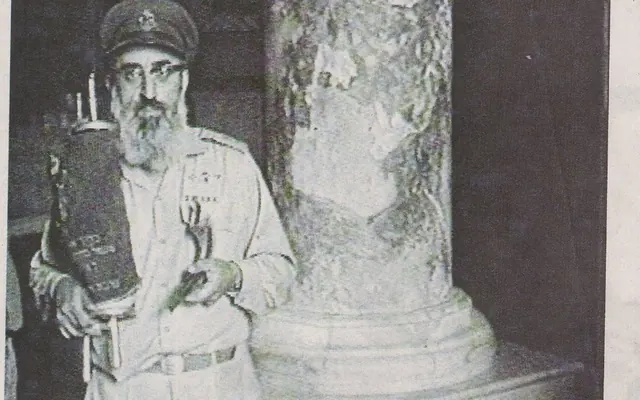
TJS S6E18 Temple Mount part 2 - The Status Quo
Should Jews be allowed to pray on the Temple Mount? Or will it inflame Muslim sensitivities? Learn the history of this debate from the Six Day War in...
Play Episode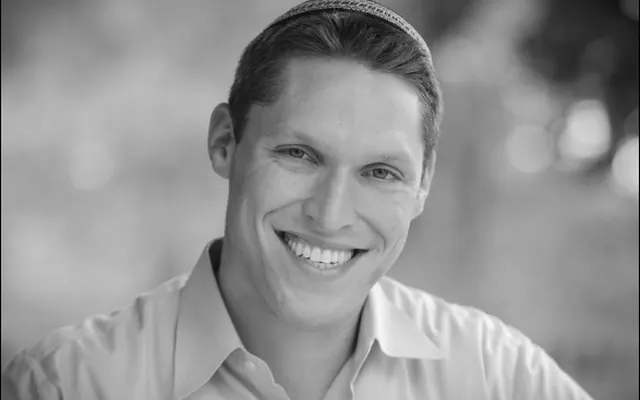
TJS S6 interview with Rabbi Shmuly Yanklowitz
Rav Mike Feuer interviews educator and activist Rabbi Shmuly Yanklowitz and discuss what it means to be both progressive and orthodox in the Jewish world, as well as...
Play Episode
TJS S6E19 Temple Mount part III - The Narrative War
Why is the Temple Mount, the holiest site in Judaism a lighting rod for terrorist attacks and central to Israeli-Arab peace negotiations? Learn about how the Har HaBayit...
Play Episode